

The verdict
A mixed-report full-size truck, strong on technology and held back by efficiency.
The 2026 Tundra is the full-size truck you buy for what happens after the sale: Toyota's roughly 65% five-year resale is the best in the class, two years of free scheduled maintenance come standard, and every single trim — even the base SR work truck — includes adaptive cruise, lane centering, blind-spot monitoring and wireless CarPlay with no option boxes to tick. The CrewMax cab is a genuinely good family space with 41.6 inches of rear legroom, and the coil-sprung rear suspension rides better than the leaf-spring domestics. The bill comes due on capability and efficiency: 19 MPG combined and about $2,750 a year in fuel, 1,940 lbs of max payload against the F-150's 2,440, a 5.5-foot bed on the volume CrewMax, and 41.2 inches of front legroom that leaves tall drivers noticeably tighter than in a Silverado. Add the engine-replacement recall that hit 2022–2023 trucks and the complete absence of a hands-free highway system, and this is a truck chosen on ownership math rather than spec-sheet dominance.
Jump to scoresStrengths
- Every driver-assist feature standard on every trim
- The best ownership math in the full-size class
- Legitimate off-road and overland hardware
What holds it back
- Fuel economy that never justified dropping the V8
- Payload and bed size trail the domestics
- Cramped up front and low in back
Top alternatives
Cars shoppers cross-shop with the Toyota Tundra 2.66C+
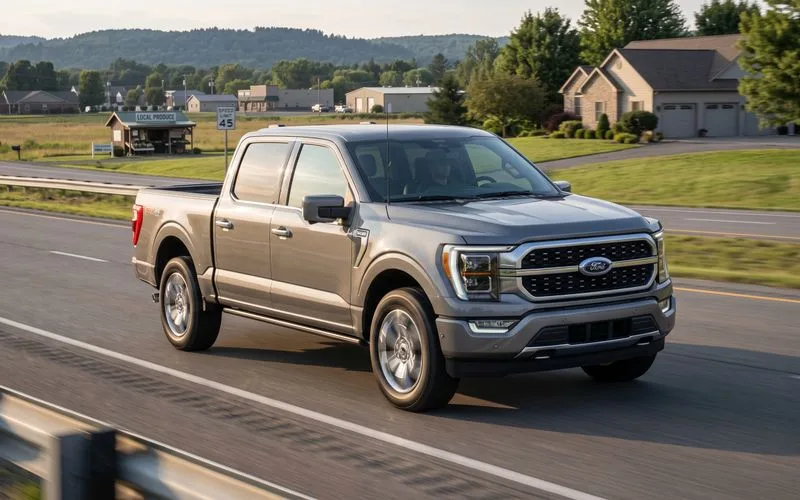 Ford F-150Full-Size TruckBetter at: Work capability
Tows 1,500 lbs more, hauls 500 lbs more payload, offers a genuinely efficient PowerBoost hybrid and BlueCruise hands-free driving — the default cross-shop for anyone whose truck actually works.
Compare 2.41C+
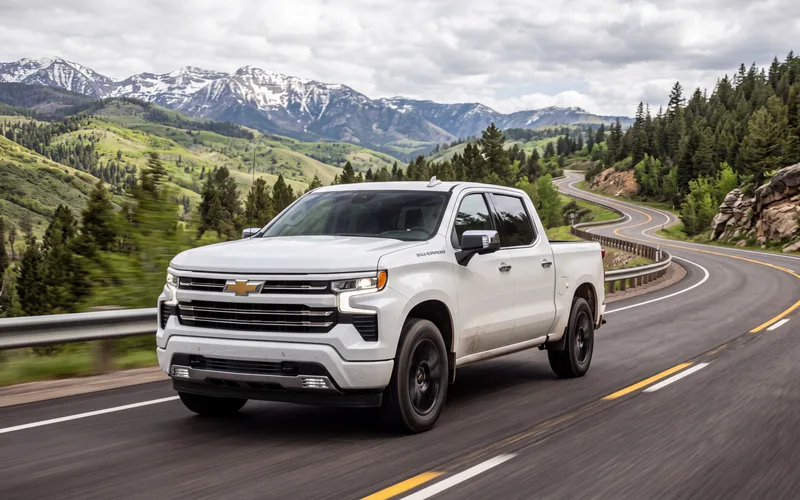 Chevrolet Silverado 1500Full-Size TruckBetter at: Value and space
More cab and bed combinations, three more inches of front legroom, Super Cruise hands-free driving, and far deeper incentives that usually beat Toyota's transaction price.
Compare 2.42C+
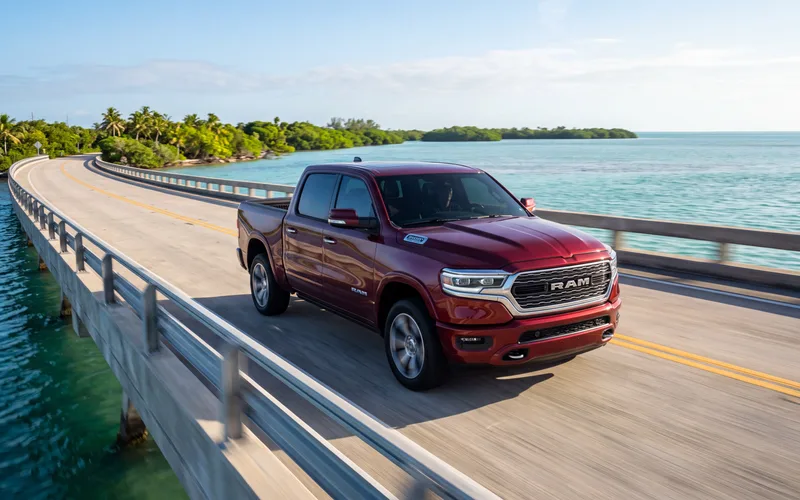 Ram 1500Full-Size TruckBetter at: Ride comfort
The most comfortable half-ton on sale — best-in-class ride, the richest interior at the price, and RamBox storage the Tundra can't match.
CompareHow it's evolved
10 scored model years · 2017–2026
Subject scores by year
Hover or tap a score to see what moved it versus the year before. A corner mark flags a big swing.
| Year | Performance | Efficiency | Safety | Space | Cost | Reliability | Tech | Use-case | Driving | Value |
|---|---|---|---|---|---|---|---|---|---|---|
| 2026 | 56 | 44 | 64 | 56 | 59 | 66 | 67 | 66 | 63 | 66 |
| 2025 | 59 | 39 | 74 | 55 | 61 | 63 | 66 | 65 | 59 | 68 |
| 2024 | 59 | 39 | 71 | 56 | 56 | 59 | 66 | 66 | 60 | 66 |
| 2023 | 59 | 39 | 79 | 57 | 66 | 59 | 67 | 66 | 60 | 66 |
| 2022 | 59 | 39 | 77 | 55 | 59 | 58 | 65 | 64 | 59 | 66 |
| 2021 | 47 | 14 | 45 | 55 | 52 | 81 | 35 | 56 | 59 | 50 |
| 2020 | 47 | 25 | 46 | 54 | 73 | 80 | 36 | 56 | 60 | 53 |
| 2019 | 48 | 19 | 44 | 55 | 62 | 80 | 23 | 54 | 57 | 58 |
| 2018 | 48 | 15 | 46 | 56 | 66 | 79 | 25 | 56 | 60 | 55 |
| 2017 | 53 | 19 | 24 | 56 | 64 | 79 | 25 | 53 | 61 | 57 |
Compare two years
Best fit & conditions
Higher scores mean a better fit for that use case. Learn more about use-case fit →
Subject profile
Trims & configurations
7 trimsScores above reflect the volume trim. Per-trim specs and scores are rolling out — the full lineup:
Academic Probation · NHTSA safety recalls
Jul 6, 2026Equipment: other: labelsSoutheast Toyota Distributors, LLC (SET) is recalling one 2026 Tundra truck. The current load carrying capacity modification label is incorrect. As such, this vehicle fails to comply with the requirements of Federal Motor Vehicle Safety Standard number 110, "Tire Selection and Rims."
Defect
Southeast Toyota Distributors, LLC (SET) is recalling one 2026 Tundra truck. The current load carrying capacity modification label is incorrect. As such, this vehicle fails to comply with the requirements of Federal Motor Vehicle Safety Standard number 110, "Tire Selection and Rims."
Risk
An incorrect load carrying capacity modification label may lead to improper loading of the vehicle, increasing the risk of a crash.
Remedy
SET will provide the owner with a new load carrying capacity modification label, free of charge. An owner notification letter was mailed August 6, 2026. The owner may contact SET's customer service at 1-866-405-4226. SET's number for this recall is SET26A.
NHTSA campaign 26V433000 ↗Manufacturer no. SET26A1 vehicles potentially affected (all models in the campaign)Owners notified Aug 6, 2026Filed by Southeast Toyota Distributors, LLCFiled as TUNDRAMar 24, 2026Equipment: other: labelsThe load carrying capacity modification label may display inaccurate added weight values. As such, these vehicles fail to comply with the requirements of Federal Motor Vehicle Safety Standard number 110, "Tire Selection and Rims."
Defect
Toyota Motor Engineering & Manufacturing (Toyota) is recalling certain 2024-2025 Toyota Tundra, Tacoma Hybrid, Tacoma, RAV4 Hybrid, Land Cruiser Hybrid, Lexus GX550, 2024-2026 Tundra Hybrid, 2025 Sequoia Hybrid, Crown Signia, Grand Highlander, Lexus TX500 Hybrid, Lexus NX350 Hybrid, 2025-2026 Grand Highlander Hybrid, and Lexus TX350 vehicles. The load carrying capacity modification label may display inaccurate added weight values. As such, these vehicles fail to comply with the requirements of Federal Motor Vehicle Safety Standard number 110, "Tire Selection and Rims."
Risk
A vehicle with an incorrect maximum capacity weight value may be overloaded, which can increase the risk of a crash.
Remedy
Dealers will replace the load carrying capacity modification label, free of charge. Owner letters were mailed May 26, 2026. Owners may contact Toyota's customer service at 1-800-331-4331. Toyota's numbers for this recall are 26LB04, 26LA04, 26TB07, and 26TA07.
NHTSA campaign 26V179000 ↗Manufacturer no. See attached Part5738,230 vehicles potentially affected (all models in the campaign)Owners notified May 22, 2026Filed by Toyota Motor Engineering & ManufacturingFiled as REDUNDANT TUNDRA HYBRID, TUNDRA, TUNDRA HYBRID
36 recalls on other model years of the Tundra (2017–2025)
Sep 2, 2026Equipment: other: labelsThe load carrying capacity modification label may display inaccurate added weight values. As such, these vehicles fail to comply with the requirements of Federal Motor Vehicle Safety Standard number 110, "Tire Selection and Rims."
Defect
Toyota Motor Engineering & Manufacturing (Toyota) is recalling certain 2024 Toyota Tacoma Hybrid, 2025 Tundra Hybrid, Tundra, 2026 RAV4 Hybrid, 4Runner i-Force Max Hybrid, and 4Runner vehicles. The load carrying capacity modification label may display inaccurate added weight values. As such, these vehicles fail to comply with the requirements of Federal Motor Vehicle Safety Standard number 110, "Tire Selection and Rims."
Risk
A vehicle with an incorrect maximum capacity weight value may be overloaded, increasing the risk of a crash.
Remedy
Dealers will replace the load carrying capacity modification label, free of charge. Owner notification letters are expected to be mailed October 18, 2026. Owners may contact Toyota's customer service at 1-800-331-4331. Toyota's number for this recall is 26TA18.
NHTSA campaign 26V571000 ↗Manufacturer no. 26TA18135 vehicles potentially affected (all models in the campaign)Filed by Toyota Motor Engineering & ManufacturingFiled as TUNDRA, TUNDRA HYBRIDMay 20, 2026Engine and engine cooling: engine: hard parts internal/mechanicalDebris from the manufacturing process may contaminate the engine and cause a main bearing to fail, which can result in an engine stall and loss of drive power.
Defect
Toyota Motor Engineering & Manufacturing (Toyota) is recalling certain 2024 Tundra vehicles equipped with a V35A engine. Debris from the manufacturing process may contaminate the engine and cause a main bearing to fail, which can result in an engine stall and loss of drive power.
Risk
A loss of drive power increases the risk of a crash.
Remedy
Dealers will perform an inspection on the #1 main bearing using vehicle inspection software and drive data, and if necessary, replace the engine. Repairs will be performed free of charge. Interim letters notifying owners of the safety risk were mailed July 23, 2026. Additional letters will be sent once the final remedy is available. Owners may contact Toyota's customer service at 1-800-331-4331. Toyota's numbers for this recall are 25TB14 and 25TA14. This recall expands previous NHTSA recall numbers 24V381 and 25V767.
NHTSA campaign 26V320000 ↗Manufacturer no. 25TB14 / 25TA1443,566 vehicles potentially affected (all models in the campaign)Filed by Toyota Motor Engineering & ManufacturingFiled as TUNDRAJan 23, 2026Back over prevention: softwareThe rearview camera image may not display when the vehicle is placed in reverse. As such, these vehicles fail to comply with the requirements of Federal Motor Vehicle Safety Standard (FMVSS) number 111, "Rear Visibility."
Defect
Toyota Motor Engineering & Manufacturing (Toyota) is recalling certain 2024-2025 Toyota Tundra and Tundra Hybrid vehicles equipped with a Panoramic View Monitor (PVM) system. The rearview camera image may not display when the vehicle is placed in reverse. As such, these vehicles fail to comply with the requirements of Federal Motor Vehicle Safety Standard (FMVSS) number 111, "Rear Visibility."
Risk
A rearview camera image that does not display reduces the driver's view behind the vehicle, increasing the risk of a crash.
Remedy
Dealers will update the parking assist ECU software, free of charge. Owner notification letters were mailed March 23, 2026. Owners may contact Toyota's customer service at 1-800-331-4331. Toyota's numbers for this recall are 26TB02 and 26TA02.
NHTSA campaign 26V038000 ↗Manufacturer no. 26TB02 / 26TA02161,268 vehicles potentially affected (all models in the campaign)Owners notified Mar 23, 2026Filed by Toyota Motor Engineering & ManufacturingFiled as TUNDRA, TUNDRA HYBRIDNov 6, 2025Engine and engine cooling: engine: hard parts internal/mechanicalDebris from the manufacturing process may contaminate the engine and cause the main bearings to fail, which can result in an engine stall and loss of drive power.
Defect
Toyota Motor Engineering & Manufacturing (Toyota) is recalling certain 2022-2024 Toyota Tundra, Lexus LX, and 2024 Lexus GX vehicles equipped with a V35A engine. Debris from the manufacturing process may contaminate the engine and cause the main bearings to fail, which can result in an engine stall and loss of drive power.
Risk
A loss of drive power increases the risk of a crash.
Remedy
Dealers will perform an inspection on the #1 main bearing using vehicle inspection software and drive data, and if necessary, replace the engine. Repairs will be performed free of charge. Owner letters were mailed August 28, 2026. Owners may contact Toyota's customer service at 1-800-331-4331. Toyota's numbers for this recall are 25TB14 and 25TA14. Lexus' numbers for this recall are 25LB07 and 25LA07. This recall expands previous NHTSA recall number 24V381.
NHTSA campaign 25V767000 ↗Manufacturer no. See Part 573 Report126,691 vehicles potentially affected (all models in the campaign)Owners notified Aug 28, 2026Filed by Toyota Motor Engineering & ManufacturingFiled as TUNDRAOct 1, 2025Back over prevention: softwareA software error may cause the rearview image not to display when the vehicle is placed in reverse. As such, these vehicles fail to comply with the requirements of Federal Motor Vehicle Safety Standard (FMVSS) number 111, "Rear Visibility."
Defect
Toyota Motor Engineering & Manufacturing (Toyota) is recalling certain 2022-2025 Tundra, Tundra Hybrid, and 2023-2025 Sequoia Hybrid vehicles. A software error may cause the rearview image not to display when the vehicle is placed in reverse. As such, these vehicles fail to comply with the requirements of Federal Motor Vehicle Safety Standard (FMVSS) number 111, "Rear Visibility."
Risk
A rearview image that does not display reduces the driver's view behind the vehicle, increasing the risk of a crash.
Remedy
Dealers will update the multimedia display software, free of charge. Owner notification letters were mailed November 19, 2025. Owners may contact Toyota's customer service at 1-800-331-4331. Toyota's numbers for this recall are 25TB10 and 25TA10.
NHTSA campaign 25V657000 ↗Manufacturer no. 25TB10 / 25TA10393,838 vehicles potentially affected (all models in the campaign)Owners notified Nov 19, 2025Filed by Toyota Motor Engineering & ManufacturingFiled as TUNDRA, TUNDRA HYBRIDMay 15, 2025Exterior lighting: back up lightsMoisture may enter the reverse light assemblies and cause a light failure.
Defect
Toyota Motor Engineering & Manufacturing (Toyota) is recalling certain 2022-2025 Toyota Tundra and Tundra Hybrid vehicles. Moisture may enter the reverse light assemblies and cause a light failure.
Risk
Reverse light failure may reduce visibility, and not alert pedestrians and other drivers that the vehicle is backing up, increasing the risk of a crash.
Remedy
Dealers will replace both reverse light assemblies and repair the wire harnesses as necessary, free of charge. Owner letters were mailed May 23, 2026. This is a phased recall. Owners may contact Toyota's customer service at 1-800-331-4331.Toyota's numbers for this recall are 24TB06 and 24TA06.
NHTSA campaign 25V322000 ↗Manufacturer no. 25TB06 / 25TA06443,444 vehicles potentially affected (all models in the campaign)Owners notified Sep 11, 2025Filed by Toyota Motor Engineering & ManufacturingFiled as TUNDRA, TUNDRA HYBRIDOct 15, 2024Tires: sidewallThe passenger-side front and rear tires may have inner sidewall damage, which can cause a sudden loss of tire pressure.
Defect
Toyota Motor Engineering & Manufacturing (Toyota) is recalling certain 2024 Sequoia Hybrid, Tundra and Tundra Hybrid vehicles. The passenger-side front and rear tires may have inner sidewall damage, which can cause a sudden loss of tire pressure.
Risk
A sudden loss of tire pressure can result in a loss of vehicle control, increasing the risk of a crash.
Remedy
Dealers will inspect and replace the tires as necessary, free of charge. Owner notification letters were mailed December 5, 2024. Owners may contact Toyota customer service at 1-800-331-4331. Toyota's number for this recall is 24TA12.
NHTSA campaign 24V767000 ↗Manufacturer no. 24TA1211,890 vehicles potentially affected (all models in the campaign)Owners notified Dec 5, 2024Filed by Toyota Motor Engineering & ManufacturingFiled as TUNDRA, TUNDRA HYBRIDJul 23, 2024Equipment: other: labelsThe load carrying capacity modification label may display inaccurate added weight values. As such, these vehicles fail to comply with the requirements of Federal Motor Vehicle Safety Standard number 110, "Tire Selection and Rims."
Defect
Gulf States Toyota, Inc. (GST) is recalling certain Toyota 2023 GR Supra, 2024 4 Runner, Corolla, Grand Highlander, Grand Highlander Hybrid, Land Cruiser Hybrid, Tacoma, Tacoma Hybrid, 2023-2024 BZ4X, Corolla Cross Hybrid, GR Corolla, GR86, Highlander, Highlander Hybrid, Prius, Prius Prime, Sequoia Hybrid, Tundra, Tundra Hybrid, Venza Hybrid, 2023-2025 Crown, and 2025 Camry Hybrid vehicles equipped with GST accessories. The load carrying capacity modification label may display inaccurate added weight values. As such, these vehicles fail to comply with the requirements of Federal Motor Vehicle Safety Standard number 110, "Tire Selection and Rims."
Risk
A vehicle with an incorrect maximum capacity weight value may be overloaded, which can increase the risk of a crash.
Remedy
GST will mail new labels to owners, free of charge. Owner notification letters were mailed September 16, 2024. Owners may contact GST customer service at 1-800-444-1074. GST's number for this recall is 24R2.
NHTSA campaign 24V548000 ↗Manufacturer no. 24R233,848 vehicles potentially affected (all models in the campaign)Owners notified Sep 16, 2024Filed by Gulf States Toyota, Inc.Filed as TUNDRA, TUNDRA HYBRIDMay 30, 2024Engine and engine cooling: engine: hard parts internal/mechanicalDebris from the manufacturing process may contaminate the engine and cause the main bearings to fail, which can result in an engine stall and loss of drive power.
Defect
Toyota Motor Engineering & Manufacturing (Toyota) is recalling certain 2022-2023 Tundra and Lexus LX600 vehicles equipped with a V35A engine. Debris from the manufacturing process may contaminate the engine and cause the main bearings to fail, which can result in an engine stall and loss of drive power.
Risk
A loss of drive power increases the risk of a crash.
Remedy
Dealers will replace the engine assembly, free of charge. Owner letters were mailed between December 17, 2024 and February 19, 2025. Owners may contact Toyota customer service at 1-800-331-4331. Toyota's numbers for this recall are 24TB07/24TA07 and 24LB04/24LA04.
NHTSA campaign 24V381000 ↗Manufacturer no. 24TB07,24TA07,24LB04102,092 vehicles potentially affected (all models in the campaign)Owners notified Dec 17, 2024Filed by Toyota Motor Engineering & ManufacturingFiled as TUNDRAFeb 21, 2024Power train: automatic transmissionUnexpected vehicle movement may occur when the vehicle is in neutral and the brakes are not applied.
Defect
Toyota Motor Engineering & Manufacturing (Toyota) is recalling certain 2022-2024 Tundra, Tundra Hybrid, Lexus LX600, and 2023-2024 Sequoia Hybrid vehicles. Unexpected vehicle movement may occur when the vehicle is in neutral and the brakes are not applied.
Risk
Unexpected vehicle movement can increase the risk of a crash.
Remedy
Dealers will update the transmission control ECU software, free of charge. Owner notification letters were mailed April 8, 2024. Owners may contact Toyota customer service at 1-800-331-4331. Toyota's numbers for this recall are 24TA02 and 24LA02.
NHTSA campaign 24V125000 ↗Manufacturer no. 24TA02, 24LA02280,663 vehicles potentially affected (all models in the campaign)Owners notified Apr 8, 2024Filed by Toyota Motor Engineering & ManufacturingFiled as TUNDRA, TUNDRA HYBRIDNov 9, 2023Equipment: other: labelsThe load carrying capacity modification label states the incorrect load carrying capacity, which can result in an overloaded vehicle. As such, these vehicles fail to comply with the requirements of Federal Motor Vehicle Safety Standard number 110, "Tire Selection and Rims."
Defect
Southeast Toyota Distributors, LLC (SET) is recalling certain 2022-2024 Toyota Tundra vehicles. The load carrying capacity modification label states the incorrect load carrying capacity, which can result in an overloaded vehicle. As such, these vehicles fail to comply with the requirements of Federal Motor Vehicle Safety Standard number 110, "Tire Selection and Rims."
Risk
An overloaded vehicle increases the risk of a crash.
Remedy
SET will mail a new modified label, free of charge. Owner notification letters were mailed December 18, 2023. Owners may contact SET's customer service at 1-866-405-4226. SET's number for this recall is SET23B.
NHTSA campaign 23V757000 ↗Manufacturer no. SET23B534 vehicles potentially affected (all models in the campaign)Owners notified Dec 18, 2023Filed by Southeast Toyota Distributors, LLCFiled as TUNDRASep 13, 2023Equipment: other: labelsThe load carrying capacity modification label states the incorrect load carrying capacity, which can result in an overloaded vehicle. As such, these vehicles fail to comply with the requirements of Federal Motor Vehicle Safety Standard number 110, "Tire Selection and Rims."
Defect
Toyota Motor Engineering & Manufacturing (Toyota) is recalling certain 2023 Tundra and Tundra Hybrid vehicles equipped with a spray-on bed liner accessory. The load carrying capacity modification label states the incorrect load carrying capacity, which can result in an overloaded vehicle. As such, these vehicles fail to comply with the requirements of Federal Motor Vehicle Safety Standard number 110, "Tire Selection and Rims."
Risk
An overloaded vehicle increases the risk of a crash.
Remedy
Dealers will replace the load carrying capacity modification label, free of charge. Owner notification letters are expected to be mailed October 29, 2023. Owners may contact Toyota's customer service at 1-800-331-4331. Toyota's number for this recall is 23TA11.
NHTSA campaign 23V633000 ↗Manufacturer no. 23TA1121,781 vehicles potentially affected (all models in the campaign)Owners notified Oct 27, 2023Filed by Toyota Motor Engineering & ManufacturingFiled as TUNDRA, TUNDRA HYBRIDAug 10, 2023Fuel system, gasoline: delivery: hoses, lines/piping, and fittingsThe plastic fuel tube routed near metallic brake lines may chafe against the brake lines and become damaged, possibly resulting in a fuel leak.
Defect
Toyota Motor Engineering & Manufacturing (Toyota) is recalling certain 2022-2023 Tundra and Tundra Hybrid vehicles. The plastic fuel tube routed near metallic brake lines may chafe against the brake lines and become damaged, possibly resulting in a fuel leak.
Risk
A fuel leak in the presence of an ignition source can increase the risk of a fire.
Remedy
Dealers will install protective materials and a clamp on the fuel tube, free of charge. Owner letters were mailed November 6, 2024. Owners may contact Toyota's customer service at 1-800-331-4331. Toyota's numbers for this recall are 23TB09/23TA09.
NHTSA campaign 23V566000 ↗Manufacturer no. 23TB09 / 23TA09168,179 vehicles potentially affected (all models in the campaign)Owners notified Nov 6, 2024Filed by Toyota Motor Engineering & ManufacturingFiled as TUNDRA, TUNDRA HYBRIDJul 7, 2023Tires: temporary/emergency spare tireThe steel chain used to secure the spare tire to the underside of the vehicle may have been insufficiently welded.
Defect
Toyota Motor Engineering & Manufacturing (Toyota) is recalling certain 2023 Tundra, Tundra Hybrid, and Sequoia Hybrid vehicles. The steel chain used to secure the spare tire to the underside of the vehicle may have been insufficiently welded.
Risk
Chains that are not welded sufficiently can break and allow the spare tire to detach, increasing the risk of a crash.
Remedy
Dealers will replace the spare tire carrier assembly, free of charge. Owner notification letters are expected to be mailed August 14, 2023. Owners may contact Toyota's customer service at 1-800-331-4331. Toyota's number for this recall is 23TB06/23TA06.
NHTSA campaign 23V468000 ↗Manufacturer no. 23TB06/23TA061,398 vehicles potentially affected (all models in the campaign)Owners notified Sep 5, 2023Filed by Toyota Motor Engineering & ManufacturingFiled as TUNDRA, TUNDRA HYBRIDMar 3, 2023Structure: bodyThe tonneau cover attachment joints may come loose and allow the cover to detach.
Defect
Toyota Motor Engineering & Manufacturing (Toyota) is recalling certain 2022-2023 Tundra and Tundra Hybrid vehicles that may be equipped with a Toyota genuine accessory tonneau cover. The tonneau cover attachment joints may come loose and allow the cover to detach.
Risk
A tonneau cover that detaches while driving can become a road hazard, increasing the risk of a crash.
Remedy
Owners of the subject vehicles will be notified by first class mail to return their vehicles to a Toyota dealer. Dealer will install new hardware (bolts, spacers, washers, nuts, rubber washers and cotter pins) to the existing bracket and tonneau cover. If the tonneau cover has tears or splits at the mounting holes to the extent that new hardware cannot be installed, it will be replaced with a new tonneau cover and hardware. Owners will receive a notice once the remedy becomes available. Owners may contact Toyota's customer service at 1-800-331-4331. Toyota's number for this recall is 23TB03/23TA03.
NHTSA campaign 23V142000 ↗Manufacturer no. 23TB03 / 23TA03130,266 vehicles potentially affected (all models in the campaign)Owners notified Sep 18, 2023Filed by Toyota Motor Engineering & ManufacturingFiled as TUNDRA, TUNDRA HYBRIDFeb 22, 2023Electrical system: instrument cluster/panelA software error in the combination meter's electronic control unit (ECU) may cause the Instrument Panel LCD display to go blank. As such, these vehicles fail to comply with the requirements of Federal Motor Vehicle Safety Standard number 101, "Control and Displays."
Defect
Toyota Motor Engineering & Manufacturing (Toyota) is recalling certain 2022-2023 Tundra and Tundra Hybrid vehicles. A software error in the combination meter's electronic control unit (ECU) may cause the Instrument Panel LCD display to go blank. As such, these vehicles fail to comply with the requirements of Federal Motor Vehicle Safety Standard number 101, "Control and Displays."
Risk
A blank display will not show critical information such as the speedometer or warning lights, increasing the risk of a crash.
Remedy
Dealers will update the combination meter ECU software, free of charge. Owner notification letters are expected to be mailed April 17, 2023. Owners may contact Toyota's customer service at 1-800-331-4331. Toyota's number for this recall is 23TA02.
NHTSA campaign 23V111000 ↗Manufacturer no. 23TA028,989 vehicles potentially affected (all models in the campaign)Owners notified Apr 21, 2023Filed by Toyota Motor Engineering & ManufacturingFiled as TUNDRA, TUNDRA HYBRIDNov 18, 2022Equipment: other: labelsThe load carrying capacity modification label may indicate less weight than the actual total weight of accessories installed on the vehicle. As such, these vehicles fail to comply with the requirements of Federal Motor Vehicle Safety Standard number 110, "Tire Selection and Rims."
Defect
Gulf States Toyota, Inc. (GST) is recalling certain 2023 Tundra pickup trucks equipped with non-skid spray-on bed liners. The load carrying capacity modification label may indicate less weight than the actual total weight of accessories installed on the vehicle. As such, these vehicles fail to comply with the requirements of Federal Motor Vehicle Safety Standard number 110, "Tire Selection and Rims."
Risk
An incorrect label may lead to unintentionally overloading the vehicle, increasing the risk of a crash.
Remedy
GST will mail replacement labels to owners, free of charge. Owner notification letters were mailed January 10, 2023. Owners may contact GST customer service at 1-800-444-1074. GST's number for this recall is 22R2.
NHTSA campaign 22V854000 ↗Manufacturer no. 22R2157 vehicles potentially affected (all models in the campaign)Owners notified Jan 10, 2023Filed by Gulf States Toyota, Inc.Filed as TUNDRASep 1, 2022Service brakes, hydraulicThe Skid Control ECU within the Brake Actuator Assembly may falsely detect an overcurrent condition of the Electronic Parking Brake (EPB) Actuator and enter a failsafe mode which prevents the EPB from being engaged. As such, these vehicles fail to comply with the requirements of Federal Motor Vehicle Safety Standard number 135, "Light Vehicle Brake Systems."
Defect
Toyota Motor Engineering & Manufacturing (Toyota) is recalling certain 2022 Lexus NX250, NX350, and Toyota Tundra vehicles. The Skid Control ECU within the Brake Actuator Assembly may falsely detect an overcurrent condition of the Electronic Parking Brake (EPB) Actuator and enter a failsafe mode which prevents the EPB from being engaged. As such, these vehicles fail to comply with the requirements of Federal Motor Vehicle Safety Standard number 135, "Light Vehicle Brake Systems."
Risk
An electronic parking brake that cannot be engaged while in "park," may result in a vehicle rollaway, increasing the risk of a crash.
Remedy
Dealers will reprogram the Skid Control ECU, free of charge. Owner notification letters were mailed November 1, 2022. Owners may contact Toyota's customer service at 1-800-331-4331. Toyota's numbers for this recall are 22TA11 and 22LA04.
NHTSA campaign 22V661000 ↗Manufacturer no. 22TA11 and 22LA0483,725 vehicles potentially affected (all models in the campaign)Owners notified Oct 28, 2022Filed by Toyota Motor Engineering & ManufacturingFiled as TUNDRAJul 13, 2022Back over prevention: display function · Electrical system: adas: parking assist: softwareIncorrect programming of the parking-assist electronic control unit (ECU) software, may cause the front camera image to appear on the multimedia display instead of the rear camera image when the shifter is placed into reverse. As such, these vehicles fail to comply with the requirements of Federal Motor Vehicle Safety Standard number 111, "Rear Visibility."
Defect
Toyota Motor Engineering & Manufacturing (Toyota) is recalling certain 2022 Tundra and Tundra Hybrid vehicles equipped with a Panoramic View Monitor (PVM) system. Incorrect programming of the parking-assist electronic control unit (ECU) software, may cause the front camera image to appear on the multimedia display instead of the rear camera image when the shifter is placed into reverse. As such, these vehicles fail to comply with the requirements of Federal Motor Vehicle Safety Standard number 111, "Rear Visibility."
Risk
A rearview camera that fails to display the correct image can reduce the driver's rear view, increasing the risk of a crash.
Remedy
Dealers will reprogram the parking assist ECU, free of charge. Owner notification letters were mailed July 27, 2022. Owners may contact Toyota customer service at 1-800-331-4331. Toyota's number for this recall is 22TA07.
NHTSA campaign 22V501000 ↗Manufacturer no. 22TA0731,428 vehicles potentially affected (all models in the campaign)Owners notified Aug 5, 2022Filed by Toyota Motor Engineering & ManufacturingFiled as TUNDRA, TUNDRA HYBRIDJun 23, 2022Power train: axle assembly: axle shaftThe flange nuts on the axle shaft sub-assemblies can loosen over time and potentially cause one or both axle shaft sub-assemblies to separate from the axle housing.
Defect
Toyota Motor Engineering & Manufacturing (Toyota) is recalling certain 2022 Tundra and Tundra Hybrid vehicles. The flange nuts on the axle shaft sub-assemblies can loosen over time and potentially cause one or both axle shaft sub-assemblies to separate from the axle housing.
Risk
Axle shaft separation can cause a loss of vehicle stability and brake performance, increasing the risk of a crash.
Remedy
Dealers will inspect the rear axle assembly, tighten the axle flange nuts, and replace any damaged axle-related components if necessary, free of charge. Owner notification letters are expected to be mailed July 15, 2022. Owners may contact Toyota customer service at 1-800-331-4331. Toyota's number for this recall is 22TA05.
NHTSA campaign 22V445000 ↗Manufacturer no. 22TA0546,176 vehicles potentially affected (all models in the campaign)Owners notified Aug 5, 2022Filed by Toyota Motor Engineering & ManufacturingFiled as TUNDRA, TUNDRA HYBRIDApr 28, 2022Back over prevention: display function · Electrical system: softwareThe parking assist electronic control unit (ECU) software may prevent transmission of the rearview camera signal during cold weather, preventing the rearview image from displaying. As such, these vehicles fail to comply with the requirements of Federal Motor Vehicle Safety Standard number 111, "Rear Visibility."
Defect
Toyota Motor Engineering & Manufacturing (Toyota) is recalling certain 2022 Tundra vehicles equipped with a Panoramic View Monitor (PVM) system. The parking assist electronic control unit (ECU) software may prevent transmission of the rearview camera signal during cold weather, preventing the rearview image from displaying. As such, these vehicles fail to comply with the requirements of Federal Motor Vehicle Safety Standard number 111, "Rear Visibility."
Risk
A rearview camera that does not display an image reduces the driver's view of what is behind the vehicle, increasing the risk of a crash.
Remedy
Dealers will reprogram the parking assist ECU software, free of charge. Owner notification letters were mailed June 2, 2022. Owners may contact Toyota customer service at 1-800-331-4331. Toyota's number for this recall is 22TA04.
NHTSA campaign 22V285000 ↗Manufacturer no. 22TA0418,101 vehicles potentially affected (all models in the campaign)Owners notified Jun 2, 2022Filed by Toyota Motor Engineering & ManufacturingFiled as TUNDRADec 23, 2021Steering: hydraulic power assist system · Steering: rack and pinionThe power steering gear assembly may have been manufactured incorrectly, which can result in an oil leak.
Defect
Toyota Motor Engineering & Manufacturing (Toyota) is recalling certain JTEKT power steering gear assembly service parts for 2007-2021 Tundra and 2008-2022 Sequoia, part numbers 44250-0C160, 44250-0C131, 44250-0C170, and 11250-0C121. The power steering gear assembly may have been manufactured incorrectly, which can result in an oil leak.
Risk
An oil leak may cause a sudden loss of power steering assist, increasing the risk of a crash.
Remedy
Dealers will inspect and replace the power steering gear assembly, free of charge. Owner notification letters were mailed on February 17, 2022. Owners may contact Toyota customer service at 1-800-331-4331. Toyota's number for this recall is 21TH01.
NHTSA campaign 21E103000 ↗Manufacturer no. 21TH01151 vehicles potentially affected (all models in the campaign)Owners notified Feb 17, 2022Filed by Toyota Motor Engineering & ManufacturingFiled as TUNDRANov 23, 2021Steering: hydraulic power assist system · Steering: rack and pinionThe power steering gear assembly may have been manufactured incorrectly, which can result in an oil leak.
Defect
Toyota Motor Engineering & Manufacturing (Toyota) is recalling certain 2008-2022 Sequoia and 2007-2021 Tundra vehicles. The power steering gear assembly may have been manufactured incorrectly, which can result in an oil leak.
Risk
An oil leak may cause a sudden loss of power steering assist, increasing the risk of a crash.
Remedy
Dealers will inspect and replace the power steering gear assembly as necessary, free of charge. Owner notification letters were mailed on January 21, 2022. Owners may contact Toyota customer service at 1-800-331-4331. Toyota's numbers for this recall are 21TB10 and 21TA10.
NHTSA campaign 21V920000 ↗Manufacturer no. 21TB10 / 21TA1022,462 vehicles potentially affected (all models in the campaign)Owners notified Jan 21, 2022Filed by Toyota Motor Engineering & ManufacturingFiled as TUNDRASep 2, 2021Electrical system: wiring · Exterior lighting: headlightsThe headlight electrical circuits may power the high and low beams simultaneously, which could overheat the electrical connector.
Defect
Toyota Motor Engineering & Manufacturing (Toyota) is recalling certain 2018-2021 Tundra vehicles. The headlight electrical circuits may power the high and low beams simultaneously, which could overheat the electrical connector.
Risk
An overheated electrical connector can increase the risk of a fire.
Remedy
Dealers will modify the engine wire harness assembly and replace any damaged bulb, bulb connector, and/or headlight assembly as necessary, free of charge. Owner notification letters were mailed April 25, 2022. Owners may contact Toyota customer service at 1-800-331-4331. Toyota's numbers for this recall are 21TB06 and 21TA06.
NHTSA campaign 21V688000 ↗Manufacturer no. 21TB06 / 21TA06158,489 vehicles potentially affected (all models in the campaign)Owners notified Apr 25, 2022Filed by Toyota Motor Engineering & ManufacturingFiled as TUNDRANov 4, 2020Fuel system, gasoline: delivery: fuel pumpThe low-pressure fuel pump inside the fuel tank may fail.
Defect
Toyota Motor Engineering & Manufacturing (Toyota) is recalling certain 2018-2019 4Runner, 2019-2020 Avalon, 2019 Corolla Hatchback, 2017-2019 Highlander, 2018-2020 Camry, 2020 Corolla, 2018-2019 Land Cruiser, 2017-2020 Tacoma, 2019-2020 RAV4, 2019-2020 Sequoia, 2017-2020 Sienna, 2019-2020 Tundra, 2018-2020 Lexus ES350, 2017 Lexus GS200t, 2017-2019 Lexus GS350, 2019 Lexus GS300, 2018-2020 Lexus LC500h, 2019-2020 Lexus LS500, 2018-2019 Lexus GX460, 2017 Lexus IS200t, 2019 Lexus IS300, 2019 Lexus IS350, 2018-2020 Lexus LC500, 2018 Lexus LS500, 2019 Lexus LS500h, 2018-2019 Lexus LX570, 2017 Lexus RC200t, 2019 Lexus RC300, RC350, 2017 and 2019-2020 Lexus RX350, 2018-2020 RX350L, 2019 Lexus UX200, 2018-2019 Lexus NX300 vehicles. The low-pressure fuel pump inside the fuel tank may fail.
Risk
If the fuel pump fails, the engine can stall while driving, increasing the risk of a crash.
Remedy
Toyota will notify owners, and dealers will replace the fuel pump assembly with an improved one, free of charge. Owners of specific models were notified that remedy parts were available starting January 21, 2021. Owners of other models will be notified as remedy parts become available. Remedy parts should be available for all affected vehicles by late March 2021. Owners may contact Toyota customer service at 1-888-270-9371 or Lexus customer service at 1-800-255-3987. Note: This recall is an expansion of recall 20V-012. Toyota's number for this recall is 20TA02. Lexus' number for this recall is 20LA01.
NHTSA campaign 20V682000 ↗Manufacturer no. 20TA02, 20LA011,525,742 vehicles potentially affected (all models in the campaign)Owners notified Jan 21, 2021Filed by Toyota Motor Engineering & ManufacturingFiled as TUNDRAJul 15, 2020Electrical system: wiring · Exterior lighting: turn signalDue to a wiring error, the front turn signals may not flash brightly enough. As such, these vehicles fail to comply with the requirements of Federal Motor Vehicle Safety Standard (FMVSS) number 108, "Lamps, Reflective Devices, and Associated Equipment."
Defect
Toyota Motor Engineering & Manufacturing (Toyota) is recalling certain 2018-2020 Toyota Tundra vehicles equipped with LED headlight assemblies. Due to a wiring error, the front turn signals may not flash brightly enough. As such, these vehicles fail to comply with the requirements of Federal Motor Vehicle Safety Standard (FMVSS) number 108, "Lamps, Reflective Devices, and Associated Equipment."
Risk
If the turn signals or hazard lamps do not flash brightly enough, other drivers may fail to see that the turn signal or hazard lamp functions have been activated, increasing the risk of a crash.
Remedy
Toyota will notify owners, and dealers will modify the wire harness connected to the front turn signal bulbs free of charge. The recall began August 17, 2020. Owners may contact Toyota customer service at 1-800-270-9371. Toyota's number for this recall is 20TB12/20TA12.
NHTSA campaign 20V410000 ↗Manufacturer no. 20TB12/20TA12183,397 vehicles potentially affected (all models in the campaign)Owners notified Aug 17, 2020Filed by Toyota Motor Engineering & ManufacturingFiled as TUNDRAJan 13, 2020Fuel system, gasoline: delivery: fuel pumpToyota Motor Engineering & Manufacturing (Toyota) recalled certain 2018-2019 4Runner, Highlander, Camry, Land Cruiser, Sequoia, Sienna, Tacoma and Tundra, and Lexus RC 300, RC 350, GS 350, GX 460, IS 300, LC 500, LS 500, LX 570, RX 350L, and 2019 Toyota Avalon and Corolla, and certain Lexus NX 300, and ES 350 vehicles on January 13, 2020. On March 4, 2020, Toyota expanded the recall to include certain 2014-2015 Toyota 4Runner and Land Cruiser, 2018 Avalon, Corolla, 2014 FJ Cruiser, 2017 Sienna and Lexus 2018 ES 350, 2018-2019 GS 300, 2013-2014 GS350, 2014-2015 GX 460, IS 350 and LX 570, 2014 IS F, 2018-2019 IS 350, LC 500H and LS 500H, 2013-2015 LS 460, 2015 NX 200T and RC350, 2017 RC 200T and RX 350. Toyota also removed the 2018-2019 Toyota 4Runner and Land Cruiser and 2018-2019 Lexus GX 460 and LX 570 and 2019 NX300 from inclusion in this recall. On March 19, 2020, Toyota expanded the recall to include 2015 Lexus GS350 vehicles. The low-pressure fuel pump inside the fuel tank may fail.
Defect
Toyota Motor Engineering & Manufacturing (Toyota) recalled certain 2018-2019 4Runner, Highlander, Camry, Land Cruiser, Sequoia, Sienna, Tacoma and Tundra, and Lexus RC 300, RC 350, GS 350, GX 460, IS 300, LC 500, LS 500, LX 570, RX 350L, and 2019 Toyota Avalon and Corolla, and certain Lexus NX 300, and ES 350 vehicles on January 13, 2020. On March 4, 2020, Toyota expanded the recall to include certain 2014-2015 Toyota 4Runner and Land Cruiser, 2018 Avalon, Corolla, 2014 FJ Cruiser, 2017 Sienna and Lexus 2018 ES 350, 2018-2019 GS 300, 2013-2014 GS350, 2014-2015 GX 460, IS 350 and LX 570, 2014 IS F, 2018-2019 IS 350, LC 500H and LS 500H, 2013-2015 LS 460, 2015 NX 200T and RC350, 2017 RC 200T and RX 350. Toyota also removed the 2018-2019 Toyota 4Runner and Land Cruiser and 2018-2019 Lexus GX 460 and LX 570 and 2019 NX300 from inclusion in this recall. On March 19, 2020, Toyota expanded the recall to include 2015 Lexus GS350 vehicles. The low-pressure fuel pump inside the fuel tank may fail.
Risk
If the fuel pump fails, the engine can stall while driving, increasing the risk of a crash.
Remedy
Toyota will notify owners, and dealers will replace the fuel pump, free of charge. The recall began May 4, 2020. Owners may contact Toyota customer service at 1-888-270-9371 or Lexus customer service at 1-800-255-3987. Toyota's numbers for this recall are 20TB02 and 20TA02 for Toyota vehicles and 20LB01 and 20LA01 for Lexus vehicles.
NHTSA campaign 20V012000 ↗Manufacturer no. 20TB02/20TA02/20LB011,830,752 vehicles potentially affected (all models in the campaign)Owners notified May 1, 2020Filed by Toyota Motor Engineering & ManufacturingFiled as TUNDRAMar 27, 2019Equipment: other: labelsThe text on the load capacity label may become illegible. As such, these vehicles fail to comply with the requirements of Federal Motor Vehicle Safety Standard (FMVSS) number 110, "Tire Selection and Rims."
Defect
Gulf States Toyota (GST) is recalling certain 2019 C-HR, 4Runner, Avalon, Avalon Hybrid, Camry, Camry Hybrid, Highlander, Land Cruiser, Prius, RAV4, Sequoia, Tacoma, Sienna, Tundra and Yaris vehicles. The text on the load capacity label may become illegible. As such, these vehicles fail to comply with the requirements of Federal Motor Vehicle Safety Standard (FMVSS) number 110, "Tire Selection and Rims."
Risk
If the driver cannot read the label, they may unknowingly overload the vehicle, increasing the risk of a crash.
Remedy
GST will notify owners, and dealers will provide corrected load carrying capacity modification labels, free of charge. The recall began May 24, 2019. Owners may contact GST customer service at 1-800-444-1074. GST's number for this recall is 19R1.
NHTSA campaign 19V244000 ↗Manufacturer no. 19R13,634 vehicles potentially affected (all models in the campaign)Owners notified May 24, 2019Filed by Gulf States Toyota, Inc.Filed as TUNDRADec 19, 2018Equipment: other: labelsThe load carrying capacity modification label may have been incorrectly calculated. If the label is followed, the vehicle may be overloaded. As such, these vehicles fail to comply with the requirements of Federal Motor Vehicle Safety Standard (FMVSS) number 110, "Tire Selection and Rims."
Defect
Toyota Motor Engineering & Manufacturing (Toyota) is recalling certain 2019 Toyota Tundra standard and long bed trucks equipped with a spray-in bed liner. The load carrying capacity modification label may have been incorrectly calculated. If the label is followed, the vehicle may be overloaded. As such, these vehicles fail to comply with the requirements of Federal Motor Vehicle Safety Standard (FMVSS) number 110, "Tire Selection and Rims."
Risk
An overloaded vehicle can increase the risk of a crash.
Remedy
Toyota has notified owners, and provided corrected load carrying capacity labels, free of charge. The recall began on January 24, 2019. The recall number is J08. Owners may contact Toyota customer service at 1-888-270-9371.
NHTSA campaign 18V900000 ↗Manufacturer no. J08280 vehicles potentially affected (all models in the campaign)Owners notified Jan 24, 2019Filed by Toyota Motor Engineering & ManufacturingFiled as TUNDRAOct 11, 2018Equipment: other: labelsThe accessory all-weather floormats may have been counted twice when creating the load carrying capacity modification label, resulting in the capacity modification label incorrectly overstating the additional weight by 10 pounds. As such, these vehicles fail to comply with the requirements of Federal Motor Vehicle Safety Standard (FMVSS) number 110, "Tire Selection and Rims."
Defect
Toyota Motor Engineering & Manufacturing (Toyota) is recalling certain 2018-2019 Toyota Tundra vehicles. The accessory all-weather floormats may have been counted twice when creating the load carrying capacity modification label, resulting in the capacity modification label incorrectly overstating the additional weight by 10 pounds. As such, these vehicles fail to comply with the requirements of Federal Motor Vehicle Safety Standard (FMVSS) number 110, "Tire Selection and Rims."
Risk
Since the incorrect label is not within 1% of the additional weight, the vehicles are not compliant with the FMVSS.
Remedy
All vehicle owners will be sent a corrected label. Owners may contact Toyota customer service at 1-888-270-9371. Toyota's number for this recall is J0Z.
NHTSA campaign 18V711000 ↗Manufacturer no. J0Z508 vehicles potentially affected (all models in the campaign)Owners notified Nov 16, 2018Filed by Toyota Motor Engineering & ManufacturingFiled as TUNDRAOct 4, 2018Air bags · Electrical system: softwareThe air bag electronic control unit (ECU) may erroneously detect a fault during the vehicle start-up self check. If this occurs, the ECU may not deploy the airbags as intended, in the event of a crash. As such, these vehicles fail to comply with the requirements of Federal Motor Vehicle Safety Standard (FMVSS) number 208, "Occupant Crash Protection," and 214, "Side Impact Protection."
Defect
Toyota Motor Engineering & Manufacturing (Toyota) is recalling certain 2018-2019 Toyota Tundra and Sequoia vehicles and 2019 Toyota Avalon and Avalon Hybrid vehicles. The air bag electronic control unit (ECU) may erroneously detect a fault during the vehicle start-up self check. If this occurs, the ECU may not deploy the airbags as intended, in the event of a crash. As such, these vehicles fail to comply with the requirements of Federal Motor Vehicle Safety Standard (FMVSS) number 208, "Occupant Crash Protection," and 214, "Side Impact Protection."
Risk
If the air bags do not deploy as intended, it can increase the risk of injury in a crash.
Remedy
Toyota will notify owners, and dealers will update the software for the air bag ECU, free of charge. The recall began October 26, 2018. Owners may contact Toyota customer service at 1-888-270-9371. Toyota's number for this recall is J0X. Note: 18V-122 was superseded by this recall. The software remedy also includes the updates to the software for 18V-122.
NHTSA campaign 18V685000 ↗Manufacturer no. J0X168,187 vehicles potentially affected (all models in the campaign)Owners notified Oct 26, 2018Filed by Toyota Motor Engineering & ManufacturingFiled as TUNDRAFeb 20, 2018Seat belts · Seats: mid/rear assemblyOne of the rear split bench seat leg brackets may not have been properly tightened to the vehicle's floor pan, possibly allowing the seat to move in a crash. A vehicle with an improperly tightened seat leg bracket could fail to comply with the requirements of Federal Motor Vehicle Safety Standard (FMVSS) number 207, "Seating Systems," 210, "Seat Belt Assembly Anchorages," and 225, "Child restraint anchorage systems."
Defect
Toyota Motor Engineering & Manufacturing (Toyota) is recalling certain 2017 Toyota Tundra vehicles. One of the rear split bench seat leg brackets may not have been properly tightened to the vehicle's floor pan, possibly allowing the seat to move in a crash. A vehicle with an improperly tightened seat leg bracket could fail to comply with the requirements of Federal Motor Vehicle Safety Standard (FMVSS) number 207, "Seating Systems," 210, "Seat Belt Assembly Anchorages," and 225, "Child restraint anchorage systems."
Risk
If the rear split bench seat moves in a crash, the seat occupant has an increased risk of injury.
Remedy
Toyota will notify owners, and dealers will tighten the five seat leg bracket bolts, as necessary, free of charge. The recall is expected to begin March 2018. Owners may contact Toyota customer service at 1-888-270-9371. Toyota's number for this recall is J0I.
NHTSA campaign 18V123000 ↗Manufacturer no. J0I8,769 vehicles potentially affected (all models in the campaign)Owners notified Mar 19, 2018Filed by Toyota Motor Engineering & ManufacturingFiled as TUNDRAFeb 20, 2018Electronic stability control (esc)Electrical interference within the power supply circuit may cause the vehicle's electronic stability control system to be deactivated. As such, these vehicles fail to comply with the requirements of Federal Motor Vehicle Safety Standard (FMVSS) number 126, "Electronic Stability Control Systems."
Defect
Toyota Motor Engineering & Manufacturing (Toyota) is recalling certain 2018 Toyota Tundra and Sequoia vehicles. Electrical interference within the power supply circuit may cause the vehicle's electronic stability control system to be deactivated. As such, these vehicles fail to comply with the requirements of Federal Motor Vehicle Safety Standard (FMVSS) number 126, "Electronic Stability Control Systems."
Risk
Deactivation of the vehicle stability control system can increase the risk of a crash in certain conditions.
Remedy
Toyota will notify owners, and dealers will update the vehicle's software, free of charge. The recall began March 14, 2018. Owners may contact Toyota customer service at 1-888-270-9371. Toyota's number for this recall is J0H. Note: This recall has been superseded by 18V-685. The software remedy for 18V-685 includes the updates to the software for this recall.
NHTSA campaign 18V122000 ↗Manufacturer no. J0H64,901 vehicles potentially affected (all models in the campaign)Owners notified Mar 14, 2018Filed by Toyota Motor Engineering & ManufacturingFiled as TUNDRADec 20, 2017Equipment: other: labelsThese vehicles may have incorrect load carrying capacity modification labels. As such, these vehicles fail to comply with the requirements of Federal Motor Vehicle Safety Standard (FMVSS) number 110, "Tire Selection and Rims."
Defect
Toyota Motor Engineering & Manufacturing (Toyota) is recalling certain 2017-2018 Toyota 4Runner and Tundra, 2018 Toyota Highlander, RAV4 and Lexus GX460 and 2017 Toyota Sienna and Tacoma vehicles. These vehicles may have incorrect load carrying capacity modification labels. As such, these vehicles fail to comply with the requirements of Federal Motor Vehicle Safety Standard (FMVSS) number 110, "Tire Selection and Rims."
Risk
An incorrect load information label can result in the operator overloading the vehicle and increasing the risk of a crash.
Remedy
Toyota will notify owners and provide them with corrected labels, free of charge. The recall began on January 23, 2018. Owners may contact Toyota customer service at 1-800-331-4331. Toyota's numbers for this recall are H0Z for Toyota vehicles, and HLF for Lexus vehicles.
NHTSA campaign 17V831000 ↗Manufacturer no. Toyota H0Z Lexus HLF649 vehicles potentially affected (all models in the campaign)Owners notified Jan 23, 2018Filed by Toyota Motor Engineering & ManufacturingFiled as TUNDRAMay 11, 2017Wheels: lugs/nuts/bolts/studsThe Rockstar wheels were installed with lugnuts that may crack and detach.
Defect
Southeast Toyota Distributors, LLC (SET) is recalling certain model year 2013-2017 Toyota Tundra and Sequoia vehicles accessorized with Southeast Toyota accessory 20-inch Rockstar wheels installed by Southeast Toyota or a Southeast Toyota dealer. The Rockstar wheels were installed with lugnuts that may crack and detach.
Risk
Lugnuts that crack and detach may cause the wheels to separate from the vehicle, increasing the risk of a crash.
Remedy
SET will notify owners, and dealers will install new replacement lugnuts, free of charge. The recall began June 23, 2017. Owners may contact SET customer service at 1-866-405-4226. SET's number for this recall is SET17A.
NHTSA campaign 17V311000 ↗Manufacturer no. SET17A1,325 vehicles potentially affected (all models in the campaign)Owners notified Jun 23, 2017Filed by Southeast Toyota Distributors, LLCFiled as TUNDRAJan 24, 2017Structure: body: bumpersIn the event of an impact to the corner of the bumper, the resin bracket may be damaged but not be noticed.
Defect
Toyota Motor Engineering & Manufacturing (Toyota) is recalling certain 2016-2017 Tundra vehicles equipped with a resin rear step bumper and resin reinforcement brackets (vehicles with chrome step bumpers are not affected). In the event of an impact to the corner of the bumper, the resin bracket may be damaged but not be noticed.
Risk
If a person steps on the corner of the bumper that is damaged, a portion of the bumper may break away, increasing the risk of injury.
Remedy
Toyota will notify owners, and dealers will replace the resin rear bumper reinforcement brackets with steel ones, and replace the rear bumper tread, free of charge. The recall began on May 21, 2017. Owners may contact Toyota customer service at 1-800-331-4331. Toyota's number for this recall is H0C.
NHTSA campaign 17V051000 ↗Manufacturer no. H0C72,847 vehicles potentially affected (all models in the campaign)Owners notified Apr 21, 2017Filed by Toyota Motor Engineering & ManufacturingFiled as TUNDRA
Source: NHTSA Office of Defects Investigation recall database, model years 2017–2026. Recalls are listed by model year as the manufacturer filed them; whether a specific car is affected depends on its VIN — check a VIN at nhtsa.gov ↗. NHTSA model names matched to this page: REDUNDANT TUNDRA HYBRID, TUNDRA, TUNDRA HYBRID.
Detailed scoring by subject
1Performance & PowertrainOne of the Tundra's weakest categories.1.80C-
The volume SR5 grade carries the regular-fuel tune of the 3.4L twin-turbo V6 at 348 hp; upper grades get the 389-hp tune and the i-FORCE MAX hybrid tops the range at 437 hp.
SR5's i-FORCE V6 makes 405 lb-ft across a broad 2,000–3,600 rpm plateau; the hybrid's 583 lb-ft is among the strongest non-diesel figures in the full-size half-ton class.
The detuned SR5 hauling roughly 5,700 lb runs mid-6s to 60 mph; instrumented tests of the 389-hp and hybrid versions land near 6.1 s and 5.7 s respectively, so the volume trim sits behind the quickest half-tons.
The twin-turbo V6 pulls hard from low revs and is broadly smooth, but reviewers consistently flag a coarse, synthetic engine note under load and some off-idle lag; the i-FORCE MAX's gas-electric handoffs and brake blending draw more criticism than Ford's PowerBoost.
The Aisin 10-speed automatic shifts smoothly and holds sensible gears when towing, but is noted as slow to kick down at part throttle and occasionally busy in traffic.
A properly equipped Tundra tows up to 12,000 lbs — strong in absolute terms but short of the F-150 (13,500 lbs) and Silverado/Sierra (13,300 lbs) class leaders.
Max payload of about 1,940 lbs is the Tundra's clearest capability weakness — several hundred pounds behind the F-150 (2,440 lbs) and Silverado (2,260 lbs), and the heavier hybrid gives up more still.
Core suite is complete — integrated trailer brake controller, Tow/Haul and Tow/Haul+ modes, Trailer Backup Guidance with Straight Path Assist, panoramic-view camera and trailer-length blind spot coverage — but it lacks Ford's onboard scales, smart hitch and Pro Trailer Hitch Assist.
Part-time 4WD with a two-speed transfer case is available on every grade and standard on TRD Pro and Capstone, with automatic limited-slip, Multi-Terrain Select and an electronic locking rear differential on TRD Off-Road trims.
The TRD Pro is a genuine factory off-roader — FOX internal-bypass dampers, front skid plate, locking rear differential, Crawl Control and roughly 10.9 in of clearance — and the TRD Off-Road package spreads much of that down the range, though it stops short of desert-runner hardware.
Two distinct powertrains — the i-FORCE twin-turbo V6 in two states of tune and the i-FORCE MAX hybrid — cover mainstream and torque-hungry buyers with an electrified option, but there is no V8, no diesel and no EV variant.
2Efficiency & RangeThe Tundra's lowest-graded category.0.94F
EPA combined rating for the volume SR5 CrewMax 4x4 with the standard 3.4L twin-turbo i-FORCE V6. The third-generation (XK70) powertrain lineup carries over unchanged into 2026, so the established 2022–2025 EPA ratings apply. Even the i-FORCE MAX hybrid only reaches 20 MPG combined in 4x4 form — Toyota tuned it for output (437 hp / 583 lb-ft) rather than economy, so it trails the F-150 PowerBoost's 23–25 MPG combined.
EPA city figure for the volume 3.4L twin-turbo V6 4x4 configuration. City is the Tundra's weakest measure — the turbo V6 gives up ground to the F-150's 2.7L EcoBoost (18 MPG city 4x4), and the hybrid recovers only about two city MPG.
EPA highway rating for the volume 4x4 configuration. The hybrid delivers no highway benefit in 4x4 trim (also 22 MPG), and the off-road TRD Pro falls to 20 MPG on its taller tires and lifted stance.
The volume CrewMax short-bed carries only a 22.5-gallon tank, which at 19 MPG yields roughly 428 miles — short for a full-size truck and well behind the F-150's ~520 mi standard / ~720 mi extended-range figures. The 32.2-gallon tank fitted to 6.5-ft and 8.1-ft bed configurations lifts range past 600 miles, so the weakness is configuration-specific rather than inherent.
EPA-basis estimate at 15,000 mi/yr on the same regular-unleaded price assumption applied across the truck set. The Tundra lands between the Silverado/Sierra 5.3L V8 (~$3,100/yr at 17 MPG) and the mid-size Tacoma (~$2,400/yr at 21 MPG); the hybrid saves barely $150/yr, so it cannot be justified on fuel cost alone.
Both the i-FORCE and i-FORCE MAX twin-turbo V6s are specified for 87-octane regular unleaded across every trim including TRD Pro and Capstone — no premium requirement anywhere in the lineup, and no premium-recommended halo variant like the F-150 Raptor. Held just below the F-150's 85 because the Tundra offers no E85 flex-fuel or diesel alternative, so buyers have a single fuel path.
3SafetyMid-pack among this car's ten categories.2.29C
The third-generation (XK70) Tundra carries a 4-star NHTSA overall rating — strong side-impact results pulled down by a 4-star frontal result and the rollover penalty every tall body-on-frame full-size pickup takes — and nothing in the 2026 configuration changes the structure. The placeholder 3.8-star value is replaced with the real 4-star figure.
The XK70 Tundra posts Good results across the original-protocol tests — small overlap front on both sides, original moderate overlap, roof strength, head restraints — and held a Top Safety Pick under the 2022 criteria, but it falls short of Good in the updated moderate overlap front test on rear-passenger protection and holds no current award. The placeholder 55 implied slightly more credit than the updated-protocol results support.
This is the Tundra's standout safety trait: Toyota Safety Sense is standard on every 2026 trim from the base SR up and includes full-speed-range adaptive cruise and lane centering, and Blind Spot Monitor with Rear Cross-Traffic Alert is standard lineup-wide as well — so all five of the framework's benchmark features (AEB, ACC, LKA, BSM, RCTA) come standard with no package required. The placeholder 63 badly understated a genuinely comprehensive standard suite.
The Pre-Collision System is a current-generation Toyota setup with pedestrian detection in low light, motorcyclist detection and intersection-turn support, which should place it above the daytime-only systems still common in the segment, but no verified IIHS front crash prevention grade for the XK70 Tundra was available to confirm nighttime pedestrian performance.
Blind Spot Monitor with Rear Cross-Traffic Alert is standard on every trim rather than gated to mid trims as on most rivals, and Trailer Merge Warning extends the detection zone along an attached trailer — the truck-specific coverage that matters for a tow rig. It stays alert-only, with none of the active braking intervention Chevrolet fits to its rear cross-traffic system.
Lane Tracing Assist gives the Tundra true continuous lane centering as standard equipment on every trim — a step beyond the reactive nudge-only systems standard on the F-150, Silverado and Ram, where centering requires an option package or a hands-free tier. Quality is merely competent rather than class-leading: reviewers describe Toyota's centering as usable but prone to wander and late corrections in a vehicle this wide.
Full-Speed Range Dynamic Radar Cruise Control with stop-and-go is standard on every trim and combines with Lane Tracing Assist into a competent highway assist that even a base work truck gets at no cost — the practical advantage over rivals whose better systems sit behind packages. The system itself has rough edges, with reviewers noting conservative gap-holding and abrupt braking when a gap closes.
Toyota offers no hands-free highway driving on the Tundra at any trim or price — Lane Tracing Assist is a hands-on system that requires steering-wheel torque, and Toyota Teammate Advanced Drive has never been offered on the truck line. This is the Tundra's largest single safety-feature deficit against the domestic full-size trucks, and the placeholder 59 credited a capability the vehicle does not have.
LED headlamps with automatic high beams are standard across the Tundra range and were good enough to clear the headlight requirement of the 2022 Top Safety Pick the truck earned, but the beam-pattern grades reported for this generation sit in the Acceptable-to-Good range depending on trim rather than Good lineup-wide.
Sightlines are typical modern full-size pickup and no better: a very tall hood and high beltline create a large forward blind zone, the A-pillars are thick, and rear headrests intrude on the mirror view. Camera compensation is real but trim-dependent — the Panoramic View Monitor is not standard on the volume trims where it would help most, so the placeholder 70 was optimistic.
The CrewMax body — the volume configuration — is a genuinely good car-seat environment: tall near-square rear door openings, a flat floor and enough rear legroom for rear-facing seats behind adults, with lower anchors in both outboard positions and three top tethers. It trails the best in class because the lower anchors sit deep in the seat bight and the Double Cab body is markedly tighter.
4Space & ComfortOne of the Tundra's weakest categories.1.76C-
The volume SR5 CrewMax configuration seats 5 with front buckets; the lower SR/SR5 trims offer a 40/20/40 front bench that raises capacity to 6. Replaces a placeholder value of 3.8 seats, which was not a real configuration.
Published front headroom for the third-gen Tundra cab, mid-pack for a full-size truck and slightly better than the F-150's 40.8 in.
Front legroom is the Tundra's clearest packaging weakness — 41.2 in trails the F-150 (43.9 in) and Silverado (44.5 in) by a wide margin and sits barely above the segment normalization floor of 41 in. Tall drivers notice the shortfall.
CrewMax second-row headroom is low for the class — the sloping roofline costs it nearly two inches against the F-150 SuperCrew's 40.4 in. Score is unchanged from the placeholder, which happened to guess the same figure.
CrewMax second-row legroom is genuinely limousine-like and a core strength of the truck, though it still trails the F-150 SuperCrew (43.6 in) and Ram Crew Cab. The Double Cab is far tighter at 33.3 in.
The volume CrewMax ships with the 5.5-ft bed, the shortest box in the full-size class — even the F-150 SuperCrew's short bed is 67.1 in. Buyers who need length must step to the 6.5-ft CrewMax or the Double Cab's 8.1-ft bed.
Cargo box volume for the volume CrewMax short bed. The Tundra's sheet-molded-composite bed is both shorter and shallower than the domestics', leaving it well behind the F-150's 52.8 cu ft and the Silverado's short bed in the comparable configuration.
Competitive but not class-leading: a very large center console bin, flip-up rear seat cushions with a fold-flat lockable under-seat storage tray, rear seatback panel bins, and a composite bed with an integrated deck-rail tie-down system and available power tailgate. The i-FORCE MAX hybrid adds a 2,400 W bed outlet, but there is no answer to Ford's Pro Power Onboard generator or Ram's RamBox side bins.
The CrewMax rear bench is a standout — wide, flat-floored, with a reclining seatback that few rivals offer. Front seats are broad and comfortable on the road, and the 1794 Edition and Capstone add genuinely plush leather, but the class-trailing 41.2 in of front legroom and a high seating position blunt long-haul comfort for taller drivers.
The third-gen Tundra's multi-link coil-sprung rear axle is a structural advantage over the leaf springs used by the F-150 and Silverado, and the available rear air suspension on upper trims settles it further. In practice the unladen ride is still firm and a little busy over broken pavement, so it lands mid-pack — ahead of the harsher work-trim domestics, short of the coil-sprung Ram 1500's segment benchmark.
Wind and road noise are well suppressed at highway speed and the third-gen cab is a large improvement on the outgoing truck, but the 3.4L twin-turbo V6 sounds coarse and gruff under acceleration — a recurring criticism against the smoother V8s and the near-silent EV pickups in the class.
Solid mid-pack menu: dual-zone automatic climate from SR5, heated and ventilated front seats plus a heated steering wheel from Limited upward, and heated/ventilated rear outboard seats, panoramic roof and power running boards on 1794 Edition and Capstone. The base SR remains sparse, and Toyota does not match Ford's massaging Multi-Contour front seats.
5Cost of OwnershipMid-pack among this car's ten categories.1.97C-
The entry SR opens the Tundra range close to the full-size class median — a few hundred dollars above the F-150 XL Regular Cab, but the Tundra's cheapest configuration is a Double Cab rather than a regular cab, so the buyer gets more truck for the money.
Tundra sales concentrate on the SR5 CrewMax 4x4, and the popular TRD Off-Road and convenience packages push a typically equipped truck into the mid-$50,000s — mid-pack for a half-ton, and roughly $1,000 above a comparable F-150 XLT SuperCrew.
Toyota's service pricing, strong parts availability and two years of included maintenance keep the Tundra meaningfully cheaper to run than the domestic half-tons, though full-size consumables — larger tires, more fluid capacity — put it well above the Tacoma.
Resale is the Tundra's strongest ownership argument: it consistently outruns the Ram 1500 and Silverado 1500 in five-year retention studies and edges the F-150, materially lowering true cost to own despite a mid-pack purchase price.
Toyota's basic coverage is the industry floor, matching Ford, GM and Ram — no full-size truck rival offers more, but nothing here distinguishes the Tundra either.
Powertrain coverage sits at the bottom of the band at 5 years, though i-FORCE MAX buyers get substantially longer protection on the hybrid-specific hardware — the 10 yr / 150,000 mi battery term is among the longest in the segment.
ToyotaCare bundles two years of genuinely no-cost scheduled maintenance with two years of unlimited-mileage roadside assistance — a real multi-year included-service program that beats the roadside-only coverage Ford, GM and Ram ship with their half-tons. It falls short of the top band only because 2 yr / 25,000 mi is shorter than the 3 yr / 36,000 mi plans offered elsewhere in the market.
$55,500 volume-trim price minus its estimated resale value after 5 years (65% retained, or about $36,075) leaves about $19,425 in depreciation. Add the projected $5,500 in 5-year maintenance and repairs, and owning this vehicle for 5 years costs about $24,925 in total.
6Reliability & QualityOne of the Tundra's strongest categories.2.45C+
The third-generation (XK70) Tundra is the rare Toyota that predicted-reliability panels have not rewarded: Consumer Reports rated the 2022–2023 trucks below average, driven by the twin-turbo V6's early-build engine failures and 10-speed transmission complaints. By the 2026 model year the truck is four years into the generation with the machining-debris defect window closed behind it, so the outlook has recovered to roughly average — better than the launch years, still short of the top-tier band Toyota nameplates usually occupy.
Toyota remains the industry benchmark at brand level — consistently top-two or top-three in Consumer Reports brand reliability rankings and reliably in the upper group of J.D. Power's Vehicle Dependability Study, with Lexus alongside it. This is the strongest brand-level input available to any full-size truck in the segment and is scored identically across Toyota nameplates.
This generation carries a genuinely systemic powertrain campaign: NHTSA action 24V-410 covered roughly 102,000 2022–2023 Tundra and Lexus LX 600 vehicles whose V35A-FTS engines could contain machining debris causing knock, stall, and failure, with full engine replacement as the remedy. That is squarely the 'major or repeated recall (powertrain)' band regardless of the 2026 truck being outside the affected build window, and it sits alongside recurring TSB activity on 10-speed shift calibration and driveline clunk. Scored well below the Tacoma's 62 precisely because the Tacoma's T24A-FTS has no comparable campaign.
The 3.4L V35A-FTS twin-turbo V6 replaced the 5.7L 3UR-FE V8, one of the most durable truck engines ever sold in the US, and then suffered a confirmed manufacturing defect requiring wholesale engine replacement in its first two model years — a reputational hit the nameplate has not shaken off. The 2026 truck is built outside that defect window, the root cause was contamination rather than a design flaw, and the Aisin 10-speed and i-FORCE MAX hybrid layout carry no systemic issues, which keeps this out of the bottom band but nowhere near the old V8's high-mileage record.
The third-generation cabin is a large step up from the previous truck — a modern dashboard architecture, up to a 14-inch touchscreen, and genuinely good switchgear — but materials are chosen for durability over richness and hard plastics dominate below the beltline. Reviewers generally place it behind the Ram 1500 and upper-trim F-150 on outright material richness for the money.
Assembly at Toyota Motor Manufacturing Texas in San Antonio is consistent, with tight panel gaps and a structurally solid feel that reviewers flagged as a clear gain over the previous generation. Early-build trucks drew scattered rattle, wind-noise and interior-trim complaints, and Toyota's initial-quality results sit around industry average rather than at the top, which caps this short of the class-leading band.
Toyota runs one of the densest US dealer networks — roughly 1,200 franchised stores — so warranty and service work is within reasonable reach almost everywhere, including the rural areas full-size truck buyers operate in. Service satisfaction generally rates at or above average, with the caveat that the engine-replacement campaign created long shop waits in some regions.
Routine maintenance is cheap by segment standards and Toyota's parts distribution is excellent, but the Tundra's aftermarket is materially thinner than the F-150 and Silverado's — full-size Toyota volumes are a fraction of the domestics', so third-party suspension, armor and wear-part choice is narrower and pricing less competitive. Turbo and hybrid-specific components also cost more than the outgoing V8's parts.
7Technology & InfotainmentThe Tundra's best-graded category.2.56C+
The volume SR5 CrewMax ships with the base 8.0-inch Toyota Audio Multimedia head unit; the 14.0-inch screen is a package option there and standard only from Limited up. Scored on the standard unit for the volume retail trim — the same convention applied to the Silverado 1500 (13.4 in for volume LT/RST, base WT excluded) and the Tacoma (8.0 in) — which puts the Tundra at the floor of the truck band despite offering one of the largest screens in the class higher up the range. The placeholder 12.7 in described no Tundra configuration.
Toyota Audio Multimedia launched on this truck and remains one of the better native full-size systems: quick to wake and respond, a shallow menu tree with a persistent side shortcut rail, and a full complement of physical controls retained alongside it — real HVAC knobs, a volume dial, and hard buttons for drive modes and 4WD. It stops short of the top band because the app catalog is thin, several useful functions sit behind Connected Services subscriptions, and the base 8-inch unit looks marooned in the Tundra's very wide dash.
Wireless Apple CarPlay and wireless Android Auto are standard on every Tundra trim including the base SR on the 8-inch screen — no package, no subscription, no trim gate. Held just below the ceiling only because wireless charging to keep the phone alive is not standard alongside it on the volume trims.
The cloud-backed 'Hey Toyota' assistant handles natural phrasing for climate, media, navigation and point-of-interest search and is a genuine step above the command-word systems still common in full-size trucks. Native cloud navigation is the weak half: it runs on a Drive Connect subscription after the included trial, so most owners fall back to CarPlay maps — short of the Google Maps-native experience GM ships in the Silverado and Sierra.
The available JBL Premium system is a strong showing for a full-size truck — 12 speakers with a subwoofer and amplifier, tuned to hold up against the road noise a crew cab generates — and it is standard rather than optional once you reach the upper trims. The base system on SR/SR5 is merely adequate, and unlike the Tacoma the Tundra gets no removable JBL Flex speaker, so it lands a notch below its stablemate.
The volume trims get a small multi-information display set between conventional analog dials, with the 12.3-inch fully digital configurable cluster reserved for Limited and above. That is textbook 'full digital on upper trims only' territory, and the base MID is smaller than the 7-inch unit the Tacoma fits, so this sits just under its stablemate. The placeholder 55 was in roughly the right band but rested on nothing.
Toyota Audio Multimedia supports over-the-air updates for the head-unit software and map data, and Toyota has pushed some module-level fixes remotely, but this is not the whole-vehicle, feature-adding OTA cadence GM and Ford now run — most non-infotainment updates still mean a dealer visit. That is squarely the 'infotainment/maps OTA only' band.
The Toyota app covers the core set well — remote start and climate, lock/unlock, vehicle finder, guest-driver limits — and Digital Key phone-as-key is available, which is more than several rivals offer. What keeps it mid-band is Toyota's subscription posture: Remote Connect lapses to a paid plan once the trial ends, and trial length varies by trim, so the volume SR5 buyer can lose remote start within the first ownership year.
A strong showing: multiple USB-C data/charge ports across both rows, Qi wireless charging on mid and upper trims, a 120V cabin outlet and an available 400W 120V outlet in the bed for jobsite and campsite use. It falls short of the top band only because Ford's Pro Power Onboard generator in the F-150 offers several times the bed-outlet capacity, which is the benchmark for device power in this segment.
Smart Key proximity entry with push-button start is standard from the volume SR5 up, the tailgate is power-locking with remote release, and Digital Key lets a phone act as the key. Short of the top band because full keyless convenience is not standard on the base SR and the phone-as-key function is tied to the same connected-services subscription that gates remote start.
Front and rear parking sensors with braking assist are widely fitted, the Panoramic View Monitor surround camera is available on mid trims and standard on the luxury trims, and the trailer camera suite adds backing guidance with a straight-path aid that genuinely helps with a long crew cab. It sits below GM's trucks because their multi-view trailer camera packages are deeper and their surround-view resolution is the segment reference.
A 10-inch color head-up display is offered — standard on Capstone and available on the other upper trims — which is more than most mid-size trucks manage, but it never reaches the volume SR5. That is the 'HUD limited to top trims' band, landing right alongside the domestic full-size rivals with the same top-trim-only pattern. The score is unchanged from the placeholder but now rests on stated equipment rather than an estimate.
8Use-Case FitOne of the Tundra's strongest categories.2.46C+
The volume SR5 CrewMax has class-leading rear legroom, huge rear doors and a flat floor, and the 60/40 rear cushions flip up for stroller-sized in-cabin gear; the high step-in height without running boards and an upright rear seatback keep it short of the segment benchmark.
Toyota Safety Sense 3.0 is standard on every trim including the base SR, with rear-seat reminder and blind-spot monitor from SR5 up, but the crash-test record is the weak link — 4 stars overall from NHTSA and a mediocre IIHS crashworthiness showing on the updated tests.
CrewMax rear passengers get limousine legroom, rear vents and USB-C, and the coil-sprung multi-link rear axle rides better than the leaf-sprung domestics; luggage still lives in an open bed needing a tonneau, and there are no rear-seat entertainment or rear-recline provisions.
Light steering, a smooth 10-speed and the multi-link coil rear end make it civil for a full-size truck, but the 3.4L twin-turbo V6 is criticized for lag and lurch in stop-and-go traffic and the non-air-suspension trims ride firm over broken pavement.
Roughly $2,750/yr in fuel at 19 MPG combined makes it an expensive commuter, though it takes regular unleaded and the i-FORCE MAX hybrid is a torque-first system that adds only a little economy rather than transforming it.
A CrewMax is roughly 233 in long on a 145.7-in wheelbase with a wide turning circle and a tall hood, and unlike GM's rivals there is no rear-wheel steering; the Panoramic View Monitor that makes tight parking tolerable is not standard on the volume SR5.
Genuinely capable — up to 12,000 lbs towing with a well-sorted tow-tech package — but the headline numbers require a 4x2 Double Cab long-bed, payload tops out below the domestics, and Toyota has no HD sibling for buyers who outgrow a half-ton.
Fully boxed frame, a dent- and rust-proof composite bed and Toyota's service depth argue for hard-use toughness, but the third generation no longer carries the old 5.7 V8's bulletproof aura after the V35A twin-turbo engine recall, and Tundra fleet penetration is a fraction of the domestics'.
The standard deck-rail system with adjustable cleats, LED bed lighting and a liner-free composite bed cover the basics well, but onboard power is limited to a 400W bed outlet where Ford offers multi-kilowatt Pro Power Onboard, and Toyota's commercial upfit and fleet ecosystem is thinner than Ford's or GM's.
A comfortable CrewMax cabin, coil-sprung rear ride and full-speed adaptive cruise with lane tracing standard make it a solid mile-eater, and the optional 32.2-gallon tank pushes range past 600 miles; the absence of any hands-free highway system and merely adequate cabin quietness keep it off the top tier.
4x4 across the range, an electronic locking rear differential, Multi-Terrain Select and Crawl Control, TRD Off-Road and TRD Rally packages, and a FOX-damped TRD Pro on 33s make it a real trail and overland platform; full-size width still limits tight trails and there is no Trailhunter- or ZR2-grade option above TRD Pro.
Three bed lengths, a deck-rail system with adjustable cleats and flip-up rear seats over under-seat bins cover bulky gear well; it lacks the lockable in-bed storage, multifunction tailgate or clamshell bed access that the domestic rivals use to leapfrog it.
9Driving ExperienceMid-pack among this car's ten categories.2.22C
The third-generation (XK70) Tundra's fully boxed TNGA-F frame and multi-link coil-sprung rear axle give it better rear-axle control and mid-corner composure than the leaf-sprung Silverado/Sierra, and the available rear load-leveling air suspension settles the upper trims further. It is still a heavy, tall half-ton that leans early and offers only modest grip on its all-season tires, so it reads as secure and predictable rather than agile.
The electric rack tracks straight and is accurate enough to place the truck confidently, but it is light and over-assisted around center with essentially no feedback about grip or surface, and it is slow enough that tight maneuvering takes noticeably more winding than the quick-witted F-150. This is a recurring criticism across the generation rather than a 2026-specific complaint.
Stopping power and fade resistance are adequate for the class, but pedal feel is the Tundra's weak point: travel is long and soft with vague initial bite, and on the i-FORCE MAX hybrid the regen-to-friction handoff draws more criticism than Ford's PowerBoost, making smooth low-speed stops harder to modulate.
The 3.4L twin-turbo V6 delivers strong, immediate midrange thrust and the Aisin 10-speed is generally unobtrusive, but there is real off-idle turbo lag before boost arrives, the transmission is slow to kick down at part throttle, and the i-FORCE MAX hybrid's engine-on/engine-off transitions are abrupt rather than seamless. Well short of the Ram's eTorque-smoothed V8 and Ford's PowerBoost calibration.
The i-FORCE V6 is the acoustic limiting factor in an otherwise well-isolated cab: under load it sounds coarse, gruff and synthetically augmented, and the loss of the old 5.7L V8's smooth burble is the single most repeated refinement complaint against this generation. Cruising noise is competitive and vibration through the controls is well managed.
The short-wheelbase CrewMax is the volume build and manages a tighter curb-to-curb figure than its full-size rivals on comparable wheelbases, thanks to more available steering lock — a genuine everyday advantage in parking structures and jobsite yards. The long-wheelbase configurations give that advantage back entirely.
The control layout is one of the Tundra's strengths — large physical climate and volume knobs flank the available 14-inch touchscreen, sightlines are commanding, and the switchgear is sized for gloved hands. What holds it back is packaging: at 41.2 inches, front legroom trails every full-size rival by two to three inches, and the high hip point leaves tall drivers in a knees-up posture on long hauls.
There is real thrust here — the i-FORCE MAX hybrid's 437 hp and 583 lb-ft make it one of the quicker mainstream half-tons — and the TRD Pro is a credible factory off-roader with FOX internal-bypass dampers and a locking rear differential. But the character deficit left by the 5.7L V8 is the defining enthusiast complaint against this generation, the numb steering blunts any back-road appeal, and Toyota offers no desert-runner halo to answer the Raptor.
10Value & Market PositionMid-pack among this car's ten categories.2.43C+
Toyota Safety Sense is standard across the entire Tundra range, a genuine strength versus rivals that gate some driver-assist content behind trim walls, and every trim gets a usable touchscreen with wireless Apple CarPlay and Android Auto (8-inch on SR/SR5, 14-inch from Limited up). Against that, the base SR is an austere fleet-flavored truck and Toyota tends to bundle desirable content into packages rather than making it standard, so the volume SR5 needs option boxes ticked to match a similarly-priced Silverado LT or Ram Big Horn on perceived content. Net: competitive but not generous, a few points behind the GM twins' post-2024-refresh standard screen-and-cluster story.
Content-for-price is fair rather than a bargain: base pricing is broadly in line with a comparable F-150 or Silverado, and Toyota's class-leading resale value is a real dollar benefit over an ownership cycle. What holds the score at mid-band is capability-per-dollar — max tow and payload trail the best full-size rivals, the i-FORCE MAX hybrid commands a price premium without delivering a proportionate EPA gain over rivals' V8s and turbo sixes, and the loaded Capstone runs into genuinely nicer-riding luxury pickups at the same money. Below Silverado's 74, which benefits from undercutting its own Sierra twin on identical hardware.
Seven trims (SR, SR5, Limited, Platinum, 1794 Edition, TRD Pro, Capstone) span a wide price range from work-flavored base to near-luxury, with two powertrains, two cab styles (Double Cab, CrewMax), multiple bed lengths and RWD/4WD — enough choice for most retail buyers. The gaps are real, though: no regular cab, no diesel, no V8, and no serious low-cost fleet/work-truck play, which leaves the Tundra clearly narrower than the Silverado (86) and Sierra (83) with their three cab styles and eight trims, and a step behind the Ram's price spread (73).
The Tundra is a healthy seller in absolute terms — comfortably a top-25 US vehicle at roughly 125K units a year — but it is the lowest-volume mainstream full-size pickup, trailing F-Series, Silverado 1500, Ram 1500 and Sierra 1500, and its segment share has been broadly flat rather than climbing since the third generation launched. Steady mid-pack acceptance with no sign of a breakout, which lands it well below Silverado (88) and Sierra (74) on this item.
This is the Tundra's strongest card. Toyota carries the best durability reputation of any mainstream brand in the US, translating into top-tier resale value, unusually high owner loyalty and a buyer base that cross-shops on reputation rather than discount, and the TRD Pro sub-brand has real credibility with off-road buyers. The one drag is model-specific rather than brand-level: the V35A engine recall on early third-generation trucks dented the Tundra's own bulletproof reputation, which is why this sits below where a Land Cruiser or Tacoma would land rather than at the top of the band.
Scored on buyer benefit, the Tundra is the weakest of the full-size trucks. Toyota has historically run leaner incentives than the Detroit three and relies on residual strength rather than cash on the hood, so while rising full-size inventories have pushed Toyota Financial into more subvented APR and lease support than it once offered, the typical transaction discount remains well short of the aggressive Ram (86) and GM (75–80) programs. Buyers get occasional modest incentives, not the segment's deep discounting.
The third-generation (XK70) Tundra launched for MY2022, making 2026 its fifth model year — the newest architecture among the mainstream full-size trucks, all of which ride on 2019-vintage platforms. It still carries current-feeling hardware: twin-turbo V6 and hybrid powertrains rather than legacy V8s, coil-sprung rear suspension, and large-format infotainment. What keeps it out of the top band is that it has not yet had a true mid-cycle refresh — 2025's changes were lineup-level (i-FORCE MAX standardized on TRD Pro, TRD Rally package added) rather than a redesign — and a refresh is due, so 2026 buyers carry some near-term freshness risk. Scores above Silverado/Sierra (63) on generation age despite the missing refresh.
Reviewers rate the Tundra as thoroughly competent but rarely the pick of the class. Consistent praise goes to the i-FORCE MAX hybrid's torque, the towing-tech suite, the big upper-trim touchscreen and the composure of the coil-sprung rear end; consistent criticism targets real-world fuel economy that fails to beat the V8s it replaced, payload that trails the class, interior packaging and materials below the Ram and Denali benchmarks, and the reputational overhang of the engine recall. This generation has not taken a NACTOY or MotorTrend Truck of the Year and typically finishes mid-pack or lower in full-size comparison tests, with the TRD Pro the best-received individual variant. Sits below Ram (76), Sierra (74) and Silverado (68).