

The verdict
A mixed-report full-size truck, strong on value and held back by efficiency.
The 2026 Silverado 1500 is the workhorse half-ton that gives you the most truck for the money: up to 13,300 lbs of towing, a Durabed that holds 62.9 cu ft in the short box (versus 52.8 for the F-150's comparable bed), four distinct engines including a 30-MPG-highway Duramax diesel, and Super Cruise hands-free driving offered further down the trim ladder than almost any rival. It's mechanically identical to the GMC Sierra 1500 but typically undercuts it by $3,000-$6,000, and it's one of the most heavily discounted vehicles in America. The costs are real, though: the volume 5.3L V8 4WD manages just 17 MPG combined with no hybrid option anywhere in the lineup, resale trails the F-150 and Sierra, warranty coverage is the industry floor at 3/36,000, and the truck carries only a 4-star NHTSA rating with a Marginal IIHS moderate-overlap result. Buy it for capability and deal-making; don't buy it expecting cheap running costs or best-in-class crash scores.
Jump to scoresStrengths
- Cabin space that leads the class
- Off-road depth and configuration choice
- Best-in-class trailering and connected tech
What holds it back
- Thirsty, with no hybrid to fix it
- Weak resale and bare-minimum warranty
- A large truck to live with daily
Top alternatives
Cars shoppers cross-shop with the Chevrolet Silverado 1500 2.66C+
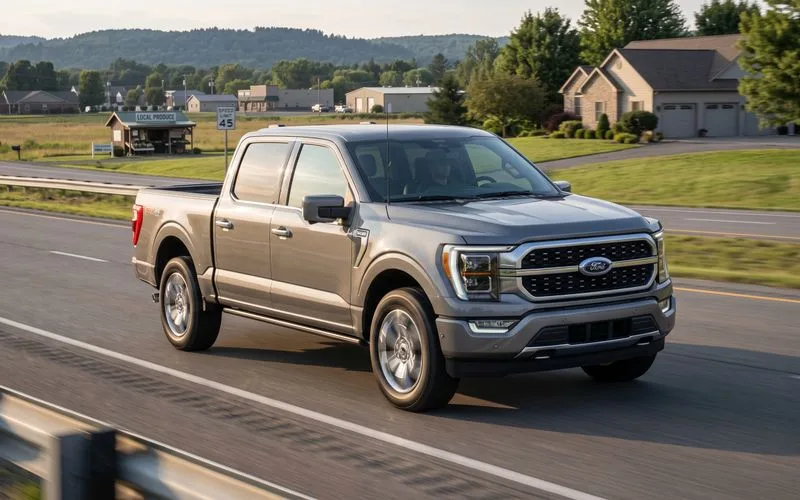 Ford F-150Full-Size TruckBetter at: Efficiency and resale
It matches or beats the Silverado on payload and work features, adds a PowerBoost hybrid at 23-25 MPG combined plus 7.2 kW of onboard jobsite power, and holds its value better.
Compare 2.42C+
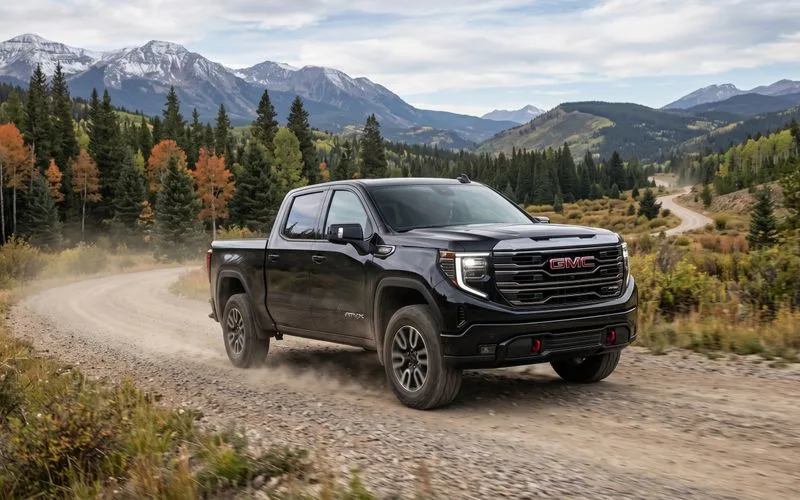 GMC Sierra 1500Full-Size TruckBetter at: Interior quality
Mechanically the same truck with a nicer cabin, the standard MultiPro tailgate on SLT and up, and slightly stronger residuals — worth the $3,000-$6,000 premium if the interior matters more than the invoice.
Compare 2.42C+
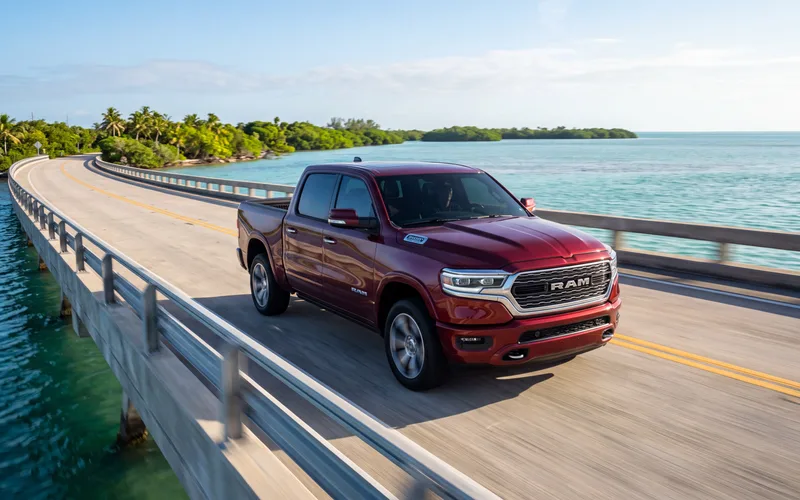 Ram 1500Full-Size TruckBetter at: Ride comfort
Its coil-sprung rear axle rides noticeably better unladen and its interiors are the segment's most comfortable, with a 33-gallon tank for longer legs between fills.
CompareHow it's evolved
10 scored model years · 2017–2026
Subject scores by year
Hover or tap a score to see what moved it versus the year before. A corner mark flags a big swing.
| Year | Performance | Efficiency | Safety | Space | Cost | Reliability | Tech | Use-case | Driving | Value |
|---|---|---|---|---|---|---|---|---|---|---|
| 2026 | 61 | 33 | 62 | 71 | 45 | 61 | 73 | 69 | 62 | 74 |
| 2025 | 61 | 29 | 61 | 73 | 45 | 66 | 73 | 67 | 62 | 74 |
| 2024 | 62 | 29 | 60 | 73 | 48 | 62 | 74 | 65 | 63 | 71 |
| 2023 | 61 | 31 | 64 | 70 | 45 | 59 | 69 | 66 | 62 | 73 |
| 2022 | 60 | 24 | 65 | 70 | 46 | 60 | 69 | 66 | 61 | 70 |
| 2021 | 59 | 37 | 43 | 68 | 56 | 50 | 54 | 65 | 60 | 64 |
| 2020 | 59 | 37 | 42 | 71 | 56 | 56 | 57 | 62 | 62 | 67 |
| 2019 | 59 | 37 | 37 | 68 | 56 | 53 | 55 | 60 | 59 | 66 |
| 2018 | 54 | 40 | 35 | 71 | 53 | 59 | 43 | 58 | 65 | 67 |
| 2017 | 54 | 40 | 36 | 69 | 61 | 56 | 43 | 61 | 65 | 67 |
Compare two years
Best fit & conditions
Higher scores mean a better fit for that use case. Learn more about use-case fit →
Subject profile
Trims & configurations
8 trimsScores above reflect the volume trim. Per-trim specs and scores are rolling out — the full lineup:
Academic Probation · NHTSA safety recalls
May 7, 2026Power train: transfer case (4-wheel drive)A component missing from the drivetrain transfer case may cause the front and/or rear wheels to lock up without warning to the driver.
Defect
General Motors, LLC (GM) is recalling certain 2026 Cadillac Escalade and Escalade ESV, Chevrolet Silverado 1500, Suburban, and Tahoe, and GMC Sierra 1500, Yukon, and Yukon XL vehicles with four-wheel (4WD) or all-wheel drive (AWD), and certain 2015-2020 Suburban, Escalade, Escalade ESV, Yukon, Yukon XL, and Tahoe vehicles. A component missing from the drivetrain transfer case may cause the front and/or rear wheels to lock up without warning to the driver.
Risk
Front or rear wheel lockup increases the risk of a crash.
Remedy
Owners are advised not to drive their vehicle until the remedy is completed. Dealers will inspect and, if necessary, replace the transfer case assembly, free of charge. Owner notification letters were mailed May 18, 2026. Owners may contact GMC customer service at 1-800-462-8782, Chevrolet customer service at 1-800-222-1020 or Cadillac customer service at 1-800-333-4223. GM's number for this recall is N262557620. Vehicle Identification Numbers (VINs) involved in this recall became searchable on NHTSA.gov on May 7, 2026.
NHTSA campaign 26V289000 ↗Manufacturer no. N26255762066 vehicles potentially affected (all models in the campaign)Owners notified May 18, 2026Filed by General Motors, LLCFiled as SILVERADO 1500Feb 26, 2026Equipment: other: owners/service/other manualGeneral Motors has decided that certain 2027 Chevrolet Bolt EV, 2025-2026 Cadillac OPTIQ, Chevrolet Colorado, Equinox EV, GMC Canyon, 2026 Buick Enclave, Envision, Cadillac CT5, Escalade, Escalade ESV, Escalade IQ, Escalade IQL, LYRIQ, VISTIQ, Chevrolet Blazer EV, Corvette Convertible, Corvette Coupe, Corvette Convertible E-Ray, Equinox, Silverado 1500, 2500, 3500, Silverado EV, Suburban 1500, Tahoe, Traverse, GMC Acadia, Hummer EV Pickup, Hummer EV SUV, Sierra 1500, 2500, 3500, Sierra EV, Terrain, Yukon, and Yukon XL vehicles. The radio may not have been set to the correct status to download the electronic owner's manual during production. As such, these vehicles fail to comply with the requirements of Federal Motor Vehicle Safety Standard number 208, âOccupant Protection.â
Defect
General Motors has decided that certain 2027 Chevrolet Bolt EV, 2025-2026 Cadillac OPTIQ, Chevrolet Colorado, Equinox EV, GMC Canyon, 2026 Buick Enclave, Envision, Cadillac CT5, Escalade, Escalade ESV, Escalade IQ, Escalade IQL, LYRIQ, VISTIQ, Chevrolet Blazer EV, Corvette Convertible, Corvette Coupe, Corvette Convertible E-Ray, Equinox, Silverado 1500, 2500, 3500, Silverado EV, Suburban 1500, Tahoe, Traverse, GMC Acadia, Hummer EV Pickup, Hummer EV SUV, Sierra 1500, 2500, 3500, Sierra EV, Terrain, Yukon, and Yukon XL vehicles. The radio may not have been set to the correct status to download the electronic owner's manual during production. As such, these vehicles fail to comply with the requirements of Federal Motor Vehicle Safety Standard number 208, âOccupant Protection.â
Risk
Without an owner's manual to consult, owners may not know how to safely use and operate the vehicle, increasing the risk of injury in a crash.
Remedy
Dealers will reset the vehicle radio, which will facilitate automatic download of the electronic ownerâs manual, free of charge. Owner notification letters were mailed April 16, 2026. Owners may contact GM customer service at 1-866-467-9700, Chevrolet customer service at 1-800-222-1020 or Cadillac customer service at 1-800-333-4223. The manufacturer's number for this recall is N252540430. Vehicle Identification Numbers (VINs) involved in this recall became searchable on NHTSA.gov on February 26, 2026.
NHTSA campaign 26V114000 ↗Manufacturer no. N2525404305,861 vehicles potentially affected (all models in the campaign)Owners notified Apr 16, 2026Filed by General Motors, LLCFiled as SILVERADO 1500Nov 25, 2025Equipment: other: owners/service/other manualThese vehicles may not have received an owner's manual during production. As such, these vehicles fail to comply with the requirements of Federal Motor Vehicle Safety Standard number 225, âChild Restraint Anchorage Systems.â
Defect
General Motors, LLC (GM) is recalling certain 2026 Chevrolet Silverado 1500, 2500, and 3500 vehicles. These vehicles may not have received an owner's manual during production. As such, these vehicles fail to comply with the requirements of Federal Motor Vehicle Safety Standard number 225, âChild Restraint Anchorage Systems.â
Risk
Without an owner's manual to consult, owners may not know how to safely use and operate the vehicle, increasing the risk of injury in a crash.
Remedy
Dealers will provide the ownerâs manual, free of charge. Owner notification letters were mailed December 30, 2025. Owners may contact Chevrolet customer service at 1-800-222-1020. GM's number for this recall is N252532020. Vehicle Identification Numbers (VINs) involved in this recall became searchable on NHTSA.gov on November 25, 2025.
NHTSA campaign 25V815000 ↗Manufacturer no. N2525320203,408 vehicles potentially affected (all models in the campaign)Owners notified Dec 30, 2025Filed by General Motors, LLCFiled as SILVERADO 1500
36 recalls on other model years of the Silverado 1500 (2017–2024)
Sep 24, 2026Air bags: side/window: curtain: inflatorThe left-side or right-side roof rail air bag (RRAB) inflator end cap may detach from the inflator or the inflator sidewall may rupture.
Defect
General Motors, LLC (GM) is recalling certain 2016 Chevrolet Silverado 2500/3500, GMC Sierra 2500/3500 vehicles, and 2016-2017 Chevrolet Silverado 1500 and GMC Sierra 1500 vehicles. The left-side or right-side roof rail air bag (RRAB) inflator end cap may detach from the inflator or the inflator sidewall may rupture.
Risk
A detached end cap or inflator rupture can allow compressed gas to escape and project the end cap or fragments of the inflator into the vehicle, increasing the risk of injury.
Remedy
Dealers will replace both RRAB modules, free of charge. Owner notification letters are expected to be mailed November 9, 2026. Owners may contact GMC customer service at 1-888-988-7267 or Chevrolet customer service at 1-800-222-1020. GM's number for this recall is N262569920. Vehicle Identification Numbers (VINs) involved in this recall became searchable on NHTSA.gov on September 24, 2026.
NHTSA campaign 26V611000 ↗Manufacturer no. N2625699201,559 vehicles potentially affected (all models in the campaign)Filed by General Motors, LLCFiled as SILVERADO 1500May 21, 2026Air bagsThe left-side or right-side roof rail air bag (RRAB) inflator end cap may detach from the inflator or the inflator sidewall may rupture.
Defect
General Motors, LLC (GM) is recalling certain 2018 Chevrolet Silverado 1500, GMC Sierra 1500, 2019 Chevrolet Silverado 2500, Silverado 3500, GMC Sierra 2500, and Sierra 3500 vehicles. The left-side or right-side roof rail air bag (RRAB) inflator end cap may detach from the inflator or the inflator sidewall may rupture.
Risk
A detached end cap or inflator rupture can allow compressed gas to escape and project the end cap or fragments of the inflator into the vehicle, increasing the risk of injury.
Remedy
Dealers will replace both RRAB modules, free of charge. Owner notification letters were mailed June 24, 2026. Owners may contact GMC customer service at 1-888-988-7267 or Chevrolet customer service at 1-800-222-1020. GM's number for this recall is N262557310. Vehicle Identification Numbers (VINs) involved in this recall became searchable on NHTSA.gov on May 21, 2026. This recall expands previous NHTSA recall number 26V166.
NHTSA campaign 26V325000 ↗Manufacturer no. N2625573104,315 vehicles potentially affected (all models in the campaign)Owners notified Jun 24, 2026Filed by General Motors, LLCFiled as SILVERADO 1500Mar 19, 2026Air bagsThe left or right-side roof rail air bag (RRAB) inflator end cap may detach from the inflator or the inflator sidewall may rupture.
Defect
General Motors, LLC (GM) is recalling certain 2018 Chevrolet Silverado 1500, GMC Sierra 1500, 2019 Chevrolet Silverado 2500, Silverado 3500, GMC Sierra 2500, and Sierra 3500 Crew Cab vehicles. The left or right-side roof rail air bag (RRAB) inflator end cap may detach from the inflator or the inflator sidewall may rupture.
Risk
A detached end cap or inflator rupture can allow compressed gas to escape and project the end cap or fragments of the inflator into the vehicle, increasing the risk of injury.
Remedy
Dealers will replace the left and right-side RRAB modules, free of charge. Owner notification letters were mailed April 16, 2026. Owners may contact GMC customer service at 1-888-988-7267 or Chevrolet customer service at 1-800-222-1020. GM's number for this recall is N262549710. Vehicle Identification Numbers (VINs) involved in this recall became searchable on NHTSA.gov on March 19, 2026.
NHTSA campaign 26V166000 ↗Manufacturer no. N2625497102,819 vehicles potentially affected (all models in the campaign)Owners notified Apr 16, 2026Filed by General Motors, LLCFiled as SILVERADO 1500Feb 12, 2026Power train: automatic transmission: control module: software · Power train: automatic transmission: fluid/lubricant: valves/valve bodyThe transmission control valve may fail and cause the rear wheels to lock up.
Defect
General Motors, LLC is recalling certain 2020 Chevrolet Silverado 2500, 3500, GMC Sierra 2500, 3500, and 2020-2022 Chevrolet Silverado 1500 and GMC Sierra 1500 vehicles that may have been repaired incorrectly under recall 24V797. The transmission control valve may fail and cause the rear wheels to lock up.
Risk
Rear wheel lock up increases the risk of a crash.
Remedy
Dealers will inspect the vehicles and update the transmission control software, free of charge. Owner notification letters were mailed March 6, 2026. Owners may contact GMC customer service at 1-800-462-8782 or Chevrolet customer service at 1-800-222-1020. GM's number for this recall is N252516560. Vehicle Identification Numbers (VINs) involved in this recall became searchable on NHTSA.gov on February 12, 2026.
NHTSA campaign 26V083000 ↗Manufacturer no. N2525165601,055 vehicles potentially affected (all models in the campaign)Owners notified Mar 6, 2026Filed by General Motors, LLCFiled as SILVERADO 1500Jun 26, 2025Air bagsThe left or right-side roof-rail air bag (RRAB) inflator end cap may detach from the inflator or the inflator sidewall may rupture.
Defect
General Motors (GM) is recalling certain 2018 GMC Sierra 1500, 2019 Sierra 2500, 3500, Chevrolet Silverado 3500, and Chevrolet Silverado 2500 and 2018 Chevrolet Silverado 1500 Crew Cab vehicles. The left or right-side roof-rail air bag (RRAB) inflator end cap may detach from the inflator or the inflator sidewall may rupture.
Risk
A detached end cap or inflator rupture can allow compressed gas to escape and project the end cap or fragments of the inflator into the vehicle, increases the risk of injury or crash.
Remedy
Dealers will replace the left and right side RRAB modules, free of charge. Owner notification letters were mailed July 23, 2025. Owners may contact GMC customer service at 1-888-988-7267 or Chevrolet customer service at 1-800-222-1020. GM's number for this recall is N252513060.
NHTSA campaign 25V432000 ↗Manufacturer no. N2525130601,658 vehicles potentially affected (all models in the campaign)Owners notified Jul 18, 2025Filed by General Motors, LLCFiled as SILVERADO 1500Apr 24, 2025Engine and engine cooling: engine: hard parts internal/mechanicalThe connecting rod and/or crankshaft engine components may have manufacturing defects that can lead to engine damage and engine failure.
Defect
General Motors LLC (GM) is recalling certain 2021-2024 Cadillac Escalade and Escalade ESV, Chevrolet Silverado 1500, Suburban, and Tahoe, GMC Sierra 1500, Yukon, and Yukon XL vehicles equipped with a 6.2L V8 gas engine. The connecting rod and/or crankshaft engine components may have manufacturing defects that can lead to engine damage and engine failure.
Risk
Engine failure increases the risk of a crash.
Remedy
Dealers will inspect the engine, and as necessary, repair or replace the engine. For vehicles that pass inspection, dealers will add higher viscosity oil, install 6 oil fill cap, replace the oil filter, and update the owner's manual. Repairs will be performed free of charge. Owner notification letters were mailed June 18, 2025. Owners may contact Cadillac customer service at 1-800-333-4223, Chevrolet customer service at 1-800-222-1020, or GMC customer service at 1-800-462-8782. GM's number for this recall is N252494000.
NHTSA campaign 25V274000 ↗Manufacturer no. N252494000597,571 vehicles potentially affected (all models in the campaign)Owners notified Jun 18, 2025Filed by General Motors, LLCFiled as SILVERADO 1500Oct 24, 2024Power train: automatic transmission: control module: software · Power train: automatic transmission: fluid/lubricant: valves/valve bodyThe transmission control valve may fail and cause the rear wheels to lock-up.
Defect
General Motors, LLC (GM) is recalling certain 2020-2022 Chevrolet Silverado 1500, 2500, 3500, GMC Sierra 1500, 2500, 3500, 2021 Cadillac Escalade, Escalade ESV, Chevrolet Tahoe, Suburban, GMC Yukon, and Yukon XL vehicles equipped with diesel engines. The transmission control valve may fail and cause the rear wheels to lock-up.
Risk
Rear wheel lock-up can increase the risk of a crash.
Remedy
Dealers will install new transmission control module software, free of charge. GM will provide a special coverage program to cover the repair of transmissions that are identified by the remedy software as containing a defective control valve. Owner notification letters were mailed December 12, 2024. Owners may contact GM customer service at 1-888-988-7267, Cadillac customer service at 1-800-458-8006, GMC customer service at GMC 1-800-462-8782 or Chevrolet customer service at 1-800-222-1020. GM's number for this recall is N242454440.
NHTSA campaign 24V797000 ↗Manufacturer no. N242454440463,295 vehicles potentially affected (all models in the campaign)Owners notified Dec 12, 2024Filed by General Motors, LLCFiled as SILVERADO 1500Oct 10, 2024Air bags: side/window: curtain: inflatorThe left or right-side roof-rail air bag (RRAB) inflator end cap may detach from the inflator or the inflator sidewall may rupture.
Defect
General Motors, LLC (GM) is recalling certain 2018 Chevrolet Silverado 1500, GMC Sierra 1500, 2018-2019 Chevrolet Silverado 2500, 3500, and GMC Sierra 2500, 3500 Crew Cab trucks. The left or right-side roof-rail air bag (RRAB) inflator end cap may detach from the inflator or the inflator sidewall may rupture.
Risk
A separated inflator end cap or inflator rupture can allow compressed gas to escape, resulting in the end cap or other components being propelled into the vehicle, increasing the risk of injury or crash.
Remedy
Dealers will replace the left and right side RRAB modules, free of charge. Owner notification letters were mailed November 8, 2024. Owners may contact Chevrolet customer service at 1-800-222-1020, and GMC Customer Service at 888-988-7267. GM's number for this recall is N242474500.
NHTSA campaign 24V756000 ↗Manufacturer no. N2424745002,061 vehicles potentially affected (all models in the campaign)Owners notified Nov 8, 2024Filed by General Motors, LLCFiled as SILVERADO 1500Sep 12, 2024Service brakes, hydraulic: brake fluid low warning: lamp · Service brakes, hydraulic: power assist: electric: control module: softwareThe electronic brake control module software may fail to display a warning light when a loss of brake fluid occurs. As such, these vehicles fail to comply with the requirements of Federal Vehicle Safety Standard number 135, "Light Vehicle Brake Systems."
Defect
General Motors, LLC (GM) is recalling certain 2023 Chevrolet Silverado 1500, GMC Sierra 1500, 2023-2024 Chevrolet Tahoe, Suburban, GMC Yukon, Yukon XL, Cadillac Escalade, and Escalade ESV vehicles. The electronic brake control module software may fail to display a warning light when a loss of brake fluid occurs. As such, these vehicles fail to comply with the requirements of Federal Vehicle Safety Standard number 135, "Light Vehicle Brake Systems."
Risk
Without a warning light, the vehicle may be driven with low brake fluid, which can reduce braking performance and increase the risk of a crash.
Remedy
The Electronic Brake Control Module (eBCM) software will be updated through an over-the-air (OTA) update or by a dealer, free of charge. Owner notification letters were mailed October 25, 2024. Owners can contact GMC customer service at 1-800-462-8782, Chevrolet customer service at 1-800-222-1020, or Cadillac customer service at 1-800-458-8006. GM's number for this recall is N242447990.
NHTSA campaign 24V674000 ↗Manufacturer no. N242447990449,671 vehicles potentially affected (all models in the campaign)Owners notified Oct 25, 2024Filed by General Motors, LLCFiled as SILVERADO 1500Aug 21, 2024Trailer hitchesThe rear bumper mounting bracket may not be sufficient for towing, which can allow the towed trailer to detach from the vehicle.
Defect
OEM Systems, LLC (OEM) is recalling certain 2024 Chevrolet Silverado vehicles. The rear bumper mounting bracket may not be sufficient for towing, which can allow the towed trailer to detach from the vehicle.
Risk
A trailer that detaches from a vehicle while driving increases the risk of a crash.
Remedy
OEM will replace the rear bumper mounting bracket and hitch, free of charge. Owner notification letters are expected to be mailed in August 2024. Owners may contact OEM customer service at 1-800-810-7252.
NHTSA campaign 24V626000 ↗38 vehicles potentially affected (all models in the campaign)Owners notified Dec 1, 2024Filed by OEM Systems, LLCFiled as SILVERADO 1500Dec 8, 2022Exterior lighting: lighting control module: softwareThe daytime running lights (DRLs) may not deactivate when the headlights are on. As such, these vehicles fail to comply with the requirements of Federal Motor Vehicle Safety Standard number 108, "Lamps, Reflective Devices, and Associated Equipment."
Defect
General Motors, LLC (GM) is recalling certain 2020-2023 Cadillac CT4 and CT5; 2021-2023 Buick Envision; and 2022-2023 Cadillac Escalade and Escalade ESV, Chevrolet Silverado 1500, Suburban, Tahoe, GMC Sierra 1500, Yukon, and Yukon XL vehicles. The daytime running lights (DRLs) may not deactivate when the headlights are on. As such, these vehicles fail to comply with the requirements of Federal Motor Vehicle Safety Standard number 108, "Lamps, Reflective Devices, and Associated Equipment."
Risk
DRLs that do not deactivate as intended may result in a glare, reducing visibility, and increasing the risk of a crash.
Remedy
The body control module software will be updated by a dealer, or through an over-the-air (OTA) update, free of charge. Owner notification letters were mailed January 23, 2023. Owners may contact GMC customer service at 1-888-988-7267, Chevrolet customer service at 1-800-222-1020, or Cadillac customer service at 1-800-458-8006. GM's number for this recall is N222386380. This recall expands previous recall number 22V-827.
NHTSA campaign 22V903000 ↗Manufacturer no. N222386380740,108 vehicles potentially affected (all models in the campaign)Owners notified Jan 23, 2023Filed by General Motors, LLCFiled as SILVERADO 1500Nov 23, 2022Air bags: air bag/restraint control moduleThe sensing diagnostic module (SDM) was left in manufacturing mode and not activated at the assembly plant prior to shipment. As such, these vehicles fail to comply with the requirements of Federal Motor Vehicle Safety Standard number 208, "Occupant Crash Protection."
Defect
General Motors, LLC (GM) is recalling certain 2022 Chevrolet Silverado 1500 vehicles. The sensing diagnostic module (SDM) was left in manufacturing mode and not activated at the assembly plant prior to shipment. As such, these vehicles fail to comply with the requirements of Federal Motor Vehicle Safety Standard number 208, "Occupant Crash Protection."
Risk
An SDM in manufacturing mode will not deploy the vehicle's air bags in a crash, increasing the risk of occupant injury.
Remedy
Dealers returned the vehicles to the GM assembly plant and the sensing diagnostic modules were activated. The vehicles had not been sold from dealer inventory and therefore no owner letters will be mailed. Owners may contact Chevrolet customer service at 1-800-222-1020. GM's number for this recall is N222387870.
NHTSA campaign 22V873000 ↗Manufacturer no. N2223878705 vehicles potentially affected (all models in the campaign)Owners notified Nov 23, 2022Filed by General Motors, LLCFiled as SILVERADO 1500Jun 30, 2022Exterior lighting: brake lightsGeneral Motors (GM) has decided that certain 2022 model year Chevrolet Silverado, and GMC Sierra vehicles equipped with an accessory sport bar. The accessory sport bar contains a high-mounted brake light that may not function. In addition, it may block the vehicle's existing high-mounted brake light. As such, these vehicles may fail to conform to Federal Motor Vehicle Safety Standard (FMVSS) number 108, "lamps, reflective devices, and associated equipment."
Defect
General Motors (GM) has decided that certain 2022 model year Chevrolet Silverado, and GMC Sierra vehicles equipped with an accessory sport bar. The accessory sport bar contains a high-mounted brake light that may not function. In addition, it may block the vehicle's existing high-mounted brake light. As such, these vehicles may fail to conform to Federal Motor Vehicle Safety Standard (FMVSS) number 108, "lamps, reflective devices, and associated equipment."
Risk
An inoperative high-mounted brake light can reduce visibility to other drivers and increase the risk of a crash.
Remedy
Dealers will inspect the installation of the accessory bar and provide the correct vehicle wiring, if necessary, free of charge. Interim owner notification letters advising owners of the safety risk were mailed on August 10, 2022. Owner notification letters were mailed on January 27, 2023. Owners may contact GM's customer service on 1-888-988-7267 or Chevrolet customer service at 1-800-222-1020.. GM's recall number for this recall is N222368110.
NHTSA campaign 22V463000 ↗Manufacturer no. N222368110242 vehicles potentially affected (all models in the campaign)Owners notified Jan 27, 2023Filed by General Motors, LLCFiled as SILVERADO 1500Dec 16, 2021Tires: temporary/emergency spare tireThe 17" spare tire provided with the vehicle is not compatible for use with the accessory wheels, which can cause the anti-lock brake system (ABS) to not function properly under certain conditions.
Defect
General Motors (GM) is recalling certain 2019-2021 GMC Sierra 1500 and Silverado 1500 vehicles equipped with certain accessory road tires and a 17" spare tire. The 17" spare tire provided with the vehicle is not compatible for use with the accessory wheels, which can cause the anti-lock brake system (ABS) to not function properly under certain conditions.
Risk
An ABS system that does not function properly can increase the risk of a crash.
Remedy
Dealers will provide a new 17" spare tire and wheel assembly that is compatible with the accessory wheels, free of charge. Dealers will also apply a new spare tire information label, and provide owners with an owner's manual insert clarifying which spare tire to use with the accessory road tires and with the 17" original tires. Owner notification letters were mailed February 7, 2022. Owners may contact GM customer service at 1-800-462-8782 or GMC customer service at 1-800-462-8782. GM's number for this recall is N212346510.
NHTSA campaign 21V985000 ↗Manufacturer no. N212346510626 vehicles potentially affected (all models in the campaign)Owners notified Feb 7, 2022Filed by General Motors, LLCFiled as SILVERADO 1500Jul 1, 2021Air bags: frontalThe front driver's side air bag module may be missing one or more metal tabs that secure the plastic air bag cover to the housing.
Defect
General Motors, LLC. (GM) is recalling certain 2021 Chevrolet Silverado 1500 vehicles. The front driver's side air bag module may be missing one or more metal tabs that secure the plastic air bag cover to the housing.
Risk
The missing tabs may prevent the air bag from deploying properly, increasing the risk of injury in a crash.
Remedy
Dealers will inspect the driver frontal air bag, and replace it if necessary, free of charge. Owner notification letters are expected to be mailed August 16, 2021. Owners may contact Chevrolet customer service at 1-800-222-1020. GM's number for this recall is N212336560.
NHTSA campaign 21V495000 ↗Manufacturer no. N21233656012 vehicles potentially affected (all models in the campaign)Owners notified Jul 29, 2021Filed by General Motors, LLCFiled as SILVERADO 1500Jun 3, 2021Tires · Tires: sidewallThe affected tires were cured for too long during production.
Defect
General Motors, LLC (GM) is recalling certain 2019 Chevrolet Silverado 1500 and GMC Sierra 1500 vehicles. The affected tires were cured for too long during production.
Risk
Over cured tires may develop a break in the sidewall resulting in sudden air loss or a belt edge separation which could lead to a tread/belt loss. Either condition can cause a loss of vehicle control, increasing the risk of a crash.
Remedy
Dealers inspect and replace the tires as necessary, free of charge, free of charge. Owner notification letters were mailed on June 25, 2021. Owners may contact Chevrolet customer service at 1-800-222-1020 and GMC customer service at 1-800-462-8782. GM's number for this recall is N212336230.
NHTSA campaign 21V423000 ↗Manufacturer no. N212336230896 vehicles potentially affected (all models in the campaign)Owners notified Jun 25, 2021Filed by General Motors, LLCFiled as SILVERADO 1500Feb 25, 2021TiresThe affected tires were cured for too long during production.
Defect
General Motors LLC (GM) is recalling certain 2020 Buick Enclave, Cadillac XT4, XT5, Escalade, Escalade ESV, Chevrolet Suburban, Tahoe, Traverse, GMC Yukon, Yukon XL, 2018-2021 Chevrolet Express, GMC Savana, 2019-2020 Chevrolet Blazer, Silverado 1500, GMC Acadia, Sierra 1500, and certain Continental tires sold to the aftermarket for various model year 2018-2021 vehicles. The affected tires were cured for too long during production.
Risk
Over cured tires may develop a break in the sidewall resulting in sudden air loss or a belt edge separation which could lead to a tread/belt loss. Either condition can cause a loss of vehicle control, increasing the risk of a crash.
Remedy
GM will notify owners, and dealers will inspect the tires, replacing them as necessary, free of charge. The recall began March 22, 2021. Owners may contact GMC customer service at 1-888-988-7267, Buick customer service at 1-866-608-8080, Chevrolet customer service at 1-800-222-1020 or Cadillac customer service at 1-800-458-8006. GM's number for this recall is N212329050.
NHTSA campaign 21V115000 ↗Manufacturer no. N21232905033,838 vehicles potentially affected (all models in the campaign)Owners notified Mar 22, 2021Filed by General Motors, LLCFiled as SILVERADO 1500Dec 23, 2020Seat belts · Seat belts: critical fastenersIncorrect bolts may have been used at one or more fastening locations to secure the seat belts to the vehicle. If an incorrect bolt was used, the seat belt may not be properly attached to the vehicle.
Defect
General Motors, LLC (GM) is recalling certain 2020 Chevrolet Bolt EV and 2021 GMC Canyon and Sierra 1500, 2500 and 3500, Yukon, Yukon XL, Cadillac Escalade and Escalade ESV and Chevrolet Blazer, Camaro, Colorado, Equinox, Silverado 1500, 2500 and 3500, Suburban and Tahoe vehicles. Incorrect bolts may have been used at one or more fastening locations to secure the seat belts to the vehicle. If an incorrect bolt was used, the seat belt may not be properly attached to the vehicle.
Risk
If a seat belt assembly is not properly attached to the vehicle, the seat belt may not properly restrain an occupant in the event of a crash, increasing the risk of injury.
Remedy
GM will notify owners, and dealers will replace the suspect bolts, free of charge. The recall began January 29, 2021. Owners may contact GMC customer service at 1-800-462-8785, Cadillac customer service at 1-800-458-8006, or Chevrolet customer service at 1-800-222-1020. GM's number for this recall is N202322230.
NHTSA campaign 20V811000 ↗Manufacturer no. N202322230470 vehicles potentially affected (all models in the campaign)Owners notified Jan 29, 2021Filed by General Motors, LLCFiled as SILVERADO 1500Dec 17, 2020Seat belts · Seat belts: critical fastenersThe seat belt brackets may not be secured to the seat frame in the front-row center seating position.
Defect
General Motors, LLC (GM) is recalling certain 2019-2021 Chevrolet Silverado 1500 and GMC Sierra 1500, 2021 Chevrolet Suburban and Tahoe and GMC Yukon XL and 2020-2021 Chevrolet Silverado 2500 and 3500 and GMC Sierra 2500 and 3500 vehicles. The seat belt brackets may not be secured to the seat frame in the front-row center seating position.
Risk
If a seat-belt bracket is not secured, the seat belt may not properly restrain an occupant in the front-row center seat position, increasing the risk of injury in a crash.
Remedy
GM will notify owners, and dealers will inspect left-side and right-side front-row center seat-belt bracket attachments and reassemble it correctly as necessary, free of charge. The recall began January 26, 2021. Owners may contact GMC customer service at 1-800-462-8782, Chevrolet customer service at 1-800-222-1020. GM's number for this recall is N202314670.
NHTSA campaign 20V792000 ↗Manufacturer no. N202314670624,216 vehicles potentially affected (all models in the campaign)Owners notified Jan 26, 2021Filed by General Motors, LLCFiled as SILVERADO 1500Nov 5, 2020TiresThe vehicles may have been manufactured with Continental tires that were overcured.
Defect
General Motors LLC (GM) is recalling certain 2020 Buick Enclave, Cadillac XT5, GMC Acadia and Chevrolet Traverse vehicles and 2020-2021 Chevrolet Silverado 1500, GMC Sierra 1500 vehicles. The vehicles may have been manufactured with Continental tires that were overcured.
Risk
Overcured tires may experience a carcass break in the sidewall resulting in a sudden air loss or could develop a belt edge separation which could lead to partial or full tread/belt loss. Either condition increases the risk of a crash.
Remedy
GM will notify owners, and dealers will inspect vehicles and replace tires that have DOT number and production mold number combinations identified by Continental, free of charge. The recall began December 17, 2020. Owners may contact GMC customer service at 1-888-988-7267, Buick customer service at 1-866-608-8080, Chevrolet customer service at 1-800-222-1020 or Cadillac customer service at 1-800-458-8006. GM's number for this recall is N202319030.
NHTSA campaign 20V684000 ↗Manufacturer no. N2023190307,516 vehicles potentially affected (all models in the campaign)Owners notified Dec 17, 2020Filed by General Motors LLCFiled as SILVERADO 1500Oct 22, 2020Power train: driveline: driveshaftOne of the driveshaft joints may not have been properly welded, causing the driveshaft to separate while the vehicle is moving.
Defect
General Motors LLC (GM) is recalling certain 2019-2020 Chevrolet Silverado 1500 and GMC Sierra 1500 and 2020 Chevrolet Silverado 2500 trucks. One of the driveshaft joints may not have been properly welded, causing the driveshaft to separate while the vehicle is moving.
Risk
If the driveshaft separates, there may be a loss of propulsion, increasing the risk of crash.
Remedy
GM will notify owners, and dealers will replace the driveshaft, free of charge. The recall is expected to begin December 2020. Owners may contact Chevrolet customer service at 1-800-222-1020 or GMC customer service at 1-888-988-7267. GM's number for this recall is N202314870.
NHTSA campaign 20V650000 ↗Manufacturer no. N20231487042 vehicles potentially affected (all models in the campaign)Owners notified Dec 10, 2020Filed by General Motors LLCFiled as SILVERADO 1500Oct 1, 2020Service brakes, hydraulic: power assist: vacuumThe output of the mechanical vacuum pump can decrease over time, decreasing the amount of vacuum/power brake assist.
Defect
General Motors LLC (GM) is recalling certain 2018 Cadillac Escalade, Chevrolet Silverado 1500 and Tahoe, GMC Sierra 1500 and Yukon vehicles equipped with either a 5.3L or 6.2L V8 engine. The output of the mechanical vacuum pump can decrease over time, decreasing the amount of vacuum/power brake assist.
Risk
A decrease in brake assist can increase the brake pedal effort and distance required to stop the vehicle, increasing the risk of a crash.
Remedy
GM will notify owners, and dealers will reprogram the Electronic Brake Control Module, free of charge. The recall began November 11, 2020. Owners may contact GM customer service at 1-866-522-9559, Cadillac customer service at 1-800-458-8006 or Chevrolet customer service at 1-800-630-2438. GM's number for this recall is N202300860.
NHTSA campaign 20V603000 ↗Manufacturer no. N20230086014,620 vehicles potentially affected (all models in the campaign)Owners notified Nov 11, 2020Filed by General Motors LLCFiled as SILVERADO 1500Jul 30, 2020Air bags: side/window: curtain: inflatorThe diffuser component of the Roof-Rail Air Bag (RRAB) inflator may not have been properly crimped to the inflator and could separate from the inflator during air bag deployment.
Defect
General Motors, LLC. (GM) is recalling certain 2020 Buick Enclave, Cadillac XT5 and XT6, Chevrolet Blazer, Silverado 1500, 2500 and 3500 and Traverse and GMC Acadia and Sierra 1500, 2500 and 3500 vehicles. The diffuser component of the Roof-Rail Air Bag (RRAB) inflator may not have been properly crimped to the inflator and could separate from the inflator during air bag deployment.
Risk
If the diffuser separates from the inflator during deployment, RRAB performance may be degraded, increasing the risk of injury in a crash.
Remedy
GM will notify owners, and dealers will replace the suspect RRAB modules, free of charge. The recall began September 3, 2020. Owners may contact Chevrolet customer service at 1-800-630-2438, Cadillac customer service at 1-800-333-4223, or Buick customer service at 1-800-521-7300. GM's number for this recall is N202305380.
NHTSA campaign 20V446000 ↗Manufacturer no. N202305380769 vehicles potentially affected (all models in the campaign)Owners notified Sep 3, 2020Filed by General Motors LLCFiled as SILVERADO 1500Feb 27, 2020Service brakes, hydraulic: foundation components: disc: caliperThe bolts used to attach the front and/or rear brake calipers may have not been heat treated and may break under load.
Defect
General Motors LLC (GM) is recalling certain 2020 Chevrolet Silverado 1500 and GMC Sierra 1500 vehicles. The bolts used to attach the front and/or rear brake calipers may have not been heat treated and may break under load.
Risk
Broken caliper bolts can reduce brake performance or interfere with wheel rotation and increase the risk of a crash.
Remedy
GM will notify owners, and dealers will replace the brake caliper bolts, free of charge. The recall began March 23, 2020. Owners may contact Chevrolet customer service at 1-800-222-1020 or GMC customer service at 1-866-522-9559. GM's number for this recall is N202294420.
NHTSA campaign 20V116000 ↗Manufacturer no. N20229442020,352 vehicles potentially affected (all models in the campaign)Owners notified Mar 23, 2020Filed by General Motors LLCFiled as SILVERADO 1500Jan 30, 2020Service brakes, hydraulic: power assistThese vehicles received updated software for the Electronic Brake Control Module (EBCM). This software has an error, and as a result, the vehicle's electronic brake assist may be disabled. As such, these vehicles fail to comply with the requirements of Federal Motor Vehicle Safety Standard (FMVSS) number 126, "Electronic Stability Control" and 135, "Light Vehicle Brake Systems."
Defect
General Motors LLC (GM) is recalling certain 2019 Chevrolet Silverado 1500 and GMC Sierra 1500 vehicles. These vehicles received updated software for the Electronic Brake Control Module (EBCM). This software has an error, and as a result, the vehicle's electronic brake assist may be disabled. As such, these vehicles fail to comply with the requirements of Federal Motor Vehicle Safety Standard (FMVSS) number 126, "Electronic Stability Control" and 135, "Light Vehicle Brake Systems."
Risk
A loss of electronic brake assist can increase the risk of a crash.
Remedy
GM will notify owners, and dealers will reprogram the EBCM, free of charge. The recall began February 24, 2020. Owners may contact Chevrolet customer service at 1-800-222-1020 or GMC customer service at 1-888-988-7267. GM's number for this recall is N192268091.
NHTSA campaign 20V055000 ↗Manufacturer no. N192268091148,055 vehicles potentially affected (all models in the campaign)Owners notified Feb 24, 2020Filed by General Motors LLCFiled as SILVERADO 1500Dec 12, 2019Electronic stability control (esc) · Service brakes · Service brakes, hydraulic: antilock/traction control/electronic limited slip: abs warning lightDue to an Electronic Brake Control Module (EBCM) software error, the vehicle's Electronic Stability Control (ESC) and Antilock Brake System (ABS) may become disabled. Furthermore, if this specific error occurs, the vehicle's diagnostics will not illuminate the instrument cluster ESC and ABS malfunction warning lights. As such, these vehicles fail to comply with the requirements of Federal Motor Vehicle Safety Standard (FMVSS) number 126, "Electronic Stability Control" and 135, "Light Vehicle Brake Systems."
Defect
General Motors LLC (GM) is recalling certain 2019 Chevrolet Silverado 1500, Cadillac CT6, and GMC Sierra 1500 vehicles. Due to an Electronic Brake Control Module (EBCM) software error, the vehicle's Electronic Stability Control (ESC) and Antilock Brake System (ABS) may become disabled. Furthermore, if this specific error occurs, the vehicle's diagnostics will not illuminate the instrument cluster ESC and ABS malfunction warning lights. As such, these vehicles fail to comply with the requirements of Federal Motor Vehicle Safety Standard (FMVSS) number 126, "Electronic Stability Control" and 135, "Light Vehicle Brake Systems."
Risk
If the driver operates the vehicle unaware that ESC and ABS are not functioning, there is an increased risk of a crash.
Remedy
GM will notify owners, and dealers will reprogram the EBCM, free of charge. The recall began February 4, 2020. Owners may contact Chevrolet customer service at 1-800-222-1020, Cadillac customer service at 1-800-333-4223, or GMC customer service at 1-888-988-7267. GM's number for this recall is N192268090.
NHTSA campaign 19V889000 ↗Manufacturer no. N192268090463,995 vehicles potentially affected (all models in the campaign)Owners notified Feb 4, 2020Filed by General Motors LLCFiled as SILVERADO 1500Dec 12, 2019Electrical system: 12v/24v/48v battery: cablesThe battery positive (B+) cable rings may have been manufactured with excessive glue, potentially causing an intermittent electrical connection between the B+ cable and alternator.
Defect
General Motors LLC (GM) is recalling certain 2019-2020 Chevrolet Silverado 1500 and GMC Sierra 1500 trucks. The battery positive (B+) cable rings may have been manufactured with excessive glue, potentially causing an intermittent electrical connection between the B+ cable and alternator.
Risk
An intermittent electrical connection between the B+ battery cable and the alternator could cause the vehicle to stall, increasing the risk of a crash. The intermittent connection could also lead to electrical arcing, which could generate sufficient heat to damage surrounding material, increasing the risk of a fire.
Remedy
GM will notify owners, and dealers will inspect for the presence of glue or other contamination at the B+ cable attachment to the alternator and clean the connection and reattach the B+ cable connection, as necessary. If arcing has damaged the cable, nut, or alternator, the dealer will replace the damaged components. All services will be performed free of charge. GM issued owners an interim notification on February 4, 2020. GM issued second notice and the recall began March 9, 2019. Owners may contact Chevrolet customer service at 1-800-222-1020 or GMC customer service at 1-888-988-7267. GM's number for this recall is N192273510.
NHTSA campaign 19V888000 ↗Manufacturer no. N192273510350,371 vehicles potentially affected (all models in the campaign)Owners notified Mar 9, 2020Filed by General Motors LLCFiled as SILVERADO 1500Nov 21, 2019Fuel system, gasoline: delivery: fuel pumpThe fuel pump may be missing a pressure regulator, allowing for over-pressurization of the fuel system.
Defect
General Motors LLC (GM) is recalling certain 2020 Cadillac Escalade, Escalade ESV, Chevrolet Camaro, Silverado 1500, Suburban, Tahoe, GMC Sierra 1500, Yukon, and Yukon XL vehicles. The fuel pump may be missing a pressure regulator, allowing for over-pressurization of the fuel system.
Risk
Over-pressurization can crack the fuel pump and cause leaks, increasing the risk of a fire in the presence of an ignition source.
Remedy
GM will notify owners, and dealers will replace the fuel pump, free of charge. The recall began December 18, 2019. Owners may contact Cadillac customer service at 1-800-333-4223, Chevrolet customer service at 1-800-222-1020, or GMC customer service at 1-888-988-7267. GM's number for this recall is N192283991.
NHTSA campaign 19V837000 ↗Manufacturer no. N192283991502 vehicles potentially affected (all models in the campaign)Owners notified Dec 18, 2019Filed by General Motors LLCFiled as SILVERADO 1500Nov 14, 2019Seat belts: pretensionerWhen the front seat belt pretensioners deploy, hot gas may vent through an opening in the pretensioner bracket, possibly igniting the carpet.
Defect
General Motors LLC (GM) is recalling certain 2019-2020 Chevrolet Silverado 1500 and GMC Sierra 1500, and 2020 Silverado 2500, Silverado 3500, Sierra 2500, and Sierra 3500 vehicles equipped with carpet floor covering. When the front seat belt pretensioners deploy, hot gas may vent through an opening in the pretensioner bracket, possibly igniting the carpet.
Risk
A vehicle fire could result if materials ignite inside the vehicle.
Remedy
GM will notify owners, and dealers will close off the opening in the pretensioner bracket, free of charge. The recall began December 13, 2019. Owners may contact Chevrolet customer service at 1-800-222-1020 or GMC customer service at 1-888-988-7267. GM's number for this recall is N192270600.
NHTSA campaign 19V814000 ↗Manufacturer no. N192270600556,399 vehicles potentially affected (all models in the campaign)Owners notified Dec 13, 2019Filed by General Motors LLCFiled as SILVERADO 1500Oct 24, 2019Electronic stability control (esc) · Service brakes · Service brakes, hydraulic: antilock/traction control/electronic limited slip: wheel speed sensor/tone ringIf a wheel-speed sensor fails, while the vehicle is traveling between 41 and 60 mph in four-wheel or automatic mode, the Electronic-Brake Control Module (EBCM) software may activate the driveline-protection system.
Defect
General Motors LLC (GM) is recalling certain 2015-2020 Chevrolet Suburban, Tahoe, and GMC Yukon, and 2014-2018 Chevrolet Silverado 1500 and GMC Sierra 1500 vehicles equipped with a 5.3-liter engine, a 3.08-ratio rear axle and four-wheel drive. If a wheel-speed sensor fails, while the vehicle is traveling between 41 and 60 mph in four-wheel or automatic mode, the Electronic-Brake Control Module (EBCM) software may activate the driveline-protection system.
Risk
Unintended activation of the driveline-protection system will cause unintended braking on the wheel on the opposite side of the failed sensor, causing the vehicle to pull to one side unexpectedly, increasing the risk of a crash.
Remedy
GM will notify owners, and dealers will reprogram the EBCM, free of charge. The recall began December 11, 2019. Owners may contact Chevrolet customer service at 1-800-630-2438 or GMC customer service at 1-800-462-8782. GM's number for this recall is N192261050.
NHTSA campaign 19V761000 ↗Manufacturer no. N192261050652,967 vehicles potentially affected (all models in the campaign)Owners notified Dec 11, 2019Filed by General Motors LLCFiled as SILVERADO 1500Sep 6, 2019Service brakes, hydraulic: power assist: vacuumThe amount of vacuum created by the vacuum pump may decrease over time.
Defect
General Motors LLC (GM) is recalling certain 2015-2017 Cadillac Escalade, 2014-2018 Chevrolet Silverado, GMC Sierra, 2015-2018 Chevrolet Suburban, Tahoe, GMC Yukon vehicles. The amount of vacuum created by the vacuum pump may decrease over time.
Risk
As the vacuum level drops, the brake assist decreases, increasing braking effort, extending the distance required to stop the vehicle, thereby increasing the risk of a crash.
Remedy
GM will notify owners, and dealers will reprogram the Electronic Brake Control Module, free of charge. The recall began October 8, 2019. Owners may contact Chevrolet customer service at 1-800-630-2438, Cadillac customer service at 1-800-458-8006 or GMC customer service at 1-800-462-8782. GM's number for this recall is N192268490.
NHTSA campaign 19V645000 ↗Manufacturer no. N1922684903,456,719 vehicles potentially affected (all models in the campaign)Owners notified Oct 8, 2019Filed by General Motors LLCFiled as SILVERADO 1500Dec 6, 2018Air bags: frontal: passenger side: inflator moduleThe passenger-side frontal air bag module may have been damaged during assembly, possibly resulting in the air bag not inflating properly in the event of a crash.
Defect
General Motors LLC (GM) is recalling certain 2019 Chevrolet Silverado 1500 Crew Cab and GMC Sierra 1500 Crew Cab vehicles. The passenger-side frontal air bag module may have been damaged during assembly, possibly resulting in the air bag not inflating properly in the event of a crash.
Risk
In the event of a crash, an air bag that does not inflate properly can increase the risk of injury.
Remedy
GM will notify owners, and dealers will replace the passenger side air bag module, free of charge. The recall began on December 18, 2018. Owners may contact Chevrolet customer service at 1-800-222-1020 and GMC customer service at 1-800-462-8782. GM's number for this recall is N182198820.
NHTSA campaign 18V868000 ↗Manufacturer no. N182198820154 vehicles potentially affected (all models in the campaign)Owners notified Dec 18, 2018Filed by General Motors LLCFiled as SILVERADO 1500Aug 3, 2017Child seat: tether: connector/clipThe owner's manual for the affected vehicles may be missing instructions on how to use the tether anchorage and child restraint anchorage systems. As such, these vehicles fail to comply with the requirements of Federal Motor Vehicle Safety Standard (FMVSS) number 225, "Child Restraint Anchorage Systems."
Defect
General Motors LLC (GM) is recalling certain 2017 Chevrolet Silverado 1500, and GMC Sierra 1500 trucks. The owner's manual for the affected vehicles may be missing instructions on how to use the tether anchorage and child restraint anchorage systems. As such, these vehicles fail to comply with the requirements of Federal Motor Vehicle Safety Standard (FMVSS) number 225, "Child Restraint Anchorage Systems."
Risk
If the instructions are missing from the owner's manual, the child seat may be installed incorrectly and not be properly secured, increasing the risk of injury in a crash.
Remedy
GM will notify owners, and dealers will provide a corrected insert for the owners manual, free of charge. The recall began on September 25, 2017. Owners may contact GM customer service at 1-800-222-1020 (Chevrolet), or 1-800-462-8782 (GMC). GM's number for this recall is 17307.
NHTSA campaign 17V487000 ↗Manufacturer no. 1730729,647 vehicles potentially affected (all models in the campaign)Owners notified Sep 25, 2017Filed by General Motors LLCFiled as SILVERADO 1500Jul 10, 2017Air bags: frontal · Air bags: frontal: sensor/control module-inactive · Seat belts: pretensionerWhile being previously remedied for recall 16V-651, the affected vehicles may not have received the complete software update necessary to remedy the recall condition. Without the update, certain driving conditions may cause the air bag sensing and diagnostic module (SDM) software to activate a diagnostic test. During this test, deployment of the frontal air bags and the seat belt pretensioners would not occur in the event of a crash.
Defect
General Motors LLC (GM) is recalling certain model year 2014-2016 Buick Lacrosse and Chevrolet Spark EV, Caprice PPV and SS vehicles, 2014-2017 Buick Encore and Chevrolet Corvette, Silverado 1500 and GMC Sierra 1500 vehicles, 2015-2016 Cadillac Escalade and Escalade ESV, Chevrolet Tahoe, Trax, Suburban and Silverado 2500 and 3500 and GMC Yukon and Yukon XL vehicles, and 2015-2017 GMC Sierra HD 2500 and 3500 vehicles. While being previously remedied for recall 16V-651, the affected vehicles may not have received the complete software update necessary to remedy the recall condition. Without the update, certain driving conditions may cause the air bag sensing and diagnostic module (SDM) software to activate a diagnostic test. During this test, deployment of the frontal air bags and the seat belt pretensioners would not occur in the event of a crash.
Risk
A failure of the front air bags or seat belt pretensioners to deploy in the event of a crash necessitating deployment increases the risk of injury to the driver and front passenger.
Remedy
GM will notify owners, and dealers will reflash the SDM software. Vehicles that have had a previous air bag deployment will have the SDM replaced. These repairs will be performed free of charge. The recall began on August 4, 2017. Owners may contact Buick customer service at 1-800-521-7300, Cadillac customer service at 1-800-458-8006, Chevrolet customer service at 1-800-222-1020, or GMC customer service at 1-800-462-8782. GM's number for this recall is 17287.
NHTSA campaign 17V437000 ↗Manufacturer no. 1728740,683 vehicles potentially affected (all models in the campaign)Owners notified Aug 4, 2017Filed by General Motors LLCFiled as SILVERADO 1500Sep 8, 2016Air bags: frontal · Air bags: frontal: sensor/control module-inactive · Seat belts: pretensionerIn the affected vehicles, certain driving conditions may cause the air bag sensing and diagnostic module (SDM) software to activate a diagnostic test. During this test, deployment of the frontal air bags and the seat belt pretensioners would not occur in the event of a crash.
Defect
General Motors LLC (GM) is recalling certain model year 2015-2017 Chevrolet Silverado 2500 HD, 3500 HD, Tahoe, Suburban, GMC Sierra 2500 HD and 3500 HD, GMC Yukon, GMC Yukon XL, Cadillac Escalade and Cadillac Escalade ESV vehicles and 2014-2017 Chevrolet Corvette, Silverado 1500, Trax, Caprice Police Pursuit Vehicle, GMC Sierra 1500, Buick Encore, and 2014-2016 Buick Lacrosse, Chevrolet Spark EV and SS vehicles. In the affected vehicles, certain driving conditions may cause the air bag sensing and diagnostic module (SDM) software to activate a diagnostic test. During this test, deployment of the frontal air bags and the seat belt pretensioners would not occur in the event of a crash.
Risk
A failure of the front air bags or seat belt pretensioners to deploy in the event of a crash necessitating deployment increases the risk of injury to the driver and front passenger.
Remedy
GM will notify owners, and dealers will reflash the SDM software. Vehicles that have had a previous air bag deployment will have the SDM replaced. These repairs will be performed free of charge. The recall began on October 13, 2016. Owners may contact Buick customer service at 1-800-521-7300, Cadillac customer service at 1-800-458-8006, Chevrolet customer service at 1-800-222-1020, or GMC customer service at 1-800-462-8782. GM's number for this recall is 16007.
NHTSA campaign 16V651000 ↗Manufacturer no. 160073,640,162 vehicles potentially affected (all models in the campaign)Owners notified Oct 13, 2016Filed by General Motors LLCFiled as SILVERADO 1500Apr 28, 2016Suspension: front: control armThe front upper control arms may have inadequate welds near the control arm bushing.
Defect
General Motors LLC (GM) is recalling certain model year 2016-2017 Chevrolet Silverado 1500 and 2016 Cadillac Escalade, Cadillac Escalade ESV, Chevrolet Suburban, Chevrolet Tahoe, GMC Sierra, GMC Yukon and GMC Yukon XL vehicles. The front upper control arms may have inadequate welds near the control arm bushing.
Risk
Inadequate welds may allow the control arm to separate from the bushing, compromising steering and increasing the risk of a crash.
Remedy
GM will notify owners, and dealers will replace the left and right front upper control arms and realign the vehicle, free of charge. The recall began on May 18, 2016. Until the repairs have been made, owners are advised not to drive their vehicles. Owners may contact Chevrolet customer service at 1-800-222-1020, Cadillac customer service at 1-800-458-8006, or GMC customer service at 1-800-462-8782. GM's number for this recall is 42190.
NHTSA campaign 16V256000 ↗Manufacturer no. 421903,738 vehicles potentially affected (all models in the campaign)Owners notified May 18, 2016Filed by General Motors LLCFiled as SILVERADO 1500
Source: NHTSA Office of Defects Investigation recall database, model years 2017–2026. Recalls are listed by model year as the manufacturer filed them; whether a specific car is affected depends on its VIN — check a VIN at nhtsa.gov ↗. NHTSA model names matched to this page: SILVERADO 1500.
Detailed scoring by subject
1Performance & PowertrainOne of the Silverado 1500's weakest categories.2.09C
The volume LT/RST configuration ships with the 5.3L EcoTec3 V8 rated 355 hp. The range spans 310 hp (2.7L TurboMax, standard on WT/Custom/LT) to 420 hp (6.2L V8 on LTZ/High Country/ZR2), plus the 305-hp 3.0L Duramax turbo-diesel I6.
The 5.3L V8 peaks at 383 lb-ft @ 4,100 rpm — mid-pack for a half-ton on the volume engine. The lineup's torque leader is the 3.0L Duramax at 495 lb-ft, and even the base 2.7L TurboMax four-cylinder out-torques the 5.3L at 430 lb-ft.
Instrumented tests of the Silverado 1500 with the 5.3L V8 cluster around 6.5–6.7 s to 60 mph — respectable but well off the sub-4-second EV trucks that anchor the top of the segment band. The 6.2L V8 drops into the low 5s and the Duramax trades outright pace for midrange pull.
The 5.3L and 6.2L small-block V8s deliver the smooth, lag-free low-end torque that defines the segment, and the Duramax I6 is unusually quiet and vibration-free for a diesel. The 2.7L TurboMax is strong off idle but reviewers consistently note a coarse, buzzy character at higher revs — enough to keep this out of the top band.
GM's 10-speed automatic (6.2L, 3.0L Duramax and upper-trim 5.3L) shifts crisply and holds gears sensibly in tow/haul mode. Lower-trim 5.3L and 2.7L configurations use the 8-speed, which draws more complaints for occasional hunting and a soft part-throttle response — a slight net drag versus the all-10-speed rivals.
Properly equipped with the 5.3L V8 and Max Trailering Package, the Silverado 1500 tows 13,300 lbs — near the top of the half-ton class and just shy of the F-150's peak. Real-world trims sit lower: the 2.7L TurboMax rates about 9,500 lbs and the off-road ZR2 drops to roughly 8,900 lbs on its off-road gearing and tires.
Best-case payload of about 2,260 lbs comes on the lightest Work Truck 2WD configuration; retail LT/RST/High Country trims land in the 1,700–2,100 lb range and the ZR2 is lowest at roughly 1,440 lbs. Solidly mid-pack — the F-150's ~2,455 lb peak remains the class benchmark.
Chevrolet's Advanced Trailering System is among the most complete half-ton towing suites available: integrated trailer brake controller, tow/haul mode, up to 14 camera views including Transparent Trailer, hitch guidance with hitch-view zoom, jackknife alert, trailer light test, trailer tire pressure and temperature monitoring, and stored trailer profiles. Falls a point below the Sierra only because GMC's MultiPro tailgate adds a hitch-access step the Silverado's Multi-Flex tailgate handles less elegantly.
4WD is optional on every trim and standard on both Trail Boss trims and the ZR2, with a two-speed transfer case, available Autotrac automatic 4WD, terrain modes, and front and rear electronic locking differentials on the ZR2. The Trail Boss trims put standard 4WD and a 2-inch lift well down the price ladder, which broadens real availability more than most rivals. Short of the top band only because base WT/Custom trucks remain 2WD by default.
The ZR2 is genuine full-size off-road hardware — Multimatic DSSV spool-valve dampers, front and rear electronic lockers, 33-inch mud-terrain tires, skid plates and roughly 11.2 in. of ground clearance — and the ZR2 Bison adds AEV boron-steel skid plates and heavier-duty protection. Two Trail Boss tiers below it give the range unusual off-road depth. Rates a notch above the Sierra AT4X for the Bison variant and the wider off-road trim spread, still short of the wide-body long-travel Raptor tier.
Four genuinely distinct powertrains — 2.7L TurboMax I4, 5.3L V8, 6.2L V8 and 3.0L Duramax I6 diesel — cover economy, mainstream torque, maximum power and long-haul efficiency, which is broader than most of the class. The lineup is capped below the top band by the complete absence of electrification: no hybrid, no PHEV, and the Silverado EV is a separate model rather than a trim of this truck.
2Efficiency & RangeThe Silverado 1500's lowest-graded category.0.18F
EPA combined figure for the mainstream 5.3L EcoTec3 V8 4WD Crew Cab (LT/RST volume configuration) — the most-installed engine in the Silverado 1500 line. The 3.0L Duramax I6 diesel is the efficiency standout at 24–26 MPG combined, and the standard 2.7L TurboMax I4 splits the difference at 19–20 MPG.
EPA city figure for the volume 5.3L V8 4WD configuration. Dynamic Fuel Management cylinder deactivation helps, but stop-and-go is exactly where a naturally aspirated big V8 concedes the most to hybrid rivals — the F-150 PowerBoost manages 22 MPG city in 4x4 and 25 MPG city in 2WD.
EPA highway rating for the volume 5.3L V8 4WD trim. The 3.0L Duramax 2WD posts a class-leading 30 MPG highway among full-size pickups, which is the single strongest efficiency argument in the Silverado catalog.
The standard 24-gallon tank on Crew Cab short-bed trims × 17 MPG combined yields roughly 408 miles — mid-pack at best for a full-size truck, and well short of the Ram 1500's 33-gallon tank or the F-150's optional 36-gallon extended-range tank. The optional 28-gallon tank helps materially, and the Duramax paired with it comfortably clears 650 miles.
EPA estimate for the volume 5.3L V8 4WD configuration at 15,000 mi/yr under standard fuel-price assumptions (~882 gal/yr at 17 MPG combined). The Duramax diesel cuts annual fuel spend by roughly $800, while the 6.2L V8's premium-fuel recommendation pushes cost above the 5.3L baseline despite only a 1 MPG combined deficit.
The volume 5.3L V8 and the standard 2.7L TurboMax both run on regular 87-octane, and the 3.0L Duramax uses widely-available ULSD, so mainstream WT/Custom/LT/RST/LTZ buyers face no premium-fuel penalty. Held below the 80+ tier because the 6.2L V8 (standard on High Country and ZR2) recommends premium, and the Duramax adds a per-gallon diesel premium plus periodic DEF top-ups — two of the four engines carry higher-cost fuel needs even though the volume configuration does not.
3SafetyMid-pack among this car's ten categories.2.20C
The fourth-generation (T1XX) Silverado 1500 Crew Cab carries a 4-star NHTSA overall score — 5 stars in the side barrier/pole tests, 4 stars frontal, and 3 stars rollover, the usual penalty for a tall 4WD full-size pickup. Nothing in the 2026 configuration changes the crash structure, so the current-generation result carries forward.
Good results in the original moderate overlap, small overlap, and roof strength tests, but the updated moderate overlap front test returns Marginal on rear-passenger restraint kinematics and the updated side test is no better than Acceptable — the Silverado 1500 is not a Top Safety Pick and has not been one this generation. Weak seat-belt reminders and trim-dependent headlights close off the award independently.
Chevy Safety Assist is standard on every 2026 trim from Work Truck up: automatic emergency braking, forward collision alert, front pedestrian braking, lane keep assist with lane departure warning, IntelliBeam auto high beams, and a following distance indicator. The gap is that adaptive cruise, blind zone alert, and rear cross traffic alert are still option-package items on WT/Custom and only standard from the upper trims — so a base full-size pickup leaves the lot without blind-spot coverage.
Front crash prevention on this platform earns Advanced-to-Superior daytime vehicle-to-vehicle results with working pedestrian detection, but nighttime pedestrian performance trails the best Ford and Toyota systems under the tougher updated IIHS protocol.
Blind Zone Alert with Lane Change Alert and Rear Cross Traffic Braking are alert-and-brake capable and standard from the mid trims up, and the Advanced Trailering package extends blind-spot coverage along the length of an attached trailer — genuinely useful for a tow rig. Points come off because the coverage is optional on WT and Custom.
Lane keep assist with lane departure warning is standard, but it is a reactive nudge system — true lane centering arrives only with Super Cruise on the trims that offer it. Reviewers describe the base assist as adequate on straight highway and prone to late, abrupt corrections on curves.
Full-speed-range adaptive cruise with stop-and-go is standard on LTZ and High Country and optional below, and it forms the base layer under Super Cruise. It holds gaps smoothly on open highway but brakes later and resumes more lazily than Ford's BlueCruise-integrated ACC.
Super Cruise — hands-free driving with automatic lane change on mapped roads — is available across a broad slice of the 2026 Silverado 1500 range (LT Trail Boss, RST, LTZ, High Country, ZR2), reaching lower price points than most rivals' hands-free options. It is GM's most mature ADAS with roughly 750,000 miles of mapped North American road coverage, and it remains unavailable on WT/Custom.
LED headlamps with IntelliBeam auto high beams are standard lineup-wide, but IIHS evaluations of this platform have come back Marginal-to-Acceptable depending on trim and beam pattern, with only the top lighting configurations reaching Good. Volume LT/RST trucks get the mid-tier result.
Sightlines are typical modern full-size pickup — high belt line, long flat hood with a substantial forward blind zone, thick pillars, and rear headrests intruding on the mirror view. HD Surround Vision with up to 14 camera views, including transparent-trailer and hitch views, compensates well at low speed but is optional or upper-trim content; a WT leaves you with a single rear camera.
The Crew Cab — the dominant body style — has wide, near-square rear door openings, a flat floor, roughly 43 in of rear legroom, and exposed lower LATCH anchors on both outboard positions with three top tethers, so rear-facing installs and three-across attempts are easier here than in most rivals. The center seat is belt-only and Double Cab buyers give up meaningful rear space.
4Space & ComfortOne of the Silverado 1500's strongest categories.2.79B-
The volume 2026 Crew Cab LT/RST configuration seats 5 with front buckets and a floor console; the 40/20/40 split-bench front seat raises capacity to 6 on work-oriented trims. Scored on the same 5-seat basis as the F-150 SuperCrew and GMC Sierra Crew Cab in this dataset.
Chevrolet-published front headroom for the Crew Cab without sunroof; carried unchanged through the current (2019–) T1XX generation, including 2026. Tops the full-size truck normalization band.
Chevrolet-published front legroom for the Crew Cab, identical to the mechanically twinned GMC Sierra 1500 and near the top of the segment band.
Second-row headroom of the volume Crew Cab. Comfortable for adults but a step behind the tallest-roofed rivals, landing mid-band for full-size trucks.
Crew Cab second-row legroom is class-competitive, effectively level with the Sierra 1500 (43.6 in) and F-150 SuperCrew and well ahead of any mid-size truck.
The volume Crew Cab pairs with the 5'8" Short Box, which sits low in the 54–98 in truck band; the Standard and Long boxes are available on Crew Cab and Regular/Double Cab respectively.
GM's wide, tall Durabed gives the short box more volume than the F-150's 5.5-ft bed (52.8 cu ft) despite similar floor length — a genuine packaging advantage.
Strong practical package: deep center console with wireless charging, large under-rear-seat storage bin, 12 standard bed tie-downs, CornerStep rear bumper and integrated bed side steps, plus an available 120V bed outlet and the Multi-Flex tailgate. Scores just below the Sierra (76) because the six-function tailgate is a cost option here rather than standard on upper trims, and below the F-150 (80), which adds Pro Power Onboard and the fold-flat interior work surface.
LT and above get well-shaped, supportive front seats with heating, and the Crew Cab rear bench is roomy with a usable backrest angle. Held back by flat, thinly padded cloth seats on WT/Custom and the absence of the massaging front seats offered on the Sierra Denali; High Country's perforated leather with ventilation is the comfort high-water mark.
Composed and well-damped for a body-on-frame half-ton, with Adaptive Ride Control available at the top of the range and Multimatic DSSV dampers on the ZR2, but the rear leaf-spring axle stays busier unladen than the coil-sprung Ram 1500. Essentially identical to the Sierra 1500 (66); Trail Boss/ZR2 off-road trims trade on-road settling for suspension travel.
The post-2022 interior overhaul brought better sealing, active noise cancellation and acoustic front side glass on upper trims, making highway cruising hushed on LTZ/High Country. Work-trim cabins with the 2.7L TurboMax four transmit more powertrain drone, so the lineup average trails the Sierra (72) and F-150 (75).
Dual-zone automatic climate and heated front seats plus heated steering wheel arrive at LT, with ventilated front seats and heated rear outboard seats from LTZ/High Country and remote start with remote climate standard across the range. Falls short of the Sierra (76), where heated seats and wheel start a trim earlier and Denali adds tri-zone climate.
5Cost of OwnershipOne of the Silverado 1500's weakest categories.1.01D
Unlike the mechanically identical Sierra 1500, the Silverado 1500 still offers a Regular Cab in Work Truck trim, so its entry price sits roughly $4,000 below the Sierra's Pro Double Cab opener and just under the F-150 XL Regular Cab. 2026 carries the fourth-gen (T1XX) truck forward from the 2024 refresh with a typical model-year price walk rather than a redesign.
Silverado's volume sits in LT and RST Crew Cab 4WD rather than the top trims, so as-equipped transaction configs land meaningfully below the Denali-heavy Sierra (~$61K) while running a couple thousand above the F-150 XLT SuperCrew (~$54.5K), which draws from a cheaper mid-trim mix.
Mid-pack for a full-size gas half-ton: commodity parts, the broadest dealer service network in the segment, and simple pushrod V8 service on the volume 5.3L. Lands a shade under the Sierra ($7,300) because Silverado's trim mix carries fewer premium wear items (large wheels, AT4/Denali-grade brakes), and near the F-150 ($7,000). The 3.0L Duramax raises the figure via costlier oil-change and emissions-system service.
The weakest line in the Silverado's ownership case and the heaviest-weighted item here. Residuals trail the F-150 and Sierra by roughly two points: Silverado carries the segment's largest fleet and rental share and leans hardest on incentives, both of which depress used values. Still well ahead of EV half-tons, and Duramax diesel and Trail Boss/ZR2 configs retain best within the lineup.
GM's standard bumper-to-bumper term, unchanged for over a decade and identical to the Sierra 1500. This is the industry floor — matched by Ford, Ram, and Toyota, but far behind Hyundai/Kia's 5-year/60,000-mile coverage, so it scores at the bottom of the 3–5 year band.
GM's standard powertrain term and the segment floor, matching Ford, Ram, and Toyota but well behind Nissan's 5-year/100,000-mile and Hyundai's 10-year/100,000-mile coverage. Scores at the bottom of the 5–10 year band. The 3.0L Duramax carries the federally mandated 8-year/80,000-mile emissions-component coverage on top.
Chevrolet includes one complimentary maintenance visit (oil change, tire rotation, multi-point inspection), 5-year/60,000-mile roadside assistance, and OnStar/Chevrolet Connected Services trials. That is a single token service visit rather than a real maintenance plan — behind Toyota's 2-year/25,000-mile ToyotaCare on the Tundra, though ahead of Ford, which includes no scheduled maintenance at all. Scored a notch under the Sierra (55), which runs the same GM program but layers premium concierge perks on Denali trims that the Silverado lineup has no equivalent to.
$56,500 volume-trim price minus its estimated resale value after 5 years (58% retained, or about $32,770) leaves about $23,730 in depreciation. Add the projected $7,100 in 5-year maintenance and repairs, and owning this vehicle for 5 years costs about $30,830 in total.
6Reliability & QualityMid-pack among this car's ten categories.2.10C
The T1XX Silverado 1500 has drawn at-or-below-average predicted reliability from Consumer Reports for several consecutive years, with owner complaints concentrated on 5.3L/6.2L V8 Dynamic Fuel Management lifter failures, 10-speed torque-converter shudder, and infotainment software faults; J.D. Power dependability data puts the platform near the full-size-truck average. 2026 is a settled second year of the 2025 refresh, which removes launch-year risk but changes none of the underlying powertrain concerns, so the outlook stays mid-band — behind the F-150 and essentially level with its Sierra 1500 twin.
Chevrolet's brand dependability signals are split: J.D. Power's Vehicle Dependability Study has generally put Chevrolet at or slightly above the industry average, while Consumer Reports' brand reliability rankings place it in the lower third of mainstream brands, weighed down by problematic EV and crossover launches elsewhere in the lineup. That mixed multi-year record lands mid-pack, a couple of points under the GMC badge that sells the same truck on a narrower, truck-and-SUV-heavy lineup.
Recall exposure is platform-wide and identical to the Sierra 1500, and it is substantial: the 2019+ generation has accumulated campaigns for tailgate latches, brake systems, seat-belt anchors and ABS/electronic software, on top of the serious 6.2L L87 V8 connecting-rod/crankshaft campaign that GM expanded in 2025 to roughly 600,000 trucks and full-size SUVs. The 2026 build year itself sits outside that engine campaign's 2021–2024 population, and the volume 2.7L TurboMax and 5.3L V8 configurations are unaffected by it, which keeps this in the 'typical activity for a domestic full-size truck' band rather than the failing band — but long-running TSBs for 10-speed shift shudder and lifter noise prevent anything better.
The 2026 lineup is a genuine mixed bag. The 3.0L Duramax inline-six diesel has built a solid durability reputation, and the 5.3L/6.2L small-block architecture is a proven, easily-serviced family — but the Dynamic Fuel Management versions of both V8s have well-documented collapsed-lifter and camshaft-wear failures, and the 6.2L L87 carries the crankshaft/connecting-rod defect behind the 2025 recall. The 2.7L TurboMax four that is standard on the volume WT/Custom/LT trims sidesteps DFM entirely but still has a shorter high-mileage record than the V8s, and the Hydra-Matic 10-speed has persistent shudder TSBs. Nothing here matches a proven Toyota V8 or the 5.0L Coyote for worry-free longevity.
The 2022 interior overhaul and the 2025 refresh fixed the widely-panned early-generation cabin — the 13.4-inch Google built-in touchscreen and 12.3-inch digital cluster are now near-universal, and High Country adds open-pore wood and richer leather. But Chevrolet deliberately leaves the premium materials to the Sierra Denali, and the volume WT/Custom/LT/RST trims that dominate Silverado sales still use extensive hard plastics on the door tops, lower dash, and console that reviewers routinely call out against the Ram 1500's plusher cabin. Competitive for the price, not class-leading, and a clear step below its own GMC twin.
Shares Fort Wayne, Silao, and Oshawa assembly with the Sierra 1500 and posts the same result: panel gaps and trim alignment are competitive for the segment and 2026 benefits from a settled second year of refreshed-body production, but the platform carries persistent scattered complaints about interior rattles, tailgate alignment, and infotainment glitches. Solid rather than tight — well short of the F-150's segment-leading initial-quality showing.
Chevrolet runs one of the two largest franchised dealer networks in the United States at roughly 2,900–3,000 locations, so a Silverado owner is rarely far from factory service — materially better coverage than the Buick-GMC channel that supports the Sierra, and effectively unmatched in rural truck country. The only thing holding it below the top band is service satisfaction, which J.D. Power customer-service data puts around the industry average rather than at Ford's chart-topping level.
As perennially the second-best-selling vehicle in America, the Silverado 1500 underwrites an aftermarket second only to the F-150's, and its small-block V8 architecture is the single most familiar powertrain in American independent shops. Parts commonality with the Sierra, Tahoe, Suburban, Yukon, and Escalade keeps OEM supply deep and fulfillment fast, and mainstream trim levels mean replacement body and interior parts cost less than the Denali-tier equivalents. Routine maintenance costs run at or below the full-size-truck average.
7Technology & InfotainmentOne of the Silverado 1500's strongest categories.2.95B-
The 13.4-inch diagonal center touchscreen introduced with the 2022 interior overhaul carries into 2026 as standard equipment on the volume LT and RST trims and everything above them; the fleet-oriented Work Truck is the only configuration that can still be had with the smaller 7-inch display.
Google built-in on a large landscape screen is quick, legibly laid out, and — importantly for a work truck — Chevrolet kept physical climate knobs and volume/tuning controls rather than burying them; reviewers ding it mainly for occasional map-panning lag and for burying a few vehicle settings a menu deeper than the pre-refresh system.
Wireless Apple CarPlay and wireless Android Auto are standard across the 2026 Silverado 1500 gas/diesel lineup including the base Work Truck — GM's decision to drop phone projection applies to its EV models, not this truck.
Google built-in delivers Google Assistant natural-language voice and Google Maps as the factory navigation — among the strongest OEM voice/nav stacks in the full-size truck class, with the caveat that the connected-services data behind it becomes a paid subscription after the included trial.
A six-speaker system is standard and adequate; the seven-speaker Bose Premium upgrade available on RST/LTZ and standard on High Country is a clear improvement but modest next to the multi-speaker Bang & Olufsen Unleashed setup Ford offers at the top of the F-150 range.
A 12.3-inch reconfigurable full-digital driver display is standard alongside the big touchscreen on LT and above, with multiple layouts and navigation integration; the base Work Truck retains a conventional cluster with a smaller info screen.
GM's Ultifi software platform supports over-the-air updates spanning infotainment and vehicle modules, and has shipped real feature and Super Cruise map expansions to trucks on this platform — but the cadence and the scope of genuinely new capability still trail Tesla and Rivian.
The myChevrolet app covers remote start, lock/unlock, vehicle locate, diagnostics and trailering profiles and is reliable in practice, but remote commands fall behind an OnStar Vehicle Access Plan subscription once the trial ends, and there is no true phone-as-key on this truck the way Ford offers Phone As A Key on the F-150.
USB-C data/charging ports are provided front and rear, wireless phone charging is available from the mid trims upward, and a 120V outlet is available in the cab and bed — but the gas and diesel Silverado has no large traction-battery inverter, so its onboard power falls far short of the F-150 PowerBoost's Pro Power Onboard.
Keyless Open and push-button start are standard from LT upward with remote start broadly available, and the Multi-Flex tailgate plus a power up/down tailgate are offered on upper trims; the absence of any phone-as-key option keeps it out of the top band.
The available camera package offers up to 14 views including HD Surround Vision, bed view and the Transparent Trailer view that effectively sees through a towed trailer — one of the strongest trailering camera suites in the segment; rear park assist is standard on most trims with front sensors added higher up.
A color head-up display is offered only at the very top of the Silverado range (High Country), so the LT and RST configurations most buyers actually order cannot be had with one — the same top-trim-only restriction that held the Sierra and F-150 to the low 60s.
8Use-Case FitMid-pack among this car's ten categories.2.65C+
The volume Crew Cab is a genuinely strong car-seat vehicle: 43.4 in of rear legroom, a flat floor, wide near-square rear door openings, exposed lower LATCH anchors at both outboard positions with three top tethers, and a lift-up rear bench that opens a large under-seat bin for bags. The compromises are the ones every full-size pickup carries — a tall step-in that small kids cannot manage without the optional assist steps, a belt-only center position, and an open bed that leaves strollers exposed to weather and theft unless a tonneau is bought.
Chevy Safety Assist — automatic emergency braking, forward collision alert, front pedestrian braking, lane keep assist and IntelliBeam — is standard on every 2026 trim including Work Truck, and GM's rear seat reminder is standard, so the family-relevant basics are not paywalled. What holds this to the middle band is crashworthiness rather than content: 4 stars overall from NHTSA with a 3-star rollover, and a Marginal result in the IIHS updated moderate overlap test driven specifically by rear-passenger restraint kinematics — the single most family-relevant crash metric — leaving the Silverado 1500 without a Top Safety Pick this generation. Blind Zone Alert and rear cross traffic braking also remain option-package items on WT/Custom.
The Crew Cab second row is genuinely spacious for four-plus adults at 43.4 in legroom and 40.1 in headroom, with rear USB-C ports, rear air vents and remote-start climate standard, and acoustic glass plus active noise cancellation making upper trims a quiet cruiser. It stops short of the top band because the rear bench is a flat, upright truck bench with no recline, rear amenities thin out fast below LTZ (heated rear outboard seats are High Country-only, and there is no rear entertainment or rear sunshade option), and family luggage rides in an open bed unless a tonneau or cap is added.
Low-speed manners are better than the size suggests — the 5.3L V8 pulls smoothly from idle with no turbo lag, steering is light, the elevated seating position gives a commanding view, and Super Cruise reaches unusually far down the range (LT Trail Boss, RST, LTZ, High Country, ZR2) to take real strain out of a congested highway commute. Against that, the 8-speed automatic paired with the volume 5.3L and the base 2.7L hunts and responds softly at part throttle, the leaf-sprung rear axle stays busy over broken pavement when the bed is empty, and the sheer footprint makes drive-throughs, garages and lane changes a constant low-level chore.
This is the Silverado's weakest use case. The volume 5.3L V8 4WD Crew Cab returns an EPA 17 MPG combined — 16 in the city, exactly where commuting happens — for roughly $3,100 a year in fuel at 15,000 miles, and the 2026 lineup offers no hybrid, mild-hybrid or PHEV of any kind, so there is nothing to close the gap to the F-150 PowerBoost's 23-25 MPG combined. It clears the floor of the band only because the running costs around the fuel bill are genuinely cheap: 87-octane regular, commodity parts, the small-block V8 is the most familiar powertrain in American independent shops, and maintenance runs at or below the class average. The 3.0L Duramax at 24-26 MPG combined fixes the economics outright but costs several thousand dollars up front.
A Crew Cab Silverado is roughly 232 in long and 81 in wide with a turning circle near 47 ft, which puts it over the line in structured garages, tight urban parallel spots and older parking decks — the defining daily friction of full-size truck ownership, and one no camera can undo. The score sits at the top of the low band rather than the bottom because Chevrolet's low-speed camera work is among the best in the class: HD Surround Vision with up to 14 views including bed and hitch views makes the actual act of placing the truck far less fraught, and rear park assist is standard on most trims. There is no rear-axle steering or self-park system to shrink the truck the way some rivals attempt.
Work is what this truck is built around and it has capacity to spare: 13,300 lbs of conventional towing when properly equipped with the 5.3L V8 or the 495 lb-ft 3.0L Duramax, up to roughly 2,260 lbs of payload, and a Durabed that is wider and taller than the F-150's — 62.9 cu ft in the volume 5'8" short box, rising to 89.1 cu ft in the 8'2" long box that the Silverado still offers on Regular Cab, a configuration its own GMC Sierra twin has dropped. Four distinct powertrains let a buyer match the engine to the job, and the 10-speed's tow/haul calibration holds gears sensibly under load. It falls short of a perfect score only on payload, where the F-150's ~2,455 lb peak remains the class benchmark and volume LT/RST trims land in the 1,700-2,100 lb range.
The fleet credentials are close to unmatched — the Silverado is perennially the second-best-selling vehicle in America with the segment's largest fleet and commercial share, a fully boxed steel frame, vinyl-floor and cloth/vinyl work-trim interiors built to be hosed out, and the broadest franchised dealer network of any brand at roughly 2,900-3,000 US locations, so downtime on a work truck is short almost anywhere. What keeps it out of the top band is powertrain rather than structure: Dynamic Fuel Management collapsed-lifter and camshaft-wear failures on the 5.3L and 6.2L V8s are the leading owner complaint of this generation, the 10-speed carries long-running torque-converter shudder bulletins, and Consumer Reports has rated recent model years at the low end of predicted reliability.
The bed is well provisioned for real work: 12 fixed tie-downs in the Durabed with movable cleats available, the CornerStep rear bumper and integrated bed side steps for reaching over the rails, LED bed lighting, spray-in bedliner and a six-function Multi-Flex tailgate on the options sheet, plus washable vinyl flooring on Work Truck and one of the largest body-upfitter ecosystems in North America behind the Regular Cab Long Box chassis. The clear gap is onboard power — the gas and diesel Silverado has no traction battery to draw from, so it tops out at a 120V/400W outlet where the F-150 PowerBoost's Pro Power Onboard supplies up to 7.2 kW and can run a jobsite's tools directly. The Multi-Flex tailgate also remains a paid option here, where the Sierra makes MultiPro standard from SLT up.
Super Cruise is the differentiator: genuine hands-free driving with automatic lane changes across roughly 750,000 miles of mapped North American highway, offered on mid trims rather than reserved for the top of the range, and it removes more long-haul fatigue than any rival's system short of BlueCruise. Broad, supportive front seats and active noise cancellation on upper trims back it up. The limits are range and ride: the standard 24-gallon tank at 17 MPG combined yields only about 408 miles between fills — well short of the Ram's 33-gallon tank or the F-150's optional 36-gallon extended-range setup — and the unladen leaf-sprung rear stays busier over expansion joints than a coil-sprung Ram. The 28-gallon tank pushes past 470 miles, and a Duramax so equipped clears 650.
A genuine adventure enabler with unusual depth to the off-road ladder: 4WD with a two-speed transfer case is available on every trim, two Trail Boss tiers put a standard 2-inch lift and 4WD well down the price list, and the ZR2 is serious hardware — Multimatic DSSV spool-valve dampers, front and rear electronic locking differentials, 33-inch mud-terrain tires, skid plates and roughly 11.2 in of ground clearance — with the ZR2 Bison adding AEV boron-steel protection. The 13,300 lb tow rating covers any travel trailer or toy hauler a half-ton buyer would consider, and the open bed swallows muddy, wet gear no SUV can. It stops below the highest band because camp power is limited to a 400W outlet and there is no factory tent, fridge or camper integration, and 17 MPG makes remote trips expensive.
Bulky, dirty or oddly shaped gear is where a pickup simply wins — the wide Durabed takes 62.9 cu ft in the volume short box and up to 89.1 cu ft in the long box, with 12 tie-downs, a configurable Multi-Flex tailgate and a hitch available across essentially the whole range for bike racks and cargo trays, while the rear bench folds up to give secure, weatherproof in-cab space plus a large under-seat bin. Short of the top band because the bed is open to weather and theft until a tonneau or cap is added, there is no lockable in-bed trunk like the Ridgeline's or front trunk like the electric trucks', and the volume Crew Cab is paired with the shortest of the three boxes.
9Driving ExperienceMid-pack among this car's ten categories.2.19C
The 2026 Silverado 1500 is a carryover of the fifth-generation T1 platform truck: independent front suspension with a live rear axle on two-stage leaf springs, and body-on-frame mass of roughly 5,000–5,600 lb at the volume Crew Cab. It is secure and predictable at its limits and settles well under load, but the unladen rear end skips over expansion joints in a way the coil-sprung Ram 1500 does not, and the long wheelbase keeps it from feeling agile. Adaptive Ride Control (High Country) and Multimatic DSSV dampers (ZR2) meaningfully improve body control but are absent from the volume LT/RST.
Electric power steering is light-effort, accurate on-center and stable at highway speed, which makes the truck easy to place, but it transmits essentially no feedback about grip or surface. Tuning is shared with the GMC Sierra 1500 with only minor trim-level variation.
Four-wheel discs give linear, progressive pedal feel with no regen blending to complicate modulation, and instrumented 60–0 mph stops for the Crew Cab typically land in the 130–140 ft range depending on tire package and mass. Fade resistance is solid for the class, though the all-terrain tires on Trail Boss and ZR2 stretch distances.
The volume 5.3L EcoTec3 V8 with GM's 10-speed automatic is well calibrated — crisp tip-in, unobtrusive shifts, and Dynamic Fuel Management cylinder transitions that are hard to detect. The 3.0L Duramax I6 is exceptionally smooth for a diesel. The 2.7L TurboMax four (standard on WT/Custom/LT) is the weak link: strong low-end torque but noticeably coarse when extended, with a more abrupt auto stop/start restart than the V8s.
The small-block V8s produce a pleasant muted rumble under throttle and go quiet at cruise, and the Duramax I6 is among the least intrusive diesels in the segment. The 2.7L TurboMax is the coarsest engine in the lineup under load. Scored a notch below the Sierra 1500 because GMC's Denali trims add acoustic laminated glass and extra insulation that the Silverado range tops out short of.
GM lists 46.4 ft curb-to-curb for the volume Crew Cab Short Box, unchanged for 2026 — no wheelbase or steering-geometry change this model year. Mid-pack for a full-size truck: tighter than the F-150 SuperCrew (47.8 ft) but well short of four-wheel-steer rivals like the Hummer EV (~37 ft).
A commanding H-point with excellent forward sightlines, a 12.3-in digital cluster and 13.4-in touchscreen on most trims, and retained physical HVAC knobs make the cabin easy to operate on the move. A power-adjustable driver's seat with lumbar arrives at LT and above. Docked for flat front seats with modest thigh support relative to the F-150, a manual passenger seat on lower trims, and a step-in height that really needs the optional running boards.
The volume LT/RST is a competent, comfortable workhorse rather than something an enthusiast seeks out on a back road. Character comes from the optional 6.2L V8's genuinely good soundtrack and from ZR2, whose Multimatic DSSV dampers and front/rear e-lockers make it legitimately entertaining off pavement — but neither is in the volume mix.
10Value & Market PositionThe Silverado 1500's best-graded category.3.00B
Volume LT trim is well equipped after the 2024 mid-cycle update: standard 13.4-inch touchscreen with Google built-in, 12.3-inch digital cluster, wireless CarPlay/Android Auto, LED lighting, and the Chevy Safety Assist suite (AEB with pedestrian detection, lane-keep assist, following-distance indicator, IntelliBeam) standard across the line. The 310-hp/430-lb-ft 2.7L TurboMax as the standard engine on WT/Custom/LT is unusually strong base-powertrain content for the segment; the offset is that WT and Custom remain deliberately spartan fleet-oriented trims.
The strongest part of the Silverado's case: it shares platform, engines, frame and most hardware with the GMC Sierra 1500 while undercutting equivalent Sierra trims by roughly $3,000-$6,000, and tops out near $70K in High Country versus $85K+ for Denali Ultimate. Capability-per-dollar is excellent (up to ~13,300 lb tow, four powertrains including a 305-hp Duramax diesel), which is why it out-scores both the Sierra (63) and F-150 (63) on this item; upper-trim interior materials still trail Ram and GMC for the money.
Near-segment-best configurability: eight core trims (WT, Custom, LT, RST, LTZ, Trail Boss, High Country, ZR2, plus Custom Trail Boss and ZR2 Bison variants), three cab styles (Regular, Double, Crew), three bed lengths (5'8", 6'6", 8'), four powertrains (2.7L TurboMax, 5.3L V8, 6.2L V8, 3.0L Duramax diesel) and 2WD/4WD. Slightly broader than the Sierra (83) on the work-truck end since Regular Cab spans WT and Custom; only the F-150's 10+ trim lineup beats it.
The Silverado 1500 is the second-best-selling vehicle in the United States, moving roughly 500,000-560,000 units annually and trailing only the F-Series. Volume has been steady-to-rising across the current generation, and it comfortably outsells Ram 1500, Sierra 1500, Tundra and Titan. It falls short of the F-150's 95 only because Ford's lead is so large.
Chevrolet carries genuine heritage and strong repeat-buyer loyalty in the truck market, and the ZR2/Trail Boss halo trims have real credibility with off-road buyers. It sits a step below GMC (82) and Ford (82) here: Chevy lacks a Denali-grade aspirational sub-brand, and Silverado residuals typically run a couple of points behind the mechanically identical Sierra and behind the F-150.
Among the best-discounted vehicles in America from a buyer's perspective: GM discounts the Silverado harder than the Sierra to protect volume, with large cash allowances, subvented GM Financial APR and lease programs, conquest bonuses and periodic employee-pricing-style events. Deep dealer inventory on WT through LTZ gives buyers real negotiating leverage; ZR2 and High Country transact closer to sticker.
The T1XX-platform Silverado launched for MY2019, received a substantial MY2022 overhaul (all-new LT-and-above interior with 13.4-inch screen and 12.3-inch cluster, revised styling) and a further MY2024 refresh (wider 13.4-inch screen availability, Google built-in, expanded Super Cruise, ZR2 Bison). By 2026 the generation is in its eighth model year with a next-generation replacement expected around 2028 — current and competitive, but no longer fresh, and mid-cycle redesign risk is moderate for buyers.
Solidly reviewed and routinely recommended — reviewers praise the 2.7L TurboMax's real-world muscle, the Duramax diesel's efficiency and refinement, the towing tech suite and Super Cruise — but the Silverado rarely wins full-size comparison tests, with the F-150 typically taking all-around honors and the Ram winning ride and interior. Upper-trim interior materials remain the standing criticism versus Sierra Denali and Ram Limited. The ZR2 is the exception and reviews strongly against off-road rivals; no NACTOY or MotorTrend Truck of the Year win for the current generation.