

The verdict
A struggling compact suv, strong on technology and held back by reliability.
The 2023 VinFast VF 8 was a brand-new nameplate from a brand-new company, and it arrived unfinished. For about $48,100 you got standard all-wheel drive, a 15.6-inch screen, a head-up display and one of the longest warranties in the business — but also a 207-mile EPA range, 13.2 cubic feet of cargo space behind the back seat, four safety recalls, and a ride that reviewers described as bouncy enough to make passengers queasy. Reliability and build quality were the launch year's defining problems, and with roughly two dozen U.S. service locations, getting one fixed was its own project. As a used buy it is cheap for the equipment, but only for someone who lives near a VinFast service center and treats the warranty as the whole value proposition.
Jump to scoresStrengths
- A warranty almost nobody else offers
- Loaded with equipment at any price, let alone this one
- Driver-assist hardware that reads like a luxury car's
What holds it back
- Launch-year reliability and build quality were genuinely bad
- There is almost nowhere to get it serviced
- The ride and handling were never finished
Top alternatives
Cars shoppers cross-shop with the VinFast VF 8 2.60C+
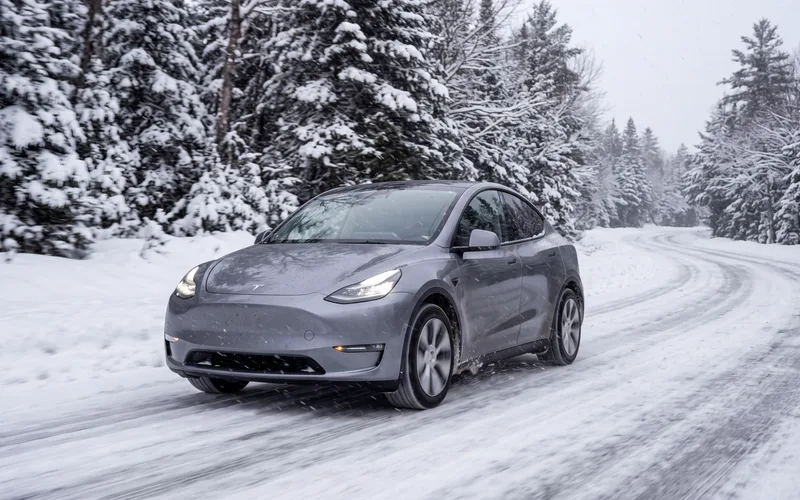 Tesla Model YCompact SUVBetter at: Range and resale
More range, far more cargo, real towing capacity and resale value that actually survives five years — the benchmark this segment is measured against.
Compare 2.74B-
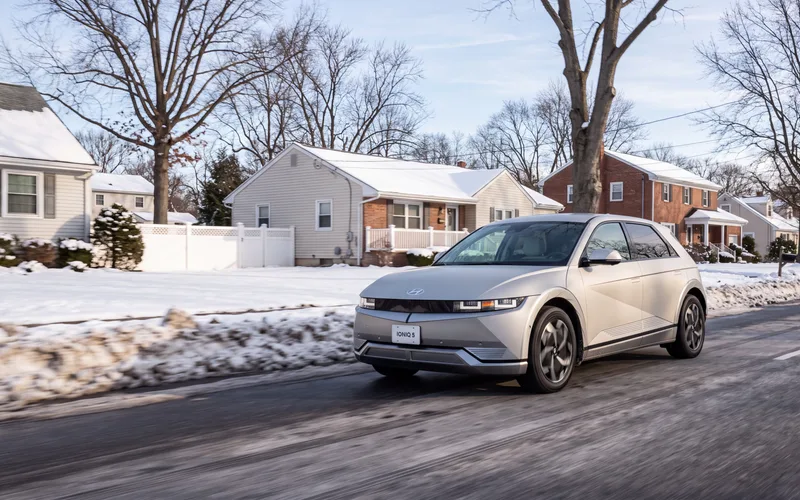 Hyundai Ioniq 5Compact SUVBetter at: Charging speed
Similar money buys 318 miles, ultra-fast 800-volt charging and finished software with a proper gauge cluster, backed by a nationwide dealer network.
Compare 2.06C
2.06C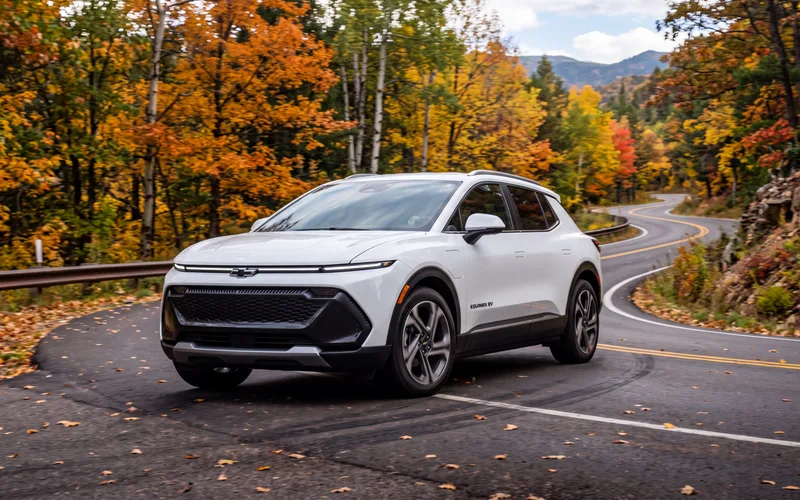 Chevrolet Equinox EVCompact SUVBetter at: Value and service
Costs less than the VF 8, goes 319 miles on a charge, and can be serviced at any Chevrolet dealer in the country.
CompareSubject scores by year
Hover or tap a score to see what moved it versus the year before. A corner mark flags a big swing.
| Year | Performance | Efficiency | Safety | Space | Cost | Reliability | Tech | Use-case | Driving | Value |
|---|---|---|---|---|---|---|---|---|---|---|
| 2026 | 45 | 59 | 64 | 40 | 34 | 27 | 58 | 50 | 49 | 44 |
| 2025 | 52 | 63 | 51 | 37 | 50 | 24 | 71 | 49 | 49 | 49 |
| 2024 | 52 | 60 | 54 | 41 | 60 | 25 | 71 | 50 | 54 | 53 |
| 2023 | 54 | 62 | 64 | 36 | 61 | 24 | 72 | 44 | 40 | 45 |
Compare two years
Best fit & conditions
Higher scores mean a better fit for that use case. Learn more about use-case fit →
Subject profile
Academic Probation · NHTSA safety recalls
Aug 28, 2025Lane departure: lane keep: automatic steeringThe Advanced Driver Assistance System (ADAS) may activate during wide turns, causing unexpected steering wheel movements that are difficult for the driver to override.
Defect
VinFast Auto, LLC (VinFast) is recalling certain 2023-2025 VF8 vehicles. The Advanced Driver Assistance System (ADAS) may activate during wide turns, causing unexpected steering wheel movements that are difficult for the driver to override.
Risk
A steering wheel that moves unexpectedly may increase the risk of a crash.
Remedy
VinFast will update the ADAS software, free of charge. Owner notification letters were mailed October 27, 2025. Owners may contact VinFast customer service at 1-833-503-0600.
NHTSA campaign 25V559000 ↗Manufacturer no. VPAC-3796,314 vehicles potentially affected (all models in the campaign)Owners notified Oct 27, 2025Filed by VinFast Auto, LLCFiled as VF 8Dec 17, 2024Air bagsThe center air bag mounted in the driver's seat may deploy improperly during a side impact crash and strike the driver's arm.
Defect
VinFast Auto, LLC (VinFast) is recalling certain 2023-2025 VF8 vehicles. The center air bag mounted in the driver's seat may deploy improperly during a side impact crash and strike the driver's arm.
Risk
An air bag that strikes the driver increases the risk of injury.
Remedy
Dealers will replace the center air bag, free of charge. Owner notification letters were mailed January 23, 2025. Owners may contact VinFast customer service at 1-833-503-0600.
NHTSA campaign 24V933000 ↗4,888 vehicles potentially affected (all models in the campaign)Owners notified Jan 23, 2025Filed by VinFast Auto, LLCFiled as VF 8May 24, 2024Air bagsInactive ignitors may have been installed in the air bags.
Defect
VinFast Auto, LLC (VinFast) is recalling certain 2022-2024 VF8 vehicles. Inactive ignitors may have been installed in the air bags.
Risk
Inactive ignitors can prevent the air bags from deploying, increasing the risk of injury during a crash.
Remedy
VinFast will replace the air bags, free of charge. Owner notification letters were mailed June 21, 2024. Owners may contact VinFast customer service at 1-833-503-0600. VinFast's number for this recall is VPAC-291.
NHTSA campaign 24V369000 ↗Manufacturer no. VPAC-291225 vehicles potentially affected (all models in the campaign)Owners notified Jun 21, 2024Filed by VinFast Auto, LLCFiled as VF 8May 18, 2023Electrical system: instrument cluster/panelA software error may cause the multifunction head unit (MHU) display to go blank. As such, these vehicles fail to comply with the requirements of Federal Motor Vehicle Safety Standard number 101, "Control and Displays."
Defect
VinFast Auto, LLC (VinFast) is recalling certain 2023 VF8 vehicles. A software error may cause the multifunction head unit (MHU) display to go blank. As such, these vehicles fail to comply with the requirements of Federal Motor Vehicle Safety Standard number 101, "Control and Displays."
Risk
A blank MHU display will not show critical safety information, such as the speedometer or warning lights, which may increase the risk of a crash.
Remedy
VinFast will update the software, free of charge. Owner notification letters were mailed June 1, 2023. Owners may contact VinFast customer service at 1-833-503-0600. VinFast's number for this recall is VPAC-74.
NHTSA campaign 23V355000 ↗Manufacturer no. VPAC-74999 vehicles potentially affected (all models in the campaign)Owners notified Jun 1, 2023Filed by VinFast Auto, LLCFiled as VF 8
Source: NHTSA Office of Defects Investigation recall database, model years 2023–2026. Recalls are listed by model year as the manufacturer filed them; whether a specific car is affected depends on its VIN — check a VIN at nhtsa.gov ↗. NHTSA model names matched to this page: VF 8.
Detailed scoring by subject
1Performance & PowertrainGrades below the middle of the scale.1.63D
The volume-oriented Eco uses the lower-output calibration of the standard dual-motor AWD system; Plus raises output to 402 hp.
Eco's 369 lb-ft is substantial for a compact-premium crossover, while the Plus calibration reaches 457 lb-ft.
VinFast's year-relevant specification sheet targets 5.8 seconds for Eco, brisk performance for the class; Plus is quoted at 5.3 seconds.
The dual motors deliver strong, quiet thrust, but contemporary reviews criticized inconsistent accelerator response and difficult modulation. That prevents the otherwise smooth EV hardware from earning an average-or-better refinement score.
A single-speed direct drive eliminates shifts, hunting, and CVT drone. The score stops short of excellent because the associated accelerator and regenerative-braking calibration drew criticism.
The properly equipped VF 8 is rated to tow 1,800 kg with trailer brakes, a useful but not class-leading capacity.
Dual-motor AWD is standard on both U.S. trims, giving every buyer all-weather traction. It lacks low range, torque-vectoring claims, or a developed terrain-mode suite, so it is not scored at the top of the band.
This is a pavement-oriented crossover with only about 6.8–7.0 inches of clearance and no low range, lockers, crawl control, or dedicated off-road trim. AWD and underbody aero shields provide only basic loose-surface reassurance.
The lineup is EV-only and AWD-only, but buyers can choose two meaningful output calibrations and, during 2023, City Edition or enhanced-range battery configurations. There is no single-motor, hybrid, or combustion alternative.
2Efficiency & RangeOne of the VF 8's strongest categories.2.21C
The volume City Edition Eco is inefficient by modern EV-crossover standards, consuming an EPA-rated 39 kWh per 100 miles.
Regenerative braking helps the Eco slightly in town, though its mass keeps the result low for an EV.
The highway result remains close to the city figure but is still modest against contemporary EV peers.
The initial, volume City Edition Eco's 207-mile EPA range is very short for a premium EV SUV. VinFast introduced an 87.7-kWh enhanced-range 2023 Eco rated at 264 miles later in the model year, but that is not the scored City Edition configuration.
A 150-kW peak was merely average even at launch and is paired with a fairly aggressive taper beyond 70%.
VinFast unusually published only a 10–70% claim for the City Edition, so the required 10–80% value is less certain. Multiple year-specific secondary specifications put the fuller window at roughly 30–31 minutes, consistent with the official shorter-window claim.
Despite weak electric efficiency, the EPA electricity-cost estimate remains far below the fuel bill of a comparable gasoline SUV.
Electricity eliminates premium-gas expense and home Level 2 charging is straightforward, but the 12-hour full-charge estimate, short range, CCS-only public charging, and middling DC speed make charging less practical than leading EVs.
3SafetyOne of the VF 8's strongest categories.2.31C+
NHTSA did not separately crash-test the 2023 launch model, so the latest tested model year from the same first-generation VF 8 is used as the rubric directs. The 2024 AWD vehicle earned four stars overall but only two stars in the frontal-crash category.
The 2023 VF 8 has no IIHS crashworthiness ratings or Top Safety Pick award. Its independent Euro NCAP result was four stars with 76% adult protection, while the same-generation vehicle's weak two-star NHTSA frontal result prevents an average untested score.
The 2023 City Edition's standard suite covers every core rubric feature: AEB, adaptive cruise, lane keeping/centering, blind-spot detection, and rear cross-traffic alert. Highway and traffic-jam assist, a 360-degree camera, and driver monitoring add unusual breadth for the class.
Although IIHS has not tested it, Euro NCAP instrumented testing found strong vulnerable-road-user performance and adequate car-to-car performance. Night pedestrian testing was generally effective, but the obscured-child night scenario was poor, holding it below the top tier.
Blind-spot detection, rear cross-traffic alert, and door-opening warning are standard, giving the volume trim broad coverage. The system lacks clearly documented active blind-spot steering or rear cross-traffic braking, so it falls short of the best intervention-capable systems.
Contemporary reviewers often found lane centering effective, and Euro NCAP gave lane support full credit, but US field performance raises a major confidence penalty. NHTSA opened an investigation after 14 complaints alleging unexpected steering behavior in 2023-2024 vehicles.
Full-speed adaptive cruise, Traffic Jam Assist and Highway Assist are standard, and period road tests found the cruise control smooth and easy to operate. The broader driver-assistance system's weak safeguards and lane-assist concerns keep the combined highway experience below premium leaders.
The VF 8's Level 2 Highway Assist is a hands-on system monitored by a driver-facing camera. No mapped-road hands-free highway system was offered for 2023.
LED headlights with automatic leveling, automatic on/off, and automatic high beams are standard, a good everyday equipment set. With no IIHS photometric rating, their actual illumination cannot receive Good-rated credit.
Natural outward visibility is generally good, but the sloping rear and rear pillars impair the rearward view. A standard 360-degree monitor compensates on paper, though MotorTrend found its image quality poor.
Two rear outboard ISOFIX/i-Size/LATCH positions and generous rear-seat room make multiple child seats practical, though there is no IIHS LATCH ease-of-use grade or evidence that three-across is easy. Standard child-presence detection is a useful extra safeguard.
4Space & ComfortOne of the VF 8's weakest categories.0.39F
The 2023 VF 8 is exclusively a five-seat, two-row SUV.
VinFast's 2023 U.S. sheet does not publish SAE headroom; compiled specifications indicate useful front clearance, consistent with contemporary reviews describing good headroom.
The reported figure is adequate but not generous for an SUV with a 116.1-inch wheelbase.
Published reviews consistently found good rear headroom, but VinFast omitted an SAE figure from its U.S. specification sheet.
The flat two-row package provides decent adult space, though foot room beneath the front seats is restricted.
No 2023 VF 8 trim offers a third row.
The rear hold is exceptionally small for an SUV; the small frunk only partly offsets it.
Maximum space is below the 55-cu-ft floor of the SUV normalization band.
A small frunk, 60/40 folding rear seat, console storage and a cargo-area 12V outlet help, but there is no standout modular storage or onboard AC power.
Eco supplies powered heated front seats and a reclining rear bench, but reviewers reported awkward seat positioning and only average support.
Multiple launch tests found severe pitching, bouncing and underdamped body control, sometimes inducing motion sickness.
The motors are quiet and front acoustic glass helps, but rattles and road noise undermine premium refinement.
Eco is generously equipped with heated powered front seats, heated wheel, dual-zone climate, air ionization and remote preconditioning; Plus adds ventilation front and rear.
5Cost of OwnershipMid-pack among this car's ten categories.2.09C
The entry 2023 U.S. launch configuration was the City Edition Eco. Its $46,900 vehicle MSRP plus $1,200 destination produced a $48,100 all-in sticker price.
Eco was the lower-priced and more usable of the two launch trims, with 207 miles of EPA range versus 191 for Plus, making it the representative volume configuration. The City Edition was initially lease-only, but MSRP remains the consistent purchase-price reference required by this item.
No credible model-specific five-year projection is published for the low-volume 2023 VF 8. The estimate applies the U.S. Department of Energy's 6.1-cent-per-mile battery-EV maintenance benchmark to the standard 75,000-mile five-year ownership horizon.
There is no established five-year residual series for this new, very low-volume nameplate. A 45% projection reflects Edmunds' current three-year trade value near 62% of original Eco MSRP, then allows two further years of depreciation plus risk from heavy incentives, weak acceptance, and an unproven service network.
VinFast's unusually long new-vehicle warranty far exceeds the five-year top of the SUV normalization band.
The high-voltage battery's ten-year, unlimited-mile coverage reaches the top of the scoring band and is stronger than the common 8-year/100,000-mile EV warranty.
There was no conventional multi-year scheduled-maintenance plan, but ten years of 24/7 roadside assistance is exceptional. Eligible 2023 buyers also received one year of complimentary public charging, making the overall perk package substantially better than basic roadside coverage alone.
$48,100 volume-trim price minus its estimated resale value after 5 years (45% retained, or about $21,645) leaves about $26,455 in depreciation. Add the projected $4,575 in 5-year maintenance and repairs, and owning this vehicle for 5 years costs about $31,030 in total.
6Reliability & QualityThe VF 8's lowest-graded category.0.00F
Neither major survey source has a statistically valid prediction for this low-volume launch-year model, while the available record includes charging failures, 12-volt failures, software faults, warning messages, and immobilized vehicles. The lack of survey data is not itself a failure, but the unusually poor early field record puts the 2023 VF 8 firmly below average.
VinFast had no multi-year U.S. dependability history when this first U.S. model year arrived and remains too small to appear in the principal U.S. brand studies. Its short documented record includes widespread construction and software complaints, so it cannot be treated as a neutral mid-pack brand.
Four safety campaigns on a very small U.S. fleet are far worse than normal, and they are not merely cosmetic: they address a blank sole instrument display, two airbag defects, and ADAS steering input difficult to override. The display and ADAS software campaigns also reinforce a systemic launch-software concern.
The launch-year dual-motor AWD system and Samsung-supplied 82-kWh battery had no high-mileage history, and contemporary owners reported charging, 12-volt, and critical-fault failures. Established battery-cell supply and the unusually long warranty prevent a floor score, but this was an unproven, high-risk integration rather than a proven EV powertrain.
The uncluttered design, panoramic roof, and generous equipment make a decent first impression, but reviewers consistently found extensive cheap plastic and imitation leather inappropriate at the 2023 VF 8's premium price. Material richness is therefore clearly below the compact premium-SUV norm.
Multiple independent evaluations of U.S.-spec 2023 vehicles found rattles and conspicuously unfinished assembly at extremely low mileage. That consistency across test fleets supports a severe launch-quality penalty rather than treating the faults as an isolated press-car issue.
The support footprint is among the sparsest in the U.S. market and remains geographically impractical for most owners. A long warranty and app-based booking help only where trained service is reachable, and they do not compensate for the absence of nationwide physical coverage.
The low-volume, imported 2023 VF 8 has essentially no aftermarket or independent high-voltage repair ecosystem, leaving owners dependent on VinFast for model-specific parts and software service. The comprehensive warranty reduces covered repair bills, but not parts delays, towing, collision-repair difficulty, or downtime.
7Technology & InfotainmentThe VF 8's best-graded category.2.87B-
The large central display is standard on Eco and Plus and also carries the driver instrumentation.
The screen can respond quickly, but most reviews found its menus confusing, laggy or unreliable and noted excessive dependence on touch controls.
Both wireless Apple CarPlay and Android Auto are standard.
Native navigation includes traffic, satellite views and EV routing, while the built-in voice assistant is broad but inconsistent enough that phone projection is preferable.
Eco's eight-speaker system is ordinary; Plus offers ten speakers and a subwoofer but no recognized premium brand.
There is no conventional gauge cluster; speed and warnings share the center screen, supplemented by a standard HUD. The blank-screen recall makes this layout a notable weakness.
Full firmware OTA was designed to update vehicle functions and add features, though the launch software's instability keeps it below the top band.
The app supports location/status, lock and HVAC control, charging limits and schedules, geofencing and secondary-driver authorization.
Five USB ports, wireless charging and a cargo 12V socket are generous, though four ports are older Type-A and there is no household AC outlet.
Keyless start and app-based remote control are standard, but the Eco liftgate is manual and phone-as-key is not documented.
Front and rear sensors plus a surround-view camera are standard even on Eco, an unusually complete parking suite.
A head-up display is standard on both trims and is especially important because there is no gauge binnacle.
8Use-Case FitGrades near the bottom of the scale.0.92F
A roomy reclining second row, ISOFIX/LATCH and child-presence detection help, but the tiny 13.2-cu-ft occupied cargo hold limits stroller-and-gear duty.
Eleven airbags and extensive standard ADAS are strong on paper, but no U.S. NCAP/IIHS result and subsequent screen and lane-assist safety actions weaken confidence.
Good rear room and climate equipment cannot overcome the motion-inducing ride, small luggage hold and short 207-mile EPA range.
Strong acceleration, one-pedal capability and cameras help, but poor low-speed calibration, intrusive warnings, awkward controls and a 40.7-ft turning circle make daily use tiring.
Electric operation reduces routine energy and maintenance costs, though 80 MPGe combined is inefficient by compact-EV standards and the heavy tires are costly.
The surround-view camera and sensors compensate for a wide 187-inch body and unusually large 40.7-ft turning diameter.
Dual-motor AWD and a roughly 3,968-lb braked-trailer rating can handle light towing, but cargo volume and driving range under load are limiting.
The first-year model was unproven and reviewers documented rattles, software failures and poor build quality, making it unsuitable for hard service.
A cargo 12V socket and roof rails are modest assets, but there is no AC/V2L power, work-focused protection or meaningful upfit ecosystem.
The launch Eco's 207-mile EPA range, slow real charging curve and badly controlled ride make it a poor long-haul companion despite standard highway assistance.
Standard AWD, 7-inch-class clearance, roof-load and towing capability suit gravel roads and racks, but there are no serious off-road features.
The reclining 60/40 rear seat, rails and frunk add flexibility, but 13.2/48.5 cu ft rear cargo is poor for an SUV.
9Driving ExperienceOne of the VF 8's weakest categories.0.62F
Grip is respectable, but poor body control and unsettled transitions make the heavy SUV clumsy rather than composed.
Reviewers found the steering vague or inconsistently weighted, with little useful feedback.
Stopping distance is merely adequate for the weight, while the soft pedal and weak/inconsistent regenerative blending reduce confidence.
The dual motors deliver strong, immediate acceleration, but tip-in, creep and regeneration calibration feel unfinished.
The electric motors are quiet and vibration-free under normal use, although cabin rattles spoil overall refinement.
This is very wide for a compact/mid-size crossover and hurts urban maneuverability.
Power-seat adjustment and a HUD help, but the lack of a gauge cluster, screen-buried controls and awkward seat-height relationship frustrate drivers.
Quick acceleration cannot compensate for the nauseating ride, numb controls and poor brake calibration; reviewers broadly advised against spirited driving.
10Value & Market PositionGrades near the bottom of the scale.0.99F
Even Eco included dual-motor AWD, a 15.6-inch display, wireless Apple CarPlay/Android Auto and charging, a head-up display, heated power seats, and a broad active-safety suite. Equipment quantity was a genuine strength against similarly priced EV crossovers.
The long warranty, AWD performance, and rich feature list could not offset an approximately $48,100 Eco sticker, short 207-mile range, unfinished dynamics, and ineligible imported-vehicle purchase tax credit. Established rivals offered much stronger execution and/or range for similar money.
The U.S. lineup offered only Eco and Plus, both dual-motor AWD, with no lower-cost single-motor or drivetrain choice. A longer-range battery arrived later in 2023, but buyer configurability remained narrow.
Acceptance was extremely weak for a new national-market entrant: only 128 registrations were reported through May and U.S. sales remained a tiny fraction of the EV market by October. This is firmly in the slow-seller band.
VinFast entered 2023 with virtually no U.S. owner base or loyalty and its launch was defined by delays, recalls, and exceptionally negative reviews. The brand image materially hurt confidence and likely resale rather than adding an aspirational halo.
Buyer-facing support was enormous: a $3,000 City Edition discount, subsidized $399-per-month Eco lease, lease-forward exchange option, and a year of complimentary charging. The generosity clearly reflected weak demand, but this item deliberately scores the benefit available to the buyer.
The 2023 VF 8 was the U.S. launch year of the first generation, so its platform and cabin technology were brand-new rather than carry-over. During 2023, the initial Samsung-battery City Edition was supplemented by longer-range CATL-battery vehicles, a meaningful same-year powertrain change.
Reception was nearly uniformly bottom-of-class, with major outlets calling the vehicle unfinished, unacceptable, and one of the worst modern cars reviewed. It earned no major U.S. vehicle award capable of counterbalancing that verdict.