

The verdict
A struggling compact suv, strong on safety and held back by reliability.
The 2026 VinFast VF 8 is a well-equipped electric SUV backed by the longest warranty in the business — 10 years/125,000 miles on the whole car and the battery — with dual-motor all-wheel drive, a 15.6-inch screen and the full driver-assist suite standard on both trims. The problem is everything around that equipment list: 264 miles of range from a big 87.7 kWh pack, a ride and steering that reviewers have panned since launch, no gauge cluster at all, a few dozen US dealers, and resale so weak that early cars have shed most of their value in a year or two. Steep discounts and subsidized leases make the monthly number tempting, but a warranty is only worth what the company behind it is worth, and VinFast's US future is an open question. Lease it if the deal is extraordinary and there's a dealer near you; think very hard before buying one.
Jump to scoresStrengths
- The longest warranty on the market, by a wide margin
- Everything is standard — including all-wheel drive
- Cheap to fuel, like any EV
What holds it back
- Resale value collapse, and a brand that may not stick around
- A few dozen dealers nationwide, and parts from Vietnam
- Tight cargo hold, no frunk, and no towing at all
Top alternatives
Cars shoppers cross-shop with the VinFast VF 8 2.60C+
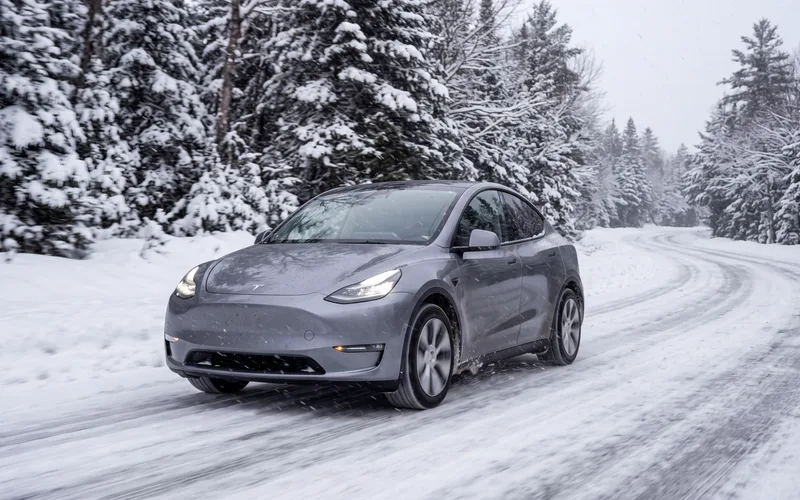 Tesla Model YCompact SUVBetter at: Range and resale
More range, far more cargo, real towing capacity and resale value that actually survives five years — the benchmark this segment is measured against.
Compare 2.74B-
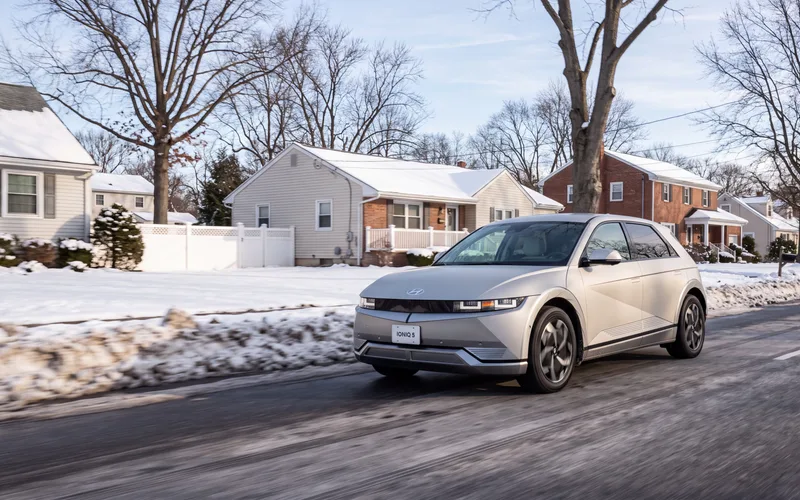 Hyundai Ioniq 5Compact SUVBetter at: Charging speed
Similar money buys 318 miles, ultra-fast 800-volt charging and finished software with a proper gauge cluster, backed by a nationwide dealer network.
Compare 2.06C
2.06C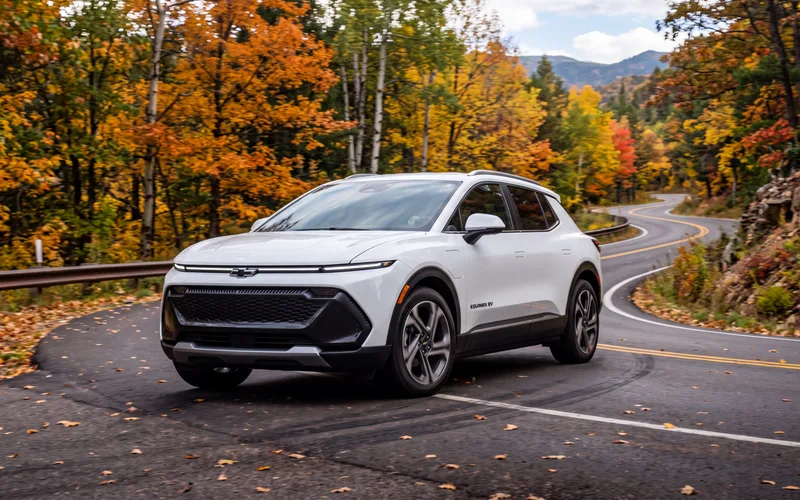 Chevrolet Equinox EVCompact SUVBetter at: Value and service
Costs less than the VF 8, goes 319 miles on a charge, and can be serviced at any Chevrolet dealer in the country.
CompareSubject scores by year
Hover or tap a score to see what moved it versus the year before. A corner mark flags a big swing.
| Year | Performance | Efficiency | Safety | Space | Cost | Reliability | Tech | Use-case | Driving | Value |
|---|---|---|---|---|---|---|---|---|---|---|
| 2026 | 45 | 59 | 64 | 40 | 34 | 27 | 58 | 50 | 49 | 44 |
| 2025 | 52 | 63 | 51 | 37 | 50 | 24 | 71 | 49 | 49 | 49 |
| 2024 | 52 | 60 | 54 | 41 | 60 | 25 | 71 | 50 | 54 | 53 |
| 2023 | 54 | 62 | 64 | 36 | 61 | 24 | 72 | 44 | 40 | 45 |
Compare two years
Best fit & conditions
Higher scores mean a better fit for that use case. Learn more about use-case fit →
Subject profile
Academic Probation · NHTSA safety recalls
No NHTSA safety recall is on record for the 2026 VinFast VF 8. Other model years of the VF 8 have 4 — listed below.
4 recalls on other model years of the VF 8 (2023–2025)
Aug 28, 2025Lane departure: lane keep: automatic steeringThe Advanced Driver Assistance System (ADAS) may activate during wide turns, causing unexpected steering wheel movements that are difficult for the driver to override.
Defect
VinFast Auto, LLC (VinFast) is recalling certain 2023-2025 VF8 vehicles. The Advanced Driver Assistance System (ADAS) may activate during wide turns, causing unexpected steering wheel movements that are difficult for the driver to override.
Risk
A steering wheel that moves unexpectedly may increase the risk of a crash.
Remedy
VinFast will update the ADAS software, free of charge. Owner notification letters were mailed October 27, 2025. Owners may contact VinFast customer service at 1-833-503-0600.
NHTSA campaign 25V559000 ↗Manufacturer no. VPAC-3796,314 vehicles potentially affected (all models in the campaign)Owners notified Oct 27, 2025Filed by VinFast Auto, LLCFiled as VF 8Dec 17, 2024Air bagsThe center air bag mounted in the driver's seat may deploy improperly during a side impact crash and strike the driver's arm.
Defect
VinFast Auto, LLC (VinFast) is recalling certain 2023-2025 VF8 vehicles. The center air bag mounted in the driver's seat may deploy improperly during a side impact crash and strike the driver's arm.
Risk
An air bag that strikes the driver increases the risk of injury.
Remedy
Dealers will replace the center air bag, free of charge. Owner notification letters were mailed January 23, 2025. Owners may contact VinFast customer service at 1-833-503-0600.
NHTSA campaign 24V933000 ↗4,888 vehicles potentially affected (all models in the campaign)Owners notified Jan 23, 2025Filed by VinFast Auto, LLCFiled as VF 8May 24, 2024Air bagsInactive ignitors may have been installed in the air bags.
Defect
VinFast Auto, LLC (VinFast) is recalling certain 2022-2024 VF8 vehicles. Inactive ignitors may have been installed in the air bags.
Risk
Inactive ignitors can prevent the air bags from deploying, increasing the risk of injury during a crash.
Remedy
VinFast will replace the air bags, free of charge. Owner notification letters were mailed June 21, 2024. Owners may contact VinFast customer service at 1-833-503-0600. VinFast's number for this recall is VPAC-291.
NHTSA campaign 24V369000 ↗Manufacturer no. VPAC-291225 vehicles potentially affected (all models in the campaign)Owners notified Jun 21, 2024Filed by VinFast Auto, LLCFiled as VF 8May 18, 2023Electrical system: instrument cluster/panelA software error may cause the multifunction head unit (MHU) display to go blank. As such, these vehicles fail to comply with the requirements of Federal Motor Vehicle Safety Standard number 101, "Control and Displays."
Defect
VinFast Auto, LLC (VinFast) is recalling certain 2023 VF8 vehicles. A software error may cause the multifunction head unit (MHU) display to go blank. As such, these vehicles fail to comply with the requirements of Federal Motor Vehicle Safety Standard number 101, "Control and Displays."
Risk
A blank MHU display will not show critical safety information, such as the speedometer or warning lights, which may increase the risk of a crash.
Remedy
VinFast will update the software, free of charge. Owner notification letters were mailed June 1, 2023. Owners may contact VinFast customer service at 1-833-503-0600. VinFast's number for this recall is VPAC-74.
NHTSA campaign 23V355000 ↗Manufacturer no. VPAC-74999 vehicles potentially affected (all models in the campaign)Owners notified Jun 1, 2023Filed by VinFast Auto, LLCFiled as VF 8
Source: NHTSA Office of Defects Investigation recall database, model years 2023–2026. Recalls are listed by model year as the manufacturer filed them; whether a specific car is affected depends on its VIN — check a VIN at nhtsa.gov ↗. NHTSA model names matched to this page: VF 8.
Detailed scoring by subject
1Performance & PowertrainGrades below the middle of the scale.1.03D
The volume Eco trim runs a dual-motor setup rated 260 kW combined (349 hp); the Plus steps up to 300 kW (402 hp). Both figures carry over unchanged from the standard (non-City-Edition) VF 8 introduced for 2024 — no 2026-specific output revision is known.
Eco's dual-motor powertrain is rated 500 Nm (369 lb-ft), the Plus 620 Nm (457 lb-ft). Strong for a compact SUV but mid-pack among dual-motor EV crossovers.
VinFast quotes 5.8 s for the Eco and about 5.5 s for the Plus; instrumented tests of early VF 8 Plus cars landed in the mid-5s, consistent with the claim. Quick enough to beat most gas compact SUVs but well short of the segment's EV pace-setters.
The hardware delivers the instant, lag-free thrust expected of a dual-motor EV, but the VF 8's calibration has been the persistent complaint: US reviewers criticized grabby, inconsistent regen-to-friction brake blending and abrupt throttle tip-in on early cars. Over-the-air updates improved the behavior without fully erasing it, so this sits below the polished EV crossovers (Ioniq 5, Model Y) that clear 70.
Single-speed reduction gearing at each axle means no shifting to criticize — delivery is inherently seamless. Marked down from the top band only because the regen/one-pedal transitions that sit in place of gear logic were reported as abrupt rather than transparent.
VinFast publishes no US factory tow rating for the VF 8 and offers no factory hitch or towing package, so the vehicle is treated as not tow-capable in this market. This is the single largest drag on the category score and is the main reason the VF 8 trails tow-rated EV rivals like the Model Y (3,500 lbs) and Ioniq 5 (2,300 lbs).
Dual-motor all-wheel drive is standard on every US VF 8 trim — no FWD/RWD base model to avoid, which is better coverage than most rivals offer. Held below the top band because the system is a straightforward front/rear motor split with drive modes only: no low range, no terrain modes, no meaningful torque-vectoring story.
Strictly a pavement crossover: roughly 7 inches of ground clearance, road-biased tires, no skid plates, no locking differentials, no terrain modes and no off-road-oriented trim. Standard AWD provides foul-weather traction and nothing beyond it.
One powertrain, take it or leave it: battery-electric only, with Eco and Plus differing in motor tune rather than architecture, and both drawing on the same ~87.7 kWh pack. No gas, hybrid or PHEV alternative exists, so buyers who cannot live with an EV have nothing to move to within the nameplate.
2Efficiency & RangeOne of the VF 8's strongest categories.1.99C-
73 MPGe combined is near the bottom of the electric SUV field — the ID.4 (112), Equinox EV (104) and Ariya (101) are 40-50% more efficient. Dual-motor AWD on every US trim, a ~5,200 lb curb weight and an upright, aerodynamically undistinguished body are the cause, and none of that changes for 2026.
Regenerative braking lifts city above the combined figure as it does for every EV, but 77 MPGe city is well behind the Ariya (109) and Equinox EV (115) — the mass and the AWD-only layout dominate.
69 MPGe highway is the weakest of the mainstream electric SUVs and the practical consequence of the boxy profile — no aero-optimized trim is offered. Notably the Plus rates higher on the highway cycle (80) than the Eco does, the reverse of the usual pattern.
256 miles from an 87.7 kWh pack is the category's defining weakness — a battery larger than the Model Y's or Ioniq 5's delivering less range, because the efficiency is so poor. The field it competes against runs 289-327 miles (Ariya 289, ID.4 291, Ioniq 5 318, Equinox EV 319, Model Y 327).
A 400V, 150 kW peak puts the VF 8 a full tier below the 800V compact electric SUVs it is priced against — the Ioniq 5 and EV6 take 230-350 kW, and even 400V rivals like the Mustang Mach-E and ID.4 manage 150-175 kW. Combined with the low efficiency, each minute plugged in buys fewer miles than in any peer here.
37 minutes sits in the slow third of the electric SUV field — the 800V Hyundai/Kia twins do 10-80% in roughly 18 minutes and most 400V rivals land near 30. The gap is worse in practice than the clock suggests, because the VF 8 recovers fewer miles per kWh added.
Still far cheaper per mile than any combustion SUV, but the highest energy cost among the electric compact SUVs in this set — roughly $200-250/yr above the Ariya or Equinox EV at the same mileage, entirely because of the efficiency deficit.
No fuel grade to worry about and overnight Level 2 home charging on the 11 kW onboard charger covers routine use, which keeps this in the upper band. Dropped a further 4 points for 2026 because the VF 8's charging isolation has widened rather than closed: it is now one of the last EVs on sale in the US with no Supercharger path at all — no native NACS port and no manufacturer-approved adapter — while Ford, GM, Rivian, Hyundai/Kia, Honda/Acura and Stellantis have all crossed over. Add the 150 kW ceiling, the poor miles-per-kWh, and a thinning US dealer/service network, and an owner without home charging is worse off in this car than in essentially any electric SUV alongside it.
3SafetyThe VF 8's best-graded category.2.29C
VinFast publicized a 5-star NHTSA overall rating for the VF 8, and the 2023-onward generation is structurally unchanged for 2026, so the rating carries forward. Recorded at LOW confidence because it could not be verified against nhtsa.gov in this run.
No IIHS crashworthiness ratings or Top Safety Pick award are known for the VF 8 — IIHS does not routinely test very low-volume imports, and VinFast's US sales volume has stayed far below the threshold that draws testing. Scored in the untested band, lifted off the floor by the 5-star Euro NCAP and ANCAP structural results the VF 8 did earn.
Content breadth is a genuine VF 8 strength: VinFast bundles AEB, lane departure warning, lane keep assist, adaptive cruise, blind-spot monitoring, rear cross-traffic alert, driver monitoring, traffic-sign recognition and a 360-degree camera as standard on both Eco and Plus rather than gating them to upper trims. This item measures what is fitted, not how well it works — execution is penalized in 3.2.2, 3.2.4 and 3.2.5.
No IIHS front crash prevention rating exists for the VF 8, and the available evidence on real-world behavior is negative — US press drives repeatedly reported phantom braking and erratic forward-collision intervention. Scored in the basic/poorly-rated band on reviewer evidence rather than test data.
Blind-spot monitoring and rear cross-traffic alert are standard on every trim, which places this above the mid-band, but coverage is alert-only — no active steering or braking intervention, and no trailer-aware mode.
Lane keep assist and lane centering are fitted as standard, but US reviewers consistently described the calibration as crude — ping-ponging within the lane, abrupt corrections, and over-eager driver-attention nags. Fitted but poorly executed lands in the bottom band.
Full-speed-range adaptive cruise with stop-and-go is standard, so the capability is present, but reviewers reported rough distance-keeping, late and abrupt braking, and unrefined resume behavior. Scored at the bottom of the capable-with-rough-edges band.
VinFast offers no hands-free highway driving system on the VF 8 in the US — nothing comparable to Super Cruise, BlueCruise or FSD-supervised. An enhanced highway-assist feature was promised via over-the-air update but the system remains hands-on.
LED headlights with automatic high beam are standard across the range, which is the mainstream expectation, but there is no IIHS headlight rating for the VF 8 to confirm reach or glare control. Scored at segment norm for standard LEDs with no corroborating test result.
The VF 8 has a relatively upright greenhouse, a modest belt line and a standard 360-degree camera, and outward visibility was notably absent from the long list of complaints in US press coverage. Average-to-good sightlines with full camera compensation, held below the top band for lack of a direct assessment.
Conventional five-seat compact SUV layout with two outboard LATCH positions, wide-opening rear doors and above-average rear legroom on the VF 8's flat EV floor, so two car seats fit comfortably; three-across is tight, as in the segment generally. No IIHS LATCH ease-of-use rating exists to confirm anchor access.
4Space & ComfortOne of the VF 8's weakest categories.0.67F
The VF 8 is a strictly two-row, five-seat crossover in every US trim — VinFast has never offered a six- or seven-seat configuration of it (the three-row job in the lineup is the VF 9). Five seats sits at the bottom of the 4–8 SUV band, which spans up to full-size three-row utilities.
Estimated from the VF 8's 65.1 in overall height and its standard full-length fixed glass roof, which costs headroom relative to a steel-roof crossover. Lands mid-pack among glass-roofed EV SUV rivals (Mach-E 38.8, EV6 39.0, Ariya 39.5, Model Y 41.0).
Estimated from the flat-floor skateboard EV packaging and a 113.2 in wheelbase; front legroom in this class is tightly clustered (peers run 41.4–42.4 in) and the VF 8 has no packaging feature that would push it outside that band.
Estimated: the VF 8's tapering coupe-influenced roofline plus the glass panel trims second-row headroom, and the raised EV floor pushes hip point up relative to knees. Sits toward the lower half of the peer set (Solterra 37.1, Ariya 37.4, Mach-E 38.3, Model Y 39.4).
The 113.2 in wheelbase on a 187.6 in body with no third row to package leaves genuinely competitive second-row legroom — the VF 8's clearest packaging strength in this category, ahead of the Solterra/bZ4X (35.3) and Ariya (35.6) and near the Mach-E (38.1).
There is no third row. The VF 8 is a two-row five-seater in every US configuration, so buyers needing a third row are pushed to the VF 9. Scored in the 0–49 band per the item's explicit instruction rather than omitted.
Estimated SAE-equivalent volume behind the second row. VinFast quotes the VF 8's hold in liters to the parcel shelf, which converts to a far smaller figure than the US to-the-roof method — the estimate here restates it on the SAE basis the framework band assumes. Even so, the VF 8 lands in the bottom third of EV SUV rivals, and the low absolute score reflects a 25–80 cu ft band calibrated across all SUVs including three-row full-size utilities.
Estimated seats-folded maximum on the SAE basis, scaled from the behind-row estimate and the VF 8's body length. Competitive with the EV6 (50.2) and Ioniq 5 (59.3) but well short of the Model Y (76.2); the 55–100 cu ft band again spans three-row SUVs, so a two-row crossover scores near the floor.
Conventional rather than clever. The flat EV floor and a reasonably deep center console cover the basics, but the VF 8 offers no usable frunk — the front compartment is given over to hardware — and none of the packaging tricks its rivals lead with (the Ioniq 5's sliding console, the Model Y's deep underfloor bins, the Ariya's powered sliding console). That absent frunk is a real everyday loss on an EV at this price.
The front seats are one of the VF 8's better-received elements — well-padded vegan-leather chairs with power adjustment and memory standard, and heating, ventilation and massage on the Plus. Reviewers were more lukewarm on shape and long-haul support than on equipment, and the rear bench is flat-cushioned, so this sits mid-pack rather than at the top.
The weakest element of the category and the VF 8's most consistently criticized trait. US reviewers repeatedly described a firm, busy, under-damped ride that thumps over broken pavement and struggles to settle its considerable mass, with secondary body motions that software updates could not address. Scored below every EV SUV peer in the dataset.
The electric powertrain removes engine noise, but that exposes wind rustle around the mirrors and A-pillars and road roar from the low-rolling-resistance tires at highway speed — noise isolation is not to the standard of the Korean and Japanese EV SUVs. Average for the class rather than notably loud.
Genuine strength and a deliberate part of VinFast's value pitch — the VF 8 loads in heated and ventilated front seats, heated rear seats, a heated steering wheel, dual-zone climate, the fixed panoramic glass roof and app-based remote preconditioning, with massaging front seats on the Plus. Comfort equipment that rivals reserve for options packages is standard or near-standard here.
5Cost of OwnershipOne of the VF 8's weakest categories.0.25F
VF 8 Eco has sat in the mid-$40Ks since VinFast abandoned the battery-subscription structure and moved to battery-included pricing; the entry trim carries a premium-compact-SUV sticker without the brand equity behind it. Figure is carried from recent model-year US pricing, not verified against a live 2026 configurator.
The Plus is the volume configuration in the US — it carries the longer-equipment list and the larger wheels — and lands near $50K, which is Model Y Long Range / Ioniq 5 Limited money from a brand with no residual support. Heavy transaction discounting has been common, but MSRP is the measured figure here.
No EV-typical engine servicing, and VinFast's long bumper-to-bumper term nominally absorbs most repair work inside the 5-year window, which holds the cash figure below the segment midpoint. The estimate carries a premium over a Tesla or Ioniq 5 for parts scarcity, out-of-area towing to a thin service network, and heavy-EV tire/brake wear on the Plus's large wheels.
This is the VF 8's defining ownership problem. Early US cars lost the majority of their value within the first year or two on the used market, and the overhang of VinFast's US viability — sustained losses, dependence on parent-group funding, a repeatedly delayed North Carolina plant — means buyers price in the risk that support disappears. Retention lands far below the segment floor of 40%, so the item scores zero.
VinFast's signature US offer and the single strongest thing in this category — double the 5-year term that tops the segment band, so the item maxes out. Worth noting the coverage is only as good as the company backing it, which is the same risk that destroys the resale line above.
Battery and drive-unit coverage runs the full 10 years, at or above the top of the band, versus the 8 yr / 100,000 mi federal minimum most EV rivals simply match. Maxes the item.
The ownership package reads well on paper — long-term roadside assistance, mobile service intended to substitute for showroom visits, and public-charging credit promotions used to seed early US sales. It falls short of the 80+ band because included scheduled maintenance is limited rather than multi-year, and the thin service footprint means the perks are worth materially less in practice than the same list from Hyundai or Kia.
$50,500 volume-trim price minus its estimated resale value after 5 years (20% retained, or about $10,100) leaves about $40,400 in depreciation. Add the projected $4,800 in 5-year maintenance and repairs, and owning this vehicle for 5 years costs about $45,200 in total.
6Reliability & QualityThe VF 8's lowest-graded category.0.00F
No credible predicted-reliability rating exists for the VF 8 — Consumer Reports has not issued one and J.D. Power does not rank VinFast for volume reasons — and the early US owner record that does exist is poor, with software faults, charging failures, 12V and drive-unit complaints, and cars immobilized awaiting service. Scored well into the below-average band because absence of data plus a bad early record is not a neutral signal.
VinFast has essentially no multi-year US dependability record to stand on — the brand began US deliveries in 2023 and does not appear in Consumer Reports brand reliability rankings or J.D. Power dependability studies. The short record it has established is at the bottom of the market, and ongoing questions about the company's US commitment and financial position add orphan-brand risk that a mid-pack score would not convey.
The VF 8 has drawn multiple NHTSA recalls against a very small US fleet, which is a high recall rate per vehicle sold, and several have touched safety-relevant display and software behavior rather than minor trim items. Placed in the below-average band on recall density and the software-systemic character of the faults rather than on raw count.
The dual-motor pack-and-drive-unit combination has no high-mileage track record and VinFast's own integration is unproven, with early owners reporting charging faults, 12V failures and drive-unit issues. Cell supply from established vendors (CATL/Gotion) and a long battery warranty keep this off the floor, but the framework's 0-49 band explicitly covers unproven high-risk designs, which this is.
The cabin is the VF 8's most competent area — vegan leather, a large 15.6-inch center screen and a panoramic roof present well on first impression. It still falls short of its Premium price class on switchgear feel and hard-plastic content in low-touch zones, and routing every function through the touchscreen with no driver's instrument cluster hurts perceived quality, so it lands mid-band rather than above it.
Assembly consistency has been a recurring criticism since launch, with press cars and owner reports both citing uneven panel gaps, interior rattles, squeaks and elevated wind noise. Later production has reportedly improved on the widely panned first City Edition batch, which is why this is not scored at the floor, but it remains clearly below segment norms.
This is the VF 8's single weakest attribute. VinFast abandoned its original direct-sales showroom model for a franchise dealer network, but US coverage remains a few dozen points concentrated in a handful of states, leaving large parts of the country with no realistic service option. Owner reports of vehicles waiting weeks or months for service put this at the bottom of the sparse-network band.
Parts are dealer-only and shipped from Vietnam, with owner reports of multi-month waits for collision and mechanical components and effectively no aftermarket or independent-shop support. The unusually long 10-year/125,000-mile warranty genuinely offsets the out-of-pocket cost of covered repairs, which lifts this off the floor, but it does nothing for downtime or for collision work that insurers must source.
7Technology & InfotainmentOne of the VF 8's strongest categories.1.88C-
The VF 8 carries a single 15.6-inch landscape center touchscreen standard on both Eco and Plus, among the largest displays in the compact SUV segment. Replaces the placeholder 12.2 in value with the real figure.
Nearly every function including climate and mirror adjustment lives in the touchscreen with almost no physical controls, and US press drives consistently reported lag, unfinished menus and a steep learning curve. Successive OTA releases have improved stability since 2023, which keeps it just below rather than deep inside the bottom band.
Phone projection was absent at US launch and was added only partially afterward — Apple CarPlay arrived by software update, with no Android Auto support known. Half the market therefore gets no projection at all, which caps this well short of the top band.
The VF 8 ships a built-in voice assistant and native map-based navigation with connected traffic, but reviewers described the assistant's command vocabulary as narrow and the navigation as one most owners route around once phone projection is available.
A multi-speaker premium system is fitted to the Plus trim with a smaller base setup on Eco, but there is no marquee audio-brand partnership and reviewers rated output as merely adequate for a premium-priced EV.
The VF 8 has no driver instrument cluster of any kind — speed and driving data are rendered in a corner of the center touchscreen, well off the driver's sightline. This is the single largest technology deficit in the car and sits firmly in the bottom band.
Whole-vehicle over-the-air updating is a genuine VF 8 strength and central to VinFast's product strategy — updates have delivered drive and regen calibration changes, recall remedies and new features such as phone projection rather than maps-only refreshes.
The VinFast app covers the expected core set — remote lock/unlock, climate preconditioning, charge monitoring and vehicle locate, plus phone-as-key — but owners have reported connectivity dropouts and slow command response, and connected services move to a paid plan after the introductory term.
USB-C power is provided for both rows with a standard wireless charging pad on the console, but there is no household AC outlet or vehicle-to-load provision — solid rather than class-leading device support.
Proximity entry, push-button start and a power liftgate are standard rather than trim-gated, and the VinFast app doubles as a smartphone key — a strong convenience set that only misses the top band on execution reliability.
A 360-degree surround-view camera plus front and rear parking sensors are standard on both trims — unusually generous for the segment — but image resolution drew criticism and the rearview camera has been the subject of an NHTSA software recall, which pulls this below the top band.
No head-up display is offered on the US VF 8 on either trim. The absence compounds the missing instrument cluster — there is no driver-forward display of any kind, leaving the center screen as the sole source of speed information.
8Use-Case FitGrades below the middle of the scale.1.34D
The skateboard platform's flat rear floor, tall door apertures and a standard power tailgate over roughly 27 cu ft cover daily kid-and-stroller logistics competently, and LATCH usability is rated mid-pack. What holds it back is rear space that trails the flat-floor peer set, no front trunk for the small-item overflow those rivals absorb, and touchscreen-only climate and seat-heat controls that are awkward one-handed with a child on your hip.
The content story is genuinely good for families on a budget: VinFast makes the full ADAS suite standard on both Eco and Plus, so blind-spot monitoring, rear cross-traffic alert, stop-and-go adaptive cruise and a 360-degree camera cost nothing extra on the trim families actually buy, alongside a claimed 5-star NHTSA overall rating. Execution and third-party verification are the problem — US press drives documented phantom braking and erratic collision warnings, lane-keeping calibration draws repeated criticism, and there is no IIHS crashworthiness rating or award at all, which is what separates this from the Mach-E and Model Y at 85.
Rear-seat provisioning is a real strength — heated rear seats, a panoramic glass roof, rear USB-C and comfortable heated/ventilated front chairs come standard on both trims, and roughly 27 cu ft holds a family's luggage with all five seats occupied. The multi-hour experience is where it falls behind the ID.4 at 73: ride harshness and poor body control are the most persistent complaint in US coverage, wind and road noise intrude at highway speed, rear legroom is modest, and there is no rear entertainment screen or household outlet.
The EV fundamentals that make the Model Y an 88 and the Ariya an 84 are all present — instant dual-motor torque, a single-speed driveline with no shift hunting, hushed low-speed running and a standard 360-degree camera — but the VF 8 squanders most of the advantage. It has no instrument cluster and no head-up display, so speed is read off a 15.6-inch center touchscreen that also swallows the climate controls; regen-to-friction brake blending is documented as jerky in traffic, the ride is harsh over broken city pavement, and phantom braking intrudes on exactly the stop-and-go duty cycle this mission is about.
Energy cost per commuting mile is cheap in absolute terms — roughly 90 MPGe combined works out to about $950 a year at 15,000 miles, a fraction of any combustion compact SUV, and regen plus no oil changes keeps consumables down. It lands well below the EV peer group (ID.4 89, Ariya 84) on two counts: it is the least efficient EV in this comparison, and the non-energy running costs are the worst here, with insurance loaded for parts scarcity and collision repair routed through a thin dealer network.
A 187.6-inch-long, 76.1-inch-wide body is unremarkable for the class — slightly longer than a Model Y, notably longer than an ID.4 — but the camera support is better than the peer norm because VinFast fits the 360-degree system as standard on both trims rather than reserving it for an options package, and outward visibility was not flagged as a deficiency in US press drives. No published turning circle is available to verify, and the rearview camera has been the subject of an NHTSA software campaign.
The VF 8 carries no published US towing capacity and no factory tow package on either trim — not a low rating but the absence of one, which puts it below even the Ariya's 1,500 lbs and the Mach-E's unofficial aftermarket-only situation. Roughly 57 cu ft of enclosed space with the bench folded will move materials and there is no shortage of motor output, but with no hitch, no published payload and no bed, this is not a vehicle you can put to work.
Nothing about the VF 8 suggests it will absorb hard use: predicted reliability sits at the bottom of the market, Consumer Reports placed it at or near the bottom of its tested SUVs, fit-and-finish complaints include panel gaps and rattles, and multiple NHTSA recall campaigns have followed it since launch, with no fleet history of any kind. The one genuine mitigation is the longest warranty in the market at 10 years/125,000 miles — but a warranty only helps if the car can be serviced, and the dealer network and parts pipeline are the weakest in this dataset, so downtime under work duty would be long.
Work-oriented provisions are close to nonexistent — no 120V household outlet and no vehicle-to-load export, so nothing runs a tool off the pack; no factory hitch at all, which is where even the Model Y and ID.4 pull ahead; and no rack, tie-down or upfit ecosystem, with no aftermarket to fill the gap given the model's US volumes. Vegan-leather upholstery and a touchscreen-dependent cabin are the opposite of washable, wear-friendly work surfaces.
This is the weakest long-haul EV in the peer group. The 264-mile EPA rating (Eco) is mid-pack and highway testing at 70–75 mph returns materially less, then the ~150 kW DC fast-charge peak stretches every stop against rivals charging at 175–350 kW. The fatigue-reduction tools that make the Model Y a 79 are the ones that work poorly here — lane centering wanders, adaptive cruise spacing is unrefined and there is no hands-free option — and ride harshness plus wind and road noise at speed work against seat endurance, with comfortable heated/ventilated front seats the main thing in its favor.
Two things genuinely help: dual-motor AWD is standard on every VF 8 rather than a paid upgrade, and roughly 7.1 inches of ground clearance beats the Model Y and comfortably beats the Mach-E for forest-road and snow duty. Everything else that turns a crossover into an adventure vehicle is missing — no tow rating for a trailer or toy hauler, no roof-rail or rack provision to work with the fixed panoramic glass roof, no terrain modes or underbody protection, and no outlets or V2L for camping, compounded by a below-average charging strategy away from major corridors.
Raw volume is mid-pack for the class — roughly 27 cu ft behind the 60/40 bench and about 57 folded puts it near the Mach-E and behind the ID.4, opened by a standard power tailgate. Flexibility is where it thins out: alone among this EV peer group it has no front trunk, there is no hitch for a bike or cargo rack, no roof-rail provision to pair with the fixed glass roof, and no underfloor storage or adjustable load floor of the kind that lifts the ID.4 to 68.
9Driving ExperienceGrades below the middle of the scale.1.24D
The VF 8 pairs a heavy body (roughly 5,200 lbs) with suspension tuning that US reviewers repeatedly described as simultaneously harsh over sharp inputs and loosely controlled over larger ones — the worst of both settings. VinFast retuned the dampers for the standard (post-City-Edition) car and body control improved, but grip from the road-biased eco tires is modest and cornering composure still trails every mainstream compact EV crossover in this set, so it lands in the low band rather than merely 'unremarkable'.
Steering was a consistent complaint rather than a neutral one: numb off-center, artificially light in Comfort and artificially heavy in Sport without gaining feedback in either, and slow to settle on the highway. That inconsistency is what drops it below the 'precise but numb' band that most electric-assist crossovers occupy.
The weakest dynamic trait. Regen-to-friction blending was reported as grabby and inconsistent, making smooth stops difficult, and early cars compounded it with phantom-braking ADAS interventions. Over-the-air updates improved both behaviors without fully resolving them, and stopping distances are further penalized by the car's mass, so this sits clearly below the segment floor.
The dual-motor hardware itself delivers the instant, lag-free, shift-free thrust expected of an EV, which keeps this mid-band. It is held out of the upper band by calibration rather than hardware: abrupt throttle tip-in and non-transparent one-pedal transitions were the persistent criticism, improved but not erased by software updates. Scored to match the 1.1.4 powertrain-refinement rating in cat1.
The best of the driving-experience items. As a BEV the powertrain is near-silent at steady cruise with no idle vibration through the controls, and reviewer complaints about VF 8 cabin noise were aimed at wind and road roar rather than the motors. Kept below the top band for audible motor whine under hard acceleration and modest overall isolation.
Derived from VinFast's published 5.9 m turning radius, giving an approximately 11.8 m (38.7 ft) turning diameter. Mid-pack for a compact EV crossover on a ~2,950 mm wheelbase — closely comparable to the Tesla Model Y and Hyundai Ioniq 5 — and unremarkable rather than a maneuverability advantage.
The seat itself is fine — commanding crossover height, adequate power adjustment, easy ingress — but the control strategy is a genuine usability demerit. There is no driver's instrument cluster at all, so speed and range live on the 15.6-inch center touchscreen at the far edge of the driver's sightline, and near-everything else including mirror adjustment and wiper control is buried in touchscreen menus with no physical fallback. Reviewers treated that as a real safety-of-use problem, not a taste objection.
Straight-line pace (mid-5s to 60 mph) is the only ingredient present. Nothing else invites a longer route: the steering offers no reward, the brakes discourage commitment, and the overall impression from US testers was of an unfinished product rather than an appliance. No enthusiast recommendation exists for this car.
10Value & Market PositionGrades near the bottom of the scale.0.94F
On paper the VF 8's content-per-dollar is a real strength: dual-motor AWD is standard on both trims, as are a panoramic fixed-glass roof, a 15.6-inch central touchscreen, vegan-leather upholstery, power/heated front seats and a full ADAS suite — content rivals typically gate behind AWD upcharges and option packs. The 10-year/125,000-mile vehicle and 10-year battery warranty is class-leading and effectively standard equipment. Docked from the top band because the execution of that content (software, ADAS calibration, interface with almost no physical controls) has been the model's central criticism, so the equipment list flatters the car relative to how it works.
Roughly $47k-$52k buys about 349 hp (Eco) or 402 hp (Plus) with standard AWD, which is competitive on raw output per dollar. But the ~87.7 kWh pack returns only around 264 mi (Eco) / 243 mi (Plus) EPA — poor efficiency for the battery size — and 400V charging architecture that trails the segment. At the same money the Ioniq 5, EV6, Model Y and Equinox EV deliver more usable range, faster charging and far better software, so the VF 8 sits at the bottom of the 'fair value' band rather than in the bargain tier.
The US lineup is essentially take-it-or-leave-it: two trims (Eco and Plus), one battery, one drivetrain (dual-motor AWD on both), and option flexibility limited to paint and interior color. There is no cheaper single-motor RWD entry point and no larger-pack long-range choice — the two configurations most rivals use to span budgets. That narrowness is structural to the model rather than a 2026 change.
US volume is among the lowest of any EV on sale — low-thousands annually since the 2023 launch, against a segment where rivals move tens of thousands. The trajectory is the bigger problem: VinFast has repeatedly pushed back its North Carolina plant and redirected investment toward Asian markets, and moved from company-owned stores to a franchised dealer model to try to build reach. Market acceptance has not materialized, which is what this item measures.
VinFast has little US brand awareness and what exists is largely negative, anchored to the widely publicized early-car reviews. Beyond image, buyers face a live viability question — sustained losses and dependence on Vingroup parent funding — which bears directly on long-term parts, service and software support. That uncertainty suppresses demand and has driven exceptionally steep depreciation, so the brand actively drags on the model rather than being merely neutral.
Scored as buyer benefit per the item's inverted framing, this is the VF 8's other genuine strength: heavy factory discounting, aggressive subsidized lease offers, included-charging promotions and real negotiability at the dealer. Held out of the top band precisely because the guidance rewards incentives 'without desperation pricing' — these are distress-driven — and because the car is built in Vietnam and never qualified for the federal purchase credit, which in any case no longer exists for any vehicle after its September 2025 repeal.
The VF 8 reached US customers for 2023 on a design shown in 2021-22, so 2026 is roughly year four of the cycle with only incremental OTA software and specification updates rather than a redesign or substantive mid-cycle refresh. Its 400V architecture and efficiency are behind the current EV state of the art, where the product cadence is faster than in combustion segments. Placed at the floor of the mid-cycle band, not lower, because no imminent replacement has been announced.
The VF 8 drew some of the harshest press any modern new vehicle has received. The initial US 'City Edition' cars were panned across MotorTrend, Car and Driver, Edmunds and InsideEVs for build quality, buggy infotainment, erratic ADAS behavior, brake feel and ride, and Consumer Reports placed it at the bottom of its testing. Subsequent OTA updates and the battery-included relaunch addressed some faults, but there are no comparison-test wins and no major awards, and the reputational damage persists into 2026.