

The verdict
A mixed-report minivan, strong on technology and held back by ownership.
The 2026 ID. Buzz is the most charming and most livable van you can buy for around town — silent, airy, easy to see out of, and packing up to 145.5 cu ft of flat-floor cargo space — but it asks you to pay a premium price for a short leash. EPA range is just 234 miles, the entry Pro S starts at $61,545 with destination, and projected five-year resale of roughly 42% is the worst number on this scorecard. If your driving is school runs, commutes and errands with home charging, it's delightful and cheap to run at about $950 a year in electricity. If you take long road trips, tow, or need a van that earns its keep as a work tool, the math falls apart fast.
Jump to scoresStrengths
- Enormous, genuinely usable cargo space
- Dirt-cheap to fuel if you charge at home
- Silent, seamless EV drivetrain
What holds it back
- 234 miles of range makes road trips a chore
- Expensive to buy and brutal on depreciation
- Unproven reliability and a thin service network
Top alternatives
Cars shoppers cross-shop with the Volkswagen ID. Buzz 1.82C-
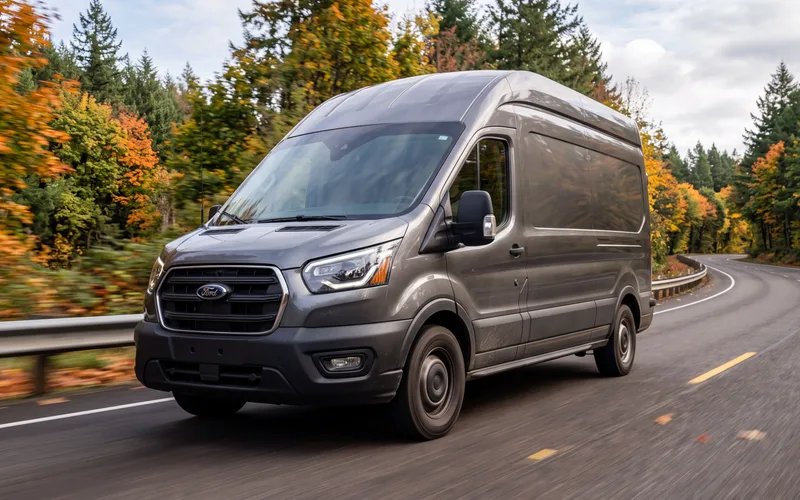 Ford TransitFull-Size VanBetter at: Towing and work duty
If you need real towing capacity, a proven service network and the option of gas or electric power, the Transit does everything the Buzz can't for less money.
Compare 2.22C
2.22C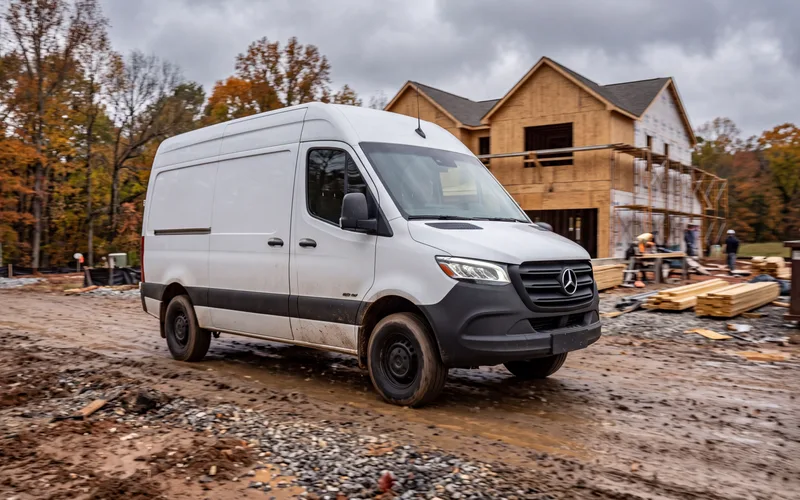 Mercedes-Benz SprinterFull-Size VanBetter at: Range and capability
For long-distance touring, camper conversions or genuine off-pavement travel, the Sprinter's diesel range and available 4x4 solve the ID. Buzz's biggest limitation.
Compare 1.47D
1.47D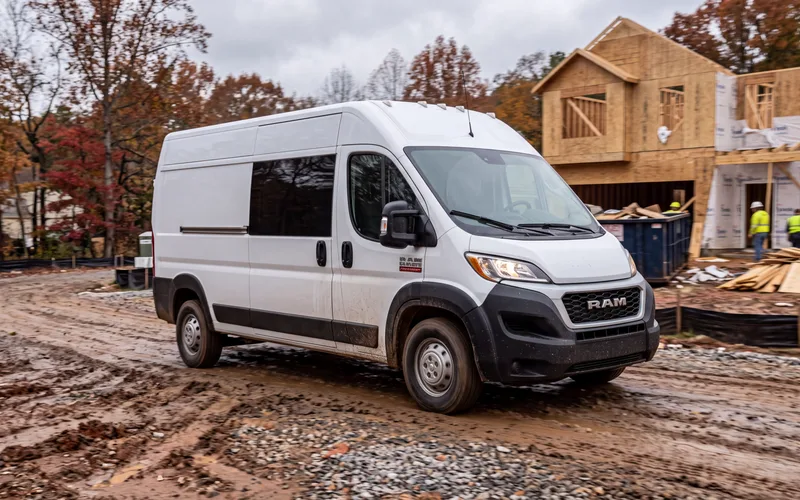 Ram ProMasterFull-Size VanBetter at: Value
If it's mostly about maximum cargo box for minimum money, the ProMaster delivers the volume without the Buzz's premium price or depreciation risk.
CompareSubject scores by year
Hover or tap a score to see what moved it versus the year before. A corner mark flags a big swing.
| Year | Performance | Efficiency | Safety | Space | Cost | Reliability | Tech | Use-case | Driving | Value |
|---|---|---|---|---|---|---|---|---|---|---|
| 2026 | 42 | 68 | 68 | 62 | 34 | 52 | 70 | 70 | 69 | 64 |
| 2025 | 45 | 68 | 76 | 58 | 41 | 53 | 69 | 62 | 70 | 56 |
Compare two years
Best fit & conditions
Higher scores mean a better fit for that use case. Learn more about use-case fit →
Subject profile
Academic Probation · NHTSA safety recalls
No NHTSA safety recall is on record for the 2026 Volkswagen ID. Buzz. Other model years of the ID. Buzz have 2 — listed below.
2 recalls on other model years of the ID. Buzz (2025)
May 15, 2025Seats: mid/rear assemblyBUZZ vehicles. The third-row rear bench is wide enough for three passengers, but is designed for two passengers and equipped with two seat belts. As such, these vehicles fail to comply with the requirements of Federal Motor Vehicle Safety Standard number 208, "Occupant Crash Protection."
Defect
Volkswagen Group of America, Inc. (Volkswagen) is recalling certain 2025 ID. BUZZ vehicles. The third-row rear bench is wide enough for three passengers, but is designed for two passengers and equipped with two seat belts. As such, these vehicles fail to comply with the requirements of Federal Motor Vehicle Safety Standard number 208, "Occupant Crash Protection."
Risk
In the event that more than two passengers sit in the rear bench seat, there would not be enough seat belts, increasing the risk of injury during a crash.
Remedy
Dealers will install trim to adjust the width of the third-row rear seats, free of charge. Owner notification letters were mailed June 20, 2025. Owners may contact Volkswagen customer service at 1-800-893-5298. Volkswagen's number for this recall is 72LC.
NHTSA campaign 25V269000 ↗Manufacturer no. 72LC5,644 vehicles potentially affected (all models in the campaign)Owners notified Jun 20, 2025Filed by Volkswagen Group of America, Inc.Filed as ID. BUZZApr 10, 2025Electrical system: instrument cluster/panelBuzz vehicles. The brake system warning light on the instrument panel display may be the incorrect symbol and color. As such, these vehicles fail to comply with the requirements of Federal Motor Vehicle Safety Standard numbers 135, "Light Vehicle Brake Systems" and 101, "Control and Displays."
Defect
Volkswagen Group of America, Inc. (Volkswagen) is recalling certain 2025 ID. Buzz vehicles. The brake system warning light on the instrument panel display may be the incorrect symbol and color. As such, these vehicles fail to comply with the requirements of Federal Motor Vehicle Safety Standard numbers 135, "Light Vehicle Brake Systems" and 101, "Control and Displays."
Risk
An incorrectly displayed warning light can fail to alert the driver to critical safety information, increasing the risk of a crash.
Remedy
Dealers will update the instrument panel software, free of charge. Owner notification letters were mailed June 6, 2025. Owners may contact Volkswagen customer service at 1-800-893-5298. Volkswagen's number for this recall is 90A2.
NHTSA campaign 25V233000 ↗Manufacturer no. 90A25,637 vehicles potentially affected (all models in the campaign)Owners notified Jun 6, 2025Filed by Volkswagen Group of America, Inc.Filed as ID. BUZZ
Source: NHTSA Office of Defects Investigation recall database, model years 2025–2026. Recalls are listed by model year as the manufacturer filed them; whether a specific car is affected depends on its VIN — check a VIN at nhtsa.gov ↗. NHTSA model names matched to this page: ID. BUZZ.
Detailed scoring by subject
1Performance & PowertrainOne of the ID. Buzz's weakest categories.0.81F
The US-market ID. Buzz is the long-wheelbase three-row version, and the volume configuration is the rear-drive Pro S with VW's single 210 kW APP550 rear motor at 282 hp; the dual-motor 4Motion is a step-up drivetrain reserved for the upper trims. Output carries over unchanged from the 2025 US launch.
Peak torque of the volume RWD Pro S rear motor is 560 Nm / 413 lb-ft, available instantly from zero rpm — comfortably the strongest torque figure among the vans in this dataset. VW does not publish a summed system torque figure for the 4Motion, so the rear-motor rating is used.
VW quotes roughly 7.9 seconds for the rear-drive volume trim — the instant torque is blunted by a curb weight around 6,200 lbs. The AWD version is roughly two seconds quicker, and instrumented tests have generally beaten the RWD manufacturer claim slightly.
Single-speed EV delivery is immediate, silent and completely free of lag, shift shock or coarse behavior — a clear refinement advantage over the V6 and diesel commercial vans it is grouped with here. Held short of the top of the band because the RWD version's outright pace is leisurely once loaded, so full-throttle merging feels strained rather than rough.
A single-speed reduction gear means seamless, uninterrupted delivery with no hunting, no downshift lag and no CVT drone — the ideal case this item's top band describes. Docked slightly because VW's B-mode regeneration is mild and there is no true one-pedal driving, a recurring reviewer complaint that leaves deceleration behavior less resolved than the acceleration side.
The US ID. Buzz is rated at 2,600 lbs — enough for a small utility trailer, a pair of jet skis or a light popup, but far below the 5,000–7,500 lb ratings of the body-on-frame work vans in this segment. Towing also cuts real-world range sharply, which limits its practical use.
4Motion all-wheel drive is genuinely available — a second front motor that adds traction and cuts about two seconds off 0–60 — but it is tied to the upper trims rather than offered across the range, and it is a simple on-demand electric split with no low range, no locking differentials and no terrain-mode suite. Sits just above the segment's restricted-availability floor.
Firmly pavement-oriented: modest ground clearance, a flat underfloor battery pack that sits low and unprotected, no skid plates, no off-road drive modes, no lockers and no dedicated off-road trim. AWD helps on a wet ramp or a snowy driveway and nothing beyond that.
One powertrain, take it or leave it: a single 91 kWh battery pack with no smaller or larger option, and no gas, diesel, hybrid or PHEV alternative. The only meaningful choice is RWD versus 4Motion AWD, which is a drivetrain layout rather than a distinct powertrain — enough to lift it slightly off the floor of the bottom band.
2Efficiency & RangeMid-pack among this car's ten categories.2.63C+
83 MPGe combined (40.8 kWh/100 mi) is mediocre in absolute EV terms — a ~6,000 lb three-row brick with a 0.29 drag coefficient — but it clears the top of the 40–80 MPGe EV van band, so it scores out. Re-verified this run against the EPA record; no change.
Regenerative braking and zero idle loss make the city cycle the ID. Buzz's strongest, clearing the top of the 42–88 MPGe EV van band. This is the duty cycle the van is actually bought for — school runs and suburban errands — and the one where it looks least compromised.
The upright body is aerodynamically costly, so highway MPGe drops 15 points below city — the reverse-of-ICE pattern typical of EVs, and the reason road-trip range disappoints. Still above the 38–72 MPGe EV van band ceiling, so it scores out despite being the van's weakest cycle.
The ID. Buzz's defining weakness: a 91 kWh gross / ~86 kWh usable pack moving a heavy, blunt body yields only 234 miles, near the floor of the 200–400 mi EV van band and roughly half a gasoline minivan's tank range. Loaded with people and gear at highway speed it does considerably less.
200 kW is mid-pack for a modern 400-volt EV — well ahead of the 170 kW the European short-wheelbase car accepts (per Wikipedia), but short of the 250–350 kW an 800-volt architecture manages. That gap matters more here than on most EVs, because the short range means more stops.
26 minutes is a genuinely good showing for a 91 kWh pack and lands in the upper half of the 17–45 min band, but it only buys back roughly 160 miles because the van is inefficient — so on the metric that decides a road trip, miles per stop, it trails almost every EV crossover.
At 41 kWh/100 mi the ID. Buzz draws roughly 6,100 kWh a year, landing at $900 on EPA's assumed residential rate — high for an EV and only mid-band against other EVs, but about a third of what a gasoline full-size van costs to fuel.
There is no fuel grade to worry about at all, and an 11 kW onboard charger makes overnight Level 2 home charging straightforward and cheap — which covers the school-run and commuting duty the ID. Buzz is actually bought for. Docked from the top band because poor efficiency plus a 234-mile range means fast-charging stops are frequent and, at commercial DC rates, genuinely costly on long trips.
3SafetyMid-pack among this car's ten categories.2.58C+
No NHTSA overall star rating could be confirmed for the US long-wheelbase ID. Buzz at time of scoring; estimated conservatively from passenger-van/minivan norms rather than credited with the 5 stars typical of established minivans. Lowered from the placeholder 4.3 because there is no verified rating to support it.
No IIHS Top Safety Pick or TSP+ award and no published IIHS crashworthiness results could be confirmed for the US ID. Buzz — it is a low-volume model that IIHS has not visibly prioritized. The European ID. Buzz earned a 5-star Euro NCAP result in 2022, which is encouraging but is a different protocol and a different (short-wheelbase) body, so it cannot substitute for a US rating. Scored mid-band as untested-without-known-concerns, not as an award winner.
Volkswagen makes the full IQ.DRIVE package standard on every US ID. Buzz trim: Front Assist (forward collision warning with autonomous emergency braking and pedestrian monitoring), Lane Assist, Travel Assist (adaptive cruise with lane centering), Side Assist blind-spot monitoring, Rear Traffic Alert, and Emergency Assist. All five of the suite's core elements — AEB, ACC, LKA, BSM, RCTA — are standard on the base Pro S, with nothing important paywalled to the Pro S Plus.
Front Assist with pedestrian monitoring is standard, so the hardware and function set are current-generation, but no IIHS front crash prevention result — vehicle-to-vehicle or pedestrian, day or night — could be confirmed for the ID. Buzz. Scored in the adequate band on equipment content alone; the top band requires a verified Superior/Advanced result including nighttime pedestrian detection, which is not in evidence.
Side Assist blind-spot monitoring and Rear Traffic Alert are standard on every trim rather than optional, and an exit warning guards against door-opening conflicts — strong coverage for the segment. Held below the top band because the systems are alert-based rather than actively intervening (no blind-spot steering assist or cross-traffic auto-braking), and the vehicle's length and width make a genuinely large area to cover.
Lane Assist and Travel Assist's lane centering are standard and function across the full speed range, but VW's centering is generally reviewed as competent rather than class-leading — it holds a lane reliably on marked highways while wandering more than the best systems on sweeping curves, and the tall, wide body makes any lateral correction more noticeable to occupants. Functional with occasional wander places it in the mid band.
Travel Assist combines full-speed-range adaptive cruise with stop-and-go and lane centering into a single well-integrated highway assist, standard on every trim, and it benefits from the EV powertrain's smooth, immediate torque delivery when resuming. Kept in the upper mid band rather than the top because VW's ACC calibration is known for somewhat conservative gap-keeping and unhurried resume behavior rather than the seamlessness of the best systems.
Volkswagen offers no hands-free highway driving system in the US on any model, and the ID. Buzz is no exception. Travel Assist is an explicitly hands-on system that requires continuous steering-wheel torque and nags when it is not detected — there is no BlueCruise/Super Cruise equivalent available at any price. Scored at the bottom of the no-hands-free band. The placeholder 87 credited a capability the vehicle does not have at all.
LED headlights are standard across the range with automatic high beam, and the Pro S Plus upgrades to IQ.LIGHT LED matrix units — a good equipment picture on paper. Scored in the mid band because no IIHS headlight rating could be confirmed for any ID. Buzz trim, and the volume Pro S runs the lesser of the two headlight systems, which is exactly the pattern that produces Good-on-top-trim/Acceptable-on-volume-trim outcomes.
Visibility is one of the ID. Buzz's genuine standout traits: a very short nose, an upright windshield set well forward, a low cowl and beltline, an enormous glass area and a high, commanding seating position give a forward and side view that almost nothing else on sale matches. The offsets are real but secondary — substantial rear pillars, a long and wide body that is hard to place in tight spaces, and the Area View 360-degree camera being reserved for the Pro S Plus rather than standard.
This is close to the best-case layout for car seats: dual power sliding rear doors open enormous apertures, the flat floor and tall roof let an adult stand in and work at the seat rather than stooping through a door frame, and multiple second-row LATCH positions are available. Held just below the top band because no IIHS LATCH ease-of-use rating could be confirmed, and second-row anchors in this class commonly sit in seat-bight recesses that require some digging.
4Space & ComfortMid-pack among this car's ten categories.2.17C
The US-market 2026 ID. Buzz is the long-wheelbase three-row van, sold as a seven-passenger 2-3-2 on the volume Pro S trim; Pro S Plus swaps the second-row bench for captain's chairs and drops to six. Seven is strong but short of the eight-seat maximum the segment band rewards.
The upright, tall-roof body and high-mounted front seats give near-segment-best front headroom despite the standard panoramic glass roof.
Cab-forward packaging puts the front axle and dash close to the driver, so front legroom is only mid-pack for a van — the ID. Buzz trades front stretch-out room for a short nose and a huge second/third row.
Second-row headroom exceeds the top of the van band — the flat roofline runs nearly the full length of the cabin, so rear passengers get as much head clearance as those up front.
Just under 40 in of second-row legroom on the 127.5 in wheelbase, and the second row slides on rails so it can be pushed back further when the third row is empty.
A genuine third row rather than a token one — reviewers seat adults back there, and the sliding second row plus wide dual power sliding doors make access easy. It falls short of the 80+ band because third-row legroom (~33.6 in) is tight for full-size adults on long trips and the seats are mounted low, forcing a knees-up posture.
With the third row out, the ID. Buzz opens up 75.5 cu ft behind the second row — near the top of the van band. The caveat is that reaching it requires physically removing the third-row seats, and with all three rows in place only 18.6 cu ft remains behind the back seat.
Maximum cargo volume tops out well above the van band ceiling — the boxy body, flat load floor and near-vertical walls make it one of the most volumetrically efficient passenger vehicles sold in the US.
Strong everyday storage: the removable 'Buzz Box' center console slides between the first and second rows and doubles as a bin with a bottle opener and ice scraper, door pockets are enormous, there is open space under the front seats, and a flat load floor with an underfloor bin sits behind the third row. It is held out of the 80+ band by the conspicuous absence of a frunk — the front compartment is sealed despite the EV layout — and by the removable rather than folding third row.
Wide, well-padded chairs with a commanding upright driving position that reviewers routinely single out as a long-haul strength; power adjustment with memory, and massage available on Pro S Plus. Second-row comfort is similarly good thanks to recline and slide adjustment. Third-row cushioning is the weak link.
The roughly 6,200 lb curb weight and long wheelbase deliver a settled, well-damped highway ride that is far more car-like than any commercial van in this set. It stops short of the top band because the standard 20-inch (optional 21-inch) wheels on short sidewalls let sharp expansion joints and broken pavement through, and there is some lateral head-toss from the tall body.
No engine noise at all and acoustic front glass keep the cabin calm at town speeds. At highway speed the enormous near-vertical windshield and blunt frontal area generate audible wind rush, and the large glass area and hard plastic surfaces give road noise little to absorb it — quiet for a van, not library-quiet.
Comfort content is rich and mostly standard: three-zone automatic climate control, heated front seats and heated steering wheel, dual power sliding doors, a panoramic fixed glass roof with an electrochromic dimming function, and app-based remote cabin preconditioning that an EV can run off the 91 kWh pack. Pro S Plus layers on ventilated and massaging front seats and heated second-row seats.
5Cost of OwnershipThe ID. Buzz's lowest-graded category.0.25F
The entry Pro S RWD opens around $59,995 plus roughly $1,550 destination — near the top of the van band, since the US-market long-wheelbase ID. Buzz is a premium-priced import from Hannover rather than a value minivan. Carried forward from the 2025 launch price; a 2026-specific MSRP could not be verified because live web grounding was unavailable for this run.
Pro S Plus is the expected volume trim now that the 2025-only 1st Edition is gone, at roughly $63,495 plus destination; Pro S Plus 4MOTION AWD pushes near $69,545. That lands the typical transaction almost at the ceiling of the van price band.
The EV powertrain removes oil changes, spark plugs, and most brake wear (regen does the slowing), so scheduled service is little more than cabin filters, brake fluid, and tire rotations — well below van-class norms. Offsetting that: a ~6,000 lb curb weight chews through large tires, VW's ID-family electronics and software have a poor repair record, and the 4-year basic warranty runs out before year five.
This is the ID. Buzz's worst ownership number. EV residuals are broadly weak, VW's own ID.4 is among the softer performers, and the expiration of the $7,500 federal credit — which the German-built Buzz only ever reached through the lease loophole — reset used-market expectations downward. Genuine design cachet and scarcity put it above a generic EV, but not enough to clear the bottom of the van band.
VW's New Vehicle Limited Warranty runs 4 years or 50,000 miles, a year longer than the 3/36 industry baseline but short of the Korean brands' 5-year coverage — mid-band for the segment.
The high-voltage battery carries the standard 8-year/100,000-mile EV coverage with a 70% capacity floor. That is the federal-minimum-plus norm rather than a differentiator, and note the drive motor itself falls under the shorter 4/50 basic term, not a separate long powertrain warranty.
A strong package: VW's Carefree Maintenance covers the first 2 years/20,000 miles of scheduled service, roadside assistance runs 3 years/36,000 miles, and the headline perk is the multi-year Electrify America complimentary DC fast-charging allotment, worth real money over the term. Held just under the top band because the charging promotion's exact 2026 terms could not be verified in this run and such offers are re-cut annually.
$65,045 volume-trim price minus its estimated resale value after 5 years (42% retained, or about $27,319) leaves about $37,726 in depreciation. Add the projected $4,900 in 5-year maintenance and repairs, and owning this vehicle for 5 years costs about $42,626 in total.
6Reliability & QualityOne of the ID. Buzz's weakest categories.1.52D
Only the second US model year of an all-new nameplate, sold in low volume by a brand with a persistently below-average dependability record; predicted-reliability ratings for new VW EVs have run below average, and the ID. Buzz launch drew early software and build complaints. Re-scored down from a placeholder that assumed near-top-tier reliability with no supporting data.
Volkswagen has repeatedly finished in the lower third of Consumer Reports' annual brand reliability rankings and below the industry average in J.D. Power's Vehicle Dependability Study. Held identical to the brand-level score used for the 2026 Atlas for cross-model consistency.
First-generation model with several early-production campaigns, most visibly a 2025 recall of US ID. Buzz vans whose third-row bench was wide enough to seat three occupants but provided only two seatbelts, remedied by narrowing the seating surface. No fire-risk or powertrain-failure campaign, which keeps this out of the bottom band.
Built on VW's MEB architecture, in mass production since 2020 across the ID.3, ID.4 and Audi Q4 e-tron, where reported problems have concentrated in software, door handles and 12V electronics rather than the drive unit or battery. The ID. Buzz's larger 91 kWh pack and APP550 rear motor are newer and less proven than the platform beneath them, which caps the score below the segment's best.
The cabin is design-led and genuinely charming — two-tone trim, durable washable surfaces, clever storage — but reviewers consistently note extensive hard plastics and switchgear that does not read as premium against the roughly $60k as-tested price this Premium-class van carries.
Assembled at Volkswagen Commercial Vehicles' Hannover plant with solid structural feel and generally consistent panel fit, offset by scattered early-build complaints and VW's mid-to-lower-pack standing in J.D. Power's Initial Quality Study.
Volkswagen of America fields roughly 640 franchised US dealers — about half Toyota's or Honda's footprint — and only a subset are EV-certified with the tooling and trained technicians an ID. Buzz needs. Scored slightly below the Atlas because a low-volume EV van narrows the usable service network further.
A German-built, low-volume EV with body panels and trim unique to the nameplate, effectively no aftermarket, and dealer-only sourcing for high-value electrical components — a combination that produces long parts waits and repair bills well above mainstream-van norms.
7Technology & InfotainmentThe ID. Buzz's best-graded category.2.77B-
The US-market long-wheelbase ID. Buzz uses a single 12.9-inch freestanding infotainment display running VW's MIB4 software, standard across Pro S, Pro S Plus and the launch 1st Edition — there is no smaller base screen and no larger upgrade, so the volume trim gets the maximum available size.
MIB4 is a clear generational step up from the software that shipped in early ID.4s — quicker to boot and redraw, with a persistent shortcut bar and, importantly, backlit climate/volume sliders that fix the single most-criticized flaw of the earlier system. It still concentrates too many functions in menus and relies on capacitive steering-wheel controls, which keeps it short of the best-in-class systems.
Wireless App-Connect — covering both wireless Apple CarPlay and wireless Android Auto — is standard equipment on every US ID. Buzz trim, with no wired-only entry configuration and no subscription gate.
Standard connected navigation with charging-stop planning is genuinely useful in an EV, and VW's IDA assistant adds a ChatGPT-backed conversational layer for general queries — novel, but it sits on top of an in-car command set that is still hit-or-miss for core tasks. Most owners will default to CarPlay or Android Auto for routing.
A Harman Kardon premium system with subwoofer is available and suits the ID. Buzz's large, quiet EV cabin well, but it is reserved for the upper trims — the volume Pro S ships with a competent rather than notable standard setup.
The driver display is a 5.3-inch column-mounted panel that moves with the steering wheel — fully digital but tiny, with minimal configurability and room for little beyond speed, range and basic driver-assist status. It is the weakest element of an otherwise modern cabin and there is no larger cluster on any trim.
The ID. Buzz supports over-the-air updates covering infotainment, maps and some vehicle control modules, so it is not maps-only. VW's cadence on the ID range has historically been infrequent and the updates have leaned toward fixes rather than new capability, so this lands mid-band rather than with the regular feature-adding leaders.
The myVW app covers the core EV set — remote lock/unlock, cabin preconditioning, charge status, charge scheduling and vehicle locate — included with the connected-services trial. It is functional rather than polished, with persistent owner complaints about sync latency and login reliability, and there is no phone-as-key digital key.
This is a genuine strength: USB-C outlets are distributed across all three rows so third-row passengers are not an afterthought, front ports are high-wattage enough to fast-charge a laptop-class device, and wireless phone charging is fitted. Only the absence of a household-style AC outlet keeps it out of the top of the band.
Keyless entry with push-button start is standard, and power sliding side doors on both sides plus a power tailgate make day-to-day access easy with hands full — remote preconditioning and door control come via the app rather than a key-fob remote start. No phone-as-key option holds it below the top band.
Front and rear parking sensors with a rear camera are standard, a 360-degree Area View surround camera is available, and Park Assist Plus adds memory parking that can replay a learned maneuver — unusually capable automation for a van and genuinely valuable given the ID. Buzz's width and blunt nose. Surround view being trim-gated keeps it just short of the top of the band.
No head-up display is offered on the US ID. Buzz at any trim level, including the 1st Edition — a real gap here because it would have offset the 5.3-inch driver display that carries all primary instrumentation.
8Use-Case FitOne of the ID. Buzz's strongest categories.2.72B-
The loading experience is close to best-in-class: dual power sliding doors open enormous apertures, the flat EV floor and stand-up roof height let an adult step in and buckle a seat upright instead of stooping through a door frame, and the second row slides on rails with multiple LATCH positions. What holds it out of the top band is gear rather than kids — only 18.6 cu ft sits behind the third row, the worst in the minivan set, so a stroller plus a weekly shop is a genuine squeeze, and there is no Magic Slide-style second-row trick or in-cabin monitoring camera. Lowered from the placeholder 90 because the stroller-cargo penalty is explicitly part of this item.
Standard ADAS content is the strongest in the segment — the full IQ.DRIVE suite (Front Assist with pedestrian AEB, Travel Assist, Lane Assist, Side Assist, Rear Traffic Alert, Emergency Assist) is fitted to every trim rather than reserved for upper trims, along with a rear-seat reminder. The offsets are substantial: no IIHS award or NHTSA overall star rating could be confirmed for the US ID. Buzz, so its crash credentials are unproven, and the cheapest trim families can buy starts north of $61k, which is not a family-friendly price point. Cut sharply from the placeholder 94, which implied verified top-tier crash results that do not exist.
Occupant comfort for a long day is excellent: three-zone climate, class-topping second-row headroom, a sliding and reclining second row, an adult-usable third row, USB-C outlets in all three rows and a panoramic electrochromic roof. Two things keep it out of the top band, and both matter specifically on road trips — luggage space with all seats occupied is the worst in the segment at 18.6 cu ft, and there is no rear-seat entertainment option, so tablets are the only answer. Raised slightly from the placeholder 74 on the strength of the rear-amenity and climate content.
This is the ID. Buzz's strongest mission. The single-speed EV powertrain gives silent, instant, perfectly smooth low-speed response in stop-and-go, the short nose and huge upright glass area deliver a forward view almost nothing else on sale matches, the driving position is high and commanding, and Travel Assist's stop-and-go adaptive cruise with lane centering is standard on every trim. Deductions are minor and real: the body is wide enough to feel it in tight lanes, the 20-inch wheels let sharp impacts through, and too many everyday functions live in the touchscreen. Best in this van and minivan set.
Per-mile energy cost is the lowest in the segment by a wide margin — 79 MPGe combined works out to roughly $950 a year at 15,000 miles, against $2,000-plus for a V6 minivan — and the EV drivetrain deletes oil changes while regenerative braking stretches pad life dramatically. It falls short of the very top band on the other half of the item: insurance runs high for a $65k van, 20- and 21-inch tires on a 6,200 lb vehicle are expensive to replace, and dealer-only parts sourcing makes any non-consumable repair costly. Scored just below the Sienna, whose hybrid is slightly thirstier but far cheaper to keep in consumables.
Better in tight spaces than its bulk suggests, and the best of this group. It is shorter overall than every three-row minivan it competes with, the cab-forward one-box body puts almost no sheet metal ahead of the driver, visibility is exceptional in every direction, and front and rear parking sensors are standard with a 360-degree Area View camera and memory-replay Park Assist Plus available. Width is the honest limit — it is a broad vehicle in older parking structures and narrow city streets — which keeps it out of the effortless band.
Raw volume is there — 145.5 cu ft with the third row out and the second folded, on a flat floor with near-vertical walls — but almost everything else argues against real work duty. Towing maxes at 2,600 lbs, well under half what a Transit or Sprinter manages; payload is modest for a 6,200 lb van; reaching the big cargo number means physically removing two ~110 lb seat sections; and towing or a full load collapses an already short 234-mile range. It handles light hauling ably and beats the minivans on sheer capacity, but it is a premium passenger van, not a work tool. Cut hard from the placeholder 85.
The weakest use case. This is the second model year of an all-new, low-volume, German-built nameplate from a brand with a persistently below-average dependability record, and the ownership infrastructure behind hard use is thin — dealer-only sourcing for body panels and high-value electrical parts, no aftermarket, and only a subset of VW's roughly 640 US dealers EV-certified. The underlying MEB drive unit has five years of mass production behind it and the cabin does offer washable surfaces, which keeps it off the floor. Nothing here is fleet-proven. Cut sharply from the placeholder 71.
Basic provisions are present — flat load floor with tie-downs and an underfloor bin, hard-wearing washable surfaces, a removable Buzz Box console, roof rails and a hitch available — which puts it ahead of the conventional minivans. But the two things that would make it a jobsite asset are missing: there is no household-style AC outlet and no vehicle-to-load export, a conspicuous omission on a 91 kWh EV when Ford sells Pro Power Onboard, and the US passenger van has essentially no commercial upfit ecosystem behind it. Removing the third row to open the load bay is also a two-person job rather than a lever pull. Cut from the placeholder 85.
Comfort and range point in opposite directions and range wins, because this item weights distance between stops. The seats are wide and well-padded, the driving position is a genuine long-haul strength, Travel Assist reduces fatigue on any marked highway, and there is no engine noise at all. Against that, EPA range is 234 miles — the bottom of the band — and a blunt, boxy 6,200 lb van at 75 mph with seven aboard will realistically do meaningfully less, so this is a vehicle that stops every two to three hours while every gasoline and hybrid rival in the segment covers 400 to 600 miles on a tank. Fast charging helps but does not close that gap.
Better than any conventional minivan and short of a real adventure platform. The flat 145.5 cu ft load bay makes it one of the easiest vehicles on sale to sleep in, 4MOTION all-wheel drive is available, and roof rails and a hitch handle bikes and boxes. The limits are firm: low ground clearance, road tires and no off-road drive modes confine it to pavement and maintained gravel, the 2,600 lb tow rating rules out most trailered toys, there is no onboard AC power to run a campsite, and a 234-mile range against sparse charging is exactly the wrong trait for remote trailheads. Cut from the placeholder 94, which implied genuine off-pavement ability the vehicle does not have.
Volume is elite and the mechanism for reaching it is not. At 145.5 cu ft the ID. Buzz has more maximum space than anything else in the segment, on a flat floor with near-vertical walls, plus an underfloor bin, roof rails and a hitch. But the third row does not fold into the floor — it comes out in two roughly 110 lb sections that need a second pair of hands and somewhere to live in the garage — the second row folds without stowing, and there is no frunk. Against Stow 'n Go, which converts in under a minute, the Buzz trades genuine day-to-day flexibility for peak capacity. Cut from the placeholder 90.
9Driving ExperienceOne of the ID. Buzz's strongest categories.2.64C+
The underfloor battery gives the ID. Buzz a far lower center of gravity than any body-on-frame van, so it corners flatter and more securely than its ~6,200-lb curb weight and upright, slab-sided body suggest — reviewers routinely note it leans less and tracks more tidily than a Transit or Sprinter. It stays mid-band rather than higher because the mass, tall roof and comfort-biased suspension tuning cap outright grip, and quick direction changes bring obvious body motion.
The electric rack is light, consistent and accurate enough to place a 15-foot-plus van confidently, and the quick ratio makes it feel handier than its footprint in parking lots. It sits squarely in the 'precise enough but numb' band — there is essentially no feedback about front grip, and the assistance stays artificially light as speeds and cornering loads rise.
Stopping power is adequate and fade-free in normal use, but roughly 6,200 lbs of van means genuinely long stops — instrumented 70–0 mph figures for the US ID. Buzz sit near the 180-ft mark, poor by passenger-vehicle standards even if unremarkable for a van. The larger deduction is pedal quality: VW's MEB friction/regen blending is a long-standing reviewer complaint, giving soft, slightly indistinct initial travel, and mild B-mode regen means the pedal does most of the work with no one-pedal alternative.
A single-speed rear transaxle with 413 lb-ft available from zero rpm delivers seamless, lag-free, shift-free thrust with no stop/start shudder and no driveline vibration — exactly what the top band describes, and a clear step above the V6 and diesel vans it competes with. Held just below the top of the band because the rear-drive volume trim's ~7.9 s 0–60 means full-throttle merging when loaded feels strained rather than effortless, and the weak B-mode regen leaves the deceleration side of the calibration less resolved than the acceleration side.
The drivetrain itself is effectively silent — no combustion noise, no exhaust, no multi-speed gearbox, and no vibration through the pedals or wheel, with only a faint motor hum audible under hard acceleration. Scored just short of the ceiling because the flat windshield and upright profile generate wind rush at highway speed that partly offsets the silent powertrain in real-world cabin impressions.
The US ID. Buzz is the long-wheelbase three-row body on a 127.5-in wheelbase — appreciably longer between the axles than a Pacifica or Carnival — and that stretch costs it the tight, engine-free maneuverability the short-wheelbase European version is praised for. The result is a turning circle at the wide end of the van band despite the packaging advantage of having no engine over the front axle.
One of the ID. Buzz's genuine strengths: a high, commanding, cab-forward seating position with an exceptionally deep windshield and enormous glass area giving near-panoramic forward and side visibility, plus easy step-in height and a well-adjustable seat and wheel. It falls short of the top band because VW's touch-based climate sliders and capacitive controls still demand more glances than physical switchgear, and the very long body means the driver leans on cameras and sensors for parking rather than over-the-shoulder sightlines.
Almost nothing in this segment trades on character the way the ID. Buzz does — silent instant torque, a huge airy cabin, and a retro shape that draws waves and conversations everywhere it goes, which is exactly the 'take the long way home' quality this item rewards. It sits at the bottom edge of the top band rather than higher because the enjoyment is charm and novelty rather than dynamic reward: it is not quick in RWD form, the steering is numb, and no enthusiast would call it engaging on a good road.
10Value & Market PositionMid-pack among this car's ten categories.2.32C+
The base Pro S arrives genuinely well-equipped — dual power sliding doors, power liftgate, IQ.Light LED matrix headlights, 12.9-inch infotainment with wireless CarPlay/Android Auto, heated front seats and heated steering wheel, 30-color ambient lighting and the full IQ.Drive assist suite are all standard — but at a roughly $60k entry point that content is expected rather than exceptional, and Carnival/Sienna trims costing $15k less match most of it. Re-scored down from the placeholder because generosity has to be judged against the price paid, not in absolute terms.
This is the ID. Buzz's weakest commercial argument: roughly $61k-$70k as delivered buys a three-row van with about 234 miles of EPA range, ~2.5 mi/kWh efficiency and a 6,000-lb-plus curb weight, while a Kia Carnival Hybrid or Toyota Sienna delivers more seats-up cargo room and better road-trip usability for $15k-$20k less. The 2026 expiry of federal EV credits removed the $7,500 that had been papering over the gap, pushing this into the poor-value band versus direct rivals.
The 2026 lineup narrows to Pro S and Pro S Plus with a rear-drive or 4MOTION all-wheel-drive choice and a six- or seven-seat interior, after the one-year 1st Edition launch trim was retired. One battery size, one body length and no low-cost entry point make this a much thinner ladder than the Pacifica's gas/PHEV/AWD spread or the Sienna's broad trim range - a reasonable choice with real gaps rather than a take-it-or-leave-it lineup.
Enormous pre-launch hype has not converted into volume: US ID. Buzz deliveries have run in the single-digit thousands per year against roughly 85k Siennas, 55k Carnivals and 45k Pacificas, leaving it a niche seller with elevated days-supply and a softening trajectory now that the lease credit is gone. Re-scored sharply down from the placeholder's 94, which had no basis in actual registrations.
The nameplate itself is one of the strongest image assets in the segment - the Microbus revival draws attention no rival van comes close to and carries real cultural affection - but that halo sits on top of a VW brand with middling US reliability and dealer-satisfaction perception and a poor recent EV resale record set by the ID.4. The two pull against each other, landing it above the Chrysler vans but below Toyota and Honda on the resale-and-satisfaction dimension this item measures.
Slow turn and heavy inventory make this an easy vehicle to buy well: factory cash, subvented financing and subsidized lease programs are routinely available and dealers discount off MSRP, with state EV rebates still stacking in several markets. It falls short of the top band only because the 2026 loss of the $7,500 federal lease credit materially worsened the effective deal versus the 2025 car, and because the discounting is plainly a response to weak demand.
2026 is only the second model year of an all-new US nameplate that launched for 2025, making this comfortably the freshest product in the American van segment with no redesign risk for a buyer. It is held just short of the top of the band because the underlying MEB platform is itself several years old - 400-volt architecture and roughly 200 kW peak charging are no longer current-generation EV tech.
Reviews are warm but consistently split along the same seam: near-universal praise for the design, cabin airiness, ride comfort, second-row space and low-speed maneuverability, set against equally consistent criticism of price, real-world highway range, weight, efficiency and seats-up cargo room. It collects design and desirability honors and lands on best-looking-EV lists, but in rational head-to-head minivan comparisons it is rarely the pick over a Carnival or Sienna - squarely the 'well-reviewed, rarely the winner' band.