

The verdict
A mixed-report full-size van, strong on efficiency and held back by ownership.
The 2026 Sprinter is the full-size van you buy when the van is your business or your home on wheels, not when you just need a box on wheels. It offers up to 533 cubic feet of cargo, 7,500 pounds of towing, an honest ~22 MPG from its 2.0L turbodiesel, and a cabin that is genuinely the nicest in the class — but a typical fleet build runs about $60,000, roughly $10,000 more than a comparable Ford Transit, and Mercedes parts and labor keep taking bites long after the 3-year/36,000-mile warranty ends. Resale is the saving grace: about 62% of MSRP after five years, best in the segment. If you plan to keep it 200,000 miles or convert it into a camper, the math works; if you just need to haul plywood, it doesn't.
Jump to scoresStrengths
- Cargo and configuration nothing else touches
- The adventure and camper-conversion platform of choice
- A powertrain fleets run to 300,000 miles
What holds it back
- Expensive to own after the warranty runs out
- You pay a large Mercedes premium up front
- Segment-floor warranty and only ~230 service points
Top alternatives
Cars shoppers cross-shop with the Mercedes-Benz Sprinter 1.82C-
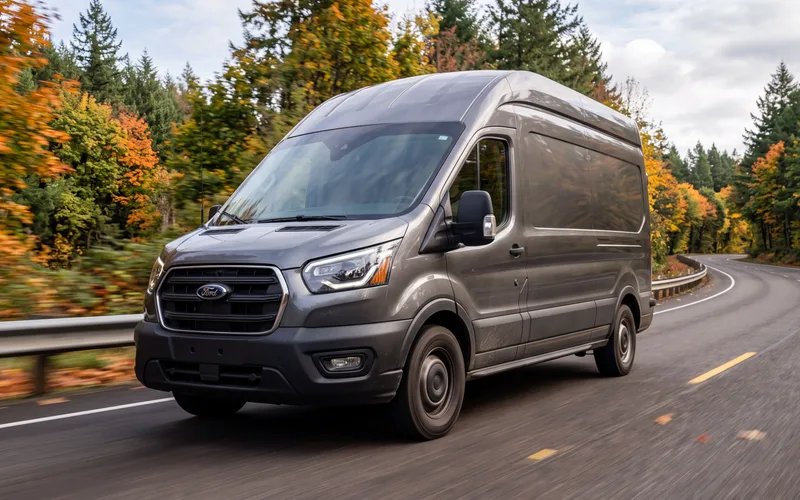 Ford TransitFull-Size VanBetter at: Value and service
Nearly the same configuration breadth and work capability for roughly $10,000 to $15,000 less, with vastly more dealers to service it.
Compare 1.47D
1.47D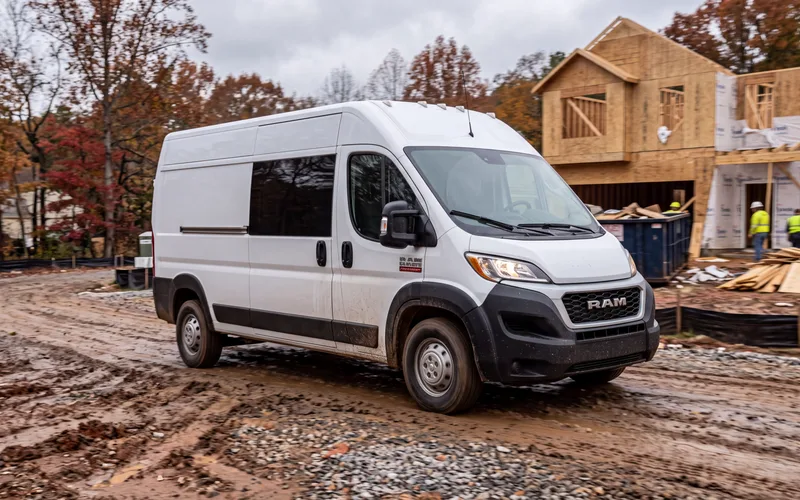 Ram ProMasterFull-Size VanBetter at: City maneuverability
Front-wheel drive delivers a low load floor and a tighter turning circle at the lowest price in the class — the easiest full-size van for city delivery work.
Compare 2.04C
2.04C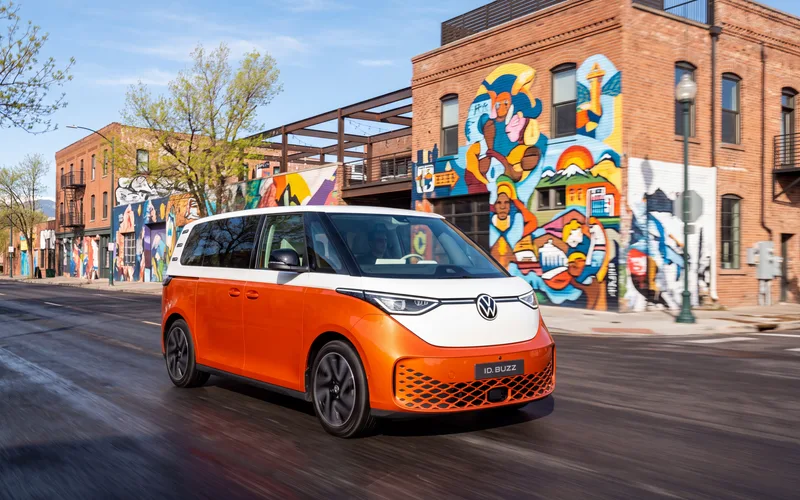 Volkswagen ID. BuzzMinivanBetter at: Daily livability
If the van is for people and weekends rather than cargo and work, the Buzz is dramatically easier to park, cheaper to run, and more pleasant every day.
CompareHow it's evolved
10 scored model years · 2017–2026
Subject scores by year
Hover or tap a score to see what moved it versus the year before. A corner mark flags a big swing.
| Year | Performance | Efficiency | Safety | Space | Cost | Reliability | Tech | Use-case | Driving | Value |
|---|---|---|---|---|---|---|---|---|---|---|
| 2026 | 51 | 71 | 63 | 61 | 41 | 67 | 66 | 70 | 66 | 65 |
| 2025 | 46 | 60 | 57 | 69 | 46 | 66 | 59 | 69 | 63 | 62 |
| 2024 | 46 | 59 | 56 | 69 | 47 | 63 | 52 | 68 | 62 | 63 |
| 2023 | 37 | 25 | 55 | 52 | 33 | 59 | 51 | 59 | 61 | 61 |
| 2022 | 36 | 25 | 53 | 66 | 39 | 58 | 50 | 61 | 59 | 59 |
| 2021 | 37 | 27 | 52 | 66 | 43 | 54 | 50 | 60 | 60 | 59 |
| 2020 | 36 | 33 | 50 | 66 | 47 | 52 | 50 | 60 | 60 | 62 |
| 2019 | 36 | 30 | 49 | 66 | 59 | 50 | 50 | 59 | 60 | 64 |
| 2018 | 40 | 55 | 29 | 60 | 53 | 56 | 19 | 54 | 49 | 52 |
| 2017 | 38 | 71 | 29 | 66 | 51 | 53 | 17 | 57 | 52 | 52 |
Compare two years
Best fit & conditions
Higher scores mean a better fit for that use case. Learn more about use-case fit →
Subject profile
Academic Probation · NHTSA safety recalls
No NHTSA safety recall is on record for the 2026 Mercedes-Benz Sprinter. Other model years of the Sprinter have 85 — listed below.
85 recalls on other model years of the Sprinter (2017–2025)
Feb 20, 2026Back over prevention: warnings: external/pedestrian alertThe vehicles fail to make sufficient pedestrian warning sounds when in reverse. As such, these vehicles fail to comply with the requirements of Federal Motor Vehicle Safety Standard (FMVSS) number 141, "Minimum Sound Requirements for Hybrid and Electric Vehicles."
Defect
Daimler Vans USA, LLC (DVUSA) is recalling certain 2025 Mercedes-Benz eSprinter vehicles. The vehicles fail to make sufficient pedestrian warning sounds when in reverse. As such, these vehicles fail to comply with the requirements of Federal Motor Vehicle Safety Standard (FMVSS) number 141, "Minimum Sound Requirements for Hybrid and Electric Vehicles."
Risk
Insufficient pedestrian warning sounds may fail to alert pedestrians of an approaching vehicle, increasing the risk of injury.
Remedy
Dealers will update the software for the pedestrian warning sounds, free of charge. Owner notification letters were mailed March 27, 2026. Owners may contact DVUSA customer service at 1-877-762-8267. DVUSA's number for this recall is V3EAVASOU. Vehicle Identification Numbers (VINs) involved in this recall became searchable on NHTSA.gov beginning February 20, 2026.
NHTSA campaign 26V099000 ↗Manufacturer no. V3EAVASOU117 vehicles potentially affected (all models in the campaign)Owners notified Mar 27, 2026Filed by Daimler Vans USA, LLCFiled as ESPRINTEROct 24, 2025Structure: frame and membersThe right longitudinal frame member may not be reinforced properly, decreasing the structural integrity of the third-row seats.
Defect
Daimler Vans USA, LLC (DVUSA) is recalling certain 2023-2024 Mercedes-Benz Sprinter 2500 vehicles. The right longitudinal frame member may not be reinforced properly, decreasing the structural integrity of the third-row seats.
Risk
Third-row seats with inadequate strength may fail to protect occupants, increasing the risk of injury in a crash.
Remedy
Dealers will inspect and repair the frame, as necessary, free of charge. Owner notification letters were mailed December 17, 2025. Owners may contact DVUSA customer service at 1-877-762-8267. DVUSA's number for this recall is VS3RASCHW. Vehicle Identification Numbers (VINs) involved in this recall will be searchable on NHTSA.gov beginning October 31, 2025.
NHTSA campaign 25V725000 ↗Manufacturer no. VS3RASCHW366 vehicles potentially affected (all models in the campaign)Owners notified Dec 17, 2025Filed by Daimler Vans USA, LLCFiled as SPRINTER 2500Oct 17, 2025Forward collision avoidance: sensing system: radarThe front short-range radar sensor printed circuit board may fail and result in a loss of automatic emergency braking and other driver assistance features.
Defect
Daimler Vans USA, LLC (DVUSA) is recalling certain 2025 Mercedes-Benz Sprinter 2500 vehicles. The front short-range radar sensor printed circuit board may fail and result in a loss of automatic emergency braking and other driver assistance features.
Risk
An automatic emergency braking system that does not function as intended can increase the risk of a crash.
Remedy
Dealers will replace the short-range sensor, free of charge. Owner notification letters were mailed November 21, 2025. Owners may contact DVUSA customer service at 1-877-762-8267. DVUSA's number for this recall is VS3RADARS. Vehicle Identification Numbers (VINs) involved in this recall will be searchable on NHTSA.gov beginning October 24, 2025.
NHTSA campaign 25V712000 ↗Manufacturer no. VS3RADARS16 vehicles potentially affected (all models in the campaign)Owners notified Nov 21, 2025Filed by Daimler Vans USA, LLCFiled as SPRINTER 2500Sep 12, 2025Structure: frame and membersThe longitudinal frame members may not be reinforced properly.
Defect
Daimler Vans USA, LLC (DVUSA) is recalling certain 2024 Mercedes-Benz Sprinter 2500 and Sprinter 3500 vehicles. The longitudinal frame members may not be reinforced properly.
Risk
Frame members with inadequate strength may reduce the vehicle's performance in a crash, increasing the risk of injury.
Remedy
Dealers will inspect and repair the frame, as necessary, free of charge. Owner notification letters were mailed December 18, 2025. Owners may contact DVUSA customer service at 1-877-762-8267. DVUSA's number for this recall is VVS3LAENGST. Vehicle Identification Numbers (VINs) involved in this recall will be searchable on NHTSA.gov beginning September 19, 2025.
NHTSA campaign 25V609000 ↗Manufacturer no. VS3LAENGST4 vehicles potentially affected (all models in the campaign)Owners notified Dec 18, 2025Filed by Daimler Vans USA, LLCFiled as SPRINTER 2500, SPRINTER 3500Feb 28, 2025Parking brakeThe parking brake cable bracket welds may fail and disengage the parking brake. As such, these vehicles fail to comply with the requirements of Federal Motor Vehicle Safety Standard number 105, "Hydraulic and Electric Brake Systems."
Defect
Daimler Vans USA, LLC (DVUSA) is recalling certain 2024 Mercedes-Benz Sprinter vehicles. The parking brake cable bracket welds may fail and disengage the parking brake. As such, these vehicles fail to comply with the requirements of Federal Motor Vehicle Safety Standard number 105, "Hydraulic and Electric Brake Systems."
Risk
Parking brake failure can result in a vehicle rollaway, increasing the risk of a crash.
Remedy
Dealers will inspect and repair the parking brake cable bracket as necessary, free of charge. Owner notification letters were mailed April 30, 2025. Owners may contact DVUSA customer service at 877-762-8267. DVUSA's number for this recall is VS3HALHAN.
NHTSA campaign 25V135000 ↗Manufacturer no. VS3HALHAN88 vehicles potentially affected (all models in the campaign)Owners notified Apr 30, 2025Filed by Daimler Vans USA, LLCFiled as SPRINTER 1500, SPRINTER 2500, SPRINTER 3500, SPRINTER 4500Feb 14, 2025Parking brake: driveline · Power train: axle assemblyThe welds on the helical gear within the rear axle drivetrain may fail, causing a loss of drive power.
Defect
Daimler Vans USA, LLC (DVUSA) is recalling certain 2024 Mercedes-Benz eSprinter vehicles. The welds on the helical gear within the rear axle drivetrain may fail, causing a loss of drive power.
Risk
A loss of drive power increases the risk of a crash. In addition, drivetrain failure can result in a vehicle rollaway if the parking brake is not applied, increasing the risk of a crash or injury.
Remedy
Dealers will replace the rear axle electric drivetrain, free of charge. Owner notification letters were mailed May 5, 2025. Owners may contact DVUSA customer service at 877-762-8267. DVUSA's number for this recall is V3ESCHWEI.
NHTSA campaign 25V090000 ↗Manufacturer no. V3ESCHWEI689 vehicles potentially affected (all models in the campaign)Owners notified May 5, 2025Filed by Daimler Vans USA, LLCFiled as ESPRINTERDec 13, 2024Electrical system: instrument cluster/panelThe instrument cluster illumination may not be adjustable and appear too bright in certain lighting conditions. As such, these vehicles fail to comply with the requirements of Federal Motor Vehicle Safety Standard (FMVSS) number 101, "Controls and Displays."
Defect
Daimler Vans USA, LLC (DVUSA) is recalling certain 2019-2022 Mercedes-Benz Sprinter vehicles. The instrument cluster illumination may not be adjustable and appear too bright in certain lighting conditions. As such, these vehicles fail to comply with the requirements of Federal Motor Vehicle Safety Standard (FMVSS) number 101, "Controls and Displays."
Risk
A display that is too bright can make it difficult for the driver to see critical safety information, increasing the risk of a crash.
Remedy
Dealers will update the instrument cluster software, free of charge. Owner notification letters were mailed January 31, 2025. Owners may contact DVUSA customer service at 1-877-762-8267. DVUSA's number for this recall is VS3BELKOM.
NHTSA campaign 24V930000 ↗Manufacturer no. VS3BELKOM697 vehicles potentially affected (all models in the campaign)Owners notified Jan 31, 2025Filed by Daimler Vans USA, LLCFiled as SPRINTER 1500, SPRINTER 2500, SPRINTER 3500, SPRINTER 4500Jul 9, 2024Suspension: rear: springs: leaf spring assembly: u-bolt, leaf spring to axleThe spring U-bolts for the rear axle may have reduced strength due to improper heat-treatment, which can cause the rear axle to shift out of position.
Defect
Daimler Vans USA, LLC (DVUSA) is recalling certain 2023-2024 Mercedes-Benz Sprinter vehicles. The spring U-bolts for the rear axle may have reduced strength due to improper heat-treatment, which can cause the rear axle to shift out of position.
Risk
An axle that moves out of position can cause a loss of vehicle control, increasing the risk of a crash.
Remedy
Dealers will replace the spring U-bolts, free of charge. Owner notification letters were mailed August 23, 2024. Owners may contact DVUSA customer service at 1-877-762-8267. DVUSA's number for this recall is VS3FEDERB.
NHTSA campaign 24V517000 ↗Manufacturer no. VS3FEDERB1,232 vehicles potentially affected (all models in the campaign)Owners notified Aug 23, 2024Filed by Daimler Vans USA, LLCFiled as SPRINTER 1500, SPRINTER 2500, SPRINTER 3500, SPRINTER 4500May 6, 2024Electronic stability control (esc): control module: softwareDue to a software error in the electronic stability program (ESP), the force required to stop the vehicle may increase, possibly requiring an extended distance to stop.
Defect
Daimler Vans USA, LLC (DVUSA) is recalling certain 2024 Mercedes-Benz eSprinter vehicles. Due to a software error in the electronic stability program (ESP), the force required to stop the vehicle may increase, possibly requiring an extended distance to stop.
Risk
Extended stopping distance can increase the risk of a crash.
Remedy
Dealers will update the ESP control unit software, free of charge. Owner notification letters were mailed June 3, 2024. Owners may contact DVUSA customer service at 1-877-762-8267. DVUSA's number for this recall is VS3EBOOSTF.
NHTSA campaign 24V316000 ↗Manufacturer no. VS3EBOOSTF184 vehicles potentially affected (all models in the campaign)Owners notified Jun 3, 2024Filed by Daimler Vans USA, LLCFiled as ESPRINTERMar 24, 2024Electrical system: wiringA 12-Volt ground connection may not be secured properly, which can result in the ground connection overheating and a loss of drive power.
Defect
Daimler Vans USA, LLC (DVUSA) is recalling certain 2023 Mercedes-Benz Sprinter vehicles. A 12-Volt ground connection may not be secured properly, which can result in the ground connection overheating and a loss of drive power.
Risk
An overheated ground connection can increase the risk of a fire, and a loss of drive power can increase the risk of a crash.
Remedy
Dealers will inspect and repair the 12-Volt ground connection, as necessary free of charge. Owner notification letters were mailed May 3, 2024. Owners may contact DVUSA customer service at 1-877-762-8267. DVUSA's number for this recall is VS3HVERSL.
NHTSA campaign 24V225000 ↗Manufacturer no. VS3HVERSL99 vehicles potentially affected (all models in the campaign)Owners notified May 3, 2024Filed by Daimler Vans USA, LLCFiled as SPRINTER 1500, SPRINTER 2500, SPRINTER 3500, SPRINTER 4500Mar 1, 2024Electrical system: wiringThe main wiring harness may chafe against the drive shaft and short circuit, which can result in a loss of drive power, power steering, and brake system control.
Defect
Daimler Vans USA, LLC (DVUSA) is recalling certain 2023 Mercedes-Benz Sprinter vehicles. The main wiring harness may chafe against the drive shaft and short circuit, which can result in a loss of drive power, power steering, and brake system control.
Risk
A short circuit increases the risk of a fire. In addition, a loss of drive power, power steering, and brake system control increases the risk of a crash.
Remedy
Dealers will inspect the routing of the main wiring harness and correct it, as necessary, free of charge. Owner notification letters were mailed April 5, 2024. Owners may contact DVUSA customer service at 1-877-762-8267. DVUSA's number for this recall is VS3BEFHAU.
NHTSA campaign 24V166000 ↗Manufacturer no. VS3BEFHAU828 vehicles potentially affected (all models in the campaign)Owners notified Apr 5, 2024Filed by Daimler Vans USA, LLCFiled as SPRINTER 1500, SPRINTER 2500, SPRINTER 3500, SPRINTER 4500Dec 21, 2023Structure: critical fastenersThe partition wall may be missing bolts, allowing the wall to detach during a crash.
Defect
Daimler Vans USA, LLC (DVUSA) is recalling certain 2019-2023 Mercedes-Benz Sprinter and 2019-2021 Freightliner Sprinter vehicles. The partition wall may be missing bolts, allowing the wall to detach during a crash.
Risk
A detached partition wall can increase the risk of injury.
Remedy
Dealers will inspect and secure the partition wall as necessary, free of charge. Owner notification letters are expected to be mailed February 16, 2024. Owners may contact DVUSA customer service at 1-877-762-8267. DVUSA's number for this recall is VS3TREWAN.
NHTSA campaign 23V876000 ↗Manufacturer no. VS3TREWAN387 vehicles potentially affected (all models in the campaign)Owners notified Jan 31, 2024Filed by Daimler Vans USA, LLCFiled as SPRINTER 1500, SPRINTER 2500, SPRINTER 3500, SPRINTER 4500Dec 21, 2023Structure: critical fastenersThe longitudinal frame members may be missing reinforcement fasteners, reducing vehicle stability and decreasing the structural integrity of the third-row seats.
Defect
Daimler Vans USA, LLC (DVUSA) is recalling certain 2019-2021 Mercedes-Benz Sprinter and Freightliner Sprinter vehicles. The longitudinal frame members may be missing reinforcement fasteners, reducing vehicle stability and decreasing the structural integrity of the third-row seats.
Risk
Reduced stability increases the risk of a crash. Additionally, the third-row seat mountings can fail, increasing the risk of injury during a crash.
Remedy
Dealers will inspect and repair the frame members as necessary, free of charge. Owner notification letters were mailed March 4, 2024. Owners may contact DVUSA customer service at 1-877-762-8267. DVUSA's number for this recall is VS3ROHRAH.
NHTSA campaign 23V875000 ↗Manufacturer no. VS3ROHRAH3,739 vehicles potentially affected (all models in the campaign)Owners notified Mar 4, 2024Filed by Daimler Vans USA, LLCFiled as SPRINTER 1500, SPRINTER 2500, SPRINTER 3500, SPRINTER 4500Dec 21, 2023Structure: bodyThe connection between the propeller shaft bearing and crossmember may loosen, reducing vehicle control.
Defect
Daimler Vans USA, LLC (DVUSA) is recalling certain 2020 Mercedes-Benz Sprinter and Freightliner Sprinter vehicles. The connection between the propeller shaft bearing and crossmember may loosen, reducing vehicle control.
Risk
Reduced vehicle control increases the risk of a crash. Additionally, the propeller shaft may damage the fuel tank during a crash, causing a leak and increasing the risk of a fire.
Remedy
Dealers will inspect and replace the crossmember as necessary, free of charge. Owner notification letters were mailed April 19, 2024. Owners may contact DVUSA customer service at 1-877-762-8267. DVUSA's number for this recall is VS3QUERTR.
NHTSA campaign 23V874000 ↗Manufacturer no. VS3QUERTR9 vehicles potentially affected (all models in the campaign)Owners notified Apr 19, 2024Filed by Daimler Vans USA, LLCFiled as SPRINTER 1500, SPRINTER 2500, SPRINTER 3500, SPRINTER 4500Dec 15, 2023Suspension: frontThe front left suspension strut bolt may not be secured properly, which can result in a loss of steering control.
Defect
Daimler Vans USA, LLC (DVUSA) is recalling certain 2023 Mercedes-Benz Sprinter vehicles. The front left suspension strut bolt may not be secured properly, which can result in a loss of steering control.
Risk
A loss of steering control can increase the risk of a crash.
Remedy
Dealers will inspect the front left suspension strut bolt connection and repair the body contact surface as necessary, free of charge. Owner notification letters were mailed January 31, 2024. Owners may contact DVUSA customer service at 1-877-762-8267. DVUSA's number for this recall is VS3FEDDOR.
NHTSA campaign 23V849000 ↗Manufacturer no. VS3FEDDOR33 vehicles potentially affected (all models in the campaign)Owners notified Jan 31, 2024Filed by Daimler Vans USA, LLCFiled as SPRINTER 1500, SPRINTER 2500, SPRINTER 3500, SPRINTER 4500Dec 1, 2023Structure: bodyThe topcoat paint formula may cause the windows and interior lashing rails to be insufficiently bonded to the vehicle.
Defect
Daimler Vans USA, LLC (DVUSA) is recalling certain 2021-2023 Mercedes-Benz Sprinter and 2021 Freightliner Sprinter vehicles. The topcoat paint formula may cause the windows and interior lashing rails to be insufficiently bonded to the vehicle.
Risk
An insufficiently bonded window can detach during a crash, and objects secured to an insufficiently bonded interior lashing rail can detach, increasing the risk of injury.
Remedy
Dealers will inspect the paint adhesion and repair it as necessary, free of charge. Depending on the extent of any damage, DVUSA may offer to repurchase the vehicle. Interim notification letters, notifying owners of the safety risk, were mailed February 5, 2024. Owner notification letters were mailed November 4, 2024. Owners may contact DVUSA customer service at 1-877-762-8267. DVUSA's number for this recall is VS3LACKHA.
NHTSA campaign 23V806000 ↗Manufacturer no. VS3LACKHA131 vehicles potentially affected (all models in the campaign)Owners notified Nov 4, 2024Filed by Daimler Vans USA, LLCFiled as SPRINTER 1500, SPRINTER 2500, SPRINTER 3500, SPRINTER 4500Jun 26, 2023Fuel system, gasoline: delivery: fuel pumpThe fuel pump may shutdown, which can result in a loss of drive power.
Defect
Daimler Vans USA, LLC (DVUSA) is recalling certain 2021 Freightliner Sprinter and 2021-2023 Mercedes-Benz Sprinter and Metris vehicles. The fuel pump may shutdown, which can result in a loss of drive power.
Risk
A loss of drive power can increase the risk of a crash.
Remedy
Dealers will replace the fuel pump, free of charge. Owner notification letters were mailed November 1, 2023. Owners may contact DVUSA customer service at 1-877-762-8267. DVUSA's number for this recall is 4790205.
NHTSA campaign 23V444000 ↗Manufacturer no. 479020520,500 vehicles potentially affected (all models in the campaign)Owners notified Nov 1, 2023Filed by Daimler Vans USA, LLCFiled as SPRINTER 1500, SPRINTER 2500Mar 24, 2023Electrical system: instrument cluster/panelThe instrument cluster may fail to display any information when the vehicle is started.
Defect
Daimler Vans USA, LLC (DVUSA) is recalling certain 2019-2022 Mercedes-Benz Sprinter and 2019-2021 Freightliner Sprinter vehicles. The instrument cluster may fail to display any information when the vehicle is started.
Risk
A blank instrument panel will not show critical information, such as vehicle speed, fuel gauge, warning messages, and warning lights, increasing the risk of a crash.
Remedy
Dealers will update the instrument cluster software on the affected vehicles, free of charge. Owner notification letters were mailed May 5, 2023. Owners may contact DVUSA customer service at 1-877-762-8267. DVUSA's number for this recall is VS3KOMBAUS.
NHTSA campaign 23V204000 ↗Manufacturer no. VS3KOMBAUS6,857 vehicles potentially affected (all models in the campaign)Owners notified May 5, 2023Filed by Daimler Vans USA, LLCFiled as SPRINTER 1500, SPRINTER 2500, SPRINTER 3500, SPRINTER 4500Feb 17, 2023Air bags: side/window · Electrical system: wiringThe wiring harnesses for the swivel-seats may have been incorrectly installed and may become damaged, which can cause the front side air bags not to deploy as intended.
Defect
Daimler Vans USA, LLC (DVUSA) is recalling certain 2022 Mercedes-Benz Sprinter vehicles equipped with electrically adjustable front swivel-seats. The wiring harnesses for the swivel-seats may have been incorrectly installed and may become damaged, which can cause the front side air bags not to deploy as intended.
Risk
An air bag that does not deploy as intended increases the risk of injury in a crash.
Remedy
Dealers will inspect and reattach the wiring harnesses, as necessary, free of charge. Owner notification letters were mailed March 17, 2023. Owners may contact DVUSA customer service at 1-877-762-8267. DVUSA's number for this recall is 5491810.
NHTSA campaign 23V101000 ↗Manufacturer no. 5491810350 vehicles potentially affected (all models in the campaign)Owners notified Mar 17, 2023Filed by Daimler Vans USA, LLCFiled as SPRINTER 1500, SPRINTER 2500, SPRINTER 3500, SPRINTER 4500Feb 17, 2023Electrical system: wiring: fuses and circuit breakers · Visibility: defroster/defogger/hvac system: fan/motorThe heating, ventilation, and air conditioning (HVAC) blower motor circuit may be inadequate, which can allow the wiring harness to overheat.
Defect
Daimler Vans USA, LLC (DVUSA) is recalling certain 2019-2020 Mercedes-Benz Sprinter VS30 and Freightliner Sprinter VS30 vehicles. The heating, ventilation, and air conditioning (HVAC) blower motor circuit may be inadequate, which can allow the wiring harness to overheat.
Risk
A wiring harness that overheats increases the risk of a fire.
Remedy
Owners are advised to only operate the HVAC front blower in manual (not automatic) mode whenever the engine is on. Do not use the maximum blower or lowest/highest temperature settings until the remedy is performed. Dealers will relocate and replace the fuse and wiring harness, free of charge. Owner notification letters were mailed June 26, 2023. Owners may contact DVUSA customer service at 1-877-762-8267. DVUSA's number for this recall is 8297010.
NHTSA campaign 23V100000 ↗Manufacturer no. 829701052,993 vehicles potentially affected (all models in the campaign)Owners notified Jun 26, 2023Filed by Daimler Vans USA, LLCFiled as SPRINTER (VS30)Oct 21, 2022Power train: automatic transmission: internal: park pawlThe guide bushing on the parking pawl may fatigue, which can cause the parking pawl not to engage and result in vehicle rollaway.
Defect
Daimler Vans USA, LLC (DVUSA) is recalling certain 2019-2022 Mercedes-Benz Sprinter and Freightliner Sprinter vehicles equipped with a manual parking brake and 7-speed automatic transmission. The guide bushing on the parking pawl may fatigue, which can cause the parking pawl not to engage and result in vehicle rollaway.
Risk
Vehicle rollaway increases the risk of a crash.
Remedy
Dealers will update the software of the electronic stability, transmission control, direct select module, and electronic ignition switch control units, free of charge. Owner notification letters were mailed February 10, 2023. Owners may contact DVUSA customer service at 1-877-762-8267. DVUSA's numbers for this recall are 22V2790611, 22V2790612, and 22V2790613.
NHTSA campaign 22V796000 ↗Manufacturer no. 22V2790611,2,3124,305 vehicles potentially affected (all models in the campaign)Owners notified Feb 10, 2023Filed by Daimler Vans USA, LLCFiled as SPRINTER 1500, SPRINTER 2500, SPRINTER 3500, SPRINTER 4500Jul 11, 2022Electrical system: wiringThe generator wiring harness may be incorrectly connected to the electric power steering, which can result in an electrical surge.
Defect
Daimler Vans USA, LLC (DVUSA) is recalling certain 2021 Mercedes-Benz Sprinter 2500 vehicles. The generator wiring harness may be incorrectly connected to the electric power steering, which can result in an electrical surge.
Risk
An electrical surge can increase the risk of a fire.
Remedy
Dealers will inspect and correct the wiring harness connection, as necessary, free of charge. Owner notification letters were mailed August 10, 2022. Owners may contact DVUSA at 1-877-762-8267. DVUSA's number for this recall is VS3LE54ELE.
NHTSA campaign 22V491000 ↗Manufacturer no. VS3LE54ELE2 vehicles potentially affected (all models in the campaign)Owners notified Aug 10, 2022Filed by Daimler Vans USA, LLCFiled as SPRINTER 2500May 20, 2022Communication: auto crash notification · Electrical system: softwareAn error in the communication module's SIM card software can cause a mobile network connection failure, disabling the emergency call (eCall) system.
Defect
Daimler Vans USA, LLC (DVUSA) is recalling certain 2019-2021 Freightliner Sprinter, Mercedes-Benz Metris, and Mercedes-Benz Sprinter vehicles. An error in the communication module's SIM card software can cause a mobile network connection failure, disabling the emergency call (eCall) system.
Risk
A disabled eCall system would prevent a vehicle occupant from contacting the emergency services call center in an emergency, potentially delaying emergency responders and increasing the risk of injury.
Remedy
The communication module software will be updated through an Over-the-Air (OTA) update, or by a dealer, free of charge. Owner notification letters were mailed October 13, 2022. Owners may contact DVUSA at 1-877-762-8267. DVUSA's number for this recall is VS2SIMKOM/VS3SIMKOM.
NHTSA campaign 22V360000 ↗Manufacturer no. VS2SIMKOM/VS3SIMKOM19,937 vehicles potentially affected (all models in the campaign)Owners notified Oct 13, 2022Filed by Daimler Vans USA, LLCFiled as SPRINTER 1500, SPRINTER 2500, SPRINTER 3500, SPRINTER 4500Apr 27, 2022Back over prevention: display functionThe rearview camera may not display the rearview image due to a software error. As such, these vehicles fail to comply with the requirements of Federal Motor Vehicle Safety Standard number 111, "Rear Visibility."
Defect
Daimler Vans USA, LLC (DVUSA) is recalling certain 2019-2021 Freightliner Sprinter and Mercedes-Benz Sprinter vehicles. The rearview camera may not display the rearview image due to a software error. As such, these vehicles fail to comply with the requirements of Federal Motor Vehicle Safety Standard number 111, "Rear Visibility."
Risk
An inoperable rearview camera display reduces the driver's rear view, increasing the risk of a crash.
Remedy
Dealers will update the rearview camera software, free of charge. Owner notification letters were mailed July 20, 2022. Owners may contact DVUSA customer service at 1-877-762-8267. DVUSA's number for this recall is VS3KOMRUE.
NHTSA campaign 22V281000 ↗Manufacturer no. VS3KOMRUE12,086 vehicles potentially affected (all models in the campaign)Owners notified Jul 20, 2022Filed by Daimler Vans USA, LLCFiled as SPRINTER 1500, SPRINTER 2500, SPRINTER 3500, SPRINTER 4500Mar 8, 2022Suspension: front: springs: torsion barThe shim on the torsion bar was installed incorrectly during assembly.
Defect
Daimler Vans USA, LLC. (DVUSA) is recalling certain 2021 Mercedes-Benz Sprinter vehicles. The shim on the torsion bar was installed incorrectly during assembly.
Risk
An incorrectly assembled torsion bar may fail at the connection between the torsion bar and linkage, resulting in a loss of vehicle stability, and increasing the risk of a crash.
Remedy
Dealers will correct the position of the shim and replace the torsion bar linkages, free of charge. Owner notification letters were mailed August 16, 2022. Owners may contact DVUSA customer service at 1-877-762-8267. DVUSA's number for this recall is VS3VADREH.
NHTSA campaign 22V131000 ↗Manufacturer no. VS3VADREH2,153 vehicles potentially affected (all models in the campaign)Owners notified Aug 16, 2022Filed by Daimler Vans USA, LLCFiled as SPRINTER 1500, SPRINTER 2500, SPRINTER 3500, SPRINTER 4500Feb 9, 2022Equipment: other: labelsThe gross vehicle weight rating (GVWR) may be improperly stated on the tire and loading label. As such, these vehicles fail to comply with the requirements of Federal Motor Vehicle Safety Standard number 120, "Wheels and Rims-Other Than Passenger Cars."
Defect
Daimler Vans USA, LLC (DVUSA) is recalling certain 2021 Mercedes-Benz Sprinter vehicles. The gross vehicle weight rating (GVWR) may be improperly stated on the tire and loading label. As such, these vehicles fail to comply with the requirements of Federal Motor Vehicle Safety Standard number 120, "Wheels and Rims-Other Than Passenger Cars."
Risk
The operator may overload the vehicle, resulting in excessive tire wear and increasing the risk of a crash.
Remedy
Dealers will inspect and replace, as necessary, the tire and loading information label. Additionally, tires will be inspected for excessive wear and replaced as necessary. All repairs will be conducted free of charge. Interim owner notifications were mailed to owners on March 4, 2022. Owner notification letters were mailed on March 21, 2022. Owners may contact DVUSA customer service at 1-877-762-8267. DVUSA's number for this recall is VS3RE58HIN.
NHTSA campaign 22V073000 ↗Manufacturer no. VS3RE58HIN2,564 vehicles potentially affected (all models in the campaign)Owners notified Mar 21, 2022Filed by Daimler Vans USA, LLCFiled as SPRINTER 1500, SPRINTER 2500, SPRINTER 3500, SPRINTER 4500Dec 15, 2021Electrical system: softwareA software error in the park lock system may allow the vehicle to move after the gear selector has been placed in the Park 'P' position without the parking brake applied.
Defect
Daimler Vans USA, LLC (DVUSA) is recalling certain 2019-2020 Mercedes-Benz Sprinter and Freightliner Sprinter vehicles. A software error in the park lock system may allow the vehicle to move after the gear selector has been placed in the Park 'P' position without the parking brake applied.
Risk
Unintentional vehicle movement can increase the risk of a crash.
Remedy
Dealers will update the electronic stability program control unit software, free of charge. Owner notification letters were mailed February 11, 2022. Owners may contact DVUSA customer service at 1-877-762-8267. DVUSA's number for this recall is VS3PA27 ERI/ERO.
NHTSA campaign 21V972000 ↗Manufacturer no. VS3PA27 ERI/ERO48,400 vehicles potentially affected (all models in the campaign)Owners notified Feb 11, 2022Filed by Daimler Vans USA, LLCFiled as SPRINTER 1500, SPRINTER 2500, SPRINTER 3500, SPRINTER 4500Dec 1, 2021StructureThe spring-loaded rear step bolt fasteners were not properly tightened.
Defect
Daimler Vans USA, LLC (DVUSA) is recalling certain 2021 Mercedes-Benz Sprinter vehicles. The spring-loaded rear step bolt fasteners were not properly tightened.
Risk
Loose bolt fasteners may allow the rear step to separate from the vehicle, becoming a road hazard and increasing the risk of a crash.
Remedy
Dealers will tighten the bolt fasteners and replace the console and attaching hardware, free of charge. Owners notification letters were mailed February 11, 2022. Owners may contact DVUSA customer service at 1-877-762-8267. DVUSA's number for this recall is VS3HECKTRI.
NHTSA campaign 21V934000 ↗Manufacturer no. VS3HECKTRI30 vehicles potentially affected (all models in the campaign)Owners notified Feb 11, 2022Filed by Daimler Vans USA, LLCFiled as SPRINTER 1500, SPRINTER 2500, SPRINTER 3500, SPRINTER 4500Dec 1, 2021Service brakes, hydraulic: foundation components: hoses, lines/piping, and fittings · Structure: bodyThe front axle fender liner and brake hose may be too close, allowing the fender liner to contact and damage the brake hose.
Defect
Daimler Vans USA, LLC (DVUSA) is recalling certain 2021 Mercedes-Benz Sprinter and Freightliner Sprinter vehicles. The front axle fender liner and brake hose may be too close, allowing the fender liner to contact and damage the brake hose.
Risk
A damaged brake hose may leak brake fluid, extending the distance needed to stop the vehicle and increasing the risk of a crash.
Remedy
Dealers will inspect the condition and clearance of the brake hose, modify the fender liner trim, and replace the brake hose as necessary, free of charge. Owner notification letters were mailed on March 4, 2022. Owners may contact DVUSA customer service at 1-877-762-8267. DVUSA's number for this recall is VS3BAURAVE.
NHTSA campaign 21V933000 ↗Manufacturer no. VS3BAURAVE98 vehicles potentially affected (all models in the campaign)Owners notified Mar 4, 2022Filed by Daimler Vans USA, LLCFiled as SPRINTER 1500, SPRINTER 2500, SPRINTER 3500, SPRINTER 4500Nov 3, 2021Service brakes, hydraulic: foundation components: discDaimler Vans USA, LLC (DVUSA) is recalling one 2020 Mercedes-Benz Sprinter vehicle. The front axle was equipped with the incorrect-size brake discs.
Defect
Daimler Vans USA, LLC (DVUSA) is recalling one 2020 Mercedes-Benz Sprinter vehicle. The front axle was equipped with the incorrect-size brake discs.
Risk
The incorrect-size brake discs may affect braking performance, extending the distance required to stop the vehicle and increasing the risk of a crash.
Remedy
A dealer will replace the brake discs, free of charge. Owner notification letters were mailed December 13, 2021. Owners may contact DVUSA customer service at 1-877-762-8267. DVUSA's number for this recall is VS3BRESCHE.
NHTSA campaign 21V854000 ↗Manufacturer no. VS3BRESCHE1 vehicles potentially affected (all models in the campaign)Owners notified Dec 13, 2021Filed by Daimler Vans USA, LLCFiled as SPRINTER (VS30)Oct 6, 2021Electrical system: wiringA cable duct may drop out of place due to unlatched engagement hooks inside the battery case. This may cause the starter-generator wiring harness to chafe against the transmission carrier, which could result in an electrical short-circuit.
Defect
Daimler Vans USA, LLC (DVUSA) is recalling certain 2021 Mercedes-Benz Sprinter vehicles. A cable duct may drop out of place due to unlatched engagement hooks inside the battery case. This may cause the starter-generator wiring harness to chafe against the transmission carrier, which could result in an electrical short-circuit.
Risk
An electrical short can increase the risk of a fire.
Remedy
Dealers will replace the engagement hooks on the affected cable duct with expanding rivets, free of charge. The recall began on November 2, 2021. Owners may contact DVUSA's customer service at 1-877-762-8267. DVUSA's number for this recall is VS3KABKAN.
NHTSA campaign 21V779000 ↗Manufacturer no. VS3KABKAN38 vehicles potentially affected (all models in the campaign)Owners notified Nov 2, 2021Filed by Daimler Vans USA, LLCFiled as SPRINTER 1500, SPRINTER 2500, SPRINTER 3500, SPRINTER 4500Jul 7, 2021Seat belts · Seat belts: front: retractor · Seat belts: rear/other: retractorThe seat belt automatic locking retractors may deactivate early, which can prevent the child restraint system from securing properly. As such, these assemblies fail to comply with the requirements of Federal Motor Vehicle Safety Standard number 208, "Occupant Crash Protection."
Defect
Daimler Vans USA, LLC (DVUSA) is recalling certain 2021 Mercedes-Benz Sprinter, Metris, and Freightliner Sprinter vehicles equipped with Automatic Locking Retractor (ALR) seat belt assemblies. The seat belt automatic locking retractors may deactivate early, which can prevent the child restraint system from securing properly. As such, these assemblies fail to comply with the requirements of Federal Motor Vehicle Safety Standard number 208, "Occupant Crash Protection."
Risk
An unsecured child restraint system can increase the risk of injury during a crash.
Remedy
Dealers will inspect and replace the seat belt assemblies, as necessary, free of charge. Owner notification letters were mailed on December 21, 2021. Owners may contact DVUSA's customer service at 1-877-762-8267.
NHTSA campaign 21V513000 ↗Manufacturer no. VS2/VS3 KISIGUR1,514 vehicles potentially affected (all models in the campaign)Owners notified Dec 21, 2021Filed by Daimler Vans USA, LLCFiled as SPRINTER 1500, SPRINTER 2500, SPRINTER 3500, SPRINTER 4500Jun 2, 2021Back over prevention: display function · Electrical system: softwareThe MBUX multimedia system software may cause the display to remain black, or reboot after startup. This could result in the rearview camera image not displaying properly. As such, these vehicles fail to comply with the requirements of Federal Motor Vehicle Safety Standard (FMVSS) number 111, "Rear Visibility."
Defect
Daimler Vans USA, LLC (DVUSA) is recalling certain 2019-2021 Mercedes-Benz Sprinter and Freightliner Sprinter vehicles. The MBUX multimedia system software may cause the display to remain black, or reboot after startup. This could result in the rearview camera image not displaying properly. As such, these vehicles fail to comply with the requirements of Federal Motor Vehicle Safety Standard (FMVSS) number 111, "Rear Visibility."
Risk
A backup camera that displays a blank image reduces the driver's rear view, increasing the risk of a crash or injury.
Remedy
The multimedia system software will be updated by a dealer, or through an over-the-air (OTA) update, free of charge. DVUSA issued owners an interim notification on July 23, 2021. Owners may contact DVUSA customer service at 1-877-762-8267. DVUSA's number for this recall is VS3UXPOBOX.
NHTSA campaign 21V411000 ↗Manufacturer no. VS3UXPOBOX33,437 vehicles potentially affected (all models in the campaign)Owners notified Aug 17, 2021Filed by Daimler Vans USA, LLCFiled as SPRINTER 1500, SPRINTER 2500, SPRINTER 3500, SPRINTER 4500Jun 2, 2021Air bags: passenger side frontal: cushion · Electrical systemDaimler Vans USA, LLC (DVUSA) is recalling 2019-2021 Mercedes Benz Sprinter and Freightliner Sprinter vehicles equipped with swivel seats. The wiring harnesses for the front seats may have been routed incorrectly and could become jammed and damaged in the swivel seat frames.
Defect
Daimler Vans USA, LLC (DVUSA) is recalling 2019-2021 Mercedes Benz Sprinter and Freightliner Sprinter vehicles equipped with swivel seats. The wiring harnesses for the front seats may have been routed incorrectly and could become jammed and damaged in the swivel seat frames.
Risk
Damage to the wiring harness can prevent the side air bag within the seat to deploy inadvertently or not deploy as designed, increasing the risk of injury.
Remedy
Dealers will attach the mounting clip to the correct position, free of charge. Owner notification letters were mailed on August 11, 2021. Owners may contact DVUSA customer service at 1-877-762-8267. DVUSA's number for this recall is VS3DREHSEL.
NHTSA campaign 21V410000 ↗Manufacturer no. VS3DREHSEL4,078 vehicles potentially affected (all models in the campaign)Owners notified Aug 11, 2021Filed by Daimler Vans USA, LLCFiled as SPRINTER 1500, SPRINTER 2500, SPRINTER 3500, SPRINTER 4500May 17, 2021Electronic stability control (esc): control module: softwareThe Electronic Stability Control (ESP) software was not updated for vehicles with a higher center of gravity.
Defect
Daimler Vans USA, LLC (DVUSA) is recalling certain 2019 Mercedes-Benz Sprinter vehicles equipped with the camper upfit option. The Electronic Stability Control (ESP) software was not updated for vehicles with a higher center of gravity.
Risk
The ESP may not respond as intended during certain driving scenarios, increasing the risk of a crash.
Remedy
Dealers will update the software, free of charge. Owner notification letters were mailed on July 2, 2021. Owners may contact DVUSA customer service at 1-877-762-8267. DVUSA's number for this recall is VS3HOLAPLI.
NHTSA campaign 21V360000 ↗Manufacturer no. VS3HOLAPLI168 vehicles potentially affected (all models in the campaign)Owners notified Jul 2, 2021Filed by Daimler Vans USA, LLCFiled as SPRINTER (VS30)May 17, 2021Structure: body: door: hinge and attachmentsThe screws for the front door hinges may not have been tightened properly.
Defect
Daimler Vans USA, LLC (DVUSA) is recalling certain 2020 Mercedes-Benz Sprinter vehicles. The screws for the front door hinges may not have been tightened properly.
Risk
Loose door hinge screws could change the gap between the door and vehicle body, increasing the risk of injury in the event of a crash.
Remedy
Dealers will check the screws and tighten them as necessary, free of charge. Owner notification letters were mailed June 18, 2021. Owners may contact DVUSA customer service at 1-877-762-8267. DVUSA's number for this recall is VS3TURSCHA.
NHTSA campaign 21V359000 ↗Manufacturer no. VS3TURSCHA2,016 vehicles potentially affected (all models in the campaign)Owners notified Jun 18, 2021Filed by Daimler Vans USA, LLCFiled as SPRINTER 1500, SPRINTER 2500, SPRINTER 3500, SPRINTER 4500Apr 6, 2021Steering: hydraulic power assist: hose, piping, and connectionsThe hydraulic power steering return line hoses may detach and cause hydraulic fluid to leak.
Defect
Daimler Vans USA, LLC (DVUSA) is recalling certain 2019-2020 Mercedes Benz Sprinter and Freightliner Sprinter vehicles. The hydraulic power steering return line hoses may detach and cause hydraulic fluid to leak.
Risk
A hydraulic fluid leak may cause a sudden loss of power steering assist, increasing the risk of a crash.
Remedy
DVUSA will notify owners, and dealers will install a screw-type clamp, free of charge. Owner notification letters were mailed on May 28, 2021. Owners may contact DVUSA customer service at 1-877-762-8267. DVUSA's number for this recall is NV3LETULPX.
NHTSA campaign 21V241000 ↗Manufacturer no. NV3LETULPX4,444 vehicles potentially affected (all models in the campaign)Owners notified May 28, 2021Filed by Daimler Vans USA, LLCFiled as SPRINTER (VS30), SPRINTER 1500, SPRINTER 2500, SPRINTER 3500, SPRINTER 4500Apr 5, 2021Equipment: other: labelsDaimler Vans USA, LLC (DVUSA) is recalling one 2019 Mercedes Benz Sprinter vehicle. The VIN number listed on the vehicle's dash board, certification label, and body-in-white do not match. As such, this vehicle fails to comply with the requirements of 49 CFR Part 567, "Certification."
Defect
Daimler Vans USA, LLC (DVUSA) is recalling one 2019 Mercedes Benz Sprinter vehicle. The VIN number listed on the vehicle's dash board, certification label, and body-in-white do not match. As such, this vehicle fails to comply with the requirements of 49 CFR Part 567, "Certification."
Risk
The consumer may not receive information about open safety-recall campaigns, increasing the risk of injury, a crash, or fire.
Remedy
DVUSA will notify the owner, and a dealer will replace the VIN listed on the vehicle's dash board and certification label, free of charge. The recall began May 11, 2021. Owners may contact DVUSA customer service at 1-877-762-8267. DVUSA's number for this recall is VS3VINCHA.
NHTSA campaign 21V237000 ↗Manufacturer no. VS3VINCHA1 vehicles potentially affected (all models in the campaign)Owners notified May 11, 2021Filed by Daimler Vans USA, LLCFiled as SPRINTER (VS30)Apr 5, 2021Electrical system: instrument cluster/panelThe multifunctional display in the instrument cluster may not be adjustable and appear too bright in certain lighting conditions. As such, these vehicles fail to comply with the requirements of Federal Motor Vehicle Safety Standard (FMVSS) number 101, "Control and Displays."
Defect
Daimler Vans USA, LLC (DVUSA) is recalling certain 2019-2020 Mercedes Benz Sprinter and Freightliner Sprinter vehicles. The multifunctional display in the instrument cluster may not be adjustable and appear too bright in certain lighting conditions. As such, these vehicles fail to comply with the requirements of Federal Motor Vehicle Safety Standard (FMVSS) number 101, "Control and Displays."
Risk
A display that is too bright can hinder the driver's vision, increasing the risk of a crash.
Remedy
DVUSA will notify owners, and dealers will update the instrument cluster software, free of charge. Owner notification letters were mailed on May 28, 2021. Owners may contact DVUSA customer service at 1-877-762-8267. DVUSA's number for this recall is VS3DISPKI.
NHTSA campaign 21V235000 ↗Manufacturer no. VS3DISPKI1,285 vehicles potentially affected (all models in the campaign)Owners notified May 28, 2021Filed by Daimler Vans USA, LLCFiled as SPRINTER 1500, SPRINTER 2500, SPRINTER 3500, SPRINTER 4500Mar 10, 2021Latches/locks/linkages: doors: lockThe auxiliary lock on the sliding door may be the incorrect type for an electric sliding door. As such, these vehicles fail to comply with the requirements of Federal Motor Vehicle Safety Standard (FMVSS) number 226, "Ejection Mitigation."
Defect
Daimler Vans USA, LLC (DVUSA) is recalling certain 2019-2020 Mercedes Benz Sprinter vehicles equipped with an optional electric sliding door. The auxiliary lock on the sliding door may be the incorrect type for an electric sliding door. As such, these vehicles fail to comply with the requirements of Federal Motor Vehicle Safety Standard (FMVSS) number 226, "Ejection Mitigation."
Risk
In the event of a crash, the sliding door could dislocate more than intended, and increase the risk of injury to vehicle occupants.
Remedy
DVUSA will notify owners, and dealers will convert the sliding door from electric to manual function, free of charge. Owner notification letters were mailed January 20, 2023. Owners may contact DVUSA customer service at 1-877-762-8267. DVUSA's number for this recall is VS3SCHIEBT.
NHTSA campaign 21V153000 ↗Manufacturer no. VS3SCHIEBT56 vehicles potentially affected (all models in the campaign)Owners notified Jan 20, 2023Filed by Daimler Vans USA, LLCFiled as SPRINTER 1500, SPRINTER 2500, SPRINTER 3500, SPRINTER 4500Mar 10, 2021Service brakes, hydraulic: pedals and linkagesThe retaining washer and bolt that connect the brake pedal to the bearing block, may come loose and detach. This could cause the brake lights to stay illuminated, even when the brake pedal is not pressed.
Defect
Daimler Vans USA, LLC (DVUSA) is recalling certain 2019-2020 Mercedes-Benz Sprinter and Freightliner Sprinter vehicles. The retaining washer and bolt that connect the brake pedal to the bearing block, may come loose and detach. This could cause the brake lights to stay illuminated, even when the brake pedal is not pressed.
Risk
Malfunctioning brake lights can fail to alert other motorists of the driver's intention, increasing the risk of a crash.
Remedy
DVUSA will notify owners and dealers will secure a bearing bracket to brake pedal by retrofitting an additional retaining ring (with PNR A 907 994 01 00) at the bearing bracket of brake pedal, free of charge. DVUSA issued owners an interim notification on May 3, 2021. Owners may contact DVUSA customer service at 1-877-762-8267. DVUSA's number for this recall is VS3BREBOL.
NHTSA campaign 21V152000 ↗Manufacturer no. VS3BREBOL56,534 vehicles potentially affected (all models in the campaign)Owners notified Jun 4, 2021Filed by Daimler Vans USA, LLCFiled as SPRINTER 1500, SPRINTER 2500, SPRINTER 3500, SPRINTER 4500Feb 17, 2021Back over prevention: sensing system: cameraThe rearview image may not display within 2 seconds from the start of the backing event. In addition, the rearview image may be obscured or covered by the visual display of the Emergency Call (eCall) pop-up window if the eCall system is activated while the reverse gear is engaged. As such, these vehicles fail to comply with the requirements of Federal Motor Vehicle Safety Standard (FMVSS) number 111, "Rear Visibility."
Defect
Daimler Vans USA, LLC (DVUSA) is recalling certain 2019-2020 Mercedes Benz Sprinter and Freightliner Sprinter vehicles equipped with the multimedia system "Connect 5" and a rearview camera. The rearview image may not display within 2 seconds from the start of the backing event. In addition, the rearview image may be obscured or covered by the visual display of the Emergency Call (eCall) pop-up window if the eCall system is activated while the reverse gear is engaged. As such, these vehicles fail to comply with the requirements of Federal Motor Vehicle Safety Standard (FMVSS) number 111, "Rear Visibility."
Risk
A delayed or obstructed rearview camera display can reduce the driver's view of what is behind the vehicle, increasing the risk of a crash.
Remedy
DVUSA will notify owners, and dealers will perform a software update on the vehicles, free of charge. The recall began March 5, 2021. Owners may contact DVUSA customer service at 1-877-762-8267. DVUSA's number for this recall is VS3RUECON.
NHTSA campaign 21V077000 ↗Manufacturer no. VS3RUECON198 vehicles potentially affected (all models in the campaign)Owners notified Mar 5, 2021Filed by Daimler Vans USA, LLCFiled as SPRINTER 1500, SPRINTER 2500, SPRINTER 3500, SPRINTER 4500Feb 5, 2021Electrical system: softwareThe software design of the communication module may fail to communicate the correct vehicle location for the emergency call system (eCall) in the event of a crash.
Defect
Daimler Vans USA, LLC (DVUSA) is recalling certain 2016-2020 Mercedes-Benz Metris and 2019-2020 Mercedes-Benz Sprinter vehicles. The software design of the communication module may fail to communicate the correct vehicle location for the emergency call system (eCall) in the event of a crash.
Risk
Failure of the eCall system may result in emergency responders being dispatched to the wrong location, increasing the risk of injury following a crash.
Remedy
DVUSA will notify owners, and dealers will update the software communication module for the automatic emergency call system, free of charge. The recall began on May 5, 2021. Owners may contact DVUSA customer service at 1-877-762-8267. DVUSA's number for this recall is VSXHERMPOS.
NHTSA campaign 21V055000 ↗Manufacturer no. VSXHERMPOS84,345 vehicles potentially affected (all models in the campaign)Owners notified May 5, 2021Filed by Daimler Vans USA, LLCFiled as SPRINTER 1500, SPRINTER 2500, SPRINTER 3500, SPRINTER 4500Feb 3, 2021Electronic stability control (esc): control moduleThe Electronic Stability Control (ESC) unit may become disabled on these vehicles.
Defect
Daimler Vans USA, LLC (DVUSA) is recalling certain 2012-2018 Mercedes Benz Sprinter 3500 and Freightliner Sprinter 3500 vehicles upfitted into campers or recreational vehicles. The Electronic Stability Control (ESC) unit may become disabled on these vehicles.
Risk
If ESC becomes disabled, vehicle driving stability may be impacted under certain driving conditions, increasing the risk of a crash.
Remedy
DVUSA will notify owners, and dealers will replace the rear-wheel speed sensor with a more robust sensor, free of charge. DVUSA issued owners an interim notification on March 10, 2021. Owners may contact DVUSA customer service at 1-877-762-8267. DVUSA's number for this recall is NC3DREZAHA.
NHTSA campaign 21V042000 ↗Manufacturer no. NC3DREZAHA48,667 vehicles potentially affected (all models in the campaign)Owners notified Aug 20, 2021Filed by Daimler Vans USA, LLCFiled as SPRINTER 3500Dec 21, 2020Service brakes, hydraulic: foundation components: disc: caliperThe rear brake calipers may leak brake fluid into the housing of the electric parking brake connected to the rear axle service brake system, allowing air to enter the hydraulic brake system.
Defect
Daimler Vans USA, LLC (DVUSA) is recalling certain 2019-2020 Mercedes-Benz Sprinter and Freightliner Sprinter vehicles equipped with electric parking brakes. The rear brake calipers may leak brake fluid into the housing of the electric parking brake connected to the rear axle service brake system, allowing air to enter the hydraulic brake system.
Risk
Air in the brake system can result in extended brake pedal travel, increasing the risk of a crash.
Remedy
DVUSA will replace the rear brake calipers, free of charge. Owners notification letters were mailed on January 4, 2022. Owners may contact DVUSA customer service at 1-877-762-8267. DVUSA's number for this recall is VS3BREPB.
NHTSA campaign 20V802000 ↗Manufacturer no. VS3BREPB9,094 vehicles potentially affected (all models in the campaign)Owners notified Jan 5, 2022Filed by Daimler Vans USA, LLCFiled as SPRINTER 1500, SPRINTER 2500, SPRINTER 3500, SPRINTER 4500Dec 11, 2020Structure: body: hoodDaimler Vans USA, LLC (DVUSA) is recalling one 2019 Mercedes-Benz Sprinter 2500 vehicle. The engine hood may not have been installed properly.
Defect
Daimler Vans USA, LLC (DVUSA) is recalling one 2019 Mercedes-Benz Sprinter 2500 vehicle. The engine hood may not have been installed properly.
Risk
In the event of a crash, the hood could make contact with the windshield, entering the passenger compartment and increasing the risk of an injury.
Remedy
DVUSA will notify the owner, and a dealer will replace the engine hood, free of charge. The recall is expected to begin January 18, 2021. Owners may contact DVUSA customer service at 1-877-762-8267. DVUSA's number for this recall is VS3SCHAUBE.
NHTSA campaign 20V772000 ↗Manufacturer no. VS3SCHAUBE1 vehicles potentially affected (all models in the campaign)Owners notified Feb 1, 2021Filed by Daimler Vans USA, LLCFiled as SPRINTER 2500Dec 8, 2020Equipment: other: owners/service/other manualThese vehicles may have been delivered with a version of the printed and digital operator's manual that may be inaccurate and/or incomplete.
Defect
Daimler Vans USA, LLC (DVUSA) is recalling certain 2019 Mercedes Benz Sprinter vehicles. These vehicles may have been delivered with a version of the printed and digital operator's manual that may be inaccurate and/or incomplete.
Risk
If the operator relies on the provided owner's manual, the information about vehicle functions and other safety relevant information may be inaccurate and/or incomplete, which could lead to improper operation of the vehicle and potentially increase the risk of a crash or injury.
Remedy
DVUSA will notify owners, and dealers will replace the printed version of the operator's manual with the latest version and update the software of the digital version, free of charge. DVUSA distributed owners an interim notification on January 22, 2021. The recall began March 17, 2021. Owners may contact DVUSA customer service at 1-877-762-8267. DVUSA's number for this recall is VS3PRIDIBA.
NHTSA campaign 20V756000 ↗Manufacturer no. VS3PRIDIBA9 vehicles potentially affected (all models in the campaign)Owners notified Mar 17, 2021Filed by Daimler Vans USA, LLCFiled as SPRINTER (VS30), SPRINTER 1500, SPRINTER 2500, SPRINTER 3500, SPRINTER 4500Oct 28, 2020Steering: hydraulic power assist: hose, piping, and connectionsThe hydraulic power steering return line hoses may detach at their connection points under certain operating conditions, causing hydraulic fluid to leak.
Defect
Daimler Vans USA, LLC (DVUSA) is recalling certain 2015-2020 Mercedes Benz Sprinter and Freightliner Sprinter vehicles. The hydraulic power steering return line hoses may detach at their connection points under certain operating conditions, causing hydraulic fluid to leak.
Risk
The sudden loss of power steering assist and hydraulic steering fluid leaking onto the roadway may increase the risk of a crash.
Remedy
DVUSA will notify owners, and dealers will check the return line connections of the power steering system, correcting it as needed, free of charge. The recall began December 23, 2020. Owners may contact DVUSA customer service at 1-877-762-8267. DVUSA's number for this campaign is NV3LETULPE.
NHTSA campaign 20V663000 ↗Manufacturer no. NV3LETULPE47,667 vehicles potentially affected (all models in the campaign)Owners notified Dec 23, 2020Filed by Daimler Vans USA, LLCFiled as SPRINTER 1500, SPRINTER 2500, SPRINTER 3500, SPRINTER 4500Oct 14, 2020Service brakes, hydraulic: foundation components: hoses, lines/piping, and fittingsThe outer area of the brake hoses on the front and rear axles may have been damaged during production.
Defect
Daimler Vans USA, LLC (DVUSA) is recalling certain 2020 Mercedes-Benz Sprinter vehicles. The outer area of the brake hoses on the front and rear axles may have been damaged during production.
Risk
Over time, the hose could begin to leak brake fluid, affecting the braking performance of the vehicle, including the potential loss of directional stability when braking, thereby increasing the risk of a crash.
Remedy
DVUSA will notify owners, and dealers will check the condition of the brake hoses on the front and rear axles and replace them as needed, free of charge. The recall began November 24, 2020. Owners may contact DVUSA customer service at 1-877-762-8267. DVUSA's number for this recall is VS3MONTLAU.
NHTSA campaign 20V631000 ↗Manufacturer no. VS3MONTLAU463 vehicles potentially affected (all models in the campaign)Owners notified Nov 24, 2020Filed by Daimler Vans USA, LLCFiled as SPRINTER 1500, SPRINTER 2500, SPRINTER 3500, SPRINTER 4500Sep 29, 2020Fuel system, gasoline: delivery: hoses, lines/piping, and fittingsDaimler Vans USA, LLC (DVUSA) is recalling 2019-2020 Mercedes Benz and Freightliner Sprinters. The fuel line clamps may loosen and result in a fuel leak.
Defect
Daimler Vans USA, LLC (DVUSA) is recalling 2019-2020 Mercedes Benz and Freightliner Sprinters. The fuel line clamps may loosen and result in a fuel leak.
Risk
A fuel leak can increase the risk of a fire.
Remedy
DVUSA will notify owners, and dealers will check the fuel hose clamp connections and tighten or replace the components as needed, free of charge. DVUSA issued owners an interim notification on November 9, 2020. The recall began January 19, 2021. Owners may contact DVUSA customer service at 1-877-762-8267. DVUSA's number for this recall is VS3SCHELLE.
NHTSA campaign 20V595000 ↗Manufacturer no. VS3SCHELLE4,010 vehicles potentially affected (all models in the campaign)Owners notified Jan 19, 2021Filed by Daimler Vans USA, LLCFiled as SPRINTER 1500, SPRINTER 2500, SPRINTER 3500, SPRINTER 4500Aug 4, 2020Fuel system, gasoline: delivery: fuel pumpThe affected Sprinter vehicles from platform 907 (VS30) might have an open port on the fuel delivery module (fuel pump).
Defect
Daimler Vans USA, LLC (DVUSA) is recalling certain 2019 Mercedes-Benz Sprinter and Freightliner Sprinter vehicles. The affected Sprinter vehicles from platform 907 (VS30) might have an open port on the fuel delivery module (fuel pump).
Risk
An open port on the fuel pump module may result in fuel leaking onto the roadway, increasing the risk of a crash.
Remedy
DVUSA will notify owners, and dealers will check for the additional nozzle on the fuel pump and install a closure onto the nozzle as needed, free of charge. The recall began September 18, 2020. Owners may contact DVUSA customer service at 1-800-367-6372. MBUSA's number for this recall is VS3KRASTUF.
NHTSA campaign 20V453000 ↗Manufacturer no. VS3KRASTUF46 vehicles potentially affected (all models in the campaign)Owners notified Sep 18, 2020Filed by Daimler Vans USA, LLCFiled as SPRINTER (VS30)Jul 27, 2020Suspension: front: stabilizer bar · Suspension: rearThe chassis may be missing the additional stabilization required for its cargo capacity. As such, these vehicles fail to comply with the requirements of Federal Motor Vehicle Safety Standard number 126, "Electronic Stability Control Systems."
Defect
Daimler Vans USA, LLC (DVUSA) is recalling certain 2019 Mercedes Benz Sprinter vehicles. The chassis may be missing the additional stabilization required for its cargo capacity. As such, these vehicles fail to comply with the requirements of Federal Motor Vehicle Safety Standard number 126, "Electronic Stability Control Systems."
Risk
If the vehicle is operated without the additional stabilization, vehicle handling could be affected, increasing the risk of a crash.
Remedy
DVUSA will notify owners, and dealers will upgrade the chassis by replacing the stabilizer bar on the front axle and replacing shock absorbers and installing a stabilizer bar on the rear axle, free of charge. DVUSA issued owners an interim notification on September 18, 2020. The recall began October 1, 2020. Owners may contact DVUSA customer service at 1-877-762-8267. DVUSA's number for this recall is VS3FAHRBA.
NHTSA campaign 20V427000 ↗Manufacturer no. VS3FAHRBA4 vehicles potentially affected (all models in the campaign)Owners notified Oct 1, 2020Filed by Daimler Vans USA, LLCFiled as SPRINTER (VS30)Jul 27, 2020Suspension: rear: springs: leaf spring assembly: leafThe incorrect leaf spring shims may have been installed between the rear axle and the leaf springs possibly affecting the vehicle's handling. As such, these vehicles fail to comply with the requirements of Federal Motor Vehicle Safety Standard number 126, "Electronic Stability Control Systems."
Defect
Daimler Vans USA, LLC (DVUSA) is recalling certain 2019 Mercedes Benz Sprinter and Freightliner Sprinter vehicles. The incorrect leaf spring shims may have been installed between the rear axle and the leaf springs possibly affecting the vehicle's handling. As such, these vehicles fail to comply with the requirements of Federal Motor Vehicle Safety Standard number 126, "Electronic Stability Control Systems."
Risk
The incorrect leaf spring shims may negatively affect vehicle handling, increasing the risk of a crash.
Remedy
DVUSA will notify owners, and dealers will replace the leaf spring shims on both sides, renew the spring brackets, check the rubber buffers for wear, renewing them if necessary, and adjust the headlamps, free of charge. The manufacturer has not yet provided a schedule for recall notification. DVUSA issued owners an interim notification on September 18, 2020. The recall began October 1, 2020. Owners may contact DVUSA customer service at 1-877-762-8267. DVUSA's number for this recall is VS3LEFSPRI.
NHTSA campaign 20V426000 ↗Manufacturer no. VS3LEFSPRI26 vehicles potentially affected (all models in the campaign)Owners notified Oct 1, 2020Filed by Daimler Vans USA, LLCFiled as SPRINTER (VS30)Jun 3, 2020Air bags: side/window · Electrical system: wiring · SeatsThe wiring harnesses for the front seats may have been routed incorrectly and could become jammed and damaged in the swivel seat frames.
Defect
Daimler Vans USA, LLC (DVUSA) is recalling certain 2019 Mercedes-Benz and Freightliner Spinter vans (platform 970 (VS30)), equipped with swivel seats. The wiring harnesses for the front seats may have been routed incorrectly and could become jammed and damaged in the swivel seat frames.
Risk
If the wiring harness is damaged, the side air bag within the seat may deploy inadvertently or not deploy as designed in the event of a crash, increasing the risk of injury to vehicle occupants.
Remedy
DVUSA will notify owners, and an authorized Mercedes-Benz or Freightliner Sprinter dealer will inspect the wire harness routing for both front seats and will repair the wiring and add clips or cable ties as needed, free of charge. The recall began August 24, 2020. Owners may contact DVUSA customer service at 1-877-762-8267. DVUSA's number for this recall is VS3DREHSIK.
NHTSA campaign 20V322000 ↗Manufacturer no. VS3DREHSIK11,013 vehicles potentially affected (all models in the campaign)Owners notified Aug 24, 2020Filed by Daimler Vans USA, LLCFiled as SPRINTER (VS30)Mar 26, 2020Equipment: other: owners/service/other manualThe Operator's Manual may not contain the correct information about how the automatic parking function ("Auto-P") operates.
Defect
Daimler Vans USA, LLC (DVUSA) is recalling certain 2019 Freightliner Sprinter and Mercedes-Benz Sprinter vehicles. The Operator's Manual may not contain the correct information about how the automatic parking function ("Auto-P") operates.
Risk
If the driver relies on the Auto-P function as described in the Operator's Manual, vehicle rollaway or movement may occur, increasing the risk of a crash.
Remedy
DVUSA will notify owners, and Mercedes-Benz or Freightliner Sprinter dealers will provide the correct description of the Auto-P function for the Operator's Manual, free of charge. The recall began May 18, 2020. Owners may contact DVUSA customer service at 1-877-762-8267. DVUSA's number for this recall is VS3BAUTOP.
NHTSA campaign 20V180000 ↗Manufacturer no. VS3BAUTOP52,127 vehicles potentially affected (all models in the campaign)Owners notified May 18, 2020Filed by Daimler Vans USA, LLCFiled as SPRINTER (VS30), SPRINTER 1500, SPRINTER 2500, SPRINTER 3500, SPRINTER 4500Mar 25, 2020Service brakes, air: supply: hoses, lines/piping, and fittings · Structure: frame and members: underbody shieldsThe rear part of the fender liner on the front axle may contact and chafe the brake hose, possibly resulting in a loss of brake fluid.
Defect
Daimler Vans USA, LLC (DVUSA) is recalling certain 2019 Freightliner Sprinter and Mercedes-Benz Sprinter vehicles. The rear part of the fender liner on the front axle may contact and chafe the brake hose, possibly resulting in a loss of brake fluid.
Risk
Loss of brake fluid can extend the distance needed to stop the vehicle, increasing the risk of a crash.
Remedy
DVUSA will notify owners, and Mercedes-Benz or Freightliner Sprinter dealers will inspect and replace the brake hoses, as necessary. Additionally, the fender liners will be modified. All services will be performed free of charge. The recall began May 8, 2020. Owners may contact DVUSA customer service at 1-877-762-8267. DVUSA's number for this recall is VS3BRADVER.
NHTSA campaign 20V181000 ↗Manufacturer no. VS3BRADVER48,791 vehicles potentially affected (all models in the campaign)Owners notified May 22, 2020Filed by Daimler Vans USA, LLCFiled as SPRINTER (VS30), SPRINTER 1500, SPRINTER 2500, SPRINTER 3500, SPRINTER 4500Mar 18, 2020TiresThe tires may not have been correctly installed, possibly resulting in reduced traction in wet or snowy conditions.
Defect
Daimler Vans USA, LLC (DVUSA) is recalling certain 2019 Mercedes-Benz Sprinter and Freightliner Sprinter vehicles equipped with winter tires. The tires may not have been correctly installed, possibly resulting in reduced traction in wet or snowy conditions.
Risk
A reduction in traction may result in a loss of vehicle control, increasing the risk of a crash.
Remedy
DVUSA will notify owners, and Mercedes-Benz or Freightliner Sprinter dealers will inspect the running direction of the tires, correcting them as necessary. If the thread wear is uneven, the tires will be replaced. All services will be performed free of charge. The recall began May 15, 2020. Owners may contact DVUSA customer service at 1-877-762-8267. DVUSA's number for this recall is VS3LAUFRI.
NHTSA campaign 20V157000 ↗Manufacturer no. VS3LAUFRI65 vehicles potentially affected (all models in the campaign)Owners notified May 15, 2020Filed by Daimler Vans USA, LLCFiled as SPRINTER 1500, SPRINTER 2500, SPRINTER 3500, SPRINTER 4500Mar 18, 2020Equipment: other: labelsThe spare tire label indicating the maximum speed may have not been affixed to the spare tire.
Defect
Daimler Vans USA, LLC (DVUSA) is recalling certain 2018-2019 Mercedes-Benz Sprinter and Freightliner Sprinter vehicles. The spare tire label indicating the maximum speed may have not been affixed to the spare tire.
Risk
Without the label, an operator may be unaware of the maximum speed limit of the spare tire and operate the vehicle at a excessive speed, increasing the risk of tire failure and a crash.
Remedy
DVUSA will notify owners, and Mercedes-Benz or Freightliner Sprinter dealers will attach the speed limitation label on the spare wheel, free of charge. The recall began May 15, 2020. Owners may contact DVUSA customer service at 1-877-762-8267. DVUSA's number for this recall is VS3BEGREPP.
NHTSA campaign 20V156000 ↗Manufacturer no. VS3BEGREPP332 vehicles potentially affected (all models in the campaign)Owners notified May 15, 2020Filed by Daimler Vans USA, LLCFiled as SPRINTER 1500, SPRINTER 2500, SPRINTER 3500, SPRINTER 4500Mar 18, 2020Equipment: other: labelsThe spare tire label may indicate the maximum speed at 55 kilometers per hour (kph) rather than as 34 miles per hour (mph).
Defect
Daimler Vans USA, LLC (DVUSA) is recalling certain 2018-2019 Mercedes-Benz Sprinter and Freightliner Sprinter vehicles. The spare tire label may indicate the maximum speed at 55 kilometers per hour (kph) rather than as 34 miles per hour (mph).
Risk
With only the metric speed listed on the spare tire label, the driver could misinterpret the kph as mph and operate the vehicle with the spare tire installed at higher speeds than the tire can withstand, increasing the risk of a crash.
Remedy
DVUSA will notify owners, and Mercedes-Benz or Freightliner Sprinter dealers will replace it with the label with the correct maximum speed information indicated in miles per hour, free of charge. The recall began May 15, 2020. Owners may contact DVUSA customer service at 1-877-762-8267. DVUSA's number for this recall is VS3BEGRESS.
NHTSA campaign 20V155000 ↗Manufacturer no. VS3BEGRESS289 vehicles potentially affected (all models in the campaign)Owners notified May 15, 2020Filed by Daimler Vans USA, LLCFiled as SPRINTER 1500, SPRINTER 2500, SPRINTER 3500, SPRINTER 4500Feb 25, 2020Steering: columnThe steering column casing cover may have not been installed, allowing the steering column area to be exposed.
Defect
Daimler Vans USA, LLC (DVUSA) is recalling certain 2019 Mercedes-Benz Sprinter and Freightliner Sprinter vehicles. The steering column casing cover may have not been installed, allowing the steering column area to be exposed.
Risk
If small vehicle components, such as nuts and screws, enter the steering column area, the steering operation can be affected, increasing the risk of a crash.
Remedy
DVUSA will notify owners, and Mercedes-Benz or Freightliner Sprinter dealers will replace the steering column with one that has a cover, free of charge. The recall is expected to begin April 10, 2020. Owners may contact DVUSA customer service at 1-877-762-8267. DVUSA's number for this recall is VS3VERKLE.
NHTSA campaign 20V110000 ↗Manufacturer no. VS3VERKLE25 vehicles potentially affected (all models in the campaign)Owners notified Apr 24, 2020Filed by Daimler Vans USA, LLCFiled as SPRINTER 1500, SPRINTER 2500, SPRINTER 3500, SPRINTER 4500Feb 25, 2020SteeringThe screws that secure the intermediate bearing of the steering spindle may not have been properly tightened, potentially causing the screws to loosen and detach.
Defect
Daimler Vans USA, LLC (DVUSA) is recalling certain 2019 Mercedes-Benz Sprinter and Freightliner Sprinter vehicles. The screws that secure the intermediate bearing of the steering spindle may not have been properly tightened, potentially causing the screws to loosen and detach.
Risk
If the screws detach, the driver may have difficulty steering the vehicle, increasing the risk of a crash.
Remedy
DVUSA will notify owners, and dealers will replace and properly tighten the steering spindle intermediate bearing screws, free of charge. The recall began April 13, 2020. Owners may contact DVUSA customer service at 1-877-762-8267. DVUSA's number for this recall is VS3SCHLENK.
NHTSA campaign 20V109000 ↗Manufacturer no. VS3SCHLENK8,595 vehicles potentially affected (all models in the campaign)Owners notified Apr 13, 2020Filed by Daimler Vans USA, LLCFiled as SPRINTER 1500, SPRINTER 2500, SPRINTER 3500, SPRINTER 4500Feb 12, 2020Engine and engine cooling: exhaust systemThe flange connection between the exhaust gas turbocharger and the exit to the diesel particulate filter may not be attached properly, potentially causing an exhaust gas leak.
Defect
Daimler Vans USA, LLC (DVUSA) is recalling certain 2019 Mercedes Benz Sprinter and Freightliner Sprinter vehicles. The flange connection between the exhaust gas turbocharger and the exit to the diesel particulate filter may not be attached properly, potentially causing an exhaust gas leak.
Risk
An exhaust gas leak in the engine compartment increases the risk of a fire.
Remedy
DVUSA will notify owners, and Mercedes-Benz or Freightliner Sprinter dealers will replace the flange seals and properly tighten the connection, free of charge. The recall began April 10, 2020. Owners may contact DVUSA customer service at 1-877-762-8267. DVUSA's number for this recall is VS3FLABIND.
NHTSA campaign 20V079000 ↗Manufacturer no. VS3FLABIND4,385 vehicles potentially affected (all models in the campaign)Owners notified Apr 10, 2020Filed by Daimler Vans USA, LLCFiled as SPRINTER 1500, SPRINTER 2500, SPRINTER 3500, SPRINTER 4500Feb 12, 2020Engine and engine cooling: exhaust system · Engine and engine cooling: exhaust system: emission control: gas recirculation valve (egr valve)The connecting screws on the exhaust gas recirculation (EGR) pipe may not have been correctly tightened.
Defect
Daimler Vans USA, LLC (DVUSA) is recalling certain 2019 Mercedes Benz Sprinter and Freightliner Sprinter vehicles. The connecting screws on the exhaust gas recirculation (EGR) pipe may not have been correctly tightened.
Risk
If the connecting screws are not properly tightened, hot exhaust gases may leak from the EGR pipe, increasing the risk of a fire.
Remedy
DVUSA will notify owners, and Mercedes-Benz or Freightliner Sprinter dealers will renew the screw connection and the flange seals on the exhaust gas recirculation pipe, free of charge. DVUSA issued owners an interim notification on April 6, 2020. The recall began May 4, 2020. Owners may contact DVUSA customer service at 1-877-762-8267. DVUSA's number for this recall is VS3AGROHR.
NHTSA campaign 20V078000 ↗Manufacturer no. VS3AGROHR4,424 vehicles potentially affected (all models in the campaign)Owners notified May 4, 2020Filed by Daimler Vans USA, LLCFiled as SPRINTER 1500, SPRINTER 2500, SPRINTER 3500, SPRINTER 4500Dec 19, 2019EquipmentThe lashing rails on the side walls may not have been properly installed, possibly resulting in the lashing rails detaching.
Defect
Daimler Vans USA, LLC (DVUSA) is recalling certain 2019 Mercedes-Benz Sprinter and Freightliner Sprinter vehicles. The lashing rails on the side walls may not have been properly installed, possibly resulting in the lashing rails detaching.
Risk
If the lashing rails disconnect, the cargo could become unsecured, increasing the risk of a crash.
Remedy
DVUSA will notify owners, and dealers will correctly affix the lashing rails to the side walls, free of charge. DVUSA issued owners an interim notification on February 7, 2020. The recall began April 15, 2020. Owners may contact DVUSA customer service at 1-877-762-8267. DVUSA's number for this recall is VS3ZUSCHI.
NHTSA campaign 19V908000 ↗Manufacturer no. VS3ZUSCHI183 vehicles potentially affected (all models in the campaign)Owners notified Apr 15, 2020Filed by Daimler Vans USA, LLCFiled as SPRINTER (VS30), SPRINTER 1500, SPRINTER 2500, SPRINTER 3500, SPRINTER 4500Nov 7, 2019Fuel system, dieselThe bayonet lock between the fuel pump and the fuel tank may not have been closed and locked during manufacturing. As a result, a leak between the fuel pump and the fuel tank could occur. In addition, a gas station fuel pump may not automatically stop once the tank fill level is reached, potentially causing the fuel to overflow.
Defect
Daimler Vans USA, LLC (DVUSA) is recalling certain 2019 Mercedes-Benz and Freightliner Sprinter vehicles equipped with diesel fuel systems. The bayonet lock between the fuel pump and the fuel tank may not have been closed and locked during manufacturing. As a result, a leak between the fuel pump and the fuel tank could occur. In addition, a gas station fuel pump may not automatically stop once the tank fill level is reached, potentially causing the fuel to overflow.
Risk
A diesel fuel leak can create slippery road conditions, increasing the risk of a crash.
Remedy
DVUSA will notify owners, and dealers will inspect the bayonet lock on the fuel pump, locking it as necessary, free of charge. The recall began January 3, 2020. Owners may contact DVUSA customer service at 1-877-762-8267. DVUSA's number for this recall is VS3KRAFMOD.
NHTSA campaign 19V798000 ↗Manufacturer no. VS3KRAFMOD4,987 vehicles potentially affected (all models in the campaign)Owners notified Jan 3, 2020Filed by Daimler Vans USA, LLCFiled as SPRINTER 1500, SPRINTER 2500, SPRINTER 3500, SPRINTER 4500Nov 6, 2019SeatsA seam on the height adjuster for the front seats may have been insufficiently welded.
Defect
Daimler Vans USA, LLC (DVUSA) is recalling certain 2019 Mercedes-Benz Sprinter and Freightliner vehicles. A seam on the height adjuster for the front seats may have been insufficiently welded.
Risk
In the event of a crash, the weld seam may break and cause the seat cushion to shift forward, increasing the risk of injury.
Remedy
DVUSA will notify owners, and dealers will replace the tilt adjuster for the front seats, free of charge. DVUSA issued owners an interim notification on December 19, 2019. The recall began March 9, 2020. Owners may contact DVUSA customer service at 1-877-762-8267. DVUSA's number for this recall is VS3SITZVER.
NHTSA campaign 19V800000 ↗Manufacturer no. VS3SITZVER3 vehicles potentially affected (all models in the campaign)Owners notified Mar 9, 2020Filed by Daimler Vans USA, LLCFiled as SPRINTER 1500, SPRINTER 2500, SPRINTER 3500, SPRINTER 4500Oct 8, 2019Structure: body: doorIn the affected vehicles, the abutting wedge, a component attached to the door jamb to make opening the door easier after a severe frontal impact, may have been installed incorrectly.
Defect
Daimler Vans USA, LLC (DVUSA) is recalling certain 2019 Mercedes-Benz and Freightliner Sprinter vehicles. In the affected vehicles, the abutting wedge, a component attached to the door jamb to make opening the door easier after a severe frontal impact, may have been installed incorrectly.
Risk
If a vehicle that has an incorrectly installed abutting wedge is involved in a severe frontal accident, a greater force may be necessary to open the doors, increasing the risk of injury.
Remedy
DVUSA will notify owners, and dealers will inspect the installation of the abutting wedge on the driver and front passenger side, correcting it, as necessary, free of charge. DVUSA issued owners an interim notification on November 22, 2019. The recall began February 10, 2020. Owners may contact DVUSA customer service at 1-877-762-8267. DVUSA's number for this recall is VS3KEIL.
NHTSA campaign 19V716000 ↗Manufacturer no. VS3KEIL153 vehicles potentially affected (all models in the campaign)Owners notified Feb 10, 2020Filed by Daimler Vans USA, LLCFiled as SPRINTER 1500, SPRINTER 2500, SPRINTER 3500, SPRINTER 4500Oct 2, 2019Air bags: air bag/restraint control moduleThe airbag systems may not have been activated after vehicle production. As such, these vehicles fail to comply with the requirements of Federal Motor Vehicle Safety Standard (FMVSS) number 208, "Occupant Crash Protection."
Defect
Daimler Vans USA, LLC (DVUSA) is recalling certain 2018-2019 Mercedes-Benz and Freightliner Sprinter vehicles. The airbag systems may not have been activated after vehicle production. As such, these vehicles fail to comply with the requirements of Federal Motor Vehicle Safety Standard (FMVSS) number 208, "Occupant Crash Protection."
Risk
An inactive airbag system can increase the risk of injury in the event of a crash.
Remedy
DVUSA will notify owners, and dealers will inspect the vehicles to determine if the airbag systems have been activated, correcting them as necessary, free of charge. DVUSA issued owners an interim notification on November 22, 2019. The recall began February 10, 2020. Owners may contact DVUSA customer service at 1-877-762-8267. DVUSA's number for this recall is VS3AIRIGEL.
NHTSA campaign 19V695000 ↗Manufacturer no. VS3AIRIGEL1,232 vehicles potentially affected (all models in the campaign)Owners notified Feb 10, 2020Filed by Daimler Vans USA, LLCFiled as SPRINTER 1500, SPRINTER 2500, SPRINTER 3500, SPRINTER 4500Oct 2, 2019Unknown or otherThe vehicles left the reassembly plant without the final quality inspection of safety-relevant parts or bolt connections, resulting in possible unknown safety risks.
Defect
Daimler Vans USA, LLC (DVUSA) is recalling certain 2018-2019 Sprinter and Metris vehicles. The vehicles left the reassembly plant without the final quality inspection of safety-relevant parts or bolt connections, resulting in possible unknown safety risks.
Risk
Failure to identify loose safety related parts can increase the risk of crash and injury.
Remedy
DVUSA will notify owners, and vehicles will be returned to the reassembly plant for comprehensive inspection and, if necessary, corrective action, free of charge. The recall began November 15, 2019. Owners may contact DVUSA customer service at 1-877-762-8267. DVUSA's number for this recall is VSX566ZP25.
NHTSA campaign 19V693000 ↗Manufacturer no. VSX566ZP2519 vehicles potentially affected (all models in the campaign)Owners notified Nov 15, 2019Filed by Daimler Vans USA, LLCFiled as SPRINTER 1500, SPRINTER 2500, SPRINTER 3500, SPRINTER 4500Sep 18, 2019Latches/locks/linkages: hood: latchThe screw connection on the upper hood catch may have been improperly tightened. As a result, factors such as the vehicle's speed, wind resistance and road conditions may cause the hood to open while the vehicle is being driven.
Defect
Daimler Vans USA, LLC (DVUSA) is recalling certain 2018-2019 Mercedes-Benz and Freightliner Sprinter vehicles. The screw connection on the upper hood catch may have been improperly tightened. As a result, factors such as the vehicle's speed, wind resistance and road conditions may cause the hood to open while the vehicle is being driven.
Risk
A hood that opens while driving can reduce the driver's visibility, increasing the risk of a crash.
Remedy
DVUSA will notify owners, and dealers will inspect the screw connection, tightening it as necessary, free of charge. The recall began November 1, 2019. Owners may contact DVUSA customer service at 1-877-762-8267. DVUSA's number for this recall is VS3HAUBOSS.
NHTSA campaign 19V665000 ↗Manufacturer no. VS3HAUBOSS5,626 vehicles potentially affected (all models in the campaign)Owners notified Nov 1, 2019Filed by Daimler Vans USA, LLCFiled as SPRINTER 1500, SPRINTER 2500, SPRINTER 3500, SPRINTER 4500Aug 12, 2019Exterior lighting: tail lights · Exterior lighting: tail lights: switchIf the manual turn-switch that activates the vehicle lights is turned quickly from one lighting position to another, the brightness of the taillights can be significantly reduced or could switch off completely.
Defect
Daimler Vans USA, LLC. (MBUSA) is recalling certain 2019 Mercedes-Benz and Freightliner Sprinter 1500, 2500, 3500, and 4500 vehicles. If the manual turn-switch that activates the vehicle lights is turned quickly from one lighting position to another, the brightness of the taillights can be significantly reduced or could switch off completely.
Risk
Reduced taillight visibility increases the risk of a crash.
Remedy
MBUSA will notify owners, and Mercedes-Benz or Freightliner Sprinter dealers will update the body control unit software, free of charge. The recall began September 30, 2019. Owners may contact MBUSA customer service at 1-800-367-6372. MBUSA's number for this recall is VS3HELI.
NHTSA campaign 19V591000 ↗Manufacturer no. VS3HELI8,243 vehicles potentially affected (all models in the campaign)Owners notified Sep 30, 2019Filed by Daimler Vans USA, LLCFiled as SPRINTER 1500, SPRINTER 2500, SPRINTER 3500, SPRINTER 4500Jul 2, 2019Visibility: glass, side/rearThe rear side windows may be single-pane safety glass instead of laminated safety glass.
Defect
Daimler Vans USA, LLC (DVUSA) is recalling certain 2018-2019 Mercedes-Benz and Freightliner Sprinter 1500, 2500, 3500 and 4500 vehicles. The rear side windows may be single-pane safety glass instead of laminated safety glass.
Risk
In the event of a side impact crash or vehicle rollover, the fitted side windows may not adequately protect the rear occupants from being ejected, increasing their risk of injury.
Remedy
DVUSA will notify owners, and Mercedes-Benz or Freightliner dealers will replace the single-pane safety glass with laminated safety glass., free of charge. DVUSA issued owners an interim notification on August 16, 2019. The recall began January 21, 2020. Owners may contact DVUSA customer service at 1-877-762-8267. DVUSA's number for this recall is VS3VERGLAS.
NHTSA campaign 19V507000 ↗Manufacturer no. VS3VERGLAS1,079 vehicles potentially affected (all models in the campaign)Owners notified Jan 21, 2020Filed by Daimler Vans USA, LLCFiled as SPRINTER 1500, SPRINTER 2500, SPRINTER 3500, SPRINTER 4500Apr 18, 2019Exterior lighting: headlights: high/low beam dimmer switchA software error in the control unit may prevent the driver from being able to switch off the high beams when intended.
Defect
Daimler Vans USA, LLC (DVUSA) is recalling certain 2019 Mercedes-Benz Sprinter (Platform 907) vehicles equipped with high-beam assist. A software error in the control unit may prevent the driver from being able to switch off the high beams when intended.
Risk
Being unable to turn off the high beams may result in oncoming traffic being blinded by the vehicle's lights, increasing the risk of crash.
Remedy
DVUSA will notify owners, and Mercedes-Benz or Freightliner Sprinter dealers will update the control unit software, free of charge. The recall began June 14, 2019. Owners may contact DVUSA customer service at 1-877-762-8267. DVUSA's number for this recall is VS3FERNLI.
NHTSA campaign 19V309000 ↗Manufacturer no. VS3FERNLI1,517 vehicles potentially affected (all models in the campaign)Owners notified Jun 14, 2019Filed by Daimler Vans USA, LLCFiled as SPRINTER 2500, SPRINTER 3500Apr 9, 2019Exterior lighting: headlightsThe sensor for the headlamp range adjustment may not have been mounted or calibrated, possibly causing unexpected changes in the headlamp lighting angle.
Defect
Daimler Vans USA, LLC (DVUSA) is recalling certain 2019 Freightliner Sprinter and Mercedes-Benz Sprinter vehicles equipped with LED high performance headlights. The sensor for the headlamp range adjustment may not have been mounted or calibrated, possibly causing unexpected changes in the headlamp lighting angle.
Risk
Unexpected changes in the headlamp lighting angle may affect the drivers visibility, increasing the risk of crash.
Remedy
DVUSA will notify owners, and dealers will inspect and retrofit the sensor and correctly calibrate the rotation angle sensor, free of charge. The recall began June 11, 2019. Owners may contact DVUSA customer service at 1-877-762-8267. DVUSA's number for this recall is VS3LEDSENS.
NHTSA campaign 19V284000 ↗Manufacturer no. VS3LEDSENS590 vehicles potentially affected (all models in the campaign)Owners notified Jun 11, 2019Filed by Daimler Vans USA, LLCFiled as SPRINTER 2500, SPRINTER 3500Mar 20, 2019Unknown or otherThe affected vehicles left the reassembly plant without the final quality inspection of safety-relevant parts or bolt connections, resulting in possible unknown safety risks.
Defect
Daimler Vans USA, LLC (DVUSA) is recalling certain 2018-2019 Mercedes-Benz Sprinter and Metris vehicles. The affected vehicles left the reassembly plant without the final quality inspection of safety-relevant parts or bolt connections, resulting in possible unknown safety risks.
Risk
Failure to identify loose safety related parts can increase the risk of crash and injury.
Remedy
DVUSA will notify owners, and dealers will complete the final quality inspection, free of charge. The recall began May 17, 2019. Owners may contact DVUSA customer service at 1-877-762-8267. DVUSA's number for this recall is VSX566ZP25.
NHTSA campaign 19V222000 ↗Manufacturer no. VSX566ZP257 vehicles potentially affected (all models in the campaign)Owners notified May 17, 2019Filed by Daimler Vans USA, LLCFiled as SPRINTER 2500, SPRINTER 3500Feb 22, 2019Exterior lighting: fog lightsThe lights may not illuminate, despite the rear fog light switch being turned on.
Defect
Daimler Vans USA, LLC (DVUSA) is recalling certain 2019 Mercedes-Benz Sprinter VS30 vehicles equipped with LED rear fog lights. The lights may not illuminate, despite the rear fog light switch being turned on.
Risk
The lack of functioning rear fog lamps prevents the enhanced visibility of the vehicle to other drivers on the road, increasing the risk of crash.
Remedy
DVUSA will notify owners, and dealers will update the software settings of the control unit body controller, free of charge. The recall began April 18, 2019. Owners may contact DVUSA customer service at 1-877-762-8267.
NHTSA campaign 19V121000 ↗1,197 vehicles potentially affected (all models in the campaign)Owners notified Apr 18, 2019Filed by Daimler Vans USA, LLCFiled as SPRINTER (VS30)Jan 31, 2019Steering: gear box: shaft sectorThe steering shaft that connects to the steering gear may disconnect without warning.
Defect
Daimler Vans USA, LLC (Daimler Vans) is recalling certain 2019 Mercedes-Benz Sprinter VS30 vehicles. The steering shaft that connects to the steering gear may disconnect without warning.
Risk
The steering shaft disconnecting from the steering gear can cause a sudden loss of steering control, increasing risk of a crash.
Remedy
Daimler Vans will notify owners, advising them to stop driving the vehicle immediately. Dealers will inspect the bolts connecting the steering shaft to the steering gear, fully tightening and/or adjusting them, as necessary, free of charge. The recall began February 15, 2019. Owners may contact Daimler Van's customer service at 1-800-367-6372. Daimler Van's number for this recall is 2019010006.
NHTSA campaign 19V070000 ↗Manufacturer no. 20190100064,358 vehicles potentially affected (all models in the campaign)Owners notified Feb 15, 2019Filed by Daimler Vans USA, LLCFiled as SPRINTER (VS30)Jan 8, 2019Air bags: frontal: passenger side: inflator moduleThese vehicles are equipped with certain air bag inflators assembled as part of the passenger frontal air bag modules used as original equipment or replacement equipment. In the event of a crash necessitating deployment of the passenger frontal air bag, these inflators may explode due to propellant degradation occurring after long-term exposure to absolute humidity and temperature cycling.
Defect
Daimler Vans USA, LLC (DVUSA) is recalling certain 2014-2017 Freightliner Sprinter 2500 and 3500 and Mercedes-Benz Sprinter 2500 and 3500 vehicles. These vehicles are equipped with certain air bag inflators assembled as part of the passenger frontal air bag modules used as original equipment or replacement equipment. In the event of a crash necessitating deployment of the passenger frontal air bag, these inflators may explode due to propellant degradation occurring after long-term exposure to absolute humidity and temperature cycling.
Risk
An inflator explosion may result in sharp metal fragments striking the driver or other occupants resulting in serious injury or death.
Remedy
DVUSA will notify owners, and dealers will replace the front passenger air bag module, free of charge. The recall began March 15, 2019. Owners may contact DVUSA customer service at 1-877-762-8267.
NHTSA campaign 19V004000 ↗88,388 vehicles potentially affected (all models in the campaign)Owners notified Mar 15, 2019Filed by Daimler Vans USA, LLCFiled as SPRINTER 2500, SPRINTER 3500Jan 8, 2019Air bags: frontal: driver side: inflator moduleThese vehicles are equipped with certain air bag inflators assembled as part of the driver frontal air bag modules used as original equipment or replacement equipment. In the event of a crash necessitating deployment of the driver frontal air bag, these inflators may explode due to propellant degradation occurring after long-term exposure to absolute humidity and temperature cycling.
Defect
Daimler Vans USA, LLC (DVUSA) is recalling certain 2015-2017 Freightliner Sprinter 2500 and 3500 and Mercedes-Benz Sprinter 2500 and 3500 vehicles. These vehicles are equipped with certain air bag inflators assembled as part of the driver frontal air bag modules used as original equipment or replacement equipment. In the event of a crash necessitating deployment of the driver frontal air bag, these inflators may explode due to propellant degradation occurring after long-term exposure to absolute humidity and temperature cycling.
Risk
An inflator explosion may result in sharp metal fragments striking the driver or other occupants resulting in serious injury or death.
Remedy
DVUSA will notify owners, and dealers will replace the front driver air bag module, free of charge. The recall is began March 15, 2019. Owners may contact DVUSA customer service at 1-877-762-8267.
NHTSA campaign 19V003000 ↗71,301 vehicles potentially affected (all models in the campaign)Owners notified Mar 15, 2019Filed by Daimler Vans USA, LLCFiled as SPRINTER 2500, SPRINTER 3500Oct 24, 2018Latches/locks/linkages: doors: latchThe right side door latches may have been built with incorrect components. As a result, when the doors are electronically unlocked, the right-side doors may not be able to be opened from inside or outside of the vehicle.
Defect
Daimler Vans USA, LLC (DVUSA) is recalling certain 2018 Freightliner Sprinter 2500 and 3500 and Mercedes-Benz Sprinter 2500 and 3500 vehicles. The right side door latches may have been built with incorrect components. As a result, when the doors are electronically unlocked, the right-side doors may not be able to be opened from inside or outside of the vehicle.
Risk
In the event of a crash, if the right side doors cannot be opened, it could increase the risk of injury.
Remedy
DVUSA will notify owners, and dealers will inspect and replace the locks if necessary, free of charge. The recall began January 31, 2019. Owners may contact DVUSA at 1-877-762-8267.
NHTSA campaign 18V743000 ↗76 vehicles potentially affected (all models in the campaign)Owners notified Jan 31, 2019Filed by Daimler Vans USA, LLCFiled as SPRINTER 2500, SPRINTER 3500May 3, 2018Structure: bodyThese vehicles may be missing spot welds on the front side wall, connecting the door portal to the hinge reinforcements in the A-pillar area, possibly affecting vehicle strength in a crash.
Defect
Daimler Vans USA, LLC (DVUSA) is recalling certain 2017 Mercedes-Benz and Freightliner Sprinter 2500 and 3500 vehicles. These vehicles may be missing spot welds on the front side wall, connecting the door portal to the hinge reinforcements in the A-pillar area, possibly affecting vehicle strength in a crash.
Risk
If the missing welds affect body strength, there may be an increased risk of injury in the event of a crash.
Remedy
DVUSA will notify owners, and dealers will inspect the vehicles and add any missing spot welds, free of charge. The recall began on July 2, 2018. Owners may contact DVUSA customer service at 1-877-762-8267.
NHTSA campaign 18V288000 ↗153 vehicles potentially affected (all models in the campaign)Owners notified Jul 2, 2018Filed by Daimler Vans USA, LLCFiled as SPRINTER 2500, SPRINTER 3500Feb 15, 2018Equipment: other: labelsThe unloaded vehicle weight (UVW) label on these incomplete vehicles may be incorrect.
Defect
Daimler Vans USA, LLC (DVUSA) is recalling certain 2016-2017 Mercedes-Benz Sprinter 2500 and Sprinter 3500 vehicles, equipped with folding seats (sales code S20). The unloaded vehicle weight (UVW) label on these incomplete vehicles may be incorrect.
Risk
The incorrect UVW label can result in final stage manufacturers exceeding the maximum vehicle weight once the vehicle is completed. A vehicle that exceeds its maximum weight has an increased risk of a crash.
Remedy
DVUSA will notify owners, and dealers will replace the UVW label and inspect the vehicle to make sure that it is not overloaded, free of charge. The recall began on April 3, 2018. Owners may contact DVUSA customer service at 1-877-762-8267.
NHTSA campaign 18V113000 ↗17 vehicles potentially affected (all models in the campaign)Owners notified Apr 3, 2018Filed by Daimler Vans USA, LLCFiled as SPRINTER 2500, SPRINTER 3500Dec 14, 2017Lane departure: assistIn the event of strong crosswind, automatic brake interventions by the vehicle dynamics control system (ADAPTIVE ESP) might not be activated.
Defect
Daimler Vans USA, LLC (DVUSA) is recalling certain 2017 Mercedes-Benz Sprinter 3500 and Freightliner Sprinter 3500 vehicles equipped with the Crosswind Assist function. In the event of strong crosswind, automatic brake interventions by the vehicle dynamics control system (ADAPTIVE ESP) might not be activated.
Risk
If Crosswind Assist system does not activate the automatic braking system as expected in the event of a strong crosswind, there would be an increased risk of a crash.
Remedy
DVUSA will notify owners, and dealers will update the ESP control unit with corrected software, free of charge. The recall is expected to begin in January 2018. Owners may contact DVUSA customer service at 1-854-888-3214.
NHTSA campaign 17V804000 ↗2,177 vehicles potentially affected (all models in the campaign)Owners notified Feb 2, 2018Filed by Daimler Vans USA, LLCFiled as SPRINTER 3500Dec 8, 2017EquipmentThese vehicles are equipped with Kidde Plastic-Handle or Push Button 'Pindicator' fire extinguishers that may become clogged, preventing the extinguisher from discharging as expected or excessive force may be needed to activate the extinguisher. Additionally, in certain models, the nozzle may detach from the valve assembly with enough force that it could cause injury and also render the product inoperable. For a full list of the affected fire extinguisher models visit: https://static.nhtsa.gov/odi/rcl/2017/RMISC-17E062-5427.pdf
Defect
Midwest Automotive Designs, LLC (Midwest) is recalling certain Custom Vans and Camper Van recreational vehicles built on 2014-2017 Mercedes Benz Sprinter chassis and 2016-2017 RAM Promaster chassis. These vehicles are equipped with Kidde Plastic-Handle or Push Button 'Pindicator' fire extinguishers that may become clogged, preventing the extinguisher from discharging as expected or excessive force may be needed to activate the extinguisher. Additionally, in certain models, the nozzle may detach from the valve assembly with enough force that it could cause injury and also render the product inoperable. For a full list of the affected fire extinguisher models visit: https://static.nhtsa.gov/odi/rcl/2017/RMISC-17E062-5427.pdf
Risk
In the event of a fire, if the fire extinguisher does not function properly, it can increase the risk of injury.
Remedy
Midwest will notify owners, and dealers will replace the fire extinguisher with a different brand, free of charge. The recall began on December 11, 2017. Owners may contact Kidde customer service for their replacement extinguisher at 1-855-262-3540, or online at www.kidde.com and click on "Product Safety Recall" for more information.
NHTSA campaign 17V786000 ↗550 vehicles potentially affected (all models in the campaign)Owners notified Dec 11, 2017Filed by Midwest Automotive Designs, LLCFiled as SPRINTER 2500, SPRINTER 3500Nov 21, 2017Tires: temporary/emergency spare tireThe spare tire holder under the vehicle may not be properly secured.
Defect
Daimler Vans USA, LLC (DVUSA) is recalling certain 2017 Mercedes-Benz and Freightliner Sprinter 2500 and 3500 vans. The spare tire holder under the vehicle may not be properly secured.
Risk
If the spare tire holder is not properly secured, the spare tire may separate from the vehicle and become a road hazard, increasing the risk of a crash.
Remedy
DVUSA will notify owners and dealers will lift the spare tire holder completely and tighten the securing screws as necessary, free of charge. The manufacturer has not yet provided a notification schedule. Owners may contact DVUSA custom service at 1-854-888-3214.
NHTSA campaign 17V742000 ↗773 vehicles potentially affected (all models in the campaign)Owners notified Jan 19, 2018Filed by Daimler Vans USA, LLCFiled as SPRINTER 2500, SPRINTER 3500
Source: NHTSA Office of Defects Investigation recall database, model years 2017–2026. Recalls are listed by model year as the manufacturer filed them; whether a specific car is affected depends on its VIN — check a VIN at nhtsa.gov ↗. NHTSA model names matched to this page: ESPRINTER, SPRINTER (VS30), SPRINTER 1500, SPRINTER 2500, SPRINTER 3500, SPRINTER 4500.
Detailed scoring by subject
1Performance & PowertrainOne of the Sprinter's weakest categories.1.39D
Volume trim is the 2500 cargo van with the High Output 2.0L turbodiesel rated at 208 hp; the gas 2.0T is 188 hp and the eSprinter tops out around 268 hp. Modest output for the class but tuned for torque and duty cycle rather than headline hp.
The High Output diesel delivers a healthy 332 lb-ft — the volume trim's real strength and what commercial buyers pick it for.
Full-size cargo van acceleration is leisurely — the diesel 2500 needs about 11 seconds unladen and considerably longer when loaded, typical of the class.
The 2.0L HO diesel is one of the smoothest and quietest engines in the full-size van class; reviewers consistently rate the Sprinter's powertrain as more refined than the Transit's EcoBoost/PowerBoost or the ProMaster's V6. Some diesel clatter at cold start but very civilized in cruise.
The 9G-TRONIC 9-speed automatic (paired with both gas and diesel since 2024) shifts crisply, holds gears intelligently under load, and doesn't hunt — widely praised as best-in-class for commercial vans and clearly better than the Transit 10R80.
Sprinter diesel 2500 and 3500 are rated to tow up to 7,500 lbs when properly equipped — near the top of the full-size van class.
Optional mechanical 4x4 is available on gas and diesel 2500 configurations — a real advantage vs. FWD-only ProMaster — but it's a basic part-time system with no low range, terrain modes, or torque vectoring, and adds significant cost.
Optional 4x4 raises ride height meaningfully and enables mild trail and unpaved-road use popular with overland converters, but there are no skid plates, no locking differentials, and no crawl electronics — this is a work vehicle with weather traction, not a genuinely off-road-capable platform.
One of the broadest lineups in the class: gas 2.0T, standard-output and High-Output diesel, and the fully electric eSprinter — beats the ProMaster (gas + EV) and matches the Transit's breadth while offering a compression-ignition option Ford dropped.
2Efficiency & RangeThe Sprinter's best-graded category.2.78B-
Sprinter 2500/3500 diesel is exempt from EPA testing (GVWR >8,500 lbs), so no official window sticker; volume 2.0L I4 turbo-diesel 2500 configs return ~22 MPG combined in instrumented tests.
City figure estimated from instrumented reviews and fleet logs of the 2.0L turbo-diesel 2500 cargo van; no EPA rating exists.
Highway figure from instrumented tests of the 2.0L 4-cyl diesel Sprinter — the tall body and 3.14 axle limit gains at 70+ mph.
24.5-gallon standard fuel tank at ~22 MPG combined yields roughly 539 miles; eSprinter high-roof cargo is EPA-rated 249 miles on the 113 kWh battery.
No EPA fuel cost figure exists for the diesel Sprinter; estimated from 15,000 mi / 22 MPG combined × recent national diesel average.
Volume 2500/3500 configs require diesel — no premium, but diesel typically runs $0.30–$0.60 above regular gas and isn't at every pump; 1500 gas takes regular unleaded, and the eSprinter charges via standard L2 or DC fast, so requirements are mixed across the lineup.
3SafetyMid-pack among this car's ten categories.2.28C
NHTSA does not publish a full overall star rating for the Sprinter passenger/cargo van; partial tests only. Estimated at segment norm.
IIHS does not crash-test full-size commercial vans; no award status available. Score reflects unknown crashworthiness with no red flags reported.
Active Brake Assist (AEB), Attention Assist, Crosswind Assist, and Load Adaptive Control are standard; Blind Spot Assist, Lane Keeping Assist, and Active Distance Assist Distronic are bundled in optional Driver Assistance packages.
Active Brake Assist includes pedestrian detection and city-speed emergency braking; well-regarded in fleet safety reviews, though not IIHS-tested.
Blind Spot Assist and rear cross-traffic alert are available in the Driver Assistance Package, not standard. Coverage extends to trailer length when equipped — a notable plus for a work van.
Lane Keeping Assist is optional and functions as a corrective alert rather than smooth centering; reviewers describe it as adequate but not the confident centering of newer passenger vehicles.
Active Distance Assist Distronic is a mature full-speed-range ACC with stop-and-go, widely praised across the Mercedes lineup; clearly better than the ACC options on Transit and ProMaster.
No hands-free highway driving system (Drive Pilot, Super Cruise, BlueCruise, etc.) is available on the Sprinter — driver must maintain steering-wheel contact with Distronic engaged.
Standard LED headlights with high-beam assist; optional MULTIBEAM LED with adaptive high-beam offers class-leading performance for a commercial van. Not IIHS-tested.
Excellent forward visibility from tall seating position and large windshield; huge exterior mirrors with integrated blind-spot mirrors are class-leading. Rear visibility on cargo variants is camera-dependent; 360-degree camera available.
Passenger van configurations offer multiple LATCH points across bench seats; the huge sliding side door and cabin height make child-seat installation notably easier than most vehicles. Cargo van variants are not applicable.
4Space & ComfortOne of the Sprinter's weakest categories.2.14C
Passenger Van 2500 at 144" wheelbase seats 12; the 170" wheelbase seats up to 15. Cargo/Crew variants seat 2–5.
Upright cab and tall interior yield class-leading front headroom, well above the van norm band ceiling.
Commercial-van driver footwell is intruded by the wheel wells and drivetrain; front legroom sits below typical passenger-vehicle bands.
Sprinter has a nearly flat roofline through the rear compartment, so second-row headroom effectively mirrors front headroom in the standard-roof passenger van; high-roof adds ~9 in of standing height.
Passenger Van second-row bench sits close behind the front seats; legroom is roughly on par with a large SUV's third row rather than a first-class shuttle.
Passenger Van offers 3–4 rows behind the front seats — all with genuine adult headroom and easy walk-in access through the tall sliding door. This is where the Sprinter dominates every 3-row SUV or minivan.
Behind-last-row cargo depends heavily on wheelbase and row count; the 144" WB 12-passenger volume config leaves a modest well behind the rearmost bench.
Cargo-van maximums dwarf the van norm band; even the shortest, lowest-roof Sprinter cargo config offers over 3× the framework ceiling.
Sprinter has an ample overhead shelf across the windshield, deep door bins, upfitter-friendly bulkhead surfaces, and available MBUX-integrated storage. Not revolutionary vs. Ford Transit's upfitter ecosystem, but competitive.
Sprinter's front chairs are widely praised for long-haul driver comfort — well-bolstered cushions, generous adjustment, optional heat/ventilation. Rear bench comfort is competitive with the Transit passenger van.
Composed for a full-size van thanks to the well-developed rear suspension and available adaptive damping; still displays some unladen jitter typical of a body-on-ladder commercial platform. Rides better than ProMaster, roughly on par with Transit.
Better sound insulation than Transit or ProMaster, especially in Passenger Van trim with acoustic glass, but four-cylinder diesel clatter and wind noise from the tall body still intrude at highway speed.
Segment-leading feature list: MBUX with multiple screen sizes, heated/ventilated front seats, heated steering wheel, tri-zone climate with rear controls on Passenger Van, remote pre-conditioning on eSprinter.
5Cost of OwnershipThe Sprinter's lowest-graded category.0.75F
MY2026 Sprinter Cargo Van 1500 gas base MSRP is roughly $54K with destination — up modestly from the 2025 $52,795 base; passenger van and 2500/3500 diesel configurations run well higher.
The volume Sprinter configuration is the 2500 High Roof 170" gas cargo van, which lands in the high $50Ks to low $60Ks as typically equipped; passenger and 4x4 diesel variants push much higher.
Mercedes-Benz service network commands premium labor rates, and diesel Sprinters add DEF/EGR maintenance; even the gas Sprinter runs materially higher than domestic vans across a 5-year window.
The Sprinter has industry-leading resale in the full-size van segment, driven by camper-conversion demand, commercial fleet buyers, and strong brand equity; residuals significantly outpace Ford Transit and Ram ProMaster.
Mercedes-Benz Vans covers the Sprinter with a standard 3-year/36,000-mile basic warranty — the segment floor.
Sprinter powertrain limited warranty runs 60 months / 100,000 miles — better on miles than the basic coverage but only class-average on years.
Sprinter buyers get 5-year/unlimited-mile Sprinter Roadside Assistance and a Mercedes me Connect for Vans trial, but there is no complimentary scheduled maintenance included — unlike the MB passenger-car lineup. Package is thinner than what BMW/Volvo/Toyota offer new-car buyers.
$60,000 volume-trim price minus its estimated resale value after 5 years (62% retained, or about $37,200) leaves about $22,800 in depreciation. Add the projected $8,800 in 5-year maintenance and repairs, and owning this vehicle for 5 years costs about $31,600 in total.
6Reliability & QualityOne of the Sprinter's strongest categories.2.51C+
Consumer Reports and J.D. Power VDS do not systematically rate commercial cargo/passenger vans, so predicted-reliability signal is thin. Fleet-operator surveys and commercial-van forums point to a durable core mechanical package but a persistent tail of expensive electronic and emissions-system faults (DEF, DPF regen, EGR, MBUX/telematics) that pull the composite down from what pure mechanical longevity would suggest.
Mercedes-Benz consistently sits in the lower half of J.D. Power VDS and Consumer Reports brand rankings on the passenger side. The commercial Sprinter carries a stronger high-mileage reputation than the passenger lineup, but for a brand-level score the same baseline applies — well behind Toyota/Lexus and mainstream truck brands.
VS30-generation Sprinter (2019+) has picked up a steady drumbeat of recalls — steering-shaft/wiring, brake-booster vacuum-hose, high-voltage battery on the eSprinter, and various emissions-software campaigns — but nothing systemic to the core powertrain or fire risk. Volume is typical for a commercial platform in its second-half lifecycle.
The Sprinter's diesel platform (OM654 2.0L I4 turbo-diesel today, OM642 3.0L V6 through 2023) has a genuinely legendary high-mileage reputation among commercial operators — 300k–500k mi with normal maintenance is routine. The 2.0T gas M254 is newer but the family has been in service since 2019 with no systemic issues. 9G-Tronic 9-speed is mature. eSprinter EV powertrain is newer and less proven but has no red flags. Category strength.
The 2024 mid-cycle refresh brought MBUX with a 10.25" touchscreen, better upper-dash materials, and Mercedes-grade switchgear — class-leading for a full-size commercial van and well ahead of the Transit and ProMaster on tactile richness. Lower-touch surfaces remain durable-first (as they should on a work van), but overall cabin feel is a competitive advantage in this segment.
Assembly at Ladson, SC (US-market builds) and Düsseldorf (imports) is Mercedes-standard — tighter panel gaps, lower rattle rates, and better cabin isolation than Transit or ProMaster in reviewer long-term testing. Some scattered MBUX freeze/reboot complaints mirror the passenger Benz lineup, but mechanical assembly and cabin finish are consistently strong.
Mercedes-Benz Sprinter is sold and serviced through a dedicated commercial network — ~230 Mercedes-Benz Sprinter dealers plus a handful of Freightliner-Sprinter locations. That's meaningful coverage in most metros, but far sparser than Ford's ~3,000 dealers behind the Transit or Ram's ~2,300 behind the ProMaster. For fleet operators outside major metros, service access is a real disadvantage.
Mercedes commercial parts are among the most expensive in the full-size van segment and are largely dealer-sourced. Diesel emissions systems (DEF/SCR/DPF, EGR cooler, turbo actuators) and MBUX/telematics electronics drive expensive out-of-warranty repairs; independent-shop aftermarket exists but is thin compared to Transit or ProMaster. This is Sprinter's biggest reliability-composite drag.
7Technology & InfotainmentMid-pack among this car's ten categories.2.46C+
Volume-trim configuration ships with the optional MBUX 10.25-inch touchscreen; base cargo trims retain a 7-inch head unit. Value reflects the mainstream MBUX-equipped order.
MBUX is one of the more polished commercial-van interfaces — sharp graphics, quick response, and multi-function steering-wheel touch pads. Menu depth is a step behind the best passenger MBUX cars but well ahead of Transit/ProMaster.
Wireless Apple CarPlay and Android Auto are supported with the MBUX 10.25-inch system that most volume orders carry; base 7-inch head unit is wired-only, holding this below best-in-class.
'Hey Mercedes' natural-language assistant and MBUX native navigation are among the best in class and are available on the mainstream MBUX configuration.
Base six-speaker audio is functional but no branded premium system (Burmester, etc.) is offered on Sprinter — a gap versus Mercedes passenger vehicles. Adequate for a work van, unremarkable overall.
MBUX package pairs the 10.25-inch center screen with a color instrument-cluster display and steering-wheel controls; base trims retain analog gauges with a small info screen. Full-digital cluster is not standard.
Mercedes me connect delivers OTA software updates for MBUX (infotainment/maps) on Sprinter and reduces service-center trips; whole-vehicle OTA feature drops seen in some Mercedes passenger cars are not confirmed for Sprinter.
Mercedes me connect app is polished and offers remote lock/unlock, remote engine start, location, fuel level, and tire-pressure readouts. Advanced remote features are subscription-gated after the trial period.
Front USB-C ports are standard and a wireless charging pad is optional. Household 115V outlets and auxiliary power hookups depend on upfit; base cabin port count is adequate but not abundant relative to modern minivans.
KEYLESS-GO proximity entry with push-button start is optional, not standard on volume Sprinter trims — many cargo orders retain a traditional key. Remote engine start is available through Mercedes me.
Rear-view camera is standard; an optional 360-degree camera and the digital rearview mirror (live rear-camera feed replacing the useless mirror in a windowless van) meaningfully improve visibility. Parking sensors standard, automated parking not offered.
No head-up display is offered on the 2026 Sprinter — the augmented-reality HUD featured in Mercedes passenger cars does not carry over to the commercial-van lineup.
8Use-Case FitOne of the Sprinter's strongest categories.2.75B-
Passenger Sprinter seats 12 in 2500 (up to 15 in 3500) with dual sliding doors and huge apertures — LATCH is available across rows, and cargo swallows strollers and gear whole. Big offsets: tall step-in height, commercial-grade seat trim, and a footprint that dwarfs any true family hauler.
Standard Active Brake Assist, Attention Assist, Crosswind Assist and Load-Adaptive ESP; DISTRONIC, Active Lane Keeping, Blind Spot Assist, and 360-degree camera available. Ceiling: commercial vans don't get IIHS/NHTSA passenger-vehicle crash tests, so families can't verify structural performance the way they can with an SUV.
High-roof passenger van gives adult stand-up height, three-zone climate available, and cargo volume no minivan can touch — five people plus a summer's worth of luggage fits easily. Diesel refinement and 2026 NVH improvements help long-haul comfort; passenger-van cloth seats are less plush than a Sienna/Odyssey second row.
More carlike on the road than Transit/ProMaster — refined 9G-Tronic auto with diesel, MBUX 10.25-inch screen, quiet cabin at cruise. But it's still 6.5+ feet tall with a wide turning circle and truckish low-speed manners; no full-size van is genuinely relaxing in stop-and-go.
OM654 diesel is the efficiency star of the segment (mid-teens to low-20s mpg real-world, DEF required) and eSprinter cuts fuel entirely — but ~$55k+ starting MSRP, Mercedes service labor rates, DEF/emissions maintenance, and premium-brand insurance make per-mile TCO among the worst of any commuting vehicle.
144-inch cargo van at ~233 inches OAL with standard rear camera and available 360-degree view is manageable in most lots, but the 170-inch and 170-extended wheelbases (up to 290 inches long, 7 feet tall) simply do not fit in normal urban spaces or parking garages. AWD helps traction, not size.
Up to ~7,500 lb tow on properly equipped diesel, ~4,000+ lb payload on 3500 dually, and cargo volume up to 533 cu ft — serious commercial capability. Bare 2.0L gas trims tow less and payload lags a comparable Transit HD/ProMaster 3500 dually.
Diesel Sprinter has a bulletproof powertrain reputation (200k+ mile fleet service in Amazon, FedEx, ambulance, and RV upfit contexts), commercial-grade chassis, and long service intervals. Offset: emissions/DEF systems and Mercedes labor rates make repairs more expensive than the domestic rivals fleets often cross-shop.
Deep factory upfit ecosystem (Master Upfitter Solutions network, Adrian Steel, Ranger Design, Legend, Weather Guard), factory-integrated MBUX telematics, tie-down rails, and multiple wheelbase/roof/GVWR combinations. Transit narrowly edges it on sheer US aftermarket volume but Sprinter is the go-to for premium mobile-service and RV upfits.
Diesel Sprinter's ~24.5-gal tank returns 450–550 mi highway range with the segment's best NVH and available Active Distance Assist DISTRONIC — a genuinely relaxed cross-country platform. Gas 2.0L trims give up range and refinement; eSprinter (~200–273 mi EPA) is a road-trip compromise.
The undisputed #vanlife/adventure platform: available AWD (formerly 4x4), high-roof stand-up interior, factory 12V/120V provisions, robust roof-rack ecosystem, and the deepest premium camper-build market of any van (Revel, Beast MODE, Interstate). Ground clearance is modest vs a body-on-frame truck, but no other full-size van comes close.
Cargo volume ranges 319–533 cu ft depending on wheelbase/roof — capacity no SUV, truck, or minivan approaches. Factory L-track anchors, side load door, class-leading rear opening height, and modular shelving/rack ecosystem let you configure for anything from bikes and skis to a full mobile workshop.
9Driving ExperienceMid-pack among this car's ten categories.2.49C+
For a full-size van the Sprinter is a benchmark: rear-drive (or 4MATIC) architecture, well-controlled body motions, and predictable behavior under load. Still a tall 100 in-high box with a high CoG — composed, not agile.
Electric power steering is light at parking speeds and firms up on the highway. Precise and consistent, but numb — as expected for a commercial van tuned for all-day fatigue reduction.
Strong pedal, well-modulated even loaded, with standard automatic emergency braking. Stops the ~5,000 lb van without drama.
2.0L high-output diesel (211 hp / 332 lb-ft) paired with a 9G-TRONIC 9-speed automatic delivers smooth torque and calibrated tip-in. eSprinter EV adds effortless silent response. 0-60 in ~12.0 s isn't quick, but calibration is refined.
Diesel is unusually quiet for the class thanks to Mercedes' NVH work — audible under load but well-isolated at cruise. eSprinter is near-silent. Not luxury-car quiet, but better than Transit or ProMaster equivalents.
45 ft curb-to-curb for the volume 144-inch-wheelbase 2500 cargo. Longer 170" and 170" Extended wheelbases are worse. This is where the Sprinter loses ground to the front-drive Ram ProMaster.
Commanding, high-mounted seat with wide adjustment range and firm supportive padding. Excellent forward visibility through a wide windshield with two-tier mirrors. Best-in-class MBUX infotainment and dashboard layout for a work van.
It's a full-size commercial van — no enthusiast appeal, no expressive character or sound. But refinement and a solid, planted feel make it the least tedious of the class to drive long-distance. Pleasant, not memorable.
10Value & Market PositionMid-pack among this car's ten categories.2.37C+
Base Cargo Van is fairly spartan and priced roughly $5-10K above Transit/ProMaster equivalents; 2024 refresh brought MBUX Commercial and standard active safety, but nicer trims, AWD, and driver amenities cost meaningfully extra. Competitive kit for the money if you value refinement, but not generous versus dollar-focused rivals.
Sprinter Cargo Van 1500 starts around $52-55K vs. Transit near $47K and ProMaster near $44K, and a well-optioned Passenger Sprinter easily clears $75K. Buyers pay a clear Mercedes premium — justified for upfitters valuing chassis refinement and safety, but poor raw value against Transit/ProMaster on a work-utility basis.
Best-in-class breadth: 1500/2500/3500/4500 GVWR classes, Cargo/Crew/Passenger/Chassis Cab/Cutaway bodies, 144"/170"/170-Extended wheelbases, standard and high roofs, RWD and AWD, plus 2.0L turbo gas, 2.0L turbodiesel, and eSprinter battery-electric powertrains. Only Ford Transit rivals this range.
A distant third by US volume behind Ford Transit (~120K/yr) and Ram ProMaster (~50-55K/yr), with Sprinter around 30-35K units annually. But it dominates the premium/upfitter and Class B RV segments, giving it out-sized cultural presence for its volume.
The three-pointed star remains one of the most aspirational badges in the industry, and even on a commercial platform it drives strong desirability — Sprinter is the default choice for high-end camper conversions, executive shuttles, and lifestyle #vanlife builds. Some drag from Sprinter's work-vehicle role holds it below Mercedes' passenger-car halo.
Fleet and commercial financing programs exist through Mercedes-Benz Vans, but retail discounts on Sprinter tend to be modest — inventory typically moves close to MSRP, especially on RV-chassis and high-roof configurations in strong demand. Occasional lease pull-ahead offers, no desperation pricing.
The current VS30 generation launched globally in 2019 and reached the US shortly after, then received a substantive 2024 refresh with new MBUX Commercial infotainment, updated ADAS, and the eSprinter EV launch. Still current, but the generation is entering its late-middle years with no imminent redesign announced.
Consistently reviewed as the refinement, safety-tech, and driving-dynamics benchmark of full-size vans; MotorTrend has named Sprinter Van of the Year multiple times over its history, and it remains the go-to platform for premium RV and shuttle upfitters. Rarely tops value comparisons because of price.