

The verdict
A mixed-report minivan, strong on safety and held back by ownership.
The 2025 ID. Buzz is a charming, genuinely roomy electric people mover with an adult-sized third row, a five-star NHTSA rating and a smooth, near-silent ride. It is also expensive at $61,545 to start, short on range at 234 EPA miles, and backed by a brand with a below-average reliability outlook. VW then paused US sales after this model year, which weighs on resale. Buy it for the space, the safety and the character, ideally with one of the large factory discounts, rather than as a road-trip EV or a work van.
Jump to scoresStrengths
- Family-friendly cabin with a real third row
- Five-star safety and a full standard driver-assist suite
- Smooth, quiet electric drive
What holds it back
- Steep price
- Short range for a big-battery EV
- Minivan cargo and towing, not van capability
Top alternatives
Cars shoppers cross-shop with the Volkswagen ID. Buzz 1.82C-
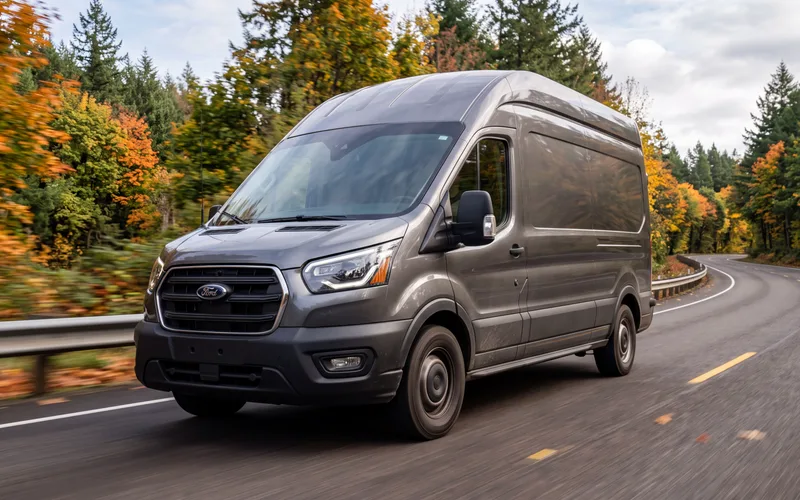 Ford TransitFull-Size VanBetter at: Towing and work duty
If you need real towing capacity, a proven service network and the option of gas or electric power, the Transit does everything the Buzz can't for less money.
Compare 2.22C
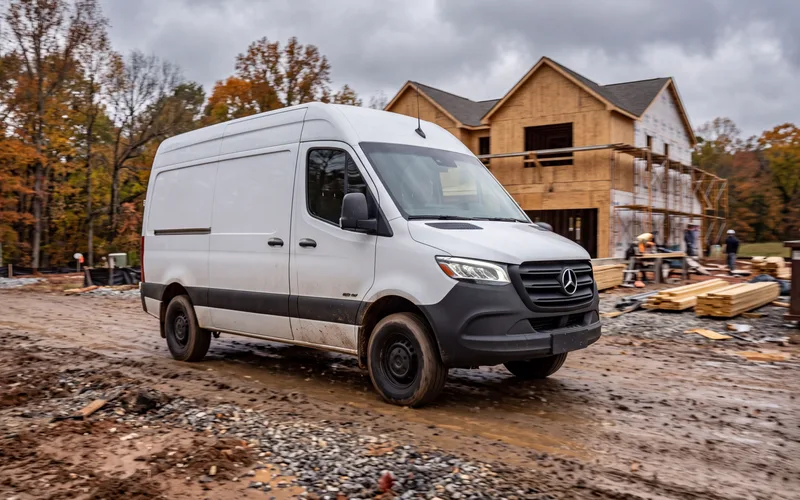 Mercedes-Benz SprinterFull-Size VanBetter at: Range and capability
For long-distance touring, camper conversions or genuine off-pavement travel, the Sprinter's diesel range and available 4x4 solve the ID. Buzz's biggest limitation.
Compare 1.47D
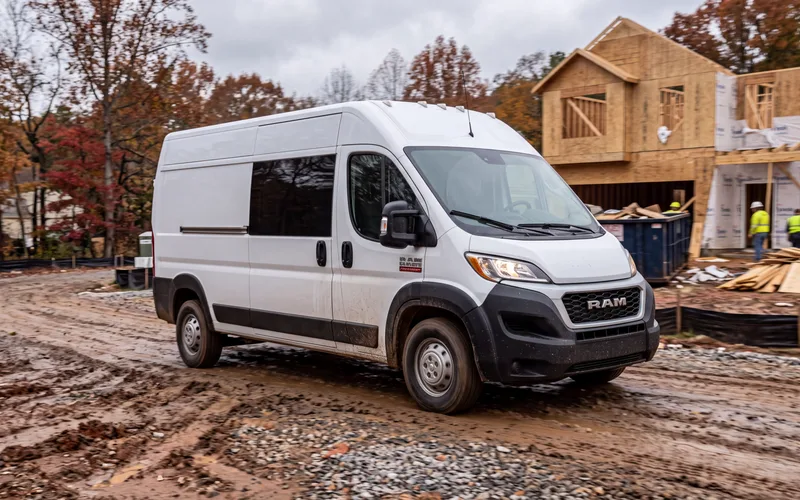 Ram ProMasterFull-Size VanBetter at: Value
If it's mostly about maximum cargo box for minimum money, the ProMaster delivers the volume without the Buzz's premium price or depreciation risk.
CompareSubject scores by year
Hover or tap a score to see what moved it versus the year before. A corner mark flags a big swing.
| Year | Performance | Efficiency | Safety | Space | Cost | Reliability | Tech | Use-case | Driving | Value |
|---|---|---|---|---|---|---|---|---|---|---|
| 2026 | 42 | 68 | 68 | 62 | 34 | 52 | 70 | 70 | 69 | 64 |
| 2025 | 45 | 68 | 76 | 58 | 41 | 53 | 69 | 62 | 70 | 56 |
Compare two years
Best fit & conditions
Higher scores mean a better fit for that use case. Learn more about use-case fit →
Subject profile
Academic Probation · NHTSA safety recalls
May 15, 2025Seats: mid/rear assemblyBUZZ vehicles. The third-row rear bench is wide enough for three passengers, but is designed for two passengers and equipped with two seat belts. As such, these vehicles fail to comply with the requirements of Federal Motor Vehicle Safety Standard number 208, "Occupant Crash Protection."
Defect
Volkswagen Group of America, Inc. (Volkswagen) is recalling certain 2025 ID. BUZZ vehicles. The third-row rear bench is wide enough for three passengers, but is designed for two passengers and equipped with two seat belts. As such, these vehicles fail to comply with the requirements of Federal Motor Vehicle Safety Standard number 208, "Occupant Crash Protection."
Risk
In the event that more than two passengers sit in the rear bench seat, there would not be enough seat belts, increasing the risk of injury during a crash.
Remedy
Dealers will install trim to adjust the width of the third-row rear seats, free of charge. Owner notification letters were mailed June 20, 2025. Owners may contact Volkswagen customer service at 1-800-893-5298. Volkswagen's number for this recall is 72LC.
NHTSA campaign 25V269000 ↗Manufacturer no. 72LC5,644 vehicles potentially affected (all models in the campaign)Owners notified Jun 20, 2025Filed by Volkswagen Group of America, Inc.Filed as ID. BUZZApr 10, 2025Electrical system: instrument cluster/panelBuzz vehicles. The brake system warning light on the instrument panel display may be the incorrect symbol and color. As such, these vehicles fail to comply with the requirements of Federal Motor Vehicle Safety Standard numbers 135, "Light Vehicle Brake Systems" and 101, "Control and Displays."
Defect
Volkswagen Group of America, Inc. (Volkswagen) is recalling certain 2025 ID. Buzz vehicles. The brake system warning light on the instrument panel display may be the incorrect symbol and color. As such, these vehicles fail to comply with the requirements of Federal Motor Vehicle Safety Standard numbers 135, "Light Vehicle Brake Systems" and 101, "Control and Displays."
Risk
An incorrectly displayed warning light can fail to alert the driver to critical safety information, increasing the risk of a crash.
Remedy
Dealers will update the instrument panel software, free of charge. Owner notification letters were mailed June 6, 2025. Owners may contact Volkswagen customer service at 1-800-893-5298. Volkswagen's number for this recall is 90A2.
NHTSA campaign 25V233000 ↗Manufacturer no. 90A25,637 vehicles potentially affected (all models in the campaign)Owners notified Jun 6, 2025Filed by Volkswagen Group of America, Inc.Filed as ID. BUZZ
Source: NHTSA Office of Defects Investigation recall database, model years 2025–2026. Recalls are listed by model year as the manufacturer filed them; whether a specific car is affected depends on its VIN — check a VIN at nhtsa.gov ↗. NHTSA model names matched to this page: ID. BUZZ.
Detailed scoring by subject
1Performance & PowertrainOne of the ID. Buzz's weakest categories.0.99F
The volume RWD Pro S / Pro S Plus uses VW's uprated APP550 rear motor at 282 hp; the dual-motor 4Motion tops the range at 335 hp.
Strong instant torque for the class from the single rear motor.
RWD volume trim is adequate for a 6,000-lb three-row van; the AWD version is notably quicker.
Silent, immediate electric delivery with strong low-speed torque; reviewers praise smoothness, with no lag or coarse behavior beyond typical EV motor whine.
Single-speed reduction gear gives seamless delivery; B mode offers stronger regen but there is no one-pedal driving or adjustable regen paddles, a minor demerit.
Volume RWD is rated 2,600 lbs braked; AWD models reach 3,500 lbs, in line with gas minivans.
Dual-motor 4Motion AWD is available on Pro S Plus and 1st Edition but not on the base Pro S; basic operation with no terrain modes or torque vectoring.
Pavement-oriented people mover with about 6.3 in of ground clearance, long wheelbase and no off-road hardware or dedicated trim.
One battery (91 kWh) with a choice of single-motor RWD or dual-motor AWD; EV-only with no other powertrain options.
2Efficiency & RangeMid-pack among this car's ten categories.2.57C+
Low efficiency for an EV, a result of the boxy shape and heavy three-row body.
EPA city rating for the volume RWD van.
Aerodynamic drag of the tall van body hurts highway efficiency.
Short EPA range despite the 91 kWh (86 kWh usable) battery.
US 91 kWh pack accepts up to 200 kW DC, above the 170 kW of the smaller European battery.
Manufacturer-quoted 10-80% DC time is competitive for a 400V MEB EV.
EPA annual energy cost at 15k miles; higher than most EVs because of lower efficiency.
Cheap to run on home Level 2 charging (11 kW onboard AC), but the short 234-mile range means more frequent DC stops on road trips.
3SafetyThe ID. Buzz's best-graded category.3.15B
NHTSA awarded the 2025 ID. Buzz a five-star overall safety rating, which tops the segment band.
The ID. Buzz earned Good in IIHS's tougher updated moderate overlap test, with Good on every driver and rear-passenger injury measure. IIHS has not run the small overlap or updated side tests, though, so it can't qualify for TSP/TSP+. It scores mid-band: the results so far are strong and none are concerning, but the crashworthiness record is incomplete and there is no award.
IQ.DRIVE comes standard on every 2025 trim: Front Assist AEB with pedestrian monitoring, Travel Assist adaptive cruise with lane centering, Lane Assist, Side Assist blind-spot monitoring, Rear Traffic Alert and Emergency Assist. Automatic post-collision braking is also standard, so all five core systems are on every trim.
IIHS rates vehicle-to-vehicle front crash prevention Good. Pedestrian AEB is only Acceptable: it didn't stop in time for the 25-mph crossing child (day) or the crossing and parallel adult (night) tests. That pattern of decent daytime results and weaker night/pedestrian results is the mid band.
Side Assist blind-spot monitoring and Rear Traffic Alert are standard on every trim. Rear automatic braking is also standard, so the reversing system intervenes rather than only warning, and an exit warning covers opening doors. It sits at the bottom of the top band because there is no blind-spot steering intervention.
Lane Assist and Travel Assist lane centering are standard. Reviewers find VW's centering competent on marked highways but not class-leading, with some wander on sweeping curves, and lateral corrections are more noticeable in a tall, boxy body.
Every trim gets Travel Assist, which combines stop-and-go adaptive cruise with lane centering across the full speed range, and the EV powertrain resumes smoothly. It stays out of the top band because VW's calibration keeps conservative following gaps and resumes slowly.
No US-market Volkswagen, including the ID. Buzz, offers hands-free highway driving. Travel Assist is a hands-on Level 2 system, so there is nothing comparable to BlueCruise or Super Cruise.
IIHS rates the headlights Acceptable on every trim. Visibility falls short in some scenarios and the low beams cause some glare. LED lights with automatic high beams are standard, but no trim gets Good-rated headlights.
A one-box shape with a very short nose, an upright windshield set well forward, a big glass area and a high seating position gives excellent forward and side sightlines. The drawbacks are thick rear pillars and a long, wide body that is hard to place, which camera and parking-sensor aids only partly offset.
IIHS rates the LATCH hardware Good+, meaning Good ease of use plus extra LATCH positions. Wide dual sliding doors, a flat floor and a tall cabin make installing car seats unusually easy.
4Space & ComfortMid-pack among this car's ten categories.1.89C-
The US long-wheelbase ID. Buzz comes standard as a three-row seven-seater. Upper trims offer second-row captain's chairs, which drop it to six seats.
The tall one-box body gives generous front headroom.
The published front legroom is short for the class. That figure reflects the upright, cab-forward seating position, and reviewers don't call the front cramped in practice. The figure stands as published.
Second-row headroom is excellent by minivan standards, though it sits low within the van band, which is built around high-roof cargo vans.
There is ample second-row legroom, and the third row is unusually long-legged at 42.4 in.
The third row has 42.4 in of legroom and 38.7 in of headroom, so adults genuinely fit. Reviewers call it roomier than any SUV or minivan they recall. Access is through the wide sliding doors, though the third-row hip room is narrow (48.2 in).
With the third row folded, cargo space is large by minivan standards. It sits at the bottom of the van band, which spans full-size cargo vans. With all three rows up, cargo space is modest at 18.6 cu ft.
The maximum is competitive with minivans but falls far short of the full-size cargo vans the van band is calibrated against.
A removable 'Buzz Box' center console with a bottle opener, the open pass-through floor, eight USB-C ports and a cargo shelf all help. The rear seats fold but don't stow into the floor, and no household AC outlet is advertised for the US model.
On Pro S Plus and up, the front seats get 12-way power adjustment, heating, ventilation, massage and memory, and fold-down armrests add to the lounge feel. The second and third rows are supportive, but the cushions are flat.
The ride is well damped and controlled on MEB struts and a multilink rear, and reviewers cite one of the best EV ride/handling compromises. It feels a little firmer than the softest gas minivans.
There's no engine noise, and highway wind noise is minimal for such a boxy shape. The second-row cutout windows add turbulence when opened, and there's some road noise.
Tri-zone climate, a heated steering wheel and heated front seats are widely fitted, and remote preconditioning works through the app. Pro S Plus adds ventilated, massaging front seats and the switchable-tint panoramic roof.
5Cost of OwnershipThe ID. Buzz's lowest-graded category.0.75F
The cheapest 2025 ID. Buzz is still above $60k with destination, near the top of the van band and well above gas minivans.
Pro S Plus is taken as the volume trim since it carries the hands-free doors/liftgate and hitch most buyers want; it lands close to the top of the van band.
EV drivetrain eliminates oil, spark plugs and transmission service, and the first two scheduled services are free under Carefree, so projected upkeep is far below the gas/diesel full-size vans in this segment.
Depreciation is steep. Early 1st Editions sold at auction 15–17% under sticker within months, heavy $7,500–$10,500 factory discounts pull down used values, and the paused US program weakens resale support. Because it starts from a high price, the dollar loss is large too.
VW's 4-year/50k bumper-to-bumper coverage beats the common 3/36 but trails Hyundai/Kia's 5/60.
The EV battery carries the federally typical 8-year/100k coverage, including capacity loss below 70%. VW has no separate long powertrain term beyond the 4/50 NVLW.
Carefree Maintenance covers the 1-year/10k and 2-year/20k services at no charge and transfers with the van. That two-year window is short next to Toyota's 2/25 ToyotaCare or BMW's 3/36, so it sits mid-band.
$65,045 volume-trim price minus its estimated resale value after 5 years (46% retained, or about $29,921) leaves about $35,124 in depreciation. Add the projected $1,784 in 5-year maintenance and repairs, and owning this vehicle for 5 years costs about $36,908 in total.
6Reliability & QualityOne of the ID. Buzz's weakest categories.1.53D
Consumer Reports expects the 2025 ID. Buzz, the first US model year of an all-new nameplate, to be less reliable than the average new car, a prediction drawn from Volkswagen's other EVs. There is no owner-survey history yet. Early owner reports of MIB4 infotainment freezes and power sliding-door faults support the below-average outlook.
Volkswagen has sat in the lower third of Consumer Reports' brand reliability rankings and below the industry average in J.D. Power's VDS for several years. Its ID-series EVs have added battery and electronics recalls to that record.
The 2025 model carries only two NHTSA campaigns, and both are compliance or software fixes rather than hardware failures: a third-row bench wide enough for three occupants with only two belts (fixed with trim), and a brake-warning light that could show the wrong symbol or color (fixed with a cluster software update). Unlike the ID.4 there is no battery-fire or door-unlatching recall. Early-build complaints about sliding doors and infotainment keep this in the mid band.
The powertrain is MEB hardware in volume production since 2020: the APP550 rear motor and an 86 kWh-net (91 kWh gross) pack. So far the ID. Buzz has had no drive-unit or battery recall. The long-wheelbase pack and van application are newer, however, and the related 2023-2025 ID.4 has a high-voltage battery overheating recall, so this sits in the upper-middle band.
The cabin's design is cheerful and well considered, with two-tone trim and washable, hard-wearing surfaces. But reviewers repeatedly note large areas of hard plastic and capacitive controls that do not feel premium on a van priced from about $60k.
Built at Volkswagen Commercial Vehicles' Hannover plant, the van has a solid structure and generally consistent panel fit. However, launch-year owners report misaligned power sliding doors that grind, stall mid-travel or fail to latch, and the third-row recall shows a design-compliance miss.
Volkswagen of America has about 640 franchised US dealers, roughly half of Toyota's or Honda's footprint, and only some of them are equipped and trained for high-voltage EV service. Coverage is adequate in metro areas and thin in rural ones.
This is a low-volume, German-built EV whose body panels, sliding-door hardware and trim are unique to the nameplate. There is effectively no aftermarket, and high-voltage parts come from dealers only, so collision and electrical repairs are slow and expensive. Low routine EV maintenance only partly offsets that.
7Technology & InfotainmentOne of the ID. Buzz's strongest categories.2.66C+
Every US ID. Buzz gets the larger 12.9-inch center screen running VW's updated ID. software.
The updated software on the 12.9-inch screen is faster than earlier ID. models, and the slider bar below it is now backlit. Reviewers still criticize the touch-heavy climate controls, the buried menus and the capacitive steering-wheel buttons.
Wireless Apple CarPlay and Android Auto come standard on every trim.
Native navigation with EV route planning and charger-aware routing is standard, alongside the 'Hello IDA' natural-language voice assistant. Reviewers describe the voice control as functional but inconsistent, and most owners default to phone projection.
A Harman Kardon premium system with a subwoofer and amplifier comes on Pro S Plus and the 1st Edition. The base Pro S system is adequate.
The full-digital cockpit is standard, but it is VW's small 5.3-inch ID. display with limited configurability. The head-up display does much of the work on trims that have it.
MEB vehicles support over-the-air software updates, but VW's US OTA cadence has been slow and mostly limited to fixes. Major feature updates such as Plug & Charge have arrived late or are still pending.
The myVW app covers remote climate preconditioning, charge scheduling, lock/unlock and vehicle status. Some Car-Net Remote Access functions need a subscription after the trial, and there's no phone-as-key in the US.
There are eight USB-C ports throughout the cabin, including in the doors and for every row, plus wireless phone charging. It stops short of the top band because no household AC outlet is advertised.
Push-button start and dual power sliding doors are standard, and keyless access and a hands-free power liftgate come on upper trims. There's no phone-as-key, and remote start is effectively app-based climate preconditioning.
A rear camera and Park Distance Control are standard. Area View 360 and Park Assist Plus with memory come on the volume Pro S Plus and up, which helps with the long wheelbase.
A head-up display comes on Pro S Plus and the 1st Edition, and it partly compensates for the small digital cluster. It isn't offered on the base Pro S.
8Use-Case FitMid-pack among this car's ten categories.2.17C
Dual power sliding doors, a tall flat-floored cabin and Good+ IIHS LATCH hardware make car-seat duty easy, and the adult-sized third row adds flexibility. The cargo area behind row three (18.6 cu ft) is tight for a stroller plus groceries.
It has a five-star NHTSA overall rating, and the full IQ.DRIVE suite is standard on every trim. IIHS has rated it Good in the updated moderate overlap test but has not yet run the other tests needed for an award, and pedestrian AEB rates only Acceptable.
Every row has adult-scale space, tri-zone climate, USB-C ports and a quiet, smooth ride, so long trips are comfortable. Luggage space with all seats occupied is limited at 18.6 cu ft, and the 234-mile range forces frequent charging stops.
Smooth, instant EV torque, a high commanding seat and Travel Assist stop-and-go make traffic relaxing. There is no true one-pedal mode, and the touch-heavy controls add some friction.
Home charging still makes per-mile costs cheaper than a gas minivan. At 83 MPGe combined, though, it is one of the least efficient EVs on sale, so it uses notably more energy per mile than other EVs.
The RWD turning circle (37.4 ft) is tight for its size, and the short nose, big glass area and Area View 360 make it easy to place. The body is still long and wide, and AWD models turn in a much wider 42.7 ft.
This is a passenger van, with a 2,600-lb tow rating for RWD (3,500 lb for AWD) and 145.5 cu ft of maximum cargo space. Towing badly hurts the short range, and no US cargo version is sold.
MEB is a widely used platform, but the US ID. Buzz is new for 2025 with no fleet track record. Its premium two-tone interior and software-recall history argue against hard work use.
There are cargo tie-downs, a cargo shelf and plenty of USB-C, but no onboard AC power, no V2L for US models, and no meaningful upfit ecosystem for the passenger van.
Comfortable seats, a quiet cabin and standard Travel Assist make it a pleasant highway cruiser. The 234-mile EPA range, which shrinks noticeably at highway speed (75 MPGe highway), means frequent stops, only partly offset by 200 kW peak charging.
AWD is available and towing reaches 3,500 lb, and the van-life image is strong. However, ground clearance is only about 6.3 in, there is no V2L for camping, and the short range limits trips to remote areas. It handles gravel roads and bike racks fine.
There are 75.5 cu ft behind the second row and 145.5 cu ft maximum in a boxy, tall hold, plus a hitch-capable tow rating. The seats fold but don't stow flat into the floor, so the load floor isn't fully level.
9Driving ExperienceOne of the ID. Buzz's strongest categories.2.77B-
It corners with surprisingly little body roll thanks to the low-slung battery and MEB strut/multilink chassis, and reviewers rank it among the best EV ride/handling compromises. Its weight of about 6,000 lb is noticeable on downhill sections.
The steering is accurate and predictable, and sharper than expected, but the ratio is slow and there's little feedback.
Regen and friction braking blend smoothly, but the RWD model uses rear drum brakes and stopping a 6,000-lb van takes long distances. Regen adjustability is limited to D/B with no one-pedal mode.
The APP550 rear motor delivers 282 hp and 413 lb-ft with seamless, linear tip-in and no shift events. AWD adds a front motor that blends in imperceptibly.
The electric drive is near-silent with only faint motor whine under load and no vibration through the controls.
Rear-drive packaging gives the volume RWD model a tight circle for its size, while the AWD model's front motor widens it considerably.
The seat is high and upright with superb forward sightlines and easy step-in. The capacitive wheel buttons, touch-slider climate controls and a column-mounted gear selector frustrate some drivers.
It isn't sporty, but the retro character, rear-drive balance, brisk torque and the smiles it draws give it more charm than any minivan rival.
10Value & Market PositionMid-pack among this car's ten categories.1.73C-
Even the Pro S comes well equipped: 7 seats, the large touchscreen, IQ.DRIVE driver assists and the 86 kWh-class battery. But the hands-free sliding doors and liftgate, the trailer hitch and the Flexboard are held back for the $3,500-pricier Pro S Plus, which is a lot to charge for convenience items at a $60k entry price.
At $61.5k–$70k+ it costs roughly $10k–$20k more than a loaded hybrid minivan (Sienna, Pacifica Hybrid) while offering about 234 mi of RWD range and less cargo flexibility. Reviewers repeatedly cite the price as the main drawback, so the content per dollar is below rivals before discounts.
There are three trims (Pro S, Pro S Plus, 1st Edition), a choice of RWD or 4Motion AWD on the upper two, 6- or 7-seat layouts and a few options. That is reasonable for a new EV, but it is long-wheelbase only, with no SWB or cargo version in the US and no lower-priced entry.
It sold only 6,140 units in its first full US year, far below the hype, and VW then paused US sales for model years 2026 and 2027.
The Microbus heritage gives it a strong emotional pull that few mainstream EVs have. But VW's US brand standing is middling, and the dieselgate history and ID.4 software complaints dilute the halo.
Deals are large and easy to get. There was a $7,500 customer bonus on purchases, lease discounts reaching $10,500, and 4.9% APR for 60 months. It is close to the strongest buyer leverage in the segment, although it partly signals weak demand.
2025 is the US launch year on the current MEB platform, so the van is new. Buyers face program risk, though: the US sales pause through 2027 clouds dealer support and resale, and MEB is being overtaken by newer 800V platforms.
Reviewers praise the character, the airy cabin and the ride, but mark it down for price, modest range, and VW's infotainment and haptic controls. It is well received but rarely the class pick over the Sienna or Pacifica.