
The verdict
A struggling subcompact luxury suv, strong on safety and held back by space.
The 2026 Volvo EX30 is the cheapest, quickest and most efficient way into a Volvo — $42,195 to start, 268 hp and 5.1 seconds to 60 mph in the volume rear-drive trim, and about $730 a year in electricity. What that money does not buy is space: 11.2 cu ft of cargo behind the rear seats is less than most hatchbacks, rear legroom is a knees-up 33.6 inches, and 261 miles of range means real road trips need planning. Volvo also deleted the gauge cluster entirely, so speed, climate, mirrors and drive modes all live in one 12.3-inch touchscreen — the single most-criticized thing about the car. Buy it as a stylish, safe, dirt-cheap-to-run second car or city commuter, and lease rather than buy, because it keeps only about 43% of its value after five years.
Jump to scoresStrengths
- Nothing with a luxury badge costs less to run
- The whole safety catalog, standard on every trim
- Google built into the car, and it actually works
What holds it back
- The cargo hold is the smallest in the class
- Adults in the back are along for a short ride
- No gauge cluster, no head-up display, everything on one screen
Top alternatives
Cars shoppers cross-shop with the Volvo EX30 2.06C
2.06C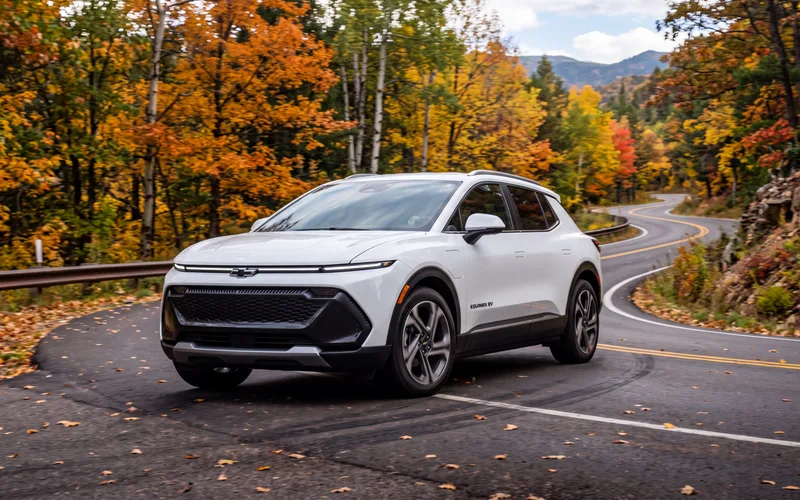 Chevrolet Equinox EVCompact SUVBetter at: Range and space
It delivers more range, a usable back seat and far more cargo room for similar money, which is exactly where the EX30 is weakest.
Compare 2.21C
2.21C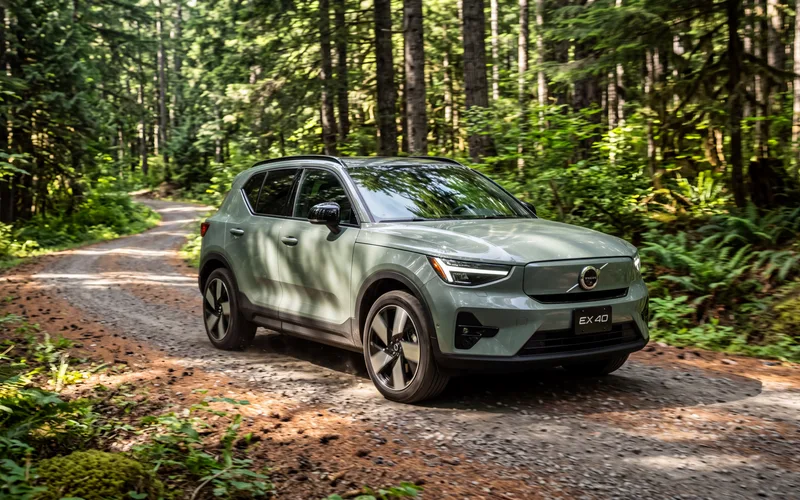 Volvo EX40Subcompact Luxury SUVBetter at: Practicality
Same Volvo safety kit and cabin feel with 293 miles of range, nearly double the cargo volume and an actual gauge cluster, if you can stretch the budget.
Compare 2.65C+
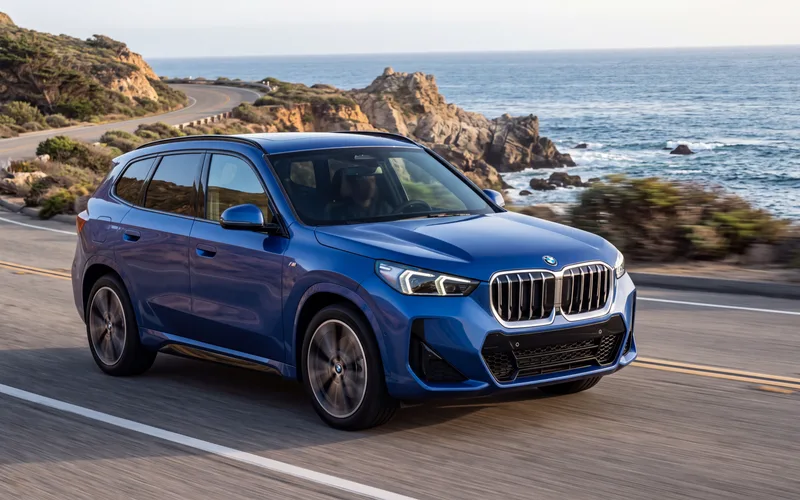 BMW X1Subcompact Luxury SUVBetter at: Everyday usability
A better-riding, better-packaged small luxury SUV with conventional controls and no range anxiety, for buyers not committed to going electric.
CompareSubject scores by year
Hover or tap a score to see what moved it versus the year before. A corner mark flags a big swing.
| Year | Performance | Efficiency | Safety | Space | Cost | Reliability | Tech | Use-case | Driving | Value |
|---|---|---|---|---|---|---|---|---|---|---|
| 2026 | 52 | 66 | 74 | 36 | 54 | 53 | 70 | 49 | 69 | 69 |
| 2025 | 61 | 65 | 58 | 39 | 53 | 48 | 58 | 48 | 72 | 66 |
Compare two years
Best fit & conditions
Higher scores mean a better fit for that use case. Learn more about use-case fit →
Subject profile
Academic Probation · NHTSA safety recalls
Oct 9, 2026Seats: front assembly: head restraintThe head restraint cushion may detach during a crash.
Defect
Volvo Car USA, LLC (Volvo Car) is recalling certain 2025-2026 EX30 and 2026 EX30CC vehicles. The head restraint cushion may detach during a crash.
Risk
A detached head restraint cushion can increase the risk of injury during a crash.
Remedy
Dealers will apply an adhesive to reinforce the head cushion attachment, free of charge. Owner notification letters are expected to be mailed November 30, 2026. Owners may contact Volvo Carâs customer service at 1-800-458-1552. Volvo Carâs number for this recall is R10396. Vehicle Identification Numbers (VINs) involved in this recall became searchable on NHTSA.gov on October 9, 2026.
NHTSA campaign 26V671000 ↗Manufacturer no. R103969,930 vehicles potentially affected (all models in the campaign)Filed by Volvo Car USA, LLCFiled as EX30Mar 11, 2026Seat belts: front: warning light/devicesThe seat belt warning system may not activate the audible warning chime as intended. As such, these vehicles fail to comply with the requirements of Federal Motor Vehicle Safety Standard number 208, "Occupant Crash Protection."
Defect
Volvo Car USA, LLC (Volvo Car) is recalling certain 2025-2026 EX30 and 2026 EX30CC vehicles. The seat belt warning system may not activate the audible warning chime as intended. As such, these vehicles fail to comply with the requirements of Federal Motor Vehicle Safety Standard number 208, "Occupant Crash Protection."
Risk
An audible warning chime that does not properly alert of an unbelted seat belt can increase the risk of injury during a crash.
Remedy
Dealers will replace the terminals at the audio module connector, free of charge. Owner notification letters were mailed March 26, 2026. Owners may contact Volvo Carâs customer service at 1-800-458-1552. Volvo Carâs number for this recall is R10365. Vehicle Identification Numbers (VINs) involved in this recall became searchable on NHTSA.gov on March 13, 2026.
NHTSA campaign 26V136000 ↗Manufacturer no. R103651,584 vehicles potentially affected (all models in the campaign)Owners notified Apr 3, 2026Filed by Volvo Car USA, LLCFiled as EX30
2 recalls on other model years of the EX30 (2025)
Feb 20, 2026Electrical system: propulsion system: traction batteryThe high voltage battery may experience a short circuit and overheat.
Defect
Volvo Car USA, LLC (Volvo Car) is recalling certain 2025 EX30 vehicles. The high voltage battery may experience a short circuit and overheat.
Risk
A high voltage battery that overheats increases the risk of a fire.
Remedy
Owners are advised to limit their charge to a maximum of 70% until the recall repair is complete. Dealers will inspect and replace the battery modules as necessary, free of charge. Owner letters were mailed August 20, 2026. Owners may contact Volvo Carâs customer service at 1-800-458-1552. Vehicle Identification Numbers (VINs) involved in this recall became searchable on NHTSA.gov on February 23, 2026. This recall replaces and expands previous NHTSA recall number 26V001.
NHTSA campaign 26V103000 ↗Manufacturer no. R10362161 vehicles potentially affected (all models in the campaign)Owners notified May 19, 2026Filed by Volvo Car USA, LLCFiled as EX30Jan 2, 2026Electrical system: propulsion system: traction batteryThe high-voltage battery may experience a short circuit and overheat.
Defect
Volvo Car USA, LLC (Volvo Car) is recalling certain 2025 EX30 vehicles. The high-voltage battery may experience a short circuit and overheat.
Risk
A high-voltage battery that overheats increases the risk of a fire.
Remedy
Owners are advised to park outside and away from structures and limit their charge to a maximum of 70% until the recall repair is complete. Dealers will inspect and replace the battery modules as necessary, free of charge. Owners may contact Volvo Carâs customer service at 1-800-458-1552. Volvo Car's number for this recall is R10355. Vehicle Identification Numbers (VINs) involved in this recall will be searchable on NHTSA.gov beginning January 26, 2026. This recall was replaced by recall number 26V103.
NHTSA campaign 26V001000 ↗Manufacturer no. R1035540 vehicles potentially affected (all models in the campaign)Filed by Volvo Car USA, LLCFiled as EX30
Source: NHTSA Office of Defects Investigation recall database, model years 2025–2026. Recalls are listed by model year as the manufacturer filed them; whether a specific car is affected depends on its VIN — check a VIN at nhtsa.gov ↗. NHTSA model names matched to this page: EX30.
Detailed scoring by subject
1Performance & PowertrainOne of the EX30's weakest categories.1.47D
For 2026 Volvo added the rear-drive Single Motor Extended Range below the Twin Motor Performance that was the sole US offering at the 2025 launch, making the single-motor car the volume trim; its 200 kW motor makes 268 hp. Replaces a placeholder value of 486.1 hp that badly overstated the volume powertrain.
Single-motor EX30 produces 343 Nm (253 lb-ft) from rest; the dual-motor car nearly doubles it at 543 Nm (400 lb-ft). Mid-pack torque for a subcompact SUV despite the instant EV delivery.
Even the base rear-drive EX30 clears 60 mph in about five seconds, and the Twin Motor Performance is one of the quickest vehicles in the subcompact luxury segment at a claimed 3.4 s. The prior placeholder of 7.4 s understated the car badly.
Single-speed EV delivery is instant and quiet with no lag or shift interruption, and the Twin Motor's thrust is genuinely rapid. Held below the top band because early EX30s drew consistent criticism for abrupt throttle tip-in and coarsely calibrated one-pedal regen rather than for the hardware itself.
A single-speed reduction gear on each axle means no shifts to criticize — power is seamless from rest to highway speed. Scored just below sibling EVs because the one-pedal mode's blending into friction braking is the weak point of the EX30's driveline calibration.
Volvo homologates the EX30 at 1,600 kg braked in dual-motor form — respectable for a subcompact EV but modest against an SUV band that runs to 8,000 lbs. Flagged LOW because these are Volvo's European braked-trailer ratings and US factory tow-bar availability could not be confirmed in this run.
All-wheel drive comes only with the Twin Motor Performance powertrain and the Cross Country derivative — the volume Single Motor Extended Range is rear-drive only, so buyers must step up in both motor count and price to get it. The dual-motor system is a capable through-the-road setup with rapid electronic torque split, but there is no low range or terrain hardware.
The standard EX30 is a pavement-oriented urban SUV with roughly 6.9 inches of clearance, no skid plates, no locking differentials and no low range. The Cross Country lifts the body around three quarters of an inch and adds all-terrain tires, cladding and protective trim, which earns it a few points over the plain car but stops well short of genuine off-road credibility.
The EX30 is electric-only with no gas, hybrid or plug-in hybrid alternative. Two motor configurations — single-motor rear drive and twin-motor all-wheel drive on a common 69 kWh pack — give buyers a real choice of output and drive layout, which lifts it to the top of the single-powertrain band but no further.
2Efficiency & RangeMid-pack among this car's ten categories.2.43C+
The EX30 is the smallest and lightest EV Volvo sells and it converts that into the most efficient car in the brand's US range — 116 MPGe combined, ten better than the EX40 and roughly twenty clear of the EX90, landing high in the EV SUV band without touching its ceiling. The Cross Country's lift kit, cladding and taller tires cost it a startling 17–27 MPGe, so the trim choice matters more here than on most EVs.
City is the EX30's strongest case: a sub-4,000 lb curb weight, no idle draw and strong regeneration give it 127 MPGe, best of any Volvo. Urban commuters see the flattering end of the rating in daily use, which is the duty cycle this car was designed around.
Highway costs the EX30 about 18 percent off its city figure — a short, tall subcompact body cannot hide much frontal area however clean the nose is — but 104 MPGe is still strong for an EV SUV. It is also why the already-modest range falls off fastest at sustained interstate speed, the practical flip side of the range item below.
This is the EX30's defining compromise and the number holding an otherwise strong efficiency category down: 261 miles sits low in the EV SUV band, behind the EX40's 293 and well behind most 2026 electric rivals, because a 69 kWh pack is simply small by 2026 standards. The car is very efficient per mile but does not carry many kilowatt-hours, so the efficiency buys cheap running costs rather than long legs.
153 kW is mid-pack at best for 2026 and is the clearest consequence of the EX30's 400-volt architecture — the 800-volt Korean rivals it is cross-shopped against take roughly twice that. The peak is also brief; independent charging tests describe the curve tapering early, so the headline figure flatters what a real stop delivers.
The small pack rescues what the modest peak rate costs: there are only about 65 usable kWh to fill, so 10–80% lands at a respectable 26.5 minutes despite the unremarkable power figure. In practice that is a good stop time attached to a short range, meaning more stops on a road trip rather than longer ones.
At 29 kWh/100 miles the EX30 is the cheapest Volvo to run by a clear margin — $650 a year against the EX40's $700 and the EX90's $800–$900 — and near the good end of the EV SUV band. That figure assumes home charging at the EPA's national average residential rate; leaning on public DC fast charging can roughly double it.
No gasoline, no fuel grade to think about, an 11 kW onboard AC charger that refills the pack overnight on a home Level 2 circuit, and the lowest energy bill of any Volvo — the substance of this item is all favorable. Held just below the EX40's 88 because the 400V architecture peaks at a modest 153 kW and the 261-mile range gives less buffer, so road trips depend more on public-network planning; Supercharger access also runs through an adapter rather than a native port.
3SafetyThe EX30's best-graded category.3.00B
NHTSA has not published an overall rating for the EX30, and unlike the EX40 this car has no US-tested platform sibling to borrow from — the SEA architecture is new to the US market. Inferred just below a clean five stars from Volvo's structural record and the EX30's 5-star Euro NCAP result, discounted for the absence of any US barrier data on this body. This is the single largest lever in the category and must be replaced with a verified NHTSA figure before publication.
The EX30 carries no IIHS award because IIHS has not published results for it — a low-volume, late-arriving US entry on a platform IIHS has never tested. Euro NCAP gave it five stars with a strong 88 percent adult-occupant score, which argues against structural concerns, so it sits mid-band rather than in the 0-49 'untested with known concerns' tier, but it cannot be credited with an award it does not hold and lands below the EX40 (77), whose body has real IIHS history.
Volvo ships essentially the whole safety catalog as standard on the EX30: City Safety AEB with pedestrian, cyclist and large-animal detection, lane keeping aid and lane departure warning, run-off road mitigation, driver alert control, BLIS blind-spot with steer assist, cross-traffic alert with autobrake, and the door-opening alert that warns occupants about approaching cyclists. The US car is sold in upper trims only, so there is no stripped base model hiding features behind a trim wall — a point above the EX40 for the added door-opening alert.
City Safety is a long-running, well-proven AEB system covering vehicle, pedestrian, cyclist and large-animal targets, and Euro NCAP's vulnerable-road-user result of roughly 76 percent is solid without being class-leading. Held just below the top band and a notch under the EX40 because the EX30 rides on a newer, simpler sensor package than Volvo's own CMA cars and its result under the tougher updated IIHS front crash prevention test is unknown.
Both halves intervene rather than merely warn — BLIS adds steer assist against a conflicting lane change and cross-traffic alert brakes automatically — and the EX30 adds a genuine safe-exit function in the door-opening alert, which is exactly the third element this item asks for and which most subcompact luxury rivals omit. Top of the band for the segment.
Lane keeping aid and lane departure warning are standard and Pilot Assist adds true centering, but the EX30's launch software drew unusually heavy criticism for over-eager driver-attention and lane-keep interventions and for chimes owners immediately went looking to switch off — and, as on other Volvos, centering hands back early on faded markings. Functional with real rough edges, a few points under the EX40.
Pilot Assist is a full-speed-range adaptive cruise with stop-and-go and integrated steering assistance, and the EV driveline makes its low-speed behavior smooth. It is marked down for the EX30's specific problem: cruise and assist settings live in the single centre touchscreen with no driver display, so adjusting a following distance is a menu task rather than a wheel-button reflex, on top of the cautious braking model reviewers report on Pilot Assist generally.
No hands-free highway driving is offered on the EX30 at any trim. Pilot Assist is explicitly hands-on with a torque-sensing wheel nag, and Volvo's unsupervised ambitions are tied to the EX90's lidar hardware, which this platform does not have. Scored in the 0-49 'no hands-free option' band, above zero only because the hands-on assist that exists is competent.
LED headlights with the Thor's Hammer signature and active high beam are standard on the US trims, a decent baseline for the class, but the EX30 does not offer the Active Bending Lights or pixel-matrix hardware Volvo puts on its larger cars, and no IIHS headlight rating exists to confirm real-world reach. Held below the EX40 for the simpler hardware.
This is the EX30's clearest safety weakness and the reason it sits well below its boxy EX40 sibling here. The tapered roof, high beltline and thick rear pillars leave a small back window and a pinched rear three-quarter view, and reviewers consistently flagged rear visibility along with complaints about how the rear glass sheds weather. Camera compensation is real but is an upper-trim item rather than standard, and the absence of any driver instrument cluster means routine information checks pull the eyes across to the centre screen.
Two outboard lower-anchor positions and top tethers in one of the smallest bodies in the segment: the rear doors are short, the bench is narrow enough that three across is not realistic, and a rear-facing seat forces the front passenger seat well forward given the EX30's limited rear legroom. Workable for one or two seats, clearly tighter than the EX40 (72) or the boxier German rivals, so it sits low in the middle band.
4Space & ComfortThe EX30's lowest-graded category.0.35F
The EX30 is a two-row, five-seat subcompact SUV across the entire US range (Single Motor Extended Range, Twin Motor Performance, Cross Country) — no six- or seven-seat configuration exists.
A 61.1-inch-tall subcompact on the SEA platform, with the battery raising the floor, lands front headroom in the high 38s — a touch above the Volvo EX40 only because the EX30's front seats sit lower.
The flat EV floor and dash-mounted controls buy the EX30 more front legroom than its 166.7-inch exterior suggests — around half an inch more than the physically larger XC40/EX40.
The tapering roofline and raised battery floor leave rear headroom well down on the EX40's 38.1 in, landing near the bottom of the SUV band.
The 104.3-inch wheelbase is 2.1 in shorter than the XC40/EX40's and the rear cushion sits high over the battery, so adults ride knees-up with roughly 2.5 in less legroom than the EX40 — the EX30's single biggest packaging compromise.
The EX30 has no third row and no third-row option — it is a strictly two-row, five-seat subcompact, so it scores at the bottom of the 0-49 'no third row' band.
At 318 litres the EX30's boot is roughly half what a Volvo EX40 offers and smaller than a Lexus UX's, falling clear of the 25 cu ft floor of the SUV normalization band; the 7-litre frunk holds a charging cable and nothing more.
Folding the rear bench yields 904 litres — less than the Lexus UX's ~39 cu ft and barely half the Volvo EX40's 57.5 cu ft, far below the 55 cu ft floor of the SUV band.
Volvo genuinely re-thought small-car storage here — the dashboard soundbar frees the doors of speakers so the front bins swallow large bottles, and the sliding centre console carries a removable bin and repositionable cupholders — but total volume is small and the conventional glovebox is gone, replaced by a shared compartment under the centre display that the passenger cannot easily reach.
Front seats keep the Volvo long-haul reputation — well-shaped and supportive, with power adjustment and driver memory on upper trims — but the rear bench is the weak half: short cushions, a high floor over the battery and a knees-up posture that limits adults to short trips.
The short 104.3-inch wheelbase, high kerb weight for the size and firm passive damping make the EX30 busy and choppy over broken pavement — the most consistently criticised dynamic trait of the car, and worse on the Twin Motor Performance's larger wheels.
No engine noise and decent wind isolation for a subcompact, but road roar from the low-rolling-resistance tyres over coarse surfaces intrudes more than in Volvo's larger EVs, which carry more acoustic glass and sound deadening.
Heated front seats and a heated steering wheel are available and standard on the upper trim, and app-based remote preconditioning is included, but there are no ventilated seats, no rear climate vents for second-row passengers, and every climate function lives in the 12.3-inch touchscreen with no physical controls — a widely criticised ergonomic decision.
5Cost of OwnershipGrades below the middle of the scale.1.59D
For 2026 the rear-drive Single Motor Extended Range becomes the entry car, slotting roughly $4,000 below the Twin Motor Performance that was the sole US offering at the 2025 launch. That still lands far above the $34,950 Volvo originally promised for the China-built EX30 — the move to Ghent, Belgium and EU-auto tariffs erased that price. Replaces a placeholder value of $63,000 that priced this subcompact like a mid-size luxury EV.
The EX30's US buyer skews toward the loaded Ultra — it carries the Harman Kardon soundbar, pixel LED headlights and the park-assist bundle that make the car feel like the premium product its badge implies, and the Plus car is thinly equipped by luxury standards. Mid-$40,000s is competitive for the subcompact-luxury band and is this scorecard's strongest ownership metric alongside maintenance.
No oil changes, plugs or belts, and heavy regen sparing the friction brakes, hold routine service to cabin filters, tires and brake fluid — the cheapest scheduled upkeep in the segment. What keeps this from scoring higher is Volvo dealer labor rates and this platform's early software, 12V and infotainment trouble, which lands as unscheduled repair visits rather than parts spend.
By far the EX30's worst ownership number and the single biggest drag on this category. Volvo's EV residuals are among the weakest in the luxury field, and the EX30 carries extra baggage: a twice-delayed US launch, heavy factory lease support, and a reputation for launch software faults that used buyers price in. It sits near the floor of the SUV retention band, a notch above the EX40 only because its lower entry price gives it less absolute value to shed.
Volvo's standard new-vehicle limited warranty is 4 years/50,000 miles across the lineup — matching the German luxury norm and better than a 3-year plan, but short of Genesis's 5 years/60,000 miles. Squarely mid-band; replaces a placeholder value of 4.4 years.
The battery and EV drive components carry 8 years/100,000 miles with a capacity guarantee — the class floor and the federal/CARB minimum, so competitive but not a differentiator. It also does not extend the 4/50 coverage on the rest of the car, which is where this platform's actual faults have shown up.
Volvo bundles a genuine package — roadside assistance running with the 4-year/50,000-mile warranty term, Google built-in with an included connected-services and data period, over-the-air updates, and a public-charging credit on EV purchases. What holds it out of the 80+ tier is the absence of any multi-year complimentary scheduled-maintenance plan of the kind BMW and Jaguar Land Rover have offered, so upper-middle band.
$44,795 volume-trim price minus its estimated resale value after 5 years (43% retained, or about $19,262) leaves about $25,533 in depreciation. Add the projected $5,100 in 5-year maintenance and repairs, and owning this vehicle for 5 years costs about $30,633 in total.
6Reliability & QualityGrades below the middle of the scale.1.54D
Everything that drives this item points the same way: a below-average brand, an architecture with no US track record, and a launch whose defining story was software rather than hardware. The EX30 is Volvo's first US car on Geely's SEA platform, it has been on sale here only since 2025 after a twice-delayed launch, and its European introduction was dominated by center-display freezes, failed over-the-air updates and cars delivered with promised functions missing. That is exactly the complaint pattern that already drags Volvo's electric cars below their gas siblings, concentrated in a model that has none of the EX40's shaken-out maturity to offset it. Sits at the top of the below-average band rather than deeper in it because the faults on record are software and low-voltage electrical, not pack or motor failures.
Volvo is a genuine bottom-third brand in three-year dependability studies and has been for several consecutive years, dragged down by electrical and infotainment problems across the range. Consumer Reports brand rankings have been kinder — bottom half rather than bottom — which is why this sits at the boundary of the mid-pack band rather than deep in the low one. Scored identically to the EX40 and XC40: this is a brand-level measure and every Volvo in the dataset must share it.
Two opposing forces land this just under mid-band. In the EX30's favor, it has been on sale in the US for barely two model years, so the absolute campaign count is necessarily small and there is no fire, structural or pack-replacement action against it. Against it, the software record for this generation is the worst in Volvo's current lineup — the car shipped with functions that arrived only by later update, and it is exposed to the fleet-wide Volvo rearview-camera display campaign — and a short record on an unproven platform is thin evidence of a clean one rather than proof of it. Scored three points under the EX40 because the EX30's software campaign density is higher on far less time in service.
Going electric removes the failure modes that hurt Volvo's combustion cars — no timing belt, no direct-injection carbon, no automatic transmission — and the 69 kWh NMC pack uses mainstream cells with no capacity or fire campaign of the Bolt or Kona sort. What holds it below the EX40 is that this is the least-proven drivetrain family Volvo sells in the US: the SEA-platform motor and pack are new to this market, they have no high-mileage US fleet behind them, and the 400V architecture and its charging hardware are shared with Geely-group siblings rather than with anything Volvo has supported here before. Mid-band on newness, not on known defects.
The EX30's cabin is the most interesting in the segment and not the most substantial. The four recycled-content interior themes are genuinely well executed — denim and flax-composite trim, a felt-like dash treatment, a soundbar in place of door speakers — and reviewers consistently rate the design above its rivals. But the same coverage flags a lot of exposed hard plastic in the doors and lower cabin, a sparse switchgear count with almost every function pushed into the touchscreen, and storage solutions that read as cost engineering as much as minimalism. Competitive rather than class-leading for a mid-$40,000s luxury badge, and nine points under the plusher EX40.
US-market EX30s are Ghent-built, which is the good news — the same Belgian plant that assembles the EX40 and XC40 to a consistently tight standard. What keeps this ten points below the EX40 is that the EX30's production history is far shorter and its initial-quality profile far worse: this generation launched with the heaviest software-fault load in the lineup, and initial-quality surveys count a frozen display and a missing function as defects exactly as they count a misaligned panel. Physical assembly complaints are scattered rather than systemic, so it stays in the 'generally solid' band rather than dropping below it.
Volvo runs roughly 280 US dealers — materially thinner than BMW, Mercedes-Benz or Lexus — concentrated on the coasts and in major metros, and high-voltage work narrows that to the EV-certified subset. The EX30 scores two points under the EX40 on top of that shared handicap because it is the newest and lowest-volume car in the range on an architecture the network has never serviced before, so diagnostic familiarity and stocked parts are thinnest exactly where the car's known faults are. Adequate coverage rather than poor, but nothing about this network is a reason to buy.
Routine upkeep is genuinely cheap — no oil, plugs or belts, heavy regen sparing the brakes, and smaller wheels and tires than anything else Volvo sells — which is the whole case for this sitting at mid-band rather than below it. Everything else pulls down. Parts are European-luxury priced, OE and dealer-controlled, with essentially no independent aftermarket for an electric Volvo; the SEA platform shares little with the CMA-based cars a US parts network already stocks; and a low-volume first-generation model is the classic profile for back-ordered body and trim parts. An out-of-warranty pack or drive-unit replacement remains a five-figure event. Five points under the EX40 on supply-chain novelty, partly offset by cheaper consumables.
7Technology & InfotainmentOne of the EX30's strongest categories.2.75B-
The EX30 carries a single 12.3-inch portrait center touchscreen standard across Core, Plus and Ultra — there is no larger optional display and no second screen anywhere in the cabin. Mid-pack for size in a subcompact luxury SUV, but it is doing the work of two screens.
Google built-in is a strong OS underneath, but the EX30's execution is the most criticized part of the car: speed, drive mode, mirror adjustment, vent direction and even the glovebox are all buried in the single touchscreen, and early cars shipped with laggy, buggy software that Volvo has been patching by OTA ever since. It works, but it demands more eyes-off-road time than any rival here.
Wireless Apple CarPlay is standard on every US trim, and Android Auto is supported on Google built-in cars after Volvo added it over the air, so both projection platforms are covered wirelessly with no trim gating.
Google Assistant with native Google Maps remains the segment benchmark — natural-language destination entry, live traffic, and EV routing that accounts for charge state, so owners actually use the built-in nav instead of reaching for the phone.
The Harman Kardon dashboard soundbar — roughly 1,040 watts across nine speakers with no door drivers — is a genuine highlight and sounds better than the packaging suggests, helped by the quiet EV powertrain. It costs a step up from the base trim, which is why this sits short of the top band.
There is no driver display at all — the EX30 deletes the instrument cluster entirely and puts speed, range and warnings in a strip at the top of the center touchscreen. That is the deliberate design, but by this item's measure the vehicle simply lacks what is being scored, and glanceability suffers versus every cluster-equipped rival.
Volvo pushes whole-vehicle over-the-air updates and the EX30 has needed and received them heavily — bug fixes plus real feature additions such as Android Auto support. The capability is genuinely comprehensive; the reason it isn't scored higher is that much of the update cadence has gone to repairing launch defects rather than adding capability.
The Volvo Cars app is fuller on the EV than on the combustion range — remote lock/unlock, locate, cabin preconditioning, charge scheduling and current limits, plus shareable digital key. It is included rather than subscription-gated, though the app has drawn the same reliability complaints as the car's on-board software.
USB-C ports front and rear plus a wireless charging pad in the sliding console cover the basics, but provision is thin for the money: no household AC outlet, no vehicle-to-load in the US car, and the wireless pad is not on the entry trim. The minimalist console design prioritizes flexibility over outlet count.
Proximity keyless entry and keyless start are standard, phone-as-key via the Volvo Cars app works and can be shared with other drivers, and a power tailgate is available on upper trims — a complete keyless package with only the hands-free tailgate gesture reserved for the top of the range.
A rear camera is standard and a 360-degree surround view with front and rear sensors plus Park Pilot Assist automated parking is available on Plus and Ultra. Coverage and automation are competitive; the surround-view image resolution trails the best German and Korean systems, and the whole suite is trim-gated.
No head-up display is offered on the EX30 at any trim or option level. The absence stings more here than on other Volvos because there is also no instrument cluster, leaving the driver with no forward-line-of-sight readout of speed whatsoever.
8Use-Case FitOne of the EX30's weakest categories.1.29D
The EX30 is one of the least kid-friendly vehicles Volvo sells: short rear door apertures, only two outboard LATCH positions on a bench too narrow for three across, and 33.6 in of rear legroom that forces the front passenger seat well forward once a rear-facing seat goes in. The 11.2 cu ft boot is the compounding problem — a full-size stroller essentially fills it, leaving nowhere for the grocery run that follows.
This is the EX30's strongest family argument. Volvo ships the entire driver-assist catalog as standard on every US trim — City Safety AEB with pedestrian, cyclist and large-animal detection, BLIS with steer assist, cross-traffic alert with autobrake and the door-opening alert that stops a child swinging a door into a passing cyclist — so nothing families care about sits behind a trim wall. It is held out of the top band because the US crash credentials do not exist yet: neither NHTSA nor IIHS has published a rating for this body, so the safety case rests on a 5-star Euro NCAP result rather than domestic barrier data.
Four-up long distance is where the packaging bites hardest: rear passengers sit knees-up on a high, short cushion under a tapering roof with no rear climate vents and no rear amenities beyond USB-C, and 11.2 cu ft of boot will not hold four people's luggage — the rear seat has to come down, which defeats the point. The 261-mile range then adds charging stops to a trip that already needs comfort breaks.
The EV driveline is exactly what a commute wants — silent, instant, single-speed, with one-pedal driving that removes most brake work in traffic — and the small footprint makes it relaxing in congestion. It is pulled back into the middle band by a genuinely tiring interface: every climate function, mirror adjustment and drive mode lives in one touchscreen with no physical controls and no instrument cluster, so routine tasks and even a speed check pull the driver's eyes off the road, and reviewers consistently flag abrupt throttle tip-in, coarse one-pedal regen and over-eager attention chimes.
Per commuted mile the EX30 is about as cheap as a luxury-badged vehicle gets: roughly 117 MPGe combined and about $730 a year in electricity on home Level 2 charging, with no oil, plugs or belts and regen sparing the friction brakes. It is held just short of the ceiling because Volvo dealer labor rates and this platform's software-related unscheduled visits put back some of what the powertrain saves, and public DC fast charging roughly doubles the energy bill.
At 166.7 inches the EX30 is among the smallest SUVs on sale in the US, and the short body, tight turning circle and light steering make it genuinely easy to thread and slot in a city. What keeps it out of the high 80s is that the view out fights the footprint: thick D-pillars, a high beltline and a small backlight leave a pinched rear three-quarter view, and the 360-degree camera and Park Pilot Assist that would fully compensate are trim-gated rather than standard.
The EX30 is not a work vehicle in any meaningful sense: 11.2 cu ft behind the seats and 31.9 cu ft with them folded is less load space than many hatchbacks, there is no bed, and the roughly 3,500 lb braked tow rating is a European homologation figure whose US factory hitch availability could not be confirmed. Towing also collapses the already-short 261-mile range, which rules out the hauling a work user would actually do. It scores above the floor only because the instant torque moves a light load easily and a small trailer is theoretically within rating.
Nothing about this car has been proven under abuse. The Geely SEA architecture is new to the US, the EX30's launch was defined by software, 12V and infotainment faults rather than by robustness, and there is no fleet or commercial history to draw on. The interior compounds it — soft recycled-material trim, a touchscreen that must be operated with clean hands, and no wipe-clean or work-grade upholstery option anywhere on the order sheet.
Work provisions are close to absent: no household AC outlet and no vehicle-to-load on the US car, so the EX30 cannot run a tool off its own battery despite sitting on a 69 kWh pack; tie-downs amount to a few boot hooks; roof rails are a dealer accessory rather than standard equipment; and no upfit, shelving or rack ecosystem exists for this model. The minimalist cabin that makes it charming also leaves nowhere to mount anything.
A workable tourer rather than a good one. The front seats keep Volvo's long-haul reputation, the cabin is quiet at a cruise, Pilot Assist takes the edge off interstate miles and Google built-in's EV routing plans charging stops better than any rival's native system. Against that: 261 miles of range on a 400V architecture peaking near 153 kW means a stop roughly every two and a half hours of real highway driving, highway consumption is where the EX30 sheds the most efficiency, and the short-wheelbase chassis stays busy over expansion joints for hours at a time.
There is a real adventure story here and it stops short. All-wheel drive exists but only if you buy the Twin Motor Performance or the Cross Country, the Cross Country adds about three quarters of an inch of lift plus all-terrain tires and body protection, and the roughly 3,500 lb tow rating covers a pair of dirt bikes or a small teardrop. But 6.9 inches of clearance, no skid plates, no low range, no vehicle-to-load to power a camp, and a 261-mile range that shrinks further with a rack or trailer confine it to trailheads at the end of paved and graded roads.
The EX30 has the smallest load bay in its segment and few tricks to disguise it: 11.2 cu ft seats up expanding to 31.9 cu ft, a 60/40 split fold that leaves a step rather than a flat floor, and a 7-litre frunk that holds a charging cable and nothing else. Roof rails and a towbar are accessory items rather than standard provisions, so the usual escape valve for bulky gear costs extra and is capped by a modest roof load. Underfloor storage exists but is shallow.
9Driving ExperienceOne of the EX30's strongest categories.2.70B-
A 166.7-inch footprint, a low battery-in-floor center of gravity and rear-drive layout make the EX30 genuinely nimble and easy to place in town, and grip is adequate, but the short 104.3-inch wheelbase and firm passive damping leave body control unsettled over rebound rather than composed. Secure and quick rather than engaging, so it sits mid-band with the EX40 and Q4 e-tron rather than with the BMW X1.
Accurate and consistently geared, with Volvo's selectable steering-weight settings, but none of those settings add feedback — the rack is light and isolated in the family Volvo tradition. Precise enough, numb, which is the middle of the 50-79 band.
Outright stopping power is fine for the weight, but the EX30 is the Volvo EV most criticized for how the pedal is calibrated: regen-to-friction blending was abrupt at launch and the one-pedal mode grabs rather than tapers, which Volvo has been chasing with OTA revisions. Below the EX40 (67) and well below the EX90 (79) on pedal confidence rather than on hardware.
Single-speed EV delivery means no shifts, no stop/start and no lag — the 268 hp rear motor answers instantly and the Twin Motor Performance is genuinely rapid — but throttle tip-in is abrupt enough to be a standing criticism, so the calibration falls short of the EX40's polish despite similar hardware.
The permanent-magnet drivetrain is effectively silent at part throttle with no vibration through the wheel or pedals, giving the EX30 the usual EV advantage in this item; only mild motor whine under hard acceleration keeps it off the very top. Road and tire roar are a real weakness on this car but belong to cabin quietness (cat4 4.3.3, scored 70), not to the drivetrain.
Volvo publishes a 10.6 m curb-to-curb turning circle for the EX30, which converts to about 34.8 ft — near the tight end of the SUV normalization band and a clear real-world advantage of the short 104.3-inch wheelbase. The prior placeholder of 39.3 ft was closer to a mid-size SUV and badly understated the car's maneuverability.
The seat itself is good — well-shaped Volvo front chairs with power adjustment and memory on upper trims — but control placement is the EX30's defining flaw: there is no instrument cluster and no head-up display at any trim, so speed and range live in a strip at the top of the center screen, and mirror adjustment, vent direction, drive mode and even the glovebox release are all touchscreen tasks. That is a compromised driving position by the item's own definition, not merely a minor reach.
The raw ingredients are there — a small rear-drive EV that hits 60 mph in 5.1 s, or 3.4 s as the Twin Motor Performance — but the busy, choppy ride, feedback-free steering and the friction of doing everything through a screen mean almost nobody describes the EX30 as a car to take the long way home in. Pleasant and quick rather than genuinely fun.
10Value & Market PositionMid-pack among this car's ten categories.2.64C+
Volvo equips the EX30 well for a sub-$45,000 luxury EV — panoramic glass roof, 12.3-inch Google built-in, wireless CarPlay, heated seats and the full Pilot Assist driver-assist suite are standard — but the car is unusually short on hardware rivals include, with no driver instrument cluster and no head-up display offered at any price, and 360-degree camera, wireless charging and power tailgate reserved for Ultra.
Performance-per-dollar is genuinely strong — 268 hp and a 5.1-second 0-60 in the volume Single Motor Extended Range, 422 hp for roughly $46,000 in Twin Motor Performance — but the surrounding package is thin for the money: about 253 miles of range, a tight cabin and small cargo hold, and no federal purchase credit since the clean-vehicle credit lapsed on 30 September 2025, which leaves the EX30 quoted against a Chevrolet Equinox EV or Tesla Model Y that deliver more range and space per dollar.
2026 is the first year the US range is more than one car: Single Motor Extended Range (RWD) and Twin Motor Performance (AWD) each in Plus and Ultra grades, plus the lifted Cross Country on the twin-motor drivetrain. That is reasonable choice, but the ladder is narrow at both ends — the cheaper 51 kWh single-motor variant sold overseas has never come to the US, so there is no entry rung under about $42,000 and no battery choice at all.
The EX30 is climbing from a standing start — US deliveries only began in 2025 after the Section 301 tariff on Chinese-built EVs forced production for Western markets to Ghent, Belgium, costing the car a full model year — and it is now Volvo's volume EV entry point. But it remains a niche subcompact luxury EV trading far behind the segment's ICE sales leaders, into a US EV market that softened after the federal credit expired.
Volvo carries real equity in safety and Scandinavian design and a loyal repeat-buyer base, but it sits a tier below BMW, Mercedes-Benz, Audi and Lexus in aspirational pull, and its electric models specifically are dogged by weak residuals and by Geely-ownership and China-origin perception even now that Western-market EX30s are built in Belgium.
Buyers do well here. With the $7,500 federal credit gone after 30 September 2025 and EV inventories long, Volvo has leaned on subsidized leases, low-APR financing and dealer cash across the electric range, and the EX30 as the brand's price leader is discounted alongside it — meaningful money off without the fire-sale pricing that would signal a dying model.
The EX30 is the freshest thing Volvo sells in this class: a clean-sheet design on Geely's SEA electric architecture that is only in its second US model year, and 2026 broadens rather than ages it with the Single Motor Extended Range and the Cross Country. Points held back because the design dates to its 2023 global reveal, so it is no longer brand-new by world standards, and its software has needed continuous post-launch correction.
Reception splits sharply: the EX30 collected real early hardware — 2024 World Urban Car and UK Car of the Year — on the strength of its design, packaging and price, but US road tests have been distinctly cooler, with Car and Driver, Edmunds and MotorTrend all penalizing the touchscreen-only control scheme, the missing gauge cluster, launch software instability and a firm, busy ride. It is a well-liked car that does not win US comparison tests.