
The verdict
A mixed-report subcompact luxury suv, strong on safety and held back by ownership.
The 2026 Volvo EX40 is a small, handsome, very cheap-to-run electric SUV that asks a lot of money for not much car. At about $750 a year in electricity, 102 MPGe combined and a near-silent single-speed drivetrain, it is a genuinely lovely commuter with Volvo's full safety suite standard on every trim. But it starts at $55,795, holds only about 41% of that after five years, offers just 293 miles of range and a 20.7 cu ft cargo hold that is the smallest in this dataset's SUV field. Lease it cheap and drive it locally and it makes real sense; buy it outright and plan road trips around it, and it does not.
Jump to scoresStrengths
- Almost nothing costs less to fuel
- Standard safety kit that rivals still charge for
- Class-best in-car software, still
What holds it back
- The depreciation is brutal
- Not enough power, and barely any towing
- The smallest screen in the class, and no head-up display
Top alternatives
Cars shoppers cross-shop with the Volvo EX40 2.63C+
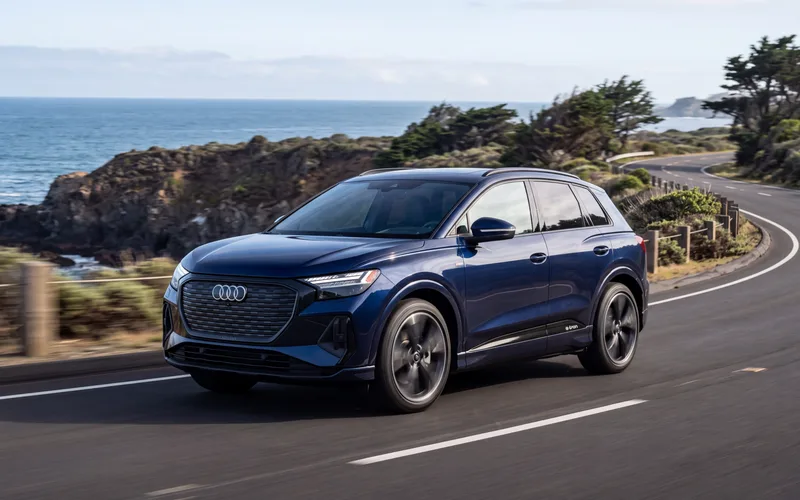 Audi Q4 e-tronCompact Luxury SUVBetter at: Practicality and resale
Similar money and brand positioning but with more cargo space, more battery choices and better resale, making it the more rational version of the same purchase.
Compare 2.60C+
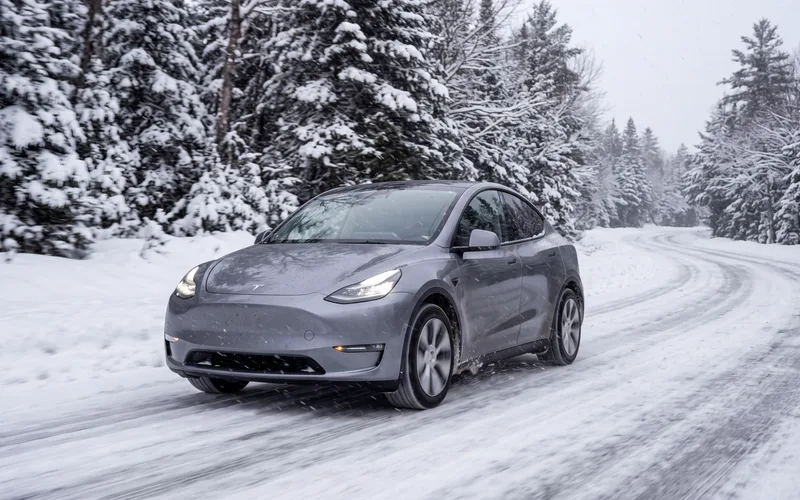 Tesla Model YCompact SUVBetter at: Range and resale
Longer range, quicker charging on the Supercharger network and dramatically stronger value retention for a shopper who plans to actually own the car.
Compare 1.99C-
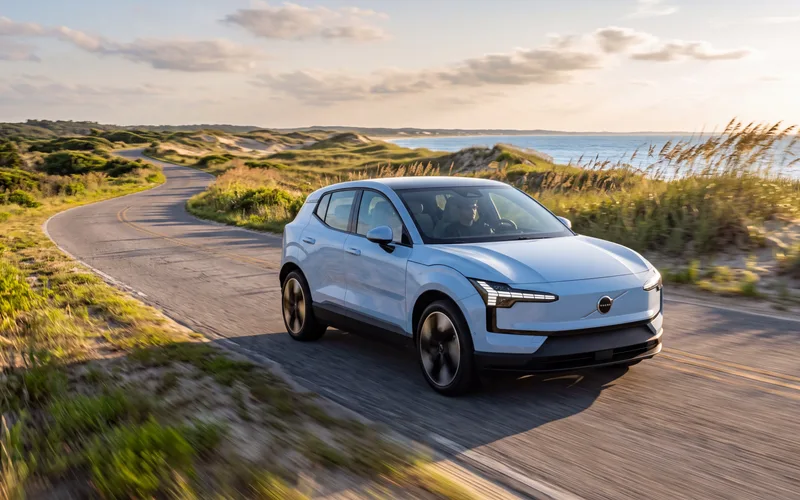 Volvo EX30Subcompact Luxury SUVBetter at: Price
Same Scandinavian design language and safety philosophy from a newer platform with a bigger screen, for thousands less — if you can live with a smaller back seat.
CompareHow it's evolved
6 scored model years · 2021–2026
Subject scores by year
Hover or tap a score to see what moved it versus the year before. A corner mark flags a big swing.
| Year | Performance | Efficiency | Safety | Space | Cost | Reliability | Tech | Use-case | Driving | Value |
|---|---|---|---|---|---|---|---|---|---|---|
| 2026 | 44 | 69 | 79 | 45 | 36 | 60 | 75 | 63 | 73 | 63 |
| 2025 | 44 | 69 | 53 | 43 | 43 | 58 | 72 | 60 | 74 | 65 |
| 2024 | 44 | 68 | 53 | 43 | 39 | 58 | 68 | 60 | 72 | 67 |
| 2023 | 59 | 62 | 60 | 43 | 37 | 57 | 68 | 59 | 72 | 67 |
| 2022 | 59 | 62 | 64 | 42 | 41 | 54 | 66 | 58 | 72 | 64 |
| 2021 | 59 | 62 | 65 | 42 | 36 | 51 | 64 | 54 | 73 | 64 |
Compare two years
Best fit & conditions
Higher scores mean a better fit for that use case. Learn more about use-case fit →
Subject profile
Academic Probation · NHTSA safety recalls
Jun 12, 2025Service brakes · Service brakes, hydraulic: power assist: electric: control module: softwareIn certain driving scenarios while coasting down a hill and using "B" mode or "One Pedal Drive," the vehicle may lose brake function.
Defect
Volvo Car USA, LLC (Volvo Car) is recalling certain 2023 Volvo C40 BEV, 2025 EC40, 2023-2024 XC40 BEV, 2020-2026 XC90 PHEV, 2022-2026 XC60 PHEV, 2023-2025 S60 PHEV, 2024-2025 V60 PHEV, and 2025-2026 EX40 and 2025 S90 PHEV vehicles. In certain driving scenarios while coasting down a hill and using "B" mode or "One Pedal Drive," the vehicle may lose brake function.
Risk
A loss of brake function increases the risk of a crash.
Remedy
Owners are advised not to use "B" Mode (for plug-in hybrid vehicles) or "One Pedal Drive" (for pure electric vehicles) until the repair has been completed. The brake module software will be updated over-the-air (OTA) or by a dealer, free of charge. Owner notification letters were mailed July 15, 2025. Owners may contact Volvo Car's customer service at 1-800-458-1552. Volvo Car's number for this recall is R10329.
NHTSA campaign 25V392000 ↗Manufacturer no. R1032911,469 vehicles potentially affected (all models in the campaign)Owners notified Jul 15, 2025Filed by Volvo Car USA, LLCFiled as EX40
2 recalls on other model years of the EX40 (2025)
Dec 23, 2025Back over prevention: softwareThe rearview camera image may not display when the vehicle is placed in reverse. As such, these vehicles fail to comply with the requirements of Federal Motor Vehicle Safety Standard number 111, "Rear Visibility."
Defect
Volvo Car USA, LLC (Volvo Car) is recalling certain 2021-2025 XC40, 2022 V90, 2022-2024 C40BEV, 2022-2025 S90, V90CC, XC60, 2023-2025 S60, V60, V60CC, XC90, and 2025 EC40, and EX40 vehicles. The rearview camera image may not display when the vehicle is placed in reverse. As such, these vehicles fail to comply with the requirements of Federal Motor Vehicle Safety Standard number 111, "Rear Visibility."
Risk
A rearview camera image that does not display reduces the driver's view behind the vehicle, increasing the risk of a crash.
Remedy
The software will be updated by a dealer or through an over-the-air (OTA) update, free of charge. Owner notification letters were mailed February 24, 2026. Owners may contact Volvo Carâs customer service at 1-800-458-1552. Volvo Car's number for this recall is R10333. Vehicle Identification Numbers (VINs) involved in this recall will be searchable on NHTSA.gov beginning February 16, 2026. This recall replaces previous NHTSA recall number 25V282. Vehicles previously repaired under recall 25V282 will need to have the new remedy performed.
NHTSA campaign 25V908000 ↗Manufacturer no. R10333413,151 vehicles potentially affected (all models in the campaign)Owners notified Mar 2, 2026Filed by Volvo Car USA, LLCFiled as EX40May 8, 2025Back over prevention: softwareThe rearview camera image may not display when the vehicle is placed in reverse. As such, these vehicles fail to comply with the requirements of Federal Motor Vehicle Safety Standard number 111, "Rear Visibility."
Defect
Volvo Car USA, LLC (Volvo Car) is recalling certain 2021-2025 XC40, 2022 V90, 2022-2025 S90, V90CC, C40, XC60, 2023-2025 S60, V60, V60CC, XC90, and 2025 EC40 and EX40 vehicles. The rearview camera image may not display when the vehicle is placed in reverse. As such, these vehicles fail to comply with the requirements of Federal Motor Vehicle Safety Standard number 111, "Rear Visibility."
Risk
A rearview camera image that does not display reduces the driver's view of what is behind the vehicle, increasing the risk of a crash.
Remedy
The software will be updated by a dealer or through an over-the-air (OTA) update, free of charge. Owner notification letters were mailed June 27, 2025. Owners may contact Volvo Car customer service at 1-800-458-1552. Volvo Car's number for this recall is R10320.
NHTSA campaign 25V282000 ↗Manufacturer no. R10320413,151 vehicles potentially affected (all models in the campaign)Owners notified Jun 27, 2025Filed by Volvo Car USA, LLCFiled as EX40
Source: NHTSA Office of Defects Investigation recall database, model years 2021–2026. Recalls are listed by model year as the manufacturer filed them; whether a specific car is affected depends on its VIN — check a VIN at nhtsa.gov ↗. NHTSA model names matched to this page: EX40.
Detailed scoring by subject
1Performance & PowertrainOne of the EX40's weakest categories.0.92F
The volume EX40 is the rear-drive Single Motor Extended Range, whose 185 kW permanent-magnet motor is rated 248 hp — modest output that lands low against the SUV 150–550 hp band even though it feels stronger than the number suggests. The dual-motor Twin Motor Performance more than doubles the figure at 402 hp, but it is the pricier of the two configurations rather than the one most buyers take.
At 310 lb-ft (420 Nm) delivered from zero rpm, the single-motor EX40 sits mid-band for a subcompact luxury SUV and comfortably ahead of the gas XC40's 258 lb-ft, which is why it feels more urgent in traffic than its horsepower implies. The Twin Motor's 494 lb-ft is near the top of the segment but again is the step-up powertrain.
Volvo quotes 6.8 seconds to 60 mph for the rear-drive Single Motor Extended Range — brisk in absolute terms but unremarkable now that most rival EVs in this class run mid-fives or quicker. The Twin Motor Performance is a different car against the clock at roughly 4.5 seconds, and instrumented tests of the mechanically identical XC40 Recharge Twin have come in a touch under that.
As a single-speed EV the EX40 delivers power instantly, silently and without a driveline event of any kind — no turbo lag, no hybrid handoff, none of the low-rpm hesitation reviewers criticize in the gas XC40's B5. It falls short of the very top of the band only because Volvo's one-pedal calibration can still feel abrupt at parking speeds and the rear motor produces a faint whine under hard acceleration.
A single-speed reduction gear means there is nothing to hunt, slur or mistime — the EX40 sidesteps the low-speed take-up clunkiness that is the gas XC40's most-criticized dynamic trait. Held just under the top of the band because there is no manual or simulated-gear engagement to reward the driver, only a one-pedal on/off toggle.
The US braked rating is 2,000 lbs with the accessory tow bar — well down on the gas XC40's 3,500 lbs and near the bottom of the 1,000–8,000 lb SUV band, which costs the EX40 heavily on a double-weighted item. European ratings for the same car are higher (around 1,500 kg), so the figure reflects a conservative US homologation rather than a hardware limit.
All-wheel drive is a powertrain choice rather than a trim lock — Twin Motor Performance can be paired with either Plus or Ultra — but the volume EX40 leaves the factory rear-drive only, so AWD is an upcharge rather than a default. The dual-motor system responds faster than any mechanical setup because the front axle is its own motor, yet it offers no low range, no locking differentials and no selectable terrain modes.
The EX40 is unambiguously a pavement car: roughly 6.9 inches of ground clearance — lower than the gas XC40's 8.3 because the battery sits under the floor — with no skid plates, no underbody protection, no lockers, no off-road drive mode and no dedicated trim. Scored a notch below its combustion sibling for exactly that clearance deficit and the added exposure of a floor-mounted pack.
Two distinct configurations — 248 hp rear-drive Single Motor Extended Range and 402 hp all-wheel-drive Twin Motor Performance — give real choice in output and drivetrain, but they are two states of one electric drivetrain family. There is no gas, hybrid or plug-in alternative under the EX40 badge; buyers wanting combustion are pushed to the separate XC40 nameplate, so the range covers one energy type only.
2Efficiency & RangeMid-pack among this car's ten categories.2.64C+
106 MPGe combined puts the EX40 in the upper-middle of the EV SUV field — respectable, but short of the 116 MPGe its own smaller EX30 sibling manages and well behind the class leaders, because the XC40's tall, blunt-nosed body was drawn for a gas crossover rather than around an EV drag target. The AWD Twin gives up 12 MPGe to the second motor.
City is the EX40's strongest efficiency case — regenerative braking and zero idle draw lift it to 118 MPGe, a 24-point swing over its highway figure, and Volvo's one-pedal drive mode recovers most stop-and-go energy. That translates to a 326-mile city range against 260 on the highway, so the car is at its best on exactly the commute it was designed for.
94 MPGe highway is the aerodynamic penalty of the XC40 shell showing up in the numbers — the EX40 sheds a fifth of its city efficiency at interstate speed, where a slipperier EV holds on better. It is the figure that matters most for how the car behaves on a road trip, and it is the reason highway range falls to 260 miles.
296 miles from the 82 kWh pack is the weakest part of this category and the item that holds the whole score down: it lands below the midpoint of the EV SUV range band at a time when 300-plus is the expected number, and the AWD Twin drops another 36 miles. Perfectly adequate as a commuter, but long trips need planning rather than ignoring.
200 kW is a solid mid-pack peak for a 400V architecture — comfortably ahead of the EX30's 153 kW and the Audi Q4 e-tron's 175 kW, level with the Polestar 4, but a long way short of the 800V Genesis GV60's 250 kW. Peak is also held only briefly, so the average across a full 10–80% session is roughly half the headline figure.
28 minutes to add roughly 200 miles is competitive without being quick — the same ballpark as the Audi Q4 e-tron and two minutes better than the Polestar 4, but 10 minutes adrift of an 800V rival like the GV60. Independent modelling of the curve runs a few minutes longer than Volvo's claim, so treat 28 minutes as the best case on a warm, preconditioned pack.
$700 a year is the best thing about owning this car — roughly a quarter of what the gas XC40 B5 AWD burns on the same EPA basis, and low enough to score well even against other EVs. EPA puts the five-year saving against an average new vehicle at $7,500, and that assumes home charging; leaning on public DC fast charging erodes it substantially.
No fuel grade to think about, the cheapest energy on the road, and an 11 kW onboard charger that refills the pack in about eight hours on a home 240V circuit — an easy high score for anyone who can charge at home. Held below the top of the band because the EX40 still ships with a CCS1 port in 2026 and reaches the Tesla Supercharger network through an included NACS adapter rather than natively, and 296 miles on a 400V architecture means road trips depend on network availability.
3SafetyThe EX40's best-graded category.3.40B+
NHTSA has not published an EX40-specific overall rating; the value is inferred at the generation level from the shared CMA-platform XC40 body structure, whose battery-electric variant also carries a 5-star Euro NCAP result. The EV layout should if anything help the rollover sub-score via a much lower center of gravity. This is the single largest lever in the category and should be replaced with a verified NHTSA figure before publication.
The XC40/EX40 body has a strong crashworthiness history and the platform has held IIHS Top Safety Pick status earlier in this generation, with the battery-electric version scoring especially well on adult occupant protection at Euro NCAP. Scored at the top of the 'mostly Good with some Acceptable' band rather than in the award band because the architecture dates to 2019 (2023 facelift) and the tougher post-2023 criteria — the updated side test and the moderate-overlap rear-passenger metric — have stripped awards across this segment, and current status could not be confirmed.
Volvo makes an unusually deep suite standard on every EX40 trim: City Safety AEB with vehicle, pedestrian, cyclist and large-animal detection, lane keeping aid, lane departure warning, run-off road mitigation and protection, oncoming lane mitigation, driver alert control, road sign information, rear collision warning, and BLIS blind-spot with steer assist plus cross-traffic alert with autobrake. Scored above the combustion XC40 because the EX40's much higher entry price brings a richer standard-content baseline, leaving little safety equipment behind a trim wall.
City Safety is one of the longest-running AEB systems in the industry and covers vehicle, pedestrian, cyclist and large-animal targets day and night — hardware and coverage that historically earned Superior vehicle-to-vehicle and Advanced/Superior pedestrian results. Scored at the bottom of the top band because the revised IIHS front crash prevention test (higher closing speeds, night pedestrian) has downgraded many previously Superior systems and this vehicle's result under it is unconfirmed.
Both halves of this item are standard and both intervene rather than merely alert: BLIS adds steer assist to nudge the car back when a lane change conflicts, and Cross Traffic Alert includes autobrake. That combination sits clearly in the top band for a subcompact luxury SUV.
Lane departure warning and Lane Keeping Aid are standard and Pilot Assist adds true centering, but reviewer consensus on Volvo's implementation is that it is conservative — it hands back on faded markings and through tighter highway curves, and wanders more than the best German or Korean systems. Functional and trustworthy, not class-leading; a point above the combustion XC40 because centering reaches more of the EX40 range.
Pilot Assist is a full-speed-range adaptive cruise with stop-and-go that integrates steering assistance into a single system, so the highway-assist story is coherent, and one-pedal drive plus regen blending makes its low-speed behavior smoother in the EV than in the combustion car. It loses points for the rough edges reviewers consistently report — late and occasionally abrupt braking on cut-ins, and a cautious following model.
No hands-free highway driving is offered on the EX40 at any trim. Pilot Assist is explicitly a hands-on system with a torque-sensing wheel nag; Volvo's unsupervised Ride Pilot ambitions are tied to the EX90's lidar hardware and are not available on this platform. Scored in the 0-49 'no hands-free option' band, above zero only because the hands-on assist that exists is competent.
LED headlights with Volvo's Thor's Hammer signature are standard across the range, and Active Bending Lights with adaptive high beam come on the upper trims — a better-than-average baseline for the class. Held just under the top band because IIHS headlight ratings for this body are typically trim-dependent and the specific 2026 ratings could not be confirmed.
The EX40 keeps the XC40's upright, boxy shape, which is a genuine safety asset — a tall greenhouse, a high seating position and a squared-off hood give unusually good forward and quarter sightlines for a subcompact SUV, and reviewers routinely single this out. The rising beltline and thick D-pillars pinch the rear three-quarter view, and the 360-degree camera that compensates for it is an upper-trim item rather than standard.
Two sets of outboard lower anchors and three top tethers in a body whose square door apertures and upright roof make seats easier to drop in than the sloped-roof rivals, plus Volvo's optional integrated rear booster cushion — a real differentiator for older kids. But this is still a subcompact: three-across is a squeeze and a rear-facing seat pushes hard on front legroom, which caps it in the 'workable with space compromises' band.
4Space & ComfortOne of the EX40's weakest categories.0.97F
The EX40 is a strictly two-row, five-passenger subcompact SUV on Volvo's CMA platform; no third row or captain's-chair layout is offered on any 2026 trim. Replaces the 6.4-seat placeholder, which was not a possible value for this vehicle.
The EX40 is the XC40 Recharge renamed and shares the CMA body shell and interior packaging unchanged, so front headroom carries the XC40 figure. The panoramic roof is standard on US trims, which costs roughly half an inch versus the fixed-roof body.
Front legroom sits near the bottom of the SUV normalization band, a consequence of the 106.4-in wheelbase and upright packaging that the EV conversion did not change. Tall drivers fit, but seat travel is shorter than in a BMW X1 or Mercedes GLB.
Rear headroom is the EX40's strongest passenger-space figure — the boxy roofline and upright rear glass preserve head clearance that swoopier electric subcompacts give up. The underfloor battery raises the rear seat base slightly, so this is the dimension most likely to differ marginally from the gas XC40.
36.1 in is competitive for a subcompact luxury SUV — ahead of the Audi Q3 and Lexus UX — but well short of the GLB, and knee room tightens quickly when front occupants slide back. Unchanged by the EV conversion, which packages the battery under the floor rather than under the rear bench.
The EX40 has no third row and no seven-seat variant in any market — it is a two-row, five-seat subcompact SUV. Scored in the low band per the item's rule that a missing third row is a low score rather than an omitted item.
Roughly 20.7 cu ft behind the rear seats falls below the 25 cu ft floor of the SUV normalization band, so it scores zero against the broader SUV field — expected for a subcompact, but the hold is genuinely small even against segment rivals. The tall, square shape and folding load floor make it more usable than the number alone suggests, and the EV body adds a small frunk the gas car lacks.
57.5 cu ft with the rear bench folded is only just above the SUV band's 55 cu ft floor, so it scores near the bottom against SUVs generally. Within the subcompact luxury class it is roughly par with the BMW X1 and ahead of the Lexus UX.
Small-item storage is this body's signature engineering trick: Volvo relocated the door speakers to a dash-mounted air-ventilated subwoofer specifically to free oversized door bins that swallow a laptop, and adds a removable console trash bin, an underfloor cargo cubby, a folding load-floor divider with bag hooks, and a fold-out grocery hook. The EV body adds a front trunk for charging cables, which is why this sits a couple of points above the gas XC40's 84.
The EX40 uses the same front seats as the XC40 — orthopedically shaped, well bolstered, with power lumbar on upper trims — and Volvo front seats are a long-standing class benchmark for multi-hour comfort. The rear bench is flatter and shorter in the cushion, and the raised battery floor leaves rear passengers slightly knees-up, which keeps this at the bottom of the top band.
Ride is the EX40's clearest comfort compromise and is marginally worse than the gas XC40's. The short wheelbase and firm damping produce a busy, occasionally sharp response over broken pavement, and roughly 700–1,000 lb of extra battery mass on stiffened springs amplifies impacts on the standard 19-in wheels. Body control is fine and it never floats, but there is no adaptive damping or air suspension offered.
The clearest comfort gain over the combustion XC40: deleting the four-cylinder removes the coarse engine noise reviewers criticized, and the EX40 is genuinely serene around town. It falls short of the top band because coarse-surface tire roar is more exposed with no engine to mask it, and there is no acoustic side glass or active noise cancellation at this price.
Strong cold-weather kit that the EV drivetrain improves on: heated front seats, heated steering wheel and heated washer nozzles, dual-zone automatic climate control with rear vents, heated rear seats available, plus a heat pump and app-based remote cabin preconditioning that the gas XC40 cannot match. Ventilated front seats are still not offered on any trim and the rear is vents-only with no separate zone, which caps this below the top band.
5Cost of OwnershipThe EX40's lowest-graded category.0.37F
Entry Core trim with the RWD Single Motor Extended Range powertrain, carried forward from the 2025 EX40 ladder with a modest 2026 increase reflecting tariff pressure on the Ghent-built car. Expensive against the subcompact-SUV band, which tops out at $65,000.
Plus with the Single Motor Extended Range is the volume configuration — it adds the equipment most EX40 buyers actually order (heated seats and wheel, power passenger seat, upgraded audio) without the Ultra's Harman Kardon and pixel-LED bundle. Lands near the top of the segment price band.
The BEV drivetrain removes oil changes, plugs, belts and most brake wear, pulling scheduled maintenance well below the gas XC40's, but Volvo's dealer labor rates and parts pricing plus this platform's software, 12V and charging-system service history keep repair spend above mainstream-EV levels.
This is the EX40's single worst ownership metric. Volvo's EV residuals are among the weakest in the luxury field — heavy factory lease support, a used-EV market already saturated with 2021–2023 XC40 Recharge units, and the mid-cycle rename that stranded the older nameplate all compound the loss. It sits essentially at the floor of the SUV retention band.
Volvo's standard new-vehicle limited warranty is 4 years/50,000 miles — matching the German luxury standard and better than the 3-year plans some rivals still use, but short of Genesis's 5 years/60,000 miles.
The EV battery and drive components carry the 8-year/100,000-mile floor with a capacity guarantee, which is the class norm — competitive but not a differentiator, and it does not extend the 4/50 coverage on the rest of the vehicle.
Volvo bundles a real package — roadside assistance running with the 4-year warranty term, Google built-in with an included connected-services/data period, over-the-air updates, and public-charging credit on EV purchases — but there is no multi-year complimentary scheduled-maintenance plan of the kind BMW and Jaguar Land Rover have offered, which caps this in the upper half of the middle band rather than the 80+ tier.
$59,795 volume-trim price minus its estimated resale value after 5 years (41% retained, or about $24,516) leaves about $35,279 in depreciation. Add the projected $5,400 in 5-year maintenance and repairs, and owning this vehicle for 5 years costs about $40,679 in total.
6Reliability & QualityMid-pack among this car's ten categories.2.06C
The EX40 is the renamed XC40 Recharge, and the electric variant has consistently predicted worse than its gas sibling: the mechanical simplification is real, but the complaint pattern that drags Volvo down — Android Automotive infotainment freezes and reboots, 12V battery drain, charging and drive-power faults — lands hardest on the EV. By 2026 the CMA platform is eight years old and the EV drivetrain six, so hardware faults are largely shaken out, which keeps this in the mid band rather than below it.
Volvo is a genuine bottom-third brand in three-year dependability studies and has been for several consecutive years, dragged down by electrical and infotainment problems across the range. Consumer Reports brand rankings have been kinder — bottom half rather than bottom — which is why this sits at the boundary of the mid-pack band rather than deep in the low one. Scored identically to the XC40: this is a brand-level measure and the two cars share it.
The EX40 inherits the XC40 generation's software-heavy campaign record and adds EV-specific ones on top, including loss-of-drive-power remedies and high-voltage battery-management software. That is more recall exposure than the gas XC40 (scored 62 here), and loss of propulsion is a more serious failure mode than an infotainment patch — but the remedies have been over-the-air or software-flash rather than hardware replacement, and there is no fire or structural campaign, so it stays in the typical-activity band.
Going electric erases the gas XC40's real durability liabilities — no timing belt service, no PCV diaphragm failures, no direct-injection carbon buildup, no automatic transmission — and the roughly 79 kWh NMC pack uses mainstream cells with no fire or degradation recall of the Bolt/Kona sort. What holds it to mid-band is newness rather than known defects: the rear permanent-magnet motor driving the volume Single Motor Extended Range trim only arrived for 2024, it has no high-mileage US track record, and the propulsion-loss campaigns on this drivetrain are a documented mark against it.
The EX40 cabin is a consistent review highlight for its price: distinctive Scandinavian design, felt-lined door bins, convincing leather-free textiles and recycled-content trim, and switchgear that feels better than the segment norm. It scores a point above the gas XC40 because the EX40 range skews to better-equipped trims, but falls short of class-leading for the same reason reviewers cite on the XC40 — hard plastics persist in the lower cabin and doors relative to a BMW X1 or Audi Q3.
Ghent-built Volvos assemble well — tight and consistent panel gaps, solid door closure, few rattle or squeak complaints in long-term testing, and the EV's silence does not expose the structural creaks that catch out some converted platforms. Held below the top band because Volvo's initial-quality standing is below average, though that penalty is driven far more by infotainment usability complaints than by physical assembly defects.
Volvo runs roughly 280 US dealers — materially thinner than BMW, Mercedes-Benz or Lexus — with coverage concentrated on the coasts and major metros. The EX40 scores three points below the gas XC40 because high-voltage work requires EV-certified technicians and equipment that not every Volvo store carries, so the effective service network for this car is a subset of an already-thin one. Service satisfaction is middling rather than poor, keeping it in the adequate-coverage band.
A clear improvement on the gas XC40 (48 here) and the strongest ownership argument for the EX40: no oil services, no timing-belt bill, no transmission fluid, and brake wear cut sharply by regenerative braking, so routine maintenance runs well below the European-luxury norm. It stays only just above mid-band because everything that does break is expensive — parts pricing is European-luxury and largely OE and dealer-controlled, the independent aftermarket for electric Volvos is close to nonexistent, and an out-of-warranty high-voltage pack or motor replacement is a five-figure event.
7Technology & InfotainmentOne of the EX40's strongest categories.3.11B
The EX40 shares the XC40's CMA-platform cabin and carries the same 9-inch portrait center display with Google built-in, standard across the range with no larger option. That is the smallest main screen in the subcompact luxury SUV class for 2026 and a full generation behind Volvo's own newer EVs — the EX30 runs 12.3 inches and the EX90 14.5.
Google built-in (Android Automotive OS) remains one of the better-organized systems in the segment — quick boot, sensible tile layout, Google Maps as the native map, and real OTA-delivered improvements; the EV build adds well-integrated energy, charging and preconditioning cards. It stays out of the top band because the 9-inch canvas is cramped and climate plus most vehicle settings run through the touchscreen with almost no physical controls.
Wireless Apple CarPlay is standard across the range and Android Auto is supported on Google built-in cars after Volvo added it over the air, so both projection systems are standard equipment rather than trim-gated options. Projection windows into part of the portrait screen instead of filling it, a minor usability tax against landscape rivals.
Google Assistant with native Google Maps is the class benchmark — natural-language destination entry, live traffic and POI search that owners actually use rather than bypassing for phone projection. On the EX40 it goes a step further than the gas XC40 because Maps handles EV route planning with charging stops and state-of-charge estimates natively.
The Harman Kardon 13-speaker, roughly 600-watt premium system is genuinely good and benefits from the quiet EV powertrain, but it is reserved for the top trim, the base setup is merely adequate, and the EX40 never gets the Bowers & Wilkins system offered further up the Volvo range.
A 12.3-inch full-digital driver display is standard on every trim, renders Google Maps directly in the cluster, and carries clear EV range and energy-flow readouts. Configurability is narrower than Audi's Virtual Cockpit — Volvo offers a few fixed layouts rather than free customization.
Volvo pushes whole-vehicle over-the-air updates that have added real features to cars already in customers' hands, and the EX40 has benefited more than the combustion XC40 — OTA releases have improved charging behavior, thermal management and usable range on delivered cars, on top of the CarPlay and Android Auto additions. Cadence still trails Tesla but leads most European rivals in this class.
The Volvo Cars app covers more ground on the EV than on the gas car — remote lock/unlock, locate, climate preconditioning, digital key sharing, plus charge scheduling, charge-limit control and charging status. It is held out of the upper band by persistent owner complaints about slow or unreliable command response and connection dropouts.
USB-C ports front and rear with wireless phone charging on upper trims is competitive but not generous — there is no household AC outlet and no vehicle-to-load export in the US, and the port count is modest against rivals fitting four or more USB-C plus an inverter.
Keyless Drive with proximity entry and push-button start is standard, a hands-free power tailgate is available on upper trims, and phone-as-key works through the Volvo Cars app digital key. It falls short of the top band because the hands-free liftgate is not standard across the range.
A rear camera is standard and a 360-degree surround view with front/rear sensors and Park Assist Pilot is available, but the surround-view image is visibly lower resolution than what BMW, Mercedes and Genesis now fit, and 360 is gated to the top trim or an option pack rather than being widely available.
No head-up display is offered on the EX40 — the feature was available on early CMA-platform cars but was dropped from the US range and has not returned; the 12.3-inch cluster is the only driver-facing display. Scored in the low band per the item's 'not offered' guidance.
8Use-Case FitMid-pack among this car's ten categories.2.26C
The EX40 inherits the XC40's upright, boxy body unchanged, and that shell is a genuine family asset: square door apertures and a tall roofline make dropping a car seat onto the rear bench easier than in the sloped-roof Q3 or GLA, and the relocated door speakers free up unusually large bins for kid clutter. It stays in the mid band because the rear bench offers only 36.1 in of legroom with two outboard LATCH sets and a middle tether, so a rear-facing seat forces the front occupant forward, and the 20.7 cu ft hold behind the seats is tight for a stroller plus a grocery run. Replaces the 88 placeholder, which put a subcompact five-seater in the segment-benchmark band it does not earn.
This is the EX40's strongest family argument. Every trim gets City Safety AEB with pedestrian, cyclist and large-animal detection, run-off-road mitigation, oncoming-lane mitigation and a rear-seat reminder as standard, and the volume Plus trim adds BLIS with rear cross-traffic braking, a 360-degree camera and Pilot Assist lane centering — families do not have to climb the trim ladder to get the safety kit. It sits just below the XC40's 86 because the electric variant has no separate NHTSA or IIHS test of its own, so its crashworthiness case is inherited at generation level rather than measured.
Volvo's front seats are a long-haul benchmark and the electric powertrain makes the cabin markedly quieter than the gas XC40, but the second row is where family trips are actually endured and the EX40's is a flat, short-cushion bench with vents and USB-C rather than heated cushions or sunshades, on 36.1 in of legroom. The bigger road-trip penalty is structural: 293 miles of EPA range that falls toward 250 in real interstate use means charging stops on the car's schedule rather than the kids', and 20.7 cu ft of cargo will not swallow four people's luggage without eating into the rear seat.
Commuting is what the EX40 is genuinely best at. Instant torque from a single-speed drivetrain removes every downshift, restart and turbo-lag event that reviewers criticize in the gas XC40's B5, one-pedal drive handles most stop-and-go without touching the brake pedal, and the high seating position under a tall glasshouse gives easy sightlines in traffic. It stops short of the top band for two reasons this scorecard already documents: the one-pedal calibration is abrupt at parking speeds, and the firm, short-wheelbase ride is busy over broken urban pavement.
Roughly $750 a year in electricity at 15,000 miles is about $1,800 less than the gas XC40 burns in premium fuel over the same distance, and the EV service schedule deletes oil changes entirely while regenerative braking stretches pad and rotor life well past ICE intervals. It lands below the Q4 e-tron because the upright body gives up real efficiency on the highway leg of a commute, and because Volvo's 19- and 20-inch tire sizes and dealer labor rates are expensive consumables when they do come due.
At under 175 inches long the EX40 is the shortest car in its peer set, the squared-off hood is easy to place precisely, and the upright greenhouse gives quarter-window sightlines that most electric crossovers have styled away; a 360-degree camera is standard from the volume Plus trim up. The one real demerit is a 39.3-ft turning circle that is poor for a car this short — a long-standing XC40 complaint the electric conversion did not fix — which forces three-point turns in garages where the footprint suggests it should not need them.
Not a work vehicle, and scored in the low band accordingly. The 2,000-lb braked tow rating with the factory tow bar is the lowest in the luxury subcompact peer set — 1,500 lbs behind the gas XC40's own rating and well behind the EQB's 3,750 — and 20.7 cu ft of enclosed cargo behind the rear seat means no bed, no payload headroom, and no way to carry anything long without folding a passenger away. It sits below the XC40 specifically because the electric conversion cut the tow rating.
A luxury-oriented cabin with no rubber-floor or wear-friendly trim option, no work-spec variant and no US fleet presence puts this in the low band regardless of powertrain. The electric drivetrain is mechanically simpler than the 2.0T-plus-48V it replaces and carries fewer wear items, which is worth a point or two over the XC40, but Volvo's CMA electric cars have a mixed record of software and high-voltage-system recalls and the brand's reliability track record does not support a durability claim under hard use.
No 120V household outlet, no vehicle-to-load export power, no washable-surface or liner package and effectively zero upfit ecosystem — the interior is carpet and textile and the accessory catalogue is consumer-grade racks and mats. What genuinely helps is small: cargo tie-downs, the folding load-floor divider with bag hooks, an underfloor cubby, and a roughly 1.1 cu ft frunk that at least keeps a dirty charging cable out of the cabin.
The parts of the car that touch the driver are excellent for touring — orthopedically shaped front seats reviewers single out for multi-hour comfort, a quiet electric cabin, and Pilot Assist adaptive cruise with lane centering standard on the volume trim. What limits it is the interstate itself: 293 miles of EPA range shrinks toward 250 at sustained highway speed because the upright body loses roughly 20 percent from city to highway, roughly 200 kW peak charging puts a 10–80 percent stop near half an hour, there is no hands-free highway mode, and the firm short-wheelbase ride gets busy over expansion joints.
The EX40 gives up most of the modest adventure case the gas XC40 had. All-wheel drive is no longer standard — the volume Single Motor Extended Range is rear-drive and AWD costs a step up to the Twin Motor Performance — the battery pack drops ground clearance to roughly 6.9 inches, the tow rating is only 2,000 lbs, and there is no off-road drive mode or export power for camping. Roof rails still take a box or a bike carrier and it will handle a gravel forest road on road tires, but it is closer to pavement-bound than the XC40, EQB or Q4 e-tron.
The EX40 punches above its cubic feet — a tall square hold, a folding load-floor divider with bag hooks, an underfloor cubby, laptop-capable door bins and a frunk that finally gives the charging cable a home make the space that exists unusually usable, and roof rails plus a hitch cover bikes and boxes. But the absolute numbers are the problem for bulky gear: 20.7 cu ft behind the second row and 57.5 cu ft with the 60/40 bench folded sit at the bottom of the segment, and the 60/40 split lacks the 40/20/40 pass-through that lets rivals carry skis and three people at once.
9Driving ExperienceOne of the EX40's strongest categories.2.92B-
The floor-mounted battery drops the center of gravity well below the gas XC40's and the volume Single Motor Extended Range now drives the rear axle, so the EX40 corners flatter and more neutrally than the B5 car it shares a body with. It stays a comfort-tuned CMA crossover carrying roughly 4,600 lb, though — grip and body control are secure rather than eager, and it never changes direction with the crispness of a BMW X1 or Audi Q3.
The rack is accurate and easy to place but essentially mute, and Volvo's selectable steering-effort setting changes weight without adding any feedback — unchanged hardware from the XC40, and the EX40's weakest dynamic trait. The extra battery mass makes the lightest setting feel especially disconnected from what the front tires are doing.
Stopping power itself is adequate, but blending between regeneration and the friction brakes is the EX40's least polished calibration — pedal response can feel nonlinear at low speed, and one-pedal drive is an on/off toggle with no adjustable regen levels to smooth the handoff. Roughly 800 lb of extra mass over the gas XC40 also lengthens stops, so it lands slightly below its ICE sibling despite the same hardware.
A single-speed EV sidesteps every drivability flaw that drags the gas XC40 down: no turbo lag, no hesitant low-speed take-up, no stop/start restart, just immediate torque from rest. Held just below the top of the band because one-pedal drive can still decelerate abruptly at parking speeds and cannot be modulated. Consistent with this vehicle's cat1 powertrain-refinement (86) and transmission-behavior (88) marks.
With no combustion engine there is nothing to drone or thrash — the EX40 is near-silent under load and transmits no driveline vibration through the pedals or wheel, a clear step up on the gruff four-cylinder XC40. Short of the very top only because the rear motor emits a faint whine under hard acceleration and the near-silence leaves road and tire noise more exposed.
The EX40 shares the XC40's 106.4-in wheelbase and front-end geometry and Volvo quotes the same 11.4 m curb-to-curb circle — mid-pack for a subcompact luxury SUV, tighter than a BMW X1's 38.7 ft and easy enough in parking structures without being a standout.
The cabin is the XC40's, and it is a genuine strength: a high, upright H-point, deep glass and slim pillars give some of the best outward visibility in the class, with power seats and a tilt/telescoping wheel that suit a wide range of sizes. Kept out of the top band because the Google built-in interface pushes climate and nearly all vehicle settings into the touchscreen, leaving very few physical controls.
Instant torque, a low center of gravity and the rear-drive single-motor layout make the EX40 noticeably more satisfying to hustle than the hesitant gas XC40, and the Twin Motor's roughly 4.5-second sprint adds real punch. It still isn't a car enthusiasts seek out, though — mute steering, considerable mass and comfort-first damping mean it rarely tempts you into the long way home.
10Value & Market PositionMid-pack among this car's ten categories.2.25C
The EX40 is generously equipped for a base car: every trim gets the full City Safety ADAS suite, a panoramic moonroof, heated front seats and steering wheel, power tailgate, 12.3-in driver display and the 9-in Google built-in system with wireless CarPlay — content BMW and Audi still meter out through packages on the X1 and Q4 e-tron. It scores marginally above its own gas sibling (XC40, 78) because the pano roof, heat pump and 200 kW DC charging are standard rather than optional, but it stops short of the 80+ band's 'rivals charge thousands more for parity' because the screen is the smallest in class and there is no head-up display at any price.
This is the EX40's weakest value argument. At ~$55.8K to start and ~$59.8K as typically configured it asks more than a Tesla Model Y, Hyundai Ioniq 5 or Audi Q4 e-tron while delivering less of what EV buyers price on: 293 miles of range is mid-pack at best and the 20.7 cu ft cargo hold is the smallest measurement in this dataset's SUV set. The equipment list is good and the cabin is genuinely premium, but you are paying luxury-EV money for subcompact packaging on a platform whose gas version starts $12K lower — and after the federal $7,500 clean-vehicle credit lapsed on 30 September 2025 there is no longer a subsidy papering over the gap.
Two powertrains across three trims — Single Motor Extended Range (RWD, 248 hp) and Twin Motor Performance (AWD, 402 hp) in Core, Plus and Ultra — gives the EX40 a wider ladder than the front-drive-only gas XC40, and the AWD option matters in this segment's snow-belt markets. But the range is narrow in absolute terms: a single battery size, Volvo's package-only option philosophy with almost no standalone choices, and a ~$9K spread from bottom to top that never reaches down to an entry price.
The EX40 is a low-volume seller with a declining trajectory. It entered 2026 squeezed from both sides of its own showroom — the cheaper, newer EX30 below it and the EX90 above — while the segment's volume flows to the BMW X1/iX1 and Tesla Model Y. Belgian assembly leaves it exposed to US tariffs on EU-built vehicles, which raised its landed cost precisely as the federal EV credit disappeared, and Volvo's US EV mix has been the weak part of an otherwise stable brand. That combination puts it in the 'slow seller or declining' band rather than mid-pack.
Volvo has one of the clearest brand identities in the business — safety, Scandinavian restraint, understated design — and it converts into real repeat purchase and cross-shopping consideration against the Germans. What holds the EX40 below its gas sibling's 76 is the resale side of the equation: Volvo already trails BMW/Mercedes/Audi in US luxury rankings, and its electric models carry the sharpest depreciation in the lineup, which is the part of brand image that shows up in a buyer's wallet.
Scored on buyer benefit, this is the EX40's single best item. Everything that hurts it elsewhere — slow sales, an aging platform, brutal residuals, the loss of the federal credit — pushes Volvo Car Financial Services toward heavy subvention, and the EX40 is routinely among the most aggressively supported leases in the luxury EV market. A buyer willing to negotiate, and especially one willing to lease rather than own the depreciation, captures unusually large discounts off a sticker almost nobody pays.
The EX40 is an old car wearing a new name. The CMA-platform 536-series body dates to MY2019 and the electric version to MY2021; the MY2024 update that moved the single motor to the rear axle and lifted charging speed was substantive, and the MY2025 XC40 Recharge → EX40 rename tidied the naming, but 2026 brings no structural change. It sits a half-step above the gas XC40 (43) only because its powertrain hardware is newer than its body, and buyers face real replacement risk with Volvo's newer SEA and SPA2 architectures already in showrooms underneath and above it.
Reviewers consistently like the EX40 without picking it. Praise lands on the material quality, seat comfort, drivetrain refinement and the Google-native software; the recurring criticisms are the ones this scorecard measures directly — small cargo hold, mid-pack range for the money, the smallest screen in the class and no HUD. Its trophy case belongs to the launch of the gas car (2018 European Car of the Year, 2019 NACTOY Utility of the Year), not to the 2026 electric version, and it does not win contemporary comparison tests against the X1/iX1, Q4 e-tron or Model Y. That is squarely the 'well-reviewed, rarely the pick of the class' band, a touch below the gas XC40's 63 because EV comparison tests weight range and packaging hardest.