
The verdict
A struggling subcompact luxury suv, strong on driving and held back by space.
The 2025 EX30 is a tiny luxury EV with a supercar launch. Every US car came as the 422-hp Twin Motor Performance, which reaches 60 mph in 3.4 seconds, parks anywhere and costs about $700 a year to charge. You pay for that with one of the smallest back seats and cargo holds of any SUV, just 253 miles of range, a cabin that puts nearly every control on one screen, and weak resale now that Volvo is ending US sales after 2026. Big 2025 lease deals made it a fun city car for one or two people, but it is a hard sell as a family's only vehicle.
Jump to scoresStrengths
- Startling acceleration for the money
- Very cheap to run and maintain
- Built for city streets
What holds it back
- Cramped back seat and tiny cargo hold
- Short range and middling fast charging
- Everything lives on one screen
Top alternatives
Cars shoppers cross-shop with the Volvo EX30 2.06C
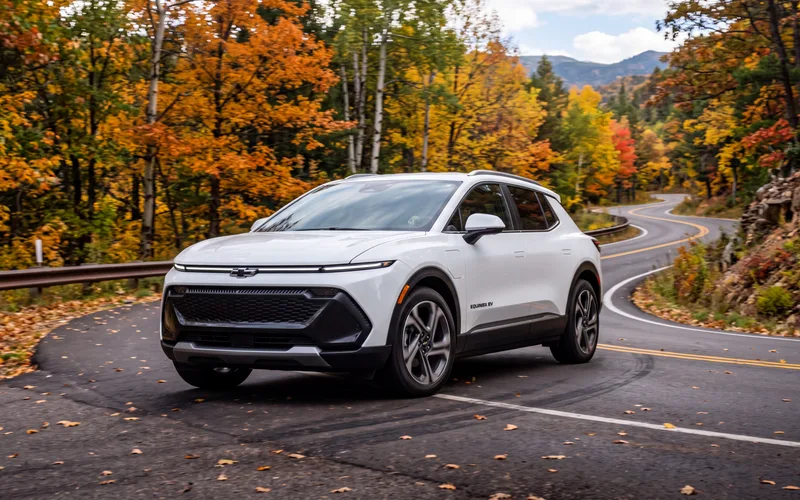 Chevrolet Equinox EVCompact SUVBetter at: Range and space
It delivers more range, a usable back seat and far more cargo room for similar money, which is exactly where the EX30 is weakest.
Compare 2.21C
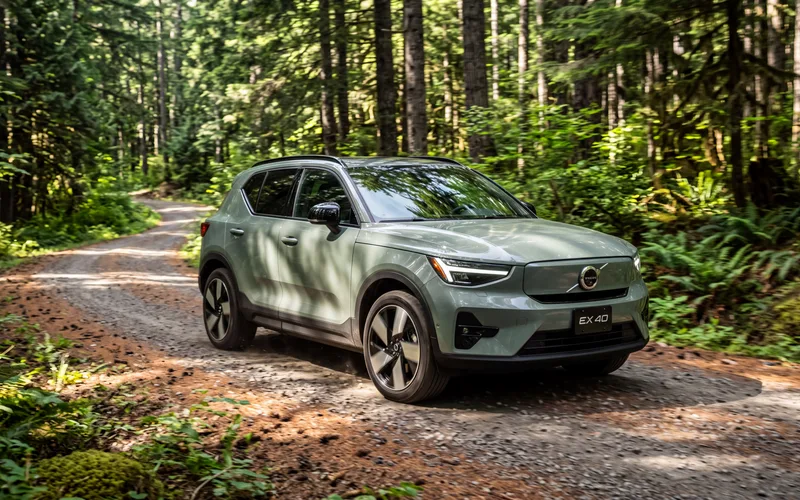 Volvo EX40Subcompact Luxury SUVBetter at: Practicality
Same Volvo safety kit and cabin feel with 293 miles of range, nearly double the cargo volume and an actual gauge cluster, if you can stretch the budget.
Compare 2.65C+
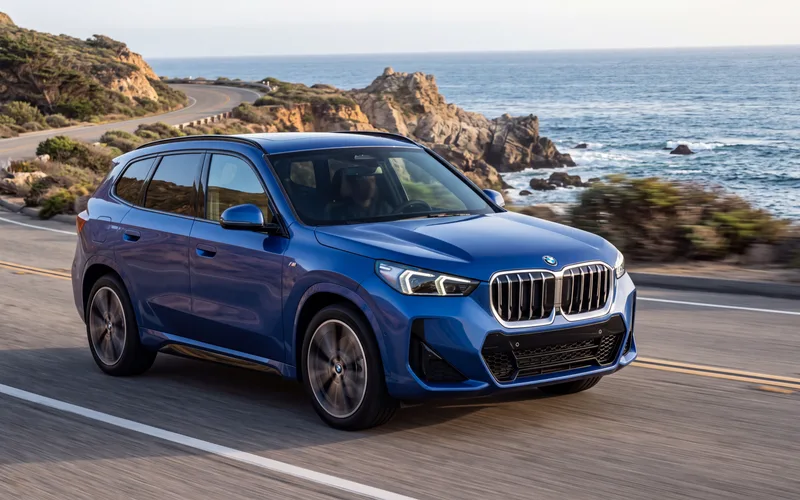 BMW X1Subcompact Luxury SUVBetter at: Everyday usability
A better-riding, better-packaged small luxury SUV with conventional controls and no range anxiety, for buyers not committed to going electric.
CompareSubject scores by year
Hover or tap a score to see what moved it versus the year before. A corner mark flags a big swing.
| Year | Performance | Efficiency | Safety | Space | Cost | Reliability | Tech | Use-case | Driving | Value |
|---|---|---|---|---|---|---|---|---|---|---|
| 2026 | 52 | 66 | 74 | 36 | 54 | 53 | 70 | 49 | 69 | 69 |
| 2025 | 61 | 65 | 58 | 39 | 53 | 48 | 58 | 48 | 72 | 66 |
Compare two years
Best fit & conditions
Higher scores mean a better fit for that use case. Learn more about use-case fit →
Subject profile
Academic Probation · NHTSA safety recalls
Oct 9, 2026Seats: front assembly: head restraintThe head restraint cushion may detach during a crash.
Defect
Volvo Car USA, LLC (Volvo Car) is recalling certain 2025-2026 EX30 and 2026 EX30CC vehicles. The head restraint cushion may detach during a crash.
Risk
A detached head restraint cushion can increase the risk of injury during a crash.
Remedy
Dealers will apply an adhesive to reinforce the head cushion attachment, free of charge. Owner notification letters are expected to be mailed November 30, 2026. Owners may contact Volvo Carâs customer service at 1-800-458-1552. Volvo Carâs number for this recall is R10396. Vehicle Identification Numbers (VINs) involved in this recall became searchable on NHTSA.gov on October 9, 2026.
NHTSA campaign 26V671000 ↗Manufacturer no. R103969,930 vehicles potentially affected (all models in the campaign)Filed by Volvo Car USA, LLCFiled as EX30Mar 11, 2026Seat belts: front: warning light/devicesThe seat belt warning system may not activate the audible warning chime as intended. As such, these vehicles fail to comply with the requirements of Federal Motor Vehicle Safety Standard number 208, "Occupant Crash Protection."
Defect
Volvo Car USA, LLC (Volvo Car) is recalling certain 2025-2026 EX30 and 2026 EX30CC vehicles. The seat belt warning system may not activate the audible warning chime as intended. As such, these vehicles fail to comply with the requirements of Federal Motor Vehicle Safety Standard number 208, "Occupant Crash Protection."
Risk
An audible warning chime that does not properly alert of an unbelted seat belt can increase the risk of injury during a crash.
Remedy
Dealers will replace the terminals at the audio module connector, free of charge. Owner notification letters were mailed March 26, 2026. Owners may contact Volvo Carâs customer service at 1-800-458-1552. Volvo Carâs number for this recall is R10365. Vehicle Identification Numbers (VINs) involved in this recall became searchable on NHTSA.gov on March 13, 2026.
NHTSA campaign 26V136000 ↗Manufacturer no. R103651,584 vehicles potentially affected (all models in the campaign)Owners notified Apr 3, 2026Filed by Volvo Car USA, LLCFiled as EX30Feb 20, 2026Electrical system: propulsion system: traction batteryThe high voltage battery may experience a short circuit and overheat.
Defect
Volvo Car USA, LLC (Volvo Car) is recalling certain 2025 EX30 vehicles. The high voltage battery may experience a short circuit and overheat.
Risk
A high voltage battery that overheats increases the risk of a fire.
Remedy
Owners are advised to limit their charge to a maximum of 70% until the recall repair is complete. Dealers will inspect and replace the battery modules as necessary, free of charge. Owner letters were mailed August 20, 2026. Owners may contact Volvo Carâs customer service at 1-800-458-1552. Vehicle Identification Numbers (VINs) involved in this recall became searchable on NHTSA.gov on February 23, 2026. This recall replaces and expands previous NHTSA recall number 26V001.
NHTSA campaign 26V103000 ↗Manufacturer no. R10362161 vehicles potentially affected (all models in the campaign)Owners notified May 19, 2026Filed by Volvo Car USA, LLCFiled as EX30Jan 2, 2026Electrical system: propulsion system: traction batteryThe high-voltage battery may experience a short circuit and overheat.
Defect
Volvo Car USA, LLC (Volvo Car) is recalling certain 2025 EX30 vehicles. The high-voltage battery may experience a short circuit and overheat.
Risk
A high-voltage battery that overheats increases the risk of a fire.
Remedy
Owners are advised to park outside and away from structures and limit their charge to a maximum of 70% until the recall repair is complete. Dealers will inspect and replace the battery modules as necessary, free of charge. Owners may contact Volvo Carâs customer service at 1-800-458-1552. Volvo Car's number for this recall is R10355. Vehicle Identification Numbers (VINs) involved in this recall will be searchable on NHTSA.gov beginning January 26, 2026. This recall was replaced by recall number 26V103.
NHTSA campaign 26V001000 ↗Manufacturer no. R1035540 vehicles potentially affected (all models in the campaign)Filed by Volvo Car USA, LLCFiled as EX30
Source: NHTSA Office of Defects Investigation recall database, model years 2025–2026. Recalls are listed by model year as the manufacturer filed them; whether a specific car is affected depends on its VIN — check a VIN at nhtsa.gov ↗. NHTSA model names matched to this page: EX30.
Detailed scoring by subject
1Performance & PowertrainMid-pack among this car's ten categories.2.10C
For model year 2025 the US EX30 was sold exclusively as the dual-motor Twin Motor Performance (Plus and Ultra trims); the 268-hp Single Motor Extended Range did not arrive until the 2026 model year. That makes 422 hp the volume figure, very strong for a subcompact luxury SUV.
Two motors combine for 543 Nm (400 lb-ft), available instantly — near the top of the subcompact luxury segment and above many larger luxury SUVs.
Volvo's quickest-accelerating car ever; 3.4 s to 60 mph beats the SUV band's best-case anchor and embarrasses most performance SUVs costing twice as much.
Delivery is instant, quiet and seamless, and the dual-motor thrust is startling for the class. Held out of the high 80s because 2025 reviewers repeatedly flagged abrupt throttle tip-in and coarse one-pedal/regen calibration at low speed — the same complaint behind MotorWeek's 'very fast smartphone' framing and The Road Beat's 'fast and infuriating' verdict.
Single-speed reduction gear on each axle — no shifts, no hunting, seamless from rest to highway. Slightly below sibling EVs because the blend between regen and friction braking in one-pedal mode is the driveline's weak calibration point.
Volvo caps US EX30s at 2,000 lbs with a braked trailer — fine for a small utility trailer or jet ski, but near the bottom of an SUV band that runs to 8,000 lbs. The higher European 1,600 kg rating does not apply to US cars.
Because every 2025 US EX30 was a Twin Motor Performance, all-wheel drive is effectively standard across the lineup — better access than 2026, when the rear-drive single motor became the entry car. The system is a quick-reacting through-the-road dual-motor setup with front-motor disconnect, but there is no terrain mode, low range or torque-vectoring hardware.
A pavement-focused urban crossover with about 6.9 in of clearance, low-profile 19–20 in tires, no skid plates, lockers or low range. The raised EX30 Cross Country was not part of the 2025 US lineup, so there is no off-road-oriented variant to lift this score.
Take-it-or-leave-it for 2025 in the US: one powertrain (Twin Motor Performance, 69 kWh) across both trims, with no single-motor, gas, hybrid or plug-in alternative. Buyers wanting a cheaper or longer-range EX30 had to wait for the 2026 model year.
2Efficiency & RangeOne of the EX30's strongest categories.2.42C+
Every 2025 US EX30 was a Twin Motor Performance, which posts 109 MPGe combined on either wheel size — good for an EV SUV given 422 hp, helped by the light body and a front motor that decouples when not needed.
Light curb weight and strong regeneration make city driving the EX30's most efficient duty cycle.
100 MPGe on the highway is strong for an AWD EV SUV, though the tall, short body costs it about 14% versus city.
Range is the EX30's defining compromise: a 69 kWh (≈64 kWh usable) pack is small, so even good efficiency yields only 253 EPA miles — low among EV SUVs.
153 kW is mid-pack for a 400-volt EV and well behind 800-volt rivals; the car does have a CCS1 DC fast-charge inlet.
The small pack keeps the quoted 10–80% stop to 26.5 minutes despite a modest peak rate. MEDIUM because InsideEVs' instrumented 2025 EX30 charging test called the real-world result 'a little disappointing' versus the claim.
Low running cost at the EPA's national-average electricity price; DC fast charging would raise it substantially.
No fuel grade to worry about and home Level 2 charging (11 kW onboard AC) refills it overnight cheaply. Held slightly lower than the 2026 car because the short 253-mile range and modest 153 kW peak make road trips more dependent on public-network planning, Supercharger access goes through an adapter, and some early 2025 builds were covered by a battery-cell recall advising a reduced charge limit.
3SafetyMid-pack among this car's ten categories.1.91C-
NHTSA has not crash-tested the EX30 in any model year, so per the item definition the value is 0 (never rated). The car's 5-star Euro NCAP result shows the structure is sound, but that test is not a substitute for a US rating, and it is reflected in 3.1.2 instead.
IIHS has not tested the EX30, so it has no Top Safety Pick award and no US crashworthiness results. The 5-star Euro NCAP result (88% adult occupant, 85% child occupant) argues against any structural concern, which puts the car mid-band rather than in the 'untested with known concerns' tier. It cannot be credited with an award it does not hold.
Every trim has a broad standard suite: collision mitigation front and rear with pedestrian and cyclist steering avoidance, lane keeping and lane departure warning, blind-spot monitoring with steer assist, rear cross-traffic alert with autobrake, a door-opening alert and driver alert. Adaptive cruise is standard on Plus, the volume trim, and above. Sources disagree on whether the full Pilot Assist package reaches the lower trims, which holds the score just short of the top.
City Safety AEB covers vehicles, pedestrians and cyclists, and Euro NCAP rated the EX30 79% on vulnerable road users and 80% on safety assist. Those are solid results but not class-leading. IIHS has no front crash prevention result for this car (vehicle-to-vehicle or night pedestrian), so it stays below the 80+ band.
All of this is standard and it intervenes rather than only warning. BLIS steers back against a conflicting lane change, cross-traffic alert brakes automatically, and rear radars give a safe-exit door-opening alert for approaching cyclists and scooters.
Lane keeping and departure warning are standard, but testers criticised the centering. It swung wide through curves and resisted the driver's steering inputs. The driver monitor also flagged inattention during routine tasks, and hands-on-wheel sensing was not robust. It works, but with clear rough edges.
Pilot Assist is full-range adaptive cruise with stop-and-go, lane centering and lane changes triggered by the turn signal. Two things pull it down: the uneven centering reviewers reported, and having every assist setting in the single center screen because there is no driver display.
No trim offers hands-free highway driving. Pilot Assist requires hands on the wheel. The only hands-free function is Park Pilot Assist (Ultra), which works at parking speed and does not count as highway hands-free.
Automatic LED headlights with automatic high beams are a reasonable baseline. The EX30 does not get the adaptive bending or pixel lights of Volvo's larger cars, and IIHS has never rated its headlights, so the real-world beam reach is unverified.
The small body helps forward and side sightlines. The tapered rear, high beltline and small back window limit the rear and rear-three-quarter view, and having no driver display pulls the eyes to the center screen. The 360° camera with 3D view is only on Ultra.
The rear seat has two outboard ISOFIX/LATCH positions with top tethers, but the cabin is among the smallest in the segment. The rear door openings are short, three across is not realistic, and a rear-facing seat pushes the front passenger well forward. It works for one or two seats, with compromises.
4Space & ComfortThe EX30's lowest-graded category.0.55F
Two-row, five-seat subcompact crossover; no third row is offered.
Generous front headroom for the class thanks to the upright roofline.
Front legroom is adequate but mid-pack; front seats are on the small side per reviewers.
Rear headroom is fine for adults; it is rear legroom and foot space that pinch.
Among the tightest rear seats of any SUV; reviewers describe the back row as suitable for children or short trips, with a raised floor over the battery.
No third row is offered on any EX30; it is a strictly two-row, five-seat subcompact.
Very small cargo hold for an SUV — closer to a subcompact hatchback; Car and Driver fit seven carry-ons with seats up.
Max cargo falls well below the SUV band floor; Car and Driver fit 18 carry-ons with seats folded.
Clever ideas (center drop-down glovebox, sliding/pop-out console cupholders, removable bins, door pockets freed up by the dash soundbar) but reviewers say the small cabin still struggles for usable storage and the frunk is token-sized.
Front seats are well made and supportive with power adjustment and lumbar, but small; the rear bench is upright with a high floor that leaves adult thighs unsupported.
Short wheelbase and the Twin Motor Performance's firmer tune give a ride that is fine in town but busy and punishing on rougher roads.
Quieter than its size suggests, but tire noise rises above 65 mph and it falls short of larger luxury EVs.
Heated front seats, heated wheel, dual-zone climate, heat pump and app pre-conditioning come on the US trims, but ventilated seats, heated rear seats and rear climate control are not offered, and climate is adjusted only through the touchscreen.
5Cost of OwnershipGrades below the middle of the scale.1.57D
In the US the 2025 EX30 shipped only as the Twin Motor Performance, so the Plus at $46,195 was the real entry price. The advertised $36,245 single motor did not reach US buyers until MY2026.
Volvo's national lease programs were built on the Twin Motor Performance Plus, which marks it as the volume configuration. The Ultra cost only $1,700 more.
As an EV it needs no oil changes, spark plugs or transmission service, and Volvo pays for the first three scheduled services. That leaves the 5-year total among the lowest for a luxury SUV.
Small luxury EVs lose value quickly. Heavy 2025 lease discounting and Volvo's decision to end US EX30 sales after MY2026 both weaken resale. The weighted estimate leans toward KBB's projection and lands at the bottom of the SUV band.
Volvo's standard 4-year/50,000-mile new-vehicle limited warranty matches the luxury-brand norm. It falls short of the 5-year plans from Genesis and Hyundai.
The high-voltage battery carries the industry-standard 8-year/100,000-mile coverage with a 70% capacity floor. That is competitive, not class-leading.
Volvo covers the first three scheduled services (10k/20k/30k miles, about 3 years/36k miles) and adds 4 years of roadside assistance. Google built-in connected services and OTA updates sit on top. That is multi-year included maintenance with real perks.
$46,195 volume-trim price minus its estimated resale value after 5 years (38% retained, or about $17,554) leaves about $28,641 in depreciation. Add the projected $3,379 in 5-year maintenance and repairs, and owning this vehicle for 5 years costs about $32,020 in total.
6Reliability & QualityOne of the EX30's weakest categories.1.17D
2025 is the EX30's first US model year on Geely's new SEA platform, so there is no model history to lean on. Consumer Reports predicts below-average reliability. A year-long test by a major outlet logged a steady run of software, key-fob and capacitive-control faults, though most were fixed over the air or by the dealer. That puts it just under the mixed-signals band.
Volvo has been a bottom-third brand in three-year dependability studies for several years running, dragged down by electrical and infotainment problems. Consumer Reports brand rankings are kinder, placing it in the lower half rather than at the bottom, so this sits at the low edge of the mid-pack band. It is a brand-level measure, so the score matches the other Volvos.
Two separate traction-battery recalls cover the 2025 EX30, both for a short circuit that can overheat the pack and start a fire. In the first, owners were told to park outside and limit charging to 70% until the battery modules were inspected or replaced. Only about 200 US cars are affected in total, which keeps this off the floor of the band. A third campaign covers a seat-belt chime that fails FMVSS 208, and the software TSB record is heavy.
The powertrain is new to Volvo and the US: the Geely SEA rear motor and pack, with no high-mileage fleet record. It also already has a cell-level battery defect. The motors have no reported failure pattern, but repeated pack short-circuit recalls in its first model year make this an unproven, higher-risk design rather than a clean newcomer.
The design-led cabin earns praise for its leather-free themes made from recycled denim, flax, wool and PET. However, the low-grade hard plastics and a dust-trapping foam dash strip undercut it at a luxury price. Competitive for the money, but behind the XC40/EX40's perceived quality.
Physical assembly draws few complaints: no widespread panel-gap or rattle reports. Initial quality, however, is hurt by controls that do not reliably respond: the capacitive window and 'Rear' toggle, the buttonless proximity key, and a seat-belt chime recall traced to a connector-terminal assembly fault. That puts it in the lower half of the scattered-complaints band.
Volvo has roughly 280 US dealers, materially fewer than BMW, Mercedes-Benz or Lexus, concentrated on the coasts and in major metros. High-voltage work needs EV-certified technicians, which narrows it further. Service satisfaction is middling rather than poor.
Scheduled maintenance is minimal: no oil, timing belt or transmission service, and regenerative braking spares the brakes. But the car shares little hardware with the rest of Volvo's US lineup, sells in low US volume, has effectively no independent aftermarket, and high-voltage parts are dealer-only and sourced through the Geely supply chain. An out-of-warranty pack repair would be very expensive.
7Technology & InfotainmentMid-pack among this car's ten categories.1.91C-
A 12.3-inch portrait tablet is the sole display, carrying speed, ADAS status and nearly every control.
The Google-based software itself is quick, but almost every function (mirrors, glovebox, wipers settings, climate) is buried in the screen with very few physical controls, and early 2025 cars suffered widespread software bugs.
Wireless Apple CarPlay is standard, but Android Auto is not offered — Android users are expected to use the native Google built-in apps instead.
Google built-in brings Google Assistant voice control and Google Maps with EV-aware routing, among the strongest native setups available.
Harman Kardon dashboard soundbar is standard on US trims and clever packaging; the 1,040-watt version with subwoofer on upper trim is well regarded, though not a top-tier branded system.
There is no instrument cluster of any kind and no HUD — speed and status sit at the top of the center screen, a choice reviewers widely criticize.
Full-vehicle OTA updates are supported and have delivered fixes and features, but several promised functions arrived late and updates were needed to fix launch bugs.
Free Volvo Cars app with remote climate, lock/unlock, charge status and the digital key; app reliability complaints keep it out of the top band.
Wireless phone charger and USB-C ports up front plus USB-C for the rear, but port count is modest and there is no 120V outlet or V2L in US spec.
No start button at all — the car wakes when you sit down; key card/fob plus phone-as-key and Digital Key Plus (walk-up unlock) are available.
Front and rear parking sensors and rear camera are standard; a high-res 360-degree camera with 3D view and Park Pilot Assist come on the Ultra.
No head-up display is offered on any EX30 — a notable gap given there is no instrument cluster either.
8Use-Case FitOne of the EX30's weakest categories.1.17D
Small rear doors, 32.3 in of rear legroom and a 12–14 cu ft cargo hold mean a rear-facing seat or full-size stroller is a squeeze; fine for one small child.
Broad standard ADAS (rear autobrake, BLIS with steer assist, door-opening alert) and a Euro NCAP 5-star rating, but no NHTSA or IIHS ratings for US shoppers.
Tight rear legroom, no rear climate controls, firm ride and minimal luggage room with four aboard make long family trips cramped.
Compact and quick with a one-pedal mode, but abrupt tip-in, a weak one-pedal setting and burying basic functions in the touchscreen add daily friction.
109 MPGe combined and about $700/yr in energy make commuting very cheap, with low EV maintenance.
Tiny footprint and a 35.1-ft turning circle make it easy to park; standard sensors plus 360 camera on Ultra, though rear visibility is criticized.
A 2,000-lb tow rating and 27.8 cu ft max cargo make it unsuited to real work beyond light errands.
A design-led luxury EV with recycled textile interior and new software platform; nothing suggests suitability for abuse.
No onboard power outlet, minimal tie-downs and a tiny cargo hold; only accessory roof rails and a hitch.
253-mile EPA range and a 153-kW peak charge rate mean frequent stops; firm ride, small seats and a lane centering system that wanders limit highway endurance.
Dual-motor AWD helps on gravel and snow, but modest ground clearance, small cargo and no onboard power limit outdoor use (the raised Cross Country arrived later).
Split-folding rear seats and an underfloor bin help, but 27.8 cu ft maximum and a token frunk restrict bulky gear.
9Driving ExperienceThe EX30's best-graded category.2.85B-
Small, low-slung and agile with 0.86 g of skidpad grip; reviewers find it corners with confidence, though the firm short-wheelbase chassis gets busy on rough roads.
Precise and quick but light and short on feedback; the Firm setting adds weight.
Short 120-ft 60–0 stop with crisp initial bite, but a soft, long-travel pedal and a weak one-pedal regen setting.
Seamless and silent, but the 422-hp dual-motor setup has abrupt throttle tip-in at low speed that reviewers repeatedly flag.
Electric motors are near-silent under load; only faint whine, with tire noise the dominant sound.
Tight turning circle that suits urban driving.
Good upright seating, but no instrument cluster forces glances to the center screen, window switches sit on the console, and mirrors and many adjustments are screen-only; rear visibility is poor.
3.4-second 0–60 in a tiny, nimble package is genuinely entertaining — reviewers call it ridiculously quick and fun.
10Value & Market PositionOne of the EX30's strongest categories.2.43C+
Because the US 2025 car came only as the 422-hp Twin Motor Performance, every buyer got AWD, Pilot Assist and the full City Safety suite. The Plus trim also includes Google built-in, a Harman Kardon soundbar, a heat pump, heated seats and wheel, and a panoramic roof. It misses the top band because it has no instrument cluster or head-up display, and the 360 camera and park assist are reserved for the Ultra.
On paper, $46K for a subcompact with 253 miles of range is steep. But 422 hp and 3.4 s to 60 mph are unmatched at the price, and in 2025 the $7,500 lease allowance plus Volvo cash brought effective prices to about $35K. Those discounts bring it to fair-to-good value. Its small cabin and cargo space hold it back.
In the US for 2025 there was one powertrain, one battery and two trims (Plus and Ultra) only $1,700 apart. The promised cheaper single-motor and Core versions did not arrive until MY2026, which makes the 2025 lineup take it or leave it.
In its first full US year the EX30 found 5,409 buyers, about 4.4% of Volvo's US volume and a small number for the segment. Volvo has since announced it will end US sales after MY2026, which signals weak market acceptance.
Volvo has a strong safety and Scandinavian-design identity and competes credibly for luxury consideration. The EX30's China-to-Ghent sourcing saga, its recall-driven charge cap and weak EV resale take some shine off it.
In 2025 the EX30 drew deep, recurring incentives: a $7,500 lease allowance plus $2,500 Volvo cash, a 20% lease price cut to $399/mo, and dealer discounts around $9,000. Buyers had substantial negotiating power.
This is a brand-new generation on Geely's current SEA platform, and 2025 is its first US model year. That freshness is offset by Volvo's announcement that US sales end after MY2026, so buyers get a car with no US future.
The EX30 collected many European honors, including World Urban Car 2024. US reviewers praise its speed, design and price, but consistently criticize the touchscreen-only controls, the lack of an instrument cluster, the firm ride and the cramped rear seat. It is well reviewed but rarely the pick of a US comparison test.