
The verdict
A struggling subcompact luxury suv, strong on driving and held back by ownership.
The 2024 electric XC40 (sold that year as the XC40 Recharge, later renamed EX40) is a stylish, hushed and genuinely pleasant small luxury EV, and 2024 is the year to want: a new rear-drive motor brought 248 hp, 106 MPGe and 293 miles of EPA range. Google built-in software, a well-made Scandinavian cabin and a tidy 37.4-ft turning circle make it an easy daily driver. The catch is money and space: it starts at $53,645, keeps only about 36% of its value after five years, and its 16 cu ft cargo hold is small even for a subcompact. Leasing, not buying, is how this car makes the most sense.
Jump to scoresStrengths
- Silky, silent electric drive
- Google built-in software and over-the-air updates
- Cheap to run, with maintenance included
What holds it back
- Brutal depreciation
- Small cargo hold
- Thin crash-test record and limited driver assistance
Top alternatives
Cars shoppers cross-shop with the Volvo EX40 2.63C+
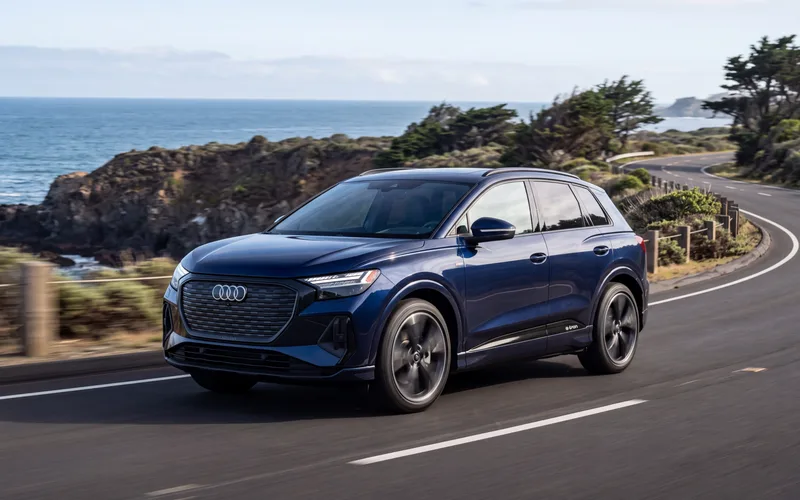 Audi Q4 e-tronCompact Luxury SUVBetter at: Practicality and resale
Similar money and brand positioning but with more cargo space, more battery choices and better resale, making it the more rational version of the same purchase.
Compare 2.60C+
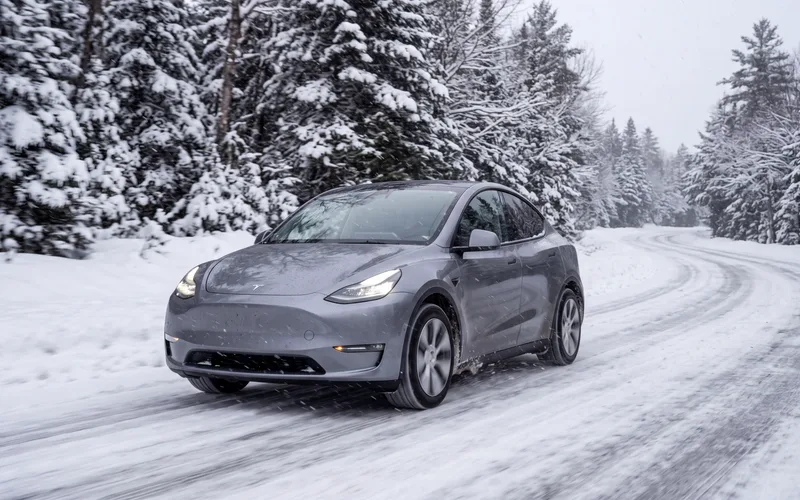 Tesla Model YCompact SUVBetter at: Range and resale
Longer range, quicker charging on the Supercharger network and dramatically stronger value retention for a shopper who plans to actually own the car.
Compare 1.99C-
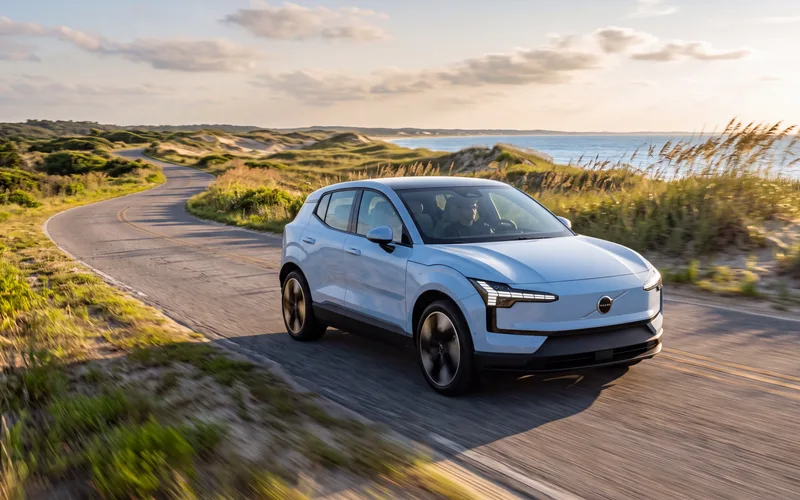 Volvo EX30Subcompact Luxury SUVBetter at: Price
Same Scandinavian design language and safety philosophy from a newer platform with a bigger screen, for thousands less — if you can live with a smaller back seat.
CompareHow it's evolved
6 scored model years · 2021–2026
Subject scores by year
Hover or tap a score to see what moved it versus the year before. A corner mark flags a big swing.
| Year | Performance | Efficiency | Safety | Space | Cost | Reliability | Tech | Use-case | Driving | Value |
|---|---|---|---|---|---|---|---|---|---|---|
| 2026 | 44 | 69 | 79 | 45 | 36 | 60 | 75 | 63 | 73 | 63 |
| 2025 | 44 | 69 | 53 | 43 | 43 | 58 | 72 | 60 | 74 | 65 |
| 2024 | 44 | 68 | 53 | 43 | 39 | 58 | 68 | 60 | 72 | 67 |
| 2023 | 59 | 62 | 60 | 43 | 37 | 57 | 68 | 59 | 72 | 67 |
| 2022 | 59 | 62 | 64 | 42 | 41 | 54 | 66 | 58 | 72 | 64 |
| 2021 | 59 | 62 | 65 | 42 | 36 | 51 | 64 | 54 | 73 | 64 |
Compare two years
Best fit & conditions
Higher scores mean a better fit for that use case. Learn more about use-case fit →
Subject profile
Academic Probation · NHTSA safety recalls
No NHTSA safety recall is on record for the 2024 Volvo EX40. Other model years of the EX40 have 3 — listed below.
3 recalls on other model years of the EX40 (2025–2026)
Dec 23, 2025Back over prevention: softwareThe rearview camera image may not display when the vehicle is placed in reverse. As such, these vehicles fail to comply with the requirements of Federal Motor Vehicle Safety Standard number 111, "Rear Visibility."
Defect
Volvo Car USA, LLC (Volvo Car) is recalling certain 2021-2025 XC40, 2022 V90, 2022-2024 C40BEV, 2022-2025 S90, V90CC, XC60, 2023-2025 S60, V60, V60CC, XC90, and 2025 EC40, and EX40 vehicles. The rearview camera image may not display when the vehicle is placed in reverse. As such, these vehicles fail to comply with the requirements of Federal Motor Vehicle Safety Standard number 111, "Rear Visibility."
Risk
A rearview camera image that does not display reduces the driver's view behind the vehicle, increasing the risk of a crash.
Remedy
The software will be updated by a dealer or through an over-the-air (OTA) update, free of charge. Owner notification letters were mailed February 24, 2026. Owners may contact Volvo Carâs customer service at 1-800-458-1552. Volvo Car's number for this recall is R10333. Vehicle Identification Numbers (VINs) involved in this recall will be searchable on NHTSA.gov beginning February 16, 2026. This recall replaces previous NHTSA recall number 25V282. Vehicles previously repaired under recall 25V282 will need to have the new remedy performed.
NHTSA campaign 25V908000 ↗Manufacturer no. R10333413,151 vehicles potentially affected (all models in the campaign)Owners notified Mar 2, 2026Filed by Volvo Car USA, LLCFiled as EX40Jun 12, 2025Service brakes · Service brakes, hydraulic: power assist: electric: control module: softwareIn certain driving scenarios while coasting down a hill and using "B" mode or "One Pedal Drive," the vehicle may lose brake function.
Defect
Volvo Car USA, LLC (Volvo Car) is recalling certain 2023 Volvo C40 BEV, 2025 EC40, 2023-2024 XC40 BEV, 2020-2026 XC90 PHEV, 2022-2026 XC60 PHEV, 2023-2025 S60 PHEV, 2024-2025 V60 PHEV, and 2025-2026 EX40 and 2025 S90 PHEV vehicles. In certain driving scenarios while coasting down a hill and using "B" mode or "One Pedal Drive," the vehicle may lose brake function.
Risk
A loss of brake function increases the risk of a crash.
Remedy
Owners are advised not to use "B" Mode (for plug-in hybrid vehicles) or "One Pedal Drive" (for pure electric vehicles) until the repair has been completed. The brake module software will be updated over-the-air (OTA) or by a dealer, free of charge. Owner notification letters were mailed July 15, 2025. Owners may contact Volvo Car's customer service at 1-800-458-1552. Volvo Car's number for this recall is R10329.
NHTSA campaign 25V392000 ↗Manufacturer no. R1032911,469 vehicles potentially affected (all models in the campaign)Owners notified Jul 15, 2025Filed by Volvo Car USA, LLCFiled as EX40May 8, 2025Back over prevention: softwareThe rearview camera image may not display when the vehicle is placed in reverse. As such, these vehicles fail to comply with the requirements of Federal Motor Vehicle Safety Standard number 111, "Rear Visibility."
Defect
Volvo Car USA, LLC (Volvo Car) is recalling certain 2021-2025 XC40, 2022 V90, 2022-2025 S90, V90CC, C40, XC60, 2023-2025 S60, V60, V60CC, XC90, and 2025 EC40 and EX40 vehicles. The rearview camera image may not display when the vehicle is placed in reverse. As such, these vehicles fail to comply with the requirements of Federal Motor Vehicle Safety Standard number 111, "Rear Visibility."
Risk
A rearview camera image that does not display reduces the driver's view of what is behind the vehicle, increasing the risk of a crash.
Remedy
The software will be updated by a dealer or through an over-the-air (OTA) update, free of charge. Owner notification letters were mailed June 27, 2025. Owners may contact Volvo Car customer service at 1-800-458-1552. Volvo Car's number for this recall is R10320.
NHTSA campaign 25V282000 ↗Manufacturer no. R10320413,151 vehicles potentially affected (all models in the campaign)Owners notified Jun 27, 2025Filed by Volvo Car USA, LLCFiled as EX40
Source: NHTSA Office of Defects Investigation recall database, model years 2021–2026. Recalls are listed by model year as the manufacturer filed them; whether a specific car is affected depends on its VIN — check a VIN at nhtsa.gov ↗. NHTSA model names matched to this page: EX40.
Detailed scoring by subject
1Performance & PowertrainOne of the EX40's weakest categories.0.90F
MY2024 is the change year: the single-motor car switched from front- to rear-wheel drive with a new permanent-magnet motor rated 248 hp, and that version is the one most buyers took. That is modest against the SUV band. The Twin Motor AWD still makes 402 hp, but it is the step-up powertrain.
310 lb-ft available from zero rpm sits mid-band for the segment, and it is why the single-motor car feels quicker in traffic than its horsepower suggests.
Volvo quotes just under 7 seconds for the rear-drive single motor, and MotorWeek's instrumented 6.4 s shows the claim is conservative. That is brisk in absolute terms but only mid-pack among luxury EV crossovers. The Twin Motor runs 4.6 s.
Power arrives silently and without lag. Volvo deliberately softened the 2024 RWD calibration so that it builds more progressively, which reviewers liked. It falls short of the top of the band only because the one-pedal mode can feel abrupt at parking speeds.
A single-speed reduction gear has nothing to hunt or mistime, so this sidesteps the gas XC40's low-speed take-up clunk. There is no manual or simulated-gear engagement, only a one-pedal on/off choice.
The US rating is 2,000 lbs, far below the gas XC40's 3,500 lbs and near the bottom of the SUV band, which costs a lot on a double-weighted item.
AWD is available with every trim through the Twin Motor powertrain (a roughly $1,750 option), but the volume single motor is now rear-drive only. There is no low range, no locking differentials and no terrain-mode selector.
This is a pavement crossover. Ground clearance is about 7 inches with the pack under the floor, and there are no skid plates, lockers, off-road modes or dedicated trims.
There are two genuinely different configurations: 248 hp RWD with the 82 kWh pack and 402 hp AWD with the 78 kWh pack. Both are battery-electric, and the combustion versions sit under the separate XC40 nameplate.
2Efficiency & RangeOne of the EX40's strongest categories.2.62C+
The 2024 switch to a rear-drive permanent-magnet motor lifted the single motor to 106 MPGe, which is upper-middle among EV SUVs. The boxy XC40 body still keeps it short of the class leaders.
City driving is where it is most efficient. Regenerative braking and one-pedal drive push it to 118 MPGe and a 321-mile EPA city range.
Highway efficiency of 95 MPGe shows the aerodynamic cost of the upright XC40 shell, and EPA highway range drops to 259 miles.
293 miles was a big step up from the pre-2024 FWD single motor, but it still lands below the midpoint of the EV SUV band. The Twin Motor manages only 254 miles. MotorWeek's real-world loop returned about 251 miles.
The new 82 kWh pack on the 2024 single motor raised peak DC charging to 200 kW, a solid mid-pack figure for a 400V EV. The Twin Motor kept the older 78 kWh pack and its 150 kW peak for MY2024.
28 minutes from 10–80% is competitive but not quick. It is roughly level with the Audi Q4 e-tron and well behind 800V rivals.
At $700 a year, energy costs about a quarter of what the gas XC40 B5 burns, and EPA estimates an $8,500 five-year saving against the average new vehicle, assuming home charging.
There is no fuel grade to worry about, and the 11 kW onboard charger refills the pack overnight on 240V. It is held below the top of the band because the 2024 car is CCS1-only, with Tesla Supercharger access needing an adapter that only arrived later.
3SafetyGrades below the middle of the scale.1.52D
NHTSA has never crash-rated the battery-electric XC40 Recharge/EX40 in any model year, so per the item definition the value is 0. The combustion XC40 body is not substituted because NHTSA rates the EV as its own vehicle line and simply never tested it.
IIHS's 2021-24 XC40 Recharge record shows Good in small-overlap (driver and passenger) and original moderate-overlap tests, but the vehicle was not run in the updated side or updated moderate-overlap (rear-passenger) tests that gate the 2024 awards, so it carries no 2024 TSP/TSP+. Earlier 2021-22 TSP+ status no longer applies under current criteria.
City Safety AEB, lane departure warning/Lane Keeping Aid, BLIS with steer assist and rear automatic braking are standard on every trim, but adaptive cruise and Pilot Assist are not standard on the Core trim — they sit on upper trims, which is a notable gap for a $50k+ luxury EV.
Standard City Safety earned an Advanced rating in IIHS daytime pedestrian front crash prevention, but there is no published result under the newer vehicle-to-vehicle or nighttime pedestrian protocols, so it cannot reach the top band.
BLIS with steer-assist intervention and Cross Traffic Alert with rear autobrake are standard across the range — active intervention rather than alert-only, placing it in the top band.
Lane departure warning and Lane Keeping Aid are standard, but true lane centering comes only with Pilot Assist on upper trims, and reviewers describe Volvo's centering as conservative, disengaging on faded lines.
Pilot Assist is a competent full-speed stop-and-go ACC with steering support where fitted, but the Core trim lacks adaptive cruise entirely and reviewers note cautious, occasionally abrupt braking behavior.
No hands-free highway driving is offered at any trim; Pilot Assist is a hands-on system requiring steering input.
LED headlights are standard and upper trims add pixel LED/active high beam; IIHS rated headlights Good on all trims for the pre-facelift XC40 Recharge, but no headlight rating is published for the 2023+ facelift lighting, so the score is held below the top band.
The boxy XC40 body, tall glasshouse and high seating position give good forward and side sightlines; thick D-pillars pinch the rear-quarter view, and the surround-view camera that compensates is a Plus-and-up feature.
IIHS rates LATCH ease of use Acceptable, with two full LATCH positions and a tether-only center seat; square rear doors help, but the subcompact rear seat makes rear-facing seats and three-across tight.
4Space & ComfortOne of the EX40's weakest categories.0.87F
Two-row, five-seat body only; no third-row option on the CMA-platform XC40/EX40.
The Plus trim's panoramic roof and the EV's raised battery floor cut front headroom versus the gas XC40.
Adequate but toward the low end of the SUV band.
Upright roofline gives generous rear headroom for a subcompact.
Class-typical rear legroom; the raised EV floor gives a knees-up seating posture.
No third row is offered; two-row five-seater only.
Small cargo hold even for a subcompact SUV; the frunk only fits the charging cable.
Maximum volume sits near the bottom of the SUV band.
The XC40 body's laptop-size door pockets (subwoofer moved to the dash), fold-up cargo-floor divider with bag hooks and small frunk are standout ideas, though the console layout costs some space.
Front seats are praised for comfort and support; the rear bench is firm and the high floor reduces thigh support.
The 2024 RWD single-motor retune is credited with a more luxurious, better-isolated ride, though the short wheelbase and heavy battery keep it firm over sharp bumps.
Wind noise is very well suppressed and the EV powertrain is silent; some tire roar on coarse surfaces with larger wheels.
Heated front seats, dual-zone climate and app preconditioning are standard; Plus adds an air purifier and power passenger seat, but ventilated seats are not offered.
5Cost of OwnershipThe EX40's lowest-graded category.0.57F
For MY2024 the car was still sold as the XC40 Recharge Pure Electric, before the EX40 rename. The new rear-drive Single Motor Core starts at $52,450 plus $1,195 destination, near the expensive end of the SUV band for a subcompact.
We treat the Plus Single Motor as the volume configuration. It adds the Harman Kardon audio and the comfort equipment most buyers order, at $2,950 over Core.
The EV drivetrain has no oil, spark plug or transmission service. Volvo's complimentary scheduled maintenance covers the first three years, so the 5-year total is low for a luxury SUV.
The XC40 Recharge depreciates very steeply. KBB records a 50% loss in two years, and its 5-year projection leaves only about a third of MSRP, below the floor of the SUV band.
Volvo's 4-year/50,000-mile new-vehicle limited warranty matches the German luxury norm. It trails the 5-year plans from Genesis and Hyundai.
The high-voltage battery carries the industry-standard 8-year/100,000-mile coverage. That is competitive, not class-leading.
Volvo includes 3 years/36,000 miles of complimentary scheduled maintenance and 4 years of unlimited-mile roadside assistance. Google built-in connected services and over-the-air updates come on top. That is multi-year included maintenance with real perks, which puts it in the top band.
$56,595 volume-trim price minus its estimated resale value after 5 years (36% retained, or about $20,374) leaves about $36,221 in depreciation. Add the projected $3,911 in 5-year maintenance and repairs, and owning this vehicle for 5 years costs about $40,132 in total.
6Reliability & QualityMid-pack among this car's ten categories.1.89C-
In the US, 2024 was the last model year sold as the XC40 Recharge Pure Electric before the EX40 name, and the first with the new rear-drive single motor, which became the volume Single Motor Extended Range trim. The electric XC40 has consistently predicted worse than the gas model, with complaints concentrated in software and electrical: Android Automotive freezes and reboots, 12V battery drain, and charging faults. A new drive unit in its first year holds this in the middle of the mixed-signals band. It sits between the 2023 car and the 2025 car, which has had another year of software updates.
Volvo has been a bottom-third brand in three-year dependability studies for several years running, mostly because of electrical and infotainment problems across the range. Consumer Reports places it in the bottom half rather than at the very bottom, so it sits at the low edge of the mid-pack band. This is a brand-level measure, so the score is the same as on the other EX40 and XC40 years.
MY2024 has three NHTSA campaigns that clearly cover the electric XC40, all fixed with software. The most serious is 25V392000: the car can lose brake function while coasting downhill in One Pedal Drive. The other two are the fleet-wide rearview-camera recall, issued twice (25V282000, then 25V908000) because the first fix did not hold. A fourth, 24V010000, is a CEM software fault that can stop the left rear turn signal working on 2024 XC40s. There is no fire, high-voltage or structural campaign, but a brake-function recall and a remedy that had to be reissued put this just below the typical-activity band.
Being electric removes the gas XC40's engine and transmission liabilities, and the roughly 79–82 kWh NMC pack has had no fire or capacity recall. The volume 2024 Single Motor Extended Range, however, uses a rear permanent-magnet motor that debuted this model year, so it has no high-mileage US track record at all. That newness, rather than any known defect, keeps it in the mid band. The One Pedal Drive recall concerns regenerative-braking software, not motor or pack hardware.
Reviewers praise the cabin for its price: Scandinavian design, felt-lined door bins, leather-free textiles and recycled-content trim, and switchgear that feels better than the segment norm. Hard plastics in the lower cabin keep it short of class-leading next to a BMW X1 or Audi Q3.
The Ghent-built XC40 Recharge has tight, consistent panel gaps, solid door closure and few rattle complaints. Volvo's below-average initial-quality standing keeps it out of the top band, but that penalty comes mostly from infotainment and ADAS complaints, not from physical assembly.
Volvo has roughly 280 US dealers, materially fewer than BMW, Mercedes-Benz or Lexus, and they are concentrated on the coasts and in major metros. High-voltage work needs EV-certified technicians, which narrows the usable network further. Service satisfaction is middling.
Routine maintenance is light: no oil changes or transmission fluid, and regenerative braking cuts brake wear. Repairs are expensive, though. Parts are priced like European luxury parts and are largely dealer-controlled, the aftermarket for electric Volvos is minimal, and an out-of-warranty pack or motor repair costs five figures.
7Technology & InfotainmentOne of the EX40's strongest categories.2.61C+
Small portrait screen by 2024 luxury-EV standards.
The Android Automotive (Google built-in) system is quick and logical, but the small screen and touch-based climate controls draw complaints.
Apple CarPlay arrived via OTA as wired-only on Google built-in Recharge cars, with wireless unsupported by the 2024 hardware; Google built-in stands in for Android Auto.
Google Assistant and Google Maps with EV charge-stop routing are built in and standard.
Decent base audio; Harman Kardon premium sound is restricted to the top Ultimate trim.
12.3-in digital driver display standard on every trim, with map view, though configurability is limited.
Whole-vehicle OTA updates have added features (CarPlay, efficiency gains) to Google built-in Recharge models.
The Volvo Cars app handles preconditioning, lock/unlock, locate and charge control, with digital key support; owners report occasional lag.
USB-C ports front and rear plus wireless phone charging, but no 120V outlet or V2L.
Sit-and-drive start with no button, power hands-free liftgate standard, app-based digital key available.
Rear camera and rear sensors on Core; the volume Plus trim adds 360-degree camera and front/side park assist.
No head-up display is offered on any trim.
8Use-Case FitMid-pack among this car's ten categories.2.07C
Tall rear headroom and wide-opening doors help, but rear legroom is only average, the high floor raises knees, and the cargo hold is tight for a stroller plus groceries.
Strong IIHS crash results and standard AEB/blind-spot with steer assist, but no NHTSA rating for the EV and adaptive cruise/Pilot Assist cost extra on lower trims.
Comfortable, quiet front seats and a 293-mile range, but small luggage space with all seats used and thin rear amenities limit long family trips.
Smooth instant torque, one-pedal driving, compact footprint and a commanding seat make it a relaxing city car; one-pedal modulation is abrupt for some.
106 MPGe combined and a $700/yr EPA energy cost make per-mile running very cheap for a luxury SUV.
174.8-in length, 37.4-ft turning circle, good sightlines and a 360 camera on the volume Plus trim make it easy in town.
Only a 2,000-lb tow rating and small cargo hold; not meant for work duty.
Luxury-oriented interior and an unproven record under hard use; no fleet presence.
Cargo hooks and a fold-up floor divider, but no AC outlet, no V2L and little upfit ecosystem.
Quiet, comfortable cruiser with 293 mi EPA range and 200 kW charging, but highway range drops to ~259 mi and Pilot Assist is limited to upper trims.
Volume RWD single motor with ~6.9-7.1 in clearance and 2,000-lb towing; Twin Motor AWD optional. Handles gravel roads but little else.
Clever cargo divider and a frunk, but small cargo volume and only a 60/40 split limit bulky gear.
9Driving ExperienceThe EX40's best-graded category.2.91B-
The 2024 switch to rear-wheel drive gives sharper, more natural cornering; low battery CG keeps body lean in check, though weight blunts agility.
Light, accurate but feedback-free steering; the single-motor car steers a bit more neatly, and the firm mode adds weight but not feel.
Adequate stopping power, but regen offers only on/off one-pedal with no middle setting, and blending can feel inconsistent.
The new 248-hp rear motor delivers smooth, progressive power with no transitions to manage.
Near-silent electric drivetrain with only faint motor whine under load.
Tight turning circle for an SUV.
Upright, commanding position with good adjustability and easy ingress even for tall drivers; climate functions buried in the touchscreen.
Peppy and newly balanced with RWD, but positioned as the comfortable, stylish choice rather than a driver's car.
10Value & Market PositionMid-pack among this car's ten categories.2.55C+
Even the base Core trim is well equipped. It comes with Volvo's full City Safety and Pilot Assist driver-aid suite, a panoramic roof, heated front seats and steering wheel, a power tailgate, a 12.3-in driver display, the 9-in Google built-in infotainment system, and a heat pump. BMW and Audi still sell much of that as options on the iX1 and Q4 e-tron. It stops short of the top band because the center screen is small and no head-up display is offered.
At $53.6K–$61.7K it costs more than an Ioniq 5, Model Y or Q4 e-tron while offering a smaller cargo hold and a mid-pack 293-mile range. Two 2024 changes improve the value case: a new rear-drive motor with more power and about 30 extra miles of range at roughly the same price, and a $7,500 federal credit that reached lease customers through the commercial-lease route. That makes it fair value rather than poor, though the steep depreciation means buying outright costs a lot.
There are six configurations: Core, Plus and Ultimate, each with the rear-drive Single Motor or the 402-hp all-wheel-drive Twin Motor. The lineup is reasonable but has a narrow ~$8K price spread and few standalone options.
It sells in low volume in the US, well behind the BMW X1/iX1 and Tesla Model Y. It holds some ground among luxury EVs thanks to lease support, but its steep used-market depreciation shows how weak demand is.
Volvo has a clear identity built on safety and Scandinavian design, and buyers cross-shop it with the German brands. Its electric models' sharp depreciation is the part of the brand image that hits buyers in the wallet, which keeps this score below the gas models.
For buyers, this is a strength. The Belgian-built XC40 Recharge did not qualify for the federal point-of-sale credit on purchases, but Volvo passed the $7,500 commercial-lease credit through on leases. Subsidized lease rates were common, and dealers discounted heavily.
2024 is a change year: Volvo's in-house rear-drive single motor and an uprated twin motor arrive, alongside the 2023 facelift's styling and ADAS updates. The CMA body, however, dates to MY2019, and the newer EX30 and EX90 architectures were already launching, so it is mid-cycle and trending older.
Reviews are good. Critics praise its strong acceleration, comfortable seats, solid build and safety credentials, including an IIHS Top Safety Pick+ and a 5-star NHTSA rating. It rarely wins comparison tests, though, because its cargo space and range are only average for the money.