
The verdict
A mixed-report luxury wagon, strong on space and held back by efficiency.
The 2017 V90 Cross Country was Volvo's launch-year answer to the SUV boom: a raised, AWD-only wagon with 19.8 cu ft of cargo space (53.9 with the seats down), a standard driver-assistance suite most luxury brands charged extra for, and a cabin reviewers compared favorably to BMW and Mercedes-Benz. The catch is a single $56,295 T6 AWD configuration with no cheaper trim to soften the price, thirsty 22/30/25 MPG premium-fuel economy that runs about $3,050 a year, and rear legroom (35.9 in) that trails the Subaru Outback it's often cross-shopped against. It's best understood as a comfortable, capable road-trip wagon rather than a sporty or a budget one.
Jump to scoresStrengths
- Class-leading cargo space in a quiet, comfortable cabin
- A remarkably complete standard safety suite for a 2017 launch year
- Built for the long haul
What holds it back
- Expensive to fuel
- No trim choice and a short powertrain warranty
- Tight rear-seat legroom for the segment
Top alternatives
Cars shoppers cross-shop with the Volvo V90 Cross Country 2.70B-
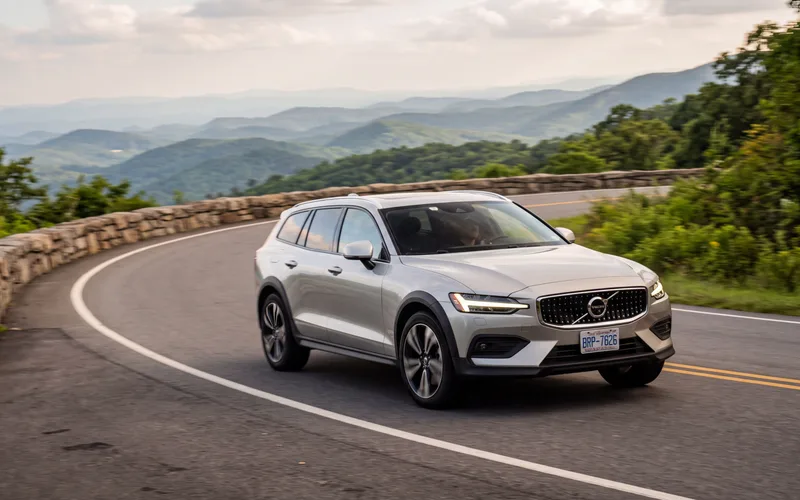 Volvo V60 Cross CountryLuxury WagonBetter at: Value for money
Nearly the same car and experience in a smaller, cheaper, more efficient package — the obvious first cross-shop for anyone who liked the V90 but balked at the price or the fuel bill.
Compare 2.41C+
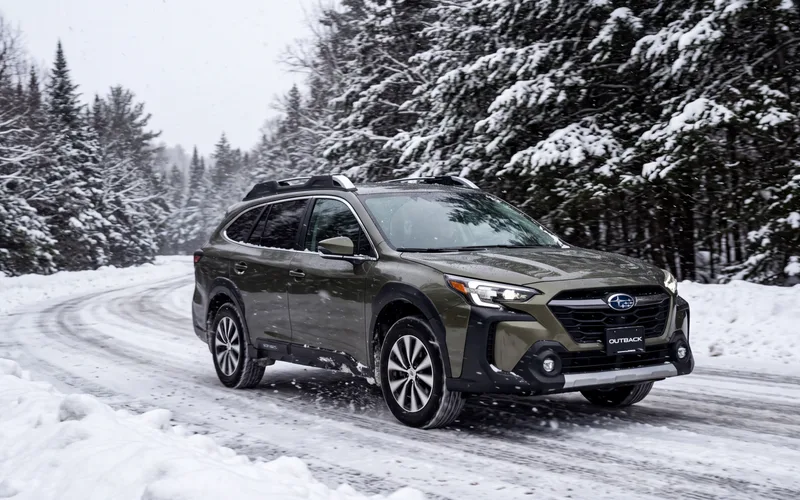 Subaru OutbackWagonBetter at: Running costs
Delivers the same lifted-wagon formula with more rear legroom, better fuel economy on regular gas and a longer powertrain warranty for roughly half the money.
Compare 2.82B-
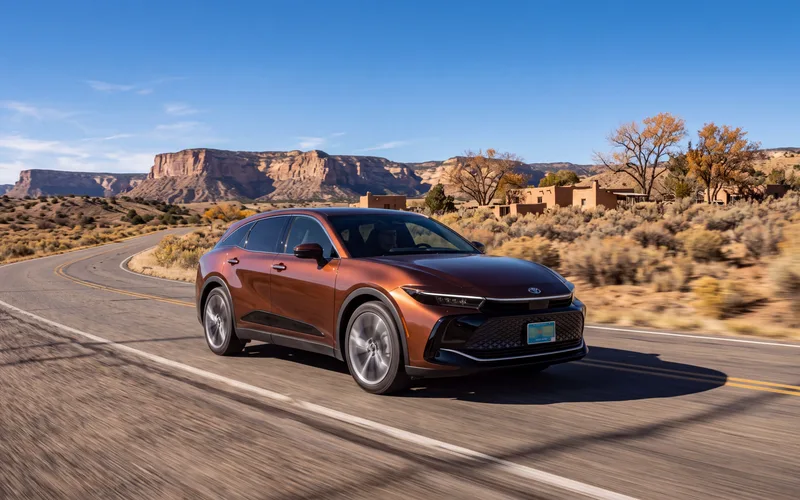 Toyota Crown SigniaMid-Size WagonBetter at: Efficiency
A 39-MPG hybrid with Toyota's dependability record, for buyers who want the wagon shape without Volvo's premium-fuel bill or reliability question marks.
CompareHow it's evolved
9 scored model years · 2017–2025
Subject scores by year
Hover or tap a score to see what moved it versus the year before. A corner mark flags a big swing.
| Year | Performance | Efficiency | Safety | Space | Cost | Reliability | Tech | Use-case | Driving | Value |
|---|---|---|---|---|---|---|---|---|---|---|
| 2025 | 57 | 25 | 72 | 79 | 40 | 57 | 72 | 68 | 70 | 59 |
| 2024 | 57 | 25 | 72 | 79 | 40 | 68 | 71 | 67 | 71 | 62 |
| 2023 | 57 | 25 | 75 | 80 | 41 | 63 | 70 | 68 | 70 | 64 |
| 2022 | 56 | 25 | 76 | 78 | 41 | 57 | 72 | 67 | 66 | 55 |
| 2021 | 55 | 20 | 76 | 78 | 38 | 55 | 61 | 66 | 64 | 59 |
| 2020 | 57 | 20 | 73 | 74 | 36 | 52 | 58 | 61 | 58 | 61 |
| 2019 | 56 | 24 | 75 | 74 | 40 | 51 | 58 | 66 | 61 | 62 |
| 2018 | 56 | 28 | 73 | 70 | 39 | 60 | 58 | 64 | 61 | 64 |
| 2017 | 56 | 24 | 72 | 76 | 45 | 61 | 55 | 66 | 59 | 64 |
Compare two years
Best fit & conditions
Higher scores mean a better fit for that use case. Learn more about use-case fit →
Subject profile
Academic Probation · NHTSA safety recalls
Nov 13, 2018Electrical system: softwareThe software installed in the Vehicle Connectivity Module (VCM) may have an error causing the Telematics and Driver Support Systems to function improperly. As a result, the GPS will not provide location information to emergency personnel in the event of an emergency.
Defect
Volvo Car USA LLC (Volvo) is recalling certain 2017-2019 Volvo XC90, S90, V60, V60 Cross Country, V90, XC40, XC60, and V90 Cross Country vehicles. The software installed in the Vehicle Connectivity Module (VCM) may have an error causing the Telematics and Driver Support Systems to function improperly. As a result, the GPS will not provide location information to emergency personnel in the event of an emergency.
Risk
If the GPS location is not provided to emergency personnel it can inhibit emergency response in the event of a crash or injury.
Remedy
Volvo will notify owners, and dealers will correct the software, free of charge. The recall began December 26, 2018. Owners may contact Volvo customer service at 1-800-458-1552. Volvo's number for this recall is R39917.
NHTSA campaign 18V800000 ↗Manufacturer no. R3991717,548 vehicles potentially affected (all models in the campaign)Owners notified Dec 26, 2018Filed by Volvo Car USA LLCFiled as V90, V90CCFeb 16, 2017Air bags: side/windowThe bolts that secure the Inflatable Curtain (IC) air bags in place may break, possibly resulting in the IC air bag deploying improperly in the event of a crash. As, such, these vehicles fail to comply with the requirements of Federal Motor Vehicle Safety Standard (FMVSS) number 226, "Ejection Mitigation."
Defect
Volvo Car USA LLC (Volvo) is recalling certain 2017 XC90, S90, and V90 Cross Country vehicles. The bolts that secure the Inflatable Curtain (IC) air bags in place may break, possibly resulting in the IC air bag deploying improperly in the event of a crash. As, such, these vehicles fail to comply with the requirements of Federal Motor Vehicle Safety Standard (FMVSS) number 226, "Ejection Mitigation."
Risk
If the IC air bags do not deploy properly in the event of a crash, the vehicle occupants have an increased risk of injury.
Remedy
Volvo will notify owners, and dealers will inspect and replace the bolts, as necessary, free of charge. The recall is expected to begin April 1, 2017. Owners may contact Volvo customer service at 1-800-458-1552. Volvo's number for this recall is R89714.
NHTSA campaign 17V104000 ↗Manufacturer no. R8971410,476 vehicles potentially affected (all models in the campaign)Owners notified Apr 14, 2017Filed by Volvo Car USA LLCFiled as V90CC
8 recalls on other model years of the V90 Cross Country (2019–2025)
Dec 23, 2025Back over prevention: softwareThe rearview camera image may not display when the vehicle is placed in reverse. As such, these vehicles fail to comply with the requirements of Federal Motor Vehicle Safety Standard number 111, "Rear Visibility."
Defect
Volvo Car USA, LLC (Volvo Car) is recalling certain 2021-2025 XC40, 2022 V90, 2022-2024 C40BEV, 2022-2025 S90, V90CC, XC60, 2023-2025 S60, V60, V60CC, XC90, and 2025 EC40, and EX40 vehicles. The rearview camera image may not display when the vehicle is placed in reverse. As such, these vehicles fail to comply with the requirements of Federal Motor Vehicle Safety Standard number 111, "Rear Visibility."
Risk
A rearview camera image that does not display reduces the driver's view behind the vehicle, increasing the risk of a crash.
Remedy
The software will be updated by a dealer or through an over-the-air (OTA) update, free of charge. Owner notification letters were mailed February 24, 2026. Owners may contact Volvo Carâs customer service at 1-800-458-1552. Volvo Car's number for this recall is R10333. Vehicle Identification Numbers (VINs) involved in this recall will be searchable on NHTSA.gov beginning February 16, 2026. This recall replaces previous NHTSA recall number 25V282. Vehicles previously repaired under recall 25V282 will need to have the new remedy performed.
NHTSA campaign 25V908000 ↗Manufacturer no. R10333413,151 vehicles potentially affected (all models in the campaign)Owners notified Mar 2, 2026Filed by Volvo Car USA, LLCFiled as V90, V90CCMay 8, 2025Back over prevention: softwareThe rearview camera image may not display when the vehicle is placed in reverse. As such, these vehicles fail to comply with the requirements of Federal Motor Vehicle Safety Standard number 111, "Rear Visibility."
Defect
Volvo Car USA, LLC (Volvo Car) is recalling certain 2021-2025 XC40, 2022 V90, 2022-2025 S90, V90CC, C40, XC60, 2023-2025 S60, V60, V60CC, XC90, and 2025 EC40 and EX40 vehicles. The rearview camera image may not display when the vehicle is placed in reverse. As such, these vehicles fail to comply with the requirements of Federal Motor Vehicle Safety Standard number 111, "Rear Visibility."
Risk
A rearview camera image that does not display reduces the driver's view of what is behind the vehicle, increasing the risk of a crash.
Remedy
The software will be updated by a dealer or through an over-the-air (OTA) update, free of charge. Owner notification letters were mailed June 27, 2025. Owners may contact Volvo Car customer service at 1-800-458-1552. Volvo Car's number for this recall is R10320.
NHTSA campaign 25V282000 ↗Manufacturer no. R10320413,151 vehicles potentially affected (all models in the campaign)Owners notified Jun 27, 2025Filed by Volvo Car USA, LLCFiled as V90, V90CCMar 24, 2025Electrical system: propulsion system: traction battery · Electrical system: softwareThe high-voltage battery may experience a short circuit within the battery module when the battery is fully charged and the vehicle is parked.
Defect
Volvo Car USA, LLC (Volvo Car) is recalling certain 2020-2021 S90, 2020-2022 S60, V60, XC60, XC90, and 2022 V90 plug-in hybrid vehicles. The high-voltage battery may experience a short circuit within the battery module when the battery is fully charged and the vehicle is parked.
Risk
A short circuit in a high-voltage battery increases the risk of a fire.
Remedy
Owners are advised not to charge their vehicles until the remedy has been completed. Dealers will inspect and replace the high-voltage battery module as necessary. In addition, dealers will update the software to monitor the battery. All repairs will be performed free of charge. Owner notification letters were mailed May 28, 2025. Owners may contact Volvo Car's customer service at 1-800-458-1552. Volvo Car's number for this recall is R10312.
NHTSA campaign 25V179000 ↗Manufacturer no. R103127,483 vehicles potentially affected (all models in the campaign)Owners notified May 14, 2025Filed by Volvo Car USA, LLCFiled as V90Jan 19, 2023Service brakes, hydraulicA diagnostic error in the Brake Control Module 2 (BCM2) may cause a loss of Antilock Brake System (ABS), Electronic Stability Control (ESC), and traction control.
Defect
Volvo Car USA, LLC (Volvo Car) is recalling certain 2023 S60, V60, V60CC, V90CC, XC60, XC90, XC40, and C40 vehicles. A diagnostic error in the Brake Control Module 2 (BCM2) may cause a loss of Antilock Brake System (ABS), Electronic Stability Control (ESC), and traction control.
Risk
A reduction in brake support functions can increase the risk of a crash.
Remedy
Volvo will release an over-the-air (OTA) BCM2 software update, free of charge. Owner notification letters are expected to be mailed March 15, 2023. Owners may contact Volvo Car customer service at 1-800-458-1552. Volvo Car's number for this recall is R10217.
NHTSA campaign 23V012000 ↗Manufacturer no. R1021727,457 vehicles potentially affected (all models in the campaign)Owners notified Feb 27, 2023Filed by Volvo Car USA, LLCFiled as V90CCSep 1, 2021Seat belts · Seat belts: front: retractor · Seat belts: rear/other: retractorThe seat belt automatic locking retractors may deactivate early, which can prevent the child restraint system from securing properly. As such, these vehicles fail to comply with the requirements of Federal Motor Vehicle Safety Standard number 208, "Occupant Crash Protection."
Defect
Volvo Car USA, LLC (Volvo Car) is recalling certain 2021 XC40, XC 40 Recharge, V60CC, V90, V90CC, XC90, and 2021-2022 V60, XC60, S60 vehicles. The seat belt automatic locking retractors may deactivate early, which can prevent the child restraint system from securing properly. As such, these vehicles fail to comply with the requirements of Federal Motor Vehicle Safety Standard number 208, "Occupant Crash Protection."
Risk
An unsecured child restraint system can increase the risk of injury during a crash.
Remedy
Dealers will inspect and replace the seat belt assemblies, as necessary, free of charge. Owner notification letters were mailed October 13, 2021. Owners may contact Volvo Car customer service at 1-888-458-1552. Volvo Car's number for this recall is R10111.
NHTSA campaign 21V682000 ↗Manufacturer no. R1011119,149 vehicles potentially affected (all models in the campaign)Owners notified Oct 12, 2021Filed by Volvo Car USA, LLCFiled as V90, V90CCJun 2, 2021Electrical system: wiring: fuses and circuit breakers · Fuel system, gasoline: delivery: fuel pumpThe low-pressure fuel pump can blow a fuse and fail.
Defect
Volvo Car USA, LLC (Volvo Car) is recalling certain 2019-2020 V90, XC60, S60, V60, V60CC, S90, V90CC, S90L, and XC90 vehicles. The low-pressure fuel pump can blow a fuse and fail.
Risk
Failure of the low-pressure fuel pump can cause a stall, increasing the risk of a crash.
Remedy
Dealers will replace the fuse, free of charge. Owner notification letters were mailed July 2, 2021. Owners may contact Volvo Car customer service at 1-888-458-1552. Volvo Car's number for this recall is R10100.
NHTSA campaign 21V414000 ↗Manufacturer no. R1010085,550 vehicles potentially affected (all models in the campaign)Owners notified Jul 2, 2021Filed by Volvo Car USA, LLCFiled as V90, V90CCJan 7, 2021Air bags · Air bags: air bag/restraint control module · Seat belts: pretensionerThe Supplementary Restraint System (SRS) control unit may not have been properly attached to the car body and may detach during a crash.
Defect
Volvo Cars USA, LLC (Volvo Car) is recalling certain 2021 Volvo V60, V60 Cross Country, V90, V90 Cross Country, XC60, and XC90 vehicles. The Supplementary Restraint System (SRS) control unit may not have been properly attached to the car body and may detach during a crash.
Risk
A detached SRS control unit can decrease the performance of occupant protection systems such as air bags, seat belts, and high voltage battery disconnect, increasing the risk of injury during a crash.
Remedy
Volvo Car will notify owners, and dealers will inspect and, as necessary, tighten the SRS control unit mounting screws, free of charge. The recall began February 12, 2021. Owners may contact Volvo Car customer service at 1-888-458-1552. Volvo Car's number for this recall is R10068.
NHTSA campaign 21V001000 ↗Manufacturer no. R100682,883 vehicles potentially affected (all models in the campaign)Owners notified Feb 15, 2021Filed by Volvo Car USA, LLCFiled as V90, V90CCMar 12, 2020Forward collision avoidance: automatic emergency braking · Forward collision avoidance: software: pedestrian/cyclist/object/obstacle/ recognitionDue to a software/hardware incompatibility, the Automatic Emergency Brake (AEB) system may not detect obstacles and engage as intended.
Defect
Volvo Cars USA LLC (Volvo Cars) is recalling certain 2019-2020 S60, V60, V60 Cross Country, S90L, V90, V90 Cross Country, XC40, XC60, and XC90 vehicles. Due to a software/hardware incompatibility, the Automatic Emergency Brake (AEB) system may not detect obstacles and engage as intended.
Risk
If the automatic emergency braking system does not engage as intended, it can increase the risk of a crash.
Remedy
Volvo will notify owners, and dealers will update the Active Safety Domain Master (ASDM) software, free of charge. The recall began April 9, 2020. Owners may contact Volvo customer service at 1-800-458-1552. Volvo's number for this recall is R29998.
NHTSA campaign 20V144000 ↗Manufacturer no. R29998121,605 vehicles potentially affected (all models in the campaign)Owners notified Apr 9, 2020Filed by Volvo Car USA LLCFiled as V90, V90CC
Source: NHTSA Office of Defects Investigation recall database, model years 2017–2025. Recalls are listed by model year as the manufacturer filed them; whether a specific car is affected depends on its VIN — check a VIN at nhtsa.gov ↗. NHTSA model names matched to this page: V90, V90CC.
Detailed scoring by subject
1Performance & PowertrainMid-pack among this car's ten categories.1.77C-
2017 was the V90 Cross Country's launch model year in the US (per Wikipedia, previewed before the 2016 Paris motor show and following the S90 sedan's introduction), sold with the T6 twincharged (turbo + supercharger) 2.0L four as the only US engine — unchanged through the 2021 facelift. Mid-pack for a mid-size luxury wagon.
295 lb-ft from just 2,200 rpm is the T6's established torque figure across the entire 2017-2020 Cross Country generation (pre-2021 facelift/mild-hybrid switch per Wikipedia). Middling for the segment but delivered low in the rev range thanks to the supercharger.
Aggregated instrumented/manufacturer figures for the 2017 T6 AWD cluster around six seconds; 6.1 s is used as the representative figure for the launch-year powertrain, consistent with figures reported for the unchanged drivetrain in adjacent model years.
Period reviewers describe the twincharged four as effortlessly smooth, with the supercharger largely masking turbo lag and strong power available low in the rev range for confident highway passing and merging. It stays out of the very top band because acceleration is characterized as adequate rather than urgent for the class.
The 8-speed automatic paired with the T6 is generally smooth at a relaxed pace with well-timed shifts, but period reviews note occasional hesitant downshifts and less-than-seamless transitions under aggressive acceleration — a mostly-smooth-with-occasional-hesitation profile rather than uniformly crisp.
AWD is standard and the only configuration on the sole 2017 US trim, paired with 8.3 in of ground clearance (2.3–2.6 in over the standard V90) and a dedicated off-road mode (active to 25 mph, can send up to 100% of torque rearward) plus hill descent control. It falls short of the top band because the system is a front-biased on-demand clutch-pack coupling with no low range or torque-vectoring rear differential.
2017 was the V90 Cross Country's US launch year and a single-powertrain, single-trim offering: T6 AWD only. No B5/B6 mild-hybrid (arrives with the 2021 facelift/2022 per Wikipedia), no T8 Recharge plug-in hybrid (offered on S90/XC90 but never the US V90 Cross Country), and no EV alternative.
2Efficiency & RangeThe V90 Cross Country's lowest-graded category.0.00F
2017 was the V90 Cross Country's US launch year with the T6 twincharged 2.0L as the only engine/trim offered (per Wikipedia and this vehicle's cat1 scoring), so this figure is both the volume and only configuration. It sits near the floor of the wagon combined band (22-60), trailing the Subaru Outback's 28 MPG.
EPA city rating for the sole 2017 US trim sits near the bottom of the wagon city band (20-60) — the raised, AWD-only Cross Country body costs city economy versus a lower, lighter wagon.
EPA highway rating for the T6 AWD; the wagon's low-drag shape lifts highway well above the city figure, but 30 MPG is still only modestly above the wagon highway band floor of 26.
EPA-derived range for the sole 2017 trim off its 15.9-gallon tank at 25 combined MPG. Usable for a road-trip wagon but unremarkable against the wagon band (280-650) and well short of the Outback's legs.
EPA's own annual-cost estimate at 15,000 mi/yr on required premium fuel is well above the wagon band ceiling of $2,800 — the launch-year T6-only lineup, standard AWD, and premium-fuel requirement make this one of the pricier wagons to run at the pump.
The sole 2017 US engine (T6, twincharged) requires 91 AKI premium gasoline, with no regular-fuel, flex-fuel, hybrid, or plug-in alternative offered that model year — a hard requirement rather than a soft recommendation, landing in the bottom band. The US V90 Cross Country did not gain a mild-hybrid option until the 2022 update, per Wikipedia.
3SafetyOne of the V90 Cross Country's strongest categories.2.89B-
NHTSA has never crash-tested the V90 or V90 Cross Country in any US model year, including the 2017 launch year — the low-volume, special-order Swedish wagon never entered NCAP's tested sample. The 4.5★ placeholder follows this dataset's convention for untested low-volume luxury models (used identically for the 2019-25 V90 Cross Country); it is not an indication of poor performance, and IIHS's independent testing of the shared S90/V90 platform (3.1.2) is uniformly Good across every crashworthiness mode.
IIHS testing of the shared S90 platform — explicitly stated by IIHS to extend to the V90 and V90 Cross Country wagons — rated all six crashworthiness modes Good for the 2017 model year (small overlap front driver and passenger, moderate overlap front, side, roof strength, head restraints/seats), with Superior vehicle-to-vehicle front crash prevention, earning a Top Safety Pick award. It falls short of Top Safety Pick+ because headlights on the loaded trim level the single-configuration 2017 Cross Country shares (Momentum Plus/Inscription-equivalent) rated only Marginal, versus Good on the base Momentum trim.
The 2017 V90 Cross Country launched in a single loaded configuration (T5/T6 AWD) with an unusually comprehensive driver-assistance suite standard rather than optional: City Safety autonomous emergency braking with pedestrian, cyclist and large-animal detection, Pilot Assist (adaptive cruise plus steering assist), Blind Spot Information System with Cross Traffic Alert, Lane Departure Warning with oncoming-lane mitigation, and Run-off Road Protection/Mitigation. Period reviewers specifically noted Volvo made typically-optional luxury-brand kit standard at launch.
IIHS rated the shared 2017 S90/V90 platform's front crash prevention Superior in the vehicle-to-vehicle test, and City Safety adds standard daytime pedestrian, cyclist and large-animal detection with autonomous braking. Held just below the top of the band because IIHS's pedestrian-specific and nighttime AEB test protocols were not yet applied to this generation in 2017, so no independently verified night/pedestrian rating exists for this model year.
Blind Spot Information System with Cross Traffic Alert is standard equipment on the single 2017 US configuration, but for this launch-year system coverage is alert-only (audible/visual warning) rather than an active steering or braking intervention, and there is no confirmed trailer-aware or safe-exit mode for this model year.
Lane Departure Warning with standard Oncoming Lane Mitigation (automatic steering correction if the car crosses into an oncoming lane) and Pilot Assist's lane-centering function are both standard on the single 2017 trim — a genuinely active pairing for a launch year. Kept out of the top band because Pilot Assist centering on this generation was later reported by reviewers to exhibit a rightward lane bias and frequent corrective nudges rather than confident, seamless centering.
Pilot Assist, combining full-speed-range adaptive cruise control with semi-autonomous steering assistance from a standstill up to roughly 80 mph (130 km/h), is standard equipment on the single 2017 configuration — a strong, well-integrated system for its era that period reviewers praised as offering typically-optional luxury features as standard.
No hands-free capability. Pilot Assist is a hands-on Level 2 system requiring continuous hand contact with the wheel; Volvo offered no BlueCruise/Super Cruise equivalent on the SPA-platform V90 Cross Country at its 2017 launch.
IIHS rated the loaded-trim headlights that match the single 2017 V90 Cross Country configuration (shared with Momentum Plus/Inscription on the S90) Marginal, while only the base Momentum trim's simpler LED reflector headlights reached Good — the volume Cross Country configuration sits in the weaker-rated group, which kept the whole model out of Top Safety Pick+ for 2017.
The wagon's large glass area and the Cross Country's raised seating position give a real sightline edge, consistent with reviewer commentary on this generation's greenhouse. The main downside reported for this platform is a high beltline that narrows the rear-quarter view somewhat and makes resting an arm on the windowsill less comfortable.
IIHS rates LATCH ease of use Acceptable on the shared 2017 platform: two outboard rear positions carry complete, accessible lower-anchor hardware plus a center tether-only position — workable but not effortless. Standard LATCH anchors are confirmed equipment on the single 2017 US configuration.
4Space & ComfortThe V90 Cross Country's best-graded category.3.18B
The V90 Cross Country is a five-passenger, two-row wagon in every US 2017 configuration (T5, T6) — no third row or jump seat.
The panoramic sunroof is standard equipment on every 2017 V90 Cross Country trim, and headroom is measured with it fitted (959 mm), so the roof's headroom cost applies to the whole US lineup, not just an optional-glass subset.
Front legroom of 42.2 in on the 2941 mm (115.8 in) SPA-platform wheelbase is mid-band for a luxury wagon — adequate but not a standout versus the class.
Second-row headroom of 37.7 in (with the standard panoramic roof) sits comfortably in the upper half of the wagon band — the wagon roofline preserves rear headroom better than it does front.
Rear legroom of 35.9 in trails segment-relevant wagon rivals (e.g. Subaru Outback ~39.5 in) and is a real packaging shortfall behind an otherwise spacious cabin.
19.8 cu ft behind the second row (SAE open-load measurement, 560 L) is at the top of the wagon normalization band; folding the seats opens up to 53.9 cu ft, well above most sedan-derived wagons.
Front-cabin storage is merely adequate (a modest console bin, cupholder covers, a small bin near the steering column), but the load bay adds real thoughtfulness: a hands-free gesture-controlled power tailgate, an automated retractable cargo cover, underfloor storage, and (with the Convenience package) a flip-up cargo partition — enough clever touches to clear competitive but short of a class-leading console.
The available Multi-Contour front seats are repeatedly singled out as supportive and cosseting with strong thigh support, and reviewers describe both rows as comfortable for adults on long trips — a genuine strength of the car.
Reviewers call the ride "impeccably good" and forgiving over most bumps, with the raised Cross Country suspension well suited to broken pavement; it loses a little polish to occasional wallow after sharp impacts and reduced agility versus a standard V90.
Standard laminated (acoustic) side glass and strong sound insulation make road and wind noise nearly absent at highway speed; the only real intrusion reviewers note is some coarseness from the turbocharged/supercharged four under load.
Heated front seats and a heated steering wheel are standard on every 2017 US trim alongside the standard panoramic roof; the optional Luxury package adds heated/ventilated Nappa front seats with massage and heated rear seats, so the richer comfort features are one option box away rather than reserved for a top-tier-only trim.
5Cost of OwnershipOne of the V90 Cross Country's weakest categories.0.97F
2017 was the V90 Cross Country's US launch year, sold in a single T6 AWD configuration (per Wikipedia and cat1) — there was no lower-cost trim to anchor the base price down, unlike the T5 that arrived for 2018. $55,300 + the standard $995 destination charge lands well above the $22,000-$55,000 wagon band, flooring this item.
With only one trim/engine offered for 2017, the volume configuration is the same T6 AWD with a modest options mix (metallic paint ~$595, a driver-assistance or interior package); real transaction prices for launch-year press and retail cars cluster a couple thousand above the base delivered price. Still clears the $24,000-$58,000 wagon band at the very top, flooring the item.
Low in the $2,500-$9,000 wagon band. Volvo's Complimentary Scheduled Maintenance program (10k/20k/30k services, first 3 years/36,000 miles) applied to the MY2013+ range including the 2017 launch year, and the shared Drive-E four-cylinder used across the 60/90-series keeps out-of-warranty repair costs contained in years 4-5. Nameplate-level figure rather than a 2017-specific breakout.
Depreciation is the largest single ownership cost in absolute dollars, but as a percentage the nameplate holds up better than the Volvo brand average — low US volume and a following for the Swedish wagon body style support the used market. Lands above mid-band on the 35-65% wagon scale. Nameplate-level figure, not 2017-specific.
Volvo's New Vehicle Limited Warranty ran 4 years/50,000 miles for the 2017 launch year, unchanged across surrounding model years — a year longer than the mainstream 3/36 standard and level with the German luxury norm, landing exactly mid-band on the 3-5 year scale.
Volvo published no standalone powertrain warranty in the US for 2017 — the T6 engine, transmission and AWD driveline are covered only for the same 4 years/50,000 miles as the basic warranty. Against a 5-10 year band this floors at 0; rivals like the Subaru Outback and Toyota Crown Signia carry 5 yr/60,000 mi powertrain terms.
A 2017 V90 Cross Country gets three years/36,000 miles of complimentary factory scheduled maintenance (the 10k/20k/30k services) and four years of roadside assistance alongside the basic warranty — multi-year included maintenance plus meaningful perks, clearing the 80 bar. It stops short of higher marks because there are no charging credits or trial subscriptions to add on a gas-only, single-trim launch-year lineup.
$57,890 volume-trim price minus its estimated resale value after 5 years (51% retained, or about $29,524) leaves about $28,366 in depreciation. Add the projected $3,776 in 5-year maintenance and repairs, and owning this vehicle for 5 years costs about $32,142 in total.
6Reliability & QualityMid-pack among this car's ten categories.2.10C
The V90 Cross Country shares its SPA platform and Drive-E powertrain with the S90/V90 sedan and XC90; Consumer Reports rated the closely-related 2017 XC90 and S90 as average-to-below-average for predicted reliability, and Volvo as a brand has not scored above average with CR in this era. No V90 CC-specific CR reliability history exists yet for this first model year.
Volvo sits mid-pack in both Consumer Reports and J.D. Power brand dependability studies through the mid-2010s — never bottom-tier, but consistently outside the top-10 brands.
Two NHTSA recalls tied to this generation/model year: a curtain-airbag mounting bolt fix and a Vehicle Connectivity Module software issue affecting emergency GPS notification. Both are corrected by dealer software/hardware fix at no cost, neither is a powertrain or fire risk, and the count is not large for a newly-launched model.
The 2017 V90 Cross Country uses Volvo's 2.0L turbocharged Drive-E gas four (T5/T6 family) paired with an Aisin 8-speed automatic. Early Drive-E units (model years 2015.5-early 2016) had documented oil-consumption/piston-ring issues, but owner forums report those were resolved by the ring redesign well before the 2017 model year, and the T5/T6 engines and Aisin transmission are regarded as durable once past that early run. Known age-related weak points (AC evaporators, sunroof drain clogging) are climate-control/body issues rather than core powertrain failures.
Reviewers consistently singled out the V90 Cross Country's cabin as class-leading for the price, citing soft-touch materials, Orrefors crystal shift knob (on higher trims) and a fit/finish rivaling BMW and Mercedes-Benz wagons and crossovers.
No period reviews flagged rattles, panel-gap issues, or initial-quality complaints for the V90 Cross Country; assembly is shared with the S90 sedan on Volvo's Torslanda/Ridgeville-adjacent SPA line, which launched without major quality-control stories. Scored just below top marks absent a dedicated initial-quality study for this specific nameplate.
Volvo's US dealer footprint (roughly 280 dealers nationally in this era) is far thinner than mass-market or German luxury rivals, meaning longer drives for service in many markets, though existing dealers generally hold reasonable customer-satisfaction scores. No V90 CC-specific service data exists this early in the model's life.
RepairPal places Volvo's average annual repair cost at $769 (above the $652 all-brand average) but meaningfully below BMW ($968), Mercedes-Benz ($908) and Land Rover ($1,174) — so parts and repairs cost more than mainstream brands but less than the direct German luxury-wagon rivals this vehicle competes with.
7Technology & InfotainmentOne of the V90 Cross Country's weakest categories.1.70C-
2017 is the launch model year of the all-new SPA-based V90 Cross Country, sold in the US in a single T6 AWD trim, and Volvo's own internal product guide lists the 9-inch portrait Sensus Touchscreen as standard equipment on that trim.
The large portrait Sensus Touchscreen consolidates nearly every function (only radio and defroster keep physical controls) into a clean, logically laid-out interface, but period reviews of this launch model year flag a well-documented slow, jittery boot sequence — the first minute or so after startup is frustratingly unresponsive even though the system runs smoothly once it catches up.
Apple CarPlay and Android Auto are standard equipment on the only 2017 trim as part of Sensus Connect, but the connection is wired only through the console's USB hub — factory wireless projection did not arrive until Volvo's later Android Automotive generation.
Sensus Navigation — with voice recognition, 3D graphics, SiriusXM Travel Link (weather, fuel finder, sports scores, safety alerts) and lifetime free map updates — is standard equipment on the 2017 T6 AWD, ahead of many contemporaries that gated navigation behind an options package; it is functional rather than class-leading and most owners would still default to CarPlay/Android Auto for turn-by-turn.
The standard system is a 10-speaker, 330-watt 'High Performance Audio' setup, adequate but unremarkable; the optional Bowers & Wilkins Premium Sound System (1,400 watts across 19 speakers, with a Gothenburg Cathedral acoustic program) is genuinely among the best available in any wagon of the era, though it remains a $3,200 option rather than standard equipment.
A 12.3-inch fully digital, configurable driver display is standard equipment on the only 2017 trim, with no analog-gauge option — strong for the model year, capable of resizing to host the navigation map, and matching the best luxury-segment clusters of the time.
Sensus Connect ties into Volvo's cloud services for navigation map updates and app content over its embedded modem/Wi-Fi tether, but this predates Volvo's whole-vehicle software OTA program (introduced only with the MY2022 Android Automotive switch) — updates on the 2017 launch car are scoped to maps and the Sensus app layer, not full-vehicle software.
Volvo On Call provides remote engine start (for climate preconditioning), roadside assistance and SOS calling, automatic collision notification, and theft tracking/notification — solid core functionality for the era, though it is a subscription service and stops short of a digital key.
The standard audio system on the 2017 launch car is specified with just a single USB port plus an AUX input and a cargo-area 12V outlet — no wireless charging pad is listed anywhere in Volvo's own equipment or options documentation for this model year, a feature that only shows up in Sensus tunnel-console literature for later model years of this generation.
Keyless entry with push-button drive and a hands-free, foot-gesture power tailgate are both standard equipment on the 2017 launch car, plus app-based remote engine start via Volvo On Call — a genuinely strong convenience package for the era, short only of a phone-as-key digital key.
A rear parking camera and rear Park Assist sensors are standard on the 2017 launch car, but the 360-degree Surround View Camera and semi-autonomous Park Assist Pilot are bundled only into the optional Convenience Package rather than included on the volume trim.
A Graphical Head-Up Display is offered only as a standalone single option (not bundled into a package or standard) on the 2017 launch car, consistent with HUD being a premium extra across this Volvo generation rather than volume-trim equipment.
8Use-Case FitOne of the V90 Cross Country's strongest categories.2.49C+
Wide-opening rear doors, a low wagon load lip that beats any comparable SUV for stroller loading, and Volvo's signature integrated two-stage rear-center booster cushion (a factory option) make everyday kid logistics easy. Held back by 35.9 in of rear legroom — adequate but not class-leading for a full-size wagon — five-seat-only capacity, and outboard-only LATCH lower anchors.
Every 2017 V90 Cross Country is a single well-equipped T6 AWD trim, so the strong safety suite is standard rather than trim-gated: City Safety automatic braking with pedestrian/cyclist detection, Pilot Assist semi-autonomous adaptive cruise with steering assist, blind-spot monitoring with cross-traffic alert, and run-off-road mitigation with front seatbelt pretensioners. Scored below the top band because IIHS had not independently crash-tested the wagon body style for 2017 (only the related S90 sedan was rated), so there is no third-party corroboration of the standard-content safety story.
Class-benchmark front seats, a hushed cabin and 19.8 cu ft of luggage space behind an occupied rear seat make this a genuinely comfortable multi-hour hauler for four. Rear amenities are still thin for a $55K wagon — climate and entertainment are basic — and 35.9 in of rear legroom will tell on taller teens over long stints.
Standard AWD, a supercharged-plus-turbocharged 316 hp T6 that pulls cleanly from low RPM (the supercharger fills in what a turbo-only rival lags on), a compliant raised suspension and standard Pilot Assist adaptive cruise/steering assist make traffic duty relaxed. The 8-speed automatic can be a beat slow to kick down and the light, numb steering common to Volvo's SPA cars of this era keeps it out of the very top band.
A weak axis: EPA rates the only US-market powertrain at 22/30/25 MPG city/highway/combined on recommended premium fuel, working out to roughly $2,500-2,600/yr at 15,000 miles — well above mainstream-wagon and even most luxury-SUV peers, with no hybrid or PHEV V90 Cross Country offered in 2017 to soften the per-mile cost.
At 194.4 in long — longer than most mid-size SUVs and roughly 7 in longer than the smaller V60 Cross Country — this is the biggest vehicle in the wagon segment it's graded against, so tight urban parking takes more care despite a low, wide-glass greenhouse that makes nose placement easy. A rear camera is standard and a 360-degree camera is optional, which helps offset the footprint.
Rated to 3,500 lb braked towing with the factory-accessory tow bar, which covers a small utility trailer, boat or pair of jet skis, and the 295 lb-ft T6 pulls that load adequately thanks to the supercharger. Beyond that there is no work headroom: no bed, a carpeted cargo bay rather than a rated payload box, and a unibody wagon chassis tuned for ride and comfort rather than load-carrying.
A leather-trimmed luxury wagon with no wear-friendly upholstery option and, as a newly introduced 2017 nameplate, no fleet or hard-use track record to draw on. Volvo's brand reliability standing has historically run average-to-below in owner surveys, and the supercharged-plus-turbocharged Drive-E engine adds mechanical complexity versus a simpler naturally aspirated unit, so hard work duty is unproven rather than a demonstrated strength.
Real but light-duty provisions: standard roof rails, cargo tie-down hooks, a folding cargo floor with underfloor storage, a 12V outlet in the load bay, and an accessory tow bar plus Volvo's racks/box/bike-carrier accessory catalogue. Nothing beyond that — no onboard AC power outlet, no washable rubberized cargo surfaces, and no aftermarket upfit ecosystem the way a pickup or work van has.
The car's strongest suit and the reason it exists: Volvo's extendable-cushion front seats are a class benchmark for multi-hour stints, the cabin is hushed at cruise, the raised Cross Country suspension settles broken highway pavement, Pilot Assist handles adaptive-cruise/lane-centering duty on long slogs, and roughly 398 miles of highway range keeps fuel stops infrequent. Only tire roar through the open cargo bay and firmer optional 20-in wheels keep it just off the very top.
Standard AWD, 8.3 in of ground clearance, an Off Road drive mode with hill descent control, standard roof rails and a 3,500 lb tow rating make this a legitimate ski-trip and forest-road machine — genuinely more capable off pavement than a standard V90. It falls short of a body-on-frame or true off-road SUV because there is no skid-plate protection or low-range gearing and the standard tires are road-biased all-seasons.
A long, low, flat and square load bay with 53.9 cu ft of maximum capacity — more than the smaller V60 Cross Country — plus 60/40 split-folding rear seats, underfloor storage and standard roof rails make this a strong gear-hauler. It stops short of the very top because there's no power-folding seat option and volume still trails a true 3-row SUV.
9Driving ExperienceMid-pack among this car's ten categories.1.98C-
Composed and predictable on the SPA platform with minimal roll and dive, but the Cross Country's raised ride height (+2.1 in vs standard V90) and softer setup trade cornering sharpness for ride comfort, landing it in secure-but-unremarkable territory.
Well-weighted and easy to place but light on genuine road feedback, consistent with the raised-height CC's taller-sidewall tires; precise enough for daily driving without engaging the driver.
Period reviews describe confident, adequate stopping power and a reassuring pedal with no reports of fade or grabbiness, but no instrumented 60-0/70-0 mph figure for the 2017 T6 Cross Country could be corroborated (Car and Driver's instrumented data was inaccessible for this run).
The supercharged+turbo T6 is engineered to hand off boost seamlessly and the 8-speed auto shifts smoothly, but real-world reviews note some turbo lag and jerky low-speed throttle response, and the 2017-2018 stop-start system could only be temporarily disabled (re-engaging every restart, with occasional unprompted engine restarts reported), which is a documented drivability annoyance corrected in MY2019.
Reviewer opinions diverge sharply on this point, with more than one period test flagging a genuinely unpleasant exhaust/engine note under load that reads as coarser than the inline-6/V6 rivals it competes with, offsetting other reviews that found the cabin well isolated.
The Cross Country's wider track and taller ride height give it a slightly wider turning circle than the standard V90 sedan/wagon, landing near the wide end of the wagon normalization band.
Excellent, highly adjustable front seats (including massage) and a commanding view of traffic from the raised ride height are consistent strengths across reviews; the only real friction point is a laggy Sensus touchscreen response, which is a technology rather than an ergonomics complaint.
Nearly every period review positions the V90 Cross Country as a comfortable, relaxed cruiser rather than an engaging driver's car — pleasant to operate but not something enthusiasts seek out, consistent with Volvo's own 'Relaxed Confidence' chassis-tuning philosophy for this generation.
10Value & Market PositionMid-pack among this car's ten categories.2.29C
The 2017 V90 Cross Country is mono-spec, so the single US trim starts loaded: AWD T6 (316 hp/295 lb-ft), leather upholstery, 9-inch Sensus touchscreen with Apple CarPlay/Android Auto, City Safety autonomous emergency braking, lane-keeping aid, rearview camera and rear parking sensors are all standard rather than options rivals charge for.
At roughly $56-59k as typically optioned, it undercuts comparably equipped German wagon rivals (Audi A6 Allroad, Mercedes E-Class All-Terrain) while matching their safety and infotainment content, but its base price still sits well above mainstream wagons/crossovers with similar cargo capacity, so it's fair value rather than a standout bargain.
For 2017 the US market gets a single Cross Country trim and a single powertrain (T6 AWD); buyers can only vary paint, wheels and option packages, with no lower-cost or higher-luxury trim to match different budgets.
As a brand-new, premium-priced niche wagon in a US market that overwhelmingly prefers crossovers, the V90 Cross Country sold in the low thousands annually for its debut year — steady interest from loyal Volvo/wagon buyers but far below segment reference points like the Subaru Outback.
Volvo's Scandinavian-design, safety-first identity was riding real momentum in 2017 off the acclaimed XC90 relaunch, giving the brand genuine aspirational pull, though it still trails the traditional German luxury trio in prestige and resale strength.
As a newly launched, low-volume halo wagon, dealers had little incentive to discount off the mono-spec sticker, though modest lease and finance offers were typical for the brand at the time — occasional, not desperation pricing.
2017 is the debut US model year of the all-new SPA-platform V90 Cross Country, previewed ahead of the 2016 Paris Motor Show and replacing the outgoing XC70 — as fresh and current as a generation gets.
Launch reviews were consistently favorable on ride quality, interior and long-haul comfort ("wagon done right", a road-trip star), and the shared SPA platform's other models picked up safety/utility honors, but the V90 Cross Country itself was not cited as a 10Best or comparison-test winner for 2017.