

The verdict
A mixed-report mid-size luxury suv, strong on safety and held back by efficiency.
The 2019 MDX is the sensible three-row luxury SUV: 5-star NHTSA crash results, the full AcuraWatch driver-assist suite standard even on the $45,295 base car, and a 290-hp V6 with torque-vectoring SH-AWD that makes it more willing through a corner than most seven-seaters. This was also the year Acura fixed the 9-speed automatic's worst habit by launching in second gear, so the drivability complaint that dogged earlier cars is largely gone. What you give up is running cost and screens: 22 MPG combined on recommended premium works out to roughly $3,450 a year in fuel, and the split 8-inch/7-inch dual-display infotainment is the single most-criticized thing about the car. Used-buyer caveat: nine federal recalls reach this model year, two of them engine-internal — verify they were performed before you sign.
Jump to scoresStrengths
- Safety gear that doesn't cost extra
- Cheap to keep for something wearing a luxury badge
- More fun than a seven-seater has any right to be
What holds it back
- Thirsty, and it wants premium
- The dual-screen infotainment is the car's worst feature
- Nine recalls reach this year — two of them can kill the engine
Top alternatives
Cars shoppers cross-shop with the Acura MDX 2.88B-
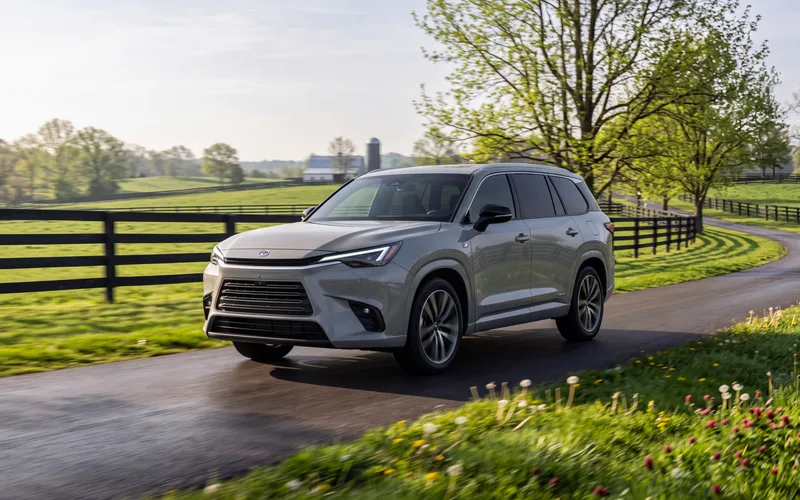 Lexus TXMid-Size Luxury SUVBetter at: Space and efficiency
Same money buys a hybrid or plug-in powertrain, a third row adults fit in, and 97.0 cu ft of maximum cargo against the MDX's 71.4.
Compare 2.43C+
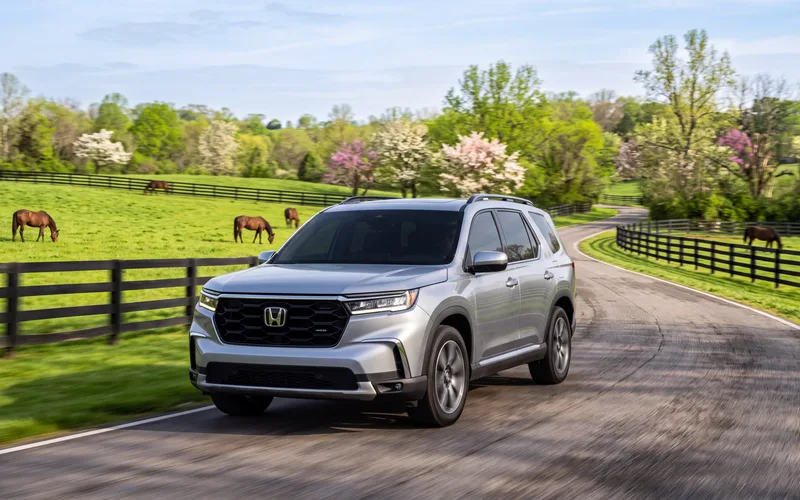 Honda PilotMid-Size SUVBetter at: Value
The same V6 and transmission with more room inside, regular fuel, and roughly $15,000 left in your pocket.
Compare 3.07B
3.07B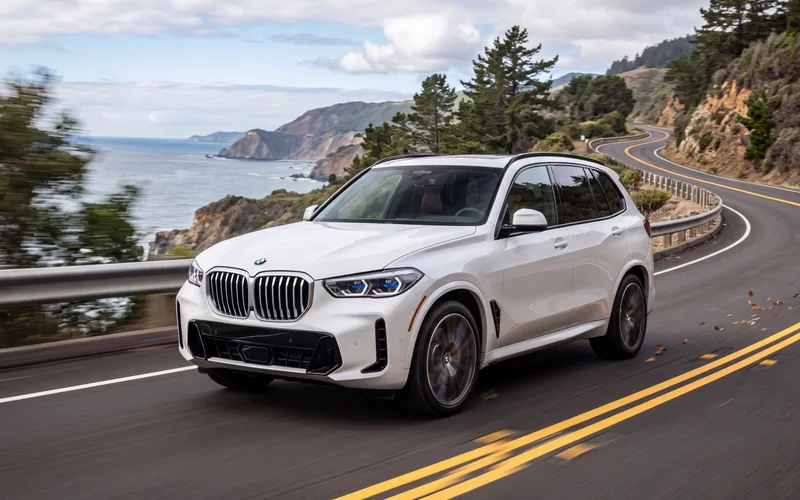 BMW X5Mid-Size Luxury SUVBetter at: Performance
Considerably more power, 7,200 lbs of towing, and a plug-in option for buyers willing to spend about $15,000 more.
CompareHow it's evolved
9 scored model years · 2017–2026
Subject scores by year
Hover or tap a score to see what moved it versus the year before. A corner mark flags a big swing.
| Year | Performance | Efficiency | Safety | Space | Cost | Reliability | Tech | Use-case | Driving | Value |
|---|---|---|---|---|---|---|---|---|---|---|
| 2026 | 51 | 31 | 83 | 61 | 47 | 76 | 79 | 66 | 69 | 76 |
| 2025 | 52 | 28 | 81 | 60 | 37 | 71 | 77 | 64 | 67 | 75 |
| 2024 | 52 | 28 | 81 | 60 | 45 | 69 | 69 | 64 | 68 | 73 |
| 2023 | 52 | 28 | 83 | 60 | 43 | 74 | 69 | 64 | 67 | 76 |
| 2022 | 52 | 28 | 84 | 60 | 45 | 59 | 66 | 63 | 66 | 72 |
| 2020 | 52 | 35 | 72 | 57 | 46 | 59 | 44 | 62 | 68 | 69 |
| 2019 | 52 | 35 | 73 | 57 | 46 | 56 | 44 | 62 | 69 | 71 |
| 2018 | 52 | 30 | 73 | 56 | 48 | 54 | 44 | 60 | 67 | 72 |
| 2017 | 52 | 30 | 74 | 56 | 49 | 57 | 37 | 60 | 66 | 73 |
Compare two years
Best fit & conditions
Higher scores mean a better fit for that use case. Learn more about use-case fit →
Subject profile
Detailed scoring by subject
1Performance & PowertrainGrades below the middle of the scale.1.52D
The 2019 MDX is a carry-over powertrain year within the third generation (2014–2020): the 3.5-liter direct-injected SOHC i-VTEC V6 continues at 290 hp in both the FWD and SH-AWD volume configurations. That is mid-pack output for a mid-size luxury three-row, below the turbocharged German rivals but adequate for a 4,239 lb curb weight.
Peak torque of 267 lb-ft arrives high in the rev range at 4,700 rpm, which is characteristic of a naturally aspirated V6 and leaves the MDX feeling less muscular off the line than turbocharged rivals that make peak torque from ~1,500 rpm.
Instrumented results for the 2019 car cluster tightly around 6.2 seconds — quick enough to be unremarkable in the segment rather than a selling point. The 2019 transmission recalibration prioritizes second-gear starts in normal driving but reverts to first gear at full throttle, so it does not penalize a measured launch.
The naturally aspirated V6 is smooth and linear with no turbo lag, and 2019 made Idle Stop standard across the lineup with a new brake-pressure trigger and software that shortens and smooths engine restart. Against that, Variable Cylinder Management can intrude audibly at light cruise and the engine has to be worked hard to deliver its high-rpm peaks.
2019 is the year Acura recalibrated the 9-speed automatic specifically to address the criticism that dogged it — prioritizing second-gear starts in normal driving for a smoother launch, with first-gear starts retained for full throttle, uphill, towing and S-mode. It is a genuine improvement, but the underlying 9-speed still hunts among its upper ratios and can be slow to respond to a sudden throttle request, and the push-button gear selector remains a usability complaint.
With SH-AWD and the dealer-installed towing equipment the MDX is rated for 5,000 lbs, a competitive figure for a unibody mid-size luxury crossover and enough for a small boat or a mid-size trailer. FWD drops to 3,500 lbs, and Acura does not recommend towing with the Sport Hybrid at all.
SH-AWD is available across essentially the whole 2019 range (and is standard on the new A-Spec), and it is a genuinely sophisticated rear-biased torque-vectoring system rather than a reactive slip-and-grip coupling. It falls short of the top band only because front-wheel drive remains the base configuration and there is no low range or terrain-mode suite.
The MDX is an unambiguously pavement-oriented luxury crossover: 7.3 inches of unladen ground clearance, a 14.9° approach angle, no low range, no locking differentials, no skid plates and no off-road trim. SH-AWD and the Integrated Dynamics System's snow mode make it competent on a slick or unpaved road, which is the extent of it.
2019 offers two genuinely distinct powertrains — the 3.5L V6 (FWD or SH-AWD) and the Sport Hybrid SH-AWD, which pairs a 3.0L V6 with a front motor and a rear twin-motor unit for 321 hp — so an electrified option does exist in the range. It sits mid-band rather than higher because the hybrid is a low-volume, top-of-range configuration with no plug-in or EV variant behind it.
2Efficiency & RangeThe MDX's lowest-graded category.0.28F
22 MPG combined for the volume SH-AWD V6 is unexceptional for a mid-size three-row crossover — Variable Cylinder Management and idle stop hold it level with the segment rather than ahead of it, and the 2019 nine-speed recalibration was aimed at drivability, not economy. The Sport Hybrid's 27 MPG combined is materially better but is a separate, low-volume configuration.
19 MPG in town is where the naturally aspirated V6's weakness shows most clearly; standard-for-2019 Idle Stop and cylinder deactivation recover some of it but cannot offset 4,200-plus pounds and a high-revving torque peak in stop-and-go use.
26 MPG highway is the MDX's strongest economy figure, helped by tall ninth-gear cruising and cylinder deactivation at steady throttle. It is respectable but still short of the turbo-four three-rows and of the Sport Hybrid.
A 19.5-gallon tank and 22 MPG combined give roughly 429 miles between fills — a mid-pack figure for the segment that covers a normal travel day but not much more, and one paid for at premium-grade prices.
The EPA's annual estimate is high on two counts at once — 22 MPG combined and a premium-grade fuel price — which puts the MDX near the expensive end of the mid-size SUV band. This is the single weakest figure in the category and the main reason cat2 lands well below the gas-SUV median.
Acura lists 91-octane premium as *recommended* rather than required for the 3.5L V6, so the engine's knock sensors and adaptive timing will tolerate regular with some loss of output — that flexibility keeps it in the 50–79 band. It sits at the low end of that band because every 2019 configuration is EPA-rated and priced on premium, an 11.5:1 compression ratio makes the recommendation more than nominal, and each fill of the 19.5-gallon tank carries the premium surcharge.
3SafetyThe MDX's best-graded category.2.97B-
The 2019 MDX earned NHTSA's top 5-star overall rating, with 5 stars in both frontal and side crash and 4 stars in the rollover measure — typical for a tall three-row crossover.
Good in all five crashworthiness tests IIHS ran on this generation (driver-side small overlap, moderate overlap, side, roof, head restraints) and a TOP SAFETY PICK under the 2018 award year covering 2018-19 models — but it is absent from the 2019 award list, because IIHS never ran the passenger-side small overlap test on the 2014-20 MDX and headlights top out at Acceptable.
AcuraWatch is standard on every 2019 MDX trim — CMBS/AEB with pedestrian sensing, forward collision warning, lane departure warning, road departure mitigation, lane keeping assist and adaptive cruise with low-speed follow — which put standard ACC and AEB ahead of most German rivals that still charged for them in 2019. Blind Spot Information and Rear Cross Traffic Monitor are the gap: both require the Technology package or above.
IIHS rated the standard CMBS Superior for vehicle-to-vehicle front crash prevention, avoiding a collision outright in both the 12 and 25 mph runs. Acura credits the radar-plus-camera system with pedestrian sensing, but IIHS never ran a vehicle-to-pedestrian evaluation on this generation and the daytime/nighttime pedestrian tests that anchor the top band are simply absent.
Blind Spot Information and Rear Cross Traffic Monitor are alert-only with no steering or braking intervention, and are locked behind the Technology package — so they are available on most of the lineup but absent from the base trim. No safe-exit warning.
LKAS does true lane centering rather than bump-steer correction, and lane departure warning plus road departure mitigation are standard, but the system only tracks between roughly 45 and 90 mph on straight or mildly curving roads and has to be switched on each drive — so it does nothing in the stop-and-go traffic where the standard low-speed-follow cruise is still working.
Adaptive Cruise Control with Low-Speed Follow is standard on every trim and works the full speed range down to a stop in traffic, which was genuinely competitive in 2019. It falls short of the top band because there is no combined highway-assist mode: LKAS will not steer below 45 mph, so ACC and lane centering never cover the same speeds together.
No hands-free highway driving system was offered on the 2019 MDX, or anywhere in Acura's 2019 lineup — AcuraWatch is a hands-on driver-support suite and requires steering input to keep LKAS engaged.
IIHS rated the MDX's LED projector headlights Acceptable, and — unusually — that rating covers every trim, so there is no bad-headlight volume trim hiding under a good halo version. Auto high-beam is standard, but there is no curve-adaptive function, and Acceptable is what kept the MDX off the 2019 TSP+ list.
Reviewers consistently credit the MDX with large glass area and a commanding, easy-to-place driving position, but the styling-driven D-pillars are thick and the rear three-quarter view suffers. Camera compensation is uneven: the volume Technology trim gets only the multi-angle rearview camera, with the surround-view system reserved for the Advance package.
Three complete LATCH positions across the second row with lower anchors that are easy to reach, but the top tethers sit low on the seatback recessed into carpet and take digging, and the third row has tether anchors only — no lower anchors. The one-touch second-row slide that opens third-row access stops working once a car seat is installed, which is the practical sting for a three-row family SUV.
4Space & ComfortMid-pack among this car's ten categories.1.82C-
The volume 2019 MDX carries a 60/40 second-row bench and a 50/50 third-row bench for seven-passenger capacity; the packages that swap in second-row captain's chairs with a center console drop it to six.
Acura publishes 38.1 in of first-row headroom for every 2019 trim including the Sport Hybrid; because the moonroof is standard across the range there is no separate no-sunroof number to quote.
41.4 in of first-row legroom is mid-pack for a mid-size three-row SUV and is unchanged across every 2019 drivetrain and package.
Second-row headroom of 38.3 in slightly exceeds the front row's and is generous for the mid-size luxury three-row class; the third row's 35.6 in is where the packaging runs out.
36.6 in in the second row is mid-pack for the segment, and the bench slides fore/aft to 38.5 in when the third row is empty — useful flexibility rather than outright space.
At 35.6 in of headroom and 28.1 in of legroom this is a children-and-teens row rather than an adult one, and reviewers called out its plain black upholstery as unbecoming of a luxury SUV — but access is unusually good, with the One-Touch Smart Slide Walk-In second row standard on every trim and a revised second-row seat configuration for 2019 that further eases passage back.
Folding the 50/50 third row opens 38.4 cu ft on the standard SAE J1100 method — modest for a 196-inch SUV — and with all seven seats in use only 15.0 cu ft remains, enough for a grocery run but not a seven-person trip's luggage.
Both rear rows fold flat for 68.4 cu ft on the SAE measurement — respectable, but well short of the boxier three-row SUVs that clear 80 cu ft, which is the cost of the MDX's low, tapered roofline.
The multi-function front console with a sliding tray and the underfloor "Hidden Cargo Storage with Smart Lid" behind the third row are genuinely useful and standard on every trim, but nothing here is a segment innovation and the 110-volt household outlet is reserved for the Entertainment-package configurations.
2019 is the year Acura made 4-way power lumbar standard on both front seats — a 14-way driver's seat and 12-way passenger's seat with heating standard on every trim — and the sport-contoured chairs draw consistent praise for long-haul cushioning; the flat, low-mounted third-row bench is the weak link.
Amplitude Reactive Dampers are standard and reviewers found the 2019 car rides comfortably even on the 20-inch wheels that come with the Technology package, with well-controlled body motions and nicely damped undulations; the Active Damper System that would sharpen the trade-off further arrived for 2019 but only on the Advance package.
An acoustic windshield and acoustic front side glass plus Active Sound Control are standard on every 2019 trim, and reviewers single out minimal wind noise at highway speed and a V6 that stays quiet below 5,000 rpm — a defining MDX trait rather than an incidental one.
Tri-zone automatic climate control with humidity control and heated front seats are standard on every trim and remote engine start arrives with the Technology package, but ventilated front seats, a heated steering wheel and heated second-row seats all require A-Spec, Advance or the Entertainment package — so the volume SH-AWD Technology car has none of them.
5Cost of OwnershipOne of the MDX's weakest categories.1.10D
Acura's official 2019-model-year pricing table lists the front-drive base MDX at $44,300 MSRP plus a $995 destination charge, and the manufacturer publishes the $45,295 delivered figure itself. The lowest-priced way into SH-AWD is $47,295.
SH-AWD with the Technology Package is the core-volume configuration on the third-generation MDX: the Technology Package is what adds blind-spot monitoring, rear cross-traffic alert, navigation, front and rear parking sensors, 10-speaker ELS audio and perforated leather — none of which the base car carries — and SH-AWD was the drivetrain most buyers in this segment took. The new-for-2019 A-Spec, the Advance packages and the Sport Hybrid all sit above it and account for a minority of the mix.
The 3.5L J35 V6 is long-serving, high-volume Honda hardware and RepairPal rates the MDX 4.0/5.0 with low repair severity, but the ZF-derived 9-speed automatic carried a harsh-shift service history — the 2019 model year specifically recalibrated it to prioritize second-gear starts — and a 2019 buyer paid for every scheduled service from the first oil change. Dealer-rate luxury servicing pushes the real figure above CarEdge's scheduled-maintenance-only basis without approaching German-brand territory.
Model-level residual studies put the MDX at almost exactly 50% retention at five years, marginally better than its own segment average, and the actual 2019 cars corroborate it: a gas SH-AWD now seven years old books in the mid-to-high teens for trade and high teens private-party, which back-extrapolates to about half of sticker at the five-year mark. Unlike the run-out 2020 car this is a mid-cycle year, so it carries no extra run-out penalty — but a 50% figure is still weak against the SUV band, which tops out at 70%.
Acura's new-vehicle limited warranty is 4 years or 50,000 miles, matching the luxury-brand convention BMW, Mercedes and Audi set in 2019 but short of the 5-year/60,000-mile terms Genesis was using to attack the segment. 24-hour roadside assistance runs for the same 4-year/50,000-mile term.
Six years or 70,000 miles on engine, transmission and drive components — longer than most German luxury coverage of the period, but well short of the 10-year/100,000-mile powertrain terms Genesis and the Hyundai/Kia group offered in 2019, which is what the top of this band is calibrated to.
A 2019 MDX owner pays for every scheduled service from the first oil change — Acura's complimentary Maintenance Package (2 years / 24,000 miles) and the three-year AcuraLink subscription were not introduced until the 2023 model year. What is included is 24-hour roadside assistance running with the 4-year/50,000-mile warranty plus a short AcuraLink trial, which is exactly the "basic roadside only" case at the floor of the middle band; the Maintenance Minder system reduces unnecessary visits but does not pay for them.
$52,295 volume-trim price minus its estimated resale value after 5 years (50% retained, or about $26,148) leaves about $26,148 in depreciation. Add the projected $5,300 in 5-year maintenance and repairs, and owning this vehicle for 5 years costs about $31,448 in total.
6Reliability & QualityMid-pack among this car's ten categories.1.78C-
2019 is the sixth year of the third-generation MDX and its second update year (A-Spec trim, revised 9-speed calibration, upgraded materials, reworked stop-start), so the hardware is settled — but Consumer Reports' mature survey data lands on "less reliable than average" for this model year, flagging an unusually broad set of trouble spots rather than one defect. Independent aggregate scoring is middling and J.D. Power's own rating sits in its Average band. Mixed-to-negative signals across sources, which is the bottom of the average band rather than the middle of it.
Acura's standing is good but not top-tier, and the two authorities disagree in a way that resolves to upper-mid-pack. Consumer Reports has consistently placed the brand in its top five, just behind parent Honda, on the strength of shared Honda mechanicals. J.D. Power's Vehicle Dependability Study is less flattering, with Acura at or below the industry average and well behind the Lexus/Genesis premium leaders this MDX is cross-shopped against. Scored above the segment median but clearly short of the 80+ reserved for brands that top dependability studies outright.
Nine NHTSA recalls reach the 2019 MDX — one more than the 2020 — and the composition is the problem, not just the count. Two are engine-internal campaigns that can destroy the engine (improperly hardened timing belt shedding teeth, improperly machined connecting rod journals), one degrades braking performance, two separate campaigns cover in-tank fuel pump failure, two more cover water ingress into rear/tailgate lighting, and the remaining pair are structural subframe corrosion and an airbag occupant sensor. That is systemic activity across engine, brakes, fuel and body sealing, not routine housekeeping. The generation also carries the ZF 9-speed's TSB history, including the 2016-2017 ATF warmer defect Acura covered with a 10-year unlimited-mileage warranty extension.
The 3.5L J35 V6 is one of the better-proven engine families sold in the US — naturally aspirated, shared with the Pilot, Odyssey and Ridgeline, routinely run past 200,000 miles — but the 2019 cohort is caught by two separate federal engine campaigns rather than one: the 2018-2019 timing belt defect and the 2016-2020 connecting rod bearing defect, both of which can end in a destroyed engine. The ZF 9HP nine-speed behind it remains this generation's most-complained-about component, though 2019 sits at the good end of that history: the shudder complaints cluster on 2015-2017 cars and Acura revised the transmission's calibration for 2019. A proven engine family with two engine-killing recalls against this exact year is a mixed record, not a clean one.
2019 is the year Acura addressed this specifically — upgraded interior materials were a headline change, along with authentic Desert Olive Ash wood trim, high-contrast seat and door stitching, and a new A-Spec package with Alcantara surfaces, a thicker wheel and gloss-black trim. It genuinely lifts the cabin, but reviewers still placed it a rung below the Audi Q7 and Volvo XC90 it is priced against, and the A-Spec's faux-carbon trim reads as sporty rather than rich. Competitive for the money without being class-leading; the real material jump waited for the 2022 redesign.
Mechanical assembly is solid in the ordinary Honda way — the MDX is built at East Liberty, Ohio on a long-running line — but body sealing is a documented weak point on this year rather than an anecdote. Consumer Reports' 2019 trouble spots lead with Noises/Leaks (weather stripping, squeaks and rattles) and Body Hardware, and two separate federal recalls exist for water getting into rear lighting through inadequate sealing: the inner taillights in 2019 and the tailgate lid assembly in 2025. That is the same defect class showing up twice as a national campaign, which pulls this below the "generally solid with scattered complaints" midpoint.
Roughly 270 franchised US Acura dealers is thin against Honda's thousand-odd and below Lexus, so rural owners travel further for warranty work — but that is normal density for a luxury nameplate and wider than most European rivals, and Honda's parts and technician infrastructure stands behind every one of them. Service satisfaction is a genuine Acura strength, with the brand topping Pied Piper's service-effectiveness study, though it does not appear among J.D. Power's premium CSI leaders. A seven-year-old MDX also falls back on independent Honda specialists in a way a European rival does not.
This is the MDX's strongest reliability-adjacent trait and the reason it stays cheap to keep past warranty. So much of the car is Honda — the J35 V6, much of the chassis and most consumable hardware are shared with the Pilot, Odyssey, Passport and Ridgeline — that parts are abundant, aftermarket support is deep, and independent shops will take the work rather than sending it to a dealer. RepairPal puts average annual repair and maintenance well below the luxury midsize SUV average with low repair severity. Seven model years on, the used-parts supply is fully mature; the main exception is the ZF 9-speed, which is expensive if it needs replacement rather than service.
7Technology & InfotainmentOne of the MDX's weakest categories.0.92F
The MDX's On-Demand Multi-Use Display 2.0 stack pairs a fixed 8.0-inch upper screen driven by a console rotary knob with a 7.0-inch lower touchscreen, so the actual touch-capable center display measures 7.0 inches — the floor of the SUV band.
The split-screen ODMD is the most consistently criticized part of the 2019 MDX — two displays with two different input methods mean everyday adjustments like fan speed and heated seats are buried in lower-screen menus — although the hardware itself responds promptly and a physical climate panel and volume knob survive.
2019 is the year Android Auto joined Apple CarPlay on the MDX, and both are standard on every trim including the base car — but the connection is wired only, with no wireless projection offered at any price.
The Acura Navigation System with 3D view, real-time traffic and traffic rerouting is competent but requires the Technology package — the base MDX ships without navigation entirely — and the command-driven voice recognition predates natural-language assistants, so most owners default to phone projection.
The ELS Studio premium systems — 10 speakers with Technology or A-Spec, 11 with the Entertainment package, 12 on Advance Entertainment — are among the best-regarded factory audio setups of the era, and the quiet acoustic-glass cabin lets them work; even the base 8-speaker Acura Premium system is respectable.
The 2019 MDX keeps conventional analog gauges with a color multi-information display between them; no full-digital configurable cluster is offered on any trim, and the A-Spec's "unique gauges" are a cosmetic change rather than a digital one.
This generation of MDX has no whole-vehicle over-the-air update path — navigation map updates are handled by dealer visit or purchased media, and AcuraLink delivers traffic, security and concierge services rather than vehicle software.
AcuraLink covers the core remote functions — remote lock/unlock, vehicle locate, security and concierge — and bi-directional remote engine start with vehicle feedback is included, but the whole package requires the Technology upgrade, is subscription-gated after the complimentary trial, and there is no digital key.
Five USB ports are standard — one 1.0-amp data port plus two 2.5-amp charge ports in the glove box and two in the second row — but every one of them is USB-A, there is no factory wireless phone charger on any trim, third-row ports require the Advance package and the 110-volt household outlet requires an Entertainment package.
The Keyless Access System with Acura Personalized Settings, pushbutton ignition and a power tailgate are standard on every trim, and the Technology package adds bi-directional remote start — but the liftgate is not hands-free and phone-as-key does not exist on this generation.
A multi-view rear camera with dynamic guidelines is standard and the Technology package adds front and rear parking sensors plus blind-spot and rear cross-traffic monitoring, but the surround-view camera is an Advance-only item and no automated parking system is offered at any price.
No true head-up display is offered on the 2019 MDX. The Advance package's Head-Up Warning is a windshield-projected collision alert tied to the forward-collision system, not a driving-information display, and it is easily mistaken for one on a spec sheet.
8Use-Case FitMid-pack among this car's ten categories.2.19C
Three LATCH positions across the second-row bench, wide rear door openings and the standard One-Touch Smart Slide Walk-In second row — which powers forward at a button press even with a child seat fitted — make this one of the easier three-row SUVs for daily family logistics, and 2019 revised the second-row configuration on Technology and Entertainment cars specifically to ease third-row passage.
The full AcuraWatch suite — collision mitigation braking with forward collision warning, adaptive cruise with low-speed follow, lane keeping assist and road departure mitigation — is standard on the base trim, which is exactly where families shop, and crash results are top-tier; what holds it back is that blind-spot and cross-traffic monitoring still cost the Technology package, the headlights rate only Acceptable, and there is no rear-seat occupant reminder.
Tri-zone climate, a genuinely quiet cabin, comfortable second-row seats and available rear DVD entertainment make long hauls easy for four or five, but the third row is a children-only space and only 15.0 cu ft of cargo remains behind it when all seven seats are occupied.
2019 is the year Acura addressed the MDX's worst daily-driving trait: the 9-speed now prioritizes second-gear starts for smoother launches and the idle-stop system got a new brake-pressure trigger and faster restart, on top of an unstressed 290-hp V6 and adaptive cruise with low-speed follow standard on every trim. Reviewers found the fix real but incomplete, and the push-button gear selector remains an acquired taste.
22 mpg combined for the volume SH-AWD V6 is merely average for a large three-row SUV, and the 91-octane recommendation pushes real cost per commuting mile above mainstream rivals that run on regular — the A-Spec's wider tires drop it further to 21.
At 196.2 in long and 77.7 in wide this is a genuinely large thing to thread through a city, though the 38.7-ft curb-to-curb circle is tidy for the size and the multi-view rear camera is standard; front and rear parking sensors need the Technology package and the surround-view camera is Advance-only.
A 5,000-lb tow rating with SH-AWD and the required equipment is respectable for a unibody crossover and covers a small boat or utility trailer, but the FWD car is limited to 3,500 lbs, there is no bed, payload headroom is modest and this is a luxury family SUV rather than a work tool.
The naturally aspirated J35 V6 and Honda's East Liberty-built unibody have a long-run reputation for holding together, but leather trim, 20-inch low-profile tires on every trim above the base car and no fleet or commercial variant make this a poor candidate for genuine abuse.
Work provisions amount to cargo tie-downs, a 12-volt outlet and — on Entertainment-package cars only — a 110-volt household socket; roof rails are an Advance-package item, every surface is carpet and leather rather than washable, and there is no upfit ecosystem behind the vehicle.
A quiet acoustic-glass cabin with Active Sound Control, front seats with newly standard 4-way power lumbar, adaptive cruise with low-speed follow and lane keeping assist standard on every trim, and roughly 500 highway miles from the 19.5-gallon tank add up to a strong mile-eater — the premium-fuel bill is the only real objection.
SH-AWD with rear torque vectoring is genuinely capable in snow and on gravel and the 5,000-lb rating covers most toys, but 7.3 in of ground clearance, a 14.9-degree approach angle, road-biased all-season tires and no low range or terrain modes keep the MDX on graded surfaces.
Both rear rows fold flat for 68.4 cu ft and the underfloor Hidden Cargo Storage behind the third row swallows the awkward items, but roof rails are an Advance-package item rather than standard equipment, so bike-and-box owners on the volume trim have to buy accessories.
9Driving ExperienceOne of the MDX's strongest categories.2.65C+
SH-AWD's rear torque vectoring — up to 70% of engine torque rearward and all of that to one rear wheel — plus Agile Handling Assist and standard Amplitude Reactive Dampers make the MDX one of the more genuinely willing three-row SUVs of its era, and the A-Spec's wider 265/45R20 tires help; but instrumented at-limit testing found it washing into understeer after the first corner, and reviewers still place it behind the Q7, X5 and CX-9 for outright agility.
The electric rack is accurate and quick-geared at 15.66:1, and it firms usefully in the Integrated Dynamics System's Sport mode, but it is light and short on feedback in Comfort and Normal — precise rather than communicative.
Two independent instrumented tests put a 4,275-lb three-row SUV inside 120 feet from 60 mph, which is genuinely strong, and the hardware behind it is real four-wheel disc with brake assist and automatic hold standard; pedal feel is consistent and secure without being singled out as exceptional.
The naturally aspirated 3.5-liter V6 is smooth and linear with no turbo lag, and 2019 is the year Acura recalibrated the 9-speed to launch in second gear and gave idle stop a faster, smoother restart — reviewers agreed it was a real improvement. It is still the weak link, though: Variable Cylinder Management and the nine ratios leave occasional hesitation at low speed that the fix reduced rather than eliminated.
The SOHC V6 is muted at cruise and pleasantly smooth when extended — reviewers note it stays quiet below 5,000 rpm — with Active Sound Control and acoustic glass standard to manage what reaches the cabin, and none of the coarse thrash a turbo four brings to this class.
38.7 ft curb-to-curb is tidy for a 196-inch, 111-inch-wheelbase three-row SUV, though it is mid-pack rather than notable against the SUV band, which runs down to 34 ft.
A commanding seating position with a 14-way power driver's seat, newly standard 4-way power lumbar for 2019 and an electronic tilt-and-telescoping column suits a wide range of drivers, but the split-screen stack scatters everyday functions across two displays with two input methods and the thick D-pillars limit the over-shoulder view.
Torque-vectoring SH-AWD, paddle shifters and a willing 290-hp V6 make the MDX more engaging than most seven-seat luxury SUVs, and the new-for-2019 A-Spec — SH-AWD standard, wider tires, thicker wheel rim, sport pedals — sharpens the impression. Size, mission and the transmission's calibration cap how playful it ever gets, and the A-Spec's changes are more appearance than chassis.
10Value & Market PositionOne of the MDX's strongest categories.2.78B-
The $45,295 base MDX arrives with the full AcuraWatch suite standard — collision mitigation braking with forward collision warning, adaptive cruise with low-speed follow, lane keeping assist and road departure mitigation — plus three rows of leather-trimmed seating, a moonroof, tri-zone climate, power liftgate, LED headlights and Apple CarPlay/Android Auto, and 2019 newly made 4-way power lumbar adjustment on both front seats and the upgraded Idle Stop system standard across the lineup. In 2019 a BMW X5 or Mercedes GLE still charged separately for most of that driver-assist content and arrived with two rows. It stops short of the top band because blind-spot monitoring and rear cross-traffic alert — table stakes by 2019 — sit behind the $5,000 Technology Package along with navigation and parking sensors.
Three usable rows, a 290-hp V6, torque-vectoring SH-AWD and the full ADAS suite for $45,295–$52,295 undercut a 2019 BMW X5 or Mercedes GLE by $15,000-plus and the Audi Q7 by several thousand, and in 2019 the value case was stronger than it would be a year later — the Telluride, Palisade and Aviator that later undercut it on content were all 2020-model-year arrivals. It is held out of the top band by what buyers give up for the badge: the dual-screen infotainment with its touchpad controller, a 9-speed automatic still being recalibrated, a tight third row and more road noise than the class norm.
Thirteen published configurations spanning $45,295 to $60,545 across two drivetrains (FWD and SH-AWD), two powertrains (290-hp 3.5L V6 with the 9AT; the Sport Hybrid's three-motor SH-AWD with a 7-speed DCT) and well-spaced Technology, Technology & Entertainment, Advance and Advance & Entertainment steps, with the new-for-2019 A-Spec slotting between Technology and Advance. Broader than the fourth-generation lineup that replaced it, and one of only two MDX generations to offer electrification. The gap is at the bottom: there is no inexpensive entry point, since even the base car is a $45,000 luxury SUV.
52,019 US deliveries in calendar 2019 — up 1.0% year over year in a sixth-year design — kept the MDX Acura's best-selling model and the strongest seller in luxury three-row by a wide margin over the Audi Q7, Infiniti QX60 and Lincoln MKT/Aviator. Acura's own claim that it is the best-selling three-row luxury SUV of all time, the only one in segment with six straight 50,000-plus years, and the #1 retail seller in segment is unusually strong market standing; the score stops short of the top band only because the growth was flat rather than a rise.
Acura sat in the second tier of US luxury in 2019 — respected for engineering, reliability and value with a loyal repeat-buyer base, but without the status halo of BMW, Mercedes, Audi or Porsche. This was close to the brand's low ebb for desirability: Type S had not yet returned to any model, the NSX was a slow-selling halo, and the performance revival did not begin until the 2021 TLX. Roughly level with Lincoln and Infiniti, a clear step behind Lexus.
A good but not exceptional year to negotiate. Acura ran among the higher incentive loads in premium — special APR, lease cash, and stacking loyalty and conquest allowances that the brand has used continuously on the MDX — and a sixth-year design with a known redesign coming transacted comfortably under sticker. It does not reach the 2020 car's clearance-level discounting, because 2019 is a mid-cycle year with a fresh A-Spec variant to sell rather than a run-out with no successor model year to bridge to.
2019 is the sixth model year of the third-generation MDX launched for 2014, two years past its 2017 facelift, and while the year brought real content — the A-Spec variant, interior upgrades, the wider Advance wheel and tire package, an Active Damper System option, a 9-speed recalibration and standard Idle Stop — none of it touched the platform, the cabin architecture or the dual-screen infotainment. Those were a generation behind what the Aviator, Telluride, Palisade and X5 brought the following year, and the fourth generation was two years out. Aging mid-cycle rather than imminently replaced.
Well regarded and safe, but not the class pick and not a comparison-test winner. U.S. News ranked the 2019 MDX #7 of the 2019 luxury midsize SUVs at 7.9/10 and separately named it to its "25 Safest Luxury Cars of 2019"; it carried IIHS Top Safety Pick with Good in all five crashworthiness tests, a Superior front crash prevention rating and NHTSA's five-star overall. It missed Top Safety Pick+ on Acceptable headlights, and reviewers' recurring complaints — the touchpad-driven dual-screen infotainment, the 9-speed's manners, a tight third row, road noise — plus a below-average predicted reliability mark kept it framed as the sensible choice rather than the winner.