

The verdict
A capable mid-size luxury suv, strong on safety and held back by efficiency.
The 2025 MDX is the year Acura finally fixed the three-row luxury SUV it already had right — the widely hated touchpad is gone, replaced by a 12.3-inch touchscreen with Google built-in that's standard on every trim, along with wireless CarPlay, a full digital cluster, and the complete AcuraWatch safety suite. It earns 5 stars from NHTSA, an IIHS Top Safety Pick, and costs about $4,850 to maintain over five years — mainstream-three-row money in a luxury badge. The catch is the powertrain: a 290-hp naturally aspirated V6 with no hybrid option anywhere in the lineup, returning 21 MPG combined on premium fuel for roughly $3,600 a year in gas. If you can live with that fuel bill, the MDX is one of the better-equipped and cheaper-to-own luxury three-rows you can buy; if you can't, the segment now has hybrids that do the same job for half the fuel cost.
Jump to scoresStrengths
- Safety gear that isn't paywalled to the top trim
- The touchpad is gone, and the tech is genuinely good now
- Luxury badge, Honda repair bills
What holds it back
- 21 MPG on premium fuel, with no hybrid escape hatch
- Depreciation and a $62,850 volume trim
- Not as roomy inside as its footprint promises
Top alternatives
Cars shoppers cross-shop with the Acura MDX 2.88B-
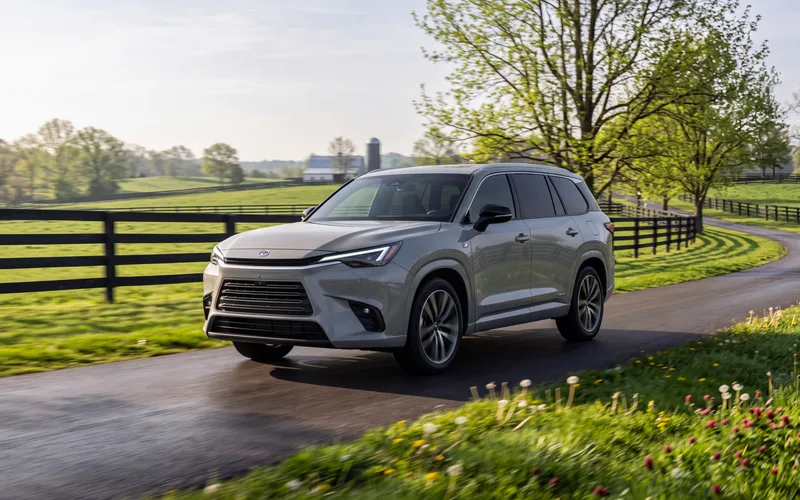 Lexus TXMid-Size Luxury SUVBetter at: Space and efficiency
Same money buys a hybrid or plug-in powertrain, a third row adults fit in, and 97.0 cu ft of maximum cargo against the MDX's 71.4.
Compare 2.43C+
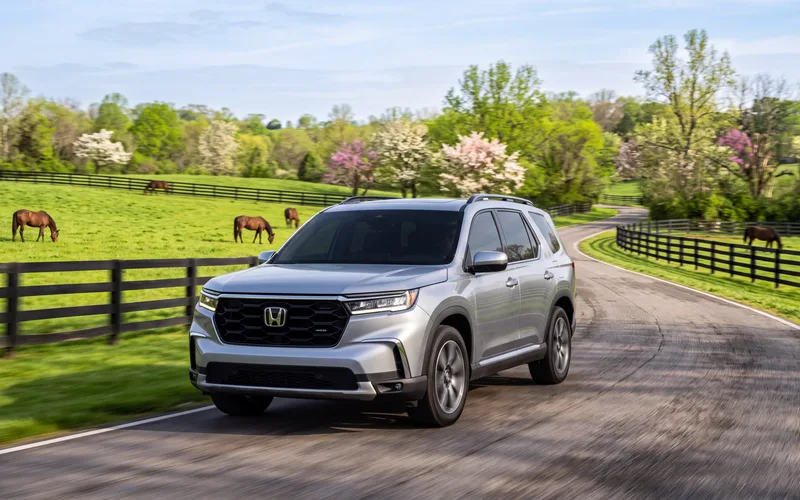 Honda PilotMid-Size SUVBetter at: Value
The same V6 and transmission with more room inside, regular fuel, and roughly $15,000 left in your pocket.
Compare 3.07B
3.07B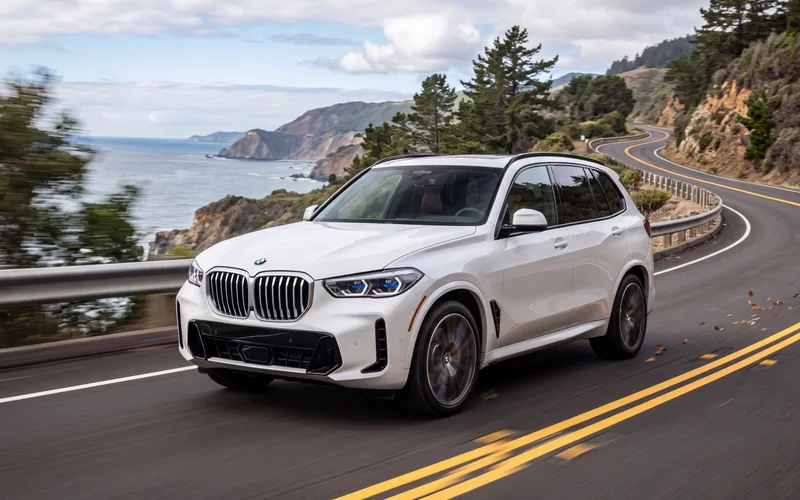 BMW X5Mid-Size Luxury SUVBetter at: Performance
Considerably more power, 7,200 lbs of towing, and a plug-in option for buyers willing to spend about $15,000 more.
CompareHow it's evolved
9 scored model years · 2017–2026
Subject scores by year
Hover or tap a score to see what moved it versus the year before. A corner mark flags a big swing.
| Year | Performance | Efficiency | Safety | Space | Cost | Reliability | Tech | Use-case | Driving | Value |
|---|---|---|---|---|---|---|---|---|---|---|
| 2026 | 51 | 31 | 83 | 61 | 47 | 76 | 79 | 66 | 69 | 76 |
| 2025 | 52 | 28 | 81 | 60 | 37 | 71 | 77 | 64 | 67 | 75 |
| 2024 | 52 | 28 | 81 | 60 | 45 | 69 | 69 | 64 | 68 | 73 |
| 2023 | 52 | 28 | 83 | 60 | 43 | 74 | 69 | 64 | 67 | 76 |
| 2022 | 52 | 28 | 84 | 60 | 45 | 59 | 66 | 63 | 66 | 72 |
| 2020 | 52 | 35 | 72 | 57 | 46 | 59 | 44 | 62 | 68 | 69 |
| 2019 | 52 | 35 | 73 | 57 | 46 | 56 | 44 | 62 | 69 | 71 |
| 2018 | 52 | 30 | 73 | 56 | 48 | 54 | 44 | 60 | 67 | 72 |
| 2017 | 52 | 30 | 74 | 56 | 49 | 57 | 37 | 60 | 66 | 73 |
Compare two years
Best fit & conditions
Higher scores mean a better fit for that use case. Learn more about use-case fit →
Subject profile
Detailed scoring by subject
1Performance & PowertrainOne of the MDX's weakest categories.1.50D
Volume trims (MDX, Technology, A-Spec, Advance) all use the 3.5L SOHC i-VTEC V6 at 290 hp @ 6,200 rpm; only the Type S halo trim gets the 3.0L twin-turbo V6. The 2025 facelift changed styling, infotainment and safety tech but left the powertrains untouched.
The naturally aspirated 3.5L V6 makes 267 lb-ft but not until 4,700 rpm, so low-end shove is modest next to turbocharged German rivals; the Type S's 354 lb-ft arrives from 1,400 rpm.
No outlet has instrumented a 2025 base-V6 MDX, but the powertrain and platform are unchanged from the 4th-gen launch, where Car and Driver and MotorWeek both recorded 6.4 s for the A-Spec SH-AWD. The 2025 Type S was tested at 5.5 s (MotorWeek) and 5.9 s (MotorTrend).
The 3.5L V6 is linear and lag-free with a clean throttle tip-in and unobtrusive cylinder deactivation, which is a genuine advantage over the turbo fours and small turbo sixes it competes with. It is marked down for being audibly strained near redline and for needing revs to move a 4,500 lb three-row with authority.
The 10-speed automatic is well matched to the naturally aspirated V6 — smooth in normal driving, willing to hold gears in Sport, with usable paddles. Reviewers consistently note mild low-speed hesitation and occasional hunting among the closely spaced upper gears, which keeps it out of the top band.
SH-AWD models are rated at 5,000 lbs properly equipped; front-drive base and Technology trims drop to 3,500 lbs. Competitive for a unibody luxury three-row, but below the X5 (6,600 lb) and GLE (7,700 lb).
SH-AWD is standard on A-Spec, Advance, A-Spec Advance and Type S and optional on the base and Technology trims, so it is reachable at every price point. The system is genuinely sophisticated — rear-biased torque split with true rear-axle torque vectoring — rather than a reactive slip-and-grip coupling. No low range, which is what keeps it below 90.
A pavement-first luxury crossover: 7.3 in of ground clearance, unibody construction, no low range, no lockers, no underbody protection and no off-road trim in the lineup. SH-AWD plus a Snow drive mode make it dependable on snow and graded dirt, which is the ceiling here.
Two gas V6s and nothing else — 3.5L naturally aspirated across the volume trims, 3.0L twin-turbo in the Type S. In a segment where the RX offers hybrid and PHEV, the XC90 and X5 offer PHEVs and the Lexus TX offers three electrified choices, a gas-only three-row is a real gap; the 2025 facelift did not address it.
2Efficiency & RangeThe MDX's lowest-graded category.0.00F
EPA combined rating for the volume SH-AWD 3.5L V6 configuration. A large naturally aspirated V6 with a 10-speed and cylinder deactivation but no electrification, so it sits below the segment's hybrid-equipped rivals.
EPA city rating; identical for FWD and SH-AWD. Auto stop-start is fitted, but there is no electric assist to recover city-cycle losses.
EPA highway rating for the SH-AWD volume configuration; the front-drive trims gain 1 MPG. Highway is where the tall gearing and cylinder deactivation help most, but 25 MPG is still mid-pack for a mid-size luxury SUV.
Derived from the EPA combined rating and Acura's 18.5-gallon tank, which is common to every 2025 MDX variant. Adequate for a family three-row but unremarkable — the modest tank offsets what a large-displacement engine gives back.
EPA's published annual cost at standard assumptions. The premium-grade pricing EPA applies is what pushes this to the top of the segment band — a regular-fuel SUV at the same 21 MPG combined would land several hundred dollars lower.
The 3.5L V6 in the volume trims lists 91-octane premium as recommended, not required — it will run on regular with some loss of output and economy — while the Type S 3.0T does require it. That mixed picture puts the MDX in the middle band rather than the bottom, but EPA still rates and prices it as a premium vehicle, so the practical running cost is a premium one.
3SafetyThe MDX's best-graded category.3.53A-
NHTSA rates the 2025 MDX 5 stars overall on the FWD body (4-star frontal, 5-star side, 4-star rollover); the SH-AWD variant shares the same 4-star frontal and 5-star side results but carries no overall rating because its rollover test was not run.
The 2025 MDX is an IIHS Top Safety Pick — Good in small overlap front (driver and passenger) and the updated side test — but only Acceptable in the updated moderate overlap test that grades rear-occupant protection, which is what keeps it off TSP+.
AcuraWatch is standard on all six 2025 trims and covers AEB/CMBS, full-speed adaptive cruise with Low-Speed Follow and Traffic Jam Assist, lane keeping, road-departure mitigation and traffic sign recognition, with Blind Spot Information and Rear Cross Traffic Monitor also standard across the lineup — nothing core is paywalled to an upper trim.
Pedestrian front crash prevention earns Good on both the standard and optional systems, including the night components, but the harder vehicle-to-vehicle 2.0 test returns only Acceptable — solid rather than best-in-class AEB.
Blind Spot Information and Rear Cross Traffic Monitor are standard on every trim and the 2025 refresh extended BSI warning range and added Lane Change Alert, but coverage on the volume trims is alert-only; active intervention (Lane Change Collision Mitigation, Front Cross Traffic Warning) arrives only with AcuraWatch 360, which is exclusive to the Type S with Advance Package.
LKAS with Traffic Jam Assist keeps the MDX centered without nagging and is easy to override, and 2025's higher-fidelity front camera improved road-departure mitigation, but it is a hands-on system that still demands periodic steering-torque proof of presence and does not match the best luxury lane-centering.
Full-speed-range adaptive cruise with Low-Speed Follow brings the MDX to a stop and resumes on its own, Traffic Jam Assist layers in low-speed steering, and for 2025 the ACC newly slows for curves — one of the stronger stock highway-assist packages among mid-size luxury three-rows.
No hands-free highway driving is offered on any 2025 MDX trim. AcuraWatch 360 adds Active Lane Change Assist but remains a hands-on-wheel system, so the MDX gives up ground to rivals with BlueCruise or Super Cruise.
IIHS rates the 2025 MDX headlights Good with no trim caveat, and the refresh's four-element JewelEye LED units with Chicane daytime running lights are standard on every trim — a clean sweep in a category where many luxury rivals split Good and Acceptable by trim.
Forward sightlines are good for a three-row, but a high beltline and thick rear pillars leave real over-the-shoulder blind zones, and the camera compensation is trim-gated: the volume base and Technology trims get only a multi-view rear camera, with the Surround-View Camera system reserved for Advance-package trims and up.
IIHS gives the MDX its top LATCH result — Good with credit for extra anchor positions — and the wide rear doors plus a three-row cabin let families run multiple seats without sacrificing the whole second row; the third row remains tight for rear-facing installs.
4Space & ComfortMid-pack among this car's ten categories.2.07C
Every 2025 MDX trim is a 7-seater on paper; the 40/20/40 second row's On-Demand removable middle seat lets an owner convert to a 6-seat captain's-chair layout without a factory option, which is a genuine packaging advantage over rivals that force the choice at order time.
The one-touch power panoramic moonroof is standard on every 2025 MDX, so 38.5 in is the only figure a buyer will ever experience; it is merely adequate for a vehicle this tall.
Front legroom is unremarkable for the mid-size luxury three-row set, trailing the Q7, QX60 and Aviator by an inch or more despite the MDX's 113.8-in wheelbase.
Second-row headroom of 38.1 in clears six-footers comfortably even with the panoramic glass overhead, and is a shade better than the segment midpoint.
38.5 in of second-row legroom on a sliding bench is genuinely adult-friendly and one of the MDX's stronger dimensions; the Type S gives up a fraction to its different seat structure.
29.1 in of legroom and 36.2 in of headroom put the third row firmly in kid-and-teen territory — reviewers call it cramped but surprisingly well-padded, fine for a school run and not for a road trip. Access is the redeeming feature: the One-Touch Smart Slide walk-in works with a car seat still strapped into the second row, and there are third-row USB outlets and cupholders.
Acura publishes two figures for every row; the 39.1 cu ft SAE J1100 standard number is the comparable one and is mid-pack, while the 48.4 cu ft "maximum" adds rear footwell space with the front seats slid forward.
71.4 cu ft of true SAE volume trails the roomier three-rows — Aviator, QX60 and the Lexus TX all beat it — and is the clearest sign the MDX prioritizes a tidy footprint over outright hauling.
Storage is the quiet beneficiary of the 2025 refresh: deleting the True Touchpad Interface freed the console for a redesigned bin with more volume, USB-C inside and behind it, and a wireless charging pad that is finally easy to reach. Behind that sit a deep underfloor cargo well, a two-level adjustable cargo floor and a reversible (carpet/wipe-clean) cargo lid.
Perforated Milano leather over 12-way power front seats with four-way power lumbar and memory is a strong standard baseline, and the Advance packages step up to 16-way seats with nine-way massage that were Type S-exclusive before 2025. Marked down because the volume A-Spec's Ultrasuede sport buckets are firmly bolstered and the third row is padding rather than support.
Amplitude Reactive Dampers over the double-wishbone front end keep body motions tidy, but on the volume trims' 20-inch wheels reviewers describe the ride as firm but pliant with the occasional sharp impact reaching the cabin. Only the Type S's adaptive air suspension moves the MDX into the plush half of the class.
Quietness is a specific, measured 2025 improvement rather than a carry-over claim — Acura re-engineered the fender liners and door insulators and added laminated rear door glass for roughly 10% less road noise on Technology Package and above, on top of the existing acoustic windshield, acoustic front and second-row glass, and Active Noise Cancellation. Reviewers still note some tire roar on coarse pavement, which keeps it short of Lexus RX quiet.
Tri-zone automatic climate, heated front seats, remote engine start, a panoramic moonroof with power sunshade and integrated second-row sunshades are standard on every 2025 MDX — a rich baseline. It falls short of the top band because two comfort staples are gated unusually high in the US lineup: ventilated front seats start at A-Spec, and the heated steering wheel and heated outboard second-row seats require the Advance Package.
5Cost of OwnershipOne of the MDX's weakest categories.0.45F
The 2025 refresh raised the entry MDX by $750 to $50,900 MSRP; with the $1,350 destination charge the base FWD car lists at $52,250. Note that SH-AWD is a $2,200 extra on this trim, so a like-for-like AWD base car is $54,450.
A-Spec SH-AWD is the popular configuration in the 2025 lineup — sport styling plus standard SH-AWD, 19-speaker Bang & Olufsen audio and the Technology content. Most MDX buyers land between the Technology SH-AWD ($59,850) and A-Spec Advance ($69,350), so the volume car sits high in the segment's price band.
The MDX is a genuine cost-of-ownership outlier for a luxury SUV — Honda mechanicals, a naturally aspirated 3.5L V6 in the volume trims, and no scheduled timing-belt service inside the first 5 years keep the bill closer to a mainstream three-row than to a German rival. The Type S turbo V6 would run higher.
The MDX holds value slightly better than the luxury midsize average but is not a retention star in absolute terms — roughly half the sticker is gone at 5 years, and the 2025 price increases give the depreciation curve more to work through. Forward projections for this specific model year run a few points below the nameplate's historical average.
Acura's new-vehicle limited warranty is 4 years / 50,000 miles — standard for the luxury field (matches BMW, Mercedes, Audi and Lexus on years) but well short of Genesis at 5 yr / 60,000 mi.
6 years / 70,000 miles on engine, transmission and drive system. Longer than the German luxury norm of 4/50 but far behind Genesis, Hyundai and Kia at 10 yr / 100,000 mi, which is what the segment band is scaled against.
Acura cut the complimentary maintenance program to 1 year / 12,000 miles for the 2025 model year, down from 2 years / 24,000 miles — in practice one or two oil changes with a tire rotation and inspection. The 4-year roadside assistance and AcuraLink trial are solid, but this is 'short included-maintenance period plus basic roadside', not a rich package: Genesis and Volvo bundle 3 years, BMW's Ultimate Care runs 3 yr / 36,000 mi.
$62,850 volume-trim price minus its estimated resale value after 5 years (48% retained, or about $30,168) leaves about $32,682 in depreciation. Add the projected $4,850 in 5-year maintenance and repairs, and owning this vehicle for 5 years costs about $37,532 in total.
6Reliability & QualityGrades above the middle of the scale.2.80B-
Consumer Reports predicts about-average reliability for the 2025 MDX (based on 2022-2024 model data) and names it one of Acura's two strongest models alongside the RDX, while RepairPal rates it 4.0/5.0 and 2nd of 14 luxury midsize SUVs with low repair severity. Average-from-CR plus above-average-from-RepairPal lands solidly in the middle band rather than top-tier.
The two major studies disagree sharply: Consumer Reports' 2025 brand rankings place Acura 5th of 22 (ahead of Mazda, Audi, BMW, Kia and Hyundai), but J.D. Power's 2025 VDS puts Acura at 249 PP100 against a 202 industry average — seventh from the bottom. The VDS sample is 2022-model-year cars, i.e. the troubled first year of this MDX generation, which explains part of the gap but does not erase it.
Four NHTSA campaigns touch the 2025 MDX, and two are safety-critical rather than administrative: a brake pedal pivot pin that can let the pedal shift out of position, and a fuel-injection control software fault that can stall the engine. A rearview-camera blackout recall specific to the 2025 refresh's new 12.3-inch Google-built-in screen and a passenger-seat weight sensor airbag recall round it out. That is meaningfully more recall activity than a clean record, though none of it is a systemic mechanical defect.
The volume trim's 3.5L J-series V6 is among the most durability-proven engines on sale, shared across the Honda Pilot, Odyssey and Passport with an extensive high-mileage service record, and the Honda 10-speed automatic has been in service since 2018 with no systemic failure pattern. Wikipedia confirms powertrain options were unchanged for the 2025 facelift, so this is a well-understood carry-over combination; the 2025 fuel-injection recall was a control-unit software error, not a mechanical weakness.
Reviewers consistently rate the cabin materials as a strength for the price band — the Advance package brings quilted Milano leather, contrast stitching and open-pore wood, and the 2025 refresh replaced the touchpad with a wireless charging pad and added a 19-speaker Bang & Olufsen system. The recurring criticism is the amount of piano-black plastic, which reads down-market next to the wood on upper trims.
Published assessments of assembly are strong — Edmunds calls interior fit and finish excellent and Consumer Reports calls it impressive — but J.D. Power's dependability data on this generation's early build years is well below industry average, and scattered owner reports describe cabin noise and rattles over rough pavement. Generally solid with real dissenting signal.
Acura runs roughly 270 franchised US dealerships — adequate metro coverage but materially thinner than Lexus or mainstream Honda, so rural owners travel further for warranty work. Acura does not appear among the leaders in J.D. Power's 2025 Customer Service Index premium rankings, which are topped by Porsche (906) and Lexus (891).
Running costs are the MDX's clearest reliability-adjacent strength: RepairPal puts average annual repair and maintenance at $571 against $807 for luxury midsize SUVs and $652 for all vehicles, helped by heavy parts commonality with the Honda Pilot, Odyssey and Passport. Unscheduled shop visits run below the class average and repair severity is rated low; Type S turbo and SH-AWD components are the pricier exceptions.
7Technology & InfotainmentOne of the MDX's strongest categories.3.26B+
The new-for-2025 12.3-inch touchscreen is standard across the entire lineup rather than reserved for upper trims, though it is no bigger than the class average and rivals now offer 14-inch-plus displays.
2025 is the year Acura fixed the MDX's single most criticized feature — the True Touchpad Interface, an absolute-position trackpad that reviewers spent four model years complaining about, is gone in favor of a direct touchscreen running Google built-in. The result is quick, familiar and logically laid out, and Acura kept physical tri-zone climate controls and a volume knob rather than burying them. It stops short of the top band only because the screen is modest and some functions still sit a menu deep.
Wireless Apple CarPlay and wireless Android Auto are both standard on every 2025 MDX including the $51,200 base car, with wired connection also supported and a standard wireless charging pad to keep the phone topped up — the best-case answer for this item.
Google built-in means the native navigation is Google Maps with live traffic and the assistant is Google Assistant — natural-language, and better than the phone projection most owners would otherwise default to. Amazon Alexa built-in is offered alongside it. Held below 90 because the whole stack depends on a data plan that is complimentary for only three years, after which Google built-in functionality lapses unless the owner subscribes or tethers.
Audio is the MDX's genuine technology standout for 2025. The ELS Studio system was replaced by a 19-speaker Bang & Olufsen setup with 16 channels, Acoustic Lens tweeters and four headliner speakers on Technology Package and above — which includes the volume A-Spec — while the Type S with Advance gets a 31-speaker, 24-channel system with an 8.8-inch subwoofer and twelve headliner speakers. Even the base car's standard system gained two speakers.
A 12.3-inch full-digital Precision Cockpit cluster is standard equipment on every trim including the base MDX — no partial-digital entry-level version — and it is configurable with map, ADAS and drive-mode views.
The latest-generation AcuraLink brings genuine over-the-air software update capability with embedded 4G LTE, and the Google built-in layer updates its apps and maps over the air as well. That is a real step past maps-only, but Acura has not demonstrated the whole-vehicle, feature-adding OTA cadence that would earn the top band, and powertrain/chassis modules still go through the dealer.
AcuraLink covers the core remote set — lock/unlock, remote engine start, vehicle locate, roadside assistance and security — but the subscription structure is the weak point: only Security carries a long complimentary trial, while Remote and Concierge lapse after 90 days. There is no phone-as-key or digital key on the MDX, which several rivals now offer.
Six USB ports with 3.0A USB-C in the console and second row, plus a Qi wireless charger that the 2025 console redesign made materially easier to reach, and third-row USB-A on upper trims. Three 12-volt outlets cover the cabin and cargo bay. It misses the top band only for having no household AC outlet or onboard power export.
Keyless access covers the front doors, rear doors and tailgate with walk-away auto-lock, push-button start and remote engine start with vehicle feedback are standard, and the power tailgate has programmable height, hands-free kick access and walk-away auto-close. Only the absence of a phone-as-key option keeps it out of the top band.
A multi-angle rearview camera with guidelines and a camera washer is standard, and eight parking sensors (four front, four rear) plus Low Speed Braking Control arrive at the Technology Package. But the surround-view camera is tied to the Advance Package, so the volume A-Spec — a $63k car — does not have it, and no automated parking is offered on any trim.
A color head-up display exists and is well regarded, but 2025 gates it behind the Advance Package — available on MDX with Advance, the new A-Spec with Advance, and the Type S with Advance. Buyers of the base, Technology and standard A-Spec trims, which is most of the volume, cannot get one at any price.
8Use-Case FitMid-pack among this car's ten categories.2.35C+
The MDX's LATCH provision is unusually complete — lower anchors at all second-row AND all third-row positions, with tether anchors at every one of them, where most three-row rivals fit two outboard sets in row two only. The One-Touch Smart Slide walk-in slides the second row forward with a child seat still installed, the 40/20/40 bench with a removable middle seat gives real layout flexibility, and the deep cargo well behind the third row swallows a folded stroller. New for 2025, a rear seatbelt reminder joins the existing rear-seat reminder.
The safety case is strong precisely where families shop — the base $51,200 MDX, not just the loaded ones. The AcuraWatch suite is standard on every trim and got new hardware for 2025 (wider-field camera and grille-mounted radar), and blind-spot information, the new Lane Change Alert and rear cross-traffic monitor are standard across the range rather than optional. Adaptive cruise with the new Cornering Speed Assist and Traffic Jam Assist are likewise standard on all trims, and the car carries a 5-star NHTSA overall rating.
Tri-zone front and rear automatic climate, integrated second-row sunshades, two 3.0A USB-C ports in row two, CabinTalk in-car PA so the driver can address the back rows, and the 19-speaker Bang & Olufsen system make the middle row a genuinely pleasant place for hours. Two things cap it: with all seven seats up there is only 16.3 cu ft for luggage, and the third row is a kids-only proposition over long distances.
The naturally aspirated 3.5L V6 has no turbo lag and a clean throttle tip-in, which makes stop-and-go smoother than the turbocharged rivals it competes with, and Traffic Jam Assist plus adaptive cruise with low-speed follow are standard on every trim. Working against it: the 10-speed automatic hunts among its closely spaced ratios at part throttle, and the volume trims' 20-inch wheels give a firm edge over broken city pavement.
This is the MDX's worst commuting attribute: 21 MPG combined on required premium fuel works out to roughly $3,600 a year at EPA's 15,000-mile assumption, against a Lexus RX 350h doing the same job on regular for well under half that. Honda-family consumables and service intervals are reasonably cheap, which is the only thing keeping this out of the bottom band.
At 198.4 in long and 78.7 in wide with a 40.4-ft turning circle, the MDX is a full-size proposition in a city garage. The standard rear camera and the eight parking sensors fitted from the Technology Package up make it manageable, but the surround-view camera that would really help is locked to the Advance Package and there is no automated parking on any trim.
5,000 lbs of towing with SH-AWD is respectable for a unibody crossover and enough for a small boat or a two-horse-less utility trailer, but it drops to 3,500 lbs on front-drive models and requires a dealer-installed accessory towing package rather than a factory tow option. There is no bed, no meaningful payload headroom advertised, and the carpeted cargo bay is not built to be abused.
The mechanical bones are as proven as anything in the segment — the J-series V6 and 10-speed automatic are long-running Honda designs built in Ohio alongside the RDX, and Acura's reliability record is strong. But nothing about the interior is specified for hard use: Milano leather, a panoramic glass roof, 20-inch wheels on low-profile tires and no wear-friendly trim option anywhere in the lineup. This is a luxury vehicle that would survive work duty rather than one built for it.
Three 12-volt outlets and cargo tie-downs are the extent of the work provisions — there is no AC inverter, no household outlet and no power export. The reversible wipe-clean cargo lid is a genuinely useful touch for dirty gear, but side roof rails are an Advance Package item, the hitch is a dealer accessory, and no upfit ecosystem exists for a luxury three-row crossover.
A strong tourer: seats with four-way power lumbar and memory, a cabin Acura made roughly 10% quieter for 2025 with laminated rear glass and added insulation, and adaptive cruise with low-speed follow, LKAS, Traffic Jam Assist and the new Cornering Speed Assist standard on every trim to take the edge off long stints. Range is the limiter — roughly 389 miles from an 18.5-gallon tank at 21 MPG, and every one of those gallons is premium.
SH-AWD is a real advantage over the reactive slip-and-grip systems most rivals use — it sends up to 70% of torque rearward and 100% of that to the outside rear wheel, which makes the MDX genuinely dependable on snow, gravel and a wet boat ramp, and a Snow drive mode is standard. What it is not is an off-roader: 7.3 in of ground clearance, unibody construction, no low range, no lockers, no skid plates, and side roof rails for a box or bike carrier only arrive with the Advance Package.
The folding arrangement is better than most — a 40/20/40 second row with a removable middle seat and a 50/50 third row give more permutations than a rival's 60/40 bench, and the two-level adjustable cargo floor plus deep underfloor well let you hide gear and still carry people. The ceiling is the number itself: 71.4 cu ft of SAE volume is mid-pack, and the roof rails needed for a box or a kayak are an upper-trim item.
9Driving ExperienceMid-pack among this car's ten categories.2.56C+
The hardware is legitimately good — double-wishbone front suspension, Amplitude Reactive Dampers, Agile Handling Assist and SH-AWD with true rear torque vectoring give the MDX more rotation and body control than most three-row crossovers. The volume V6 trims nonetheless read as competent rather than eager to reviewers, with the Type S the only version that feels genuinely planted and balanced when pushed.
The belt-driven variable-ratio electric rack is quick — 2.73 turns lock to lock — and reviewers agree it is light and easy at parking speeds and firms up sensibly with pace. What it does not deliver is feedback: MotorWeek called the volume MDX's steering mushy and artificial, and that is the single dynamic complaint that recurs most across 2025 reviews.
The volume MDX uses an iBooster electro-hydraulic brake system with ventilated front and solid rear discs — a by-wire setup Honda has calibrated well, giving firm, linear pedal travel without the grabbiness some regen-blended systems show. No outlet has published an instrumented 60–0 figure for a 2025 base V6 car, and the Type S's Brembo four-piston front brakes and electro-servo system are a clear step above what the volume trims get.
The 290-hp 3.5L SOHC i-VTEC V6 is smooth and completely lag-free, which is a real drivability advantage over the turbocharged sixes and fours in the class, and Variable Cylinder Management shuts down cylinders without the driver noticing. The mark against it is the 10-speed automatic, which hunts among its closely spaced upper ratios at part throttle, and a 0–60 of roughly 6.4 s that asks for revs to move 4,550 lbs with authority.
The V6 is muted and unobtrusive at cruise, helped by standard Active Noise Cancellation and acoustic glass, with Active Sound Control piping a measured engine note in under load. It gets audibly strained near the redline where a turbocharged rival would simply surge, which is what holds it below the top band.
A 113.8-in wheelbase and a 198.4-in overall length give the MDX a wide turning circle that is unremarkable even by three-row standards, and the quick 2.73-turn rack does not compensate for the geometry.
2025 is a genuine ergonomic step change rather than a styling refresh: the True Touchpad Interface that forced drivers to hunt a trackpad for on-screen targets is gone, replaced by a direct 12.3-inch touchscreen, while tri-zone climate stays on physical controls. Add a power tilt-and-telescoping column, 12-way power seat with three-position memory and a commanding sightline, and the only real complaint left is thick D-pillars over the shoulder.
The volume 3.5L MDX is secure, smooth and thoroughly competent, and the A-Spec adds the look of sportiness without changing the chassis — it is not a car that tempts you into the long way home. Acura keeps the actual enthusiast case in the Type S, whose 355-hp turbo V6, Sport+ mode, air suspension and Brembos reviewers do single out as engaging.
10Value & Market PositionOne of the MDX's strongest categories.3.10B
The 2025 refresh made the good stuff standard across the range: a 12.3-inch touchscreen with Google built-in, wireless Apple CarPlay/Android Auto, a 12.3-inch Precision Cockpit digital cluster, a wireless charging pad (in the space the deleted touchpad freed up), three rows and the full AcuraWatch suite. What keeps it out of the 80s is that the $52,250 entry car is front-wheel drive (SH-AWD is $2,200 more), Bang & Olufsen audio starts at Technology, and the upgraded AcuraWatch 360 and surround-view camera are reserved for the Advance/Type S trims.
A three-row luxury SUV with 290 hp, standard ADAS and Google built-in at $52,250 still undercuts the two-row BMW X5 xDrive40i by roughly $15k and the Audi Q7 and Lexus TX by several thousand, and it is genuinely cheap to service. Two things hold it below the segment's best: the 2025 price hike (entry +$750, Type S +$6,500 to $76,300, where the value argument largely evaporates) and the absence of any hybrid, which rivals use to add both content and efficiency at the same price.
Six well-spaced trims spanning $52,250–$76,300, both FWD and SH-AWD on the lower half of the range, and two distinct engines (290 hp 3.5L V6; 355 hp 3.0L turbo V6 in Type S). The new-for-2025 A-Spec Advance fills a real gap between sport-look and fully loaded. The lineup's two holes are the lack of any hybrid or PHEV and the Type S being offered only in Advance specification for 2025.
The MDX is Acura's best-seller and a fixture of the three-row luxury class, and the refresh kept it growing slightly in a flat market — but 41,460 units is steady mid-pack rather than segment-leading, and it trails the Lexus RX/TX and BMW X5 in the broader luxury midsize field.
Acura occupies the second tier of US luxury — genuinely respected for reliability, engineering and value, with a loyal repeat-buyer base, but without the status halo of BMW, Mercedes, Audi or Porsche. Roughly level with Volvo, ahead of Infiniti and Lincoln, a step below Lexus on prestige.
Real, routinely available buyer benefit without any whiff of desperation pricing: subvented APR, stacked conquest/military/graduate cash, and dealer discounts approaching 10% off sticker on volume trims — noticeably more negotiable than the near-MSRP posture of the Lexus TX/RX or Genesis GV80.
2025 is the mid-cycle refresh of the fourth-generation MDX (launched MY2022), so this is the freshest the generation gets: revised styling, new wheels, and — most consequentially — the deletion of the widely criticized True Touchpad Interface in favour of a 12.3-inch touchscreen with Google built-in, plus a Bang & Olufsen audio switch and AcuraWatch 360. Platform and powertrains are unchanged and a full redesign is still some years out, which is what keeps it out of the 90s.
Well-reviewed and broadly recommended — the infotainment fix removed the biggest standing complaint, and it took MotorWeek's Drivers' Choice award for Best Midsize Utility — but the expert numbers are good-not-great and the MDX is rarely the outright pick of a comparison test: reviewers keep noting it is down on pace and polish against the class benchmarks.