

The verdict
A mixed-report mid-size luxury suv, strong on safety and held back by efficiency.
The 2022 MDX is year one of an all-new fourth-generation Acura, and it cuts both ways. The good half is genuine: IIHS Top Safety Pick+, 5 NHTSA stars, the entire AcuraWatch driver-assist suite standard on the $49,195 base car, and a $56,095 Technology trim that undercut a comparable BMW X5 by thousands while adding a third row. The catch is launch-year execution — Consumer Reports rates it less reliable than other 2022 vehicles, and the SH-AWD driveline on 2022–2023 cars has a documented spline failure that silently drops the car to front-wheel drive and costs $13,000–$19,000 to fix. Add 21 MPG on premium and the widely panned touchpad infotainment, and this is a car to buy only with service history and a driveline-focused inspection.
Jump to scoresStrengths
- One of the safest three-rows you could buy in 2022
- Driver assists are standard, not upsold
- Luxury content for meaningfully less money
What holds it back
- The SH-AWD driveline failure is the reason to be careful
- First-model-year build quality problems
- Expensive to run — 21 MPG on premium, with no hybrid option
Top alternatives
Cars shoppers cross-shop with the Acura MDX 2.88B-
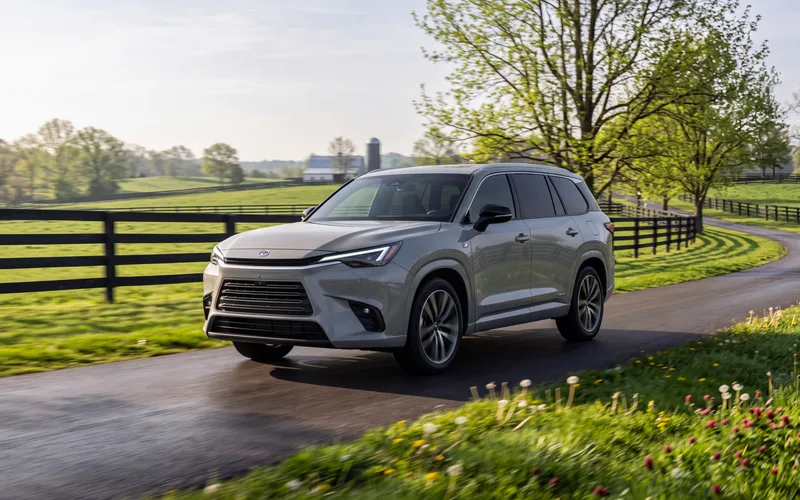 Lexus TXMid-Size Luxury SUVBetter at: Space and efficiency
Same money buys a hybrid or plug-in powertrain, a third row adults fit in, and 97.0 cu ft of maximum cargo against the MDX's 71.4.
Compare 2.43C+
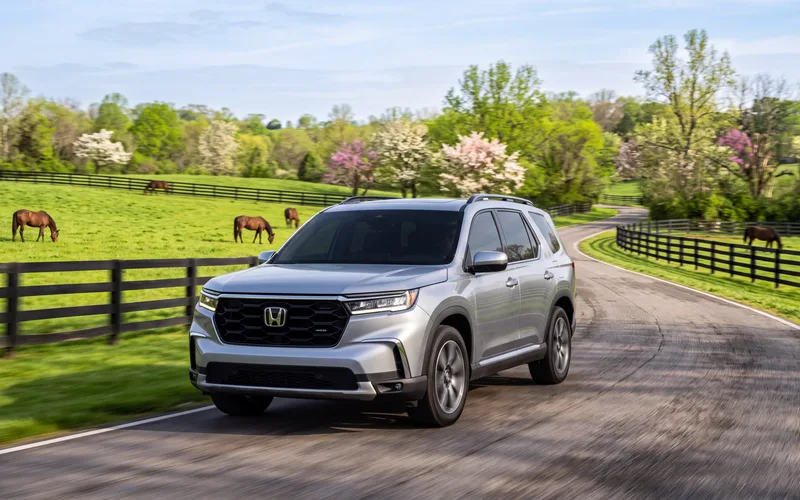 Honda PilotMid-Size SUVBetter at: Value
The same V6 and transmission with more room inside, regular fuel, and roughly $15,000 left in your pocket.
Compare 3.07B
3.07B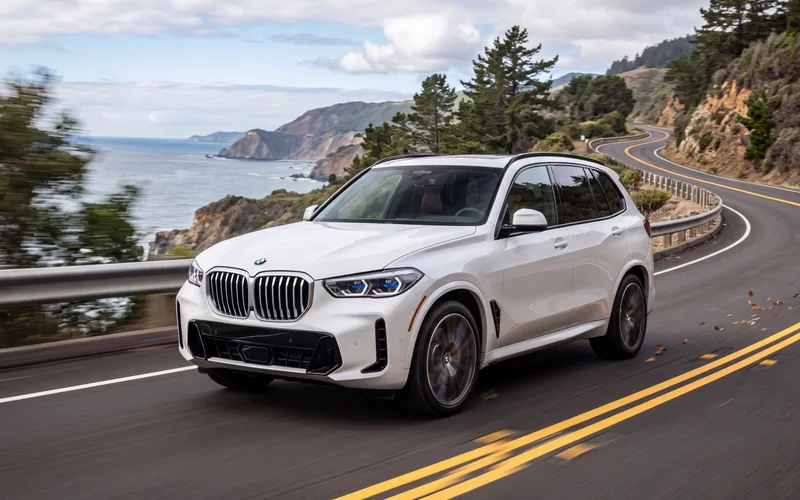 BMW X5Mid-Size Luxury SUVBetter at: Performance
Considerably more power, 7,200 lbs of towing, and a plug-in option for buyers willing to spend about $15,000 more.
CompareHow it's evolved
9 scored model years · 2017–2026
Subject scores by year
Hover or tap a score to see what moved it versus the year before. A corner mark flags a big swing.
| Year | Performance | Efficiency | Safety | Space | Cost | Reliability | Tech | Use-case | Driving | Value |
|---|---|---|---|---|---|---|---|---|---|---|
| 2026 | 51 | 31 | 83 | 61 | 47 | 76 | 79 | 66 | 69 | 76 |
| 2025 | 52 | 28 | 81 | 60 | 37 | 71 | 77 | 64 | 67 | 75 |
| 2024 | 52 | 28 | 81 | 60 | 45 | 69 | 69 | 64 | 68 | 73 |
| 2023 | 52 | 28 | 83 | 60 | 43 | 74 | 69 | 64 | 67 | 76 |
| 2022 | 52 | 28 | 84 | 60 | 45 | 59 | 66 | 63 | 66 | 72 |
| 2020 | 52 | 35 | 72 | 57 | 46 | 59 | 44 | 62 | 68 | 69 |
| 2019 | 52 | 35 | 73 | 57 | 46 | 56 | 44 | 62 | 69 | 71 |
| 2018 | 52 | 30 | 73 | 56 | 48 | 54 | 44 | 60 | 67 | 72 |
| 2017 | 52 | 30 | 74 | 56 | 49 | 57 | 37 | 60 | 66 | 73 |
Compare two years
Best fit & conditions
Higher scores mean a better fit for that use case. Learn more about use-case fit →
Subject profile
Detailed scoring by subject
1Performance & PowertrainOne of the MDX's weakest categories.1.47D
2022 is the launch year of the all-new fourth-generation MDX (the nameplate skipped MY2021 entirely), and the volume trims — Base, Technology, A-Spec, Advance — carry over the 3.5L SOHC i-VTEC V6 at 290 hp. Adequate but unremarkable output for a ~4,500 lb luxury three-row.
The naturally aspirated V6 makes 267 lb-ft but not until 4,700 rpm, so low-end pull trails the turbocharged German rivals it was priced against in 2022. The mid-year Type S turbo V6 makes 354 lb-ft essentially flat from 1,400 rpm.
Two independent instrumented tests of 2022 MDX SH-AWD A-Spec cars agree at 6.4 s; a heavier 2022 Advance tested as slow as 7.5 s and the mid-year Type S ran 5.4–6.0 s. Mid-pack for the segment — quick enough to merge confidently, not quick enough to feel sporting.
The naturally aspirated 3.5L V6 is smooth and perfectly linear with no turbo lag, and Variable Cylinder Management transitions go unnoticed — launch-year reviewers rated it among the segment's more refined power deliveries. Held out of the top band by thin low-end torque versus the turbo rivals (X5, Q7, GLE) and a coarse note when revved out.
The 10-speed automatic was new to the MDX for this 2022 redesign (standard on every trim, with paddle shifters) and is smooth enough to be invisible in normal driving, holding sensible gears in Sport. Launch reviews repeatedly flagged hesitation when a quick downshift is requested, which keeps it mid-band.
SH-AWD trims are rated 5,000 lbs properly equipped; front-drive Base and Technology are limited to 3,500 lbs. Respectable for a unibody luxury three-row but short of the body-on-frame and turbo-six competition (X5 6,600 lbs, GLE 7,700 lbs).
SH-AWD is standard on the A-Spec, Advance and Type S trims and optional on Base and Technology, so all-wheel drive is available across the entire 2022 range. Super Handling AWD is genuinely sophisticated — rear-biased, sending up to 70% of torque rearward and all of that to one rear wheel for true torque vectoring. Held below the top band only because there is no low range.
A pavement-oriented luxury three-row: 7.3 in of ground clearance, no low range, no locking differentials, no skid plates and no off-road trim anywhere in the 2022 lineup. SH-AWD plus a Snow drive mode makes it competent on snow and graded dirt, and that is the whole of its credibility.
Two gas V6s and nothing else, and for the first months of the 2022 model year only one — the Type S turbo arrived mid-year. The fourth-generation redesign dropped the third generation's Sport Hybrid outright, leaving no electrified MDX in a year when the RX sold hybrid, and the X5, XC90, Aviator and Grand Cherokee all offered plug-ins.
2Efficiency & RangeThe MDX's lowest-graded category.0.00F
EPA combined rating for the volume SH-AWD 3.5L V6 configuration in its launch year. A naturally aspirated ~4,500 lb V6 three-row with no electrified option lands in the bottom third of gas SUVs even with Variable Cylinder Management.
EPA city rating for the volume SH-AWD trim. It is identical to the front-drive figure, so the all-wheel-drive penalty falls entirely on the highway cycle.
EPA highway rating for the volume SH-AWD trim. This figure is stable across the early years of the generation but is not a permanent carry-forward — EPA re-rated the SH-AWD highway number to 26 MPG from 2025, so it was verified for 2022 rather than assumed.
EPA-published total range for the volume SH-AWD trim, consistent with the 18.5-gallon tank at 21 MPG combined. Every 2022 MDX carries the same tank, so range differences across trims come purely from economy. Under 400 miles is unremarkable for the segment.
EPA's published annual fuel cost at its standard assumptions. The combination of 21 MPG and premium-grade pricing puts this at the very bottom of the SUV band — the premium requirement alone costs several hundred dollars a year over a regular-fuel rival of identical economy.
Acura lists 91-octane premium as *recommended* rather than required for the 3.5L V6, which has knock sensors and adaptive timing and will run on regular with reduced output; the mid-year Type S turbo genuinely needs premium. That mixed picture places it in the 50–79 band, though at its lower end, since EPA rates and prices every 2022 MDX configuration on premium and there is no hybrid or plug-in option to soften running costs.
3SafetyThe MDX's best-graded category.3.70A
NHTSA rates the 2022 MDX 5 stars overall, built from 4-star frontal, 5-star side (5 in the barrier and 5 in the pole test) and 4-star rollover — a full result for the first year of the fourth-generation body.
The redesigned 2022 MDX is an IIHS TOP SAFETY PICK+ with a clean sweep — Good in all six crashworthiness evaluations plus Good in the updated side test, which is a stronger sheet than the 2023-and-later cars carry (the updated moderate overlap test, where the MDX comes back Acceptable, was run on a 2023 SH-AWD and applies to 2023–26, not to 2022).
AcuraWatch is standard on every 2022 trim from the base MDX up — collision mitigation braking with pedestrian detection, forward collision warning, adaptive cruise with Low-Speed Follow, Traffic Jam Assist, lane keeping assist, lane departure warning, road departure mitigation, traffic sign recognition, driver attention monitor and auto high beams — and Blind Spot Information with Rear Cross Traffic Monitor is standard as well, so nothing core is paywalled behind a package.
The Collision Mitigation Braking System earns Superior for vehicle-to-vehicle and Superior for daytime pedestrian detection, with Advanced at night — a strong result, held short of the top band by the night detail: on low beams the parallel-adult run failed to slow at either speed, so the night credit depends on the high beams being on.
Blind Spot Information and Rear Cross Traffic Monitor are standard on every 2022 trim, better than most luxury rivals that gate them behind a package, but coverage is warning-only — no blind-spot steering intervention — and the warning lamp sits on the interior trim rather than in the mirror glass.
LKAS with lane departure warning and road departure mitigation is standard and the fourth-generation calibration is a clear step up in smoothness over the outgoing car, but reviewers still describe it as less transparent than the class best, and the lane-departure alert uses an off-putting steering-wheel wobble rather than a vibration.
Adaptive cruise with Low-Speed Follow is standard on the base trim and works to a full stop, and Traffic Jam Assist layers coordinated steering on top of it from 0–45 mph — one of the better stop-and-go implementations at the price — though it stops short of a true highway-assist mode at cruising speeds.
No hands-free highway driving is offered on the 2022 MDX at any trim — there is no BlueCruise/Super Cruise equivalent, and Traffic Jam Assist requires hands on the wheel throughout.
IIHS rates the MDX's LED projector headlights Good with no trim-dependent downgrade — good-rated lights are standard across the whole 2022 range — and high-beam assist is included; the only gap against the very best is that they are not curve-adaptive.
The flatter hood gives good forward sightlines, but the fourth-generation body brings thick roof pillars, narrow side glass and a high rear window, and the camera compensation is thin on the volume trims — the surround-view system is bundled with the Advance package, leaving base/Technology/A-Spec buyers with a rear camera plus the standard blind-spot monitor and large mirrors.
IIHS gives the MDX its best LATCH result — Good with extra positions — for three complete second-row anchor sets plus two additional tether-only positions, which is unusually generous for a three-row luxury SUV.
4Space & ComfortMid-pack among this car's ten categories.2.03C
Every 2022 trim from the base car up seats seven via a second-row bench whose middle section lifts out, converting the row to captain's chairs — so one configuration covers both buyers rather than forcing a choice at order time. Seven is standard for the luxury three-row class; only the full-size body-on-frame SUVs offer eight.
Acura publishes a single front headroom figure for 2022 because the panoramic moonroof is standard equipment across the range, so there is no no-sunroof number to quote. 38.5 in is adequate but modest for a mid-size SUV — the low roofline that gives the fourth-generation car its stance costs it here.
41.6 in of front legroom sits in the lower half of the SUV band and is a touch short of the class benchmarks, though the power tilt-and-telescope column standard on every trim widens the range of drivers it accommodates.
38.1 in in the second row is mid-band for the segment and enough for adults; the third row's 36.2 in is where the sloping roof shows, and it is the dimension that keeps taller passengers out of the back.
38.5 in of second-row legroom is genuinely good for a mid-size three-row and the row slides fore and aft, so it can be traded against third-row space as needed. The third row's 29.1 in is the real constraint and is below the class average.
The fourth-generation redesign raised the third-row cushion and added legroom over the outgoing car, and One-Touch Smart Slide walk-in access is standard on every trim — so getting back there is easy. It is still a kids-and-teens row: 36.2 in of headroom and 29.1 in of legroom, and the amenities that make a third row liveable (its own USB ports) appear only on the Advance.
39.1 cu ft behind the second row is unremarkable for a mid-size SUV and lands low in the segment band, but the figure understates the usable space: Acura also publishes a 48.4 cu ft 'max' number that counts the deep underfloor well beneath the reversible cargo lid.
71.4 cu ft with everything folded is mid-pack at best against three-row rivals — better than an Audi Q7, short of a Palisade or an X7 — and the low roof is the reason. The 95.0 cu ft 'max' figure Acura also publishes includes the underfloor well and is the more flattering way to read the same body.
The standout is the standard hidden cargo well with a reversible smart lid — hard side up for groceries, carpeted side up for luggage — worth roughly 9 cu ft of concealed space, and it is on the base car rather than a package. The center console is deep with a pass-through beneath it, a Qi wireless pad is standard on every trim, and there are accessory sockets in the first row, second row and cargo area; a household AC outlet appears only from the Advance up.
Front-seat comfort is the launch car's most consistently praised attribute — several 2022 reviews called them among the best in the class, cushy and supportive over long stints. The volume Technology trim gets 12-way power seats with power lumbar; the 16-way seats with thigh extension are an Advance/Type S item and massage is exclusive to the Type S Advance, and reviewers found the second row a little stiff, which keeps this out of the top of the band.
The new-for-2022 platform pairs a double-wishbone front end with Amplitude Reactive Dampers standard on every non-Type S trim, and launch reviews found the tuning soft enough to absorb big hits without float — even in Sport. It is composed rather than plush: the volume Technology trim rides on 20-inch wheels, and the Type S trades the dampers for adaptive air springs that the trims most people buy do not get.
Wind noise is close to absent at highway speed and Active Sound Control is standard on every trim, but 2022 reviewers consistently flagged road noise as evident and the V6 as audible when it is worked — quiet for a mainstream SUV, short of the German luxury benchmark the price invites comparison with.
Tri-zone automatic climate with humidity control, heated front seats and the panoramic moonroof are standard on the base car, which is generous, and ventilated fronts arrive at the A-Spec. The gating is at the top: a heated steering wheel, heated outboard rear seats and key-fob remote start with feedback are all Advance-and-above items, so the volume Technology buyer pays luxury money and still scrapes ice off the wheel.
5Cost of OwnershipOne of the MDX's weakest categories.0.97F
Acura's final 2022-model-year pricing table lists the front-drive base MDX at $48,000 MSRP plus a $1,195 destination charge. The all-new fourth generation launched in early 2021 at $47,925 with destination and took two mid-year increases (destination rose from $1,025 to $1,045 to $1,195), so a 2022 buyer's actual entry price depended on build date.
The Technology Package with SH-AWD is the core-volume configuration — it adds leather, navigation, a 12-speaker ELS Studio 3D system, parking sensors and 20-inch wheels over the leatherette base car, and SH-AWD was the drivetrain most 2022 buyers took. Type S and A-Spec sit well above it and account for a minority of the mix.
CarEdge projects about $3,400 in scheduled maintenance and wear items over five years for the MDX, and the 3.5L V6 with the 10-speed automatic is long-serving Honda hardware with most of the five-year window inside the 4-year/50,000-mile basic warranty. Edmunds' True Cost to Own runs far higher on dealer-priced service, and the 2022 car — unlike the 2023 and later MDX — has no complimentary maintenance period to offset the first two years, so the figure lands modestly above the later model years'.
Model-level residual studies put the MDX near 50% retention at five years, and the actual 2022 cars corroborate it: a Technology SH-AWD that stickered at $56,095 books at roughly $26,300 trade / $30,500 private party in mid-2026 at about four and a half years old. Respectable for a luxury badge — a shade better than the luxury midsize SUV class — but below the broader SUV market.
Acura's new-vehicle limited warranty is 4 years or 50,000 miles, matching the luxury-brand convention set by BMW, Mercedes and Audi but short of Genesis at 5 years/60,000 miles. 24-hour roadside assistance runs for the same term.
Six years or 70,000 miles on engine, transmission and drive components — longer than most German luxury coverage, but well short of the 10-year/100,000-mile powertrain terms Genesis and the Hyundai/Kia group offer, which is what the top of this band is calibrated to.
The 2022 MDX is the one recent model year with essentially nothing included beyond roadside assistance: Acura's complimentary Maintenance Package (2 years / 24,000 miles) and the three-year AcuraLink Security and Remote subscription were both introduced for the 2023 model year, so 2022 owners pay for every scheduled service from the first oil change and get only a limited AcuraLink trial. What remains is 24-hour roadside assistance running with the 4-year/50,000-mile warranty — real coverage, but exactly the "basic roadside only" case at the bottom of the middle band.
$56,095 volume-trim price minus its estimated resale value after 5 years (51% retained, or about $28,608) leaves about $27,487 in depreciation. Add the projected $5,400 in 5-year maintenance and repairs, and owning this vehicle for 5 years costs about $32,887 in total.
6Reliability & QualityMid-pack among this car's ten categories.1.94C-
2022 is the launch year of the fourth-generation MDX, and every predictor reflects it. Consumer Reports rates the 2022 car less reliable than other vehicles of its model year, and J.D. Power scores it 62/100 for quality & reliability — below their 70-80 "Average" band. Owner-reported problem volume is roughly three times that of the settled 2024 car (143 complaints vs 48), concentrated in drivetrain, steering, brakes and electrical. The proven mechanical hardware is not what is dragging this down; the redesign's first-year execution is.
Acura's brand standing splits by source: Consumer Reports places it 5th of 22 brands, just behind parent Honda, while J.D. Power's Vehicle Dependability Study has it well below the industry average. That VDS result matters more than usual here — the 2025 study surveys three-year-old cars, so its sample is literally this 2022 cohort, and Acura's decline in that ranking is widely attributed to the redesigned MDX. Mid-pack rather than the top-tier score the CR ranking alone would suggest.
Three NHTSA recalls reach the 2022 MDX, including the front passenger seat weight sensor campaigned twice — once in 2024 and again in 2026 — which is a repeat of the same unintended-airbag-deployment defect rather than a single clean fix. Weighing more heavily is what was never recalled: NHTSA opened defect petition DP26-001 on the 2022-2023 MDX transfer case, and Acura has issued neither a recall nor a TSB for it despite making quiet production changes. The FI-ECU stall recall is Type S only and does not touch the volume V6 trim.
The engine and transmission are the MDX's strongest durability story — the naturally aspirated 3.5L J35 V6 and Honda's own 10-speed automatic are shared with the Pilot, Odyssey and Ridgeline and routinely run past 200,000 miles. What separates this model year from later ones is the SH-AWD driveline: the splines connecting the transaxle to the rear power take-off unit shear flat on 2022-2023 MDX and 2021-2023 TLX, permanently reverting the car to front-wheel drive, and the repair runs $13,000-$19,000 because the transaxle and PTU are only sold as complete units. NHTSA denied the defect petition on safety grounds — not because the failure isn't real — and the dash keeps indicating rear-wheel drive after it happens. A proven engine bolted to a driveline with a documented, expensive, launch-cohort failure mode.
The 2022 redesign is where the MDX's cabin materials became genuinely competitive, and reviewers said so at launch: open-pore wood, stainless steel speaker covers, and leather with contrast stitching and piping on the volume Technology package. It falls short of class-leading because the German rivals still out-finish it in switchgear and secondary surfaces, and this pre-facelift car retains the True Touchpad interface and a good deal of piano-black plastic on the console.
Press cars impressed at launch — Autoblog called fit and finish a highlight — but the owner record for the first production year did not hold up. Consumer Reports lists squeaks, rattles, wind noise, seals and weather stripping, and air and water leaks as 2022 trouble spots, and owner forums document infotainment failures on delivery day, moonroof motor replacement within months, and dashboard cluster rattles the dealer could not resolve. Assembly is inconsistent rather than uniformly poor: Edmunds owners still average 4.0/5 across 80 reviews, and plenty report no trouble at all.
Roughly 270 franchised US Acura dealers is thin next to Honda's thousand-odd and below Lexus, so rural owners travel further for warranty work — but it is normal density for a luxury nameplate and wider than most European rivals, and Honda's parts and technician infrastructure stands behind it. Service satisfaction is a genuine Acura strength, with the brand topping Pied Piper's service-effectiveness study, though it does not appear among J.D. Power's CSI premium leaders.
Routine ownership is cheap by luxury standards because so much of the MDX is Honda — the J35 V6, the 10-speed automatic and much of the chassis are shared with the Pilot, Odyssey and Passport, so parts are abundant and independent shops will touch it. RepairPal puts average annual repair and maintenance well under the luxury midsize SUV average with low repair severity. Scored below the model's general standing because this cohort carries one severe exception: the SH-AWD spline failure cannot be fixed at the part level, and the $13,000-$19,000 transaxle-plus-PTU replacement is dealer-only and far outside normal repair cost for the class.
7Technology & InfotainmentOne of the MDX's strongest categories.2.48C+
The 12.3-inch HD dual-content center display is standard on every 2022 trim, so screen real estate is not the issue — but it is deliberately not touch-capable. Acura mounted it high and far back in the driver's sightline, out of arm's reach, and made the console touchpad the only way to drive it.
The True Touchpad Interface is the fourth-generation MDX's most criticized feature and 2022 is the year buyers met it in this car. It maps absolutely rather than relatively — each spot on the pad corresponds to a spot on the screen — which reviewers found workable once learned but clunky in motion, with a slight movement landing the selector on the wrong item, plus a steep learning curve and glitch reports from launch-year owners. The screen itself is crisp and the menu layout is logical, which is what keeps this from the bottom band.
Both wireless Apple CarPlay and wireless Android Auto are standard on all six 2022 trims, including the base car — ahead of most 2022 luxury rivals, which still wired Android Auto or charged for the pair. The only demerit is that the touchpad does not work as a touchpad inside CarPlay, so projection is less pleasant to operate than the standard equipment list implies.
Natural Language Voice Recognition and Alexa Built-In are standard on every trim, which is a better voice story than most 2022 luxury SUVs offered. Native navigation is not standard: the Acura Navigation System with 3D View, real-time traffic and Traffic Rerouting starts at the Technology trim, so the base MDX relies entirely on phone projection.
Audio is this car's technology high point. The volume Technology trim gets a 12-speaker ELS Studio system, the A-Spec and Advance step to 16-speaker ELS Studio 3D, and the Type S Advance carries a 25-speaker ELS Studio 3D Signature Edition — a genuine audiophile ceiling co-developed with Elliot Scheiner. Only the base car's 9-speaker Acura Premium system is ordinary.
A 12.3-inch HD Precision Cockpit fully digital instrument cluster is standard on every 2022 trim including the base car — no partial-digital tier, no upsell — and it reconfigures with the drive mode. It sits below the very best only because the layouts are less customizable than Audi's Virtual Cockpit and it cannot display a full-width map on the volume trims that lack native navigation.
There is no meaningful whole-vehicle over-the-air update capability on the 2022 MDX — no feature-adding software drops, with infotainment and map updates handled by USB or the dealer. The one OTA event owners of this era actually experienced was a service-driven modem update to move the car off the 3G network that carriers shut down in February 2022, which is maintenance, not a feature pipeline.
AcuraLink covers the core remote functions — start/stop, lock/unlock, find-my-car, security alerts — plus CabinControl for rear passengers to queue destinations and audio, and a Wi-Fi hotspot. It is held down by the subscription terms in this particular year: 2022 cars carry only a 6-month Remote trial and then cost about $110/yr, before the longer complimentary terms later model years received, and there is no phone-as-key.
Port count is fine and a Qi wireless pad is standard on every trim, but the port type had already dated in 2022: a single USB-C in the first row and everything else USB-A at 2.5 amps, including both second-row ports. Third-row USB and the second-row household AC outlet are Advance-and-above equipment, so the volume Technology trim leaves the back of a seven-seat family SUV on two slow USB-A jacks.
Keyless Access with personalized settings, pushbutton ignition, a power tailgate and remote window/moonroof operation are standard from the base car. What costs extra is the convenience people notice: hands-free tailgate access with walk-away close and key-fob remote start with vehicle feedback are both Advance-tier items, and there is no phone-as-key in 2022.
A multi-angle rear camera with a washer is standard on every trim, and parking sensors arrive with the Technology package — but the Surround-View Camera System is restricted to the Advance and Type S Advance. On a 198-inch SUV with thick rear pillars and a 40.5-foot turning circle, gating the 360-degree view to the top two trims is a real omission for the buyers most likely to be parking it in a city garage.
The 10.5-inch head-up display is large and sharp — one of the bigger units in the 2022 class — but it is available only on the Advance and Type S Advance, roughly $10,000 above the volume Technology trim. A separate Head-Up Warning Display is tied to the same two trims. Good hardware, top-trim-only access.
8Use-Case FitMid-pack among this car's ten categories.2.27C
Child-seat logistics are a genuine strength: IIHS gives the MDX its best possible LATCH result, and One-Touch Smart Slide lets the second row slide forward for third-row access with a car seat still installed. The removable middle seat means one car covers both bench and captain's-chair families. It falls short of the segment benchmark on stroller space — 16.3 cu ft behind the third row is tight when all seven seats are in use.
This is the strongest family-safety case any recent MDX makes. The redesigned 2022 car is an IIHS TOP SAFETY PICK+ with Good in every crashworthiness test including the then-new side evaluation, 5 stars overall from NHTSA, and Good-rated headlights standard rather than trim-gated. Crucially the whole AcuraWatch suite — collision mitigation braking with pedestrian detection, adaptive cruise with low-speed follow, traffic jam assist, lane keeping, blind-spot and rear cross-traffic — is standard on the base car, so families do not have to climb trims for it.
Tri-zone climate, a panoramic moonroof, CabinTalk rear-seat intercom and comfortable seats make it a capable four-up tourer, and the second row's 38.5 in of legroom is genuinely adult-sized. The rear amenities thin out fast, though: the fourth generation dropped the rear entertainment system the previous MDX offered entirely, third-row USB ports and heated rear seats are Advance-only, and 16.3 cu ft of luggage room with all seven seats occupied does not cover a week away for a full house.
Traffic Jam Assist and adaptive cruise with low-speed follow are standard from the base trim and work to a full stop, which takes the sting out of a commute, and the 10-speed shifts imperceptibly in normal driving. Two 2022-specific annoyances hold it mid-band: reviewers repeatedly reported delayed throttle tip-in from a stop, and the touchpad demands more attention than a touchscreen for routine adjustments in traffic.
A 4,500-lb naturally aspirated V6 with no electrified option is an expensive way to commute: 21 MPG combined in the volume SH-AWD configuration, about $3,600 a year in fuel at EPA's assumptions, and premium recommended on top. Consumables are ordinary Honda-priced and the 3.5L is cheap to service, which is the only thing lifting this off the floor.
The fourth-generation body grew to 198.4 inches on a 113.8-inch wheelbase and turns in 40.5 feet curb-to-curb — near the wide end of the SUV band — while thick rear pillars limit over-the-shoulder vision. Rear camera and parking sensors help, but the surround-view system that would genuinely fix it is locked to the Advance, so the volume trim parks on sensors and mirrors.
5,000 lbs of towing with SH-AWD (3,500 lbs front-drive) covers a small boat, a pair of jet skis or a light utility trailer, and the 71.4 cu ft cargo hold swallows a decent load — but this is a unibody luxury crossover with no bed, no low range and a naturally aspirated V6 that has to be revved to pull. Light-duty work only.
The J-series 3.5L V6 is long-serving, well-understood Honda hardware and the MDX has a good long-term reliability reputation, so the mechanical core should tolerate hard use. The rest of the car argues against work duty: leather or leatherette only with no wipe-clean interior option, a panoramic glass roof, 20-inch wheels on the volume trim, and a brand-new-for-2022 platform, transmission calibration and brake-by-wire system with no fleet track record behind it.
Effectively nothing here. No bed, no onboard generator, no tie-down system beyond basic cargo hooks, no upfit ecosystem, and even roof rails are Advance-and-above equipment rather than standard on the volume trim. A cargo-area accessory socket and a second-row household outlet on the Advance are the extent of the onboard power.
It is a good mile-eater: front seats reviewers rated among the best in the class, wind noise close to absent, a well-damped ride on the standard Amplitude Reactive Dampers, and adaptive cruise with low-speed follow standard on every trim. Two limits keep it out of the top band — 388 miles of range from the 18.5-gallon tank on premium means more stops than rivals, and road noise is more evident than the badge suggests.
SH-AWD is genuinely capable on snow and gravel — rear-biased with true torque vectoring, backed by a Snow mode in the Integrated Dynamics System — and 5,000 lbs of towing covers most toys. But 7.3 inches of ground clearance, no low range, no skid plates and no off-road trim in the 2022 range make it a graded-dirt vehicle, and roof rails being an Advance-only item is an odd gap for a car sold on active-family imagery.
The third row splits 50/50 and folds flat, the second row slides and its middle seat lifts out entirely, and the hidden underfloor well with its reversible smart lid adds roughly 9 cu ft of concealed space — 95.0 cu ft of maximum volume counting it. Held back by a 71.4 cu ft standard maximum that trails the boxier three-rows and by roof rails not being standard on the trims most people buy.
9Driving ExperienceMid-pack among this car's ten categories.2.44C+
The 2022 redesign put real engineering behind the driving claim — Acura's stiffest SUV platform, a new double-wishbone front suspension replacing struts, and a reworked rear-biased SH-AWD that can send 70% of torque rearward and all of that to one wheel. It grips and rotates better than most three-rows and Car and Driver's launch test called it a driver's family hauler; but body roll is more noticeable than in a Q7 or X5 and Consumer Reports found the handling mundane on the road, so it sits above the segment median rather than at the top.
Reviewers split on this in the launch year, and the split is itself the verdict: the variable-ratio rack is accurate and easy to place — Edmunds rated the steering among the car's best attributes — but Motor1 called it overboosted and lightweight even in Sport and Consumer Reports called it mushy and artificial. Precise enough, short on feedback.
Non-Type S trims use the new-for-2022 iBooster electro-mechanical brake system on 13.8-inch front rotors, and reviewers found it smooth and predictable down to a complete stop — no grabbiness at parking speeds, which is a common failing of brake-by-wire. Stopping power is adequate rather than notable for a 4,500-lb SUV, and the pedal trades some of the mechanical feel a driver-focused badge implies for its electronic assist.
The naturally aspirated 3.5L V6 is linear with no turbo lag and Variable Cylinder Management transitions pass unnoticed, and the 10-speed automatic — new to the MDX for this generation — shifts quickly and cleanly in normal driving. The consistent 2022 complaint is calibration at the pedal: reviewers reported delayed throttle engagement from rest and reluctance to kick down promptly when a gap opens.
The V6 is smooth and inoffensive at cruise with Active Sound Control standard on every trim, but it is audible when worked — and because peak torque does not arrive until 4,700 rpm, it gets worked often on merges and grades. Pleasant enough in character, not isolated the way a turbocharged German six is.
40.5 feet curb-to-curb is near the wide end of the SUV band, a consequence of the fourth generation's stretch to a 113.8-inch wheelbase. It is the number that shows up in parking garages and three-point turns and is the weakest dimension in this category.
The basics are sound — 12-way power seats with power lumbar and a power tilt-and-telescope column standard, a commanding seat height, three-position memory, and a genuinely handsome low-cowl dash. Ergonomics are compromised by the two things this generation is known for: the touchpad demands practiced hand-eye coordination for tasks a knob would handle blind, and the thick rear pillars and shallow rear glass make over-the-shoulder checks unreliable.
In the volume 3.5L trims the MDX is pleasant and capable rather than entertaining — 6.4 seconds to 60, a soundtrack that rewards nothing above 4,000 rpm, and light steering. The A-Spec is an appearance package, and the actual enthusiast case for 2022 arrived mid-year in the 355-hp Type S, which is not the configuration most buyers took home.
10Value & Market PositionOne of the MDX's strongest categories.2.91B-
The $49,195 base MDX arrives with the expanded AcuraWatch suite standard — collision mitigation braking with pedestrian detection, adaptive cruise with low-speed follow, lane keeping, road departure mitigation, traffic jam assist, traffic sign recognition and a driver attention monitor, plus blind-spot monitoring — alongside a panoramic moonroof, Jewel Eye LED headlights, 19-inch wheels, twin 12.3-inch displays, wireless CarPlay/Android Auto and a nine-speaker system. German rivals still charged separately for much of that ADAS content in 2022. It stops short of the top band because the base car is front-drive on leatherette, with leather, navigation and the ELS audio all behind the Technology Package.
Content-for-price is this generation's central argument, and it was at its strongest in year one: a $49,195 entry and a $56,095 volume trim undercut a 2022 BMW X5 xDrive40i (~$62k, two rows standard), Audi Q7 (~$56k) and Mercedes GLE by thousands while adding a genuinely usable third row, and the $67,895 Type S brought 355 hp with air suspension for far less than an X5 M50i. Held out of the top band by the 290-hp base V6's much-criticized flat acceleration, the touchpad infotainment that reviewers treated as a real cost of ownership, and the absence of any hybrid option where the Volvo XC90 and Lexus RX offered one.
Eight published configurations spanning $49,195 to $73,245 across two drivetrains (FWD and SH-AWD) and two engines (290-hp 3.5L V6; 355-hp turbocharged 3.0L V6 in Type S), with well-spaced Technology, A-Spec, Advance and Type S Advance steps and roughly $24,000 between the cheapest and dearest. Broader than the post-2025-refresh lineup, which drops front-drive entirely. The one real gap is electrification — no hybrid or plug-in anywhere in the range.
46,425 US deliveries in calendar 2022 kept the MDX Acura's best-selling model and one of the strongest sellers in luxury three-row, well ahead of the Audi Q7, Lincoln Aviator and Genesis GV80. But 2022 was a down year — off 22.7% from 2021's 60,057 as the semiconductor shortage throttled production — and the rebound to 57,599 in 2023 confirms the dip was supply, not demand. Strong absolute standing, weak one-year trajectory.
Acura occupies the second tier of US luxury — well regarded for engineering, reliability and value with a loyal repeat-buyer base, but without the status halo of BMW, Mercedes, Audi or Porsche. The 2022 relaunch of Type S was aimed squarely at that gap and helped at the margin; roughly level with Volvo, ahead of Lincoln and Infiniti, a step behind Lexus on prestige.
2022 was the worst year in recent memory to buy an MDX. A brand-new generation collided with the semiconductor shortage: dealers ran out of stock and sold demonstrators and service loaners, most transacted at or above MSRP with added-market adjustments common, and factory incentives were thin to nonexistent. Acura also raised prices twice inside the model year. Discounts existed but were the exception rather than the program — squarely the "sells at or over MSRP" case, and a stark contrast to the $6,500-off sell-down money available on the same car by 2024.
2022 is year one of the fourth-generation MDX — a ground-up redesign on a new body-and-chassis platform with a double-wishbone front suspension, an all-new interior with twin 12.3-inch displays, the reworked SH-AWD system, and the return of Type S with a 355-hp turbo V6. No fresher position in the segment was available in 2022. Kept just short of a perfect band because the True Touchpad Interface it launched with was already the generation's weakest element and was replaced by a conventional touchscreen at the 2025 refresh.
Well received but not a class winner. The 2022 MDX earned IIHS Top Safety Pick+ — good in every crashworthiness test, superior front crash prevention and good-rated standard headlights — and drew consistent praise for its chassis, cabin space and value. It was a North American Utility of the Year candidate but did not take the award. Against that, the True Touchpad Interface was panned near-universally (Edmunds called it a potential deal-breaker; Consumer Reports called it distracting enough to force long glances off the road), and the base V6's acceleration drew the same complaint as ever, leaving it mid-pack in comparison rankings rather than at the head of the luxury midsize class.