

The verdict
A mixed-report compact luxury sedan, strong on value and held back by efficiency.
The 2018 A4 is the high-water mark of this generation: second year of the B9 redesign, Cars.com's Luxury Car of the Year, and the year Audi built the widest lineup it ever offered here — from a $36,975 front-drive ultra to a $50,975 quattro Prestige, with a six-speed manual still on the order sheet. You get the best-built cabin in the compact luxury class, 5-star NHTSA and IIHS Top Safety Pick credentials, and a 252-hp quattro that runs to 60 mph in the mid-fives. What you also get, eight years on, is the bill: 27 MPG combined on required premium fuel works out to $2,800 a year, the 4-year/50,000-mile warranty expired in 2022 with no separate powertrain term, and RepairPal pegs a quattro A4 at $925 a year in repairs. Buy it for the way it is made and the way it drives, not to save money.
Jump to scoresStrengths
- The best-reviewed A4 of its generation, at the best price
- A cabin that still shames most rivals
- Strong crash-test credentials
What holds it back
- Expensive to fuel, and premium is mandatory
- Nothing is included, and the warranty is long gone
- The technology has aged hardest
Top alternatives
Cars shoppers cross-shop with the Audi A4 3.07B
3.07B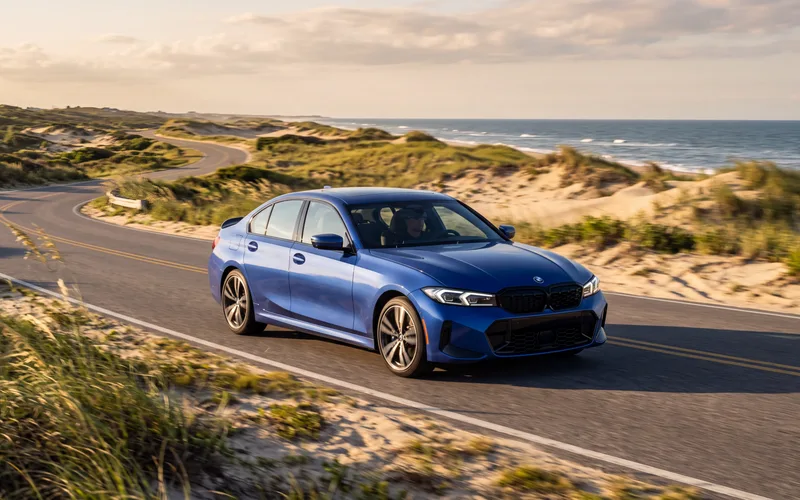 BMW 3 SeriesCompact Luxury SedanBetter at: Driving dynamics
The default cross-shop: a more engaging car to drive with a far broader engine lineup including a plug-in hybrid, at essentially the same price.
Compare 2.71B-
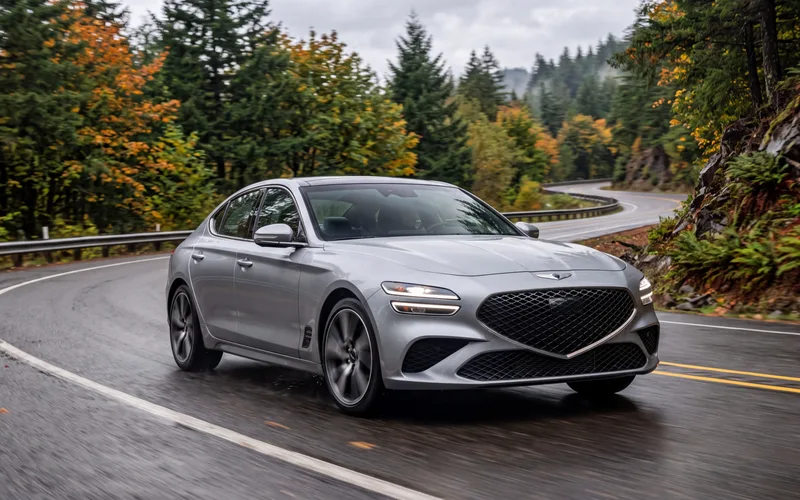 Genesis G70Compact Luxury SedanBetter at: Warranty & value
Delivers comparable content for less money with a 10-year/100,000-mile powertrain warranty and free scheduled maintenance, which erases the A4's biggest weakness.
Compare 2.53C+
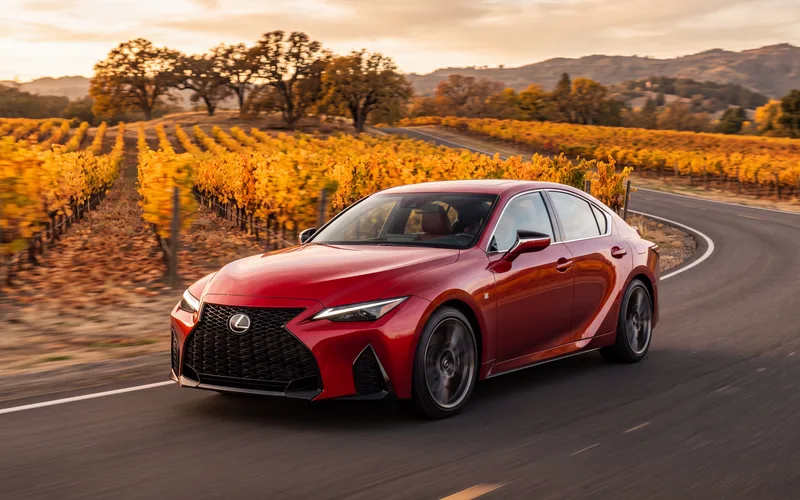 Lexus ISCompact Luxury SedanBetter at: Long-term costs
For a buyer who intends to keep the car a decade, Lexus dependability and hybrid efficiency beat the A4's $8,400 projected upkeep and 27 MPG on premium.
CompareHow it's evolved
10 scored model years · 2017–2026
Subject scores by year
Hover or tap a score to see what moved it versus the year before. A corner mark flags a big swing.
| Year | Performance | Efficiency | Safety | Space | Cost | Reliability | Tech | Use-case | Driving | Value |
|---|---|---|---|---|---|---|---|---|---|---|
| 2026 | 54 | 36 | 79 | 65 | 32 | 74 | 83 | 52 | 73 | 74 |
| 2025 | 55 | 28 | 74 | 64 | 36 | 75 | 69 | 51 | 72 | 66 |
| 2024 | 48 | 43 | 74 | 63 | 37 | 74 | 68 | 51 | 69 | 66 |
| 2023 | 48 | 36 | 72 | 63 | 37 | 74 | 66 | 49 | 70 | 68 |
| 2022 | 48 | 40 | 68 | 62 | 39 | 70 | 62 | 47 | 69 | 68 |
| 2021 | 48 | 37 | 68 | 63 | 39 | 69 | 62 | 47 | 69 | 73 |
| 2020 | 55 | 32 | 66 | 62 | 40 | 69 | 57 | 45 | 68 | 75 |
| 2019 | 55 | 32 | 65 | 63 | 38 | 72 | 57 | 46 | 70 | 73 |
| 2018 | 54 | 33 | 67 | 62 | 43 | 65 | 51 | 45 | 69 | 79 |
| 2017 | 53 | 31 | 66 | 63 | 44 | 60 | 51 | 46 | 70 | 80 |
Compare two years
Best fit & conditions
Higher scores mean a better fit for that use case. Learn more about use-case fit →
Subject profile
Academic Probation · NHTSA safety recalls
Nov 10, 2021Air bags: sensor: occupant classification: front passenger · SeatsThe cable connecting the seat heater to the Passenger Occupant Detection System (PODS) may have a contact fault, causing the software to misdiagnose a malfunction and disable the passenger air bag.
Defect
Volkswagen Group of America, Inc. (Audi) is recalling certain 2017-2020 A4 Allroad, A4 Sedan, 2018-2019 RS5 Coupe, 2019 RS5 Sportback, 2018-2020 A5 Cabriolet, A5 Coupe, A5 Sportback, S4 Sedan, S5 Cabriolet, S5 Coupe, and Audi S5 Sportback vehicles. The cable connecting the seat heater to the Passenger Occupant Detection System (PODS) may have a contact fault, causing the software to misdiagnose a malfunction and disable the passenger air bag.
Risk
A disabled passenger air bag increases the risk of injury in the event of a crash.
Remedy
Dealers will replace the connecting cable and either the heating mat or entire seat cover, free of charge. Owner notification letters were mailed January 7, 2022. Owners may contact Audi customer service at 1-800-253-2834. Audi's number for this recall is 74E3. This recall is an expansion of Recall 19V-547 (74D9). Vehicles previously repaired under 19V-547 will need to return for the new remedy.
NHTSA campaign 21V874000 ↗Manufacturer no. 74E3208,332 vehicles potentially affected (all models in the campaign)Owners notified Jan 7, 2022Filed by Volkswagen Group of America, Inc.Filed as A4, S4Jul 24, 2019Air bags: frontal: passenger side: inflator module · Air bags: sensor: occupant classificationOxidation on the Passenger Occupant Detection System (PODS) connecting cable may cause the software to misdiagnose a malfunction and disable the passenger air bag.
Defect
Volkswagen Group of America, Inc. (Audi) is recalling certain 2018-2019 Audi RS5 Sportback, 2018 S5 Cabriolet, S5 Sportback, S5 Coupe, S4 Sedan, A5 Cabriolet, A5 Sportback, A5 Coupe, and 2017-2018 A4 Sedan and A4 Allroad vehicles. Oxidation on the Passenger Occupant Detection System (PODS) connecting cable may cause the software to misdiagnose a malfunction and disable the passenger air bag.
Risk
A disabled passenger air bag increases the risk of injury in the event of a crash.
Remedy
Audi will notify owners, and dealers will install cable ties to the harness, free of charge. The recall began September 9, 2019. Owners may contact Volkswagen customer service at 1-800-893-5298. Audi's number for this recall is 74D9.
NHTSA campaign 19V547000 ↗Manufacturer no. 74D9145,337 vehicles potentially affected (all models in the campaign)Owners notified Sep 9, 2019Filed by Volkswagen Group of America, Inc.Filed as A4 ALLROAD, S4Nov 27, 2018Air bags: frontal: passenger side: inflator moduleA passenger air bag module mounting screw may not have been sufficiently tightened, possibly affecting the deployment of the air bag in the event of a crash.
Defect
Volkswagen Group of America, Inc. (Volkswagen) is recalling certain 2018 Audi A5 Sportback and 2017-2018 Audi A4 Allroad vehicles. A passenger air bag module mounting screw may not have been sufficiently tightened, possibly affecting the deployment of the air bag in the event of a crash.
Risk
If the air bag does not deploy correctly in the event of a crash, it can increase the risk of an injury.
Remedy
Volkswagen will notify owners, and dealers will inspect the air bag mounting screw, tightening or replacing it as necessary, free of charge. The recall began December 19, 2018. Owners may contact Audi customer service at 1-800-253-2834. Volkswagen's number for this recall is 69Y4.
NHTSA campaign 18V836000 ↗Manufacturer no. 69Y412 vehicles potentially affected (all models in the campaign)Owners notified Dec 19, 2018Filed by Volkswagen Group of America, Inc.Filed as A4 ALLROADOct 25, 2017Structure: body: door: hinge and attachmentsThe aluminum trim on the front and rear doors can come loose from around the door speakers, leaving sharp edges exposed.
Defect
Volkswagen Group of America, Inc. (Volkswagen) is recalling certain 2017-2018 Audi A4 Sedan and A4 allroad, and 2018 A5 Sportback vehicles. The aluminum trim on the front and rear doors can come loose from around the door speakers, leaving sharp edges exposed.
Risk
The sharp edges of the speaker trim increase the risk of injury to vehicle occupants.
Remedy
Audi will notify owners, and dealers will replace the speaker cover aluminum trim, free of charge. The recall began March 13, 2018. Owners may contact Audi customer service at 1-800-253-2834. Volkswagen's number for this recall is 70G6.
NHTSA campaign 17V675000 ↗Manufacturer no. 70G631,323 vehicles potentially affected (all models in the campaign)Owners notified Mar 13, 2018Filed by Volkswagen Group of America, Inc.Filed as A4 ALLROAD
10 recalls on other model years of the A4 (2017, 2020–2023)
Apr 3, 2024Air bags: sensor: occupant classification: front passengerAn electrical connection in the front passenger seat for the occupant detection system (ODS) control module may loosen and deactivate the front passenger air bag.
Defect
Volkswagen Group of America, Inc. (Volkswagen) is recalling certain 2023 Audi S5 Cabriolet, A4 Allroad, Q5 Sportback, A3 Sedan, S5 Sportback, SQ7, TT Coupe, TT Roadster, RS5 Sportback, 2024 A8, E-Tron Quattro, E-Tron Sportback Quattro, Q8, RSQ8, 2023-2024 Q3, Q5, and Q7 vehicles. An electrical connection in the front passenger seat for the occupant detection system (ODS) control module may loosen and deactivate the front passenger air bag.
Risk
A deactivated front passenger air bag will not deploy during a crash, increasing the risk of injury.
Remedy
Dealers will replace the passenger seat occupant detection system control module, free of charge. Owner notification letters were mailed on May 8, 2024. Owners may contact Audi customer service at 1-800-253-2834. Volkswagen's number for this recall is 69GU.
NHTSA campaign 24V251000 ↗Manufacturer no. 69GU91 vehicles potentially affected (all models in the campaign)Owners notified May 8, 2024Filed by Volkswagen Group of America, Inc.Filed as A4 ALLROADOct 26, 2022Back over prevention: display function · Equipment: electrical: infotainment: video (touch)screen/monitor/unitThe infotainment main unit may become damaged internally when the vehicle is shut off, resulting in an inoperative rearview camera display the next time the vehicle is started. As such, these vehicles fail to comply with the requirements of Federal Motor Vehicle Safety Standard number 111, "Rear Visibility."
Defect
Volkswagen Group of America, Inc. (Audi) is recalling certain 2021-2022 AUDI A8, A6 Allroad, E-TRON Quattro, 2022 S3, RSQ8, RS7, RS6 Avant, Q8, Q7, Q3, E-TRON Sportback Quattro, S5 Cabriolet, E-TRON GT, S5 Sportback, A7, A6, A5 Sportback, A5 Cabriolet, A4, A4 Allroad, A3, S8, SQ7, SQ8, S6, and S4 vehicles. The infotainment main unit may become damaged internally when the vehicle is shut off, resulting in an inoperative rearview camera display the next time the vehicle is started. As such, these vehicles fail to comply with the requirements of Federal Motor Vehicle Safety Standard number 111, "Rear Visibility."
Risk
An inoperative rearview camera display reduces the driver's rear visibility, increasing the risk of a crash.
Remedy
Dealers will replace the infotainment main unit, free of charge. Owner notification letters were mailed June 6, 2022. Owners may contact Audi's customer service at 1-800-253-2834. Audi's number for this recall is 91Ei.
NHTSA campaign 22V806000 ↗Manufacturer no. 91Ei6,076 vehicles potentially affected (all models in the campaign)Owners notified Jun 6, 2023Filed by Volkswagen Group of America, Inc.Filed as A4, A4 ALLROAD, S4Oct 5, 2022Back over prevention: display functionDue to a software issue, a blank or black screen may be displayed instead of the rearview camera image when the vehicle is placed in reverse gear. As such, these vehicles fail to comply with the requirements of Federal Motor Vehicle Safety Standard number 111, "Rear Visibility."
Defect
Volkswagen Group of America, Inc. (Volkswagen) is recalling certain 2021 Audi A8, RS7, RS6 Avant, RS5 Sportback, RS5 Coupe, Q8, Q7, Q5 Sportback, S4 Sedan, Q5, A7, A6, A6 Allroad, A5 Sportback, A5 Coupe, A5 Cabrioleet, A4 Sedan, A4 Allroad, E-Tron Sportback Quattro, SQ7, S5 Cabriolet, E-Tron Quattro, SQ8, SQ5 Sportback, SQ5, S8, S7, S6 Sedan, S5 Sportback, S5 Coupe, 2022 E-Tron GT, and 2021-2022 RSQ8 vehicles. Due to a software issue, a blank or black screen may be displayed instead of the rearview camera image when the vehicle is placed in reverse gear. As such, these vehicles fail to comply with the requirements of Federal Motor Vehicle Safety Standard number 111, "Rear Visibility."
Risk
A blank rearview camera display can reduce the driver's rear visibility, increasing the risk of a crash.
Remedy
Dealers will update the infotainment unit software, free of charge. Owner notification letters were mailed October 25, 2022. Owners may contact Audi's customer service at 1-800-253-2834. Volkswagen's number for this recall is 91DZ.
NHTSA campaign 22V742000 ↗Manufacturer no. 91DZ170,296 vehicles potentially affected (all models in the campaign)Owners notified Oct 25, 2022Filed by Volkswagen Group of America, Inc.Filed as A4, S4May 23, 2022Engine and engine cooling: engine: engine control module (ecu/ecm)The semiconductor inside the engine control unit may short-circuit and cause an engine stall.
Defect
Volkswagen Group of America, Inc. (Audi) is recalling certain 2022 Audi A6 Sedan, A4 Sedan, Q5, and Q5 Sportback vehicles. The semiconductor inside the engine control unit may short-circuit and cause an engine stall.
Risk
An engine stall can increase the risk of a crash.
Remedy
Dealers will replace the engine control unit, free of charge. Owner notification letters were mailed July 18, 2022. Owners may contact Audi customer service at 1-800-253-2834. Audi's number for this recall is 24iH.
NHTSA campaign 22V368000 ↗Manufacturer no. 24iH72 vehicles potentially affected (all models in the campaign)Owners notified Jul 18, 2022Filed by Volkswagen Group of America, Inc.Filed as A4Jan 26, 2022Suspension: rear: axle: non-powered axle assembly · TiresThe rear axle alignment may not have been inspected after the repairs for Recall 21V-295 (42L1) were performed.
Defect
Volkswagen Group of America, Inc. (Audi) is recalling certain 2019-2021 Audi A5 Sportback, RS5 Coupe, RS5 Sportback, S5 Sportback, 2020-2021 A4 Allroad, A4 Sedan, A5 Cabriolet, A5 Coupe, A6 Allroad, A6 Sedan, A7, A8, Q5, S4 Sedan, S5 Coupe, S5 Cabriolet, S6 Sedan, S7, S8, SQ5, 2021 Q5 Sportback, Q7, Q8, RS6 Avant, RS7, RSQ8, SQ5 Sportback, SQ7, and SQ8 vehicles. The rear axle alignment may not have been inspected after the repairs for Recall 21V-295 (42L1) were performed.
Risk
Rear axle misalignment may cause premature or uneven tire wear, increasing the risk of a crash.
Remedy
Dealers will inspect the rear axle, adjust the alignment as necessary, and replace any prematurely or unevenly worn tires, free of charge. Owner notification letters were mailed March 3, 2022. Owners may contact Audi customer service at 1-800-253-2834. Audi's number for this recall is 42L5.
NHTSA campaign 22V034000 ↗Manufacturer no. 42L531,058 vehicles potentially affected (all models in the campaign)Owners notified Mar 3, 2022Filed by Volkswagen Group of America, Inc.Filed as A4, A4 ALLROAD, S4Oct 20, 2021Back over prevention: sensing system: cameraA software error may prevent the rear-view image from initially displaying when the vehicle begins to reverse. As such, these vehicles fail to comply with the requirements of Federal Motor Vehicle Safety Standard number 111, "Rear Visibility."
Defect
Volkswagen Group of America, Inc. (Audi) is recalling certain 2021 Audi A8 and S8, 2022 Audi A5 Sportback, A4 Sedan, E-Tron GT, Q3, Q5, RS6 Avant, A3 Sedan, S5 Sportback, Q5 Sportback, Q7, Q8, RSQ8, SQ7, SQ8, and S3 Sedan vehicles. A software error may prevent the rear-view image from initially displaying when the vehicle begins to reverse. As such, these vehicles fail to comply with the requirements of Federal Motor Vehicle Safety Standard number 111, "Rear Visibility."
Risk
A rear-view camera that does not display an image reduces the driver's rear view, increasing the risk of a crash.
Remedy
Dealers will update the infotainment unit parameters, free of charge. Owner notification letters were mailed November 9, 2021. Owners may contact Audi customer service at 1-800-253-2834. Audi's number for this recall is 91CR.
NHTSA campaign 21V825000 ↗Manufacturer no. 91CR2,857 vehicles potentially affected (all models in the campaign)Owners notified Nov 9, 2021Filed by Volkswagen Group of America, Inc.Filed as A4Aug 5, 2021Seat belts · Seat belts: rear/other: retractorThe rear seat belt automatic locking retractors may deactivate early, which can prevent the child restraint system from securing properly. As such, these vehicles fail to comply with the requirements of Federal Motor Vehicle Safety Standard number 208, "Occupant Crash Protection."
Defect
Volkswagen Group of America, Inc. (Volkswagen) is recalling certain 2021 Volkswagen ID4, Audi A4 Allroad, A4 Sedan, A5 Cabriolet, A5 Coupe, A5 Sportback, A6 Allroad, A6 Sedan, A7, A8, E-Tron Quattro, E-Tron Sportback Quattro, Q3, Q5, Q5 Sportback, Q7, Q8, RS5 Sportback, RS5 Coupe, RS6 Avant, RS7, RSQ8, S4 Sedan, S5 Cabriolet, S5 Coupe, S5 Sportback, S6 Sedan, S7, S8, SQ5, SQ5 Sportback, SQ7, SQ8, and 2021-2022 S3 Sedan vehicles. The rear seat belt automatic locking retractors may deactivate early, which can prevent the child restraint system from securing properly. As such, these vehicles fail to comply with the requirements of Federal Motor Vehicle Safety Standard number 208, "Occupant Crash Protection."
Risk
An unsecured child restraint system can increase the risk of injury during a crash.
Remedy
Dealers will inspect, and replace as necessary, the middle-rear seat belt assemblies, free of charge. Owner notification letters were mailed August 27, 2021. Owners may contact Volkswagen customer service at 1-800-893-5298 and Audi customer service at 1-800-253-2834. Volkswagen's numbers for this recall are 69CR (VW) and 69CS (Audi).
NHTSA campaign 21V606000 ↗Manufacturer no. 69CR, 69CS45,496 vehicles potentially affected (all models in the campaign)Owners notified Aug 27, 2021Filed by Volkswagen Group of America, Inc.Filed as A4, S4Apr 26, 2021Suspension: rear: axle: non-powered axle assemblyThe lock nut on the trailing arm of the rear axle may break due to stress corrosion.
Defect
Volkswagen Group of America, Inc. (Audi) is recalling certain 2021 Q7, Q8, Q5 Sportback, SQ5 Sportback, RS6 Avant, RS7, RS Q8, 2020-2021 Audi S6 sedan, Q5, A8, S8, A7, A6 Allroad, A5 Cabriolet, A4 sedan, A4 Allroad, SQ5, S7, A6 sedan, S5 coupe, S4 sedan, S5 Cabriolet, A5 coupe, 2019-2021 RS5 coupe, A5 Sportback, S5 Sportback, RS5 Sportback vehicles. The lock nut on the trailing arm of the rear axle may break due to stress corrosion.
Risk
A broken lock nut may misalign the rear axle, causing a loss of control and increasing the risk of a crash.
Remedy
Dealers will replace the lock nuts and, if necessary, the associated bolts, free of charge. Owner notification letters were mailed June 4, 2021. Owners may contact Audi customer service at 1-800-253-2834. Audi's number for this recall is 42L1.
NHTSA campaign 21V295000 ↗Manufacturer no. 42L140,993 vehicles potentially affected (all models in the campaign)Owners notified Jun 4, 2021Filed by Volkswagen Group of America, Inc.Filed as A4, S4Dec 29, 2016Air bags: frontal: driver side: inflator module · Air bags: frontal: passenger side: inflator module · Air bags: side/window · Seat belts: pretensionerAdditionally, certain 2017 Audi Q7, A4 Sedan, A4 Allroad, and 2018 Audi Q5 vehicles are being recalled because the seat belt pretensioners may not activate properly.
Defect
Volkswagen Group of America, Inc. (Volkswagen) is recalling certain model year 2017 Audi A7, A4, A6, Volkswagen Golf and Tiguan vehicles and 2016 Volkswagen e-Golf vehicles for driver frontal air bags, passenger frontal air bags or head air bags that may not deploy properly. Additionally, certain 2017 Audi Q7, A4 Sedan, A4 Allroad, and 2018 Audi Q5 vehicles are being recalled because the seat belt pretensioners may not activate properly.
Risk
In the event of a crash, if the air bags and/or the seat belt pretensioners do not inflate or function properly, the vehicle occupants have an increased risk of injury.
Remedy
Volkswagen and Audi will notify owners, and dealers will replace the affected air bags and seat belt pretensioners, free of charge. The recall began April 2017. Owners may contact Volkswagen customer service at 1-800-893-5298 or Audi customer service at 1-800-253-2834.
NHTSA campaign 16V955000 ↗Manufacturer no. VW: 69P4; Audi 69P25,947 vehicles potentially affected (all models in the campaign)Owners notified Feb 28, 2017Filed by Volkswagen Group of America, Inc.Filed as A4 ALLROADSep 6, 2016Electrical system: software · Exterior lightingThe affected vehicles may have been programmed with new software that inadvertently makes the side marker lights inoperative in conjunction with the parking lights or the headlights. As such, these vehicles fail to comply with the requirements of Federal Motor Vehicle Safety Standard (FMVSS) number 108, "Lamps, Reflective Devices, and Associated Equipment."
Defect
Volkswagen Group of America, Inc. (Volkswagen) is recalling certain model year 2016 TT roadster, A3 cabriolet, A3 sedan and A3 e-tron, 2016-2017 TT coupe, 2017 A4 sedan and Q7 and 2015-2017 Q3 vehicles. The affected vehicles may have been programmed with new software that inadvertently makes the side marker lights inoperative in conjunction with the parking lights or the headlights. As such, these vehicles fail to comply with the requirements of Federal Motor Vehicle Safety Standard (FMVSS) number 108, "Lamps, Reflective Devices, and Associated Equipment."
Risk
If the side marker lights do not illuminate, the vehicle may be less visible at night, increasing the risk of a crash.
Remedy
Audi will notify owners, and dealers will upload revised software to correct the issue, free of charge. This recall began November 2016. Owners may contact Audi customer service at 1-800-253-2834. Volkswagen's number for this recall is 97CB.
NHTSA campaign 16V642000 ↗Manufacturer no. 97CB79,895 vehicles potentially affected (all models in the campaign)Owners notified Nov 1, 2016Filed by Volkswagen Group of America, Inc.Filed as A4 ALLROAD
Source: NHTSA Office of Defects Investigation recall database, model years 2017–2026. Recalls are listed by model year as the manufacturer filed them; whether a specific car is affected depends on its VIN — check a VIN at nhtsa.gov ↗. NHTSA model names matched to this page: A4, A4 ALLROAD, S4.
Detailed scoring by subject
1Performance & PowertrainGrades below the middle of the scale.1.65D
The volume 2.0T quattro's EA888 turbo four makes 252 hp — four more than the facelifted 2020 car and a strong figure for a compact luxury sedan, but an ordinary one against a sedan band that stretches to 520 hp.
273 lb-ft arriving low in the rev range is the flattering half of this powertrain's spec sheet — turbo torque is what makes the A4 feel quicker than its horsepower number suggests.
Audi's own 5.7-second claim is conservative — instrumented testing has beaten it by four tenths, helped by quattro traction off the line. Genuinely quick for a mainstream compact luxury sedan without stepping up to the S4.
The 2.0T is quiet and notably smooth for a turbo four, with strong midrange pull — but reviewers of this B9 A4 consistently flag a hesitation pulling away from rest, a combination of turbo spool, stop-start restart and dual-clutch takeup, which keeps it out of the top band.
The seven-speed S tronic dual-clutch shifts quickly and essentially invisibly once moving and never hunts the way a many-ratio torque-converter automatic can; its weakness is the classic dual-clutch one at creep speeds. 2018 also restored a six-speed manual — offered only on quattro cars — which is a genuine enthusiast option almost no rival still had.
quattro all-wheel drive covers the great majority of the 2018 A4 range — every 252-hp car and the S4 — with front drive confined to the 190-hp ultra. It is a road-biased torque-distributing system with no low range or terrain modes, so it stops short of the top band.
Two tunes of one 2.0-liter turbo four — 190 hp FWD ultra and 252 hp quattro — are the entire 2018 A4 sedan lineup, with the S4's 3.0T V6 sitting above as a separate model. No hybrid, plug-in or electric variant exists anywhere in the range; the manual gearbox adds choice of transmission, not of powertrain.
2Efficiency & RangeThe A4's lowest-graded category.0.14F
27 MPG combined for the volume quattro sedan is unremarkable for a 2.0-liter compact sedan — stop-start is standard but there is no electric assist, and all-wheel drive costs it four MPG against the front-drive ultra.
24 MPG in town is the weakest of the three EPA figures and the one a commuter feels. Stop-start is standard on the automatic, but with no hybrid hardware nothing else recovers energy in traffic.
34 MPG highway is the A4's best EPA figure and a real 2018 improvement — Audi's efficiency changes lifted the quattro's highway rating three MPG over the 2017 car, and it beats the later facelifted A4 by two. Tall S tronic top gears and a slippery body do the work at a steady cruise.
About 413 miles between fills — below par for a compact sedan, with the small tank rather than the engine as the binding constraint. The same drivetrain would clear 450 miles on a segment-average fill.
$2,800 a year at EPA assumptions sits near the expensive end of the compact-sedan band. Mid-pack MPG is only half of it — mandatory premium fuel is what turns an ordinary economy figure into a genuinely costly one to run.
Every 2018 A4 drivetrain takes premium unleaded, with no regular-grade, diesel, flex-fuel or plug-in alternative anywhere in the US range — a standing surcharge of roughly 60–80 cents a gallon over regular. Normal for the compact luxury class, but this item grades the requirement itself rather than the peer group.
3SafetyOne of the A4's strongest categories.2.51C+
NHTSA awarded the 2018 A4 sedan a 5-star overall rating; the frontal component is the weak spot at 4 stars for both driver and passenger, while side and rollover are 5 stars.
The B9 A4 posts Good in every IIHS crashworthiness test, including the passenger-side small overlap that was new for 2018, and earns Top Safety Pick — but not TSP+, because no trim's headlights rate better than Acceptable.
The volume Premium trim ships only Audi pre sense basic/city (low-speed AEB with pedestrian detection) plus a rearview camera; blind-spot monitoring waits for Premium Plus and adaptive cruise for Prestige or the optional Driver Assistance Package, so most of the suite is locked behind trim walls.
IIHS rates the A4's front crash prevention Superior in vehicle-to-vehicle testing with both the standard and optional systems, which is the top result available — but IIHS had no pedestrian or nighttime AEB test in 2018, so there is no evidence of the night/pedestrian capability the top band asks for.
Audi side assist with rear cross-traffic alert and pre sense rear is standard from Premium Plus upward but absent on the base Premium, and it is an alert-only system with no steering or braking intervention in the blind-spot function.
Audi active lane assist is standard only on Prestige (or via the Driver Assistance Package) and behaves as a lane-keeping nudge with mild centering rather than a true hands-on centering system; on the volume Premium trim there is no lane assistance at all.
When fitted, Audi's adaptive cruise with stop-and-go is a refined full-speed-range system with traffic jam assist layered on top up to 40 mph — genuinely good hardware for 2018 — but it is standard only on Prestige and optional elsewhere, and traffic jam assist is a low-speed function rather than a full highway-assist mode.
No hands-free highway driving system was offered on the 2018 A4 in any trim or package; Audi's traffic jam assist is a hands-on Level 2 function that requires continuous steering-wheel contact.
Every 2018 A4 headlight configuration IIHS tested rates Marginal except Prestige with the Driver Assistance Package, which manages only Acceptable — the single reason the car falls short of Top Safety Pick+, and the volume Premium trim is on the Marginal setup.
Reviewers single out the B9 A4's slim roof pillars and large glass area as giving unusually good all-around sightlines for a modern compact sedan, with a rearview camera standard and a top-view camera system available on Prestige.
IIHS rates the A4's LATCH hardware Good — the anchors sit behind removable plastic covers rather than buried in the seat bight — but compact-sedan rear packaging means a rear-facing seat eats into the front passenger's legroom and three-across is a squeeze.
4Space & ComfortMid-pack among this car's ten categories.2.21C
The pre-facelift B9 A4 sedan is a conventional five-seater across Premium, Premium Plus and Prestige, with a three-place rear bench and no reduced-seat variant anywhere in the 2018 US range.
Published without-sunroof front headroom is 38.9 in, which is what this item asks for, but almost no 2018 buyer saw it — the sunroof is standard equipment on all three trims and costs about two inches of the published figure.
41.3 in sits low in the 40–44 in sedan band — the A4's front cabin is comfortable and well shaped rather than notably long-legged, and the figure is unchanged for the whole B9 run.
37.4 in of second-row headroom is genuinely good for a compact sedan and lands above the middle of the 35–39 in band, helped by the B9's relatively upright rear roofline — reviewers specifically note six-footers fit in back.
35.7 in is the A4's clearest packaging weakness against a 32–42 in band that reaches into mid-size sedan territory; Edmunds is more generous about it than the tape measure is, and it is unchanged across the B9 generation.
13.0 cu ft is modest in absolute terms and sits low in the 10–20 cu ft sedan band, but it is a cubic foot better than the figure carried for the facelifted 2020 car and the split-fold seatback with pass-through recovers real flexibility for long items.
Competent, conventional and short of any standout idea: a modest covered console bin, narrow door pockets, a small tray ahead of the shifter and a split-folding rear seatback with pass-through. The pre-facelift car's one distinguishing storage trait is media provision rather than volume — two SD card slots and two USB ports live under the front armrest — and wireless phone charging is an upper-trim option rather than a designed-in phone cubby.
Front seats are a consistent strength — leather upholstery and power adjustment are standard even on the base Premium, memory settings arrive with Premium Plus, and reviewers rate the long-stint support highly. The rear bench is the limiter: well shaped and unusually good on headroom, but 35.7 in of legroom stops this short of the band that requires praise front and rear.
The standard suspension is firm in the German idiom but genuinely well damped — controlled body motions with no impact harshness over broken pavement. It scores below the facelifted 2020 car, whose ride reviewers singled out as the headline improvement, and the optional adaptive dampers are not the fix: testers call Dynamic mode overly stiff for gains that do not justify the cost.
Par-for-the-class isolation with one identifiable intrusion. The 2.0T is quieter under load than most turbo fours and quieter than the outgoing B8's engine, but tire roar is the audible component at highway speed — more so on cars fitted with the optional summer rubber.
Unusually generous core equipment for the era and better than the facelifted car managed: tri-zone automatic climate with rear vents and rear temperature control, heated power front seats, leather and a power sunroof are all standard on the base Premium, and the $500 Cold Weather package adds heated rear seats and a heated steering wheel. The ceiling is the deduction — no A4 trim at any price offered ventilated front seats.
5Cost of OwnershipOne of the A4's weakest categories.0.84F
For 2018 the entry A4 is the 190-hp 2.0T ultra Premium, and — as in 2020 but unlike the 2022–2026 cars — it is front-wheel drive, so quattro costs a $4,500 step up rather than being standard. That gives the 2018 car the lowest price of entry of any B9 A4 in this catalog and undercuts a 2018 BMW 330i or Mercedes C 300 by roughly $4,250 on sticker.
The volume 2018 A4 is the 252-hp 2.0T quattro in Premium Plus trim — US luxury-compact buyers overwhelmingly take AWD, and Premium Plus is where Audi side assist, rear cross-traffic assist, LED headlights, heated seats and Bang & Olufsen audio live. Unlike the 2020 facelift car, Virtual Cockpit and MMI Navigation plus were still a package on top (the 'Tech' designation), and most Premium Plus buyers took it, which is what pushes real transactions past $46,000.
Nothing is complimentary on a 2018 A4 — the owner pays from the first 10,000-mile service — and year 5 falls outside the 4 yr/50,000 mi warranty, which is exactly when a 2.0T with quattro hardware and an S tronic dual-clutch starts generating bills. RepairPal's $739/yr for the 2018 A4 (and $925/yr for the quattro) compounds toward $4,000–$4,600 in repairs alone before scheduled service, tires or brakes.
The 2018 A4's five-year mark landed in 2023, at the tail of the inflated post-pandemic used market, so it retained a little more than the A4's long-run average — the 2020 car, whose five-year mark came after that support unwound, is pegged lower at 47%. Real 2018 cars now book around 27–29% of delivered MSRP at eight years, which back-casts consistently to the low 50s at year five.
Audi's 4 yr/50,000 mi bumper-to-bumper matched BMW and Mercedes for 2018 and beats the 3 yr/36,000 mi mainstream standard, but trails Jaguar and Genesis at 5 yr/60,000 mi. Mid-band for the segment, and unchanged across the whole B9 run.
Audi publishes no standalone powertrain warranty, so the 2.0T TFSI, S tronic and quattro hardware on a 2018 A4 are covered for exactly as long as the trim panels. That falls below the floor of the 5–10 year band this item normalizes against and is a fraction of the 10 yr/100,000 mi powertrain coverage Hyundai, Kia and Genesis offered in 2018.
No complimentary scheduled maintenance at all on a 2018 A4 — Audi Care is a prepaid plan bought on top of the car, and Audi Signature Care (3 yr/30,000 mi included service) did not arrive until MY2026. What is included is 4 years of Audi 24-Hour Roadside Assistance running alongside the warranty plus short Audi connect trials, so the owner pays from the first 10,000-mile service. That trailed the included-maintenance programs Volvo, Jaguar and BMW (Ultimate Care, 3 yr/36,000 mi from MY2017) all offered in 2018.
$46,500 volume-trim price minus its estimated resale value after 5 years (51% retained, or about $23,715) leaves about $22,785 in depreciation. Add the projected $7,300 in 5-year maintenance and repairs, and owning this vehicle for 5 years costs about $30,085 in total.
6Reliability & QualityMid-pack among this car's ten categories.2.36C+
The two major predictors disagree and the more model-year-specific one is negative: Consumer Reports states outright that the 2018 A4 is less reliable than other cars from its model year, with owner-reported trouble spots clustering in the climate system (A/C compressor and evaporator failures needing full system replacement), electrical accessories (daytime running light assemblies, keyless entry), in-car electronics and the engine/drivetrain (motor mounts, coolant pump). J.D. Power is mildly positive at 3.5/5 predicted reliability, and RepairPal rates the nameplate 3.5/5.0 with only 0.4 unscheduled shop visits a year against a 0.6 luxury-midsize average. Mixed signals with a specific defect pattern on the record puts this mid-band, below the 2020 car whose CR score was above average for its year.
The cohort-exact reading is below average. J.D. Power's 2021 Vehicle Dependability Study surveyed three-year-old vehicles — that is this exact 2018 model-year cohort — and Audi came in at 127 PP100 against a 121 industry average, with European brands as a group at 131 PP100 versus 115 for Asian brands. The multi-year picture since has not settled: the 2024 VDS put Audi second from last, the 2025 VDS recovered to slightly above industry average, and Consumer Reports' brand report card places Audi upper-middle at 13th, ahead of Mercedes and Land Rover but behind BMW and Lexus. Mid-pack at best, and specifically below average for the year being scored.
Four campaigns, none touching powertrain, fire or brakes, and complaint volume for the year is genuinely low — 29 reports at CarComplaints with no single dominant cluster. What keeps it at typical rather than clean is that three of the four are airbag-related and two are the same defect twice: the Passenger Occupant Detection System cable was recalled in 2019 for oxidation and again in 2021 for a contact fault, both of which can disable the front passenger airbag. Notably absent is the infotainment problem that drags later B9 model years down — 2018 is the pre-facelift car running MIB2 with the rotary MMI controller, so it has none of the MIB3 spontaneous-reboot TSB and complaint activity that arrived with the 2020 refresh.
The volume 2018 US configuration is the 252 hp 2.0T EA888 Gen 3B with the seven-speed S tronic dual-clutch and quattro (the 190 hp 2.0T ultra front-driver is the other engine; a six-speed manual was still offered on the quattro). EA888 Gen 3 is one of the highest-volume engine families in the world and had already resolved the chain-tensioner and heavy oil-consumption faults of Gen 1/2, giving it a documented high-mileage record — this is the generation that fixed the B8 A4's reputation, not the one that made it. It falls short of the top band on recurring wear items rather than design risk, and the 2018 owner record names them concretely: coolant pump leaks around 30,000 miles, motor mount failures, plus the family's usual composite thermostat module, PCV valve and direct-injection carbon buildup. The S tronic is mature, but its mechatronics and clutch packs are an expensive out-of-warranty exposure a torque-converter automatic does not carry.
The B9 A4's cabin was the material benchmark of the compact luxury sedan class and reviewers said so plainly — dense soft-touch surfaces on every panel a hand reaches, real metal and open-pore inlays, and switchgear damping better than the 3 Series or C-Class of the period. Edmunds rated it above the Mercedes C-Class specifically on construction quality even while conceding the Mercedes looks more theatrical. It sits a couple of points under the facelifted car only because 2018 predates the 2020 refresh's 10.1-inch haptic touchscreen and higher-resolution Virtual Cockpit, so the display hardware — the one part of the cabin that ages on a schedule — is a generation behind.
Assembly is a genuine strength — Ingolstadt-built, consistent panel gaps, a quiet structure, and reviewers calling fit and finish excellent, with no rattle or misalignment cluster in the complaint record (29 total complaints for the year, none of them assembly-driven). Scattered owner reports of squeaks developing inside the first year keep it out of the 80s, as does Audi's weak standing in J.D. Power's Initial Quality Study, which is driven by electronics and infotainment defects rather than by how the car is screwed together — and 2018's electronic trouble spots (DRL assemblies, keyless entry, Bluetooth pairing) are exactly the kind of fault that lands in an initial-quality survey.
Service satisfaction was a real Audi strength in exactly this car's warranty years: the brand ranked #1 among all nameplates in J.D. Power's 2016 Customer Service Index at 874 — leading both the maintenance and repair sub-scores, with its service advisors rated best in the industry — then #2 behind Lexus in 2017 and tied for third at 871 in 2018. What holds the score down is reach rather than quality: roughly 300 US Audi dealers gives good metro and suburban density but leaves rural and small-market owners a long drive for warranty or diagnostic work, and this is a car whose common faults (PODS recall, climate and electrical accessories) are dealer-only jobs.
Expensive against the market as a whole and only average against luxury peers: RepairPal puts A4 annual repair and maintenance at $739 versus $652 for all vehicles, with a 13% chance any given repair is a severe one. The 4-year/50,000-mile factory warranty expired in 2022, so every one of this year's documented faults is now an owner-paid bill, and those bills are large — motor mounts run $1,600–$2,000 and an evaporator failure means opening the whole climate system. The EA888 has deep independent-specialist and aftermarket support, which genuinely helps, but the B9 is a longitudinal MLB Evo car rather than an MQB one and shares far less hardware with high-volume Volkswagens than an A3 does; quattro driveline, LED lighting assemblies and the MMI head unit are all dealer-priced.
7Technology & InfotainmentGrades below the middle of the scale.1.44D
7.0 in sits exactly on the floor of the 7–15.5 in sedan band, and the pre-facelift B9's display is not literally a touchscreen at all — it is a fixed dash-top panel driven by the console rotary controller, with a handwriting touchpad only on the optional 8.3 in MMI Navigation plus. The 10.1 in touchscreen that transforms this item arrives with the 2020 facelift, not here.
The B9's MMI was widely rated among the best interfaces of its generation — Audi cut the surrounding function buttons from four to two and made the rotary controller a joystick, so menus are reachable without looking away, and hard climate controls stay below the screen. It is held out of the top band by hardware age rather than logic: a 7.0 in 800×480 panel on the volume trim, handwriting input only on the optional larger screen, and graphics the 2020 MIB3 car makes look dated.
Textbook middle band: both protocols are standard on every 2018 trim including the base Premium — genuinely ahead of BMW, which still charged for CarPlay — but both are wired-only through the front USB port. No B9 A4 supports wireless projection from the factory in any year.
Built-in navigation is not standard on the volume trim — MMI Navigation plus with the 8.3 in display, Google Earth mapping and the better voice engine all sit inside the $3,000-class Navigation & Telematics package on Premium Plus, or come as Prestige trim content. A Premium or an unoptioned Premium Plus buyer gets no native maps at all and no destination voice entry, and defaults to CarPlay for navigation.
The strongest item in this category and better than the facelifted car managed, because in 2018 the flagship system is trim content rather than a line-item option: the Bang & Olufsen 3D Sound setup — 19 speakers, 16 channels, 755 watts — is standard on the volume Premium Plus. The base Premium's ten-speaker Audi sound system is clean but unremarkable, which is what keeps this from the very top of the band.
Audi virtual cockpit is one of the best digital clusters of its era — a crisp 12.3 in configurable panel with full-screen Google Earth mapping, and it was an A4 first for this generation — but it is not on the volume car. It is bundled into the expensive Navigation & Telematics package on Premium Plus and standard only on Prestige; the volume configuration runs analogue dials with a colour driver-information display between them.
No over-the-air vehicle software updating exists on the pre-facelift B9, and the volume trim does not even have the modem for the partial case: the embedded 4G LTE connection arrives with Audi connect inside the Navigation & Telematics package, so an unoptioned car pulls nothing over the air. Cars that do have it get connected map and content data; control-module software is a dealer job either way.
myAudi with Audi connect covers the core set on a suitably optioned car — vehicle status, remote lock/unlock, stolen-vehicle locator, send-to-car destinations, emergency call and a Wi-Fi hotspot — but two things hold it down. It is gated behind the Navigation & Telematics package rather than being standard, and there is no remote engine start on the 2018 US A4 at any price, which is the function American owners most expect from a phone app.
Dated and thin. Two front USB-A/AMI ports, an AUX input, two SD card slots and a 12-volt socket is the whole provision on the volume trim — no USB-C anywhere, no rear-seat USB, no household outlet, and wireless charging via the Audi phone box is an upper-trim item rather than volume-trim equipment. The SD slots are a genuine convenience of the era but not device power.
Better than most of the B9 run because the volume trim has it as standard content: Audi advanced key proximity entry with push-button start comes with the Premium Plus, and Prestige adds a hands-free power trunk lid. It stays out of the top band because the base Premium still needs the Convenience package for proximity entry, and no 2018 A4 offers phone-as-key.
The strongest parking provision of the B9's early years and ahead of the 2020 car, where sensors retreated into an option package. A rearview camera is standard on every 2018 A4; the volume Premium Plus adds Parking System Plus with front and rear sensors as standard; and the Prestige moves up to a four-camera top-view surround system. Image quality is era-typical rather than high-resolution, and the automation is guidance rather than true self-parking on most cars.
A full-colour head-up display exists on the 2018 A4 but only as standard equipment on the top Prestige — a Premium or Premium Plus buyer has no path to it at any price. That is the definition of the middle band's upper edge: good hardware, locked to the trim almost nobody buys.
8Use-Case FitOne of the A4's weakest categories.1.03D
The hardware is easy to live with and the space is not. IIHS rates the A4's LATCH ease of use Good, with anchors under removable covers rather than buried in the seat bight, and the rear door openings are square — but 35.7 in of rear legroom makes a rear-facing seat a real negotiation with the front passenger, and 13 cu ft of trunk behind a fixed bulkhead swallows one stroller and little else.
Good safety credentials with the key equipment one trim step up from the entry price. The 2018 A4 is a 5-star NHTSA car and an IIHS Top Safety Pick with Good in every crashworthiness test including the new passenger-side small overlap, and Audi side assist with rear cross-traffic alert is standard content on the volume Premium Plus — but Marginal-to-Acceptable headlights keep it off Top Safety Pick+, the base Premium ships only low-speed pre sense city AEB, and adaptive cruise and lane keeping remain extra-cost even on Premium Plus. There is no rear-occupant alert.
Better equipped for the back seat than most compact luxury sedans of its year: tri-zone automatic climate with rear vents and rear temperature control is standard on every trim, rear headroom genuinely fits six-footers, and the $500 Cold Weather package adds heated rear seats. What holds it in the middle band is legroom and charging — 35.7 in with a front seat set for an adult, no rear USB ports, and 13 cu ft of luggage space for four people's bags.
A compact, easy-sightline sedan with a smooth engine, imperceptible shifts once moving and light controls — most of what a commute asks for. Two things keep it mid-band: the seven-speed S tronic dual-clutch hesitates pulling away from rest, which reviewers and owners of this pre-facelift car single out as annoying in stop-and-go traffic, and the standard suspension is firm enough over patched city pavement to register.
An expensive car to commute in. The volume 2.0T quattro returns 27 MPG combined — 24 in the city, which is the figure a commuter actually feels — and every 2018 A4 drivetrain requires premium unleaded, which the EPA prices at $2,800 a year. There is no hybrid, plug-in or regular-grade alternative anywhere in the range; the FWD ultra at 31 MPG combined is the only cheaper option and it gives up quattro.
Genuinely urban-friendly and better helped than the facelifted car: a 186.1-inch compact sedan with a low cowl, slim pillars and large glass, and the volume Premium Plus ships Parking System Plus with front and rear sensors plus a rearview camera as standard. The 38.1 ft curb-to-curb turning circle is the one demerit — quattro's front driveline costs steering lock, so tight three-point turns need an extra shuffle.
Not a work vehicle in any meaningful sense. The A4 sedan carries no US tow rating, has no bed or flat load floor, and offers 13 cu ft of trunk behind a fixed rear bulkhead. The split-fold seatback and pass-through are the only concession to awkward loads, and 252 hp under load means nothing without a hitch to put it through.
A leather-lined luxury sedan on low-profile tires with dealer-rate service is the opposite of a wear-friendly work tool, and the 4 yr/50,000 mi warranty with no separate powertrain term and no complimentary maintenance sharpens the point. The EA888 2.0T and quattro driveline are proven in high volume across the VW Group, which is what lifts this above the floor, but nothing about the car's interior, ground clearance or running costs survives abuse.
Essentially no work-oriented provisions: no onboard AC power, no household outlet, no bed or tie-down system beyond trunk hooks, no factory hitch or roof-rail attachment on the sedan body, and no upfit ecosystem. The two front USB ports and a 12-volt socket are the entire power story, and every interior surface is a soft one.
Strong fundamentals for a tourer — a well-damped if firm ride, class-par isolation, supportive front seats and 34 MPG on the highway — but three limits keep it a good rather than superb mile-eater: a 15.3-gallon tank holds combined range to roughly 413 miles, premium fuel makes every stop dearer, and the fatigue-reducing adaptive cruise with stop-and-go and active lane assist are extra-cost items the volume car frequently left the lot without.
quattro all-wheel drive on the volume trim is a real asset on a snowy or gravel access road and is what lifts this off the pavement-bound floor. Everything else works against it: sedan ground clearance, no factory roof rails or hitch on this body style, no onboard power, no flat-folding load floor and no terrain modes or low range. Audi's answer for this buyer in 2018 was the A4 allroad, which is a different vehicle.
More flexible than the segment norm at the seatback and hard-limited behind it. The split-folding rear seatback with a centre pass-through takes skis or long boxes, and 13 cu ft is a cubic foot better than the figure published for the facelifted car — but it is still a sedan aperture into a fixed trunk, with no roof rails, no hitch-mounted option and no underfloor storage beyond the spare well.
9Driving ExperienceOne of the A4's strongest categories.2.65C+
A sharp, secure handler by consensus — precise turn-in, tightly controlled body motions and quattro roadholding, achieved without the usual ride penalty. It sits below the top band because the A4's competence is clinical rather than exploitable: the chassis leans on grip and stability instead of adjustability, and the optional adaptive dampers add stiffness rather than involvement.
The weakest of the A4's dynamic traits and the one reviewers openly disagree about. Accuracy is not in question, but the electric rack is subdued around town and on the highway and only begins to communicate when the car is pushed hard — several outlets call it outright numb. That is the middle band: precise enough, short on feedback.
A genuine strength of the B9 and rated among the best in the class — strong in absolute stopping power, but praised more for pedal quality in ordinary driving, where the response is progressive and easy to modulate to a smooth stop. It stops short of the top band only for want of instrumented 70–0 figures for this specific model year.
Once rolling, the 252-hp 2.0T and seven-speed S tronic are close to seamless — smooth power delivery and shifts reviewers describe as imperceptible, with a strong low-rev torque plateau. The recurring flaw is the dual-clutch's low-speed calibration: a noticeable hesitation pulling away from a stop, compounded by stop-start restart with no electric assist to smooth it. That drivability gap is exactly the middle band.
The EA888 2.0T is better isolated than most turbo fours of its era — Edmunds rates it quieter than the outgoing B8's engine and quieter than many rivals — with no coarseness or drone through the controls at cruise. It stops short of the top band because the four-cylinder is merely unobtrusive rather than pleasant: there is no character to the sound, which is what separates it from the six-cylinder cars above it.
38.1 ft is middling for a compact sedan and lands low in a 34–40 ft band where the best cars turn inside 36 ft — the quattro front driveline costs the A4 steering lock, and the figure is unchanged across the B9 run.
One of the A4's clearest wins, and the pre-facelift car is the better one here. Standard leather power front seats with a wide-ranging tilt/telescope column and a low cowl give an excellent position for a broad range of body sizes; slim pillars and a large glass area give unusually good sightlines; and primary infotainment control sits on a console rotary the driver can operate by feel with real climate controls below the screen — precisely what the 2020 touchscreen changeover gave away.
The sensible choice in a segment full of more characterful cars, with one enthusiast asterisk: 2018 is a year the A4 could be had with a six-speed manual, on quattro cars only, when almost no rival still offered one. Otherwise it is quick (Audi claims 5.7 s to 60, Edmunds measured 5.3), grippy and beautifully damped but satisfying rather than exciting — the numb steering, the anonymous four-cylinder soundtrack and quattro's stabilising hand all take the edge off.
10Value & Market PositionThe A4's best-graded category.3.35B+
The base 2018 Premium is well stocked for the money on the things buyers touch — leather upholstery, a power sunroof, tri-zone automatic climate, LED ambient lighting, ten speakers and, notably for 2018, Apple CarPlay and Android Auto as standard when BMW still charged a subscription for CarPlay and put leatherette in the base 330i. What holds it to competitive rather than generous is the screen and the driver aids: the pre-facelift B9 ships a 7-inch non-touch MMI display run by a rotary controller, headlights are xenon rather than LED, and Virtual Cockpit, MMI Navigation plus, blind-spot monitoring and rear cross-traffic assist all sit behind the Premium Plus step or the Navigation & Telematics package. The base car is also front-wheel drive.
2018 is among the strongest value points in the B9 run. The ultra Premium at $36,975 delivered undercuts a 2018 BMW 330i and Mercedes C 300 by roughly $4,250 while including standard leather and CarPlay that both rivals charged for, and the 252-hp quattro Premium at $41,475 delivered buys AWD and a substantial power advantage for about what a rear-drive 330i costs. The offset is that Virtual Cockpit and the safety kit most shoppers want are packaged upward, so a representative Premium Plus lands near $46,500 and the A4 still does not match a 3 Series for outright driver engagement per dollar.
The 2018 lineup is the broadest the B9 A4 ever offered in the US: Premium, Premium Plus and Prestige each available with the 190-hp front-drive ultra or the 252-hp quattro, spanning $36,975 to $50,975 delivered, with Tech-package variants slotting between them and a six-speed manual quattro still on the order sheet — a configuration essentially no rival offered by 2018. The new-for-2018 S4 sits above it and the A4 allroad wagon alongside, with S line and the new Black Optic appearance packages layering on top. The only real gap is that AWD is tied to the more expensive engine rather than orderable on the base car.
34,220 US deliveries made 2018 a solid mid-pack year — the A4's best in this catalog apart from 2017, and within 10,000 units of the BMW 3 Series — but the trajectory had already turned, down 9% from 2017's 37,674 and the start of a slide that would halve volume by 2020. The A4 sat third of the German three behind the C-Class and 3 Series in a segment already being drained by compact luxury SUVs.
2018 is close to peak Audi in the US: the brand posted 223,323 deliveries on the back of a long record-setting run, the four rings carried real design-led aspirational pull, and quattro was a genuine engineering differentiator rather than a marketing word. The A4's cabin was widely called the best in the compact luxury class. It still sits a step behind BMW and Mercedes on outright prestige and on resale support, which is why this is a strong rather than a top score.
Scored on buyer benefit, 2018 was a good year to buy an A4. This is the pre-chip-shortage market with a slow-declining sedan segment, and documented 2018 transactions show 6–11% off MSRP before incentives, marketing allowances and rebates stacked on top, plus well-supported leases. It is the opposite of the 2022 car, which sold at or over sticker with essentially no incentive cash.
2018 is the second year of the B9 in the US and the freshest an A4 gets in this catalog. The generation launched here for MY2017 with an aluminum-hybrid structure roughly 265 lb lighter than the B8 and a raft of A4 firsts — Virtual Cockpit, full-color head-up display, Apple CarPlay and Android Auto, Audi pre sense — and 2018 adds the S4 plus more standard driver aids on Premium Plus and Prestige. No redesign was near; the facelift did not arrive until MY2020. This is a new-generation score with a point held back only because 2018 itself is a carry-over year rather than the launch.
The 2018 A4 is the best-decorated model year in this nameplate's catalog. It took Cars.com's 2018 Luxury Car of the Year outright, U.S. News ranked it #1 in Luxury Small Cars at 8.4/10, Edmunds called it the class leader with excellent scores in every category and named it a Best AWD Sedan, and KBB placed it third among 2018 luxury compacts. What keeps it short of the top band is that Car and Driver dropped the A4 from its 2018 10Best list, and the Alfa Romeo Giulia and 3 Series still beat it in the driver-focused comparison tests.