
The verdict
A strong compact luxury sedan, strong on technology and held back by ownership.
The 2025 BMW 3 Series remains the enthusiast's compact luxury sedan — a rear-drive chassis with 50/50 balance, the class-benchmark ZF 8-speed, and a lineup that stretches from the $46,675 330i to the 523-hp M3 Competition xDrive. The refreshed cabin's 14.9-inch curved display and standard wireless CarPlay bring the tech up to date, and standard driver-assist is broad. But premium-fuel-only economy (30 mpg combined), tight 35.2-inch rear legroom, and BMW's stingy 4-year/50k warranty with no complimentary maintenance mean buyers pay for the driving experience — not for the total cost story.
Jump to scoresStrengths
- Segment-benchmark handling and steering
- Refined, smooth powertrains with a class-leading gearbox
- Modern, comprehensive tech stack
What holds it back
- Expensive to own out of pocket
- Mediocre real-world efficiency
- Tight rear seat and typical-price stretch
Top alternatives
Cars shoppers cross-shop with the BMW 3 Series 2.79B-
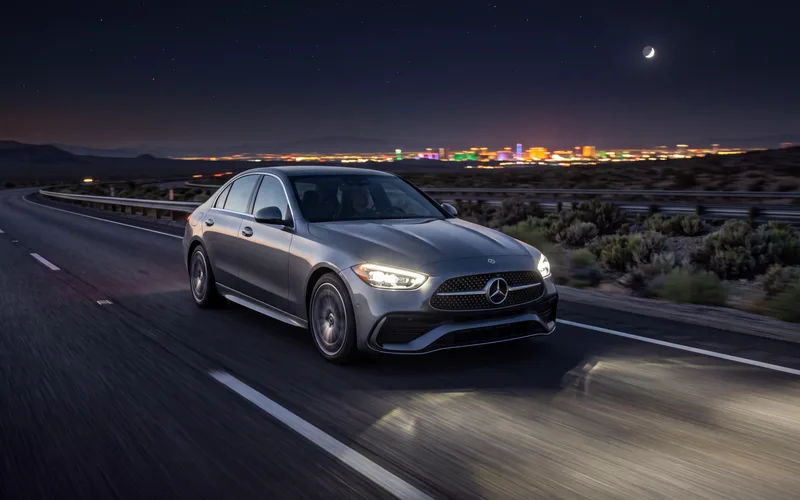 Mercedes-Benz C-ClassCompact Luxury SedanBetter at: Interior luxury
The obvious cross-shop — same price bracket, plusher interior, and a more comfort-tuned personality if you'd trade some driving sharpness for a quieter, more luxurious cabin.
Compare 2.71B-
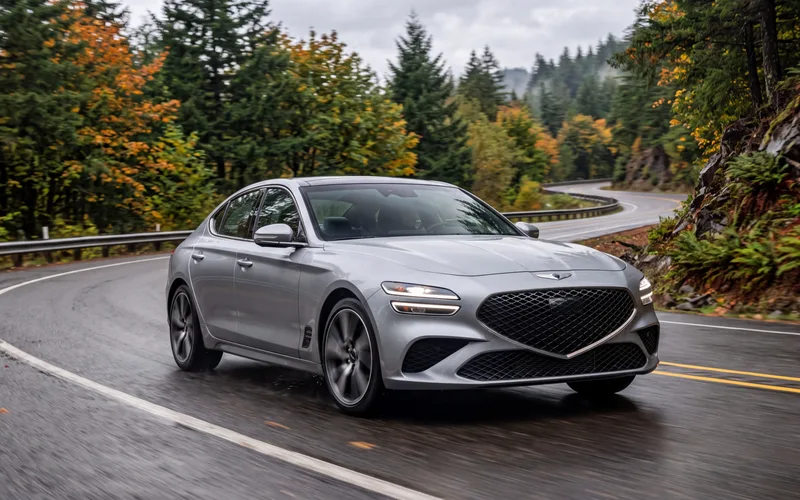 Genesis G70Compact Luxury SedanBetter at: Value & warranty
Similar sport-sedan character with more standard equipment, a lower sticker, and a 10-year/100k powertrain warranty that meaningfully cuts long-term ownership risk.
Compare 3.00B
3.00B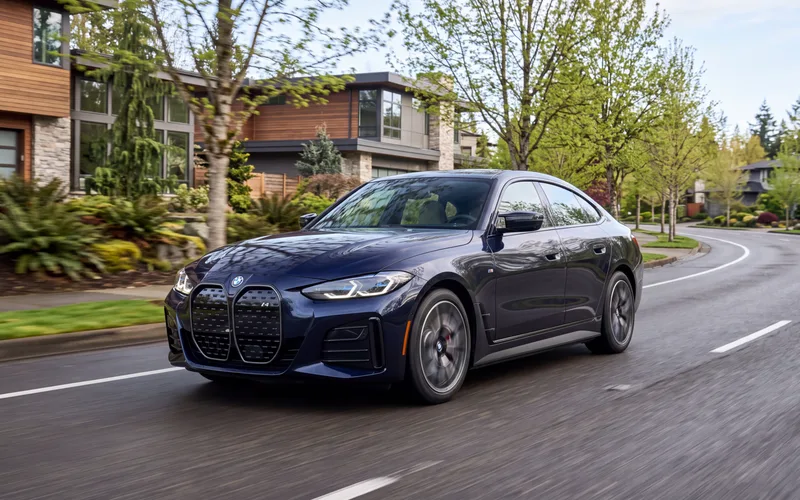 BMW i4Compact Luxury SedanBetter at: Efficiency
If you want the 3 Series driving feel without premium-fuel bills, the i4 delivers ~300 mi of EV range, similar interior tech, and lower running costs — assuming home charging works for you.
CompareHow it's evolved
8 scored model years · 2019–2026
Subject scores by year
Hover or tap a score to see what moved it versus the year before. A corner mark flags a big swing.
| Year | Performance | Efficiency | Safety | Space | Cost | Reliability | Tech | Use-case | Driving | Value |
|---|---|---|---|---|---|---|---|---|---|---|
| 2026 | 64 | 50 | 75 | 71 | 40 | 73 | 84 | 61 | 82 | 82 |
| 2025 | 64 | 48 | 75 | 71 | 29 | 77 | 83 | 60 | 83 | 76 |
| 2024 | 63 | 48 | 75 | 71 | 31 | 77 | 82 | 60 | 83 | 75 |
| 2023 | 63 | 48 | 75 | 70 | 34 | 76 | 81 | 60 | 83 | 76 |
| 2022 | 63 | 47 | 75 | 70 | 33 | 76 | 75 | 60 | 83 | 80 |
| 2021 | 62 | 49 | 75 | 70 | 44 | 67 | 74 | 60 | 74 | 75 |
| 2020 | 59 | 48 | 75 | 70 | 44 | 66 | 73 | 60 | 82 | 73 |
| 2019 | 55 | 51 | 68 | 69 | 42 | 67 | 61 | 59 | 78 | 71 |
Compare two years
Best fit & conditions
Higher scores mean a better fit for that use case. Learn more about use-case fit →
Subject profile
Trims & configurations
4 trimsScores above reflect the volume trim. Per-trim specs and scores are rolling out — the full lineup:
Detailed scoring by subject
1Performance & PowertrainMid-pack among this car's ten categories.2.30C+
Volume 330i uses BMW's B48 2.0L turbo I4 with 48V mild hybrid at 255 hp; range steps up through 330e PHEV combined output, M340i's mild-hybrid B58 inline-six, and the S58-powered M3 Competition xDrive at 523 hp.
The 330i's B48 delivers 295 lb-ft from ~1,600 rpm on a broad plateau; M340i's B58 raises it to 369 lb-ft and M3 Competition peaks at 479 lb-ft.
BMW quotes 5.6 s for the 330i RWD and 5.5 s for xDrive; M340i drops to 4.1 s and M3 Competition xDrive to 3.4 s — competitive at each price step.
The 48V-boosted B48 is among the smoothest turbo fours in the segment — near-zero lag, imperceptible auto-stop restart, linear delivery; M340i's B58 six is a benchmark for refined performance and the 330e's PHEV transitions are well-blended.
The ZF 8HP 8-speed Steptronic remains the segment benchmark — crisp, decisive, intuitive gear selection with excellent manual paddle response; the M3's reinforced 8HP shifts approach dual-clutch speed.
xDrive is a low-cost option on 330i and 330e, standard on M340i and M3 Competition xDrive; the rear-biased multi-plate clutch system integrates with M Traction Control on M cars.
Broad lineup — 330i 2.0T mild hybrid, 330e PHEV (~23 mi EV range), M340i inline-six mild hybrid, and the full M3 range — covers efficiency, mainstream, and performance. No full EV in the 3 Series nameplate (BMW keeps that role for the separate i4), which keeps this below top tier.
2Efficiency & RangeOne of the 3 Series's weakest categories.1.18D
Volume 330i RWD with the B48 2.0L turbo I4 and 48V mild-hybrid returns 30 MPG combined per EPA; AWD, M340i inline-six, and 330e PHEV variants shift the figure meaningfully.
Auto stop-start and the 48V mild-hybrid help the 330i hit 26 MPG city; still lags mainstream sedans as engine size and tune target premium performance rather than city economy.
Tall 8-speed top gear and long RWD final drive let the 330i cruise at 36 MPG highway per EPA — respectable but well behind hybrid competitors.
EPA-based cruising range from the 15.6-gallon tank at 30 MPG combined is ~468 miles for the volume trim, which is solid for a compact luxury sedan though shy of the best hybrids.
EPA estimate for the 330i RWD at 15,000 mi/yr on premium gasoline is roughly $2,100/yr — moderate for a compact luxury sedan and driven up by the premium-fuel requirement.
All gas 3 Series variants require 91-octane premium, adding meaningful cost over regular; the 330e PHEV can offset some fuel use with home charging but still needs premium when the engine runs.
3SafetyGrades above the middle of the scale.3.09B
NHTSA has not published a complete overall vehicle score for the current G20 3 Series generation; value inferred from the previous F30 generation's 5-star rating discounted for the absence of a fresh confirmatory test on the 2025 sedan.
The G20 3 Series has historically earned IIHS Top Safety Pick / TSP+ recognition with Good ratings on the small overlap and moderate overlap front tests and the updated side test on tested build ranges. The 2025 sedan carries the same structure and airbag suite, but re-award under the tightened 2024+ criteria across every trim configuration is not confirmed.
BMW Active Driving Assistant is standard on every 2025 3 Series trim and includes AEB with pedestrian detection, forward collision warning, lane departure warning, blind spot detection, rear cross-traffic alert, and speed limit info. Full-range Active Cruise Control with Stop-and-Go and Lane Keeping Assistant remain part of the optional Driving Assistance Package, capping the standard score.
BMW's AEB with pedestrian detection performs well in daytime IIHS front crash prevention testing on the G20, but nighttime pedestrian detection under the updated 2023+ IIHS protocol trails class-leading systems.
Blind Spot Detection and Rear Cross-Traffic Alert are standard fleet-wide via Active Driving Assistant, with visual and auditory alerts and a steering-nudge intervention when the driver initiates a lane change into a detected vehicle.
Lane Departure Warning is standard; Lane Keeping Assistant with side collision protection and lane centering is part of the optional Driving Assistance Package. Reviewers describe BMW's lane centering as smooth and confident on the highway with limited ping-ponging when engaged.
BMW Active Cruise Control with Stop-and-Go is a highly polished full-speed-range system that integrates cleanly with Lane Keeping Assistant for a competent highway assist. Reviewers consistently rate BMW's ACC among the best premium implementations for smoothness and predictable braking behavior.
BMW's Highway Assistant with hands-free lane change is not offered on the 2025 3 Series — the feature is currently limited in the US market to the 5 Series, 7 Series, i5, i7, and iX. The 3 Series requires hands on the wheel with Lane Keeping Assistant engaged.
LED headlights with automatic high beams are standard on every 2025 3 Series trim, and BMW's Adaptive LED headlights with cornering lights are available. IIHS has rated the current-generation 3 Series headlights Good in tested configurations.
Forward sightlines are good with a low cowl and slim A-pillars, but rearward visibility is compromised by the fastback-style roofline, thick C-pillars, and small rear window. Rearview camera is standard; Parking Assistant Plus with a 360-degree surround-view camera is optional.
Two outboard LATCH sets with a middle tether anchor; anchors are recessed behind seat cushion covers requiring some digging. Compact-sedan rear door aperture and cabin width make 3-across seat fitment difficult and rear-facing seat installation tight behind average-height front occupants.
4Space & ComfortGrades above the middle of the scale.2.81B-
The 2025 3 Series sedan seats five in a 2+3 configuration across every trim, though the rear center position is compromised by the transmission tunnel and firm cushion and is best used occasionally.
Front headroom measures 38.7 in with the standard panoramic moonroof, expanding to 40.4 in on the rare non-moonroof builds. Adequate for six-foot occupants but not spacious for the compact luxury sedan class.
Front legroom of 42.0 in is average for a compact luxury sedan, trailing the roomier Audi A4 and Mercedes C-Class published figures. Long-legged drivers fit comfortably but do not enjoy the surplus space found in a Camry or A6.
Rear headroom of 37.6 in is competitive for a compact luxury sedan with a sloping roofline; taller adults may brush the headliner but the seat position sets the head far enough forward of the C-pillar dip to remain usable.
Rear legroom of 35.2 in remains one of the tightest measurements in the compact luxury sedan segment, well behind the Audi A4 (35.7 in) and notably behind the Genesis G70 and Cadillac CT4 for behind-tall-driver room. Adults fit for short trips but knees sit close to seatbacks.
Trunk volume of 17.0 cu ft on gas 330i/M340i models is competitive for the compact luxury sedan class; the 330e PHEV loses roughly 3.8 cu ft to the battery pack, dropping usable trunk volume to about 13.2 cu ft with a raised load floor.
Cabin storage is competent but unremarkable: modest center console bin, decent door pockets, a small covered tray under the climate controls, and a standard wireless charging pad on most trims. There is no standout innovation like a giga console or fold-flat surface, and the tall transmission tunnel eats into passenger-side foot space.
Standard sport seats are firm-but-supportive with strong lateral bolstering, and the optional M Sport seats add adjustable thigh support and are widely praised for all-day comfort. Rear seat cushioning is short on under-thigh support for adults, which caps the score short of the segment leaders.
The standard suspension delivers a well-controlled ride with better compliance than earlier F30-generation cars, and the optional Adaptive M Suspension broadens the range on M340i and M Sport trims. M Sport wheel-and-tire packages and 19-inch wheels introduce more impact harshness over broken pavement, keeping this short of the plush segment benchmarks.
Highway cabin isolation is a clear improvement over the previous generation with acoustic front glass optional and reduced wind noise, but tire and some road noise still intrude at freeway speeds, particularly on the summer performance rubber fitted to M340i and M Sport packages. Class leaders on quietness (Genesis G80, Lexus ES) remain quieter.
Heated front seats, heated steering wheel, and dual-zone automatic climate control are standard across all 2025 trims, with rear-seat vents included. Ventilated front seats and four-zone climate control are available via the Premium Package on higher trims, and remote pre-conditioning is included with BMW ConnectedDrive.
5Cost of OwnershipThe 3 Series's lowest-graded category.0.00F
2025 330i RWD base MSRP is $45,500 plus $1,175 destination = $46,675. G20 LCI carries over into 2025 with modest pricing bump from 2024 ($44,995 destination-in). Sits just below the middle of the sedan normalization band.
Volume seller is 330i xDrive (base $47,500 + $1,175 destination) with the near-mandatory Premium Package (~$2,700) and popular options (Driving Assistance, heated steering, upgraded audio) pushing typical transactions into the low-to-mid $50Ks. Well above segment mainstream sedan norms.
German compact luxury sedans carry high 5-year maintenance & repair costs — synthetic oil, run-flat tires, expensive brake service, and dealer-only diagnostics. Post-MY2020 BMW dropped complimentary scheduled service, so out-of-pocket M&R runs high once bumper-to-bumper lapses in year 4. Slightly less than 5 Series due to smaller brakes and tires.
BMW 3 Series historically depreciates ~50–55% over 5 years — heavy first-owner discounts and softening compact-luxury-sedan demand as buyers migrate to X3/X5. Roughly average among compact luxury sedans; slightly better than A4 and C-Class thanks to enthusiast demand for M340i and manual/sport variants.
BMW New Vehicle Limited Warranty is 4 years or 50,000 miles, whichever comes first. Mid-pack among luxury brands (matches Audi and Mercedes; trails Genesis's 5-yr and Jaguar EliteCare's 5-yr).
BMW does not offer separate extended powertrain coverage — the powertrain is covered under the same 4-year/50,000-mile basic warranty, below the sedan band floor of 5 years. The 330e PHEV's high-voltage battery gets separate 8 yr / 100,000 mi federally mandated coverage.
BMW dropped its BMW Ultimate Care complimentary scheduled maintenance program starting MY2020, so 2025 3 Series buyers get just 4 years unlimited-mile roadside assistance plus a modest BMW ConnectedDrive services trial. Weak vs. peers: Genesis (3 yr / 36k service), Jaguar EliteCare, Volvo, and Cadillac all offer multi-year included maintenance.
$54,000 volume-trim price minus its estimated resale value after 5 years (48% retained, or about $25,920) leaves about $28,080 in depreciation. Add the projected $7,900 in 5-year maintenance and repairs, and owning this vehicle for 5 years costs about $35,980 in total.
6Reliability & QualityOne of the 3 Series's strongest categories.3.25B+
G20 platform has been in production since 2019 with a maturing track record; Consumer Reports has generally tracked the 3 Series at average-to-above-average predicted reliability (~3–4/5) in recent years. J.D. Power quality/dependability places the 3 Series near the top of the compact luxury sedan set. Newer iDrive 8/8.5 electronics are the main risk factor on 2025 cars.
BMW consistently lands in the upper-middle of luxury-brand dependability rankings — solid but not top-tier alongside Lexus/Genesis. Better than most German rivals in recent studies but well behind the Japanese leaders.
G20 generation has accumulated typical recall activity — backup camera image display, low-pressure fuel sensor, PHEV high-voltage battery inspection, and assorted software items — but nothing systemic to the powertrain, safety systems, or fire risk. Recall count is in line with segment peers.
330i's B48 2.0T (post-2019 revision) and M340i's B58 3.0T inline-six mild-hybrid are among BMW's most durable modern engines, paired with the industry-benchmark ZF 8HP automatic. B58 in particular has an outstanding high-mileage reputation across the enthusiast community.
G20 LCI cabin runs the 12.3-inch/14.9-inch curved display with Sensatec or optional Vernasca leather, aluminum trim, and consistently soft-touch coverage in high-touch zones. Reviewers rate it competitive with the A4 and above the C-Class, though a step below the newer G60 5 Series in perceived richness.
Assembly at BMW's Munich plant produces tight, consistent panel gaps and low rattle rates in early ownership. iDrive 8/8.5 has drawn scattered UI/software complaints but no widespread build issues; overall BMW brand initial-quality scores are near the industry average.
Roughly 340 BMW dealers spread across all 50 states provide strong nationwide coverage in most metro and suburban markets; luxury service satisfaction sits solidly in the upper-middle of the segment, behind Lexus and Cadillac but ahead of Audi and Mercedes in recent surveys.
OEM parts are readily available through BMW's US supply chain and the 3 Series has healthy enthusiast aftermarket support, but out-of-warranty ownership cost is notably above segment average — synthetic oil, run-flat tires, expensive brake service, and dealer-only diagnostics push routine maintenance well above mainstream compact sedans. Better than 5 Series and i4 due to smaller components but still costly.
7Technology & InfotainmentThe 3 Series's best-graded category.3.66A-
2025 G20 LCI 3 Series carries the BMW Curved Display standard across every trim, pairing a 12.3-inch digital cluster with a 14.9-inch center touchscreen.
iDrive 8.5 introduced the QuickSelect home layout and improved responsiveness over iDrive 8; system is fast and highly configurable, and the physical iDrive rotary controller is retained on the console. Downside: HVAC is fully in the touchscreen and menu depth remains a learning curve.
Wireless Apple CarPlay and wireless Android Auto are standard on every 2025 3 Series trim, including base 330i.
BMW Intelligent Personal Assistant ('Hey BMW') handles natural-language commands for climate, navigation, and vehicle settings, and native BMW Maps includes cloud-based routing and PHEV-optimized planning on the 330e. Lacks the augmented-reality nav overlays newer iDrive 9 cars add.
Standard 10-speaker HiFi audio is clean if unremarkable; optional Harman Kardon Surround Sound (16 speakers, 464W) is a strong upgrade widely praised in reviews. No Bowers & Wilkins tier is offered on the 3 Series (reserved for 5/7 Series).
12.3-inch fully digital, configurable BMW Live Cockpit Plus cluster is standard on every trim as part of the Curved Display.
BMW Remote Software Upgrade delivers whole-vehicle OTA updates covering iDrive, driver assistance, and select vehicle functions roughly twice a year; BMW Functions on Demand also enables downloadable feature purchases.
My BMW app provides remote lock/unlock, remote climate (electric preconditioning on 330e), vehicle locator, service scheduling, and BMW Digital Key Plus using UWB on iPhone (11 and later) and select Samsung Galaxy models. Some connected services (real-time traffic, hotspot) are subscription-gated after the trial.
USB-C ports are provided front and rear and a 12V outlet is standard; wireless phone charging with signal enhancer is bundled in the Premium Package rather than standard on the base 330i. No 120V household outlet, which is typical for the class.
Push-button start is standard on every trim, Comfort Access keyless entry is available in the Premium Package on 330i and standard higher in the range, and BMW Digital Key Plus (UWB) supports hands-free phone-as-key on iPhone and select Galaxy phones. Remote start is handled through My BMW app.
Rear View Camera and Park Distance Control are standard; Parking Assistant Plus (Surround View with 3D View and Reversing Assistant) is optional via the Parking Assistance Package on the 330i and standard on M340i. Imagery quality is class-competitive with Audi/Mercedes rivals.
Full-color BMW Head-Up Display is offered on the volume 330i as part of the Premium Package and standard on M340i — bright, configurable, and shows speed, nav, and driver-assist info. Not standard on the base trim.
8Use-Case FitOne of the 3 Series's weakest categories.2.07C
Proper 4-door sedan with wide-opening rear doors, 35.2 in of rear legroom, and outboard LATCH anchors makes daily car-seat installs manageable, and the 17 cu-ft trunk swallows a stroller easily. Rear-facing seats behind taller drivers are a squeeze, and the compact cabin is less roomy than mid-size rivals.
Standard Active Driving Assistant on every 2025 3 Series covers AEB with pedestrian detection, forward collision warning, blind-spot detection, rear cross-traffic alert, and lane-departure warning. The G20 3 Series holds IIHS Top Safety Pick recognition on tested build ranges; full-speed adaptive cruise and lane centering remain part of the optional Driving Assistance Package rather than standard equipment.
Excellent front seats, hushed highway cabin, standard rear-seat climate vents, and a 17 cu-ft trunk that handles a family of four's luggage make this a comfortable medium-haul family runner. Rear legroom is adequate for kids and average adults but tight for taller passengers on long stints, and rear amenities are thinner than mid-size or three-row alternatives.
The 330i's 2.0L turbo with 48V mild-hybrid, ZF 8-speed auto, supportive sport seats, and iDrive 8.5 QuickSelect deliver a low-fatigue daily driver with well-damped comfort-mode ride even on run-flats. Optional Driving Assistance Package adds smooth full-range adaptive cruise and lane centering that make stop-and-go traffic effortless.
The 2025 330i RWD returns roughly 26/36/30 mpg city/hwy/combined on premium — respectable for a rear-drive luxury sedan — but premium fuel plus BMW consumables (run-flats, dealer service after the 3-year/36k Ultimate Care lapses) keeps per-mile cost above mainstream commuters. The 330e PHEV is available and can materially cut fuel cost for short-range commuters.
At 185.9 in long and 71.9 in wide with light steering and a compact turning circle, the 3 Series threads through city traffic and slots into tight parking spaces easily. A rear-view camera is standard and Parking Assistant Plus with a 360-degree surround-view camera is available.
No US towing rating, no bed or payload spec, and only a 17 cu-ft trunk. The 3 Series is not meaningfully work-capable.
Luxury-oriented interior in Sensatec or leather with a carpeted trunk offers no washable work surfaces, and BMW has no US fleet or work-oriented 3 Series variant. The B48 turbo four is durable in normal service but the car isn't engineered for hard-use abuse.
No 120V outlet in the cargo area, no meaningful tie-downs beyond trunk hooks, no factory-installed trailer hitch, and no roof-rack or upfit ecosystem. Essentially no work-oriented provisions.
Superb front seats, hushed highway cruise, and an optional Driving Assistance Package with polished full-range adaptive cruise plus lane centering deliver a very strong mile-eater. A 15.6 gal tank paired with roughly 36 mpg highway yields ~550 mi of cruising range on 330i RWD.
xDrive AWD is available across the range (standard on M340i xDrive) and handles snow and light gravel well. But roughly 5.5 in of ground clearance, no factory roof rails, no factory hitch, and standard run-flat performance tires keep it pavement-bound — not a genuine adventure enabler.
The 17 cu-ft trunk is class-leading among compact sedans, and the 40/20/40 split-folding rear seat with center pass-through swallows skis or long items. Absent roof rails, factory hitch, and any hatch-style opening cap bulky-gear flexibility.
9Driving ExperienceOne of the 3 Series's strongest categories.3.65A-
The LCI G20 3 Series remains the class benchmark for balance and body control. The rear-biased chassis, 50/50 weight distribution, and near-ideal steering geometry give the 330i composed grip on turn-in and neutral rotation mid-corner; optional Adaptive M Suspension and M Sport package tighten body control further. Enthusiast outlets continue to rank the 3 Series at or near the top of the compact luxury segment for cornering composure.
The electrically assisted rack is accurate, quick, and naturally weighted through the arc, and BMW's variable-ratio steering (with the M Sport package) sharpens response near center. Reviewers note the current 3 Series filters more granular road feedback than the E90/F30 offered, but the steering remains among the best-communicating in the segment.
Firm, progressive pedal with strong fade resistance; instrumented 70-0 mph stops for the 330i typically fall around 160-165 ft, with the optional M Sport brakes tightening that further. The 330e's regen blending is well-calibrated with no noticeable handoff between electric and friction braking.
The B48 2.0T with 48V mild-hybrid assist paired to the ZF 8HP eight-speed is one of the smoothest, most responsive turbo-four + automatic combinations available. Tip-in is linear, stop-start is nearly imperceptible thanks to the 48V starter/generator, and shifts are quick and creamy. The M340i's B58 is even smoother; the 330e's PHEV transitions are well-blended if slightly less refined than the pure-ICE variants.
The B48 turbo-four is well isolated at cruise and refined for a four-cylinder in this class, and the M340i's B58 inline-six delivers one of the most cultured engine notes in the segment. BMW pipes an enhanced engine tone through the speakers, which reviewers generally describe as pleasant rather than intrusive; overall powertrain NVH ranks among the best in the compact luxury class.
Curb-to-curb turning diameter for the volume 330i RWD; xDrive AWD models are marginally wider. Larger than tightly packaged small sedans but typical for a compact luxury sedan.
Excellent seat and wheel adjustment range, an ideal wheel-to-pedal relationship, and clear forward sightlines. The LCI G20's curved display consolidates climate into the touchscreen (with a persistent lower shelf), which reviewers flag as a modest ergonomic step back from prior physical HVAC controls, though hard steering-wheel and center-stack controls remain plentiful.
Even the base 330i is one of the more engaging sedans on sale thanks to its rear-drive chassis, willing turbo-four, and communicative helm. M340i and M3 variants push the envelope higher, but the volume 330i alone earns 'take the long way home' credit from enthusiasts and is regularly compared favorably to sportier compact luxury peers.
10Value & Market PositionGrades above the middle of the scale.3.13B
For 2025 BMW pulled heated front seats into the 330i's standard content and includes a 12.3-inch digital cluster and 14.9-inch curved touchscreen, wireless Apple CarPlay/Android Auto, LED headlights, moonroof, dual-zone climate, and the Active Driving Assistant (adaptive cruise, blind-spot, lane-departure). Still, heated steering, upgraded audio, driver memory, and the fuller ADAS suite live in the Premium and Driving Assistance Professional packages — competitive rather than generous versus a well-equipped Genesis G70 or Cadillac CT4 at similar money.
At ~$46,675 for the 330i RWD and low-$50Ks for a typically-equipped 330i xDrive with Premium Package, you are paying for Munich engineering — ZF 8HP, 48V mild-hybrid B48, rear-biased chassis, class-benchmark handling — rather than raw content-for-price. Genesis G70, Acura TLX, Cadillac CT4-V, and even the Lexus IS deliver more standard hardware per dollar; the 3 Series justifies the ask on dynamics and brand rather than sticker savings.
One of the broadest trim ladders in the segment: 330i RWD, 330i xDrive, 330e PHEV, M340i xDrive, M3 (6-speed manual RWD), M3 Competition, M3 Competition xDrive, and the limited M3 CS — spanning ~$46K to $130K+. Buyers get a real choice of powertrain (4-cyl mild hybrid, PHEV, inline-six mild hybrid, twin-turbo six M) and drivetrain (RWD/AWD, plus a rare manual in the M3), and packages allow meaningful configuration. Only the absence of a full-EV 3-badge (that role is filled by the separate i4) keeps this off the very top.
The 3 Series remains one of the top-selling compact luxury sedans in the US (~40,000+ units per recent years), consistently trading blows with the Mercedes-Benz C-Class and outselling the Audi A4/A5, Lexus IS, Genesis G70, and Cadillac CT4. Absolute volume has slid as buyers migrate to X3/X5 SUVs — segment gravity, not model weakness — and BMW's own i4 EV cannibalizes some 3 Series demand. Still a segment sales leader.
BMW is a top-tier aspirational luxury brand with the enduring 'Ultimate Driving Machine' halo, and the 3 Series is arguably the model that built that reputation — enthusiast credibility, motorsport pedigree via M, and premium image with mainstream reach. Ranks with Mercedes-Benz and above Audi/Lexus for luxury-brand desirability in most consumer surveys and helps residual and satisfaction well beyond the badge alone.
BMW Financial Services runs competitive lease specials on 330i/330i xDrive most quarters, along with loyalty cash, college grad, military, and Corporate Fleet Program discounts that stack. Transaction data shows typical discounts of 3–6% off MSRP without desperation pricing; the 330e PHEV also benefits from federal lease pass-through of the commercial clean vehicle credit. Not the incentive machine that a Cadillac CT4 becomes, but a buyer can meaningfully negotiate.
The G20 generation launched for MY2019 and received a substantive LCI refresh for MY2023 (curved display, iDrive 8, updated grille and lighting, 48V mild-hybrid electrification on 330i/M340i). 2025 is a light carryover in the back half of the lifecycle, and a next-generation replacement is widely expected on BMW's Neue Klasse-adjacent architecture within the next couple of model years — current but no longer cutting-edge and carries some near-term redesign risk for buyers.
The 3 Series remains the reference compact luxury sport sedan for the enthusiast press — repeated Car and Driver 10Best inclusion (M340i most recently), consistent comparison-test wins or podium finishes against A4, C-Class, IS, and G70, and strong Edmunds/MotorTrend/U.S. News editorial rankings. Aggregate reviews continue to place the 2025 3 Series at or near the top of the segment for driving dynamics, powertrain, and overall polish.