

The verdict
A mixed-report subcompact luxury suv, strong on technology and held back by performance.
The 2025 BMW X1 is the class favorite for a reason: $42,525 buys 241 horsepower, standard all-wheel drive, a 6.2-second 0-60 and the biggest cargo hold in the subcompact luxury field at 25.7 cubic feet. It drives with real BMW character and its tech is genuinely current — wireless CarPlay, dual curved screens and over-the-air updates are all standard. The catch is BMW's options ladder: a panoramic roof, keyless entry and adaptive cruise control are not included, so a car equipped the way most buyers want lands closer to $47,000. Budget for premium fuel, a firm ride, and a dual-clutch gearbox that can be jerky in stop-and-go traffic.
Jump to scoresStrengths
- Best-in-class cargo room and a genuinely usable back seat
- Current-generation technology, standard rather than optional
- It actually drives like a BMW
What holds it back
- The features you expect are in packages, not on the window sticker
- Premium fuel erases the good MPG
- The dual-clutch transmission misbehaves at low speed
Top alternatives
Cars shoppers cross-shop with the BMW X1 2.43C+
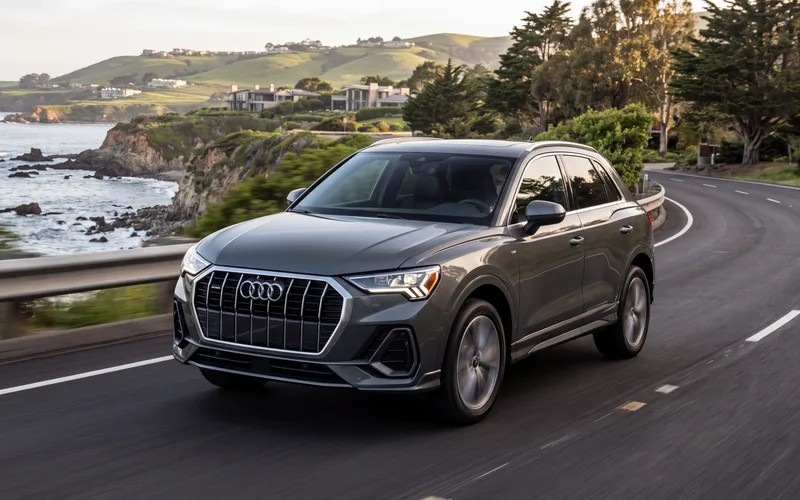 Audi Q3Subcompact Luxury SUVBetter at: Ride comfort
The most direct German cross-shop — similar money and badge weight, with a smoother automatic and a calmer ride than the X1's firm setup.
Compare 2.19C
2.19C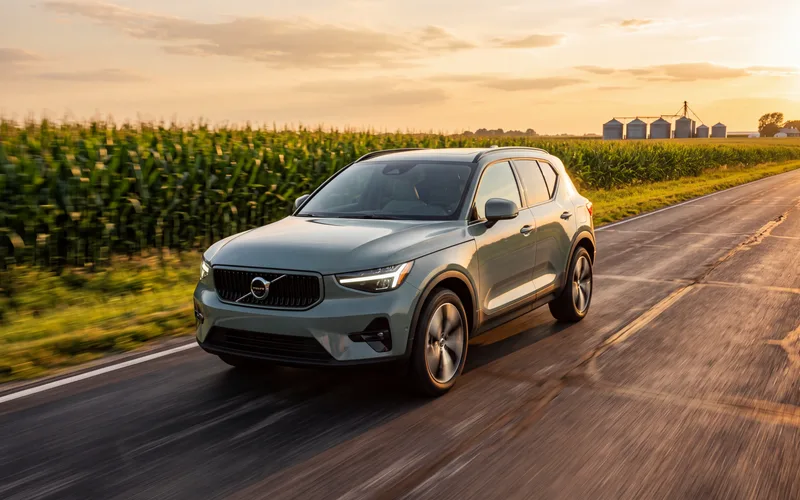 Volvo XC40Subcompact Luxury SUVBetter at: Standard content
Gives you more standard equipment for the base price and a softer ride, so you spend less time on BMW's option sheet to get a well-equipped car.
Compare 2.28C
2.28C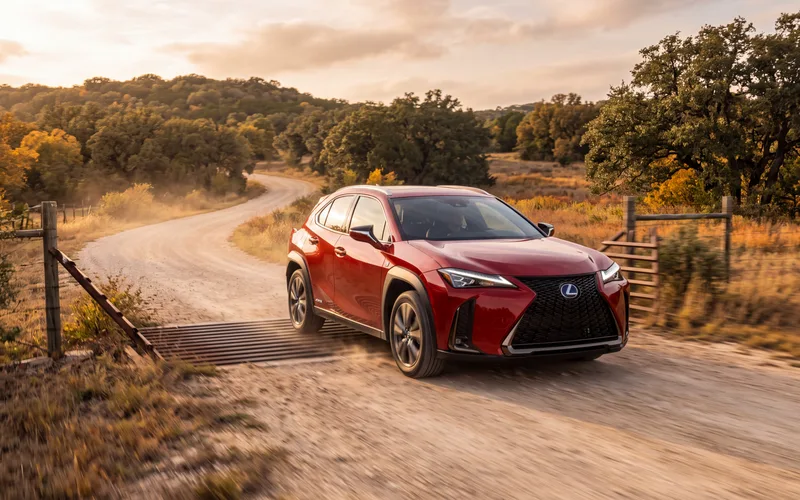 Lexus UXSubcompact Luxury SUVBetter at: Ownership cost
Runs on regular fuel with hybrid economy and Lexus dependability, sidestepping the X1's premium-fuel requirement and $8,200 five-year maintenance estimate.
CompareHow it's evolved
10 scored model years · 2017–2026
Subject scores by year
Hover or tap a score to see what moved it versus the year before. A corner mark flags a big swing.
| Year | Performance | Efficiency | Safety | Space | Cost | Reliability | Tech | Use-case | Driving | Value |
|---|---|---|---|---|---|---|---|---|---|---|
| 2026 | 47 | 57 | 79 | 48 | 48 | 77 | 80 | 67 | 73 | 80 |
| 2025 | 46 | 52 | 64 | 46 | 55 | 66 | 76 | 58 | 69 | 69 |
| 2024 | 47 | 53 | 74 | 48 | 55 | 66 | 76 | 62 | 69 | 73 |
| 2023 | 44 | 54 | 72 | 46 | 54 | 64 | 72 | 56 | 67 | 67 |
| 2022 | 43 | 47 | 65 | 42 | 55 | 73 | 64 | 55 | 68 | 55 |
| 2021 | 44 | 47 | 58 | 42 | 55 | 71 | 52 | 50 | 71 | 65 |
| 2020 | 44 | 47 | 58 | 43 | 55 | 69 | 52 | 53 | 68 | 65 |
| 2019 | 44 | 43 | 62 | 42 | 55 | 64 | 48 | 52 | 66 | 62 |
| 2018 | 44 | 43 | 53 | 42 | 60 | 64 | 40 | 49 | 65 | 67 |
| 2017 | 44 | 43 | 52 | 42 | 58 | 63 | 35 | 48 | 65 | 69 |
Compare two years
Best fit & conditions
Higher scores mean a better fit for that use case. Learn more about use-case fit →
Subject profile
Academic Probation · NHTSA safety recalls
Sep 17, 2025Seat belts: front: retractorThe torsion bar in both front seat belt retractors may have been damaged during production.
Defect
BMW of North America, LLC is recalling certain 2025-2026 X1 and X2, MINI Cooper Convertible, MINI Cooper, Mini Countryman S ALL4, and 2025 MINI Countryman SE ALL4 vehicles. The torsion bar in both front seat belt retractors may have been damaged during production.
Risk
A damaged seat belt retractor may not properly restrain an occupant during a crash, increasing the risk of injury.
Remedy
Dealers will replace both front seat belt retractors, free of charge. Owner notification letters were mailed November 13, 2025. Owners may contact BMW customer service at 1-800-525-7417. Vehicle Identification Numbers (VINs) will be searchable on NHTSA.gov on November 7, 2025.
NHTSA campaign 25V616000 ↗1,571 vehicles potentially affected (all models in the campaign)Owners notified Nov 13, 2025Filed by BMW of North America, LLCFiled as X1Nov 4, 2024Structure: body: roof and pillarsThe left and right-side B-Pillar reinforcement plates may have been manufactured with insufficient structural strength.
Defect
BMW of North America, LLC (BMW) is recalling certain 2025 X1 xDrive28i and X1 M35i vehicles. The left and right-side B-Pillar reinforcement plates may have been manufactured with insufficient structural strength.
Risk
A B-Pillar structure with reduced strength may not adequately protect passengers in a crash, increasing the risk of injury.
Remedy
Dealers will inspect the left-side and right-side B-Pillar and, if affected, replace the B-Pillar, free of charge. Owner notification letters were mailed May 7, 2025. Owners may contact BMW customer service at 1-800-525-7417.
NHTSA campaign 24V829000 ↗3,312 vehicles potentially affected (all models in the campaign)Owners notified May 7, 2025Filed by BMW of North America, LLCFiled as X1Feb 12, 2024Electronic stability control (esc) · Service brakes, hydraulic: power assist: electric: control modulePlease see the recall report for a complete list of models and model years. The integrated brake (IB) system may malfunction and result in a loss of power brake assist or cause the Antilock Brake (ABS) and Dynamic Stability Control (DSC) systems to not function properly.
Defect
BMW of North America, LLC. (BMW) is recalling certain 2023-2025 BMW, MINI, and Rolls-Royce vehicles. Please see the recall report for a complete list of models and model years. The integrated brake (IB) system may malfunction and result in a loss of power brake assist or cause the Antilock Brake (ABS) and Dynamic Stability Control (DSC) systems to not function properly.
Risk
A loss of power brake assist can extend the distance required to stop the vehicle. Additionally, malfunctioning ABS and/or DSC systems can cause a loss of vehicle control. Either of these scenarios can increase the risk of a crash.
Remedy
Dealers will replace the integrated brake system, free of charge. Owner notification letters were mailed between June and December 2024. Owners may contact BMW customer service at 1-800-525-7417 or Rolls Royce customer service at 1-877-877-3735.
NHTSA campaign 24V104000 ↗266,716 vehicles potentially affected (all models in the campaign)Owners notified Jun 28, 2024Filed by BMW of North America, LLCFiled as X1
16 recalls on other model years of the X1 (2017–2024, 2026)
Jul 1, 2026Electronic stability control (esc) · Service brakes, hydraulic: power assist: electric: control moduleThe integrated brake (IB) system may malfunction and result in a loss of power brake assist or cause the Antilock Brake (ABS) and Dynamic Stability Control (DSC) systems to not function properly.
Defect
BMW of North America, LLC (BMW) is recalling certain 2025 Mini Cooper S, Mini Countryman S All4, X2, 2024 Rolls-Royce Spectre, 2023-2025 i7, 7 Series, X7, 2024-2025 i5, 5 Series, 2023-2024 XM, X1, 2024-2025 X6, and X5 vehicles. The integrated brake (IB) system may malfunction and result in a loss of power brake assist or cause the Antilock Brake (ABS) and Dynamic Stability Control (DSC) systems to not function properly.
Risk
A loss of power brake assist can extend the distance required to stop the vehicle. Additionally, malfunctioning ABS and/or DSC systems can cause a loss of vehicle control. Either of these scenarios can increase the risk of a crash.
Remedy
The Integrated brake system will be inspected and, if necessary, replaced, free of charge. Owner notification letters are expected to be mailed August 21, 2026. Owners may contact BMW customer service at 1-800-525-7417 or Rolls-Royce customer service at 1-877-877-3735. Vehicle Identification Numbers (VINs) involved in this recall will become searchable on NHTSA.gov beginning August 21, 2026. Vehicles previously repaired under recall 24V739 or 24V104 will need to have the new remedy completed.
NHTSA campaign 26V422000 ↗428 vehicles potentially affected (all models in the campaign)Owners notified Aug 25, 2026Filed by BMW of North America, LLCFiled as X1Oct 21, 2025Seat belts: rear/other: retractorThe housing pin in the rear (left and/or right) seat belt retractors may have been damaged during production, resulting in the retractor not locking the seat belt as intended. As such, these vehicles fail to comply to Federal Motor Vehicle Safety Standard number 209, "Seat Belt Assemblies."
Defect
BMW of North America, LLC is recalling certain 2026 2 Series Gran Coupe, X1, X2, and Mini Countryman S ALL4 vehicles. The housing pin in the rear (left and/or right) seat belt retractors may have been damaged during production, resulting in the retractor not locking the seat belt as intended. As such, these vehicles fail to comply to Federal Motor Vehicle Safety Standard number 209, "Seat Belt Assemblies."
Risk
A damaged seat belt retractor may not properly restrain an occupant during a crash, increasing the risk of injury.
Remedy
Dealers will replace the rear (left and/or right) seat belts, free of charge. Owner notification letters were mailed December 18, 2025. Owners may contact BMW customer service at 1-800-525-7417. Vehicle Identification Numbers (VINs) involved in this recall became searchable on NHTSA.gov December 12, 2025.
NHTSA campaign 25V717000 ↗1,024 vehicles potentially affected (all models in the campaign)Owners notified Dec 18, 2025Filed by BMW of North America, LLCFiled as X1Oct 2, 2024Electronic stability control (esc) · Service brakes, hydraulic: power assist: electric: control modulePlease see the recall report for a complete list of models and model years. The integrated brake (IB) system may malfunction and result in a loss of power brake assist or cause the Antilock Brake (ABS) and Dynamic Stability Control (DSC) systems to not function properly.
Defect
BMW of North America, LLC. (BMW) is recalling certain 2023-2024 X1, X5, X6, X7, XM, 530i, i5, 740i, 760i, i7, and 750e vehicles. Please see the recall report for a complete list of models and model years. The integrated brake (IB) system may malfunction and result in a loss of power brake assist or cause the Antilock Brake (ABS) and Dynamic Stability Control (DSC) systems to not function properly.
Risk
A loss of power brake assist can extend the distance required to stop the vehicle. Additionally, malfunctioning ABS and/or DSC systems can cause a loss of vehicle control. Either of these scenarios can increase the risk of a crash.
Remedy
Dealers will replace the integrated brake module, free of charge. Interim owner notification letters notifying owners of the safety risk are expected to be mailed November 22, 2024. Second letters will be mailed once the parts are available. Owners may contact BMW customer service at 1-800-525-7417. Vehicles in this recall were previously repaired under recall number 24V-104 and will need to have the new remedy completed.
NHTSA campaign 24V739000 ↗11,579 vehicles potentially affected (all models in the campaign)Owners notified Nov 27, 2024Filed by BMW of North America, LLCFiled as X1Sep 18, 2024Electronic stability control (esc): control module · Service brakes, hydraulic: antilock/traction control/electronic limited slip: control unit/modulePlease refer to the recall report for the complete list of models. The welds in the servomotor of the integrated brake control module may break, causing a loss of power brake assist and rear brake function. In addition, the Antilock Brake System (ABS) and Dynamic Stability Control (DSC) system may not function.
Defect
BMW of North America (BMW) is recalling certain 2023-2024 X1, 2024-2025 X5, 2025 X6, 2023-2025 X7, 740i, 760i, 2024 XM, 530i, 540i, i7, 750e, X2, 2024-2025 i5, 2024 Rolls Royce Spectre, 2025 MINI Countryman S ALL4, JCW Countryman ALL4, and 2025 MINI Hardtop 2 Door (Cooper, Cooper S) vehicles. Please refer to the recall report for the complete list of models. The welds in the servomotor of the integrated brake control module may break, causing a loss of power brake assist and rear brake function. In addition, the Antilock Brake System (ABS) and Dynamic Stability Control (DSC) system may not function.
Risk
A loss of brake power assist or rear brake function can result in extended stopping distance. A loss of ABS or DSC can cause a loss of vehicle handling and control. Either of these scenarios can increase the risk of a crash.
Remedy
Dealers will replace the integrated brake system, free of charge. Owner notification letters were mailed November 13, 2024. Owners can contact BMW Customer Service at 1-800-525-7417.
NHTSA campaign 24V697000 ↗309 vehicles potentially affected (all models in the campaign)Owners notified Nov 13, 2024Filed by BMW of North America, LLCFiled as X1Apr 12, 2023Seat belts: rear/otherOn the second-row outboard seats, the seat belts may have been pinched by an interior trim panel during vehicle assembly.
Defect
BMW of North America, LLC (BMW) is recalling certain 2023 X1 xDrive28i, X1 M35i vehicles. On the second-row outboard seats, the seat belts may have been pinched by an interior trim panel during vehicle assembly.
Risk
A pinched seat belt may not function properly, increasing the risk of injury during a crash.
Remedy
Dealers will inspect and adjust the interior trim panel, as necessary, free of charge. Owner notification letters were mailed June 9, 2023. Owners may contact BMW customer service at 1-800-525-7417.
NHTSA campaign 23V260000 ↗1,465 vehicles potentially affected (all models in the campaign)Owners notified Jun 9, 2023Filed by BMW of North America, LLCFiled as X1Feb 14, 2023Air bags: frontalThe front driver's air bag may have been manufactured incorrectly and may not deploy as intended during a crash.
Defect
BMW of North America, LLC (BMW) is recalling certain 2022-2023 iX xDrive40, iX xDrive50, iX M60 and 2022-2023 X1 xDrive28i vehicles. The front driver's air bag may have been manufactured incorrectly and may not deploy as intended during a crash.
Risk
A driver's air bag that does not deploy as intended during a crash increases the risk of injury.
Remedy
Dealers will replace the driver's air bag, free of charge. Owner notification letters were mailed April 14, 2023. Owners may contact BMW customer service at 1-800-525-7417.
NHTSA campaign 23V079000 ↗15,803 vehicles potentially affected (all models in the campaign)Owners notified Apr 14, 2023Filed by BMW of North America, LLCFiled as X1Jul 20, 2022Fuel system, gasoline: fuel injection system: fuel railThe high-pressure fuel rail may crack and result in a fuel leak within the engine compartment.
Defect
BMW of North America, LLC (BMW) is recalling certain 2022 X1 xDrive 28i, X3 xDrive30i, and 228i Gran Coupe vehicles. The high-pressure fuel rail may crack and result in a fuel leak within the engine compartment.
Risk
A fuel leak in the presence of an ignition source increases the risk of a fire.
Remedy
Dealers will replace the high-pressure fuel rail, free of charge. Owner notification letters were mailed September 19, 2022. Owners may contact BMW customer service at 1-800-525-7417.
NHTSA campaign 22V513000 ↗5 vehicles potentially affected (all models in the campaign)Owners notified Sep 19, 2022Filed by BMW of North America, LLCFiled as X1Jul 21, 2021Seat beltsThe passenger seat belt Automatic Locking Retractor (ALR) may deactivate early, before the webbing fully retracts. As such, these assemblies fail to comply with the requirements of Federal Motor Vehicle Safety Standard number 208, "Occupant Crash Protection."
Defect
BMW of North America, LLC (BMW) is recalling certain 2021 2 Series (230i, 230i xDrive, M240i, M240i xDrive), 330e, 330e Xdrive, 4 Series Coupe (430i, 430i xDrive, M440i xDrive) M4 Coupe, M4 Competition Coupe, BMW 4 Series Convertible (430i, M440i), BMW X1 sDrive28i, xDrive28i, 2 Series Gran Coupe (228i, 228i xDrive, M235i xDrive), M2 Competition Coupe, 330i, 330i xDrive, M340i, M340i xDrive, M3, M3 Competition, 530i, 530i xDrive, 540i, 540i xDrive, MINI Hardtop 2 Door (Cooper, CooperS, JCW), X2 sDrive28i, X2 xDrive28i, X2 M35i, Z4 sDrive30i, Z4 M40i, MINI Hardtop 2 Door (Cooper SE), MINI Convertible (Cooper, Cooper S, JCW), MINI Clubman (Cooper S, Cooper S All4, JCW), MINI Countryman (Cooper, Cooper All4, Cooper S, Cooper S All4, JCW All4), Rolls Royce Ghost, MINI Countryman (Cooper S E All4), Rolls Royce Phantom, Rolls Royce Cullinan, and Toyota Supra vehicles. The passenger seat belt Automatic Locking Retractor (ALR) may deactivate early, before the webbing fully retracts. As such, these assemblies fail to comply with the requirements of Federal Motor Vehicle Safety Standard number 208, "Occupant Crash Protection."
Risk
During a crash, a seat belt retractor that does not function as intended increases the risk of injury.
Remedy
Dealers will inspect the seat belt retractors (including the seat belts) and, if necessary, replace the retractors, free of charge. Owner notification letters were mailed on September 3, 2021. Owners may contact BMW customer service at 1-800-525-7417; 1-866-825-1525 (MINI); 1-877-877-3735 (Rolls Royce); and 1-888-270-9371 (Toyota).
NHTSA campaign 21V554000 ↗21,537 vehicles potentially affected (all models in the campaign)Owners notified Sep 3, 2021Filed by BMW of North America, LLCFiled as X1May 20, 2020Air bags · Air bags: air bag/restraint control module · Air bags: side/window: curtainDue to a problem with the rollover sensor within the air bag control unit, in the event of a rollover crash, the head air bag, seat belt pretensioners and other safety systems, may not activate.
Defect
BMW of North America, LLC (BMW) is recalling certain 2020 X1 xDrive28i, X1 sDrive28i, X2 xDrive28i and X2 sDrive28i, 2020 MINI Clubman Cooper S All4, 2021 MINI Hardtop 2 Door (Cooper, Cooper S, John Cooper Works and Cooper S E) and MINI Hardtop 4 Door (Cooper and Cooper S) vehicles. Due to a problem with the rollover sensor within the air bag control unit, in the event of a rollover crash, the head air bag, seat belt pretensioners and other safety systems, may not activate.
Risk
If the safety systems do not deploy as intended in a roll over crash, it may increase the risk of injury.
Remedy
BMW will notify owners, and dealers will replace the air bag control unit, free of charge. The recall began July 17, 2020. Owners may contact BMW customer service at 1-800-525-7417 or MINI customer service at 1-866-825-1525.
NHTSA campaign 20V283000 ↗76 vehicles potentially affected (all models in the campaign)Owners notified Jul 17, 2020Filed by BMW of North America, LLCFiled as X1Aug 14, 2019Steering: linkages: tie rod assemblyThe steering gear tie rod may have been assembled incorrectly, which may result in excessive wear of the tie rod end, eventually causing it to break.
Defect
BMW of North America, LLC (BMW) is recalling certain 2018-2019 BMW X1 sDrive28i, X1 xDrive28i, 2019 X2 xDrive28i, MINI Cooper S Convertible, Countryman, and John Cooper Works Countryman vehicles. The steering gear tie rod may have been assembled incorrectly, which may result in excessive wear of the tie rod end, eventually causing it to break.
Risk
A broken steering tie rod would lead to a loss of vehicle control, increasing the risk of a crash.
Remedy
BMW will notify owners, and dealers will inspect the vehicles and replace the tie rods and ball joints as necessary, free of charge. The recall began October 11, 2019. Owners may contact BMW customer service at 1-800-525-7417 or MINI customer service at 1-866-825-1525.
NHTSA campaign 19V601000 ↗32 vehicles potentially affected (all models in the campaign)Owners notified Oct 11, 2019Filed by BMW of North America, LLCFiled as X1May 9, 2019Structure: body: roof and pillarsIn the event of a crash where the occupants head contacts the B-pillar, the pillar may not absorb an adequate amount of the impact. As such, these vehicles fail to comply with the requirements of Federal Motor Vehicle Safety Standard (FMVSS) number 201, "Occupant Protection in Interior Impact."
Defect
BMW of North America, LLC (BMW) is recalling certain 2016-2019 X1 sDrive28i and X1 xDrive28i vehicles. In the event of a crash where the occupants head contacts the B-pillar, the pillar may not absorb an adequate amount of the impact. As such, these vehicles fail to comply with the requirements of Federal Motor Vehicle Safety Standard (FMVSS) number 201, "Occupant Protection in Interior Impact."
Risk
In the event of a crash, the insufficient impact absorption can increase the risk of injury.
Remedy
BMW will notify owners, and dealers will replace the vertical trim pieces on the upper portion of the interior B-Pillars, free of charge. Interim letters notifying owners of the safety risk were mailed July 1, 2019. Second notices will be sent as parts become available, starting on September 27, 2019. Owners may contact BMW customer service at 1-800-525-7417.
NHTSA campaign 19V349000 ↗106,182 vehicles potentially affected (all models in the campaign)Owners notified Sep 27, 2019Filed by BMW of North America, LLCFiled as X1Jan 30, 2019Exterior lighting: tail lightsContaminated hardware may cause the attachment brackets of the taillight housings to crack, causing the lights to loosen or possibly detach from the vehicle.
Defect
BMW of North America, LLC (BMW) is recalling certain 2018-2019 BMW X1 sDrive28i and X1 xDrive28i vehicles. Contaminated hardware may cause the attachment brackets of the taillight housings to crack, causing the lights to loosen or possibly detach from the vehicle.
Risk
If a taillight detaches from the vehicle, it would no longer provide the required lighting to following traffic, or it may become a road hazard, increasing the risk of a crash.
Remedy
BMW will notify owners, and dealers will properly secure the taillights, free of charge. The recall began March 28, 2019. Owners may contact BMW customer service at 1-800-525-7417.
NHTSA campaign 19V074000 ↗5,920 vehicles potentially affected (all models in the campaign)Owners notified Mar 28, 2019Filed by BMW of North America, LLCFiled as X1Jul 11, 2018Engine and engine cooling: engineThe crankshaft sensor may be equipped with incorrect firmware, preventing the sensor from properly processing input from the crankshaft reluctor ring, possibly resulting in a vehicle stall. On September 12, 2018, BMW expanded the recall to a total of 5,309 vehicles including certain 2018-2019 BMW 540d xDrive, 230i M240i, M240i xDrive, X2 sDrive28i, X2 xDrive28i, X1 sDrive28i, X1 xDrive28i, 330i, 330i xDrive, 340i, 340i xDrive, 330i xDrive Gran Turismo, 530i, 530i xDrive, 540i, 540i xDrive, 530e, 530e xDrive, 640i xDrive Gran Turismo, 330e, 2019 430i Gran Coupe, 430i xDrive Gran Coupe, 440i Gran Coupe, 440i xDrive Gran Coupe, 430i, 430i xDrive, 440i, 440i xDrive, 740i, 740i xDrive, MINI Cooper, Cooper S, JCW, MINI Countryman (Cooper, Cooper All4, Cooper S, Cooper S All4, JCW All4), and MINI Clubman (Cooper, Cooper S, Cooper All4, Cooper S All4, JCW All4) vehicles.
Defect
BMW of North America, LLC (BMW) is recalling certain 2018 BMW 540d xDrive vehicles. The crankshaft sensor may be equipped with incorrect firmware, preventing the sensor from properly processing input from the crankshaft reluctor ring, possibly resulting in a vehicle stall. On September 12, 2018, BMW expanded the recall to a total of 5,309 vehicles including certain 2018-2019 BMW 540d xDrive, 230i M240i, M240i xDrive, X2 sDrive28i, X2 xDrive28i, X1 sDrive28i, X1 xDrive28i, 330i, 330i xDrive, 340i, 340i xDrive, 330i xDrive Gran Turismo, 530i, 530i xDrive, 540i, 540i xDrive, 530e, 530e xDrive, 640i xDrive Gran Turismo, 330e, 2019 430i Gran Coupe, 430i xDrive Gran Coupe, 440i Gran Coupe, 440i xDrive Gran Coupe, 430i, 430i xDrive, 440i, 440i xDrive, 740i, 740i xDrive, MINI Cooper, Cooper S, JCW, MINI Countryman (Cooper, Cooper All4, Cooper S, Cooper S All4, JCW All4), and MINI Clubman (Cooper, Cooper S, Cooper All4, Cooper S All4, JCW All4) vehicles.
Risk
A vehicle stall can increase the risk of a crash.
Remedy
BMW will notify owners, and dealers will replace the crankshaft sensor, free of charge. The recall began September 6, 2018. Owners may contact BMW customer service at 1-800-525-7417.
NHTSA campaign 18V465000 ↗5,309 vehicles potentially affected (all models in the campaign)Owners notified Sep 6, 2018Filed by BMW of North America, LLCFiled as X1Jan 26, 2017Air bags: frontal: passenger side: inflator moduleThe affected vehicles have an instrument panel that may not allow the front passenger air bag to deploy properly in the event of a crash.
Defect
BMW of North America, LLC (BMW) is recalling certain 2016-2017 X1 xDrive28i and X1 sDrive28i vehicles. The affected vehicles have an instrument panel that may not allow the front passenger air bag to deploy properly in the event of a crash.
Risk
In the event of a crash, if the front passenger air bag does not deploy properly, it can increase the risk of injury.
Remedy
BMW will notify owners, and dealers will replace the instrument panel, free of charge. The recall began May 2017. Owners may contact BMW customer service at 1-800-525-7417.
NHTSA campaign 17V062000 ↗16,771 vehicles potentially affected (all models in the campaign)Owners notified Feb 10, 2017Filed by BMW of North America, LLCFiled as X1 SAVDec 20, 2016Air bagsThe affected vehicles have seat- mounted side air bag inflator initiators that may fail to ignite during a crash.
Defect
BMW of North America, LLC (BMW) is recalling certain model year 2017 BMW 640i, 640i xDrive, 650i, 650i xDrive, M6, 535i, 535i xDrive, 430i, 430i xDrive, 440i, 440i xDrive, M4, X1 sDrive28i, X1 xDrive28i, i3, i8, Rolls-Royce Dawn, Mini Clubman Cooper, Clubman Cooper S, Cooper All4, Cooper S All4, Mini 4-Door Cooper, Cooper S, Mini 2-Door Cooper, Cooper S, John Cooper Works and 2016 BMW 528i, 528i xDrive, 535i, 535i xDrive, 550i, 550i xDrive, M5 and 535d vehicles. The affected vehicles have seat- mounted side air bag inflator initiators that may fail to ignite during a crash.
Risk
If the air bag inflator initiator fails to ignite, the seat-mounted air bag will not deploy, increasing the risk of injury.
Remedy
BMW will notify owners, and dealers will replace the air bag modules, free of charge. The recall began February 6, 2017. Owners may contact BMW customer service at 1-800-525-7417.
NHTSA campaign 16V914000 ↗3,506 vehicles potentially affected (all models in the campaign)Owners notified Feb 10, 2017Filed by BMW of North America, LLCFiled as X1 SAVOct 17, 2016Seat belts: front: retractorThe vehicle-sensitive locking mechanism of the seat belt Emergency Locking Retractor (ELR) for the driver's seat may not lock as designed. As such, these vehicles fail to comply with the requirements of the Federal Motor Vehicle Safety Standard (FMVSS) number 209, "Seat Belt Assemblies."
Defect
BMW of North America, LLC (BMW) is recalling certain model year 2016-2017 X1 sDrive28i, X1 xDrive28i, MINI Hardtop 4 Door Cooper, Mini Hardtop 4 Door Cooper S, MINI Cooper Clubman, and Cooper S Clubman, 2017 Rolls-Royce Ghost, and 2016 528i vehicles. The vehicle-sensitive locking mechanism of the seat belt Emergency Locking Retractor (ELR) for the driver's seat may not lock as designed. As such, these vehicles fail to comply with the requirements of the Federal Motor Vehicle Safety Standard (FMVSS) number 209, "Seat Belt Assemblies."
Risk
In the event of a crash where heavy braking is applied, the Emergency Locking Retractor (ELR) may activate when the occupant is more forward in the seat, possibly increasing the risk of injury.
Remedy
BMW will notify owners, and dealers will replace the driver's seat belt assembly, free of charge. The recall began July 3, 2019. Owners may contact BMW customer service at 1-800-525-7417.
NHTSA campaign 16V747000 ↗15,455 vehicles potentially affected (all models in the campaign)Owners notified Jul 3, 2019Filed by BMW of North America, LLCFiled as X1
Source: NHTSA Office of Defects Investigation recall database, model years 2017–2026. Recalls are listed by model year as the manufacturer filed them; whether a specific car is affected depends on its VIN — check a VIN at nhtsa.gov ↗. NHTSA model names matched to this page: X1, X1 SAV.
Detailed scoring by subject
1Performance & PowertrainThe X1's lowest-graded category.1.03D
The volume US trim is the xDrive28i with BMW's B48 2.0L TwinPower Turbo four making 241 hp — adequate for a subcompact luxury SUV but modest against the SUV-wide 150-550 hp normalization band.
295 lb-ft (400 Nm) arrives low in the rev range, which is why the X1 feels stronger in traffic than its horsepower figure suggests; the M35i shares the same peak torque rating.
BMW's own claim for the xDrive28i is 6.2 seconds to 60 mph, with instrumented tests of this generation landing at or just under that; brisk for a subcompact crossover, mid-pack against the SUV band that stretches to 3.5 s.
The B48 turbo four is strong and largely smooth with little perceptible lag once moving, and reviewers consistently call the X1 punchy and engaging; it loses points for the ordinary four-cylinder sound and a slightly hesitant tip-in from rest that owners report.
The 7-speed Steptronic dual-clutch shifts quickly and decisively at speed and never hunts, but low-speed and parking-lot manners are the recurring complaint against this generation's DCT — jerkiness on creep and re-application of throttle.
US-market X1s are rated at 3,500 lbs braked with the factory trailer hitch — respectable for a subcompact crossover but low against the SUV band's 8,000 lb ceiling. Third-party tow databases quote 2,500-3,000 lbs, but BMW dealer and hitch-manufacturer specification sheets for the U11 consistently state 3,500 lbs GTW / 350 lbs tongue weight.
Every US 2025 X1 is an xDrive — all-wheel drive is standard across the range, with no front-drive sDrive offered here. The system is an on-demand, electronically controlled clutch-pack setup with brake-based torque distribution: dependable in weather, but no low range, no locking differentials and no terrain-mode suite.
The X1 is an unapologetically pavement-oriented UKL2-platform crossover: roughly 7 inches of ground clearance, road-biased all-season tires, no skid plates, no off-road drive mode beyond xDrive's standard traction logic and no rugged trim in the range.
US buyers get one engine family in two states of tune — the 241 hp xDrive28i and the 312 hp M35i, both 2.0L turbo fours with the same 7-speed DCT. The electric iX1 and the European PHEV variants of the U11 are not sold in the United States, so there is no electrified choice at all.
2Efficiency & RangeOne of the X1's weakest categories.1.49D
28 MPG combined from a standard-AWD luxury crossover is strong for a gas SUV, a direct benefit of the small-displacement turbo four, the transverse UKL2 layout and the DCT's tall top gears.
24 MPG in town is competitive for a non-hybrid all-wheel-drive SUV, though with no electrified assist it cannot approach hybrid rivals in stop-and-go use.
33 MPG highway is near the top of the gas SUV band and the X1's best efficiency showing — the small frontal area and seven-speed gearing pay off at cruise.
Good economy is offset by a small fuel tank, so total range lands around 400 miles — mid-pack for an SUV and well short of the larger-tank crossovers that clear 500.
Despite 28 MPG combined, the premium-fuel requirement pushes the EPA annual bill to $2,700 — the mandated 91-octane erases much of the efficiency advantage over thirstier regular-fuel crossovers.
Premium unleaded is required, not merely recommended, on both X1 trims — the EPA lists it as premium gasoline and BMW specifies 91 octane for the B48. That is a permanent per-gallon surcharge over the mainstream crossovers this car is cross-shopped against, and there is no flex-fuel or plug-in alternative in the US range.
3SafetyMid-pack among this car's ten categories.2.30C+
NHTSA tested the 2025 X1 SUV AWD and assigned 4 stars overall — a 4-star frontal result (driver 4 / passenger 5) and a 4-star rollover rating hold it below the 5-star overall that most of the subcompact luxury SUV field earns.
The 2025 X1 is an IIHS Top Safety Pick — not TSP+ — with Good small overlap front (driver and passenger) and Good updated side results, but a Marginal whiplash/head-restraint rating and Marginal seat belt reminders keep it off the top award. The 2026 X1 subsequently reached TSP+ under the tougher criteria, so the 2025 car sits one rung below its immediate successor.
Active Driving Assistant is standard on every 2025 X1 — frontal collision warning with city collision mitigation and AEB, Active Blind Spot Detection, rear cross-traffic warning, lane departure warning and automatic high beams. But adaptive cruise control is not standard: it costs extra via the Driving Assistance Plus package or the Premium package, and lane centering costs more still. For a $42,525 luxury SUV in 2025 that is a real gap against mainstream rivals that include ACC at no charge.
IIHS rates the X1's standard pedestrian front crash prevention Good — the top mark in the harder updated evaluation, which folds in nighttime scenarios. The vehicle-to-vehicle system is not separately rated for the 2025 model year, and when IIHS did rate it on the mechanically identical 2026 X1 it earned only Acceptable, so full credit is not warranted.
Active Blind Spot Detection and rear cross-traffic warning are standard across the range, which is better than several luxury rivals that gate them behind packages. Coverage is alert-and-steering-nudge rather than a full active-braking cross-traffic intervention, and the surround-view camera that would extend it comes only in the optional Technology Package.
Lane departure warning is standard, but true lane centering (Active Lane Keeping with Traffic Jam Assist) requires the $1,700 Driving Assistance Professional package on top of the ACC prerequisite. The BMW centering system itself is well regarded when fitted — steady and unfussy on marked highway — but a volume xDrive28i as typically configured does not have it.
When equipped, Active Cruise Control with Stop & Go is a full-speed-range system that brings the car to a complete halt and resumes cleanly, and it pairs with Traffic Jam Assist at the top of the option ladder. The score is held down by availability rather than behavior — it is a $500 package add or part of Premium, not standard equipment, on a luxury-badged vehicle.
BMW's Highway Assistant hands-free system is not offered on the 2025 X1 at any price. In the US it is restricted to the larger platforms — 5 Series/i5, 7 Series/i7, X5, X6, X7, iX and XM — so the X1's ceiling is hands-on Traffic Jam Assist.
IIHS rates the X1's headlights Good, and the Good-rated LED projector units with high-beam assist are standard on every trim — there is no bad-headlight variant to fall into, which is exactly the pattern the top band describes.
Forward and three-quarter sightlines are decent for a tall subcompact and the upright glasshouse helps, but reviewers and U11 owners consistently flag thick roof pillars, small side mirrors and a rear view easily blocked by back-seat occupants. Camera compensation is only partial: a rear camera and parking distance control are standard, while the Surround View 3D system that would fill the gaps is an optional Technology Package item.
IIHS gives the X1's child seat anchors its top Good ease-of-use rating, and the anchors sit in easy-to-find positions with rear doors that open wide enough for a rear-facing seat. It stops short of the very top band because only the two outboard positions carry complete LATCH hardware and the subcompact rear bench is not a realistic three-across.
4Space & ComfortOne of the X1's weakest categories.1.07D
The U11 X1 is a strict two-row, five-seat subcompact crossover in every US trim — no third row or six/seven-seat configuration is offered here, which places it at the bottom of the 4–8 seat SUV band.
42.1 inches of front headroom is at the very top of the 37–42 inch SUV band — the X1's upright UKL2 glasshouse and tall roofline give it genuinely limousine-like front head space for a subcompact. Ordering the Convenience Package's panoramic moonroof drops it to 40.0 inches.
40.4 inches is just inside the bottom of the 40–44.5 inch SUV band — the front footwell is the one dimension where the X1's 106-inch wheelbase shows against larger SUVs, though no reviewer reports the driver's seat running out of travel.
39.3 inches of second-row headroom sits near the top of the 36–40 inch SUV band and is a real strength of the U11 body — six-footers clear the headliner in back, which is unusual in the subcompact luxury class.
37.0 inches lands mid-band against the SUV range of 30–42 inches and is competitive for a subcompact — adults fit behind adults for medium trips, which the X2 and several class rivals cannot claim.
There is no third row. The X1 is a two-row, five-seat subcompact SUV in every market and every trim, so anyone needing seven seats is out of the segment entirely.
25.7 cubic feet behind the rear seats leads the subcompact luxury class — it beats the XC40, Q3 and GLA — but it sits at the very floor of the SUV-wide 25–80 cu ft normalization band, which is calibrated across three-row SUVs and full-size body-on-frame trucks.
57.2 cubic feet seats-down is generous for the footprint and the 40/20/40 split adds real flexibility, but against an SUV band that runs to 100 cu ft the absolute number is near the bottom.
The U11's floating center console frees up a usable open shelf beneath it and the 40/20/40 bench, underfloor cargo tray and standard power liftgate cover everyday duty well. There is no standout innovation — no household outlet, no frunk, and the console bin itself is shallow now that the wireless charging pad occupies the tray.
Front seats draw consistent praise for support and adjustability and heated front seats became standard for 2025, so the volume car is well equipped. The rear bench is flatter and less shaped than the fronts, and ventilated seats are not offered at any price.
The X1 is tuned firm: body control is excellent and it never floats, but reviewers repeatedly call ride comfort stiff, and the widely-ordered M Sport package with 19-inch wheels sharpens that further. Owner reports split between 'supple' and 'busy over broken pavement', which is the signature of a taut short-wheelbase chassis.
Highway refinement is acceptable but is the recognized soft spot of the U11 — road roar on coarse surfaces and wind noise around the mirrors intrude more than in larger BMWs, and there is no acoustic glass or active noise cancellation on the volume trim.
2025 is the year heated front seats became standard rather than a package item, and dual-zone automatic climate with rear vents plus remote pre-conditioning through the My BMW app are all included. It stops short of the top band: the heated steering wheel is a standalone extra, the panoramic moonroof lives in the $1,950 Convenience Package, and ventilated seats and rear climate controls are unavailable.
5Cost of OwnershipMid-pack among this car's ten categories.1.72C-
The 2025 X1 is offered in the US only as the xDrive28i and the M35i, so the entry point is the xDrive28i at $41,350 plus BMW's $1,175 destination and handling charge.
The xDrive28i is the volume trim, but BMW keeps the moonroof, keyless entry and adaptive cruise in packages, so most delivered cars carry the $1,950 Convenience Package and frequently the $4,600 Premium Package on top of the $42,525 base.
CarEdge projects $5,790 in combined maintenance and repair over five years — high in absolute terms for a subcompact SUV, though BMW's included 3-year/36,000-mile Ultimate Care service absorbs most of the scheduled work in years one through three, pushing the spend into years four and five.
Industry residual estimates put the X1 at roughly 48% depreciation over five years, leaving about 52% retention — respectable for a German luxury nameplate, which typically depreciates harder than mainstream SUVs, but only mid-pack against the SUV field as a whole.
BMW's New Vehicle Limited Warranty runs 4 years or 50,000 miles bumper-to-bumper — a year longer than the 3/36 industry norm, though the mileage cap is the binding constraint for higher-mileage drivers.
BMW does not publish a longer powertrain warranty than its bumper-to-bumper coverage — engine, transmission and drivetrain are covered for the same 4 years / 50,000 miles, which is well short of the 5/60 or 10/100 terms common elsewhere in the market.
BMW Ultimate Care covers all factory-scheduled maintenance for 3 years / 36,000 miles at no cost, backed by 4 years of unlimited-mileage roadside assistance and BMW ConnectedDrive/Wi-Fi hotspot trials — multi-year included maintenance plus genuinely useful perks, matched among luxury rivals only by Volvo and Jaguar-style programs and beaten by nobody in the subcompact luxury class.
$47,000 volume-trim price minus its estimated resale value after 5 years (52% retained, or about $24,440) leaves about $22,560 in depreciation. Add the projected $5,790 in 5-year maintenance and repairs, and owning this vehicle for 5 years costs about $28,350 in total.
6Reliability & QualityMid-pack among this car's ten categories.2.48C+
The two major predictors land just above average and agree with each other: Consumer Reports rates the 2025 X1 as more reliable than the average 2025 vehicle, and J.D. Power puts its quality & reliability at 76/100, which is the middle of J.D. Power's 'Average' band rather than the 'Great' 81+ tier a Lexus UX earns.
BMW is the strongest of the German luxury brands on long-term dependability — 189 problems per 100 three-year-old vehicles in the 2025 J.D. Power VDS against Mercedes-Benz's 243 and Audi's 273 — and finished near the top of Consumer Reports' brand report card, but its 2025 Initial Quality result (196 PP100) sits just below the 192 industry average, which is upper-mid-pack rather than the consistent top-five standing an 80+ requires.
Three NHTSA recalls against a single model year is more activity than typical, and two of the three are structural or safety-restraint defects rather than software: understrength B-pillar reinforcement plates and damaged front seat-belt retractor torsion bars, alongside the brand-wide integrated-brake-system campaign. All have free dealer remedies and none is a fire or engine failure, which keeps it out of the low band.
The B48 2.0-liter turbo four is one of BMW's most proven modern engines with high-mileage service across the range, and the U11 revised the brittle polycarbonate oil-filter housing that plagued earlier F-platform B48s — but the volume xDrive28i pairs it with a seven-speed dual-clutch rather than the ZF torque-converter automatic the X3 uses, and that unit has drawn cold-start judder and launch-hesitation complaints plus a proposed class action over delayed engagement and rollaway.
Reviewers consistently rate the U11 cabin as properly premium for a $42k entry luxury crossover — soft-touch surfaces where hands land, wood trim, solid switchgear — without calling it class-leading, and hard plastics remain in the lower door and console areas.
Assembly out of Regensburg is tight — reviewers and owners report consistent panel gaps and no creaks or rattles from new — but BMW's 196 PP100 in the 2025 Initial Quality Study is a shade worse than the industry average, and the X1's own early-quality complaints cluster on infotainment and climate-control behavior rather than build.
Roughly 350 BMW centers cover the US densely enough that few buyers are far from one, and BMW places third among premium brands in J.D. Power's customer service index — behind Porsche and Lexus but ahead of the rest of the luxury field. Three years/36,000 miles of complimentary scheduled maintenance comes standard, which removes cost friction from routine visits.
Parts are readily available and BMW's independent-specialist and aftermarket ecosystem is one of the deepest in the industry, but the money is the problem: RepairPal puts X1 ownership at $915 a year against $859 for luxury compact SUVs and $652 for all vehicles, roughly $19,000 over ten years, and the U11's DCT and integrated brake hardware are dealer-level repairs.
7Technology & InfotainmentThe X1's best-graded category.3.13B
The BMW Curved Display pairs a 10.25-inch instrument cluster with a 10.7-inch central touchscreen, standard on the xDrive28i and M35i alike — mid-pack in the 7–15.5 inch SUV band, and there is no upgrade path to a larger panel.
BMW Operating System 9 is quick, sharply rendered and a clear step up from the outgoing X1's system, with the temperature readout pinned to a persistent bottom taskbar. It is held out of the top band by the U11's defining ergonomic choice: the iDrive rotary controller is gone, so every function — climate included — is a touch or voice interaction, which reviewers and owners consistently flag as a step down from larger BMWs.
Wireless Apple CarPlay and wireless Android Auto are both standard on every 2025 X1 — no wired-only base trim, no subscription, no package requirement. That is the top-band configuration.
BMW Maps with cloud routing is standard and genuinely good, and the Technology Package adds augmented-reality video navigation; the Intelligent Personal Assistant handles natural-language requests. Owners of the U11 report the assistant is hit-or-miss in practice — commands acknowledged but not executed — which keeps it out of the top band.
The optional Harman Kardon surround system is a genuinely good 12-speaker, 360-watt setup with under-seat bass drivers, and the standard system is clean if unremarkable. The upgrade is only reachable through the $4,600 Premium Package, so most volume cars never get it.
A 10.25-inch full-digital cluster is standard on every 2025 X1 as half of the single-pane Curved Display — crisp, bright and configurable through driving modes. It falls short of the very top only because BMW's OS 9 cluster layout is information-sparse and less user-configurable than the best rivals'.
BMW Remote Software Upgrades deliver whole-vehicle over-the-air updates — infotainment, driver assistance and feature additions — and the 2025 X1's standard Personal eSIM 5G gives them a fast pipe. BMW has an established multi-year record of shipping functional upgrades this way rather than maps-only patches.
The My BMW app is one of the better OEM apps — remote lock/unlock, climate pre-conditioning, vehicle locate, status and service scheduling, all included rather than subscription-gated at purchase. Digital Key Plus with ultra-wideband (phone-as-key that works in your pocket) is available, though it rides in the $1,950 Convenience Package rather than being standard.
USB-C is fitted front and rear — BMW went all-C on the U11, so there is no legacy USB-A to work around — and the front tray holds a wireless charger. It stays mid-band because that charging pad requires the Convenience Package and no 12V-plus household AC outlet is offered anywhere in the cabin or cargo bay.
Push-button start and a standard power liftgate cover the basics, and remote start/climate runs through the app, but Comfort Access proximity entry — the feature most buyers assume is standard on a $42,000 luxury vehicle — is bundled into the $1,950 Convenience Package along with Digital Key Plus. That package-gating, not any capability gap, is what holds this mid-band.
A rear camera and park distance control are standard, and the optional hardware is genuinely strong — surround-view with 3D visualization, Parking Assistant Plus with automated parking, Panorama View at blind intersections and a drive recorder. All of it sits behind the Technology Package, so the volume configuration often ships without it.
A full-color windshield-projected head-up display showing navigation arrows and infotainment data is available on the volume xDrive28i, but only inside the Technology Package — it cannot be ordered on its own, so reaching it means paying for the Convenience content beneath it as well.
8Use-Case FitMid-pack among this car's ten categories.1.89C-
IIHS gives the X1's child-seat anchors its top Good ease-of-use rating, the rear doors open wide on a tall body so buckling a toddler does not mean stooping, and the 40/20/40 bench lets long items pass through with two seats still occupied. The ceiling is size: 25.7 cu ft swallows one stroller and a grocery run, not a stroller plus a week of gear, and three car seats abreast is a squeeze at 55.1 inches of rear shoulder room.
The credentials are good rather than best-in-class — IIHS Top Safety Pick (not TSP+), NHTSA 4 stars overall — and the genuinely standard content is real: AEB with pedestrian detection rated Good, blind-spot monitoring, rear cross-traffic warning and Good-rated headlights on every car. The gap that matters for families is that adaptive cruise with stop-and-go and lane centering are package items, so the trim a budget-minded family actually buys may lack the fatigue-reducing assists.
Second-row space is a genuine strength for the class — 39.3 inches of headroom and 37.0 of legroom mean teenagers are not folded up — and rear vents plus standard heated fronts help. Against that, luggage for four adults over a long weekend exceeds 25.7 cu ft quickly, the ride is firm on coarse interstate, and rear amenities stop at vents and USB-C: no rear seat heating, no screens, no rear climate control.
As a commuter the X1 is quick where it counts — 241 hp and 295 lb-ft arriving early make merging and traffic gaps effortless — and the high seating position and compact body suit congested roads. Two things keep it from the top band: the 7-speed dual-clutch is the recurring complaint of this generation for jerky creep and throttle re-application, and the touch-only climate interface adds glance-time to a task that used to be a knob.
28 MPG combined is strong for a standard-AWD luxury crossover, but the per-mile bill is not: BMW requires premium unleaded rather than recommending it, which pushes the EPA annual fuel estimate to about $2,700, and consumables on a German turbo four with run-flats are dearer than the mainstream alternative. Free scheduled maintenance for 3 years/36,000 miles offsets part of it early on.
At 177 inches long on a 106-inch wheelbase with a 38.4-foot curb-to-curb circle, the X1 threads city streets and parks in spaces that defeat a compact SUV, and outward vision forward is good from the upright seating position. The reservations are a thick rear pillar that owners flag over the shoulder, and the surround-view camera being an option rather than standard equipment.
A 3,500-lb braked tow rating with the factory Class III hitch covers a small utility trailer or a pair of jet skis, and 57.2 cu ft seats-down takes a decent load of light materials. That is the extent of it: there is no bed, no meaningful payload headroom on a 3,750-lb unibody subcompact, and the DCT-and-turbo-four combination is calibrated for pace, not for sustained work under load.
The B48 2.0-liter turbo is one of BMW's most proven modern engines and Regensburg build quality is tight, but nothing else here reads as work-tough: a luxury-trimmed interior with no washable surface option, run-flat tires, premium fuel, a dual-clutch gearbox with no fleet-duty record, and no commercial or fleet presence for the nameplate at all.
Provisions amount to cargo tie-down hooks, a reversible/underfloor cargo tray, standard flush roof rails and the accessory hitch. There is no onboard AC power of any kind, no bed or open load area, no upfit ecosystem, and every cabin surface is carpet or soft trim rather than something you hose out.
The X1 tours competently — supportive front seats, 33 MPG highway and roughly 400 miles between fills, with a full-speed adaptive cruise that stops and resumes cleanly when fitted. Three things cap it: highway noise isolation is the U11's acknowledged weak point, the ride is firm over expansion joints, and both the adaptive cruise and the lane centering that would cut driver fatigue are package options rather than standard.
xDrive all-wheel drive is standard on every US X1 — no front-drive base model to avoid — and with standard roof rails, factory bike/ski carriers and a 3,500-lb hitch rating it handles the trailhead-and-bike-rack end of adventure comfortably. It is not an off-pavement tool: ground clearance is listed between roughly 7 and 8 inches depending on source, there is no low range, no locking differential, no terrain-mode suite and no skid protection, on street-biased run-flats.
The flexibility beats the raw volume: a 40/20/40 bench passes skis or lumber down the middle with two passengers aboard, 57.2 cu ft opens up seats-down, an underfloor tray hides valuables, and standard flush roof rails take a box, bikes or a kayak without an aftermarket base. What limits it is absolute size — 25.7 cu ft is class-leading but still subcompact, so bulky gear goes on the roof rather than inside.
9Driving ExperienceOne of the X1's strongest categories.2.66C+
The X1 is one of the better-handling subcompact luxury SUVs — reviewers consistently call it responsive and composed, with tight body control from the firm standard tune and confident xDrive traction out of corners. It falls short of the top band because it is a tall front-drive-based UKL2 crossover: it corners flat and grips well without the rear-driven adjustability that makes larger BMWs engaging.
The rack is quick and accurate and places the car precisely, which is more than most rivals manage, but the assist calibration divides opinion: reviewers describe it as sharp yet artificially heavy at parking speeds, and owners report it feels highly assisted with little genuine feedback coming back through the wheel.
Instrumented testing of this generation returned a 109-foot average stop from 60 mph — a strong result for a 3,750-lb crossover on all-season rubber — with testers noting consistency across repeat runs, minimal nosedive and little ABS pulsing through a firm, progressive pedal.
Once rolling, the B48 turbo four and 7-speed dual-clutch are excellent — crisp, decisive shifts, negligible turbo lag and strong mid-range response. The calibration falls apart at the margins: creep speeds and throttle re-application produce the jerkiness that is the signature complaint of this generation, and stop/start restarts are more noticeable than in torque-converter rivals.
The B48 is smooth and well isolated at cruise with no vibration through the controls, but it is an ordinary-sounding four-cylinder that turns coarse and slightly thrashy near the redline — there is no engine-note character to enjoy, and what reaches the cabin under hard acceleration is partly synthesized.
A 38.4-foot curb-to-curb circle is mid-pack in the 34–42 foot SUV band — tidy in absolute terms for city work, but not exceptional given the X1's short 106-inch wheelbase, and wider-tired M Sport builds sit at the upper end of the published range.
The seat and wheel adjustment range accommodates a wide span of drivers, the hip point is high enough for easy ingress and a commanding forward view, and the Curved Display sits naturally in the sightline. What costs it points is the U11's control philosophy — with the iDrive knob deleted, climate and most vehicle functions are screen taps — plus a thick rear pillar that owners flag for over-the-shoulder checks.
This is what buyers cross-shop the X1 for and it delivers: 6.2 seconds to 60, eager turn-in, a chassis that stays willing when pushed, and enough of the BMW character to make an errand run entertaining in a class of appliances. It is fun for a subcompact crossover rather than fun outright — the engine note is flat and the front-drive-derived layout limits how far the enjoyment goes.
10Value & Market PositionOne of the X1's strongest categories.2.70B-
The 2025 X1 covers the basics well — xDrive AWD, dual 10.25-inch curved displays, wireless CarPlay/Android Auto, power liftgate, blind-spot and rear cross-traffic warning, and newly standard heated seats and Wi-Fi hotspot — but BMW still gates a panoramic moonroof, keyless entry and wireless charging behind the $1,950 Convenience Package and adaptive cruise control behind the $4,600 Premium Package, items rivals like the Volvo XC40 and Mercedes GLA include or bundle more cheaply.
At $42,525 the xDrive28i delivers 241 hp, standard all-wheel drive, a 6.2-second 0–60 and class-leading cargo room, which is competitive content and capability per dollar for the segment; the deduction is that a representative build climbs toward $47,000–$49,000 once the packages buyers actually want are added, so the headline price undersells the real cost of a well-equipped car.
The US 2025 lineup is just two trims — xDrive28i and M35i — with a single AWD drivetrain and no sDrive or PHEV offered here, so budget flexibility comes almost entirely from option packages rather than from distinct trims, leaving a wide $42.5k–$52k spread with nothing in between.
The U11 X1 is the volume leader of the subcompact luxury SUV class in the US, running about 27,000 units a year and holding that level rather than fading — nearly quadruple the outgoing generation's 2022 changeover trough, and comfortably ahead of the Audi Q3, Mercedes GLA and Volvo XC40.
BMW is one of the most aspirational mainstream-luxury badges in the US and the roundel demonstrably pulls buyers into the segment's entry point; the small reservation is that an entry BMW carries some 'cheapest way into the brand' baggage and BMW's German-luxury reputation for out-of-warranty repair cost tempers long-term image.
BMW supports the X1 with subvented leases, promotional APR and stackable loyalty and college-grad cash rather than large hood money, so buyers can beat MSRP but not dramatically — typical of a model selling well enough that dealers do not need to discount.
2025 is the third model year of the U11 generation launched for 2023 — squarely mid-cycle, with current-generation BMW curved-display tech and iDrive 9 on board but a facelift due before long; the year's own changes are minor (standard heated seats and Wi-Fi hotspot), and the 2026 car went on to add further standard content and a higher price.
The X1 is the consensus top pick of the subcompact luxury SUV class, holding the #1 ranking at both US News and Kelley Blue Book and taking a KBB Best Buy award; it is short of a perfect score only because it wins on breadth rather than sweeping every comparison test outright, with the Audi Q3 scoring level with it at US News.