
The verdict
A mixed-report mid-size suv, strong on space and held back by ownership.
The 2024 Enclave is the last of a seven-year-old design, and it plays to that age honestly: a smooth 310-hp V6, a plush ride, one of the quietest cabins in the three-row class, and 97.4 cu ft of cargo space behind a hands-free liftgate. Consumer Reports called it the cheapest large three-row to keep, and Buick's dependability record backs that up. The costs are real, though — 21 MPG combined and about $2,950 a year in gas, an 8-inch screen in a class that had moved to 12-inch-plus, a 3-year/36,000-mile warranty at a $45,295 starting price, and roughly 43% resale after five years. Buy it for the ride, the quiet and the space, ideally with the run-out incentives that were stacked on it — not as a long-term value play.
Jump to scoresStrengths
- Cargo and passenger space near the top of the class
- Cheap to maintain, from a brand that finishes near the top for dependability
- The quietest, smoothest-riding way to move seven people at this price
What holds it back
- Depreciation and a bare-minimum warranty erase the maintenance savings
- Thirsty, with no hybrid anywhere in the range
- You are buying the outgoing car, and the market knew it
Top alternatives
Cars shoppers cross-shop with the Buick Enclave 2.79B-
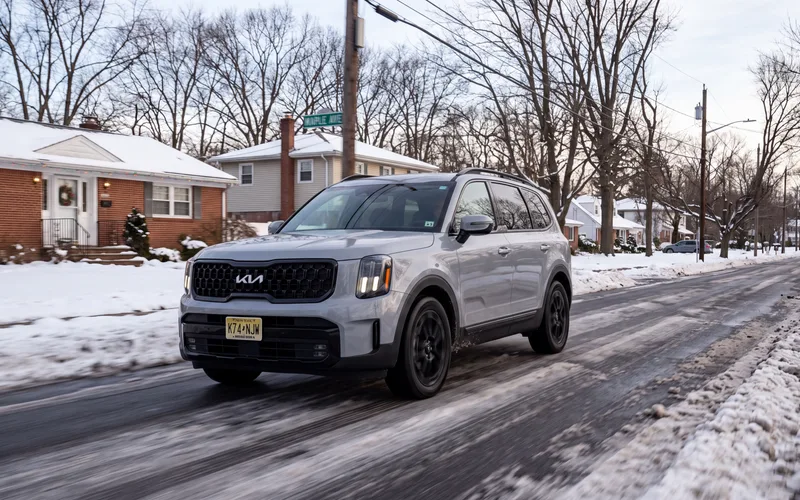 Kia TellurideMid-Size SUVBetter at: Resale value
Similar three-row space and content for thousands less, with a 10-year/100,000-mile powertrain warranty and far stronger five-year resale.
Compare 2.88B-
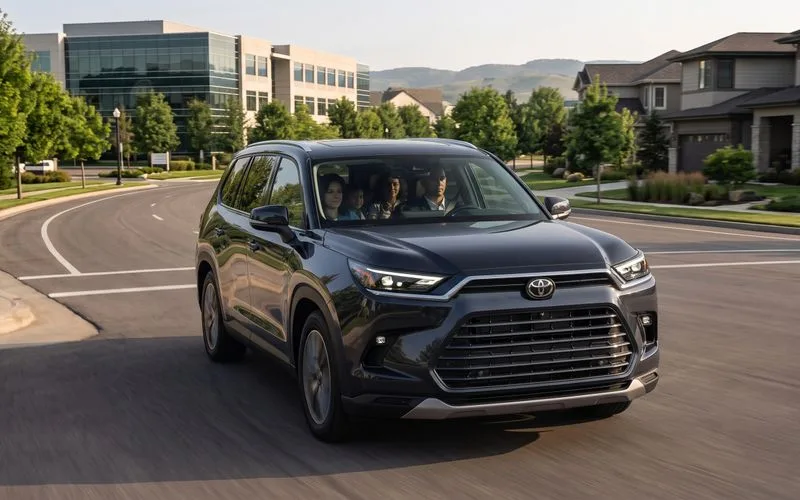 Toyota Grand HighlanderMid-Size SUVBetter at: Efficiency
Hybrid powertrains cut the Enclave's roughly $2,200/yr fuel bill sharply, and Toyota's proven mechanicals remove the new-engine risk.
Compare 2.72B-
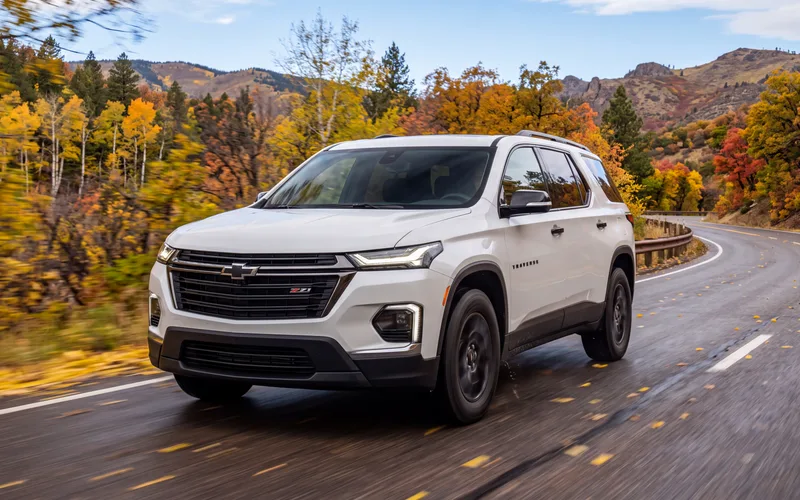 Chevrolet TraverseMid-Size SUVBetter at: Price
The identical platform, 2.5-liter turbo and 328 hp for thousands less, if you can live without the Buick cabin materials and QuietTuning.
CompareHow it's evolved
10 scored model years · 2017–2026
Subject scores by year
Hover or tap a score to see what moved it versus the year before. A corner mark flags a big swing.
| Year | Performance | Efficiency | Safety | Space | Cost | Reliability | Tech | Use-case | Driving | Value |
|---|---|---|---|---|---|---|---|---|---|---|
| 2026 | 52 | 56 | 71 | 78 | 38 | 69 | 83 | 64 | 65 | 71 |
| 2025 | 51 | 48 | 85 | 81 | 34 | 65 | 84 | 62 | 62 | 69 |
| 2024 | 50 | 38 | 57 | 75 | 36 | 72 | 60 | 61 | 63 | 58 |
| 2023 | 48 | 37 | 60 | 75 | 38 | 76 | 65 | 61 | 61 | 66 |
| 2022 | 47 | 37 | 61 | 76 | 41 | 76 | 65 | 62 | 61 | 66 |
| 2021 | 45 | 38 | 57 | 74 | 40 | 71 | 52 | 58 | 60 | 63 |
| 2020 | 46 | 38 | 57 | 73 | 43 | 69 | 50 | 59 | 63 | 62 |
| 2019 | 46 | 38 | 55 | 73 | 46 | 69 | 48 | 58 | 63 | 67 |
| 2018 | 47 | 38 | 55 | 73 | 52 | 60 | 48 | 57 | 65 | 65 |
| 2017 | 40 | 24 | 45 | 73 | 51 | 61 | 34 | 55 | 56 | 57 |
Compare two years
Best fit & conditions
Higher scores mean a better fit for that use case. Learn more about use-case fit →
Subject profile
Academic Probation · NHTSA safety recalls
No NHTSA safety recall is on record for the 2024 Buick Enclave. Other model years of the Enclave have 12 — listed below.
12 recalls on other model years of the Enclave (2017, 2019–2022, 2026)
Feb 26, 2026Equipment: other: owners/service/other manualGeneral Motors has decided that certain 2027 Chevrolet Bolt EV, 2025-2026 Cadillac OPTIQ, Chevrolet Colorado, Equinox EV, GMC Canyon, 2026 Buick Enclave, Envision, Cadillac CT5, Escalade, Escalade ESV, Escalade IQ, Escalade IQL, LYRIQ, VISTIQ, Chevrolet Blazer EV, Corvette Convertible, Corvette Coupe, Corvette Convertible E-Ray, Equinox, Silverado 1500, 2500, 3500, Silverado EV, Suburban 1500, Tahoe, Traverse, GMC Acadia, Hummer EV Pickup, Hummer EV SUV, Sierra 1500, 2500, 3500, Sierra EV, Terrain, Yukon, and Yukon XL vehicles. The radio may not have been set to the correct status to download the electronic owner's manual during production. As such, these vehicles fail to comply with the requirements of Federal Motor Vehicle Safety Standard number 208, âOccupant Protection.â
Defect
General Motors has decided that certain 2027 Chevrolet Bolt EV, 2025-2026 Cadillac OPTIQ, Chevrolet Colorado, Equinox EV, GMC Canyon, 2026 Buick Enclave, Envision, Cadillac CT5, Escalade, Escalade ESV, Escalade IQ, Escalade IQL, LYRIQ, VISTIQ, Chevrolet Blazer EV, Corvette Convertible, Corvette Coupe, Corvette Convertible E-Ray, Equinox, Silverado 1500, 2500, 3500, Silverado EV, Suburban 1500, Tahoe, Traverse, GMC Acadia, Hummer EV Pickup, Hummer EV SUV, Sierra 1500, 2500, 3500, Sierra EV, Terrain, Yukon, and Yukon XL vehicles. The radio may not have been set to the correct status to download the electronic owner's manual during production. As such, these vehicles fail to comply with the requirements of Federal Motor Vehicle Safety Standard number 208, âOccupant Protection.â
Risk
Without an owner's manual to consult, owners may not know how to safely use and operate the vehicle, increasing the risk of injury in a crash.
Remedy
Dealers will reset the vehicle radio, which will facilitate automatic download of the electronic ownerâs manual, free of charge. Owner notification letters were mailed April 16, 2026. Owners may contact GM customer service at 1-866-467-9700, Chevrolet customer service at 1-800-222-1020 or Cadillac customer service at 1-800-333-4223. The manufacturer's number for this recall is N252540430. Vehicle Identification Numbers (VINs) involved in this recall became searchable on NHTSA.gov on February 26, 2026.
NHTSA campaign 26V114000 ↗Manufacturer no. N2525404305,861 vehicles potentially affected (all models in the campaign)Owners notified Apr 16, 2026Filed by General Motors, LLCFiled as ENCLAVEMay 10, 2023Air bags: frontal: driver side: inflator moduleThe driver's air bag inflator may explode during deployment, due to a manufacturing defect.
Defect
General Motors, LLC (GM) is recalling certain 2014-2017 Buick Enclave, Chevrolet Traverse, and GMC Acadia vehicles. The driver's air bag inflator may explode during deployment, due to a manufacturing defect.
Risk
An inflator explosion may result in sharp metal fragments striking the driver or other occupants, resulting in serious injury or death.
Remedy
Dealers will replace the driver's air bag module, free of charge. GM began mailing final owner letters February 23, 2024 and will continue mailing through December 2025. Owners may contact Buick customer service at 1-800-521-7300, Chevrolet customer service at 1-800-222-1020, or GMC customer service at 1-800-462-8782. GM's number for this recall is N232404980.
NHTSA campaign 23V334000 ↗Manufacturer no. N232404980995,085 vehicles potentially affected (all models in the campaign)Owners notified Feb 23, 2024Filed by General Motors, LLCFiled as ENCLAVEMar 31, 2022Air bags: side/window: curtainThe harness connector to the left or right side roof rail air bag may have incompatible electrical terminals, which could prevent the air bags from deploying in a crash.
Defect
General Motors, LLC (GM) is recalling certain 2020-2022 Chevrolet Traverse and 2021-2022 Buick Enclave vehicles. The harness connector to the left or right side roof rail air bag may have incompatible electrical terminals, which could prevent the air bags from deploying in a crash.
Risk
Roof rail air bags that do not deploy as intended increase the risk of injury in a crash.
Remedy
Dealers will replace the harness connector to the roof rail air bags, free of charge. Owner notification letters were mailed on April 29, 2022. Owners may contact Buick customer service at 1-800-521-7300 or Chevrolet customer service at 1-800-222-1020. GM's number for this recall is N212352140.
NHTSA campaign 22V210000 ↗Manufacturer no. N21235214089 vehicles potentially affected (all models in the campaign)Owners notified Apr 29, 2022Filed by General Motors, LLCFiled as ENCLAVEOct 7, 2021Air bags: frontal · Air bags: frontal: driver side: inflator moduleThe driver's air bag inflator may explode during deployment, due to a manufacturing defect.
Defect
General Motors, LLC (GM) is recalling certain 2008-2017 Buick Enclave and 2013-2017 Chevrolet Traverse vehicles. The driver's air bag inflator may explode during deployment, due to a manufacturing defect.
Risk
An inflator explosion may result in sharp metal fragments striking the driver or other occupants, resulting in serious injury or death.
Remedy
Dealers will replace the driver's air bag module, free of charge. Interim owner notification letters were mailed on November 3, 2021. Owner notification letters were mailed on January 10, 2022. Owners may contact Buick customer service at 1-800-521-7300 or Chevrolet customer service at 1-800-222-1020. GM's number for this recall is N212349040.
NHTSA campaign 21V782000 ↗Manufacturer no. N212349040555 vehicles potentially affected (all models in the campaign)Owners notified Jan 10, 2022Filed by General Motors, LLCFiled as ENCLAVEJun 24, 2021Air bags: sensor: frontal impactDuring service by dealers, certain vehicles may have received incorrect air bag calibration software that may affect frontal airbag deployment.
Defect
General Motors, LLC (GM) is recalling certain 2021 Chevrolet Traverse and Buick Enclave vehicles. During service by dealers, certain vehicles may have received incorrect air bag calibration software that may affect frontal airbag deployment.
Risk
Air bags that do not deploy as intended can increase the risk of injury.
Remedy
Dealers will update the air bag calibration software, free of charge. Owner notification letters were mailed on July 29, 2021. Owners may contact Chevrolet customer service at 1-800-222-1020 and Buick customer service at 1-800-521-7300. GM's number for this recall is N212340220.
NHTSA campaign 21V472000 ↗Manufacturer no. N2123402206 vehicles potentially affected (all models in the campaign)Owners notified Jul 29, 2021Filed by General Motors, LLCFiled as ENCLAVEApr 8, 2021Air bags: critical fastenersThe side curtain air bags may not be properly attached.
Defect
General Motors, LLC (GM) is recalling certain 2010-2015, 2017 Buick Enclave, 2010-2019 Chevrolet Traverse, and 2011-2016 GMC Acadia vehicles. The side curtain air bags may not be properly attached.
Risk
Unsecured side curtain air bags may not perform as intended, increasing the risk of injury.
Remedy
GM will notify owners, and dealers will inspect and, if necessary, realign or replace the weld nuts, free of charge. Owner notification letters were mailed on May 24, 2021. Owners may contact Buick customer service at 1-800-521-7300, Chevrolet customer service at 1-800-222-1020, and GMC customer service at 1-800-462-8782. GM's number for this recall is N202321200.
NHTSA campaign 21V246000 ↗Manufacturer no. N202321200108 vehicles potentially affected (all models in the campaign)Owners notified May 24, 2021Filed by General Motors, LLCFiled as ENCLAVEFeb 25, 2021TiresThe affected tires were cured for too long during production.
Defect
General Motors LLC (GM) is recalling certain 2020 Buick Enclave, Cadillac XT4, XT5, Escalade, Escalade ESV, Chevrolet Suburban, Tahoe, Traverse, GMC Yukon, Yukon XL, 2018-2021 Chevrolet Express, GMC Savana, 2019-2020 Chevrolet Blazer, Silverado 1500, GMC Acadia, Sierra 1500, and certain Continental tires sold to the aftermarket for various model year 2018-2021 vehicles. The affected tires were cured for too long during production.
Risk
Over cured tires may develop a break in the sidewall resulting in sudden air loss or a belt edge separation which could lead to a tread/belt loss. Either condition can cause a loss of vehicle control, increasing the risk of a crash.
Remedy
GM will notify owners, and dealers will inspect the tires, replacing them as necessary, free of charge. The recall began March 22, 2021. Owners may contact GMC customer service at 1-888-988-7267, Buick customer service at 1-866-608-8080, Chevrolet customer service at 1-800-222-1020 or Cadillac customer service at 1-800-458-8006. GM's number for this recall is N212329050.
NHTSA campaign 21V115000 ↗Manufacturer no. N21232905033,838 vehicles potentially affected (all models in the campaign)Owners notified Mar 22, 2021Filed by General Motors, LLCFiled as ENCLAVENov 5, 2020TiresThe vehicles may have been manufactured with Continental tires that were overcured.
Defect
General Motors LLC (GM) is recalling certain 2020 Buick Enclave, Cadillac XT5, GMC Acadia and Chevrolet Traverse vehicles and 2020-2021 Chevrolet Silverado 1500, GMC Sierra 1500 vehicles. The vehicles may have been manufactured with Continental tires that were overcured.
Risk
Overcured tires may experience a carcass break in the sidewall resulting in a sudden air loss or could develop a belt edge separation which could lead to partial or full tread/belt loss. Either condition increases the risk of a crash.
Remedy
GM will notify owners, and dealers will inspect vehicles and replace tires that have DOT number and production mold number combinations identified by Continental, free of charge. The recall began December 17, 2020. Owners may contact GMC customer service at 1-888-988-7267, Buick customer service at 1-866-608-8080, Chevrolet customer service at 1-800-222-1020 or Cadillac customer service at 1-800-458-8006. GM's number for this recall is N202319030.
NHTSA campaign 20V684000 ↗Manufacturer no. N2023190307,516 vehicles potentially affected (all models in the campaign)Owners notified Dec 17, 2020Filed by General Motors LLCFiled as ENCLAVEOct 29, 2020Power train: automatic transmissionThe start/stop accumulator endcap may have missing bolts.
Defect
General Motors LLC (GM) is recalling certain 2018-2019 Chevrolet Cruze and Buick LaCrosse, 2018-2020 Chevrolet Equinox, Chevrolet Traverse and GMC Terrain, 2018 Chevrolet Malibu, 2019-2020 Buick Encore, Buick Enclave, Cadillac XT4, Chevrolet Blazer and GMC Acadia, and 2020 Cadillac XT6 vehicles. The start/stop accumulator endcap may have missing bolts.
Risk
Missing bolts on the start-stop accumulator endcap could result in a transmission oil leak and may progress to a loss of propulsion, increasing the risk of a crash. A transmission fluid leak in the presence of an ignition source may increase the risk of fire.
Remedy
GM will notify owners, and dealers will inspect the start-stop transmission accumulator and replace it if any bolts are missing, free of charge. The recall began December 15, 2020. Owners may contact GMC customer service at 1-888-988-7267, Buick Customer service at 1-866-608-8080, Chevrolet customer service at 1-800-222-1020 or Cadillac customer service at 1-800-458-8006. GM's number for this recall is N202313440.
NHTSA campaign 20V668000 ↗Manufacturer no. N202313440194,105 vehicles potentially affected (all models in the campaign)Owners notified Dec 15, 2020Filed by General Motors LLCFiled as ENCLAVEOct 15, 2020Fuel system, gasoline: delivery: fuel pumpThe fuel pump's jet nozzle may have a plastic burr remaining from the manufacturing process, possibly causing a blocked nozzle and an insufficient fuel supply to the engine.
Defect
General Motors LLC (GM) is recalling certain 2020 Buick Enclave, Cadillac XT5, Cadillac XT6, Chevrolet Traverse, and GMC Acadia vehicles. The fuel pump's jet nozzle may have a plastic burr remaining from the manufacturing process, possibly causing a blocked nozzle and an insufficient fuel supply to the engine.
Risk
Insufficient fuel supply can result in an engine stall without warning, increasing the risk of a crash.
Remedy
GM will notify owners, and dealers will replace the fuel pump module. The recall began November 16, 2020. Owners may contact GMC customer service at 1-888-988-7267, Buick Customer service at 1-866-608-8080, Chevrolet customer service at 1-800-222-1020 or Cadillac customer service at 1-800-458-8006. GM's number for this recall is N202314760.
NHTSA campaign 20V639000 ↗Manufacturer no. N2023147602,781 vehicles potentially affected (all models in the campaign)Owners notified Nov 16, 2020Filed by General Motors LLCFiled as ENCLAVEJul 30, 2020Air bags: side/window: curtain: inflatorThe diffuser component of the Roof-Rail Air Bag (RRAB) inflator may not have been properly crimped to the inflator and could separate from the inflator during air bag deployment.
Defect
General Motors, LLC. (GM) is recalling certain 2020 Buick Enclave, Cadillac XT5 and XT6, Chevrolet Blazer, Silverado 1500, 2500 and 3500 and Traverse and GMC Acadia and Sierra 1500, 2500 and 3500 vehicles. The diffuser component of the Roof-Rail Air Bag (RRAB) inflator may not have been properly crimped to the inflator and could separate from the inflator during air bag deployment.
Risk
If the diffuser separates from the inflator during deployment, RRAB performance may be degraded, increasing the risk of injury in a crash.
Remedy
GM will notify owners, and dealers will replace the suspect RRAB modules, free of charge. The recall began September 3, 2020. Owners may contact Chevrolet customer service at 1-800-630-2438, Cadillac customer service at 1-800-333-4223, or Buick customer service at 1-800-521-7300. GM's number for this recall is N202305380.
NHTSA campaign 20V446000 ↗Manufacturer no. N202305380769 vehicles potentially affected (all models in the campaign)Owners notified Sep 3, 2020Filed by General Motors LLCFiled as ENCLAVESep 6, 2019Structure: frame and membersThe right-hand frame rail in the engine compartment may be cracked.
Defect
General Motors LLC (GM) is recalling certain 2020 Buick Enclave and Chevrolet Traverse vehicles. The right-hand frame rail in the engine compartment may be cracked.
Risk
A crack in the frame rail may reduce crash performance, increasing the risk of an injury.
Remedy
GM will notify owners, and dealers will inspect and, as necessary, replace the vehicle, free of charge. The recall began October 4, 2019. Owners may contact Chevrolet customer service at 1-800-630-2438 or Buick customer service at 1-800-521-7300. GM's number for this recall is N192268310.
NHTSA campaign 19V643000 ↗Manufacturer no. N1922683103,420 vehicles potentially affected (all models in the campaign)Owners notified Oct 4, 2019Filed by General Motors LLCFiled as ENCLAVE
Source: NHTSA Office of Defects Investigation recall database, model years 2017–2026. Recalls are listed by model year as the manufacturer filed them; whether a specific car is affected depends on its VIN — check a VIN at nhtsa.gov ↗. NHTSA model names matched to this page: ENCLAVE.
Detailed scoring by subject
1Performance & PowertrainOne of the Enclave's weakest categories.1.37D
2024 is the final year of the second-generation (2018–2024) Enclave and a carry-over year: every trim uses GM's naturally-aspirated 3.6L V6 (LFY) rated at 310 hp, with no output variation by trim.
The 3.6L V6 makes 266 lb-ft, a modest figure for a ~4,400 lb three-row that arrives high in the rev range — the trade-off for the V6's smoothness versus a turbo-four's low-end shove.
Buick publishes no 0–60 claim; independent figures for the second-gen 3.6L V6 Enclave cluster around 6.5–6.8 s, with a heavier loaded AWD Avenir tested as slow as 7.5 s and FWD examples near 7.0 s.
The naturally-aspirated V6 is the Enclave's signature strength — reviewers repeatedly call it quiet and satisfying and explicitly preferable to the coarse turbo-fours common in mid-size three-rows, with no turbo lag to manage; the only real criticism is torque that arrives high in the rev range.
GM's 9-speed Hydra-Matic in the V6 Enclave draws consistently strong marks: shifts go largely unnoticed and gear selection is sensible, without the ratio-hunting that dogs the same transmission behind smaller turbo engines.
5,000 lbs properly equipped is the class-standard rating for a mid-size three-row crossover and requires the optional Trailering Package; without it the Enclave is rated for far less.
FWD is standard on every 2024 trim with AWD optional across the range — widely available but never standard, and it costs about $2,000. The system is more than a basic on-demand setup: a twin-clutch active rear differential can shuttle torque side to side, and a driver-selectable disconnect drops back to FWD for economy, but there is no low range or terrain-mode suite.
A pavement-oriented luxury-leaning family crossover: roughly 7.5–8 in of ground clearance, unibody construction, no low range, no lockers or skid plates, and no off-road trim anywhere in the 2024 Buick lineup — the AWD system's snow/wet modes are the extent of the provision.
One engine and one transmission across Essence, Premium and Avenir — the 3.6L V6 with the 9-speed automatic. No turbo alternative, no hybrid, no PHEV, and no electrified counterpart; only the drivetrain (FWD/AWD) is a choice.
2Efficiency & RangeOne of the Enclave's weakest categories.0.48F
The naturally-aspirated 3.6L V6 with the 9-speed automatic returns 21 MPG combined in FWD form, dropping to 20 with AWD — mid-pack for a gas mid-size three-row and well behind hybridized rivals.
A ~4,400 lb three-row with a large-displacement V6 and no electrification is weakest on the city cycle; cylinder deactivation and stop/start hold it to 18 MPG.
Highway is the V6's better cycle — tall gearing in the 9-speed and cylinder deactivation lift it to 26 MPG FWD, though frontal area and mass keep it from matching four-cylinder rivals.
The FWD Enclave carries a 19.4-gallon tank, which at 21 combined MPG gives roughly 407 miles; the AWD model's larger 21.7-gallon tank actually nets more range (~434 mi) despite its lower economy.
EPA's standard-assumption estimate for the FWD V6 is $2,950 a year, near the expensive end of the gas mid-size SUV field — the cost of feeding a 3.6L V6 with no electrified assist.
The 3.6L V6 runs on 87-octane regular unleaded on every trim including Avenir — no premium recommendation, no charging infrastructure to arrange, and no diesel or E85 complication.
3SafetyMid-pack among this car's ten categories.1.87C-
NHTSA tested both 2024 Enclave drivetrains and they diverge: the FWD car — the standard configuration this scorecard describes — earns 4 stars overall while the optional AWD earns 5, on a slightly lower rollover probability (15.1% vs 16.9%). Component results are otherwise identical: 5 stars frontal, 5 stars side, 4 stars rollover, and a 4-star rear-passenger side barrier result in both.
Solid but unawarded: Good in small overlap front (driver), moderate overlap front, roof strength and head restraints, but only Acceptable in the updated side test — the result that keeps it off the Top Safety Pick list, and the passenger-side small overlap is not rated at all. The 2018–24 Enclave went its entire generation without an IIHS award; the nameplate's first in twelve years came with the 2025 redesign, not this car. Ratings are largely carried from the structurally similar Chevrolet Traverse.
Broad standard coverage with one conspicuous hole. Every 2024 trim, Essence included, gets automatic emergency braking, forward collision alert, front pedestrian braking, lane keep assist with lane departure warning, lane change alert with side blind zone alert, rear cross traffic alert, IntelliBeam auto high beams, following distance indicator, the Safety Alert Seat, Teen Driver, and front and rear park assist. Adaptive cruise control is the exception — it is not standard on Essence or Premium, arriving only inside the $1,495 Technology package or standard on the top Avenir.
AEB with daytime front pedestrian braking is standard, but IIHS never rated front crash prevention on the 2018–24 Enclave under either the old or the current test regime, so there is no independent verification of how well it works — and no nighttime pedestrian capability is claimed. The nearest evidence is unflattering: the newer sensor set on the redesigned 2025 car rated only Marginal on the pedestrian evaluation at launch, improving to Acceptable later, which puts an untested seven-year-old system well short of the Superior/Advanced results the segment leaders post.
Lane change alert with side blind zone alert and rear cross traffic alert are standard on all three trims — better than the class norm of locking blind-spot monitoring to upper trims — and rear park assist backs them up. But it is alert-only: no active steering or braking intervention, no rear cross-traffic braking on the volume trim, no safe-exit alert, and no trailer-aware extension. HD Surround Vision, which would cover the gaps when parking, sits inside the optional Technology package.
Lane Keep Assist with Lane Departure Warning is standard on every trim, but it is a departure-correction nudge rather than continuous lane centering — GM reserved centering for its Super Cruise hardware, which this generation never received. It intervenes at the lane line instead of holding the car in the middle of it, so on a long highway stint the driver is still steering.
GM's full-speed-range adaptive cruise with stop-and-go is competent and reviewers report it works well, but two things hold the score down: it is absent from the volume Essence trim unless the buyer adds the $1,495 Technology package, and there is no highway-assist layer to combine it with — without lane centering, ACC is a solo function rather than an integrated driving aid.
No hands-free driving at any price. Super Cruise was not offered on the second-generation Enclave in any year, including 2024 — the hardware arrived with the 2025 redesign, where it became available across the trim range.
LED headlamps and IntelliBeam automatic high beams are standard on every trim, which is the right hardware, but IIHS never rated headlights on the 2018–24 Enclave so there is no Good-rated verification to lean on. What evidence exists points sideways rather than up: the newer lamps on the 2025 redesign rated Marginal for glare and curve illumination until a January 2025 running change, and this generation's units are older still.
Forward sightlines are good — a tall seating position, a fairly upright windshield and slim A-pillars for a large three-row — but the rising beltline and high rear-quarter window sill leave a real over-the-shoulder blind zone, and the third-row headrests intrude on the mirror view. The camera compensation that fixes it (HD Surround Vision and the rear camera mirror) is optional, so the volume Essence relies on a standard rear camera, rear park sensors and blind-spot alerts.
Workable but fiddly, and IIHS says so: Acceptable for LATCH ease of use, with only two complete anchor sets (the second-row outboard positions), lower anchors buried too deeply in the seat cushions and tethers that can be mistaken for other hardware. The third row gets top tethers but no lower anchors, so a three-across install means belt-securing at least one seat. Working in its favor are wide rear doors, a genuinely roomy second row and easy third-row access past the standard captain's chairs.
4Space & ComfortThe Enclave's best-graded category.3.08B
Every 2024 Enclave is a seven-seater: the second-row Smart Slide captain's chairs are standard across Essence, Premium and Avenir, with a three-place third row behind them. Rivals that offer an eight-passenger bench edge it on headcount.
42.6 in of first-row headroom is at the very top of the SUV band; the volume Essence has no moonroof as standard, so the unobstructed figure is the representative one. Ordering a roof costs 1.4 in.
41.2 in is merely adequate and sits low in the SUV band — the Enclave spends its 120.9-in wheelbase on the second and third rows rather than the front, where several smaller crossovers post more.
Near the ceiling of the SUV band — a tall, square second row that keeps almost 39 in even under the panoramic roof, which is where many three-rows lose the most.
38.3 in is genuinely roomy for a mid-size three-row and, because the captain's chairs slide, families can shift several inches back to the third row when it is occupied.
One of the better third rows in the class rather than a token bench: 33.5 in of legroom and 37.6 in of headroom, three belted places, and Smart Slide access past the captain's chairs that works with a child seat still installed. Adults fit for medium hauls but not all day, and the seat sits low enough that knees ride high.
57.7 cu ft is mid-pack among mid-size three-rows, and the 23.6 cu ft still available behind a raised third row is the more useful figure for a family that actually fills the seats.
97.4 cu ft is close to the top of the SUV band and effectively minivan territory — the Enclave's 204.8-in length converts directly into a long, flat load bay.
Competitive rather than inventive: a deep center console with a sliding armrest, big door bins, and a genuinely useful 3.1 cu ft of covered underfloor storage behind the third row for the things a family does not want on show. What is missing is onboard power — the 120-volt household outlet is not standard, arriving only inside an option package.
Broad, softly padded chairs pitched at long-haul cruising, with heated front seats standard on every trim and ventilation plus front massage on Premium and Avenir. They are cushioned more than they are supportive — fine for interstate work, short on lateral hold — and the third-row cushion is low.
The Enclave's signature quality and the reason people buy it. Reviewers converge on a plush, well-damped ride that smothers both sharp impacts and long undulations, and it holds up even on the optional 20-inch wheels; Avenir's continuously variable real-time damping tightens body control further but is not needed for the effect.
Buick's QuietTuning insulation, acoustic laminated glass and active noise cancellation, working with a naturally aspirated V6 that never has to strain, give it a hushed highway cabin that reviewers single out — a clear step above the turbo-four mainstream three-rows.
Rich for the class at the bottom of the range: heated front seats, a heated steering wheel, tri-zone automatic climate control with its own rear-passenger settings, remote start and a hands-free power liftgate are all standard on Essence. Ventilated fronts, massage and the panoramic roof are reserved for Premium and Avenir, and there are no heated second-row seats on the volume trim.
5Cost of OwnershipThe Enclave's lowest-graded category.0.39F
2024 is a pure carry-over year — GM Authority states the Enclave 'does not receive any changes for the 2024 model year' — so pricing holds at the 2023 structure. The Essence FWD opens the range at $43,900 before a $1,395 destination charge, which is premium-brand money for a mid-size three-row but well under the near-luxury names it targets.
The Enclave's mix sits above the entry trim: CarEdge puts the typically-equipped transaction price of a new Enclave at $53,770, which lands between Premium FWD ($52,595 with destination) and Premium AWD ($54,595) rather than near the $45,295 Essence. Premium is the representative build — it adds ventilated and massaging front seats, heated second-row seats and all-weather mats over Essence, and is the trim IIHS itself rated.
The Enclave's genuine strength on this line: Consumer Reports singled the 2024 car out as the cheapest vehicle in the large three-row class to keep, at $6,610 in maintenance, repairs and related expense over ten years against a $8,700 class average — 24 percent below par. Estimates for the first five years diverge widely by methodology ($2,979 at CarEdge, ~$5,600–6,600 from dealer-rate models), so ~$4,000 is the defensible midpoint consistent with the CR decade figure; note that Avenir's standard 20-inch wheels raise it on tire cost and wheel-damage risk.
Depreciation is where the Enclave gives back everything it saves on maintenance. Independent trackers put five-year retention at 42–45 percent, at or slightly below even the luxury-large-SUV average and well behind SUVs generally (55.1% retained) — the run-out year of an outgoing generation, with the redesigned 2025 already revealed, does nothing to help residuals.
Buick's New Vehicle Limited Warranty runs the industry-minimum 3 years/36,000 miles — no better than Chevrolet or Ford, and shorter than the 4 years/50,000 miles that the Acura, Cadillac, Lincoln and German brands the Enclave is priced against all provide. For a $45–59k premium-badged crossover it is the weakest part of the ownership package.
5 years/60,000 miles, the floor of the segment band. Buick carried a 6-year/70,000-mile powertrain warranty earlier in this generation's life but GM cut it back, so the 2024 car is covered no longer than a Chevrolet Traverse — and only half as long as the Hyundai Palisade and Kia Telluride buyers cross-shop.
Thin, and thinner than the badge implies. GM cut Buick's complimentary maintenance from three years to a single visit back in 2019 and the 2024 Enclave still gets just that one — first oil change, tire rotation and multi-point inspection inside the first year. Roadside Assistance and Courtesy Transportation ride along with the powertrain term rather than adding coverage, and OnStar/Buick Connected Services arrive as a short trial that converts to a paid subscription. Enough to clear 'no complimentary coverage' but nowhere near the multi-year included maintenance that lifts a score into the 80s.
$52,595 volume-trim price minus its estimated resale value after 5 years (43% retained, or about $22,616) leaves about $29,979 in depreciation. Add the projected $4,000 in 5-year maintenance and repairs, and owning this vehicle for 5 years costs about $33,979 in total.
6Reliability & QualityOne of the Enclave's strongest categories.2.87B-
The two major sources split. J.D. Power rates the 2024 Enclave 85/100 for quality & reliability — 'Great' on its scale — while Consumer Reports puts it at 55/100, only average for the model year, with climate system, transmission/gear-selector and fuel-system trouble spots, and does not extend its Enclave 'Recommended' rating (given to 2019, 2020, 2022 and 2023) to 2024. Average-to-good rather than top-tier, which is where mixed signals belong.
Buick's multi-year dependability standing is genuinely top-tier and was so at this car's launch: third overall in the J.D. Power 2024 U.S. Vehicle Dependability Study, then second overall and highest mass-market brand in the 2025 VDS at 143 PP100 against a 202 PP100 industry average. Initial quality corroborates it — fifth at 164 PP100 in the 2024 IQS versus a 195 average.
The 2024 model year itself is exceptionally clean — NHTSA-sourced databases record zero safety recalls and only 7 owner complaints, which is what a seventh and final year of a mature generation should look like. The deduction is generation-level rather than year-level: the 2018-2024 Enclave carries GM service bulletins for 9T65 torque-converter shudder/chuggle from excess assembly lube and for 3.6L V6 rattle/knock (19-NA-256), and earlier years of the generation drew airbag-calibration and roof-rail airbag connector recalls.
Every 2024 Enclave uses the naturally aspirated 3.6L High Feature V6 (310 hp / 266 lb-ft) with the 9T65 nine-speed automatic — an engine family GM has built for well over a decade with a solid high-mileage record and no timing-chain-era liabilities in this direct-injected iteration. The transmission is the softer half: the 9T65 is not a sudden-failure unit but degrades toward torque-converter clutch slip, shudder, lag and harsh 2-3/4-5 shifts, and owner forums document second-generation Enclaves needing replacement units. Proven engine, mixed transmission history.
This is the Enclave's weakest quality dimension and it is judged against a Premium price class. Reviewers repeatedly call the cabin attractive but under-specified for the money — basic plastic trim that does not reflect the price, and down-market plastics that a Kia Telluride beats. Avenir's quilted leather and real upgrades pull the top of the range up, but the volume trims are the ones being scored.
Assembly quality is a different question from material grade and reads well here: 2024 is the seventh and last year of the second generation, two years past its 2022 refresh, so tooling and build process are fully mature, and there is no pattern of panel-gap, rattle or squeak complaints in the 7 NHTSA filings. Buick's fifth-place 2024 Initial Quality Study finish at 164 PP100 supports it; short of top marks because IQS now folds in the infotainment and electrical gripes that show up in CR's trouble spots.
Buick is sold and serviced through the combined Buick-GMC channel, roughly 1,900 US dealer points, so coverage is effectively nationwide outside the most rural areas. Service and sales satisfaction are a real strength rather than merely adequate — Buick has been among the most-awarded mass-market dealership experiences of the past decade and leads J.D. Power's mass-market sales satisfaction rankings.
Availability is the strong half — the C1/Lambda-derived platform, 3.6L V6 and 9T65 are shared with the Chevrolet Traverse, GMC Acadia and Cadillac XT6, so component commonality and GM's distribution make parts easy and cheap to source with a real aftermarket behind them. Cost is the weak half: RepairPal puts Enclave annual repair and maintenance at $720 against a $573 midsize-SUV average, with unscheduled shop visits at 0.5/yr vs 0.4 and an 18% chance a repair is severe vs 13%, ranking it 24th of 26 midsize SUVs.
7Technology & InfotainmentMid-pack among this car's ten categories.2.05C
An 8-inch display is the entire menu: there is no larger screen at any trim or option level, which by 2024 left the Enclave near the bottom of a class where 12-inch-plus panels had become common — and made the point of the 2025 redesign's 30-inch display.
The software is the good part of an aging package: GM's infotainment is quick, the menu structure is shallow and obvious, and Buick kept real volume and tuning knobs plus physical climate controls rather than burying them. What holds it back is real estate — split-screen views and map detail suffer on 8 inches, and the graphics look a generation old next to rivals.
Wireless Apple CarPlay and Android Auto are standard on every 2024 trim, paired with standard wireless phone charging — the combination that matters most day to day, and one many pricier rivals still charged for. It is also the workaround for the small screen and thin native features.
Functional and subscription-shaped rather than impressive. Connected Navigation with live traffic and real-time points of interest is standard on Premium and Avenir but only optional on the volume Essence, and it depends on an active OnStar plan after the trial. Voice control is command-driven rather than natural-language, and most owners will simply talk to Siri or Google through phone projection.
A credible branded upgrade sitting above a thin base: the volume Essence gets a six-speaker system, while Premium and Avenir carry a 10-speaker Bose setup that reviewers rate as good, not outstanding — respectable for a premium-badged three-row but short of the Burmester/Mark Levinson tier.
No full digital cluster at any price. The 2024 Enclave keeps conventional analog gauges flanking a small colour Driver Information Center — legible and unfussy, but a configurable digital display had become close to standard equipment in this class, and the Enclave never got one before the 2025 redesign.
Over-the-air updating exists but is narrow. The Enclave runs GM's older infotainment architecture rather than the Ultifi/VIP stack the brand's newer vehicles use, so OTA covers infotainment and map updates plus occasional module fixes — not the feature-adding whole-vehicle updates the scoring band's top tier describes.
The myBuick app covers the core set competently — remote start with climate pre-set, lock/unlock, vehicle locate, diagnostics — but the useful functions run through OnStar and become subscription-gated once the trial lapses, and there is no phone-as-key on this generation.
Ports reach all three rows but the hardware is dated: six USB outlets, of which only the front pair carries data, and the second- and third-row ports are low-amperage charge-only. Standard wireless phone charging is the redeeming feature; the 120-volt household outlet costs extra.
Everything a family actually touches is standard on the base trim: keyless open and push-button start, remote start, and a hands-free power liftgate with programmable height. The only gap against the top band is phone-as-key, which this generation never offered.
Standard rear camera with front and rear park assist across the range is better than the class norm, but the surround-view system that a 204.8-inch vehicle really wants is optional — HD Surround Vision and the rear camera mirror arrive in the Technology package or on upper trims — and no automated parking is offered at any price.
A head-up display is offered but not on the volume trim — it comes with the Premium's option content and Avenir rather than being available on Essence, so most Enclave buyers never see it.
8Use-Case FitMid-pack among this car's ten categories.2.10C
Strong family logistics with one documented rough edge. Wide rear door openings, a tall step-in, 38.3 in of second-row legroom and standard Smart Slide captain's chairs that slide forward for third-row access with a child seat still installed make daily loading easy, and 23.6 cu ft behind the third row swallows a stroller with all seven seats occupied. Against that, IIHS rates LATCH only Acceptable: just two complete anchor sets, both second-row outboard, with lower anchors set too deeply and third-row places that get tethers but no lower anchors.
Good but not top-tier, and the gap sits exactly on the trim families buy. Driver Confidence Plus puts AEB, front pedestrian braking, blind-zone and rear cross-traffic alert, lane keep assist and park sensors on the base Essence, which beats the class norm — but adaptive cruise control costs $1,495, the FWD car earns 4 NHTSA stars rather than 5, and the 2018–24 Enclave never earned an IIHS award, held back by an Acceptable side result.
This is the mission the Enclave was built for: a hushed cabin, a plush ride, tri-zone climate with its own rear controls, USB power in all three rows, real third-row room for teenagers and 23.6 cu ft of luggage space left over with everyone aboard. Rear-seat entertainment is not offered and second-row seat heating is absent on the volume trim.
Low-effort in traffic: the naturally aspirated V6 has no turbo lag to time, the 9-speed shifts go unnoticed, steering is light at parking speeds and the insulation keeps commuting fatigue down. The size is the tax — 204.8 in of length is a lot of vehicle for a daily errand run.
Expensive per mile for 2024. 21 MPG combined from a naturally aspirated V6 with no hybrid option anywhere in the range means roughly $2,950 a year at EPA's 15,000-mile assumption — well behind the hybridized three-rows it competes with. Regular unleaded and conventional consumables are the mitigation.
Manageable with help rather than easy. The 39.0 ft turning circle is respectable for a 204.8-in, 78.8-in-wide vehicle and front/rear park sensors are standard, but the rear-quarter blind zone is real, HD Surround Vision is optional, and there is no automated parking. Tight urban garages remain a chore.
A family crossover asked to do occasional light duty. 5,000 lbs of towing with the optional Trailering Package is the class-standard figure and covers a small boat or utility trailer, but payload is around 1,300–1,500 lbs, there is no bed, no integrated trailer brake controller and no heavy-duty cooling option — and unequipped, the rating collapses to 1,500 lbs.
Built as a soft-riding premium crossover, not a tool: unibody construction, leather and open-pore trim rather than wipe-clean surfaces, and no fleet or commercial presence to establish a reputation under abuse. The 3.6L V6 itself is a long-serving, well-understood GM engine, which keeps this out of the bottom band.
Almost nothing here is aimed at work. Standard roof-mounted side rails and cargo tie-downs plus a dealer hitch are the extent of the provisions; the 120-volt outlet is an option-package item, the load floor is carpeted rather than washable, and there is no upfit ecosystem or rubber-floor option of the kind trucks and commercial vans carry.
A genuinely good mile-eater: quiet at speed, plush over expansion joints, softly padded seats, and roughly 400+ miles between fills on regular. What keeps it out of the top band is driver assistance — adaptive cruise is optional on the volume trim and there is no lane centering or hands-free system on this generation, so the driver still works on a long stint.
Fine on gravel and ski-hill access roads, out of its depth beyond that. Optional Intelligent AWD with a twin-clutch active rear differential is a genuinely capable wet/snow system, roof rails carry a box or bikes and 5,000 lbs tows a small camper — but 7.5 in of ground clearance, no low range, no terrain modes, no skid plates and street tires define the limit.
Among the best in the class for swallowing bulk: 97.4 cu ft with both rows folded into a long flat floor, a covered 3.1 cu ft underfloor bin behind the third row, an available power-folding third row, standard roof rails and a hands-free liftgate for arms-full loading. Only a minivan's flat floor and sliding doors beat it.
9Driving ExperienceOne of the Enclave's strongest categories.2.28C
Secure and predictable rather than agile. Independent five-link rear suspension and, on Avenir, continuously variable real-time damping keep body lean modest and the car composed through sweepers, but 4,359–4,685 lbs makes itself felt the moment the road tightens — reviewers describe it as ponderous in switchbacks.
Electric variable-effort steering tuned for ease, not communication: light and crisp off-center at parking and town speeds, stable and well-damped on the interstate, and essentially mute about what the front tires are doing. Correct for the brief, unremarkable against the item's top band.
Adequate and unremarkable. Four-wheel discs with 12.64-in front and 12.4-in rear Duralife rotors and low-drag calipers are sized to the vehicle, and no reviewer flags fade or long stops, but the pedal is tuned soft to match the ride and no instrumented 70–0 mph figure is published for the 2024 model year, so there is nothing to verify against.
The strongest part of how the Enclave drives. The naturally aspirated 3.6L V6 has linear tip-in with no turbo lag to manage, and the 9-speed Hydra-Matic shifts imperceptibly and picks sensible gears rather than hunting — the ratio-shuffling that afflicts the same transmission behind smaller turbo engines is absent here.
A six-cylinder's inherent balance plus Buick's insulation makes for a powertrain that stays in the background: smooth at idle, distant and pleasant when extended, with none of the coarse boom that turbocharged fours bring to this class. It only makes itself heard under full throttle up a grade.
39.0 ft is a mid-band result in absolute terms and a good one relative to the Enclave's 204.8-in length and 120.9-in wheelbase — but the item measures the circle, not the effort behind it, and larger three-rows all sit in this range.
A commanding, easy place to sit: high hip point with 42.6 in of headroom, power adjustment with a tilt-and-telescoping heated wheel, and a dashboard that kept physical climate and audio controls instead of routing everything through the screen. The rising beltline and thick rear pillars cost over-the-shoulder visibility, and step-in height is high for shorter drivers.
Deliberately not the point. The Enclave rewards a long interstate haul with quiet and calm, not a back road with character — there is no sport mode worth the name, no paddle-driven engagement, no sound to enjoy, and no enthusiast constituency. Pleasant and entirely forgettable from behind the wheel.
10Value & Market PositionMid-pack among this car's ten categories.1.93C-
The base Essence is genuinely well-stocked for $45,295: leather upholstery, heated power front seats, a heated steering wheel, tri-zone automatic climate control, second-row captain's chairs, a hands-free power liftgate, LED headlamps, wireless Apple CarPlay/Android Auto, wireless phone charging, six USB ports and the full Buick Driver Confidence alert suite (AEB with pedestrian detection, blind-spot and rear cross-traffic alert, lane keep assist, front and rear park sensors). Two conspicuous holes keep it out of the 80s: an 8-inch touchscreen that was small for the class and the price by 2024, and adaptive cruise control locked behind the $1,495 Technology package unless you buy the Avenir.
Fair value viewed from above, unflattering viewed from below. Against the near-luxury three-rows it targets the Enclave undercuts an Acura MDX by several thousand dollars while matching it on space and beating it on second- and third-row room; against the Chevrolet Traverse it shares a platform with, a comparably equipped Enclave asks roughly $8–10k more for trim and quiet rather than capability. The mechanical package it charges premium money for — 310 hp from a naturally-aspirated 3.6L V6, 21 MPG combined, 5,000 lb tow with the trailering package — is ordinary for the segment, and the mainstream Telluride/Palisade/Grand Highlander undercut it outright.
Six configurations, one powertrain. Essence, Premium and Avenir each pair with FWD or AWD (+$2,000) and the ladder is well spaced from $45,295 to $58,895, with Avenir a properly distinct flagship rather than an appearance package. But there is a single 3.6L V6 with a 9-speed automatic across the whole range — no turbo alternative, no hybrid, no off-road or towing-focused variant, no seven-seat bench in place of the standard captain's chairs on most builds, and few standalone options beyond the Technology and trailering packages. Reasonable choice with real gaps.
A modest seller having a bad year. Enclave deliveries fell about 33 percent to roughly 26,400 units in calendar 2024 — the steepest Q4 decline in its segment — against Traverse, Highlander, Pilot and Telluride volumes several times larger. Much of the drop is mechanical rather than a verdict on the car (supply wound down through the changeover to the redesigned 2025), but the second generation was never a volume force even at its peak, and a buyer looking at market acceptance sees a nameplate contracting.
Buick is a quality brand without being a desirable one. It finished third overall in the 2024 J.D. Power Vehicle Dependability Study at 149 PP100 — ahead of every mass-market rival and behind only Lexus and Toyota — and fifth in Initial Quality, so the badge signals soundness. What it does not carry is aspiration: an older-buyer association, a US lineup shrunk to crossovers, and no performance or halo model, which shows up directly in resale, where the Enclave retains less than its own luxury-large-SUV category average. Neutral perception that neither lifts nor drags the car.
The best thing about buying this specific model year. As the 2024 stock cleared ahead of the redesigned 2025, Buick stacked $4,000 in cash allowance with a further $1,250 in December 2024, alongside low-interest financing and regional lease support — real money off a $45–53k crossover, and available broadly rather than as a scattered regional offer. Scored on buyer benefit, which is what this item measures, it is near the top of the band; the flip side is that those incentives are exactly why the residual value in Cost of Ownership is so weak.
The oldest thing about the 2024 Enclave is that it is the last one. This is the seventh and final model year of the second generation launched for 2018, mid-cycle refreshed for 2022, and carrying over with no changes at all for 2024 — while the all-new third-generation car, on a new platform with a 30-inch display, a 328 hp turbo four and available Super Cruise, was unveiled on April 9, 2024, months before the 2024 model year ended. A buyer signing for one in 2024 was knowingly buying the outgoing car.
Liked, never chosen. Reviewers consistently praise the ride quality, cabin quiet, second- and third-row space and cargo room, and Consumer Reports recommended it and named it the lowest-ownership-cost vehicle in the large three-row class — a genuine distinction. Against that, U.S. News records a critics' rating below average for the class, The Car Connection scored it 6.2/10, the 2018–24 generation went its entire run without an IIHS award, and it collected no NACTOY, 10Best or comparison-test win; reviewers routinely redirect shoppers to the Telluride, Palisade or Grand Highlander. Well-reviewed but never the pick of the class.