

The verdict
A struggling compact luxury suv, strong on value and held back by ownership.
The 2019 XT5 is the last year before Cadillac's mid-cycle refresh, and it shows: one engine (a 310-hp 3.6L V6 on regular gas), an 8-inch CUE screen with no volume knob, and an eight-speed automatic the 2020 car replaced. What it does well is quietly practical — 39.5 inches of rear legroom is best-in-class for a compact luxury SUV, Bose audio and Apple CarPlay are standard on every trim, and RepairPal ranks the XT5 first of 29 luxury midsize SUVs for reliability with roughly $4,000 in maintenance and repairs over five years. The catch is depreciation: a $51,990 Luxury AWD is worth about $21,300 after five years, a loss of roughly $30,700, which is why this car makes far more sense as a used buy than it ever did new. Cross-shop it against a Lexus RX or Acura RDX before signing.
Jump to scoresStrengths
- Cheap to keep running for a luxury SUV
- Rear-seat legroom that embarrasses the segment
- Regular gas and a real audio system on every trim
What holds it back
- It loses money faster than almost anything in the class
- Thirsty for what it delivers
- The thermostat fault, and headlights that cost it an award
Top alternatives
Cars shoppers cross-shop with the Cadillac XT5 2.63C+
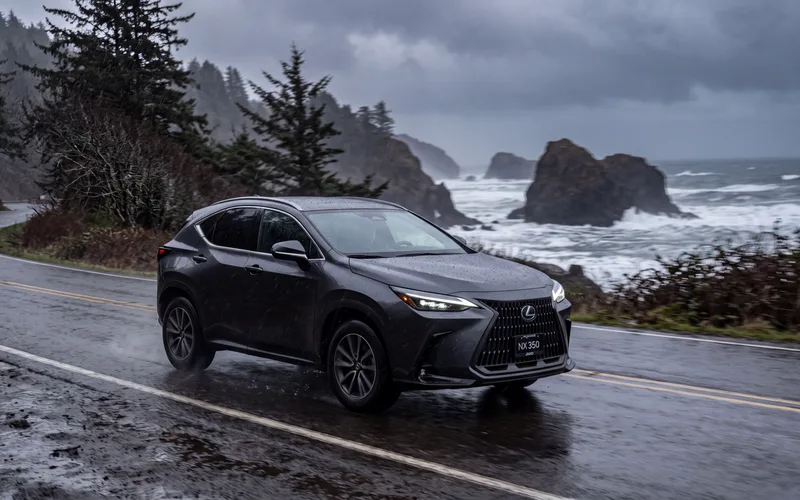 Lexus NXCompact Luxury SUVBetter at: Total cost
Hybrid efficiency, standard driver assistance and class-leading resale make it the lower-total-cost choice for almost every XT5 shopper.
Compare 2.69C+
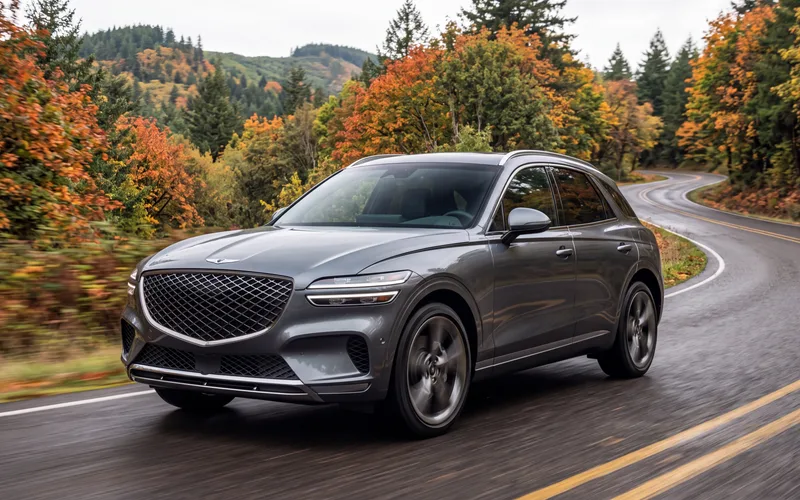 Genesis GV70Compact Luxury SUVBetter at: Value
A current-generation luxury crossover with standard blind-spot and adaptive cruise and a 10-year powertrain warranty for close to the same money.
Compare 2.74B-
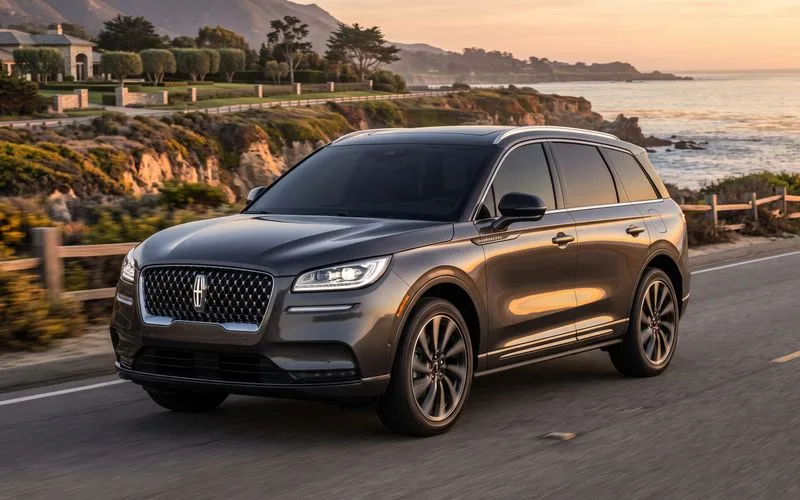 Lincoln NautilusMid-Size Luxury SUVBetter at: Interior tech
The other American luxury two-row, redesigned in 2024 with a hybrid option and a modern cabin instead of an 8-inch screen.
CompareHow it's evolved
10 scored model years · 2017–2026
Subject scores by year
Hover or tap a score to see what moved it versus the year before. A corner mark flags a big swing.
| Year | Performance | Efficiency | Safety | Space | Cost | Reliability | Tech | Use-case | Driving | Value |
|---|---|---|---|---|---|---|---|---|---|---|
| 2026 | 40 | 46 | 57 | 47 | 35 | 64 | 66 | 54 | 62 | 54 |
| 2025 | 40 | 46 | 57 | 48 | 37 | 64 | 63 | 55 | 57 | 50 |
| 2024 | 33 | 43 | 56 | 47 | 39 | 59 | 62 | 51 | 57 | 54 |
| 2023 | 40 | 46 | 59 | 47 | 39 | 63 | 63 | 53 | 59 | 60 |
| 2022 | 40 | 46 | 59 | 47 | 38 | 67 | 61 | 52 | 58 | 58 |
| 2021 | 40 | 47 | 60 | 47 | 38 | 64 | 62 | 53 | 57 | 59 |
| 2020 | 40 | 45 | 60 | 47 | 41 | 65 | 56 | 53 | 57 | 63 |
| 2019 | 43 | 42 | 50 | 49 | 40 | 59 | 50 | 53 | 60 | 62 |
| 2018 | 43 | 42 | 48 | 49 | 49 | 61 | 52 | 54 | 58 | 64 |
| 2017 | 43 | 42 | 50 | 49 | 53 | 49 | 49 | 52 | 56 | 67 |
Compare two years
Best fit & conditions
Higher scores mean a better fit for that use case. Learn more about use-case fit →
Subject profile
Academic Probation · NHTSA safety recalls
No NHTSA safety recall is on record for the 2019 Cadillac XT5. Other model years of the XT5 have 15 — listed below.
15 recalls on other model years of the XT5 (2017, 2020–2025)
Jun 20, 2024Electrical system: instrument cluster/panelThe instrument panel may not illuminate when the hazard warning lights, high beams, or turn signals are activated. As such, these vehicles fail to comply with the requirements of Federal Motor Vehicle Safety Standard numbers 101, "Controls and Displays" and 108, "Lamps, Reflective Devices, and Assoc. Equipment."
Defect
General Motors, LLC (GM) is recalling certain 2023-2025 Cadillac XT5 and 2024-2025 Cadillac XT6 vehicles. The instrument panel may not illuminate when the hazard warning lights, high beams, or turn signals are activated. As such, these vehicles fail to comply with the requirements of Federal Motor Vehicle Safety Standard numbers 101, "Controls and Displays" and 108, "Lamps, Reflective Devices, and Assoc. Equipment."
Risk
Without the illuminated reminder, the driver could fail to turn off the lights when no longer needed. Hazard warning lights, high beams, or turn signals that remain activated unintentionally can confuse other drivers, increasing the risk of a crash.
Remedy
Dealers will update the instrument panel software, free of charge. Owner notification letters were mailed August 13, 2024. Owners may contact Cadillac's customer service at 1-800-458-8006. GM's number for this recall is N242447940.
NHTSA campaign 24V459000 ↗Manufacturer no. N2424479406,942 vehicles potentially affected (all models in the campaign)Owners notified Aug 13, 2024Filed by General Motors, LLCFiled as XT5May 2, 2024Air bags: frontalThe driver's front air bag cushion may tear during deployment, resulting in the air bag not deploying as intended.
Defect
General Motors, LLC (GM) is recalling certain 2024 Cadillac XT5 vehicles. The driver's front air bag cushion may tear during deployment, resulting in the air bag not deploying as intended.
Risk
An air bag that does not deploy as intended increases the risk of injury during a crash.
Remedy
Dealers will replace the driver's front air bag module, free of charge. Owner notification letters were mailed September 12, 2024. Owners may contact Cadillac customer service at 1-800-458-8006. GM's number for this recall is N232439241.
NHTSA campaign 24V311000 ↗Manufacturer no. N23243924174 vehicles potentially affected (all models in the campaign)Owners notified Sep 12, 2024Filed by General Motors, LLCFiled as XT5Oct 12, 2023Visibility: windshieldThe windshield may have been assembled without the proper urethane sealant required to bond the windshield to the vehicle body.
Defect
General Motors, LLC (GM) is recalling certain 2023 GMC Acadia and 2024 Cadilac XT5 and XT6 vehicles. The windshield may have been assembled without the proper urethane sealant required to bond the windshield to the vehicle body.
Risk
A windshield that is not properly bonded may detach during a crash and increase the risk of injury.
Remedy
Dealers will inspect the windshield and apply primer and urethane sealant. If the windshield is damaged, the dealer will replace it. Repairs will be performed free of charge. Owner notification letters were mailed November 14, 2023. Owners may contact Cadillac customer service at 1-800-458-8006 or GMC customer service at 1-800-462-8782. GM's number for this recall is N232419690.
NHTSA campaign 23V681000 ↗Manufacturer no. N23241969042 vehicles potentially affected (all models in the campaign)Owners notified Nov 14, 2023Filed by General Motors, LLCFiled as XT5Mar 16, 2023Power train: automatic transmissionThe transmission may have been built with an incorrect sun gear, which can result in the driver-side half-shaft disengaging from the transmission.
Defect
General Motors, LLC (GM) is recalling certain 2023 Cadillac XT6, GMC Acadia, Chevrolet Blazer, Traverse, and 2022-2023 Cadillac XT5 vehicles. The transmission may have been built with an incorrect sun gear, which can result in the driver-side half-shaft disengaging from the transmission.
Risk
A half-shaft disengaging from the transmission can result in a loss of drive power or vehicle rollaway when the vehicle is placed in park. Either of these scenarios can increase the risk of a crash.
Remedy
Dealers will replace the sun gears, free of charge. Owner notification letters were mailed on July 27, 2023. The remedy is expected to become available August 31, 2023. Owners may contact Cadillac customer service at 1-800-458-8006, Chevrolet customer service at 1-800-222-1020, or GMC customer service at 1-800-462-8782. GMC's number for this recall is N222389310.
NHTSA campaign 23V172000 ↗Manufacturer no. N2223893108,744 vehicles potentially affected (all models in the campaign)Owners notified Jul 27, 2023Filed by General Motors, LLCFiled as XT5Feb 2, 2023Power train: driveline: driveshaftThe right-front half-shaft assemblies may be improperly connected to the transmission, causing them to separate.
Defect
General Motors, LLC (GM) is recalling certain 2023 Cadillac XT5 and GMC Acadia vehicles. The right-front half-shaft assemblies may be improperly connected to the transmission, causing them to separate.
Risk
Separation between the half-shaft and transmission can result in a loss of drive power or vehicle rollaway when the vehicle is placed in park. Either of these scenarios can increase the risk of a crash.
Remedy
Dealers will replace the right-front half-shaft assemblies, free of charge. Owner notification letters were mailed February 17, 2023. Owners may contact Cadillac customer service at 1-800-458-8006 or GMC customer service at 1-800-462-8782. GM's number for this recall is N222393410.
NHTSA campaign 23V043000 ↗Manufacturer no. N22239341010 vehicles potentially affected (all models in the campaign)Owners notified Feb 17, 2023Filed by General Motors, LLCFiled as XT5Sep 22, 2022Back over prevention: sensing system: cameraThe rearview camera coaxial cable connectors may have been crimped improperly, causing the rearview camera to fail or function intermittently.
Defect
General Motors, LLC (GM) is recalling certain 2020-2021 Cadillac XT5, XT6, and GMC Acadia vehicles equipped with the optional Surround Vision feature. The rearview camera coaxial cable connectors may have been crimped improperly, causing the rearview camera to fail or function intermittently.
Risk
An inoperative rearview camera can reduce the driver's rear visibility, increasing the risk of a crash.
Remedy
Dealers will replace the coaxial cables, free of charge. Owner notification letters were mailed January 18, 2023. Owners may contact Cadillac customer service at 1-800-458-8006 or GMC customer service at 1-800-462-8782. GM's number for this recall is N222378380.
NHTSA campaign 22V709000 ↗Manufacturer no. N22237838095,231 vehicles potentially affected (all models in the campaign)Owners notified Jan 18, 2023Filed by General Motors, LLCFiled as XT5Sep 22, 2022Equipment: other: labelsThe certification label located on the driver's side B-pillar contains tire size information that may be illegible. As such, these vehicles fail to comply with the requirements of Federal Motor Vehicle Safety Standard number 110, "Tire Selection and Rims."
Defect
General Motors, LLC (GM) is recalling certain 2023 Cadillac XT5, XT6, and GMC Acadia vehicles. The certification label located on the driver's side B-pillar contains tire size information that may be illegible. As such, these vehicles fail to comply with the requirements of Federal Motor Vehicle Safety Standard number 110, "Tire Selection and Rims."
Risk
Illegible tire size information may result in the wrong tires being installed, increasing the risk of a crash.
Remedy
Dealers will replace the vehicle certification label, free of charge. Owner notification letters were mailed October 12, 2022. Owners may contact Cadillac customer service at 1-800-458-8006 or GMC customer service at 1-800-462-8782. GM's number for this recall is N222381690.
NHTSA campaign 22V708000 ↗Manufacturer no. N22238169024 vehicles potentially affected (all models in the campaign)Owners notified Oct 12, 2022Filed by General Motors, LLCFiled as XT5Jun 23, 2022Fuel system, gasoline: storage: tank assemblyThe fuel tank rollover valve may not provide a proper seal in the event of a rollover crash.
Defect
General Motors, LLC (GM) is recalling certain 2022 Cadillac XT5, XT6, and GMC Acadia All-Wheel Drive (AWD) vehicles. The fuel tank rollover valve may not provide a proper seal in the event of a rollover crash.
Risk
A fuel tank rollover valve that does not properly seal can result in a fuel leak during a rollover crash, increasing the risk of a fire.
Remedy
Dealers will inspect the fuel tank and replace the fuel tank shell if the rollover valve is found to be dislodged or missing, free of charge. Owner notification letters were mailed July 27, 2022. Owners may contact Cadillac customer service at 1-800-458-8006 and GMC customer service at 1-800-462-8782. GM's number for this recall is N222366070.
NHTSA campaign 22V446000 ↗Manufacturer no. N222366070228 vehicles potentially affected (all models in the campaign)Owners notified Jul 27, 2022Filed by General Motors, LLCFiled as XT5Jun 16, 2022Suspension: rearThe left-rear suspension toe link may have been tightened improperly, which could result in a loose or separated toe link.
Defect
General Motors, LLC (GM) is recalling certain 2022 Cadillac XT5, XT6, and GMC Acadia vehicles. The left-rear suspension toe link may have been tightened improperly, which could result in a loose or separated toe link.
Risk
A loose toe link can separate and cause a loss of vehicle control, increasing the risk of a crash.
Remedy
Dealers will inspect the left-rear suspension and replace the fastener if it is loose or missing, free of charge. Owner notification letters were mailed July 11, 2022. Owners may contact Cadillac customer service at 1-800-458-8006 or GMC customer service at 1-800-462-8782. GM's number for this recall is N222364330.
NHTSA campaign 22V427000 ↗Manufacturer no. N222364330736 vehicles potentially affected (all models in the campaign)Owners notified Jul 11, 2022Filed by General Motors, LLCFiled as XT5Jun 3, 2021Fuel system, gasoline: delivery: hoses, lines/piping, and fittingsThe fuel supply lines may be improperly attached and seated.
Defect
General Motors, LLC. (GM) is recalling certain 2021 Cadillac XT5, XT6, and GMC Acadia vehicles. The fuel supply lines may be improperly attached and seated.
Risk
Improperly attached and seated fuel supply lines may loosen or separate, causing a fuel leak and increasing the risk of a fire.
Remedy
Dealers will inspect and replace fuel supply lines as necessary, free of charge. Owner notification letters were mailed on July 1, 2021. Owners may contact Cadillac customer service at 1-800-458-8006 and GMC customer service at 1-800-462-8782. GM's number for this recall is N212335590.
NHTSA campaign 21V422000 ↗Manufacturer no. N212335590572 vehicles potentially affected (all models in the campaign)Owners notified Jul 1, 2021Filed by General Motors, LLCFiled as XT5Feb 25, 2021TiresThe affected tires were cured for too long during production.
Defect
General Motors LLC (GM) is recalling certain 2020 Buick Enclave, Cadillac XT4, XT5, Escalade, Escalade ESV, Chevrolet Suburban, Tahoe, Traverse, GMC Yukon, Yukon XL, 2018-2021 Chevrolet Express, GMC Savana, 2019-2020 Chevrolet Blazer, Silverado 1500, GMC Acadia, Sierra 1500, and certain Continental tires sold to the aftermarket for various model year 2018-2021 vehicles. The affected tires were cured for too long during production.
Risk
Over cured tires may develop a break in the sidewall resulting in sudden air loss or a belt edge separation which could lead to a tread/belt loss. Either condition can cause a loss of vehicle control, increasing the risk of a crash.
Remedy
GM will notify owners, and dealers will inspect the tires, replacing them as necessary, free of charge. The recall began March 22, 2021. Owners may contact GMC customer service at 1-888-988-7267, Buick customer service at 1-866-608-8080, Chevrolet customer service at 1-800-222-1020 or Cadillac customer service at 1-800-458-8006. GM's number for this recall is N212329050.
NHTSA campaign 21V115000 ↗Manufacturer no. N21232905033,838 vehicles potentially affected (all models in the campaign)Owners notified Mar 22, 2021Filed by General Motors, LLCFiled as XT5Nov 5, 2020TiresThe vehicles may have been manufactured with Continental tires that were overcured.
Defect
General Motors LLC (GM) is recalling certain 2020 Buick Enclave, Cadillac XT5, GMC Acadia and Chevrolet Traverse vehicles and 2020-2021 Chevrolet Silverado 1500, GMC Sierra 1500 vehicles. The vehicles may have been manufactured with Continental tires that were overcured.
Risk
Overcured tires may experience a carcass break in the sidewall resulting in a sudden air loss or could develop a belt edge separation which could lead to partial or full tread/belt loss. Either condition increases the risk of a crash.
Remedy
GM will notify owners, and dealers will inspect vehicles and replace tires that have DOT number and production mold number combinations identified by Continental, free of charge. The recall began December 17, 2020. Owners may contact GMC customer service at 1-888-988-7267, Buick customer service at 1-866-608-8080, Chevrolet customer service at 1-800-222-1020 or Cadillac customer service at 1-800-458-8006. GM's number for this recall is N202319030.
NHTSA campaign 20V684000 ↗Manufacturer no. N2023190307,516 vehicles potentially affected (all models in the campaign)Owners notified Dec 17, 2020Filed by General Motors LLCFiled as XT5Oct 15, 2020Fuel system, gasoline: delivery: fuel pumpThe fuel pump's jet nozzle may have a plastic burr remaining from the manufacturing process, possibly causing a blocked nozzle and an insufficient fuel supply to the engine.
Defect
General Motors LLC (GM) is recalling certain 2020 Buick Enclave, Cadillac XT5, Cadillac XT6, Chevrolet Traverse, and GMC Acadia vehicles. The fuel pump's jet nozzle may have a plastic burr remaining from the manufacturing process, possibly causing a blocked nozzle and an insufficient fuel supply to the engine.
Risk
Insufficient fuel supply can result in an engine stall without warning, increasing the risk of a crash.
Remedy
GM will notify owners, and dealers will replace the fuel pump module. The recall began November 16, 2020. Owners may contact GMC customer service at 1-888-988-7267, Buick Customer service at 1-866-608-8080, Chevrolet customer service at 1-800-222-1020 or Cadillac customer service at 1-800-458-8006. GM's number for this recall is N202314760.
NHTSA campaign 20V639000 ↗Manufacturer no. N2023147602,781 vehicles potentially affected (all models in the campaign)Owners notified Nov 16, 2020Filed by General Motors LLCFiled as XT5Jul 30, 2020Air bags: side/window: curtain: inflatorThe diffuser component of the Roof-Rail Air Bag (RRAB) inflator may not have been properly crimped to the inflator and could separate from the inflator during air bag deployment.
Defect
General Motors, LLC. (GM) is recalling certain 2020 Buick Enclave, Cadillac XT5 and XT6, Chevrolet Blazer, Silverado 1500, 2500 and 3500 and Traverse and GMC Acadia and Sierra 1500, 2500 and 3500 vehicles. The diffuser component of the Roof-Rail Air Bag (RRAB) inflator may not have been properly crimped to the inflator and could separate from the inflator during air bag deployment.
Risk
If the diffuser separates from the inflator during deployment, RRAB performance may be degraded, increasing the risk of injury in a crash.
Remedy
GM will notify owners, and dealers will replace the suspect RRAB modules, free of charge. The recall began September 3, 2020. Owners may contact Chevrolet customer service at 1-800-630-2438, Cadillac customer service at 1-800-333-4223, or Buick customer service at 1-800-521-7300. GM's number for this recall is N202305380.
NHTSA campaign 20V446000 ↗Manufacturer no. N202305380769 vehicles potentially affected (all models in the campaign)Owners notified Sep 3, 2020Filed by General Motors LLCFiled as XT5Nov 4, 2016Service brakes, hydraulic: foundation components: disc: caliperThe front brake calipers may have a torn or misaligned caliper piston seal which may allow brake fluid to leak.
Defect
General Motors LLC (GM) is recalling certain model year 2017 Cadillac XT5 vehicles manufactured April 16, 2016, to May 9, 2016, and 2017 GMC Acadia vehicles manufactured April 19, 2016, to April 22, 2016. The front brake calipers may have a torn or misaligned caliper piston seal which may allow brake fluid to leak.
Risk
If there is a brake fluid leak, braking performance may be reduced, increasing the risk of a crash.
Remedy
GM will notify owners, and dealers will inspect the front brake calipers, replacing the brake caliper assemblies, as necessary, free of charge. The recall began on December 12, 2016. Owners may contact GM customer service at 1-800-458-8006 (Cadillac), or 1-800-462-8782 (GMC). GM's number for this recall is 16096.
NHTSA campaign 16V802000 ↗Manufacturer no. 160961,844 vehicles potentially affected (all models in the campaign)Owners notified Dec 12, 2016Filed by General Motors LLCFiled as XT5
Source: NHTSA Office of Defects Investigation recall database, model years 2017–2026. Recalls are listed by model year as the manufacturer filed them; whether a specific car is affected depends on its VIN — check a VIN at nhtsa.gov ↗. NHTSA model names matched to this page: XT5.
Detailed scoring by subject
1Performance & PowertrainOne of the XT5's weakest categories.0.87F
2019 is a carry-over year in the first-generation XT5 and the last before the mid-cycle refresh: the naturally aspirated 3.6L LGX V6 is the sole powertrain across all four trims, making 310 hp. That is a healthy number for the compact luxury segment on paper — more than the BMW X3 xDrive30i or Mercedes GLC 300 of the same year — though the XT5 does not convert it into matching pace.
271 lb-ft is competitive in absolute terms but it peaks at 5,000 rpm, so the XT5 has to be revved to find it — the opposite of the low-end turbo shove the German rivals delivered from 1,500 rpm, and the reason the car feels less urgent in traffic than its output suggests.
Edmunds recorded 6.8 seconds to 60 mph at the test track for the 2019 car — mid-pack for a 2019 compact luxury SUV and a full second off what 310 hp implies, the roughly 4,000-lb curb weight and high-rpm torque peak accounting for the difference. Published figures for the mechanically identical 2017 version spread from 6.4 s (MotorTrend, FWD) to 6.6 s (Car and Driver, AWD Platinum), and Consumer Reports measured 7.1 s.
The naturally aspirated V6 is the smoother, more linear half of the XT5's story — no turbo lag to manage, immediate throttle response, and reviewers describe it as strong enough for the job if short of a powerhouse. It scores above the 2020 refresh's volume 2.0T for exactly that reason. What holds it back from the top band is noise rather than delivery: Consumer Reports faults the car for not being as quiet as a Cadillac should be at low speed, and the Active Fuel Management cylinder deactivation plus stop/start both intrude on an otherwise refined engine.
The eight-speed automatic is the 2019 car's weakest powertrain link and the single thing the 2020 refresh most clearly fixed by replacing it with a nine-speed. Reviewers call the shifts themselves smooth, but note it lags for a driver wanting quick response, and GM's 8L45/AF50-8 in this application drew documented complaints of harsh upshifts and torque-converter shudder that dealers addressed by reprogramming the transmission control module. Cadillac's Electronic Precision Shift selector remains an ergonomic acquired taste independent of shift quality.
3,500 lbs is the rating only with the factory Trailering Package fitted; an XT5 without that option is capped at 1,000 lbs, which is what most 2019 examples left the lot rated for. Mid-pack for a compact luxury crossover and enough for a small boat or a pair of jet skis, but not a capability this car is bought for.
Front-wheel drive is standard and all-wheel drive is a paid option on Luxury and Premium Luxury, standard only on the top Platinum — so the buyer of a volume XT5 pays extra for it. The system itself is genuinely sophisticated where fitted: a twin-clutch rear drive unit that can shuttle torque side to side, paired with driver mode select. There is no low range anywhere in the lineup.
A road-going luxury crossover with no off-road provision at all: no skid plates, no locking differential, no low-range transfer case, no off-road trim or package, and full-width fascias giving a modest 14-degree approach angle. Ground clearance of roughly 7.8 inches is adequate for a snowy driveway or a gravel road and that is the limit of the ambition — 2019 does not even offer the Off-Road drive mode the 2020 refresh added to AWD cars.
One engine, take it or leave it — the 3.6L V6, with the only choice being front- or all-wheel drive. This is the narrowest the XT5 lineup ever got: the 2020 refresh added the 2.0L turbo four alongside it, and even then no electrified version was ever sold in North America. Against a 2019 segment where the Lexus NX 300h offered a hybrid and the Volvo XC60 T8 a plug-in, a single naturally aspirated V6 is a conspicuous gap.
2Efficiency & RangeOne of the XT5's weakest categories.0.80F
22 MPG combined for the volume front-drive V6 — unremarkable for a 2019 compact luxury SUV, where the segment's turbo fours were returning 24–25 and the hybrid Lexus NX 300h managed 31. Active Fuel Management cylinder deactivation and stop/start are both standard and are what keep a 3.6-liter naturally aspirated six in a 4,000-lb body from doing worse.
19 MPG city is the XT5's weakest efficiency figure and the clearest cost of choosing a large-displacement naturally aspirated six with no ability to recover braking energy. Cylinder deactivation helps at steady speeds but does little in stop-and-go traffic, which is precisely where the segment's hybrids pulled a ten-MPG gap.
26 MPG highway is the XT5's best showing, with the eight-speed's tall top gears and cylinder deactivation letting the V6 loaf at cruise. Still only mid-pack for the segment and the year, and AWD costs a further MPG.
A 19.4-gallon tank against 22 MPG combined puts the front-drive XT5 near 427 miles — respectable rather than strong, the tank compensating for economy it does not have. The quirk worth knowing is that the AWD car carries a notably larger 21.7-gallon tank, so despite worse economy it actually goes farther between stops, around 456 miles.
EPA estimates $2,800 a year at 15,000 miles for the volume front-drive V6 — mid-band for an SUV and, notably, $350 a year cheaper to run than the 2020 refresh's 2.0T that replaced it, because this engine is rated on regular fuel while the turbo four requires premium. The mediocre MPG is partly offset at the pump by the cheaper gallon.
The 2019 XT5 runs on regular unleaded — no premium requirement, no charging to arrange, no exotic fuel — which is genuinely uncommon for a luxury-badged vehicle and the strongest thing in this category. It is also a real advantage over the 2020 refresh: EPA rates the 2.0T that became the volume engine as a premium-gasoline vehicle, so the pre-refresh V6 is the cheaper XT5 to fill.
3SafetyGrades below the middle of the scale.1.37D
NHTSA crash-tested the 2019 XT5 itself and published two records with identical sub-ratings — 4 stars frontal (driver 5, passenger 4), 5 stars side including the pole test, 4 stars rollover — but different composites: 4 stars overall for the front-wheel-drive car and 5 for AWD, the lower rollover risk of the heavier AWD model tipping the weighted total across the boundary. FWD is the standard drivetrain and AWD a paid extra on Luxury and Premium Luxury, so the volume 2019 XT5 is the 4-star car. The 2020 refresh lifted the frontal result to 5 stars and both drivetrains to 5 overall, so this is a genuine year-specific figure and not a carry-over.
Every IIHS crashworthiness test the XT5 has taken comes back Good — driver-side small overlap front, moderate overlap front, side, roof strength and head restraints & seats — which is a clean sheet as far as it goes, but the passenger-side small overlap test was never run on this body, so it is thinner than a full row of Goods suggests. No Top Safety Pick in 2019: the headlights are the disqualifier, Marginal on the LED variant and Poor on the halogen units fitted to the two cheapest trims. Scored at the top of the mid band because in 2019 the updated side and updated moderate overlap tests did not yet exist, so those missing results were not yet a gap the way they became later in this generation.
2019 was the year Cadillac made the Driver Awareness Package standard content from the Luxury trim up, so the volume car covers four of the five systems this criterion names — Forward Collision Alert, Lane Keep Assist with Lane Departure Warning, Front Pedestrian Braking and Low Speed Forward Automatic Braking, plus Lane Change Alert with Side Blind Zone Alert and Rear Cross Traffic Alert standard and the haptic Safety Alert Seat. Two real holes keep it at the bottom of the middle band: the entry XT5 trim gets none of it (halogen headlamps, a rear camera and rear park assist are the whole safety-tech list, and the Driver Awareness Package cannot even be ordered on it), and adaptive cruise is unavailable on both of the lower two trims — it exists only inside the Driver Assist Package on Premium Luxury and standard on Platinum. The braking system the volume buyer gets is also the low-speed one rather than the full-speed unit.
IIHS ran the XT5 twice in vehicle-to-vehicle front crash prevention and the gap between the two systems is the story: the Driver Assist Package's full-speed Forward Automatic Braking rates Superior, avoiding the 12 mph collision outright and cutting the 25 mph impact by 24 mph, while the Low Speed Forward Automatic Braking the volume car actually carries rates only Advanced — it avoids the 12 mph hit but shaves just 9 mph off the 25 mph run. Front Pedestrian Braking is standard from Luxury up but the XT5 was never put through the IIHS vehicle-to-pedestrian test in any year, so there is no day or night pedestrian result to credit, and nighttime pedestrian evaluation did not exist in 2019.
Lane Change Alert with Side Blind Zone Alert and Rear Cross Traffic Alert are both standard from the Luxury trim upward for 2019 — that is three of the four trims and the whole volume of the range — and the vibrating Safety Alert Seat that comes with them is a genuinely useful directional cue rather than another chime. What holds it in the middle band is that they are alert-only: there is no blind-spot steering intervention, cross-traffic braking arrives only as the Reverse Automatic Braking inside the Premium Luxury/Platinum Driver Assist Package, no safe-exit or rear-occupant warning is offered on any 2019 XT5, and the entry XT5 trim has no blind-spot coverage at all.
Lane Keep Assist with Lane Departure Warning comes standard from Luxury up as part of the Driver Awareness Package, and Cadillac's own description of it is accurate about the limits — it 'can gently turn the steering wheel if the system anticipates the vehicle is leaving the lane', a corrective nudge back from the edge and nothing more. No lane centering exists on the 2019 XT5 at any trim or price, so there is no system that holds a line between the markings, and the entry XT5 trim goes without even the nudge. In 2019 centering was not yet a segment expectation, which is the only reason this sits close to the middle band rather than well below it.
The hardware is right and the availability is wrong. Adaptive Cruise Control–Advanced is a full-speed-range radar system with stop-and-go when fitted, but for 2019 it is bundled into the Driver Assist Package, which is orderable only on Premium Luxury and standard only on Platinum — it cannot be had on the base XT5 or the Luxury trim at any price, so a large share of 2019 cars leave with plain fixed-speed cruise. There is also no highway assist of any kind to speak of: with no lane centering anywhere in the lineup, the ACC has no steering function to combine with.
Super Cruise is not offered on the 2019 XT5 and never was on any year of this generation. For the 2019 model year GM confined the system to the CT6 flagship sedan; the CT4/CT5/Escalade rollout began in 2021 and the XT5's platform was skipped entirely. The most advanced driver aid a 2019 XT5 can be ordered with is the Driver Assist Package's adaptive cruise.
The weakest element of the 2019 XT5's safety case and the sole reason a car with Good in every crash test wins no IIHS award. IIHS tested three variants and none is better than Marginal: the LED projectors standard on Premium Luxury and Platinum rate Marginal, and the halogen projectors fitted to the base XT5 and standard Luxury rate Poor — the base trim's not even having high-beam assist. Every variant was judged to give inadequate visibility on curves, and the halogen units are only fair on the straightaway in both directions. Scored below the 2020 car, whose range was uniformly Marginal, because in 2019 two of four trims carry the Poor units.
The XT5's rakish roofline costs the driver real sightlines in both directions — reviewers of this generation single out thick rear pillars, a rising beltline and a narrow rear window that together create a significant rear three-quarter blind zone, and thick windshield pillars that intrude on the forward view as well. Camera compensation is thinner in 2019 than later in the generation: the rear vision camera is standard and front and rear park assist arrive with Luxury, but Surround Vision and the Rear Camera Mirror are both Platinum-only for 2019 and are not even listed as options on Premium Luxury, so the two features that would actually solve the problem are out of reach for the volume buyer.
Workable rather than easy on the hardware, better than that in practice. IIHS rates LATCH ease of use Acceptable — two complete sets of lower anchors in the outboard rear seats plus tether anchors, but the lower anchors sit tight in the seat cushions and other hardware can be mistaken for the tether anchors. The generation's generous rear legroom, wide rear door openings and 40/20/40 second row with slide and recline make loading a seat straightforward, and Cars.com's Car Seat Check gave this body strong marks across infant, rear-facing convertible, forward-facing convertible and booster fitments. Three-across is still a squeeze in a five-seat compact crossover.
4Space & ComfortGrades below the middle of the scale.1.27D
2019 is a carry-over year in the first-generation XT5 and the car remains a strictly two-row, five-seat crossover across all four trims (XT5, Luxury, Premium Luxury, Platinum). Cadillac still had no three-row crossover in 2019 — the XT6 arrived for 2020.
GM's published first-row headroom for this body is 39.7 in without a sunroof, mid-pack for a compact luxury SUV. Cadillac's own 2019 brochure quotes 38.4 in because the UltraView double-sized glass roof is standard equipment on Luxury and above — i.e. on the volume trim — so most 2019 XT5s on the road give up roughly 1.3 in of the no-sunroof figure.
41.2 in sits below the SUV midpoint and remains the XT5's weakest passenger-space measurement in this carry-over year — the 112.5-in wheelbase was spent on the second row rather than the first, so the cabin's reputation for airiness rests on width and materials rather than front leg space.
GM publishes 38.4 in of second-row headroom for the no-sunroof body, a decent figure on paper, but the panoramic roof fitted to every trim above the base car cuts it to the 36.0 in Cadillac's own 2019 brochure quotes — and reviewers of the 2019 car flag it directly. Consumer Guide lists tight rear headroom for tall adults among the XT5's few real demerits.
The XT5's standout interior number and unchanged for 2019: 39.5 in of rear legroom, ahead of most compact luxury rivals of the period. Because the second row slides and reclines as standard on every trim, passengers can trade legroom against cargo depth, so the figure is usable rather than nominal.
No third row exists on any 2019 XT5, at any trim or option level — a hard limitation rather than a compromised seat. A 2019 Cadillac buyer who needed seven seats had no crossover to buy; the XT6 was a model year away.
Thirty cubic feet behind the rear seats is competitive against 2019 compact luxury rivals, but it scores poorly against a normalization band that spans two- and three-row SUVs alike. The sliding second row can claw back a little depth at the cost of rear legroom.
Sixty-three cubic feet maximum is modest — useful for a couple's gear but well short of two-row SUVs that push past 75 cu ft. The seatbacks do drop flat via remote levers in the cargo area, so the space that exists is easy to get at.
Better than merely competitive without being segment-redefining, and marginally improved for 2019 by the move to four USB ports. Cadillac's Electronic Precision Shift frees the space under the console for a large open bin with a power outlet, and the console lid conceals a phone slot that doubles as the wireless charging pad. A rear cargo management system with rails and a sliding fence plus a retractable cargo shade are standard from the Luxury trim up. There is still no underfloor or frunk-style storage.
A well-equipped and well-shaped set of chairs that stops short of plush. The volume Luxury trim gets 8-way power front seats with 2-way power lumbar for driver AND passenger, heated fronts, a heated steering wheel and a memory package all standard, and the second row slides, reclines and sits on a flat floor. Edmunds found the seats bolstered in the right places with plenty of adjustment but the padding short of plush. It scores below 2017 because ventilated front seats are no longer orderable on Luxury at all for 2019 — they start at Premium Luxury — and the standard panoramic roof still limits the back seat for taller adults.
The 2019 car reviews better on ride than the launch year did. Edmunds called the ride smooth, well-mannered and never bouncy, with little of the float that undoes a soft crossover, and Consumer Guide credited a fine balance of ride and handling. The volume Luxury trim's 18-inch wheels on 65-series tires help — Edmunds' criticism was specifically that a low-profile 20-inch tire can only do so much over an abrupt edge, and 20s are Premium Luxury equipment. It stays out of the top band because ZF real-time damping is still not fitted to the Luxury trim.
Adequately isolated at speed and less impressive than a luxury badge implies at low speed — Edmunds' 2019 assessment is markedly cooler than the launch-year praise this generation earned. Acoustic laminated windshield and front door glass are standard on every trim, and highway wind and road noise are moderate rather than acute, but around town engine accessory-drive noise and idle vibration reach the cabin.
Generously equipped on the volume trim: Luxury gets an automatic heated steering wheel, heated front seats, dual-zone automatic climate, rear air vents, the UltraView panoramic roof, Rainsense wipers, a cabin humidity sensor and a memory package as standard, and adaptive remote start is standard on every trim including the base car. Tri-zone climate with heated rear outboard seats is orderable on Luxury. The gap is ventilation: for 2019 ventilated front seats are not available on the Luxury trim at any price, where in 2017 they could at least be had with one specific interior color.
5Cost of OwnershipThe XT5's lowest-graded category.0.67F
The entry XT5 opened at $41,695 plus GM's $995 destination charge — $42,690 delivered, and the highest base price the pre-refresh car ever carried, up $2,300 on the 2017 launch figure for a base trim whose content barely moved. The money still buys the full 310-hp 3.6L V6 and eight-speed automatic, the only powertrain offered in 2019, which is unusual in a class where the entry car normally gets a de-tuned four; what it does not buy is any driver-assistance equipment (see 10.1.1).
Luxury is the volume trim and for 2019 it is also the one that finally makes the XT5 defensible on equipment — it is the trim Cadillac made the Driver Awareness Package standard on this year, alongside heated leatherette front seats, dual-zone climate, Bose audio, an 8-inch CUE screen with CarPlay and Android Auto, the new second-generation wireless charger, and Lane Change Alert with Side Blind Zone Alert. At $50,995 plus $995 destination that is $51,990 with the $2,500 all-wheel drive most buyers in this class take, $3,200 more than the same configuration cost in 2017 and the generation's high-water mark for the volume car. Transaction prices ran well under it: $3,000 in cash was on the hood by June 2019 and run-out cars later carried $6,000–$6,500.
Still one of the cheapest luxury crossovers of its era to keep on the road — GM parts pricing and dealer labour rather than German rates, a naturally aspirated 3.6L V6 and eight-speed automatic with no turbo or air suspension to fail, and RepairPal ranking the nameplate first of 29 luxury midsize SUVs — but the 2019 car costs its owner more across the five-year window than the 2017 did, and the reason is the maintenance program rather than the machinery: 2019 is the model year GM cut Cadillac's complimentary servicing from 3 years/36,000 miles to a single visit (see 5.3.1), so oil changes and rotations from year two onward come out of the owner's pocket. Estimated above CarEdge's optimistic $3,158 nameplate figure, which understates tyres and brakes on a 4,000-lb crossover, and marginally below the equivalent 2020 estimate on parts-and-labour inflation alone.
The item that sinks the category, and the weakest reading of the whole first generation. For a 2019 car the five-year mark fell in calendar 2024, after the used-price bubble had deflated rather than during it — the timing that flattered the 2017 and 2020 model years — and 2019 was the run-out year of the pre-refresh car at the generation's highest sticker, later cleared with $6,000–$6,500 cash allowances. Both halves of that are exactly how a percentage of MSRP gets destroyed. KBB's own tracking implies about $20,400 at five years, 39% of the volume trim's delivered price; the nameplate averages sit a little kinder at 41–43%. Even at 41% the absolute loss on a $52,000 vehicle is roughly $30,700, and iSeeCars has the XT5 shedding value about ten points faster over five years than the luxury compact SUV class.
Confirmed directly in Cadillac's own 2019 XT5 brochure: bumper-to-bumper for 4 years or 50,000 miles with no deductible from the original in-service date. That was the luxury-brand norm for 2019 — level with BMW, Audi, Mercedes and Lexus — and a year longer than the mainstream GM crossovers the XT5 shares its C1 platform with. Terms were unchanged across the whole 2017–2020 pre-refresh run.
Six years or 70,000 miles, transferable, on the 310-hp 3.6L V6, the eight-speed automatic, the transfer case and the drive systems — again stated in Cadillac's own 2019 brochure. That beats the flat 4/50 the German luxury brands and Lexus all stopped at in 2019 and the 5/60 on the mechanically related Chevrolet and GMC crossovers, so in its actual competitive set the XT5 is above average here. It still lands near the bottom of the framework's 5–10 year band, which is scaled against Hyundai/Kia/Genesis-style 10-year terms rather than against Cadillac's rivals.
2019 is the model year the free servicing went away, and that is the single most consequential ownership-cost change of the generation: GM cut Cadillac's Premium Care Maintenance from 3 years/36,000 miles on 2017–2018 cars — and 4 years/50,000 miles on the 2017 XT5 specifically — down to one covered visit, an oil change, four-tyre rotation and multi-point inspection to be redeemed inside the first year. Cadillac's own 2019 XT5 brochure is the tell: its owner-benefits and warranty block lists the two warranties, 24/7 roadside assistance and courtesy transportation and nothing about scheduled maintenance at all. What remains is real but ordinary — roadside assistance and courtesy transportation for the full 6-year/70,000-mile powertrain term, a 3-month/3 GB 4G LTE Wi-Fi data trial, three trial months of SiriusXM and a limited-trial OnStar Safety & Security plan. Super Cruise was never offered on any XT5. Sits just below mid-band because the free-servicing element is a single visit and every connected service is a trial, in a year when BMW still bundled 4 years/50,000 miles of Ultimate Care and Volvo and Jaguar included multi-year plans at this price.
$51,990 volume-trim price minus its estimated resale value after 5 years (41% retained, or about $21,316) leaves about $30,674 in depreciation. Add the projected $4,000 in 5-year maintenance and repairs, and owning this vehicle for 5 years costs about $34,674 in total.
6Reliability & QualityOne of the XT5's strongest categories.1.99C-
2019 is the last pre-refresh year of the first-generation XT5 and a clear improvement on the launch cars without escaping their central fault. Consumer Reports still returns the same verdict it gives 2017 — less reliable than other cars from the same model year — and its owner survey for this model year is dominated by engine cooling, which is to say the thermostat. That fault is not incidental to the nameplate: RepairPal lists 'reduced steering assist issue with non-functional temperature gauge and sensor' as the single most commonly reported Cadillac XT5 problem across all model years, and the 2019 NHTSA file reads as a case study in it. What pulls this well above the 2017 car's 40 is that the volume of trouble genuinely collapsed — 32 NHTSA complaints against 122 for 2017 and 66 for 2018, a 4x reduction over two years of running changes on unchanged hardware — and that the one study which actually measured these exact cars rather than predicting them came back positive: J.D. Power's 2022 VDS surveyed three-year-old 2019-model-year vehicles and put Cadillac fourth among premium brands, comfortably under the industry average. It stays in the below-average band because CR is the more model-specific of the two reads and it has not moved, and because the defining fault of the generation is still present and still uncovered.
The two major houses point in opposite directions for a 2019 Cadillac buyer, and neither is dismissible — the same reconciliation this scorecard's XT4 sibling reaches on identical brand-year facts. Consumer Reports ranked Cadillac dead last of thirty brands in the annual survey contemporaneous with this model year, the third consecutive year at or near the floor. J.D. Power, grading these same 2019 cars three years on in the study that actually measures durability rather than forecasting it, put Cadillac fourth among premium brands and ninth overall, well clear of the industry average. Mid-pack is the honest answer: better than the bottom-third reputation CR assigns, short of the above-average standing the 2020 car earned once both studies agreed. Initial quality is the tiebreaker that keeps it from going higher — Cadillac was nowhere near the leaders in the study covering 2019-model-year cars at 90 days.
On safety recalls this is the cleanest model year the XT5 has ever had, and one of the cleanest in the segment: NHTSA has zero campaigns on file for the 2019 car, as it does for 2018, against one for 2017, five for 2020 and four for 2023. Nothing was reissued, nothing systemic was ever dispositioned as a defect. That earns real credit and is why this sits above both the 2017 and the 2020 scores. It does not reach the top band for the same reason the 2017 car did not: an empty recall list on a car whose signature fault is thoroughly documented means the fault was handled below the recall threshold. GM's thermostat guidance dates to bulletin 17-NA-158 of May 2017 and a February 2018 ECM-calibration bulletin that names the XT5 explicitly, and owners of 2019 cars are still being told in service drives that it is a known condition — one complainant cites the 2017 bulletin by date and reports that dealers could not obtain thermostats. The out-of-warranty bill lands on the owner at $1,186–$1,300. Two owners report the front sunroof panel exploding at highway speed with no campaign covering it, and two report vehicle fires. Note that GM Customer Satisfaction Program N182190820 (power steering assist, January 2019) covers 2018–2019 Escalade and full-size GM trucks and does NOT include the XT5 — a distinction several secondhand write-ups get wrong.
2019 is the third and final year of the 3.6L LGX V6 paired with the Aisin AF50-8 eight-speed, which makes it the most sorted version of a combination that was never quite right — the opposite situation to the 2020 car, whose brand-new LSY turbo four and nine-speed were clean but unproven. Two things are in this drivetrain's favour and are frequently misreported. The LGX is the mature member of GM's high-feature V6 family; the timing-chain epidemic belongs to the earlier three-chain LY7/LLT engines, and a maintained LGX routinely runs past 200,000 miles, so used-car pages that attribute stretched timing chains to the 2019 XT5 are recycling a different engine's history. And the transmission is an Aisin unit, not the GM Hydra-Matic 8L45/8L90 whose 2015–2019 shudder class action covers the Escalade, CTS and ATS but not the XT5. What holds it at mid-band is the record of these actual cars. The thermostat failure is an engine-cooling fault that leaves owners with no temperature gauge, no A/C and degraded steering, and it is turning up at 37,000 and 61,000 miles. Transmission complaints did not disappear with volume: owners report the car refusing to shift and capping at 50–60 mph, and Consumer Reports flags delayed shifting and jerking during acceleration as characteristic of 2017–2019 specifically. Two 2019 owners report complete loss of motive power while driving.
Materially the same cabin as the 2017 launch car, with 2019's changes confined to trim and convenience — new interior colours, three new exterior colours, revised wheel designs and an improved wireless charger — rather than to surfaces. On the upper trims it reads convincingly upmarket: perforated leather, real open-pore wood, aluminium and matte-silver metal accents, a clear step up from the SRX it replaced. Below that the story thins in the same places it did two years earlier — the base car is leatherette, hard plastics appear in spots a $52,000 Luxury AWD should not have them, and the piano-black surround on the CUE screen was still collecting fingerprints and smears in 2019 reviews. It sits a few points under the 2020 refresh car, which is the correct ordering, because the semi-aniline leather and better switchgear that later reviewers credit arrive with the mid-cycle update this car predates.
This is where 2019 separates itself most clearly from the launch cars. The XT5 was in its third year of Spring Hill production on unchanged tooling, and the assembly complaints that defined 2017 — squeaks from the rear seats, a liftgate buzz on rough roads, moonroof drains clogging and flooding the cabin, cars back in service four times in five weeks — largely do not recur in the 2019 record. Consumer Reports' trouble spots for this model year are mechanical and electronic rather than noises-and-leaks, and the total complaint volume is a quarter of 2017's. What keeps it out of the top band is that the remaining defects are body and glass rather than trim: CarComplaints puts interior accessories at the head of its 2019 category list, two owners report the front sunroof panel shattering at speed, one reports a seat heater element that cooked through the cushion and cover, and one found the two front reinforced jacking points simply never installed — which the dealer confirmed on inspection. Brand context caps it too: Cadillac was not among the leaders in the initial-quality study covering these exact cars at 90 days.
Ownership support is by a wide margin the strongest item on this scorecard, and it is a genuine reason a 2019 XT5's known faults were survivable. On satisfaction, Cadillac ranked third among all luxury brands in the customer-service study contemporaneous with this model year — 880 points, one behind Lexus and thirteen ahead of Mercedes-Benz — a real improvement on the fifth place the 2017 buyer got. On access, a 2019 buyer bought into the network at close to its maximum modern extent, roughly 880 US storefronts, more physical locations than any other luxury brand in the country and multiples of what an Audi or Volvo owner had within reach; the underlying C1XX and LGX hardware is serviceable at Chevrolet, GMC and Buick stores as well. Both numbers deteriorate sharply from here — the EV-readiness buyouts cut the network to 564 stores by 2022 — so this is the high-water mark rather than a durable property of the brand. It stops just short of the 2020 car's score only because Cadillac rose to second in the following year's study.
Almost nothing under a 2019 XT5 is Cadillac-exclusive. The C1XX platform is shared with the Acadia, Traverse, Enclave and XT6, the LGX V6 is one of the most widely fitted engines GM has built, and GM's own bulletins group the XT5 with Buick, Chevrolet and GMC models on the same part numbers — so components move through franchised and independent shops alike at volume pricing. Routine upkeep runs below the luxury-crossover norm rather than above it, and both Consumer Reports and RepairPal place the XT5 among the cheaper luxury SUVs to maintain. Two things cap it. The Aisin AF50-8 is a lower-volume unit than the GM automatics the rest of this platform uses, and its fluid service alone is quoted at $1,540 for 22 quarts — six times what earlier model years cost. And this generation's characteristic faults are expensive on a car whose bumper-to-bumper coverage expired in 2023: owners report $1,186–$1,300 for the thermostat, about $1,500 for a rear hatch sensor, $1,179–$1,434 for an alternator, and a shattered sunroof with no campaign behind it.
7Technology & InfotainmentGrades below the middle of the scale.1.35D
Every 2019 XT5, from the base car to the Platinum, uses the same 8.0-inch display; there is no larger option at any price, and the larger screen this generation eventually gets does not arrive with the 2020 refresh either. Reasonable for 2019 but near the floor of a normalization band anchored on the 2026 market.
This is still the pre-refresh CUE — renamed "Cadillac user experience" for 2019 but architecturally unchanged — and it remains the XT5's most-criticized feature. There is no volume knob; volume lives on a capacitive slider, and common functions take more steps than they should. The rotary controller that answers those complaints does not arrive until the 2020 mid-cycle update, which Wikipedia records as adding "a new rotary controller for the Cadillac CUE system."
Both Apple CarPlay and Android Auto are standard on every 2019 trim including the base car, which was still ahead of much of the German competition at the time. The criterion measures wireless projection, though, and the XT5's is wired only — wireless projection never reaches any year of this generation, which is why aftermarket retrofit modules for the 2017–2019 CUE head unit exist.
Natural Voice Recognition is standard on every 2019 trim, and embedded navigation is at least orderable on the volume Luxury trim and standard from Premium Luxury up. It stays mid-band because the voice system is the era's command-and-control implementation rather than a natural-language assistant, and because ordering native maps on a Luxury drags along the 14-speaker Bose upgrade as a bundle — most owners default to phone projection instead.
A genuine strength and unchanged for 2019. An eight-speaker Bose premium system is standard on every XT5 including the base car — a stronger floor than most compact luxury rivals gave a base buyer — with a 14-speaker Bose Studio Surround system with surround amplifier above it, standard from Premium Luxury. The upgrade is only reachable bundled with embedded navigation, which is the one demerit.
The reconfigurable cluster exists but is walled off at the very top of the range, exactly as in 2017. Every trim through Premium Luxury gets analog dials with a 5.7-inch color Driver Information Center; the 8-inch color cluster is Platinum equipment and cannot be ordered on anything below it, not even as an option.
Effectively none. The 2019 car is well connected — 4G LTE with a Wi-Fi hotspot for up to seven devices, and new for 2018-and-later Cadillacs, Connected Access with ten years of standard connectivity carrying diagnostics, maintenance notifications and Marketplace — but that pipe carries services and map data, not vehicle software. GM's Vehicle Intelligence Platform, the architecture behind whole-vehicle over-the-air updates, launched on the 2020 CT5/CT4 and Escalade and never reached this XT5 generation.
The myCadillac app covers the core set — remote start and cabin pre-conditioning (the hardware is standard on every trim), remote lock/unlock, vehicle locate, and diagnostics including fuel, tire pressure and oil life. 2019 is modestly better positioned than the launch year because Connected Access gives the original owner ten years of standard connectivity for the diagnostic and maintenance side rather than a one-year trial. Remote commands still sit behind a paid plan after the trial, and there is no digital key or phone-as-key of any kind.
The one place the 2019 model year measurably improves on its predecessors. Four USB ports are now standard on every trim, up from three, and GM fitted second-generation wireless phone charging with higher power and a larger charging surface on Luxury, Premium Luxury and Platinum. The offsetting demerits are that wireless charging is no longer standard on the base trim, the ports are all USB-A on this interior generation, and there is no household AC outlet — only two 12-volt auxiliary outlets.
A complete conventional package with no trim games: Keyless Access passive entry, push-button start, adaptive remote start, a power liftgate with programmable memory height and a universal home remote are all standard on every 2019 trim, base car included. Hands-free liftgate operation is reserved for the Platinum, and there is no digital or phone-as-key — which is what holds it below the top band.
Solid at the bottom of the range and stingy where it matters most. A rear vision camera is standard on every trim, rear park assist on the base car and front-and-rear park assist standard from the volume Luxury trim up. But Surround Vision and the streaming Rear Camera Mirror are both Platinum-exclusive and cannot be ordered on any other trim, and Automatic Parking Assist requires the Driver Assist Package, itself unavailable on Luxury.
Offered, but only on the single most expensive trim — GM's 2019 order guide shows the head-up display as not available at all on the base XT5, Luxury or Premium Luxury, and standard on Platinum. A buyer who wants one has to step past every volume configuration to get it, which is the strict reading of the middle band: available, but nowhere near a volume trim.
8Use-Case FitGrades below the middle of the scale.1.59D
Good family logistics for a two-row luxury crossover. The rear doors on this body were widened specifically to ease entry and exit, the second row is a 40/20/40 split that slides and reclines over a flat floor, the power liftgate is standard on every trim, and there are two complete sets of lower anchors plus a rear-seat reminder standard on all 2019 trims. IIHS rates the LATCH hardware Acceptable rather than Good because the tether anchors can be confused with other hardware. The ceiling is structural: five seats and 30 cu ft of cargo means a stroller plus a week's groceries is a real squeeze.
2019 is the best year of this generation for the trims families actually buy, because Cadillac made the Driver Awareness Package standard content from Luxury up — forward collision alert, lane keep assist with lane departure warning, front pedestrian braking, low-speed automatic braking, IntelliBeam and the vibrating Safety Alert Seat, alongside blind-zone and rear cross-traffic alert, with a rear-seat reminder on every trim. What caps it is the awards and the gaps: no IIHS Top Safety Pick for 2019 because every headlamp variant rates Marginal or Poor, NHTSA gives the standard front-drive car 4 stars overall, and full-speed adaptive cruise cannot be ordered on a Luxury at any price.
Strong on the fundamentals for four adults: 39.5 in of rear legroom, a second row that slides and reclines, rear air vents standard on the Luxury trim, and tri-zone climate with heated rear outboard seats orderable. What thins it out is the back half of the equation — the panoramic roof standard from Luxury cuts rear headroom to 36.0 in and reviewers call it tight for tall adults, there is no rear-seat entertainment option in the order guide, and 30 cu ft of luggage space with everyone aboard limits a full-car week away.
Easier to live with day-to-day than the launch car reviewed, and still not effortless. Edmunds' 2019 verdict is that the engine and transmission deliver enough to get the job done and that the car steers, grips and brakes confidently, and Consumer Guide calls the drivetrain refined. Against that, the eight-speed still lags a driver wanting quick response, the automatic stop/start cannot be disabled, and the Electronic Precision Shift and CUE's capacitive volume slider are the two controls testers of this generation consistently fail to get used to — all things the 2020 refresh addressed.
Expensive to run by any modern standard and merely ordinary by 2019 ones: 22 MPG combined for the volume V6 front-driver, 21 with all-wheel drive, against segment turbo fours doing 24–25. The one real saving is that the LGX V6 is rated on regular unleaded where most of the German competition wanted premium, and where the 2.0T that replaces it in 2020 requires premium — so this is the cheaper XT5 to fill.
Manageable with the electronics doing the work. Front and rear park assist plus a rear camera are standard from the volume Luxury trim up, which was above the segment norm in 2019. Against that, the XT5 is 189.5 in long on a turning circle wide for its 112.5-in wheelbase, the rakish roofline and thick rear pillars cost the over-the-shoulder view, and Surround Vision — the feature that would actually fix tight parking — is locked to the Platinum trim.
Not a work vehicle in any meaningful sense. The maximum tow rating is 3,500 lbs and only with the optional Trailering Package — un-equipped cars are capped at 1,000 lbs — there is no bed, no payload headroom worth quoting, and 30 cu ft of carpeted cargo space behind the seats. Enough for a small trailer or a pair of jet skis on a weekend; nothing a trade would specify.
A luxury crossover with no work pedigree, though a safer bet than the launch car: by 2019 the C1 platform, the 3.6L LGX and the twin-clutch rear drive unit have three model years of service behind them rather than none. The interior is still leather and cut-and-sewn trim with no wear-friendly alternative in the order guide, there is no vinyl or rubber-floor fleet option, and Cadillac has no fleet reputation in this class.
A few genuinely useful provisions and nothing beyond them: roof rails are standard on every trim with crossrails available, a rear cargo management system with rails and a sliding fence is standard from Luxury, and a hitch-and-wiring Trailering Package with an uprated alternator can be ordered. There is no onboard AC power — only two 12V outlets — no washable interior surface, no bed access, and no upfitter ecosystem; nobody builds a service body for an XT5.
The XT5's best use case. Roughly 427 miles of combined range from the front-driver's 19.4-gallon tank and about 456 from the AWD car's larger 21.7-gallon tank, comfortable well-bolstered front seats with power lumbar for both occupants, and a ride Edmunds calls smooth and nicely controlled. The gaps are driver-assist ones: full-speed adaptive cruise cannot be ordered on the volume Luxury trim at all, there is no lane centering anywhere in the range, and lane keep assist is a departure nudge.
Credible on gravel and snow, pavement-bound beyond that. The optional twin-clutch AWD with driver mode select is unusually clever hardware — it can route torque to either axle and then side to side across the rear — and roof rails are standard with crossrails and a 3,500-lb tow rating available. But ground clearance is only about 7.8 in, there is no skid plating, no low range, no off-road package or tire option, and front-wheel drive is what a Luxury trim comes with unless the buyer pays extra.
Flexible for its size without being capacious. The 40/20/40 second row folds completely flat via remote levers just inside the hatch and also slides, so long items and rear passengers can be traded off; standard roof rails with available crossrails, a cargo management system with rails and a sliding fence, a retractable cargo shade and an available hitch cover the usual gear-hauling needs. The limits are the numbers — 30 cu ft up, 63 cu ft folded, well short of a mainstream two-row SUV.
9Driving ExperienceOne of the XT5's strongest categories.2.04C
Secure, well sorted and deliberately unexciting. Edmunds' 2019 test found the XT5 confident and reassuring in the way it steers, grips and stops, and Consumer Guide credited it with a fine balance of ride and handling; Car and Driver measured 0.84 g on the skidpad for this unchanged chassis and singled out the twin-clutch rear differential for rotating the car rather than letting it push wide. What keeps it out of the upper band is character rather than competence — the XT5 goes easy on the sport half of the equation.
Well weighted and accurate, and essentially mute. Edmunds' 2019 assessment groups the steering with the grip and the brakes as confidence-inspiring, but the consensus across this generation is precise-but-numb electric assist: heavy enough to feel planted, with feedback reviewers describe as absent.
The best-evidenced dynamic attribute here, and a year-specific result: Edmunds stopped the 2019 car from 60 mph in 116 feet and called it better than average, with a pedal they described as reassuringly steady and firm and a response that is immediate without being jumpy. Four-wheel vented discs with active brake control are standard on every trim, and no reviewer of the 2019 car raised a fade or pedal-feel complaint. There is no regen blending to manage on this all-gasoline car.
Improved in reviewer sentiment by 2019 without being fixed. Consumer Guide lists a refined drivetrain among the XT5's strengths and Edmunds found the engine and transmission delivered enough to get the job done, which is a warmer verdict than the launch car earned — but the eight-speed automatic remains the weak link, lagging a driver who wants a quick response, and GM's automatic stop/start still cannot be switched off. These are precisely the complaints answered by the 2020 refresh's nine-speed.
Two different engines depending on how you drive it, and Edmunds' 2019 test is unusually specific about the bad half: idle vibration and engine accessory-drive noise around town, with more mechanical sound than a luxury badge should permit at city speeds. At a steady cruise the naturally aspirated LGX is genuinely smooth with seamless cylinder-deactivation transitions, but with 271 lb-ft arriving at 5,000 rpm it gets worked often, and it turns coarse when it is.
Mid-pack for the SUV band and a little wide for a 112.5-in wheelbase — noticeable in parking structures and three-point turns without being a genuine liability. 2019 is a carry-over year on an unchanged chassis, so GM's published figures for this body apply; the volume Luxury trim runs 18-inch wheels on P235/65R18 tires and takes the smaller of the two.
The seat and wheel are excellent — power tilt-and-telescoping column standard on every trim, 8-way power seats with 2-way power lumbar for both front occupants and memory presets standard from the volume Luxury trim — and the dash is clean. Two control choices drag it down, and both survive into 2019 unchanged: the Electronic Precision Shift, which every Car and Driver tester of this generation failed to adapt to, and CUE's capacitive volume slider. Outward vision over the shoulder is mediocre behind a rising beltline and thick rear pillars.
Competent rather than enjoyable. Edmunds' 6.8-second run to 60 mph is mid-pack for a 2019 compact luxury SUV, the steering tells the driver nothing, and there is no engine note worth seeking out. The clever torque-vectoring rear axle is the one part an enthusiast would appreciate, and it is wasted on a range that never got a sporting variant — Cadillac never built a V-Series XT5, and 2019 does not even offer a Sport trim.
10Value & Market PositionThe XT5's best-graded category.2.17C
2019 is the year the XT5's volume car stopped charging for its safety kit, and that is a genuine improvement on the two model years before it: Cadillac made the Driver Awareness Package standard from the Luxury trim up, so the $49,490 volume car now includes forward collision alert, low-speed forward automatic braking, front pedestrian braking, lane keep assist with lane departure warning, IntelliBeam and the haptic Safety Alert Seat, alongside Lane Change Alert with Side Blind Zone Alert, rear cross traffic alert, front and rear park assist and the new second-generation wireless charger — all of which cost $770 or more as an option in 2017. Every trim still gets the full 310-hp V6, an 8-inch CUE screen with CarPlay and Android Auto, 4G LTE Wi-Fi and a colour head-up display. Two things hold it under 60. The $42,690 entry trim gets none of the above — its entire safety content is airbags, StabiliTrak, a rear camera, rear park assist and halogen projectors with no high-beam assist — and adaptive cruise still cannot be bought on the base or Luxury trims at any price, being locked inside the Premium Luxury/Platinum Driver Assist Package. The 2020 refresh would go further and make automatic emergency braking with pedestrian detection, lane keep assist, LED headlamps and heated seats standard on every trim.
The weakest value year of the pre-refresh XT5, and the owners say so themselves: KBB's 78 reviewers rate the 2019 car 4.4/5 on styling, reliability and comfort but pick out value as its worst attribute at 4.1. The arithmetic behind that is straightforward — the base car reached $42,690 and the volume Luxury AWD $51,990, roughly $2,300 and $3,200 above the same configurations in 2017, while the only substantive content change was moving an existing safety package into the Luxury trim's standard column. The genuine strengths are unchanged and still count: 310 horsepower standard across the range where rivals charge extra for their bigger engine, class-leading rear legroom, RepairPal's top reliability rank of 29 luxury midsize SUVs, and low running costs. And the list price was not what buyers paid — $3,000 in cash plus 0% APR for 60 months was available by June 2019. Against that, Cadillac's own quarterly reporting had the XT5 "trailing the segment and its chief competitors," and the residual penalty in cat 5 claws back most of the up-front saving over five years.
The broadest the XT5 ever was. Four well-spaced trims — base XT5, Luxury, Premium Luxury and Platinum — spanning $42,690 to $66,890 delivered, a $24,200 range, and seven distinct configurations because 2018 had added all-wheel drive to the base trim, so front- or all-wheel drive is orderable on the first three rungs for $2,500–$3,000 with Platinum sold AWD-only. The 2020 restructure onto Cadillac's "Y" strategy would cut this to three trims and delete the Platinum flagship's $66,890 slot outright. The limits are the familiar ones and they are real: exactly one powertrain, the 310-hp 3.6L V6 with the eight-speed automatic, with no four-cylinder, diesel, hybrid or plug-in in a year when the Lexus RX 450h, Volvo XC90 T8 and BMW X5 xDrive45e all existed, and no third-row option at all, so a family needing seven seats has to move to the new XT6.
Still a substantial seller and still Cadillac's best-selling vehicle — 49,879 US deliveries in calendar 2019, more than the Escalade, XT4 or XTS managed — but the trend is unambiguous and this is the year it became impossible to explain away. That figure is down about 18% on 2018's 60,566 and 27% below the 68,312-unit peak of 2017, the third consecutive annual decline, and it happened while the luxury crossover segment as a whole was growing at the expense of sedans. Cadillac's own quarterly commentary put the XT5 behind the segment and its chief rivals in Q1 and sixth in segment by Q4. A steady mid-pack seller with real volume, well short of the class leaders — the Lexus RX outsold it roughly two to one.
A reasonable moment for the crest without being a strong one. 2019 was the year Cadillac's crossover pivot took hold — the XT4 was the segment's volume leader in its first full year, the three-row XT6 reached dealers in June, brand crossover deliveries rose 67%, and US Cadillac sales grew through the second half — so the badge was gaining rather than losing ground overall. What it was not doing was lifting this particular car: the XT5's own volume fell 18% inside that growing brand, and the harder-edged measures put it mid-to-low in its class. J.D. Power's 2019 APEAL study, which measures precisely how appealing owners find a vehicle, ranked the XT5 10th of 13 midsize premium SUVs, and the residual agencies had the nameplate depreciating roughly ten points faster over five years than the luxury compact SUV average. Owners are warmer than that suggests — 4.2/5 on KBB with 75% recommending it — but in this segment Cadillac's prestige and, more measurably, its residual standing trail Lexus and the German three, and the depreciation curve is where that shows up.
A good year to be the buyer, and the strongest item in the category. Cash on the hood escalated through the model year — $2,000 in April, then $3,000 for everyone in June stacked with 0% APR for 60 months through Ally, US Bank or GM Financial, plus $2,000 for current GM lessees, which GM Authority called the biggest XT5 incentive of 2019 to that point. Then the model year's run-out went considerably further: leftover 2019 stock carried a $6,500 cash allowance by March 2020 and $6,000 in June 2020, enough to take a base 2019 XT5 from $42,690 to $36,190. That is a large, ordinary-course discount driven by slow sales rather than a distressed fire sale, which is exactly what this inverted item rewards — the buyer benefit is unambiguous. Short of the top band only because the in-model-year offers, as opposed to the run-out ones, stayed in the segment-typical $2,000–$3,000 range.
The worst freshness position of the XT5's entire first generation, and the clearest reason to prefer almost any other model year. 2019 is the third year of the generation, the last before the mid-cycle refresh, and the 2019 changes themselves are cosmetic and administrative: four exterior colours swapped for four new ones, two new 20-inch wheel designs, a second-generation wireless charger, Provence leather replacing micro-suede on the Platinum instrument panel, and two existing option packages moved into trims' standard columns. Nothing mechanical changed at all. Meanwhile the replacement was already public — the 2020 car brought a restyled exterior, the "Y" trim restructure, a new standard 237-hp 2.0L turbo and a nine-speed automatic in place of the eight-speed used on 2017–2019 cars — so a 2019 buyer took delivery of the outgoing powertrain and outgoing face with the update months away. Scored at the top of the low band rather than deeper into it because what arrived was a facelift, not a new generation, and the underlying C1-platform car remained competitive on space.
Solidly reviewed, never the pick of the class, and no trophies. U.S. News scored the 2019 XT5 7.8/10 — the highest mark the nameplate earned in this generation — and ranked it #9 of 2019 luxury midsize SUVs, praising predicted reliability and a classy interior while singling out handling and "finicky touch-sensitive controls for audio and climate functions"; it made the shortlist for the 2019 Best Luxury 2-Row SUV for the Money award without winning it. KBB gave 4.0 expert against 4.2 from owners with 75% recommending, and RepairPal's #1-of-29 reliability rank is a real credential. The award column is where 2019 falls behind 2017: the XT5 lost the IIHS Top Safety Pick it had held, because although it rates Good in every crashworthiness test IIHS ran, the headlights come back Marginal on the LED variant and Poor on the halogens fitted to the two cheapest trims. J.D. Power's 2019 APEAL study put it 10th of 13 midsize premium SUVs, and there was no NACTOY nomination, no 10Best, no Best Buy and no comparison-test win.