
The verdict
A capable mid-size luxury suv, strong on safety and held back by ownership.
The 2026 Lincoln Nautilus is a quiet, beautifully finished two-row luxury SUV that sells on comfort and technology rather than speed or capability. A 48-inch pillar-to-pillar display, standard BlueCruise hands-free driving with a four-year subscription, a 5-star NHTSA rating and IIHS Top Safety Pick+ come on every trim — content German rivals charge thousands more for. The catch is what happens after you buy: a $65,475 volume-trim Reserve is projected to keep only about 45% of its value at five years, which works out to roughly $43,200 in depreciation plus upkeep, and the 250-hp turbo four tows just 3,000 lbs and returns 24 MPG combined. Buy it for the cabin and the highway manners, and lease or negotiate hard rather than planning to hold it.
Jump to scoresStrengths
- Safety gear that's standard, not an upsell
- BlueCruise hands-free driving included for four years
- A cabin that punches above its price
What holds it back
- Depreciation is the real price of admission
- 250 horsepower in a segment that offers 375
- Two rows only, and a modest cargo hold
Top alternatives
Cars shoppers cross-shop with the Lincoln Nautilus 2.65C+
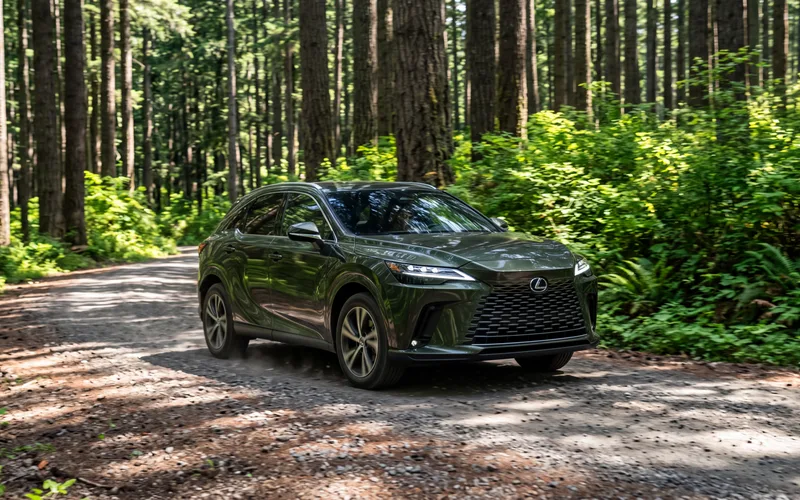 Lexus RXMid-Size Luxury SUVBetter at: Resale value
Same two-row luxury mission with far better projected resale and reliability, and it runs on regular fuel instead of premium-recommended.
Compare 2.90B-
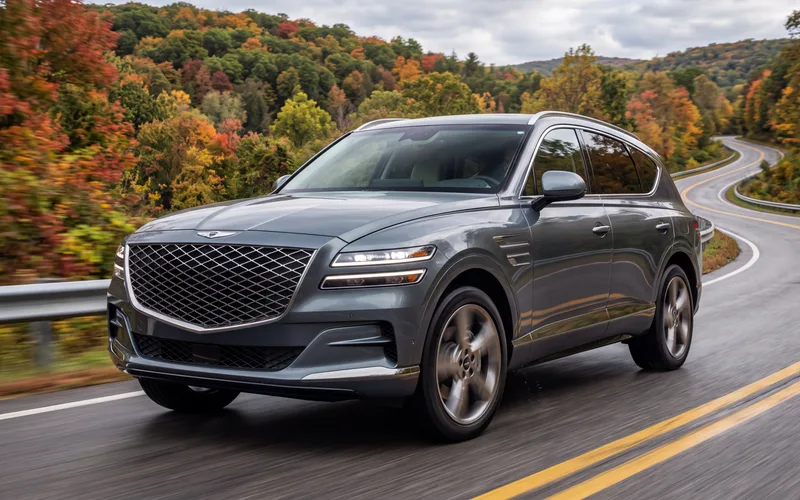 Genesis GV80Mid-Size Luxury SUVBetter at: Power
Another value-priced luxury alternative to the Germans, but with a real turbo-six and sharper dynamics instead of a 250-hp four.
Compare 2.94B-
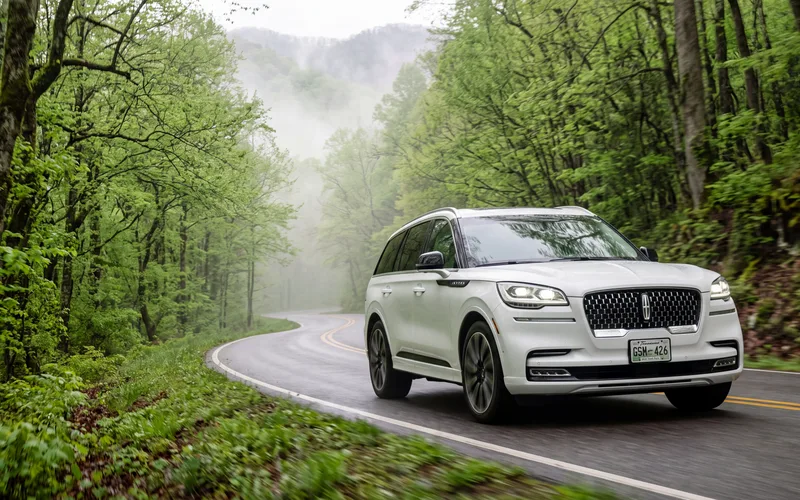 Lincoln AviatorMid-Size Luxury SUVBetter at: Space and towing
The Lincoln to pick if you need a third row and more than 3,000 lbs of towing — 77 cu ft behind row two and a much stronger V6.
CompareHow it's evolved
8 scored model years · 2019–2026
Subject scores by year
Hover or tap a score to see what moved it versus the year before. A corner mark flags a big swing.
| Year | Performance | Efficiency | Safety | Space | Cost | Reliability | Tech | Use-case | Driving | Value |
|---|---|---|---|---|---|---|---|---|---|---|
| 2026 | 46 | 54 | 90 | 63 | 26 | 65 | 85 | 74 | 64 | 77 |
| 2025 | 42 | 55 | 89 | 62 | 31 | 57 | 80 | 61 | 60 | 74 |
| 2024 | 39 | 55 | 88 | 61 | 37 | 51 | 78 | 58 | 55 | 73 |
| 2023 | 44 | 39 | 76 | 58 | 38 | 71 | 76 | 60 | 63 | 63 |
| 2022 | 44 | 39 | 74 | 59 | 42 | 70 | 75 | 58 | 62 | 62 |
| 2021 | 44 | 39 | 73 | 58 | 40 | 64 | 75 | 59 | 64 | 63 |
| 2020 | 44 | 41 | 71 | 58 | 41 | 57 | 57 | 59 | 61 | 61 |
| 2019 | 44 | 39 | 70 | 59 | 42 | 53 | 56 | 59 | 62 | 63 |
Compare two years
Best fit & conditions
Higher scores mean a better fit for that use case. Learn more about use-case fit →
Subject profile
Academic Probation · NHTSA safety recalls
Jun 30, 2026Back over prevention: warnings: external/pedestrian alert · Forward collision avoidance: warnings: external/pedestrian alertA software error may prevent the vehicle from making the pedestrian warning sound at certain speeds.
Defect
Ford Motor Company (Ford) is recalling certain 2024-2027 Lincoln Nautilus Hybrid and 2025-2027 Explorer Hybrid vehicles. A software error may prevent the vehicle from making the pedestrian warning sound at certain speeds.
Risk
A vehicle that does not produce a warning sound may fail to alert pedestrians of an approaching vehicle, increasing the risk of injury.
Remedy
Note: This is an expansion of Recall 25V691. Any vehicles previously repaired under 25V691 must have the new remedy completed. Ford will release an over-the-air (OTA) update or dealers will update the APIM software, free of charge. Additionally, dealers will replace the digital signal processing module in Nautilus Hybrid vehicles equipped with 28 speakers, free of charge. This will be a phased campaign, with the remedy becoming available in different phases based on model and model years. Owner notification letters were mailed August 7, 2026. Owners may contact Ford customer service at 1-866-436-7332. Ford's number for this recall is 26S51. Vehicle Identification Numbers (VINs) involved in this recall will be searchable on NHTSA.gov beginning July 7, 2026.
NHTSA campaign 26V415000 ↗Manufacturer no. 26S5166,383 vehicles potentially affected (all models in the campaign)Owners notified Aug 7, 2026Filed by Ford Motor CompanyFiled as NAUTILUS HYBRIDOct 10, 2025Back over prevention: warnings: external/pedestrian alert · Forward collision avoidance: warnings: external/pedestrian alertA software error may prevent the vehicle from emitting the pedestrian warning sound at certain speeds.
Defect
Ford Motor Company (Ford) is recalling certain 2024-2026 Lincoln Nautilus Hybrid and 2025 Explorer hybrid police vehicles. A software error may prevent the vehicle from emitting the pedestrian warning sound at certain speeds.
Risk
A vehicle that does not produce a warning sound may fail to alert pedestrians of an approaching vehicle, increasing the risk of injury.
Remedy
The audio control module and digital signal processing module software will be updated by a dealer, or through an over-the-air (OTA) update, free of charge. Owner notification letters were mailed November 5, 2025. Owners may contact Ford customer service at 1-866-436-7332. Ford's number for this recall is 25SA2. Vehicle Identification Numbers (VINs) involved in this recall became searchable on NHTSA.gov on October 10, 2025.
NHTSA campaign 25V691000 ↗Manufacturer no. 25SA243,438 vehicles potentially affected (all models in the campaign)Owners notified Nov 5, 2025Filed by Ford Motor CompanyFiled as NAUTILUS HYBRID
23 recalls on other model years of the Nautilus (2019–2025)
Jun 9, 2026Lane departure: lane keep: steering assistThe lane center assist system may not adequately detect if a driver has their hands off the steering wheel for a prolonged period of time.
Defect
Ford Motor Company (Ford) is recalling certain 2019 Lincoln Nautilus vehicles previously repaired incorrectly under recall number 19V031. The lane center assist system may not adequately detect if a driver has their hands off the steering wheel for a prolonged period of time.
Risk
Failure to alert the driver with the intended hands-off the wheel warnings may increase the risk of a crash.
Remedy
Dealers will update the power steering control module software, free of charge. Owner notification letters were mailed July 8. 2026. Owners may contact customer service at 1-866-436-7332. Ford's number for this recall is 26S44. Vehicle Identification Numbers (VINs) involved in this recall will become searchable on NHTSA.gov on July 6, 2026.
NHTSA campaign 26V377000 ↗Manufacturer no. 26S441,013 vehicles potentially affected (all models in the campaign)Owners notified Jul 8, 2026Filed by Ford Motor CompanyFiled as NAUTILUSJun 9, 2026Electrical system: instrument cluster/panelAt vehicle start-up, the Instrument Panel Cluster Assembly (IPC) may not function, showing a blank display. As a result, these vehicles fail to comply with Federal Motor Vehicle Safety Standard (FMVSS) number 101, "Controls and Displays."
Defect
Ford Motor Company (Ford) is recalling certain 2019 Ford Mustang, Lincoln Nautilus, and Lincoln Navigator vehicles previously repaired incorrectly under recall number 19V076. At vehicle start-up, the Instrument Panel Cluster Assembly (IPC) may not function, showing a blank display. As a result, these vehicles fail to comply with Federal Motor Vehicle Safety Standard (FMVSS) number 101, "Controls and Displays."
Risk
A blank instrument cluster that fails to display critical safety information, such as vehicle speed or safety system warnings, increases the risk of a crash.
Remedy
Dealers will reprogram the Instrument Panel Cluster Assembly (IPC) software, free of charge. Owner notification letters were mailed July 13, 2026. Owners may contact customer service at 1-866-436-7332. Ford's number for this recall is 26C27. Vehicle Identification Numbers (VINs) involved in this recall will become searchable on NHTSA.gov on July 6, 2026.
NHTSA campaign 26V372000 ↗Manufacturer no. 26C272,349 vehicles potentially affected (all models in the campaign)Owners notified Jul 13, 2026Filed by Ford Motor CompanyFiled as NAUTILUSMar 18, 2026Back over prevention: software · Electrical system: adasThe Image Processing Module A (IPMA) may experience multiple unexpected resets, resulting in loss of the rearview camera image and advanced driver assistance (ADAS) features, including pre-collision assist, lane-keeping assist, and blind-spot monitoring.
Defect
Ford Motor Company (Ford) is recalling certain 2022-2025 Lincoln Navigator, 2024-2025 Lincoln Nautilus, 2025 Lincoln Aviator and Explorer vehicles. The Image Processing Module A (IPMA) may experience multiple unexpected resets, resulting in loss of the rearview camera image and advanced driver assistance (ADAS) features, including pre-collision assist, lane-keeping assist, and blind-spot monitoring.
Risk
Loss of the rearview camera image and certain driver assistance features, can reduce the driverâs ability to detect hazards, increasing the risk of a crash.
Remedy
The Image Processing Module A software will be updated by a dealer, or through an over-the-air (OTA) update, free of charge. This is a Phased campaign. Phase 1 will include 2025 Aviator, 2025 Explorer, 2025 Nautilus notified owners on 4/13/2026. Phase 2 will include 2025 Navigator will notify owners on or about 4/20/2026. Phase 3 will include 2022-2024 Navigator will notify owners on or about 6/8/2026. Phase 4 will include 2024 Nautilus will notify owners on or about 6/22/2026. Owner notification letters were mailed April 13, 2026. Owners may contact Ford customer service at 1-866-436-7332. Ford's number for this recall is 26S21. Vehicle Identification Numbers (VINs) involved in this recall will be searchable on NHTSA.gov beginning March 25, 2026.
NHTSA campaign 26V165000 ↗Manufacturer no. 26S21254,640 vehicles potentially affected (all models in the campaign)Owners notified Apr 13, 2026Filed by Ford Motor CompanyFiled as NAUTILUSMar 3, 2026Engine and engine cooling: exhaust system: emission control: gas recirculation valve (egr valve)The exhaust gas recirculation (EGR) valve may fail, resulting in an unexpected loss of drive power.
Defect
Ford Motor Company (Ford) is recalling certain 2025 Ranger, Lincoln Nautilus, Mustang, Maverick, Explorer, Escape, Lincoln Corsair, Bronco Sport, and Bronco vehicles. The exhaust gas recirculation (EGR) valve may fail, resulting in an unexpected loss of drive power.
Risk
An unexpected loss of drive power increases the risk of a crash.
Remedy
Dealers will replace the EGR valves, free of charge. Owner notification letters were mailed July 31, 2026. Owners may contact Ford customer service at 1-866-436-7332. Ford's number for this recall is 26S10. Vehicle Identification Numbers (VINs) involved in this recall became searchable on NHTSA.gov on March 4, 2026.
NHTSA campaign 26V122000 ↗Manufacturer no. 26S1047,804 vehicles potentially affected (all models in the campaign)Owners notified Jul 31, 2026Filed by Ford Motor CompanyFiled as NAUTILUSAug 8, 2025Exterior lighting: lighting control moduleThe LED Driver Modules may contain a burnt diode, which can cause the low-beam and high-beam headlights, daytime running lights, front position lights, and front turn signals to fail in the affected headlight. On Nautilus vehicles only, this condition may also cause the rear tail light, rear turn signal, and rear position light to fail. As such, these vehicles fail to comply with the requirements of Federal Motor Vehicle Safety Standard number 108, "Lamps, Reflective Devices, and Associated Equipment."
Defect
Ford Motor Company (Ford) is recalling certain 2025 Lincoln Nautilus, Mustang Mach E, and Mustang vehicles. The LED Driver Modules may contain a burnt diode, which can cause the low-beam and high-beam headlights, daytime running lights, front position lights, and front turn signals to fail in the affected headlight. On Nautilus vehicles only, this condition may also cause the rear tail light, rear turn signal, and rear position light to fail. As such, these vehicles fail to comply with the requirements of Federal Motor Vehicle Safety Standard number 108, "Lamps, Reflective Devices, and Associated Equipment."
Risk
Exterior lighting failure can reduce visibility for the driver and other road users, increasing the risk of a crash.
Remedy
Dealers will inspect and replace the LED Driver Modules, as necessary, free of charge. Owner notification letters were mailed September 22, 2025. Owners may contact Ford customer service at 1-866-436-7332. Ford's number for this recall is 25C39.
NHTSA campaign 25V519000 ↗Manufacturer no. 25C393,270 vehicles potentially affected (all models in the campaign)Owners notified Sep 22, 2025Filed by Ford Motor CompanyFiled as NAUTILUSAug 8, 2025Visibility: power window devices and controlsThe window automatic reversal system may not react correctly after detecting an obstruction. As such, these vehicles fail to comply with the requirements of Federal Motor Vehicle Safety Standard (FMVSS) number 118, "Power-Operated Window Systems."
Defect
Ford Motor Company (Ford) is recalling certain 2024-2025 Lincoln Nautilus vehicles that were repaired incorrectly under recall 24V953. The window automatic reversal system may not react correctly after detecting an obstruction. As such, these vehicles fail to comply with the requirements of Federal Motor Vehicle Safety Standard (FMVSS) number 118, "Power-Operated Window Systems."
Risk
A closing window may exert excessive force by pinching a driver or passenger before retracting, increasing the risk of injury.
Remedy
Dealers will update the driver door module (DDM) and the passenger door module (PDM) software, free of charge. Owner notification letters were mailed on September 23, 2025. Owners may contact Ford customer service at 1-866-436-7332. Ford's number for this recall is 25C36.
NHTSA campaign 25V518000 ↗Manufacturer no. 25C36482 vehicles potentially affected (all models in the campaign)Owners notified Sep 23, 2025Filed by Ford Motor CompanyFiled as NAUTILUSJun 27, 2025Back over prevention: softwareA software error may cause the rearview camera to display a blank image, or the image may remain on the display after the backing event has ended.
Defect
Ford Motor Company (Ford) is recalling certain 2018-2022 Transit Connect, 2019-2020 MKZ, MKX, Edge, Continental, F-150, Nautilus, Fusion, 2019-2023 Ranger, Mustang, 2020-2021 EcoSport, Expedition, Navigator, 2020-2022 Escape, F-250 SD, Corsair, 2020-2023 Aviator, Transit, 2020-2024 Explorer, 2021-2024 Bronco Sport, and 2022-2024 Maverick vehicles. A software error may cause the rearview camera to display a blank image, or the image may remain on the display after the backing event has ended.
Risk
A rearview camera that displays a blank image can reduce the driver's view behind the vehicle. A rearview image that continues to be displayed after the vehicle is shifted out of reverse may distract the driver. Both of these situations can increase the risk of a crash.
Remedy
Dealers will update the rearview camera software, free of charge. Owner notification letters were mailed September 4, 2025. Owners may contact Ford customer service at 1-866-436-7332. Ford's number for this recall is 25S72.
NHTSA campaign 25V442000 ↗Manufacturer no. 25S72200,237 vehicles potentially affected (all models in the campaign)Owners notified Sep 4, 2025Filed by Ford Motor CompanyFiled as NAUTILUSMay 23, 2025Electrical system · Equipment: electrical: engine block heaterThe engine block heater may overheat when the vehicle is parked with the block heater plugged in.
Defect
Ford Motor Company (Ford) is recalling certain 2024-2025 Lincoln Nautilus, 2023-2025 Escape, 2023 Lincoln Corsair, 2025 Lincoln Corsair, Maverick, and Bronco Sport vehicles equipped with a 1.5L or 2.0L MPC engine and an engine block heater. The engine block heater may overheat when the vehicle is parked with the block heater plugged in.
Risk
An overheated engine block heater can increase the risk of a fire.
Remedy
Dealers will replace the block heater element and inspect the electrical cord, replacing it if necessary, free of charge. Owners will also have a alternative option to replace engine block heater element with a threaded blanking plug coupled, and remove the block heater electrical cord. Owner notification letters were mailed June 9, 2026. Owners may contact Ford customer service at 1-866-436-7332. Ford's number for this recall is 25S52.
NHTSA campaign 25V343000 ↗Manufacturer no. 25S526,781 vehicles potentially affected (all models in the campaign)Owners notified Jun 9, 2026Filed by Ford Motor CompanyFiled as NAUTILUSMay 23, 2025Electrical system: instrument cluster/panel · Equipment: electrical: infotainment: softwareThe multimedia module software may cause the panoramic and center displays to reboot, resulting in a blank screen. As such, these vehicles fail to comply with the requirements of Federal Motor Vehicle Safety Standard (FMVSS) numbers 111, "Rear Visibility," and 102, "Transmission shift lever sequence, starter interlock, and transmission braking effect," as well as FMVSS numbers 126, 108, 135, 138, 208, 101, and 305.
Defect
Ford Motor Company (Ford) is recalling certain 2024 Nautilus vehicles. The multimedia module software may cause the panoramic and center displays to reboot, resulting in a blank screen. As such, these vehicles fail to comply with the requirements of Federal Motor Vehicle Safety Standard (FMVSS) numbers 111, "Rear Visibility," and 102, "Transmission shift lever sequence, starter interlock, and transmission braking effect," as well as FMVSS numbers 126, 108, 135, 138, 208, 101, and 305.
Risk
A blank instrument display can result in a loss of critical safety information, such as the speedometer and warning lights, increasing the risk of a crash. In addition, a missing rearview camera display image can reduce visibility of what is behind the vehicle, increasing the risk of a crash.
Remedy
The multimedia module system software will be updated by a dealer, or through an over-the-air (OTA) update, free of charge. Owner notification letters were mailed July 24, 2025. Owners may contact Ford customer service at 1-866-436-7332. Ford's number for this recall is 25C21.
NHTSA campaign 25V337000 ↗Manufacturer no. 25C2130,679 vehicles potentially affected (all models in the campaign)Owners notified Jul 24, 2025Filed by Ford Motor CompanyFiled as NAUTILUSMay 9, 2025Back over prevention: softwareA software error may cause the rearview camera image to delay, freeze, or not display when the vehicle is in reverse.
Defect
Ford Motor Company (Ford) is recalling certain 2021-2024 Bronco, F-150, 2021-2024 Edge, 2022-2025 Escape, F-250, F-350, F-450, F-550, F-600, 2022-2024 Expedition, 2022-2025 Transit, 2021-2023 Mach-E, 2024 Ranger, Mustang, 2021-2023 Lincoln Nautilus, 2022-2024 Navigator, and 2023-2024 Corsair vehicles. A software error may cause the rearview camera image to delay, freeze, or not display when the vehicle is in reverse.
Risk
A frozen or missing rearview camera image can reduce the driver's view behind the vehicle, increasing the risk of a crash.
Remedy
The accessory protocol interface module (APIM) software will be updated by a dealer or through an over-the-air update, free of charge. This will be a phased campaign, with the remedy becoming available in different phases based on model and model years. Interim letters notifying owners of the safety risk were mailed on June 26, 2025. Additional letters will be mailed once the final remedy is available on each phase. Owner notification letters were sent on October 8, 2025. Owners may contact Ford customer service at 1-866-436-7332. Ford's number for this recall is 25S49.
NHTSA campaign 25V315000 ↗Manufacturer no. 25S491,076,138 vehicles potentially affected (all models in the campaign)Owners notified Oct 8, 2025Filed by Ford Motor CompanyFiled as NAUTILUSApr 11, 2025Visibility: power window devices and controlsWhen closing the windows with the global closing feature, the windows may not automatically reverse after detecting an object. As such, these vehicles fail to comply with the requirements of Federal Motor Vehicle Safety Standard number 118, "Power-Operated Window Systems."
Defect
Ford Motor Company (Ford) is recalling certain 2024 Ranger and 2024 Lincoln Nautilus vehicles previously repaired incorrectly under recall number 24V-597. When closing the windows with the global closing feature, the windows may not automatically reverse after detecting an object. As such, these vehicles fail to comply with the requirements of Federal Motor Vehicle Safety Standard number 118, "Power-Operated Window Systems."
Risk
A closing window may exert excessive force and pinch a driver or passenger before retracting, increasing the risk of injury.
Remedy
Dealers will update the driver door module (DDM) and the passenger door module (PDM) software, free of charge. Owner notification letters were mailed May 15, 2025. Owners may contact Ford customer service at 1-866-436-7332. Ford's number for this recall is 25C10.
NHTSA campaign 25V237000 ↗Manufacturer no. 25C101,177 vehicles potentially affected (all models in the campaign)Owners notified May 15, 2025Filed by Ford Motor CompanyFiled as NAUTILUSDec 20, 2024Visibility: power window devices and controlsThe window automatic reversal system may not react correctly after detecting an obstruction, and the window reversal distance does not meet the minimum requirement. As such, these vehicles fail to comply with the requirements of Federal Motor Vehicle Safety Standard (FMVSS) number 118, "Power-Operated Window Systems."
Defect
Ford Motor Company (Ford) is recalling certain 2024-2025 Lincoln Nautilus vehicles. The window automatic reversal system may not react correctly after detecting an obstruction, and the window reversal distance does not meet the minimum requirement. As such, these vehicles fail to comply with the requirements of Federal Motor Vehicle Safety Standard (FMVSS) number 118, "Power-Operated Window Systems."
Risk
A closing window may exert excessive force by pinching a driver or passenger before retracting, increasing the risk of injury.
Remedy
Dealers will recalibrate the driver door module (DDM) and the passenger door module (PDM), free of charge. Owner notification letters were mailed on February 28, 2025. Owners may contact Ford customer service at 1-866-436-7332. Ford's number for this recall is 24C43.
NHTSA campaign 24V953000 ↗Manufacturer no. 24C4347,818 vehicles potentially affected (all models in the campaign)Owners notified Feb 28, 2025Filed by Ford Motor CompanyFiled as NAUTILUSAug 23, 2024Engine and engine cooling: engine: hard parts internal/mechanicalThe engine intake valves may break while driving, which can result in engine failure and a loss of drive power.
Defect
Ford Motor Company (Ford) is recalling certain 2021-2022 Bronco, F-150, Edge, Explorer, Lincoln Nautilus, and Lincoln Aviator vehicles equipped with either a 2.7L or 3.0L Nano EcoBoost engine. The engine intake valves may break while driving, which can result in engine failure and a loss of drive power.
Risk
A loss of drive power increases the risk of a crash.
Remedy
Dealers will perform an engine cycle test and replace the engine as necessary, free of charge. Owner notification letters were mailed July 3, 2025. Owners may contact Ford customer service at 1-866-436-7332. Ford's number for this recall is 24S55.
NHTSA campaign 24V635000 ↗Manufacturer no. 24S5590,736 vehicles potentially affected (all models in the campaign)Owners notified Jul 3, 2025Filed by Ford Motor CompanyFiled as NAUTILUSAug 9, 2024Visibility: power window devices and controlsWhen closing the windows with the global closing feature, the windows may not automatically reverse after detecting an object. As such, these vehicles fail to comply with the requirements of Federal Motor Vehicle Safety Standard number 118, "Power-Operated Window Systems."
Defect
Ford Motor Company (Ford) is recalling certain 2024 Ranger and 2024 Lincoln Nautilus vehicles. When closing the windows with the global closing feature, the windows may not automatically reverse after detecting an object. As such, these vehicles fail to comply with the requirements of Federal Motor Vehicle Safety Standard number 118, "Power-Operated Window Systems."
Risk
A closing window may exert excessive force by pinching a driver or passenger before retracting, increasing the risk of injury.
Remedy
Dealers will update the driver door module (DDM) and the passenger door module (PDM) software, free of charge. Owner notification letters were mailed September 13, 2024. Owners may contact Ford customer service at 1-866-436-7332. Ford's number for this recall is 24C24.
NHTSA campaign 24V597000 ↗Manufacturer no. 24C2470,483 vehicles potentially affected (all models in the campaign)Owners notified Sep 13, 2024Filed by Ford Motor CompanyFiled as NAUTILUSJun 23, 2023Suspension: rear: shock absorberThe rear shock absorbers may have been manufactured incorrectly, which can result in damage to the rear brake hose, rear axle half shaft, wheel speed sensor, and/or stabilizer bar end links.
Defect
Ford Motor Company (Ford) is recalling certain 2023 Lincoln Nautilus vehicles. The rear shock absorbers may have been manufactured incorrectly, which can result in damage to the rear brake hose, rear axle half shaft, wheel speed sensor, and/or stabilizer bar end links.
Risk
A damaged brake hose can extend the distance required to stop the vehicle, increasing the risk of a crash.
Remedy
Dealers will inspect and replace the rear shocks, rear brake hoses, rear wheel speed sensor, and rear half shafts as necessary, free of charge. Owner notification letters were mailed August 17, 2023. Owners may contact Ford customer service at 1-866-436-7332. Ford's number for this recall is 23S32.
NHTSA campaign 23V439000 ↗Manufacturer no. 23S32366 vehicles potentially affected (all models in the campaign)Owners notified Aug 17, 2023Filed by Ford Motor CompanyFiled as NAUTILUSMar 24, 2023Child seat: vehicle tether anchorThe child seat tether wire welds on the second-row left-side seat back frame may be insufficient, which can reduce the seat's ability to properly restrain a child during a crash. As such, these vehicles fail to comply with the requirements of Federal Motor Vehicle Safety Standard number 225, "Child Restraint Anchorage Systems."
Defect
Ford Motor Company (Ford) is recalling certain 2023 Edge and Lincoln Nautilus vehicles. The child seat tether wire welds on the second-row left-side seat back frame may be insufficient, which can reduce the seat's ability to properly restrain a child during a crash. As such, these vehicles fail to comply with the requirements of Federal Motor Vehicle Safety Standard number 225, "Child Restraint Anchorage Systems."
Risk
A child that is not properly restrained during a crash can have an increased risk of injury.
Remedy
Dealers will replace the left-side second-row seat back frame, free of charge. Owner notification letters were mailed May 11, 2023. Owners may contact Ford customer service at 1-866-436-7332. Ford's number for this recall is 23C09.
NHTSA campaign 23V198000 ↗Manufacturer no. 23C0919 vehicles potentially affected (all models in the campaign)Owners notified May 11, 2023Filed by Ford Motor CompanyFiled as NAUTILUSJan 15, 2021Power train: driveline: driveshaftAn inadequate amount of lubricant in the rear drive unit may cause seizure of the rear drive axle.
Defect
Ford Motor Company (Ford) is recalling certain 2020-2021 Edge, 2020 Lincoln Nautilus and Ford Escape and 2021 Lincoln Corsair and Ford Bronco Sport vehicles. An inadequate amount of lubricant in the rear drive unit may cause seizure of the rear drive axle.
Risk
If the rear drive unit seizes, there may be a loss of drive and/or a loss of vehicle control, increasing the risk of a crash.
Remedy
Ford will notify owners, and dealers will check the rear drive unit lubricant level. Axles found to have lubricant at the minimum level will be filled to the full level. Axles found to be below the minimum lubricant fill level will be replaced, free of charge. This recall began March 12, 2021. Owners may contact Ford customer service at 1-866-436-7332. Ford's number for this recall is 21S02.
NHTSA campaign 21V011000 ↗Manufacturer no. 21S02147 vehicles potentially affected (all models in the campaign)Owners notified Mar 12, 2021Filed by Ford Motor CompanyFiled as NAUTILUSSep 23, 2020Back over prevention: sensing system: cameraDue to a poor electrical connection, the rearview camera may intermittently display a blank or distorted image. As such, these vehicles fail to comply with the requirements of Federal Motor Vehicle Safety Standard (FMVSS) number 111, "Rear Visibility."
Defect
Ford Motor Company (Ford) is recalling certain 2020 Ford F-150, F-250, F-350, F-450, F-550, Explorer, Mustang, Transit, Expedition, Escape, Ranger and Edge, and Lincoln Nautilus and Corsair vehicles. Due to a poor electrical connection, the rearview camera may intermittently display a blank or distorted image. As such, these vehicles fail to comply with the requirements of Federal Motor Vehicle Safety Standard (FMVSS) number 111, "Rear Visibility."
Risk
Reduced rearward visibility can increase the risk of a crash.
Remedy
Ford will notify owners, and dealers will replace the rearview camera, free of charge. The recall began November 17, 2020. Remedy became available on February 1, 2021. Owner notification letters were mailed on February 1, 2021. Owners may contact Ford customer service at 1-866-436-7332. Ford's number for this recall is 20C19.
NHTSA campaign 20V575000 ↗Manufacturer no. 20C19620,246 vehicles potentially affected (all models in the campaign)Owners notified Feb 1, 2021Filed by Ford Motor CompanyFiled as NAUTILUSSep 10, 2020Power train: automatic transmissionThe start/stop accumulator endcap may have missing or loose bolts.
Defect
Ford Motor Company (Ford) is recalling certain 2019-2020 Edge, Transit Connect and Lincoln MKX and 2020 Escape and Lincoln Corsair vehicles. The start/stop accumulator endcap may have missing or loose bolts.
Risk
Missing or loose bolts on the start stop accumulator endcap could result in a transmission fluid leak and may progress to a loss of transmission function. A transmission fluid leak in the presence of an ignition source may increase the risk of fire.
Remedy
Ford will notify owners, and dealers will replace the start/stop accumulator, free of charge. The recall began September 23, 2020. Owners may contact Ford customer service at 1-866-436-7332. Ford's number for this recall is 20S49.
NHTSA campaign 20V550000 ↗Manufacturer no. 20S4997 vehicles potentially affected (all models in the campaign)Owners notified Sep 23, 2020Filed by Ford Motor CompanyFiled as NAUTILUSJul 17, 2020Air bags · Electrical system: wiring: interior/under dash · Seats: front assembly: power adjustThe seat cushion frame edge may contact the wire harness when the seat occupant uses the tilt function of the seat, potentially damaging one or more wires within the harness, which can result in either inadvertent deployment of the air bag or nondeployment of the air bag in the event of a crash.
Defect
Ford Motor Company, Inc. (Ford) is recalling certain 2016-2018 Lincoln MKX and 2019-2020 Nautilus vehicles equipped with 16-way electric tilt seats. The seat cushion frame edge may contact the wire harness when the seat occupant uses the tilt function of the seat, potentially damaging one or more wires within the harness, which can result in either inadvertent deployment of the air bag or nondeployment of the air bag in the event of a crash.
Risk
An air bag that deploys inadvertently increases the risk of a crash. An air bag that does not deploy in the event of a crash increases the risk of injury.
Remedy
Ford will notify owners, and dealers will install protective flocking tape onto the exposed edge of the 16-way seat cushion frames, and inspect the wire harness for damage, and repair or replace it as needed, free of charge. This recall began August 12, 2020. Owners may contact Ford/Lincoln customer service at 1-866-436-7332. Ford's number for this recall is 20S37.
NHTSA campaign 20V414000 ↗Manufacturer no. 20S3719,299 vehicles potentially affected (all models in the campaign)Owners notified Aug 12, 2020Filed by Ford Motor CompanyFiled as NAUTILUSFeb 11, 2019Electrical system: instrument cluster/panelAt vehicle start-up, the Instrument Panel Cluster Assembly (IPC) may not function, showing a blank display. As a result, these vehicles fail to comply with Federal Motor Vehicle Safety Standard (FMVSS) number 101, "Controls and Displays."
Defect
Ford Motor Company (Ford) is recalling certain 2019 Ford Mustang, Lincoln Nautilus, and Lincoln Navigator vehicles. At vehicle start-up, the Instrument Panel Cluster Assembly (IPC) may not function, showing a blank display. As a result, these vehicles fail to comply with Federal Motor Vehicle Safety Standard (FMVSS) number 101, "Controls and Displays."
Risk
A blank instrument cluster will not show important information like vehicle speed, fuel or temperature level, or safety system warnings. Driving with an inoperative cluster can increase the risk of a crash.
Remedy
Ford has notified owners, and dealers will reprogram the Instrument Panel Cluster Assembly (IPC), free of charge. The recall began March 8, 2019. Owners may contact customer service at 1-866-436-7332. Ford's number for this recall is 19C03.
NHTSA campaign 19V076000 ↗Manufacturer no. 19C034,212 vehicles potentially affected (all models in the campaign)Owners notified Mar 8, 2019Filed by Ford Motor CompanyFiled as NAUTILUSJan 14, 2019Lane departure: lane keep: steering assistThe Lane Center Assist system may not adequately detect if a driver has their hands off the steering wheel for a prolonged period of time.
Defect
Ford Motor Company (Ford) is recalling certain 2019 Lincoln Nautilus vehicles. The Lane Center Assist system may not adequately detect if a driver has their hands off the steering wheel for a prolonged period of time.
Risk
If the system remains active despite the driver not having their hands on the wheel, the driver's inattention may increase the risk of crash.
Remedy
Ford has notified owners, and dealers will update the Power Steering Control Module software, free of charge. The recall began on January 25, 2019. Owners may contact Ford customer service at 1-866-436-7332. Ford's number for this recall is 19S02.
NHTSA campaign 19V031000 ↗Manufacturer no. 19S022,276 vehicles potentially affected (all models in the campaign)Owners notified Jan 25, 2019Filed by Ford Motor CompanyFiled as NAUTILUSNov 14, 2018Air bags: frontalThe plastic cover on the driver frontal air bag module may detach during air bag deployment.
Defect
Ford Motor Company (Ford) is recalling certain 2019 Lincoln Nautilus vehicles that are not equipped with Adaptive Front Steering. The plastic cover on the driver frontal air bag module may detach during air bag deployment.
Risk
If the air bag cover separates during deployment, it can increase the risk of injury in the event of a crash.
Remedy
Ford will notify owners, and dealers will replace the driver air bag module, free of charge. The recall began December 7, 2018. Owners may contact Ford customer service at 1-866-436-7332. Ford's number for this recall is 18S38.
NHTSA campaign 18V806000 ↗Manufacturer no. 18S38268 vehicles potentially affected (all models in the campaign)Owners notified Dec 7, 2018Filed by Ford Motor CompanyFiled as NAUTILUS
Source: NHTSA Office of Defects Investigation recall database, model years 2019–2026. Recalls are listed by model year as the manufacturer filed them; whether a specific car is affected depends on its VIN — check a VIN at nhtsa.gov ↗. NHTSA model names matched to this page: NAUTILUS, NAUTILUS HYBRID.
Detailed scoring by subject
1Performance & PowertrainOne of the Nautilus's weakest categories.1.05D
Volume trim (Reserve) ships with the 2.0L turbocharged I4 rated at 250 hp; the optional Hybrid lifts combined system output to 310 hp. Modest for a mid-size luxury SUV against rivals like the RX (275 hp base, 366 hp F Sport) or X5 (375 hp).
Peak torque of 275 lb-ft from the volume-trim 2.0L turbo is midpack for the mid-size luxury SUV class, well behind six-cylinder competitors that clear 350–400 lb-ft.
Manufacturer and instrumented estimates put the 250-hp 2.0L AWD around 6.7–7.0 s; the heavier Hybrid runs about 7.3–7.6 s. Adequate for luxury duty but well short of turbo-six or performance-hybrid rivals.
Reviewers describe the Nautilus as quiet and composed under normal driving, with the hybrid transitioning imperceptibly between gas and electric. The 2.0L turbo can sound thrashy under hard load and lacks the effortless swell of a six-cylinder.
The 8-speed automatic on the gas car shifts smoothly per most reviews, and the Hybrid's eCVT delivers seamless torque. A few sources note occasional hesitation on kickdown from the 8-speed.
Lincoln rates the 2026 Nautilus at 3,000 lbs across all trims and both powertrains — enough for a small utility trailer or a pair of jet skis, but well behind six-cylinder mid-size luxury rivals like the X5 (7,200 lb) or GLE (7,700 lb).
Intelligent AWD is standard on every 2026 Nautilus trim (Premiere, Reserve, Black Label) and on both the gas and hybrid powertrains. No low range or torque-vectoring hardware, but drive modes cover Normal, Conserve, Excite, Slippery, and Deep Conditions.
The Nautilus is a pavement-oriented luxury crossover: no dedicated off-road trim, no skid plates or lockers, and modest ground clearance (~8.1 in). Slippery and Deep Conditions drive modes are calibrated for weather, not trails.
Two distinct powertrains for 2026: the 2.0L turbo I4 and the 2.0L Hybrid across all trims. Covers gas and full-hybrid needs, but no PHEV or pure-EV option — narrower than luxury rivals offering PHEV or EV variants.
2Efficiency & RangeOne of the Nautilus's weakest categories.1.65D
Volume trim is the standard 2.0L EcoBoost turbo I4 AWD at 24 MPG combined. Optional 2.0L hybrid AWD lifts combined economy to 30 MPG. No PHEV or BEV variant offered for 2026.
2.0T AWD volume trim rated 21 MPG city — modest for a mid-size luxury SUV. Hybrid variant materially better at 29 MPG city.
2.0T AWD volume trim rated 29 MPG highway — average for the mid-size luxury SUV set. Hybrid variant edges up to 31 MPG.
20-gallon fuel tank × 24 MPG combined gives ~480 mi total range for the 2.0T AWD volume trim. Hybrid variant extends total range to roughly 600 mi at 30 MPG combined.
At 24 MPG combined on the 2.0T AWD, EPA methodology puts annual cost near $2,500 for 15k mi on premium-recommended fuel. Hybrid variant drops closer to $2,000/yr. Above segment median for mid-size luxury SUVs.
The 2.0L EcoBoost specifies 87-octane regular as the minimum with 91+ premium recommended for advertised output — same story on the hybrid. Cheaper to feed than premium-required rivals (Q7, X5, GLE, Cayenne) but not as flexible as regular-only Lexus RX or Genesis GV80. No diesel, E85, or home-charging capability.
3SafetyThe Nautilus's best-graded category.4.00A+
NHTSA has awarded the 2026 Nautilus a full 5-star overall rating, the maximum for the agency's crash-test program.
The redesigned Nautilus earned IIHS Top Safety Pick+ (the highest IIHS award) — Good ratings in the updated moderate overlap front, small overlap front (driver and passenger sides), and updated side test, with Good pedestrian front crash prevention. Award applies to 2024–2026 model years.
Lincoln Co-Pilot360 Drive 2.0 is standard on every trim and bundles 20+ assists: Pre-Collision Assist with AEB, ACC with Stop-and-Go, Lane-Centering Steering, BLIS with Cross-Traffic Alert, Rear Auto Braking, Auto High-Beam Headlamps, Evasive Steering Assist, 360-degree camera, and BlueCruise hands-free with a 4-year subscription — one of the broadest standard suites in the segment.
IIHS pedestrian front crash prevention rated Good under the current evaluation, contributing to Top Safety Pick+ status; vehicle-to-vehicle AEB works day and night. Strong but not the singular top performer in the class.
BLIS with Cross-Traffic Alert and Rear Auto Braking is standard on all trims (not optional/upsell), with an active-braking rear system rather than alert-only.
Lane-Centering Steering is standard and, in BlueCruise mode, delivers smooth, confident hands-free centering that reviewers consistently praise; some driver-monitor sensitivity noted but centering itself is well-tuned.
ACC with Stop-and-Go and Lane-Centering Steering are standard and integrate into BlueCruise; reviewers report refined full-speed-range behavior with well-timed braking and smooth traffic-jam behavior.
BlueCruise is standard on every 2026 Nautilus trim with a four-year subscription included — the latest version supports hands-free automatic lane changes on 130,000+ miles of Blue Zone divided highways in the US and Canada. Making a mature hands-free system standard (not a subscription upsell) is unusual in this segment.
IIHS rates the Nautilus headlights Good across all trims (a requirement for TSP+); adaptive curve-following headlamps are available on higher trims for further improved cornering illumination.
The 2024-redesign body has fairly thick rear pillars and a rising beltline that create rear-quarter blind zones, but a standard 360-degree camera with clear front/rear/curb views and standard BLIS materially compensate; reviewers otherwise call forward sightlines airy thanks to the low dash and large panoramic display placement.
Wide-opening rear doors and a flat rear bench make LATCH anchors reachable, with outboard positions clearly marked; anchors are recessed behind seat-cushion flaps that require some finger-digging, and the two-row layout comfortably fits two child seats but three-across is tight.
4Space & ComfortMid-pack among this car's ten categories.2.23C
All 2026 Nautilus trims (Premiere, Reserve, Black Label) seat five in two rows; no third-row option.
Above-average front headroom for the mid-size luxury SUV segment; the panoramic Vista Roof reduces it by about 1 inch.
Competitive front legroom for the segment, though not class-leading (Aviator, Lexus RX, Genesis GV80 offer more).
Near the top of the SUV normalization band; boxy roofline aids rear headroom despite the coupe-inspired styling cues.
Generous rear legroom for a mid-size 2-row luxury SUV; noticeably better than most rivals in this class.
The Nautilus is a two-row, five-seat mid-size luxury SUV; no third-row option is offered on any trim.
Solid but not class-leading cargo hold behind the second row; larger than compact rivals but well behind the 3-row Aviator (77 cu ft behind 2nd row).
Max cargo with 2nd row folded is respectable but modest for a mid-size SUV; the 2-row layout can't match 3-row rivals with folded seats.
Well-executed storage with a deep center console, wireless charging pad, and thoughtful door bins; the raised center console (housing the rotary shifter and drive-mode selector) gives less open space than some rivals, but the design supports the tech-forward cabin theme without standout innovations.
Available 24-way Perfect Position front seats with eight massage modes are a segment highlight and widely praised for long-haul comfort; heated/ventilated rear outboard seats available; rear bench cushion is soft and supportive.
Adaptive suspension (standard on Reserve/Black Label) delivers the plush, comfort-tuned ride Lincoln is known for; consistently praised as one of the segment's most compliant setups over broken pavement.
Dual-pane acoustic laminated front side glass, active noise cancellation, and thorough sound insulation deliver a library-quiet cabin — a benchmark for the mid-size luxury SUV segment.
Standard heated front seats, dual-zone auto climate, heated steering wheel; available ventilated front seats, heated rear outboard seats, 24-way massaging Perfect Position seats, panoramic Vista Roof, and Lincoln Rejuvenate multi-sensory relaxation mode across mid and upper trims.
5Cost of OwnershipThe Nautilus's lowest-graded category.0.00F
2026 Nautilus Premiere AWD is the entry trim; MSRP including destination lands just under $56K per Edmunds, KBB, and TrueCar listings.
Reserve is the volume trim, adding genuine leather, panoramic roof, cooled seats, and adaptive suspension; $63,180 MSRP + ~$2,295 destination.
Blends Edmunds base-model estimate ($5,121 maintenance + $960 repairs = $6,081) with KBB's $7,695 combined figure; Lincoln luxury service pricing is above mainstream SUV average.
Nautilus depreciates slightly faster than the luxury mid-size SUV segment average (which retains ~50%); CarEdge 45%, iSeeCars 47.2%, KBB residual implies ~44%.
Lincoln's New Vehicle Limited Warranty is 4 years / 50,000 miles bumper-to-bumper, unchanged for 2026.
Lincoln powertrain warranty covers engine, transmission, and drivetrain for 6 years / 70,000 miles; hybrid unique components carry an 8 yr / 100,000 mi battery warranty per federal HEV rules.
No complimentary scheduled maintenance is included. Buyers get 4 yr / 50,000 mi 24/7 Roadside Assistance and Lincoln Pickup & Delivery service (loaner Lincoln with complimentary service pickup), plus a Lincoln Connect trial. Meaningful concierge perks lift this above 'roadside only' but no free scheduled service caps the score.
$65,475 volume-trim price minus its estimated resale value after 5 years (45% retained, or about $29,464) leaves about $36,011 in depreciation. Add the projected $7,200 in 5-year maintenance and repairs, and owning this vehicle for 5 years costs about $43,211 in total.
6Reliability & QualityMid-pack among this car's ten categories.2.40C+
The fully redesigned second-generation Nautilus (MY2024+) has posted below-average predicted reliability in Consumer Reports — the 48-inch panoramic display, BlueCruise 1.3, and other new tech have generated notable owner complaints in the first two model years. J.D. Power rates it mid-pack. As a third-year redesign the software issues have partially settled but reliability signals remain net-negative versus the segment.
Two authoritative studies disagree on Lincoln: J.D. Power 2025 VDS moved Lincoln from 25th to 19th (221 PP100), the second-largest year-over-year gain of any brand — but Consumer Reports' 2025 brand rankings put Lincoln at 40 points, bottom-third of the industry. Net: improving trajectory but still not top-tier.
The second-gen Nautilus has been a noisy launch: MY2024–2026 have accumulated multiple NHTSA recalls including instrument cluster / rearview-camera display software, BlueCruise / driver-assist calibration, seatbelt-related fixes, and other body-electrical items. None fire- or crash-related and most are OTA-remediable, but recall volume exceeds the segment norm for this vintage.
The base 2.0L EcoBoost I4 + 8-speed automatic is proven Ford hardware with a long track record across Edge, Escape, and prior Nautilus generations, and there are no engine or transmission recalls on this iteration. The hybrid variant pairs a 2.0L turbo I4 with a CVT — a newer combination for US Lincolns with less long-term US validation, though it shares core Atkinson-hybrid architecture Ford has run since 2020.
The redesigned Nautilus cabin is a class-leading highlight — the signature 48-inch pillar-to-pillar panoramic display, quilted leather (Reserve/Black Label), real open-pore wood, brushed metal, and thick soft-touch surfaces earn top-tier reviews and compare favorably to Lexus RX, Volvo XC90, and Audi Q7 for the money.
The 2026 Nautilus is assembled at Changan Ford in Hangzhou, China — the first China-built Lincoln sold in the US. Reviewers report generally tight panel gaps and a quiet cabin, but a handful of early-owner complaints cite trim rattles, uneven headliner seams, and inconsistent switchgear feel that are more common in this generation than in the US-built Aviator or Corsair.
About 400 U.S. Lincoln dealers — more than most luxury brands even after the Lincoln Way network right-sizing — and Lincoln ranked 5th among premium brands in the 2025 J.D. Power U.S. Sales Satisfaction Index. Lincoln Pickup & Delivery service concierge remains a real ownership advantage.
Nautilus shares its 2.0L EcoBoost and 8-speed automatic with mainstream Ford models, keeping powertrain-repair cost reasonable — but body panels, interior components, and hybrid subsystems are largely China-sourced with less US aftermarket depth than the Corsair (shared Escape platform) or the US-built Aviator. RepairPal's Lincoln brand annual repair cost averages $879, low for the luxury class, though import-parts lead times can be longer than the brand average.
7Technology & InfotainmentOne of the Nautilus's strongest categories.3.81A
Standard 11.1-inch center touchscreen is the touch input; it sits below a segment-unique 48-inch pillar-to-pillar Panoramic Display that acts as the digital cluster and passenger info screen (standard on every Nautilus trim). The spec item measures the touch surface itself.
Lincoln Digital Experience on the 2024-redesign Nautilus is genuinely modern — Google-based platform, fast responses, clean layout, and the panoramic upper display keeps navigation/media out of the driver's touch area. Reviewers call the setup a legitimate 'wow moment' in the segment, though the sheer number of displays takes acclimation.
Wireless Apple CarPlay and wireless Android Auto are standard on every 2026 Nautilus trim.
Google Assistant is the built-in voice assistant with natural-language 'Hey Google' commands, and Google Maps is embedded natively in the head unit alongside cloud-connected navigation with live traffic — one of the best voice+nav packages in any luxury SUV.
Revel 14-speaker audio is standard on the volume Reserve trim and the available Revel Ultima 3D 28-speaker system (including in-headliner Atmos-style speakers) is one of the more accomplished branded systems in the segment.
The 48-inch pillar-to-pillar Panoramic Display doubles as a fully digital, deeply configurable instrument cluster and passenger-side info screen — segment-defining. Standard across all trims.
Nautilus supports Ford/Lincoln 'Power-Up' over-the-air updates covering the infotainment stack, connectivity features, and select vehicle modules. Broader than maps-only, narrower than Tesla-style whole-vehicle rewrites.
Lincoln Way app offers remote start, lock/unlock, vehicle locator, status, and Phone As A Key that lets a paired smartphone unlock and drive the Nautilus over BLE. Connected Services trial is complimentary; subscription required long-term.
Multiple USB-C ports across both rows, wireless charging pad standard on volume Reserve trim, and an available 110V household outlet. Solid but not class-leading.
Proximity entry, push-button start, hands-free power liftgate, and remote start are standard/broadly available, and the Nautilus supports Phone As A Key via BLE for smartphone entry and drive-away.
Available 360-degree camera with high-resolution feed, front and rear parking sensors, Active Park Assist 2.0 (self-parking with driver-managed shifting on higher trims), and Reverse Brake Assist. Rear camera and rear sensors are standard.
The 48-inch panoramic display reduces the need for a traditional HUD by placing key info directly in the driver's forward sightline; a dedicated windshield HUD is offered on upper Nautilus configurations rather than standard on the volume trim.
8Use-Case FitGrades above the middle of the scale.3.00B
2-row 5-seat crossover with wide-opening rear doors, LATCH on outboard seats, and 39.2 in rear legroom — handles kids and boosters comfortably, but the 5-seat cap limits it vs. RX/GV80 rivals that offer optional third-row or captain's-chair layouts.
IIHS 2024 Top Safety Pick for the second-gen Nautilus and NHTSA 5-star overall. Lincoln Co-Pilot360 (AEB, blind-spot, rear cross-traffic, lane-keep, adaptive cruise, rear-occupant alert) is standard on Premiere; BlueCruise 1.3 hands-free driver-assist available on Reserve and above.
Cavernous, quiet cabin with 24-way Perfect Position front seats, heated/ventilated rears (Reserve+), massive 48-in panoramic display for passenger content, and 22.6 cu-ft behind row 2. Downside vs 3-row rivals: 5-seat cap, no factory rear-seat entertainment, luggage tight with a family of five plus gear.
Nautilus is engineered around low-effort daily comfort: light steering, well-damped ride, quiet cabin, smooth 2.0L hybrid with eCVT, standard adaptive cruise, and available BlueCruise 1.3 that makes stop-and-go interstate commutes hands-free. One of Lincoln's core value propositions.
Hybrid AWD returns ~30 MPG combined — a standout in a mid-size luxury SUV class where 22-24 combined is typical. Gas 2.0T AWD is more ordinary at ~23 combined. Luxury service costs and premium-recommended fuel on the gas trim keep it from top-of-class per-mile.
Mid-size footprint (193.7 in long, ~40 ft turning circle) is manageable but noticeable in tight lots. 360-degree camera on Reserve+ and Active Park Assist 2.0 help; the panoramic display shows crisp surround views. Nose-heavy sight lines and thick D-pillars remain.
Max towing is 3,000 lb on the 2.0T gas and just 1,500 lb on the hybrid — enough for a small utility trailer or jet ski but well below serious work duty. No payload advantage over a family sedan and no truck-adjacent hardware.
Second-gen Nautilus is built in China by Changan Ford — reliability record for this new-gen is still short. Luxury interior with quilted leather and wood trim is not wear-friendly, and there is no fleet/commercial track record. The 2.0L EcoBoost and hybrid drivetrain are proven in other applications.
No 110V outlet, minimal tie-downs (four floor hooks), no washable interior surfaces, and no upfit ecosystem — this is a boutique luxury SUV, not a work platform. Roof rails and a hitch are available for light-duty utility.
Where the Nautilus shines. Hybrid delivers 500+ mi highway range on a tank, cabin NVH is class-leading, 24-way Perfect Position seats with massage reduce fatigue, and BlueCruise 1.3 hands-free operation on 130,000+ mi of mapped North American highways transforms interstate driving. Panoramic display doubles as a copilot briefing screen.
AWD is standard on hybrid and optional on gas, ground clearance is 7.4 in (average for the class), and roof rails with rack/kayak/bike compatibility are standard. Realistically pavement- and gravel-focused: no low-range, no terrain modes beyond Excite/Conserve, tow is only enough for a small trailer.
22.6 cu-ft behind rear seats and 68.8 cu-ft with seats folded flat, plus hands-free power liftgate, 60/40 split, underfloor storage, roof rails, and hitch availability. Solid for a 2-row luxury crossover but trails the class-leading Lexus RX and GV70 for load-floor usability.
9Driving ExperienceMid-pack among this car's ten categories.2.29C
Redesigned CD542 platform is tuned for comfort — reviews note secure but soft body control, evident roll in corners, and long-travel damping that isolates rather than communicates. Adaptive suspension on Reserve/Black Label helps but does not transform character. Lags class benchmarks (Lexus RX, Volvo XC90, Genesis GV80).
Electric rack is light-effort and precise on-center but delivers little road feedback; reviewers repeatedly cite numbness as the biggest dynamic weakness. Weight adjusts modestly in Excite drive mode but character remains isolating.
Standard discs deliver adequate stopping performance for the class with a firm, linear pedal; hybrid regen blending is smooth. No fade complaints in reviews, but stopping distances are middle-of-pack rather than exceptional.
2.0L turbo I4 with 8-speed auto shows some tip-in lag and mild turbo boom under load, though shifts are quick and smooth once rolling. Hybrid variant with CVT is genuinely refined — seamless engine on/off and no rubber-band feel — lifting the average.
Active noise cancellation and acoustic laminated glass keep the cabin notably hushed at cruise; only under hard throttle does the 2.0T become audibly coarse. Hybrid is quieter still. One of the Nautilus's real strengths.
Manufacturer specification for the second-generation Nautilus (2024–2026, unchanged into 2026 MY).
Available 24-way Perfect Position seats and generous adjustment range deliver excellent long-distance comfort with commanding sightlines; sliding armrest and low cowl help visibility. Offset by the small floating center touchscreen and a menu-heavy 48-in panoramic dash display that push some routine controls into digital submenus.
Nautilus deliberately trades driver engagement for isolation and refinement — light steering, soft dynamics, and modest sound from the 2.0T mean enthusiasts have little reason to seek it out. Pleasant to cruise in, but not a car anyone takes the long way home in.
10Value & Market PositionOne of the Nautilus's strongest categories.3.25B+
Standard content at Premiere trim is unusually rich for the segment: the 48-inch pillar-to-pillar panoramic display and 11.1-inch center touchscreen are standard on every Nautilus, along with wireless Apple CarPlay/Android Auto, wireless charging, 10-way power heated front seats, dual-zone climate, and the full Lincoln Co-Pilot360 driver-assist suite (AEB, blind-spot, lane-keeping, adaptive cruise). Rivals like Audi Q7 and BMW X5 charge thousands extra for parity displays and ADAS.
Base Premiere around $54K undercuts BMW X5 (~$66K), Audi Q7 (~$62K), and Lexus RX 350 Luxury (~$60K) while offering more standard tech (48" display) and comparable interior richness. Hybrid Reserve near $61K delivers ~30 mpg combined and 310 hp combined — strong content-for-price versus German plug-in hybrids that cost $10K+ more.
Three trims (Premiere, Reserve, Black Label) and two powertrains (2.0L turbo gas and 2.0L turbo hybrid) with standard AWD. Solid ladder from entry to loaded but lacks the plug-in-hybrid option most German rivals now offer, and there is no long-wheelbase or three-row variant.
The redesigned second-gen (2024+) lifted Nautilus volume meaningfully — it is now Lincoln's second-best-selling SUV behind Corsair and among the stronger mid-size luxury sellers, though it still trails segment leaders like Lexus RX and Acura MDX. Trajectory is up post-refresh with 2026 pricing holding demand.
Lincoln's revitalized 'Quiet Flight' design language and interior craftsmanship have improved brand perception, but Lincoln still ranks below German (Audi/BMW/Mercedes) and Japanese (Lexus/Genesis) luxury brands in prestige, resale, and aspirational appeal. J.D. Power APEAL scores are competitive but brand equity trails.
Ford Motor Company routinely posts strong Nautilus incentives — cash rebates typically $2,500-$5,000, subsidized APR (often 1.9%-3.9%), and Lincoln Access lease specials materially below German rivals. Dealer negotiability is well above segment average given Lincoln volume goals.
Second-generation Nautilus launched for 2024 on the CD6-derived platform with all-new interior, powertrains, and the signature 48-inch panoramic display. In 2026 the generation is in year three — recent, current-tech, no imminent redesign risk. BlueCruise 1.3 hands-free updates keep the tech current.
Reviews praise the interior design, quietness, ride comfort, and panoramic display, while criticizing merely competent (not sharp) dynamics and a hybrid that's smooth but not class-leading in efficiency. Car and Driver, MotorTrend, and Edmunds rate it 7-8/10 — well-reviewed but rarely the comparison-test winner against RX, GV80, or X5. No major NACTOY or 10Best recognition.