

The verdict
A struggling compact luxury suv, strong on reliability and held back by ownership.
The 2025 XT5 is the cheap way into a Cadillac SUV — $45,690 delivered, five NHTSA stars, a quiet cabin and a genuinely roomy, reclining back seat — but it is the ninth year of a design that launched in 2017 and it shows everywhere it counts. The 235-hp turbo four needs about 7.5 seconds to reach 60 mph on required premium fuel for 24 MPG combined, the center screen is 8.0 inches when rivals fit 12 to 15, adaptive cruise can't be ordered on the base trim at any price, and IIHS rates the headlights Marginal. Add roughly 41% resale value after five years and about $37,150 in total five-year ownership cost, and the discount at the front door is largely repaid at the back. Buy it for the comfort, the dealer network and the $2,000–$2,500 in hood cash — not because it's the best car in its class, because it isn't.
Jump to scoresStrengths
- Five-star crash protection
- A back seat that actually adjusts
- Quiet, easy and comfortable on a long drive
What holds it back
- It loses more than half its value in five years
- Driver aids are thin, and the good ones cost extra
- Marginal headlights, and no trim fixes them
Top alternatives
Cars shoppers cross-shop with the Cadillac XT5 2.63C+
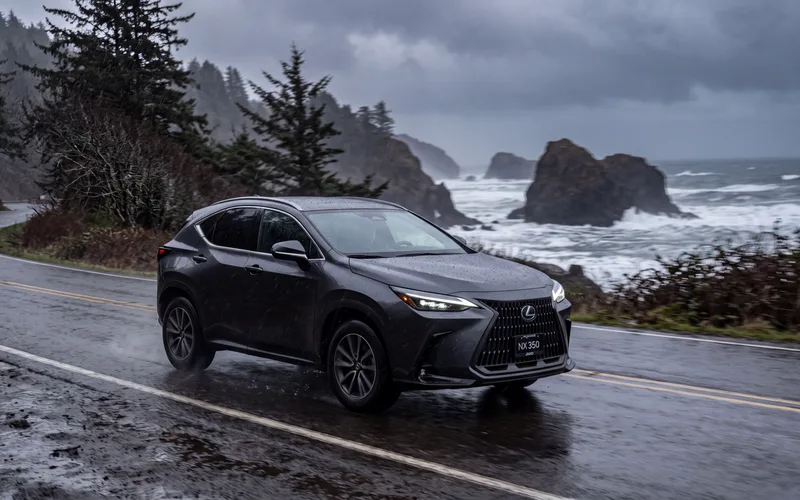 Lexus NXCompact Luxury SUVBetter at: Total cost
Hybrid efficiency, standard driver assistance and class-leading resale make it the lower-total-cost choice for almost every XT5 shopper.
Compare 2.69C+
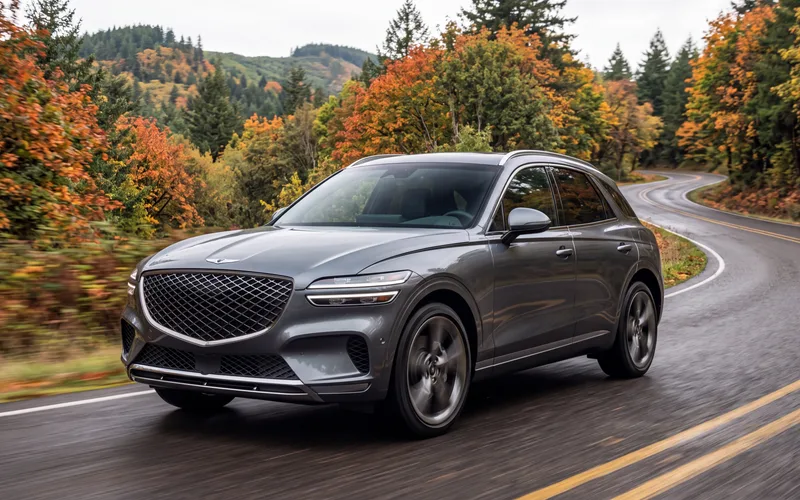 Genesis GV70Compact Luxury SUVBetter at: Value
A current-generation luxury crossover with standard blind-spot and adaptive cruise and a 10-year powertrain warranty for close to the same money.
Compare 2.74B-
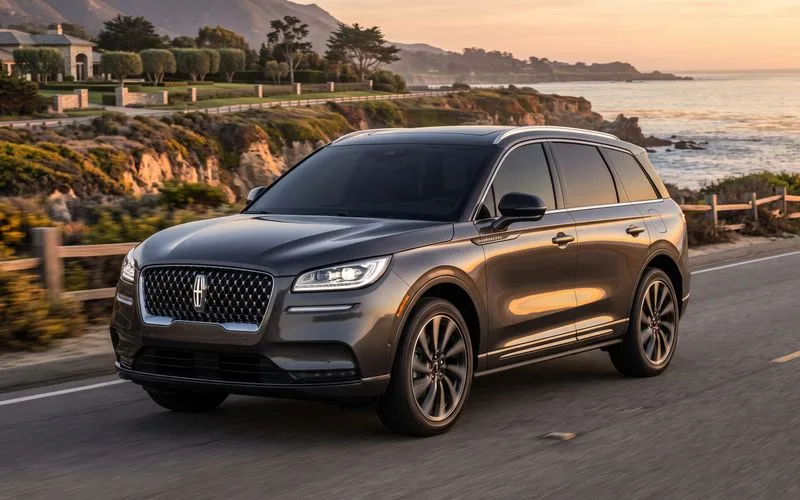 Lincoln NautilusMid-Size Luxury SUVBetter at: Interior tech
The other American luxury two-row, redesigned in 2024 with a hybrid option and a modern cabin instead of an 8-inch screen.
CompareHow it's evolved
10 scored model years · 2017–2026
Subject scores by year
Hover or tap a score to see what moved it versus the year before. A corner mark flags a big swing.
| Year | Performance | Efficiency | Safety | Space | Cost | Reliability | Tech | Use-case | Driving | Value |
|---|---|---|---|---|---|---|---|---|---|---|
| 2026 | 40 | 46 | 57 | 47 | 35 | 64 | 66 | 54 | 62 | 54 |
| 2025 | 40 | 46 | 57 | 48 | 37 | 64 | 63 | 55 | 57 | 50 |
| 2024 | 33 | 43 | 56 | 47 | 39 | 59 | 62 | 51 | 57 | 54 |
| 2023 | 40 | 46 | 59 | 47 | 39 | 63 | 63 | 53 | 59 | 60 |
| 2022 | 40 | 46 | 59 | 47 | 38 | 67 | 61 | 52 | 58 | 58 |
| 2021 | 40 | 47 | 60 | 47 | 38 | 64 | 62 | 53 | 57 | 59 |
| 2020 | 40 | 45 | 60 | 47 | 41 | 65 | 56 | 53 | 57 | 63 |
| 2019 | 43 | 42 | 50 | 49 | 40 | 59 | 50 | 53 | 60 | 62 |
| 2018 | 43 | 42 | 48 | 49 | 49 | 61 | 52 | 54 | 58 | 64 |
| 2017 | 43 | 42 | 50 | 49 | 53 | 49 | 49 | 52 | 56 | 67 |
Compare two years
Best fit & conditions
Higher scores mean a better fit for that use case. Learn more about use-case fit →
Subject profile
Academic Probation · NHTSA safety recalls
Jun 20, 2024Electrical system: instrument cluster/panelThe instrument panel may not illuminate when the hazard warning lights, high beams, or turn signals are activated. As such, these vehicles fail to comply with the requirements of Federal Motor Vehicle Safety Standard numbers 101, "Controls and Displays" and 108, "Lamps, Reflective Devices, and Assoc. Equipment."
Defect
General Motors, LLC (GM) is recalling certain 2023-2025 Cadillac XT5 and 2024-2025 Cadillac XT6 vehicles. The instrument panel may not illuminate when the hazard warning lights, high beams, or turn signals are activated. As such, these vehicles fail to comply with the requirements of Federal Motor Vehicle Safety Standard numbers 101, "Controls and Displays" and 108, "Lamps, Reflective Devices, and Assoc. Equipment."
Risk
Without the illuminated reminder, the driver could fail to turn off the lights when no longer needed. Hazard warning lights, high beams, or turn signals that remain activated unintentionally can confuse other drivers, increasing the risk of a crash.
Remedy
Dealers will update the instrument panel software, free of charge. Owner notification letters were mailed August 13, 2024. Owners may contact Cadillac's customer service at 1-800-458-8006. GM's number for this recall is N242447940.
NHTSA campaign 24V459000 ↗Manufacturer no. N2424479406,942 vehicles potentially affected (all models in the campaign)Owners notified Aug 13, 2024Filed by General Motors, LLCFiled as XT5
14 recalls on other model years of the XT5 (2017, 2020–2024)
May 2, 2024Air bags: frontalThe driver's front air bag cushion may tear during deployment, resulting in the air bag not deploying as intended.
Defect
General Motors, LLC (GM) is recalling certain 2024 Cadillac XT5 vehicles. The driver's front air bag cushion may tear during deployment, resulting in the air bag not deploying as intended.
Risk
An air bag that does not deploy as intended increases the risk of injury during a crash.
Remedy
Dealers will replace the driver's front air bag module, free of charge. Owner notification letters were mailed September 12, 2024. Owners may contact Cadillac customer service at 1-800-458-8006. GM's number for this recall is N232439241.
NHTSA campaign 24V311000 ↗Manufacturer no. N23243924174 vehicles potentially affected (all models in the campaign)Owners notified Sep 12, 2024Filed by General Motors, LLCFiled as XT5Oct 12, 2023Visibility: windshieldThe windshield may have been assembled without the proper urethane sealant required to bond the windshield to the vehicle body.
Defect
General Motors, LLC (GM) is recalling certain 2023 GMC Acadia and 2024 Cadilac XT5 and XT6 vehicles. The windshield may have been assembled without the proper urethane sealant required to bond the windshield to the vehicle body.
Risk
A windshield that is not properly bonded may detach during a crash and increase the risk of injury.
Remedy
Dealers will inspect the windshield and apply primer and urethane sealant. If the windshield is damaged, the dealer will replace it. Repairs will be performed free of charge. Owner notification letters were mailed November 14, 2023. Owners may contact Cadillac customer service at 1-800-458-8006 or GMC customer service at 1-800-462-8782. GM's number for this recall is N232419690.
NHTSA campaign 23V681000 ↗Manufacturer no. N23241969042 vehicles potentially affected (all models in the campaign)Owners notified Nov 14, 2023Filed by General Motors, LLCFiled as XT5Mar 16, 2023Power train: automatic transmissionThe transmission may have been built with an incorrect sun gear, which can result in the driver-side half-shaft disengaging from the transmission.
Defect
General Motors, LLC (GM) is recalling certain 2023 Cadillac XT6, GMC Acadia, Chevrolet Blazer, Traverse, and 2022-2023 Cadillac XT5 vehicles. The transmission may have been built with an incorrect sun gear, which can result in the driver-side half-shaft disengaging from the transmission.
Risk
A half-shaft disengaging from the transmission can result in a loss of drive power or vehicle rollaway when the vehicle is placed in park. Either of these scenarios can increase the risk of a crash.
Remedy
Dealers will replace the sun gears, free of charge. Owner notification letters were mailed on July 27, 2023. The remedy is expected to become available August 31, 2023. Owners may contact Cadillac customer service at 1-800-458-8006, Chevrolet customer service at 1-800-222-1020, or GMC customer service at 1-800-462-8782. GMC's number for this recall is N222389310.
NHTSA campaign 23V172000 ↗Manufacturer no. N2223893108,744 vehicles potentially affected (all models in the campaign)Owners notified Jul 27, 2023Filed by General Motors, LLCFiled as XT5Feb 2, 2023Power train: driveline: driveshaftThe right-front half-shaft assemblies may be improperly connected to the transmission, causing them to separate.
Defect
General Motors, LLC (GM) is recalling certain 2023 Cadillac XT5 and GMC Acadia vehicles. The right-front half-shaft assemblies may be improperly connected to the transmission, causing them to separate.
Risk
Separation between the half-shaft and transmission can result in a loss of drive power or vehicle rollaway when the vehicle is placed in park. Either of these scenarios can increase the risk of a crash.
Remedy
Dealers will replace the right-front half-shaft assemblies, free of charge. Owner notification letters were mailed February 17, 2023. Owners may contact Cadillac customer service at 1-800-458-8006 or GMC customer service at 1-800-462-8782. GM's number for this recall is N222393410.
NHTSA campaign 23V043000 ↗Manufacturer no. N22239341010 vehicles potentially affected (all models in the campaign)Owners notified Feb 17, 2023Filed by General Motors, LLCFiled as XT5Sep 22, 2022Back over prevention: sensing system: cameraThe rearview camera coaxial cable connectors may have been crimped improperly, causing the rearview camera to fail or function intermittently.
Defect
General Motors, LLC (GM) is recalling certain 2020-2021 Cadillac XT5, XT6, and GMC Acadia vehicles equipped with the optional Surround Vision feature. The rearview camera coaxial cable connectors may have been crimped improperly, causing the rearview camera to fail or function intermittently.
Risk
An inoperative rearview camera can reduce the driver's rear visibility, increasing the risk of a crash.
Remedy
Dealers will replace the coaxial cables, free of charge. Owner notification letters were mailed January 18, 2023. Owners may contact Cadillac customer service at 1-800-458-8006 or GMC customer service at 1-800-462-8782. GM's number for this recall is N222378380.
NHTSA campaign 22V709000 ↗Manufacturer no. N22237838095,231 vehicles potentially affected (all models in the campaign)Owners notified Jan 18, 2023Filed by General Motors, LLCFiled as XT5Sep 22, 2022Equipment: other: labelsThe certification label located on the driver's side B-pillar contains tire size information that may be illegible. As such, these vehicles fail to comply with the requirements of Federal Motor Vehicle Safety Standard number 110, "Tire Selection and Rims."
Defect
General Motors, LLC (GM) is recalling certain 2023 Cadillac XT5, XT6, and GMC Acadia vehicles. The certification label located on the driver's side B-pillar contains tire size information that may be illegible. As such, these vehicles fail to comply with the requirements of Federal Motor Vehicle Safety Standard number 110, "Tire Selection and Rims."
Risk
Illegible tire size information may result in the wrong tires being installed, increasing the risk of a crash.
Remedy
Dealers will replace the vehicle certification label, free of charge. Owner notification letters were mailed October 12, 2022. Owners may contact Cadillac customer service at 1-800-458-8006 or GMC customer service at 1-800-462-8782. GM's number for this recall is N222381690.
NHTSA campaign 22V708000 ↗Manufacturer no. N22238169024 vehicles potentially affected (all models in the campaign)Owners notified Oct 12, 2022Filed by General Motors, LLCFiled as XT5Jun 23, 2022Fuel system, gasoline: storage: tank assemblyThe fuel tank rollover valve may not provide a proper seal in the event of a rollover crash.
Defect
General Motors, LLC (GM) is recalling certain 2022 Cadillac XT5, XT6, and GMC Acadia All-Wheel Drive (AWD) vehicles. The fuel tank rollover valve may not provide a proper seal in the event of a rollover crash.
Risk
A fuel tank rollover valve that does not properly seal can result in a fuel leak during a rollover crash, increasing the risk of a fire.
Remedy
Dealers will inspect the fuel tank and replace the fuel tank shell if the rollover valve is found to be dislodged or missing, free of charge. Owner notification letters were mailed July 27, 2022. Owners may contact Cadillac customer service at 1-800-458-8006 and GMC customer service at 1-800-462-8782. GM's number for this recall is N222366070.
NHTSA campaign 22V446000 ↗Manufacturer no. N222366070228 vehicles potentially affected (all models in the campaign)Owners notified Jul 27, 2022Filed by General Motors, LLCFiled as XT5Jun 16, 2022Suspension: rearThe left-rear suspension toe link may have been tightened improperly, which could result in a loose or separated toe link.
Defect
General Motors, LLC (GM) is recalling certain 2022 Cadillac XT5, XT6, and GMC Acadia vehicles. The left-rear suspension toe link may have been tightened improperly, which could result in a loose or separated toe link.
Risk
A loose toe link can separate and cause a loss of vehicle control, increasing the risk of a crash.
Remedy
Dealers will inspect the left-rear suspension and replace the fastener if it is loose or missing, free of charge. Owner notification letters were mailed July 11, 2022. Owners may contact Cadillac customer service at 1-800-458-8006 or GMC customer service at 1-800-462-8782. GM's number for this recall is N222364330.
NHTSA campaign 22V427000 ↗Manufacturer no. N222364330736 vehicles potentially affected (all models in the campaign)Owners notified Jul 11, 2022Filed by General Motors, LLCFiled as XT5Jun 3, 2021Fuel system, gasoline: delivery: hoses, lines/piping, and fittingsThe fuel supply lines may be improperly attached and seated.
Defect
General Motors, LLC. (GM) is recalling certain 2021 Cadillac XT5, XT6, and GMC Acadia vehicles. The fuel supply lines may be improperly attached and seated.
Risk
Improperly attached and seated fuel supply lines may loosen or separate, causing a fuel leak and increasing the risk of a fire.
Remedy
Dealers will inspect and replace fuel supply lines as necessary, free of charge. Owner notification letters were mailed on July 1, 2021. Owners may contact Cadillac customer service at 1-800-458-8006 and GMC customer service at 1-800-462-8782. GM's number for this recall is N212335590.
NHTSA campaign 21V422000 ↗Manufacturer no. N212335590572 vehicles potentially affected (all models in the campaign)Owners notified Jul 1, 2021Filed by General Motors, LLCFiled as XT5Feb 25, 2021TiresThe affected tires were cured for too long during production.
Defect
General Motors LLC (GM) is recalling certain 2020 Buick Enclave, Cadillac XT4, XT5, Escalade, Escalade ESV, Chevrolet Suburban, Tahoe, Traverse, GMC Yukon, Yukon XL, 2018-2021 Chevrolet Express, GMC Savana, 2019-2020 Chevrolet Blazer, Silverado 1500, GMC Acadia, Sierra 1500, and certain Continental tires sold to the aftermarket for various model year 2018-2021 vehicles. The affected tires were cured for too long during production.
Risk
Over cured tires may develop a break in the sidewall resulting in sudden air loss or a belt edge separation which could lead to a tread/belt loss. Either condition can cause a loss of vehicle control, increasing the risk of a crash.
Remedy
GM will notify owners, and dealers will inspect the tires, replacing them as necessary, free of charge. The recall began March 22, 2021. Owners may contact GMC customer service at 1-888-988-7267, Buick customer service at 1-866-608-8080, Chevrolet customer service at 1-800-222-1020 or Cadillac customer service at 1-800-458-8006. GM's number for this recall is N212329050.
NHTSA campaign 21V115000 ↗Manufacturer no. N21232905033,838 vehicles potentially affected (all models in the campaign)Owners notified Mar 22, 2021Filed by General Motors, LLCFiled as XT5Nov 5, 2020TiresThe vehicles may have been manufactured with Continental tires that were overcured.
Defect
General Motors LLC (GM) is recalling certain 2020 Buick Enclave, Cadillac XT5, GMC Acadia and Chevrolet Traverse vehicles and 2020-2021 Chevrolet Silverado 1500, GMC Sierra 1500 vehicles. The vehicles may have been manufactured with Continental tires that were overcured.
Risk
Overcured tires may experience a carcass break in the sidewall resulting in a sudden air loss or could develop a belt edge separation which could lead to partial or full tread/belt loss. Either condition increases the risk of a crash.
Remedy
GM will notify owners, and dealers will inspect vehicles and replace tires that have DOT number and production mold number combinations identified by Continental, free of charge. The recall began December 17, 2020. Owners may contact GMC customer service at 1-888-988-7267, Buick customer service at 1-866-608-8080, Chevrolet customer service at 1-800-222-1020 or Cadillac customer service at 1-800-458-8006. GM's number for this recall is N202319030.
NHTSA campaign 20V684000 ↗Manufacturer no. N2023190307,516 vehicles potentially affected (all models in the campaign)Owners notified Dec 17, 2020Filed by General Motors LLCFiled as XT5Oct 15, 2020Fuel system, gasoline: delivery: fuel pumpThe fuel pump's jet nozzle may have a plastic burr remaining from the manufacturing process, possibly causing a blocked nozzle and an insufficient fuel supply to the engine.
Defect
General Motors LLC (GM) is recalling certain 2020 Buick Enclave, Cadillac XT5, Cadillac XT6, Chevrolet Traverse, and GMC Acadia vehicles. The fuel pump's jet nozzle may have a plastic burr remaining from the manufacturing process, possibly causing a blocked nozzle and an insufficient fuel supply to the engine.
Risk
Insufficient fuel supply can result in an engine stall without warning, increasing the risk of a crash.
Remedy
GM will notify owners, and dealers will replace the fuel pump module. The recall began November 16, 2020. Owners may contact GMC customer service at 1-888-988-7267, Buick Customer service at 1-866-608-8080, Chevrolet customer service at 1-800-222-1020 or Cadillac customer service at 1-800-458-8006. GM's number for this recall is N202314760.
NHTSA campaign 20V639000 ↗Manufacturer no. N2023147602,781 vehicles potentially affected (all models in the campaign)Owners notified Nov 16, 2020Filed by General Motors LLCFiled as XT5Jul 30, 2020Air bags: side/window: curtain: inflatorThe diffuser component of the Roof-Rail Air Bag (RRAB) inflator may not have been properly crimped to the inflator and could separate from the inflator during air bag deployment.
Defect
General Motors, LLC. (GM) is recalling certain 2020 Buick Enclave, Cadillac XT5 and XT6, Chevrolet Blazer, Silverado 1500, 2500 and 3500 and Traverse and GMC Acadia and Sierra 1500, 2500 and 3500 vehicles. The diffuser component of the Roof-Rail Air Bag (RRAB) inflator may not have been properly crimped to the inflator and could separate from the inflator during air bag deployment.
Risk
If the diffuser separates from the inflator during deployment, RRAB performance may be degraded, increasing the risk of injury in a crash.
Remedy
GM will notify owners, and dealers will replace the suspect RRAB modules, free of charge. The recall began September 3, 2020. Owners may contact Chevrolet customer service at 1-800-630-2438, Cadillac customer service at 1-800-333-4223, or Buick customer service at 1-800-521-7300. GM's number for this recall is N202305380.
NHTSA campaign 20V446000 ↗Manufacturer no. N202305380769 vehicles potentially affected (all models in the campaign)Owners notified Sep 3, 2020Filed by General Motors LLCFiled as XT5Nov 4, 2016Service brakes, hydraulic: foundation components: disc: caliperThe front brake calipers may have a torn or misaligned caliper piston seal which may allow brake fluid to leak.
Defect
General Motors LLC (GM) is recalling certain model year 2017 Cadillac XT5 vehicles manufactured April 16, 2016, to May 9, 2016, and 2017 GMC Acadia vehicles manufactured April 19, 2016, to April 22, 2016. The front brake calipers may have a torn or misaligned caliper piston seal which may allow brake fluid to leak.
Risk
If there is a brake fluid leak, braking performance may be reduced, increasing the risk of a crash.
Remedy
GM will notify owners, and dealers will inspect the front brake calipers, replacing the brake caliper assemblies, as necessary, free of charge. The recall began on December 12, 2016. Owners may contact GM customer service at 1-800-458-8006 (Cadillac), or 1-800-462-8782 (GMC). GM's number for this recall is 16096.
NHTSA campaign 16V802000 ↗Manufacturer no. 160961,844 vehicles potentially affected (all models in the campaign)Owners notified Dec 12, 2016Filed by General Motors LLCFiled as XT5
Source: NHTSA Office of Defects Investigation recall database, model years 2017–2026. Recalls are listed by model year as the manufacturer filed them; whether a specific car is affected depends on its VIN — check a VIN at nhtsa.gov ↗. NHTSA model names matched to this page: XT5.
Detailed scoring by subject
1Performance & PowertrainOne of the XT5's weakest categories.0.62F
The volume Luxury/Premium Luxury trims carry the standard 2.0L turbo four (GM LSY) rated at 235 hp on premium fuel; the 3.6L V6 (310 hp) is available on Premium Luxury and standard on Sport. 2025 is a carry-over year — the US XT5 remains the first-generation car (the 48V mild-hybrid second generation unveiled in China in August 2024 is not sold here) and both engines return unchanged.
Peak torque for the volume trim's standard 2.0L turbo LSY is 258 lb-ft on premium gasoline, delivered low and flat; the optional V6 tops it on the peak figure (271 lb-ft) but only well up the rev range.
Published figures for the 235-hp 2.0T XT5 cluster around 7.0–7.6 seconds, and the powertrain is unchanged for 2025. Distinctly slow for a compact luxury SUV — the Mercedes GLC 300 and BMW X3 30i both run about 6.0 s, and even the XT5's own optional V6 is nearly a second quicker.
The LSY 2.0T is adequate rather than luxurious: it moves the roughly 4,100-lb crossover acceptably but turns coarse and audible under load, with noticeable lag before boost arrives from a standstill. The optional V6 is smoother but is not the volume powertrain, and by 2025 the XT5 is conspicuous in a segment where rivals offer hybrid or at least 48V mild-hybrid assist and it offers neither in the US.
GM's nine-speed automatic is generally described as smooth and sensible in its downshifts, with no hunting or drone complaints, but it can be unhurried to kick down behind the low-torque 2.0T. Worth noting that GM issued a service fix for internal transmission components on some 2024 XT4/XT5/XT6 units, so the calibration is not flawless in the field, though it is not a design-level complaint in reviews.
The 3,500-lb maximum requires the optional Smart Towing Package; without it every 2025 XT5 configuration is capped at 1,000 lbs, which is what the volume 2.0T car leaves the lot rated for. Mid-pack for a compact luxury crossover and a figure most buyers of this car will never use.
FWD is standard and AWD is a paid option on Luxury and Premium Luxury, standard only on Sport — but the hardware is genuinely sophisticated: Twin Clutch Sport Control AWD with active yaw control able to send all rear-axle torque to one wheel, plus a rear-drive disconnect for efficiency and an AWD-only Off-Road drive mode. No low range.
Purely pavement-oriented: about 7.8 inches of ground clearance, no skid plates, no locking differentials, no off-road trim and no low range. The AWD-only Off-Road drive mode retunes throttle, AWD response and stability control for gravel and snow-covered roads, and that is the entire provision.
Two gas engines only — the 2.0L turbo four and the 3.6L V6, each with FWD or AWD — and no hybrid, plug-in or electric variant anywhere in the 2025 North American range, at a point when the Lexus NX offered both hybrid and PHEV and Cadillac's own showroom had gone electric elsewhere with the LYRIQ.
2Efficiency & RangeOne of the XT5's weakest categories.1.04D
The volume Luxury/Premium Luxury configuration — 2.0L turbo four, nine-speed automatic, FWD — is EPA-rated at 24 MPG combined; AWD drops it to 23 and the optional V6 to 21 either way. Unremarkable for a 2025 compact luxury SUV, a class in which hybrid rivals such as the Lexus NX 350h are well into the 30s.
22 MPG city for the volume 2.0T FWD configuration. Stop-start helps, but a roughly 4,100-lb crossover with a conventional automatic and no electrification has no way to recover braking energy, so city driving is where the gap to hybrid rivals is widest.
29 MPG highway is the XT5's strongest efficiency showing — tall top gears on the nine-speed and, on AWD cars, a rear-axle disconnect let it cruise reasonably — but it is still only mid-pack for the segment and the year.
EPA puts total range for the volume 2.0T FWD at 456 miles — a 19.0-gallon tank doing the work that the mediocre economy figure cannot. AWD cars actually go further despite worse economy, because they carry a larger 22.0-gallon tank (506 mi). Range is the one efficiency measure where the XT5 is genuinely competitive in its segment.
EPA estimates $3,150 a year at 15,000 miles for the volume 2.0T FWD — near the expensive end of the SUV band. The premium-fuel requirement is what does the damage: the thirstier V6 actually costs less to run ($2,950) because EPA rates it on regular.
Mixed across the lineup and premium-leaning on the volume engine: EPA lists the 2.0T as premium-required and Cadillac quotes its 235 hp / 258 lb-ft only with premium, though the LSY will run on 87 octane at reduced output. The optional V6 is EPA-rated on regular. Nothing exotic is required and there is no charging to arrange, but the engine most buyers get carries a real per-gallon penalty.
3SafetyOne of the XT5's strongest categories.1.82C-
NHTSA tested the 2025 XT5 itself and awarded 5 stars overall in both FWD and AWD form — 5 stars in every frontal, side-barrier and side-pole test, with 4 stars for rollover (16.9% risk FWD, 15.1% AWD, no tip in the dynamic test). The full-star crash result is the strongest single element of this car's safety case.
No IIHS award — the XT5 has not earned Top Safety Pick since 2017, and the Marginal headlight rating alone disqualifies it. Every IIHS test the car has actually taken comes back Good (driver-side small overlap, original moderate overlap, original side, roof strength, head restraints), but this 2017-vintage first-generation structure has never been run through the updated moderate overlap or updated side tests, and the passenger-side small overlap test has never been performed — so IIHS flags the 2025 crashworthiness evaluation as incomplete and its published record for the year carries only two entries.
Standard content covers the collision-avoidance basics on every trim — Automatic Emergency Braking with Front Pedestrian Braking, Forward Collision Alert, Lane Keep Assist with Lane Departure Warning, IntelliBeam auto high beams, front and rear park assist and an HD rear camera — but two of the five features this criterion names are missing from the volume configuration. Blind Zone Alert and Rear Cross Traffic Alert require stepping up to Premium Luxury, and adaptive cruise cannot be ordered on the base Luxury trim at any price. For a $44k-and-up luxury crossover in 2025 that is a thin standard suite; mainstream compacts costing half as much ship all five.
The hardware earned respectable IIHS results — standard camera-based AEB rated Advanced, the optional Enhanced Automatic Emergency Braking rated Superior — but those were awarded under the retired vehicle-to-vehicle protocol and their rating window closed at the 2023 model year, so the 2025 car carries no current front-crash-prevention rating at all. The XT5 has never been run through the 2022-onward test or any vehicle-to-pedestrian evaluation, so there is no day-or-night pedestrian result to lean on, and the volume car without the Driver Assist Package gets the Advanced-rated system rather than the Superior one.
Lane Change Alert with Side Blind Zone Alert and Rear Cross Traffic Alert are standard on Premium Luxury and Sport but simply not available on the base Luxury trim. Both are alert-only — there is no active blind-spot steering intervention, and cross-traffic braking arrives only as Reverse Automatic Braking bundled inside the extra-cost Driver Assist Package. No safe-exit or rear-seat occupant alert is offered on any trim.
Lane Keep Assist with Lane Departure Warning is standard on every trim and dependable at the narrow job it does, but it is a departure-correcting nudge only — the 2025 XT5 offers no lane centering of any kind, on any trim, which is the real gap against every current compact luxury rival. Its steering input is brief and corrective rather than a sustained hold, so it cannot be used as a fatigue-reducing highway aid.
Adaptive cruise is not standard on any 2025 XT5 and cannot be ordered on the base Luxury trim at all. On Premium Luxury and Sport it comes only in the Driver Assist Package, which requires the Technology package first — roughly $2,500 of options to add a feature most rivals include. The radar system itself is a competent full-speed-range unit with stop-and-go when fitted, but there is nothing for it to integrate with: without lane centering the XT5 has no combined highway-assist mode at any price.
Super Cruise is not offered on the 2025 XT5 and never has been. Cadillac's hands-free system reaches the CT4, CT5, Escalade, Escalade ESV, Escalade IQ, Optiq, Lyriq and — among the gas SUVs — the XT6 through 2025, but the XT5's aging first-generation platform is skipped entirely. Its own three-row sibling in the same showroom offers the feature; the XT5 does not.
IIHS rates the XT5's LED projector headlights Marginal, and the rating is uniform across the range — there is no better-lit trim or package to buy. Low beams are good on the left of a straightaway but only fair on the right and inadequate in all four curve tests; high beams are inadequate on both sides of the straightaway and on every curve. Standard IntelliBeam auto high beam earns partial credit, but there is no curve-adaptive function, and this is the single weakest element of the XT5's safety case — the reason a car with five NHTSA stars still cannot win an IIHS award.
Forward and side sightlines are fine and owners rate visibility positively, but the fastback-influenced roofline costs the driver the rear three-quarter view and leaves a narrow rear window. Camera compensation is good when specified — HD Surround Vision and the rear camera mirror with washer, which effectively cures the rear-window problem — but both are Premium Luxury/Sport content. The base Luxury trim gets an HD rear camera and park assist only, so the compensation is not there across the range.
Workable but fiddly. IIHS rates LATCH ease of use Acceptable rather than Good: two rear outboard positions have complete hardware and the centre gets a tether anchor only, the tethers are easy to find but other hardware can be confused for them, and the centre position's lower anchors sit too deep in the seat. Working in its favour are the outboard lower anchors, which are not too deep and take little force, plus generous rear legroom and a sliding, reclining second-row bench that makes rear-facing seats straightforward. Three-across is a squeeze in a five-seat compact crossover.
4Space & ComfortGrades below the middle of the scale.1.19D
The XT5 is a strictly two-row, five-passenger crossover across Luxury, Premium Luxury and Sport; buyers wanting a third row are pushed up to Cadillac's own XT6. 2025 is a carry-over year with no seating change.
Front headroom of 39.7 in is comfortably above the compact-luxury-SUV norm, helped by the XT5's upright roofline; the panoramic sunroof on Premium Luxury and Sport eats into it.
41.2 in of front legroom is modest for the class — adequate for most drivers but well short of the 42-plus inches several rivals offer, and unchanged across the range.
38.4 in of rear headroom sits in the upper half of the SUV band, though reviewers consistently flag that tall passengers find it tight once the panoramic sunroof housing is fitted — which is most Premium Luxury and Sport cars.
The back seat is one of the XT5's genuine strengths: 39.0 in of legroom, plus a bench that slides 5.5 in and reclines through five steps, so second-row space is adjustable rather than fixed.
There is no third row. The XT5 is a two-row, five-seat crossover in every 2025 trim and no seven-seat option has ever been offered — Cadillac sells the XT6 for that job. Scored in the low band per the item's rule for two-row SUVs, not omitted.
30.2 cu ft behind the back seat is only average for a compact luxury crossover and well down on the mid-size two-rows the XT5's 189.6-in length would suggest — the sliding rear bench can claw back a little at the expense of legroom.
63.0 cu ft with the rear seats down is a low-to-middling figure for the SUV band, though the 40/20/40 split folds nearly flat and the load floor is low and square, which makes the volume more usable than the number suggests.
Competent everyday storage without a signature idea: a deep console bin with a hidden compartment behind the CUE faceplate, decent door pockets, a covered wireless charging tray on upper trims, and the genuinely useful 40/20/40 rear seat with pass-through. There is no onboard AC power, underfloor cargo trunk or fold-flat front passenger seat.
Front seats are repeatedly praised for long-haul support — firm rather than soft, but well shaped, with heating standard and ventilation on upper trims. The rear bench earns unusual credit for a compact crossover thanks to its high cushion, good thigh support and 12-degree recline; the caveat is headroom for tall adults under the sunroof.
The most divided verdict on the car. The body is well controlled and the chassis feels planted, but the damping is firm and reviewers split between calling it acceptably absorbent and calling it choppy — a real weakness in a segment where a luxury badge sets expectations. Continuous damping control is not fitted to the volume trims, and the Sport's larger wheels make it worse.
Isolation from wind and road noise is a strength and one of the clearer justifications for the badge — testers call the cabin impressively quiet at cruise. It falls short of a top score because the 2.0L turbo four is audible and coarse under throttle, which reviewers note around town.
The comfort roster is complete but paywalled: heated front seats and dual-zone automatic climate are broadly available, while a heated steering wheel, ventilated front seats, heated rear seats and tri-zone climate arrive on Premium Luxury and Sport. Remote start with pre-conditioning is standard through the myCadillac app.
5Cost of OwnershipThe XT5's lowest-graded category.0.44F
The entry Luxury trim carries a $44,295 MSRP plus Cadillac's $1,395 destination freight charge — $45,690 delivered, and roughly $5,000–$7,000 under a Genesis GV70, BMW X3 or Mercedes GLC. Being the cheap way into the compact luxury SUV class is the XT5's whole cost argument; note that an April 2025 pricing action nudged the DFC to $1,495, taking the delivered figure to $45,790.
Premium Luxury is the volume trim and effectively the only one worth buying: it is where leather seating, the 14-speaker Bose Performance Series audio, wireless charging, the UltraView sunroof, a hands-free liftgate and blind-zone/rear-cross-traffic alert arrive, and it is the only trim on which the Driver Assist Package ($1,300, adaptive cruise) and Technology Package ($2,275) can even be ordered. AWD is the configuration most buyers in this class take, putting the representative sticker at $53,990 — a $8,300 step over the base Luxury and squarely into GV70/X3 money without their content.
The XT5 is a GM C1-platform crossover with a mainstream LSY 2.0T (or the corporate LGX V6), GM parts pricing and GM labour rates, so it services closer to a Blazer than to a German rival, and the 4-year/50,000-mile bumper-to-bumper term absorbs most repair spend in years 1–3 — KBB models only $1,276 of repairs across the whole five years. The figure used sits between the two mainstream estimates, and slightly above the smaller XT4 given the XT5's 20-inch wheels and optional V6.
Retention is the XT5's worst ownership number and sits at the very bottom of the SUV band. A nine-year-old design sold with $2,000–$2,500 of hood cash, heavy lease and fleet volume, and an announced (then reprieved) end of production is a poor recipe for residuals, and both mainstream models agree it loses well over half its value — the two sources bracket 38% and 43%, and the figure used splits them.
Cadillac's no-deductible 4-year/50,000-mile bumper-to-bumper term is the luxury-brand norm — it matches BMW, Mercedes, Audi and Volvo, and trails only Genesis' 5-year/60,000-mile cover among direct rivals. Mid-band, neither an advantage nor a liability.
Six years/70,000 miles on the engine, transmission and drive system is short by the standards of the wider market — Genesis covers 10 years/100,000 miles and Hyundai/Kia the same — and it is the weakest spec item in this category. It is at least uniform across the Cadillac range and applies equally to the 2.0T and the optional 3.6L V6.
Cadillac Premium Care Maintenance has been cut back to a single complimentary visit (one oil change, tire rotation and multi-point inspection) rather than the multi-year plans BMW, Volvo and Jaguar still offer, which caps this item mid-band. What holds it up is the long tail of coverage that comes with it: 6-year/70,000-mile roadside assistance and courtesy transportation matched to the powertrain term, plus the standard OnStar and Cadillac connected-services trial. Notably, Cadillac charges $799 for the Mobile Service Plus convenience option on the XT5 rather than including it.
$53,990 volume-trim price minus its estimated resale value after 5 years (41% retained, or about $22,136) leaves about $31,854 in depreciation. Add the projected $5,300 in 5-year maintenance and repairs, and owning this vehicle for 5 years costs about $37,154 in total.
6Reliability & QualityThe XT5's best-graded category.2.35C+
The two predictors point in opposite directions for 2025 and the disagreement is unusually sharp. J.D. Power rates the car 87/100 ("Great") and the XT5 ranked highest in Midsize Premium SUV in the 2025 Initial Quality Study. Consumer Reports still carried the 2025 XT5 as Recommended when it was on sale, but its 2025 Auto Survey — the survey of these exact cars — came back much less reliable than average and is what cost the nameplate the Recommended rating in December 2025. A model-level IQS win measures 90 days; the CR complaints are transmission replacements. Scored in the lower half of the mixed-signal band, a notch above the 2026 car, which inherits the bad survey without the 2025 recommendation.
Cadillac's three-year dependability standing at the time this car was sold was genuinely strong — second among premium brands and tied fifth overall, far better than the industry average and a large improvement on its below-average 2024 result. That is offset by a below-average initial-quality brand score and a low Consumer Reports brand placement driven largely by the new EV lineup. Strong on long-term dependability, mid-pack once all three studies are weighed.
The 2025 model year is nearly clean on recalls — one campaign, a software fix for instrument-panel illumination, with no hardware defect and no crash-risk mechanism beyond signalling confusion. Campaign volume fell steadily across the generation, from three on the 2024 cars (including a driver airbag that could tear on deployment and an improperly bonded windshield) to one here. What keeps this at the middle of the typical-activity band rather than higher is TSB traffic: GM's transmission shudder bulletin was extended to explicitly cover 2025 XT4/XT5/XT6 cars, so the nine-speed's known defect is a live issue on this model year rather than a closed chapter behind it.
The volume 2.0L turbo LSY is a widely deployed GM four with a serviceable high-mileage ceiling but documented direct-injection carbon buildup and turbo and chain wear items. The nine-speed behind it is the real problem and it is not a historical one: 2025 cars are inside the extended shudder-TSB window, and owner reports on this exact model year include a transmission that would not shift out of first or engage reverse, a torque-converter housing bolt leak at 890 miles, and an NHTSA filing from an owner who traded a 2024 XT5 after a transmission snap-ring failure and then had another internal transmission part fail in the replacement 2025 XT5 at 5,464 miles. That is a known-problem pairing, not merely a mixed history.
Leather and real wood on the volume Premium Luxury look the part in isolation, but the cabin is eight model years into an untouched design and reviewers consistently place it below its European rivals — an assessment that hardens as the segment refreshes around it. It is not a cheap-feeling interior; it is a dated one, sold at a volume price in the low-to-mid $50Ks where a Genesis GV70, XC60 or Macan cabin is plainly richer.
Assembly quality is the XT5's strongest quality credential in this model year, and the evidence is model-level rather than inferred from the brand: the car ranked highest in Midsize Premium SUV in the 2025 Initial Quality Study, beating the Lexus RX, while Cadillac as a brand finished below the industry average. Nine model years of Spring Hill production show in the build even where the material selection disappoints. Held out of the top band by Consumer Reports body-integrity complaints on these cars — sunroof leaks and loose or delaminating trim.
Roughly 590 US Cadillac stores make this one of the densest luxury service networks in the country — far broader coverage than Genesis, Land Rover or Volvo owners get — and dealer-service satisfaction sits about ten points above the premium average, third among premium brands. Held short of the top band only because Porsche and Lexus rank ahead of it on satisfaction.
Essentially everything mechanical under the XT5 is shared GM hardware — LSY four, LGX V6, nine-speed automatic, C1 platform components — so parts move through both the franchised network and independent shops, and five-year upkeep runs below the luxury average rather than above it. Out-of-warranty pricing is still luxury-tier and a transmission replacement on this powertrain is a large bill, which caps it short of the top band.
7Technology & InfotainmentOne of the XT5's strongest categories.2.26C
Every 2025 XT5 gets the same 8.0-inch CUE display, with no larger screen available at any price. It is the smallest center screen in the compact luxury SUV class by a wide margin at this point in the car's life, and the single biggest reason the interior reads as dated.
CUE in its final form is a mature, quick and logically arranged system, and it keeps the things buyers actually want — a console rotary controller, physical climate knobs and hard shortcut keys — which several newer rivals have thrown away. What sinks it is scale and polish: an 8-inch screen with dated graphics, no Google built-in, and none of the configurability of the LYRIQ's 33-inch panel.
Wireless Apple CarPlay and wireless Android Auto are standard on all three trims, which matters more here than usual — phone projection is the practical workaround for the small, aging native interface, and Cadillac charges nothing for it.
Functional but bypassable. Embedded navigation is standard only from Premium Luxury up — the volume-entry Luxury trim leans on phone projection — and the voice system is command-driven rather than a natural-language assistant, well behind what Google built-in delivers in the LYRIQ or what BMW and Mercedes offer in this segment.
One of the stronger parts of the tech package: a Bose premium system is standard even on the base Luxury trim rather than being an upcharge, and a 14-speaker Bose Performance Series setup is available higher up. Good, if not at the level of the Burmester and Bowers & Wilkins systems the German rivals sell.
A reconfigurable 8-inch color cluster display is available, but the base configuration pairs analog gauges with a smaller driver information center, and even the full display is a generation behind the crisp 12-plus-inch panels standard on most compact luxury rivals.
GM's over-the-air framework is present — the XT5 can pull software and map updates over Wi-Fi or the OnStar connection without a dealer visit — but this is an older electrical architecture, so updates are housekeeping and bug fixes rather than the whole-vehicle, feature-adding OTAs GM's newer Ultifi-era platforms deliver.
myCadillac is a solid, well-supported app covering remote start and pre-conditioning, lock/unlock, locate, horn and lights, plus vehicle diagnostics — but the remote functions run through OnStar and the useful tier is a paid subscription once the trial lapses, and the XT5 offers no phone-as-key digital key.
Adequate rather than abundant: a mix of USB-A and USB-C in the console with rear-seat ports, and a wireless phone charger available on upper trims. There is no household AC outlet, and the port count and placement reflect the car's 2016-era interior architecture.
The everyday conveniences are all present and mostly standard — proximity keyless entry, push-button start, remote start from both fob and app, and a hands-free power liftgate available with the kick-under-bumper sensor. The gap is a phone-as-key digital key, which Cadillac does not offer on this platform.
A rear camera plus front and rear park assist are standard, and an HD Surround Vision 360-degree system, a streaming rear camera mirror and hitch guidance with hitch view are available. Image quality is good, but the surround view is not standard on the volume trim and there is no automated parking function.
A head-up display is offered but is an option on upper trims rather than volume-trim equipment, so most XT5s on the road do without one. The unit itself is a conventional colour projection display, not an augmented-reality system.
8Use-Case FitGrades below the middle of the scale.1.67D
Family logistics are among the XT5's better traits. The rear doors open wide onto a high-mounted 40/20/40 bench that slides 5.5 in and reclines, so a rear-facing seat can be accommodated without evicting the front passenger, and there are two full LATCH sets outboard plus a center tether. It is capped by being a five-seater with 30.2 cu ft behind the bench — enough for a stroller and bags, not for three car seats plus a family's luggage.
The crash structure is strong — a five-star NHTSA overall rating — and automatic emergency braking, front pedestrian braking, lane-keep assist, automatic high beams and a rear-seat reminder are standard on every trim. What costs it is the tier above that: adaptive cruise control sits in an optional Driver Assist Package, headlight performance is weak, and Super Cruise is confirmed as never coming to this nameplate, so a family shopping the base Luxury gets a thinner assist suite than a similarly priced mainstream three-row.
A quiet cabin, supportive front seats and a reclining, sliding rear bench make four-up touring genuinely pleasant, and tri-zone climate plus heated rear seats are available. The limits are cargo — 30.2 cu ft with all five seats occupied is workable but not generous for a week away — and the absence of any rear entertainment provision.
Low-effort and low-fatigue in traffic: light controls, a hushed cabin, a commanding seating position and retained physical climate knobs. It is held back from a higher score by the 2.0T's turbo lag off the line and a nine-speed automatic reviewers call unhurried to kick down, which makes gap-filling in traffic less crisp than the badge implies.
Expensive to commute in for its size. 24 MPG combined from the volume 2.0T FWD is unremarkable in 2025, there is no hybrid or plug-in option anywhere in the US range, and Cadillac recommends premium fuel to reach the rated 235 hp — a per-mile penalty on top of an already ordinary economy figure.
Middling urban manners. At 189.6 in long on a 112-in wheelbase with a 38.7 ft turning circle, it is a size up from a true compact crossover and needs the space to match, but standard front and rear park assist plus available HD Surround Vision and a rear camera mirror take most of the anxiety out of tight spots.
Light-duty at best. Standard tow rating is just 1,000 lbs; only with the optional Smart Towing Package does it reach 3,500 lbs, which covers a small utility trailer or a pair of jet skis and nothing more. There is no bed, no meaningful payload headroom, and the 235-hp 2.0T is already working hard moving 4,127 lbs unladen.
The underpinnings are mainstream GM hardware rather than exotica — the LSY 2.0T and 9T-series automatic are shared widely across the corporation — but this is a leather-lined luxury crossover with no fleet history, no wear-friendly interior option and no work-duty reputation to speak of. GM's 2024 service action on internal transmission components in the XT4/XT5/XT6 is a further mark against hard-use confidence.
Almost nothing here is aimed at work. Cargo tie-downs, a cargo net and an accessory hitch with a 4-pin harness are the extent of it; there is no onboard AC power, no washable flooring, no factory upfit ecosystem and no partition or rack provisions. Roof cross rails exist but are a luggage accessory, not a work rack system.
Highway cruising is what this car is genuinely for: a quiet cabin, seats good for long stints, a settled high-speed gait and roughly 450–500 miles between fills from the 2.0T. The reason it isn't scored higher is fatigue management — adaptive cruise is an option rather than standard, there is no lane centering worth the name and no Super Cruise, so the driver does more work than in almost any rival.
Handles a gravel forest road and a bike rack, and stops there. Twin Clutch Sport Control AWD with an AWD-only Off-Road drive mode is genuinely capable hardware in low-grip conditions, but AWD is an extra cost on the volume trims, ground clearance is 7.8 in, and there are no skid plates, no low range, no locking differential and no off-road trim. The 3,500-lb ceiling limits what toys can come along.
Flexible in shape if not in outright volume: the 40/20/40 rear seat folds nearly flat and its 20 section takes long items with two passengers still aboard, the load floor is low and square, and factory cross rails and a hitch expand capacity outward. The ceiling is 63 cu ft maximum — modest for the SUV band and short of what a genuine adventure hauler offers.
9Driving ExperienceMid-pack among this car's ten categories.1.80C-
Secure and well-tied-down rather than agile. Body roll is contained and the car stays composed when pushed on a test track, but the chassis loses interest as pace rises and reviewers describe the handling as becoming reluctant. The Sport trim's performance suspension, Brembo front brakes and Twin Clutch AWD sharpen it, but that is not the volume configuration.
Accurate and appropriately weighted for relaxed driving, with prompt response off-center, but it communicates little back to the driver and gains no useful texture as loads build — precise enough, numb in character, which is the middle of the rated band.
Braking is a quiet strength: reviewers single out the way it "brakes to a stop" as part of the car's reassurance, with a firm, predictable pedal and no fade complaints in testing. It is not scored higher because the six-piston Brembo front setup is reserved for the Sport trim, and no recent instrumented 60-0 figure for the volume 2.0T car is published.
The weak link in an otherwise refined car. The 235-hp LSY 2.0T needs a beat to build boost from rest, and the nine-speed automatic is unhurried to kick down, so the car feels heavy-footed in ordinary traffic. Once rolling, shifts are smooth and well judged, and the optional V6 is markedly better calibrated — but it is not the volume powertrain.
The cabin is well isolated at cruise, but that only makes the four-cylinder more conspicuous when it is asked for effort — the 2.0T turns coarse and audible under load, an unpleasant contrast in a car whose refinement is otherwise its selling point. The available 3.6L V6 is noticeably smoother and better sounding.
A 38.7 ft curb-to-curb circle is ordinary for the SUV band and a touch wide in absolute terms — a consequence of the 112-in wheelbase and 189.6-in length, which put the XT5 closer to mid-size than compact. U-turns need the full width of a suburban street.
One of the benefits of the XT5's age: a high, commanding seating position with a wide power adjustment range, a proper console rotary controller, real climate knobs and hard shortcut keys instead of a touch-only dash. Sightlines are decent, ingress and egress are easy at this ride height, and controls fall to hand without hunting through menus.
Nobody takes the long way home in an XT5. It is competent, quiet and entirely uninvolving — the base four is slow and coarse, the steering is silent, and the chassis has no appetite for being pushed. Enthusiast outlets treat it as a comfortable appliance, and its own maker aims the Sport trim at looks more than at driver reward.
10Value & Market PositionGrades below the middle of the scale.1.32D
The $45,690 base Luxury covers the comfort basics — heated front seats, dual-zone automatic climate, remote start, a power liftgate, an eight-speaker Bose system and 18-inch alloys — but its safety and tech content is thin for 2025 money: an 8.0-inch touchscreen at a time when rivals fit 12–15-inch displays, synthetic seating, no sunroof, and only automatic emergency braking, lane keep assist and park assist on the driver-aid side. The gaps are structural rather than merely priced: blind zone alert and rear cross traffic alert are not offered on Luxury at all, adaptive cruise cannot be ordered on it at any price, and Super Cruise has never been available on the XT5. Even on the volume Premium Luxury, adaptive cruise is a $1,300 package and a head-up display/surround view a further $2,275.
Price is the XT5's argument and it is a real if narrowing one: at $45,690 delivered it undercuts a Genesis GV70 by roughly $4,800, a BMW X3 by $7,000 and a Porsche Macan by $22,000, and it answers with a genuinely roomy cabin, class-leading cargo space and a five-star NHTSA overall rating. What holds it to mid-band is everything measured per dollar other than the sticker — 235 hp and roughly 7.5 seconds to 60 mph, an 8-inch screen, premium fuel required on the volume engine, driver aids sold as packages, a Marginal IIHS headlight rating, and about 41% retention after five years. Car and Driver's expert tip is blunt about the arithmetic: for similar money the better-sorted X3, GV70 or XC60 are available.
Three trims spanning $45,690 to $58,690, two engines (235-hp 2.0T standard, 310-hp 3.6L V6 a $1,000 option on Premium Luxury and standard on Sport) and a front- or all-wheel-drive choice on the two lower trims give reasonable spread for the class. The catch is that 2025 is a subtraction year: the Platinum Package was deleted, night vision was withdrawn entirely, and the adaptive suspension is no longer available on Premium Luxury, so the top of the range no longer reaches where it did — leaving a lineup with a wide price ladder but a shallow ceiling.
The XT5 remains Cadillac's best-selling gas crossover in volume terms and its trajectory stabilised in 2025 after a poor 2024, but roughly 26,000 units a year leaves it in the lower third of a segment where the Lexus RX, BMW X3 and Mercedes GLC each move multiples of that. It sells steadily rather than well, and much of the recent volume is run-out and fleet-assisted.
Cadillac still carries genuine name recognition and its image is rising on the back of the Escalade, the Blackwing sedans and the Lyriq/Optiq EVs, which lifts the badge above neutral. The XT5 draws less of that halo than any model in the range — it is routinely described as the least distinctive Cadillac on sale, and the badge does not command a residual premium here the way a German or Lexus one does, with five-year retention in the high 30s to low 40s.
This is the item the XT5's weakness elsewhere pays out on. A run-out model with soft residuals is heavily supported: national cash allowances of $2,000–$2,500, a subsidised nationwide lease, low-APR finance offers, and stackable conquest and military cash, on top of dealers who discount an aging model readily. Meaningful money without the desperation pricing that would signal a broken product, which is exactly what the top band describes from the buyer's side.
The XT5 launched for the 2017 model year and 2025 is the ninth year of the same first-generation C1 car, with only the 2020 facelift in between and 2025 itself a subtraction year. Its 8-inch screen, non-electrified powertrains and driver-aid packaging all date it, and buyers faced genuine end-of-life uncertainty: GM was reported in January 2025 to be dropping the XT5 after this model year, later reprieved it into 2026, and the redesigned second-generation car unveiled in August 2024 is China-only, with a US replacement not expected before 2027–2028.
The XT5 is at or near the bottom of every professional ranking of its class and holds no significant awards — no IIHS Top Safety Pick since 2017, no comparison-test wins, no NACTOY or 10Best recognition. Car and Driver scores it 5.5/10 and places it last in the compact luxury SUV field, a figure unchanged across four straight model years, and Consumer Reports and U.S. News reach the same verdict in milder language. Owner sentiment is the one counterweight — KBB respondents rate comfort and reliability well and three quarters recommend it — which is why this sits above the floor rather than at it.