

The verdict
A struggling compact luxury suv, strong on technology and held back by performance.
The 2024 Cadillac XT5 is the cheapest way into a luxury midsize SUV — $45,290 to start — and it earns that price with a genuinely roomy back seat (39 inches of rear legroom), 30 cu ft of cargo behind it, a 5-star NHTSA rating and standard wireless CarPlay and Android Auto. But this is the eighth and next-to-last model year of a 2017 design, and it shows: an 8-inch touchscreen when rivals shipped 12 to 14, a noisy 235-hp turbo four that demands premium fuel for 23 MPG, and Marginal headlights that keep it off the IIHS award list. The real sting is what happens after you buy it — a five-year-old XT5 keeps barely 42% of its sticker, so roughly $31,000 evaporates over five years and the cheap entry price turns into expensive ownership. Buy it only if you find a deep discount and plan to keep it well past the warranty; otherwise the money goes further almost anywhere else in this class.
Jump to scoresStrengths
- A back seat that actually fits adults
- Comfort content is standard, not an upsell
- Wireless phone mirroring and Bose audio on every trim
What holds it back
- Resale value falls off a cliff
- Slow, noisy and thirsty on premium fuel
- Eight years old, already discontinued, and it shows on the dash
Top alternatives
Cars shoppers cross-shop with the Cadillac XT5 2.63C+
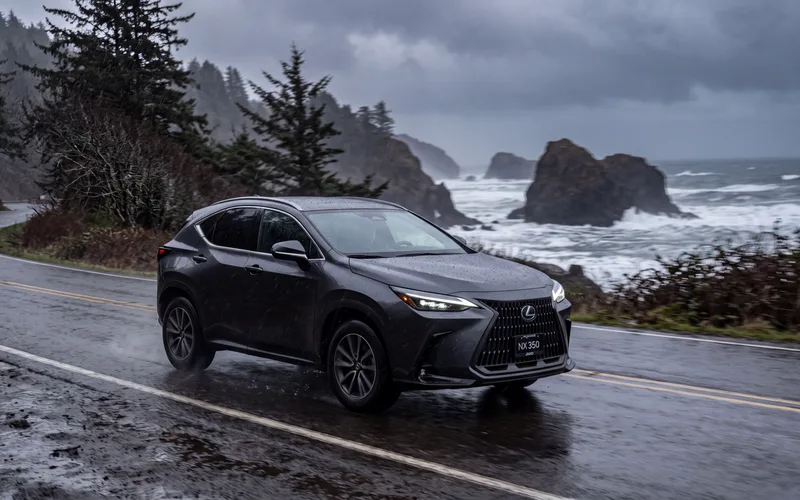 Lexus NXCompact Luxury SUVBetter at: Total cost
Hybrid efficiency, standard driver assistance and class-leading resale make it the lower-total-cost choice for almost every XT5 shopper.
Compare 2.69C+
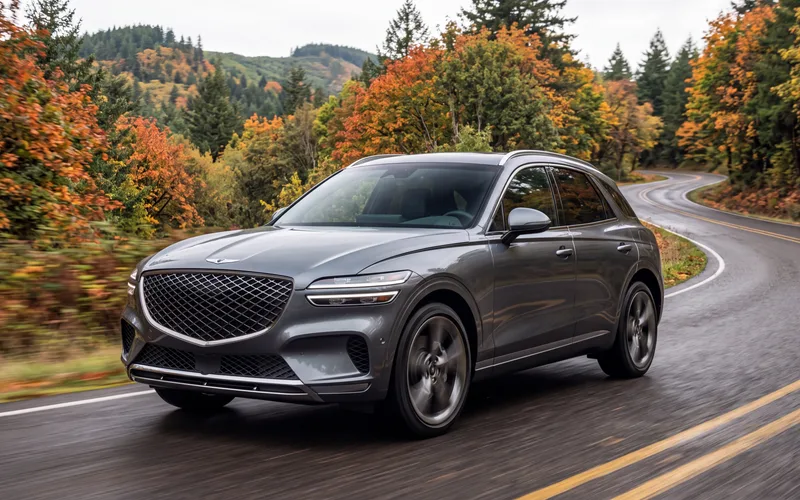 Genesis GV70Compact Luxury SUVBetter at: Value
A current-generation luxury crossover with standard blind-spot and adaptive cruise and a 10-year powertrain warranty for close to the same money.
Compare 2.74B-
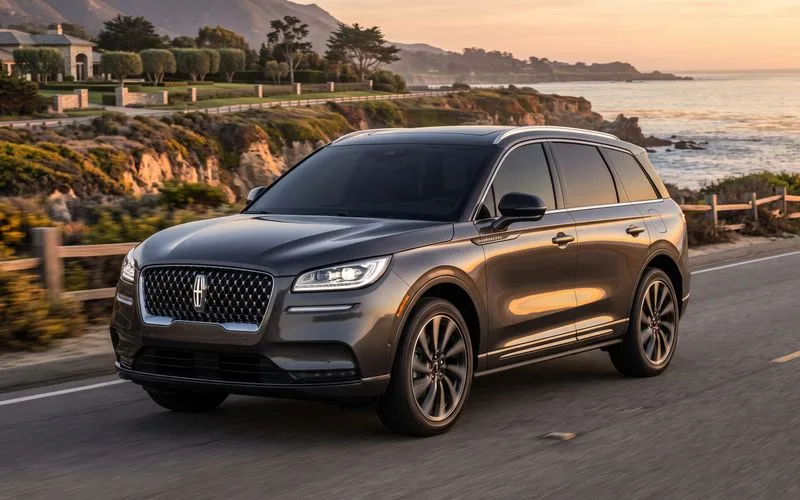 Lincoln NautilusMid-Size Luxury SUVBetter at: Interior tech
The other American luxury two-row, redesigned in 2024 with a hybrid option and a modern cabin instead of an 8-inch screen.
CompareHow it's evolved
10 scored model years · 2017–2026
Subject scores by year
Hover or tap a score to see what moved it versus the year before. A corner mark flags a big swing.
| Year | Performance | Efficiency | Safety | Space | Cost | Reliability | Tech | Use-case | Driving | Value |
|---|---|---|---|---|---|---|---|---|---|---|
| 2026 | 40 | 46 | 57 | 47 | 35 | 64 | 66 | 54 | 62 | 54 |
| 2025 | 40 | 46 | 57 | 48 | 37 | 64 | 63 | 55 | 57 | 50 |
| 2024 | 33 | 43 | 56 | 47 | 39 | 59 | 62 | 51 | 57 | 54 |
| 2023 | 40 | 46 | 59 | 47 | 39 | 63 | 63 | 53 | 59 | 60 |
| 2022 | 40 | 46 | 59 | 47 | 38 | 67 | 61 | 52 | 58 | 58 |
| 2021 | 40 | 47 | 60 | 47 | 38 | 64 | 62 | 53 | 57 | 59 |
| 2020 | 40 | 45 | 60 | 47 | 41 | 65 | 56 | 53 | 57 | 63 |
| 2019 | 43 | 42 | 50 | 49 | 40 | 59 | 50 | 53 | 60 | 62 |
| 2018 | 43 | 42 | 48 | 49 | 49 | 61 | 52 | 54 | 58 | 64 |
| 2017 | 43 | 42 | 50 | 49 | 53 | 49 | 49 | 52 | 56 | 67 |
Compare two years
Best fit & conditions
Higher scores mean a better fit for that use case. Learn more about use-case fit →
Subject profile
Academic Probation · NHTSA safety recalls
Jun 20, 2024Electrical system: instrument cluster/panelThe instrument panel may not illuminate when the hazard warning lights, high beams, or turn signals are activated. As such, these vehicles fail to comply with the requirements of Federal Motor Vehicle Safety Standard numbers 101, "Controls and Displays" and 108, "Lamps, Reflective Devices, and Assoc. Equipment."
Defect
General Motors, LLC (GM) is recalling certain 2023-2025 Cadillac XT5 and 2024-2025 Cadillac XT6 vehicles. The instrument panel may not illuminate when the hazard warning lights, high beams, or turn signals are activated. As such, these vehicles fail to comply with the requirements of Federal Motor Vehicle Safety Standard numbers 101, "Controls and Displays" and 108, "Lamps, Reflective Devices, and Assoc. Equipment."
Risk
Without the illuminated reminder, the driver could fail to turn off the lights when no longer needed. Hazard warning lights, high beams, or turn signals that remain activated unintentionally can confuse other drivers, increasing the risk of a crash.
Remedy
Dealers will update the instrument panel software, free of charge. Owner notification letters were mailed August 13, 2024. Owners may contact Cadillac's customer service at 1-800-458-8006. GM's number for this recall is N242447940.
NHTSA campaign 24V459000 ↗Manufacturer no. N2424479406,942 vehicles potentially affected (all models in the campaign)Owners notified Aug 13, 2024Filed by General Motors, LLCFiled as XT5May 2, 2024Air bags: frontalThe driver's front air bag cushion may tear during deployment, resulting in the air bag not deploying as intended.
Defect
General Motors, LLC (GM) is recalling certain 2024 Cadillac XT5 vehicles. The driver's front air bag cushion may tear during deployment, resulting in the air bag not deploying as intended.
Risk
An air bag that does not deploy as intended increases the risk of injury during a crash.
Remedy
Dealers will replace the driver's front air bag module, free of charge. Owner notification letters were mailed September 12, 2024. Owners may contact Cadillac customer service at 1-800-458-8006. GM's number for this recall is N232439241.
NHTSA campaign 24V311000 ↗Manufacturer no. N23243924174 vehicles potentially affected (all models in the campaign)Owners notified Sep 12, 2024Filed by General Motors, LLCFiled as XT5Oct 12, 2023Visibility: windshieldThe windshield may have been assembled without the proper urethane sealant required to bond the windshield to the vehicle body.
Defect
General Motors, LLC (GM) is recalling certain 2023 GMC Acadia and 2024 Cadilac XT5 and XT6 vehicles. The windshield may have been assembled without the proper urethane sealant required to bond the windshield to the vehicle body.
Risk
A windshield that is not properly bonded may detach during a crash and increase the risk of injury.
Remedy
Dealers will inspect the windshield and apply primer and urethane sealant. If the windshield is damaged, the dealer will replace it. Repairs will be performed free of charge. Owner notification letters were mailed November 14, 2023. Owners may contact Cadillac customer service at 1-800-458-8006 or GMC customer service at 1-800-462-8782. GM's number for this recall is N232419690.
NHTSA campaign 23V681000 ↗Manufacturer no. N23241969042 vehicles potentially affected (all models in the campaign)Owners notified Nov 14, 2023Filed by General Motors, LLCFiled as XT5
12 recalls on other model years of the XT5 (2017, 2020–2023)
Mar 16, 2023Power train: automatic transmissionThe transmission may have been built with an incorrect sun gear, which can result in the driver-side half-shaft disengaging from the transmission.
Defect
General Motors, LLC (GM) is recalling certain 2023 Cadillac XT6, GMC Acadia, Chevrolet Blazer, Traverse, and 2022-2023 Cadillac XT5 vehicles. The transmission may have been built with an incorrect sun gear, which can result in the driver-side half-shaft disengaging from the transmission.
Risk
A half-shaft disengaging from the transmission can result in a loss of drive power or vehicle rollaway when the vehicle is placed in park. Either of these scenarios can increase the risk of a crash.
Remedy
Dealers will replace the sun gears, free of charge. Owner notification letters were mailed on July 27, 2023. The remedy is expected to become available August 31, 2023. Owners may contact Cadillac customer service at 1-800-458-8006, Chevrolet customer service at 1-800-222-1020, or GMC customer service at 1-800-462-8782. GMC's number for this recall is N222389310.
NHTSA campaign 23V172000 ↗Manufacturer no. N2223893108,744 vehicles potentially affected (all models in the campaign)Owners notified Jul 27, 2023Filed by General Motors, LLCFiled as XT5Feb 2, 2023Power train: driveline: driveshaftThe right-front half-shaft assemblies may be improperly connected to the transmission, causing them to separate.
Defect
General Motors, LLC (GM) is recalling certain 2023 Cadillac XT5 and GMC Acadia vehicles. The right-front half-shaft assemblies may be improperly connected to the transmission, causing them to separate.
Risk
Separation between the half-shaft and transmission can result in a loss of drive power or vehicle rollaway when the vehicle is placed in park. Either of these scenarios can increase the risk of a crash.
Remedy
Dealers will replace the right-front half-shaft assemblies, free of charge. Owner notification letters were mailed February 17, 2023. Owners may contact Cadillac customer service at 1-800-458-8006 or GMC customer service at 1-800-462-8782. GM's number for this recall is N222393410.
NHTSA campaign 23V043000 ↗Manufacturer no. N22239341010 vehicles potentially affected (all models in the campaign)Owners notified Feb 17, 2023Filed by General Motors, LLCFiled as XT5Sep 22, 2022Back over prevention: sensing system: cameraThe rearview camera coaxial cable connectors may have been crimped improperly, causing the rearview camera to fail or function intermittently.
Defect
General Motors, LLC (GM) is recalling certain 2020-2021 Cadillac XT5, XT6, and GMC Acadia vehicles equipped with the optional Surround Vision feature. The rearview camera coaxial cable connectors may have been crimped improperly, causing the rearview camera to fail or function intermittently.
Risk
An inoperative rearview camera can reduce the driver's rear visibility, increasing the risk of a crash.
Remedy
Dealers will replace the coaxial cables, free of charge. Owner notification letters were mailed January 18, 2023. Owners may contact Cadillac customer service at 1-800-458-8006 or GMC customer service at 1-800-462-8782. GM's number for this recall is N222378380.
NHTSA campaign 22V709000 ↗Manufacturer no. N22237838095,231 vehicles potentially affected (all models in the campaign)Owners notified Jan 18, 2023Filed by General Motors, LLCFiled as XT5Sep 22, 2022Equipment: other: labelsThe certification label located on the driver's side B-pillar contains tire size information that may be illegible. As such, these vehicles fail to comply with the requirements of Federal Motor Vehicle Safety Standard number 110, "Tire Selection and Rims."
Defect
General Motors, LLC (GM) is recalling certain 2023 Cadillac XT5, XT6, and GMC Acadia vehicles. The certification label located on the driver's side B-pillar contains tire size information that may be illegible. As such, these vehicles fail to comply with the requirements of Federal Motor Vehicle Safety Standard number 110, "Tire Selection and Rims."
Risk
Illegible tire size information may result in the wrong tires being installed, increasing the risk of a crash.
Remedy
Dealers will replace the vehicle certification label, free of charge. Owner notification letters were mailed October 12, 2022. Owners may contact Cadillac customer service at 1-800-458-8006 or GMC customer service at 1-800-462-8782. GM's number for this recall is N222381690.
NHTSA campaign 22V708000 ↗Manufacturer no. N22238169024 vehicles potentially affected (all models in the campaign)Owners notified Oct 12, 2022Filed by General Motors, LLCFiled as XT5Jun 23, 2022Fuel system, gasoline: storage: tank assemblyThe fuel tank rollover valve may not provide a proper seal in the event of a rollover crash.
Defect
General Motors, LLC (GM) is recalling certain 2022 Cadillac XT5, XT6, and GMC Acadia All-Wheel Drive (AWD) vehicles. The fuel tank rollover valve may not provide a proper seal in the event of a rollover crash.
Risk
A fuel tank rollover valve that does not properly seal can result in a fuel leak during a rollover crash, increasing the risk of a fire.
Remedy
Dealers will inspect the fuel tank and replace the fuel tank shell if the rollover valve is found to be dislodged or missing, free of charge. Owner notification letters were mailed July 27, 2022. Owners may contact Cadillac customer service at 1-800-458-8006 and GMC customer service at 1-800-462-8782. GM's number for this recall is N222366070.
NHTSA campaign 22V446000 ↗Manufacturer no. N222366070228 vehicles potentially affected (all models in the campaign)Owners notified Jul 27, 2022Filed by General Motors, LLCFiled as XT5Jun 16, 2022Suspension: rearThe left-rear suspension toe link may have been tightened improperly, which could result in a loose or separated toe link.
Defect
General Motors, LLC (GM) is recalling certain 2022 Cadillac XT5, XT6, and GMC Acadia vehicles. The left-rear suspension toe link may have been tightened improperly, which could result in a loose or separated toe link.
Risk
A loose toe link can separate and cause a loss of vehicle control, increasing the risk of a crash.
Remedy
Dealers will inspect the left-rear suspension and replace the fastener if it is loose or missing, free of charge. Owner notification letters were mailed July 11, 2022. Owners may contact Cadillac customer service at 1-800-458-8006 or GMC customer service at 1-800-462-8782. GM's number for this recall is N222364330.
NHTSA campaign 22V427000 ↗Manufacturer no. N222364330736 vehicles potentially affected (all models in the campaign)Owners notified Jul 11, 2022Filed by General Motors, LLCFiled as XT5Jun 3, 2021Fuel system, gasoline: delivery: hoses, lines/piping, and fittingsThe fuel supply lines may be improperly attached and seated.
Defect
General Motors, LLC. (GM) is recalling certain 2021 Cadillac XT5, XT6, and GMC Acadia vehicles. The fuel supply lines may be improperly attached and seated.
Risk
Improperly attached and seated fuel supply lines may loosen or separate, causing a fuel leak and increasing the risk of a fire.
Remedy
Dealers will inspect and replace fuel supply lines as necessary, free of charge. Owner notification letters were mailed on July 1, 2021. Owners may contact Cadillac customer service at 1-800-458-8006 and GMC customer service at 1-800-462-8782. GM's number for this recall is N212335590.
NHTSA campaign 21V422000 ↗Manufacturer no. N212335590572 vehicles potentially affected (all models in the campaign)Owners notified Jul 1, 2021Filed by General Motors, LLCFiled as XT5Feb 25, 2021TiresThe affected tires were cured for too long during production.
Defect
General Motors LLC (GM) is recalling certain 2020 Buick Enclave, Cadillac XT4, XT5, Escalade, Escalade ESV, Chevrolet Suburban, Tahoe, Traverse, GMC Yukon, Yukon XL, 2018-2021 Chevrolet Express, GMC Savana, 2019-2020 Chevrolet Blazer, Silverado 1500, GMC Acadia, Sierra 1500, and certain Continental tires sold to the aftermarket for various model year 2018-2021 vehicles. The affected tires were cured for too long during production.
Risk
Over cured tires may develop a break in the sidewall resulting in sudden air loss or a belt edge separation which could lead to a tread/belt loss. Either condition can cause a loss of vehicle control, increasing the risk of a crash.
Remedy
GM will notify owners, and dealers will inspect the tires, replacing them as necessary, free of charge. The recall began March 22, 2021. Owners may contact GMC customer service at 1-888-988-7267, Buick customer service at 1-866-608-8080, Chevrolet customer service at 1-800-222-1020 or Cadillac customer service at 1-800-458-8006. GM's number for this recall is N212329050.
NHTSA campaign 21V115000 ↗Manufacturer no. N21232905033,838 vehicles potentially affected (all models in the campaign)Owners notified Mar 22, 2021Filed by General Motors, LLCFiled as XT5Nov 5, 2020TiresThe vehicles may have been manufactured with Continental tires that were overcured.
Defect
General Motors LLC (GM) is recalling certain 2020 Buick Enclave, Cadillac XT5, GMC Acadia and Chevrolet Traverse vehicles and 2020-2021 Chevrolet Silverado 1500, GMC Sierra 1500 vehicles. The vehicles may have been manufactured with Continental tires that were overcured.
Risk
Overcured tires may experience a carcass break in the sidewall resulting in a sudden air loss or could develop a belt edge separation which could lead to partial or full tread/belt loss. Either condition increases the risk of a crash.
Remedy
GM will notify owners, and dealers will inspect vehicles and replace tires that have DOT number and production mold number combinations identified by Continental, free of charge. The recall began December 17, 2020. Owners may contact GMC customer service at 1-888-988-7267, Buick customer service at 1-866-608-8080, Chevrolet customer service at 1-800-222-1020 or Cadillac customer service at 1-800-458-8006. GM's number for this recall is N202319030.
NHTSA campaign 20V684000 ↗Manufacturer no. N2023190307,516 vehicles potentially affected (all models in the campaign)Owners notified Dec 17, 2020Filed by General Motors LLCFiled as XT5Oct 15, 2020Fuel system, gasoline: delivery: fuel pumpThe fuel pump's jet nozzle may have a plastic burr remaining from the manufacturing process, possibly causing a blocked nozzle and an insufficient fuel supply to the engine.
Defect
General Motors LLC (GM) is recalling certain 2020 Buick Enclave, Cadillac XT5, Cadillac XT6, Chevrolet Traverse, and GMC Acadia vehicles. The fuel pump's jet nozzle may have a plastic burr remaining from the manufacturing process, possibly causing a blocked nozzle and an insufficient fuel supply to the engine.
Risk
Insufficient fuel supply can result in an engine stall without warning, increasing the risk of a crash.
Remedy
GM will notify owners, and dealers will replace the fuel pump module. The recall began November 16, 2020. Owners may contact GMC customer service at 1-888-988-7267, Buick Customer service at 1-866-608-8080, Chevrolet customer service at 1-800-222-1020 or Cadillac customer service at 1-800-458-8006. GM's number for this recall is N202314760.
NHTSA campaign 20V639000 ↗Manufacturer no. N2023147602,781 vehicles potentially affected (all models in the campaign)Owners notified Nov 16, 2020Filed by General Motors LLCFiled as XT5Jul 30, 2020Air bags: side/window: curtain: inflatorThe diffuser component of the Roof-Rail Air Bag (RRAB) inflator may not have been properly crimped to the inflator and could separate from the inflator during air bag deployment.
Defect
General Motors, LLC. (GM) is recalling certain 2020 Buick Enclave, Cadillac XT5 and XT6, Chevrolet Blazer, Silverado 1500, 2500 and 3500 and Traverse and GMC Acadia and Sierra 1500, 2500 and 3500 vehicles. The diffuser component of the Roof-Rail Air Bag (RRAB) inflator may not have been properly crimped to the inflator and could separate from the inflator during air bag deployment.
Risk
If the diffuser separates from the inflator during deployment, RRAB performance may be degraded, increasing the risk of injury in a crash.
Remedy
GM will notify owners, and dealers will replace the suspect RRAB modules, free of charge. The recall began September 3, 2020. Owners may contact Chevrolet customer service at 1-800-630-2438, Cadillac customer service at 1-800-333-4223, or Buick customer service at 1-800-521-7300. GM's number for this recall is N202305380.
NHTSA campaign 20V446000 ↗Manufacturer no. N202305380769 vehicles potentially affected (all models in the campaign)Owners notified Sep 3, 2020Filed by General Motors LLCFiled as XT5Nov 4, 2016Service brakes, hydraulic: foundation components: disc: caliperThe front brake calipers may have a torn or misaligned caliper piston seal which may allow brake fluid to leak.
Defect
General Motors LLC (GM) is recalling certain model year 2017 Cadillac XT5 vehicles manufactured April 16, 2016, to May 9, 2016, and 2017 GMC Acadia vehicles manufactured April 19, 2016, to April 22, 2016. The front brake calipers may have a torn or misaligned caliper piston seal which may allow brake fluid to leak.
Risk
If there is a brake fluid leak, braking performance may be reduced, increasing the risk of a crash.
Remedy
GM will notify owners, and dealers will inspect the front brake calipers, replacing the brake caliper assemblies, as necessary, free of charge. The recall began on December 12, 2016. Owners may contact GM customer service at 1-800-458-8006 (Cadillac), or 1-800-462-8782 (GMC). GM's number for this recall is 16096.
NHTSA campaign 16V802000 ↗Manufacturer no. 160961,844 vehicles potentially affected (all models in the campaign)Owners notified Dec 12, 2016Filed by General Motors LLCFiled as XT5
Source: NHTSA Office of Defects Investigation recall database, model years 2017–2026. Recalls are listed by model year as the manufacturer filed them; whether a specific car is affected depends on its VIN — check a VIN at nhtsa.gov ↗. NHTSA model names matched to this page: XT5.
Detailed scoring by subject
1Performance & PowertrainThe XT5's lowest-graded category.0.15F
The volume configuration is the 2.0L turbocharged LSY four, standard on both high-volume trims (Luxury and Premium Luxury); the 310 hp 3.6L V6 is an option above it and standard only on Sport.
The turbo four's 258 lb-ft is within 13 lb-ft of the optional V6 and arrives from about 1,500 rpm, which is the 2.0T's main advantage over the naturally aspirated engine in normal driving.
Cadillac publishes no 0–60 figure; the carry-over 2.0L LSY powertrain was tested at 7.6 s in this body and independent estimates for 2024 cluster between 7.0 and 8.0 s, so 7.6 s is taken as representative of the volume 2.0T.
The 2.0T moves a 4,200 lb crossover adequately and its low-rpm torque masks most lag, but reviewers single out engine noise under acceleration as un-Cadillac and neither engine is described as refined — a clear step below the smoother optional V6.
GM's 9-speed automatic with Electronic Precision Shift is reviewed as smooth and willing to downshift when asked, which is better than this gearbox's reputation elsewhere in the lineup, but it has no meaningful manual mode and still spends most of its time short-shifting for economy.
The volume 2.0L turbo configuration is rated at just 1,000 lbs — effectively a small utility trailer — and the 3,500 lb maximum requires stepping up to the optional V6 plus the Smart Towing package.
All-wheel drive is optional across Luxury and Premium Luxury and standard on Sport, where it is the more capable Twin Clutch Sport Control system with rear-axle torque vectoring, and AWD models gain an Off-Road drive-mode calibration — but there is no low range and AWD remains a paid extra on the volume trims.
A transverse-engine unibody crossover with roughly 7 in of ground clearance, no skid plates, no locking differential, no low range and no off-road trim; the AWD Off-Road drive mode is a traction calibration rather than hardware.
Two gasoline engines only — 2.0L turbo four and 3.6L V6, both on the same 9-speed automatic — with no hybrid, plug-in or electric variant, and engine choice largely dictated by trim rather than freely selectable.
2Efficiency & RangeOne of the XT5's weakest categories.0.87F
EPA combined rating for the volume 2.0L turbo AWD configuration; the turbo four is the more efficient of the two 2024 engines but needs premium fuel to get there.
EPA city figure for the 2.0T AWD, helped by stop/start and the LSY's cylinder deactivation but held back by the crossover's mass and the AWD hardware.
EPA highway rating for the 2.0T AWD; the tall 9-speed top gears and cylinder deactivation make the highway number the powertrain's strongest, and FWD models add two more MPG.
EPA total range for the 2.0T AWD; the unusually large 22-gallon tank for a compact luxury crossover more than compensates for middling economy and makes range the category's best result.
EPA annual cost for the 2.0T AWD at standard assumptions; the premium-fuel requirement means the more efficient engine is the more expensive one to run — the 21 MPG V6 costs $350/yr less because it takes regular.
The volume 2.0L turbo requires premium unleaded — not merely recommends it — which is the worst case for this item and costs about $350/yr against the optional V6 despite the turbo four returning two more MPG combined.
3SafetyMid-pack among this car's ten categories.1.80C-
NHTSA rated the 2024 XT5 itself, in both FWD and AWD form: 5 stars overall, 5 stars in every frontal and side test including the side pole, and 4 stars for rollover (16.9% rollover risk FWD, 15.1% AWD). Federal crash performance is the strongest part of this vehicle's safety case.
No IIHS award — the XT5 has not earned Top Safety Pick since the 2017 model year, and its Marginal headlights alone disqualify it. The legacy results carried forward to 2024 are all Good (driver small overlap, moderate overlap, side original, roof strength, head restraints), but this 2017-vintage first-generation design has never been run through the updated moderate overlap or updated side tests, and the passenger-side small overlap test has never been performed, so IIHS flags the crashworthiness evaluation as incomplete. Scored a few points below the otherwise-identical later years because 2024 carries two crash-relevant GM recalls — a driver airbag cushion that may tear during deployment and a windshield that may not be bonded to the body.
Standard content covers the collision-avoidance basics — the Cadillac Smart System bundles Automatic Emergency Braking, Front Pedestrian Braking, Forward Collision Alert, Lane Keep Assist with Lane Departure Warning, Safety Alert Seat, Rear Seat Reminder and rear park assist, with IntelliBeam auto high beams and an HD rear camera. But two of the five items this criterion names are missing from the volume configuration: Lane Change Alert with Side Blind Zone Alert and Rear Cross Traffic Alert require stepping up to Premium Luxury, and adaptive cruise is not standard anywhere and cannot be ordered on the base Luxury trim at all. Thin for a luxury crossover in 2024.
IIHS rated the XT5's standard AEB Advanced and the optional Enhanced Automatic Emergency Braking Superior — respectable, but earned under the retired vehicle-to-vehicle test regime rather than the tougher 2022-onward evaluation, and the volume car without the Driver Assist Package gets the Advanced-rated system, not the Superior one. Front Pedestrian Braking is standard hardware, but the XT5 has never been run through the current pedestrian front-crash-prevention test, so there is no day-or-night pedestrian result to point to.
Lane Change Alert with Side Blind Zone Alert and Rear Cross Traffic Alert are standard on Premium Luxury and Sport but simply unavailable on the base Luxury trim. Both are alert-only — there is no active blind-spot steering intervention, and cross-traffic braking comes only as Reverse Automatic Braking inside the extra-cost Driver Assist Package. No safe-exit or rear-occupant exit warning is offered.
Lane Keep Assist with Lane Departure Warning is standard on every 2024 XT5 and does its narrow job reliably, but it is a departure-correcting nudge only — the XT5 offers no lane centering of any kind, on any trim, which is the real gap against every current compact luxury rival. Owner reports describe the system hunting between lane markers rather than holding a line, with brief corrective steering rather than sustained input.
Adaptive cruise is not standard on any 2024 XT5 and cannot be ordered at all on the base Luxury trim; on Premium Luxury it is a $1,300 Driver Assist Package. The radar system itself is a competent full-speed-range unit with stop-and-go when fitted, but there is no highway assist for it to integrate with — without lane centering the XT5 has no combined-function highway mode at all.
Super Cruise is not offered on the 2024 XT5 and never will be. GM confirmed in 2023 that the North American XT5 is the one Cadillac nameplate that will be skipped entirely, and 2024 was the model's intended final US model year, so the aging first-generation platform ends its run without any hands-free capability.
IIHS rates the 2024 XT5's headlights Marginal, and that single rating covers the whole lineup — there is no better-lit configuration to buy. Low beams are Good on the left of a straightaway but only fair on the right and inadequate in all four curve tests; high-beam visibility is inadequate on both sides. Standard IntelliBeam auto high beam earns partial credit for compensation, but this is the weakest element of the XT5's safety case and the reason it cannot win an IIHS award.
Forward and side sightlines are fine, but the styling costs the driver the rear three-quarter view and leaves a narrow rear window — the standard compromise of this shape. Camera compensation is good when specified: HD Surround Vision and a rear camera mirror with washer are standard on Premium Luxury and Sport, and the digital mirror in particular fixes the rear-window problem. Base Luxury gets only the HD rear camera plus front and rear park assist, so the compensation is not present across the range.
Workable but fiddly. IIHS rates LATCH ease of use Acceptable rather than Good: two sets of lower anchors in the outboard rear seats plus top tethers, but the lower anchors are tucked tightly into the seat cushions and need digging for. Working in its favor are genuinely generous rear legroom and a second-row bench that slides and reclines, which makes a rear-facing seat easy to place; three-across remains a squeeze in a vehicle this size.
4Space & ComfortGrades below the middle of the scale.1.14D
The first-generation XT5 is a strictly two-row, five-passenger crossover across Luxury, Premium Luxury and Sport; Cadillac's three-row entry at this size is the separate XT6. 2024 is the final US model year of this generation and nothing changed in the packaging.
Cadillac publishes two front-headroom figures for this generation; the no-sunroof figure of 39.7 in is used per scoring convention. The panoramic moonroof is standard on Premium Luxury — the volume trim — so most 2024 cars on the road give up 1.8 in of it.
41.2 in of front legroom is constant across Luxury, Premium Luxury and Sport — mid-pack for a compact luxury SUV and unchanged since this generation launched for 2017.
Second-row headroom is a genuine strength — 38.4 in without the roof opening is well above the compact-luxury norm — though the panoramic moonroof standard on Premium Luxury costs 1.8 in. Matched to the no-sunroof front figure for consistency.
39.0 in of second-row legroom on a 112-in wheelbase is genuinely generous for the compact luxury class, and the bench slides and reclines on top of that — reviewers consistently call the XT5's back seat roomy for adults.
There is no third row. The 2024 XT5 is a five-seat, two-row crossover in every trim and no seven-seat configuration was ever offered on this generation — buyers needing a third row are pointed at the larger XT6.
30.0 cu ft behind the rear seat is competitive within the compact luxury class — ahead of a BMW X3 — but it scores low against the SUV-wide normalization band, which stretches to full-size three-row crossovers.
63.0 cu ft maximum with the 60/40 second row folded is reasonable for a two-row compact luxury SUV but sits near the bottom of an SUV band calibrated up to 100 cu ft for large three-row vehicles.
Conventional but competent: a deep covered center console with a sliding-lid armrest, a forward console tray that doubles as the wireless charging pad on Premium Luxury, usable door pockets, an underfloor cargo tray and four USB ports plus 12V outlets. Nothing here rises to the giga-console or in-bed-trunk kind of innovation the top band describes, and there is no household outlet.
Seat comfort is the XT5's most consistently praised attribute: front seats with decent bolstering and a wide adjustment range (8-way power driver, 6-way passenger, heated as standard on every trim), plus a roomy rear bench with 39 in of legroom that slides and reclines. It falls short of 80+ because rear cushioning is flat and the multi-contour/massage hardware of German rivals is absent.
Composed and settled — Edmunds calls the ride nicely regulated with little of the float or bounce that afflicts softer crossovers, and Chassis Damping Control on Premium Luxury and Sport keeps body motions in check. It stops short of the class ride leaders because the 20-inch wheels now standard on the volume Premium Luxury trim let sharp impacts through on broken pavement.
The clearest comfort deficit and the one place the XT5 fails its price bracket. Reviewers call out engine noise under acceleration as un-Cadillac, plus accessory-drive whine at low speed, wind noise and creaking interior panels — well short of the hushed cabin expected of a $50,000 luxury crossover in 2024.
Comfort content is a genuine strength: heated power front seats, dual-zone automatic climate, remote start and a power liftgate are standard on every 2024 trim, with a heated steering wheel, ventilated front seats, heated rear outboard seats, tri-zone climate with air ionizer and memory seats available as you move up. Rear riders get vents but no dedicated rear controls on the volume car.
5Cost of OwnershipOne of the XT5's weakest categories.0.56F
The entry Luxury trim opens at $45,290 delivered, which made the 2024 XT5 the cheapest way into the luxury D-crossover class — under the Lexus RX, BMW X3, Mercedes GLC and Audi Q5, and the one genuinely strong number in this vehicle's cost story. Adding all-wheel drive costs $2,000.
Premium Luxury is the volume trim and the one worth buying: it is where genuine leather, the panoramic sunroof, wireless charging, hands-free tailgate and blind-spot monitoring with rear cross-traffic alert arrive, and the only trim on which the 310-hp 3.6L V6 can be ordered ($1,000) or adaptive cruise had ($1,300 Driver Assist Package). AWD is the typical luxury-crossover configuration, and CarEdge's independent transaction average for a typically-equipped XT5 — $53,440 — lands within $150 of Premium Luxury AWD's sticker, which is the corroboration for picking it.
The two mainstream estimates disagree by more than 2x, so this figure splits them. GM parts and labor rates keep the XT5 materially cheaper to service than its German rivals, and the 4-year/50,000-mile bumper-to-bumper term absorbs nearly all repair spend in years 1–3 — KBB's own year-by-year table shows zero repair cost until year 4. The offsetting risk is that this is not an especially healthy year for the nameplate: three NHTSA recalls and below-average owner-reported reliability for 2024 specifically.
The item that sinks this category, and there is now observed data rather than a projection: the 2021 XT5 Premium Luxury, exactly five model years old, carries a KBB Fair Purchase Price of $21,600 against a $49,990 original MSRP — 43% — and only $15,750 in trade. Two things argue for shading slightly below that observation for the 2024 car. The 2021's early curve was flattered by the 2021–22 used-car bubble, and the 2024 is effectively an orphan: GM confirmed the XT5 would be dropped after the 2025 model year in the US, with the Lyriq as its replacement. KBB names "poor resale value" as a con of this exact model year and says XT5 resale "is toward the bottom of the segment."
Cadillac's bumper-to-bumper limited warranty runs 4 years or 50,000 miles — the luxury-brand norm, matching BMW, Audi and Lexus, and a year longer than the mainstream GM brands the XT5 shares its C1 platform and 9-speed automatic with. It sits at the midpoint of the framework's 3–5 year band.
Six years or 70,000 miles on the engine, nine-speed automatic and drive systems — better than the 4/50 the German luxury brands offer, and KBB notes it "exceeds most luxury brands," but it still lands near the bottom of the framework's 5–10 year band, which is scaled against Hyundai/Kia/Genesis-style 10-year coverage rather than against luxury norms.
Cadillac covers exactly one service visit on the 2024 XT5 — an oil and filter change, tire rotation and multi-point inspection redeemable at a participating dealer — where BMW (3 yr/36k Ultimate Care), Audi (Signature Care), Volvo and Jaguar Land Rover include multiple years of scheduled maintenance. What lifts it to mid-band rather than lower is the surrounding coverage: 6-year/70,000-mile Roadside Assistance (towing, unlock, flat change, jump start, fuel delivery) that runs with the powertrain term rather than expiring with the basic warranty, plus Courtesy Transportation during warranty repairs and an OnStar/connected-services trial. Real perks, but no multi-year maintenance, so it cannot reach the 80+ band.
$53,590 volume-trim price minus its estimated resale value after 5 years (42% retained, or about $22,508) leaves about $31,082 in depreciation. Add the projected $5,000 in 5-year maintenance and repairs, and owning this vehicle for 5 years costs about $36,082 in total.
6Reliability & QualityOne of the XT5's strongest categories.1.96C-
The two major predictors split hard on this exact model year: J.D. Power still rates the 2024 XT5 in its "Great" band, but Consumer Reports singled 2024 out as the one year of the 2019–2025 run it does NOT recommend, citing transmission rebuild/replacement, torque converter and premature clutch failures. A year-specific withdrawal of a recommendation the surrounding years all keep is a stronger signal than a generic average, so this sits below the 2023 car's standing and in the lower half of the mixed-signal band.
2024 was a clear step backwards for Cadillac on every study that covers this model year: dependability slipped below the industry average, initial quality deteriorated 44 points year over year, and Consumer Reports put the brand 21st of 22. The collapse is largely Lyriq-driven and Cadillac still beats the premium-brand average on initial quality, which keeps this mid-pack rather than bottom-third — but it is a full notch below the brand's 2023 standing.
Three NHTSA campaigns on this model year — fewer than the 2023 car's four, and notably none of them is a transmission recall, which removes the drivetrain campaigns that defined 2023. But two of the three are occupant-protection defects rather than paperwork: a windshield bonded without urethane sealant that may detach in a crash, and a driver's front airbag cushion that may tear during deployment. That is typical-volume recall activity with above-typical severity, and the 2020–2024 torque-converter shudder TSB still hangs over the year.
The 2.0L turbo LSY is widely deployed GM hardware that reaches high mileage but carries well-documented direct-injection carbon buildup and turbo/chain wear items. The nine-speed is the real liability: 2024 is the second of the two model years at the center of the documented XT5/XT6 transmission failure cluster, and it is the powertrain Consumer Reports named when it withheld its recommendation, listing transmission rebuild/replacement, torque converter and premature clutch replacement as 2024 trouble spots. Failures reported in the first few hundred miles put this in the known-problem band rather than merely mixed.
The cabin is unchanged for 2024 — this is the eighth model year of the first-generation interior, and the second-generation car with the 33-inch curved display was a China-only launch in August 2024 that never reached the US in this model year. Reviewers keep placing it a step below the European compact-luxury set: convincing leather on the upper trims, but hard plastic across the doors and transmission tunnel and parts-bin GM switchgear. Competitive rather than cheap, and mid-pack for the segment.
Assembly quality is the strongest part of this car's 2024 case and the one place the model-year data beats the brand data outright: the XT5 ranked first in its segment in the J.D. Power 2024 Initial Quality Study, on the back of eight model years of Spring Hill production of essentially unchanged hardware. Held out of the top band because Cadillac's brand-level initial quality deteriorated sharply the same year, and because Consumer Reports members reported body-integrity faults on this generation — sunroof leaks and loose trim — alongside the reviewer-noted creaking panels and wind noise.
Service is where Cadillac held its ground in 2024 while the quality studies slipped: third among premium brands for dealer service satisfaction, well clear of the segment field behind Lexus and Porsche. Roughly 560–590 US stores after the EV-era consolidation is still one of the broadest luxury service footprints in the country — materially better coverage than a Genesis, Volvo or Land Rover owner gets. Behind Lexus on satisfaction, which is what keeps it out of the very top band.
Essentially every mechanical component under the XT5 is shared GM hardware — LSY four, LGX V6, nine-speed automatic, C1-platform chassis parts — so supply runs deep through both franchised and independent shops, and routine maintenance comes in below the luxury average rather than above it. Out-of-warranty repair pricing is still luxury-tier and a transmission replacement on this powertrain is a large bill, which is what caps it short of the top band.
7Technology & InfotainmentThe XT5's best-graded category.2.21C
An 8-inch centre touchscreen is standard on Luxury, Premium Luxury and Sport, and there is no larger option anywhere in the 2024 range. That is a 2017-vintage screen size in a year when mainstream compacts ship 12 inches and Cadillac's own XT4 moved to a 33-inch curved display.
CUE on this generation is quick enough and easy to learn, and it keeps a rotary controller plus real climate switchgear that many owners prefer to an all-touch dash. But the graphics, menu depth and screen size are all a generation behind, and reviewers describe it as convenient rather than cutting-edge.
Wireless Apple CarPlay and wireless Android Auto are both standard on every 2024 trim including the base Luxury — the strongest single element of the XT5's tech case, and the workaround most owners use for the dated native software.
Embedded voice recognition and Amazon Alexa built-in are standard, but reviewers say the voice system could be better, and native navigation is an extra-cost option rather than standard equipment — so the volume car's default routing is a projected phone map.
A branded Bose system is standard rather than optional — eight speakers on the base Luxury — and the Bose Performance Series 14-speaker upgrade is a genuinely good system that comes with the volume Premium Luxury trim. Short of the very best branded setups in the class, but well above par for standard content.
The volume configuration has analog dials with a small 4.2-inch colour driver information display between them; the 8-inch reconfigurable digital cluster exists only in upper-trim option packages. That is partial-digital equipment at a price point where full digital clusters were standard across most rivals in 2024.
The XT5 rides on GM's pre-VIP electrical architecture, so over-the-air work is limited to infotainment and map/software content rather than the whole-vehicle module updates GM's newer architectures deliver. Cadillac does push updates and sells some feature upgrades over the air, which keeps it out of the bottom band, but no 2024 XT5 owner has gained a driving feature this way.
The myCadillac app is a mature, reliable product covering remote start with climate preset, lock/unlock, vehicle locate, diagnostics and OnStar services, and remote start hardware is standard on every trim. It loses points because the useful remote commands sit behind a Remote Access subscription once the included trial lapses, and there is no phone-as-key on this platform.
Four USB ports (a mix of USB-A and USB-C across the two rows) plus 12V outlets and a 4G LTE Wi-Fi hotspot are standard, and wireless phone charging arrives on the volume Premium Luxury trim. Adequate but unremarkable: no household AC outlet, no high-wattage fast charging, and the base Luxury goes without the wireless pad.
The everyday keyless basics are all standard on every trim — proximity entry, push-button start, remote start and a power liftgate — with hands-free liftgate gesture opening on Premium Luxury and up. It misses the top band only because there is no phone-as-key or digital key of any kind on this platform.
The volume Premium Luxury trim is well covered: HD Surround Vision 360-degree camera, the rear camera mirror with washer, front and rear park assist, and available Automatic Parking Assist with braking that handles parallel and perpendicular spaces. The base Luxury drops to an HD rear camera plus sensors only, which is what keeps this out of the 80s.
A colour head-up display is offered and is reasonably informative, but it is neither standard nor cheap — it arrives on Premium Luxury and Sport inside an option package, so a base Luxury buyer cannot get one at any price.
8Use-Case FitGrades below the middle of the scale.1.40D
The second row is the strong half of the story — 39 in of legroom plus a bench that both slides and reclines makes a rear-facing seat easy to place, and the standard power (Premium Luxury: hands-free) liftgate helps with a stroller. Against that, IIHS rates LATCH ease of use only Acceptable because the lower anchors are buried in the cushions, three-across is a squeeze in a compact SUV, and 30 cu ft behind the seats is modest for full family kit.
Federal crash performance is excellent — 5 stars overall from NHTSA on both FWD and AWD 2024 cars — but the rest of the family case is weak. There is no IIHS award, headlights are rated Marginal across the lineup, blind-spot and rear cross-traffic alert simply cannot be ordered on the base Luxury trim, adaptive cruise is a $1,300 package unavailable on that trim, and 2024 carries two crash-relevant recalls.
Four adults travel well — praised seats, 39 in of rear legroom, rear vents with available tri-zone climate and heated rear outboard seats, and 30 cu ft of luggage space with everyone aboard. What holds it back is noise: reviewers single out engine and road noise as un-Cadillac, there is no rear-seat entertainment of any kind, and rear climate controls are not on the volume car.
An easy car to commute in: the 2.0T's low-rpm torque and a 9-speed that downshifts willingly make it effortless in traffic, the ride is well regulated, and controls stay physical rather than buried in menus. It loses ground for low-speed powertrain noise and for the absence of adaptive cruise as standard equipment — the single feature that most reduces stop-and-go fatigue.
An expensive commute. The volume 2.0T AWD returns 23 MPG combined and the EPA puts annual fuel cost at roughly $3,300 because the LSY engine is rated on premium gasoline — a real penalty against hybrid and electrified rivals in this class, several of which halve that figure.
Right-sized for a city at 190 in long, and the volume Premium Luxury trim carries genuinely good camera support — HD Surround Vision, the rear camera mirror, front and rear sensors, and available Automatic Parking Assist with braking. Working against it are a roughly 39 ft turning circle, which is wide for a compact SUV, and a styling-driven rear three-quarter blind spot.
Effectively not a work vehicle. The volume 2.0L turbo configuration is rated to tow just 1,000 lbs — a small utility trailer — and the 3,500 lb maximum requires both the optional V6 and the Smart Towing package. There is no bed, no payload story worth quoting, and 63 cu ft of enclosed cargo is all the load space there is.
The mechanical package is at least proven — GM's LSY 2.0T and 9-speed automatic have been in volume service across several nameplates since 2018 — and a strong Cadillac/GM dealer network backs it. But this is a leather-lined unibody crossover with no wear-friendly interior option, no fleet or commercial presence, and only average predicted reliability, so nothing about it is built for abuse.
Almost nothing here is work-oriented: carpeted cargo floor with a shallow underfloor tray, basic tie-down loops, accessory roof rails and cargo nets from the dealer catalogue, and no onboard AC power at all. A hitch only exists if the car was ordered with the V6 and Smart Towing package, which the volume 2.0T car was not.
A decent tourer on the strength of its seats and a well-regulated ride, with roughly 500 miles between fills from the 22-gallon tank. Two things stop it being a great one: the cabin is noisier than its price suggests, and the driver-assist package that reduces highway fatigue is thin — adaptive cruise costs extra and there is no lane centering or Super Cruise on any XT5.
Gravel roads and a ski trip are within reach — AWD is available across the range (standard on Sport, with rear torque vectoring and an Off-Road drive mode) and roof rails take bikes or a box. Beyond that it is pavement-bound: roughly 7 in of ground clearance, no skid plates, no low range, no locking differential, and a 1,000 lb tow rating on the volume engine that rules out most toys.
Flexible for its size without being capacious: a 60/40 second row that folds nearly flat and also slides and reclines to trade legroom for cargo, an underfloor tray, a wide low load lip and available roof rails. The ceiling is the problem — 63 cu ft maximum is small next to three-row rivals, and there is no hitch on the volume 2.0T car for a rack or a small trailer.
9Driving ExperienceOne of the XT5's strongest categories.1.81C-
Secure and tidy rather than engaging. Reviewers describe the XT5 as coordinated and compliant through corners with well-controlled body roll, helped on the volume trim by Chassis Damping Control and the standard 20-inch wheels, but it never invites you to press on. The Sport's Twin Clutch AWD with rear torque vectoring sharpens it, and that is not the car most buyers take home.
Accurate and consistently weighted enough to place the car confidently, but numb — reviewers are direct that feedback through the rim is minimal, which is a notable miss for a brand that markets driving character.
Conventional hydraulic brakes with no regen blending to mistune, and no reviewer complaints about fade or pedal feel in normal use — stops are consistent and the pedal is firm. It stays mid-band because no instrumented result stands out for the class and the 2024 US car gets no upgraded brake hardware (the six-piston Brembo option belongs to the China-market second generation).
The 2.0L turbo's 258 lb-ft from about 1,500 rpm masks most turbo lag and the 9-speed automatic shifts smoothly and downshifts willingly — better calibrated than this gearbox's reputation elsewhere in GM's range. What keeps it mid-pack is that neither engine is described as refined, and the auto stop/start restart is noticeable in a car at this price.
The weakest part of how the XT5 drives. Reviewers call both engines noisy under acceleration and note engine accessory-drive noise audible at low speeds — the LSY four is a coarse-sounding unit and there is not enough isolation between it and a cabin that is asking $50,000-plus.
A 39.0 ft curb-to-curb circle is wide for a 190-inch compact SUV — the C1XX platform's transverse-engine front end limits steering lock, and the XT5 turns no tighter than the much longer XT6 on the same architecture. Noticeable in parking structures and three-point turns.
A comfortable, adjustable place to drive from: 8-way power driver's seat with a wide range, a commanding but not truck-like seat height, easy ingress, and — increasingly rare in 2024 — real climate switchgear and a rotary infotainment controller instead of an all-touch dash. It is held back by the rear three-quarter blind spot the styling creates and the narrow rear window.
Appliance-like. Competent through a corner and easy to live with, but numb steering, a coarse-sounding turbo four and roughly 7.6 s to 60 mph in the volume configuration add up to a car nobody recommends for the drive itself — reviewers say outright it does not encourage seeking out a winding road.
10Value & Market PositionGrades below the middle of the scale.1.65D
The $45,290 base Luxury was the cheapest entry ticket in the luxury D-crossover class for 2024 and is not badly stocked — heated power front seats, wireless Apple CarPlay and Android Auto, keyless entry and push-button start, front and rear parking sensors, LED headlights with IntelliBeam, an in-car Wi-Fi hotspot, brushed aluminum trim and the Cadillac Smart System collision-avoidance bundle. But the gaps are the kind that read badly on a luxury window sticker: leather, the panoramic sunroof, wireless charging and hands-free tailgate all wait for Premium Luxury, tri-zone climate is a $1,200 option, and blind-spot monitoring with rear cross-traffic alert cannot be ordered on the base trim at any price — nor can adaptive cruise, which is confined to a $1,300 package on the trims above. Competitive on price-to-content, short of generous.
Price and space are the whole argument, and both are real: the XT5 undercut every rival's entry price, carries one of the largest cargo holds in the class at 30 cu ft behind the second row and 63 with it folded — more than a Lexus RX — and offers 39 inches of rear legroom plus an available 310-hp V6 for $1,000. Three things pull it back to mid-band. Reviewers were blunt that the cabin does not deliver the class's promise, the 8-inch infotainment and 2017-vintage interior architecture were a full generation behind rivals shipping 12–14-inch curved displays, and the low sticker does not survive contact with the resale curve — a 5-year-old XT5 retains barely over 40% of MSRP, so the cheap purchase price buys expensive ownership. Cadillac's own buyers rated value the weakest of the six attributes KBB tracks.
Reasonable choice with one structural gap. Three well-spaced trims run from $45,290 to $58,190 and past $70,000 loaded, both engines are genuinely available (235-hp 2.0T standard, 310-hp V6 a $1,000 tick on Premium Luxury and standard on Sport), FWD and AWD are both offered on the two lower trims with twin-clutch performance AWD standard on Sport, and the option sheet is unusually deep for a GM product — a $4,850 Platinum Package, $2,275 Technology Package, $2,000 Night Vision, three $2,995 accent packages new for 2024, and a $575 Smart Towing Package. The gap is electrification: the 2024 lineup is gas-only in a year when the RX offered hybrid and plug-in hybrid and the X3, GLC and Q5 all offered a PHEV, and there is a single five-seat interior configuration with no third row.
Real volume, losing ground. 26,432 US deliveries in calendar 2024 is a meaningful number in absolute terms, but it was down 1.4% in a luxury D-crossover segment that grew 13.4%, leaving the XT5 ninth of thirteen entries on 6% share — outsold by the Lexus RX more than four to one, and beaten by the newly redesigned Lincoln Nautilus and the Genesis GV70 as well as the German trio. The 32% Q4 jump that snapped a year of decline reads as end-of-run clearance rather than recovery, given GM had already decided to drop the nameplate after 2025.
Cadillac itself was in decent shape in 2024 — 160,204 US deliveries, its best year since 2016, with the Escalade still the top-selling large luxury SUV and the Lyriq leading electric mid-size luxury SUVs — so the badge sits a little above neutral rather than dragging. What it does not do is add the halo that lifts a Lexus or a Genesis: the crest carries a domestic-luxury association that the segment's import buyers largely do not shop, and the resale evidence shows the market discounting the brand rather than paying up for it.
Buyers did well on this car without it looking distressed. Cadillac ran stackable national programs on the 2024 XT5 — 3.9% APR for 36 months plus $1,000 finance cash and a $500 purchase allowance for $1,500 total, a $469/month 39-month lease with $4,199 due at signing, and lease-loyalty payment waivers — on top of dealer discounts that RealCarTips tracks at roughly 2–6% off sticker on XT5 trims. The Q4 clearance as the nameplate wound down made the last of them the best of them. It stops short of the 80+ band because the cash figures are modest next to what Stellantis or Nissan put on a comparable metal.
The worst item in the category by a wide margin. 2024 is the eighth model year of a first generation that launched for 2017 and never received a true mid-cycle redesign — the year's changes amount to two new paint colors, new standard 20-inch wheels on Premium Luxury and three accent packages for Sport. It sat on the GM C1 platform against a field that had just been renewed around it: the Lincoln Nautilus was fully redesigned for 2024, the RX and GLC for 2023, the X3 for 2025. And redesign risk was not hypothetical for a 2024 buyer — GM had decided to end the XT5 in the US after 2025 and hand the slot to the Lyriq, while the all-new second-generation XT5 unveiled in August 2024 was a China-only car this market never got.
Consistently placed in the lower half of its class, with no awards to point to and one distinction that runs the wrong way. Edmunds tested it on road and track and scored it 7.4/10, concluding it is "competent and capable, but nothing about it particularly stands out from its peers." KBB puts it "in the bottom half of our rankings" on middling interior refinement and weak resale. U.S. News scores it 8.4/10 on its generous scale and rates its value excellent, but its critics' consensus is that the XT5 "fails to deliver on the luxury that its class promises, using low-rent materials." The year-specific negative: Consumer Reports Recommends the XT5 for every model year from 2019 through 2025 except this one, and rates the 2024 less reliable than the average 2024 vehicle. No IIHS Top Safety Pick since 2017, no 10Best, no NACTOY.