

The verdict
A struggling compact luxury suv, strong on technology and held back by ownership.
The 2026 Cadillac XT5 is the cheap way into a luxury crossover — $46,595 to start, with a roomy 39-inch second row, a standard Bose system and a 5-star NHTSA rating — but it is a ten-year-old design in its final US model year, and it shows. The volume 2.0L turbo needs premium fuel to make 235 hp, returns 24 MPG combined and costs an EPA-estimated $3,150 a year to feed, while the 8-inch touchscreen and Marginal-rated headlights are a generation behind everything else in the class. Worst of all is what happens after you buy it: forecasters put five-year resale at about 41% of MSRP, the weakest in the segment, so the low sticker doesn't stay a bargain. Buy it discounted and keep it a long time, or skip it.
Jump to scoresStrengths
- Cheapest way into a luxury badge, with real discounts on top
- A well-equipped parking and camera suite on the volume trim
- Standard Bose audio and free wireless phone mirroring
What holds it back
- Depreciation is the worst in the class
- Expensive to fuel, with no hybrid or EV option
- The oldest design in the segment, in its last year
Top alternatives
Cars shoppers cross-shop with the Cadillac XT5 2.63C+
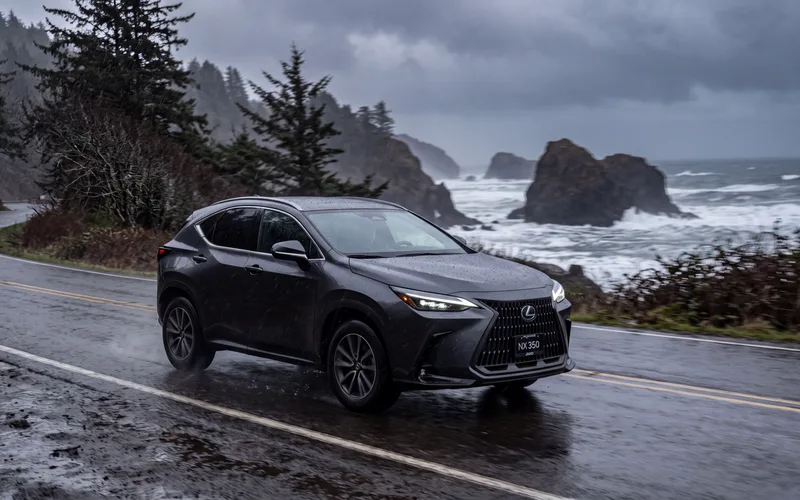 Lexus NXCompact Luxury SUVBetter at: Total cost
Hybrid efficiency, standard driver assistance and class-leading resale make it the lower-total-cost choice for almost every XT5 shopper.
Compare 2.69C+
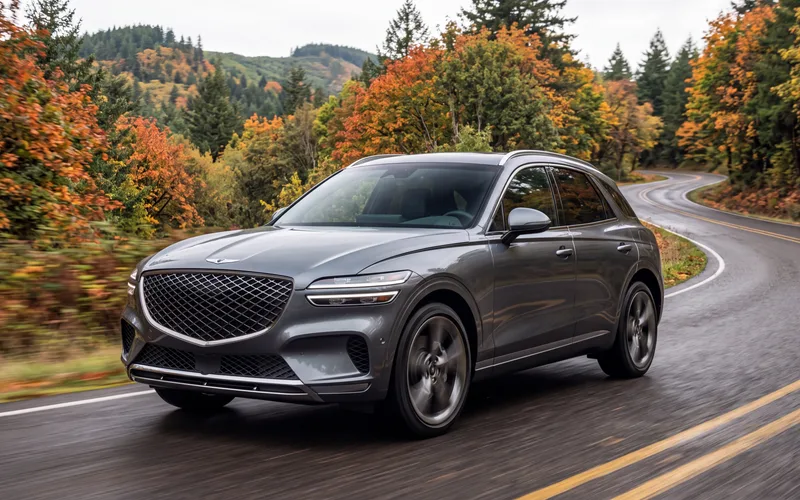 Genesis GV70Compact Luxury SUVBetter at: Value
A current-generation luxury crossover with standard blind-spot and adaptive cruise and a 10-year powertrain warranty for close to the same money.
Compare 2.74B-
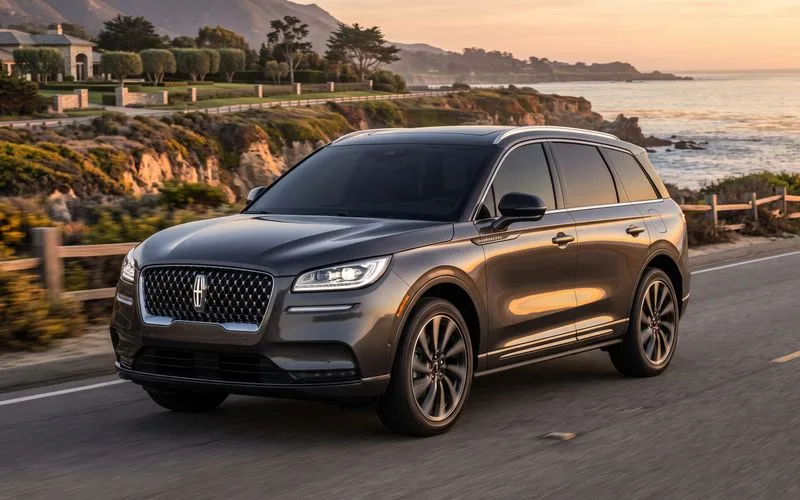 Lincoln NautilusMid-Size Luxury SUVBetter at: Interior tech
The other American luxury two-row, redesigned in 2024 with a hybrid option and a modern cabin instead of an 8-inch screen.
CompareHow it's evolved
10 scored model years · 2017–2026
Subject scores by year
Hover or tap a score to see what moved it versus the year before. A corner mark flags a big swing.
| Year | Performance | Efficiency | Safety | Space | Cost | Reliability | Tech | Use-case | Driving | Value |
|---|---|---|---|---|---|---|---|---|---|---|
| 2026 | 40 | 46 | 57 | 47 | 35 | 64 | 66 | 54 | 62 | 54 |
| 2025 | 40 | 46 | 57 | 48 | 37 | 64 | 63 | 55 | 57 | 50 |
| 2024 | 33 | 43 | 56 | 47 | 39 | 59 | 62 | 51 | 57 | 54 |
| 2023 | 40 | 46 | 59 | 47 | 39 | 63 | 63 | 53 | 59 | 60 |
| 2022 | 40 | 46 | 59 | 47 | 38 | 67 | 61 | 52 | 58 | 58 |
| 2021 | 40 | 47 | 60 | 47 | 38 | 64 | 62 | 53 | 57 | 59 |
| 2020 | 40 | 45 | 60 | 47 | 41 | 65 | 56 | 53 | 57 | 63 |
| 2019 | 43 | 42 | 50 | 49 | 40 | 59 | 50 | 53 | 60 | 62 |
| 2018 | 43 | 42 | 48 | 49 | 49 | 61 | 52 | 54 | 58 | 64 |
| 2017 | 43 | 42 | 50 | 49 | 53 | 49 | 49 | 52 | 56 | 67 |
Compare two years
Best fit & conditions
Higher scores mean a better fit for that use case. Learn more about use-case fit →
Subject profile
Academic Probation · NHTSA safety recalls
No NHTSA safety recall is on record for the 2026 Cadillac XT5. Other model years of the XT5 have 15 — listed below.
15 recalls on other model years of the XT5 (2017, 2020–2025)
Jun 20, 2024Electrical system: instrument cluster/panelThe instrument panel may not illuminate when the hazard warning lights, high beams, or turn signals are activated. As such, these vehicles fail to comply with the requirements of Federal Motor Vehicle Safety Standard numbers 101, "Controls and Displays" and 108, "Lamps, Reflective Devices, and Assoc. Equipment."
Defect
General Motors, LLC (GM) is recalling certain 2023-2025 Cadillac XT5 and 2024-2025 Cadillac XT6 vehicles. The instrument panel may not illuminate when the hazard warning lights, high beams, or turn signals are activated. As such, these vehicles fail to comply with the requirements of Federal Motor Vehicle Safety Standard numbers 101, "Controls and Displays" and 108, "Lamps, Reflective Devices, and Assoc. Equipment."
Risk
Without the illuminated reminder, the driver could fail to turn off the lights when no longer needed. Hazard warning lights, high beams, or turn signals that remain activated unintentionally can confuse other drivers, increasing the risk of a crash.
Remedy
Dealers will update the instrument panel software, free of charge. Owner notification letters were mailed August 13, 2024. Owners may contact Cadillac's customer service at 1-800-458-8006. GM's number for this recall is N242447940.
NHTSA campaign 24V459000 ↗Manufacturer no. N2424479406,942 vehicles potentially affected (all models in the campaign)Owners notified Aug 13, 2024Filed by General Motors, LLCFiled as XT5May 2, 2024Air bags: frontalThe driver's front air bag cushion may tear during deployment, resulting in the air bag not deploying as intended.
Defect
General Motors, LLC (GM) is recalling certain 2024 Cadillac XT5 vehicles. The driver's front air bag cushion may tear during deployment, resulting in the air bag not deploying as intended.
Risk
An air bag that does not deploy as intended increases the risk of injury during a crash.
Remedy
Dealers will replace the driver's front air bag module, free of charge. Owner notification letters were mailed September 12, 2024. Owners may contact Cadillac customer service at 1-800-458-8006. GM's number for this recall is N232439241.
NHTSA campaign 24V311000 ↗Manufacturer no. N23243924174 vehicles potentially affected (all models in the campaign)Owners notified Sep 12, 2024Filed by General Motors, LLCFiled as XT5Oct 12, 2023Visibility: windshieldThe windshield may have been assembled without the proper urethane sealant required to bond the windshield to the vehicle body.
Defect
General Motors, LLC (GM) is recalling certain 2023 GMC Acadia and 2024 Cadilac XT5 and XT6 vehicles. The windshield may have been assembled without the proper urethane sealant required to bond the windshield to the vehicle body.
Risk
A windshield that is not properly bonded may detach during a crash and increase the risk of injury.
Remedy
Dealers will inspect the windshield and apply primer and urethane sealant. If the windshield is damaged, the dealer will replace it. Repairs will be performed free of charge. Owner notification letters were mailed November 14, 2023. Owners may contact Cadillac customer service at 1-800-458-8006 or GMC customer service at 1-800-462-8782. GM's number for this recall is N232419690.
NHTSA campaign 23V681000 ↗Manufacturer no. N23241969042 vehicles potentially affected (all models in the campaign)Owners notified Nov 14, 2023Filed by General Motors, LLCFiled as XT5Mar 16, 2023Power train: automatic transmissionThe transmission may have been built with an incorrect sun gear, which can result in the driver-side half-shaft disengaging from the transmission.
Defect
General Motors, LLC (GM) is recalling certain 2023 Cadillac XT6, GMC Acadia, Chevrolet Blazer, Traverse, and 2022-2023 Cadillac XT5 vehicles. The transmission may have been built with an incorrect sun gear, which can result in the driver-side half-shaft disengaging from the transmission.
Risk
A half-shaft disengaging from the transmission can result in a loss of drive power or vehicle rollaway when the vehicle is placed in park. Either of these scenarios can increase the risk of a crash.
Remedy
Dealers will replace the sun gears, free of charge. Owner notification letters were mailed on July 27, 2023. The remedy is expected to become available August 31, 2023. Owners may contact Cadillac customer service at 1-800-458-8006, Chevrolet customer service at 1-800-222-1020, or GMC customer service at 1-800-462-8782. GMC's number for this recall is N222389310.
NHTSA campaign 23V172000 ↗Manufacturer no. N2223893108,744 vehicles potentially affected (all models in the campaign)Owners notified Jul 27, 2023Filed by General Motors, LLCFiled as XT5Feb 2, 2023Power train: driveline: driveshaftThe right-front half-shaft assemblies may be improperly connected to the transmission, causing them to separate.
Defect
General Motors, LLC (GM) is recalling certain 2023 Cadillac XT5 and GMC Acadia vehicles. The right-front half-shaft assemblies may be improperly connected to the transmission, causing them to separate.
Risk
Separation between the half-shaft and transmission can result in a loss of drive power or vehicle rollaway when the vehicle is placed in park. Either of these scenarios can increase the risk of a crash.
Remedy
Dealers will replace the right-front half-shaft assemblies, free of charge. Owner notification letters were mailed February 17, 2023. Owners may contact Cadillac customer service at 1-800-458-8006 or GMC customer service at 1-800-462-8782. GM's number for this recall is N222393410.
NHTSA campaign 23V043000 ↗Manufacturer no. N22239341010 vehicles potentially affected (all models in the campaign)Owners notified Feb 17, 2023Filed by General Motors, LLCFiled as XT5Sep 22, 2022Back over prevention: sensing system: cameraThe rearview camera coaxial cable connectors may have been crimped improperly, causing the rearview camera to fail or function intermittently.
Defect
General Motors, LLC (GM) is recalling certain 2020-2021 Cadillac XT5, XT6, and GMC Acadia vehicles equipped with the optional Surround Vision feature. The rearview camera coaxial cable connectors may have been crimped improperly, causing the rearview camera to fail or function intermittently.
Risk
An inoperative rearview camera can reduce the driver's rear visibility, increasing the risk of a crash.
Remedy
Dealers will replace the coaxial cables, free of charge. Owner notification letters were mailed January 18, 2023. Owners may contact Cadillac customer service at 1-800-458-8006 or GMC customer service at 1-800-462-8782. GM's number for this recall is N222378380.
NHTSA campaign 22V709000 ↗Manufacturer no. N22237838095,231 vehicles potentially affected (all models in the campaign)Owners notified Jan 18, 2023Filed by General Motors, LLCFiled as XT5Sep 22, 2022Equipment: other: labelsThe certification label located on the driver's side B-pillar contains tire size information that may be illegible. As such, these vehicles fail to comply with the requirements of Federal Motor Vehicle Safety Standard number 110, "Tire Selection and Rims."
Defect
General Motors, LLC (GM) is recalling certain 2023 Cadillac XT5, XT6, and GMC Acadia vehicles. The certification label located on the driver's side B-pillar contains tire size information that may be illegible. As such, these vehicles fail to comply with the requirements of Federal Motor Vehicle Safety Standard number 110, "Tire Selection and Rims."
Risk
Illegible tire size information may result in the wrong tires being installed, increasing the risk of a crash.
Remedy
Dealers will replace the vehicle certification label, free of charge. Owner notification letters were mailed October 12, 2022. Owners may contact Cadillac customer service at 1-800-458-8006 or GMC customer service at 1-800-462-8782. GM's number for this recall is N222381690.
NHTSA campaign 22V708000 ↗Manufacturer no. N22238169024 vehicles potentially affected (all models in the campaign)Owners notified Oct 12, 2022Filed by General Motors, LLCFiled as XT5Jun 23, 2022Fuel system, gasoline: storage: tank assemblyThe fuel tank rollover valve may not provide a proper seal in the event of a rollover crash.
Defect
General Motors, LLC (GM) is recalling certain 2022 Cadillac XT5, XT6, and GMC Acadia All-Wheel Drive (AWD) vehicles. The fuel tank rollover valve may not provide a proper seal in the event of a rollover crash.
Risk
A fuel tank rollover valve that does not properly seal can result in a fuel leak during a rollover crash, increasing the risk of a fire.
Remedy
Dealers will inspect the fuel tank and replace the fuel tank shell if the rollover valve is found to be dislodged or missing, free of charge. Owner notification letters were mailed July 27, 2022. Owners may contact Cadillac customer service at 1-800-458-8006 and GMC customer service at 1-800-462-8782. GM's number for this recall is N222366070.
NHTSA campaign 22V446000 ↗Manufacturer no. N222366070228 vehicles potentially affected (all models in the campaign)Owners notified Jul 27, 2022Filed by General Motors, LLCFiled as XT5Jun 16, 2022Suspension: rearThe left-rear suspension toe link may have been tightened improperly, which could result in a loose or separated toe link.
Defect
General Motors, LLC (GM) is recalling certain 2022 Cadillac XT5, XT6, and GMC Acadia vehicles. The left-rear suspension toe link may have been tightened improperly, which could result in a loose or separated toe link.
Risk
A loose toe link can separate and cause a loss of vehicle control, increasing the risk of a crash.
Remedy
Dealers will inspect the left-rear suspension and replace the fastener if it is loose or missing, free of charge. Owner notification letters were mailed July 11, 2022. Owners may contact Cadillac customer service at 1-800-458-8006 or GMC customer service at 1-800-462-8782. GM's number for this recall is N222364330.
NHTSA campaign 22V427000 ↗Manufacturer no. N222364330736 vehicles potentially affected (all models in the campaign)Owners notified Jul 11, 2022Filed by General Motors, LLCFiled as XT5Jun 3, 2021Fuel system, gasoline: delivery: hoses, lines/piping, and fittingsThe fuel supply lines may be improperly attached and seated.
Defect
General Motors, LLC. (GM) is recalling certain 2021 Cadillac XT5, XT6, and GMC Acadia vehicles. The fuel supply lines may be improperly attached and seated.
Risk
Improperly attached and seated fuel supply lines may loosen or separate, causing a fuel leak and increasing the risk of a fire.
Remedy
Dealers will inspect and replace fuel supply lines as necessary, free of charge. Owner notification letters were mailed on July 1, 2021. Owners may contact Cadillac customer service at 1-800-458-8006 and GMC customer service at 1-800-462-8782. GM's number for this recall is N212335590.
NHTSA campaign 21V422000 ↗Manufacturer no. N212335590572 vehicles potentially affected (all models in the campaign)Owners notified Jul 1, 2021Filed by General Motors, LLCFiled as XT5Feb 25, 2021TiresThe affected tires were cured for too long during production.
Defect
General Motors LLC (GM) is recalling certain 2020 Buick Enclave, Cadillac XT4, XT5, Escalade, Escalade ESV, Chevrolet Suburban, Tahoe, Traverse, GMC Yukon, Yukon XL, 2018-2021 Chevrolet Express, GMC Savana, 2019-2020 Chevrolet Blazer, Silverado 1500, GMC Acadia, Sierra 1500, and certain Continental tires sold to the aftermarket for various model year 2018-2021 vehicles. The affected tires were cured for too long during production.
Risk
Over cured tires may develop a break in the sidewall resulting in sudden air loss or a belt edge separation which could lead to a tread/belt loss. Either condition can cause a loss of vehicle control, increasing the risk of a crash.
Remedy
GM will notify owners, and dealers will inspect the tires, replacing them as necessary, free of charge. The recall began March 22, 2021. Owners may contact GMC customer service at 1-888-988-7267, Buick customer service at 1-866-608-8080, Chevrolet customer service at 1-800-222-1020 or Cadillac customer service at 1-800-458-8006. GM's number for this recall is N212329050.
NHTSA campaign 21V115000 ↗Manufacturer no. N21232905033,838 vehicles potentially affected (all models in the campaign)Owners notified Mar 22, 2021Filed by General Motors, LLCFiled as XT5Nov 5, 2020TiresThe vehicles may have been manufactured with Continental tires that were overcured.
Defect
General Motors LLC (GM) is recalling certain 2020 Buick Enclave, Cadillac XT5, GMC Acadia and Chevrolet Traverse vehicles and 2020-2021 Chevrolet Silverado 1500, GMC Sierra 1500 vehicles. The vehicles may have been manufactured with Continental tires that were overcured.
Risk
Overcured tires may experience a carcass break in the sidewall resulting in a sudden air loss or could develop a belt edge separation which could lead to partial or full tread/belt loss. Either condition increases the risk of a crash.
Remedy
GM will notify owners, and dealers will inspect vehicles and replace tires that have DOT number and production mold number combinations identified by Continental, free of charge. The recall began December 17, 2020. Owners may contact GMC customer service at 1-888-988-7267, Buick customer service at 1-866-608-8080, Chevrolet customer service at 1-800-222-1020 or Cadillac customer service at 1-800-458-8006. GM's number for this recall is N202319030.
NHTSA campaign 20V684000 ↗Manufacturer no. N2023190307,516 vehicles potentially affected (all models in the campaign)Owners notified Dec 17, 2020Filed by General Motors LLCFiled as XT5Oct 15, 2020Fuel system, gasoline: delivery: fuel pumpThe fuel pump's jet nozzle may have a plastic burr remaining from the manufacturing process, possibly causing a blocked nozzle and an insufficient fuel supply to the engine.
Defect
General Motors LLC (GM) is recalling certain 2020 Buick Enclave, Cadillac XT5, Cadillac XT6, Chevrolet Traverse, and GMC Acadia vehicles. The fuel pump's jet nozzle may have a plastic burr remaining from the manufacturing process, possibly causing a blocked nozzle and an insufficient fuel supply to the engine.
Risk
Insufficient fuel supply can result in an engine stall without warning, increasing the risk of a crash.
Remedy
GM will notify owners, and dealers will replace the fuel pump module. The recall began November 16, 2020. Owners may contact GMC customer service at 1-888-988-7267, Buick Customer service at 1-866-608-8080, Chevrolet customer service at 1-800-222-1020 or Cadillac customer service at 1-800-458-8006. GM's number for this recall is N202314760.
NHTSA campaign 20V639000 ↗Manufacturer no. N2023147602,781 vehicles potentially affected (all models in the campaign)Owners notified Nov 16, 2020Filed by General Motors LLCFiled as XT5Jul 30, 2020Air bags: side/window: curtain: inflatorThe diffuser component of the Roof-Rail Air Bag (RRAB) inflator may not have been properly crimped to the inflator and could separate from the inflator during air bag deployment.
Defect
General Motors, LLC. (GM) is recalling certain 2020 Buick Enclave, Cadillac XT5 and XT6, Chevrolet Blazer, Silverado 1500, 2500 and 3500 and Traverse and GMC Acadia and Sierra 1500, 2500 and 3500 vehicles. The diffuser component of the Roof-Rail Air Bag (RRAB) inflator may not have been properly crimped to the inflator and could separate from the inflator during air bag deployment.
Risk
If the diffuser separates from the inflator during deployment, RRAB performance may be degraded, increasing the risk of injury in a crash.
Remedy
GM will notify owners, and dealers will replace the suspect RRAB modules, free of charge. The recall began September 3, 2020. Owners may contact Chevrolet customer service at 1-800-630-2438, Cadillac customer service at 1-800-333-4223, or Buick customer service at 1-800-521-7300. GM's number for this recall is N202305380.
NHTSA campaign 20V446000 ↗Manufacturer no. N202305380769 vehicles potentially affected (all models in the campaign)Owners notified Sep 3, 2020Filed by General Motors LLCFiled as XT5Nov 4, 2016Service brakes, hydraulic: foundation components: disc: caliperThe front brake calipers may have a torn or misaligned caliper piston seal which may allow brake fluid to leak.
Defect
General Motors LLC (GM) is recalling certain model year 2017 Cadillac XT5 vehicles manufactured April 16, 2016, to May 9, 2016, and 2017 GMC Acadia vehicles manufactured April 19, 2016, to April 22, 2016. The front brake calipers may have a torn or misaligned caliper piston seal which may allow brake fluid to leak.
Risk
If there is a brake fluid leak, braking performance may be reduced, increasing the risk of a crash.
Remedy
GM will notify owners, and dealers will inspect the front brake calipers, replacing the brake caliper assemblies, as necessary, free of charge. The recall began on December 12, 2016. Owners may contact GM customer service at 1-800-458-8006 (Cadillac), or 1-800-462-8782 (GMC). GM's number for this recall is 16096.
NHTSA campaign 16V802000 ↗Manufacturer no. 160961,844 vehicles potentially affected (all models in the campaign)Owners notified Dec 12, 2016Filed by General Motors LLCFiled as XT5
Source: NHTSA Office of Defects Investigation recall database, model years 2017–2026. Recalls are listed by model year as the manufacturer filed them; whether a specific car is affected depends on its VIN — check a VIN at nhtsa.gov ↗. NHTSA model names matched to this page: XT5.
Detailed scoring by subject
1Performance & PowertrainOne of the XT5's weakest categories.0.62F
The volume Luxury/Premium Luxury trims carry the standard 2.0L turbo four rated at 235 hp on premium fuel; the 3.6L V6 (310 hp) is optional on Premium Luxury and standard on Sport. 2026 is a carry-over year for the first-generation XT5 — both engines return unchanged from 2025.
Peak torque for the volume trim's standard 2.0L turbo LSY four is 258 lb-ft on premium gasoline — actually more twist than the optional V6's 271 lb-ft delivers at low rpm, though the V6 edges it on the peak figure.
Published tests of the 235-hp 2.0T XT5 (an unchanged powertrain in this carry-over year) cluster around 7.5 seconds, with some sources as slow as 8.0; the V6 is roughly a second quicker. Mid-pack at best against turbo-four compact luxury rivals like the GLC 300 (5.9 s) and X3 30 (6.0 s).
The LSY 2.0T is adequate rather than luxurious: reviewers note it moves the ~4,100-lb crossover acceptably but turns coarse and audible under load, with modest off-the-line lag before boost arrives. The optional V6 is notably smoother and quieter, but it is not the volume powertrain.
The GM 9-speed automatic is consistently praised as smooth and appropriately timed in its downshifts, with no drone or hunting complaints, but it can be unhurried to kick down when paired with the low-torque 2.0T. Electronic Precision Shift controls remain divisive but do not affect shift quality.
Maximum properly-equipped rating is 3,500 lbs, but only with the optional 3.6L V6 plus the Smart Towing Package; the volume 2.0T configuration is capped at 1,000 lbs regardless of FWD or AWD. Mid-pack for a compact luxury crossover.
FWD is standard and AWD is a paid option on Luxury and Premium Luxury, standard only on Sport — but the hardware itself is sophisticated: a twin-clutch rear drive unit with active yaw control that can send 100% of rear-axle torque to a single wheel, plus a rear-drive disconnect for efficiency and an AWD-only Off-Road drive mode. No low range.
Purely pavement-oriented: roughly 7 inches of ground clearance, no skid plates, no locking differentials and no off-road trim. The AWD-only Off-Road drive mode retunes throttle, AWD response and stability control for gravel, dirt and snow-covered roads, which is the extent of the provision.
Two gas engines only — the 2.0L turbo four and the 3.6L V6 — with no hybrid, PHEV or EV variant anywhere in the North American range. The second-generation XT5 sold in China offers a 48V mild-hybrid and a PHEV, but neither reaches the US in this final first-generation year.
2Efficiency & RangeOne of the XT5's weakest categories.1.04D
The volume Luxury/Premium Luxury trim with the standard 2.0L turbo four and FWD is EPA-rated at 24 MPG combined; adding AWD drops it to 23 and the optional V6 to 21. Weak for a compact luxury SUV in 2026 — the hybrid-equipped Lexus NX and the EV rivals in this class are 2–3x better on this measure, and even the non-hybrid Mercedes GLC (25) edges it.
22 MPG city for the volume 2.0T FWD configuration. The LSY turbo four has stop-start and cylinder deactivation, but a ~4,100-lb crossover on a nine-speed conventional automatic with no electrification has nothing to recover braking energy with, so city economy sits near the bottom of the segment.
29 MPG highway is the XT5's best showing — the tall nine-speed top gears and rear-axle disconnect on AWD models let it cruise reasonably — but it is still only mid-pack, and the gap to hybrid rivals narrows here rather than closing.
A 19.0-gallon tank at the EPA combined 24 MPG gives roughly 456 miles between fills — respectable in absolute terms and the one efficiency measure where the XT5 is competitive, since a large-ish tank partly offsets mediocre economy. Sources disagree on tank size (some list 22 gal, apparently the V6 figure or a stale spec), so this is MEDIUM rather than HIGH.
EPA puts the volume 2.0T FWD at $3,150 a year at 15,000 miles — near the top of the SUV band and $4,750 more than an average 2026 vehicle over five years. The premium-fuel rating is what does the damage: the thirstier V6 actually costs less to feed ($2,950) because EPA rates it on regular.
Mixed across the lineup, and premium-leaning on the volume engine: EPA classifies the 2.0T as a premium-fuel vehicle and Cadillac quotes its 235 hp/258 lb-ft only "with premium gasoline," though GM's LSY will run on 87 octane with reduced output. The optional V6 is EPA-rated on regular despite Cadillac quoting its output on premium. Nothing exotic required, no E85 or diesel option, and no charging to arrange — but the volume configuration carries a real per-gallon penalty.
3SafetyMid-pack among this car's ten categories.1.82C-
NHTSA has rated the 2026 XT5 itself — 5 stars overall in both FWD and AWD form, with 5 stars in every frontal and side test and 4 stars for rollover (16.9% FWD / 15.1% AWD rollover risk). Identical to the 2025 result, as expected in a carry-over year.
No IIHS award — the XT5 has not earned Top Safety Pick since the 2017 model year, and a Marginal headlight rating alone disqualifies it. Its legacy crash results are all Good (driver small overlap, moderate overlap, side, roof, head restraints), but this decade-old first-generation design has never been run through the updated moderate overlap or updated side tests, and the passenger-side small overlap test has never been performed, leaving IIHS to flag the crashworthiness evaluation as incomplete.
The standard content covers the collision-avoidance basics — Automatic Emergency Braking with Front Pedestrian Braking, Forward Collision Alert, Lane Keep Assist with Lane Departure Warning, Safety Alert Seat, IntelliBeam, front and rear park assist and an HD rear camera — but two of the five items this criterion names are missing from the volume configuration. Blind Zone Alert and Rear Cross Traffic Alert require stepping up to Premium Luxury, and adaptive cruise is not available on the base Luxury trim at any price; on Premium Luxury it costs a $1,300 Driver Assist Package that itself requires the Technology package. In 2026 that is a thin standard suite for a luxury crossover.
IIHS rated the XT5's standard AEB Advanced and the optional Enhanced Automatic Emergency Braking Superior — solid results, but earned under the retired vehicle-to-vehicle test regime, not the tougher 2022-onward evaluation, and the volume car without the Driver Assist Package gets the Advanced-rated system rather than the Superior one. Front Pedestrian Braking is standard hardware, but the XT5 has never been run through the current pedestrian front-crash-prevention test, so there is no day-or-night pedestrian result to lean on.
Lane Change Alert with Side Blind Zone Alert and Rear Cross Traffic Alert are standard on Premium Luxury and Sport but simply unavailable on the base Luxury trim. Both are alert-only — there is no active blind-spot steering intervention, and cross-traffic braking arrives only as Reverse Automatic Braking inside the extra-cost Driver Assist Package. No safe-exit or rear-occupant exit warning is offered.
Lane Keep Assist with Lane Departure Warning is standard and reliable at what it does, but it is a departure-correcting nudge system only — the XT5 offers no lane centering of any kind, on any trim, which is the real gap against every current compact luxury rival. Owner reports describe the system hunting between lane markers rather than holding a line, and its steering input is brief and corrective rather than sustained.
Adaptive cruise is not standard on any 2026 XT5 and cannot be ordered at all on the base Luxury trim. On Premium Luxury it is a $1,300 Driver Assist Package that also forces the Technology package, roughly $2,500 all in. The radar system itself is a competent full-speed-range unit with stop-and-go when fitted, but there is no highway assist to integrate with — without lane centering, the XT5 has no combined-function highway mode at all.
Super Cruise is not and never has been offered on the XT5. Cadillac's hands-free system reaches the CT4, CT5, Escalade, Escalade IQ, Optiq, Lyriq, Vistiq and (through 2025) the XT6 — the XT5's aging first-generation platform is skipped entirely, and 2026 is its final US model year, so it will not gain it.
IIHS rates the XT5's headlights Marginal, and that rating applies to every trim — there is no better-lit configuration to buy. Low beams are Good on the left of a straightaway but only fair on the right, and inadequate in all four curve tests; high-beam visibility is inadequate on both sides and on curves. Standard IntelliBeam auto high beam earns partial credit for compensation, but this is the single weakest element of the XT5's safety case and the reason it cannot win an IIHS award.
Forward and side sightlines are fine, but the styling costs the driver the rear three-quarter view and leaves a narrow rear window — the classic compromise of this shape. Camera compensation is good when specified: HD Surround Vision and a rear camera mirror with washer are standard on Premium Luxury and Sport, and the digital mirror in particular fixes the rear-window problem. The base Luxury trim gets only an HD rear camera plus front and rear park assist, so the compensation is not there across the range.
Workable but fiddly. IIHS rates LATCH ease of use Acceptable rather than Good: there are two sets of lower anchors in the outboard rear seats plus top tethers, but the lower anchors are tucked tightly into the seat cushions and need digging for. Working in its favor are genuinely generous rear legroom and a second-row bench that slides and reclines, which makes fitting a rear-facing seat straightforward; three-across remains a squeeze in a compact crossover.
4Space & ComfortGrades below the middle of the scale.1.11D
The 2026 XT5 is a strictly two-row, five-passenger crossover on every trim — Cadillac markets it as a '5-Passenger SUV' and no third row has ever been offered in the first generation, which 2026 is a carry-over year of.
First-row headroom measures 39.7 in, an average figure for a compact luxury SUV; the panoramic sunroof fitted to Premium Luxury and Sport trims trims that slightly in practice. Cadillac's own 2026 specs page publishes only legroom, so the figure comes from corroborating spec databases for the unchanged carry-over body.
Cadillac publishes 41.2 in of front legroom for the 2026 XT5 — near the bottom of the SUV band and short of rivals like the GLC and X3, consistent with reviewers' note that the cabin feels tight at the elbows rather than generous up front.
Second-row headroom of 38.4 in is mid-pack; reviewers describe rear headroom as slightly tight for taller adults, partly offset by the standard reclining rear seatback.
Cadillac publishes 39.0 in of rear legroom, the XT5's clear space strength — a genuinely roomy second row for the compact luxury class, helped by a second row that slides fore/aft to trade legroom for cargo.
There is no third row — the XT5 is a two-row, five-seat crossover on every 2026 trim, and Cadillac points three-row shoppers to the XT6 and Vistiq. Scored in the low band per the item's rule for two-row SUVs rather than omitted.
Cadillac quotes 30 cu ft behind the upright rear seats — competitive against compact luxury rivals but well down the absolute SUV scale the band measures against, and reviewers rate it low-end for a vehicle of this footprint.
Maximum cargo volume is 63 cu ft with the standard 60/40-split second row folded flat — modest in absolute terms, since a two-row compact luxury crossover cannot approach the 85–100 cu ft of a three-row or full-size SUV.
Competent but unremarkable: a sliding/reclining second row that trades legroom for cargo, fold-flat rear seatbacks, a hidden underfloor bin in the cargo area and an available hands-free power liftgate — but no standout innovation, and the tall center armrest and narrow console make the front cabin feel pinched at the elbows.
Front seats are well-shaped with decent bolstering and 8-way power for the driver / 6-way for the passenger, and the rear bench reclines and slides — comfortable for most, but reviewers stop short of praise, citing limited width and shoulder room and no massage function at any price.
Ride is the XT5's most consistently praised dynamic trait — planted and smooth in daily driving, with the Sport's continuous damping control tightening body control; it is composed rather than segment-leading, and the 20-inch wheels on upper trims add some sharpness over broken pavement.
A genuine weak point for a luxury badge: reviewers report engine accessory-drive noise at low speed, wind noise at highway pace and audible interior creaks, and the coarse 2.0L turbo four in the volume trim is the loudest element under load.
Solid mid-pack coverage: heated front seats, dual-zone automatic climate control, an air ionizer and remote start are standard from the base Luxury trim, while ventilated front seats, a heated steering wheel, heated rear seats and tri-zone climate for the second row arrive on Premium Luxury/Sport or in option packages.
5Cost of OwnershipThe XT5's lowest-graded category.0.29F
The 2026 XT5 opens at $44,800 for the Luxury FWD trim on Cadillac's own configurator, plus the $1,795 destination freight charge that took effect with the December 2025 price revision — $46,595 delivered, one of the least expensive entries in the compact luxury SUV class and the strongest part of this car's cost story.
Premium Luxury is the volume trim — it carries the equipment most XT5 buyers actually order (14-speaker Bose, hands-free liftgate, blind-zone alert, head-up display, HD Surround Vision) and for 2026 gained the previously optional Technology and Driver Assist packages as standard. At $53,500 plus $1,795 destination it lands at $55,295 FWD, $57,395 with the $2,100 AWD system.
KBB's 2026 XT5 cost-to-own projects $5,609 maintenance plus $1,276 repairs over five years ($6,885 combined), while CarEdge models a much lower $3,158; the figure used splits toward KBB but below it, because the XT5's GM parts and labor rates run cheaper than its German rivals and CarEdge rates it below the luxury-segment average for repair cost and major-repair probability. Premium fuel is required but scores in cat2, not here.
Three independent forecasts land within two points of each other in the low 40s, roughly five points worse than the luxury compact SUV average — the XT5's single biggest ownership penalty and the item that drags this category down. Being the final model year of a first-generation nameplate that GM is pausing after 2026 (no 2027 XT5; the second generation returns for 2028) plus the heavy incentives on outgoing inventory both work against residuals.
Cadillac's bumper-to-bumper limited warranty runs 4 years or 50,000 miles, the luxury-brand norm (matching BMW, Audi and Lexus at 4/50) and a year longer than the mainstream 3/36 standard.
Powertrain coverage is 6 years or 70,000 miles — better than the 4/50 the Germans offer but short of Hyundai/Genesis-style 10-year terms, which is what the 5–10 year normalization band is scaled against.
Cadillac covers exactly one service visit — oil change, tire rotation and multi-point inspection, redeemable within the first year — where BMW (3 yr/36k Ultimate Care) and Audi (3 yr/30k Signature Care) include years of scheduled maintenance, so the XT5 lands mid-band. The offsetting perks are genuinely long: 6 yr/70,000 mi roadside assistance and courtesy transportation, both a year and 10,000 miles beyond what Chevrolet and GMC give, plus the OnStar/connected-services trial and in-vehicle Wi-Fi. No Super Cruise service period, unlike the Escalade and the brand's EVs.
$55,295 volume-trim price minus its estimated resale value after 5 years (42% retained, or about $23,224) leaves about $32,071 in depreciation. Add the projected $6,000 in 5-year maintenance and repairs, and owning this vehicle for 5 years costs about $38,071 in total.
6Reliability & QualityOne of the XT5's strongest categories.2.32C+
The two major predictors flatly disagree for 2026: J.D. Power rates XT5 predicted reliability 87/100 ("Great"), while Consumer Reports predicts below-average reliability and pulled the XT5's Recommended rating in December 2025 on the strength of its 2025 owner survey. Severity of the CR complaints — complete transmission replacements, drive-system faults — pulls this into the lower half of the mixed-signal band rather than the middle.
Cadillac's long-term dependability standing is genuinely strong — top-five overall in J.D. Power's VDS two years running and second among premium brands — but Consumer Reports places the brand only 18th of 30-plus, and Cadillac's 2026 US initial-quality result was near the bottom of the industry. Strong on the three-year dependability measure, mid-pack once the other two studies are weighed in.
The 2026 model year carries no NHTSA recalls as of August 2026 and the 2025 car took only one (a software fix), but the late first-generation record is not clean: three campaigns hit 2024 cars including a driver airbag that could tear on deployment, and the 2023 cars needed a defective 9-speed sun gear replaced. TSB traffic on the 9T65 shudder and LSY carbon buildup runs above segment norm.
The volume 2.0L turbo LSY is an eight-year-old, widely deployed GM four with a decent high-mileage ceiling but well-documented direct-injection carbon buildup, timing-chain and turbo wear items; the optional 3.6L LGX V6 is the more proven half of the lineup. The 9T65 nine-speed is the weak link — torque-converter shudder, cold rough shifts, a sun-gear recall and owner-reported outright replacements are the reason this sits below the middle of the mixed-history band.
The cabin is the clearest sign of the XT5's age in its final first-generation year: reviewers note extensive black plastic and an interior that doesn't read as luxurious as the roughly $55K volume Premium Luxury price implies, around a pre-curved-display architecture with an 8-inch touchscreen. Real leather and wood on upper trims lift it, but it trails Genesis GV70, Volvo XC60 and Macan cabins outright.
Assembly quality is the XT5's strongest quality credential — eleven model years of Spring Hill production made it a segment winner in the 2026 U.S. Initial Quality Study even as the Cadillac brand as a whole ranked near the bottom. Held back from a higher score by CR's body-integrity complaints (sunroof leaks, trim delamination) on recent cars.
Roughly 590 US Cadillac stores is one of the densest luxury service networks in the country — materially broader coverage than Genesis, Land Rover or Volvo owners get — and service satisfaction scores just above the premium average. It is not a leader on satisfaction, sitting well behind Porsche, Infiniti and Lexus.
Nearly everything mechanical under the XT5 is shared GM hardware — LSY four, LGX V6, 9T65 transmission, C1 platform components — so parts are abundant through both the dealer network and independents, and maintenance costs run below the luxury average rather than above it. Repair pricing is still luxury-tier once out of warranty, which caps this short of the top band.
7Technology & InfotainmentThe XT5's best-graded category.2.48C+
2026 is the final model year of the first-generation XT5 in North America and a carry-over for infotainment: every trim from Luxury to Sport keeps the 8.0-inch CUE center touchscreen. There is no larger screen anywhere in the range — the 33-inch curved display described on Wikipedia belongs to the China-only second generation, which does not reach the US until the redesigned 2028 model.
CUE is genuinely easy to live with — a simple menu structure backed by a console rotary controller and real volume/tune knobs — but it is GM software from the last decade on a screen half the size of what Audi, BMW and Mercedes fit in this segment, and reviewers note occasional unresponsive inputs. It lands near the bottom of the compact luxury set (Q5 85.1, X3 85.1, GLC 82.6, XC60 79.1) and below the Acura RDX-grade systems only because the physical controls and standard wireless projection keep it usable.
Both wireless Apple CarPlay and wireless Android Auto are standard on every 2026 XT5 trim including the $44,800 base Luxury — notable because GM deleted phone projection entirely from its newer EVs. Given the small native screen, projection is the system most owners will actually use, and it costs nothing to get.
Embedded connected navigation with real-time traffic is included, and as a 2026 GM vehicle it carries eight years of OnStar Basics so maps are not an expiring subscription — a real advantage over rivals that meter connected services. The voice assistant, however, is CUE-era Natural Voice Recognition rather than a natural-language assistant, and there is no Google built-in on this platform, so most owners will default to Siri or Google Assistant through projection.
Audio is the clearest strength of the XT5's tech suite: a Bose Premium 8-speaker system is standard on the base Luxury, and the Bose Performance Series 14-speaker system is standard — not optional — on the volume Premium Luxury and on Sport. It is a tier below the Burmester/Bowers & Wilkins hardware in German rivals, but no compact luxury competitor gives you 14 branded speakers without an options box.
There is no full-digital cluster on the XT5 at any price. Premium Luxury and Sport get an 8-inch color Driver Information Center set between conventional gauges, and the base Luxury makes do with a smaller display — a partial-digital arrangement that every German and Korean rival in this class replaced with a configurable full-width panel years ago.
The XT5 has been OTA-capable since the 2020 model year, delivering updates over the OnStar cellular connection with or without an active subscription, and Cadillac sells some purchasable upgrades that way. But this is the pre-VIP electrical architecture, so updates are maintenance and infotainment-scoped rather than the regular feature-adding whole-vehicle drops that the Lyriq/Optiq platform receives.
myCadillac covers remote start with climate preset, lock/unlock, locate, on-demand diagnostics and status alerts, and on a 2026 model those commands are included for eight years at no cost and stay with the car if it is sold — so the usual subscription trap does not apply. It stops short of the top band only because there is no phone-as-key/digital key on this platform.
Four USB ports split between front and rear plus two auxiliary 12V outlets is adequate rather than generous, and wireless phone charging is a Premium Luxury/Sport item — a base Luxury buyer at $44,800 does without. There is no household-style AC outlet, and port counts and placement have not changed in the eight years this generation has been on sale.
Proximity keyless entry with push-button start and remote start (fob or myCadillac app) is standard across the range, and the volume Premium Luxury adds a hands-free power liftgate with programmable memory height and a projected Cadillac logo plus illuminating door handles. No phone-as-key is offered, and the hands-free liftgate is not available on the base trim, which keeps it out of the top band.
The single meaningful 2026 change: the Technology Package — HD Surround Vision, Automatic Parking Assist with Braking and the Rear Camera Mirror with washer — became standard equipment on Premium Luxury and Sport after being a $2,275 option in 2025, and front and rear park assist is standard even on the base Luxury. That is a genuinely well-equipped parking suite on the volume trim; only the entry Luxury trim, which cannot get the package at all, holds the score below 90.
A reconfigurable color head-up display that can show navigation guidance is standard on the volume Premium Luxury and on Sport for 2026, having moved out of the optional Technology Package. It is not offered on the base Luxury trim at any price, which is the only thing separating this from a top-band score.
8Use-Case FitGrades below the middle of the scale.1.60D
Genuinely good family logistics for a two-row compact luxury SUV: 39.0 in of rear legroom is among the best in the class, the second row slides fore/aft and reclines so a rear-facing seat fits without gutting front legroom, and 30 cu ft behind the upright bench swallows a stroller. The friction is at the anchors — IIHS rates LATCH ease of use only Acceptable because the lower anchors are buried tight in the seat cushions — and there are only two sets of lower anchors with no third row for a fourth or fifth child.
The headline crash result is excellent — NHTSA gives the 2026 XT5 5 stars overall — and AEB with Front Pedestrian Braking, Lane Keep Assist, Rear Seat Reminder and Teen Driver are standard. But the trim families actually shop is where it falls apart: the base Luxury cannot be ordered with blind-zone alert, rear cross-traffic alert or adaptive cruise at any price, no XT5 offers lane centering, IIHS has not named it a Top Safety Pick since 2017, and its headlights are rated Marginal on every trim.
The second row is the strong half — 39.0 in of legroom, a bench that reclines and slides, heated rear outboard seats and tri-zone climate on the option sheet, four USB ports and a panoramic sunroof — and 30 cu ft of luggage space with everyone aboard is genuinely useful. What holds it back over a long day is noise rather than space: reviewers report wind noise, engine accessory-drive whine and creaking trim, the rear amenities are all option-gated rather than standard, and there is no rear-seat entertainment provision.
Low-speed manners are the XT5's most consistently praised trait: a planted, smooth ride, a nine-speed automatic that shifts unobtrusively, light steering effort and a commanding, well-sorted driving position, with front and rear park assist standard even on the base trim. Fatigue creeps in from the volume 2.0T, which is laggy off boost and coarse under load in a ~3,915-lb crossover, and from the absence of any lane centering to take the edge off stop-and-go — adaptive cruise is an extra-cost package and cannot be had at all on the base Luxury.
This is the XT5's worst use case. The volume 2.0T returns an EPA-rated 22 MPG city / 24 combined and Cadillac quotes its output only on premium gasoline, so EPA models $3,150 a year at 15,000 miles — roughly $4,750 more than an average 2026 vehicle over five years, and two to three times the per-mile cost of the hybrid and EV rivals that dominate this segment. The partial offsets are real but small: shared GM consumables, a 590-store service network and maintenance costs that run below the luxury average.
The footprint works against it — 189.6 in long on a 112 in wheelbase with a 20.2 ft turning radius (about a 40 ft circle) is large for something badged compact, and the raked roofline costs the driver the rear three-quarter view. The cameras more than compensate on the volume trim for 2026: HD Surround Vision, the Rear Camera Mirror with washer and Automatic Parking Assist with Braking all became standard equipment on Premium Luxury and Sport this year after being a $2,275 option. The base Luxury, which cannot get that package, is the harder car to park.
The configuration most buyers drive tows 1,000 lbs — barely a small utility trailer — because the 3,500-lb maximum requires both the optional 3.6L V6 and the Smart Towing Package (RPO V92). There is no bed, no payload rating marketed for work, and a unibody crossover platform with no heavy-duty provisions. The 63 cu ft of enclosed cargo with the seats folded is genuine light-duty utility, and the 3,500-lb path does exist for buyers who order for it, which keeps it off the floor of the band.
This is a leather-lined luxury crossover with no fleet or commercial presence, and the specific hardware carrying the load is the doubt: the 9T65 nine-speed has a documented history of torque-converter shudder, cold rough shifts, a sun-gear recall on 2023 cars and owner-reported outright replacements, while the LSY 2.0T carries direct-injection carbon buildup and turbo wear items. Eleven model years of Spring Hill production and cheap, abundant shared GM parts argue it will hold up with care, but nothing about it is proven under abuse.
Onboard power is thin for work use — four USB ports and two 12V auxiliary outlets, with no household-style 120V AC outlet anywhere in the vehicle — and every surface that matters is carpeted rather than washable. The provisions that do exist come from GM's accessory catalog rather than the build sheet: cargo tie-downs, cargo nets, all-weather cargo liners, roof cross rails and hitch-mounted carriers, plus a hitch receiver bundled into the Smart Towing Package. There is no upfit ecosystem in any commercial sense.
Range is a real strength — a 19.0-gallon tank at 29 MPG highway is roughly 550 highway miles between stops, more than most electrified rivals manage — and the ride stays composed at speed with well-bolstered front seats and a head-up display standard on the volume trim. Two things cap it squarely mid-band, and both are exactly what this item measures: the cabin is not quiet enough for the badge, with wind, accessory-drive and trim noise all called out, and there is no lane centering on any trim and no Super Cruise, so the fatigue-reduction half of a modern highway tourer is simply absent.
Squarely a gravel-road-and-bike-rack vehicle rather than an adventure enabler. The available AWD system is sophisticated — a twin-clutch rear drive unit with active torque vectoring that can send all rear-axle torque to one wheel, plus an AWD-only Off-Road drive mode — but AWD is a paid option on the volume trims, ground clearance is only about 7 in, and there are no skid plates, low range or locking differentials. Factory roof rails accept cross rails for bikes, kayaks and cargo boxes, but the 1,000-lb tow rating on the volume engine rules out a boat or camper, and there is no AC outlet for camping.
Flexible in the ways that matter for a two-row crossover: a 60/40 second row that both slides fore/aft to trade legroom for cargo and folds genuinely flat, a hidden underfloor bin, a hands-free power liftgate on the volume trim, factory roof rails with a full accessory cross-rail and carrier ecosystem, and a hitch available through the Smart Towing Package. The ceiling is the absolute number — 30 cu ft behind the seats and 63 cu ft maximum is competitive within the compact luxury class but modest for a 189.6-inch vehicle, and reviewers put it at the low end of the broader two-row field.
9Driving ExperienceOne of the XT5's strongest categories.2.16C
Secure and better-sorted than its age suggests: testers consistently describe it as planted through corners with body lean well checked and no unpleasant surprises at the limit, and 0.84 g of skidpad grip is respectable for a ~3,915-lb crossover. It is squarely in the 'composed but unremarkable' band rather than the top of the class — the standard suspension on the volume Premium Luxury (real-time damping and Brembos are Sport-only) gets jittery over broken pavement, and nobody calls it agile.
Precise enough but numb — the textbook middle of this item's band. Reviewers agree the rack is accurate and sensibly weighted, with light effort that suits the car's mission, but there is no meaningful feedback coming back through the wheel, which is exactly what separates this from the 80+ scores earned by the X3, Stelvio and Macan.
The strongest single element of how the XT5 drives. Four-wheel discs on 13.6-in front / 12.4-in rear rotors stopped it from 60 mph in 116 ft in instrumented testing — better than average for the class — and the pedal is repeatedly praised as firm and linear rather than soft or grabby. Held below 80 because the figures come from earlier first-generation cars on a carry-over chassis rather than a fresh 2026 test, and the volume Premium Luxury does not get the Sport's Brembo front brakes.
The volume 2.0L turbo four is the weak link in the driving experience: noticeable lag off the line before boost arrives, coarseness under load, and a nine-speed automatic that shifts smoothly in normal driving but is unhurried to kick down given only 258 lb-ft to work with. Auto stop/start draws consistent owner complaints about hesitation pulling into traffic, and the 9T65 has a documented shudder history — enough friction to sit in the lower half of the 50-79 'occasional shudder, lag or rough stop/start' band.
Sources split, and the split is itself the answer: Consumer Reports calls the cabin impressively quiet at a cruise, while Edmunds faults exactly the low-speed and full-throttle behavior this item measures — engine accessory-drive whine around town and a coarse, audible four under load. Audible but inoffensive most of the time, short of the near-silent standard the badge implies and well short of the segment's electrified rivals.
Cadillac does not publish a turning circle for the 2026 XT5 on its own specs page; the OEM data feeds give 39.0 ft curb-to-curb, while CarsDirect lists a 20.2-ft turning radius (≈40.4 ft circle). Either way it is a wide arc for a 189.6-in vehicle badged compact, and mid-pack at best against the SUV band.
Compromised in specific, measurable ways rather than generally bad. Consumer Reports faults a skewed driving position caused by a poorly placed left foot rest and a driver's seat with only two-way lumbar adjustment, and the rakish roofline costs rear three-quarter and over-the-shoulder vision while thick A-pillars intrude ahead. Offsetting that: a commanding seat height, a well-sized greenhouse forward, a head-up display and HD Surround Vision standard on the volume Premium Luxury for 2026, and a rotary controller that keeps infotainment reachable without leaning to the screen.
Competent and entirely forgettable — the definition of the 50-79 band's lower half. It neither embarrasses itself on a good road nor gives any reason to seek one out: no feedback through the wheel, a coarse and lethargic volume engine, and none of the character rivals trade on. No enthusiast outlet recommends it on driving merit; Edmunds scores the 2026 car 5.2 out of 10 overall and says outright that buyers wanting performance or fun should shop elsewhere at the same money.
10Value & Market PositionGrades below the middle of the scale.1.61D
The $45,795 Luxury base trim covers the comfort basics well for its price — heated synthetic-leather front seats, dual-zone auto climate, remote start, push-button start, wireless CarPlay/Android Auto, Wi-Fi hotspot and a Bose eight-speaker system — but the driver-assist content is thin for a 2026 luxury SUV, with blind-spot monitoring absent on the base trim, adaptive cruise a $1,300 package on Premium Luxury only, and no Super Cruise offered at all. Rivals at similar money (Lexus NX, Genesis GV70, Volvo XC60) make blind-spot and adaptive cruise standard, so the XT5 buys equipment parity mainly by being cheaper rather than by being better equipped.
Up front the XT5 is the cheap way into a luxury crossover — it undercuts nearly every direct rival on entry price while offering near-midsize cabin and cargo space and a 310-hp naturally aspirated V6 no competitor still sells — but the value evaporates over the ownership period, since it retains only about 41% of MSRP after five years, the worst-in-class depreciation in the segment. Climbing to Premium Luxury ($55,295) or Sport ($64,595) buys a decade-old architecture with an 8-inch screen at prices where rivals deliver current-generation hardware.
Three well-spaced trims (Luxury, Premium Luxury, Sport) spanning $46.6K–$64.6K, FWD or AWD on the two lower trims, a genuine choice of 2.0L turbo four or 3.6L V6, plus Onyx/Onyx Lite appearance packages and a Driver Assist package give buyers real latitude across a $19K spread. The gaps are that the Sport is locked to AWD and the V6, the body is five-seat two-row only, and there is no electrified variant of any kind in a segment where nearly every rival now offers a hybrid, PHEV or EV.
The XT5 is a mid-pack seller now turning down: it managed 18,498 US deliveries through nine months of 2025 (+4% year over year), but Q1 2026 fell 16% to 5,343 units, dropping faster than the segment as a whole, and it was outsold by the Lincoln Nautilus in Q2 2025. Volumes trail the segment's leaders (Lexus NX/RX, BMW X3, Audi Q5) by a wide margin, and with North American production scheduled to end in late 2026 and no 2027 model year, the nameplate is winding down rather than building share.
Cadillac itself is in the strongest shape it has been in years — sales up 15% in Q2 2025 for its best second quarter since 2007, a credible EV halo from the Lyriq, Optiq, Vistiq and Escalade IQ, and fourth place (second among premium brands) in J.D. Power's 2026 Vehicle Dependability Study. The brand still trails Lexus and the Germans on residual values, though, and the XT5 sits at the unglamorous end of the range as the run-out product the brand's marketing has moved past.
Buyers do well here: Cadillac has run stackable national programs on the XT5 every month of 2026, with discounts up to $2,500, subsidized 3.9% APR financing plus a $1,000 finance bonus and $500 purchase allowance, and an advertised national lease. Run-out inventory in the model's final production year adds dealer-level negotiability on top, and the offers are consistent enough to count on without being fire-sale pricing.
This is the oldest design in the segment by a wide margin: 2026 is the tenth model year of the first-generation XT5 launched for 2016, the last substantive update was the 2020 mid-cycle refresh six years ago, and both engines, transmissions and axles carry over untouched from 2025. Production ends in late 2026 with no 2027 US model year, and the second generation — already on sale in China since August 2024 — does not reach North America until roughly the 2028 model year, so a 2026 buyer is purchasing a car that is simultaneously obsolete and about to be replaced.
Professional reviewers now place the XT5 near the bottom of the luxury crossover field — Edmunds scores the tested 2026 car 5.2/10, Autoblog calls it "falling behind the curve in every way," and US News ranks it 15th in its class despite a headline 8.4/10 — and it holds no comparison-test wins, no 10Best/NACTOY recognition, and no IIHS award (headlights rated Marginal, crashworthiness rating incomplete). What keeps it out of the basement is quality data rather than driving verdicts: it is the segment leader in J.D. Power's 2026 Initial Quality Study, runner-up in the 2026 Dependability Study's Midsize Premium SUV class, and owners rate it 4.2/5 at KBB.