
The verdict
A struggling mid-size suv, strong on safety and held back by ownership.
The 2024 Blazer EV is a quiet, roomy, well-protected electric SUV with a huge 17.7-inch screen and a five-star NHTSA rating. It was also the launch year: GM halted sales for 11 weeks over software and charging faults, and Consumer Reports rates this model year much less reliable than average. Charging tops out at 150 kW on the volume eAWD car, cargo space is small at 25.5 cu ft, and KBB shows it losing 53% of its value in two years. As a used buy at today's depreciated prices it can make sense; at its original sticker it was hard to justify against better-charging rivals.
Jump to scoresStrengths
- Strong crash-test results
- Big screen with Google built in
- Quiet, smooth electric drive
What holds it back
- Troubled launch-year reliability
- Steep depreciation, short warranty
- Small cargo hold for its size
Top alternatives
Cars shoppers cross-shop with the Chevrolet Blazer EV 2.06C
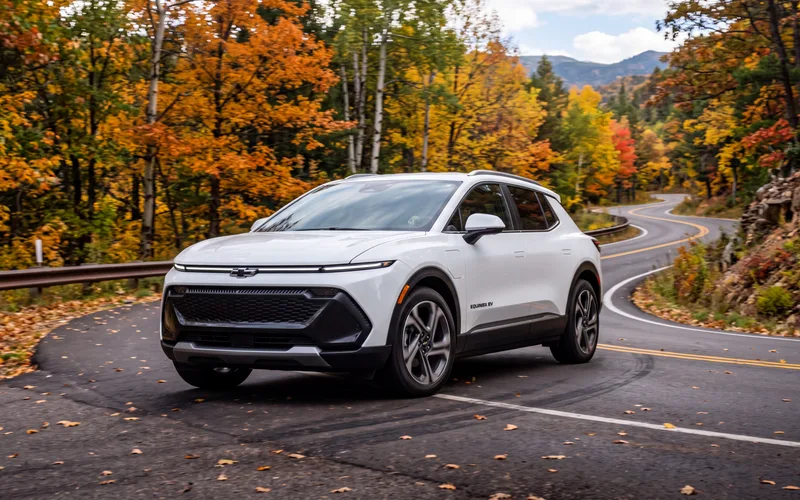 Chevrolet Equinox EVCompact SUVBetter at: Value
Nearly the same EV for roughly $11,500 less, with more range and better resale — the Blazer EV's toughest competitor comes from the same showroom.
Compare 2.74B-
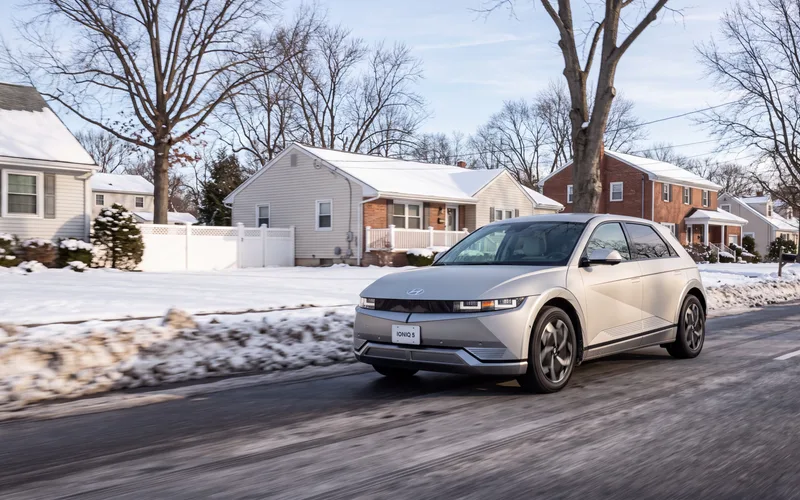 Hyundai Ioniq 5Compact SUVBetter at: Charging speed
800-volt fast charging, a native NACS port, CarPlay/Android Auto and a 5-year basic warranty for thousands less to start.
Compare 2.58C+
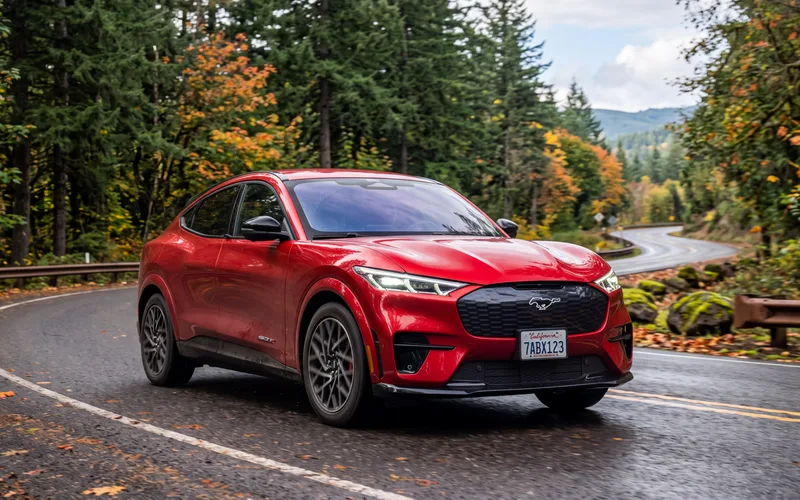 Ford Mustang Mach-ECompact SUVBetter at: Reliability
Same size and mission but with far better reliability scores, stronger resale, phone projection intact, and a more engaging drive.
CompareSubject scores by year
Hover or tap a score to see what moved it versus the year before. A corner mark flags a big swing.
| Year | Performance | Efficiency | Safety | Space | Cost | Reliability | Tech | Use-case | Driving | Value |
|---|---|---|---|---|---|---|---|---|---|---|
| 2026 | 47 | 61 | 80 | 52 | 43 | 58 | 69 | 62 | 64 | 61 |
| 2025 | 52 | 60 | 77 | 50 | 34 | 43 | 70 | 58 | 62 | 67 |
| 2024 | 50 | 59 | 76 | 49 | 28 | 40 | 65 | 56 | 61 | 63 |
Compare two years
Best fit & conditions
Higher scores mean a better fit for that use case. Learn more about use-case fit →
Subject profile
Academic Probation · NHTSA safety recalls
Jan 22, 2026Parking brakeThe rear parking brake wiring harness may become damaged or corroded, resulting in unintended activation of the parking brake or loss of the parking brake function.
Defect
General Motors, LLC (GM) is recalling certain 2024-2025 Chevrolet Blazer EV vehicles that may have been repaired incorrectly under recall 25V433. The rear parking brake wiring harness may become damaged or corroded, resulting in unintended activation of the parking brake or loss of the parking brake function.
Risk
Unintended activation of the parking brake while driving increases the risk of a crash. Loss of the parking brake function while parked can result in a rollaway, increasing the risk of a crash.
Remedy
Dealers will replace the chassis harness, free of charge. Owner notification letters were mailed on February 25, 2026. Owners may contact Chevrolet customer service at 1-800-222-1020. GM's number for this recall is N252532830.
NHTSA campaign 26V031000 ↗Manufacturer no. N25253283020 vehicles potentially affected (all models in the campaign)Owners notified Feb 25, 2026Filed by General Motors, LLCFiled as BLAZER EVJun 25, 2025Parking brakeThe rear parking brake wiring harness may become damaged or corroded, resulting in unintended activation of the parking brake or loss of the parking brake function.
Defect
General Motors, LLC (GM) is recalling certain 2024-2025 Chevrolet Blazer EV vehicles. The rear parking brake wiring harness may become damaged or corroded, resulting in unintended activation of the parking brake or loss of the parking brake function.
Risk
Unintended activation of the parking brake while driving increases the risk of a crash. Loss of the parking brake function while parked can result in a rollaway, increasing the risk of a crash.
Remedy
Dealers will inspect the harness and, if necessary, reroute the harness and install anti-abrasive tape. Any harness that has existing damage will be replaced. Repairs will be performed free of charge. Owner notification letters were mailed on October 1, 2025. Owners may contact Chevrolet customer service at 1-800-222-1020. GM's number for this recall is N252503010.
NHTSA campaign 25V433000 ↗Manufacturer no. N25250301040,233 vehicles potentially affected (all models in the campaign)Owners notified Oct 1, 2025Filed by General Motors, LLCFiled as BLAZER EVJun 28, 2024Suspension: front: control arm: lower armThe right front lower control arm may contain a manufacturing defect that can cause it to fracture.
Defect
General Motors, LLC (GM) is recalling certain 2024 Chevrolet Blazer EV vehicles. The right front lower control arm may contain a manufacturing defect that can cause it to fracture.
Risk
A lower control arm fracture can cause loss of vehicle control, increasing the risk of a crash.
Remedy
Dealers will inspect and replace the right front lower control arm as necessary, free of charge. Owner notification letters were mailed July 24, 2024. Owners may contact Chevrolet customer service at 1-800-222-1020. GM's number for this recall is N242448540.
NHTSA campaign 24V487000 ↗Manufacturer no. N24244854083 vehicles potentially affected (all models in the campaign)Owners notified Jul 24, 2024Filed by General Motors, LLCFiled as BLAZER EVMay 9, 2024Electrical system: propulsion system · Electrical system: wiringThe electric motors in the rear drive units may have insufficiently insulated wires that can contact each other, resulting in a loss of drive power.
Defect
General Motors, LLC (GM) is recalling certain 2024 Cadillac Lyriq, Chevrolet Blazer EV, Chevrolet Silverado EV, GMC Hummer EV SUV, and GMC Sierra EV vehicles. The electric motors in the rear drive units may have insufficiently insulated wires that can contact each other, resulting in a loss of drive power.
Risk
A loss of drive power increases the risk of a crash.
Remedy
Dealers will replace the rear drive unit, free of charge. Owner notification letters were mailed May 16, 2024. Owners may contact Chevrolet customer service at 1-800-222-1020; Cadillac customer service at 1-800-458-8006; Hummer customer service at 1-800-732-5493; or GMC customer service at 1-800-462-8782. GM's number for this recall is N242447080.
NHTSA campaign 24V320000 ↗Manufacturer no. N24244708010 vehicles potentially affected (all models in the campaign)Owners notified May 16, 2024Filed by General Motors, LLCFiled as BLAZER EVDec 21, 2023Structure: body: doorThe door strikers may fracture, resulting in the door opening unexpectedly.
Defect
General Motors, LLC (GM) is recalling certain 2024 Chevrolet Blazer, Blazer EV, Equinox, and GMC Terrain vehicles. The door strikers may fracture, resulting in the door opening unexpectedly.
Risk
A door opening while the vehicle is being driven can increasing the risk of injury or a crash.
Remedy
Dealers will replace all four door strikers and attaching bolts, free of charge. Owner notification letters were mailed January 24, 2024. Owners may contact Chevrolet customer service at 1-800-222-1020 and GMC customer service at 1-800-462-8782. GM's number for this recall is N232429911.
NHTSA campaign 23V869000 ↗Manufacturer no. N232429911265 vehicles potentially affected (all models in the campaign)Owners notified Jan 24, 2024Filed by General Motors, LLCFiled as BLAZER EV
2 recalls on other model years of the Blazer EV (2025–2026)
Feb 26, 2026Equipment: other: owners/service/other manualGeneral Motors has decided that certain 2027 Chevrolet Bolt EV, 2025-2026 Cadillac OPTIQ, Chevrolet Colorado, Equinox EV, GMC Canyon, 2026 Buick Enclave, Envision, Cadillac CT5, Escalade, Escalade ESV, Escalade IQ, Escalade IQL, LYRIQ, VISTIQ, Chevrolet Blazer EV, Corvette Convertible, Corvette Coupe, Corvette Convertible E-Ray, Equinox, Silverado 1500, 2500, 3500, Silverado EV, Suburban 1500, Tahoe, Traverse, GMC Acadia, Hummer EV Pickup, Hummer EV SUV, Sierra 1500, 2500, 3500, Sierra EV, Terrain, Yukon, and Yukon XL vehicles. The radio may not have been set to the correct status to download the electronic owner's manual during production. As such, these vehicles fail to comply with the requirements of Federal Motor Vehicle Safety Standard number 208, âOccupant Protection.â
Defect
General Motors has decided that certain 2027 Chevrolet Bolt EV, 2025-2026 Cadillac OPTIQ, Chevrolet Colorado, Equinox EV, GMC Canyon, 2026 Buick Enclave, Envision, Cadillac CT5, Escalade, Escalade ESV, Escalade IQ, Escalade IQL, LYRIQ, VISTIQ, Chevrolet Blazer EV, Corvette Convertible, Corvette Coupe, Corvette Convertible E-Ray, Equinox, Silverado 1500, 2500, 3500, Silverado EV, Suburban 1500, Tahoe, Traverse, GMC Acadia, Hummer EV Pickup, Hummer EV SUV, Sierra 1500, 2500, 3500, Sierra EV, Terrain, Yukon, and Yukon XL vehicles. The radio may not have been set to the correct status to download the electronic owner's manual during production. As such, these vehicles fail to comply with the requirements of Federal Motor Vehicle Safety Standard number 208, âOccupant Protection.â
Risk
Without an owner's manual to consult, owners may not know how to safely use and operate the vehicle, increasing the risk of injury in a crash.
Remedy
Dealers will reset the vehicle radio, which will facilitate automatic download of the electronic ownerâs manual, free of charge. Owner notification letters were mailed April 16, 2026. Owners may contact GM customer service at 1-866-467-9700, Chevrolet customer service at 1-800-222-1020 or Cadillac customer service at 1-800-333-4223. The manufacturer's number for this recall is N252540430. Vehicle Identification Numbers (VINs) involved in this recall became searchable on NHTSA.gov on February 26, 2026.
NHTSA campaign 26V114000 ↗Manufacturer no. N2525404305,861 vehicles potentially affected (all models in the campaign)Owners notified Apr 16, 2026Filed by General Motors, LLCFiled as BLAZER EVOct 2, 2024Latches/locks/linkages: doors: latchThe door strikers were not properly heat-treated, which can cause them to break.
Defect
General Motors, LLC (GM) is recalling certain 2025 Chevrolet Blazer, Blazer EV, and Equinox vehicles. The door strikers were not properly heat-treated, which can cause them to break.
Risk
A broken door striker can cause the door to open unexpectedly, increasing the risk of injury.
Remedy
Dealers will replace all four side door strikers and attachment bolts, free of charge. All affected vehicles are still in dealership inventory and therefore no owner notification letters are expected to be mailed. Owners may call Chevrolet customer service at 1-800-222-1020. GM's number for this recall is N242477131.
NHTSA campaign 24V737000 ↗Manufacturer no. N242477131731 vehicles potentially affected (all models in the campaign)Filed by General Motors, LLCFiled as BLAZER EV
Source: NHTSA Office of Defects Investigation recall database, model years 2024–2026. Recalls are listed by model year as the manufacturer filed them; whether a specific car is affected depends on its VIN — check a VIN at nhtsa.gov ↗. NHTSA model names matched to this page: BLAZER EV.
Detailed scoring by subject
1Performance & PowertrainGrades below the middle of the scale.1.37D
Scored on the dual-motor eAWD 2LT/RS, which carried most 2024 sales: 288 hp from the 85 kWh Ultium pack. The only other 2024 output was the 340 hp rear-drive RS. The FWD car and the 615 hp SS did not arrive until 2025, and the later 300 hp AWD rating is a 2025 figure.
333 lb-ft, all of it available from a standstill, makes the dual-motor Blazer EV feel stronger around town than its horsepower suggests. That is solid but ordinary for an electric mid-size SUV.
Chevrolet claims about 6.0 seconds for the 288 hp dual-motor car, and instrumented dual-motor tests land in the 6.0–6.3 s range. That is quick enough in daily use and mid-pack for an electric mid-size SUV.
Power delivery is smooth, linear and quiet, and the regen and one-pedal tuning are strong points. The 2024 car is marked down from later years because of the December 2023 stop-sale over software faults, including drivetrain and charging glitches that stranded early owners. The electric motors were fine; the software around them was not ready at launch.
The single-speed reduction gear has nothing to hunt for. Selectable one-pedal driving and the Regen on Demand paddle make stop-and-go traffic seamless.
This item takes the best rating in any configuration, which for 2024 is the rear-drive RS at 3,500 lbs. The eAWD 2LT/RS that most buyers took is rated for only 1,500 lbs, and towing on any trim requires the trailering package.
In 2024 dual-motor eAWD was standard on the 2LT and the default on the RS; only the RS RWD went without it, so AWD was the mainstream configuration rather than an upcharge. It is plain on-road AWD, though, with no low range, no locker and no terrain modes beyond Snow/Ice.
This SUV is built for pavement: about 7.9 inches of clearance over a low battery pack, road tires on 21–22 inch wheels, and no skid plates, locker, off-road trim or terrain modes.
The Blazer EV comes only as an EV, and in 2024 it offered just two outputs: 288 hp eAWD on the 85 kWh pack and 340 hp RWD on the 102 kWh pack. That is narrower than 2025, which added a FWD model and the 615 hp SS.
2Efficiency & RangeMid-pack among this car's ten categories.1.96C-
The dual-motor eAWD car, which accounted for most 2024 sales, is rated at 96 MPGe combined (35 kWh/100 mi). Among electric SUVs that is mid-pack: the tall, heavy 400-volt Ultium body gives away ground to the more aerodynamic and 800-volt rivals.
103 MPGe city is respectable for a crossover of roughly 5,300 lb that uses one-pedal regen, but it trails the most efficient electric SUVs in the class.
88 MPGe highway (38 kWh/100 mi) is average to slightly above average for an electric SUV. The 15 MPGe drop from the city figure is why real interstate range falls short of the sticker.
The volume dual-motor car's 279 miles covers local driving easily but is below the middle of the electric-SUV band. The 324-mile figure belongs to the pricier RS RWD with the 102 kWh pack.
150 kW is the Blazer EV's clearest weakness. It is about the same as a Mustang Mach-E and well below the 800-volt Hyundai/Kia rivals. Only the 102 kWh RWD reaches 190 kW, and that is not the volume trim.
About 40 minutes for 10–80% sits near the slow end of the band. It follows from the 150 kW ceiling plus an early taper, and it is roughly double what an 800-volt rival needs.
At 35 kWh/100 mi the AWD Blazer EV uses about 5,250 kWh a year at EPA's 15,000-mile assumption. That costs far less than a gas mid-size SUV and is mid-pack among EVs.
There is no fuel grade to worry about, and the standard 11.5 kW onboard charger makes overnight Level 2 charging at home easy. Marked down because the car has a CCS1 port: Tesla Supercharger access needs GM's NACS adapter, which only became available during 2024. Early-2024 owners also dealt with public-charging software faults. Charging speed itself is scored at 2.2.4/2.2.5.
3SafetyThe Blazer EV's best-graded category.3.14B
NHTSA rates both 2024 Blazer EV configurations at 5 stars overall, with 5-star frontal, side and side-pole results; rollover is 5 stars on RWD and 4 stars on AWD.
Good in driver-side small overlap, the updated moderate overlap and the updated side test, but Acceptable in passenger-side small overlap, which keeps the 2024 model off the Top Safety Pick list despite otherwise strong structure.
Chevy Safety Assist (AEB, front pedestrian braking, forward collision alert, lane keep assist with lane departure warning, following distance indicator, IntelliBeam) plus blind-spot detection are standard on every 2024 trim. Adaptive cruise is optional only, and on the 2024 model rear automatic braking is also optional rather than standard as it became for 2025.
Good — the top result — in the tougher vehicle-to-vehicle 2.0 test, avoiding collisions in most scenarios, but only Acceptable for pedestrian detection, with the parallel-adult night test reducing speed rather than avoiding impact.
Side blind zone alert with lane change alert and rear cross traffic alert are standard on every trim, better than many rivals, but coverage is alert-only as delivered; rear cross traffic braking and HD Surround Vision come with the optional Driver Confidence packages, and there is no safe-exit alert.
Lane keep assist with lane departure warning is standard, but it is a corrective nudge; continuous lane centering arrives only with the optional Super Cruise package on AWD 2LT and RS.
GM's full-speed-range adaptive cruise is smooth when fitted and integrates with Super Cruise, but it is standard on no 2024 trim — the volume 2LT and RS ship with plain cruise unless the Driver Confidence or Super Cruise package is ordered.
Super Cruise — a mature hands-free system with eye tracking and automatic lane changes over GM's mapped highway network — is optional on 2LT AWD and RS AWD, but it arrived late in the 2024 model year, requires stacked packages and is unavailable on RS RWD (the SS, which makes it standard, did not arrive until 2025).
A single LED projector headlight with standard high-beam assist is fitted across the range and IIHS rates it Acceptable, not Good. The 2024 page carries no headlight rating of its own; the Acceptable rating is published for the unchanged 2025-27 hardware.
The sloping roofline, very thick windshield pillars and small rear quarter glass create real blind zones; the 360-degree HD Surround Vision and rear camera mirror compensate well but are optional package content on the volume trims.
IIHS rates LATCH ease of use Good, and the long 121.8-in wheelbase and flat EV floor give a roomy second row with wide door openings; only two full LATCH positions plus a tether-only center seat.
4Space & ComfortOne of the Blazer EV's weakest categories.1.30D
Every 2024 Blazer EV seats five in two rows. That puts it at the bottom of an SUV band that runs to eight seats.
Almost 41 inches of front headroom is generous for a mid-size crossover. The flat Ultium floor lets Chevrolet build a tall cabin under a low roofline.
44.2 inches is near the top of the SUV band and is the Blazer EV's best interior dimension.
38.1 inches is mid-band. It is enough for most adults, but the sloping, coupe-like roofline takes some away.
The long 121.8-inch wheelbase gives the rear seat 38.9 inches of legroom, above the segment midpoint, over a flat floor.
No 2024 configuration has a third row. The body design rules it out, so buyers who need six or seven seats have to look at another model.
This is the Blazer EV's weakest practical figure. A body 192 inches long holds only about 25.5 cubic feet behind the rear seat, the bottom of the band for a mid-size SUV.
With the rear seat folded the Blazer EV reaches only 59.1 cubic feet, near the floor of a band that runs to 100. There is no front trunk to make up for it.
Storage is adequate but plain: a deep center console with a wireless charging pad, large door pockets, an under-floor cargo bin and a flat rear floor. There is no frunk, no 120V outlet and no vehicle-to-load power to set it apart.
The seats are firm and give decent back support, but their flat shape has almost no side bolstering. Consumer Reports calls them unsupportive. Ventilated fronts come only on the RS or as a 2LT option.
The ride is the chassis's weak point. Body control is good, but the suspension is tuned too firm for a 5,300-lb family SUV and thumps audibly over sharp impacts, worst on the RS's 21-inch tires. A few owners report a supple ride, which keeps the score out of the bottom band.
Quietness is the clearest comfort strength: wind and road noise stay very low at highway speed. Suspension impact noise getting into the cabin is the only real complaint.
Well equipped for a mainstream EV. The volume 2LT comes standard with dual-zone automatic climate, heated front seats, a heated steering wheel, rear vents, and remote start with app-based preconditioning. Ventilated front seats and heated rear seats need the RS or 2LT option packages.
5Cost of OwnershipThe Blazer EV's lowest-graded category.0.00F
The 2024 Blazer EV had no front-drive or LT entry model. The cheapest version was the dual-motor 2LT, which launched at $56,715 delivered. When sales resumed after the stop-sale, Chevrolet cut that price by $6,520 to $50,195, and that is what most 2024 buyers paid.
The volume configuration is the 85 kWh dual-motor eAWD car, split between the 2LT and the RS. This figure blends their post-cut delivered prices. Most 2024 sales came after the March 2024 cut, because almost none were delivered in Q1 during the stop-sale.
Scheduled service is light: there are no oil changes, plugs or exhaust parts, so it is mostly tire rotations and cabin filters. But this is a heavy SUV on 21–22 inch wheels that wears through tires and brake hardware. First-year Ultium software faults also added real shop time for 2024 owners, so we use the high end of the published range.
The 2024 Blazer EV lost more than half its value in two years, which is the ownership case's biggest problem. Three things hurt its resale: the launch-year stop-sale, a $6,520 mid-year price cut that immediately marked down cars already sold, and the $7,500 credit that pushed down used prices. Projected to five years, it keeps well under the 40% floor of the SUV band.
GM's standard 3-year/36,000-mile bumper-to-bumper warranty is the minimum of the industry band. Hyundai and Kia offer longer coverage on their rival EVs.
On an EV the propulsion warranty is the one that matters. GM's 8-year/100,000-mile coverage matches the federal minimum and the segment norm, so it is solid but not better than rivals.
A 2024 owner gets one covered service visit in the first year, which on an EV is a tire rotation and an inspection. Roadside assistance runs 5 years/60,000 miles with courtesy transportation, and EV towing is covered for 8 years/100,000 miles. There is no free charger installation, no public-charging credit and no multi-year maintenance plan. That puts it well behind the Ioniq 5 (3 years/36,000 miles of included maintenance) and the bZ4X (free maintenance plus charging).
$52,400 volume-trim price minus its estimated resale value after 5 years (30% retained, or about $15,720) leaves about $36,680 in depreciation. Add the projected $5,600 in 5-year maintenance and repairs, and owning this vehicle for 5 years costs about $42,280 in total.
6Reliability & QualityOne of the Blazer EV's weakest categories.0.66F
2024 is the launch model year, the one that shipped into the December 2023 stop-sale. Consumer Reports' owner surveys rate the 2024 Blazer EV 'much less reliable' than the average 2024 vehicle, with trouble in in-car electronics, electrical accessories, climate, the EV charging system and the 12-volt battery/control modules. CR's own test car had its infotainment screen go blank while driving. Later software campaigns cut the fault rate, but the launch-year cars carry the worst of the record, so this scores a little below the 2025.
Chevrolet as a brand sits mid-pack. J.D. Power's dependability study ranks it above the industry average, but that study measures three-year-old vehicles, which means mostly gas trucks and SUVs, not the Ultium EVs. Consumer Reports ranks Chevrolet average to below average, with repeated infotainment and electrical/software complaints. That is the same kind of failure the Blazer EV has.
Five NHTSA campaigns reach the 2024 model year. That is more than the 2025 carries, and it comes on top of an 11-week stop-sale for software and DC fast-charging failures. The most serious are the rear parking-brake wiring harness that can engage the brake while driving (25V433, which needed a second re-repair campaign), and the replacement of the rear drive unit for under-insulated motor wiring that could cut drive power (24V320). There were also a front lower control arm fracture campaign and door strikers that were not properly heat-treated, plus a long trail of TSBs and OTA software builds through 2024. This is systemic launch trouble.
The Ultium pack and drive units are first-generation designs with no high-mileage record behind them. The 2024 cars had the worst of the early hardware. Rear drive units were replaced outright under 24V320, and owners report 'Service High Voltage System' warnings traced to refrigerant pressure sensors and leaking battery coolant lines, along with shutdown events. So far there is little evidence that the cells or pack are degrading. GM's 8-year/100,000-mile EV coverage is the usual backstop.
The cabin carries over into 2025 unchanged, and materials are the one area where the car does better than the Chevrolet badge suggests. The dash, doors and console are padded, the round vents move with good damping, the upholstery is Evotex and suede-look, and the 17.7-inch screen is crisp. There are hard plastics low in the cabin and parts shared with other GM models, so it does not reach luxury level.
Reviewers do not report panel gaps or rattles, but initial quality on the launch cars was poor. Edmunds logged 23 problems on its long-term 2024 Blazer EV in its first two months. Some 2024 cars had the interior microphone installed backwards and partly blocked by the overhead console. Door strikers that were not properly heat-treated led to a 2024 build recall. The hardware is solid, but early execution was not.
Chevrolet has one of the densest US dealer networks, about 2,900 stores, which is a real advantage over EV brands that sell direct. Service quality on EVs is uneven, though. J.D. Power finds mass-market BEV owners much less satisfied with dealer service than gas-car owners because trained EV technicians are scarce. Early 2024 owners reported repeated dealer visits for faults the dealers could not resolve.
Routine wear parts are easy to get through GM's large parts network. Anything else costs a lot: EV collision repair runs about 30% more than for gas vehicles, most repairs use OEM-only parts because there is almost no aftermarket for a platform this new, and fewer body shops are certified to work on high-voltage systems. KBB's five-year repair estimate is higher for the Blazer EV than for the Equinox EV.
7Technology & InfotainmentOne of the Blazer EV's strongest categories.2.42C+
The 17.7-inch screen is standard from the volume 2LT up. It is the largest standard display in the mid-size segment and exceeds the top of the SUV band.
The Google-based software is fast and keeps physical volume and climate controls, but the 2024 launch system failed badly. Screens rebooted in loops and maps placed the car in the Pacific, and GM halted sales from December 2023 to March 2024. After the update the system is good, but for this model year it scores in the middle band.
No 2024 trim offers Apple CarPlay or Android Auto, wired or wireless. GM chose to leave phone projection out of its EVs, and reviewers cite it as the main tech drawback.
The built-in system is Google Assistant with Google Maps, including EV route planning that uses the car's state of charge. That is as good as native voice and navigation get in a mainstream vehicle. It is marked down from 2025 because the 2024 launch software sometimes lost GPS position and crashed the map display.
The standard audio is unremarkable. A Bose system is offered only as an RS option and is modest by speaker count, far from the flagship systems rivals offer at this price.
An 11-inch reconfigurable digital cluster is standard on every 2024 trim. It shows EV-specific readouts, and no trim has analog gauges.
GM's electrical architecture supports whole-vehicle over-the-air updates covering infotainment, charging and propulsion software. The 2024 car's launch faults were fixed by later software releases. It stops short of the top band because early fixes also needed dealer visits, and the updates repaired defects rather than adding features.
The myChevrolet app covers remote lock and unlock, remote start with preconditioning, vehicle location, charge status and scheduling, and charger search. Its main functions depend on OnStar plans once the included period ends, and early 2024 owners reported charging-app and connectivity glitches.
Wireless phone charging is standard on the 2LT and RS, and USB-C ports serve both rows. There is no 120V household outlet and no vehicle-to-load power.
Keyless entry, push-button start, remote start and a power liftgate are standard, and the app can lock, unlock and start the car. A hands-free liftgate and a true phone-as-key are not standard on the volume trim.
A rear camera and park assist are standard. HD Surround Vision, GM's 360-degree camera, is a Convenience and Driver Confidence package option on both the 2LT and RS in 2024, not standard as it later became on the LT. There is no automated parking.
A head-up display is offered, but only on the RS through its Convenience and Driver Confidence package, so the volume 2LT cannot get one. That is still wider availability than 2025, when the HUD was limited to the SS.
8Use-Case FitMid-pack among this car's ten categories.1.75C-
The rear seat suits families well: IIHS rates LATCH ease of use Good, and 38.9 inches of legroom over a flat floor makes three across workable. Cargo is the weak side. 25.5 cubic feet behind the rear seat is tight for a stroller plus shopping, and there is no frunk.
NHTSA gives it five stars overall, and Chevy Safety Assist plus blind-spot and rear cross-traffic alerts are standard on every 2024 trim. It misses a higher score because IIHS gave no Top Safety Pick (passenger-side small overlap Acceptable). Adaptive cruise, rear automatic braking and the 360-degree camera were also optional in 2024.
The cabin makes a good family tourer: very quiet, roomy in both rows, with rear vents. Range and charging hold it back. The volume car is EPA-rated at 279 miles and peaks at 150 kW, so a 10–80% stop takes about 40 minutes. Luggage space is only 25.5 cubic feet once the seats are full.
The instant, linear response and well-calibrated one-pedal mode make stop-and-go traffic easy. Points come off for the firm ride, thick pillars, a 360-degree camera that is optional in 2024, and the launch-year software faults that disrupted early owners' daily use.
About $800 a year in electricity at EPA's 15,000 miles, with EV maintenance that is mostly tires and filters. 96 MPGe is mid-pack for an electric SUV, but the per-mile cost is excellent across all commuting vehicles.
It is a big, heavy car to park in a city: 192.2 inches long, about 5,300 lb, with poor rear three-quarter visibility and an average 39.7-foot turning circle. For 2024 the surround-view camera that would help is optional, not standard.
It is not a meaningful work vehicle. The volume eAWD car tows only 1,500 lb, only the RS RWD reaches 3,500 lb, both need the trailering package, and cargo space is small for the vehicle's size.
This is the first model year on a new platform, with a launch bad enough to force a stop-sale. There is no record of it standing up to hard use, and the interior uses passenger-car materials. The police-pursuit version came later.
There is little for work use. It has no 120V outlet or vehicle-to-load power, so it cannot run tools; no bed; and no washable surfaces. Cargo tie-downs, an under-floor bin, roof rails and a hitch through the trailering package are all it offers.
It is quiet at highway speed, and Super Cruise became an option late in the model year. But 279 miles of range, 150 kW charging, flat seats, a firm ride and adaptive cruise that is not standard limit it as a long-distance car.
It handles gravel roads and little more. Standard eAWD on the volume trim and roof rails will get you to a trailhead, but 7.9 inches of clearance, road tires, no terrain modes beyond Snow/Ice, a 1,500-lb tow rating and no onboard power set clear limits.
The layout is flexible: a 60/40 folding rear seat onto a nearly flat floor, an under-floor bin, a power liftgate, roof rails and an available hitch. The volume is not there, at 25.5 and 59.1 cubic feet, and there is no frunk for charging cables.
9Driving ExperienceMid-pack among this car's ten categories.2.10C
It is secure and well tied down: the low battery and firm springs keep body roll in check, and grip is strong. But the car never hides its roughly 5,300 lb, and stability control intervenes early in tight turns.
The steering is the most-criticized part of the drive. Reviewers call it slow, vague and numb, with almost no sense of front-tire grip.
The brake pedal and regen blending are well calibrated, and one-pedal mode works even at a full charge. But Consumer Reports measured panic stops longer than most rivals, and The Drive saw the front ABS engage early.
The motors deliver linear, smooth power with no gears to shift, and the regen tuning is well judged. It sits a little below 2025 because launch-year software faults, including drivetrain and charging glitches, affected how early cars drove.
It is nearly silent under load, with no motor whine or vibration of note. The cabin is very quiet apart from suspension impact noise.
39.7 feet reflects the long 121.8-inch wheelbase and sits in the bottom third of the SUV band.
The seating position is high and commanding, and physical knobs remain for volume and climate. Flat, lightly bolstered seats, thick pillars with rear blind zones, and styling details The Drive found gimmicky pull it down.
Pleasant but forgettable in the volume 288-hp eAWD form. It reaches 60 mph in about 6.0 seconds but has numb steering and a firm ride that gives nothing back. The quick SS did not arrive until 2025.
10Value & Market PositionOne of the Blazer EV's strongest categories.2.28C
Every 2024 Blazer EV comes with a 17.7-inch center screen and 11-inch cluster running Google built-in, the full Chevy Safety Assist suite, adaptive cruise, an 11.5 kW onboard charger, a dual-level charge cord, heated front seats and a heated wheel. The RS adds ventilated seats and power front seats. The cheapest version costs about $50,000, so this content is simply normal for the price. It also has no Apple CarPlay or Android Auto, which every direct rival includes.
At its $56,715 launch price the 2024 car was poor value: 288 hp and 279 EPA miles for the price of better-charging rivals. The March 2024 cut of up to $6,520, plus the restored $7,500 credit at the point of sale, made it fair value for most buyers. First-year software faults still take away from what the money bought.
The 2024 lineup had only three configurations within about $6,000 of each other: 2LT eAWD, RS eAWD and RS RWD. There was no entry trim below $50,000. The promised 1LT and front-drive versions were not sold, and the SS did not arrive until 2025. That leaves little range for buyers on a tighter budget.
Launch-year sales started poorly: about 600 units in Q1 2024 during the stop-sale, last in its segment. After the fix and price cut, sales rose to about 7,000–8,000 a quarter and reached 23,115 for the year. That made it GM's third-best-selling EV, a steady mid-pack result, but behind the Mustang Mach-E and Ioniq 5.
Chevrolet is a neutral mainstream brand with a service network everywhere but no loyalty premium. The 2024 Blazer EV specifically hurt its own reputation: GM halted sales in December 2023 over software and charging defects, and widely publicized long-term-test failures followed. Very weak resale value also reflects how buyers see this model year.
For buyers, 2024 was one of the best years for Blazer EV deals. The March price cut took up to $6,520 off the sticker, the $7,500 federal credit was applied at the dealer, and GM's $7,500 Ultium Promise bonus cash covered units that didn't qualify. Interest-free financing ran through late 2024. It stops short of the top of the scale because that much discounting shows weak demand.
2024 is the first model year of a brand-new nameplate on GM's current Ultium/BEV3 architecture, so the platform could not be fresher. It loses a few points because launch-year cars were visibly undercooked, with software fixes still coming during the year. The 2025 model then added FWD, more power and the SS, which made the 2024 lineup look thin quickly.
The 2024 Blazer EV won MotorTrend's 2024 SUV of the Year over 40 competitors, a major award. Everyday reviews were more mixed, though. Consumer Reports criticized its stiff ride, long braking distances and lack of CarPlay, and Edmunds' long-term car had high-profile charging and software failures. Its reception is positive overall but not class-leading.