
The verdict
A mixed-report mid-size suv, strong on safety and held back by ownership.
The 2025 Blazer EV is a quiet, smooth, well-equipped electric crossover with a standout 17.7-inch Google-powered screen, five-star NHTSA crash results and available Super Cruise hands-free driving. The weak spots are the ones that cost money: Consumer Reports predicts poor reliability (19/100), the car keeps only about a third of its value after five years, and the volume dual-motor trim offers 283 miles of range with slow 150 kW charging. 2025 was the best year to buy one new, with the $7,500 credit at the dealer and 0% financing, but the smaller Equinox EV goes farther for roughly $15,000 less.
Jump to scoresStrengths
- Huge screen and excellent built-in Google tech
- Strong crash ratings and family-friendly safety kit
- Silky, silent powertrain
What holds it back
- Brutal depreciation
- Poor reliability record and a thin warranty
- Small cargo area for its size
Top alternatives
Cars shoppers cross-shop with the Chevrolet Blazer EV 2.06C
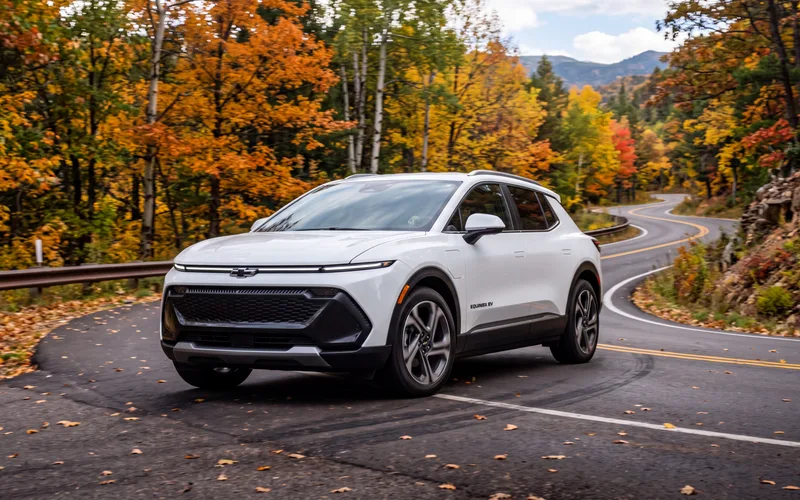 Chevrolet Equinox EVCompact SUVBetter at: Value
Nearly the same EV for roughly $11,500 less, with more range and better resale — the Blazer EV's toughest competitor comes from the same showroom.
Compare 2.74B-
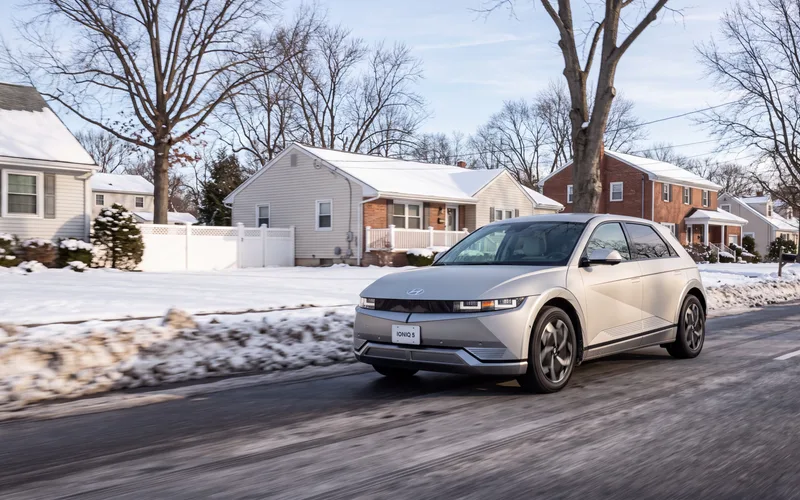 Hyundai Ioniq 5Compact SUVBetter at: Charging speed
800-volt fast charging, a native NACS port, CarPlay/Android Auto and a 5-year basic warranty for thousands less to start.
Compare 2.58C+
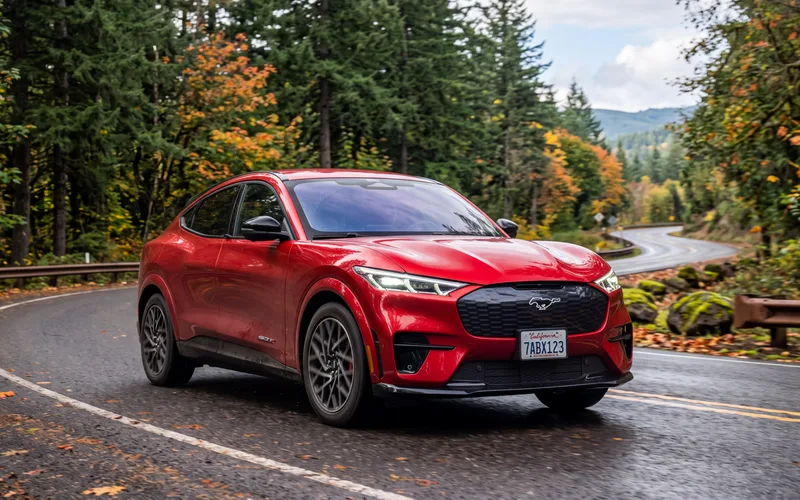 Ford Mustang Mach-ECompact SUVBetter at: Reliability
Same size and mission but with far better reliability scores, stronger resale, phone projection intact, and a more engaging drive.
CompareSubject scores by year
Hover or tap a score to see what moved it versus the year before. A corner mark flags a big swing.
| Year | Performance | Efficiency | Safety | Space | Cost | Reliability | Tech | Use-case | Driving | Value |
|---|---|---|---|---|---|---|---|---|---|---|
| 2026 | 47 | 61 | 80 | 52 | 43 | 58 | 69 | 62 | 64 | 61 |
| 2025 | 52 | 60 | 77 | 50 | 34 | 43 | 70 | 58 | 62 | 67 |
| 2024 | 50 | 59 | 76 | 49 | 28 | 40 | 65 | 56 | 61 | 63 |
Compare two years
Best fit & conditions
Higher scores mean a better fit for that use case. Learn more about use-case fit →
Subject profile
Academic Probation · NHTSA safety recalls
Jan 22, 2026Parking brakeThe rear parking brake wiring harness may become damaged or corroded, resulting in unintended activation of the parking brake or loss of the parking brake function.
Defect
General Motors, LLC (GM) is recalling certain 2024-2025 Chevrolet Blazer EV vehicles that may have been repaired incorrectly under recall 25V433. The rear parking brake wiring harness may become damaged or corroded, resulting in unintended activation of the parking brake or loss of the parking brake function.
Risk
Unintended activation of the parking brake while driving increases the risk of a crash. Loss of the parking brake function while parked can result in a rollaway, increasing the risk of a crash.
Remedy
Dealers will replace the chassis harness, free of charge. Owner notification letters were mailed on February 25, 2026. Owners may contact Chevrolet customer service at 1-800-222-1020. GM's number for this recall is N252532830.
NHTSA campaign 26V031000 ↗Manufacturer no. N25253283020 vehicles potentially affected (all models in the campaign)Owners notified Feb 25, 2026Filed by General Motors, LLCFiled as BLAZER EVJun 25, 2025Parking brakeThe rear parking brake wiring harness may become damaged or corroded, resulting in unintended activation of the parking brake or loss of the parking brake function.
Defect
General Motors, LLC (GM) is recalling certain 2024-2025 Chevrolet Blazer EV vehicles. The rear parking brake wiring harness may become damaged or corroded, resulting in unintended activation of the parking brake or loss of the parking brake function.
Risk
Unintended activation of the parking brake while driving increases the risk of a crash. Loss of the parking brake function while parked can result in a rollaway, increasing the risk of a crash.
Remedy
Dealers will inspect the harness and, if necessary, reroute the harness and install anti-abrasive tape. Any harness that has existing damage will be replaced. Repairs will be performed free of charge. Owner notification letters were mailed on October 1, 2025. Owners may contact Chevrolet customer service at 1-800-222-1020. GM's number for this recall is N252503010.
NHTSA campaign 25V433000 ↗Manufacturer no. N25250301040,233 vehicles potentially affected (all models in the campaign)Owners notified Oct 1, 2025Filed by General Motors, LLCFiled as BLAZER EVOct 2, 2024Latches/locks/linkages: doors: latchThe door strikers were not properly heat-treated, which can cause them to break.
Defect
General Motors, LLC (GM) is recalling certain 2025 Chevrolet Blazer, Blazer EV, and Equinox vehicles. The door strikers were not properly heat-treated, which can cause them to break.
Risk
A broken door striker can cause the door to open unexpectedly, increasing the risk of injury.
Remedy
Dealers will replace all four side door strikers and attachment bolts, free of charge. All affected vehicles are still in dealership inventory and therefore no owner notification letters are expected to be mailed. Owners may call Chevrolet customer service at 1-800-222-1020. GM's number for this recall is N242477131.
NHTSA campaign 24V737000 ↗Manufacturer no. N242477131731 vehicles potentially affected (all models in the campaign)Filed by General Motors, LLCFiled as BLAZER EV
4 recalls on other model years of the Blazer EV (2024, 2026)
Feb 26, 2026Equipment: other: owners/service/other manualGeneral Motors has decided that certain 2027 Chevrolet Bolt EV, 2025-2026 Cadillac OPTIQ, Chevrolet Colorado, Equinox EV, GMC Canyon, 2026 Buick Enclave, Envision, Cadillac CT5, Escalade, Escalade ESV, Escalade IQ, Escalade IQL, LYRIQ, VISTIQ, Chevrolet Blazer EV, Corvette Convertible, Corvette Coupe, Corvette Convertible E-Ray, Equinox, Silverado 1500, 2500, 3500, Silverado EV, Suburban 1500, Tahoe, Traverse, GMC Acadia, Hummer EV Pickup, Hummer EV SUV, Sierra 1500, 2500, 3500, Sierra EV, Terrain, Yukon, and Yukon XL vehicles. The radio may not have been set to the correct status to download the electronic owner's manual during production. As such, these vehicles fail to comply with the requirements of Federal Motor Vehicle Safety Standard number 208, âOccupant Protection.â
Defect
General Motors has decided that certain 2027 Chevrolet Bolt EV, 2025-2026 Cadillac OPTIQ, Chevrolet Colorado, Equinox EV, GMC Canyon, 2026 Buick Enclave, Envision, Cadillac CT5, Escalade, Escalade ESV, Escalade IQ, Escalade IQL, LYRIQ, VISTIQ, Chevrolet Blazer EV, Corvette Convertible, Corvette Coupe, Corvette Convertible E-Ray, Equinox, Silverado 1500, 2500, 3500, Silverado EV, Suburban 1500, Tahoe, Traverse, GMC Acadia, Hummer EV Pickup, Hummer EV SUV, Sierra 1500, 2500, 3500, Sierra EV, Terrain, Yukon, and Yukon XL vehicles. The radio may not have been set to the correct status to download the electronic owner's manual during production. As such, these vehicles fail to comply with the requirements of Federal Motor Vehicle Safety Standard number 208, âOccupant Protection.â
Risk
Without an owner's manual to consult, owners may not know how to safely use and operate the vehicle, increasing the risk of injury in a crash.
Remedy
Dealers will reset the vehicle radio, which will facilitate automatic download of the electronic ownerâs manual, free of charge. Owner notification letters were mailed April 16, 2026. Owners may contact GM customer service at 1-866-467-9700, Chevrolet customer service at 1-800-222-1020 or Cadillac customer service at 1-800-333-4223. The manufacturer's number for this recall is N252540430. Vehicle Identification Numbers (VINs) involved in this recall became searchable on NHTSA.gov on February 26, 2026.
NHTSA campaign 26V114000 ↗Manufacturer no. N2525404305,861 vehicles potentially affected (all models in the campaign)Owners notified Apr 16, 2026Filed by General Motors, LLCFiled as BLAZER EVJun 28, 2024Suspension: front: control arm: lower armThe right front lower control arm may contain a manufacturing defect that can cause it to fracture.
Defect
General Motors, LLC (GM) is recalling certain 2024 Chevrolet Blazer EV vehicles. The right front lower control arm may contain a manufacturing defect that can cause it to fracture.
Risk
A lower control arm fracture can cause loss of vehicle control, increasing the risk of a crash.
Remedy
Dealers will inspect and replace the right front lower control arm as necessary, free of charge. Owner notification letters were mailed July 24, 2024. Owners may contact Chevrolet customer service at 1-800-222-1020. GM's number for this recall is N242448540.
NHTSA campaign 24V487000 ↗Manufacturer no. N24244854083 vehicles potentially affected (all models in the campaign)Owners notified Jul 24, 2024Filed by General Motors, LLCFiled as BLAZER EVMay 9, 2024Electrical system: propulsion system · Electrical system: wiringThe electric motors in the rear drive units may have insufficiently insulated wires that can contact each other, resulting in a loss of drive power.
Defect
General Motors, LLC (GM) is recalling certain 2024 Cadillac Lyriq, Chevrolet Blazer EV, Chevrolet Silverado EV, GMC Hummer EV SUV, and GMC Sierra EV vehicles. The electric motors in the rear drive units may have insufficiently insulated wires that can contact each other, resulting in a loss of drive power.
Risk
A loss of drive power increases the risk of a crash.
Remedy
Dealers will replace the rear drive unit, free of charge. Owner notification letters were mailed May 16, 2024. Owners may contact Chevrolet customer service at 1-800-222-1020; Cadillac customer service at 1-800-458-8006; Hummer customer service at 1-800-732-5493; or GMC customer service at 1-800-462-8782. GM's number for this recall is N242447080.
NHTSA campaign 24V320000 ↗Manufacturer no. N24244708010 vehicles potentially affected (all models in the campaign)Owners notified May 16, 2024Filed by General Motors, LLCFiled as BLAZER EVDec 21, 2023Structure: body: doorThe door strikers may fracture, resulting in the door opening unexpectedly.
Defect
General Motors, LLC (GM) is recalling certain 2024 Chevrolet Blazer, Blazer EV, Equinox, and GMC Terrain vehicles. The door strikers may fracture, resulting in the door opening unexpectedly.
Risk
A door opening while the vehicle is being driven can increasing the risk of injury or a crash.
Remedy
Dealers will replace all four door strikers and attaching bolts, free of charge. Owner notification letters were mailed January 24, 2024. Owners may contact Chevrolet customer service at 1-800-222-1020 and GMC customer service at 1-800-462-8782. GM's number for this recall is N232429911.
NHTSA campaign 23V869000 ↗Manufacturer no. N232429911265 vehicles potentially affected (all models in the campaign)Owners notified Jan 24, 2024Filed by General Motors, LLCFiled as BLAZER EV
Source: NHTSA Office of Defects Investigation recall database, model years 2024–2026. Recalls are listed by model year as the manufacturer filed them; whether a specific car is affected depends on its VIN — check a VIN at nhtsa.gov ↗. NHTSA model names matched to this page: BLAZER EV.
Detailed scoring by subject
1Performance & PowertrainGrades below the middle of the scale.1.51D
Scored on the LT dual-motor eAWD, which Edmunds flags as the most-popular 2025 configuration: 300 hp from the 85 kWh Ultium pack. 2025 is the broadest year the nameplate ever had, spanning a 220 hp front-driver to the 615 hp SS.
355 lb-ft delivered instantly from a standstill is what makes the dual-motor Blazer EV feel stronger in traffic than its horsepower figure implies — a solid but unremarkable number against electric mid-size rivals.
Chevrolet quotes 6.0 seconds for the dual-motor AWD Blazer EV and instrumented dual-motor tests land in the same 6.0–6.3 second window — quick enough to never feel short of thrust, but mid-pack for an electric mid-size SUV.
Nothing to lag or hesitate: linear tip-in, steady midrange pull and a well-calibrated regen system that reviewers single out as one of the car's genuine strengths. Held below the top of the band because the chassis around the powertrain is the weak link — Consumer Reports faults a stiff ride and vague steering, and refinement does not fully match the price.
A single-speed reduction gear has nothing to hunt for, and the driver-selectable one-pedal mode plus the regen-on-demand paddle make low-speed and stop-and-go driving seamless.
The item takes the best rating in any configuration, and for 2025 that is the rear-drive RS at 3,500 lbs — the single model year in which the Blazer EV tows more than a trailer's worth of nothing, since the RWD car was dropped after 2025. The volume LT AWD most buyers take is rated at just 1,500 lbs, and every rating requires the Trailering Provisions package (RPO V92).
Dual-motor eAWD is a roughly $3,000 option on both LT and RS and standard on the SS, so it is orderable across the range and is the configuration most 2025 buyers chose — but it is plain on-road all-wheel drive with no low range, no locking differential and no terrain modes beyond Snow/Ice.
Entirely pavement-oriented: roughly 7.9 inches of clearance over a low, wide battery pack, road tires, no skid plates, no locker, no off-road trim and no terrain modes. AWD here is for weather and a gravel driveway, nothing more.
One fuel type only — no gas, hybrid or PHEV version of this nameplate — so the ceiling here is low by definition. Within the EV lineup, though, 2025 is the widest the car ever got: four distinct outputs (220 hp FWD, 300 hp eAWD, 365 hp RWD, 615 hp SS) across two battery sizes and three drive layouts, the only year all of them were on sale at once.
2Efficiency & RangeMid-pack among this car's ten categories.2.01C
Scored on the dual-motor eAWD configuration Edmunds identifies as the most-popular 2025 trim: 95 MPGe combined, or 36 kWh/100 mi. Graded against other electric SUVs that is mid-pack at best — the 400-volt Ultium pack in a tall, heavy mid-size body gives away real ground to the aero-led Teslas and the 800-volt Korean cars, and the front-drive Blazer is nearly 10 percent more efficient than the AWD most buyers actually order.
City is where an EV should shine — regenerative braking with one-pedal driving and no idle draw — and 102 MPGe is respectable without being competitive with the class leaders, a straightforward consequence of moving 5,300 pounds of crossover.
A tall crossover bleeds efficiency at sustained speed, and the 15 MPGe gap between the city and highway cycles is exactly why real-world interstate range falls short of the 283-mile sticker. Against the electric-SUV highway band it is an average-to-slightly-above-average showing.
283 miles on the volume dual-motor car is a full day of local driving but a short interstate leg, and it sits below the middle of the electric-SUV band. The headline 334-mile figure belongs to the rear-drive RS on the big 102 kWh pack — a trim that cost $8,000 more and was deleted after this model year.
150 kW is the clearest weakness of the Blazer EV's 400-volt Ultium architecture and lands in the bottom third of the band — roughly half what an 800-volt Ioniq 5 or EV6 accepts, and below a Model Y. Only the 102 kWh packs reach 190 kW, and neither of those is the volume trim.
Roughly 39 minutes for 10–80% is a poor result against the 17–45 minute band and follows directly from the 150 kW ceiling plus an early taper — the rate falls well before 80 percent. On a road trip that is a sit-down meal, not the 18–20 minute stop an 800-volt rival allows.
At 36 kWh/100 mi the AWD Blazer EV draws about 5,400 kWh a year at EPA's 15,000-mile standard — roughly a third of what the gasoline Blazer costs to feed, and a strong showing in absolute dollars even though it is only mid-pack among EVs. Owners on an overnight time-of-use rate will beat it; anyone leaning on public DC fast charging will not come close.
No fuel grade to think about at all, and an 11.5 kW onboard AC charger makes an overnight Level 2 refill straightforward for anyone with a garage — the cheapest energy story in the segment. Marked down from the top of the band because 2025 still ships a CCS1 port, so Tesla Supercharger access means buying and carrying GM's NACS DC adapter (about $225), and the dual-level charge cord that became standard for 2026 was still a paid option this year. Charging speed itself is scored at 2.2.4/2.2.5 and is not double-counted here.
3SafetyThe Blazer EV's best-graded category.3.25B+
NHTSA rated the 2025 Blazer EV RWD and AWD at 5 stars overall, with 5 stars frontal and 5 stars side; rollover is 5 stars RWD and 4 stars AWD. The FWD configuration was frontal- and side-tested (5 stars each) but carries no rollover test and therefore no overall score.
Good in the updated moderate overlap front, updated side, and driver-side small overlap tests, but Acceptable in the passenger-side small overlap — which is what keeps it off the Top Safety Pick list despite otherwise strong structure.
Chevy Safety Assist is standard on every trim (automatic emergency braking with front pedestrian braking, forward collision alert, lane keep assist with lane departure warning, following distance indicator, IntelliBeam auto high beams), and unusually for GM the Blazer EV also makes side blind zone alert with lane change alert, rear cross traffic alert, rear park assist and rear automatic braking standard. Adaptive cruise control is the gap — it is optional across the lineup rather than standard on any trim.
Earns Good — the top result — in the tougher updated vehicle-to-vehicle front crash prevention test, but only Acceptable in pedestrian front crash prevention, so nighttime and pedestrian scenarios are the weaker half of the system.
Lane change alert with side blind zone alert and rear cross traffic alert are standard on every trim — better than most mid-size rivals that lock blind-spot monitoring behind a package — but the standard coverage is alert-only. Rear cross traffic braking, HD Surround Vision and the rear camera mirror come with the Driver Confidence package; there is no safe-exit alert.
Lane keep assist with lane departure warning is standard and IIHS rates the lane departure warning/prevention hardware as fitted to all trims, but true lane centering only arrives with the optional Super Cruise package — the standard system is a corrective nudge rather than continuous centering.
When fitted, GM's full-speed-range adaptive cruise is smooth and well integrated with Super Cruise, and reviewers rate the combined highway behavior highly. The penalty is availability: ACC is not standard on any 2025 Blazer EV trim, so the volume LT and RS leave the showroom on plain cruise control unless the Driver Confidence or Super Cruise package is ordered.
Super Cruise — the most mature hands-free highway system on sale, with driver eye-tracking and automatic lane changes over GM's mapped-road network — is standard on the SS and optional on LT and RS AWD. It is held short of the top of the band by configuration gaps (not offered on RS RWD, late availability early in the 2025 model year) and by reviewers noting disengagements on unmapped stretches of otherwise major highways.
One headlight variant across the entire range — LED projectors with high-beam assist but no curve-adaptive function — and IIHS rates it Acceptable, not Good. Consistent across trims, so there is no upgrade to buy, but it is the rating that most directly caps the vehicle's crash-avoidance standing.
The coupe-ish roofline, very thick windshield pillars, small third side window and heavy rear pillars produce real blind zones, particularly over the rear three-quarter. Camera compensation is excellent — the 360-degree system and digital rear camera mirror display crisply on the 17.7-inch screen — but both are optional rather than standard on the volume trims, so the as-delivered car relies on sightlines that reviewers consistently criticize.
IIHS rates LATCH ease of use Good — a rating fewer than half of vehicles earn — and the Blazer EV's 121.8-inch wheelbase gives it one of the roomier second rows in the mid-size class, with wide rear door openings from the flat-floor EV platform.
4Space & ComfortOne of the Blazer EV's weakest categories.1.34D
The Blazer EV is a strictly two-row, five-seat crossover across the entire 2025 range — LT, RS and SS alike — which puts it at the bottom of an SUV band that runs to eight.
Nearly 41 inches over the front seats is generous for a mid-size crossover and reflects the flat Ultium floor letting Chevrolet build a tall cabin on a low roofline.
44.2 inches is at the very top of the SUV band and is the single best interior dimension the Blazer EV posts — reviewers consistently describe the front of the cabin as genuinely spacious.
38.1 inches is mid-band — adequate for adults but trimmed by the sloping, coupe-influenced roofline that also costs the car cargo height.
The 121.8-inch wheelbase — long for the class — buys 38.9 inches of rear legroom, comfortably above the segment midpoint and roomy enough to seat three across on a flat floor.
There is no third row in any 2025 Blazer EV configuration, and none has ever been offered on the nameplate — a hard structural limit, not a trim-level gap, so buyers needing six or seven seats have to look at an EV9 or a Vistiq.
This is the Blazer EV's worst practical number and reviewers say so repeatedly: 192 inches of exterior length yields only 25.5 cubic feet behind the rear seat, bottom-of-band for a mid-size SUV and less than several compact crossovers.
Folding the rear seat only gets the Blazer EV to 59.1 cubic feet, near the floor of a band that runs to 100 — the low roof and the raised load floor over the rear drive unit both work against it, and there is no front trunk to recover the loss.
Competent but unimaginative: a deep center console bin with a wireless charging shelf, a usable under-floor compartment beneath the cargo deck, big door pockets and a flat rear floor from the skateboard battery. Nothing clever offsets the missing frunk, and there is no onboard AC outlet or vehicle-to-load power the way rivals increasingly offer.
Testers split on these seats and the split is consistent: firm cushioning that holds up fine over a long drive, but flat shapes with almost no lateral bolstering. Consumer Reports goes further and calls them outright unsupportive; the power adjustment range (8-way driver, 6-way passenger) is adequate rather than generous.
The weakest link in the chassis. Body control over sweeping bends is genuinely good, but the suspension is tuned firm and transmits sharp impacts with an audible clunk — worse on the RS's 21-inch low-profile tires than on the LT's 19s, and heard across multiple independent tests.
Near the top of the segment and the Blazer EV's clearest comfort win: no engine to mask, and Chevrolet sealed the cabin well enough that wind and road noise stay faint at interstate speed. Held short of the 90s only because the same suspension that thumps over potholes lets that impact noise into an otherwise silent cabin.
Genuinely rich for a mainstream EV and, unusually, most of it starts at the volume trim: dual-zone automatic climate, heated front seats and a heated steering wheel, second-row vents, remote start with app-based pre-conditioning that uses grid power while plugged in. Ventilated front seats, heated outboard rear seats and the panoramic roof step up to RS and SS.
5Cost of OwnershipThe Blazer EV's lowest-graded category.0.20F
2025 is the year the Blazer EV got cheap to get into: a new single-motor front-drive LT opened the range at $44,600 plus $1,395 freight, cutting $4,200 off the 2024 entry price. Against the SUV band that is a premium sticker, but it is the most affordable the nameplate has ever been.
The volume configuration is the 85 kWh dual-motor eAWD car this scorecard is scored on — the same one cat2 grades at 95 MPGe — split between the LT and the better-selling RS, which is where most Blazer EV inventory has sat since launch. Blending the two lands just above $50,000 delivered, roughly $15,000 more than a similarly equipped Equinox EV from the same showroom.
No oil, plugs, belts or exhaust work keeps scheduled service light — a tire rotation and a cabin filter is most of it — but the Blazer EV gives much of that back in unscheduled cost, and it runs about $1,500 more over five years than the smaller Equinox EV on the same estimator. Big, heavy, 21- and 22-inch-shod EVs eat tires and brake hardware, and GM's Ultium software history adds real shop time.
This is the number that defines the Blazer EV's ownership case and it is ugly: roughly two-thirds of the sticker is gone in five years, worse than the already-soft mainstream-EV norm and far below the 40–70% band healthy SUVs occupy. The 2024 stop-sale and software recalls poisoned early-model confidence, and the $7,500 credit that made new cars cheap simply reset used values lower. One partial consolation: a buyer who took the credit at the point of sale paid well under MSRP, so the real cash loss is smaller than the percentage of sticker suggests.
GM's standard 3/36 bumper-to-bumper is the floor of the industry band and unchanged for 2025, with none of the extended coverage Hyundai and Kia use to reassure EV buyers.
The electric propulsion warranty is the meaningful one on an EV, and GM's 8 yr / 100,000 mi term with an explicit 75%-capacity replacement threshold matches the federal minimum and the segment norm — solid, not a differentiator.
Chevrolet Complete Care buys a 2025 Blazer EV owner exactly one covered visit in the first 12 months — on an EV that is a tire rotation and a multi-point inspection — plus 5 yr / 60,000 mi roadside assistance and courtesy transportation, with EV tow coverage stretched to 8 yr / 100,000 mi, and OnStar Basics standing for 8 years on 2025 vehicles. The extended EV tow term and the long connected-services runway are genuine, but there is no bundled Level 2 charger, no installation allowance and no public-charging credit on the 2025 car, which leaves it well short of Toyota's bZ4X (2 yr / 25,000 mi free maintenance plus complimentary charging, 75–82) and Hyundai's Ioniq 5 (3 yr / 36,000 mi included, 88). Super Cruise arrives with a three-year subscription but is a $3,255 option, not a perk.
$50,500 volume-trim price minus its estimated resale value after 5 years (34% retained, or about $17,170) leaves about $33,330 in depreciation. Add the projected $5,803 in 5-year maintenance and repairs, and owning this vehicle for 5 years costs about $39,133 in total.
6Reliability & QualityOne of the Blazer EV's weakest categories.0.86F
This is the number that sinks the category. Consumer Reports predicts 19 out of 100 for the Blazer EV and names it one of the least reliable models in the entire study — not merely below average for an EV, but near the bottom of every vehicle CR tracks. 2025 is the second year of the generation that launched into a December 2023 stop-sale, and CR explicitly advises reliability-minded buyers away from newly redesigned Ultium-platform models. The one genuinely encouraging signal is that later-build cars with the full software campaign applied report far fewer faults than the 2024 launch cars, but a second-model-year improvement does not yet show up in survey data.
Chevrolet the brand is doing better than the Blazer EV suggests: it finished fifth in the J.D. Power 2025 Vehicle Dependability Study at 169 PP100, comfortably ahead of the 202 PP100 industry average and tied with Cadillac. But the VDS measures three-year-old 2022 vehicles, which is to say Chevrolet's gas trucks and SUVs — none of GM's Ultium EVs are old enough to appear. Consumer Reports' brand ranking puts Chevrolet mid-pack to below average, with recurring infotainment and electrical/software complaints, which is precisely the failure mode the Blazer EV exhibits. Mid-pack is the honest read.
Seven NHTSA campaigns have hit this generation in roughly two years, and three of them reach the 2025 model year. The big one is 25V433 — 40,233 vehicles whose rear parking brake wiring harness can chafe or corrode and either engage the brake while driving or fail to hold the car parked; it was serious enough that GM had to issue a second campaign, 26V031, for cars repaired incorrectly the first time. Add a 2025-only door-striker recall for improperly heat-treated parts, a 2024 rear-drive-unit replacement for under-insulated motor wiring, and the December 2023 stop-sale that pulled the car off sale for roughly three months over software and DC-fast-charge failures, followed by a long trail of TSBs and OTA builds through 2024–2025. That is systemic launch trouble, not routine recall activity.
The Ultium pack and motors are too new to have a high-mileage record, and what record exists is mixed. In the platform's favor, most field failures trace to software, control modules and thermal-management plumbing rather than to cell or pack degradation — owners report 'Service High Voltage System' warnings caused by refrigerant pressure sensors and leaking battery coolant lines, which are annoying but not pack failures. Against it, GM did have to replace rear drive units outright under 24V320 for insufficiently insulated motor wiring, and the 2025 car's 400V/800V dual-chemistry architecture is a first-generation design with no decade-long data behind it. GM's 8-year/100,000-mile coverage with a 70% capacity floor is the backstop, and it is the segment minimum, not a vote of confidence.
Materials are the Blazer EV's quiet win and the one place it clearly out-earns its Chevrolet badge. Reviewers consistently describe a padded dash, doors and center console that read premium for a roughly $50,000 mainstream EV, with well-damped round vents, Evotex simulated leather and perforated suede on the volume trims, and a 17.7-inch screen that looks crisp rather than tacked on. It stops short of luxury — there are hard plastics low in the cabin and the switchgear is shared-parts GM — so this lands above the segment norm without threatening a Lexus or Genesis.
Physical assembly is not the complaint — reviewers do not flag panel gaps, rattles or misalignment, and the Ramos Arizpe cars come together tidily. What drags initial quality down is everything electronic plus a handful of genuine assembly misses: the stop-sale-era screen and charging failures, and a run of 2024–2025 cars with the interior microphone installed 180 degrees backwards and partially blocked by the overhead console, so callers heard the owner through the HVAC ducts. Two of the seven recalls are also build-process defects — door strikers that were not properly heat-treated, including a 2025-model-year campaign caught while cars were still in dealer inventory. Solid hardware, scattered and sometimes embarrassing execution errors.
Coverage is a real strength: Chevrolet runs one of the densest dealer networks in the country, roughly 2,900 US stores, so no Blazer EV owner is far from a franchised service bay — a meaningful advantage over direct-sales EV brands where a body shop appointment can mean a long tow. Chevrolet also ranked highest in the truck segment of the J.D. Power 2025 Customer Service Index at 877. The problem is EV-specific: J.D. Power finds mass-market BEV owners 51 points less satisfied with dealer service than ICE owners, blaming the shortage of trained EV technicians and frontline staff, and the Blazer EV's own poor showing in the 2026 EV Experience Study reflects that. Wide net, uneven competence behind it.
GM's parts distribution is enormous and routine wear items are easy to source, but almost nothing else about repairing this car is cheap. EVs cost roughly 30% more to repair after a collision than gas equivalents, up to 90% of EV repairs use OEM-only parts because the aftermarket has not caught up on a platform this new, mechanical labor hours run close to double a gas vehicle's once high-voltage de-energization and pack removal are involved, and comparatively few body shops hold HV certification — so the labor that is available is scarce and billed accordingly. Even light rear-end damage can trigger a battery safety inspection. The knock-on shows up in premiums, which run 15–25% above a gas Blazer's. KBB's own five-year estimate has the Blazer EV at $3,143 in repairs against the smaller Equinox EV's $1,955.
7Technology & InfotainmentOne of the Blazer EV's strongest categories.2.73B-
At 17.7 inches the Blazer EV carries the largest standard display in the mid-size segment and clears the top of the SUV band outright, with no trim walk to reach it — the base LT gets the same screen as the $62,000 SS.
By 2025 this is a good system: fast Google-based software, a logical tile layout, clear icons, and — importantly — retained physical knobs for volume and climate rather than burying them. It scores above the segment median but not with the leaders, because everything now routes through one screen and the 2024 launch software's stability problems are recent enough to still colour reviews.
Neither Apple CarPlay nor Android Auto is offered in any form — wired or wireless, on any trim. This is GM's deliberate architectural choice for its EVs, not an equipment gap, and it is the single most frequently cited complaint in 2025 Blazer EV reviews and owner feedback.
The flip side of dropping phone projection: the native stack is Google's own, so the voice assistant is Google Assistant and the maps are Google Maps running on the dashboard with live traffic and EV route planning that reads the car's own state of charge. This is as good as built-in navigation and voice control get in a mainstream vehicle, and it is standard rather than a nav-package upcharge.
Mid-pack. The LT's standard six-speaker system is unremarkable, and the step up is an 8-speaker Bose setup on RS and SS — a respectable branded system but a modest one by count and never a match for the 14- to 20-speaker flagship systems rivals offer at this price.
An 11-inch reconfigurable digital cluster is standard from the base LT up — full digital, crisp, and configurable for EV-specific readouts like energy flow and range — with no analog variant anywhere in the range.
Full-vehicle over-the-air updates, not maps-only: GM's Ultifi-era software stack pushes propulsion, charging, ADAS and infotainment modules over the air, and the 2025 Blazer EV demonstrably received them — the 2024 car's launch software defects were repaired this way rather than by recall visits.
The myChevrolet app covers the essentials well for an EV — remote lock/unlock, remote start with climate pre-conditioning, vehicle locate, charge status, charge scheduling and public-charger search — and three years of OnStar digital services are bundled. It falls short of the best because the richer remote functions are subscription-gated once the included term lapses, and the app has a mixed reliability reputation among owners.
Port provision is genuinely strong — six USB-C ports spread across both rows, so nobody is sharing — and wireless phone charging is available from the LT's Comfort & Convenience package and standard on RS. What keeps it out of the top band is the absence of any household-style power: no 120V outlet in the cabin or cargo area, and no vehicle-to-load export on the 2025 car.
Keyless entry with push-button start and remote start are standard from the LT, and the myChevrolet app doubles as a phone key for lock/unlock and start. The hands-free power liftgate is the one item that costs extra on the base car — the liftgate itself is powered on every trim, but kick-activation arrives with the Comfort & Convenience package.
One of the Blazer EV's better tech showings: HD Surround Vision — GM's high-resolution four-camera 360-degree system with a bird's-eye view — is standard equipment on the LT rather than a top-trim exclusive, backed by front and rear park assist. There is no fully automated self-parking function, which is what holds it below the 90s.
A head-up display exists on the 2025 Blazer EV but only on the SS — the $62,000 range-topper — so it is unreachable from the LT and RS trims the overwhelming majority of buyers actually order. Available, but not on the volume trim.
8Use-Case FitMid-pack among this car's ten categories.1.90C-
The seating side of family duty is handled well — IIHS rates the LATCH hardware Good, the long 121.8-inch wheelbase gives 38.9 inches of rear legroom with a flat floor that makes three-across workable, and the rear doors open wide onto a low sill. The cargo side is where it stumbles: 25.5 cubic feet behind the second row is tight for a stroller plus a week's shopping, and there is no frunk to absorb the overflow.
Strong where it matters to a family buying the cheap trim: five NHTSA stars overall, and Chevy Safety Assist plus blind-spot monitoring and rear cross-traffic alert are standard on the base LT rather than packaged. It misses the top band because IIHS withheld Top Safety Pick — Acceptable in passenger-side small overlap, Acceptable headlights — and true lane centering only comes with optional Super Cruise.
Inside the cabin it is a good long-haul family car — very quiet, roomy in both rows, rear air vents, USB-C ports for every seat, available heated rear seats. The trip itself is the problem: 283 EPA miles in the volume dual-motor car, a 150 kW charging ceiling that needs roughly 39 minutes for 10–80%, and only 25.5 cubic feet of luggage space once four or five people are aboard.
This is the Blazer EV at its best. Instant torque with linear tip-in, a well-calibrated one-pedal mode plus a regen-on-demand paddle that makes stop-and-go effortless, a near-silent powertrain and standard surround-view cameras for the daily parking scramble. Marked down for the firm ride over broken city pavement and for the thick pillars that cut outward visibility.
About $800 a year in electricity at EPA's 15,000-mile standard — roughly a third of what the gasoline Blazer costs to feed — and an EV service schedule that is largely tire rotations and a cabin filter. It is not the cheapest EV per mile (95 MPGe combined is mid-pack for an electric SUV), but against the broad field of commuting vehicles the running cost is excellent.
A big, heavy vehicle to thread through a city: 192.2 inches long, 78 inches wide and over 5,300 pounds, with genuinely poor rear three-quarter visibility. The 39.7-foot turning circle is only average, and standard HD Surround Vision is doing most of the work that keeps this a manageable rather than awkward urban car.
Not meaningfully a work vehicle. The volume dual-motor trim tows just 1,500 pounds — and only with the Trailering Provisions package — payload runs roughly 1,120–1,680 pounds, there is no bed, and 25.5 cubic feet behind the seats is less usable cargo than many compact crossovers. The 3,500-pound rating belongs to the rear-drive RS alone.
A second-year nameplate on a still-young Ultium platform with a rough launch behind it — the 2024 car's software defects forced a stop-sale — so there is no track record of surviving hard use. The one point in its favour is that GM does build a Police Pursuit Vehicle version of the Blazer EV, which implies the chassis and cooling take fleet duty, and early police feedback has been positive.
Thin provisions for work. No onboard 120V outlet and no vehicle-to-load export, so it cannot run tools; no bed, no washable surfaces, cargo tie-downs and an under-floor bin are the extent of it. The upfit ecosystem that does exist is the police/fleet channel rather than a trades one, and the GM Accessories catalog is consumer-oriented — cross rails, cargo liners, a hitch.
Comfortable and quiet at a cruise, with Super Cruise — the most mature hands-free highway system sold — available to take the fatigue out of interstate miles. But the endurance numbers undercut it: 283 miles on the volume trim, a 150 kW ceiling that turns a 10–80% stop into about 39 minutes, and flat seats that Consumer Reports calls unsupportive over distance.
Gravel-road competent and nothing beyond. Dual-motor eAWD and roof rails cover a trailhead or a ski weekend, but 7.9 inches of clearance over a low battery pack, road tires, no skid plates, no terrain modes beyond Snow/Ice, a 1,500-pound tow rating and no onboard power to run a camp setup all cap it well short of a genuine adventure enabler.
The flexibility is there — 60/40 split-folding rear seat onto a nearly flat load floor, an under-floor compartment, a power liftgate on every trim, roof rails with an OEM cross-rail package, and a hitch available for a bike or cargo carrier. The volume is not: 25.5 cubic feet behind the seats and 59.1 with them folded means bulky gear goes on the roof, and there is no frunk for charging cables.
9Driving ExperienceMid-pack among this car's ten categories.2.19C
Secure and well-tied-down but not agile. The low-mounted battery and a firm suspension keep body roll genuinely well controlled through a corner sequence, yet at over 5,300 pounds the car never disguises its mass, and reviewers are unanimous that it lacks the interest of a Mustang Mach-E or an Ioniq 5.
The most consistently criticized single element of how this car drives. Reviewers describe the rack as slow and artificial, with weight that is reasonably judged but essentially no information about what the front tires are doing — Consumer Reports calls it outright vague.
Split verdict that lands below average. The regenerative blending is genuinely good — the transition to friction braking is seamless and the one-pedal calibration is a highlight — but Consumer Reports measured panic stops longer than most rivals at its test track, and long stopping distances on a two-and-a-half-ton family SUV are a real safety-relevant shortfall. Only the SS, with its Brembo front brakes, escapes it.
There is nothing here to hesitate or shift: linear tip-in from rest, steady midrange pull from the 355 lb-ft dual-motor setup, and a regen system with a selectable one-pedal mode and a regen-on-demand paddle that reviewers single out as properly calibrated rather than grabby.
Effectively silent under load — no motor whine reported at any speed, no vibration through the wheel or pedals, and the absence of an engine is what makes the cabin one of the quietest in the class. Not a perfect score only because the suspension lets impact noise into an otherwise still cabin, which reviewers do hear as unrefinement.
39.7 feet is the price of a 121.8-inch wheelbase — wide for a mid-size crossover and in the bottom third of the SUV band, which is why parking-lot manoeuvres lean so heavily on the standard surround-view cameras.
Good fundamentals — a high commanding seating position, 8-way power driver's seat, and Chevrolet's decision to keep physical knobs for volume and climate instead of burying them in the 17.7-inch screen. Held back by two real faults: flat seats with almost no bolstering, and thick pillars with a small rear side window that produce genuine blind zones over the rear three-quarter.
Pleasant and forgettable in the trim most people buy. The dual-motor LT/RS is quick enough at roughly six seconds to 60 but numb through the wheel and firm without being rewarding, and reviewers reach for a Mach-E when they want an electric crossover that entertains. The 615-hp SS is a different and genuinely engaging car — but it is the $62,000 range-topper, not the configuration being scored.
10Value & Market PositionOne of the Blazer EV's strongest categories.2.51C+
Every 2025 Blazer EV, LT included, ships the segment's largest standard screen pairing — a 17.7-inch center display and 11-inch driver cluster running Google built-in — alongside the full Chevy Safety Assist suite, adaptive cruise, an 11.5 kW onboard charger, remote start and a dual-level portable charge cord, with the RS adding heated and ventilated front seats, a heated wheel, power liftgate and power front seats. It lands mid-pack rather than high because the content is normal for the money once the price climbs past $48,000, and because GM ships no Apple CarPlay or Android Auto on its EVs at any trim — every direct rival includes both.
Value is the Blazer EV's most consistently criticized trait and the reason it trails the class. Around $49,000–$54,000 delivered buys 288 hp and 283 EPA miles in the dual-motor car — roughly $15,000 more than an Equinox EV from the same showroom that goes 319 miles — and rivals at the price offer quicker charging, 800-volt architecture or both. The $7,500 federal credit applied at the point of sale through September 2025 papered over much of that gap for anyone who bought inside the window, which is the only reason this clears the low 50s.
2025 gave the Blazer EV a genuinely unusual range: LT in front-drive or eAWD, RS in front-, rear- or all-wheel drive, and a 615-hp SS, across two battery sizes (85 and 102 kWh) and a $46,000-to-$62,000 span. It is one of very few vehicles on sale offered in FWD, RWD and AWD at once, and the ladder is well spaced — the shortfall is only that the cheapest trims are also the slowest-charging and that option packaging forces Super Cruise into costly bundles.
The Blazer EV sells steadily but never led anything: 22,637 US deliveries in calendar 2025, down 2.1% year over year, running behind the Ioniq 5, Prologue, Mustang Mach-E and ID.4 and ahead of only the EV6 among direct rivals — and behind its own smaller sibling by a factor of more than two. Quarterly volume built through the year and then fell off a cliff to 1,812 units in Q4 once the federal credit expired.
Chevrolet is a neutral mainstream brand — serviceable everywhere, no loyalty halo — and its 2025 EV push genuinely lifted electric credibility, carrying it to clear #2 US EV brand behind Tesla. The Blazer EV specifically carries more baggage than the badge does: the late-2023 stop-sale over Ultium software defects still colors the nameplate's reputation, Ultium-era residuals are weak, and GM's subsequent EV retrenchment leaves continuity questions for anyone planning to hold the car five years.
Scored on buyer benefit, 2025 was close to the best the market offered. The $7,500 federal credit was applied at the dealer for nearly the whole selling season, GM layered interest-free financing on month after month, put $7,500 of Ultium Promise bonus cash on units that did not qualify for the credit, and stacked Costco and first-responder allowances on top. It falls just short of the ceiling only because the sheer depth of it signals the weak demand the sales figures confirm.
2025 is the second year of a nameplate launched for model year 2024 on GM's current Ultium/BEV3 architecture, and it is emphatically a change year rather than a carry-over: front-wheel drive added at the bottom, a 102 kWh rear-drive RS added in the middle, a 615-hp SS added at the top, more power and range across the board, Super Cruise extended to the LT, and the entry price cut $4,200. Nothing is queued to replace it, and the only visibly dated element is the CCS1 inlet, which gives way to NACS for 2027.
Reviewers like the Blazer EV without ever picking it: Kelley Blue Book gave it a 4.6 expert rating and #4 among Best Electric SUVs of 2025, US News scores it 8.1 but ranks it well down the electric-SUV field, and Edmunds recommends the RS while calling out the value. Consumer Reports is the sharpest dissent — stiff ride, lackluster steering, long braking distances, flat seats, no CarPlay. It has won no major award and no comparison test, and although it took a Good rating in the IIHS moderate-overlap test it earned no Top Safety Pick.