
The verdict
A mixed-report mid-size suv, strong on safety and held back by ownership.
The 2026 Blazer EV is a quiet, comfortable, good-looking electric crossover with class-leading screen real estate and a genuinely cheap energy bill — about $750 a year at 15,000 miles versus roughly three times that for the gas Blazer. But it asks $46,495 to start and gives back a lot for the money: only 25.5 cu ft of cargo space (the gas Blazer has 30.5), a 1,500-lb tow rating, no Apple CarPlay or Android Auto, below-average reliability marks, and the worst depreciation in its class at roughly 38% of value retained after five years. Buy it with a home charger, heavy dealer incentives, and eyes open — or lease it, which is what the 1.9% APR and ~$529/month offers are quietly telling you. Note that the 2027 car arrives in late 2026 with a native Tesla-style NACS charge port, which makes a 2026 a deliberate discount play rather than a forward-looking one.
Jump to scoresStrengths
- Cheap to fuel, and it isn't close
- A quiet, supple highway cruiser
- Super Cruise and a deep standard safety list
What holds it back
- Depreciation is brutal — the single worst thing about owning one
- Less cargo room than the gas Blazer it shares a name with
- Reliability and recall history you can't ignore
Top alternatives
Cars shoppers cross-shop with the Chevrolet Blazer EV 2.06C
2.06C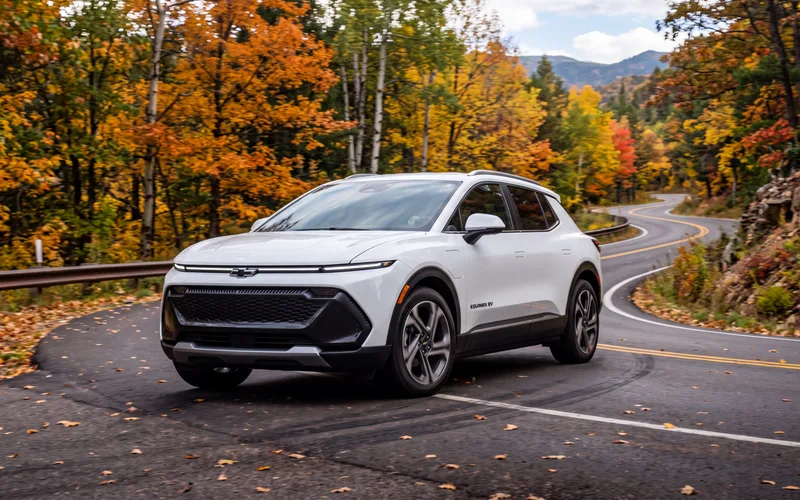 Chevrolet Equinox EVCompact SUVBetter at: Value
Nearly the same EV for roughly $11,500 less, with more range and better resale — the Blazer EV's toughest competitor comes from the same showroom.
Compare 2.74B-
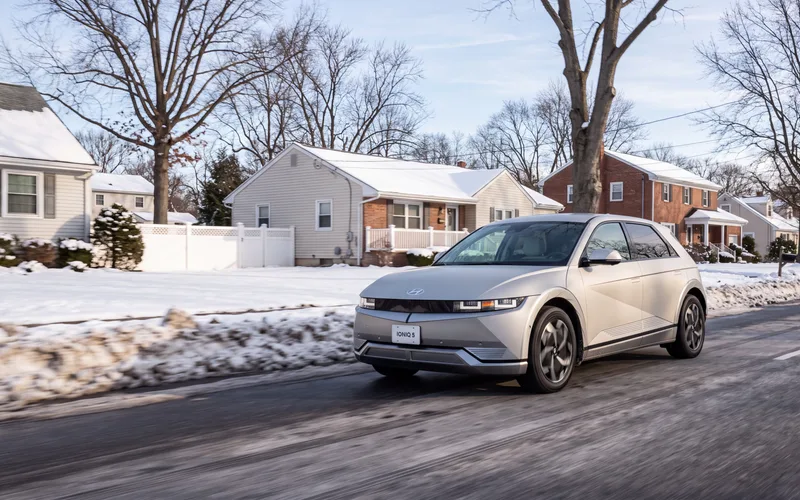 Hyundai Ioniq 5Compact SUVBetter at: Charging speed
800-volt fast charging, a native NACS port, CarPlay/Android Auto and a 5-year basic warranty for thousands less to start.
Compare 2.58C+
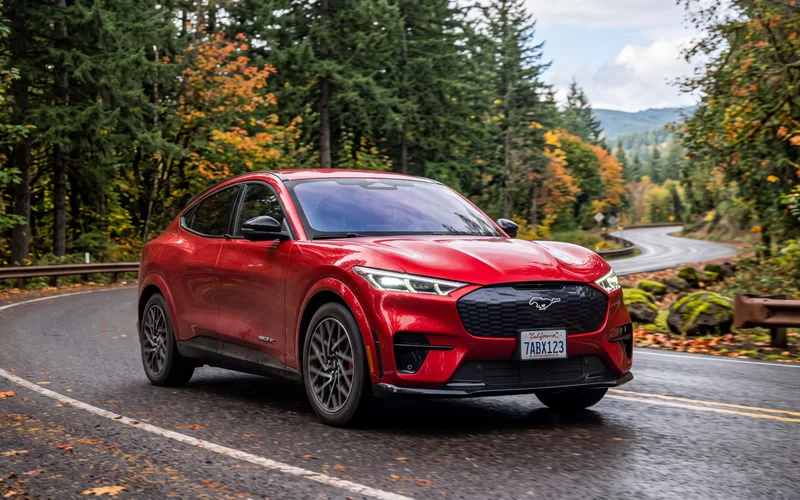 Ford Mustang Mach-ECompact SUVBetter at: Reliability
Same size and mission but with far better reliability scores, stronger resale, phone projection intact, and a more engaging drive.
CompareSubject scores by year
Hover or tap a score to see what moved it versus the year before. A corner mark flags a big swing.
| Year | Performance | Efficiency | Safety | Space | Cost | Reliability | Tech | Use-case | Driving | Value |
|---|---|---|---|---|---|---|---|---|---|---|
| 2026 | 47 | 61 | 80 | 52 | 43 | 58 | 69 | 62 | 64 | 61 |
| 2025 | 52 | 60 | 77 | 50 | 34 | 43 | 70 | 58 | 62 | 67 |
| 2024 | 50 | 59 | 76 | 49 | 28 | 40 | 65 | 56 | 61 | 63 |
Compare two years
Best fit & conditions
Higher scores mean a better fit for that use case. Learn more about use-case fit →
Subject profile
Academic Probation · NHTSA safety recalls
Feb 26, 2026Equipment: other: owners/service/other manualGeneral Motors has decided that certain 2027 Chevrolet Bolt EV, 2025-2026 Cadillac OPTIQ, Chevrolet Colorado, Equinox EV, GMC Canyon, 2026 Buick Enclave, Envision, Cadillac CT5, Escalade, Escalade ESV, Escalade IQ, Escalade IQL, LYRIQ, VISTIQ, Chevrolet Blazer EV, Corvette Convertible, Corvette Coupe, Corvette Convertible E-Ray, Equinox, Silverado 1500, 2500, 3500, Silverado EV, Suburban 1500, Tahoe, Traverse, GMC Acadia, Hummer EV Pickup, Hummer EV SUV, Sierra 1500, 2500, 3500, Sierra EV, Terrain, Yukon, and Yukon XL vehicles. The radio may not have been set to the correct status to download the electronic owner's manual during production. As such, these vehicles fail to comply with the requirements of Federal Motor Vehicle Safety Standard number 208, âOccupant Protection.â
Defect
General Motors has decided that certain 2027 Chevrolet Bolt EV, 2025-2026 Cadillac OPTIQ, Chevrolet Colorado, Equinox EV, GMC Canyon, 2026 Buick Enclave, Envision, Cadillac CT5, Escalade, Escalade ESV, Escalade IQ, Escalade IQL, LYRIQ, VISTIQ, Chevrolet Blazer EV, Corvette Convertible, Corvette Coupe, Corvette Convertible E-Ray, Equinox, Silverado 1500, 2500, 3500, Silverado EV, Suburban 1500, Tahoe, Traverse, GMC Acadia, Hummer EV Pickup, Hummer EV SUV, Sierra 1500, 2500, 3500, Sierra EV, Terrain, Yukon, and Yukon XL vehicles. The radio may not have been set to the correct status to download the electronic owner's manual during production. As such, these vehicles fail to comply with the requirements of Federal Motor Vehicle Safety Standard number 208, âOccupant Protection.â
Risk
Without an owner's manual to consult, owners may not know how to safely use and operate the vehicle, increasing the risk of injury in a crash.
Remedy
Dealers will reset the vehicle radio, which will facilitate automatic download of the electronic ownerâs manual, free of charge. Owner notification letters were mailed April 16, 2026. Owners may contact GM customer service at 1-866-467-9700, Chevrolet customer service at 1-800-222-1020 or Cadillac customer service at 1-800-333-4223. The manufacturer's number for this recall is N252540430. Vehicle Identification Numbers (VINs) involved in this recall became searchable on NHTSA.gov on February 26, 2026.
NHTSA campaign 26V114000 ↗Manufacturer no. N2525404305,861 vehicles potentially affected (all models in the campaign)Owners notified Apr 16, 2026Filed by General Motors, LLCFiled as BLAZER EV
6 recalls on other model years of the Blazer EV (2024–2025)
Jan 22, 2026Parking brakeThe rear parking brake wiring harness may become damaged or corroded, resulting in unintended activation of the parking brake or loss of the parking brake function.
Defect
General Motors, LLC (GM) is recalling certain 2024-2025 Chevrolet Blazer EV vehicles that may have been repaired incorrectly under recall 25V433. The rear parking brake wiring harness may become damaged or corroded, resulting in unintended activation of the parking brake or loss of the parking brake function.
Risk
Unintended activation of the parking brake while driving increases the risk of a crash. Loss of the parking brake function while parked can result in a rollaway, increasing the risk of a crash.
Remedy
Dealers will replace the chassis harness, free of charge. Owner notification letters were mailed on February 25, 2026. Owners may contact Chevrolet customer service at 1-800-222-1020. GM's number for this recall is N252532830.
NHTSA campaign 26V031000 ↗Manufacturer no. N25253283020 vehicles potentially affected (all models in the campaign)Owners notified Feb 25, 2026Filed by General Motors, LLCFiled as BLAZER EVJun 25, 2025Parking brakeThe rear parking brake wiring harness may become damaged or corroded, resulting in unintended activation of the parking brake or loss of the parking brake function.
Defect
General Motors, LLC (GM) is recalling certain 2024-2025 Chevrolet Blazer EV vehicles. The rear parking brake wiring harness may become damaged or corroded, resulting in unintended activation of the parking brake or loss of the parking brake function.
Risk
Unintended activation of the parking brake while driving increases the risk of a crash. Loss of the parking brake function while parked can result in a rollaway, increasing the risk of a crash.
Remedy
Dealers will inspect the harness and, if necessary, reroute the harness and install anti-abrasive tape. Any harness that has existing damage will be replaced. Repairs will be performed free of charge. Owner notification letters were mailed on October 1, 2025. Owners may contact Chevrolet customer service at 1-800-222-1020. GM's number for this recall is N252503010.
NHTSA campaign 25V433000 ↗Manufacturer no. N25250301040,233 vehicles potentially affected (all models in the campaign)Owners notified Oct 1, 2025Filed by General Motors, LLCFiled as BLAZER EVOct 2, 2024Latches/locks/linkages: doors: latchThe door strikers were not properly heat-treated, which can cause them to break.
Defect
General Motors, LLC (GM) is recalling certain 2025 Chevrolet Blazer, Blazer EV, and Equinox vehicles. The door strikers were not properly heat-treated, which can cause them to break.
Risk
A broken door striker can cause the door to open unexpectedly, increasing the risk of injury.
Remedy
Dealers will replace all four side door strikers and attachment bolts, free of charge. All affected vehicles are still in dealership inventory and therefore no owner notification letters are expected to be mailed. Owners may call Chevrolet customer service at 1-800-222-1020. GM's number for this recall is N242477131.
NHTSA campaign 24V737000 ↗Manufacturer no. N242477131731 vehicles potentially affected (all models in the campaign)Filed by General Motors, LLCFiled as BLAZER EVJun 28, 2024Suspension: front: control arm: lower armThe right front lower control arm may contain a manufacturing defect that can cause it to fracture.
Defect
General Motors, LLC (GM) is recalling certain 2024 Chevrolet Blazer EV vehicles. The right front lower control arm may contain a manufacturing defect that can cause it to fracture.
Risk
A lower control arm fracture can cause loss of vehicle control, increasing the risk of a crash.
Remedy
Dealers will inspect and replace the right front lower control arm as necessary, free of charge. Owner notification letters were mailed July 24, 2024. Owners may contact Chevrolet customer service at 1-800-222-1020. GM's number for this recall is N242448540.
NHTSA campaign 24V487000 ↗Manufacturer no. N24244854083 vehicles potentially affected (all models in the campaign)Owners notified Jul 24, 2024Filed by General Motors, LLCFiled as BLAZER EVMay 9, 2024Electrical system: propulsion system · Electrical system: wiringThe electric motors in the rear drive units may have insufficiently insulated wires that can contact each other, resulting in a loss of drive power.
Defect
General Motors, LLC (GM) is recalling certain 2024 Cadillac Lyriq, Chevrolet Blazer EV, Chevrolet Silverado EV, GMC Hummer EV SUV, and GMC Sierra EV vehicles. The electric motors in the rear drive units may have insufficiently insulated wires that can contact each other, resulting in a loss of drive power.
Risk
A loss of drive power increases the risk of a crash.
Remedy
Dealers will replace the rear drive unit, free of charge. Owner notification letters were mailed May 16, 2024. Owners may contact Chevrolet customer service at 1-800-222-1020; Cadillac customer service at 1-800-458-8006; Hummer customer service at 1-800-732-5493; or GMC customer service at 1-800-462-8782. GM's number for this recall is N242447080.
NHTSA campaign 24V320000 ↗Manufacturer no. N24244708010 vehicles potentially affected (all models in the campaign)Owners notified May 16, 2024Filed by General Motors, LLCFiled as BLAZER EVDec 21, 2023Structure: body: doorThe door strikers may fracture, resulting in the door opening unexpectedly.
Defect
General Motors, LLC (GM) is recalling certain 2024 Chevrolet Blazer, Blazer EV, Equinox, and GMC Terrain vehicles. The door strikers may fracture, resulting in the door opening unexpectedly.
Risk
A door opening while the vehicle is being driven can increasing the risk of injury or a crash.
Remedy
Dealers will replace all four door strikers and attaching bolts, free of charge. Owner notification letters were mailed January 24, 2024. Owners may contact Chevrolet customer service at 1-800-222-1020 and GMC customer service at 1-800-462-8782. GM's number for this recall is N232429911.
NHTSA campaign 23V869000 ↗Manufacturer no. N232429911265 vehicles potentially affected (all models in the campaign)Owners notified Jan 24, 2024Filed by General Motors, LLCFiled as BLAZER EV
Source: NHTSA Office of Defects Investigation recall database, model years 2024–2026. Recalls are listed by model year as the manufacturer filed them; whether a specific car is affected depends on its VIN — check a VIN at nhtsa.gov ↗. NHTSA model names matched to this page: BLAZER EV.
Detailed scoring by subject
1Performance & PowertrainOne of the Blazer EV's weakest categories.1.16D
Scored on the volume LT eAWD dual-motor configuration at 300 hp; the single-motor FWD LT/RS makes 220 hp and the range-topping SS is rated 615 hp in Wide Open Watts mode.
Dual-motor eAWD peak torque of 355 lb-ft is strong for a mid-size SUV and available instantly, which is what makes the Blazer EV feel quicker in traffic than its hp figure suggests.
Instrumented dual-motor Blazer EV tests cluster at 6.0–6.3 s, and the 2026 eAWD is up slightly on power over the tested cars; the SS is a different animal entirely at under four seconds.
Reviewers consistently describe smooth tip-in, steady midrange pull and a well-calibrated regen/one-pedal system — no lag or coarseness, which is the norm for a good EV but executed better here than in several Ultium siblings.
Single-speed reduction gear with nothing to hunt for; selectable one-pedal driving and regen-on-demand paddle make the delivery seamless in stop-and-go traffic.
Even properly equipped the Blazer EV tows only 1,500 lbs — bottom of the mid-size SUV field, and the SS carries no tow rating at all.
Dual-motor eAWD is a roughly $3,000 option on both LT and RS and standard on the SS, so it is available across the range — but it is basic on-road all-wheel drive with no low range, locker or terrain modes beyond Snow/Ice.
Purely pavement-oriented: about 7.5 in of ground clearance, a low-hanging battery pack, road-biased tires, no skid plates, no locker, no off-road trim and no terrain modes beyond Snow/Ice.
One fuel type only — no gas, hybrid or PHEV option — but within the EV lineup there are three genuinely distinct outputs (220 hp FWD, 300 hp eAWD, 615 hp SS) and two battery sizes, and 2026 narrowed it further by deleting the rear-drive RS.
2Efficiency & RangeMid-pack among this car's ten categories.2.14C
Graded against other EVs (65–125 MPGe combined for electric SUVs), 104 MPGe puts the front-drive Blazer EV solidly mid-pack — efficient for a mid-size crossover on a 400-volt Ultium pack, but well behind the 800-volt Korean cars and Tesla's aero-led numbers. Volume trim is the single-motor LT FWD on the 85 kWh pack; the dual-motor AWD gives up about 10 percent.
City is an EV's strongest cycle — regenerative braking with one-pedal driving and zero idle draw — and 114 MPGe sits comfortably above the middle of the 70–140 MPGe electric-SUV city band without approaching the leaders.
A tall mid-size crossover loses ground at sustained speed, and the 19 MPGe gap to the city figure is why real-world interstate range falls short of the 312-mile sticker. Against the 60–110 MPGe electric-SUV highway band, 95 MPGe is an above-average result and the Blazer's best relative showing of the three cycles.
312 miles is a genuine 2026 figure for the front-drive Blazer EV and lands just past the middle of the 200–400 mile electric-SUV band — a long day of driving, but not an interstate leg without a stop. The AWD version most Blazer buyers want gives up another 29 miles.
150 kW is the weak point of the Blazer EV's 400-volt Ultium architecture and sits in the bottom third of the 70–320 kW band — roughly half the peak an 800-volt Ioniq 5 or EV6 accepts, and below the Model Y as well. Only the SS, on the 102 kWh pack, reaches 190 kW, and that is not the volume trim.
Roughly 39 minutes for 10–80% is a poor result against the 17–45 minute band, and it follows directly from the 150 kW ceiling plus an early taper — owners report the rate falling to 60–90 kW well before 80 percent. On a road trip that is a real sit-down stop rather than the 18–20 minute splash-and-go an 800-volt rival allows.
At 32 kWh/100 mi the Blazer EV draws roughly 4,850 kWh a year at EPA's 15,000-mile standard, landing in the strong end of the $500–1,500 electric-SUV band and roughly a third of what the gasoline Blazer costs to feed. Owners on an overnight time-of-use rate will beat this; anyone leaning on public DC fast charging will not come close.
No fuel grade to think about, and an 11.5 kW onboard AC charger plus the dual-level charge cord now standard for 2026 makes overnight Level 2 refills straightforward for anyone with a garage — the cheapest energy story in the segment. Marked down from the top of the band because 2026 still ships a CCS1 port: Tesla Supercharger access costs an extra ~$225 for GM's NACS DC adapter and one more thing to carry, with the native NACS port not arriving until the 2027 model year. Charging speed itself is scored separately in 2.2.4/2.2.5 and is not double-counted here.
3SafetyThe Blazer EV's best-graded category.3.43B+
The Blazer EV carries NHTSA's top five-star overall rating, unchanged for the 2026 model year, which is a carry-over year within the first generation launched for 2024.
IIHS rates the Blazer EV Good in the updated moderate overlap front test (low injury risk for the rear passenger dummy) and Good in the updated side test, but only Acceptable in small overlap front — the passenger dummy's head slipped between the front and side curtain airbags — which disqualifies it from Top Safety Pick.
Chevy Safety Assist is standard on every trim (forward collision alert, AEB, front pedestrian braking, lane keep assist with lane departure warning, following distance indicator, IntelliBeam), and 2026 adds a deep standard layer on top — HD Surround Vision, Blind Zone Steering Assist, reverse automatic braking and adaptive cruise control — so nothing core is paywalled to the RS or SS.
IIHS rates the Blazer EV only Acceptable for pedestrian front crash prevention under the updated test protocol — competent in daytime scenarios but short of the Good/Superior result the strongest EV crossovers post, and the night pedestrian runs are where it loses ground.
Blind Zone Steering Assist is standard and actively steers away from an occupied blind spot rather than just warning, and it is backed by standard HD Surround Vision, rear cross-traffic braking and reverse automatic braking — active intervention rather than alert-only, which matters given how poor the natural over-shoulder view is.
Lane keep assist with lane departure warning is standard but is a corrective nudge system, not continuous centering; true lane centering arrives only with Super Cruise, which is optional on LT and RS. Where Super Cruise is fitted, reviewers describe the centering as smooth and confident.
Full-speed-range adaptive cruise with stop-and-go is fitted, and it integrates into Super Cruise for a genuinely well-sorted highway assist rather than the bolt-on feel of many rivals; reviewers consistently rate GM's implementation among the better ones in the segment.
Super Cruise — the most mature hands-free highway system on the market alongside BlueCruise, with driver-monitoring and a very large pre-mapped road network — is standard on the SS with a three-year OnStar Super Cruise plan and optional on LT and RS.
IIHS rates the Blazer EV's projector LED headlights Acceptable, and that single Acceptable rating applies to every trim — no Marginal or Poor variant to avoid, but no Good option either, which is part of why the car misses Top Safety Pick. IntelliBeam automatic high beams are standard.
The coupe-inspired roofline gives the Blazer EV genuinely poor natural sightlines — very thick windshield pillars, shallow side glass and a narrow rear window with heavy rear pillars. Standard HD Surround Vision and the available rear camera mirror recover a lot of that, but the car is compensating for a deficit rather than starting from a good view.
IIHS gives the Blazer EV a Good rating for LATCH ease of use — two rear positions with full lower-anchor hardware plus a third tether-only position — and the flat-floor EV platform leaves generous rear legroom even with the front seats well back, so seats install without fighting the front row.
4Space & ComfortOne of the Blazer EV's weakest categories.1.45D
The 2026 Blazer EV is a strictly two-row, five-passenger mid-size crossover across LT, RS and SS — no third row or six/seven-seat option exists.
GM-published front headroom of 40.88 in is generous for a mid-size crossover and unchanged for 2026, which is a carry-over year for the interior.
44.20 in of front legroom is at the top of the mid-size SUV band, helped by the flat-floor Ultium skateboard packaging.
Second-row headroom of 38.1 in is mid-pack — the raised battery floor and coupe-influenced roofline trim what the long wheelbase otherwise gives back.
38.92 in of second-row legroom over a flat floor is a genuine strength and repeatedly singled out by reviewers as adult-friendly.
The Blazer EV is a two-row-only crossover with no third row offered on any 2026 trim, so it scores in the bottom band by definition. Buyers needing seven seats must move to a Traverse or an EV9-class rival.
25.5 cu ft behind the second row is small for a mid-size SUV and notably less than the gas Blazer's 30.5 cu ft — the battery pack and sloping tailgate cost real luggage space.
59.1 cu ft maximum is near the bottom of the mid-size SUV band and trails the gas Blazer (64.2 cu ft) as well as most two-row EV rivals of similar footprint.
Adequate but unremarkable: an open flat floor between the front seats and useful under-floor storage in the cargo well, but there is no frunk at all and reviewers note a shortage of places for larger personal items like a purse or bag.
Comfortable for most drivers with power adjustment on the volume RS trim, but the front buckets draw the most consistent criticism in the car — flat, firm cushions with limited lateral and thigh support on long stints. The roomy, flat-floored rear bench partly offsets it.
A clear strength: the long wheelbase and low-slung battery mass give a supple, well-damped ride with good body control, and reviewers describe the RS AWD as one of the most relaxed electric cruisers in the class. Falls short of the top band only because the 21/22-inch wheels on upper trims add some sharp-edge patter.
Segment-leading isolation for a mainstream EV — no engine noise by definition, and testers report the cabin staying free of meaningful wind and road intrusion at full highway speed.
The EV basics are good — effective dual-zone automatic climate with rear vents and app-based remote pre-conditioning standard — but the base LT still charges $2,495 for a Comfort and Convenience package to get heated front seats and a heated steering wheel, and ventilated seats require the RS or SS. That gating keeps it out of the top band.
5Cost of OwnershipThe Blazer EV's lowest-graded category.0.83F
The 2026 lineup opens at $44,700 for LT FWD, and a January 2026 adjustment ($100 MSRP + $300 destination) pushed the delivered entry price from $46,095 to $46,495. That is mid-pack against the SUV band and roughly $11,500 above its own Ultium sibling the Equinox EV, which is the comparison most Chevrolet shoppers actually make.
LT with the dual-motor eAWD option is the value configuration most buyers land on now that the RWD RS variant has been dropped for 2026 and the $7,500 federal credit is gone, and at about $49,500 delivered it sits close to a Mustang Mach-E Premium AWD but well above an Ioniq 5 SEL. Trim mix is a judgment call — Chevrolet does not publish it, and the style-led RS still draws a meaningful share at $5,800 more.
Scheduled work on the Ultium drivetrain is minimal — tire rotations, cabin filters, brake fluid — and one-pedal regen stretches pad life, so the projection lands well under a gas mid-size SUV and near its Ultium siblings. The caveat is that the Blazer EV's early software, charging-module and battery problems (bad enough that GM halted production in December 2023) are a real unscheduled-visit risk, though most of it falls inside the 8 yr / 100,000 mi EV component warranty.
This is the heaviest-weighted item in the category and the Blazer EV's worst result by a wide margin: it stacks weak Chevrolet residuals on the general used-EV discount, then adds this model's own history of price cuts, heavy incentives and reliability headlines. It falls below the bottom of the SUV band and trails even the Equinox EV (~42%), the ID.4 (~40%) and the Mach-E (~41%), and the expiry of the $7,500 federal clean-vehicle credit on 2025-09-30 removed the floor that used-EV pricing had been leaning on.
GM's standard new-vehicle limited warranty is the segment floor — the same 3/36 as Ford and Honda, a year short of Tesla and Volkswagen's 4/50, and two years short of Hyundai and Kia's 5/60. On a model with this one's early-build software and charging record, the short basic term is a more pointed weakness than it would be elsewhere.
Eight years and 100,000 miles on the Ultium pack and drive units is the coverage that actually matters on a BEV, and it matches essentially every rival rather than beating one — it is the federal minimum term. Hyundai and Kia's 10/100 is the only outlier above it.
Chevrolet Complete Care covers one first scheduled maintenance visit (on an EV that is a tire rotation and multi-point inspection, not an oil change) plus 5 yr / 60,000 mi roadside assistance, with courtesy transportation extended to 8 yr / 100,000 mi specifically for EV owners. The charging package is what carries the score: GM Energy's home-charging benefit lets buyers take a standard Level 2 installation, an installation credit, or EVgo public-charging credits, and for 2026 the NACS adapter is standard rather than an accessory purchase. It lands just above the Equinox EV (65) and near the Prologue (68), but a single service visit is still far short of Hyundai's 3 yr / 36,000 mi of included maintenance (Ioniq 5, 88).
$49,495 volume-trim price minus its estimated resale value after 5 years (38.4% retained, or about $19,006) leaves about $30,489 in depreciation. Add the projected $4,039 in 5-year maintenance and repairs, and owning this vehicle for 5 years costs about $34,528 in total.
6Reliability & QualityMid-pack among this car's ten categories.1.93C-
Both major consumer sources put the Blazer EV below average: Consumer Reports rates the recent Blazer EV model years as less reliable than the average new car, with owner-reported trouble in the EV battery, climate control and in-car electronics, and J.D. Power's 2026 EV Experience Study ranks it near the bottom of the mass-market field. Software — frozen/rebooting center screens, navigation and OnStar dropouts, charger handshake failures — remains the dominant complaint theme rather than mechanical failure.
Chevrolet's recent brand-level dependability is genuinely good and improving: third among mass-market brands in the 2026 J.D. Power VDS at 178 PP100, well clear of the 204 PP100 industry average, with model-level awards for Equinox and Tahoe. Initial quality is a step weaker — ninth among mass-market brands at 171 PP100, down from fifth in 2025 — so the brand is above average overall but not top-5 on both measures, which caps this in the upper-mid band.
This generation carries a poor record: the December 2023 stop-sale and production halt over software, charging and battery faults; a door-striker recall on early 2024 cars; and NHTSA 25V433, a chassis wiring-harness defect that can unintentionally apply or disable the rear parking brake, backed by 97 field complaints including two rear-wheel lock-ups while driving. A February 2026 follow-up recall covered cars that received the wrong replacement harness at the first repair. The 2026 model year is meaningfully better placed — the harness recall population ends with January 31, 2025 builds, and 2026 currently has no NHTSA safety recall, only a service campaign for a radio misconfigured to download the electronic owner's manual — but the repeated software TSBs through 2024–2025 keep the generation's record below average.
The Ultium pack and GM's EV motors have no pattern of catastrophic high-mileage failure the way the preceding Bolt pack did, and GM targets 150,000–250,000 miles of real-world pack life behind an 8-year/100,000-mile battery warranty. But the family only entered service in 2023, GM's automated module lines had a rough ramp, and Blazer EV owners still report battery and charging-system trouble — a newer powertrain without a proven high-mileage record rather than a known-bad one.
The cabin design lands well — 17.7-inch landscape touchscreen, 11-inch driver display, suede seat inserts with contrast stitching and a continuous ambient-light ribbon on RS — but reviewers consistently note soft-touch surfaces mixed with prominent shiny hard plastics and unlined bins. That mix reads as competitive at the $46,495 LT and thin at RS AWD ($55,295) and SS ($60,600), where the vehicle is priced against genuinely premium interiors.
Physical assembly is not the problem — reviewers describe build quality as solid, and Chevrolet sits above the industry average in the 2026 IQS. What drags this item is the electronic side of initial quality, which is exactly what IQS counts: screens that freeze, blank or reboot while driving, navigation dropping offline, and OnStar faults have persisted from the 2023 stop-sale through 2025–2026 builds despite repeated over-the-air campaigns.
Chevrolet runs one of the densest service networks in the US — roughly 2,860 franchised dealers across all 53 states and territories, the largest single-brand footprint — and service satisfaction is above the mass-market average in the 2026 CSI study, including in the SUV segment specifically. EV-qualified technicians and high-voltage-certified stalls are less uniformly distributed than the raw dealer count implies, which keeps this just short of the top band.
Routine running costs are low in the way EVs generally are — no oil changes, regen-extended brake life, and a scheduled-maintenance plan network spanning 4,000-plus GM dealerships. Against that, this is a Mexico-built EV on a platform only three model years old: high-voltage components are dealer-only with effectively no aftermarket, collision parts have been slow on Ultium cars, and the recall history includes a harness repair GM had to redo because the wrong part was supplied. Normal-to-slightly-worse than segment par.
7Technology & InfotainmentOne of the Blazer EV's strongest categories.2.67C+
The Blazer EV carries a 17.7-inch landscape center touchscreen on every 2026 trim — one of the largest displays in the mid-size SUV segment and well past the top of the segment normalization band.
The Google Built-In software is feature-rich, responsive and unusually well integrated with the powertrain (charger routing, battery preconditioning), but reviewers consistently flag a crowded layout, small touch targets and nested menus, plus heavy reliance on touch for everyday functions.
Phone projection is absent by design — GM omits both Apple CarPlay and Android Auto on its EVs, wired or wireless, in favor of Google Built-In. iPhone users are left with basic Bluetooth audio and calling.
Native Google Maps with EV-aware routing and charger/preconditioning integration is the segment benchmark for built-in navigation, and the voice assistant was upgraded from Google Assistant to conversational Google Gemini via OTA in April 2026 at no added subscription cost.
The LT's standard 6-speaker system is merely adequate for a $45k+ EV, and the step-up Bose unit on RS/SS is a modest 8-speaker setup rather than a flagship branded system with a dozen-plus channels.
An 11-inch fully digital, reconfigurable Driver Information Center is standard on every trim including the base LT — crisp graphics and no analog fallback anywhere in the lineup.
GM's Ultifi architecture supports genuine whole-vehicle OTA updates that have added features rather than just patching maps — including the Gemini assistant swap and in-car video streaming — though owner reports describe delivery as uneven, with some cars needing dealer intervention.
myChevrolet covers the core remote set — lock/unlock, remote start/climate, locate, charge scheduling and status, TPMS, hotspot management — with connectivity included for 8 years from purchase, but phone-as-key/digital key is not activated on the Blazer EV, and the app is subscription-dependent once the included term lapses.
Five USB-C ports are standard across both rows on the base LT — a genuinely generous, all-modern port count — but wireless phone charging is an option on LT (Comfort and Convenience package) rather than standard, and there is no cabin household AC outlet.
Proximity keyless entry with app-based remote start/lock is standard, and the car dispenses with a start button entirely — press the brake and it powers into drive — but phone-as-key is unavailable and the hands-free power liftgate is a higher-trim/package item.
HD Surround Vision gives a high-resolution 360-degree view and front/rear park assist is widely fitted, with Super Cruise adding hands-free highway driving — but the surround camera is packaged on upper trims rather than standard on the LT, and there is no automated self-parking function.
A head-up display exists in the lineup but is standard only on the range-topping SS and otherwise buried in the RS Convenience and Driver Confidence package — it cannot be had at all on the volume LT trim.
8Use-Case FitMid-pack among this car's ten categories.2.21C
Independently verified as one of the best child-seat platforms in the segment: accessible lower anchors, clearly marked top tethers, wide rear door openings and a flat floor from the Ultium skateboard, with 38.9 in of rear legroom so rear-facing seats don't push the front passenger forward. Held back from the top band by a shallow 25.5 cu ft cargo well for strollers-plus-gear and no room for three car seats across.
Strong crash performance and a genuinely standard driver-assist suite on the LT that families actually buy — 5-star NHTSA overall plus Chevy Safety Assist (automatic emergency braking with pedestrian detection, lane keep assist, following distance indicator, IntelliBeam) and rear seat reminder at no cost. Short of the top band because blind-spot monitoring and the surround-view camera sit in an option package on the LT, and IIHS crashworthiness and headlight results fall short of Top Safety Pick.
Quiet, settled highway manners and generous second-row legroom make it a comfortable four-up tourer, with rear vents and USB-C charging for back-seat passengers. Rear headroom of 38.1 in is only adequate, and with five aboard the 25.5 cu ft cargo bay — wide but shallow, with no frunk to absorb overflow — is the limiting factor on a week-long family trip.
Exactly what an EV commuter should be: instant, seamless low-speed torque, selectable one-pedal driving that handles stop-and-go without touching the brake, a quiet cabin and Super Cruise for hands-free freeway crawls. Points off for GM's omission of Apple CarPlay and Android Auto — a daily irritant for phone-centric commuters — and a lingering reputation for infotainment software glitches.
Running costs per commuting mile are very low: EPA-rated 104 MPGe combined FWD (94 AWD) works out to roughly $750–$830 a year at 15,000 miles, and there is no oil, spark plug, belt or exhaust service to buy. It misses the top band because insurance runs high for the class (~$2,500/yr full coverage) and its efficiency trails the best EV crossovers rather than leading them.
A big footprint for a two-row crossover — 192.2 in long on a 121.8 in wheelbase and 78.0 in wide, longer and wider than a Tesla Model Y — combined with a high beltline and thick rear pillars that hurt over-the-shoulder visibility. Manageable with camera help, but the surround-view camera is bundled into an option package on the volume LT rather than standard.
Barely work-capable. Maximum tow rating is 1,500 lbs when properly equipped on FWD and AWD LT/RS — the 3,500-lb RWD RS that offered real trailer capacity was dropped for 2026, and the SS carries no tow rating at all. With no bed, 25.5/59.1 cu ft of cargo volume, no frunk and modest payload, it handles errands rather than jobs.
The nameplate's early record is against it: Consumer Reports rates recent Blazer EV model years well below average for reliability, and the car has drawn multiple NHTSA recalls plus the December 2023 stop-sale over software, charging and battery faults. The 9C1 police pursuit variant is genuine fleet validation of the hardware, but the passenger interior offers no wear-friendly or washable trim for hard-use duty.
No onboard AC power for tools — there is no 120V cabin outlet and no vehicle-to-load export; the bidirectional capability is vehicle-to-home only and requires the GM Energy PowerShift charger plus a V2H enablement kit at the house. Provisions amount to cargo tie-downs, underfloor storage, accessory roof cross rails and a hitch, with no work-oriented upfit ecosystem or washable surfaces.
A good mile-eater: 283 miles EPA on the AWD volume configuration (312 FWD) that reviewers meet or beat in real highway use, a quiet and compliant ride, and Super Cruise — still the best hands-free system of its kind — cutting fatigue over long stints. Capped below the top band by a 150 kW DC peak that makes for 30–35 minute 20–80% stops and a CCS1 port for 2026, so Supercharger access needs an adapter rather than being native.
Essentially a pavement crossover with adventure styling. Roughly eight inches of ground clearance and optional dual-motor AWD cover a gravel forest road, but there are no terrain modes, skid protection or off-road hardware, the 1,500-lb tow rating rules out most trailered toys, and the absence of any exportable power removes the camping trump card EV rivals use.
Fits normal luggage and benefits from a deep underfloor bin and a flat load floor with the 60/40 second row folded, plus accessory roof cross rails and a 175-lb hitch carrier for bikes. But 59.1 cu ft maximum is well short of mid-size norms, the bay is wide and shallow rather than deep, and there is no frunk to swallow charging cables or overflow.
9Driving ExperienceOne of the Blazer EV's strongest categories.2.30C+
The Ultium skateboard's floor-mounted battery and a 121.8-inch wheelbase give the Blazer EV a low center of gravity and genuinely well-controlled body motions, but the volume LT/RS is secure rather than eager — reviewers consistently note it lacks handling zest against a Mustang Mach-E or Ioniq 5. Only the SS, with 60% stiffer anti-roll bars, 30% stiffer springs and new dampers, turns that composure into something engaging, and it is not the volume trim.
The clearest weak point of the car. The rack is slow and heavily assisted, accurate enough to place the car but effectively mute about what the front tires are doing, and no variable-ratio or performance rack is offered on the mainstream trims. That puts it below the segment's EV steering benchmarks and below even the Equinox EV's already-numb tuning in reviewer language.
Regen blending is the strong half: one-pedal driving plus a regen-on-demand paddle, with lift-off deceleration that builds smoothly and a friction handoff that is hard to detect from the pedal. Outright stopping performance on the volume trim is the weak half — Consumer Reports measured long braking distances on efficiency-biased tires and ~5,163 lb of mass. The SS is a different car in this respect (15.3-inch front rotors with Brembo calipers, 60-0 in 99 ft per MotorWeek), but that hardware does not reach LT or RS.
The best-executed dimension of the car. Single-speed EV drive means no shift shock, no stop/start shudder and no driveline lash, and the calibration is unusually well judged — Consumer Reports singles out the proportional, measured way power arrives. The volume AWD LT/RS is quick enough (300 hp / 355 lb-ft) without being urgent, and the FWD single-motor version's 200 hp is merely adequate, which keeps it out of the top band.
The drivetrain itself is near-silent with no combustion drone and no vibration through the pedals or wheel; motor whine only surfaces under hard throttle. Held below the very top because the quiet powertrain leaves road and suspension noise exposed — testers report noticeable suspension noise over bumps on the 21-inch tires, which is a chassis rather than drivetrain fault but colors how refined the car sounds from the driver's seat.
Poor for a mid-size SUV and a real everyday annoyance in parking structures and U-turns — the 121.8-inch wheelbase is long for the body, and the Blazer EV turns appreciably wider than the smaller Equinox EV (38.4 ft) on the same architecture.
Good bones — abundant headroom, a driver-angled dash, real rotary climate controls rather than buried touch menus, and an excellent surround-camera system. But the seats are the problem testers keep returning to: flat and short on lateral support, only fair for long stints, with a wide console that crowds the driver's right knee, firm armrest padding and pinched over-shoulder visibility. That combination pulls it below the Equinox EV despite the nicer control layout.
The volume LT/RS is pleasant and quick-feeling without being memorable — the sporty exterior and driver-oriented cabin promise more than the numb steering and stiff-but-uncommunicative ride deliver. It rates above the Equinox EV because the AWD versions have real thrust and the nameplate carries genuine performance credibility from the 615-hp SS, but nobody is taking the volume trim the long way home.
10Value & Market PositionMid-pack among this car's ten categories.2.13C
The volume LT trim includes the full 17.7-inch infotainment screen with Google built-in, an 11-inch driver display, Chevy Safety Assist, an 11.5-kW onboard charger, 19-inch alloys and Wi-Fi hotspot, and for 2026 the previously optional dual-level charge cord became standard. Good content for the price, though base LT FWD is only 220 hp, Super Cruise costs extra, and the omission of Apple CarPlay/Android Auto is a real subtraction for many shoppers.
2026 pricing rose $400 across the board (MSRP +$100, destination $1,495 → $1,795), putting the LT FWD at $46,495 for 220 hp at a moment when the federal EV credit is gone and a Hyundai Ioniq 5 SE RWD opens near $36,600 — and Chevy's own Equinox EV undercuts it substantially with much of the same tech. Steep depreciation compounds it: roughly 60–65% of MSRP gone in five years.
Five configurations spanning $46.5K to $62.5K (to ~$74K loaded) across LT FWD/AWD, RS FWD/AWD and SS AWD, with two battery sizes (85 kWh on LT/RS, 102 kWh on SS) and a genuine performance halo. Choice has narrowed over the generation, though — the 1LT base trim was cancelled and RS lost its rear-drive configuration for 2026.
Volume peaked at 23,115 units in 2024, slipped to 22,637 in 2025, then fell off a cliff once the federal credit lapsed — Q4 2025 was just 1,812 units, and Q1 2026 tracked further down. It is now among Chevrolet's slowest-selling SUVs, with press speculation about cancellation.
Chevrolet is a broadly neutral mainstream brand without the EV halo Hyundai/Kia or Tesla carry, and the Blazer EV specifically still wears the reputational damage of its December 2023 stop-sale for software, charging and battery faults. The SS halo trim, MotorTrend SUV of the Year 2024 and the 2025 Daytona 500 pace-car run push back only partially.
Scored on buyer benefit, this is a strength: soft demand and heavy inventory mean rates as low as 1.9% APR, advertised leases from around $529/month, and real negotiating room on a car that is not selling. The flip side is that these incentives exist because the model is struggling, which is captured in the sales and depreciation items rather than here.
2026 is the third full model year of the BEV3-based generation that launched in mid-2023, and the year's changes are cosmetic — a Tech Bronze appearance package, Polar White Tricoat paint, and the charge cord becoming standard. More significantly for buyers, the 2027 car starts production in September 2026 with a native NACS charge port, so a 2026 is a CCS-port car bought on the eve of a meaningful update.
Reviewers consistently like the styling, ride quality, range and the big Google-based interface, and the generation collected MotorTrend SUV of the Year for 2024 — but it is rarely the pick of a class this deep, ranking #16 among electric SUVs at U.S. News, and the botched launch still colors verdicts. Solidly well-reviewed rather than a comparison-test winner.