
The verdict
A mixed-report full-size truck, strong on efficiency and held back by ownership.
The 2024 Silverado EV was sold to private buyers in exactly one form — the $96,495 RST First Edition — and as a piece of engineering it was the most capable electric pickup of its year: 754 hp, a GM-estimated 440 miles of range, 350 kW charging that adds about 100 miles in 10 minutes, and a fold-down Multi-Flex Midgate that opens over nine feet of load floor. The problem is what that truck costs to own. It carried no $7,500 federal credit (it clears the $80,000 truck cap), and Kelley Blue Book projects $61,254 of depreciation over five years — barely 36.5% of sticker retained — which is why Cost of Ownership scores 15.3 out of 100. Payload is the other catch at just 1,500 lbs, well under a gas Silverado 1500's ~2,260 lbs. Buy one used today, where somebody else has already absorbed the depreciation, and the math changes completely; at 2024 sticker it was a hard truck to justify.
Jump to scoresStrengths
- The longest range and fastest charging of any 2024 electric pickup
- 754 hp and 785 lb-ft, delivered with zero drama
- One of the roomiest cabins in any pickup
What holds it back
- The price and the depreciation are brutal
- 1,500 lbs of payload is near the bottom of the class
- First model year, unproven hardware, scarce parts
Top alternatives
Cars shoppers cross-shop with the Chevrolet Silverado EV 2.33C+
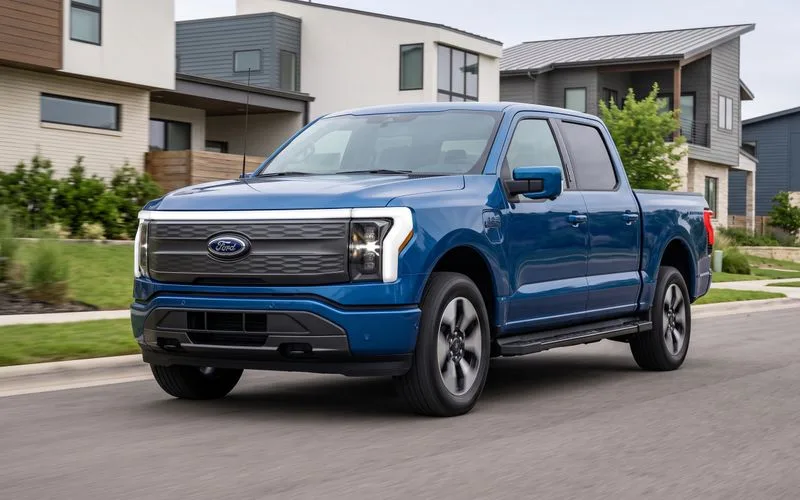 Ford F-150 LightningFull-Size TruckBetter at: Value
Costs meaningfully less, keeps CarPlay and Android Auto, carries more payload and depreciates less badly — as long as you can live with roughly 320 miles of range instead of 493.
Compare 2.44C+
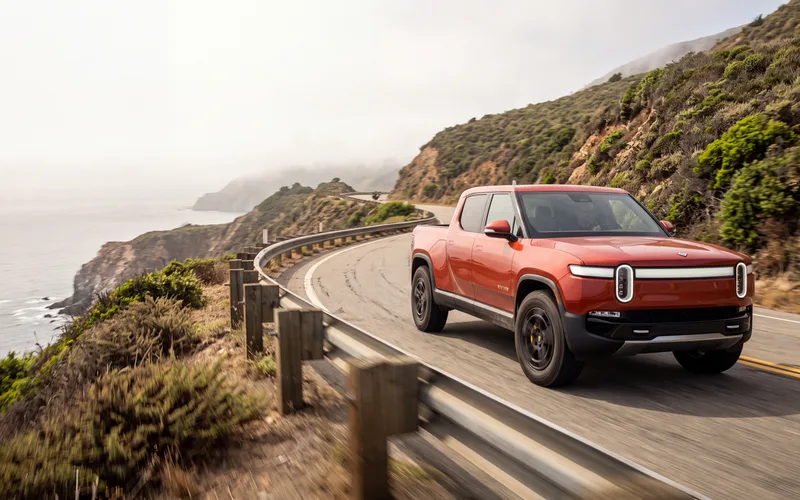 Rivian R1TFull-Size TruckBetter at: Driving polish
Rides and drives noticeably better with a nicer cabin and stronger resale, for shoppers who want an electric truck that feels premium rather than one that maximizes range and outlets.
Compare 2.41C+
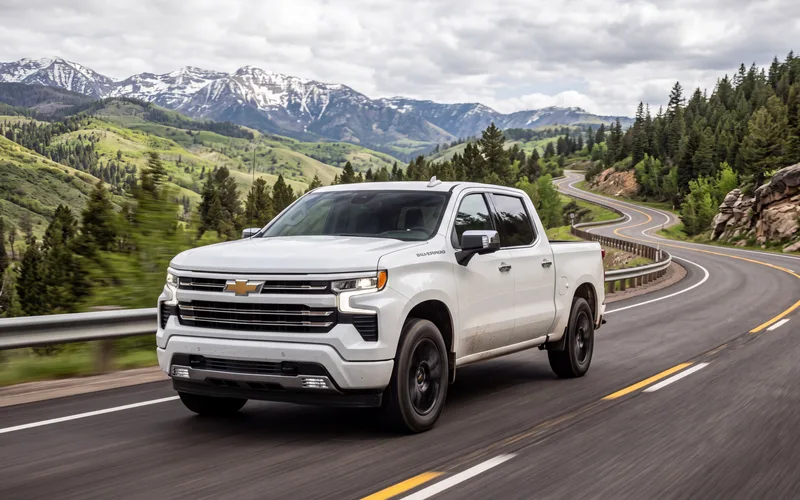 Chevrolet Silverado 1500Full-Size TruckBetter at: Work capability
Half the price, more payload, real bed and cab choices, and no charging to plan around — the default answer for anyone who works the truck hard or road-trips beyond charger coverage.
CompareSubject scores by year
Hover or tap a score to see what moved it versus the year before. A corner mark flags a big swing.
| Year | Performance | Efficiency | Safety | Space | Cost | Reliability | Tech | Use-case | Driving | Value |
|---|---|---|---|---|---|---|---|---|---|---|
| 2026 | 69 | 77 | 69 | 75 | 21 | 55 | 73 | 74 | 72 | 71 |
| 2025 | 71 | 77 | 74 | 74 | 18 | 56 | 77 | 73 | 75 | 69 |
| 2024 | 69 | 79 | 71 | 71 | 15 | 50 | 77 | 70 | 73 | 60 |
Compare two years
Best fit & conditions
Higher scores mean a better fit for that use case. Learn more about use-case fit →
Subject profile
Academic Probation · NHTSA safety recalls
Jan 16, 2025Seat belts: rear/other: anchorage · Seats: mid/rear assemblyThe bolt that secures the rear center seat belt assembly to the seat structure may not have been properly tightened.
Defect
General Motors, LLC (GM) is recalling certain 2024 Chevrolet Silverado EV and 2024-2025 GMC Sierra EV pickup trucks. The bolt that secures the rear center seat belt assembly to the seat structure may not have been properly tightened.
Risk
An improperly secured seat belt assembly may not restrain an occupant as intended, increasing the risk of injury in a crash.
Remedy
GM will tighten the bolt that attaches the center seat belt assembly to the rear seat structure, free of charge. All affected vehicles are still in dealer inventory and, therefore, no owner letters will be mailed. Owners may contact GM customer service at 1-888-988-7267, or Chevrolet customer service at 1-800-222-1020. GM's number for this recall is N242489901.
NHTSA campaign 25V015000 ↗Manufacturer no. N2424899015 vehicles potentially affected (all models in the campaign)Filed by General Motors, LLCFiled as SILVERADO EVMay 9, 2024Electrical system: propulsion system · Electrical system: wiringThe electric motors in the rear drive units may have insufficiently insulated wires that can contact each other, resulting in a loss of drive power.
Defect
General Motors, LLC (GM) is recalling certain 2024 Cadillac Lyriq, Chevrolet Blazer EV, Chevrolet Silverado EV, GMC Hummer EV SUV, and GMC Sierra EV vehicles. The electric motors in the rear drive units may have insufficiently insulated wires that can contact each other, resulting in a loss of drive power.
Risk
A loss of drive power increases the risk of a crash.
Remedy
Dealers will replace the rear drive unit, free of charge. Owner notification letters were mailed May 16, 2024. Owners may contact Chevrolet customer service at 1-800-222-1020; Cadillac customer service at 1-800-458-8006; Hummer customer service at 1-800-732-5493; or GMC customer service at 1-800-462-8782. GM's number for this recall is N242447080.
NHTSA campaign 24V320000 ↗Manufacturer no. N24244708010 vehicles potentially affected (all models in the campaign)Owners notified May 16, 2024Filed by General Motors, LLCFiled as SILVERADO EVFeb 8, 2024Seat belts: rear/otherAn incorrect seat belt bezel on the second-row center seat belt may damage or tear the seat belt in the event of a crash.
Defect
General Motors (GM) is recalling certain 2024 Chevrolet Silverado EV vehicles. An incorrect seat belt bezel on the second-row center seat belt may damage or tear the seat belt in the event of a crash.
Risk
A torn or damaged seat belt may not properly restrain an occupant in a crash, increasing the risk of injury.
Remedy
Do not allow passengers to sit in the second-row center seat until remedied. Dealers will replace the second-row center seat belt bezel, free of charge. Owner notification letters were mailed March 13, 2024. Owners may contact Chevrolet customer service at 1-800-222-1020. GM's number for this recall is N242430730.
NHTSA campaign 24V087000 ↗Manufacturer no. N242430730338 vehicles potentially affected (all models in the campaign)Owners notified Mar 13, 2024Filed by General Motors, LLCFiled as SILVERADO EVNov 22, 2023Seat belts: front: anchorageThe left or right front seat belt buckle attachment bolts may not be tightened properly.
Defect
General Motors, LLC (GM) is recalling certain 2023-2024 GMC Hummer EV pick up, 2024 GMC Hummer EV SUV, and 2024 Chevrolet Silverado EV vehicles. The left or right front seat belt buckle attachment bolts may not be tightened properly.
Risk
An improperly tightened seat belt buckle may not restrain an occupant as intended, increasing the risk of injury during a crash.
Remedy
Dealers will tighten the left and right front seat belt buckle attachment bolts, free of charge. Owner notification letters were mailed December 21, 2023. Owners may contact GMC customer service at 1-833-EVCHEVY (1-833-382-4389) (TTY 711 / 1-800-833-2438) /1-833-HUMMER-EV (1-833-486-6373) (TTY 711 / 1-800-833-2438). GM's number for this recall is N232419280.
NHTSA campaign 23V786000 ↗Manufacturer no. N232419280115 vehicles potentially affected (all models in the campaign)Owners notified Dec 21, 2023Filed by General Motors, LLCFiled as SILVERADO EV
5 recalls on other model years of the Silverado EV (2025–2026)
Jul 30, 2026Tires: temporary/emergency spare tire · WheelsA manufacturing defect may result in the steel wheels cracking at the disc vent holes.
Defect
General Motors, LLC (GM) is recalling certain 2026 Chevrolet Silverado EV and GMC Sierra EV vehicles. A manufacturing defect may result in the steel wheels cracking at the disc vent holes.
Risk
A cracked wheel may lead to disc separation and a loss of control, increasing the risk of a crash.
Remedy
Dealers will inspect and replace the wheels as necessary, free of charge. Owner notification letters were mailed September 23, 2026. Owners may contact GMC customer service at 1-800-462-8782 and Chevrolet customer service at 1-800-222-1020. GM's number for this recall is N262556920. Vehicle Identification Numbers (VINs) involved in this recall became searchable on NHTSA.gov on July 30, 2026.
NHTSA campaign 26V496000 ↗Manufacturer no. N262556920952 vehicles potentially affected (all models in the campaign)Owners notified Sep 23, 2026Filed by General Motors, LLCFiled as SILVERADO EVJul 30, 2026Electrical system: propulsion system: traction batteryThe high voltage battery may have an improperly secured internal module component.
Defect
General Motors, LLC is recalling certain 2026 Cadillac Escalade IQ, Escalade IQL, GMC Sierra EV, Chevrolet Silverado EV, and 2022 GMC Hummer EV Pickup vehicles. The high voltage battery may have an improperly secured internal module component.
Risk
A loose component may move and damage the high voltage battery, increasing the risk of a fire.
Remedy
Dealers will replace the high voltage battery, free of charge. Owner notification letters were mailed August 24, 2026. Owners may contact Cadillac customer service at 1-800-333-4223, GMC customer service at 1-800-462-8782, and Chevrolet customer service at 1-800-222-1020. GM's number for this recall is N262562600. Vehicle Identification Numbers (VINs) involved in this recall became searchable on NHTSA.gov on July 30, 2026.
NHTSA campaign 26V494000 ↗Manufacturer no. N26256260011 vehicles potentially affected (all models in the campaign)Owners notified Aug 24, 2026Filed by General Motors, LLCFiled as SILVERADO EVFeb 26, 2026Equipment: other: owners/service/other manualGeneral Motors has decided that certain 2027 Chevrolet Bolt EV, 2025-2026 Cadillac OPTIQ, Chevrolet Colorado, Equinox EV, GMC Canyon, 2026 Buick Enclave, Envision, Cadillac CT5, Escalade, Escalade ESV, Escalade IQ, Escalade IQL, LYRIQ, VISTIQ, Chevrolet Blazer EV, Corvette Convertible, Corvette Coupe, Corvette Convertible E-Ray, Equinox, Silverado 1500, 2500, 3500, Silverado EV, Suburban 1500, Tahoe, Traverse, GMC Acadia, Hummer EV Pickup, Hummer EV SUV, Sierra 1500, 2500, 3500, Sierra EV, Terrain, Yukon, and Yukon XL vehicles. The radio may not have been set to the correct status to download the electronic owner's manual during production. As such, these vehicles fail to comply with the requirements of Federal Motor Vehicle Safety Standard number 208, âOccupant Protection.â
Defect
General Motors has decided that certain 2027 Chevrolet Bolt EV, 2025-2026 Cadillac OPTIQ, Chevrolet Colorado, Equinox EV, GMC Canyon, 2026 Buick Enclave, Envision, Cadillac CT5, Escalade, Escalade ESV, Escalade IQ, Escalade IQL, LYRIQ, VISTIQ, Chevrolet Blazer EV, Corvette Convertible, Corvette Coupe, Corvette Convertible E-Ray, Equinox, Silverado 1500, 2500, 3500, Silverado EV, Suburban 1500, Tahoe, Traverse, GMC Acadia, Hummer EV Pickup, Hummer EV SUV, Sierra 1500, 2500, 3500, Sierra EV, Terrain, Yukon, and Yukon XL vehicles. The radio may not have been set to the correct status to download the electronic owner's manual during production. As such, these vehicles fail to comply with the requirements of Federal Motor Vehicle Safety Standard number 208, âOccupant Protection.â
Risk
Without an owner's manual to consult, owners may not know how to safely use and operate the vehicle, increasing the risk of injury in a crash.
Remedy
Dealers will reset the vehicle radio, which will facilitate automatic download of the electronic ownerâs manual, free of charge. Owner notification letters were mailed April 16, 2026. Owners may contact GM customer service at 1-866-467-9700, Chevrolet customer service at 1-800-222-1020 or Cadillac customer service at 1-800-333-4223. The manufacturer's number for this recall is N252540430. Vehicle Identification Numbers (VINs) involved in this recall became searchable on NHTSA.gov on February 26, 2026.
NHTSA campaign 26V114000 ↗Manufacturer no. N2525404305,861 vehicles potentially affected (all models in the campaign)Owners notified Apr 16, 2026Filed by General Motors, LLCFiled as SILVERADO EVSep 11, 2025Electronic stability control (esc): control module: softwareAfter experiencing an electronic stability control (ESC) system malfunction, the ESC malfunction warning light may not illuminate on the next key cycle. As such, these vehicles fail to comply with the requirements of Federal Motor Vehicle Safety Standard number 126, "Electronic Stability Control Systems."
Defect
General Motors, LLC (GM) is recalling certain 2026 Chevrolet Silverado EV and GMC Sierra EV electric vehicles. After experiencing an electronic stability control (ESC) system malfunction, the ESC malfunction warning light may not illuminate on the next key cycle. As such, these vehicles fail to comply with the requirements of Federal Motor Vehicle Safety Standard number 126, "Electronic Stability Control Systems."
Risk
An indicator light that does not illuminate may fail to warn the driver of an ESC system issue, increasing the risk of a crash.
Remedy
The EBCM software will be updated by a dealer, or through an over-the-air (OTA) software update, free of charge. Owner notification letters were mailed October 15, 2025. Owners may contact Chevrolet customer service at 1-800-222-1020, or GMC customer service at 1-800-462-8782. GM's number for this recall is N252515340.
NHTSA campaign 25V594000 ↗Manufacturer no. N2525153401,191 vehicles potentially affected (all models in the campaign)Owners notified Oct 15, 2025Filed by General Motors, LLCFiled as SILVERADO EVDec 18, 2024Electrical system: body control module/bcm · Forward collision avoidance: warnings: external/pedestrian alertThe pedestrian alert sound system may not produce sound at a sufficient volume. As such, these vehicles fail to comply with the requirements of Federal Motor Vehicle Safety Standard (FMVSS) number 141, "Minimum Sound Requirements for Hybrid and Electric Vehicles."
Defect
General Motors LLC (GM) is recalling certain 2025 Chevrolet Silverado EV work trucks. The pedestrian alert sound system may not produce sound at a sufficient volume. As such, these vehicles fail to comply with the requirements of Federal Motor Vehicle Safety Standard (FMVSS) number 141, "Minimum Sound Requirements for Hybrid and Electric Vehicles."
Risk
A vehicle that fails to make sufficient sound may result in pedestrians being unaware of an approaching vehicle, increasing the risk of injury.
Remedy
Dealers will update the software in the body control module (BCM), free of charge. Owner notification letters were mailed January 22, 2025. Owners may contact Chevrolet customer service at 1-800-222-1020. GM's number for this recall is N242483530.
NHTSA campaign 24V937000 ↗Manufacturer no. N24248353046 vehicles potentially affected (all models in the campaign)Owners notified Jan 22, 2025Filed by General Motors, LLCFiled as SILVERADO EV
Source: NHTSA Office of Defects Investigation recall database, model years 2024–2026. Recalls are listed by model year as the manufacturer filed them; whether a specific car is affected depends on its VIN — check a VIN at nhtsa.gov ↗. NHTSA model names matched to this page: SILVERADO EV.
Detailed scoring by subject
1Performance & PowertrainMid-pack among this car's ten categories.2.65C+
Scored on the First Edition RST, the only 2024 Silverado EV a retail buyer could order — the 3WT and 4WT were sold to commercial fleets only. GM's own spec table lists 754 hp from the dual-motor e4WD system, making it the most powerful Silverado ever built and one of the strongest outputs in the full-size truck band.
785 lb-ft available from zero rpm sits at the very top of the truck torque band — roughly double the 383 lb-ft of the 5.3L V8 Silverado 1500 and more than the 6.2L V8's 460 lb-ft.
Two independent instrumented tests landed on 4.4 seconds for a truck weighing close to 8,800 lbs, and Car and Driver recorded 4.1 s with Wide Open Watts engaged. Genuinely quick for a full-size pickup, though the mass keeps it behind the lightest EV trucks.
Dual-motor Ultium delivery with nothing to lag, shift or vibrate: instant torque, no engine coarseness under load and very low NVH, which reviewers consistently name as the truck's defining dynamic trait. Held just below the Hummer EV (93) on the same GM hardware.
Single-speed direct drive — no gears to hunt for and no shift interruption at any speed. One-pedal driving and the Regen on Demand paddle are well calibrated, though heavy regen can feel abrupt with a load in the bed.
10,000 lbs matches the Rivian R1T and Ford F-150 Lightning and clears most gas half-tons in base form, but it trails a well-equipped gas Silverado 1500 (up to 13,300 lbs) and the 2026 Silverado EV LT's 12,500-lb Max Trailering rating, which did not exist in 2024.
The ~205 kWh battery consumes most of the GVWR headroom, so payload lands near the bottom of the full-size truck band — well under a comparable gas Silverado 1500 (up to ~2,260 lbs). This is the Silverado EV's weakest capability number by a wide margin.
The RST First Edition ships with GM's full trailering suite — integrated trailer brake controller, Hitch Guidance, Tow/Haul mode and the Advanced Trailering System with trailer profiles and multi-camera coverage — plus trailering-capable Super Cruise, which no rival offered in 2024. Scored alongside the gas Silverado 1500 (87); the absence of a trailer-backup steering control keeps it just short of the top.
Torque-vectoring dual-motor e4WD is standard on every 2024 configuration — broader standard availability than the gas Silverado, where 4WD is an option — and the RST adds four-wheel steering. Held below the Hummer EV (94) by the absence of a low range or locking differentials.
Adaptive Air Ride raises the truck up to 2 inches and the independent suspension rides well on rough surfaces, but the 2024 lineup had no off-road trim at all — the Trail Boss did not arrive until 2026 — and the RST rolls on 24-inch wheels with all-season tires. No lockers, no low range, and roughly 8,800 lbs to move puts it far behind a ZR2-equipped Silverado 1500 (85).
A single powertrain type in its narrowest year: for 2024 the Silverado EV existed only as the fleet WT or the First Edition RST, with no LT, no Trail Boss and no retail choice of output or battery. Buyers wanting gas, diesel or hybrid must cross-shop the separate Silverado 1500. Scored below the 2026 truck (44), which at least offers multiple retail trims and two battery sizes.
2Efficiency & RangeThe Silverado EV's best-graded category.3.34B+
EPA certified only the WT configuration for 2024 — 63 MPGe combined, 53 kWh/100 mi — and never published a separate rating for the First Edition RST, whose own figures Chevrolet listed as 'EPA estimates not yet available.' The RST shares the same 800V drivetrain and Max Range pack, so this is the closest published EPA figure; its 24-inch wheels and extra mass make its real number a point or two lower.
Regenerative braking makes the city cycle the truck's better half — 67 MPGe against 59 on the highway, and a 477-mile EPA city range. Strong in absolute terms but only mid-pack once normalized against other electric pickups, which is the right comparison.
Highway is the weaker EV cycle, but the purpose-built BT1 body — which Chevrolet claims has one of the lowest drag coefficients of any full-size pickup — holds up far better at speed than a converted gas truck. InsideEVs measured 441 miles in a 70 mph highway range test of an RST, beating the GM estimate.
440 miles was the longest range of any electric pickup on sale in 2024 and sits above the top of the EV-truck normalization band, so it maxes the item. The figure is GM's own SAE J1634 estimate rather than an EPA certification, but independent testing has landed on or above it.
The 800V Ultium architecture accepts up to 350 kW — the top of the truck band and the highest rate any production pickup took in 2024 — and independent testing confirmed the truck actually reaches it rather than just claiming it.
Chevrolet quotes no 10–80% time for 2024, so this is the measured session. Class-leading peak power does not make this a short stop: 70% of a ~205 kWh pack is roughly 145 kWh of energy, so even averaging ~250 kW the truck takes longer than a small-battery EV — a mid-band result despite the 350 kW headline. The compensation is that those 40 minutes restore far more miles than a rival's faster-percentage stop.
About a third of what a gas full-size truck burns, and EPA credits the 2024 Silverado EV with $5,250 saved in fuel over five years against the average new vehicle. High for an EV in absolute terms — it takes a lot of electricity to move 8,800 lbs — which is why it normalizes mid-band against other EV trucks rather than high.
No fuel-grade question at all, cheap overnight home charging, and the 2024 RST's standard 19.2 kW onboard AC charger adds about 34 miles per hour — twice what most EVs manage at home and a real advantage over the 11.5 kW charger the later LT ships with. PowerBase turns the truck into a 10.2 kW generator. Held below the top of the band because a ~205 kWh pack still needs roughly half a day on 240V and demands an 80-amp circuit to charge at the rated speed.
3SafetyGrades above the middle of the scale.2.84B-
NHTSA lists the 2024 Silverado EV in its database but has run no NCAP test on it — every star field returns "Not Rated". The required numeric field therefore uses the dataset's segment-neutral 4-star convention for an untested vehicle, not a claimed result. The gas Silverado 1500's 5-star rating does not transfer: the EV is a separate Ultium BEV structure on a 145.7-in wheelbase, not the T1 pickup platform.
IIHS has published no evaluation of the Silverado EV in any model year — there is no Top Safety Pick, and not one individual crashworthiness result to point to. Scored at the dataset's untested midpoint rather than the low band: there is no adverse finding on this vehicle, and the gas Silverado 1500's Poor updated-moderate-overlap result belongs to a different body structure and should not be imputed to it. It also cannot earn award-level credit it has never been tested for.
All five rubric essentials are standard, and standard on the cheapest configuration Chevrolet built, not just the $94,500 retail truck: the fleet 4WT's window sticker lists enhanced AEB, intersection AEB, front pedestrian and bicyclist braking, forward collision alert, side blind zone steering assist, lane keep assist with lane departure warning, side bicyclist alert, reverse automatic braking, rear cross traffic braking, rear pedestrian alert, safety alert seat and HD Surround Vision, with adaptive cruise control standard under Connectivity. That is a markedly deeper standard set than the gas Silverado 1500, where ACC and blind-spot coverage are both option-package items on volume trims. Held below the high 90s only because the following distance indicator shipped on the WT pending a software update.
IIHS has never run front crash prevention on the Silverado EV, so there is no measured result to credit. What can be assessed is scope, and it is unusually broad for 2024 — enhanced AEB plus intersection AEB, front pedestrian AND bicyclist braking, side bicyclist alert and reverse automatic braking, all standard. Scored a little above the middle band on that breadth, but capped there because GM's contemporaneous full-size truck system rated only Acceptable when IIHS did test it, with modest speed reductions in the daytime child-crossing runs.
Both halves of this item are active rather than alert-only and both are standard on every configuration: Side Blind Zone Steering Assist intervenes at the wheel, and Rear Cross Traffic Braking brakes rather than merely chiming, with rear pedestrian alert alongside. Trailer-aware coverage is the one gap — Super Cruise itself is trailering-capable and estimates trailer weight, but the mirror-camera blind-zone overlay owners expected while towing was reported as unavailable or paused on early trucks, and automatic lane change is disabled with a trailer attached.
The retail 2024 truck — the RST First Edition, the only configuration a private buyer could order — carries lane keep assist with lane departure warning as the baseline and true lane centering through standard Super Cruise, which reviewers single out for holding the lane more steadily than a human across a wide range of conditions. Short of the ceiling because outside Super Cruise's mapped roads the truck falls back to a reactive nudge with no centering, and the fleet WT has no centering at all.
Adaptive cruise is standard on both configurations — not an option-package item as on the gas Silverado — and on the RST it sits underneath a well-integrated Super Cruise that adds mapped-road centering, automatic lane change and trailer-aware following distances derived from brake, accelerator and suspension load sensing. The rough edge is towing: lane changes are locked out with a trailer, and Super Cruise refuses to engage if it estimates a load beyond GVWR.
Super Cruise is standard — not optional — on the RST First Edition, the only 2024 Silverado EV sold at retail, and it is the trailering-capable version, which makes this one of the first pickups able to run hands-free with a trailer attached. Coverage was over 400,000 mapped miles in the US and Canada, the widest of any hands-free system at the time. Two points of friction keep it off a perfect score: it requires an active subscription once the included trial lapses, and the fleet WT does not offer it at all.
LED headlamps and IntelliBeam automatic high beams are standard on every configuration, so there is no halogen base trim to penalize and no upsell to reach good lighting. But IIHS has never rated these headlights, there is no curve-adaptive function, and no reviewer measured night performance — scored mid-band on equipment alone. GM's contemporaneous full-size truck lighting is a reason for caution rather than credit: both configurations IIHS evaluated on the 2024 gas Silverado 1500 rated Poor.
Camera compensation is thorough and standard — HD Surround Vision on every configuration, plus hitch guidance with hitch view and front and rear park assist on the RST — and the low, sloped hood is a genuine improvement on full-size truck norms. Natural sightlines are still mixed: Green Car Reports found rear and rear-quarter vision good but had to raise the seat fully to see over the bluff hood, and several Edmunds editors logged poor outward visibility as a complaint on a 233-in-long, 78.7-in-tall truck.
The rear bench is the easiest part of this truck to live with for car seats: 44.3 in of rear legroom and 63.8 in of shoulder room with a flat floor, which reviewers say seats three adults across and therefore takes multiple seats without a fight, and upper tethers reachable by folding the seatbacks. Two complete outboard LATCH positions plus a center tether only, and the RST's fixed glass roof trims rear headroom to 38.7 in — a real constraint when lifting a child into a tall rear-facing seat in a truck this high off the ground. Held below the top band because no IIHS LATCH ease-of-use rating exists to confirm anchor depth or clearance.
4Space & ComfortGrades above the middle of the scale.2.84B-
The Silverado EV was sold exclusively as a Crew Cab for 2024 with five seats — no regular or double cab, and no front bench option to reach six the way the gas Silverado 1500 does with its 40/20/40 front seat.
43.9 inches is above the top of the full-size truck band and the most front headroom of any pickup in the catalog — the RST's fixed glass roof raises the header rather than stealing space the way a sliding sunroof cassette does.
44.8 inches sits near the top of the truck band — the short front overhang and the absence of an engine bay let the cabin push forward, giving more front legroom than the gas Silverado 1500's 44.5 in.
The one dimension the RST loses on: 38.7 in of second-row headroom is near the bottom of the full-size truck band and a full 1.4 in below the gas Silverado 1500 Crew Cab's 40.1 in, because the fixed glass panel and the sloping roofline cost rear occupants what they gave the front row.
44.3 inches is close to the top of the truck band and among the roomiest back seats in any pickup — Chevrolet deliberately pushed the second row rearward, and the flat floor plus 63.8 in of rear shoulder room makes three-across genuinely workable.
One 5-foot-11-inch bed, no long-bed option, which puts the static measurement in the lower third of the full-size band. The midgate changes the practical answer entirely — over 9 feet of load floor while still seating a rear passenger — but this item grades the bed itself.
57.7 cu ft is mid-band — deep, wide sides recover much of what the short bed floor gives away — and the 10.7 cu ft power-operated eTrunk adds lockable, weatherproof space no gas truck has, though it trails the F-150 Lightning's 14.1 cu ft frunk.
The strongest storage package in the segment for 2024: the Multi-Flex Midgate folds the rear bulkhead in 40/60 sections for over 9 ft of load floor while keeping a rear seat usable, the RST's modular console holds just over 7 gallons, the eTrunk is lockable and weatherproof, and PowerBase turns the truck into a 10.2 kW generator across up to 11 outlets. Scored well above the Hummer EV and gas Silverado 1500 (both 72), which have none of the midgate/frunk combination.
12-way power front seats with memory, heating and ventilation standard, and a rear bench with enough legroom that reviewers report six-footers are fine in either row — The Drive rates the RST's seats 'much nicer' than the WT's. Held out of the top band because the surrounding material quality drew near-unanimous criticism at the $96,495 price, and the cushions are not singled out as long-haul standouts.
Adaptive Air Ride and an independent rear suspension give it a structurally better ride than a leaf-sprung truck, and it settles well at highway speed — but the First Edition RST's mandatory 24-inch wheels on LT275/50R24 all-seasons make it brittle and clunky over broken city pavement, and multiple reviewers said smaller wheels would fix it. Just above the gas Silverado 1500 (60), well below the Hummer EV (78) on softer rubber.
No engine, a purposely low-drag body and thorough isolation make it one of the quieter full-size trucks on sale — The Drive calls it 'surprisingly quiet inside' and Consumer Reports testers led with 'quick, quiet and comfortable.' Short of the top band because the 24-inch wheels send real road roar into the cabin, there is wind rush around the A-pillars, and opening the midgate raises ambient noise and wind buffeting sharply at highway speed.
The single retail configuration is fully loaded, so there is no trim ladder to climb: heated and ventilated front seats, heated rear seats, heated steering wheel, dual-zone automatic climate, remote start with cabin pre-conditioning from the MyChevrolet app, ambient lighting and a panoramic fixed-glass roof are all standard. The absence of a separate rear climate zone keeps it just off the ceiling.
5Cost of OwnershipThe Silverado EV's lowest-graded category.0.00F
The 2024 lineup's cheapest configuration is the 3WT work truck at $74,800 delivered, with the 4WT at $79,800. The caveat is the whole story of this model year: both WT trims were sold only through GM's commercial/fleet channel, so no retail buyer could transact at this price — the only Silverado EV a private buyer could order in 2024 was the RST First Edition at $96,495.
This is the price of the truck the rest of the 2024 scorecard describes: the RST First Edition, the sole configuration a retail buyer could order, and the one whose 754 hp, 440-mile range and standard Super Cruise are scored in the other categories. It sits above the top of the full-size truck normalization band, and it is $21,300 more than the 2025 LT that replaced it as the mainstream offer. Chevrolet had originally signalled roughly $105,000 and cut the figure by about $9,000 before launch, which is itself a comment on where the market was.
Comfortably under the full-size truck norm for the usual BEV reasons — no oil, plugs, transmission or exhaust service, and one-pedal regen braking stretching pad life. It is not lower still because of what this particular truck consumes: an ~8,800 lb vehicle on 24-inch RST First Edition tires is an expensive set of rubber, and KBB's model includes repairs where CarEdge's much lower $2,284 largely does not.
This item decides the category. KBB projects $61,254 of depreciation on the $96,495 RST, leaving 36.5% — far below the 50–75% band a gas full-size truck plays in, and below the Rivian R1T's projected retention. The real-world curve so far corroborates it rather than contradicting it: a 2024 RST that stickered at $96,495 carries a $61,100 fair purchase price at roughly two years old and a $55,400 trade-in value, and the expiry of the federal clean-vehicle credit on 30 September 2025 removed the new-car price support that had been propping up used electric-truck values.
GM holds its basic new-vehicle limited warranty at 3 years / 36,000 miles across Chevrolet and nothing about the electric Silverado extends it. That is the floor of the 3–5 year band — it matches the Ford F-150 Lightning but trails Rivian's 4 yr / 50,000 mi on the R1T.
The 8-year / 100,000-mile battery and propulsion coverage is the one warranty line where the electric Silverado clearly beats its gas sibling, which gets 5 yr / 60,000 mi. It is the federal EV minimum rather than a standout — the same term Ford quotes on the F-150 Lightning and Rivian on the R1T — so it lands mid-band.
The included-maintenance side is thin and keeps this out of the top band: one covered visit inside the first 12 months, which on a BEV buys a tire rotation and an inspection rather than the oil change that gives the perk its value on a gas truck. The surrounding package is genuinely above the segment average, though, and the First Edition gets the best of it — eight years of core OnStar connected services at no extra charge (Automatic Crash Response, remote commands, in-vehicle navigation and voice), three years of the OnStar One plan that Super Cruise runs on (standard here, where the 2025 LT needed a $6,800 package to get Super Cruise at all), roadside assistance through the 3-year basic term, courtesy transportation extended to 8 yr / 100,000 mi for EV owners, and Chevrolet's Qmerit-installed 240V home charging outlet offer. Scored a touch above the 2025 LT for the included Super Cruise service, not for any difference in maintenance coverage.
$96,495 volume-trim price minus its estimated resale value after 5 years (36.5% retained, or about $35,221) leaves about $61,274 in depreciation. Add the projected $5,062 in 5-year maintenance and repairs, and owning this vehicle for 5 years costs about $66,336 in total.
6Reliability & QualityOne of the Silverado EV's weakest categories.1.32D
2024 is the Silverado EV's first model year on an all-new platform, and neither major source has model data to work from — Consumer Reports has no survey sample and issues an outright negative prediction (less reliable than the average new vehicle), extrapolated from Chevrolet's brand history, the gas Silverado 1500 and GM's other Ultium EVs, while J.D. Power publishes no Quality & Reliability figure for the electric truck at all. A launch-year vehicle with an explicit below-average call from one source and silence from the other belongs in the low band, a notch under the 2025 truck (45), which at least had a year of field running behind it.
The two major sources disagree sharply about Chevrolet in this period and the honest reading is the middle of them. J.D. Power's 2024 Vehicle Dependability Study puts Chevrolet 4th overall at 174 PP100 — genuinely strong, with the Tahoe, Traverse and Equinox each topping their categories. Consumer Reports' contemporaneous brand ranking is much harsher, placing Chevrolet 20th of 30 with a score of 43. Mid-pack on the weight of the evidence, and held slightly below the 2025 scorecard (62) because Chevrolet's CR standing at this point (20th) was worse than the 17th it later recovered to.
Four separate NHTSA campaigns name the 2024 model year — three seat-belt defects across two years of builds plus a rear drive unit wiring fault that can cause a loss of propulsion — which is four times the recall count the 2025 year carries and covers a far smaller fleet. The mitigating fact is scale: the campaigns cover 5, 10, 115 and 338 vehicles, the profile of a low-volume launch being corrected quickly rather than a systemic failure reaching owners. Against that, CarComplaints lists 271 technical service bulletins for the 2024 truck, including a battery-energy-control-module update to improve moisture detection inside the battery enclosure, and owners describe dealer visits made purely to get the truck current on software campaigns. Repeated belt-anchorage errors and a propulsion-power defect in year one keep this at the bottom of the typical band.
In 2024 the 800-volt Ultium pack and dual permanent-magnet drive units were roughly two years into any kind of production and had no high-mileage record whatsoever, and GM's Ultium software and charging execution was actively in trouble that year — the Blazer EV stop-sale over frozen screens, system resets and DC fast-charging failures ran from December 2023 until March 2024. The truck's own first-year defect was a drive unit wiring fault causing loss of propulsion. Field reports since are genuinely mixed: most 2024 RST owners pass 15,000-40,000 miles with no drivetrain failure, while a minority chase persistent 'Service High Voltage System' codes traced to coolant intrusion into the pack, ending in module or full-pack replacement. The NCMA pouch cells come from Ultium Cells LLC, the GM/LG Energy Solution joint venture whose earlier Bolt cells produced 13 confirmed fires and a $1.9B settlement — different cells from different plants, but not a reassuring lineage. Unproven rather than known-bad, and below the 2025 reading (54) on a year less of evidence.
This item grades materials relative to price, and at $96,495 the 2024 First Edition RST is the worst-placed Silverado EV on that test. Reviewers were close to unanimous and unusually blunt: the cabin reads as a mid-level Silverado rather than a flagship, with scratchy plastics and the same durable textured dash material used in the Hummer, on a truck costing what a lightly optioned Escalade does. The RST does add upscale touches over the deliberately hosable WT interior, and the screens are impressive, but the ambiance trails the ritziest F-150 and Ram 1500 trims that cost meaningfully less. Scored well below the 2025 LT (62), which asks $21,000 less for a similar cabin.
Assembly at Factory Zero is structurally sound — owners describe the truck as mechanically solid, and Chevrolet's brand-level dependability standing in 2024 was good — but this is a first-model-year, hand-built-feeling launch trim and the assembly complaints are specific: uneven stitching wobbling across the dash and armrests, crooked dash stitching, sticky mid-gate unlock buttons. GM's response that the trucks seen were pre- or early-production is fair and is why this sits mid-band rather than lower, but launch-build variation is exactly what the item measures. The software layer adds to it: RST First Edition owners report the Google-based infotainment freezing, cameras dropping out until a reboot, and driver-assist features not working as advertised until later updates — the problem category J.D. Power now finds dominates initial quality. A notch below the 2025 truck (66) and well below the gas Silverado 1500.
Chevrolet's roughly 2,900-3,000 US franchised dealers are one of the two densest networks in the country and the brand's service reputation is measurably good — second among truck brands in J.D. Power's 2024 Customer Service Index at 856, behind only Nissan. The 2024-specific discount is larger than it looks on paper: in the launch year only a subset of stores had EV-certified technicians and almost none had seen a BT1 truck, and owners describe software updates taking days, technicians escalating to GM engineering, and trucks waiting on specialist capacity. Far better coverage than any EV startup, but a year behind the 2025 truck (70) on EV readiness and well short of the gas Silverado.
The Silverado badge buys nothing here. BT1 is a bespoke electric platform, not the gas truck's T1, so the vast Silverado 1500 aftermarket does not reach the parts that actually fail, and the high-voltage hardware is dealer-only with warranty work restricted to certified stores. Launch-year scarcity makes 2024 the worst case: with only a few thousand trucks built, owners report body-shop stays of weeks, trim parts quoted months out, and module or pack replacements delayed by backorder. Routine running costs are genuinely cheap — about $5,062 projected over five years, under the full-size truck norm, and HV propulsion components are covered 8 yr/100,000 mi — but a single out-of-warranty traction-battery event, roughly $6,500 for module-level work to five figures for a full pack, dwarfs that saving. Below the 2025 truck (42) purely on first-year parts scarcity.
7Technology & InfotainmentOne of the Silverado EV's strongest categories.3.21B+
Chevrolet's own spec sheet calls it a 17-inch-diagonal freeform LCD, near the top of the truck band; several outlets quote 17.7 in for the same panel, and the manufacturer figure is used here. Only the Ram 1500 REV's 14.5-in portrait-plus-passenger-screen arrangement and Tesla's 18.5-in display sit in the same territory.
Google built-in runs quickly with clean graphics and several customizable layouts, and reviewers consistently report it responds immediately to inputs — a genuinely good system to use. Held below the top band because it absorbs climate and vehicle functions that used to be physical, and at least one test car's screen shut down and rebooted mid-drive.
Phone projection is not offered on the truck being scored. GM's Android Automotive-based system in the RST supports neither Apple CarPlay nor Android Auto by design, and this is the configuration retail buyers could actually order for 2024 — the only Silverado EVs that keep wireless CarPlay/Android Auto are the fleet-only 3WT and 4WT on the older, smaller head unit. Scored a shade above the Rivian R1T (10), which offers it on no trim at all.
Google built-in means Google Assistant for natural-language commands and Google Maps as the native navigation, with EV routing that accounts for state of charge and charger availability across the 174,000-plus public chargers surfaced in-vehicle. This is the strongest answer in the segment and the direct compensation for dropping phone projection.
A Bose seven-speaker system is standard on the RST First Edition — a real branded upgrade over the WT's basic setup — but seven speakers is modest for a $96,495 flagship, and with no larger Bose or premium option above it there is nowhere to go. Reviewers did not single the audio out in either direction.
An 11-inch-diagonal reconfigurable driver display is standard on the retail truck — crisp, with layouts that change by drive mode — and it sits alongside rather than inside the center screen, so the driver keeps a dedicated instrument panel. Just short of the ceiling because the cluster's configurability is more limited than the head-up display beside it.
The Silverado EV is a software-defined vehicle on GM's Ultifi stack with whole-vehicle over-the-air updates — Chevrolet markets the ability for vehicle capability to grow after delivery, and the truck has received feature and drivability updates in service. Held below Rivian (96) because GM's cadence and the visible feature content of each release have been less consistent.
MyChevrolet covers the full EV set — remote start and cabin pre-conditioning, lock/unlock, locate, charge scheduling and status, charger search across 174,000+ public stations — and digital key lets an enabled phone unlock and start the truck. Kept out of the top band because GM gates parts of remote access behind a Connected Services subscription once the included term lapses.
Nothing in the segment matched this in 2024: PowerBase delivers up to 10.2 kW across as many as 11 outlets spread through the cabin, bed and eTrunk, enough to run a jobsite or back-feed a house, and the truck can even charge another EV with the accessory cord. Inside there is a wireless charging pad, USB-C in both rows and a Wi-Fi hotspot.
Beyond proximity entry and remote start, the RST adds phone-as-key with an approach lighting animation and hands-free start — the truck powers up as the driver sits down with an enabled device — plus a power-operated eTrunk and power tailgate release. Short of a perfect score only because there is no hands-free (kick-sensor) opening for the bed or frunk.
HD Surround Vision is standard on every 2024 configuration, joined on the RST by front and rear park assist, hitch guidance with hitch view, the trailering camera package and a digital rearview mirror — comprehensive coverage for a 233-inch truck. No automated parking system is offered, which caps it below the top band.
A multi-color head-up display with a field of view of more than 14 inches is standard on the only retail 2024 configuration — one of the largest HUDs in any pickup — and reviewers rate the graphics as excellent and easy to read. Rivals in this comparison set mostly offer none at all.
8Use-Case FitGrades above the middle of the scale.2.77B-
The second row is one of the best in any pickup for family duty — 44.3 in of legroom, 63.8 in of shoulder room, a flat floor and wide crew-cab doors make three-across and rear-facing seats genuinely easy, and the eTrunk swallows a stroller in lockable, weatherproof space. What keeps it out of the top band is the step-in height of an air-sprung full-size truck, which small children cannot manage unaided.
The active-safety content is excellent and standard rather than optional — AEB, lane keeping with lane centering, blind-zone steering assist, rear cross traffic braking, adaptive cruise, HD Surround Vision, rear-seat reminder, and trailering-capable Super Cruise on the retail truck. The ceiling is that neither NHTSA nor IIHS had tested the Silverado EV in any model year, so a family buying on crash credentials has nothing to read, and the only retail trim cost $96,495.
A quiet cabin, heated rear seats, a panoramic glass roof, 44.3 in of rear legroom and a 440-mile range make this a strong long-haul family vehicle, and Super Cruise takes the load off the driver. Marked down because secure luggage space for five is thin without the optional tonneau — the 10.7 cu ft eTrunk is the only lockable, weatherproof hold — and the 24-inch wheels make the ride fidgety over poor surfaces.
Silent, single-speed delivery with well-calibrated one-pedal driving makes stop-and-go effortless — The Drive says one-pedal works so well it negates the brake pedal — and four-wheel steering shrinks the truck at parking speeds. Against that, it is nearly 8,800 lbs and 233 in long, the steering is very light and twitchy on-centre in the default modes, and the ride is brittle on city pavement.
EPA puts running costs at about $1,200 a year and $5,250 saved in fuel over five years against the average new vehicle — roughly a third of what a gas full-size truck burns — and there is no oil, exhaust or transmission service, with regen stretching pad life. It is not cheap for an EV, though: 53 kWh/100 mi is a lot of electricity, and LT275/50R24 replacement tires are a genuinely expensive consumable.
Four-wheel steering pulls the turning circle down to 42.16 ft — tidier than most full-size trucks and better than the Rivian R1T's 44.9 ft — and HD Surround Vision plus front and rear park assist cover the blind spots. But 233.1 in of length and 94.3 in of width with mirrors mean it simply does not fit many urban spaces, and it weighs close to 8,800 lbs.
The tow rating is competitive at 10,000 lbs and the torque makes light work of a trailer, but payload is where the 205 kWh pack bites: 1,500 lbs is near the bottom of the full-size class and well under a comparable gas Silverado 1500's ~2,260 lbs. Range also collapses under a heavy trailer, which is the practical limit on using it as a work truck all day.
As configured for retail this is not a work truck: a $96,495 First Edition on 24-inch wheels with low-profile all-season tires, in the first model year of an all-new BT1 platform with no high-mileage record and four NHTSA campaigns already naming 2024 — including a rear drive unit wiring fault that can cause loss of propulsion. The fleet WT is the durable configuration, and it is not what a retail buyer could order. Scored below the Rivian R1T (52) for the same unproven-platform reason plus the wheel and tire package.
Onboard power is the best in the segment — PowerBase supplies 10.2 kW across up to 11 outlets, enough to run tools all day or back-feed a house, and the truck can charge another EV. Add the Multi-Flex Midgate and Multi-Flex Tailgate for over-length loads, bed lighting, tie-downs, an integrated trailer brake controller and a lockable tonneau option. Held below the ceiling by the modest 1,500-lb payload that limits what can actually ride in the bed.
The best road-trip case of any electric pickup in 2024: a GM-estimated 440 miles between stops, 350 kW DC charging that adds roughly 100 miles in 10 minutes, a quiet aero-optimised cabin, and trailering-capable Super Cruise for hands-free highway miles across 400,000 mapped miles. Kept out of the very top band because the 24-inch wheels keep the ride from settling completely and Cars.com reports wind rush at speed.
Standard torque-vectoring e4WD, air suspension that lifts 2 inches and 10.2 kW of camp power are real adventure assets, and the midgate swallows long gear. But 2024 had no off-road trim at all — the Trail Boss arrived later — and the RST's 24-inch wheels with street all-seasons, no low range and no locking differentials mean gravel roads rather than trails. Far below the Rivian R1T (94).
Close to best-in-class: the Multi-Flex Midgate folds in 40/60 sections to open just over 9 feet of load floor while still seating a rear passenger, the Multi-Flex Tailgate stretches that to 10 ft 10 in, and the lockable 10.7 cu ft eTrunk plus an available weatherproof tonneau covers the secure-storage case a gas truck has no answer for.
9Driving ExperienceOne of the Silverado EV's strongest categories.2.93B-
A low-mounted structural battery, independent front and rear suspension, adaptive air springs and four-wheel steering make it more composed than a gas half-ton — Cars.com found it 'handles quite well for a heavy, full-size pickup' and 'a touch more composed' than its combustion rivals. But nearly 8,800 lbs still reads through: it feels every bit its size and allows real body roll, so it sits well below the Rivian R1T (82).
Accurate enough to place the truck, and reviewers grant it 'decent steering for a pickup,' but the column-mounted electric rack is extremely light in the default Tour and Normal modes and the four-wheel-steer rear axle makes it twitchy on-centre — small inputs produce outsized reactions and the truck wanders in its lane at speed. Below the R1T's 68.
The regen side is excellent — one-pedal driving is well blended and does nearly all the stopping in normal use, and the truck has regenerative capability on both axles. The friction brakes are the weak point: Car and Driver measured 132 ft from 60 mph, respectable for the mass, but distances grew by close to 20 ft across six consecutive 70-0 stops, and reviewers describe the pedal as mushy and short on confidence for an 8,800-lb vehicle.
Nothing to shift, idle or stop-start: a single-speed dual-motor e4WD delivering 754 hp and 785 lb-ft from zero rpm, with seamless torque vectoring between the axles and no driveline shunt. This is the truck's defining dynamic quality and every first drive leads with it.
There is no powertrain noise to speak of — no engine, no gearchange, no exhaust drone under load, and the motors stay inaudible at anything short of full throttle. What noise does reach the cabin comes from the 24-inch wheels and the A-pillars rather than the driveline, which is what this item measures.
Four-wheel steering turns a 145.7-inch wheelbase into a 42.16-ft circle — near the tight end of the full-size truck band and better than the Rivian R1T's 44.9 ft, despite the Silverado EV being the longer vehicle.
A commanding seat with 12-way power adjustment and memory, a tilt-and-telescoping column, a low sloping hood that Chevrolet designed for forward downvision, and a digital rearview mirror to see past the midgate and bed. Held mid-band because the body is 94 in wide with mirrors, the step-in is high, and climate and vehicle settings live largely in the 17-inch touchscreen rather than on physical controls.
Wide Open Watts is a genuine party trick — 4.1 seconds to 60 in a three-ton pickup never stops being funny — but the novelty is the whole of it. Reviewers found no reward in corners and no character beyond the shove, with The Drive concluding it 'doesn't feel any better on the road than any other gas truck.' Well below the Rivian R1T (88).
10Value & Market PositionOne of the Silverado EV's weakest categories.2.01C
The RST First Edition is a single fully-loaded spec with essentially nothing left on the options sheet: trailering-capable Super Cruise, four-wheel steering, adaptive air suspension with 2 inches of lift, 24-inch wheels, the Multi-Flex Midgate and Multi-Flex Tailgate, fixed-glass roof, 17.7-inch centre screen and 11-inch cluster, leather, Bose audio, head-up display and 10.2 kW of offboard PowerBase output. Several of those — four-wheel steering, the midgate — rivals did not offer at any price in 2024. What keeps it out of the top band is the flip side of the same fact: at $96,495 it is not 'loaded at base price', a comparably equipped F-150 Lightning Platinum undercut it, there is no Apple CarPlay or Android Auto at any price, and the cheapest configurations Chevrolet built (the fleet 3WT/4WT) are deliberately spartan — steel wheels, vinyl seats, rubber floors.
The capability is real — 440 miles of range, 754 hp, 350 kW peak charging and a 10,000 lb tow rating were the best or near-best numbers in the electric-pickup class in 2024 — but the price a retail buyer paid to get them makes this poor value versus direct rivals. At $96,495 the First Edition got no federal clean-vehicle credit (it clears the $80,000 truck cap, and the battery-sourcing rules disqualified the cheaper trims too) and, unlike the work trucks, no $7,500 Ultium Promise bonus, so a retail buyer paid full sticker while fleet 3WT buyers were transacting in the mid-$50,000s after bonus cash and dealer discounts. Reviewers made the same point about the content itself, and the projected 36.5% five-year retention means more of the price is consumed than the sticker gap alone suggests.
2024 is the narrowest the Silverado EV has ever been, and close to take-it-or-leave-it. A retail buyer had exactly one choice — the RST First Edition, a fixed spec — while the 3WT and 4WT were fleet-channel only; there was no LT, no Trail Boss and no non-First-Edition RST that model year. Body choice does not exist either: every Silverado EV is a crew cab with the same 5-foot-11 bed, with no regular or double cab, no bed-length option and no single-motor rear-drive variant, against a gas Silverado 1500's three cabs, three bed lengths and eight trims. The only real spread is battery: 393 miles on the 3WT versus 440–450 on the 4WT and RST.
2024 was the first year the truck existed in volume — 7,428 US deliveries against 461 in 2023 — and the quarterly shape was steady rather than spiking (1,061 / 2,196 / 1,995 / 2,176). The growth is genuine and it went on to 11,275 in 2025, but in 2024 terms it was the fourth-best-selling electric pickup behind the Cybertruck and F-150 Lightning, both of which outsold it several times over, and roughly 1% of Chevrolet's own Silverado nameplate volume. A launch-year figure in the single-digit thousands in the largest segment in the US market is a slow start, which is what this band describes.
Silverado is one of the strongest nameplates in the US market, and Chevrolet brings decades of truck credibility, a nationwide dealer and service network, and a growing EV franchise that no startup rival could match — GM finished 2024 with about 114,000 EV deliveries. Two things discount it. The Silverado EV does not look or load like a Silverado — the Avalanche-style forward cab and integrated bed divide traditional truck buyers — and in 2024 Chevrolet's electric brand equity was still being built rather than established (it became the country's #2 EV brand only in 2025), while GM electric trucks carry weak resale perception that pulls against the badge.
Scored as buyer benefit, and for the retail truck 2024 was a mediocre year. The RST First Edition was reservation-allocated and sold at sticker for most of the model year, took no federal clean-vehicle credit (over the $80,000 truck cap) and was excluded from the $7,500 Ultium Promise bonus GM used to cover the lost credit elsewhere. By Q4 the picture improved to modest: interest-free financing on 2024 stock, local-market lease programs on the RST First Edition, and a $1,000 Costco member incentive. The deep support — $7,500 Ultium bonus stacked on dealer discounts of $14,000–$19,500 — went to the fleet-only work trucks, which a private buyer could not order, so it lifts this out of the bottom band without earning the top one.
This is the launch model year of an all-new nameplate — the generation begins in 2024 — on GM's bespoke BT1 Ultium platform with an 800-volt architecture, a 350 kW charging ceiling and hardware that was the newest in the electric-pickup class. There is no redesign risk for a buyer and nothing about the platform was carried over from the gas Silverado. Held just short of 100 only because the First Edition is a limited launch spec that Chevrolet immediately superseded with a broader, cheaper 2025 lineup, so a 2024 buyer was quickly out of step with the range.
Well reviewed but never the outright pick, and the scores spread more than they do for the 2025 car. Kelley Blue Book gave it 4.6/5 and ranked it #2 among 2024 electric trucks behind the F-150 Lightning's 4.8, Edmunds scored it 7.9/10, and J.D. Power was positive on range and drivetrain. Against that, U.S. News summarised the critics' rating as below average for the class, The Drive's first drive landed on 'Impressive Engineering Looking for an Audience', and Cars.com paired its praise for range and charging speed with a direct shot at the First Edition's value. It won no major 2024 award — MotorTrend's 2024 Truck of the Year went to the Chevrolet Colorado — and the missing Apple CarPlay/Android Auto is a recurring deduction across every outlet.