
The verdict
A struggling subcompact suv, strong on value and held back by performance.
The 2021 Trailblazer was an all-new, roomy subcompact SUV at a bargain price: $19,995 delivered for the base L and about $24,600 for the volume LT. It also earned an IIHS Top Safety Pick+ and gets 29 MPG combined. The trade-offs are a slow, buzzy 137-hp three-cylinder, a 3-year/36,000-mile warranty, and blind-spot monitoring and adaptive cruise that cost extra. As a launch-year model it also carries all four of the generation's recalls, so check that the remedies were done on any used example. It's a smart, practical buy for city and family use, but it isn't quick or quiet.
Jump to scoresStrengths
- Very low price for the space
- Top-tier crash protection
- Thrifty on regular gas
What holds it back
- Slow, especially with the base engine
- Bare-minimum warranty
- Key driver aids cost extra or aren't offered
Top alternatives
Cars shoppers cross-shop with the Chevrolet Trailblazer 1.96C-
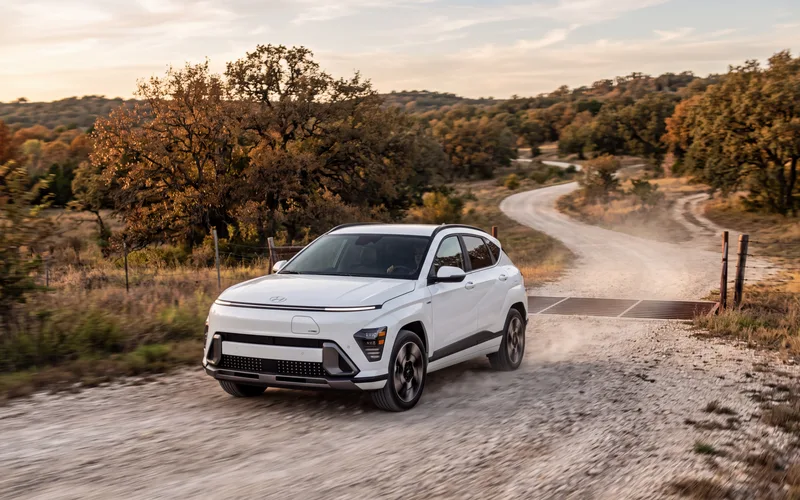 Hyundai KonaSubcompact SUVBetter at: Power and warranty
For similar money you get up to 190 hp, an optional hybrid and a 10-year/100,000-mile powertrain warranty — directly fixing the Trailblazer's three biggest weaknesses.
Compare 1.54D
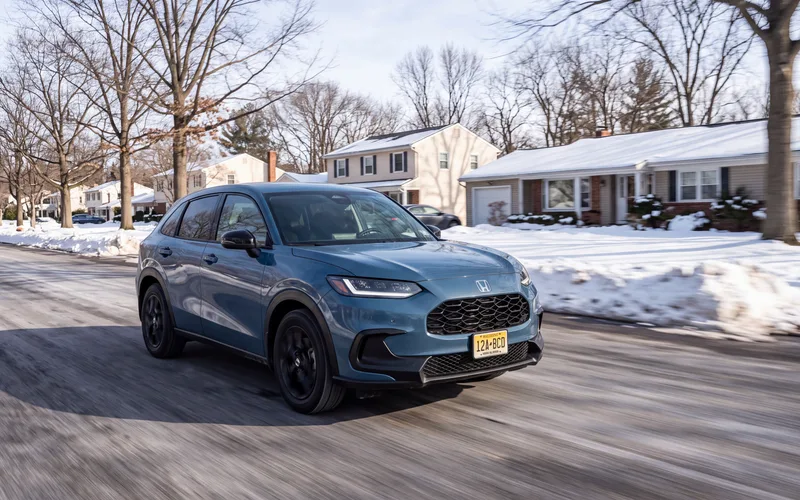 Honda HR-VSubcompact SUVBetter at: Resale value
A quieter, better-built subcompact with stronger predicted reliability and resale, for buyers who plan to keep the car a long time.
Compare 1.21D
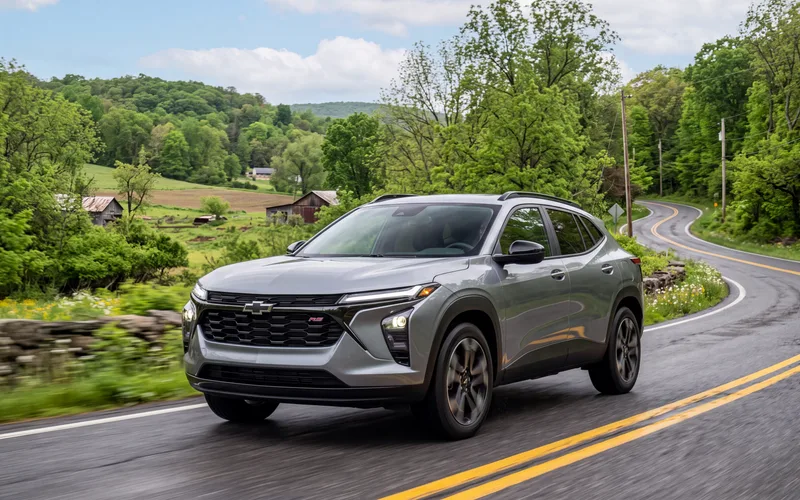 Chevrolet TraxSubcompact SUVBetter at: Price
The same engines and tech in a longer, cheaper package from the same dealer — the obvious pick if you don't need all-wheel drive.
CompareHow it's evolved
6 scored model years · 2021–2026
Subject scores by year
Hover or tap a score to see what moved it versus the year before. A corner mark flags a big swing.
| Year | Performance | Efficiency | Safety | Space | Cost | Reliability | Tech | Use-case | Driving | Value |
|---|---|---|---|---|---|---|---|---|---|---|
| 2026 | 22 | 72 | 54 | 41 | 64 | 67 | 62 | 58 | 52 | 68 |
| 2025 | 22 | 67 | 53 | 41 | 62 | 67 | 62 | 58 | 52 | 70 |
| 2024 | 22 | 66 | 55 | 41 | 61 | 68 | 62 | 58 | 52 | 71 |
| 2023 | 22 | 66 | 57 | 41 | 61 | 69 | 52 | 57 | 52 | 68 |
| 2022 | 22 | 66 | 62 | 41 | 68 | 69 | 53 | 58 | 52 | 66 |
| 2021 | 22 | 62 | 61 | 41 | 67 | 65 | 53 | 58 | 52 | 70 |
Compare two years
Best fit & conditions
Higher scores mean a better fit for that use case. Learn more about use-case fit →
Subject profile
Academic Probation · NHTSA safety recalls
Jun 10, 2021Equipment: mechanical: accessory scissor/screw/bottle jack/lift: standThe emergency jack, if not positioned as directed in the vehicle owner's manual, can fracture while in use.
Defect
General Motors, LLC. (GM) is recalling certain 2020-2022 Buick Encore GX and 2021-2022 Chevrolet Trailblazer vehicles. The emergency jack, if not positioned as directed in the vehicle owner's manual, can fracture while in use.
Risk
A fractured jack can cause the vehicle to collapse, increasing the risk of injury.
Remedy
Dealers will replace the jack, free of charge. Interim owner notification letters informing owner of the safety risk are expected to be mailed July 26, 2021. A second notice will be mailed once remedy parts become available. Owners may contact Buick customer service at 1-800-521-7300 or Chevrolet customer service at 1-800-222-1020. GM's number for this recall is A212335470.
NHTSA campaign 21V440000 ↗Manufacturer no. A212335470135,400 vehicles potentially affected (all models in the campaign)Owners notified Jul 29, 2021Filed by General Motors, LLCFiled as TRAILBLAZERSep 24, 2020Service brakesSensor connection contamination in the electronic brake boost system may cause an interruption of communication between the sensor and the brake boost system.
Defect
General Motors LLC (GM) is recalling certain 2020 Chevrolet Corvette and Cadillac CT4, CT5 and XT4, 2021 Chevrolet Trailblazer, and 2020-2021 Buick Encore GX vehicles. Sensor connection contamination in the electronic brake boost system may cause an interruption of communication between the sensor and the brake boost system.
Risk
If communication with the sensor is interrupted, the electronic brake boost assist could be lost. Extra pedal force will be required to slow and stop the vehicle, increasing the risk of a crash.
Remedy
GM will notify owners, and dealers will replace the electronic brake boost module, free of charge. The recall began December 9, 2020. Owners may contact Chevrolet customer service at 1-800-630-2438, Cadillac customer service at 1-800-333-4223, or Buick customer service at 1-800-521-7300. GM's number for this recall is A202307260.
NHTSA campaign 20V588000 ↗Manufacturer no. A2023072603,677 vehicles potentially affected (all models in the campaign)Owners notified Dec 9, 2020Filed by General Motors LLCFiled as TRAILBLAZERSep 3, 2020Seats · Seats: critical fastenersThe rear attachment bolts of one or both front seats may not have been installed.
Defect
General Motors LLC (GM) is recalling certain 2020 Buick Encore GX and 2021 Chevrolet Trailblazer vehicles. The rear attachment bolts of one or both front seats may not have been installed.
Risk
If an occupied front seat is missing the rear attachment bolts, it may move during a crash, increasing risk of injury to the occupant.
Remedy
GM will notify owners, and dealers will inspect seat attachments for both front seats and install attachment bolts as needed, free of charge. The recall began October 1, 2020. Owners may contact Chevrolet customer service at 1-800-630-2438 or Buick customer service at 1-800-521-7300. GM's number for this recall is A202304380.
NHTSA campaign 20V537000 ↗Manufacturer no. A202304380105 vehicles potentially affected (all models in the campaign)Owners notified Oct 1, 2020Filed by General Motors LLCFiled as TRAILBLAZERMay 21, 2020Equipment: other: labels · TiresThe certification label on these vehicles does not provide the tire size and cold tire pressure information for front and rear tires, as required. As such, these vehicles fail to comply with Federal Motor Vehicle Safety Standard Number 110, "Tire Selection and Rims."
Defect
General Motors LLC (GM) is recalling certain 2021 Chevrolet Trailblazer vehicles factory-equipped with optional 17-inch sport terrain tires. The certification label on these vehicles does not provide the tire size and cold tire pressure information for front and rear tires, as required. As such, these vehicles fail to comply with Federal Motor Vehicle Safety Standard Number 110, "Tire Selection and Rims."
Risk
If drivers are uninformed and overinflate or underinflate their tires, this may increase the risk of a crash.
Remedy
GM will notify owners, and will mail corrected labels for customers to apply, free of charge. The recall began July 1, 2020. Owners may call Chevrolet customer service at 1-800-222-1020. GM's number for this recall is A202304070.
NHTSA campaign 20V295000 ↗Manufacturer no. A20230407020 vehicles potentially affected (all models in the campaign)Owners notified Jul 1, 2020Filed by General Motors LLCFiled as TRAILBLAZER
1 recall on other model years of the Trailblazer (2024–2026)
Aug 20, 2026Back over prevention: sensing system: cameraThe rearview camera screen may display a distorted or blank image.
Defect
General Motors, LLC is recalling certain 2024-2025 Buick Envista, 2024-2026 Buick Encore GX, Chevrolet Trailblazer, and 2025 Chevrolet Trax vehicles. The rearview camera screen may display a distorted or blank image.
Risk
A rearview image that does not display correctly reduces the driver's view behind the vehicle, increasing the risk of a crash.
Remedy
Dealers will inspect and replace the rearview camera, if necessary, free of charge. Letters informing owners of the safety risk were mailed September 17, 2026. Another letter will be mailed once the parts are available. Owners may contact Chevrolet customer service at 1-800-222-1020 or Buick customer service at 1-800-521-7300. GM's number for this recall is A262554900. Vehicle Identification Numbers (VINs) involved in this recall became searchable on NHTSA.gov on August 20, 2026.
NHTSA campaign 26V539000 ↗Manufacturer no. A262554900306,511 vehicles potentially affected (all models in the campaign)Owners notified Sep 30, 2026Filed by General Motors, LLCFiled as TRAILBLAZER
Source: NHTSA Office of Defects Investigation recall database, model years 2021–2026. Recalls are listed by model year as the manufacturer filed them; whether a specific car is affected depends on its VIN — check a VIN at nhtsa.gov ↗. NHTSA model names matched to this page: TRAILBLAZER.
Detailed scoring by subject
1Performance & PowertrainThe Trailblazer's lowest-graded category.0.00F
2021 is the US launch year of the current generation. The volume LT FWD comes standard with the 1.2L ECOTEC turbo three-cylinder (137 hp); the 1.3L (155 hp) is the step-up.
The volume 1.2L makes 162 lb-ft, near the bottom of the SUV band; the 1.3L adds only 12 lb-ft.
The volume 1.2L FWD needs roughly ten seconds to 60 mph, past the slow end of the SUV band; the 1.3L is only modestly quicker.
Both engines are small turbo triples whose thrum is always audible and gets loud when worked, which is often at 137 hp. There's no coarse vibration, but delivery feels strained rather than smooth.
FWD models use a CVT that reviewers call slick and well matched to the low-torque engines, though it drones under hard throttle. AWD models get a 9-speed automatic that shifts unobtrusively.
GM rates the Trailblazer at 1,000 lbs whatever the engine or drivetrain. That's the floor of the SUV band and enough only for a small utility trailer.
AWD can be ordered across most of the range but is never standard, and it requires the 1.3L/9-speed. It is a basic on-demand system with no low range or torque vectoring.
The ACTIV trim adds off-road suspension tuning, a skid plate, sport-terrain tires and Terrain Select, which is fine for dirt roads and snow. There's no low range or locker for real trails, and LS/LT FWD clearance is 7.5 in.
There are two engines, but both are small turbo three-cylinders 18 hp apart. No hybrid, PHEV or EV variant is offered, which leaves a gap against electrified rivals like the Kona and Niro.
2Efficiency & RangeMid-pack among this car's ten categories.2.16C
The volume LT FWD with the 1.2L turbo and CVT is rated 29 mpg combined for 2021. That's strong for a gas subcompact SUV, though the optional 1.3L FWD is better.
28 mpg city is near the top of the gas SUV band.
31 mpg highway is only mid-pack. The optional 1.3L FWD does better on the highway at 33 mpg.
A 13.2-gallon tank is small even for a subcompact, so decent mileage still yields under 400 miles per fill.
At fueleconomy.gov's current prices, the volume 1.2T FWD costs about $2,250 a year to fuel, on the cheaper side for SUVs.
Both engines run on regular unleaded with no premium recommendation. Neither 2021 engine is flex-fuel.
3SafetyMid-pack among this car's ten categories.2.14C
The 2021 is the launch year of the current (2021–) Trailblazer. Early builds rated 4 stars overall, but GM made structural changes on July 14, 2020 and NHTSA's re-test gave post-change builds — the bulk of 2021 production — 5 stars overall.
The 2021 Trailblazer earned the IIHS 2021 Top Safety Pick+ award with Good ratings in every crashworthiness test, including both small-overlap tests, the original side test, roof strength and head restraints.
Chevy Safety Assist is standard on every trim (AEB, front pedestrian braking, forward collision alert, lane keep assist with lane departure warning, following distance indicator, IntelliBeam). Blind-spot and rear cross-traffic alert are an optional package from LT up, and adaptive cruise is offered only on ACTIV/RS, so two of the five headline aids are absent on most cars.
The standard system rates Superior in IIHS's vehicle-to-vehicle test and Advanced in the daytime pedestrian test, but there is no nighttime pedestrian result and the pedestrian test shows only partial speed reduction in the 25/37 mph runs.
Side Blind Zone Alert, Lane Change Alert and Rear Cross Traffic Alert come only in the optional Driver Confidence Package, not offered on the base L/LS and standard on no trim. The systems only alert; there is no braking or steering intervention.
Lane Keep Assist with Lane Departure Warning is standard on every trim but only nudges the car back from the line; no lane centering is available on any 2021 trim.
Camera-based adaptive cruise is optional only on the ACTIV and RS; reviewers found it smoother than expected, but it is unavailable on the L/LS/LT and has no lane-centering highway-assist layer, so most cars have conventional cruise.
Super Cruise was never offered on the Trailblazer, and the 2021 lacks even lane centering, so there is no hands-free option.
IIHS rates two headlight variants: the LED projector low beams (upper trims) are Good, and the halogen projectors on lower trims are Acceptable, with fair-to-inadequate reach on curves. IntelliBeam auto high beams are standard on both.
Thick rear roof pillars and no third side window make rear and over-the-shoulder visibility poor, a frequent reviewer complaint. Compensation is limited to a standard rear camera, with blind-spot monitoring and rear park assist optional.
IIHS rates LATCH ease of use Acceptable: complete lower-anchor sets in the two outboard rear seats, with the anchors set too deep in the cushion, plus a tether-only center seat. The subcompact rear bench rules out three car seats across.
4Space & ComfortOne of the Trailblazer's weakest categories.0.75F
2021 is the US launch year of the current-generation Trailblazer. Every trim (L, LS, LT, ACTIV, RS) is a two-row, five-seat subcompact SUV.
The tall, boxy roofline gives 40 in of front headroom, which is generous for a subcompact.
40.9 in of front legroom is adequate for most drivers but near the bottom of the SUV-wide band.
38.4 in of second-row headroom is mid-band for all SUVs and roomy for a subcompact.
Rear legroom is the Trailblazer's packaging highlight: ahead of most subcompact rivals and level with some compact SUVs. The 2021 launch spec was published as 39.4 in, and later model years restate it as 39.0 in with no change to the body.
No 2021 Trailblazer has a third row. It is strictly a five-seat, two-row SUV, so this item is in the low band by definition.
25.3 cu ft behind the rear seat beats most subcompacts but sits at the floor of the SUV-wide band, which runs up to full-size utilities.
54.4 cu ft is good for a subcompact but just under the 55 cu ft floor of the SUV band, so it scores zero on the absolute scale.
From LS up, a fold-flat front passenger seatback and flat-folding rear seats create a long load floor, and the cargo floor is adjustable. Door bins, the console and cubbies are ordinary, so storage is clever for the class without any standout feature.
The front seats suit most people, though Consumer Reports finds the cushion soft and short on thigh support. The volume LT includes a power driver seat for 2021, and the rear bench comfortably seats two adults.
The ride is comfortable on the highway but firmer than expected over big bumps, especially on the ACTIV and RS's larger wheels. It is composed most of the time without leading the segment.
Consumer Reports calls the cabin loud, with road rumble on coarse pavement and an ever-present three-cylinder hum. It is below average for the class.
The volume LT includes heated front seats, a power driver seat and remote start, and a heated steering wheel is available higher up. There are no ventilated seats or rear climate controls, and L and LS are sparse.
5Cost of OwnershipOne of the Trailblazer's strongest categories.2.53C+
The launch-year L FWD with the 137-hp 1.2L turbo three-cylinder listed at $19,000 before destination. With the $995 destination charge in force at launch, it was $19,995 delivered, well below the floor of the SUV band. Later 2021 builds carried a higher destination charge, and KBB lists the L at $20,195.
LT is the volume trim, at $23,600 before destination or $24,595 delivered, which is below the $27,000 floor of the SUV band. The 1.3L turbo is optional on LT, and AWD (which requires the 1.3L and 9-speed automatic) adds about $1,500–$2,000.
This is an estimate that lands mid-pack for the class. The small turbo three-cylinders and the CVT or 9-speed are not cheap to service, and GM covers only the first maintenance visit. It is set just below the later-year blend because no 2021-specific 5-year cost-to-own projection was retrievable.
The 2021 was bought into the 2021–2022 chip-shortage used-car spike, and its residuals held up far better than later model years'. Sources disagree widely: CarEdge's 69% looks inflated by the spike, while KBB's L-trim trade-in value implies about 50%, so this takes a midpoint.
GM's bumper-to-bumper coverage is 3 years/36,000 miles, the industry minimum and the bottom of the band. Hyundai Kona and Kia Seltos rivals offer 5 years/60,000 miles.
The powertrain is covered for 5 years/60,000 miles, the floor of the band and half the 10-year/100,000-mile term Hyundai and Kia give their competing subcompact SUVs.
Chevrolet includes one maintenance visit in the first year/12,000 miles and 5 years/60,000 miles of roadside assistance and courtesy transportation. OnStar and connected services came only as trials in 2021, since the 8-year OnStar Basics inclusion began with the 2025 model year. That is short included maintenance with basic roadside, which puts it at the low end of the middle band.
$24,595 volume-trim price minus its estimated resale value after 5 years (55% retained, or about $13,527) leaves about $11,068 in depreciation. Add the projected $5,800 in 5-year maintenance and repairs, and owning this vehicle for 5 years costs about $16,868 in total.
6Reliability & QualityOne of the Trailblazer's strongest categories.2.37C+
J.D. Power gives the 2021 Trailblazer 84/100 for quality and reliability, a good score for the class. 2021 was the launch year of the generation, though, and owner reports cite premature brake wear, slow-shifting transmissions and infotainment freezes. It lands in the upper-average band, a notch below the more mature 2023.
Chevrolet has run better than the industry average in J.D. Power's Vehicle Dependability Studies over this period, including 5th overall in 2023. Consumer Reports keeps the brand mid-pack, so it is a solid mainstream brand but not consistently top-5 across sources.
As the generation's launch year, the 2021 carries all four of its recalls. Two are safety-relevant: loose rear bolts on the front seats, and a sensor fault that can drop electronic brake-boost assist. The other two are minor (a tire-placard label and the emergency jack). All were small-population campaigns fixed by dealer remedies, so there is nothing systemic, but the record is noticeably busier than 2023's clean slate.
Front-drive models use the 1.2L LIH or 1.3L L3T turbo three-cylinder with a CVT, and AWD models get the 1.3L with a nine-speed automatic. Both engine families were new for 2021 and have reports of turbo oil-seal leaks, carbon buildup and start-stop faults. The CVT has shudder and slow-shift complaints. There is no catastrophic failure pattern, but the powertrain was completely unproven in its launch year.
The pre-refresh cabin has a 7-inch touchscreen standard, an 8-inch screen on upper trims and an analog cluster. Hard plastics dominate, and reviewers rank its materials behind rivals such as the Mazda CX-30. That is acceptable for the price but below the class's better cabins.
Assembly is generally solid for the class, but this is the first model year from GM Korea's new Trailblazer line. Consumer Reports owners report squeaks, rattles, wind noise and weather-stripping complaints, and the seat-bolt recall points to launch-year assembly issues.
Chevrolet has one of the densest US dealer networks, with roughly 2,800 franchised stores, so service is easy to reach nationwide, including in rural areas. Its service satisfaction runs at or slightly above the mass-market average in J.D. Power's Customer Service Index.
The Trailblazer shares its VSS-F platform, Ecotec turbo-three engines and transmissions with the Buick Encore GX, so parts are high-volume and cheap, and routine maintenance costs little. The exceptions are turbocharger and CVT repairs, which are expensive, and the aftermarket for these small turbo threes is thinner than for conventional four-cylinders.
7Technology & InfotainmentGrades below the middle of the scale.1.54D
The volume LT has the standard 7-in touchscreen. An 8-in screen is optional through the Technology Package, and the 11-in screen didn't arrive until the 2024 refresh.
Chevrolet's Infotainment 3 is simple and quick, and physical climate and volume controls remain. The small 7-in screen on volume trims looks dated beside rivals' 8-in units.
Wireless Apple CarPlay and Android Auto became standard on every 2021 Trailblazer built from September 2020, including the base 7-in system. That was rare in the class at launch.
No embedded navigation is offered on any trim, so owners route through phone projection or OnStar turn-by-turn. Native voice control is basic.
The L has four speakers and LS/LT have six. A seven-speaker Bose system comes in the Technology Package, a real but modest upgrade.
The 2021 car uses analog gauges with a small monochrome Driver Information Center. The Technology Package upgrades it to a 4.2-in color DIC, but a full digital cluster wasn't offered until 2024.
OnStar-connected GM vehicles of this era can receive some infotainment and module software over the air. There are no feature-adding, whole-vehicle updates.
The myChevrolet app offers remote start, lock/unlock, locate and vehicle health, and the LT has factory remote start. Remote commands need an OnStar plan after the trial, and there is no phone-as-key.
Front USB-A and USB-C ports are standard. Rear charging ports and a 120V outlet are optional, and wireless charging comes only in the Technology Package.
The volume LT adds keyless open with push-button start and remote start; L and LS use a traditional key. A hands-free power liftgate is optional through the Sun and Liftgate Package, and there is no phone-as-key.
A rear camera is standard, with an HD camera in the Technology Package. Rear Park Assist requires the Driver Confidence Package, and there is no surround view or automated parking.
No 2021 Trailblazer trim or package offers a head-up display.
8Use-Case FitMid-pack among this car's ten categories.1.90C-
About 39 in of rear legroom and 25.3 cu ft behind the second row make two car seats plus a stroller easy for a subcompact. The IIHS 'Acceptable' LATCH rating (anchors set deep in the seat) and a bench too narrow for three seats hold it back.
It earned an IIHS Top Safety Pick+ and a five-star NHTSA overall rating. Chevy Safety Assist (AEB with pedestrian detection, lane keep, forward collision alert) is standard on every trim. Blind-spot monitoring and adaptive cruise cost extra, and the 'Good' headlights require the Technology Package.
An adult-friendly rear seat and 25.3 cu ft of luggage space make medium trips pleasant. Rear amenities are thin (no rear climate controls, optional rear charging), and highway noise wears on everyone over long days.
Light steering, a compact footprint and standard wireless phone projection make daily driving simple. The drawback is the volume 137-hp 1.2L turbo three-cylinder with CVT, which is slow to 60 mph and buzzy when merging.
29 MPG combined on regular fuel from the volume 1.2T FWD, plus cheap tires and consumables, make it an inexpensive non-hybrid commuter. Hybrid rivals and the AWD version's 28 MPG keep it out of the top band.
A roughly 174-in length and a 37.4-ft turning circle make it easy to thread through the city. Thick rear pillars limit three-quarter visibility, and park sensors are optional.
A 1,000-lb tow rating and 137–155 hp three-cylinders leave no real work headroom. Its one work asset is the fold-flat front passenger seat, which swallows long loads.
Small-displacement turbo three-cylinders with a CVT have no fleet or hard-duty track record. As a launch year of a new engine family, the 2021 model also has more early-build complaints than later years.
It is better provisioned than most subcompacts, with an adjustable cargo floor, fold-flat passenger seat, roof rails from LT and an available trailering hitch. There are no tie-down tracks or washable surfaces.
About 380 miles of range from the 13.2-gal tank and a comfortable highway ride make medium tours pleasant. Cabin noise, three-cylinder drone when passing, and adaptive cruise available only in packages limit endurance.
The ACTIV is a credible gravel-road car, with off-road-tuned suspension, sport-terrain tires, available AWD and roof rails. The 1,000-lb tow limit and lack of low range keep it a soft-roader.
25.3 and 54.4 cu ft of cargo space beat most subcompacts. The fold-flat front passenger seat creates a channel for items up to about 8.5 ft, and the adjustable floor, roof rails and available hitch add flexibility.
9Driving ExperienceOne of the Trailblazer's weakest categories.1.49D
It is secure and predictable but not nimble, with noticeable body roll. It stays controlled in avoidance maneuvers, and reviewers found it pleasantly composed for the price.
The electric steering is light and reasonably accurate but gives little feedback: precise enough, but numb.
Stopping power is adequate in avoidance testing, but reviewers find the pedal touchy and hard to modulate smoothly.
The volume 137-hp 1.2L turbo three-cylinder with CVT is adequate around town but strained on the highway, at about 10 s to 60 mph. The 155-hp 1.3L (with a 9-speed on AWD) is better but is not the representative configuration.
Both engines are three-cylinders with a constant thrum that gets louder under load. It is intrusive rather than merely audible.
The 37.4-ft turning diameter is tighter than the midpoint of the SUV band.
The upright, tall-roofed seating gives a good forward view and easy entry, and the volume LT has a power driver seat. A soft front cushion, a small screen and poor rear three-quarter visibility keep it mid-band.
A 10-second 0–60 time, a droning three-cylinder, numb steering and body lean make it an appliance. The RS changes the looks, not the chassis.
10Value & Market PositionThe Trailblazer's best-graded category.2.71B-
Every trim gets a 7-inch touchscreen with wireless Apple CarPlay/Android Auto and Chevy Safety Assist (AEB, lane keep assist, forward collision alert, auto high beams). That is competitive for the price. The entry L is sparse, though, with steel wheels, cloth seats, and the 1.2L engine and FWD only. The 11-inch screen and digital cluster did not arrive until the 2024 refresh.
It is good value. About $20,000–$26,400 delivered (before AWD) buys a roomy, stylish subcompact with standard active safety and wireless phone projection. The trade-off is the slow 137-hp 1.2L turbo and CVT at the lower trims.
Choice is wide for a subcompact: five trims (L, LS, LT, ACTIV, RS), two turbo three-cylinders (1.2L and 1.3L), and FWD or AWD. There are distinct off-road-flavored (ACTIV) and sport-look (RS) variants, and the price steps are well spaced from under $20,000. No hybrid is offered.
Its first full model year was a hit, with roughly 100,000+ US sales despite GM's chip-shortage production cuts. That made it one of the top-selling subcompact crossovers and pushed it past the Trax and Encore in GM's own lineup.
Chevrolet is a neutral mainstream badge with no aspirational pull and no real drag. The revived Trailblazer name brought some recognition but no premium, and resale trails Honda, Toyota and Subaru rivals over the long run.
Early in 2021 there were modest launch-year financing offers, but the semiconductor shortage then sharply reduced inventory. For most of the 2021 model year, subcompact crossovers sold near or above MSRP with scarce incentives, which left buyers little to negotiate.
2021 is the launch year of this generation, an all-new subcompact crossover with current GM infotainment and a new three-cylinder turbo family. The first refresh did not come until 2024, so 2021 buyers faced no near-term redesign risk.
Well reviewed for its styling, space, tech and price but rarely the pick of the class. Reviewers criticize the lethargic base engine and mediocre cabin materials. It ranks mid-pack in the subcompact SUV rankings and has no 10Best, NACTOY or comparison-test wins.