

The verdict
A mixed-report sports car, strong on value and held back by efficiency.
Overall 2.30 (C+) across 10 graded subjects. Its strongest is value & market position at 3.21 (B+), its weakest efficiency & range at 0.00 (F). 4 of 10 subjects grade at C− or better.
Jump to scoresStrengths
- Value & Market Position
- Performance & Powertrain
- Reliability & Quality
What holds it back
- Efficiency & Range
- Use-Case Fit
- Technology & Infotainment
Top alternatives
Cars shoppers cross-shop with the Ford Mustang 1.92C-
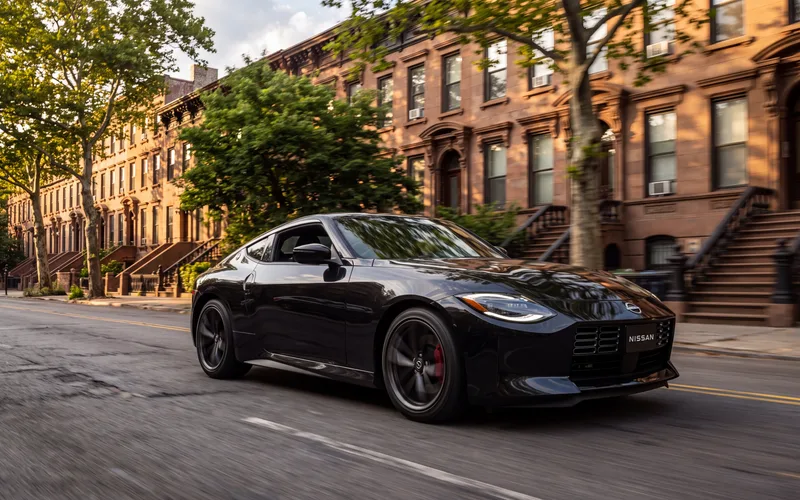 Nissan ZSports CarBetter at: Agility
Similar money buys a twin-turbo V6 with a manual in a lighter, more compact package that's easier to live with on tight roads.
Compare 2.30C+
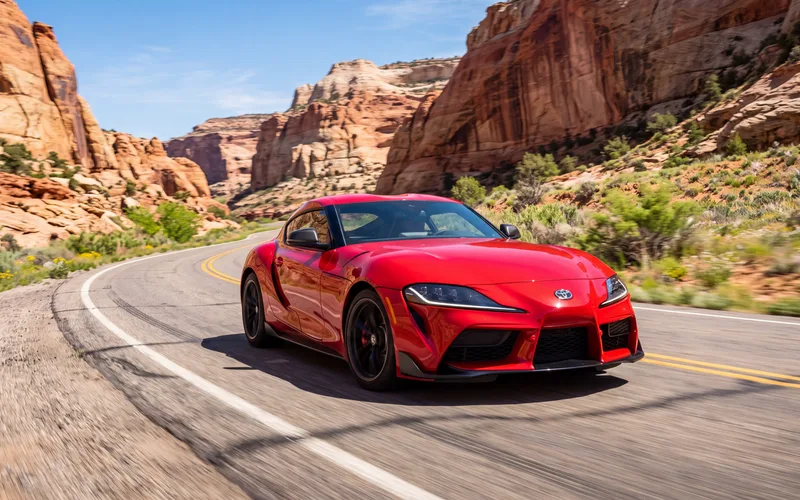 Toyota GR SupraSports CarBetter at: Handling
A sharper, more precise chassis for drivers who value handling balance over V8 torque and sound.
Compare 2.88B-
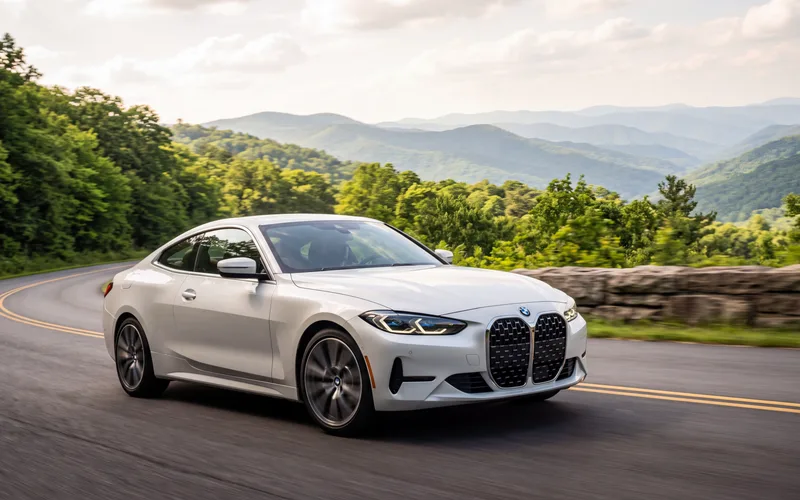 BMW 4 SeriesLuxury CoupeBetter at: All-weather usability
Available all-wheel drive, a much nicer interior, and modern highway assist make it the better everyday car in any climate.
CompareHow it's evolved
10 scored model years · 2017–2026
Subject scores by year
Hover or tap a score to see what moved it versus the year before. A corner mark flags a big swing.
| Year | Performance | Efficiency | Safety | Space | Cost | Reliability | Tech | Use-case | Driving | Value |
|---|---|---|---|---|---|---|---|---|---|---|
| 2026 | 74 | 37 | 55 | 51 | 49 | 73 | 71 | 37 | 71 | 78 |
| 2025 | 73 | 37 | 55 | 51 | 50 | 72 | 71 | 37 | 70 | 79 |
| 2024 | 73 | 37 | 55 | 51 | 52 | 67 | 70 | 37 | 71 | 79 |
| 2023 | 73 | 33 | 52 | 50 | 51 | 70 | 57 | 37 | 71 | 69 |
| 2022 | 73 | 31 | 62 | 49 | 47 | 73 | 55 | 36 | 71 | 68 |
| 2021 | 73 | 34 | 54 | 51 | 53 | 73 | 52 | 37 | 71 | 71 |
| 2020 | 73 | 11 | 54 | 52 | 49 | 72 | 48 | 36 | 72 | 77 |
| 2019 | 73 | 37 | 48 | 50 | 56 | 72 | 51 | 35 | 73 | 76 |
| 2018 | 73 | 32 | 56 | 50 | 51 | 68 | 51 | 34 | 70 | 76 |
| 2017 | 68 | 38 | 38 | 50 | 51 | 66 | 37 | 32 | 68 | 75 |
Compare two years
Best fit & conditions
Higher scores mean a better fit for that use case. Learn more about use-case fit →
Subject profile
Trims & configurations
3 trimsScores above reflect the volume trim. Per-trim specs and scores are rolling out — the full lineup:
Detailed scoring by subject
1Performance & PowertrainOne of the Mustang's strongest categories.2.96B-
Volume GT 5.0L Ti-VCT Gen 3 Coyote V8 rated 460 hp (unchanged from 2018 refresh); base 2.3L EcoBoost turbo four makes 310 hp with a new 330-hp High Performance Package tune for 2020 (Focus RS block); Bullitt 480 hp (final year); Shelby GT350 526 hp flat-plane Voodoo V8; new-for-2020 Shelby GT500 supercharged 5.2L Predator makes 760 hp — the most powerful street-legal Ford ever at the time.
GT V8 delivers 420 lb-ft; EcoBoost 2.3T makes 350 lb-ft (unchanged across base and 330-hp HPP variants); Shelby GT500 tops the range at 625 lb-ft courtesy of the 5.2L supercharged Predator V8.
Instrumented tests of the 2020 GT 10AT with Performance Package land around 4.1–4.3 s; manual GT 4.4–4.5 s; new Shelby GT500 with 7-speed Tremec dual-clutch shattered previous Mustang records at 3.3 s to 60 mph. EcoBoost High Performance Package trims 0–60 to roughly 5.1 s vs. 5.5 s for the standard EcoBoost.
The Gen 3 Coyote 5.0 is smooth and free-revving to 7,500 rpm with immediate throttle response, and the GT350's Voodoo flat-plane 5.2 revs to 8,250 rpm with sports-car character. EcoBoost 2.3T pulls cleanly with strong low-end but reviewers still note some coarseness under hard load — placing the composite in the upper 70s rather than the premium-brand 80s tier.
Ford's 10R80 10-speed automatic delivers quick, decisive shifts that keep the V8 in its powerband and rarely hunts in daily driving. The Getrag MT82 6-speed manual comes with rev-matching on GT and is one of the last affordable V8 manuals, though shift feel is notchy versus Miata/BRZ benchmarks. The new-for-2020 GT500's 7-speed Tremec dual-clutch is a step-change in shift speed and refinement at the top of the range.
Every 2020 Mustang trim is rear-wheel drive only — Ford has never offered AWD on the S550 Mustang, unlike Dodge Challenger GT (AWD available on V6), Nissan GT-R, or Porsche 911 Carrera 4. Scores at the low end of the guidance for RWD-only.
Five distinct gas powertrains available for 2020 — 2.3T EcoBoost (with 330-hp HPP tune), 5.0 GT V8, 5.0 Bullitt (final year), 5.2 flat-plane Voodoo GT350, and new-for-2020 5.2 supercharged Predator GT500 — one of the widest spreads in the segment. But there is zero electrification (no hybrid, PHEV, or EV variant), which per the item's 'includes electrified options' criterion caps the score below the top band.
2Efficiency & RangeThe Mustang's lowest-graded category.0.00F
Volume-trim GT 5.0L V8 with the 10-speed automatic returns an EPA 19 MPG combined — well below the 22–60 coupe band, reflecting the naturally aspirated 460-hp V8. EcoBoost 2.3T stretches the range to 25 combined, while the high-output Shelby models drop to 14–16.
EPA city rating of 16 MPG on the GT V8 10AT sits below the 20–60 coupe band — heavy 3,700-lb curb weight and 460-hp NA V8 hurt urban efficiency. EcoBoost lifts city to 21 MPG.
GT V8 10AT hits 25 MPG on the highway — just below the 26–58 coupe band floor. The 10-speed's tall top ratios help, but the pony-car frontal area and 460-hp V8 keep it below efficient rivals. EcoBoost 2.3T reaches 32 hwy.
16.0-gallon tank × 19 MPG combined yields roughly 304 miles of GT range — sits near the low end of the 280–650 coupe band. The EcoBoost trim stretches to ~400 mi on the same tank; the Shelby GT500 falls to ~224 mi.
EPA estimates ~$2,650/yr for the GT V8 auto at 15,000 mi/yr on premium fuel — near the high end of the 600–2,800 coupe cost band. EcoBoost drops annual fuel cost to roughly $2,050 on premium; Shelby GT500 pushes past $3,500.
Ford recommends 91-octane premium for peak rated output on both the 5.0L Coyote and the 2.3L EcoBoost, but the engines are calibrated to run safely on 87-octane regular with reduced power — 'premium recommended, not required' territory. No E85 flex-fuel option, no diesel, no plug-in charging. Sits in the middle of the 50–79 guidance band.
3SafetyGrades below the middle of the scale.1.64D
NHTSA awarded the 2020 Ford Mustang 2-door coupe a 5-star overall rating: 4-star frontal driver / 5-star frontal passenger, 5-star side barrier and side pole tests, and a 4-star rollover result. Overall combined into a 5-star NHTSA rating for the S550 coupe.
The 2020 Mustang did not earn any IIHS award (no Top Safety Pick or TSP+). Crashworthiness was mixed for the S550: Good in moderate-overlap front, side, roof strength, and head restraints, but only Acceptable in driver-side small-overlap and Marginal in passenger-side small-overlap. Middle of the guidance band.
For the 2020 model year, Ford Co-Pilot360 was NOT standard on the Mustang — it was bundled into optional Safe & Smart and Equipment Group packages. Standard safety on 2020 base coupes was limited to a rear-view camera, hill-start assist, AdvanceTrac stability control, and tire-pressure monitoring; BLIS, Pre-Collision Assist with pedestrian detection, lane keeping, adaptive cruise, and auto high-beams were all option-package items. Falls into the lower band because key ADAS features are locked to option packages.
When equipped with the optional Pre-Collision Assist with Pedestrian Detection, the 2020 Mustang's front crash prevention performed adequately in IIHS testing; the system was rated Superior for vehicle-to-vehicle at low speed. Pedestrian and nighttime performance were weaker and not individually re-tested for the Mustang. Adequate daytime, weaker night/pedestrian result places it in the middle of the guidance band.
BLIS (Blind Spot Information System) with Cross-Traffic Alert was optional in 2020, part of the Safe & Smart Package or higher Equipment Groups — not standard on base EcoBoost or GT. Alert-only (no active steering intervention). Middle-of-band because it is available but not standard.
The 2020 Mustang's Lane-Keeping System (optional) provides lane-departure warning and a corrective steering nudge only — Ford did not offer true lane centering on the Mustang. Reviewers described it as functional but reactive, with obvious wander on longer highway stretches; hits toward the lower half of the middle band because it is optional and non-centering.
Adaptive Cruise Control was optional on 2020 Mustangs (part of the Adaptive Cruise Control option or Equipment Group 401A) and, when equipped, functioned smoothly enough in reviews but did not integrate with lane centering into a true highway-assist mode. Middle of the guidance band because it is capable but optional, and there is no combined highway assist.
Ford's BlueCruise hands-free system did not exist for the 2020 model year (it launched with the 2021 F-150 / Mustang Mach-E). The 2020 Mustang has no hands-free driving option of any kind. Bottom of the guidance band.
The 2020 Mustang offered LED headlamps with signature lighting standard on EcoBoost Premium and GT (halogens on the base EcoBoost's lower configurations were available). IIHS rated the 2020 Mustang headlights Acceptable on higher trims with LED equipment and Marginal on lesser configurations. Auto high-beams were optional (Co-Pilot360 package), not standard. Sits between the middle and lower bands.
Reviewers consistently flagged the S550 Mustang coupe's compromised sightlines — thick B/C pillars, a high beltline, a small rear window and fastback slope create significant blind zones. The standard rear-view camera helps when backing up; a 360-degree camera was not offered on the 2020 coupe. Below-average visibility, in line with other 2-door sports coupes.
The 2020 Mustang coupe is nominally a 4-seater but LATCH access requires folding a front seat, ducking under the low roofline, and reaching into a tight rear bench. Rear headroom is limited enough that many rear-facing child seats contact the sloping backlight. IIHS Ease-of-Use for LATCH is Acceptable, but real-world 2-door access is difficult — firmly in the tight-quarters band.
4Space & ComfortGrades below the middle of the scale.1.47D
2020 Mustang coupe seats four in a 2+2 layout — two front buckets and a tight bench for two in back.
37.6 inches front headroom for coupe without moonroof; drops to 34.8 in when optional moonroof is fitted.
Class-leading 44.5 inches of front legroom — one of the roomiest cabins for a front driver in any coupe.
Rear headroom of 34.8 inches sits below the coupe band floor — the sloping fastback roof means adults will graze the headliner.
30.6 inches of rear legroom is well below the coupe band and adequate only for kids or short trips — adults find the back seat cramped.
13.5 cubic feet of trunk space is competitive within pony/sports coupes — notably larger than the Camaro's 9.1 cu ft and roughly sedan-typical.
Basic center console bin, small cupholders, and modest door pockets — nothing clever for the segment. Reviewers commonly note limited small-item storage compared with modern sedans.
Front buckets are well shaped and supportive for long drives (Recaro sport seats optional on Premium/PP/GT350); rear bench is tight, unsupportive, and adult-hostile.
Standard suspension leans firm but is livable on most roads; optional MagneRide adaptive dampers meaningfully improve compliance on Performance Package and Bullitt. Camaro is stiffer, so Mustang rates slightly higher for daily ride.
Road, tire, and exhaust noise are noticeable at highway speed; GT and Bullitt add active exhaust drone. Not a refined GT cabin — quieter than Camaro but well behind luxury coupes.
Dual-zone automatic climate, heated and ventilated front seats, and heated steering wheel are available on Premium trims and above; base EcoBoost is more sparsely equipped. Rich options list but many are trim-locked.
5Cost of OwnershipGrades below the middle of the scale.1.31D
2020 Mustang EcoBoost Fastback opened at $26,670 MSRP + $1,095 destination — one of the lowest entry prices in the sports-coupe class and well below the coupe-band midpoint.
The 5.0L V8 GT Fastback is the iconic volume Mustang configuration; EcoBoost Premium ($32,780) sits below it and GT Premium ($40,975) above. 2020 also introduced the all-new supercharged GT500 and was the final year for the Bullitt and GT350.
Sports-coupe consumables (sport tires, performance brakes, V8 oil/plug service on GT) push maintenance above sedan norms, but Ford's broad dealer network and mainstream parts pricing keep the Mustang meaningfully cheaper to service than European sports coupes. Voluntary Ford PowerUp / EcoBoost service intervals are standard 10,000 mi.
The 2020 Mustang has proven a resale standout for a mainstream American coupe — pandemic-era used-market strength and enduring V8 demand pushed 5-year retention above segment average. GT and Shelby variants track a few points above EcoBoost; the sold-out 2020 GT500 residuals remained near sticker for years.
Ford's standard new-vehicle bumper-to-bumper coverage for the 2020 Mustang was 3 years / 36,000 miles — the industry floor and the low end of the coupe normalization band.
Ford powertrain coverage on the 2020 Mustang is 5 years / 60,000 miles — the industry floor, far behind Hyundai/Kia's 10-year plans and at the bottom of the coupe normalization band.
No complimentary scheduled maintenance program on the 2020 Mustang (unlike BMW/Toyota/Jaguar). Ford does include 5-year/60,000-mile Roadside Assistance — above industry norm — plus a FordPass Connect connected-services trial with remote start/lock via the app. Absent free service caps the score below the mid-range.
$36,975 volume-trim price minus its estimated resale value after 5 years (51% retained, or about $18,857) leaves about $18,118 in depreciation. Add the projected $5,900 in 5-year maintenance and repairs, and owning this vehicle for 5 years costs about $24,018 in total.
6Reliability & QualityOne of the Mustang's strongest categories.2.90B-
The 2020 Mustang is a mature 6th-year S550 with generally favorable predicted-reliability signals from J.D. Power (Quality & Reliability rated 'Great', ~82/100) and RepairPal reliability rating 3.5/5. Consumer Reports predicted reliability is average-to-above-average, held back mainly by the well-documented Getrag MT-82 6-speed manual shift-feel and durability complaints on GT trims.
Ford ranked mid-to-lower pack in Consumer Reports 2020 brand reliability (around 18th of 26 brands) and hovered near industry average in J.D. Power's 2020 Vehicle Dependability Study — competent but well behind Toyota/Lexus/Porsche leadership.
The 2020 Mustang carries roughly 6-8 NHTSA recalls covering items such as instrument cluster software, brake fluid contamination on GT500, seat-belt pretensioner, and rearview camera image loss — typical volume for the model year with no catastrophic powertrain fires or systemic mechanical failures.
The 5.0L Coyote V8 (Gen 3, 460 hp) has a decade-long track record of high-mileage durability in F-150 and Mustang applications; the 2.3L EcoBoost I4 is proven across the Ford lineup. The 10-speed automatic has held up well, but the Getrag MT-82 6-speed manual has documented shift-quality and durability weaknesses that cap the score below the Coyote's ceiling.
The 2020 Mustang's cabin (2018-refresh S550 dashboard) mixes acceptable soft-touch surfaces on the upper dash with abundant hard plastics on the door cards, lower console, and rear panels — reviewers consistently flag it as functional and retro-charming but below the material richness of German rivals at similar price points.
Six years into the S550's Flat Rock assembly, panel gaps and body assembly are generally consistent; scattered owner reports of interior rattles and trim fitment issues persist but are not systemic. J.D. Power's 2020 Initial Quality Study placed Ford brand near industry average.
Ford operates one of the densest US dealer networks (~3,000 Ford dealers in 2020), making Mustang service accessible from virtually anywhere in the country. J.D. Power Customer Service Index places Ford near mass-market average — adequate but not standout service satisfaction.
The Mustang has arguably the largest aftermarket support of any modern car — S550 parts are abundant, competitively priced, and available from countless suppliers (Ford Performance, Steeda, Roush, LMR, AmericanMuscle, Summit Racing). OEM parts are inexpensive for the segment, and mainstream Coyote/EcoBoost service is straightforward at any Ford dealer or independent shop.
7Technology & InfotainmentOne of the Mustang's weakest categories.1.22D
The 2020 Mustang (S550 post-2018 refresh) carries an 8-inch center touchscreen with SYNC 3 as standard on every trim — EcoBoost, GT, Bullitt, Shelby GT350, and Shelby GT500. No larger screen is offered.
SYNC 3 is a clean, reasonably quick tile-based interface with a preserved volume knob and useful hard buttons — praised for intuitiveness when new, but by 2020 the graphics and processing feel a step behind newer Uconnect/MBUX/iDrive rivals.
Wired Apple CarPlay and wired Android Auto are standard across all 2020 Mustang trims via SYNC 3, but wireless projection is not offered — that capability arrived only with SYNC 4 in later Ford models.
SYNC 3 offers button-press voice commands with basic natural-language handling and optional built-in navigation with SiriusXM Traffic Link on Premium trims. Functional but most owners default to Google/Apple Maps via phone projection.
Base 6-speaker system is thin; the 9-speaker Shaker audio (optional/standard depending on trim) is respectable, and the top-tier Bang & Olufsen 12-speaker premium system delivers strong sound for the class though not class-leading.
A 12-inch fully digital, fully configurable LCD instrument cluster is optional on EcoBoost Premium and GT Premium trims and standard on Bullitt/Shelby GT350/GT500 — not standard on the volume EcoBoost fastback, which uses an analog+LCD hybrid cluster.
SYNC 3 in the 2020 Mustang supports over-the-air map and Wi-Fi software updates for the infotainment head unit only — Ford's whole-vehicle Power-Up OTA program launched later with SYNC 4 and does not cover this generation.
FordPass Connect (embedded 4G LTE modem) is standard on Premium and above, enabling remote start, lock/unlock, vehicle locate, and vehicle-health checks via the FordPass phone app. Trial period covers a few years; some features require paid renewal.
Ports are all USB-A (no USB-C in this SYNC 3 platform), with a 12V outlet and optional Qi wireless phone charging pad on Premium trims. Adequate for 2020 but dated ports and no household outlet cap the score.
Intelligent Access proximity entry with push-button start is standard on Premium and above and standard on GT/Bullitt/Shelby; remote start via FordPass phone app is included with FordPass Connect. No phone-as-key on this generation.
Rear-view camera is standard (federal requirement) and front and rear parking sensors are available in option packages, but a surround-view/360-degree camera is not offered on any 2020 Mustang trim — a real gap for a long-hooded coupe with poor rear visibility.
Ford does not offer a head-up display on any 2020 Mustang trim, including the Shelby GT350 and GT500 — a capability gap versus Camaro (which offered HUD as optional) and most European rivals.
8Use-Case FitOne of the Mustang's weakest categories.0.37F
Two-door coupe with 30.6 in of rear legroom, 34.8 in of rear headroom, and long, heavy doors that swing wide in tight parking. LATCH anchors are provided at the outboard rear positions (IIHS ease-of-use Acceptable), but installing a rear-facing seat requires sliding a front seat far forward, and the fastback roofline forces adults to duck under to buckle a child. Regularly frustrating for daily family logistics.
The 2020 Mustang coupe earned a 5-star overall NHTSA rating but IIHS did not name it a Top Safety Pick — small-overlap driver was only Acceptable and small-overlap passenger only Marginal. Critically, Ford Co-Pilot360 was NOT standard on 2020 Mustangs: Pre-Collision Assist with AEB/pedestrian detection, BLIS, lane-keeping, and auto high-beams were bundled in the optional Safe & Smart Package, and adaptive cruise cost extra on top of that. Families buying an affordably-equipped Mustang get very little standard driver assist — meaningful gaps at family-friendly price points.
Front seats are supportive over long distances, but 30.6 in of rear legroom and the low fastback roof make the back seat borderline unusable for adults or older children beyond short hops. No rear climate vents and no rear USB port on any 2020 trim. The 13.5 cu ft trunk swallows a couple of soft-side bags but not the amount of gear a family of four packs for a long weekend, and there is no rear-seat entertainment option.
The volume EcoBoost pairs a 310-hp 2.3L turbo with a well-sorted 10-speed automatic that is smooth in traffic and comfortable on standard 18-in wheels, and SYNC 3 with CarPlay/Android Auto is standard. But adaptive cruise, BLIS, and lane-keeping are all optional for 2020, and there is no lane-centering system — daily-commute stress relief is missing at the volume price point. Forward visibility over the long hood is good, but the fastback C-pillars create real over-shoulder blind spots and the wide 75.4 in body feels large in narrow lanes.
The volume 2020 EcoBoost automatic returns 21/32/25 mpg on the EPA cycle — reasonable for a rear-drive sports coupe but nothing exceptional. Ford recommends 91-octane premium for peak power on both EcoBoost and GT, though regular is acceptable with reduced output. Upgrading to the GT drops combined MPG to 19 and lifts annual fuel cost above $2,650. Performance tires, brakes, and Ford dealer service on a specialty coupe run above mainstream commuter cars.
At 188.3 in long and 75.4 in wide with a ~40 ft turning circle, the Mustang is a mid-size two-door that feels large in urban lots and city intersections. Standard rear-view camera helps, but the long, heavy doors, low nose, and thick C-pillars make tight parking and lane changes a chore compared with a compact coupe like the Audi TT. A 360-degree camera is not offered on any 2020 coupe trim, and rear parking sensors are optional rather than standard.
Not rated for towing in the US — Ford does not publish a factory tow capacity for the 2020 Mustang, and dealer-installed hitches are for bike racks only. No bed, no meaningful payload, 13.5 cu ft trunk with a shallow aperture. There is essentially no work capability of any kind.
The Coyote 5.0L V8 and EcoBoost drivetrain are proven and Ford's dealer network is broad, but the Mustang is engineered as a performance coupe with cloth/ActiveX/leather surfaces, low-profile tires, and no wash-out cargo area. It has no fleet-work reputation and is not marketed for hard-use duty.
No factory 120V outlet, no factory tow hitch, no roof-rack system, no meaningful bed or bed-substitute. Cargo tie-downs are limited to a few small hooks in the trunk. The Mustang has a large aftermarket for performance parts, not for work.
Front sport seats are comfortable over long hauls (Recaros optional on GT PP and standard on Shelby models), and the 10-speed auto's tall top gears settle the cabin at highway cruise. The EcoBoost's 16-gal tank at 32 hwy mpg gives ~510 mi of highway range while the GT drops to ~400 mi at 25 hwy mpg. Adaptive cruise is optional rather than standard on the volume trim and there is no lane-centering or BlueCruise (that arrived on other Ford models in 2021), meaningfully limiting fatigue reduction on multi-hour drives.
Rear-wheel drive only — no AWD offered at any price — ~5.0 in of ground clearance, low-profile summer or all-season performance tires depending on trim, no roof rails, and no factory hitch. Snow performance depends entirely on aftermarket winter tires, and any gravel road with real texture will scrape the front splitter. Pavement-bound with almost no outdoor utility.
13.5 cu ft coupe trunk is above average for a sports coupe (roughly 2x a Porsche 718's front trunk), and a split-folding rear seatback opens a small pass-through for long items like skis or a golf bag. But there is no hatchback flexibility, no roof rails, no factory hitch, and the shallow trunk-lid opening limits bulky-item loading.
9Driving ExperienceGrades above the middle of the scale.2.85B-
S550 GT with Performance Package Level 2 (MagneRide adaptive dampers, 19x9.5/10.5-in wheels wrapped in Michelin Pilot Sport 4S — 2020 was the last year for the PS4S spec before Ford controversially downgraded to Pirelli P-Zeros for 2021) is composed and grippy for a ~3,850-lb muscle coupe; instrumented tests place the GT PP2 at ~0.94–0.98 g on the skidpad. GT350 with its flat-plane 5.2 and stiffer chassis pulls above 1.02 g, and the new-for-2020 GT500 with the Carbon Fiber Track Pack tops 1.10 g. Chassis composure and better tires push 2020 slightly above the 2021 volume GT (Pirelli PP tire spec) and above Camaro (70.6), though S550 remains a step behind the newer S650 (76) and mid-engine Cayman.
S550 electric power steering with three modes (Comfort/Normal/Sport) is precise and consistent — Sport mode adds the natural weighting reviewers prefer — but the setup is widely characterized as numb, a known S550 weakness that Ford's own S650 chief engineer later publicly acknowledged. Adequate for daily driving, forgettable for the driver looking for real communication versus Porsche, BMW, or Nissan Z benchmarks.
Base GT gets 13.9-in front / 13.0-in rear rotors with 4-piston front calipers — firm pedal, competent stops. GT with Performance Package adds larger front rotors and 6-piston Brembos; GT350 has 15.5-in Brembo 6-pistons and 60-0 mph in the mid-90-ft range; new-for-2020 GT500 delivers 16.5-in 6-piston Brembos (largest ever fitted to an American production car at launch) and 60-0 in ~99 ft. Volume GT scores in the strong-mid tier for the segment; halo capability available but not standard.
The Gen 3 5.0L Coyote V8 (2018+) is torque-rich from idle, free-revving to 7,500 rpm, and calibrated with immediate throttle response — no lag, minimal shudder. Ford's 10R80 10-speed automatic shifts crisply and rarely hunts on the GT. The Getrag MT-82 6-speed manual is engaging with rev-match, though shifter feel is more mechanical than premium. GT350's Tremec TR-3160 6-speed pairs beautifully with the Voodoo flat-plane 5.2. New-for-2020 GT500's Tremec 7-speed dual-clutch is a step-change in shift speed and refinement at the top of the range. EcoBoost 2.3T pulls hard but is coarser under load.
Active Valve Performance Exhaust (standard on GT, Bullitt, GT350, GT500; optional on EcoBoost) produces the signature Coyote V8 growl with selectable Quiet/Normal/Sport/Track modes — celebrated character rather than intrusion. GT350's flat-plane Voodoo 5.2 produces one of the most distinctive engine notes in the modern era, and GT500's supercharged Predator adds a supercharger whine to the growl. Vibration through wheel and pedals is low at cruise. Enthusiasts score this a highlight; long-haul commuters may find Sport/Track modes loud.
Ford's published curb-to-curb turning diameter for the 2020 Mustang is 37.8 ft on the S550 chassis — mid-band for the coupe segment and better than the S650's 40.0 ft.
S550 interior offers a low, buckets-forward driving position with supportive standard front seats (Recaro sport buckets available on GT PP, standard on GT350 and GT500). Column tilt/telescope range is generous and toggle-switch controls are intuitive. Downsides: 8-inch SYNC 3 touchscreen is small by 2020 standards, hard plastics on lower dash, no power seat recline, and coupe visibility is compromised by thick C-pillars and narrow rear glass typical of fastback muscle cars — though reviewers note it's still better than the Camaro's notorious sightlines.
The 2020 Mustang lineup is one of the deepest driver's-car benches in Ford's history — rear-wheel drive 460-hp Coyote V8 GT with rev-matched Getrag manual, final-year Bullitt (480 hp, distinctive shifter), 526-hp flat-plane Voodoo GT350 that revs to 8,250 rpm, and the halo 760-hp supercharged Shelby GT500 with 7-speed DCT. Character, sound, and responsiveness combine into a definitional 'long-way-home' machine. Only track-focused rivals (Cayman, 911) rate meaningfully higher for pure driver engagement; the GT350's flat-plane V8 and GT500's straight-line ferocity give 2020 an edge over 2021 (Bullitt and GT350 both discontinued after 2020).
10Value & Market PositionThe Mustang's best-graded category.3.21B+
For 2020, Ford Co-Pilot360 became standard across the lineup (Pre-Collision Assist with AEB, Blind Spot Info System, Lane Keeping System, rear cam) alongside SYNC 3 with 8" touchscreen, dual exhaust, LED headlights, and FordPass Connect 4G Wi-Fi. Base EcoBoost still ships with cloth seats and a 4.2" analog cluster; the 12" digital cluster, dual-zone climate, adaptive cruise, and heated seats are Premium-trim or option-pack extras.
Standout dollar-per-performance in 2020: GT at ~$36K delivered a 460-hp naturally-aspirated 5.0L Coyote V8 with a 6-speed manual — no rival V8 RWD coupe came close at that price. Shelby GT500 at ~$74K produced 760 hp, undercutting a Corvette ZR1 (~$120K) or Porsche 911 Turbo by tens of thousands per horsepower. EcoBoost HPP added 330 hp for under $32K, matching or beating Camaro Turbo 1LE and Nissan 370Z on value.
One of the widest sports-car lineups ever offered in 2020: EcoBoost, EcoBoost Premium, EcoBoost High Performance Package (330 hp), GT, GT Premium, Bullitt, Shelby GT350, Shelby GT350R, and the new Shelby GT500 — in coupe or convertible where applicable. Six-speed manual (Getrag on EcoBoost, MT-82 on GT/GT350/Bullitt, Tremec TR-3160 unavailable this gen) or 10-speed auto; GT500 exclusively a 7-speed Tremec DCT. Performance Package levels 1/2, MagneRide, Recaro seats, active exhaust, and multiple appearance packs.
Segment leader by a wide margin in 2020: 61,090 US units sold (down from 72,489 in 2019 due to COVID), still comfortably ahead of Chevrolet Camaro (29,775) and only marginally behind the surging Dodge Challenger. Sixth consecutive year as the world's best-selling sports coupe by Ford's tally, with strong international volume as well.
The Mustang nameplate remained one of the most culturally recognized in automotive history in 2020, and the newly launched Shelby GT500 added meaningful halo prestige, but Ford as a brand still lacked the aspirational cachet of Porsche, BMW, or Mercedes in the premium coupe space. The pony badge itself pulls buyers who would not otherwise cross-shop other Fords.
2020 was a strong buyer's year on volume Mustangs. COVID-driven demand slump pushed Ford Credit into 0% APR for 72 months and $1,000–$2,500 cash rebates on EcoBoost and GT trims through much of the year. Bullitt and GT350 saw modest discounts once initial buzz cooled; GT500 was allocation-limited and frequently commanded dealer markups.
The S550 sixth generation launched for MY2015 and was refreshed for MY2018 (10-speed auto, updated Coyote V8 to 460 hp, digital cluster option, LED lighting), making 2020 the sixth year of the platform and two years past refresh — mid-to-late cycle. However, the debut of the Shelby GT500 provided a genuine freshness event at the top of the range, and Ford had not yet announced the S650 successor (which would arrive for MY2024).
Strong 2020 review year anchored by the GT500 launch. Shelby GT350 earned Car and Driver's 10Best (its fifth consecutive year on the list); GT500 was named a MotorTrend Best Driver's Car finalist and drew widespread "one of the greatest muscle cars ever" verdicts from Car and Driver, Road & Track, and MotorTrend. Base EcoBoost was well-reviewed but rarely won comparisons against BMW 2 Series or Nissan Z.