
The verdict
A mixed-report full-size luxury sedan, strong on safety and held back by efficiency.
The 2020 Genesis G90 is a full-size luxury sedan that undercuts the German flagships by roughly $20,000 while matching much of their cabin quality, standard tech and comfort — a genuinely quiet, well-built car backed by a class-leading 10-year/100,000-mile powertrain warranty. The tradeoffs are real: EPA-rated 20 MPG combined, a projected 47% five-year resale value, and a driving experience tuned entirely for comfort rather than engagement. It's the flagship pick for a buyer who wants S-Class-adjacent luxury without S-Class money or prestige, not for someone chasing resale value or back-road thrills.
Jump to scoresStrengths
- IIHS Top Safety Pick+ with a genuinely broad standard ADAS suite
- A cabin that punches above its price
- Best-in-class ownership backing at a lower buy-in
What holds it back
- Thirsty for the segment
- Steep depreciation erases most of the value story
- No hands-free driving, and CarPlay is wired-only
Top alternatives
Cars shoppers cross-shop with the Genesis G90 3.51A-
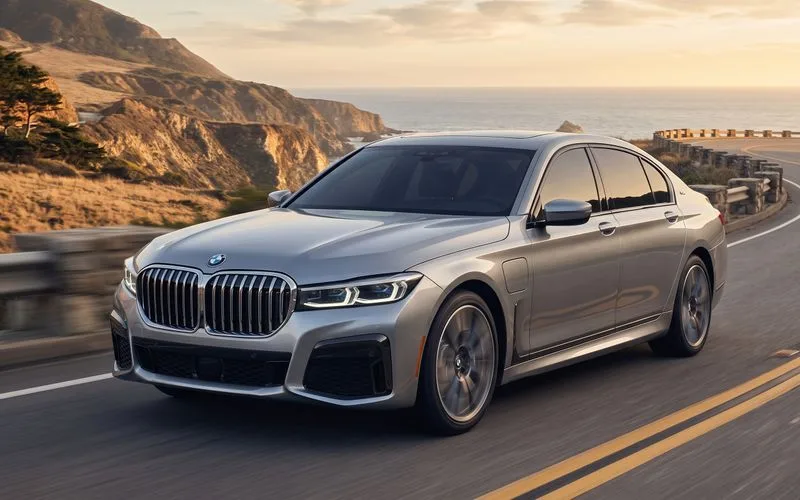 BMW 7 SeriesFull-Size Luxury SedanBetter at: Driving engagement
Costs more once equipped but offers hands-free Highway Assistant, a plug-in 750e and full i7 EV, and a chassis that rewards driving rather than just isolating you from it.
Compare 3.21B+
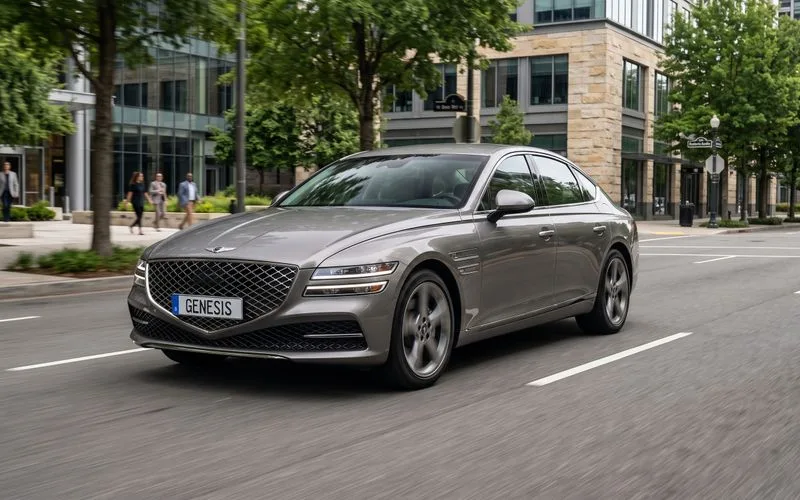 Genesis G80Mid-Size Luxury SedanBetter at: Value
Delivers most of the G90's design, materials and standard-safety story for tens of thousands less, with better resale and newer infotainment including wireless CarPlay.
Compare 3.20B+
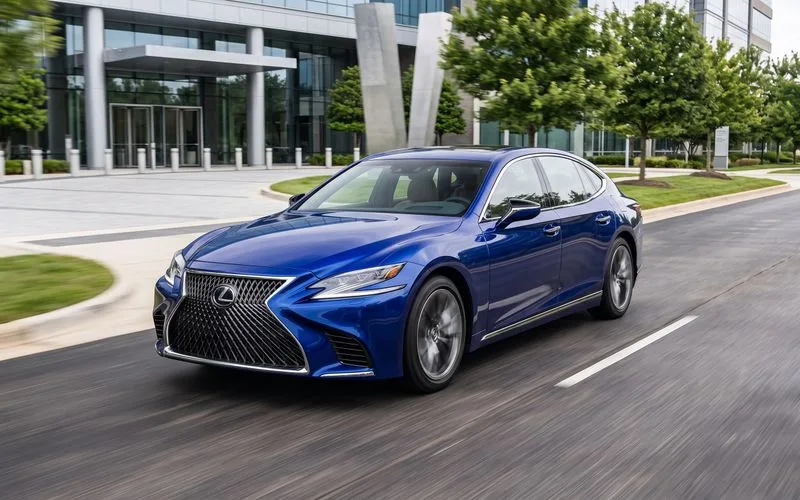 Lexus LSFull-Size Luxury SedanBetter at: Resale value
The safer long-term bet — stronger predicted reliability, roughly 47% five-year value retention against the G90's 37%, and a hybrid powertrain option to cut the fuel bill.
CompareHow it's evolved
10 scored model years · 2017–2026
Subject scores by year
Hover or tap a score to see what moved it versus the year before. A corner mark flags a big swing.
| Year | Performance | Efficiency | Safety | Space | Cost | Reliability | Tech | Use-case | Driving | Value |
|---|---|---|---|---|---|---|---|---|---|---|
| 2026 | 72 | 23 | 78 | 79 | 29 | 78 | 80 | 55 | 72 | 75 |
| 2025 | 71 | 19 | 74 | 73 | 29 | 67 | 80 | 53 | 68 | 74 |
| 2024 | 71 | 19 | 78 | 73 | 29 | 66 | 83 | 53 | 68 | 78 |
| 2023 | 71 | 19 | 79 | 73 | 29 | 63 | 80 | 52 | 68 | 77 |
| 2022 | 71 | 12 | 78 | 77 | 28 | 62 | 62 | 47 | 63 | 63 |
| 2021 | 68 | 13 | 80 | 77 | 28 | 59 | 62 | 47 | 63 | 67 |
| 2020 | 66 | 28 | 80 | 79 | 38 | 62 | 63 | 48 | 62 | 65 |
| 2019 | 66 | 16 | 62 | 80 | 28 | 74 | 55 | 48 | 63 | 66 |
| 2018 | 66 | 16 | 68 | 80 | 40 | 63 | 59 | 47 | 60 | 72 |
| 2017 | 65 | 18 | 68 | 80 | 42 | 66 | 53 | 45 | 64 | 69 |
Compare two years
Best fit & conditions
Higher scores mean a better fit for that use case. Learn more about use-case fit →
Subject profile
Detailed scoring by subject
1Performance & PowertrainOne of the G90's strongest categories.2.48C+
The RWD/AWD 3.3T Premium is the volume trim for the first-generation (HI) G90 in its 2020 carry-over year; the 5.0 Ultimate V8 is the higher-trim option.
Torque figure for the volume 3.3T Premium trim, the same powertrain reported for horsepower.
No single definitive instrumented test surfaced for the 2020-specific 3.3T; multiple outlets testing the same-generation 3.3T V6 cluster in the low-to-mid 5s, so the midpoint of that spread is used.
Reviewers consistently praised the 3.3T twin-turbo V6 for smooth, quiet delivery with minimal turbo lag, competitive with German rivals though not class-leading in outright urgency.
The 8-speed automatic shared across both engines shifts smoothly and unobtrusively, matched to the car's comfort-oriented tuning; not overtly sporty but never hunts or feels harsh.
HTRAC all-wheel drive is offered as an option on both the 3.3T and 5.0 engines but RWD is the standard/base configuration, so AWD is available but not standard across the range, with no low-range or terrain-mode sophistication.
The 2020 G90 offers exactly two gasoline engines (3.3T V6, 5.0 V8) with no hybrid, PHEV or EV variant — a mainstream two-choice lineup with no electrification.
2Efficiency & RangeThe G90's lowest-graded category.0.00F
EPA combined figure for the volume 3.3T Premium trim; the V8 Ultimate trades economy for power.
EPA city figure for the volume 3.3T Premium trim.
EPA highway figure for the volume 3.3T Premium trim.
Computed from the EPA combined MPG for the volume 3.3T trim and the G90's published fuel tank capacity; no manufacturer-quoted range figure was found.
Estimate based on the EPA combined MPG for the volume 3.3T trim at standard 15,000 mi/yr assumptions and premium fuel pricing.
Genesis's owner's manual recommends premium (91+ octane) for the 3.3T and 5.0 engines but does not strictly require it, so the vehicle can run on regular unleaded with a performance/economy tradeoff.
3SafetyThe G90's best-graded category.3.41B+
NHTSA catalogued both 2020 G90 body styles (RWD VehicleId 14120, AWD VehicleId 14133) but never crash-tested either — every rating field returns 'Not Rated'. Six-figure, low-volume full-size luxury sedans routinely go untested under NCAP. The 4.5-star placeholder follows the convention already applied to the untested Audi A8 and to later G90 generations in this dataset, and is arguably conservative given IIHS's clean Good sweep on this same car.
The 2020 G90 (the mid-cycle refresh year) holds IIHS Top Safety Pick+ with Good ratings across every crashworthiness test — driver- and passenger-side small overlap front, moderate overlap front, side, roof strength and head restraints — plus a Good headlight rating, a clean sweep with no build-date qualifier. Genesis was the only brand with a full TSP+ lineup at the time of the award.
The 2020 G90 was a mid-cycle refresh that made Forward Collision-Avoidance Assist (now with cyclist detection), Smart Cruise Control with stop-and-go, Lane Following Assist, Highway Driving Assist, Blind-Spot Collision-Avoidance Assist, Rear Cross-Traffic Collision-Avoidance Assist and Safe Exit Assist standard equipment on both the 3.3T and 5.0 trims — nothing in this suite is trim-gated.
IIHS rated the standard front crash prevention system Superior in the vehicle-to-vehicle test and Advanced (one step below Superior) in the daytime vehicle-to-pedestrian test. No nighttime pedestrian evaluation existed yet for this test cycle, so scored on the best available result rather than penalized for a test that didn't yet exist.
Blind-Spot Collision-Avoidance Assist and the newly-added Rear Cross-Traffic Collision-Avoidance Assist both intervene with corrective braking rather than merely alert, and Safe Exit Assist plus the standard 360-degree Surround View Monitor cover the remaining gaps — all standard equipment on both 2020 trims rather than upper-trim options.
Lane Following Assist and Highway Driving Assist were new for 2020, centering the car through straightaways and gentle curves with only occasional correction needed, per instrumented reviews of the shared Hyundai/Genesis system — scored slightly below the 2021 carryover year for confidence given this is the system's launch model year with less accumulated long-term review data.
Smart Cruise Control offers full-speed-range operation with stop-and-go, and the newly-added Highway Driving Assist automatically adjusts speed for posted limits and curves — a refined, well-integrated pairing standard on both 2020 trims, though it remains a hands-on Level 2 system with no higher automation tier.
No 2020 G90 trim offers hands-free highway driving. Highway Driving Assist is a hands-on Level 2 system that requires hands on the wheel at all times — no Genesis product offered a supervised hands-free system in 2020.
IIHS rated the 2020 G90's standard LED projector headlights Good with low glare across all four tests, and automatic high-beam headlights are standard equipment rather than an upper-trim option — a clean result across the two-trim range.
Reviewers note open sightlines over the shoulder and at the front corners, aided by small corner glass at the base of the windshield pillars, despite thick C-pillars at the rear; a standard 360-degree Surround View Monitor compensates for the remaining blind zones.
IIHS rated the G90's LATCH ease of use Acceptable, docked because the lower anchors sit too deeply in the seat cushions to reach easily, despite otherwise roomy rear doors and seat space typical of a full-size flagship.
4Space & ComfortOne of the G90's strongest categories.3.35B+
Standard 5-passenger configuration across both 2020 G90 trims (3.3T Premium and 5.0 Ultimate, RWD or AWD); no long-wheelbase or 4-seat executive package offered in the US for this model year.
Front headroom exceeds the top of the full-size sedan normalization band; the mid-cycle redesign changed body panels but not the doors or roof, so the greenhouse dimensions carry over.
Exceptionally generous front legroom for the segment, well above the sedan normalization band top, reflecting the G90's long wheelbase (124.4 in).
Second-row headroom sits in the upper portion of the full-size sedan band; unchanged from the 2019 and 2021 model years since the roof and doors were not part of the 2020 mid-cycle redesign.
Rear legroom is solid but mid-pack for a full-size luxury sedan, well short of long-wheelbase rivals; unchanged from adjacent model years on the same body structure.
Trunk volume is about average for a full-size luxury sedan; the 2020 mid-cycle redesign changed the rear fascia and taillight design but not trunk capacity.
Competitive everyday storage — deep console, power-folding hands-free trunk, wireless charging pad, door pockets, three 12V outlets — but no standout storage innovation versus rivals with giga-consoles.
Nappa leather, heated/ventilated power front seats and standard heated rear seats are widely praised for long-haul comfort on the volume 3.3T Premium trim.
The redesigned 2020 G90 delivers a supple, steady ride that reviewers again place just below the Mercedes S-Class benchmark; some body roll and float/wallow appear when the car is hustled through corners.
The 2020 redesign specifically added improved suspension bushings, extra sound-absorbing pads and improved three-seal doors, and reviewers describe the result as even quieter than the outgoing model — road and engine noise virtually non-existent, wind noise banished.
Heated and cooled front seats, heated rear seats, tri-zone climate control and a panoramic sunroof are all standard on the volume 3.3T Premium — a rich comfort package for the class, with ventilated/power rear seats and rear entertainment still reserved for the pricier 5.0 Ultimate.
5Cost of OwnershipOne of the G90's weakest categories.0.48F
2020 G90 launched as a mid-cycle full model change with only two trims; entry price is the 3.3T Premium RWD.
No published trim-mix data for 2020; AWD take rate is typically high for a flagship sedan sold outside Sunbelt markets, and the 3.3T remains the higher-volume engine choice versus the pricier 5.0 Ultimate.
Independent repair-cost aggregation puts 5-year cost well below the luxury-sedan average, helped by low-mileage flagship usage and Hyundai-group parts commonality; 2020-specific data is thin so this leans on model-line estimates.
G90 depreciates roughly 52.7% over 5 years, slightly better than the ~54.9% large-luxury-sedan segment average but still well below mainstream-brand retention.
Genesis's standard New Vehicle Limited Warranty for the 2020 model year is 5 years/60,000 miles, at the top of the segment band.
Genesis's powertrain warranty runs 10 years/100,000 miles, best-in-class and at the top of the segment normalization band.
Every new Genesis, including the 2020 G90, includes 3 years/36,000 miles of complimentary scheduled maintenance plus a 3-year complimentary Genesis Service Valet (pickup-and-delivery service for maintenance and warranty visits) and roadside assistance matched to the warranty term — a white-glove ownership package that was a genuine differentiator versus German rivals in 2020.
$74,700 volume-trim price minus its estimated resale value after 5 years (47.3% retained, or about $35,333) leaves about $39,367 in depreciation. Add the projected $2,822 in 5-year maintenance and repairs, and owning this vehicle for 5 years costs about $42,189 in total.
6Reliability & QualityMid-pack among this car's ten categories.2.20C
Signals diverge by source for this exact model year: J.D. Power's 2020 Initial Quality Study named Genesis the #1 premium brand for a 4th straight year, and the 2023 Vehicle Dependability Study (surveying ~3-year-old vehicles, i.e. this 2020 cohort) placed Genesis #2 among premium brands — but Consumer Reports' predicted reliability for the 2020 G90 specifically is a middling 3/5 (49%), even though CR notes it as the best in its small class.
By the time this cohort's dependability could be measured (JDP's Feb 2023 VDS, covering ~2020-model-year vehicles), Genesis had already built a strong multi-year track record — #1 premium brand in IQS four years running through 2020, then #2 premium brand in VDS — putting the brand solidly ahead of mid-pack, short of the very top spot.
The 2020 G90 (3.3T) is covered by a fire-risk recall for a deteriorating left turbocharger oil feed pipe (production 6/13/2016-9/6/2021), but the original 2019 recall action only covered 2017-2018 G90s — 2020 coverage came later via a 2024 expansion. The fuel-pump recall covering 2022-2023 G90 (built 6/2/2021-9/14/2022) and the starter-assembly recall (2017-2019MY only) both fall outside this model year's production window, leaving one safety campaign rather than the two that bracket 2021-2022 production.
The 3.3L twin-turbo Lambda V6 in this generation is a widely-deployed Hyundai/Genesis/Kia family with no catastrophic failure pattern, but it carries recurring owner-reported issues — coolant weeping from the water pump/thermostat housing and spark-plug erosion under boost causing misfires — that keep it short of a proven, trouble-free high-mileage reputation.
Reviewers consistently single out the G90's cabin materials as class-leading for the money in this facelifted first generation: Nappa leather, open-pore wood, brushed metal and suede-like trim throughout, undercutting S-Class/7 Series pricing while matching much of the tactile quality.
Assembly quality tracks the brand's best-ever showing in this exact model year — Genesis's 2020 IQS result (142 PP100, #1 premium brand, 4th year running) was its strongest yet — corroborating reviewer accounts of tight, rattle-free cabins with no significant panel-gap or squeak complaints.
In 2020 Genesis had zero standalone US retail stores — the first didn't open until April 2022 — so G90 owners were serviced almost entirely through shared Hyundai facilities; a 2019 J.D. Power dealer-experience ranking placed Genesis 24th of 32 brands, four spots below Hyundai itself, the weakest standing of any luxury nameplate at the time.
Actual out-of-pocket repair costs run below rival flagships thanks to Hyundai Motor Group's shared parts bin and strong warranty coverage — RepairPal puts Genesis brand-wide average annual repair cost at roughly $565 with reliability rated 3.5/5 (7th of 30 in the luxury fullsize class) — even though G90-specific parts availability is thinner than high-volume nameplates given low sales volume.
7Technology & InfotainmentMid-pack among this car's ten categories.2.23C
A 12.3-inch touchscreen is standard across the 2020 G90 lineup, mid-band for the sedan normalization.
The mid-cycle redesign refreshed the center stack with wider, thinner vents and updated buttons/knobs; the split-screen infotainment carried over from the prior generation was regarded as quick and logically laid out, with abundant physical controls balancing the touchscreen.
Apple CarPlay and Android Auto are standard but wired-only on this head-unit generation; the same hardware carried into the 2021-2022 model years, which Genesis explicitly confirmed could not support a later wireless-projection OTA update.
Native navigation with real-time traffic is functional and detailed, and the 2020 G90 became the first Genesis model with over-the-air map updates, keeping native nav fresher than before; voice control remains conventional command-based rather than natural-language.
The standard 17-speaker Lexicon premium audio system is a genuine standout, widely praised as class-competitive premium audio.
The volume 3.3T Premium ships with a 7-inch information display between analog gauges rather than a full digital cluster; a full digital gauge display was reserved for pricier configurations on this generation, not standard on the volume trim.
The 2020 G90 debuted as the first Genesis model with OTA navigation map updates — a genuine first for the brand — but the scope remains maps-only, not whole-vehicle software OTA.
Genesis Connected Services / MyGenesis app covers remote start, lock/unlock, vehicle locate and status, bundled complimentary for a term — solid core functions without a class-leading digital key.
A single wireless charging pad plus two USB ports and three 12-volt outlets cover device power on the volume trim — standard wireless charging is a plus, but only two USB ports is modest for a flagship sedan.
Standard proximity smart key, push-button start and remote start with hands-free power trunk cover the core convenience set, though phone-as-digital-key wasn't yet offered on this generation.
A standard 360-degree multiview camera system is genuinely strong for the segment and standard rather than gated to the top trim; 2020 specifically added more camera views plus a new Parking Collision Avoidance Assist function among its nine new safety technologies.
Head-up display is included as standard equipment on the volume 3.3T Premium trim rather than reserved for a top trim, a genuine value-add versus rivals that gate HUD to the priciest configuration.
8Use-Case FitOne of the G90's weakest categories.1.24D
Rear doors and legroom are generous enough for car seats and LATCH anchors are standard, and the 2020 redesign added Safe Exit Assist that warns rear occupants of approaching traffic before opening a door — a genuine kid-safety plus — but the low RWD sedan seating height and formal trunk-first design remain a mediocre daily family setup compared to an SUV or minivan.
The volume 3.3T Premium trim includes nine new-for-2020 safety technologies as standard — Highway Driving Assist, Lane Following Assist, rear cross-traffic avoidance assist, Parking Collision Avoidance Assist, blind-spot monitor, a highway-curve slow-down function, an expanded 360-camera system, Safe Exit Assist, and an updated forward-collision system that detects lane changes and oncoming traffic — and the full 2020 G90 lineup earned the IIHS TOP SAFETY PICK+ award, a standout safety proposition at this price point with no extra-cost gating.
Spacious, notably quieter (improved bushings, sound pads, three-seal doors) and well-cushioned rear seats handle multi-hour trips comfortably, but rear-seat entertainment and rear seat ventilation are Ultimate-trim exclusives and trunk space (15.7 cu ft) is only average for luggage-heavy family trips.
Reviewers describe the redesigned G90 as a relaxing, effortless daily driver with a smooth powertrain, adaptive cruise and new Highway Driving Assist, prioritizing comfort over engagement even though some body float appears when pushed.
The 3.3T Premium is EPA-rated around 17 mpg city / 25 mpg highway, modest for a daily commute in a ~4,700 lb full-size luxury sedan, and luxury-tier consumables push commuting costs above segment average; V8 Ultimate trims rate lower still.
At 204.9 inches long with a 39.2-foot turning diameter, the G90 is a large car to park and maneuver; the standard 360-degree camera system — expanded with more views for 2020 — meaningfully offsets this but doesn't erase the footprint.
As a full-size luxury sedan the G90 carries no towing rating and minimal cargo flexibility — it is not meaningfully work-capable by design.
The G90 is engineered and trimmed for luxury comfort, not fleet or work-duty abuse; there is no fleet-durability reputation to draw on for this application.
There are no tie-downs, onboard work power, or upfit ecosystem — the G90 has essentially zero jobsite practicality.
A notably quieter cabin, supple adaptive suspension, comfortable seating and a new-for-2020 Highway Driving Assist system (with lane centering and curve slow-down) make the redesigned G90 a genuinely strong long-distance tourer with reduced driver fatigue.
Low ground clearance, RWD-biased platform (AWD optional) and no roof/tow provisions for gear make this a pavement-bound luxury sedan with little outdoor utility.
Average 15.7 cu ft trunk with no split-folding rear seat commonly offered on this platform and no roof rails or hitch option, leaving little flexibility for bulky gear.
9Driving ExperienceMid-pack among this car's ten categories.2.19C
The redesigned G90 drives smaller than its size suggests and isn't a 'floaty handful' when hustled, but reviewers still note some body roll and a fair amount of float and wallow in hard cornering — composed rather than genuinely engaging.
Steering is accurate enough to place the car confidently but is tuned light and isolated for comfort, with little genuine road feedback, consistent across this generation.
No specific brake complaints surfaced in 2020 review coverage and the car's confident freeway tracking implies adequate stopping performance for its class, though instrumented stopping-distance data wasn't found for this model year.
The carryover twin-turbo 3.3L V6 paired with the 8-speed automatic is repeatedly praised as smooth, punchy and refined, on par with or ahead of pricier rivals; the 2020 redesign changed body/interior but not this drivetrain calibration.
The V6 is well isolated from the cabin, and the 2020 redesign's improved suspension bushings, added sound-absorbing pads and improved door seals push overall refinement slightly ahead of the outgoing model.
At 39.2 feet curb-to-curb, the G90's turning diameter sits near the wide end of the sedan normalization band (lower is better), reflecting its 204.9-inch overall length and 124.4-inch wheelbase.
Power seat and wheel adjustment ranges, a commanding view out, and a refreshed control layout balancing the 12.3-inch touchscreen with real climate buttons make for a comfortable, easy driving position.
Reviewers again make clear this is a comfort-first flagship rather than a driver's car, though the redesigned chassis does drive smaller and more capably than its size suggests when asked to perform.
10Value & Market PositionMid-pack among this car's ten categories.2.40C+
The 2020 refresh made the G90 loaded at both trims: quilted Nappa leather, 12.3-inch navigation, heated/ventilated front seats, HUD, adaptive cruise, and a full ADAS suite are standard on the entry 3.3T Premium, where German rivals charge extra for equivalent content.
Flagship-level cabin materials, V8 option, and driver-assist tech at a price tens of thousands below the German large-luxury-sedan class is a standout bang-for-buck proposition, even if outright content doesn't quite match a fully loaded S-Class.
Only two trims (3.3T Premium, 5.0 Ultimate) each offered with RWD or AWD — a take-it-or-leave-it lineup versus the dozen-plus configurations German and Japanese flagship rivals offer.
The G90 has been a slow seller in the ultra-competitive full-size luxury sedan segment throughout this generation, moving only a few thousand units annually in the US against S-Class/7 Series volumes.
Genesis was still a young standalone brand in 2020 (split from Hyundai in 2015) building a following through value and service rather than heritage; it lacks the aspirational pull of Mercedes-Benz, BMW, or Lexus but was gaining favorable press for quality and service.
Slow showroom turnover for a low-volume flagship typically means dealers are willing to deal meaningfully below MSRP, though 2020-specific incentive data is sparse.
2020 was billed by Genesis itself as 'a full model change at mid-cycle' — new sheet metal front-to-back except roof and doors, a new interior UI, and OTA navigation updates — making it feel current despite sitting mid-way through a generation that began in 2017.
Reviewers praised the 2020 refresh's value and comfort but the G90 was rarely cited as the class pick against S-Class/7 Series/LS in comparison tests, and it collected no major flagship-segment awards (10Best/NACTOY don't cover this segment; luxury-flagship comparison wins went to established rivals).