
The verdict
A capable full-size luxury sedan, strong on technology and held back by efficiency.
The 2024 Genesis G90 is the full-size luxury sedan that gives you an S-Class experience for about three-quarters of the money — $90,450 buys standard AWD, Nappa leather, a 12.3-inch digital cluster, head-up display, Bang & Olufsen audio, soft-close doors and every driver-assist feature, with no option packages to buy. The cabin is genuinely class-leading, it's one of the quietest cars sold in America, and IIHS named it a Top Safety Pick+. The catch is what happens after you sign: 21 MPG combined on premium fuel runs about $3,700 a year, the trunk is a cramped 12.0 cu ft, and the G90 is projected to shed roughly 60% of its value in five years — a bigger dollar hit than the sticker discount you enjoyed up front. Buy it if you'll drive it a long time and value silence over status; lease or avoid it if you trade cars every three years.
Jump to scoresStrengths
- Everything is standard — there is no options sheet to climb
- One of the quietest, smoothest-riding cars on sale
- A cabin that genuinely competes with cars costing $30,000 more
What holds it back
- It loses money faster than it saves you money
- Truck-like fuel bills from a sedan
- A 12 cu ft trunk that doesn't expand
Top alternatives
Cars shoppers cross-shop with the Genesis G90 3.51A-
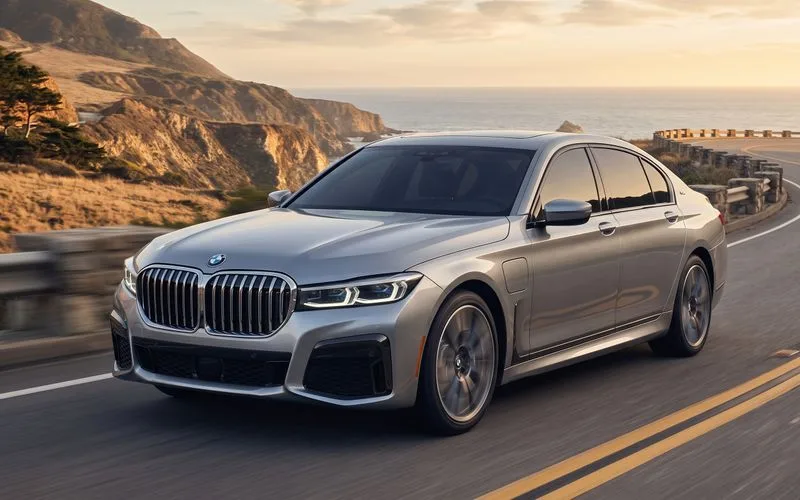 BMW 7 SeriesFull-Size Luxury SedanBetter at: Driving engagement
Costs more once equipped but offers hands-free Highway Assistant, a plug-in 750e and full i7 EV, and a chassis that rewards driving rather than just isolating you from it.
Compare 3.21B+
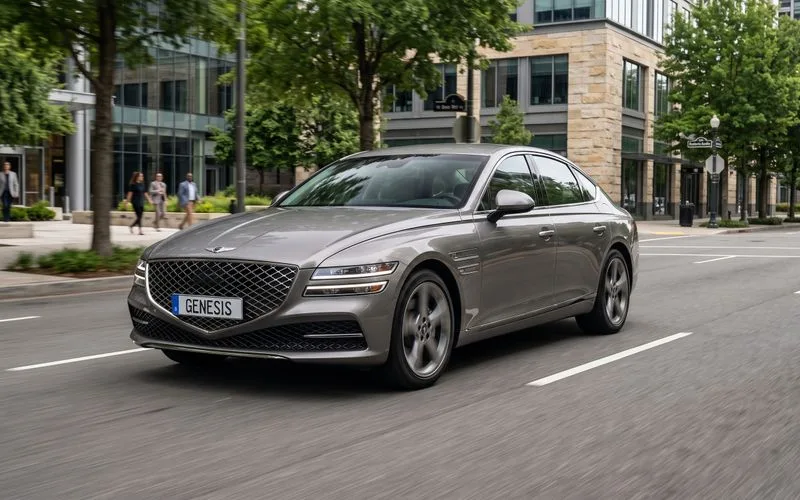 Genesis G80Mid-Size Luxury SedanBetter at: Value
Delivers most of the G90's design, materials and standard-safety story for tens of thousands less, with better resale and newer infotainment including wireless CarPlay.
Compare 3.20B+
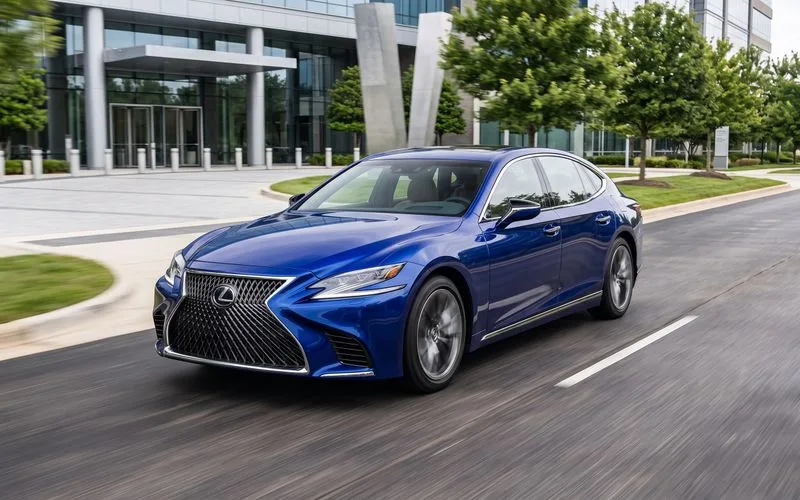 Lexus LSFull-Size Luxury SedanBetter at: Resale value
The safer long-term bet — stronger predicted reliability, roughly 47% five-year value retention against the G90's 37%, and a hybrid powertrain option to cut the fuel bill.
CompareHow it's evolved
10 scored model years · 2017–2026
Subject scores by year
Hover or tap a score to see what moved it versus the year before. A corner mark flags a big swing.
| Year | Performance | Efficiency | Safety | Space | Cost | Reliability | Tech | Use-case | Driving | Value |
|---|---|---|---|---|---|---|---|---|---|---|
| 2026 | 72 | 23 | 78 | 79 | 29 | 78 | 80 | 55 | 72 | 75 |
| 2025 | 71 | 19 | 74 | 73 | 29 | 67 | 80 | 53 | 68 | 74 |
| 2024 | 71 | 19 | 78 | 73 | 29 | 66 | 83 | 53 | 68 | 78 |
| 2023 | 71 | 19 | 79 | 73 | 29 | 63 | 80 | 52 | 68 | 77 |
| 2022 | 71 | 12 | 78 | 77 | 28 | 62 | 62 | 47 | 63 | 63 |
| 2021 | 68 | 13 | 80 | 77 | 28 | 59 | 62 | 47 | 63 | 67 |
| 2020 | 66 | 28 | 80 | 79 | 38 | 62 | 63 | 48 | 62 | 65 |
| 2019 | 66 | 16 | 62 | 80 | 28 | 74 | 55 | 48 | 63 | 66 |
| 2018 | 66 | 16 | 68 | 80 | 40 | 63 | 59 | 47 | 60 | 72 |
| 2017 | 65 | 18 | 68 | 80 | 42 | 66 | 53 | 45 | 64 | 69 |
Compare two years
Best fit & conditions
Higher scores mean a better fit for that use case. Learn more about use-case fit →
Subject profile
Detailed scoring by subject
1Performance & PowertrainGrades above the middle of the scale.2.81B-
2024 is a carry-over year in the second-generation (RS4) G90 launched for 2023, so the volume 3.5T keeps the Smartstream G3.5 twin-turbo V6 at 375 hp. The $99,500 3.5T E-Supercharger adds a 48-volt electric supercharger and mild-hybrid assist for 409 hp @ 5,800 rpm. Strong for the class on paper but short of the V8-adjacent output of a Lexus LS 500 (416 hp) or Mercedes S 500.
391 lb-ft on a plateau starting at 1,300 rpm is the number that actually describes how a G90 is driven — effortless part-throttle shove rather than top-end rush. It is a class-competitive figure that beats the BMW 740i and Audi A8 while trailing the LS 500.
Genesis publishes no 0–60 claim, so this is the consensus of published tests: the base 375-hp 3.5T is quoted around 5.5 s and the supercharged car has been timed at 5.1–5.3 s, which brackets the volume trim just under five and a half seconds. Brisk rather than quick, and deliberately so — isolation is this car's argument, not lap time.
The twin-turbo V6 is near-silent at cruise and pulls cleanly off the bottom of its broad torque plateau, and 2024's added acoustic windshield glass reinforces the hush. The optional 48V electric supercharger is a real engineering answer to turbo lag — it spools boost before the exhaust-driven turbos catch up — rather than a marketing one. It sits below the 7 Series and S-Class only because the Genesis V6 has no particular character or sound quality when extended.
Every 2024 G90 uses Genesis's in-house 8-speed torque-converter automatic with paddle shifters — smooth, unobtrusive at cruise, and decisive about gear choice without hunting, which is exactly the brief here. It stays out of the top band because it lacks the outright snap of BMW's ZF 8HP under hard use and its manual mode is functional rather than engaging.
HTRAC all-wheel drive is standard on both 2024 US trims rather than an option over a rear-drive baseline, with a rear-biased split that varies by drive mode, and it arrives alongside rear-wheel steering. That standard fit is the top tier for this body style; it stops short of a perfect score only because the system is tuned purely for on-road traction — no low range, no terrain modes.
The 2024 US G90 offers one engine in two states of tune — the 3.5L twin-turbo V6, and the same V6 with a 48V electric supercharger and mild-hybrid assist. That is the thinnest slate in full-size luxury: no V8, no plug-in hybrid, and no battery-electric G90 for the US, where the Electrified G90 sold in Korea was never marketed. The 48V variant is genuinely distinct hardware rather than a trim sticker, which is the only thing keeping this off the floor.
2Efficiency & RangeThe G90's lowest-graded category.0.00F
A ~4,900 lb full-size sedan with a twin-turbo V6 and standard AWD returns 21 MPG combined — near the bottom of the gas-sedan band, which is where every non-electrified full-size luxury sedan lands. The 48V mild-hybrid E-Supercharger trim is no better, costing a point at 20 MPG.
City is the worst case: mass and a torque-converter automatic with no meaningful electric assist for low-speed running leave it at 18 MPG. The 48V system on the E-Supercharger exists to spin a supercharger, not to move the car, so it buys nothing in traffic and in fact rates a point lower.
Highway is the G90's best case — a tall top gear and slippery bodywork return 26 MPG — but that is still the low end of the sedan highway band against a field that includes 40-plus-MPG hybrids.
Range is where the G90 partially redeems itself: a 19.3-gallon tank converts mediocre economy into a genuinely useful 405-mile cruising leg, mid-pack for the segment and enough to make a long drive a one-stop affair. It is not, however, the 500-plus miles a more efficient large sedan manages on a comparable tank.
At EPA's standard assumptions the G90 burns roughly 715 gallons of premium a year for a $3,700 bill — a running cost that reads like a full-size truck rather than a sedan, and above the top of the sedan band. The EPA puts it $7,250 worse than the average new vehicle over five years.
The EPA label reads 'Premium Gasoline Recommended' rather than required, so 87-octane is permitted at reduced output and owners have an out a premium-required rival does not offer. In practice nearly every G90 runs 91-octane to reach the published 375 hp, so it is still a real pump-price penalty — which, combined with 21 MPG, is what produces the $3,700 annual bill above.
3SafetyOne of the G90's strongest categories.3.32B+
NHTSA has catalogued the 2024 G90 in both RWD and AWD body styles but has never crash-tested it — every rating field returns 'Not Rated', as it does for the 2023 and 2025 cars, so the entire second-generation (RS4) run is untested. Six-figure, low-volume full-size luxury sedans routinely go unbought by NCAP. The 4.5-star placeholder follows the convention already applied to the untested Audi A8 in this dataset and is arguably conservative: every Genesis model NHTSA has actually tested (G70, G80, GV70, GV80) carries a 5-star overall.
IIHS did test this one, and the 2024 G90 holds Top Safety Pick+ under the tougher 2024 criteria — Good in small overlap front driver and passenger, Good in the original moderate overlap front, and Good in the updated side test. Two things keep it below the high 80s rather than at the top of the band: the updated moderate overlap front test, which grades rear-occupant protection, returned only Acceptable, and the award carries a build-date qualifier — it applies only to cars built after October 2023, when Genesis revised the rear seat belts, so early-build 2024 cars are excluded. Roof strength and head restraints were not rated at all.
Genesis's own 2024 spec sheet marks every driver-assistance feature standard on both the 3.5T and the 3.5T e-Supercharger — there is no safety option package to buy. Forward Collision-Avoidance Assist, Lane Keeping / Lane Following Assist, Blind-Spot Collision-Avoidance Assist, Blind-Spot View Monitor, Rear Cross-Traffic Collision-Avoidance Assist, Safe Exit Assist, Driver Attention Warning, Parking Collision-Avoidance Assist, Advanced Rear Occupant Alert and 10 airbags are all baseline, and the convenience column adds Smart Cruise Control, Intelligent Speed Limit Assist with Highway Driving Assist 2, Surround View Monitor and Remote Smart Parking Assist on the same terms. That is a more complete standard suite than German rivals that still gate blind-spot monitoring and highway assist behind four-figure packages.
A split result under the current IIHS protocols. Pedestrian detection is as good as the test allows: Good in both the daytime and the nighttime vehicle-to-pedestrian evaluations, which is the specific nighttime capability the top band asks for. Vehicle-to-vehicle, however, returned only Acceptable under the much harder 2.0 test IIHS introduced for 2024, which runs to higher closing speeds and into a motorcycle and a semi-trailer as well as a passenger car. Scored at the top of the middle band: the pedestrian half earns the high band outright, the vehicle-to-vehicle half does not.
Best-in-class coverage, standard on both trims and intervening rather than merely chiming. Blind-Spot Collision-Avoidance Assist applies corrective braking when you try to change lanes into an occupied lane; Rear Cross-Traffic Collision-Avoidance Assist brakes autonomously backing out; Safe Exit Assist holds the rear doors against approaching traffic, which matters more than usual on a car whose back seat is the point of it. Layered over that, the Blind-Spot View Monitor throws a live camera feed of the target lane into the digital cluster the moment you signal — a genuine double-check rather than a warning lamp.
Lane Following Assist centering inside Highway Driving Assist 2 is smooth and sits confidently mid-lane rather than ping-ponging between the markings, and HDA 2 adds signal-initiated automatic lane changes that several rivals still reserve for costlier packages. It stays short of the top of the band because the calibration is deliberately conservative — the system hands back earlier than the best systems when lane markings fade, in construction zones, on exit ramps and in heavy weather.
Smart Cruise Control is full-speed-range with stop-and-go and includes the machine-learning mode that adapts following distance and the acceleration/braking ramp to the owner's own driving style, which is the specific thing reviewers credit for making it feel less robotic than rivals. Integrated with HDA 2 and Intelligent Speed Limit Assist it reads navigation and sign data to slow for curves and limit changes, and on the G90 the ride-side of that is smoothed further by the road-preview electronically controlled suspension. It sits just under the top of the band only because it remains a hands-on system with no hands-free tier above it.
There is no hands-free option on the 2024 US-market G90 at any trim or price. Highway Driving Assist 2 is explicitly hands-on — it monitors steering-wheel torque, warns, then disengages if you let go — and the official equipment sheet lists nothing above it. Genesis announced a Level 3 Highway Driving Pilot for the Korean-market G90, but it was repeatedly delayed and was never offered in the United States. In a segment where the 7 Series offers Highway Assistant and the S-Class offers Drive Pilot, this is the flagship's biggest safety-tech deficit; the small non-zero score credits a capable hands-on assist, not any hands-free capability.
The G90's two-line micro-lens-array LED units are the brand's showpiece and are standard along with High Beam Assist, so there is no trim lottery — but IIHS measured them and returned only Acceptable, citing inadequate visibility in some approaches. Uniform Acceptable across the range is squarely the middle band: better than a car whose volume trim gets Marginal lighting, well short of a Good rating. The strength of the technology on paper does not override the measured result.
Natural sightlines are ordinary: 207.7 inches of length, a 76-inch width, a high beltline and a steeply raked rear screen, with rear headrests and the standard power rear sunshades cutting further into the mirror view. What lifts it above mid-pack is thorough, standard camera compensation — a high-resolution Surround View Monitor with a three-quarter perspective for tight spaces, the Blind-Spot View Monitor feeding the cluster on signal, front and rear Parking Distance Warning with Parking Collision-Avoidance Assist, and Remote Smart Parking Assist for spaces too tight to see out of. Nearly every obscured zone has a screen covering it, but you are relying on the screens.
Workable, and not what this car is built around. There are two complete LATCH sets in the outboard rear positions plus a top tether for the centre, and the rear doors open wide onto a comfortable bench — but the lower anchors sit buried deep in the seat bight, the usual luxury-sedan pattern that costs points on ease of use, and the rear compartment is less accommodating than the flagship badge suggests at 37.8 inches of legroom in this standard-wheelbase US car. Heavily contoured rear seats and a raised tunnel make the centre position impractical for a third seat, so three-across is out.
4Space & ComfortGrades above the middle of the scale.2.94B-
Both 2024 US configurations — the 3.5T and the 3.5T e-Supercharger — are five-passenger standard-wheelbase sedans; the long-wheelbase VIP four-seater sold elsewhere is not offered in the US, and Genesis's own spec sheet lists a single 125.2 in wheelbase for the model.
39.4 in sits near the top of the 36-40 in sedan band and is the real-world number rather than a no-sunroof best case, because the panoramic roof is standard equipment on every 2024 US G90.
42.3 in is mid-band for a sedan and unremarkable for a car 207.7 in long — the G90's packaging spends its length on the cabin's width and on rear-passenger presentation rather than on front stretch-out room.
38.0 in of second-row headroom is strong within the 35-39 in sedan band — the G90's roofline stays flatter over the rear bench than the fastback-profiled G80's, so six-footers sit without contacting the suede headliner.
This is the standard-wheelbase G90's genuine packaging weakness relative to its price: 37.8 in is mid-band, essentially level with the smaller G80 and well short of an S-Class or 7 Series, and US buyers get no long-wheelbase alternative. CarBuzz's tester found the room adequate, but the number does not flatter a $90,450 flagship.
12.0 cu ft is near the bottom of the 10-20 cu ft sedan band and is the G90's most-criticized practical shortcoming — CarBuzz calls it the car's major weakness against the S-Class's 22 cu ft and the 7 Series' 13.7. The rear seatback does not fold, so there is no expansion path beyond a ski pass-through.
Competent rather than inventive: a deep covered console with a standard front wireless charging pad, five USB-C ports, usable door bins and a rear armrest with cupholders and its own controller. The wide console and shifter surround eat open shelf space, the rear wireless charger is e-Supercharger-only, the rear seatback is fixed, and there is no underfloor bin, frunk or onboard AC power — nothing here reaches the innovation band.
One of the G90's clearest strengths — Nappa leather, power front seats with massage and power bolsters, heated and ventilated front seats, and heated rear seats, all standard on the volume 3.5T, with CarBuzz calling them 'as adjustable as they are comfortable.' Held below 90 because on the volume trim the rear seats are heated only: ventilation, massage and the rear memory system are e-Supercharger equipment, and 37.8 in of rear legroom caps genuine long-haul back-seat comfort.
The volume 3.5T rides on Electronically Controlled Suspension with Road Preview — the front camera reads the surface ahead and pre-loads the dampers — and reviewers describe the result as wafting and genuinely plush without floating. Scored a notch below what the car could earn because the multi-chamber air suspension and rear-wheel steering that sharpen body control are e-Supercharger-only, so the volume car gets the isolation but not the top-tier body discipline.
Among the quietest cars sold in the US and standard-fit rather than optioned: acoustic laminated glass covers the windshield plus both front and rear side windows, and Active Noise Control is standard on both trims. Reviewers consistently single out the serenity at highway speed; placed just below the very top of the band only because no instrumented dB figure was available to confirm it beats the S-Class outright.
Close to a clean sweep, and almost all of it standard on the single base grade: 3-zone climate control, heated and ventilated front seats, heated rear seats, a heated power tilt-and-telescopic wheel, Mood Curator with power rear and rear-side sunshades, an antibacterial package, adjustable ambient lighting and remote climate via Genesis Connected Services. Short of a perfect score only because ventilated and massaging rear seats — the amenities a flagship's rear passengers most notice — require the $10,300 step to the e-Supercharger.
5Cost of OwnershipOne of the G90's weakest categories.0.00F
The 2024 G90 opens at $89,200 plus a $1,250 destination charge for the standard-wheelbase 3.5T AWD, the only entry point in the US lineup. That is roughly $31,000 under an S 500 4MATIC and about $15,000 under a 7 Series 740i, which is the entire commercial premise of the car.
With only two configurations offered for 2024 and a $10,300 gap between them, the standard-wheelbase 3.5T is the volume car. It is close to fully equipped as it stands — Nappa leather, dual 12.3-inch displays, head-up display, Bang & Olufsen audio, soft-close doors, rear sunshades and the complete driver-assist suite are all standard — so a typical build adds only about $1,000 in paint and interior choices.
Published estimates for this nameplate disagree by a factor of three, so this is a reconciled figure rather than a quoted one. Genesis's three-year complimentary plan absorbs nearly all scheduled service through year three; years four and five then carry flagship consumables — 21-inch tires, large brakes, a twin-turbo V6 — but on Hyundai-group parts pricing rather than German parts pricing, which is why the G90 lands roughly half what a 7 Series costs over the same span.
Full-size luxury sedans depreciate harder than any other body style, and the G90 adds a badge with little used-market equity against Mercedes and BMW. The measured data splits on what the denominator is: retention against transaction price looks like the high 40s, but this item asks for retention against MSRP, and the G90 discounts heavily when new, so the MSRP-anchored number is materially worse.
$91,450 volume-trim price minus its estimated resale value after 5 years (40% retained, or about $36,580) leaves about $54,870 in depreciation. Add the projected $6,300 in 5-year maintenance and repairs, and owning this vehicle for 5 years costs about $61,170 in total.
Five years of bumper-to-bumper coverage tops the sedan normalization band outright and beats every German rival in the segment, which run four years. It is one of two places where the G90's ownership case is unambiguously class-leading.
Ten years on the powertrain is the top of the band and double what the German flagships offer. The caveat matters for resale rather than for the first owner: the long term does not transfer, and a second owner falls back to the remainder of the 5 yr / 60,000 mi basic term.
Among the most complete ownership packages sold in the US, and the flagship gets the fullest version of it: three years / 36,000 miles of scheduled maintenance at no charge, a three-year Genesis Service Valet subscription that collects the car from home or office and leaves a loaner, roadside assistance, and Connected Services that for 2023-and-newer first owners carry no expiration date at all. Short of a perfect score only because the maintenance term runs three years rather than the longer coverage that would define the top of the band.
6Reliability & QualityMid-pack among this car's ten categories.2.45C+
Neither authority produces a usable model-specific prediction for this car, which is itself the finding: Consumer Reports' 2024 G90 reliability page returns "No Detailed Data Available" because US G90 volume is far below the 200–400 survey samples CR needs, and jdpower.com refuses automated fetch. With no direct owner-survey signal, the prediction has to lean on what is observable — and what is observable is unfavorable. The 2024 G90 carries four NHTSA campaigns against the 2024 G80's two, two of them safety-critical; the brand's three-year dependability result now sits below the industry average; and this is the most feature-dense car Genesis builds (multi-chamber air suspension, rear-wheel steering, active road-noise cancellation, 23-speaker B&O, dual 12.3-inch displays), which is where predicted-reliability scores are lost. The offsetting evidence is real but short-window: Genesis placed third among premium brands in the 2024 IQS. Scored below the 2024 G80 (64) for added flagship complexity and heavier campaign load, and well below the segment median (71.5). Note this must NOT be read as carrying the 2026 G90's knowledge-only 74 backward — that score was written without live grounding.
Genesis's two dependability signals point in opposite directions and the long-term one is deteriorating — a brand-level fact, so it is scored identically here and on the 2023/2024/2025 G80. Initial quality is excellent: 184 PP100 and third among premium brands in the 2024 IQS, improving to 151 PP100 and second overall by 2026. But that measures 90 days. On three-year dependability Genesis scored 208 PP100 in the 2026 VDS — third among premium brands, yet below the 204 PP100 industry average and a steep slide from the 144 PP100 that put it second in 2023, meaning the cohort now reaching three years, which includes this 2024, is testing worse than its predecessors. Consumer Reports is harsher: 21st of 26 brands at 33/100 with no Genesis model rated average-or-better. Top-two on day 90 and below-average at year three is mid-pack across an ownership cycle, not the "consistently top-5" the 80+ tier requires.
Four NHTSA campaigns reach the 2024 G90 — double the 2024 G80's two — and the severity mix is what pulls this below the typical-activity band rather than the raw count. Two are genuinely safety-critical: seat belt anchors that may detach (a restraint that cannot hold an occupant in a crash, part of a ~300,000-vehicle Hyundai-group campaign) and a fuel leak at the fuel-pipe/fuel-rail connection, which is a fire-risk defect and maps directly onto the known high-pressure crossover-pipe weakness of this engine family. The other two are electronics: an instrument-panel display software failure that loses the speedometer and warning indicators (an FMVSS 101 violation, and part of a brand-wide pattern CR's owner data flags as Genesis's largest trouble spot), and a Highway Drive Assist corner radar that can falsely detect a vehicle and brake the car unintentionally. Separately, recall 027G addressed 2,345 G90s whose clusters lit every warning light with a "STOP ENGINE" message and a parking brake that would not release. Nothing here is a systemic engine or structural defect, which is why this is not lower, but two restraint/fire campaigns plus two driver-facing electronics campaigns on a low-volume flagship is a materially worse record than the segment norm. The 24V282000 low-pressure fuel-pump campaign covers 2022–2023 build and does not reach the 2024; recall 019G (turbo oil feed pipe, 3.3L V6) is first-generation G90 only.
2024 is a carry-over year in the second-generation (RS4) G90 that launched for MY2023, so the volume car keeps the 3.5L Smartstream twin-turbo V6 (375 hp / 391 lb-ft) with the in-house 8-speed torque-converter automatic and standard HTRAC AWD — no belt, no traction motor, no high-voltage battery in the volume configuration, which is a durability advantage over the complexity this car carries elsewhere. The Smartstream G3.5 family is assessed as a clear improvement on the older Lambda II V6, with no systemic failure mode on record and an estimated ~160,000-mile useful life, but it is not a proven high-mileage design: documented concerns are timing-chain wear, overheating and oil-pump reliability, plus the high-pressure crossover fuel-pipe issue that produced this model year's fire-risk recall. It scores a point above the 2024 G80's 2.5L four (65), whose piston-ring oil-consumption and connecting-rod-bolt history is more concrete, but stays out of the proven-family top band on limited long-term data. The $100,750 3.5T E-Supercharger trim adds a 48V electric supercharger and mild-hybrid system with a much shorter track record; it is not the volume trim and is not what is scored here. The 10-year/100,000-mile powertrain warranty backs the risk for an original owner.
The cabin is the strongest thing about this car and the clearest reason it exists. The volume 3.5T is not a stripped entry point — Nappa leather, open-pore wood, brushed aluminum, a microfiber headliner, suede-wrapped pillars and a leatherette-wrapped upper instrument panel are standard, so soft-touch coverage continues into the secondary surfaces where German rivals switch to plastic. What makes this class-leading rather than merely competitive is the price anchor: the G90 opens around $90,450 against roughly $121,000 for an S 500 4MATIC, and reviewers still place its materials in the same conversation. Scored above the 2024 G80 (88) as the flagship expression of the same design language and at the top of the full-size luxury field.
Physical assembly draws essentially no criticism — Edmunds calls fit and finish "impeccable" — and it is supported at the brand level by Genesis ranking third among premium brands at 184 PP100 in the 2024 IQS, with the flagship built at lower volume and higher attention than the rest of the range. Two things keep it out of the top band. First, unlike the G80, the G90 won no J.D. Power segment award in 2024, so the supporting evidence here is brand-level rather than nameplate-specific. Second, the defects owners actually report are electronic and they are not trivial: a cluster software fault that lit every warning light with a "STOP ENGINE" message and locked the parking brake on 2,345 cars, plus the separate FMVSS-101 instrument-panel display recall. In-car electronics is the dominant IQS problem category industry-wide and CR's largest trouble spot for the brand, and the G90 carries more of that content than anything else Genesis builds.
Coverage is the weak link, and it is a brand fact rather than a model-year one, so it is scored the same here as on the 2024/2025 G80. Genesis operates roughly 85 dedicated standalone retail facilities in the US — against roughly 240 dedicated Lexus stores and 350–380 Mercedes-Benz and BMW dealerships — with the rest of the lineup sold through 200-plus independent, typically Hyundai-affiliated retailers, so a buyer outside a major metro may have no dedicated Genesis service point nearby. That gap bites hardest exactly here, on a $90,000 flagship cross-shopped against brands with dedicated showrooms and a settled service reputation. The offset is substantial and standard rather than optional: every new Genesis includes complimentary Service Valet for 3 years/36,000 miles, which collects the car, performs scheduled maintenance or warranty work, and returns it with a loaner — removing most of the density penalty for owners inside the valet radius, and a 2024 car bought new is still inside that window. Network growth is real but recent, so the footprint disadvantage remains the current condition.
Running costs are low by full-size-luxury standards because the mechanical hardware is shared across the Hyundai group: CarEdge projects $2,822 in maintenance and repairs over five years and $8,161 over ten — about $1,529 under the industry average — against roughly $990 in first-post-warranty-year repairs for an S-Class, and RepairPal puts Genesis brand average annual maintenance at $524. Three years/36,000 miles of complimentary scheduled maintenance and the 10-year/100,000-mile powertrain warranty defer most early spending. What caps this well below the G80 (77) is how little of the G90 is shared: the multi-chamber air suspension, rear-wheel-steering hardware, 23-speaker Bang & Olufsen system, acoustic glass and flagship-specific trim are dealer-only with essentially no aftermarket — RepairPal singles out the G90's electronically controlled suspension as what makes it materially more complex than the rest of the range — and US G90 volume is low enough (CR cannot even assemble a survey sample) that parts sourcing for those items is slow. Cheap to maintain, expensive and slow to repair when something flagship-specific fails.
7Technology & InfotainmentThe G90's best-graded category.3.66A-
Genesis's own 2024 spec sheet lists a 12.3-inch HD navigation screen standard on both trims, paired with a physically separate 12.3-inch cluster. Because the panels are discrete rather than a single continuous sheet, 12.3 in is the correct center-screen diagonal here — this is not the combined-panel convention that gives the refreshed G80 a 27 in figure. CarBuzz reads the restraint as deliberate: 'a masterclass in moderation.'
The strength is layout logic and the physical-control balance — the G90 keeps hard climate controls, adds a console rotary Genesis Integrated Controller, and reviewers rate it slick and quick to learn. It sits at the bottom of the top band rather than inside it because this is the pre-ccNC head unit, so menu density and graphics trail MBUX and iDrive 8 in a car priced against them.
Both platforms are standard on every 2024 G90, and the car is wireless-capable today: it shipped wired-only, then a September 2024 over-the-air update enabled wireless CarPlay and Android Auto across Genesis's ccIC-equipped vehicles including the MY2024 G90. Held out of the top of the band because the capability arrived mid-cycle rather than at delivery, and because the update reportedly replaces wired projection rather than adding to it.
Connected native navigation with live traffic and over-the-air map updates is standard and genuinely good, and server-assisted natural-language voice handles climate, nav and media capably. Just inside the top band but short of the conversational assistants in the S-Class and 7 Series — one same-generation review notes the voice command set has real limits.
Bang & Olufsen Premium Audio is standard on the volume 3.5T rather than optional — no trim lottery and no upcharge — and the e-Supercharger steps up to B&O 3D with the 23-speaker Virtual Venue system. The G90's standard acoustic laminated glass and Active Noise Control give it an unusually good room to play in. Below the very top only because the volume trim does not get the 3D system.
A 12.3-inch full-digital cluster is standard on both 2024 trims, is configurable by drive mode, and renders the Blind-Spot View Monitor camera feed directly in the gauge face. No analog or partial-digital configuration exists anywhere in the 2024 US lineup.
Genesis launched this generation with over-the-air updates for maps and infotainment software, and the September 2024 release proved the channel can deliver a genuinely new feature rather than just patches — it added wireless phone projection, Genesis Pay and sports-score integration to cars already in owners' hands. Scored at the top of the infotainment-only band rather than above it because whole-vehicle controller updates on the BMW/Mercedes/Tesla model are still not the cadence here.
Genesis Connected Services (remote start with climate, lock/unlock, locate, alerts, stolen-vehicle assistance) plus Genesis Digital Key smartphone-as-key are both standard, and 2024 added a standard Wi-Fi hotspot to the base trim. Fingerprint Authentication is an unusual extra layer at this price. Kept off the top of the band because the app itself is dependable rather than polished and the services move to a subscription after the complimentary period.
Five USB-C ports serve both rows and a wireless charging pad sits in the front console, all standard, with a standard Wi-Fi hotspot on top — comfortably above average provision. Two things keep it out of the top band: the rear wireless charger is e-Supercharger-only, and the gas G90 offers no household AC outlet or vehicle-to-load capability.
Essentially the complete set, standard on the volume trim: proximity entry and push-button start, Genesis Digital Key as phone-as-key, Fingerprint Authentication, a Power Hands-Free Smart Trunk with Auto Open, and Power Door Closure — soft-close doors on the base car, which the segment usually charges for. The 2024 model year also added a paint-matched key fob and Dynamic Welcome Light.
The full suite is standard on the volume trim rather than trim-gated: high-resolution Surround View Monitor, the class-distinctive Blind-Spot View Monitor, Parking Distance Warning, Parking Collision-Avoidance Assist, and Remote Smart Parking Assist that will park the car into parallel, diagonal and perpendicular spaces from outside. Genuinely useful automation on a 207.7-inch sedan whose rear visibility this vehicle's cat3 scoring already flags as ordinary.
A large head-up display carrying navigation guidance, speed and driver-assist prompts is standard on both 2024 trims — every US G90 buyer gets it with no option package involved. Placed high in the top band, below only the augmented-reality projections in the S-Class and 7 Series.
8Use-Case FitOne of the G90's weakest categories.1.53D
The basics are there — wide rear door openings, two complete outboard LATCH sets with a centre top tether, Safe Exit Assist and Advanced Rear Occupant Alert standard — but the daily logistics work against family use: a 12.0 cu ft trunk swallows one stroller and little else, the rear seatback is fixed so nothing bulky loads through, and the low roofline makes lifting a child into a rear-facing seat more of a stoop than an SUV asks for.
Because the G90 effectively has one trim, there is no 'safety costs extra' penalty at any price point — the entire driver-assistance suite, 10 airbags, Advanced Rear Occupant Alert and Safe Exit Assist are standard on the $90,450 entry car, and IIHS awarded the 2024 G90 Top Safety Pick+ under the tougher 2024 criteria. Short of the top band only because NHTSA has never crash-tested the car, so half the usual crash evidence is simply absent.
Strong on the comfort axis and weak on the gear axis. Rear passengers get heated seats, their own zone of the 3-zone climate system, power rear and rear-side sunshades, USB-C ports and a library-quiet cabin — but on the volume 3.5T the rear seats are heated only (ventilation, massage and the rear wireless charger are e-Supercharger equipment), and a 12.0 cu ft trunk with no fold-through is genuinely tight for four people's luggage on a week away.
Close to the ideal commuting machine: Electronically Controlled Suspension with Road Preview reads broken pavement before the wheels reach it, the 8-speed automatic and 391 lb-ft from 1,300 rpm make low-speed progress effortless, full-range Smart Cruise Control with stop-and-go plus Highway Driving Assist 2 handle congestion, and the acoustic glass keeps the cabin serene. CarBuzz's summary — 'a complete lack of drama for the driver' — is exactly the trait this item rewards.
One of the most expensive cars in the dataset to commute in. 18 MPG city and 21 combined on premium-rated fuel, a 4,828 lb curb weight, staggered 245/45 and 275/40 R20 tires that must be replaced in pairs, and luxury-tier insurance on a $90,450 sedan. The complimentary three-year maintenance plan blunts the first stretch of servicing but changes nothing about the per-mile energy cost.
The camera and automation side is best-in-class — standard Surround View Monitor, Blind-Spot View Monitor, front and rear Parking Distance Warning, Parking Collision-Avoidance Assist and Remote Smart Parking Assist — but the physics are not on the volume trim's side: 207.7 in long, 76.0 in wide, and a 40.1 ft curb-to-curb turning circle because rear-wheel steering, which cuts the e-Supercharger to 37.1 ft, is not available on the 3.5T. In a city garage this car is work, however good the cameras are.
There is nothing here to assess. The 2024 US G90 carries no tow rating, has no bed, offers a 12.0 cu ft trunk that does not expand because the rear seatback is fixed, and rides 5.8 in off the ground. It is a chauffeur-and-executive-transport tool; the handful of points reflect a smooth 375 hp powertrain that would at least move a load if there were a way to attach one.
The mechanical core is sound — the Smartstream 3.5T V6 and the in-house 8-speed automatic are proven across the Hyundai group and have real executive-livery mileage behind them, backed by a 10-year/100,000-mile powertrain warranty. Everything wrapped around it is the opposite of work-hardened: Nappa leather, microfiber suede headliner and pillars, matte wood trim, 20-inch wheels on low-profile all-seasons, and this vehicle's cat6 records four NHTSA recall campaigns reaching the 2024 car.
Essentially no work-oriented provision exists: no household AC outlet or vehicle-to-load capability, no roof rails or rack ecosystem, no hitch, no tie-down system beyond a trunk net, and not a washable surface in the car. The trunk is carpeted and shallow and the rear seatback does not fold to pass anything long through.
This is the G90's strongest mission by a wide margin. Acoustic laminated glass on the windshield and all four side windows plus standard Active Noise Control make it one of the quietest cars sold in the US; the Road Preview suspension irons out interstate expansion joints; the front seats are heated, ventilated, power-bolstered and massaging; and Highway Driving Assist 2 with full-range adaptive cruise carries most of the workload. A 19.3 gal tank at 26 MPG highway gives roughly 500 highway miles between stops.
Standard HTRAC all-wheel drive makes the G90 a genuinely secure snow and gravel-road tourer, and the 3.5T keeps a temporary spare that the e-Supercharger deletes for a tire mobility kit. Beyond that the car is pavement-bound: 5.8 in of ground clearance, staggered low-profile 20-inch all-seasons that cannot be swapped for anything rugged, no roof rails or rack ecosystem, no hitch for a bike carrier, and — unlike the air-sprung e-Supercharger — no way to raise the body for a rough driveway.
Restrictive by the standards of any body style. 12.0 cu ft is small even among flagship sedans — CarBuzz calls it the car's major weakness against an S-Class's 22 cu ft — and because the rear bench carries heating and climate hardware it does not fold, leaving at best a ski pass-through. There are no roof rails, no hitch and no underfloor storage, so nothing bulky has anywhere to go.
9Driving ExperienceMid-pack among this car's ten categories.2.57C+
Tuned isolation-first and secure rather than engaging. Electronically Controlled Suspension with Road Preview keeps the body respectably flat for a 4,828 lb car and Sport mode tightens it usefully, but the volume 3.5T does without the multi-chamber air suspension and the rear-wheel steering that sharpen the e-Supercharger, and reviewers put the chassis tuning a step behind the best from Europe.
Accurate, consistently weighted and very stable on-center, and the rack-mounted motor-driven system with variable gear ratios lightens sensibly at parking speeds — reviewers call the response 'buttery smooth.' It sits mid-band because that smoothness comes from filtering out essentially all surface texture; numbness is the most-cited dynamic criticism of the car.
Ventilated discs front and rear are standard, the pedal is firm and progressive, and reviews report stable, repeatable stops with no fade in normal use. Held out of the top band because 4,828 lb is a lot of car to arrest and no instrumented 60-0 or 70-0 figure for the 3.5T was retrievable to confirm it stops with the segment's best.
The G90's strongest dynamic trait. The 3.5L twin-turbo V6 lays 391 lb-ft on a plateau starting at 1,300 rpm, so throttle response at part load is immediate without the car ever feeling urgent, and the in-house 8-speed torque-converter automatic shifts close to imperceptibly. Edmunds timed the 3.5T at 5.4 seconds to 60 mph — brisk enough that the powertrain never has to strain, which is the point.
Near-silent in the situations that matter: acoustic laminated glass on the windshield and all four side windows plus standard Active Noise Control keep the V6 distant at cruise, and no vibration reaches the controls. Short of the top of the band because under hard acceleration what emerges is what CarBuzz calls a 'reassuring growl' rather than a genuinely characterful note — pleasant, not memorable.
The volume 3.5T sits at the very bottom of the 34-40 ft sedan band, and this is the one place the trim split costs the buyer something concrete: rear-wheel steering turns the rear wheels up to four degrees and cuts three full feet off the circle, but Genesis reserves it for the e-Supercharger. On a 125.2 in wheelbase without it, U-turns and parking structures take real planning.
Wide-range adjustment in every direction — power seats with power bolsters and a heated power tilt-and-telescopic column — and a control layout that keeps physical 3-zone climate controls and a console rotary controller alongside the screen instead of burying everything in menus. Held below the top of the band by ordinary outward sightlines: a 76 in width, high beltline and steeply raked rear screen are why the camera suite is standard.
Deeply satisfying as a long-distance luxury car — the hush, the sense of occasion and the effortless swell of the V6 are real pleasures — but the G90 is engineered to remove drama rather than supply it, and CarBuzz's own verdict is 'serenity for passengers and a complete lack of drama for the driver.' It is not a car anyone takes the long way home in for the corners.
10Value & Market PositionOne of the G90's strongest categories.3.27B+
The G90 is the standard-equipment benchmark of the full-size luxury class. At $90,450 the single base grade already includes AWD, Nappa leather, dual 12.3-inch displays, head-up display, Bang & Olufsen audio, power soft-close doors, power rear sunshades, heated rear outboard seats, three-zone climate and massaging front seats — plus a driver-assist suite with no option package attached to any of it. German rivals gate blind-spot monitoring, highway assist, surround-view and soft-close doors behind four-figure packages on cars that start $15,000–$31,000 higher.
Standout bang-for-buck in the segment: a 375 hp twin-turbo V6, flagship-grade isolation and materials, and a content list that matches or beats an S-Class for about three-quarters of the money. It is held just short of the top of the band by the one thing money-per-feature does not capture — the value bleeds back out through depreciation, so the buy-in advantage is larger than the own-it advantage.
The G90's weakest commercial dimension. For 2024 a US buyer picks between exactly two cars — the 3.5T and the e-Supercharger — both standard-wheelbase, both AWD, both on the same 3.5-liter twin-turbo V6, differing mainly in the electric supercharger, air suspension and rear-wheel steering. There is no rear-drive option, no long-wheelbase model (that arrives for 2025), and no electrified variant in the US; option flexibility amounts to paint, wheels and interior trim.
A genuinely slow seller even by flagship-sedan standards: about 1,500 US deliveries in calendar 2024, a fraction of what the S-Class and 7 Series move and roughly a tenth of Genesis's own GV70. 2024 was the trough of the current generation rather than a collapse — volume ticked back up the following year — but at this scale the G90 functions as a brand halo, not a commercial product.
Genesis has earned real credibility on quality and ownership experience — third among premium brands in the 2024 J.D. Power Initial Quality Study, with the G80 taking its segment for a fourth consecutive year — but credibility is not yet cachet at $90,000, where badge equity is most of what buyers are paying for. The gap shows up as a hard number rather than a soft one: the G90's resale is the worst element of its ownership case precisely because the used market has not repriced the badge.
Scored as buyer benefit, which is where the G90's weak demand turns into an advantage. Soft flagship-sedan volume and a brand still buying share make this one of the most negotiable cars sold in the US — subsidized leases, low-APR financing and four- to five-figure bonus cash are routinely on the table, and nobody pays sticker. The same incentives are what make the depreciation in cat5 so steep, so this score and that one are two readings of a single fact.
2024 is the second year of the RS4-generation G90, which reached the US for model year 2023, and it is a clean carry-over — no substantive changes, and no redesign risk anywhere near the buyer's horizon. A design, cabin and electrical architecture barely a year old, with the long-wheelbase variant still to come, put this near the top of the band; it is short of a launch year only because the car is no longer brand new.
Very strong and unusually decorated for a car this new: MotorTrend's Car of the Year over a 20-plus-vehicle field, a standing Car and Driver Editors' Choice, MotorTrend's number-one ranking among luxury full-size sedans, and an IIHS Top Safety Pick+. Held below the top of the band because the acclaim is broad rather than decisive — reviewers consistently call it the value pick and a legitimate S-Class alternative, but comparison tests still tend to hand outright honors to the German cars on dynamics and cabin technology.