
The verdict
A strong full-size luxury sedan, strong on technology and held back by efficiency.
The 2026 Genesis G90 delivers S-Class-grade hush, materials and comfort for roughly $94,500 — a price that buys you a stripped-down German rival at best. Standard all-wheel drive, multi-chamber air suspension, rear-wheel steering, a 23-speaker Bang & Olufsen system, a head-up display and the full driver-assist suite all come in the box, backed by a 5-year/60,000-mile bumper-to-bumper and 10-year/100,000-mile powertrain warranty nobody else in the class matches. The costs show up later: 21 MPG combined on recommended premium, a ~$2,950 annual fuel bill, and resale that retains only about 37% after five years — among the worst in the US market. Buy it if you drive it a long time or lease it cheap; don't buy it expecting to get your money back.
Jump to scoresStrengths
- A cabin that genuinely rivals the S-Class
- Everything is standard — the option sheet is basically paint and wheels
- Warranty and ownership program nothing in the class touches
What holds it back
- Depreciation is brutal — the single worst part of owning one
- Expensive to fuel, with no hybrid or EV escape hatch
- No hands-free driving, and infotainment a generation behind
Top alternatives
Cars shoppers cross-shop with the Genesis G90 3.51A-
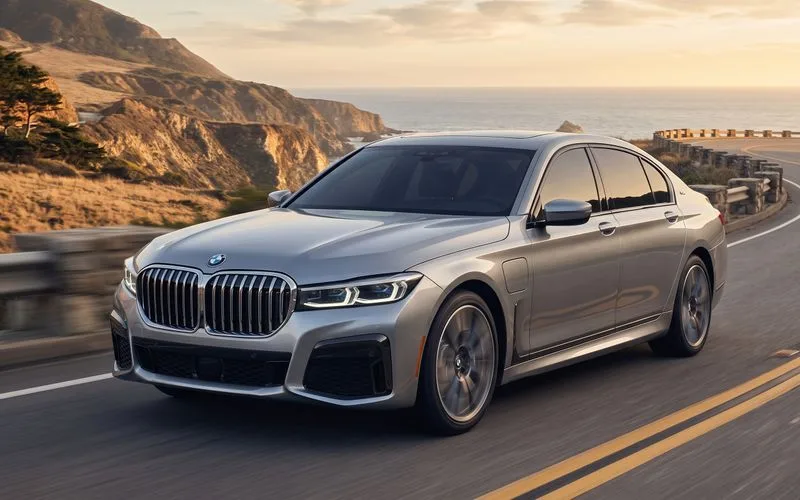 BMW 7 SeriesFull-Size Luxury SedanBetter at: Driving engagement
Costs more once equipped but offers hands-free Highway Assistant, a plug-in 750e and full i7 EV, and a chassis that rewards driving rather than just isolating you from it.
Compare 3.21B+
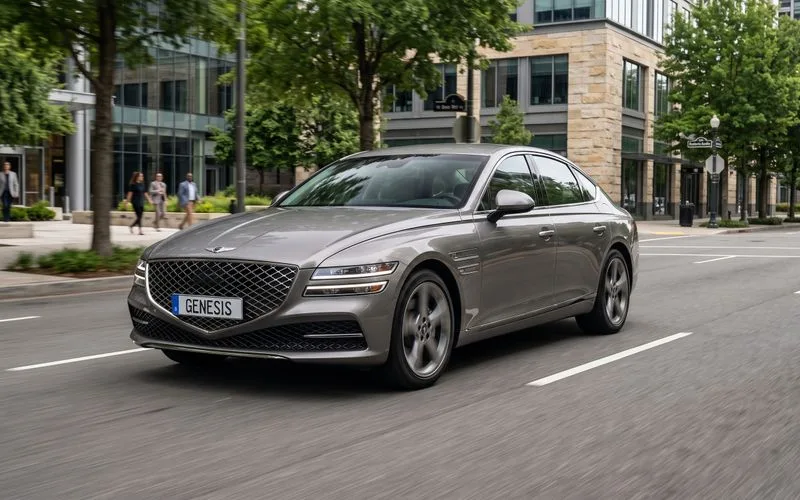 Genesis G80Mid-Size Luxury SedanBetter at: Value
Delivers most of the G90's design, materials and standard-safety story for tens of thousands less, with better resale and newer infotainment including wireless CarPlay.
Compare 3.20B+
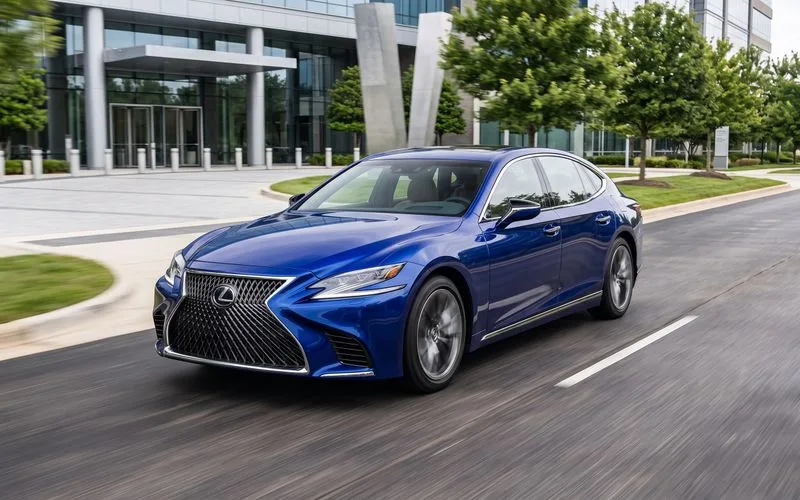 Lexus LSFull-Size Luxury SedanBetter at: Resale value
The safer long-term bet — stronger predicted reliability, roughly 47% five-year value retention against the G90's 37%, and a hybrid powertrain option to cut the fuel bill.
CompareHow it's evolved
10 scored model years · 2017–2026
Subject scores by year
Hover or tap a score to see what moved it versus the year before. A corner mark flags a big swing.
| Year | Performance | Efficiency | Safety | Space | Cost | Reliability | Tech | Use-case | Driving | Value |
|---|---|---|---|---|---|---|---|---|---|---|
| 2026 | 72 | 23 | 78 | 79 | 29 | 78 | 80 | 55 | 72 | 75 |
| 2025 | 71 | 19 | 74 | 73 | 29 | 67 | 80 | 53 | 68 | 74 |
| 2024 | 71 | 19 | 78 | 73 | 29 | 66 | 83 | 53 | 68 | 78 |
| 2023 | 71 | 19 | 79 | 73 | 29 | 63 | 80 | 52 | 68 | 77 |
| 2022 | 71 | 12 | 78 | 77 | 28 | 62 | 62 | 47 | 63 | 63 |
| 2021 | 68 | 13 | 80 | 77 | 28 | 59 | 62 | 47 | 63 | 67 |
| 2020 | 66 | 28 | 80 | 79 | 38 | 62 | 63 | 48 | 62 | 65 |
| 2019 | 66 | 16 | 62 | 80 | 28 | 74 | 55 | 48 | 63 | 66 |
| 2018 | 66 | 16 | 68 | 80 | 40 | 63 | 59 | 47 | 60 | 72 |
| 2017 | 65 | 18 | 68 | 80 | 42 | 66 | 53 | 45 | 64 | 69 |
Compare two years
Best fit & conditions
Higher scores mean a better fit for that use case. Learn more about use-case fit →
Subject profile
Academic Probation · NHTSA safety recalls
Apr 6, 2026Seat belts: front: anchorageThe driver and passenger seat belt anchors may detach.
Defect
Hyundai Motor America (Hyundai) is recalling certain 2023-2025 Hyundai Ioniq 6, 2023-2026 Genesis G90, 2024-2026 Hyundai Santa Fe, and Hyundai Santa Fe Hybrid vehicles. The driver and passenger seat belt anchors may detach.
Risk
A detached seat belt anchor will not adequately restrain the seat occupant, increasing the risk of injury in a crash.
Remedy
Dealers will inspect and reinforce or replace the seat belt anchors, as necessary, free of charge. Owner notification letters were mailed beginning May 29, 2026. Owners may contact Hyundai customer service at 1-855-371-9460 and Genesis customer service at 844-340-9741. Hyundai's numbers for this recall are 298 and 032G. Vehicle Identification Numbers (VINs) involved in this recall became searchable on NHTSA.gov April 8, 2026.
NHTSA campaign 26V218000 ↗Manufacturer no. 298-032G294,448 vehicles potentially affected (all models in the campaign)Owners notified May 29, 2026Filed by Hyundai Motor AmericaFiled as G90Dec 1, 2025Electrical system: adas · Forward collision avoidance: sensing system: radarThe Highway Drive Assist (HDA) corner radar may falsely detect another vehicle, which can result in sudden, unintended braking while driving.
Defect
Hyundai Motor America (Hyundai) is recalling certain 2023-2026 Genesis G90 vehicles. The Highway Drive Assist (HDA) corner radar may falsely detect another vehicle, which can result in sudden, unintended braking while driving.
Risk
Sudden, unintended braking increases the risk of a crash.
Remedy
Owners are advised not to use the Highway Drive Assist feature until the remedy has been performed. Dealers will replace the front bumper beam, free of charge. Owner notification letters were mailed January 26, 2026. Owners may contact Genesis customer service at 844-340-9741. Hyundai's number for this recall is 030G. Vehicle Identification Numbers (VINs) involved in this recall became searchable on NHTSA.gov on December 3, 2025.
NHTSA campaign 25V833000 ↗Manufacturer no. 030G483 vehicles potentially affected (all models in the campaign)Owners notified Jan 26, 2026Filed by Hyundai Motor AmericaFiled as G90
8 recalls on other model years of the G90 (2017–2025)
Apr 10, 2026Fuel system, gasoline: delivery: hoses, lines/piping, and fittingsFuel may leak at the pipe connection between the fuel pipe and fuel rail.
Defect
Hyundai Motor America (Genesis) is recalling certain Genesis 2022-2026 GV70, 2023-2025 G90, 2021-2025 G80, and GV80 vehicles. Fuel may leak at the pipe connection between the fuel pipe and fuel rail.
Risk
A fuel leak increases the risk of a fire.
Remedy
Dealers will inspect and tighten, or replace the fuel pipe as necessary, free of charge. Owner notification letters were mailed beginning July 20, 2026. Owners may contact Genesis customer service at 844-340-9741. Genesis' number for this recall is 033G. Vehicle Identification Numbers (VINs) involved in this recall became searchable on NHTSA.gov beginning April 11, 2026.
NHTSA campaign 26V229000 ↗Manufacturer no. 033G94,760 vehicles potentially affected (all models in the campaign)Owners notified Jul 20, 2026Filed by Hyundai Motor AmericaFiled as G90Jul 17, 2025Electrical system: instrument cluster/panelDue to a software error, the instrument panel display may fail. As such, these vehicles fail to comply with the requirements of Federal Motor Vehicle Safety Standard (FMVSS) number 101, "Controls and Displays."
Defect
Hyundai Motor America (Hyundai) is recalling certain Genesis 2023-2025 G90 and GV60 vehicles. Due to a software error, the instrument panel display may fail. As such, these vehicles fail to comply with the requirements of Federal Motor Vehicle Safety Standard (FMVSS) number 101, "Controls and Displays."
Risk
An instrument panel display that fails to show critical safety information, such as the speedometer or warning lights, increases the risk of a crash.
Remedy
The instrument panel display software will be updated over-the-air (OTA) or by a dealer, free of charge. Owner notification letters were mailed August 22, 2025. Owners may contact Genesis customer service at 844-340-9741. Hyundai's number for this recall is 027G.
NHTSA campaign 25V474000 ↗Manufacturer no. 027G4,754 vehicles potentially affected (all models in the campaign)Owners notified Aug 22, 2025Filed by Hyundai Motor AmericaFiled as G90Apr 19, 2024Fuel system, gasoline: delivery: fuel pumpThe fuel pump may fail, which can result in a loss of drive power.
Defect
Hyundai Motor America (Hyundai) is recalling certain 2022-2023 Genesis GV70, GV80, G80, and G90 vehicles. The fuel pump may fail, which can result in a loss of drive power.
Risk
A loss of drive power can increase the risk of a crash.
Remedy
Dealers will inspect and replace the fuel pump assembly, free of charge. Owner notification letters were mailed June 7, 2024. Owners may contact Hyundai customer service at 1-855-371-9460. Hyundai's number for this recall is 022G. This recall is an expansion of recall number 23V-630.
NHTSA campaign 24V282000 ↗Manufacturer no. 022G31,440 vehicles potentially affected (all models in the campaign)Owners notified Jun 7, 2024Filed by Hyundai Motor AmericaFiled as G90Mar 8, 2024Engine and engine cooling: engine: gasoline: turbo/superchargerThe left turbocharger oil feed pipe may deteriorate and leak oil.
Defect
Hyundai Motor America (Hyundai) is recalling certain 2018-2020 Genesis G80, 2017-2022 G90, and 2019-2022 G70 vehicles equipped with a 3.3-liter V6 turbocharged engine. The left turbocharger oil feed pipe may deteriorate and leak oil.
Risk
An oil leak in the presence of hot engine components can increase the risk of an engine compartment fire.
Remedy
Dealers will replace the left turbocharger oil feed pipe, free of charge. Owner notification letters were mailed May 3, 2024. Owners may contact Hyundai customer service at 1-855-371-9460. Hyundai's number for this recall is 019G. This recall expands and replaces recall number 19V-538. Vehicles previously repaired under 19V-538 will need to have the new remedy completed.
NHTSA campaign 24V191000 ↗Manufacturer no. 019G28,439 vehicles potentially affected (all models in the campaign)Owners notified May 3, 2024Filed by Hyundai Motor AmericaFiled as G90Feb 13, 2024Electrical system: starter assembly: solenoidWater may enter the starter solenoid and cause an electrical short, which can result in an engine compartment fire while parked or driving.
Defect
Hyundai Motor America (Hyundai) is recalling certain 2015-2016 Genesis, 2017-2019 Genesis G80, Genesis G90, and 2019 Genesis G70 vehicles. Water may enter the starter solenoid and cause an electrical short, which can result in an engine compartment fire while parked or driving.
Risk
An engine compartment fire while parked or driving can increase the risk of injury.
Remedy
Owners are advised to park outside and away from structures until the recall repair is complete. Dealers will install a remedy relay kit in the engine junction box, free of charge. Owner notification letters were mailed July 15, 2024. Owners may contact Hyundai customer service at 1-855-371-9460. Hyundai's numbers for this recall are 254(H) and 018G(G).
NHTSA campaign 24V107000 ↗Manufacturer no. 254 (H), 018G (G)90,907 vehicles potentially affected (all models in the campaign)Owners notified Jul 15, 2024Filed by Hyundai Motor AmericaFiled as G90Mar 28, 2023Seat belts: front · Seat belts: pretensioner · Seat belts: rear/otherIn the event of a crash, the front driver-side, passenger-side, and rear seat belt pretensioners may explode upon deployment.
Defect
Hyundai Motor America (Hyundai) is recalling certain 2023 Genesis G90 vehicles. In the event of a crash, the front driver-side, passenger-side, and rear seat belt pretensioners may explode upon deployment.
Risk
An exploding seat belt pretensioner can project metal fragments into the vehicle, strike vehicle occupants, and result in injury.
Remedy
Dealers will secure the seat belt pretensioners with a cap, free of charge. Owner notification letters were mailed May 17, 2023. Owners may contact Hyundai customer service at 1-855-371-9460. Hyundai's number for this recall is 013G.
NHTSA campaign 23V210000 ↗Manufacturer no. 013G575 vehicles potentially affected (all models in the campaign)Owners notified May 17, 2023Filed by Hyundai Motor AmericaFiled as G90Jul 19, 2019Engine and engine cooling: engine: gasoline: turbo/supercharger · Engine and engine cooling: exhaust system: manifold/header/muffler/tail pipeThe turbocharger oil supply pipe may have a loose seal, causing oil to leak onto the exhaust manifold.
Defect
Hyundai Motor America (Hyundai) is recalling certain 2018 Genesis G80 and 2017-2018 Genesis G90 vehicles equipped with 3.3 liter turbocharged engines. The turbocharger oil supply pipe may have a loose seal, causing oil to leak onto the exhaust manifold.
Risk
Oil leaking onto the exhaust manifold increases the risk of a fire.
Remedy
Hyundai will notify owners, and dealers will replace the turbocharger oil supply pipe, free of charge. The recall began October 3, 2019. Owners may contact Hyundai customer service at 1-855-371-9460. Hyundai's number for this recall is 003G.
NHTSA campaign 19V538000 ↗Manufacturer no. 003G8,059 vehicles potentially affected (all models in the campaign)Owners notified Oct 3, 2019Filed by Hyundai Motor AmericaFiled as G90May 10, 2018Visibility: glass, side/rear · Visibility: windshieldThe windshield and rear window on these vehicles may have been installed with incorrect primer, potentially reducing the glass bonding strength.
Defect
Hyundai Motor America (Hyundai) is recalling certain 2018 Hyundai Genesis G80 and Genesis G90 vehicles. The windshield and rear window on these vehicles may have been installed with incorrect primer, potentially reducing the glass bonding strength.
Risk
If the glass bonding strength is reduced over time, the windshield and rear window may detach while driving, increasing the risk of a crash.
Remedy
Hyundai will notify owners, and dealers will replace the front and rear glass, free of charge. The recall began on July 6, 2018. Owners may contact Hyundai customer service at 1-855-371-9460. Hyundai's number for this recall is 001G.
NHTSA campaign 18V305000 ↗Manufacturer no. 001G37 vehicles potentially affected (all models in the campaign)Owners notified Jul 6, 2018Filed by Hyundai Motor AmericaFiled as G90
Source: NHTSA Office of Defects Investigation recall database, model years 2017–2026. Recalls are listed by model year as the manufacturer filed them; whether a specific car is affected depends on its VIN — check a VIN at nhtsa.gov ↗. NHTSA model names matched to this page: G90.
Detailed scoring by subject
1Performance & PowertrainGrades above the middle of the scale.2.88B-
The volume G90 3.5T runs Genesis's Smartstream G3.5 twin-turbo V6 at 375 hp, a figure carried unchanged since the second-generation (RS4) G90 launched for 2023. The step-up 3.5T E-Supercharger adds a 48-volt electric supercharger and mild-hybrid system for 409 hp. That base figure exactly matches the BMW 740i in this dataset and clears the Audi A8's 335 hp, but sits below the Lexus LS 500 (416 hp) and well under the Mercedes S 500 (442 hp).
391 lb-ft arriving at just 1,300 rpm and holding to 4,500 rpm is what gives the G90 its effortless part-throttle gait, which is how a car in this class is actually driven. It beats the 740i (383) and A8 (369) and is only a little short of the LS 500's segment-leading 442 lb-ft.
At roughly 4,950 lb with 375 hp the base G90 3.5T works out to about 13.2 lb/hp, which puts it in the low-5-second range and level with the 740i xDrive's 5.2 s. The E-Supercharger car's extra 34 hp and lag-free launch pull it to about 4.9 s. Quicker than an A8 55 TFSI (5.6 s), slower than an LS 500 (4.7 s) or S 500 (4.5 s) — brisk rather than fast, consistent with the car's isolation-first mission.
Isolation is the G90's whole argument, and the powertrain holds up its end: the twin-turbo V6 is near-silent at cruise, pulls cleanly off the bottom of its broad torque plateau, and the optional 48V electric supercharger is a genuine engineering answer to turbo lag rather than a marketing one, building boost before the exhaust-driven turbos catch up. It lands above the LS 500 (84) and A8 (82) for that lag-free delivery and overall hush, but below the 7 Series (90) and S-Class (92), whose inline-six and V8 engines have a character and sound quality the Genesis V6 does not match when extended.
Genesis pairs the 3.5T with its in-house 8-speed torque-converter automatic — the same unit and the same calibration character as the G80, scored 83 here. It is smooth, genuinely unobtrusive at cruise, and picks the right gear without hunting, which is exactly the brief for a full-size luxury sedan. It stays out of the top band because it lacks the outright snap of the ZF 8HP in the 7 Series (92) under hard use, and its paddle-shift manual mode is functional rather than engaging.
HTRAC all-wheel drive is standard on every US G90 trim rather than an option on a rear-drive baseline, with a rear-biased split that varies by drive mode, and it arrives alongside standard rear-wheel steering and road-preview adaptive suspension. That standard fit places it in the same tier as quattro on the A8 (97) and 4MATIC on the S-Class (92), and clearly above the LS (77), where AWD is a cost option, and the 7 Series (80), which still sells a rear-drive 740i. It stops short of the very top because the system is tuned purely for on-road traction — no low range, no terrain modes — as befits the body style.
The US G90 offers one engine in two states of tune: the 3.5L twin-turbo V6, and the same V6 with a 48V electric supercharger and mild-hybrid assist. That is the thinnest slate in the full-size luxury segment — no V8, no plug-in hybrid, and no battery-electric G90 for the US, where the Electrified G90 sold in Korea has not been offered. Against an S-Class spanning inline-six, V8 and PHEV (85), a 7 Series with a 750e PHEV and a full i7 EV alongside it (80), or even the LS's genuinely distinct gas/hybrid pairing (60), the choice on offer is narrow. The 48V variant is real distinct hardware rather than a trim sticker, which is the only thing keeping this off the floor.
2Efficiency & RangeThe G90's lowest-graded category.0.00F
The RS4-generation G90 carries its 3.5L twin-turbo V6 and standard HTRAC AWD into 2026 unchanged, so combined economy stays at the ~21 MPG the generation has posted since launch — the bottom of the sedan band (22-60), which is where every non-electrified full-size luxury sedan lands.
A ~5,000 lb full-size sedan with a twin-turbo V6, standard AWD and no hybrid assist for low-speed running rates 18 MPG city, below the 20 MPG floor of the sedan band.
Highway is the G90's best case — a tall top gear and slippery bodywork return 26 MPG — but that is exactly the 26 MPG floor of the sedan highway band, so it earns no points against a field that includes 50+ MPG hybrids and EVs.
Range is the one place the G90 defends itself: a large ~21-gallon tank converts mediocre economy into a genuinely useful ~440-mile cruising leg, mid-pack in the sedan band (280-650) and comfortably ahead of most luxury EVs on a single stop.
At EPA's 15,000-mile assumption the G90 burns roughly 715 gallons a year, and the recommended premium grade pushes the bill past the $2,800 top of the sedan band — a running cost that reads more like a full-size truck than a sedan.
Genesis recommends 91-octane premium for the G3.5 T-GDi to reach its published output but permits 87-octane regular at reduced power, so owners have an out that a premium-required rival does not. That flexibility is what separates it from the Audi A8 and BMW 7 Series; it is still a pump-price penalty in practice, since nearly every owner runs premium.
3SafetyOne of the G90's strongest categories.3.30B+
NHTSA does not appear to have crash-tested the second-generation (RS4) G90 in any model year of its 2023–2026 run; six-figure, low-volume full-size luxury sedans routinely go untested under NCAP. The 4.5-star estimate follows the convention already applied to the untested 2026 Audi A8, BMW 7 Series and Lexus LS in this dataset, and is arguably conservative given that Genesis's tested models (G70, G80, GV70, GV80) all carry 5-star overall ratings.
The RS4-generation G90 does not appear among IIHS Top Safety Pick winners and has no published crashworthiness slate — IIHS, like NHTSA, tends not to buy and destroy $100,000 flagships. That absence of an award is what caps this item in the middle band rather than any bad result. It sits at the top of that band, a point above the comparably untested A8 and 7 Series, because Genesis's tested vehicles on related architecture have been consistent Top Safety Pick+ winners with Good ratings across the core tests, so the structural expectation for the G90 is genuinely favourable — it simply is not evidence.
This is the G90's strongest safety card and one of the most complete standard suites sold in the US at any price. Every G90 ships with Forward Collision-Avoidance Assist 2 (pedestrian, cyclist and junction-turning logic plus evasive steering support), Lane Keeping and Lane Following Assist, Highway Driving Assist II, Smart Cruise Control with Machine Learning and stop-and-go, Blind-Spot Collision-Avoidance Assist, Rear Cross-Traffic Collision-Avoidance Assist, Safe Exit Assist, Driver Attention Warning, Rear Occupant Alert, Parking Collision-Avoidance Assist front and reverse, Remote Smart Parking Assist and a surround-view monitor. With only a short trim ladder and no safety option packages, there is nothing meaningful to pay extra for — a sharp contrast with German rivals that still bundle blind-spot monitoring and highway assist into driver-assistance packages costing thousands.
Forward Collision-Avoidance Assist 2 is a well-specified system on paper — camera-and-radar fusion covering vehicles, pedestrians, cyclists, oncoming traffic at junction turns and lane-change conflicts — and Hyundai-group FCA earned Superior ratings under the pre-2024 IIHS front crash prevention protocol. It lands mid-band rather than high because IIHS replaced that test in 2024 with a much harder higher-speed evaluation that has demoted many previously well-regarded systems, and no result for the G90 under the current protocol is known.
Best-in-class coverage, and all of it standard. Blind-Spot Collision-Avoidance Assist does not merely warn — it applies corrective braking and steering torque — and it is paired with the Blind-Spot View Monitor, which throws a live camera feed of the target lane into the digital cluster when you signal. Rear Cross-Traffic Collision-Avoidance Assist brakes autonomously rather than just chiming, and Safe Exit Assist holds the rear doors against traffic, which matters more than usual on a car whose rear seat is its whole point.
Lane Following Assist centering inside Highway Driving Assist II is smooth and sits confidently mid-lane without the ping-ponging that afflicts weaker systems, and HDA II adds signal-initiated automatic lane changes that most rivals reserve for pricier packages. It stays below the top of the band because the calibration is conservative — it hands back earlier than the best systems when lane markings fade, in construction zones or in poor weather.
Smart Cruise Control with Machine Learning is among the more polished implementations in the class: full-speed-range with stop-and-go, and the machine-learning mode adapts following distance, acceleration and braking ramp to the owner's own driving style, which reviewers consistently say makes it feel less robotic than rivals. Integrated with HDA II it reads navigation data to slow for curves and interchanges, and on the G90 it is further smoothed by the preview electronic suspension reading the road ahead. It sits just under the top of the band only because it remains a hands-on system with no hands-free tier above it.
There is no hands-free driving option on the US-market G90 at any trim or price. Highway Driving Assist II is explicitly hands-on — it monitors steering-wheel torque, nags, then disengages if you let go. Genesis announced a Level 3 Highway Driving Pilot for the Korean G90, but it was repeatedly delayed and has not been offered in the United States. In a segment where the BMW 7 Series offers Highway Assistant, the S-Class offers Drive Pilot and the Celestiq offers Super Cruise, this is the flagship's single biggest safety-tech deficit; the small non-zero score credits a capable hands-on assist, not any hands-free capability.
The G90 was one of the first cars sold in the US with Micro Lens Array headlamps — thousands of tiny lenses in the signature two-line units producing a notably sharp, evenly distributed beam with a crisp cutoff — and they are standard, together with adaptive high beam and the Intelligent Front-lighting System that steers the beam into corners. Standard-across-the-range good lighting is exactly what the top band asks for, and the technology is genuinely ahead of most rivals. It stops short of the high 80s only because no IIHS headlight rating exists for the G90 to confirm the real-world glare and reach measurements.
Natural sightlines are ordinary at best: this is a long, wide car with a high beltline, a steeply raked rear screen and thick rear pillars, and the rear headrests and available rear sunshades intrude further on the mirror view. What lifts it above mid-pack is thorough, standard camera compensation — a high-resolution surround-view monitor, the Blind-Spot View Monitor feeding the cluster on signal, front and rear parking sensors with reverse automatic braking, and Remote Smart Parking Assist for spaces too tight to see out of. Nearly every obscured zone has a screen covering it, but you are relying on the screens.
Workable but unremarkable, and not what this car is designed around. The G90's rear compartment is enormous and the rear doors open wide, so physically manoeuvring a seat into place is easier than in almost any sedan, and rear-facing seats cost the front passenger nothing. Against that, the outboard lower anchors sit buried deep in the seat-bight upholstery in the usual luxury-sedan pattern that draws Acceptable rather than Good LATCH ease-of-use marks, the heavily bolstered rear seats and raised tunnel make the centre position impractical for a third seat, and long-wheelbase cars ordered with the rear console and reclining VIP seat effectively become four-seaters.
4Space & ComfortOne of the G90's strongest categories.3.36B+
The volume US G90 is the standard-wheelbase 3.5T, a conventional five-passenger full-size luxury sedan with front buckets and a three-place rear bench. The Long Wheelbase model's executive rear package replaces the bench with two individual thrones, dropping it to four.
At roughly 41 in the G90 clears the top of the sedan normalization band (36-40 in) outright — front-seat headroom is not a constraint even for tall occupants, and the sunroof penalty still leaves it above the band ceiling.
Front legroom in the mid-44-inch range is at or past the top of the sedan band, consistent with the G90's 125.2-in wheelbase and Hyundai Motor Group's generous front-legroom measurement convention. This is the least well-corroborated figure in the item set and is the one to re-verify first.
38.2 in of rear headroom is strong for a sedan — the G90's roofline stays flatter over the rear seat than the fastback-influenced G80's (37.4 in), so six-footers sit without brushing the headliner.
This is the standard-wheelbase G90's real packaging weakness: at about 37.5 in the back seat is barely roomier than a G80's 38.7 in and well short of a 7 Series or S-Class, which is precisely why Genesis imported the Long Wheelbase model for buyers who are driven rather than driving.
A 12.9 cu ft trunk is small in absolute terms and scores near the bottom of the 10-20 cu ft sedan band, though it is squarely normal for the full-size luxury class (S-Class approx. 12.1, 7 Series approx. 12.4, A8 approx. 12.5). The rear seat does not fold on the volume configuration, so there is no expansion path — a ski pass-through only.
Competitive but not inventive: a deep covered console with wireless charging, usable door bins, a rear armrest with its own controller and cupholders, and ample USB-C provision. The wide console and crystal-sphere shifter surround eat open shelf space, and there is no storage party-trick of the sort that earns an 80+ here.
Among the G90's clearest strengths and consistently praised in US reviews: heavily adjustable front seats with Ergo Motion massage and powered bolsters, plus heated, ventilated, reclining and massaging outboard rear seats with a powered front-passenger seat slide to open up rear space. Held just below the top of the band because the standard-wheelbase back seat's limited legroom caps genuine long-haul rear comfort.
Standard multi-chamber air suspension with adaptive damping and camera-based Road Preview reads the surface ahead and pre-loads the dampers; reviewers describe the result as genuinely plush and well-controlled, isolating broken pavement about as well as anything short of an S-Class. Rear-axle steering keeps body motions tidy despite the softness.
The G90 is one of the quietest cars sold in the US: double-laminated acoustic glass all around, extensive sound deadening, acoustically tuned tires, and Active Road Noise Cancellation that uses accelerometers and the audio system to null low-frequency road roar. Highway noise levels are routinely measured at or near the segment's best.
Close to a clean sweep of the category, and nearly all of it standard rather than optioned: heated and ventilated front and rear seats, heated steering wheel, multi-zone climate with rear controls, remote start with climate pre-conditioning, plus the Mood Curator system bundling fragrance diffusion, ambient lighting, and seat/climate/audio presets. Loses a few points only because the very top amenities (rear entertainment, the full VIP suite) are tied to the Long Wheelbase.
5Cost of OwnershipOne of the G90's weakest categories.0.00F
The 2026 G90 opens with the 3.5T twin-turbo V6 AWD at roughly $94K delivered, continuing the second-generation (RS4) car's steady year-over-year climb from $89,525 delivered at the 2023 US launch. Any full-size luxury flagship sits far above the sedan band ceiling of $55,000, so the item scores 0 regardless of the exact figure.
Genesis sells the G90 nearly monospec — the 3.5T AWD arrives essentially fully loaded with only paint, wheel and Nappa-trim choices, so the volume-trim price barely separates from base. The low-volume E-Supercharged halo model adds roughly $10,000. Both sit far past the $58,000 band ceiling.
The included three-year scheduled-maintenance plan absorbs most early service, but years four and five carry flagship-grade consumables — multi-chamber air suspension, 21-inch tires, large brakes and a twin-turbo V6 — so the five-year total lands above the G80's ≈$5,900 and just past the Lexus LS's ≈$6,300, while staying well clear of the BMW 7 Series' ≈$12,000.
Full-size luxury sedans depreciate hardest of any body style, and the G90 compounds that with a young badge carrying little used-market brand equity against Mercedes and BMW. Depreciation studies have repeatedly placed the G90 among the worst-retaining vehicles sold in the US, the first generation shedding roughly two-thirds of its value over five years; the second generation improves only modestly.
Genesis applies a single brand-wide warranty across its lineup, and at 5 years / 60,000 miles the G90 tops the sedan band outright — a full year longer than the 4 yr / 50,000 mi terms from BMW, Audi, Mercedes and Lexus.
The Hyundai-group 10-year powertrain term carries over to Genesis and hits the top of the band. The caveat is that it is original-owner only — a second owner drops to 5 yr / 60,000 mi, which blunts its effect on resale value.
Among the most complete ownership packages in the segment: three years / 36,000 miles of scheduled maintenance at no cost, Genesis Service Valet (pickup, loaner, return) so the flagship rarely sees a dealership waiting room, multi-year roadside assistance and connected services, and map updates. Scored a shade above the G80 (92) because the G90 receives the fullest version of the concierge program; short of a perfect score only because the maintenance term runs three years rather than the longer coverage that would define the top of the band.
$95,500 volume-trim price minus its estimated resale value after 5 years (37% retained, or about $35,335) leaves about $60,165 in depreciation. Add the projected $6,600 in 5-year maintenance and repairs, and owning this vehicle for 5 years costs about $66,765 in total.
6Reliability & QualityGrades above the middle of the scale.3.27B+
The 2026 G90 is a mid-to-late-cycle car in the second-generation (RS4) run that launched for MY2023, so the core package has had several years to settle, but it is the most feature-dense car Genesis builds — air suspension, rear-wheel steering, active road-noise cancellation, dual curved displays — and complexity of that kind is where predicted-reliability scores are lost. Low US sales volume also means Consumer Reports frequently lacks enough survey data to rate the G90 directly, so the prediction leans on brand-level signal. Scored below the G80 (78) for added flagship complexity and well below the Lexus LS (84.8), above the German full-size field.
Genesis has repeatedly been the top-ranked premium brand — and at times the top-ranked brand overall — in J.D. Power's U.S. Initial Quality Study, and it sits in the upper group of the Vehicle Dependability Study alongside Lexus. Consumer Reports brand rankings place Genesis closer to mid-pack, which keeps this short of a clean top-5-everywhere score. Held consistent with the other Genesis sedans, since this item measures the brand rather than the model.
The second-generation G90 has drawn a modest set of NHTSA campaigns since MY2023 — electrical, software and supplier-component items rather than engine or structural defects — and its low production volume keeps absolute campaign counts down. Scored above the RG3 G80 (68), which carried fire-risk oil-pump and pretensioner campaigns, but held in the typical-activity band because Hyundai-group models broadly see steady campaign traffic and the G90's electronics content is the most exposed in the lineup.
The volume G90 runs the 3.5L Lambda III twin-turbo V6 with the 8-speed automatic and AWD — a newer design than the troubled legacy Theta II family that has since accumulated broad high-mileage service across the Hyundai-group lineup without a systemic failure mode. The 48V electric-supercharger variant on the upper trims adds a genuinely novel belt-driven compressor and mild-hybrid system with a much shorter track record, and turbo-GDI carbon/oil-consumption history across the group keeps this out of the proven-family top band. The 10-year/100,000-mile powertrain warranty backs the risk.
The G90's cabin is the single most praised aspect of the car and is routinely described by reviewers as matching or beating S-Class and 7 Series perceived quality for substantially less money — quilted Nappa leather, open-pore wood, knurled metal switchgear, a crystal-effect rotary controller and soft-touch coverage that continues into secondary surfaces where rivals switch to plastic. Scored above the G80 (90) as the flagship expression of the same design language and at the top of the full-size luxury field.
Assembly consistency is a strength, supported by Genesis's repeated top-tier showing in J.D. Power's Initial Quality Study and by the flagship's lower-volume, higher-attention build at Ulsan; panel gaps and interior alignment draw few complaints. Scattered reports of infotainment and electronic-feature glitches — the dominant IQS problem category industry-wide, and the G90 carries more of that content than anything else in the range — keep this short of the top of the band.
Genesis runs a materially smaller US retail footprint than the German luxury brands or Lexus, and a meaningful share of it is still co-located with or adjacent to Hyundai stores, so coverage is thinner outside major metros — a sharper problem for a flagship buyer cross-shopping brands with dedicated dealerships. Service satisfaction itself scores well, and Genesis Service Valet — complimentary pickup and delivery with a loaner during the maintenance period — substantially offsets the density gap for most owners. Held level with the other Genesis sedans, since the network is brand-wide.
Core powertrain hardware is shared with Hyundai-group models, so mechanical parts are cheaper and more available than the German full-size norm, and Genesis includes 3 years/36,000 miles of complimentary scheduled maintenance. But the G90 shares far less than the G80 does: air-suspension struts, rear-steer hardware, the large curved display assembly, acoustic glass and flagship-specific trim are dealer-only, expensive, and backed by almost no aftermarket, and low production volume means slower parts sourcing. Scored below the G80 (78) on that basis.
7Technology & InfotainmentThe G90's best-graded category.3.45B+
The RS4-generation G90 uses a 12.3-inch center touchscreen alongside a physically separate 12.3-inch 3D gauge cluster, unchanged since the 2023 launch. Because the two panels are discrete rather than one continuous sheet, the center-screen diagonal is the correct figure here — this is NOT the combined-panel convention applied to the refreshed G80 (27 in) or the Cadillac CT5 (33 in).
Layout logic and the physical-control balance are the strengths — the G90 keeps hard climate controls and adds a console rotary Genesis Integrated Controller plus a rear-armrest touch controller, and reviewers consistently rate it easy to learn. It sits at the bottom of the top band rather than in it because the head unit is the pre-ccNC generation the refreshed G80 has already moved past, so graphics and menu density feel a step behind MBUX and iDrive 8/9 in a car priced against them.
Phone projection on the navigation-equipped RS4 head unit is wired-only, and since every US G90 ships with navigation there is no trim on which wireless becomes available. That is squarely the 'wired standard, no wireless' band and is a genuine sore point at this price — scored at the upper end of it only because the wired implementation itself is reliable and both CarPlay and Android Auto are supported.
Server-assisted natural-language voice handles climate, navigation and media commands capably, and the connected native navigation is genuinely good with live traffic and over-the-air map updates. It lands just inside the top band but below the conversational assistants in the S-Class and 7 Series, and the wired-only projection means owners lean on native nav more than they otherwise would.
The Bang & Olufsen system with Beosonic tuning is standard rather than optional on the G90 and is regularly cited as one of the two or three best factory audio installations sold in the US, helped by the car's exceptional cabin quietness (active road-noise cancellation, double-laminated glass). Held just below the very top of the band as a peer to Burmester 4D rather than clearly ahead of it.
A 12.3-inch full-digital cluster is standard on every trim, is configurable by drive mode, renders the Blind-Spot View Monitor camera feed directly in the gauge face, and offers a glasses-free 3D mode unique to the flagship. No analog or partial-digital configuration exists anywhere in the lineup.
Genesis delivers over-the-air updates for infotainment software and navigation maps, and the G90's newer electrical architecture extends OTA to some additional vehicle controllers, but this is not the routine whole-vehicle, feature-adding cadence of BMW, Mercedes or Tesla. Scored at the top of the infotainment-only band rather than in the band above.
Genesis Connected Services covers remote start with climate, lock/unlock, vehicle locate, alerts and stolen-vehicle assistance, and Digital Key 2 adds UWB smartphone-as-key with key sharing plus an NFC card key. It is complimentary for three years before moving to a subscription; the app is dependable but less polished than the German rivals', which keeps it off the top of the band.
A standard wireless charging pad in the covered console plus USB-C ports for both front and rear occupants covers every daily case, and rear provision is generous befitting a chauffeur-oriented flagship. The gas G90 offers no household AC outlet and no vehicle-to-load capability, which is what keeps it out of the top band.
Proximity entry, push-button start, fob and app remote start and a hands-free power trunk are standard, Digital Key 2 Touch adds UWB smartphone-as-key with sharing and an NFC card key, and the G90 goes beyond the G80 with soft-close doors and the automatic door-opening system on upper configurations. Nothing meaningful in the keyless suite is gated behind a trim.
The high-resolution Surround View Monitor, the class-distinctive Blind-Spot View Monitor, front and rear sensors, Parking Collision-Avoidance Assist and Remote Smart Parking Assist are all standard across the G90 range rather than trim-gated as on the G80 — genuinely useful automation on a car this long, and this vehicle's cat3 scoring notes the restricted rear three-quarter visibility these systems exist to offset.
A large, bright head-up display carrying navigation guidance, speed and driver-assist prompts is standard on every US G90 rather than reserved for an option package, so every buyer gets it. Placed high in the top band, below only the augmented-reality projections in the S-Class and 7 Series.
8Use-Case FitOne of the G90's weakest categories.1.68D
Wide rear door openings and a flat, high-mounted rear bench make car-seat installation easier than the G90's low roofline suggests, but a 12.9 cu ft trunk and a fixed (non-folding) rear seatback cap stroller-and-gear practicality at merely adequate for a flagship.
Genesis ships the entire ADAS suite as standard equipment and the G90 has effectively one trim level, so there is no 'safety costs extra' penalty at any price point; the dock is that neither IIHS nor NHTSA publishes ratings for this low-volume flagship, leaving the crash side unverified by third parties.
Rear-seat provision is genuinely flagship-grade — heated, ventilated, reclining and massaging outboard seats with their own climate controls and armrest touch controller, in one of the quietest cabins in the class. Held below the 7 Series and S-Class by the small trunk with four aboard and the absence of rear-seat entertainment screens in the US range.
Multi-chamber air suspension with camera-read Preview ECS, standard rear-wheel steering, a smooth 8-speed, full-range stop-and-go adaptive cruise and a class-benchmark quiet cabin add up to a genuinely low-fatigue commuter; only the restricted rear three-quarter visibility keeps it from the very top.
An 18 MPG city rating on premium-recommended fuel makes the G90 one of the most expensive daily commuters in the dataset, and insurance plus dealer-sourced consumables compound it; the only mitigation is that Genesis permits regular unleaded, unlike several German rivals that require premium.
Standard rear-wheel steering shrinks the turning circle well below what a full-size flagship footprint implies, and the camera and parking-assist suite is complete and standard — but it is still a long, heavy, low-visibility car in a tight urban garage.
The G90 has no US tow rating, no bed, a 12.9 cu ft trunk and a fixed rear seatback, so there is no meaningful work capacity to assess — it is a chauffeur-and-executive-transport car by design.
The 3.5T V6 and 8-speed automatic are a proven Hyundai-group combination with real executive-livery mileage behind them, but multi-chamber air suspension, rear-wheel steering, large-diameter wheels and an all-leather/suede cabin offer nothing wear-friendly and raise the cost of abuse.
There is essentially no work-oriented provision: no household outlet, no roof rails or rack ecosystem, no hitch, no tie-down system beyond a trunk net, and no washable surfaces anywhere in the cabin.
This is the G90's strongest mission by a wide margin — S-Class-class quietness, air-sprung ride, Ergo Motion massage seats with power bolsters and cushion extension, standard head-up display and B&O audio, and roughly 440 miles between stops. Docked only for the absence of hands-free highway driving and the premium-fuel thirst that makes those stops frequent and costly.
Standard HTRAC all-wheel drive makes the G90 a legitimately capable snow and gravel-road tourer, and the air suspension can raise for rough driveways — but with no roof rails, no tow or hitch rating, no household power and a fixed rear seatback, its outdoor usefulness ends where the pavement does.
A 12.9 cu ft trunk is small even by flagship-sedan standards, and because the rear bench carries reclining/massage hardware it does not fold, so there is no pass-through for long items and no roof or hitch alternative. The hands-free smart trunk is a convenience, not a capacity fix.
9Driving ExperienceGrades above the middle of the scale.2.86B-
The second-generation (RS4) G90 is tuned isolation-first: multi-chamber air suspension with camera/navigation-based Preview Electronic Control Suspension and available rear-axle steering give it genuinely composed body control and unflappable high-speed stability, but at roughly 5,100–5,300 lb it leans on damping and grip rather than agility, understeers early, and never invites hard cornering. Secure and confidence-inspiring without the tied-down poise of a BMW 7 Series — squarely 'secure but unremarkable'.
Accurate, consistently weighted and very stable on-center, but the electric rack filters out essentially all surface texture — the same numbness that is the most-cited dynamic weakness across the Genesis sedan range. Sport mode adds effort without adding information, and the available rear-axle steering sharpens response rather than feedback.
Large-rotor brakes with a firm, progressive pedal and no reported fade in normal use; stops are stable and repeatable. Held out of the top band because the car's mass keeps 70–0 mph distances mid-pack for the class rather than class-leading, and the 48V mild-hybrid E-Supercharger trim adds a small amount of blending to manage.
The 3.5L twin-turbo V6 (375 hp / 391 lb-ft) with the 8-speed automatic is the G90's strongest dynamic trait: torque arrives from ~1,300 rpm, shifts are nearly imperceptible, tip-in is clean and stop/start restarts are well isolated. The 409 hp E-Supercharger trim's 48V electric supercharger fills in off-boost response and all but erases low-rpm lag.
Among the quietest powertrains in the class: active road-noise cancellation, laminated double-glazed glass and extensive underbody sealing keep the V6 distant and vibration-free at cruise, and the engine only makes itself heard as a muted, cultured swell under full throttle. A whisker short of the near-silent EV flagships.
Estimated for the standard-wheelbase 3.5T volume configuration from the car's 125.2 in wheelbase and full-size footprint; rear-axle steering meaningfully tightens it where fitted, and the Long Wheelbase gives up several feet. Wide in absolute terms, which is normal for the segment but costly against a sedan band calibrated 34–40 ft across all sedans.
Wide-range power seat and column adjustment, a commanding but low-effort seating position, and a control layout that pairs the wide center display with retained physical climate and volume controls plus the rotary infotainment dial. Held below the top of the band only by the long hood and thick rear pillars, which make the extremities hard to place without the cameras.
Effortless and deeply satisfying as a long-distance luxury car — the sense of occasion, the hush and the swell of the V6 are real pleasures — but the G90 is engineered to be enjoyed rather than driven hard, and no reviewer recommends it to enthusiasts. Pleasant, not playful.
10Value & Market PositionGrades above the middle of the scale.3.11B
The G90 is the standard-equipment benchmark of the full-size luxury class: the single 3.5T grade arrives with AWD, adaptive suspension with camera-based road preview, rear-wheel steering, active road-noise cancellation, Ergo Motion massaging front seats, a 23-speaker Bang & Olufsen system, soft-close e-latch doors, Mood Curator ambience, Highway Driving Assist 2 and remote smart parking — content that Mercedes, BMW and Audi meter out across executive, driver-assist and audio packages costing well into five figures. It falls just short of a perfect score only because the long-wheelbase VIP rear-seat suite and 26-speaker audio require stepping up to the e-Supercharger car.
At roughly $92K to start and about $104K for the loaded long-wheelbase e-Supercharger, the G90 delivers flagship-grade isolation, materials and technology for something like $30–45K less than an equivalently equipped S-Class, and it undercuts a comparably specified 7 Series and A8 by a wide margin while including content those cars charge for. The reason it is not scored higher is that some of the money saved is handed back in weaker residuals — the value is real at purchase, thinner over a full ownership cycle.
This is the G90's weakest commercial dimension: US buyers choose between exactly two configurations — the standard-wheelbase 3.5T twin-turbo V6 and the long-wheelbase 3.5T e-Supercharger — both AWD, with options limited to paint, wheels and trim rather than à la carte packages. There is no V8, no plug-in hybrid, no rear-drive variant and no electric G90 for the US, against an S-Class range spanning S500, S580, S580e and Maybach and a 7 Series line that adds the 760i and three i7 variants.
The G90 is a genuinely slow seller: US volume for the current generation has run in the low thousands per year and has drifted down since the 2023 launch bump, trailing the S-Class and 7 Series by roughly a factor of four and sitting alongside the A8 and LS at the quiet end of a shrinking segment. Acceptance among the buyers it does reach is strong — the problem is how few of them there are at this price point without a legacy badge.
Genesis has earned real credibility through repeated top finishes in JD Power initial-quality and APEAL studies plus a concierge ownership model, but badge equity matters more here than anywhere else in the brand's range — a six-figure flagship is bought substantially on emblem, and the Genesis wings do not yet carry what a three-pointed star does. Scored a notch below the G80 because the resale gap and the aspiration gap both widen as price rises.
Soft flagship-sedan demand and a brand still buying share make the G90 one of the most negotiable cars sold in the US: subsidized leases, low-APR financing and large dealer discounts off MSRP are routine, and outgoing model-year inventory moves at steeper cuts still. That is a substantial buyer benefit rather than distress pricing, though it is plainly the other side of the sales trajectory scored above.
The RS4-generation G90 arrived for the 2023 US model year, making 2026 its fourth year on sale — squarely mid-cycle, with a design and cabin that still read as current but an infotainment setup now behind the G80's post-facelift 27-inch OLED and the pillar-to-pillar screens in newer German rivals. A facelift is due in roughly this window, which is a mild redesign-timing risk for a 2026 buyer.
The current G90 launched to strong reviews — a North American Car of the Year finalist, and repeatedly praised by Car and Driver, MotorTrend and Edmunds for ride isolation, cabin craftsmanship and value that legitimately reaches S-Class territory. It stops short of the top band because it rarely wins outright comparison tests: reviewers consistently place it behind the 7 Series for driving engagement and behind the S-Class for technology showmanship, framing it as the smart buy rather than the class benchmark.