

The verdict
A mixed-report compact suv, strong on value and held back by performance.
The 2026 Honda CR-V is America's best-selling vehicle for a reason: it nails the compact-SUV essentials with a class-leading 41.0 in of rear legroom, a hybrid powertrain that touches 40 MPG combined, and resale values that hold ~68% after five years. It's not exciting on paper — 190 hp, 1,500 lb tow rating, and a warranty that trails Hyundai/Kia by miles — and a Poor IIHS moderate-overlap result plus recent recalls take some shine off the safety story. But for the mainstream shopper who wants a low-risk, low-cost, easy-to-live-with family SUV, few options are more sensible.
Jump to scoresStrengths
- Best-in-class rear-seat space
- Hybrid efficiency and cheap running costs
- Standard safety tech on every trim
What holds it back
- Underwhelming performance and towing
- IIHS moderate-overlap Poor and busy recall history
- Warranty and complimentary maintenance trail rivals
Top alternatives
Cars shoppers cross-shop with the Honda CR-V 2.56C+
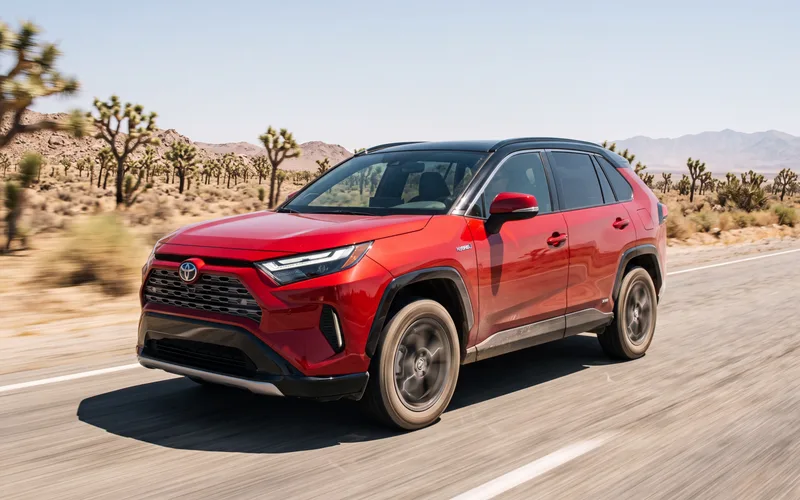 Toyota RAV4Compact SUV
The eternal rivalry: the CR-V wins on rear legroom (41.0 in vs.
Compare 2.44C+
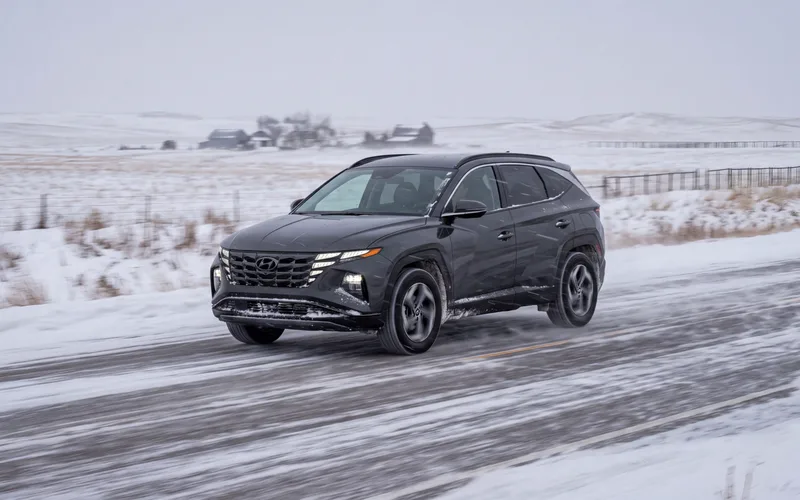 Hyundai TucsonCompact SUV
Tucson trumps the CR-V on warranty (5-yr/60k basic, 10-yr/100k powertrain vs.
Compare 2.40C+
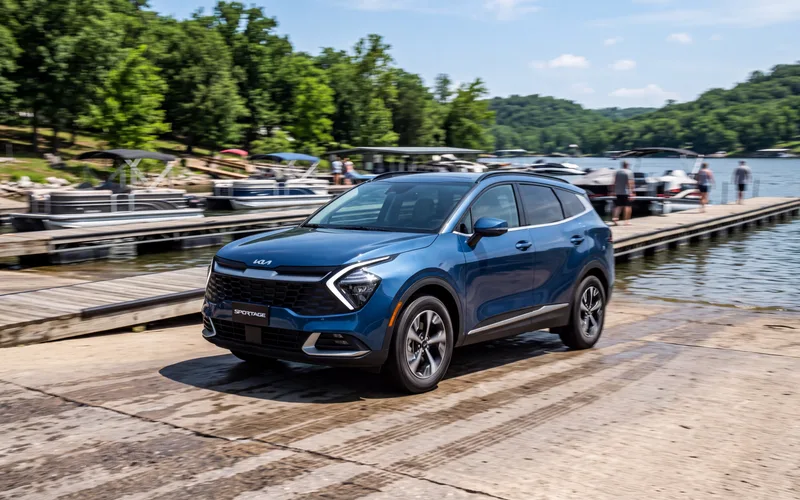 Kia SportageCompact SUV
Sportage undercuts the CR-V on price at each trim, offers dual 12.3-in curved displays, a 10-yr/100k powertrain warranty, and available surround-view camera.
CompareHow it's evolved
10 scored model years · 2017–2026
Subject scores by year
Hover or tap a score to see what moved it versus the year before. A corner mark flags a big swing.
| Year | Performance | Efficiency | Safety | Space | Cost | Reliability | Tech | Use-case | Driving | Value |
|---|---|---|---|---|---|---|---|---|---|---|
| 2026 | 32 | 68 | 69 | 56 | 66 | 70 | 60 | 68 | 70 | 73 |
| 2025 | 31 | 59 | 72 | 52 | 59 | 70 | 48 | 62 | 63 | 71 |
| 2024 | 31 | 63 | 72 | 52 | 67 | 72 | 48 | 62 | 63 | 72 |
| 2023 | 31 | 63 | 73 | 52 | 63 | 70 | 45 | 61 | 63 | 71 |
| 2022 | 30 | 64 | 72 | 52 | 67 | 72 | 34 | 60 | 60 | 59 |
| 2021 | 32 | 69 | 76 | 52 | 65 | 68 | 35 | 58 | 60 | 65 |
| 2020 | 28 | 64 | 71 | 50 | 64 | 66 | 33 | 57 | 59 | 66 |
| 2019 | 29 | 65 | 65 | 51 | 73 | 68 | 36 | 57 | 60 | 74 |
| 2018 | 29 | 65 | 69 | 50 | 68 | 59 | 30 | 55 | 58 | 71 |
| 2017 | 29 | 65 | 68 | 52 | 69 | 54 | 34 | 56 | 58 | 74 |
Compare two years
Best fit & conditions
Higher scores mean a better fit for that use case. Learn more about use-case fit →
Subject profile
Trims & configurations
6 trimsScores above reflect the volume trim. Per-trim specs and scores are rolling out — the full lineup:
Academic Probation · NHTSA safety recalls
Oct 8, 2026Tires: temporary/emergency spare tireWhen using the tire repair kit, pressure may build within the sealant bottle, causing the bottle cap to detach.
Defect
Honda (American Honda Motor Co.) is recalling certain 2023-2026 CR-V Hybrid, Accord Hybrid, and 2025 CR-V Fuel Cell EV vehicles that were previously remedied under NHTSA recall number 26V366. When using the tire repair kit, pressure may build within the sealant bottle, causing the bottle cap to detach.
Risk
A detached bottle cap can become a projectile and strike the user or others nearby, increasing the risk of injury.
Remedy
Dealers will inspect and replace the tire repair kit nozzle, as necessary, free of charge. Owner notification letters are expected to be mailed November 16, 2026. Owners may contact Honda's customer service at 1-866-784-1870. Honda's number for this recall is PPW. Vehicle Identification Numbers (VINs) involved in this recall will be searchable on NHTSA.gov beginning October 17, 2026. Vehicles previously repaired under recall 26V366 will need to have the new remedy completed.
NHTSA campaign 26V663000 ↗Manufacturer no. PPW4,804 vehicles potentially affected (all models in the campaign)Filed by Honda (American Honda Motor Co.)Filed as CR-V FUEL CELL EV, CR-V HYBRIDJun 4, 2026Tires: temporary/emergency spare tireWhen using the tire repair kit, pressure may build within the sealant bottle, causing the bottle cap to detach.
Defect
Honda (American Honda Motor Co.) is recalling certain 2023-2026 CR-V Hybrid, Accord Hybrid, and 2025-2026 CR-V Fuel Cell EV vehicles. When using the tire repair kit, pressure may build within the sealant bottle, causing the bottle cap to detach.
Risk
A detached bottle cap can become a projectile and strike the user or others nearby, increasing the risk of injury.
Remedy
Dealers will replace the tire repair kit nozzle or sealant bottle, free of charge. Interim letters notifying owners of the safety risk were mailed July 27, 2026. Additional letters will be sent once the final remedy is available, anticipated in Fall 2026. Owners may contact Honda's customer service at 1-866-784-1870. Honda's number for this recall is DOV. Vehicle Identification Numbers (VINs) involved in this recall will be searchable on NHTSA.gov beginning June 11, 2026.
NHTSA campaign 26V366000 ↗Manufacturer no. DOV1,048,613 vehicles potentially affected (all models in the campaign)Filed by Honda (American Honda Motor Co.)Filed as CR-V FUEL CELL EV, CR-V HYBRID
26 recalls on other model years of the CR-V (2017–2025)
May 21, 2026Air bags: sensor: occupant classification: front passengerThe front passenger seat weight sensor may crack and short circuit, which can cause the air bags to deploy unintentionally during a crash.
Defect
Honda (American Honda Motor Co.) is recalling certain 2018-2021, 2023 Acura TLX, 2019-2024 RDX, 2017-2020, 2022-2026 MDX, 2017-2021, 2023, 2025 Honda Ridgeline, 2017-2022 Pilot, 2019-2021 Passport, 2018-2026 Odyssey, 2019-2022 Insight, 2019-2021 HR-V, 2018-2020 Fit, 2020-2022 CR-V Hybrid, 2017-2022 CR-V, 2017-2018, 2021 Civic Type R, 2017-2021 Civic hatchback, 2016-2020 Civic coupe, 2016-2022 Civic, 2017-2022 Accord Hybrid, and 2016-2022 Accord vehicles. The front passenger seat weight sensor may crack and short circuit, which can cause the air bags to deploy unintentionally during a crash.
Risk
Air bags that deploy unintentionally during a crash increase the risk of injury.
Remedy
Dealers will replace the seat weight sensors, free of charge. Owner notification letters were mailed July 7, 2026. Owners may contact Honda's customer service at 1-888-234-2138. Honda's numbers for this recall are BOL, WO9, OOA, WOM, XOH, NOC, POD, BOE, UOF, POB, EOG, AOI, QO8, TOJ, DO7, and SOK. This recall expands previous NHTSA recall number 24V064. Vehicle Identification Numbers (VINs) involved in this recall will be searchable on NHTSA.gov beginning May 29, 2026.
NHTSA campaign 26V332000 ↗Manufacturer no. Refer to Comments98,892 vehicles potentially affected (all models in the campaign)Owners notified Jul 6, 2026Filed by Honda (American Honda Motor Co.)Filed as CR-V, CR-V HYBRIDDec 11, 2025Electrical system: propulsion system: fuel cellCoolant inside the fuel cell stack may leak into the fuel cell stack case, causing an internal short circuit. As such, these vehicles fail to comply with the requirements of Federal Motor Vehicle Safety Standard number 305, "Electric-powered vehicles: Electrolyte Spillage and Electrical Shock Protection."
Defect
Honda (American Honda Motor Co.) is recalling certain 2025 Honda CR-V Fuel Cell EV vehicles. Coolant inside the fuel cell stack may leak into the fuel cell stack case, causing an internal short circuit. As such, these vehicles fail to comply with the requirements of Federal Motor Vehicle Safety Standard number 305, "Electric-powered vehicles: Electrolyte Spillage and Electrical Shock Protection."
Risk
An internal short circuit in a fuel cell can cause a loss of drive power, increasing the risk of a crash or injury.
Remedy
Dealers will replace the fuel cell stack assembly, free of charge. Owner notification letters were mailed February 3 2026. Owners may contact Honda's customer service at 1-888-234-2138. Honda's number for this recall is CN4. Vehicle Identification Numbers (VINs) involved in this recall will be searchable on NHTSA.gov beginning December 16, 2025.
NHTSA campaign 25V858000 ↗Manufacturer no. CN4388 vehicles potentially affected (all models in the campaign)Owners notified Feb 2, 2026Filed by Honda (American Honda Motor Co.)Filed as CR-V FUEL CELL EVJun 5, 2025Fuel system, gasoline: delivery: hoses, lines/piping, and fittingsThe fuel feed hose may have been improperly installed, allowing fuel to leak. As such, these vehicles fail to comply with the requirements of Federal Motor Vehicle Safety Standard number 301, "Fuel System Integrity."
Defect
Honda (American Honda Motor Co.) is recalling certain 2025 Honda CR-V Hybrid vehicles. The fuel feed hose may have been improperly installed, allowing fuel to leak. As such, these vehicles fail to comply with the requirements of Federal Motor Vehicle Safety Standard number 301, "Fuel System Integrity."
Risk
A fuel leak in the presence of an ignition source increases the risk of a fire.
Remedy
Dealers will install a new fuel feed hose and connector cover, free of charge. Owners may contact Honda's customer service at 1-888-234-2138. Honda's number for this recall is TLS.
NHTSA campaign 25V378000 ↗Manufacturer no. TLS6 vehicles potentially affected (all models in the campaign)Filed by Honda (American Honda Motor Co.)Filed as CR-V HYBRIDOct 14, 2024Fuel system, gasoline: delivery: fuel pumpThe high-pressure fuel pump may crack and leak fuel.
Defect
Honda (American Honda Motor Co.) is recalling certain 2023-2024 Honda Accord, Accord Hybrid, 2023-2025 Honda CR-V Hybrid, and 2025 Honda Civic and Civic Hybrid vehicles. The high-pressure fuel pump may crack and leak fuel.
Risk
A fuel leak in the presence of an ignition source can increase the risk of a fire.
Remedy
Dealers will inspect and replace the high-pressure fuel pump as necessary, free of charge. Owner letters were mailed February 20, 2025. Owners may contact Honda customer service at 1-888-234-2138. Honda's number for this recall is PJW.
NHTSA campaign 24V763000 ↗Manufacturer no. PJW720,810 vehicles potentially affected (all models in the campaign)Owners notified Feb 20, 2025Filed by Honda (American Honda Motor Co.)Filed as CR-V HYBRIDOct 3, 2024Electrical system: propulsion system: traction batteryThe high voltage battery modules may have been manufactured incorrectly, which can cause the battery terminal or busbar to break and spark.
Defect
Honda (American Honda Motor Co.) is recalling certain 2023 Honda CR-V Hybrid vehicles. The high voltage battery modules may have been manufactured incorrectly, which can cause the battery terminal or busbar to break and spark.
Risk
An electrical spark increases the risk of an injury or fire. In addition, a loss of drive power may occur, which can increase the risk of a crash.
Remedy
Dealers will replace the battery module, free of charge. Owner notification letters were mailed November 27, 2024. Owners may contact Honda Customer Service at 1-888-234-2138. Honda's number for this recall is HJR.
NHTSA campaign 24V745000 ↗Manufacturer no. HJR98 vehicles potentially affected (all models in the campaign)Owners notified Nov 27, 2024Filed by Honda (American Honda Motor Co.)Filed as CR-V HYBRIDOct 3, 2024SteeringThe steering gearbox assembly may have been manufactured incorrectly, which can cause excessive internal friction and lead to difficulty steering the vehicle.
Defect
Honda (American Honda Motor Co.) is recalling certain 2023-2025 Acura Integra, Civic Type R, CR-V Hybrid, CR-V, HR-V, 2022-2025 Civic, Civic Hatchback, 2024-2025 Acura Integra Type S, 2025 CR-V Fuel Cell EV, Civic Hybrid, and Civic Hatchback Hybrid vehicles. The steering gearbox assembly may have been manufactured incorrectly, which can cause excessive internal friction and lead to difficulty steering the vehicle.
Risk
Difficulty steering can increase the risk of a crash.
Remedy
Dealers will replace the worm gear spring and redistribute or add grease as necessary, free of charge. Owner notification letters were mailed November 18, 2024. Owners may contact Honda Customer Service at 1-888-234-2138. Honda's numbers for this recall are SJS, MJU, QJT and VJV.
NHTSA campaign 24V744000 ↗Manufacturer no. SJS, MJU, QJT, VJV1,693,199 vehicles potentially affected (all models in the campaign)Owners notified Nov 18, 2024Filed by Honda (American Honda Motor Co.)Filed as CR-V, CR-V FUEL CELL EV, CR-V HYBRIDJul 2, 2024Tires: markingsThe tire identification number (TIN) is missing the four-digit date code. As such, these vehicles fail to comply with the requirements of Federal Motor Vehicle Safety Standard number 139, "New Pneumatic Radial Tires for Light Vehicles."
Defect
Honda (America Honda Motor Co.) is recalling certain 2024 CR-V vehicles. The tire identification number (TIN) is missing the four-digit date code. As such, these vehicles fail to comply with the requirements of Federal Motor Vehicle Safety Standard number 139, "New Pneumatic Radial Tires for Light Vehicles."
Risk
An owner whose TIN information is missing may not recognize that their vehicle is involved in a safety recall and continue to drive on recalled tires, increasing the risk of a crash.
Remedy
Dealers will inspect and replace the tires as necessary, free of charge. Owner notification letters were mailed August 27, 2024. Owners may contact Honda customer service at 1-888-234-2138. Honda's number for this recall is BIS.
NHTSA campaign 24V508000 ↗Manufacturer no. BIS1,725 vehicles potentially affected (all models in the campaign)Owners notified Aug 27, 2024Filed by Honda (American Honda Motor Co.)Filed as CR-VFeb 1, 2024Air bags: sensor: occupant classification: front passengerThe front passenger seat weight sensor may crack and short circuit, failing to suppress the air bag as intended.
Defect
Honda (American Honda Motor Co.) is recalling certain 2020-2022 Pilot, Accord, Civic sedan, HR-V, Odyssey, 2020 Civic coupe, Fit, 2021-2022 Civic hatchback, 2021 Civic Type R, Insight, 2020-2021 CR-V, CR-V Hybrid, Passport, Ridgeline, Accord Hybrid, 2020 Acura MDX, 2022 Acura MDX, 2020-2022 Acura RDX, and 2020-2021 Acura TLX vehicles. The front passenger seat weight sensor may crack and short circuit, failing to suppress the air bag as intended.
Risk
An air bag that deploys unintentionally during a crash can increase the risk of injury.
Remedy
Dealers will replace the seat weight sensors, free of charge. Owner notification letters were mailed March 28, 2024. This is a phased recall. Owners may contact Honda customer service at 1-888-234-2138. Honda's numbers for these recalls are XHP and VHQ.
NHTSA campaign 24V064000 ↗Manufacturer no. XHP, VHQ750,114 vehicles potentially affected (all models in the campaign)Owners notified Mar 28, 2024Filed by Honda (American Honda Motor Co.)Filed as CR-V, CR-V HYBRIDDec 18, 2023Fuel system, gasoline: delivery: fuel pumpThe fuel pump inside the fuel tank may fail.
Defect
Honda (American Honda Motor Co.) is recalling certain 2013-2023 Honda Accord, Civic Coupe, Civic Sedan, Civic Hatchback, Civic Type R, CR-V, HR-V, Ridgeline, Odyssey, Acura ILX, MDX, MDX Hybrid, RDX, RLX, TLX, 2019-2022 Honda Insight, Passport, 2020 Honda CR-V Hybrid, 2018-2019 Honda Clarity PHEV, Fit, and 2015-2020 Honda Accord Hybrid, Pilot, Acura NSX vehicles. The fuel pump inside the fuel tank may fail.
Risk
Fuel pump failure can cause an engine stall while driving, increasing the risk of a crash.
Remedy
Dealers will replace the fuel pump module, free of charge. Owner letters were mailed September 6, 2024. Owners may contact Honda customer service at 1-888-234-2138. Honda's numbers for this recall are KGC and KGD. This recall is an expansion of NHTSA recall numbers 21V-215 and 20V-314.
NHTSA campaign 23V858000 ↗Manufacturer no. KGC, KGD2,490,460 vehicles potentially affected (all models in the campaign)Owners notified Mar 29, 2024Filed by Honda (American Honda Motor Co.)Filed as CR-V, CR-V HYBRIDDec 13, 2023Electrical system: 12v/24v/48v battery: cablesThe 12-Volt battery cable routed outside of the body frame is missing a fuse on the power circuit, which can allow the battery cable to short circuit or overheat during a crash.
Defect
Honda (American Honda Motor Co.) is recalling certain 2020-2022 CR-V Hybrid vehicles. The 12-Volt battery cable routed outside of the body frame is missing a fuse on the power circuit, which can allow the battery cable to short circuit or overheat during a crash.
Risk
An overheated battery cable or short circuit can increase the risk of a fire or injury in a crash.
Remedy
Dealers will replace the battery cable, free of charge. Owner notification letters were mailed January 29, 2024. Owners may contact Honda customer service at 1-888-234-2138. Honda's number for this recall is FGB.
NHTSA campaign 23V844000 ↗Manufacturer no. FGB106,030 vehicles potentially affected (all models in the campaign)Owners notified Jan 29, 2024Filed by Honda (American Honda Motor Co.)Filed as CR-V HYBRIDAug 17, 2023Power train: automatic transmission: internal: cvtThe electronic transmission may have been improperly manufactured, which can result in a loss of drive power.
Defect
Honda (American Honda Motor Co.) is recalling certain 2023 CR-V Hybrid and Accord Hybrid vehicles. The electronic transmission may have been improperly manufactured, which can result in a loss of drive power.
Risk
A loss of drive power can increase the risk of a crash.
Remedy
Dealers will replace the electronic continuously variable transmission (e-CVT), free of charge. Owner notification letters were mailed October 11, 2023. Owners may contact Honda customer service at 1-888-234-2138. Honda's numbers for this recall are NFG and HFF.
NHTSA campaign 23V588000 ↗Manufacturer no. NFG, HFF19 vehicles potentially affected (all models in the campaign)Owners notified Oct 11, 2023Filed by Honda (American Honda Motor Co.)Filed as CR-V HYBRIDJul 27, 2023Equipment: other: labelsThe certification label on the driver's side door states incorrect Gross Vehicle Weight Rating (GVWR), Gross Axle Weight Rating (GAWR), and tire size information. As such, these vehicles fail to comply with the requirements of Federal Motor Vehicle Safety Standard number 110, "Tire Selection and Rims."
Defect
Honda (American Honda Motor Co.) is recalling certain 2017, 2020, and 2022 CR-V vehicles. The certification label on the driver's side door states incorrect Gross Vehicle Weight Rating (GVWR), Gross Axle Weight Rating (GAWR), and tire size information. As such, these vehicles fail to comply with the requirements of Federal Motor Vehicle Safety Standard number 110, "Tire Selection and Rims."
Risk
An incorrectly sized tire may cause premature tread wear, or a tire blow out, increasing the risk of a crash.
Remedy
Dealers will install a new corrected label, free of charge. Owner notification letters were mailed September 18, 2023. Owners may contact Honda customer service at 1-888-234-2138. Honda's number for this recall is CF7.
NHTSA campaign 23V524000 ↗Manufacturer no. CF75 vehicles potentially affected (all models in the campaign)Owners notified Sep 18, 2023Filed by Honda (American Honda Motor Co.)Filed as CR-VMar 9, 2023Seat belts: front: buckle assemblyA manufacturing issue with the front seat belts may cause the seat belt buckle channel to interfere with the release button, preventing the seat belt buckle from latching.
Defect
Honda (American Honda Motor Co.) is recalling certain 2017-2020 CR-V, 2018-2019 Accord and Accord Hybrid, 2018-2020 Odyssey, 2019 Insight, and 2019-2020 Acura RDX vehicles. A manufacturing issue with the front seat belts may cause the seat belt buckle channel to interfere with the release button, preventing the seat belt buckle from latching.
Risk
An unlatched seat belt cannot properly restrain the seat occupant during a crash, increasing their risk of injury.
Remedy
Dealers will replace the driver and front passenger seat belt buckle release buttons or the buckle assemblies as necessary, free of charge. Owner notification letters were mailed April 18, 2023. Owners may contact Honda customer service at 1-888-234-2138. Honda's numbers for this recall are NDA, QDB, BDC, MDD, LD9. TDF, FDG, ODH, YDI, ZDE.
NHTSA campaign 23V158000 ↗Manufacturer no. NDA, QDB, BDC, MDD448,613 vehicles potentially affected (all models in the campaign)Owners notified Apr 18, 2023Filed by Honda (American Honda Motor Co.)Filed as CR-VFeb 16, 2023Seats: front assembly: reclinerThe front passenger seat back frame may not have been welded properly, which can cause the seat back position to fail in the event of a crash. As such, these vehicles fail to comply with the requirements of Federal Motor Vehicle Safety Standard numbers 207, "Seating Systems" and 201, "Occupant Protection in Interior Impact."
Defect
Honda (American Honda Motor Co.) is recalling certain 2023 CR-V vehicles. The front passenger seat back frame may not have been welded properly, which can cause the seat back position to fail in the event of a crash. As such, these vehicles fail to comply with the requirements of Federal Motor Vehicle Safety Standard numbers 207, "Seating Systems" and 201, "Occupant Protection in Interior Impact."
Risk
A seat back position that fails may not adequately restrain the occupant during a crash, increasing the risk of injury.
Remedy
Dealers will replace the front passenger seat back frame assembly, free of charge. Owner notification letters were mailed March 27, 2023. Owners may contact Honda customer service at 1-888-234-2138. Honda's number for this recall is 6PK.
NHTSA campaign 23V092000 ↗Manufacturer no. 6PK98 vehicles potentially affected (all models in the campaign)Owners notified Mar 27, 2023Filed by Honda (American Honda Motor Co.)Filed as CR-VMay 26, 2022Fuel system, gasoline: storage: tank assemblyThe clip for the absorber inside the fuel tank was not secured properly and may detach, which can cause an inaccurate fuel gauge reading.
Defect
Honda (American Honda Motor Co.) is recalling certain 2020 CR-V vehicles. The clip for the absorber inside the fuel tank was not secured properly and may detach, which can cause an inaccurate fuel gauge reading.
Risk
An inaccurate fuel gauge may result in the vehicle unexpectedly running out of fuel and stalling, increasing the risk of a crash.
Remedy
Dealers will replace the fuel tank, free of charge. Owner notification letters were mailed July 5, 2022. Owners may contact Honda customer service at 1-888-234-2138. Honda's number for this recall is RCB.
NHTSA campaign 22V380000 ↗Manufacturer no. RCB212 vehicles potentially affected (all models in the campaign)Owners notified Jul 5, 2022Filed by Honda (American Honda Motor Co.)Filed as CR-VDec 2, 2021Power train: driveline: driveshaftA component in the right or left front driveshaft may have been improperly heat-treated, which could result in driveshaft failure.
Defect
Honda (American Honda Motor Co.) is recalling certain 2021 Acura RDX and 2022 CR-V Hybrid vehicles. A component in the right or left front driveshaft may have been improperly heat-treated, which could result in driveshaft failure.
Risk
Driveshaft failure can cause a sudden loss of drive power, or cause the vehicle to roll away when parked if the parking brake is not applied. Either condition can increase the risk of a crash or injury.
Remedy
Dealers will replace the right or left front driveshaft as necessary, free of charge. Owner notification letters were mailed January 24, 2022. Owners may contact Honda customer service 1-888-234-2138. Honda's numbers for this recall are BBY, NBW, and OBX.
NHTSA campaign 21V939000 ↗Manufacturer no. BBY, NBW, OBX279 vehicles potentially affected (all models in the campaign)Owners notified Jan 24, 2022Filed by Honda (American Honda Motor Co.)Filed as CR-V HYBRIDNov 18, 2021Seat belts: rear/other: retractorThe automatic locking retractor on the second-row center seat belt assembly may deactivate improperly, which can result in an unsecured child restraint system. As such, these vehicles fail to comply with the requirements of Federal Motor Vehicle Safety Standard number 208, "Occupant Crash Protection."
Defect
Honda (American Honda Motor Co.) is recalling certain 2021 Accord Sedan, Accord Hybrid, CR-V, Ridgeline, 2022 Insight and CR-V Hybrid vehicles. The automatic locking retractor on the second-row center seat belt assembly may deactivate improperly, which can result in an unsecured child restraint system. As such, these vehicles fail to comply with the requirements of Federal Motor Vehicle Safety Standard number 208, "Occupant Crash Protection."
Risk
An unsecured child restraint system can increase the risk of injury during a crash.
Remedy
Dealers will replace the second-row center seat belt assembly, free of charge. Owner notification letters were mailed January 14, 2022. Owners may contact Honda customer service at 1-888-234-2138.
NHTSA campaign 21V900000 ↗Manufacturer no. ABS, BBT, NBQ, RBR4,346 vehicles potentially affected (all models in the campaign)Owners notified Jan 14, 2022Filed by Honda (American Honda Motor Co.)Filed as CR-V, CR-V HYBRIDMar 25, 2021Fuel system, gasoline: delivery: fuel pumpThe low-pressure fuel pump inside the fuel tank may fail.
Defect
Honda (American Honda Motor Co.) is recalling certain 2019-2020 Acura MDX, MDX Sport Hybrid, RDX, TLX, Honda Accord, Civic Hatchback, Insight, 2019 Acura ILX, Honda Accord Hybrid, Civic Coupe, Civic Coupe Si, Civic Sedan, Civic Sedan Si, Civic Type R, Fit, HR-V, Odyssey, Passport, Pilot and Ridgeline, and 2018-2019 CR-V vehicles. The low-pressure fuel pump inside the fuel tank may fail.
Risk
Fuel pump failure can cause an engine stall while driving, increasing the risk of a crash.
Remedy
Honda will notify owners, and dealers will replace the fuel pump assembly, free of charge. Owner letters were mailed May 18, 2021. Owners may contact Honda customer service at 1-888-234-2138. Note: This recall is an expansion of recall 20V-314.
NHTSA campaign 21V215000 ↗Manufacturer no. Multiple Codes624,552 vehicles potentially affected (all models in the campaign)Owners notified May 18, 2021Filed by Honda (American Honda Motor Co.)Filed as CR-VDec 17, 2020Electrical system: 12v/24v/48v battery · Electrical system: propulsion system: charging: module: software · Electrical system: propulsion system: dc/dc converterThe DC-DC converter may shut down and prevent the 12-volt battery from recharging, possibly resulting in a loss of drive power.
Defect
Honda (American Honda Motor Co.) is recalling certain 2020 CR-V Hybrid, Accord Hybrid, and 2020-2021 Insight vehicles. The DC-DC converter may shut down and prevent the 12-volt battery from recharging, possibly resulting in a loss of drive power.
Risk
A loss of drive power can increase the risk of a crash.
Remedy
Honda will notify owners, and dealers will update the power converter unit (PCU) software, free of charge. The recall began February 12, 2021. Owners can contact Honda customer service at 1-888-234-2138. Honda's number for this recall is K9E.
NHTSA campaign 20V798000 ↗Manufacturer no. K9E27,838 vehicles potentially affected (all models in the campaign)Owners notified Feb 12, 2021Filed by Honda (American Honda Motor Co.)Filed as CR-V HYBRIDDec 5, 2019Structure: frame and membersThe rear subframe bolts were improperly manufactured and may loosen, allowing the rear subframe to separate.
Defect
Honda (American Honda Motor Co.) is recalling certain 2019-2020 CR-V vehicles. The rear subframe bolts were improperly manufactured and may loosen, allowing the rear subframe to separate.
Risk
A separated rear subframe reduces vehicle handling and can suddenly disable the vehicle, increasing the risk of a crash.
Remedy
Honda will notify owners, and dealers will inspect the rear subframe bolts and retorque them or replace them, as necessary, free of charge. The recall began January 27, 2020. Owners may contact Honda customer service at 1-888-234-2138. Honda's number for this recall is R6M.
NHTSA campaign 19V865000 ↗Manufacturer no. R6M358 vehicles potentially affected (all models in the campaign)Owners notified Jan 27, 2020Filed by Honda (American Honda Motor Co.)Filed as CR-VSep 26, 2019Equipment: other: owners/service/other manualThe owner's guide incorrectly describes when the "Passenger Airbag Off" indicator should illuminate. As such, these vehicles fail to comply with the requirements of Federal Motor Vehicle Safety Standard (FMVSS) number 208, "Occupant Crash Protection."
Defect
Honda (American Honda Motor Co.) is recalling certain 2019 CR-V vehicles. The owner's guide incorrectly describes when the "Passenger Airbag Off" indicator should illuminate. As such, these vehicles fail to comply with the requirements of Federal Motor Vehicle Safety Standard (FMVSS) number 208, "Occupant Crash Protection."
Risk
If the front passenger does not correctly understand how the airbag functions, they may be at an increased risk of personal injury in the event of a crash.
Remedy
Honda will notify owners and provide a sticker with the correct information to be added to the owner's guide, free of charge. The recall began November 14, 2019. Owner's may contact Honda customer service at 1-888-234-2138. Honda's number for this recall is X6G.
NHTSA campaign 19V694000 ↗Manufacturer no. X6G336,468 vehicles potentially affected (all models in the campaign)Owners notified Nov 14, 2019Filed by Honda (American Honda Motor Co.)Filed as CR-VAug 1, 2019Fuel system, gasoline: storage: tank assemblyThe joint weld between the fuel tank and the vapor return line may have been insufficiently welded, causing the weld to fail.
Defect
Honda (American Honda Motor Co.) is recalling certain 2019 CR-V vehicles. The joint weld between the fuel tank and the vapor return line may have been insufficiently welded, causing the weld to fail.
Risk
The failed weld may allow fuel to leak, increasing the risk of a fire in the presence of an ignition source.
Remedy
Honda will notify owners, and dealers will replace the fuel tank, free of charge. The recall began September 16, 2019. Owners may contact Honda customer service at 1-888-234-2138. Honda's number for this recall is A5I.
NHTSA campaign 19V569000 ↗Manufacturer no. A5I134 vehicles potentially affected (all models in the campaign)Owners notified Sep 16, 2019Filed by Honda (American Honda Motor Co.)Filed as CR-VMay 21, 2019Air bags: frontal: driver clockspring/spiral cassette · Air bags: frontal: driver side: inflator module · Electrical system: horn · Steering: steering wheel/handle barThe metal core of the steering wheel may have burrs which can damage the harnesses routed within, potentially disabling the driver's air bag or causing it to deploy without warning.
Defect
Honda (American Honda Motor Co.) is recalling certain 2019 CR-V vehicles. The metal core of the steering wheel may have burrs which can damage the harnesses routed within, potentially disabling the driver's air bag or causing it to deploy without warning.
Risk
In the event of a crash, a disabled air bag would increase the risk of injury. An uncommanded deployment of the driver's air bag also increases the risk of injury and a crash.
Remedy
Honda will notify owners, and dealers will install a protective cover on the steering wheel core and replace clockspring and the harnesses within, free of charge. The recall began July 8, 2019. Owners may contact Honda customer service at 1-888-234-2138. Honda's number for this recall is R4S.
NHTSA campaign 19V383000 ↗Manufacturer no. R4S161,252 vehicles potentially affected (all models in the campaign)Owners notified Jul 8, 2019Filed by Honda (American Honda Motor Co.)Filed as CR-VSep 27, 2018Steering: electric power assist systemThe magnet that controls the torque sensor output signal for the electronic power steering system may not be properly secured, allowing the magnet to become dislodged. During a full lock turn, the dislodged magnet may cause steering assist to be applied in the opposite direction.
Defect
Honda (American Honda Motor Co.) is recalling certain 2017-2018 Honda Civic and CR-V vehicles. The magnet that controls the torque sensor output signal for the electronic power steering system may not be properly secured, allowing the magnet to become dislodged. During a full lock turn, the dislodged magnet may cause steering assist to be applied in the opposite direction.
Risk
The unintended steering input reduces vehicle maneuverability and increases the risk of a crash.
Remedy
Honda will notify owners, and dealers will replace the steering gearbox assembly, free of charge. The recall began November 9, 2018. Owners may contact Honda customer service at 1-888-234-2138. Honda's numbers for this recall are C2N, P2O.
NHTSA campaign 18V663000 ↗Manufacturer no. C2N, P2O54 vehicles potentially affected (all models in the campaign)Owners notified Nov 9, 2018Filed by Honda (American Honda Motor Co.)Filed as CR-VJul 13, 2017Fuel system, gasoline: delivery: hoses, lines/piping, and fittingsThe affected vehicles have a fuel supply pipe that may have been improperly manufactured, possibly resulting in the pipe disconnecting and leaking while driving.
Defect
Honda (American Honda Motor Co.) is recalling certain 2017 Honda CR-V 2WD and AWD vehicles. The affected vehicles have a fuel supply pipe that may have been improperly manufactured, possibly resulting in the pipe disconnecting and leaking while driving.
Risk
If the pipe disconnects, the engine will stall, increasing the risk of a crash. Additionally, the disconnected pipe may leak fuel, which, in the presence of an ignition source, can increase the risk of a fire.
Remedy
Honda will notify owners, and dealers will replace the fuel supply pipe, free of charge. The recall began August 31, 2017. Owners may contact Honda customer service at 1-888-234-2138. Honda's number for this recall is KH1.
NHTSA campaign 17V442000 ↗Manufacturer no. KH132,233 vehicles potentially affected (all models in the campaign)Owners notified Aug 31, 2017Filed by Honda (American Honda Motor Co.)Filed as CR-VApr 18, 2017Equipment: other: labelsThe Certification Labels on the affected vehicles were printed with ink that may be inadvertently wiped away with an alcohol solvent. As such, these vehicles fail to comply with the requirements of 49 CFR Part 567, "Certification."
Defect
Honda (American Honda Motor Co.) is recalling certain 2017 CR-V and Acura RDX vehicles. The Certification Labels on the affected vehicles were printed with ink that may be inadvertently wiped away with an alcohol solvent. As such, these vehicles fail to comply with the requirements of 49 CFR Part 567, "Certification."
Risk
If the label information can be wiped away, the operator may not be able to refer to the information, possibly resulting in the vehicle being overloaded, which can increase the risk of a crash.
Remedy
Honda and Acura will notify owners, and dealers will replace the Certification Label, free of charge. The recall began June 2017. Owners may contact Honda customer service at 1-888-234-2138. Honda's numbers for this recall are KF3 (CR-V)and KF4 (RDX).
NHTSA campaign 17V256000 ↗Manufacturer no. KF3, KF41,425 vehicles potentially affected (all models in the campaign)Owners notified Jun 9, 2017Filed by Honda (American Honda Motor Co.)Filed as CR-V
Source: NHTSA Office of Defects Investigation recall database, model years 2017–2026. Recalls are listed by model year as the manufacturer filed them; whether a specific car is affected depends on its VIN — check a VIN at nhtsa.gov ↗. NHTSA model names matched to this page: CR-V, CR-V FUEL CELL EV, CR-V HYBRID.
Detailed scoring by subject
1Performance & PowertrainThe CR-V's lowest-graded category.0.11F
Volume gas EX trim uses the 1.5L turbo rated at 190 hp @ 6000 rpm (SAE net); hybrid combined system output is 204 hp. Well below the segment normalization band midpoint.
Gas 1.5T peaks at 179 lb-ft (SAE net). Hybrid two-motor system delivers a much stronger 247 lb-ft of instant torque, but the gas volume trim anchors the spec.
Instrumented tests place the gas 1.5T AWD around 8.3–8.7 s; the hybrid AWD is roughly a second quicker at 7.1–7.9 s depending on trim. Score reflects the gas volume trim.
Hybrid is widely praised as one of the smoothest, most linear systems in the segment with seamless engine/motor transitions. The gas 1.5T is competent but feels underpowered on grades and merges, with the CVT letting revs climb.
Honda's G-Design Shift CVT is among the better CVTs — programmed to minimize rubber-band feel — but it still drones under hard acceleration. The hybrid's eCVT simulates stepped shifts and largely eliminates that criticism.
Gas 1.5T tops out at 1,500 lbs; hybrid limited to 1,000 lbs. Both are near the bottom of the compact-SUV band — the CR-V is not marketed as a towing vehicle.
Real-Time AWD with Intelligent Control is optional on LX/EX/EX-L and standard on Sport hybrids, Sport Touring, and TrailSport — widely available across the lineup. TrailSport adds more aggressive brake-based torque vectoring under 9 mph, but there is no low range or terrain-mode suite.
TrailSport adds Continental CrossContact ATR all-terrain tires, orange badging, and retuned brake-vectoring AWD, but ground clearance is unchanged at 8.2 in and there are no skid plates, lockers, or low range. Multiple reviewers describe it as capable of light gravel/snow duty rather than genuine off-road.
Two clearly distinct powertrains — 1.5L turbo gas and 2.0L two-motor hybrid — cover mainstream buyers, with FWD or Real-Time AWD on both. No PHEV or EV variant to match RAV4 Prime or the wider Hyundai/Kia electrified ranges.
2Efficiency & RangeMid-pack among this car's ten categories.2.57C+
EPA combined 29 MPG for the volume EX AWD gas trim (1.5T FWD is 30 combined). Hybrid variants are markedly better at 37 (AWD) and 40 (FWD) combined.
EPA city 27 MPG for volume EX AWD gas trim. Hybrid variants deliver a large city-cycle uplift (40-43 MPG) where the two-motor system operates most efficiently.
EPA highway 31 MPG for the volume EX AWD gas trim. Hybrid highway advantage is smaller (34-36 MPG) since electric assist provides less benefit at steady cruising.
14.0 gal fuel tank × 29 combined MPG ≈ 406 mi for the EX AWD gas volume trim. Hybrid FWD reaches ~560 mi on the same 14-gal tank; hybrid AWD ~518 mi. Torque News reports many hybrid owners see ~400 mi real-world vs. the 500+ mi EPA figure due to larger wheels and driving conditions.
EPA estimated annual fuel cost ~$1,700/yr for the EX AWD gas volume trim (15k mi/yr, 55/45 city/hwy, regular unleaded). Honda's hybrid FWD posts the lineup-best $1,500/yr per EPA — a ~$200/yr saving that scales to $1,000+ over five years vs. gas AWD.
All 2026 CR-V variants — both the 1.5T gas and the two-motor hybrid — are rated to run on regular 87-octane unleaded, with no premium, E85, or diesel entanglements. No home-charging infrastructure is required since there is no PHEV/BEV variant. Simple, cheap, and flexible energy needs.
3SafetyMid-pack among this car's ten categories.2.65C+
NHTSA awarded the 2026 CR-V its top 5-star overall rating on production vehicles, with strong scores in frontal, side, and rollover tests.
2026 CR-V earned Good in small overlap and side, but a Poor in the updated moderate overlap front test due to seat-bracket deformation and belt shift causing rear-seat chest/abdominal injury risk. No Top Safety Pick award for 2026 — a notable outlier since the 2026 HR-V, Passport, Civic, and Accord all won IIHS honors.
Honda Sensing is standard on every trim (CMBS AEB with pedestrian detection, ACC with low-speed follow, LKAS, LDW, RDM, FCW, auto high-beams). Blind Spot Information and Rear Cross Traffic Monitor become standard at EX — the volume trim — so the everyday buyer gets the full modern ADAS stack.
IIHS rated the CR-V's front crash prevention Acceptable for both vehicle-to-vehicle and pedestrian scenarios — capable but a step below the Advanced/Superior systems on top-rated compact SUVs.
Blind Spot Information and Cross Traffic Monitor are standard from EX (volume trim) upward, but base LX buyers do without and coverage is alert-only with no active steering intervention.
LKAS with lane centering is standard and works well on marked highways per reviewers, but it can wander mildly and disengages on faded lines — competent rather than confidence-inspiring.
Adaptive Cruise Control with Low-Speed Follow handles stop-and-go traffic and pairs with LKAS as a de facto highway assist, but Honda has no branded hands-on highway package and reviewers note occasional slow resume from a stop.
The 2026 CR-V offers no hands-free highway driving system — no equivalent of BlueCruise, Super Cruise, or Highway Assist. Every trim requires hands on the wheel.
IIHS rated the CR-V's headlights Good — the top mark — and Honda makes auto high-beams standard on every trim, so light performance does not degrade at the entry level.
Large greenhouse, tall side glass, and a low dash give the CR-V above-average natural sightlines for a compact SUV. A multi-angle rearview camera is standard, though a full 360-degree camera is not offered on any trim.
Two exposed lower anchors in the outboard rear seats make LATCH connection easy, and 40.9 in of rear legroom plus ~31.5 in door openings accommodate rear-facing convertibles without shoving the front seat forward. Minor demerit: the middle top-tether anchor sits under an unlabeled slit that can be confused with cargo tie-downs.
4Space & ComfortOne of the CR-V's weakest categories.1.80C-
Two-row compact SUV; five seats across all trims (LX, EX, EX-L, Sport Hybrid, Sport-L Hybrid, Sport Touring Hybrid).
Per prompt guidance, using the without-sunroof figure (published separately as the LX trim) for cross-vehicle comparability. Volume trim (EX/EX-L with moonroof) measures 38.2 in.
Common across all 2026 CR-V trims.
Per prompt guidance, using the without-sunroof figure (published separately as the LX trim) for cross-vehicle comparability. Volume trim (EX/EX-L with moonroof) measures 38.2 in.
Class-leading rear legroom for a compact SUV — near-midsize accommodation behind the second row.
Two-row compact SUV — no third row is offered on any 2026 CR-V trim. Scored per the prompt's 'no third row' guidance (0–49).
Volume trim (EX/EX-L Gas) offers 39.3 cu ft behind the second row; the hybrid battery reduces space in Hybrid trims, and the Sport Touring's Bose subwoofer eats further into it.
Consistent across gas and hybrid CR-V trims.
Well-regarded storage design: deep center console bin, cascading two-tier front console with pass-through tray and phone shelf, large door pockets, and covered upper dash cubby. Not as inventive as Ford's split-fold or Kia's giga console but very usable and consistently praised in reviews.
Edmunds calls the front seats supportive with good contouring and adequate adjustment; rear seat is roomy with decent under-thigh support. Some owners report difficulty finding an ideal driving position, so not a segment leader but comfortably above average.
Edmunds calls ride quality 'one of the SUV's greatest strengths.' Consumer Reports notes the taut suspension keeps the body composed over rough pavement while isolating most bumps — a clear step up over the previous generation.
Consistent complaint across Consumer Reports and owner reviews: notable road noise at highway speeds, worsened on Hybrid trims with roof rails. Honda's active noise cancellation helps but does not lift it above segment average.
Dual-zone automatic climate standard from EX up; heated front seats standard EX and above; heated steering wheel on Sport Touring only; no ventilated seats or rear heated seats on any trim; wireless charging on EX-L and up. Solid mid-trim comfort content but trails rivals like Sportage/Tucson X-Line and Rogue Platinum on top-shelf features.
5Cost of OwnershipMid-pack among this car's ten categories.2.49C+
Honda's official 2026 CR-V pricing announcement lists the LX FWD at $30,920 MSRP plus $1,395 destination charge, totaling $32,315. Held nearly flat year-over-year and one of the most competitive entry prices in the compact-SUV segment.
The EX-L is Honda's identified best-selling gas CR-V trim; MSRP is $36,850 including destination as typically equipped. Positioned mid-lineup between LX ($32,315) and Sport Touring Hybrid (~$42,550).
KBB projects the CR-V Hybrid at $5,409 in 5-year maintenance; the gas turbo EX-L runs slightly higher. Blended estimate ~$5,800 reflects Honda's strong reliability history and low OEM parts cost.
The CR-V is a perennial leader in compact-SUV resale. iSeeCars pegs the standard CR-V at 71.1% retention after 5 years and the hybrid at 66.3%; EX-L volume trim (turbo gas) sits near the top of that range.
Honda's basic new-vehicle limited warranty is the industry-standard 3 years / 36,000 miles — trailing Hyundai/Kia/Genesis (5/60k) and matching most mainstream brands (Toyota, Ford, GM, Nissan).
Honda's 5 yr / 60,000 mi powertrain warranty trails the 10 yr / 100,000 mi coverage from Hyundai/Kia/Mitsubishi. Hybrid-specific components carry a longer 8 yr / 100,000 mi warranty on hybrid trims per federal/CARB requirements.
Honda Service Pass covers select factory-scheduled maintenance for 2 yr / 24,000 mi (oil changes, tire rotations, multi-point inspections) plus 24-hr roadside assistance during the 3-yr basic warranty term. Comparable to Toyota ToyotaCare (2/25k) but shorter than Hyundai/Kia (3 yr) and lacks charging/connected-service credits offered by EV-heavy rivals.
$36,850 volume-trim price minus its estimated resale value after 5 years (68% retained, or about $25,058) leaves about $11,792 in depreciation. Add the projected $5,800 in 5-year maintenance and repairs, and owning this vehicle for 5 years costs about $17,592 in total.
6Reliability & QualityOne of the CR-V's strongest categories.2.71B-
Third-party predictions cluster in the good-but-not-top-tier band. Consumer Reports expects the 2026 CR-V (and CR-V Hybrid) to be more reliable than average based on 2023-2025 data, while third-party aggregators disagree on magnitude.
Honda is a solid but no longer top-tier dependability brand. It placed 12th in the 2025 J.D. Power U.S. Vehicle Dependability Study — mid-pack overall — trailing Toyota (4th) and Lexus at the top, though still ahead of most non-Japanese mainstream rivals.
The 6th-gen CR-V (2023-2026) has an unusually busy recall docket for a Honda: high-pressure fuel pump cracks causing leaks/stalling, occupant-detection capacitor shorts affecting passenger airbag deployment, subframe bolts, steering-magnet dislodgement, and a hybrid tire-repair-kit projectile recall. 'Sticky steering' is now confirmed as the top owner complaint of the generation, and the platform carries into 2026 largely unchanged, so the risk profile stays elevated — nudging the score down two points from the prior pass.
The hybrid's two-motor system is a mature Honda design that has run for years in Accord/Insight and prior CR-V Hybrid with a clean long-term track record; no CVT on the hybrid. The 1.5L turbo-four in gas trims is proven but carries historical baggage (earlier-gen oil-dilution complaints, now largely mitigated).
Cabin materials are competitive for the compact-SUV price band but not class-leading. Reviewers note substantial hard plastic that is masked by clever design and stitched soft surfaces up top, while consumer feedback splits between owners who praise the finish and others who flag rough, thin lower-dash plastics.
Assembly is generally tight — Edmunds calls out the absence of shakes and rattles as evidence of solid build quality — but scattered consumer reports of misaligned panels and sharp edges around the lower dash keep it just above the segment average, not above it.
Honda operates one of the densest mainstream dealer networks in the US (roughly 1,000+ franchised dealers), giving nationwide service coverage that is second only to the domestics and Toyota. Service satisfaction is broadly average — not a standout like Buick or Lexus, but well above brands with sparse networks.
The CR-V is one of the best-selling SUVs of the last two decades, so OEM parts are cheap and abundant and the aftermarket is enormous. RepairPal ranks the CR-V favorably on annual repair cost within compact SUVs.
7Technology & InfotainmentOne of the CR-V's weakest categories.2.03C
For 2026, Honda upgraded the center display to a 9-inch color touchscreen standard across every trim (LX, EX, Sport Hybrid, EX-L, TrailSport Hybrid, Sport-L Hybrid, Sport Touring Hybrid). Still on the small side vs. compact-SUV rivals fitting 12-13 in screens.
The refreshed 9-inch HondaLink system is clean, logically laid out, and retains a physical volume knob and hard shortcut buttons — reviewers consistently call it easy to live with day-to-day. It is not the fastest or most feature-rich unit in the segment (Kia/Hyundai and Ford SYNC 4 both feel snappier with bigger screens), but nothing about it is broken.
Wireless Apple CarPlay and wireless Android Auto are standard on every 2026 CR-V trim, alongside standard Bluetooth. That is exactly the top-tier scenario the guidance describes.
Native navigation with Google Maps and Google Assistant natural-language voice is limited to the Sport Touring Hybrid; every trim below has no factory nav and relies on the phone-projection voice assistant. The volume Sport-L Hybrid buyer effectively bypasses Honda's voice system in favor of CarPlay/Android Auto.
Base 6-speaker system is adequate but unremarkable; a Bose 12-speaker premium system with subwoofer, Centerpoint and SurroundStage tech is available — but only on the top Sport Touring Hybrid, not on volume trims or as a stand-alone option.
LX, EX and Sport Hybrid get a 7-inch partial-digital cluster with analog speedometer surround; EX-L, TrailSport Hybrid, Sport-L Hybrid and Sport Touring Hybrid get a 10.2-inch fully-digital, customizable driver display. Volume trims land in the middle of the spread.
HondaLink supports over-the-air map and infotainment updates on connected trims, but the CR-V does not receive Tesla/Rivian-style whole-vehicle OTA feature drops (no OTA improvements to powertrain, ADAS calibration, or new features post-purchase).
HondaLink app offers remote start with climate control, remote lock/unlock, find-my-car, vehicle status, and (on Sport Touring Hybrid) Amazon Alexa + Key by Amazon in-car delivery and Wi-Fi hotspot. Remote features are subscription-gated: 3-month trial, then the Remote Package runs $110/year. No true digital/phone-as-key.
Qi-compatible 15W wireless phone charger is standard on all trims. Two front USB-C ports are standard; EX and higher add two second-row USB-C ports for a total of four USB-C. No 120V household outlet is offered.
Smart Entry proximity entry with push-button start is standard on every 2026 CR-V. Programmable-height power tailgate is standard from Sport-L Hybrid and a hands-free access power tailgate is standard on Sport Touring Hybrid. Remote engine start via HondaLink app requires a subscription. No phone-as-key/digital key.
Multi-angle rearview camera with normal, top-down and wide views plus dynamic guidelines is standard. Front and rear parking sensors appear on Sport-L Hybrid and Sport Touring Hybrid. The U.S. CR-V does NOT offer a true 360-degree surround-view camera on any trim — a segment gap versus Rogue, Sportage, CX-5 and Tucson.
No head-up display is offered on any 2026 CR-V trim in the U.S. market — Honda reserves HUD for the Accord, Prologue and Passport TrailSport. Some third-party dealer marketing loosely mentions HUD but Honda's own trim spec sheets and reputable reviews (Edmunds, KBB) do not list HUD on any CR-V configuration.
8Use-Case FitMid-pack among this car's ten categories.2.63C+
Wide-opening rear doors (near 90°), class-leading 40.4 in rear legroom, low step-in height, and three top-tether anchors with two lower LATCH sets make daily kid loading exceptionally easy. Load floor is low and flat for strollers.
Honda Sensing (AEB, adaptive cruise, LKAS, road-departure, rear-occupant reminder) standard from LX, and CR-V holds a 5-star NHTSA overall. But the CR-V is NOT a 2026 IIHS Top Safety Pick — the moderate-overlap driver-seat bracket deforms and the belt shifts, earning a Poor rating — while the HR-V, Civic, Accord and Passport all took TSP for 2026. That gap matters in the family segment.
Rear passengers get near-mid-size legroom, reclining backrest, rear HVAC vents, USB-C ports; 39.3 cu ft (gas) / 36.3 cu ft (hybrid) behind row 2 swallows four passengers' luggage. Ride is well-damped for long stints. No factory rear entertainment though.
Hybrid two-motor system provides smooth EV-like low-speed response and near-imperceptible transitions; steering is light and accurate, outward visibility is excellent, and Honda Sensing lane-centering / stop-and-go adaptive cruise reduce commute fatigue. 1.5T gas is competent if less refined.
Hybrid FWD is EPA-rated 43/36/40 mpg city/hwy/combined and hybrid AWD 40/34/37 — top of the compact-SUV segment. Regular unleaded, cheap Honda parts network, and no plug-in complexity keep total per-mile costs low. Gas AWD (27/31/29) is only average.
At 184.8 in long / 73.5 in wide on a 106.3 in wheelbase it's mid-pack for the compact segment; tight turning circle is a recurring reviewer note. Rearview camera standard, but a 360-degree camera isn't offered even on top trims — a knock in urban use versus Sportage/Tucson.
Tow rating is just 1,500 lb (1.5T gas) or 1,000 lb (hybrid) — among the lowest in the compact SUV class and well below Sportage/Tucson (2,000-2,500 lb) or RAV4 (up to 3,500 lb). No pickup bed and modest payload rule out real work duty.
Honda's reputation for powertrain longevity is a plus, but the CR-V is a mainstream family CUV — no HD suspension, no work-grade interior trim (mostly soft-touch and cloth/leatherette), and no fleet history in trades. Should endure light service work but isn't built for it.
Cargo area has four tie-downs and a 12V outlet, roof rails on Sport-L/Touring, and dealer-installed hitch available — but no factory bed, no onboard AC power (excluding the e:FCEV), no factory upfit ecosystem, and interior surfaces aren't wipe-down washable.
Hybrid FWD's 40 mpg combined against a 14.0 gal tank gives ~560 mi highway range; cabin is quiet, front seats are well-shaped for multi-hour stints, and Honda Sensing adaptive cruise + LKAS is a proven fatigue-reducer. Not as isolated as Lexus NX / Mazda CX-50, but a strong tourer for the class.
Available AWD with updated brake-based torque management and 8.2 in ground clearance handle gravel, snow, and light trails; new-for-2026 TrailSport hybrid adds all-terrain Continental CrossContacts and orange recovery hooks. But no skid plates, no low-range, no locking diff — well behind Subaru Forester Wilderness or Bronco Sport for real off-pavement work.
76.5 cu ft with the 60/40 rear seats folded (near-flat load floor), underfloor cargo bin, roof rails on Sport-L and up, and available dealer hitch cover most adventure loads. Hybrid loses 3 cu ft to the battery but is still competitive.
9Driving ExperienceOne of the CR-V's strongest categories.2.77B-
Reviewers consistently rate the CR-V as one of the best-handling mainstream compact SUVs: responsive turn-in, well-controlled body roll, and composed cornering from Honda's retuned strut/multi-link setup. Not sporty, but clearly above class-average for a family crossover.
Electric power steering is accurately weighted, precise on-center, and delivers modest but present feedback — well above the numb calibration of many compact-SUV rivals, though still short of true steering-feel benchmarks.
Firm, linear pedal with reasonably short stops; regen blending in the hybrid is transparent with no grabby handoff. No standout instrumented numbers but no fade or inconsistency reported either.
Two-motor hybrid volume trim behaves like a well-tuned eCVT with simulated stepped shifts that eliminate most CVT rubber-banding; transitions between EV and engine modes are near-seamless. Some throttle-tip-in busyness at low speed keeps this shy of segment best.
Under hard acceleration the 2.0L Atkinson-cycle engine drones as the eCVT holds revs high, and standard roof rails on hybrid trims add wind noise at highway speeds. Reviewers flag cabin noise as one of the CR-V's few real demerits.
Curb-to-curb turning diameter of 37.3 ft for gas trims; hybrids are marginally tighter at 37.0 ft. Middle-of-pack for the compact SUV segment.
Tall, upright seating with excellent outward visibility, wide adjustment range (10-way power driver's seat from Sport up), and Honda's traditional strength of physical HVAC knobs plus logical control placement. Easy ingress/egress for all sizes.
Not an enthusiast SUV, but the tightly tuned chassis, responsive steering, and eager hybrid torque combine into one of the more engaging drives among mainstream compact crossovers — Car and Driver singled the Sport Touring Hybrid out with a 5/5 fun-to-drive rating.
10Value & Market PositionThe CR-V's best-graded category.2.95B-
Base LX includes full Honda Sensing (AEB, LKAS, RDM, adaptive cruise) and the same 9-inch touchscreen with wireless CarPlay/Android Auto found on the Sport Touring — a strong tech baseline. Knock: blind-spot monitoring, rear cross-traffic alert, and parking sensors are still not standard on LX, features Hyundai/Kia rivals include at similar price points.
Fair value with a lean toward the hybrid trims — the Sport Hybrid at $35,630 delivers ~40 MPG combined and Honda's polished packaging, and it undercuts the all-hybrid 2026 RAV4 in some configurations. Gas LX at $30,920 is competitive but not a bargain versus Tucson/Sportage, and the hybrid-only mid-range means shoppers pay a step up to access the efficient powertrain.
Seven trims spanning ~$30.9K to ~$42.6K, with both a turbo-gas powertrain (LX/EX/EX-L) and the two-motor hybrid (Sport/Sport-L/TrailSport/Sport Touring), plus the newly added TrailSport for rugged buyers. Well-spaced price ladder with AWD available across the range; the only real gap is no plug-in hybrid.
The CR-V became America's best-selling vehicle overall in the first half of 2026 with 226,114 units — outpacing the Ford F-150 (~209K), Chevy Silverado (~195K), and its historical rival the Toyota RAV4 (~154K). Sales surged 19% in May and 30% in June; over half were hybrids (124K+). Honda calls this an all-time first-half record for the model.
Honda enjoys strong mainstream brand equity — trusted for engineering, reliability, and resale — with a loyal repeat-buyer base. Not aspirational in a luxury sense, but the CR-V nameplate itself is a segment icon that shoppers actively cross-shop first, which supports pricing power and residuals.
As the segment sales leader, Honda has little pressure to discount — no rebates or 0% financing on the CR-V, and dealer markups can appear in tight markets. Buyers do get reasonable Honda Financial Services APR tiers (2.49% for 24–36 mo, 3.49% for 37–60 mo, 4.49% for 61–72 mo) and lease offers around $299/mo AWD LX / $319/mo Hybrid, plus targeted $750 conquest cash for owners of rival brands.
The sixth generation launched for MY2023 and received a substantive mid-cycle refresh for 2026: new TrailSport Hybrid trim, larger 9-inch touchscreen on every trim, wireless phone mirroring, revised traction control with 50/50 torque split capability, and standard hill-descent control. 2027 is expected to be a minor carryover, so 2026 buyers are near the sweet spot with no imminent redesign risk.
Consistently well-reviewed with headline mainstream hardware: 2026 KBB Best Buy Award (compact SUV winner), Car and Driver 10Best Trucks and SUVs (seventh nod for the nameplate), Cars.com 2026 Best Value New Cars, and NHTSA 5-star overall. Notable knock — unlike prior years, the 2026 CR-V is NOT an IIHS Top Safety Pick: it received a 'poor' rating on the updated moderate overlap frontal test, while Tucson, Sportage, CX-50, and Forester all earned TSP+. Edmunds rates it 7.5/10 and calls it 'no longer the benchmark' but a top all-around choice.