

The verdict
A mixed-report mid-size suv, strong on value and held back by technology.
The 2018 Honda Pilot is still one of the most sensible used three-row family SUVs: eight seats, an adult-friendly second row, a smooth 280-hp V6 and a quiet, comfortable ride, all at a price that undercut most rivals when new. Its weak spots are equally clear — a slow, frustrating touchscreen, poor halogen headlights on every trim but the Elite, thirsty 22-MPG fuel economy, and a recall list that includes an engine-bearing campaign. Buy the six-speed EX-L, and confirm every recall and the torque-converter warranty extension have been handled before you sign.
Jump to scoresStrengths
- Genuinely roomy for a whole family
- Strong value, cheap upkeep and wide acclaim
- Solid crash protection
What holds it back
- Frustrating, dated infotainment
- Short warranty, average resale
- Poor headlights and patchy driver aids
Top alternatives
Cars shoppers cross-shop with the Honda Pilot 2.88B-
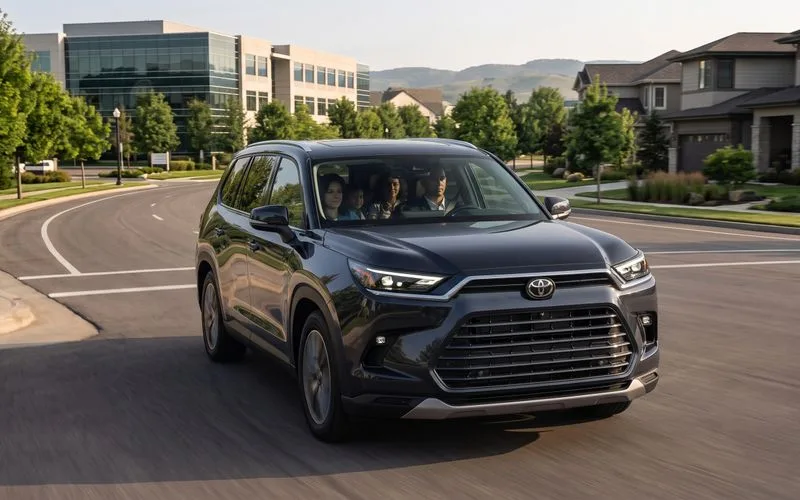 Toyota Grand HighlanderMid-Size SUVBetter at: Fuel economy
Its hybrid powertrain returns roughly 34 MPG combined against the Pilot's 21, saving about $800 a year in fuel while offering the same three-row space and a quieter cabin.
Compare 2.79B-
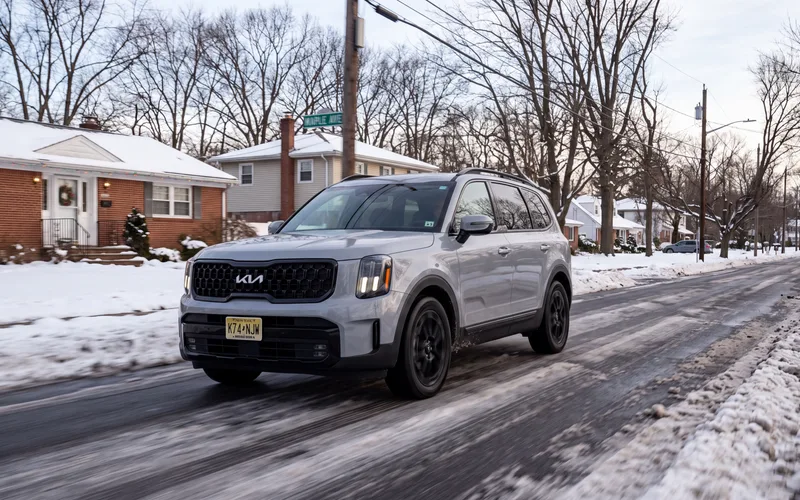 Kia TellurideMid-Size SUVBetter at: Warranty
It costs less to start, feels more upscale inside, and backs the powertrain for 10 years/100,000 miles versus Honda's 5/60.
Compare 3.03B
3.03B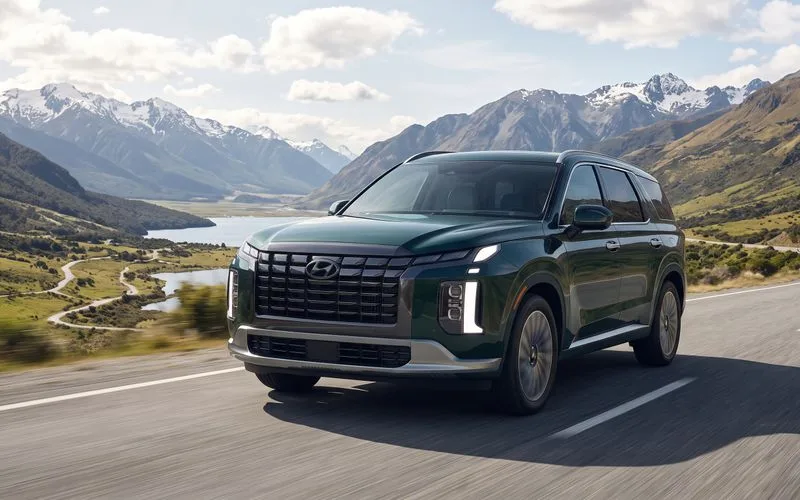 Hyundai PalisadeMid-Size SUVBetter at: Cabin comfort
For the same money it delivers a quieter, plusher cabin with a bigger screen and a head-up display the Pilot doesn't offer on any trim.
CompareHow it's evolved
10 scored model years · 2017–2026
Subject scores by year
Hover or tap a score to see what moved it versus the year before. A corner mark flags a big swing.
| Year | Performance | Efficiency | Safety | Space | Cost | Reliability | Tech | Use-case | Driving | Value |
|---|---|---|---|---|---|---|---|---|---|---|
| 2026 | 48 | 40 | 77 | 71 | 47 | 72 | 56 | 74 | 59 | 65 |
| 2025 | 48 | 34 | 79 | 72 | 41 | 70 | 57 | 71 | 61 | 66 |
| 2024 | 48 | 34 | 75 | 71 | 48 | 68 | 56 | 69 | 61 | 68 |
| 2023 | 48 | 34 | 79 | 71 | 40 | 66 | 56 | 69 | 61 | 69 |
| 2022 | 50 | 41 | 63 | 64 | 52 | 59 | 40 | 57 | 55 | 55 |
| 2021 | 44 | 55 | 63 | 65 | 53 | 62 | 40 | 57 | 53 | 58 |
| 2020 | 46 | 43 | 70 | 68 | 47 | 57 | 47 | 63 | 64 | 55 |
| 2019 | 52 | 38 | 71 | 71 | 58 | 66 | 49 | 71 | 67 | 80 |
| 2018 | 53 | 45 | 65 | 70 | 59 | 65 | 33 | 69 | 68 | 80 |
| 2017 | 51 | 38 | 63 | 73 | 59 | 62 | 34 | 69 | 66 | 81 |
Compare two years
Best fit & conditions
Higher scores mean a better fit for that use case. Learn more about use-case fit →
Subject profile
Trims & configurations
5 trimsScores above reflect the volume trim. Per-trim specs and scores are rolling out — the full lineup:
Academic Probation · NHTSA safety recalls
Jun 4, 2026Structure: frame and members · Suspension: rearThe rear subframe may corrode at the suspension mounting points, which can result in rear suspension component failure.
Defect
American Honda Motor Company (Honda) is recalling certain 2016-2022 Honda Pilot, 2017-2023 Ridgeline, 2019-2023 Passport, and 2014-2020 Acura MDX vehicles that were sold in Connecticut, Delaware, District of Columbia, Illinois, Indiana, Iowa, Kentucky, Maine, Maryland, Massachusetts, Michigan, Minnesota, Missouri, New Hampshire, New Jersey, New York, Ohio, Pennsylvania, Rhode Island, Vermont, Virginia, West Virginia, or Wisconsin. The rear subframe may corrode at the suspension mounting points, which can result in rear suspension component failure.
Risk
Failure of rear suspension components, such as the rear control arm, can cause a loss of vehicle handling and control, increasing the risk of a crash or injury.
Remedy
Dealers will inspect the rear subframe and install a rear subframe reinforcement kit and, as necessary, repair or replace the rear subframe components, free of charge. Interim letters notifying owners of the safety risk were mailed July 27, 2026. Additional letters will be sent once the final remedy is available, anticipated in the fall of 2026. Owners may contact Honda's customer service at 1-888-234-2138. Honda's numbers for this recall are AOU and AOT. Vehicle Identification Numbers (VINs) involved in this recall will become searchable on NHTSA.gov beginning June 10, 2026.
NHTSA campaign 26V365000 ↗Manufacturer no. AOU, AOT965,561 vehicles potentially affected (all models in the campaign)Filed by Honda (American Honda Motor Co.)Filed as PILOTMay 21, 2026Air bags: sensor: occupant classification: front passengerThe front passenger seat weight sensor may crack and short circuit, which can cause the air bags to deploy unintentionally during a crash.
Defect
Honda (American Honda Motor Co.) is recalling certain 2018-2021, 2023 Acura TLX, 2019-2024 RDX, 2017-2020, 2022-2026 MDX, 2017-2021, 2023, 2025 Honda Ridgeline, 2017-2022 Pilot, 2019-2021 Passport, 2018-2026 Odyssey, 2019-2022 Insight, 2019-2021 HR-V, 2018-2020 Fit, 2020-2022 CR-V Hybrid, 2017-2022 CR-V, 2017-2018, 2021 Civic Type R, 2017-2021 Civic hatchback, 2016-2020 Civic coupe, 2016-2022 Civic, 2017-2022 Accord Hybrid, and 2016-2022 Accord vehicles. The front passenger seat weight sensor may crack and short circuit, which can cause the air bags to deploy unintentionally during a crash.
Risk
Air bags that deploy unintentionally during a crash increase the risk of injury.
Remedy
Dealers will replace the seat weight sensors, free of charge. Owner notification letters were mailed July 7, 2026. Owners may contact Honda's customer service at 1-888-234-2138. Honda's numbers for this recall are BOL, WO9, OOA, WOM, XOH, NOC, POD, BOE, UOF, POB, EOG, AOI, QO8, TOJ, DO7, and SOK. This recall expands previous NHTSA recall number 24V064. Vehicle Identification Numbers (VINs) involved in this recall will be searchable on NHTSA.gov beginning May 29, 2026.
NHTSA campaign 26V332000 ↗Manufacturer no. Refer to Comments98,892 vehicles potentially affected (all models in the campaign)Owners notified Jul 6, 2026Filed by Honda (American Honda Motor Co.)Filed as PILOTDec 18, 2023Fuel system, gasoline: delivery: fuel pumpThe fuel pump inside the fuel tank may fail.
Defect
Honda (American Honda Motor Co.) is recalling certain 2013-2023 Honda Accord, Civic Coupe, Civic Sedan, Civic Hatchback, Civic Type R, CR-V, HR-V, Ridgeline, Odyssey, Acura ILX, MDX, MDX Hybrid, RDX, RLX, TLX, 2019-2022 Honda Insight, Passport, 2020 Honda CR-V Hybrid, 2018-2019 Honda Clarity PHEV, Fit, and 2015-2020 Honda Accord Hybrid, Pilot, Acura NSX vehicles. The fuel pump inside the fuel tank may fail.
Risk
Fuel pump failure can cause an engine stall while driving, increasing the risk of a crash.
Remedy
Dealers will replace the fuel pump module, free of charge. Owner letters were mailed September 6, 2024. Owners may contact Honda customer service at 1-888-234-2138. Honda's numbers for this recall are KGC and KGD. This recall is an expansion of NHTSA recall numbers 21V-215 and 20V-314.
NHTSA campaign 23V858000 ↗Manufacturer no. KGC, KGD2,490,460 vehicles potentially affected (all models in the campaign)Owners notified Mar 29, 2024Filed by Honda (American Honda Motor Co.)Filed as PILOTNov 13, 2023Engine and engine cooling: engine: hard parts internal/mechanicalDue to a manufacturing error, the connecting rod bearing in the engine may wear and seize, damaging the engine.
Defect
Honda (American Honda Motor Co.) is recalling certain 2015-2020 Acura TLX, 2016-2020 Acura MDX, 2016 and 2018-2019 Pilot, 2017 and 2019 Ridgeline, and 2018-2019 Odyssey vehicles. Due to a manufacturing error, the connecting rod bearing in the engine may wear and seize, damaging the engine.
Risk
A damaged engine may run improperly or stall while driving, increasing the risk of a fire, crash, or injury.
Remedy
Dealers will inspect and repair, or replace the engine as necessary, free of charge. Owner letters were mailed March 28, 2024. 2016-2017 Acura MDX owner letters were mailed November 1, 2024. 2016-2020 Acura MDX owner letters are expected to be mailed in mid-December 2024. Honda began mailing owner notification letters as of March 18, 2024. 2015-2016 Acura owner letters are expected to be mailed mid-December 2024, 2018 Acura TLX owner letters are expected to be mailed the end of March/early April 2024, 2019 Acura TLX owner letters are expected to be mailed mid-May 2024, 2020 Acura TLX owner letters are expected to be mailed mid-June 2024, and 2016-2020 Acura MDX owner letters are expected to be mailed January 27, 2025. Owners may contact Honda customer service at 1-888-234-2138. Honda's numbers for these recalls are XG1 and GG0.
NHTSA campaign 23V751000 ↗Manufacturer no. XG1, GG0248,999 vehicles potentially affected (all models in the campaign)Owners notified Mar 28, 2024Filed by Honda (American Honda Motor Co.)Filed as PILOTNov 29, 2021Latches/locks/linkages: hood: latch · Structure: body: hoodThe hood latch striker may become damaged and separate from the hood, which can result in the hood opening while driving.
Defect
Honda (American Honda Motor Co.) is recalling certain 2019 Passport, 2016-2019 Pilot, and 2017-2020 Ridgeline vehicles. The hood latch striker may become damaged and separate from the hood, which can result in the hood opening while driving.
Risk
A hood that opens while driving can obstruct the driver's view and increase the risk of a crash.
Remedy
Dealers will either repair the hood latch striker, or replace the hood if necessary, free of charge. Owner notification letters were mailed January 18, 2022. Owners may contact Honda customer service at 1-888-234-2138. Honda's number for this recall is PBV.
NHTSA campaign 21V932000 ↗Manufacturer no. PBV724,826 vehicles potentially affected (all models in the campaign)Owners notified Jan 18, 2022Filed by Honda (American Honda Motor Co.)Filed as PILOTApr 12, 2019Engine and engine cooling: engine: gasoline: belts and associated pulleysThe timing belt teeth may separate from the belt.
Defect
Honda (American Honda Motor Co.) is recalling certain 2018-2019 Acura MDX and Honda Pilot vehicles and 2019 Acura RLX, RLX Sport Hybrid, TLX and Honda Odyssey and Ridgeline vehicles. The timing belt teeth may separate from the belt.
Risk
Teeth separation from the timing belt may result in an engine stall, increasing the risk of crash.
Remedy
Honda will notify owners, and dealers will inspect the vehicle and replace any affected timing belt free of charge. Vehicles receiving a replacement timing belt will also have the engine inspected and any damaged components will be replaced for free. The recall began June 7, 2019. Honda owners may contact customer service at 1-888-234-2138. Honda's number for this recall is L4M. Acura owners may contact customer service at 1-888-234-2138. Acura's number for this recall is Z4L.
NHTSA campaign 19V298000 ↗Manufacturer no. L4M, Z4L93,946 vehicles potentially affected (all models in the campaign)Owners notified Jun 7, 2019Filed by Honda (American Honda Motor Co.)Filed as PILOTApr 5, 2018SeatsThe front driver and passenger powered seats in the Honda vehicles and the driver powered seats in the Acura vehicles may have been assembled with improperly manufactured rivets. In the event of a crash, the rivets can break causing the seats not to be secured to the floor. As such, these vehicles may fail to comply with the requirements of Federal Motor Vehicle Safety Standard (FMVSS) number 207, "Seating Systems," and 210, "Seat Belt Assembly Anchorages."
Defect
Honda (American Honda Motor Co.) is recalling certain 2018 Honda Pilot and Ridgeline vehicles and 2018 Acura MDX vehicles. The front driver and passenger powered seats in the Honda vehicles and the driver powered seats in the Acura vehicles may have been assembled with improperly manufactured rivets. In the event of a crash, the rivets can break causing the seats not to be secured to the floor. As such, these vehicles may fail to comply with the requirements of Federal Motor Vehicle Safety Standard (FMVSS) number 207, "Seating Systems," and 210, "Seat Belt Assembly Anchorages."
Risk
In the event of a crash, if the seat does not remain secured to the floor, the seat occupant has an increased risk of injury.
Remedy
Honda will notify owners, and dealers will replace the driver seat frame assembly in Acura MDX vehicles, and replace the driver and front passenger seat slide rail frames in Honda Pilot and Ridgeline vehicles, free of charge. The recall began May 30, 2018. Owners may contact Honda customer service at 1-888-234-2138. Honda's numbers for this recall is D0S, and T0T.
NHTSA campaign 18V221000 ↗Manufacturer no. D0S, T0T5,810 vehicles potentially affected (all models in the campaign)Owners notified May 30, 2018Filed by Honda (American Honda Motor Co.)Filed as PILOT
20 recalls on other model years of the Pilot (2019–2026)
Jul 1, 2026Structure: frame and members · Suspension: rearThe rear subframe bolts may have been tightened improperly.
Defect
Honda (American Honda Motor Co.) is recalling certain 2026 Pilot and Passport vehicles. The rear subframe bolts may have been tightened improperly.
Risk
Loose rear subframe bolts can lead to a loss of vehicle stability or rear subframe detachment, increasing the risk of a crash or injury.
Remedy
Dealers will inspect and replace the rear subframe bolts as necessary, free of charge. Owner notification letters were mailed August 24, 2026. Owners may contact Honda's customer service at 1-888-234-2138. Honda's number for this recall is OOY. Vehicle Identification Numbers (VINs) involved in this recall will be searchable on NHTSA.gov beginning July 10, 2026.
NHTSA campaign 26V424000 ↗Manufacturer no. OOY3,933 vehicles potentially affected (all models in the campaign)Owners notified Aug 24, 2026Filed by Honda (American Honda Motor Co.)Filed as PILOTJan 29, 2026Seats: critical fastenersThe driver's seat cushion frame may not have been tightened properly, which can result in a loose seat. As such, these vehicles fail to comply with the requirements of Federal Motor Vehicle Safety Standard number 207, "Seating Systems."
Defect
Honda (American Honda Motor Co.) is recalling certain 2023 Honda Accord, Accord Hybrid, and 2024 HR-V, Pilot, and Acura Integra vehicles. The driver's seat cushion frame may not have been tightened properly, which can result in a loose seat. As such, these vehicles fail to comply with the requirements of Federal Motor Vehicle Safety Standard number 207, "Seating Systems."
Risk
A loose driver's seat may not adequately restrain the driver during a crash, increasing the risk of injury.
Remedy
Dealers will replace the driver's seat cushion frame, free of charge. Owner notification letters were mailed March 10, 2026. Owners may contact Honda's customer service at 1-888-234-2138. Honda's numbers for this recall are ONC, KND, BNE and ZNF. Vehicle Identification Numbers (VINs) involved in this recall will become searchable on NHTSA.gov beginning February 5, 2026. This recall expands previous NHTSA recall number 24V859.
NHTSA campaign 26V054000 ↗Manufacturer no. ONC, KND, BNE, ZNF32 vehicles potentially affected (all models in the campaign)Owners notified Mar 9, 2026Filed by Honda (American Honda Motor Co.)Filed as PILOTJun 12, 2025Service brakes, hydraulic: pedals and linkagesThe brake pedal pivot pin was not secured properly, which can cause the pedal to shift out of position. As such, these vehicles fail to comply with Federal Motor Vehicle Safety Standard numbers 108, "Lamps, Reflective Devices, and Associated Equipment" and 135, "Light Vehicle Brake Systems."
Defect
Honda (American Honda Motor Co.) is recalling certain 2021-2025 Acura TLX, 2023-2025 Acura MDX, and 2023-2025 Honda Pilot vehicles. The brake pedal pivot pin was not secured properly, which can cause the pedal to shift out of position. As such, these vehicles fail to comply with Federal Motor Vehicle Safety Standard numbers 108, "Lamps, Reflective Devices, and Associated Equipment" and 135, "Light Vehicle Brake Systems."
Risk
A brake pedal that shifts out of position can prevent the driver from applying the brakes as intended, increasing the risk of a crash or injury.
Remedy
Dealers will inspect and replace the brake pedal assembly as necessary, free of charge. Owner notification letters were mailed July 29, 2025. Owners may contact Honda's customer service at 1-888-234-2138. Honda's numbers for this recall are FLX and XLY.
NHTSA campaign 25V391000 ↗Manufacturer no. FLX, XLY259,033 vehicles potentially affected (all models in the campaign)Owners notified Jul 28, 2025Filed by Honda (American Honda Motor Co.)Filed as PILOTFeb 5, 2025Seat belts: rear/otherThe third-row passenger seat belt assembly may not function, due to incorrect routing that traps the seat belt behind the passenger side panel. As such, these vehicles fail to comply with the requirements of Federal Motor Vehicle Safety Standard (FMVSS) number 208, "Occupant Crash Protection."
Defect
Honda (American Honda Motor Co.) is recalling certain 2025 Honda Pilot vehicles. The third-row passenger seat belt assembly may not function, due to incorrect routing that traps the seat belt behind the passenger side panel. As such, these vehicles fail to comply with the requirements of Federal Motor Vehicle Safety Standard (FMVSS) number 208, "Occupant Crash Protection."
Risk
A non-functioning seat belt cannot properly restrain the seat occupant, increasing the risk of injury during a crash.
Remedy
Dealers will inspect and repair the seat belt routing as necessary, free of charge. Owner notification letters were mailed March 24, 2025. Owners may contact Honda's customer service at 1-888-234-2138. Honda's number for this recall is ZL4.
NHTSA campaign 25V056000 ↗Manufacturer no. ZL41,494 vehicles potentially affected (all models in the campaign)Owners notified Mar 24, 2025Filed by Honda (American Honda Motor Co.)Filed as PILOTJan 23, 2025Electrical system: software · Fuel system, gasoline: fuel injection systemA software error in the fuel injection electronic control unit (FI-ECU) may cause an engine stall or a loss of power.
Defect
Honda (American Honda Motor Co.) is recalling certain 2022-2025 Acura MDX Type-S, 2023-2025 Honda Pilot, and 2021-2025 Acura TLX Type-S vehicles. A software error in the fuel injection electronic control unit (FI-ECU) may cause an engine stall or a loss of power.
Risk
An engine stall or loss of power can increase the risk of a crash or injury.
Remedy
Dealers will reprogram the FI-ECU software, free of charge. Owner notification letters were mailed March 17, 2025. Owners may contact Honda's customer service at 1-888-234-2138. Honda's numbers for this recall are EL1 and AL0.
NHTSA campaign 25V031000 ↗Manufacturer no. EL1, AL0294,612 vehicles potentially affected (all models in the campaign)Owners notified Mar 17, 2025Filed by Honda (American Honda Motor Co.)Filed as PILOTNov 27, 2024Fuel system, gasoline: storage: tank assembly: filler pipe and capThe fuel filler neck tube and fuel filler pipe may separate, allowing fuel to leak.
Defect
Honda (American Honda Motor Co.) is recalling certain 2023-2024 Passport and 2023-2025 Pilot vehicles. The fuel filler neck tube and fuel filler pipe may separate, allowing fuel to leak.
Risk
A fuel leak in the presence of an ignition source increases the risk of a fire.
Remedy
Dealers will inspect and repair the fuel filler neck tube and pipe as necessary, free of charge. Owner notification letters were mailed January 7, 2025. Owners may contact Honda customer service at 1-888-234-2138. Honda's number for this recall is OKM.
NHTSA campaign 24V900000 ↗Manufacturer no. OKM205,760 vehicles potentially affected (all models in the campaign)Owners notified Jan 7, 2025Filed by Honda (American Honda Motor Co.)Filed as PILOTNov 14, 2024Seats: critical fastenersThe driver's seat cushion frame may not have been tightened properly, which can result in an unsecured seat. As such, these vehicles fail to comply with the requirements of Federal Motor Vehicle Safety Standard number 207, "Seating Systems."
Defect
Honda (American Honda Motor Co.) is recalling certain 2023-2024 Honda Accord, Accord Hybrid, Civic Sedan, Civic Hatchback, Pilot, and 2024 HR-V, Acura Integra and Acura Integra Type S vehicles. The driver's seat cushion frame may not have been tightened properly, which can result in an unsecured seat. As such, these vehicles fail to comply with the requirements of Federal Motor Vehicle Safety Standard number 207, "Seating Systems."
Risk
An unsecured driver's seat may not adequately restrain the driver during a crash, increasing the risk of injury.
Remedy
Dealers will replace the driver's seat cushion frame, free of charge. Owner notification letters were mailed January 6, 2025. Owners may contact Honda customer service at 1-888-234-2138.
NHTSA campaign 24V859000 ↗121 vehicles potentially affected (all models in the campaign)Owners notified Jan 6, 2025Filed by Honda (American Honda Motor Co.)Filed as PILOTFeb 1, 2024Air bags: sensor: occupant classification: front passengerThe front passenger seat weight sensor may crack and short circuit, failing to suppress the air bag as intended.
Defect
Honda (American Honda Motor Co.) is recalling certain 2020-2022 Pilot, Accord, Civic sedan, HR-V, Odyssey, 2020 Civic coupe, Fit, 2021-2022 Civic hatchback, 2021 Civic Type R, Insight, 2020-2021 CR-V, CR-V Hybrid, Passport, Ridgeline, Accord Hybrid, 2020 Acura MDX, 2022 Acura MDX, 2020-2022 Acura RDX, and 2020-2021 Acura TLX vehicles. The front passenger seat weight sensor may crack and short circuit, failing to suppress the air bag as intended.
Risk
An air bag that deploys unintentionally during a crash can increase the risk of injury.
Remedy
Dealers will replace the seat weight sensors, free of charge. Owner notification letters were mailed March 28, 2024. This is a phased recall. Owners may contact Honda customer service at 1-888-234-2138. Honda's numbers for these recalls are XHP and VHQ.
NHTSA campaign 24V064000 ↗Manufacturer no. XHP, VHQ750,114 vehicles potentially affected (all models in the campaign)Owners notified Mar 28, 2024Filed by Honda (American Honda Motor Co.)Filed as PILOTNov 2, 2023Steering: rack and pinion: rackDue to a manufacturing error, the gear box assembly may contain a loose ball bearing, which can result in a loss of steering control or steering lock-up.
Defect
Honda (American Honda Motor Co.) is recalling certain 2023-2024 Pilot vehicles. Due to a manufacturing error, the gear box assembly may contain a loose ball bearing, which can result in a loss of steering control or steering lock-up.
Risk
A loss of steering control or steering lock-up can increase the risk of a crash.
Remedy
Dealers will replace the electric power steering rack, free of charge. Owner notification letters were mailed December 18, 2023. Owners may contact Honda customer service at 1-888-234-2138. Honda's number for this recall is FFX.
NHTSA campaign 23V735000 ↗Manufacturer no. FFX519 vehicles potentially affected (all models in the campaign)Owners notified Dec 18, 2023Filed by Honda (American Honda Motor Co.)Filed as PILOTJun 29, 2023Service brakes, hydraulic: foundation components: master cylinderThe tie rod fastener that connects the brake booster and the brake master cylinder may have been improperly assembled during manufacturing, which can cause the brake master cylinder to separate from the booster assembly.
Defect
Honda (American Honda Motor Co.) is recalling certain 2020-2021 Civic, 2020-2023 Ridgeline, 2021-2023 Passport, 2021-2022 Pilot, and 2020 Acura MDX vehicles. The tie rod fastener that connects the brake booster and the brake master cylinder may have been improperly assembled during manufacturing, which can cause the brake master cylinder to separate from the booster assembly.
Risk
Brake master cylinder separation can cause a loss of brake function and increase the risk of a crash.
Remedy
Dealers will inspect and repair the brake booster assembly as necessary, free of charge. Owner notification letters were mailed August 7, 2023. Owners may contact Honda customer service at 1-888-234-2138. Honda's numbers for this recall are VEU, AEV, and ZET.
NHTSA campaign 23V458000 ↗Manufacturer no. VEU, AEV, ZET124,077 vehicles potentially affected (all models in the campaign)Owners notified Aug 7, 2023Filed by Honda (American Honda Motor Co.)Filed as PILOTJun 15, 2023Back over prevention: display functionDue to a faulty Media Oriented Systems Transport (MOST) communication coaxial cable connector, the rearview camera image may not appear on the display. As such, these vehicles fail to comply with the requirements of Federal Motor Vehicle Safety Standard number 111, "Rear Visibility."
Defect
Honda (American Honda Motor Co.) is recalling certain 2018-2023 Odyssey, 2019-2022 Pilot, and 2019-2023 Passport vehicles. Due to a faulty Media Oriented Systems Transport (MOST) communication coaxial cable connector, the rearview camera image may not appear on the display. As such, these vehicles fail to comply with the requirements of Federal Motor Vehicle Safety Standard number 111, "Rear Visibility."
Risk
A rearview camera that does not display an image can reduce the driver's rear view, increasing the risk of a crash or injury.
Remedy
Dealers will replace the MOST cable harness and install a straightening cover over the vehicle cable connector, free of charge. Owner notification letters were mailed July 24, 2023. Owners may contact Honda customer service at 1-888-234-2138. Honda's numbers for this recall are EEL, ZEM, and SFC.
NHTSA campaign 23V431000 ↗Manufacturer no. EEL, ZEM, SFC1,209,673 vehicles potentially affected (all models in the campaign)Owners notified Jul 24, 2023Filed by Honda (American Honda Motor Co.)Filed as PILOTMar 16, 2023Visibility: rearview mirrors/devices: exteriorThe heating pads behind both side-view mirrors may not be bonded properly, allowing the mirror glass to detach. As such, these vehicles fail to comply with the requirements of Federal Motor Vehicle Safety Standard number 111, "Rear Visibility."
Defect
Honda (American Honda Motor Co) is recalling certain 2020-2021 Pilot and Ridgeline, and 2020-2022 Passport and Odyssey vehicles. The heating pads behind both side-view mirrors may not be bonded properly, allowing the mirror glass to detach. As such, these vehicles fail to comply with the requirements of Federal Motor Vehicle Safety Standard number 111, "Rear Visibility."
Risk
Detached mirror glass can reduce driver visibility, increasing the risk of a crash.
Remedy
Dealers will replace both left and right side-view mirrors, free of charge. Owner letters were mailed January 17, 2024. Owners may contact Honda customer service at 1-888-234-2138. Honda's number for this recall is FE5.
NHTSA campaign 23V174000 ↗Manufacturer no. FE5339,404 vehicles potentially affected (all models in the campaign)Owners notified Jan 17, 2024Filed by Honda (American Honda Motor Co.)Filed as PILOTMar 25, 2021Fuel system, gasoline: delivery: fuel pumpThe low-pressure fuel pump inside the fuel tank may fail.
Defect
Honda (American Honda Motor Co.) is recalling certain 2019-2020 Acura MDX, MDX Sport Hybrid, RDX, TLX, Honda Accord, Civic Hatchback, Insight, 2019 Acura ILX, Honda Accord Hybrid, Civic Coupe, Civic Coupe Si, Civic Sedan, Civic Sedan Si, Civic Type R, Fit, HR-V, Odyssey, Passport, Pilot and Ridgeline, and 2018-2019 CR-V vehicles. The low-pressure fuel pump inside the fuel tank may fail.
Risk
Fuel pump failure can cause an engine stall while driving, increasing the risk of a crash.
Remedy
Honda will notify owners, and dealers will replace the fuel pump assembly, free of charge. Owner letters were mailed May 18, 2021. Owners may contact Honda customer service at 1-888-234-2138. Note: This recall is an expansion of recall 20V-314.
NHTSA campaign 21V215000 ↗Manufacturer no. Multiple Codes624,552 vehicles potentially affected (all models in the campaign)Owners notified May 18, 2021Filed by Honda (American Honda Motor Co.)Filed as PILOTMar 11, 2021TiresOn the affected vehicles, it is possible that one or more tires were cured for too long during tire production.
Defect
Honda (American Honda Motor Co.) is recalling certain 2019-2020 Passport and Pilot vehicles equipped with Continental tires. On the affected vehicles, it is possible that one or more tires were cured for too long during tire production.
Risk
Overcured tires may develop a break in the sidewall, resulting in sudden air loss or belt edge separation, which could lead to tread/belt loss. Either condition can cause a loss of vehicle control, increasing the risk of a crash or injury.
Remedy
Honda will notify owners, and dealers will inspect all four tires and replace them as necessary, free of charge. The recall began April 22, 2021. Owners may contact American Honda Motor Co. customer service at 1-888-234-2138. Honda's number for this recall is UA2.
NHTSA campaign 21V165000 ↗Manufacturer no. UA21,093 vehicles potentially affected (all models in the campaign)Owners notified Apr 22, 2021Filed by Honda (American Honda Motor Co.)Filed as PILOTNov 20, 2020TiresThe tires may have been cured for a time beyond the specification limits.
Defect
American Honda Motor Co. (Honda) is recalling certain 2021 Pilot vehicles equipped with Continental CrossContact LX Sport 245/50R20 102 H tires with DOT serial number A376 D3K9 2920 and mold numbers S-421920 and S-421921. The tires may have been cured for a time beyond the specification limits.
Risk
Over-cured tires may develop a break in the sidewall resulting in sudden air loss or a belt edge separation which could lead to a tread/belt loss. Either condition can cause a loss of vehicle control, increasing the risk of a crash or injury.
Remedy
Honda will notify owners, and dealers will inspect all four tires and replace the tires that have the affected DOT serial number and mold number, free of charge. The recall began January 11, 2021. Owners may contact Honda customer service at 1-888-234-2138. Honda's number for this recall is U8Y.
NHTSA campaign 20V725000 ↗Manufacturer no. U8Y214 vehicles potentially affected (all models in the campaign)Owners notified Jan 11, 2021Filed by Honda (American Honda Motor Co.)Filed as PILOTJul 28, 2020Back over prevention: sensing system: camera · Electrical system: softwareIncorrect central network software programming may cause several errors to occur that can delay or prevent the rearview camera image from displaying. As such, these vehicles fail to comply with the requirements of Federal Motor Vehicle Safety Standard (FMVSS) number 111, "Rearview Mirrors."
Defect
Honda (American Honda Motor Co.) is recalling certain 2019-2021 Pilot, 2019-2020 Odyssey and 2019-2020 Passport vehicles. Incorrect central network software programming may cause several errors to occur that can delay or prevent the rearview camera image from displaying. As such, these vehicles fail to comply with the requirements of Federal Motor Vehicle Safety Standard (FMVSS) number 111, "Rearview Mirrors."
Risk
A delayed or inoperative rearview camera display can reduce the driver's view of what is behind the vehicle, increasing the risk of a crash.
Remedy
Honda will notify owners that updated software is available. Owners have the option to either follow the mailed instructions to download and update the software for free, or visit a dealer to have the software update performed, free of charge. The recall began September 23, 2020. Owners may contact Honda customer service at 1-888-234-2138. Honda's number for this recall is Y7Y.
NHTSA campaign 20V440000 ↗Manufacturer no. Y7Y499,344 vehicles potentially affected (all models in the campaign)Owners notified Sep 23, 2020Filed by Honda (American Honda Motor Co.)Filed as PILOTJul 28, 2020Back over prevention: sensing system: camera · Electrical system: softwareIncorrect instrument panel control module software can cause the instrument panel to not display critical information, such as engine oil pressure, speedometer, and gear selector position until the next ignition cycle. Additionally, it can prevent the rearview camera image from displaying. As such, these vehicles fail to comply with the requirements of Federal Motor Vehicle Safety Standard (FMVSS) numbers 101, "Control and Displays" and 111, "Rearview Mirrors."
Defect
Honda (American Honda Motor Co.) is recalling certain 2018-2020 Odyssey, 2019-2020 Passport, and 2019-2021 Pilot vehicles. Incorrect instrument panel control module software can cause the instrument panel to not display critical information, such as engine oil pressure, speedometer, and gear selector position until the next ignition cycle. Additionally, it can prevent the rearview camera image from displaying. As such, these vehicles fail to comply with the requirements of Federal Motor Vehicle Safety Standard (FMVSS) numbers 101, "Control and Displays" and 111, "Rearview Mirrors."
Risk
Operating a vehicle without a functioning instrument panel or rearview camera display increases the risk of a crash.
Remedy
Honda will notify owners, and dealers will reprogram the instrument panel control module software, free of charge. The recall began September 23, 2020. Owners may contact Honda customer service at 1-888-234-2138. Honda's number for this recall is T89.
NHTSA campaign 20V439000 ↗Manufacturer no. T89607,786 vehicles potentially affected (all models in the campaign)Owners notified Sep 23, 2020Filed by Honda (American Honda Motor Co.)Filed as PILOTFeb 6, 2020Equipment: other: labelsThe certification label may have been printed with ink that can be wiped away with a solvent, removing the Gross Axle Weight Rating (GAWR) and Gross Vehicle Weight Rating (GVWR) information.
Defect
Honda (American Honda Motor Co.) is recalling certain 2020 Passport and Pilot vehicles. The certification label may have been printed with ink that can be wiped away with a solvent, removing the Gross Axle Weight Rating (GAWR) and Gross Vehicle Weight Rating (GVWR) information.
Risk
If the operator is unable to refer to the label information, the vehicle may be overloaded, increasing the risk of a crash.
Remedy
Honda will notify owners, and dealers will replace the certification label, free of charge. The recall began March 24, 2020. Owners may contact Honda customer service at 1-888-234-2138. Honda's number for this recall is B6T.
NHTSA campaign 20V067000 ↗Manufacturer no. B6T10,050 vehicles potentially affected (all models in the campaign)Owners notified Mar 24, 2020Filed by Honda (American Honda Motor Co.)Filed as PILOTOct 31, 2019Structure: bodyThe front frame left and right side upper members may not have been welded completely to the unibody. As such, these vehicles may fail to comply with the requirements of Federal Motor Vehicle Safety Standard (FMVSS) numbers 208, "Occupant Crash Protection" and 219, "Windshield Zone Intrusion."
Defect
Honda (American Honda Motor Co.) is recalling certain 2019-2020 Pilot and 2019 Passport vehicles. The front frame left and right side upper members may not have been welded completely to the unibody. As such, these vehicles may fail to comply with the requirements of Federal Motor Vehicle Safety Standard (FMVSS) numbers 208, "Occupant Crash Protection" and 219, "Windshield Zone Intrusion."
Risk
In the event of a crash, incomplete body welding may provide inadequate protection to occupants, increasing the risk of an injury.
Remedy
Honda will notify owners, and dealers will inspect the vehicle for missing welds, free of charge. If the vehicle is identified as missing welds, the dealer will offer to repurchase the vehicle or provide a similar replacement vehicle. Owner notification began November 6 2019. Owners may contact Honda customer service at 1-888-234-2138. Honda's number for this recall is X6J.
NHTSA campaign 19V784000 ↗Manufacturer no. X6J10 vehicles potentially affected (all models in the campaign)Owners notified Nov 6, 2019Filed by Honda (American Honda Motor Co.)Filed as PILOTNov 28, 2018Structure: body: roof and pillarsThe mounting holes for the clip that secures the right center pillar trim panel may be larger than intended. In the event of a crash necessitating right side curtain air bag deployment, the clip may not hold the center pillar trim panel in position and it may potentially interfere with the curtain air bag deployment. As such, these vehicles fail to comply with the requirements of Federal Motor Vehicle Safety Standard (FMVSS) number 214, "Side Impact Protection," and 226, "Ejection Mitigation."
Defect
Honda (American Honda Motor Co.) is recalling certain 2019 Honda Ridgeline and Pilot vehicles. The mounting holes for the clip that secures the right center pillar trim panel may be larger than intended. In the event of a crash necessitating right side curtain air bag deployment, the clip may not hold the center pillar trim panel in position and it may potentially interfere with the curtain air bag deployment. As such, these vehicles fail to comply with the requirements of Federal Motor Vehicle Safety Standard (FMVSS) number 214, "Side Impact Protection," and 226, "Ejection Mitigation."
Risk
In the event of a crash, if the curtain air bag does not deploy as intended, it can increase the risk of injury.
Remedy
Honda will notify owners, and dealers will install a bracket on the right center pillar that will securely hold the center pillar trim clip, free of charge. The recall began January 22, 2019. Owners may contact Honda customer service at 1-888-234-2138. Honda's number for this recall is D3D.
NHTSA campaign 18V848000 ↗Manufacturer no. D3D404 vehicles potentially affected (all models in the campaign)Owners notified Jan 22, 2019Filed by Honda (American Honda Motor Co.)Filed as PILOT
Source: NHTSA Office of Defects Investigation recall database, model years 2017–2026. Recalls are listed by model year as the manufacturer filed them; whether a specific car is affected depends on its VIN — check a VIN at nhtsa.gov ↗. NHTSA model names matched to this page: PILOT.
Detailed scoring by subject
1Performance & PowertrainOne of the Pilot's weakest categories.1.58D
The volume EX-L and every other 2018 Pilot use the same direct-injected 3.5-liter V6, so 280 hp is also the range maximum.
The sole 3.5-liter V6 produces 262 lb-ft in the representative EX-L and throughout the trim range.
The representative EX-L AWD is reported at 6.2 seconds to 60 mph. Contemporary coverage generally places the unchanged 2018 range in the low-to-high six-second range depending on drivetrain and transmission.
The naturally aspirated V6 delivers prompt, linear power without turbo lag and is notably smooth throughout its rev range. It becomes audible under hard acceleration but remains one of the Pilot's strongest dynamic attributes.
The volume EX-L's six-speed automatic shifts smoothly and is preferable to the upper trims' gearbox. Range-wide refinement is held back by the Touring and Elite nine-speed, which reviewers found indecisive and rough at low speeds.
Properly equipped AWD models achieve the range's 5,000-pound maximum; front-drive models are rated at 3,500 pounds.
AWD is offered from LX through Touring and standard on Elite. Honda's i-VTM4 is unusually sophisticated for a mainstream crossover, actively varying torque front-to-rear and independently between the rear wheels, with Snow, Mud, and Sand modes on AWD EX and above.
Torque-vectoring AWD and dedicated loose-surface modes make it capable on snow, sand, mud, and mild trails. Its 7.3-inch clearance, modest angles, and lack of low range, underbody armor, lockers, or a dedicated off-road trim keep it firmly in light-duty territory.
Every 2018 Pilot has the same naturally aspirated 3.5-liter V6. Buyers can choose FWD or AWD and receive a six- or nine-speed automatic by trim, but there is no alternate engine, hybrid, PHEV, diesel, or EV option.
2Efficiency & RangeOne of the Pilot's weakest categories.0.98F
The representative EX-L uses the six-speed automatic; its 2WD EPA combined rating is 22 MPG. The available AWD version falls to 21 MPG.
The 2WD EX-L's official EPA city rating is 19 MPG, near the low end of the SUV normalization band.
The 2WD EX-L is EPA-rated at 27 MPG highway; AWD reduces that figure by 1 MPG.
EPA combined consumption of 22 MPG with Honda's 19.5-gallon tank yields an estimated full-tank combined range of 429 miles.
The EPA estimate for the 22-MPG six-speed FWD configuration is $2,700 per year under its standard 15,000-mile assumptions.
Every 2018 Pilot trim runs on widely available regular unleaded, avoiding any premium-fuel cost penalty.
3SafetyMid-pack among this car's ten categories.2.41C+
The 2018 Pilot earned NHTSA's maximum five-star overall rating, with four stars in frontal and rollover testing and five stars for side impact.
The 2018 Pilot was a Top Safety Pick when equipped with optional front crash prevention and the Elite's headlights. Its contemporary crashworthiness results were Good except for an Acceptable passenger-side small-overlap result; the later updated-side test was Marginal.
Honda Sensing supplied AEB, adaptive cruise, lane keeping, and road-departure mitigation, but it was merely available on LX through EX-L and standard only on Touring and Elite. True blind-spot monitoring and rear cross-traffic monitoring were confined to Elite, although EX through Touring received LaneWatch.
The optional Collision Mitigation Braking System earned IIHS's top Superior vehicle-to-vehicle rating, avoiding the 12-mph collision and cutting 12 mph from the 25-mph test. Its score is capped because the system was optional and IIHS did not publish modern day/night pedestrian results for this model year.
Most trims used the passenger-side-only LaneWatch camera rather than two-sided blind-spot alerts. Conventional blind-spot information with rear cross-traffic monitoring was alert-only and limited to the Elite trim, with no safe-exit or active intervention.
Available Honda Sensing added lane-departure warning, road-departure mitigation, and hands-on LKAS centering, but it worked principally at highway speeds and could feel intrusive in long sweeping corners. This is functional early-generation lane assistance rather than consistently smooth modern centering.
Honda Sensing's adaptive cruise was useful at highway speeds and could operate alongside LKAS, but this Pilot lacked the later Low-Speed Follow functionality and did not provide refined full-speed stop-and-go operation. Availability was also optional below Touring.
The 2018 Pilot offered no factory hands-free driving system; Honda Sensing's LKAS and adaptive cruise remained hands-on driver assistance.
IIHS rated the halogen projector headlights on the volume LX, EX, EX-L, and Touring trims Poor, citing inadequate illumination on every curve. Only the Elite's LED projectors with high-beam assist earned Acceptable.
The upright seating position and multi-angle reversing camera help, but natural front and rear-quarter visibility is only average for a large crossover. Parking sensors were restricted to Touring and Elite, and there was no factory surround-view camera.
IIHS rated LATCH usability Acceptable rather than Good because some tether anchors were hard to find or near confusing hardware, but the Pilot is unusually versatile: four rear positions have complete LATCH hardware and two more have tether anchors.
4Space & ComfortOne of the Pilot's strongest categories.2.73B-
The volume EX-L configuration has second- and third-row benches and seats eight; only the Elite substitutes second-row captain's chairs and seats seven.
The representative EX-L's standard moonroof reduces front headroom by 0.6 inch versus LX and EX, leaving an average amount for an SUV.
The published figure is common to every trim and lies near the low end of the SUV normalization band despite the cabin's generally roomy feel.
Second-row headroom in the volume EX-L is nearly at the top of the SUV band, with slightly more room in LX/EX and the panoramic-roof Elite.
A sliding and reclining second row combines with a strong published measurement to provide generous adult space.
With 31.9 inches of legroom, a reclining second row, and one-touch access on EX-L and above, the third row is unusually accommodating for children and workable for adults on shorter trips, though its low cushion limits long-trip comfort.
The SAE cargo measurement behind the second row is competitive but not exceptional within the broad SUV normalization range; useful space remains behind the third row.
Both rear rows fold flat to create a large, useful cargo floor, although several newer three-row rivals provide more ultimate volume.
A huge multifunction center console, multi-level door pockets, 15 beverage holders, flat-folding rear rows, and a hidden well with a reversible cargo lid make this a standout family-storage design.
The EX-L adds a 10-way power driver's seat with lumbar support, four-way power passenger seat, leather, and heated fronts; reviewers consistently praise first- and second-row comfort, with only the low third-row cushion and limited cushion-angle adjustment holding it below the top band.
The Pilot rides smoothly and comfortably over everyday pavement, but its soft suspension permits enough float and body motion to keep it short of segment-leading control.
Standard active noise cancellation and a refined V6 make the cabin notably hushed for a mainstream 2018 three-row SUV, though it does not reach modern luxury-SUV isolation.
The volume EX-L includes tri-zone automatic climate control, remote start, leather, and heated front seats; Elite adds ventilation, a heated wheel, heated second-row captain's chairs, and a panoramic roof, so the range is well equipped but richest amenities require the top trim.
5Cost of OwnershipMid-pack among this car's ten categories.2.00C
The entry 2018 Pilot was the LX with front-wheel drive. The 2018 model was a third-generation carry-over before the 2019 refresh, with only a modest price increase and a new exterior color.
EX-L represents the mainstream family-buyer sweet spot, and the AWD/Honda Sensing configuration is the appropriate typically equipped version. It retains the six-speed automatic rather than the Touring/Elite nine-speed.
RepairPal's model-year-specific annual maintenance and repair estimate is converted to the rubric's five-year horizon. This is an extrapolation rather than a published five-year forecast, but it uses observed 2018 Pilot cost data.
The 2018-specific estimate indicates respectable but not exceptional retention for a mainstream three-row SUV. It is preferable to using the nameplate-wide estimate because this run scores the exact model year.
Honda's basic warranty is at the bottom of the rubric's three-to-five-year band and trails brands offering five years of basic coverage.
Honda's powertrain term matches the mainstream industry baseline but sits at the bottom of the rubric's five-to-ten-year band.
The 2018 Pilot included useful 24-hour roadside assistance for the full basic-warranty term, but no factory complimentary scheduled-maintenance plan. That fits the rubric's basic-roadside-only band.
$40,635 volume-trim price minus its estimated resale value after 5 years (51.7% retained, or about $21,008) leaves about $19,627 in depreciation. Add the projected $1,960 in 5-year maintenance and repairs, and owning this vehicle for 5 years costs about $21,587 in total.
6Reliability & QualityMid-pack among this car's ten categories.2.36C+
Long-term evidence is sharply mixed: J.D. Power reports a strong owner-based quality and reliability result, while Consumer Reports rates the 2018 Pilot below its model-year peers. RepairPal's broader Pilot data are above average, placing this Pilot near mid-pack rather than among the segment's reliability leaders.
Honda had an above-average reliability reputation around 2018, but it was not consistently a top-five brand and several contemporary V6 models developed meaningful engine and transmission campaigns. The brand advantage is real but falls short of the top band.
Seven NHTSA campaigns are excessive and include engine seizure, fuel-pump stalling, unintended airbag deployment, and salt-belt rear-subframe corrosion rather than merely minor compliance defects. Honda also issued a major warranty-extension bulletin for six-speed torque-converter failure, showing a systemic service pattern beyond the recalls.
The established J35 V6 architecture is generally durable, but this exact model year is exposed to a serious connecting-rod-bearing recall and a wider NHTSA engine-failure investigation. The volume EX-L's Honda six-speed is preferable to the abrupt ZF nine-speed in Touring and Elite trims, yet its torque-converter warranty extension prevents an above-average score.
The cabin is unusually polished for a mainstream three-row SUV, with convincing soft-touch surfaces and well-finished controls. The volume EX-L adds leather and upscale touches, though it does not materially exceed the best rivals.
Contemporary reviewers found high assembly quality and solid construction, supporting a clearly above-average physical fit-and-finish result. Owner-reported electrical and infotainment trouble keeps the total quality impression below the top tier.
Honda's dense nationwide dealer footprint makes routine maintenance, complex diagnostics, and recall work accessible across most U.S. markets. Individual service quality varies, but geographic coverage is a clear ownership strength.
As a high-volume Honda with extensive platform and J35-family parts sharing, the Pilot has abundant OEM and aftermarket support. Routine costs are low for a three-row SUV, although timing-belt service and potential engine or transmission work keep it short of an exceptional score.
7Technology & InfotainmentThe Pilot's lowest-graded category.0.17F
The volume-oriented EX-L has Honda's 8-inch electrostatic Display Audio touchscreen, also used by every trim above LX. The 2018 Pilot is a carry-over third-generation model; its infotainment refresh arrived for 2019, not 2018.
The system is feature-rich for its age but slow, menu-heavy, and overly dependent on touch controls, including a frustrating volume slider. Multiple contemporary reviewers independently reached the same negative conclusion.
Apple CarPlay and Android Auto are included on EX and above, but both require a wired USB connection; LX has neither. No trim offers wireless phone projection.
Garmin-based native navigation with voice recognition is optional on EX-L and standard on Touring and Elite, but the rigid voice interface is dated and phone projection is generally preferable.
EX-L's 225-watt seven-speaker system is adequate, while Touring and Elite offer a meaningful 540-watt, 10-speaker upgrade. The upgrade is unbranded and falls short of the best premium systems.
A large color multi-information display and digital speedometer provide useful configurable information, but they sit beside an analog tachometer and conventional fuel/temperature gauges rather than forming a full-digital cluster.
The 2018 Pilot lacks a built-in telematics connection and Honda documents no over-the-air infotainment, maps, or whole-vehicle update capability. Its Garmin navigation updates rely on the conventional owner-delivered process rather than meaningful OTA support.
HondaLink offers dealership scheduling, location search, weather, and service messages, but no remote start, lock/unlock, vehicle locator, climate control, or digital key for this Pilot. Remote start is fob-only.
EX-L supplies three front USB-A ports, including two 2.5-amp ports, but no second-row USB, USB-C, or wireless charger. Touring and Elite add two second-row USB charging ports and a 115-volt outlet, making the upper-trim setup adequate for families.
EX-L has proximity Smart Entry, Walk Away Auto Lock, push-button start, fob remote start, and a power tailgate. It lacks hands-free liftgate operation, app-based controls, and phone-as-key.
Every trim has a multi-angle rear camera, but the volume EX-L lacks parking sensors. Front/rear sensors arrive only on Touring and Elite, and no trim offers a 360-degree camera or automated parking.
A head-up display was not offered on any 2018 Pilot trim.
8Use-Case FitOne of the Pilot's strongest categories.2.70B-
Four seating positions with complete LATCH hardware, an eight-seat cabin, a sliding/reclining second row, and one-touch third-row access on the volume EX-L make daily family loading unusually easy. The hinged rear doors are less convenient in tight spaces than a minivan's sliders.
Crash protection was strong and optional Honda Sensing performed well, but the suite cost extra on LX through EX-L, true blind-spot and cross-traffic alerts were Elite-only, and no rear-occupant alert was offered. That leaves meaningful safety gaps on affordable and volume trims.
The quiet, soft-riding cabin gives adults generous first- and second-row room, while tri-zone climate and available rear entertainment support long family trips. The low-cushioned third row and 16.5-cu-ft luggage area with all seats occupied keep it below the best family haulers.
A smooth, strong V6, comfortable seats, compliant ride, upright driving position, and standard multi-angle reversing camera make the volume EX-L pleasant in ordinary traffic. Vague controls, a fussy touchscreen, and Honda Sensing's lack of low-speed-follow functionality add daily friction.
The volume six-speed FWD configuration returns only 22 mpg combined, and AWD falls to 21 mpg, making a large gasoline V6 costly for solo commuting. Regular unleaded and mainstream Honda consumables help, but there was no hybrid alternative.
The upright seating and standard multi-angle rear camera make the large Pilot manageable, but its 194.5-inch length and 39.4-foot turning circle demand care. Front/rear parking sensors were limited to Touring and Elite, and no trim offered a surround-view camera.
AWD versions can tow a useful 5,000 pounds, the 280-hp V6 has ample load-hauling performance, and 83.8 cu ft of maximum cargo room handles moderate work. FWD is capped at 3,500 pounds, and the unibody Pilot is not a heavy-duty work vehicle.
The naturally aspirated V6 and conventional six-speed in the volume EX-L are proven, mainstream hardware, but this is a comfort-oriented unibody crossover rather than a fleet work platform. Its work-duty case is further tempered by documented engine-bearing, fuel-pump, and six-speed torque-converter campaigns.
Flat-folding rear rows, a reversible cargo lid, available roof rails and hitch accessories support occasional work use, and Touring adds a 115V outlet. The volume EX-L lacks the rails and AC outlet as standard, while carpeted trim and the absence of a work-focused upfit ecosystem limit jobsite suitability.
Supportive seats, a very comfortable ride, good cabin isolation, and roughly 429 miles of EPA combined range make the Pilot an accomplished highway vehicle. Available adaptive cruise reduces fatigue but lacks stop-and-go Low-Speed Follow, and the third row is less comfortable over long distances.
Available torque-vectoring AWD, selectable snow/mud/sand modes, a 5,000-lb tow ceiling, roof rails, and folding seats make it a strong camping and recreation companion. It remains a road-biased crossover without low range, underbody protection, or a dedicated off-road trim.
Both rear rows fold into a flat load floor, the EX-L provides one-touch second-row movement, and 83.8 cu ft of maximum room combines with hidden underfloor storage and a reversible cargo lid. Available roof rails and a hitch extend capacity for bikes and bulky outdoor equipment.
9Driving ExperienceMid-pack among this car's ten categories.2.58C+
The Pilot is secure and surprisingly nimble for an eight-seat crossover, but its comfort-first suspension permits enough body motion to keep it well short of the class's engaging leaders. The volume EX-L's 18-inch tires also favor compliance over sharp turn-in.
The electric rack is accurate and predictable enough for easy placement, but it is light and transmits little road texture. That makes it reassuring rather than communicative.
Shorter-than-average instrumented stops and an easily modulated pedal make the Pilot reassuring in normal and emergency braking. Some tests found fade or softer feedback, preventing a top-tier score.
The volume EX-L pairs the responsive, naturally aspirated V6 with the preferred six-speed automatic, avoiding the upper trims' abrupt nine-speed and idle-stop behavior. The six-speed can still hesitate to downshift, so calibration is good rather than impeccable.
Honda's smooth V6 has a pleasant character under load, while active mounts, active noise cancellation and the EX-L acoustic windshield suppress cylinder-deactivation vibration and cruise noise. It is notably refined, though not luxury-SUV silent.
The Pilot's 39.4-foot diameter is toward the wide end of the SUV normalization band, so tight garages and U-turns require some planning.
A 10-way power seat, tilt/telescoping wheel, modest step-in height and clear primary instruments make the EX-L comfortable for most drivers. The high seat can be awkward for shorter drivers, and the knobless touchscreen plus limited rearward sightlines are meaningful irritants.
The eager V6 and better-than-average agility add some personality, but numb steering and soft suspension keep this family hauler from inviting enthusiastic back-road driving. It is pleasant and capable, not a take-the-long-way-home SUV.
10Value & Market PositionThe Pilot's best-graded category.3.41B+
The volume-oriented EX-L delivered leather, heated front seats, a moonroof, power tailgate, tri-zone climate, one-touch second-row access, and smartphone integration at a competitive price. The base LX was less generous because Honda Sensing and several convenience features required moving up the range.
A roomy eight-seat cabin, strong standard V6, competitive efficiency, and useful family equipment made the Pilot an excellent overall value, especially in EX and EX-L form. Its awkward touchscreen and the upper trims' rough-shifting nine-speed kept it short of the very top band.
Five well-spaced core trims, front- or all-wheel drive, seven- or eight-passenger layouts, and Honda Sensing, navigation, and rear-entertainment variants covered a broad range of family budgets. The single V6 powertrain limited mechanical variety but did not materially weaken the lineup.
The Pilot was a high-volume, firmly accepted three-row SUV and surged to a nameplate record in calendar 2018. That 25% year-over-year gain supports a near-leader score rather than merely steady mid-pack status.
Honda's mainstream reputation for sensible engineering, durability, and resale gave the Pilot unusually strong buyer trust and family-car appeal. It was not aspirational in the luxury sense, but its image clearly helped ownership satisfaction and demand.
Period evidence shows useful subsidized financing and some finance cash, offering buyers a modest benefit without the heavy rebates associated with a distressed model. Strong record sales limited the need for broad cash discounting.
The 2018 model was the third year of the third generation and remained fundamentally current, with CarPlay and Android Auto carried over from 2017. It was unchanged apart from a color and sat immediately before the substantial 2019 styling, infotainment, and safety-tech refresh, reducing freshness.
The Pilot combined consistently strong reviews with major, model-year-specific recognition, including a repeat KBB segment Best Buy and two Edmunds best-of selections. It was widely regarded as one of the class benchmarks despite recurring criticism of its infotainment and nine-speed transmission.