

The verdict
A struggling mid-size suv, strong on space and held back by technology.
The 2021 Honda Pilot is a comfortable, easy-to-live-with 8-passenger family hauler with Honda Sensing driver-assist tech standard on every trim, from the $33,775 base LX on up. It's a late-cycle vehicle — this is the second-to-last year before a full redesign — so the 280 hp V6 feels adequate rather than quick, the infotainment system shows its age with no wireless CarPlay or head-up display, and the 3-year/36,000-mile warranty trails newer three-row rivals like the Telluride and Palisade. It's a safe, sensible pick for buyers who value Honda's dealer network and composed ride over flashy tech or towing muscle.
Jump to scoresStrengths
- Genuinely easy to live with as a family hauler
- Driver-assist tech is standard, not an upsell
- Composed, comfortable ride
What holds it back
- Infotainment and tech feel dated
- Warranty trails the segment
- V6 performance is middling, not muscular
Top alternatives
Cars shoppers cross-shop with the Honda Pilot 2.88B-
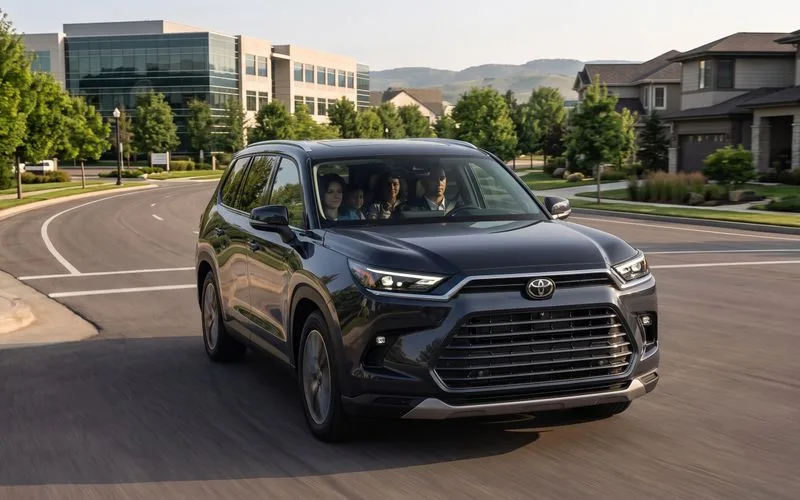 Toyota Grand HighlanderMid-Size SUVBetter at: Fuel economy
Its hybrid powertrain returns roughly 34 MPG combined against the Pilot's 21, saving about $800 a year in fuel while offering the same three-row space and a quieter cabin.
Compare 2.79B-
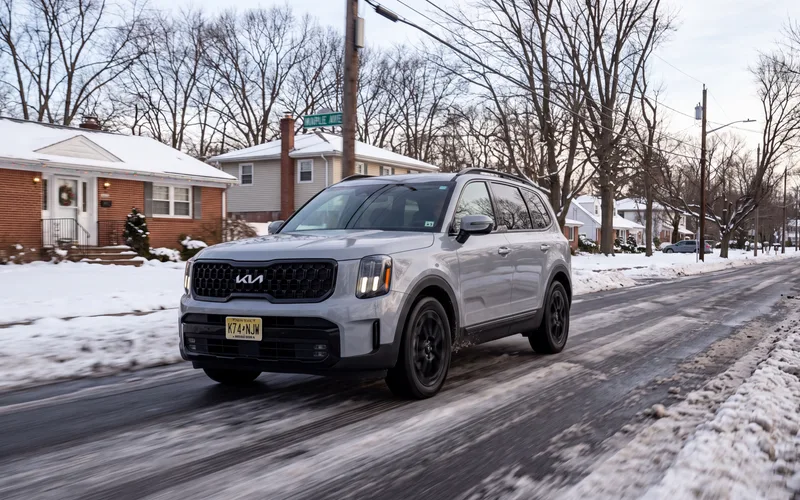 Kia TellurideMid-Size SUVBetter at: Warranty
It costs less to start, feels more upscale inside, and backs the powertrain for 10 years/100,000 miles versus Honda's 5/60.
Compare 3.03B
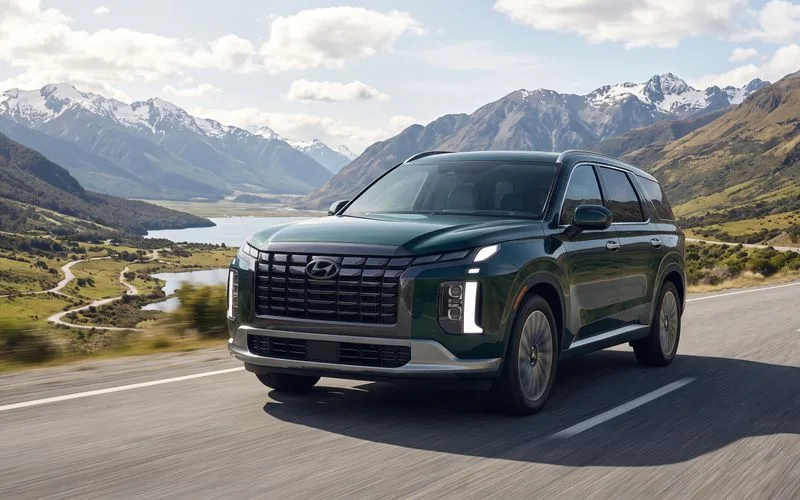 Hyundai PalisadeMid-Size SUVBetter at: Cabin comfort
For the same money it delivers a quieter, plusher cabin with a bigger screen and a head-up display the Pilot doesn't offer on any trim.
CompareHow it's evolved
10 scored model years · 2017–2026
Subject scores by year
Hover or tap a score to see what moved it versus the year before. A corner mark flags a big swing.
| Year | Performance | Efficiency | Safety | Space | Cost | Reliability | Tech | Use-case | Driving | Value |
|---|---|---|---|---|---|---|---|---|---|---|
| 2026 | 48 | 40 | 77 | 71 | 47 | 72 | 56 | 74 | 59 | 65 |
| 2025 | 48 | 34 | 79 | 72 | 41 | 70 | 57 | 71 | 61 | 66 |
| 2024 | 48 | 34 | 75 | 71 | 48 | 68 | 56 | 69 | 61 | 68 |
| 2023 | 48 | 34 | 79 | 71 | 40 | 66 | 56 | 69 | 61 | 69 |
| 2022 | 50 | 41 | 63 | 64 | 52 | 59 | 40 | 57 | 55 | 55 |
| 2021 | 44 | 55 | 63 | 65 | 53 | 62 | 40 | 57 | 53 | 58 |
| 2020 | 46 | 43 | 70 | 68 | 47 | 57 | 47 | 63 | 64 | 55 |
| 2019 | 52 | 38 | 71 | 71 | 58 | 66 | 49 | 71 | 67 | 80 |
| 2018 | 53 | 45 | 65 | 70 | 59 | 65 | 33 | 69 | 68 | 80 |
| 2017 | 51 | 38 | 63 | 73 | 59 | 62 | 34 | 69 | 66 | 81 |
Compare two years
Best fit & conditions
Higher scores mean a better fit for that use case. Learn more about use-case fit →
Subject profile
Trims & configurations
5 trimsScores above reflect the volume trim. Per-trim specs and scores are rolling out — the full lineup:
Academic Probation · NHTSA safety recalls
Jun 4, 2026Structure: frame and members · Suspension: rearThe rear subframe may corrode at the suspension mounting points, which can result in rear suspension component failure.
Defect
American Honda Motor Company (Honda) is recalling certain 2016-2022 Honda Pilot, 2017-2023 Ridgeline, 2019-2023 Passport, and 2014-2020 Acura MDX vehicles that were sold in Connecticut, Delaware, District of Columbia, Illinois, Indiana, Iowa, Kentucky, Maine, Maryland, Massachusetts, Michigan, Minnesota, Missouri, New Hampshire, New Jersey, New York, Ohio, Pennsylvania, Rhode Island, Vermont, Virginia, West Virginia, or Wisconsin. The rear subframe may corrode at the suspension mounting points, which can result in rear suspension component failure.
Risk
Failure of rear suspension components, such as the rear control arm, can cause a loss of vehicle handling and control, increasing the risk of a crash or injury.
Remedy
Dealers will inspect the rear subframe and install a rear subframe reinforcement kit and, as necessary, repair or replace the rear subframe components, free of charge. Interim letters notifying owners of the safety risk were mailed July 27, 2026. Additional letters will be sent once the final remedy is available, anticipated in the fall of 2026. Owners may contact Honda's customer service at 1-888-234-2138. Honda's numbers for this recall are AOU and AOT. Vehicle Identification Numbers (VINs) involved in this recall will become searchable on NHTSA.gov beginning June 10, 2026.
NHTSA campaign 26V365000 ↗Manufacturer no. AOU, AOT965,561 vehicles potentially affected (all models in the campaign)Filed by Honda (American Honda Motor Co.)Filed as PILOTMay 21, 2026Air bags: sensor: occupant classification: front passengerThe front passenger seat weight sensor may crack and short circuit, which can cause the air bags to deploy unintentionally during a crash.
Defect
Honda (American Honda Motor Co.) is recalling certain 2018-2021, 2023 Acura TLX, 2019-2024 RDX, 2017-2020, 2022-2026 MDX, 2017-2021, 2023, 2025 Honda Ridgeline, 2017-2022 Pilot, 2019-2021 Passport, 2018-2026 Odyssey, 2019-2022 Insight, 2019-2021 HR-V, 2018-2020 Fit, 2020-2022 CR-V Hybrid, 2017-2022 CR-V, 2017-2018, 2021 Civic Type R, 2017-2021 Civic hatchback, 2016-2020 Civic coupe, 2016-2022 Civic, 2017-2022 Accord Hybrid, and 2016-2022 Accord vehicles. The front passenger seat weight sensor may crack and short circuit, which can cause the air bags to deploy unintentionally during a crash.
Risk
Air bags that deploy unintentionally during a crash increase the risk of injury.
Remedy
Dealers will replace the seat weight sensors, free of charge. Owner notification letters were mailed July 7, 2026. Owners may contact Honda's customer service at 1-888-234-2138. Honda's numbers for this recall are BOL, WO9, OOA, WOM, XOH, NOC, POD, BOE, UOF, POB, EOG, AOI, QO8, TOJ, DO7, and SOK. This recall expands previous NHTSA recall number 24V064. Vehicle Identification Numbers (VINs) involved in this recall will be searchable on NHTSA.gov beginning May 29, 2026.
NHTSA campaign 26V332000 ↗Manufacturer no. Refer to Comments98,892 vehicles potentially affected (all models in the campaign)Owners notified Jul 6, 2026Filed by Honda (American Honda Motor Co.)Filed as PILOTFeb 1, 2024Air bags: sensor: occupant classification: front passengerThe front passenger seat weight sensor may crack and short circuit, failing to suppress the air bag as intended.
Defect
Honda (American Honda Motor Co.) is recalling certain 2020-2022 Pilot, Accord, Civic sedan, HR-V, Odyssey, 2020 Civic coupe, Fit, 2021-2022 Civic hatchback, 2021 Civic Type R, Insight, 2020-2021 CR-V, CR-V Hybrid, Passport, Ridgeline, Accord Hybrid, 2020 Acura MDX, 2022 Acura MDX, 2020-2022 Acura RDX, and 2020-2021 Acura TLX vehicles. The front passenger seat weight sensor may crack and short circuit, failing to suppress the air bag as intended.
Risk
An air bag that deploys unintentionally during a crash can increase the risk of injury.
Remedy
Dealers will replace the seat weight sensors, free of charge. Owner notification letters were mailed March 28, 2024. This is a phased recall. Owners may contact Honda customer service at 1-888-234-2138. Honda's numbers for these recalls are XHP and VHQ.
NHTSA campaign 24V064000 ↗Manufacturer no. XHP, VHQ750,114 vehicles potentially affected (all models in the campaign)Owners notified Mar 28, 2024Filed by Honda (American Honda Motor Co.)Filed as PILOTDec 18, 2023Fuel system, gasoline: delivery: fuel pumpThe fuel pump inside the fuel tank may fail.
Defect
Honda (American Honda Motor Co.) is recalling certain 2013-2023 Honda Accord, Civic Coupe, Civic Sedan, Civic Hatchback, Civic Type R, CR-V, HR-V, Ridgeline, Odyssey, Acura ILX, MDX, MDX Hybrid, RDX, RLX, TLX, 2019-2022 Honda Insight, Passport, 2020 Honda CR-V Hybrid, 2018-2019 Honda Clarity PHEV, Fit, and 2015-2020 Honda Accord Hybrid, Pilot, Acura NSX vehicles. The fuel pump inside the fuel tank may fail.
Risk
Fuel pump failure can cause an engine stall while driving, increasing the risk of a crash.
Remedy
Dealers will replace the fuel pump module, free of charge. Owner letters were mailed September 6, 2024. Owners may contact Honda customer service at 1-888-234-2138. Honda's numbers for this recall are KGC and KGD. This recall is an expansion of NHTSA recall numbers 21V-215 and 20V-314.
NHTSA campaign 23V858000 ↗Manufacturer no. KGC, KGD2,490,460 vehicles potentially affected (all models in the campaign)Owners notified Mar 29, 2024Filed by Honda (American Honda Motor Co.)Filed as PILOTJun 29, 2023Service brakes, hydraulic: foundation components: master cylinderThe tie rod fastener that connects the brake booster and the brake master cylinder may have been improperly assembled during manufacturing, which can cause the brake master cylinder to separate from the booster assembly.
Defect
Honda (American Honda Motor Co.) is recalling certain 2020-2021 Civic, 2020-2023 Ridgeline, 2021-2023 Passport, 2021-2022 Pilot, and 2020 Acura MDX vehicles. The tie rod fastener that connects the brake booster and the brake master cylinder may have been improperly assembled during manufacturing, which can cause the brake master cylinder to separate from the booster assembly.
Risk
Brake master cylinder separation can cause a loss of brake function and increase the risk of a crash.
Remedy
Dealers will inspect and repair the brake booster assembly as necessary, free of charge. Owner notification letters were mailed August 7, 2023. Owners may contact Honda customer service at 1-888-234-2138. Honda's numbers for this recall are VEU, AEV, and ZET.
NHTSA campaign 23V458000 ↗Manufacturer no. VEU, AEV, ZET124,077 vehicles potentially affected (all models in the campaign)Owners notified Aug 7, 2023Filed by Honda (American Honda Motor Co.)Filed as PILOTJun 15, 2023Back over prevention: display functionDue to a faulty Media Oriented Systems Transport (MOST) communication coaxial cable connector, the rearview camera image may not appear on the display. As such, these vehicles fail to comply with the requirements of Federal Motor Vehicle Safety Standard number 111, "Rear Visibility."
Defect
Honda (American Honda Motor Co.) is recalling certain 2018-2023 Odyssey, 2019-2022 Pilot, and 2019-2023 Passport vehicles. Due to a faulty Media Oriented Systems Transport (MOST) communication coaxial cable connector, the rearview camera image may not appear on the display. As such, these vehicles fail to comply with the requirements of Federal Motor Vehicle Safety Standard number 111, "Rear Visibility."
Risk
A rearview camera that does not display an image can reduce the driver's rear view, increasing the risk of a crash or injury.
Remedy
Dealers will replace the MOST cable harness and install a straightening cover over the vehicle cable connector, free of charge. Owner notification letters were mailed July 24, 2023. Owners may contact Honda customer service at 1-888-234-2138. Honda's numbers for this recall are EEL, ZEM, and SFC.
NHTSA campaign 23V431000 ↗Manufacturer no. EEL, ZEM, SFC1,209,673 vehicles potentially affected (all models in the campaign)Owners notified Jul 24, 2023Filed by Honda (American Honda Motor Co.)Filed as PILOTMar 16, 2023Visibility: rearview mirrors/devices: exteriorThe heating pads behind both side-view mirrors may not be bonded properly, allowing the mirror glass to detach. As such, these vehicles fail to comply with the requirements of Federal Motor Vehicle Safety Standard number 111, "Rear Visibility."
Defect
Honda (American Honda Motor Co) is recalling certain 2020-2021 Pilot and Ridgeline, and 2020-2022 Passport and Odyssey vehicles. The heating pads behind both side-view mirrors may not be bonded properly, allowing the mirror glass to detach. As such, these vehicles fail to comply with the requirements of Federal Motor Vehicle Safety Standard number 111, "Rear Visibility."
Risk
Detached mirror glass can reduce driver visibility, increasing the risk of a crash.
Remedy
Dealers will replace both left and right side-view mirrors, free of charge. Owner letters were mailed January 17, 2024. Owners may contact Honda customer service at 1-888-234-2138. Honda's number for this recall is FE5.
NHTSA campaign 23V174000 ↗Manufacturer no. FE5339,404 vehicles potentially affected (all models in the campaign)Owners notified Jan 17, 2024Filed by Honda (American Honda Motor Co.)Filed as PILOTNov 20, 2020TiresThe tires may have been cured for a time beyond the specification limits.
Defect
American Honda Motor Co. (Honda) is recalling certain 2021 Pilot vehicles equipped with Continental CrossContact LX Sport 245/50R20 102 H tires with DOT serial number A376 D3K9 2920 and mold numbers S-421920 and S-421921. The tires may have been cured for a time beyond the specification limits.
Risk
Over-cured tires may develop a break in the sidewall resulting in sudden air loss or a belt edge separation which could lead to a tread/belt loss. Either condition can cause a loss of vehicle control, increasing the risk of a crash or injury.
Remedy
Honda will notify owners, and dealers will inspect all four tires and replace the tires that have the affected DOT serial number and mold number, free of charge. The recall began January 11, 2021. Owners may contact Honda customer service at 1-888-234-2138. Honda's number for this recall is U8Y.
NHTSA campaign 20V725000 ↗Manufacturer no. U8Y214 vehicles potentially affected (all models in the campaign)Owners notified Jan 11, 2021Filed by Honda (American Honda Motor Co.)Filed as PILOTJul 28, 2020Back over prevention: sensing system: camera · Electrical system: softwareIncorrect central network software programming may cause several errors to occur that can delay or prevent the rearview camera image from displaying. As such, these vehicles fail to comply with the requirements of Federal Motor Vehicle Safety Standard (FMVSS) number 111, "Rearview Mirrors."
Defect
Honda (American Honda Motor Co.) is recalling certain 2019-2021 Pilot, 2019-2020 Odyssey and 2019-2020 Passport vehicles. Incorrect central network software programming may cause several errors to occur that can delay or prevent the rearview camera image from displaying. As such, these vehicles fail to comply with the requirements of Federal Motor Vehicle Safety Standard (FMVSS) number 111, "Rearview Mirrors."
Risk
A delayed or inoperative rearview camera display can reduce the driver's view of what is behind the vehicle, increasing the risk of a crash.
Remedy
Honda will notify owners that updated software is available. Owners have the option to either follow the mailed instructions to download and update the software for free, or visit a dealer to have the software update performed, free of charge. The recall began September 23, 2020. Owners may contact Honda customer service at 1-888-234-2138. Honda's number for this recall is Y7Y.
NHTSA campaign 20V440000 ↗Manufacturer no. Y7Y499,344 vehicles potentially affected (all models in the campaign)Owners notified Sep 23, 2020Filed by Honda (American Honda Motor Co.)Filed as PILOTJul 28, 2020Back over prevention: sensing system: camera · Electrical system: softwareIncorrect instrument panel control module software can cause the instrument panel to not display critical information, such as engine oil pressure, speedometer, and gear selector position until the next ignition cycle. Additionally, it can prevent the rearview camera image from displaying. As such, these vehicles fail to comply with the requirements of Federal Motor Vehicle Safety Standard (FMVSS) numbers 101, "Control and Displays" and 111, "Rearview Mirrors."
Defect
Honda (American Honda Motor Co.) is recalling certain 2018-2020 Odyssey, 2019-2020 Passport, and 2019-2021 Pilot vehicles. Incorrect instrument panel control module software can cause the instrument panel to not display critical information, such as engine oil pressure, speedometer, and gear selector position until the next ignition cycle. Additionally, it can prevent the rearview camera image from displaying. As such, these vehicles fail to comply with the requirements of Federal Motor Vehicle Safety Standard (FMVSS) numbers 101, "Control and Displays" and 111, "Rearview Mirrors."
Risk
Operating a vehicle without a functioning instrument panel or rearview camera display increases the risk of a crash.
Remedy
Honda will notify owners, and dealers will reprogram the instrument panel control module software, free of charge. The recall began September 23, 2020. Owners may contact Honda customer service at 1-888-234-2138. Honda's number for this recall is T89.
NHTSA campaign 20V439000 ↗Manufacturer no. T89607,786 vehicles potentially affected (all models in the campaign)Owners notified Sep 23, 2020Filed by Honda (American Honda Motor Co.)Filed as PILOT
17 recalls on other model years of the Pilot (2017–2020, 2023–2026)
Jul 1, 2026Structure: frame and members · Suspension: rearThe rear subframe bolts may have been tightened improperly.
Defect
Honda (American Honda Motor Co.) is recalling certain 2026 Pilot and Passport vehicles. The rear subframe bolts may have been tightened improperly.
Risk
Loose rear subframe bolts can lead to a loss of vehicle stability or rear subframe detachment, increasing the risk of a crash or injury.
Remedy
Dealers will inspect and replace the rear subframe bolts as necessary, free of charge. Owner notification letters were mailed August 24, 2026. Owners may contact Honda's customer service at 1-888-234-2138. Honda's number for this recall is OOY. Vehicle Identification Numbers (VINs) involved in this recall will be searchable on NHTSA.gov beginning July 10, 2026.
NHTSA campaign 26V424000 ↗Manufacturer no. OOY3,933 vehicles potentially affected (all models in the campaign)Owners notified Aug 24, 2026Filed by Honda (American Honda Motor Co.)Filed as PILOTJan 29, 2026Seats: critical fastenersThe driver's seat cushion frame may not have been tightened properly, which can result in a loose seat. As such, these vehicles fail to comply with the requirements of Federal Motor Vehicle Safety Standard number 207, "Seating Systems."
Defect
Honda (American Honda Motor Co.) is recalling certain 2023 Honda Accord, Accord Hybrid, and 2024 HR-V, Pilot, and Acura Integra vehicles. The driver's seat cushion frame may not have been tightened properly, which can result in a loose seat. As such, these vehicles fail to comply with the requirements of Federal Motor Vehicle Safety Standard number 207, "Seating Systems."
Risk
A loose driver's seat may not adequately restrain the driver during a crash, increasing the risk of injury.
Remedy
Dealers will replace the driver's seat cushion frame, free of charge. Owner notification letters were mailed March 10, 2026. Owners may contact Honda's customer service at 1-888-234-2138. Honda's numbers for this recall are ONC, KND, BNE and ZNF. Vehicle Identification Numbers (VINs) involved in this recall will become searchable on NHTSA.gov beginning February 5, 2026. This recall expands previous NHTSA recall number 24V859.
NHTSA campaign 26V054000 ↗Manufacturer no. ONC, KND, BNE, ZNF32 vehicles potentially affected (all models in the campaign)Owners notified Mar 9, 2026Filed by Honda (American Honda Motor Co.)Filed as PILOTJun 12, 2025Service brakes, hydraulic: pedals and linkagesThe brake pedal pivot pin was not secured properly, which can cause the pedal to shift out of position. As such, these vehicles fail to comply with Federal Motor Vehicle Safety Standard numbers 108, "Lamps, Reflective Devices, and Associated Equipment" and 135, "Light Vehicle Brake Systems."
Defect
Honda (American Honda Motor Co.) is recalling certain 2021-2025 Acura TLX, 2023-2025 Acura MDX, and 2023-2025 Honda Pilot vehicles. The brake pedal pivot pin was not secured properly, which can cause the pedal to shift out of position. As such, these vehicles fail to comply with Federal Motor Vehicle Safety Standard numbers 108, "Lamps, Reflective Devices, and Associated Equipment" and 135, "Light Vehicle Brake Systems."
Risk
A brake pedal that shifts out of position can prevent the driver from applying the brakes as intended, increasing the risk of a crash or injury.
Remedy
Dealers will inspect and replace the brake pedal assembly as necessary, free of charge. Owner notification letters were mailed July 29, 2025. Owners may contact Honda's customer service at 1-888-234-2138. Honda's numbers for this recall are FLX and XLY.
NHTSA campaign 25V391000 ↗Manufacturer no. FLX, XLY259,033 vehicles potentially affected (all models in the campaign)Owners notified Jul 28, 2025Filed by Honda (American Honda Motor Co.)Filed as PILOTFeb 5, 2025Seat belts: rear/otherThe third-row passenger seat belt assembly may not function, due to incorrect routing that traps the seat belt behind the passenger side panel. As such, these vehicles fail to comply with the requirements of Federal Motor Vehicle Safety Standard (FMVSS) number 208, "Occupant Crash Protection."
Defect
Honda (American Honda Motor Co.) is recalling certain 2025 Honda Pilot vehicles. The third-row passenger seat belt assembly may not function, due to incorrect routing that traps the seat belt behind the passenger side panel. As such, these vehicles fail to comply with the requirements of Federal Motor Vehicle Safety Standard (FMVSS) number 208, "Occupant Crash Protection."
Risk
A non-functioning seat belt cannot properly restrain the seat occupant, increasing the risk of injury during a crash.
Remedy
Dealers will inspect and repair the seat belt routing as necessary, free of charge. Owner notification letters were mailed March 24, 2025. Owners may contact Honda's customer service at 1-888-234-2138. Honda's number for this recall is ZL4.
NHTSA campaign 25V056000 ↗Manufacturer no. ZL41,494 vehicles potentially affected (all models in the campaign)Owners notified Mar 24, 2025Filed by Honda (American Honda Motor Co.)Filed as PILOTJan 23, 2025Electrical system: software · Fuel system, gasoline: fuel injection systemA software error in the fuel injection electronic control unit (FI-ECU) may cause an engine stall or a loss of power.
Defect
Honda (American Honda Motor Co.) is recalling certain 2022-2025 Acura MDX Type-S, 2023-2025 Honda Pilot, and 2021-2025 Acura TLX Type-S vehicles. A software error in the fuel injection electronic control unit (FI-ECU) may cause an engine stall or a loss of power.
Risk
An engine stall or loss of power can increase the risk of a crash or injury.
Remedy
Dealers will reprogram the FI-ECU software, free of charge. Owner notification letters were mailed March 17, 2025. Owners may contact Honda's customer service at 1-888-234-2138. Honda's numbers for this recall are EL1 and AL0.
NHTSA campaign 25V031000 ↗Manufacturer no. EL1, AL0294,612 vehicles potentially affected (all models in the campaign)Owners notified Mar 17, 2025Filed by Honda (American Honda Motor Co.)Filed as PILOTNov 27, 2024Fuel system, gasoline: storage: tank assembly: filler pipe and capThe fuel filler neck tube and fuel filler pipe may separate, allowing fuel to leak.
Defect
Honda (American Honda Motor Co.) is recalling certain 2023-2024 Passport and 2023-2025 Pilot vehicles. The fuel filler neck tube and fuel filler pipe may separate, allowing fuel to leak.
Risk
A fuel leak in the presence of an ignition source increases the risk of a fire.
Remedy
Dealers will inspect and repair the fuel filler neck tube and pipe as necessary, free of charge. Owner notification letters were mailed January 7, 2025. Owners may contact Honda customer service at 1-888-234-2138. Honda's number for this recall is OKM.
NHTSA campaign 24V900000 ↗Manufacturer no. OKM205,760 vehicles potentially affected (all models in the campaign)Owners notified Jan 7, 2025Filed by Honda (American Honda Motor Co.)Filed as PILOTNov 14, 2024Seats: critical fastenersThe driver's seat cushion frame may not have been tightened properly, which can result in an unsecured seat. As such, these vehicles fail to comply with the requirements of Federal Motor Vehicle Safety Standard number 207, "Seating Systems."
Defect
Honda (American Honda Motor Co.) is recalling certain 2023-2024 Honda Accord, Accord Hybrid, Civic Sedan, Civic Hatchback, Pilot, and 2024 HR-V, Acura Integra and Acura Integra Type S vehicles. The driver's seat cushion frame may not have been tightened properly, which can result in an unsecured seat. As such, these vehicles fail to comply with the requirements of Federal Motor Vehicle Safety Standard number 207, "Seating Systems."
Risk
An unsecured driver's seat may not adequately restrain the driver during a crash, increasing the risk of injury.
Remedy
Dealers will replace the driver's seat cushion frame, free of charge. Owner notification letters were mailed January 6, 2025. Owners may contact Honda customer service at 1-888-234-2138.
NHTSA campaign 24V859000 ↗121 vehicles potentially affected (all models in the campaign)Owners notified Jan 6, 2025Filed by Honda (American Honda Motor Co.)Filed as PILOTNov 13, 2023Engine and engine cooling: engine: hard parts internal/mechanicalDue to a manufacturing error, the connecting rod bearing in the engine may wear and seize, damaging the engine.
Defect
Honda (American Honda Motor Co.) is recalling certain 2015-2020 Acura TLX, 2016-2020 Acura MDX, 2016 and 2018-2019 Pilot, 2017 and 2019 Ridgeline, and 2018-2019 Odyssey vehicles. Due to a manufacturing error, the connecting rod bearing in the engine may wear and seize, damaging the engine.
Risk
A damaged engine may run improperly or stall while driving, increasing the risk of a fire, crash, or injury.
Remedy
Dealers will inspect and repair, or replace the engine as necessary, free of charge. Owner letters were mailed March 28, 2024. 2016-2017 Acura MDX owner letters were mailed November 1, 2024. 2016-2020 Acura MDX owner letters are expected to be mailed in mid-December 2024. Honda began mailing owner notification letters as of March 18, 2024. 2015-2016 Acura owner letters are expected to be mailed mid-December 2024, 2018 Acura TLX owner letters are expected to be mailed the end of March/early April 2024, 2019 Acura TLX owner letters are expected to be mailed mid-May 2024, 2020 Acura TLX owner letters are expected to be mailed mid-June 2024, and 2016-2020 Acura MDX owner letters are expected to be mailed January 27, 2025. Owners may contact Honda customer service at 1-888-234-2138. Honda's numbers for these recalls are XG1 and GG0.
NHTSA campaign 23V751000 ↗Manufacturer no. XG1, GG0248,999 vehicles potentially affected (all models in the campaign)Owners notified Mar 28, 2024Filed by Honda (American Honda Motor Co.)Filed as PILOTNov 2, 2023Steering: rack and pinion: rackDue to a manufacturing error, the gear box assembly may contain a loose ball bearing, which can result in a loss of steering control or steering lock-up.
Defect
Honda (American Honda Motor Co.) is recalling certain 2023-2024 Pilot vehicles. Due to a manufacturing error, the gear box assembly may contain a loose ball bearing, which can result in a loss of steering control or steering lock-up.
Risk
A loss of steering control or steering lock-up can increase the risk of a crash.
Remedy
Dealers will replace the electric power steering rack, free of charge. Owner notification letters were mailed December 18, 2023. Owners may contact Honda customer service at 1-888-234-2138. Honda's number for this recall is FFX.
NHTSA campaign 23V735000 ↗Manufacturer no. FFX519 vehicles potentially affected (all models in the campaign)Owners notified Dec 18, 2023Filed by Honda (American Honda Motor Co.)Filed as PILOTNov 29, 2021Latches/locks/linkages: hood: latch · Structure: body: hoodThe hood latch striker may become damaged and separate from the hood, which can result in the hood opening while driving.
Defect
Honda (American Honda Motor Co.) is recalling certain 2019 Passport, 2016-2019 Pilot, and 2017-2020 Ridgeline vehicles. The hood latch striker may become damaged and separate from the hood, which can result in the hood opening while driving.
Risk
A hood that opens while driving can obstruct the driver's view and increase the risk of a crash.
Remedy
Dealers will either repair the hood latch striker, or replace the hood if necessary, free of charge. Owner notification letters were mailed January 18, 2022. Owners may contact Honda customer service at 1-888-234-2138. Honda's number for this recall is PBV.
NHTSA campaign 21V932000 ↗Manufacturer no. PBV724,826 vehicles potentially affected (all models in the campaign)Owners notified Jan 18, 2022Filed by Honda (American Honda Motor Co.)Filed as PILOTMar 25, 2021Fuel system, gasoline: delivery: fuel pumpThe low-pressure fuel pump inside the fuel tank may fail.
Defect
Honda (American Honda Motor Co.) is recalling certain 2019-2020 Acura MDX, MDX Sport Hybrid, RDX, TLX, Honda Accord, Civic Hatchback, Insight, 2019 Acura ILX, Honda Accord Hybrid, Civic Coupe, Civic Coupe Si, Civic Sedan, Civic Sedan Si, Civic Type R, Fit, HR-V, Odyssey, Passport, Pilot and Ridgeline, and 2018-2019 CR-V vehicles. The low-pressure fuel pump inside the fuel tank may fail.
Risk
Fuel pump failure can cause an engine stall while driving, increasing the risk of a crash.
Remedy
Honda will notify owners, and dealers will replace the fuel pump assembly, free of charge. Owner letters were mailed May 18, 2021. Owners may contact Honda customer service at 1-888-234-2138. Note: This recall is an expansion of recall 20V-314.
NHTSA campaign 21V215000 ↗Manufacturer no. Multiple Codes624,552 vehicles potentially affected (all models in the campaign)Owners notified May 18, 2021Filed by Honda (American Honda Motor Co.)Filed as PILOTMar 11, 2021TiresOn the affected vehicles, it is possible that one or more tires were cured for too long during tire production.
Defect
Honda (American Honda Motor Co.) is recalling certain 2019-2020 Passport and Pilot vehicles equipped with Continental tires. On the affected vehicles, it is possible that one or more tires were cured for too long during tire production.
Risk
Overcured tires may develop a break in the sidewall, resulting in sudden air loss or belt edge separation, which could lead to tread/belt loss. Either condition can cause a loss of vehicle control, increasing the risk of a crash or injury.
Remedy
Honda will notify owners, and dealers will inspect all four tires and replace them as necessary, free of charge. The recall began April 22, 2021. Owners may contact American Honda Motor Co. customer service at 1-888-234-2138. Honda's number for this recall is UA2.
NHTSA campaign 21V165000 ↗Manufacturer no. UA21,093 vehicles potentially affected (all models in the campaign)Owners notified Apr 22, 2021Filed by Honda (American Honda Motor Co.)Filed as PILOTFeb 6, 2020Equipment: other: labelsThe certification label may have been printed with ink that can be wiped away with a solvent, removing the Gross Axle Weight Rating (GAWR) and Gross Vehicle Weight Rating (GVWR) information.
Defect
Honda (American Honda Motor Co.) is recalling certain 2020 Passport and Pilot vehicles. The certification label may have been printed with ink that can be wiped away with a solvent, removing the Gross Axle Weight Rating (GAWR) and Gross Vehicle Weight Rating (GVWR) information.
Risk
If the operator is unable to refer to the label information, the vehicle may be overloaded, increasing the risk of a crash.
Remedy
Honda will notify owners, and dealers will replace the certification label, free of charge. The recall began March 24, 2020. Owners may contact Honda customer service at 1-888-234-2138. Honda's number for this recall is B6T.
NHTSA campaign 20V067000 ↗Manufacturer no. B6T10,050 vehicles potentially affected (all models in the campaign)Owners notified Mar 24, 2020Filed by Honda (American Honda Motor Co.)Filed as PILOTOct 31, 2019Structure: bodyThe front frame left and right side upper members may not have been welded completely to the unibody. As such, these vehicles may fail to comply with the requirements of Federal Motor Vehicle Safety Standard (FMVSS) numbers 208, "Occupant Crash Protection" and 219, "Windshield Zone Intrusion."
Defect
Honda (American Honda Motor Co.) is recalling certain 2019-2020 Pilot and 2019 Passport vehicles. The front frame left and right side upper members may not have been welded completely to the unibody. As such, these vehicles may fail to comply with the requirements of Federal Motor Vehicle Safety Standard (FMVSS) numbers 208, "Occupant Crash Protection" and 219, "Windshield Zone Intrusion."
Risk
In the event of a crash, incomplete body welding may provide inadequate protection to occupants, increasing the risk of an injury.
Remedy
Honda will notify owners, and dealers will inspect the vehicle for missing welds, free of charge. If the vehicle is identified as missing welds, the dealer will offer to repurchase the vehicle or provide a similar replacement vehicle. Owner notification began November 6 2019. Owners may contact Honda customer service at 1-888-234-2138. Honda's number for this recall is X6J.
NHTSA campaign 19V784000 ↗Manufacturer no. X6J10 vehicles potentially affected (all models in the campaign)Owners notified Nov 6, 2019Filed by Honda (American Honda Motor Co.)Filed as PILOTApr 12, 2019Engine and engine cooling: engine: gasoline: belts and associated pulleysThe timing belt teeth may separate from the belt.
Defect
Honda (American Honda Motor Co.) is recalling certain 2018-2019 Acura MDX and Honda Pilot vehicles and 2019 Acura RLX, RLX Sport Hybrid, TLX and Honda Odyssey and Ridgeline vehicles. The timing belt teeth may separate from the belt.
Risk
Teeth separation from the timing belt may result in an engine stall, increasing the risk of crash.
Remedy
Honda will notify owners, and dealers will inspect the vehicle and replace any affected timing belt free of charge. Vehicles receiving a replacement timing belt will also have the engine inspected and any damaged components will be replaced for free. The recall began June 7, 2019. Honda owners may contact customer service at 1-888-234-2138. Honda's number for this recall is L4M. Acura owners may contact customer service at 1-888-234-2138. Acura's number for this recall is Z4L.
NHTSA campaign 19V298000 ↗Manufacturer no. L4M, Z4L93,946 vehicles potentially affected (all models in the campaign)Owners notified Jun 7, 2019Filed by Honda (American Honda Motor Co.)Filed as PILOTNov 28, 2018Structure: body: roof and pillarsThe mounting holes for the clip that secures the right center pillar trim panel may be larger than intended. In the event of a crash necessitating right side curtain air bag deployment, the clip may not hold the center pillar trim panel in position and it may potentially interfere with the curtain air bag deployment. As such, these vehicles fail to comply with the requirements of Federal Motor Vehicle Safety Standard (FMVSS) number 214, "Side Impact Protection," and 226, "Ejection Mitigation."
Defect
Honda (American Honda Motor Co.) is recalling certain 2019 Honda Ridgeline and Pilot vehicles. The mounting holes for the clip that secures the right center pillar trim panel may be larger than intended. In the event of a crash necessitating right side curtain air bag deployment, the clip may not hold the center pillar trim panel in position and it may potentially interfere with the curtain air bag deployment. As such, these vehicles fail to comply with the requirements of Federal Motor Vehicle Safety Standard (FMVSS) number 214, "Side Impact Protection," and 226, "Ejection Mitigation."
Risk
In the event of a crash, if the curtain air bag does not deploy as intended, it can increase the risk of injury.
Remedy
Honda will notify owners, and dealers will install a bracket on the right center pillar that will securely hold the center pillar trim clip, free of charge. The recall began January 22, 2019. Owners may contact Honda customer service at 1-888-234-2138. Honda's number for this recall is D3D.
NHTSA campaign 18V848000 ↗Manufacturer no. D3D404 vehicles potentially affected (all models in the campaign)Owners notified Jan 22, 2019Filed by Honda (American Honda Motor Co.)Filed as PILOTApr 5, 2018SeatsThe front driver and passenger powered seats in the Honda vehicles and the driver powered seats in the Acura vehicles may have been assembled with improperly manufactured rivets. In the event of a crash, the rivets can break causing the seats not to be secured to the floor. As such, these vehicles may fail to comply with the requirements of Federal Motor Vehicle Safety Standard (FMVSS) number 207, "Seating Systems," and 210, "Seat Belt Assembly Anchorages."
Defect
Honda (American Honda Motor Co.) is recalling certain 2018 Honda Pilot and Ridgeline vehicles and 2018 Acura MDX vehicles. The front driver and passenger powered seats in the Honda vehicles and the driver powered seats in the Acura vehicles may have been assembled with improperly manufactured rivets. In the event of a crash, the rivets can break causing the seats not to be secured to the floor. As such, these vehicles may fail to comply with the requirements of Federal Motor Vehicle Safety Standard (FMVSS) number 207, "Seating Systems," and 210, "Seat Belt Assembly Anchorages."
Risk
In the event of a crash, if the seat does not remain secured to the floor, the seat occupant has an increased risk of injury.
Remedy
Honda will notify owners, and dealers will replace the driver seat frame assembly in Acura MDX vehicles, and replace the driver and front passenger seat slide rail frames in Honda Pilot and Ridgeline vehicles, free of charge. The recall began May 30, 2018. Owners may contact Honda customer service at 1-888-234-2138. Honda's numbers for this recall is D0S, and T0T.
NHTSA campaign 18V221000 ↗Manufacturer no. D0S, T0T5,810 vehicles potentially affected (all models in the campaign)Owners notified May 30, 2018Filed by Honda (American Honda Motor Co.)Filed as PILOT
Source: NHTSA Office of Defects Investigation recall database, model years 2017–2026. Recalls are listed by model year as the manufacturer filed them; whether a specific car is affected depends on its VIN — check a VIN at nhtsa.gov ↗. NHTSA model names matched to this page: PILOT.
Detailed scoring by subject
1Performance & PowertrainOne of the Pilot's weakest categories.0.95F
Every 2021 Pilot trim (LX through Black Edition) uses the same 3.5L SOHC i-VTEC V6; 2021 is a carry-over year within the third generation (2016–2022, facelifted for 2019).
Peak torque is 262 lb-ft at 4,700 rpm on all trims, mid-pack for the mid-size SUV segment.
Edmunds instrumented testing of a Pilot Elite AWD recorded 7.0 s to 60 mph; a lighter FWD EX-L would be marginally quicker but this is the representative instrumented figure for the generation.
The 3.5L V6 is widely described as smooth and refined, especially in upper trims with extra sound deadening, but the cylinder-deactivation (VCM) system and transitions under moderate throttle draw occasional reviewer notes.
The 9-speed automatic (standard across all 2021 trims) shifts smoothly most of the time but reviewers consistently note occasional shift bobbles and low-speed hunting/indecision, especially when called on to pass at highway speed.
Maximum rating when properly equipped is 5,000 lbs on AWD models; 2WD models are rated to 3,500 lbs.
Honda's i-VTM4 torque-vectoring AWD system is available on every trim from LX up and standard on Elite and Black Edition, with Intelligent Traction Management drive modes (Normal/Snow/Mud/Sand) — sophisticated for the segment, though there is no low-range gearing.
The 2021 Pilot is pavement-oriented: 7.3 in ground clearance, no skid plates or locking differential, and no dedicated off-road trim — Honda did not introduce the TrailSport off-road trim until the 2022 model year.
A single powertrain is offered across the entire 2021 Pilot range: the 3.5L V6 with 9-speed automatic. No turbo, hybrid, or electrified option exists for this generation.
2Efficiency & RangeMid-pack among this car's ten categories.1.70C-
EPA combined rating for the volume FWD EX-L trim is 23 MPG; AWD models are rated 1 MPG lower across the board.
EPA city rating for FWD is 20 MPG; AWD is rated 19 MPG city.
EPA highway rating for FWD is 27 MPG; AWD is rated 26 MPG highway.
EPA-derived range for the FWD volume trim from its 19.5-gallon tank and 23 combined MPG rating is approximately 448 miles.
EPA's standard 15,000 mi/yr estimate for the FWD volume trim is $1,900/yr; AWD models run slightly higher given the 1 MPG combined penalty.
The 3.5L V6 runs on regular unleaded across every 2021 trim, with no premium recommendation.
3SafetyOne of the Pilot's strongest categories.2.26C
NHTSA's full test battery on the 2021 Pilot (third generation, 2019 refresh carried over) returned a 5-star overall rating with a 4-star frontal and 4-star rollover result pulling down two of the four sub-scores.
IIHS rated the 2021 Pilot Good on moderate overlap front, side (original test), roof strength and head restraints, but only Acceptable on small-overlap front passenger-side and Marginal on the updated side test — enough to keep it off the Top Safety Pick list for 2021 despite no outright poor results.
Honda Sensing (forward collision warning, collision mitigation braking, road departure mitigation, lane keeping assist, adaptive cruise control) is standard on every 2021 Pilot trim including base LX, but Blind Spot Information System and rear cross-traffic monitor are withheld from LX and only arrive starting at EX — a meaningful gap on the volume configuration.
IIHS front crash prevention testing rated the vehicle-to-vehicle AEB 'Advanced' (avoided the 12 mph test entirely, cut 12 mph off a 25 mph closing speed), but the system earned 'No Credit' on daytime pedestrian AEB, failing to slow for both the crossing-child and crossing-adult scenarios — a significant real-world gap the vehicle-to-vehicle result doesn't offset.
Blind Spot Information System and rear cross-traffic monitor are available from EX up — the large majority of the trim ladder — but remain alert-only with no active steering or braking intervention, and are absent entirely on base LX.
Honda Sensing's Lane Keeping Assist on this generation functions more as a lane-departure corrector than a true centering system — period reviews describe it as prone to mild ping-ponging between lane markers rather than holding a confident center line, well behind the best systems in the class.
Adaptive Cruise Control with low-speed follow is standard across the lineup and works down to a stop in traffic, but there is no combined lane-centering-plus-ACC 'highway assist' mode distinct from the base LKAS — it is capable but unremarkable next to rivals with integrated co-pilot systems.
Honda had no hands-free supervised highway driving system on sale in 2021 — Honda Sensing requires hands on the wheel at all times, with no equivalent to BlueCruise/Super Cruise offered on any trim.
IIHS rated the LED reflector headlights on Touring/Elite/Black Edition Good, but the LED projector units on EX-L and Special Edition — closer to the volume configuration — rated only Acceptable, so the best headlights are reserved for upper trims.
The Pilot's upright greenhouse, thin-ish A-pillars and standard rearview camera give above-average sightlines for a three-row SUV; period reviews consistently cite easy forward and three-quarter visibility as a Pilot strength, with only the third-row shoulder check noted as a minor weak spot.
Eight-passenger seating with wide-opening rear doors and accessible second-row LATCH anchors makes installing child seats straightforward, and the Pilot's second row can accommodate multiple seats; the tucked-in lower anchors common to the generation require some digging into the seat bight, keeping it short of the top tier.
4Space & ComfortThe Pilot's best-graded category.2.36C+
LX through Touring seat 8 with a 2nd-row bench; Elite/Black Edition drop to 7 with captain's chairs.
Manufacturer-published figure for the volume EX-L trim.
Manufacturer-published figure.
Second-row headroom from Honda's own spec sheet.
Second-row legroom from Honda's own spec sheet.
31.9 in of 3rd-row legroom and 38.9 in headroom make it kid- and short-trip adult-usable, with a 2nd row that slides/tilts for easier access, but adults are cramped for longer stints — mid-pack for the segment rather than a benchmark.
Manufacturer figure for cargo space with the 3rd row folded flat and 2nd row in use.
Manufacturer figure for maximum cargo volume with all rear seats folded.
A deep, removable-tray center console bin and reasonable door pockets cover everyday needs, but there's no standout innovation like a bridge console or in-floor trunk versus segment leaders.
Front and 2nd-row seats are broadly comfortable for most occupants with available heating/ventilation on upper trims, but cushioning isn't singled out as class-leading.
Multiple instrumented reviews praise the Pilot's composed, comfortable ride over both smooth and broken pavement as a segment strength.
Reviewers consistently flag pronounced road noise on coarse pavement and concrete expansion joints as the Pilot's main refinement weak point.
Heated front seats are available from EX-L up and tri-zone automatic climate control is widely fitted, but ventilated seats and heated 2nd-row captain's chairs are Elite-exclusive rather than broadly available.
5Cost of OwnershipOne of the Pilot's weakest categories.1.52D
Entry LX 2WD MSRP was $32,550 plus Honda's $1,225 destination charge for MY2021.
EX-L is the most commonly ordered 2021 Pilot trim, balancing leather, sunroof and power liftgate against price; AWD adds $2,000.
Edmunds' True Cost to Own tool estimates 5-year maintenance in the ~$6,057–$6,120 range across EX, EX-L and SE trims, broadly in line with midsize SUV norms.
Depreciation estimates cluster in the mid-40s to high-40s percent range over 5 years, implying roughly half of MSRP retained — typical for a mainstream 3-row SUV, slightly behind Toyota/segment leaders.
Standard Honda bumper-to-bumper coverage for MY2021, unchanged generation-wide — the mainstream-brand floor versus Hyundai/Kia's longer basic coverage.
Standard Honda powertrain coverage for MY2021 — matches most mainstream rivals but well short of Hyundai/Kia's 10-year powertrain terms.
Honda includes only the first service interval (12 mo/12,000 mi oil change, rotation, inspection) under Honda Service Pass rather than multi-year scheduled maintenance; roadside assistance runs with the 3-year basic warranty rather than as a standalone perk, and HondaLink adds a 1-year Security trial plus a 3-month Remote Services trial.
$39,885 volume-trim price minus its estimated resale value after 5 years (54% retained, or about $21,538) leaves about $18,347 in depreciation. Add the projected $6,100 in 5-year maintenance and repairs, and owning this vehicle for 5 years costs about $24,447 in total.
6Reliability & QualityOne of the Pilot's strongest categories.2.17C
J.D. Power rates the 2021 Pilot's Quality & Reliability at 74/100 ('Average'), with owners flagging driver-assist systems and phone pairing as below-average; Consumer Reports' owner-survey predicted reliability for this generation sits mid-pack among 3-row SUVs rather than top-tier.
Honda placed 27th of 32 brands in J.D. Power's 2021 dependability-adjacent brand rankings, a slide driven largely by 9-speed-transmission and infotainment complaints across the Honda/Acura lineup, while Consumer Reports' brand survey has historically placed Honda closer to mid-upper pack — the two sources disagree enough that mid-pack is the honest read for this period.
NHTSA data shows roughly 10 recall campaigns touching the 2021 Pilot over its ownership life — rearview-camera display delay (20V-440/23V-431), a loose brake-booster fastener (23V-458), an in-tank fuel pump (23V-858), and seat-weight/occupant-detection sensors — more numerous than a typical single model year, though none involved fire or structural failure, so it reads as a middling rather than clean record.
The 3.5L J35 V6 is a long-proven Honda engine family with a strong high-mileage track record, but the 2021 Pilot's ZF-sourced 9-speed automatic (standard on Touring/Elite trims) is widely reported for rough, hesitant, software-timing-dependent shifts, while lower trims retain Honda's own more dependable 6-speed — a mixed picture rather than a clean bill.
Reviewers describe the cabin as solidly built with soft-touch dash plastics, high-gloss trim and matte-finish secondary controls, competitive for the price, but note the design and some lower-rent black plastic areas were already showing their age by 2021 next to newer rivals like the Telluride and Palisade.
Owner reviews and press coverage describe solid-feeling doors, tight panel gaps and consistent assembly typical of Honda build quality, with no widespread rattle or misalignment complaints reported for this generation.
Honda operates one of the largest, most geographically dense dealer networks in the US (1,000+ franchises nationwide), and J.D. Power's industry-wide 2021 Customer Service Index showed satisfaction rising for a sixth straight year, with Honda historically a mid-to-upper performer among mass-market brands for service experience.
As a high-volume mainstream nameplate, Pilot parts are widely stocked with strong independent-shop and aftermarket support; RepairPal puts the model's average annual repair cost at $542 with below-average unscheduled-repair frequency, cheaper than most 3-row rivals though not as low as a Toyota/Nissan equivalent.
7Technology & InfotainmentThe Pilot's lowest-graded category.0.64F
Manufacturer-published figure for the Display Audio touchscreen on EX-L and other mid/upper trims.
The Display Audio system is simple to navigate and regained a physical volume knob this generation, but graphics and responsiveness are dated next to newer rivals.
Apple CarPlay and Android Auto are standard (wired, via USB) on EX and above, but no trim offers wireless projection for the 2021 model year.
Touring/Elite get Honda's satellite-linked navigation with voice recognition, functional but dated enough that most owners default to phone-projection navigation instead.
Touring and Elite get a 590-watt, 10-speaker premium system with a subwoofer that reviewers rate well; base Display Audio sound on lower trims is merely adequate.
The 3rd-generation Pilot keeps analog speedometer/tachometer dials with only a small TFT multi-information display between them — a full configurable digital cluster didn't arrive until the later facelift.
HondaLink-era infotainment of this generation has no meaningful over-the-air update path for vehicle software; map/system updates are handled via dealer or USB, not remote OTA.
HondaLink's app covers remote start, lock/unlock, and vehicle locate on EX and above, but functionality is basic next to competitors' apps and requires a subscription after an initial trial.
Ports are legacy USB-A 2.5-amp units rather than USB-C, and wireless charging is limited to Special Edition, Elite and Black Edition — a real gap versus newer rivals with USB-C throughout and broader wireless-charging availability.
Proximity entry and push-button start are standard from EX up, with a hands-free power liftgate added on Touring and above — solid but not phone-as-key convenience.
A multi-angle rearview camera (normal/wide/top-down views) with dynamic guidelines is standard, and front/rear parking sensors are available on upper trims, but there's no true 360-degree surround-view system.
No trim of the 2021 Pilot offers a head-up display.
8Use-Case FitMid-pack among this car's ten categories.1.84C-
Wide door openings, a 2nd row that slides and tilts out of the way for 3rd-row/car-seat access, and accessible LATCH anchors make daily family loading easy — a long-standing Pilot strength.
Honda Sensing (forward collision warning, automatic emergency braking, lane-keeping, adaptive cruise) is standard on every trim including base LX, but IIHS rated the 2021 Pilot only Acceptable (not Good) for small-overlap front passenger protection and standard headlights, keeping it short of Top Safety Pick.
Comfortable 2nd-row seating, tri-zone climate, and an available rear-seat entertainment system (Touring/Elite) suit multi-hour trips, but cargo room shrinks to just 16.5 cu ft with all three rows occupied and in use.
Light, predictable steering, a composed low-speed ride, and standard adaptive cruise make the Pilot relaxing in traffic despite its size.
23 mpg combined (FWD) is typical-to-slightly-below for a V6 mid-size 3-row SUV, so running costs are average rather than cheap.
A 39.4 ft curb-to-curb turning diameter and roughly 16.5 ft length make the Pilot manageable but clearly full-size in parking lots; the standard multi-view camera helps offset the footprint.
Towing tops out at 5,000 lbs with AWD (3,500 lbs FWD), modest for the segment and well short of body-on-frame or truck-based rivals; it's a capable light-duty hauler, not a work tool.
The 3.5L V6/9-speed combo and unibody chassis have a reasonably proven track record for family/fleet use, though JD Power rates overall quality only average and owners report infotainment-electronics gremlins rather than driveline issues.
There's no onboard power outlet, bed, or upfit ecosystem to speak of — just USB charging and a hitch receiver for towing, so it offers little beyond basic tie-down/cargo-area use.
A composed highway ride and standard adaptive cruise support long hauls, with a roughly 500-mile highway range on a 19.5-gallon tank at 27 mpg hwy, though road noise on coarse pavement docks the refinement side of the equation.
Available i-VTM4 all-wheel drive and 7.3 in of ground clearance handle gravel roads, light snow, and bike-rack duty, but there's no low-range gearing or serious off-road hardware — a soft-roader, not a trail vehicle.
60/40-split folding 2nd and 3rd rows and roof rails give flexible gear-hauling options, topping out at a competitive 83.9 cu ft with all rear seats folded.
9Driving ExperienceGrades below the middle of the scale.1.57D
Reviewers find the Pilot feels unusually nimble for its size and secure in corners, but body motions are controlled rather than flat, and grip is unremarkable — solid, not sporty.
Steering is precise enough to place the car confidently but is numb and short on road feedback, with effort dropping off nicely at parking speeds.
Ventilated front/solid rear discs provide adequate, unremarkable stopping power with a pedal that isn't singled out as a strength or weakness in reviews.
The 3.5L V6 pairs smoothly with the 9-speed automatic by this point in the generation's life, with few of the hesitant low-speed shift complaints that dogged the transmission's early years.
The V6 is audible under hard acceleration but not coarse or droning, and vibration isolation is otherwise good — the Pilot's noise complaints in reviews center on road noise, not the drivetrain.
Manufacturer-published curb-to-curb turning diameter.
A commanding seating position, good outward visibility, and power-adjustable front seats on most trims make the Pilot easy to settle into, though the dash layout feels dated next to newer rivals.
Reviews consistently frame the Pilot as a comfortable, appliance-like family hauler — competent and relaxed rather than engaging, with several comparing its demeanor to a minivan.
10Value & Market PositionMid-pack among this car's ten categories.1.87C-
Even the base LX got the full Honda Sensing suite (AEB, adaptive cruise, lane-keep) standard for MY2021, plus the newly-standard 9-speed automatic across the range — competitive, though cloth seats/no power liftgate at LX leave some expected family-SUV features for higher trims.
Standard 3.5L V6 (280 hp) and standard driver-assist tech across the lineup give reasonable capability-per-dollar, but the Pilot's as-tested pricing climbs quickly through Touring/Elite/Black Edition without a major capability jump, keeping it fair-value rather than a standout.
Seven trims for 2021 (LX, EX, EX-L, Special Edition, Touring, Elite, Black Edition) spanning ~$33.8K–$51.4K with FWD/AWD choice on most grades gives a well-spaced range, though all share the same V6/9-speed — no powertrain variety.
143,062 U.S. units in 2021, up 15.5% year-over-year — a steady, growing mid-pack seller behind segment leaders Highlander and Explorer but ahead of Telluride, Palisade, Atlas and CX-9 in raw volume.
Honda carries strong mainstream reputation for reliability and resale, with a loyal owner base, though it lacks the aspirational pull of a Toyota-brand halo or the buzz Kia/Hyundai built with Telluride/Palisade in this period.
2021 was the height of the chip-shortage inventory crunch — Honda dealers ran among the thinnest stock in the industry (tied for worst at ~17 days' supply) and automakers slashed incentive spend industry-wide, leaving little room for deals on a Pilot that model year.
This is the third generation (introduced 2016, heavily facelifted for MY2019); 2021 is the penultimate year before the all-new 2023 redesign — current but clearly mid-to-late cycle, with the 9-speed-standard update being the only notable change versus a true refresh.
Well-regarded but not segment-topping: Edmunds calls it 'one of our favorites' and NHTSA awarded 5 stars overall, but IIHS withheld Top Safety Pick because the small-overlap front passenger rating was only Acceptable, and it did not land major comparison-test wins or 10Best-type awards this cycle.