

The verdict
A mixed-report mid-size suv, strong on value and held back by efficiency.
The 2019 Pilot is a roomy, comfortable eight-seat family hauler. Its mid-cycle refresh made Honda Sensing safety tech and LED headlights standard and earned it an IIHS Top Safety Pick, at a starting price of $32,495. Two things count against it: fuel economy is thirsty at 21 MPG combined, and the used-car record is spotty, with 13 NHTSA recall campaigns. The infotainment and driver-assist tech also felt behind the times even when the car was new. If you're shopping a used one, the EX or EX-L with its proven six-speed automatic is the pick, and you should confirm every recall has been done.
Jump to scoresStrengths
- Genuine eight-seat family packaging
- Strong safety credentials for its era
- Lots of car for the money
What holds it back
- Thirsty at the pump
- Recall-heavy model year
- Dated tech and parking aids
Top alternatives
Cars shoppers cross-shop with the Honda Pilot 2.88B-
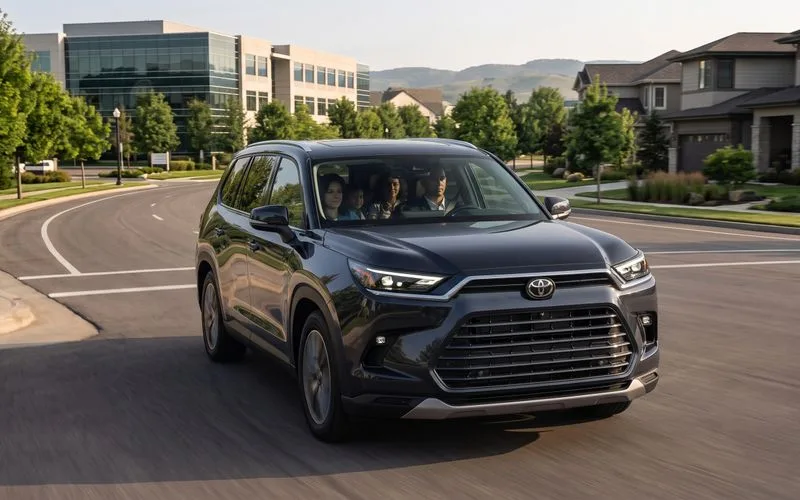 Toyota Grand HighlanderMid-Size SUVBetter at: Fuel economy
Its hybrid powertrain returns roughly 34 MPG combined against the Pilot's 21, saving about $800 a year in fuel while offering the same three-row space and a quieter cabin.
Compare 2.79B-
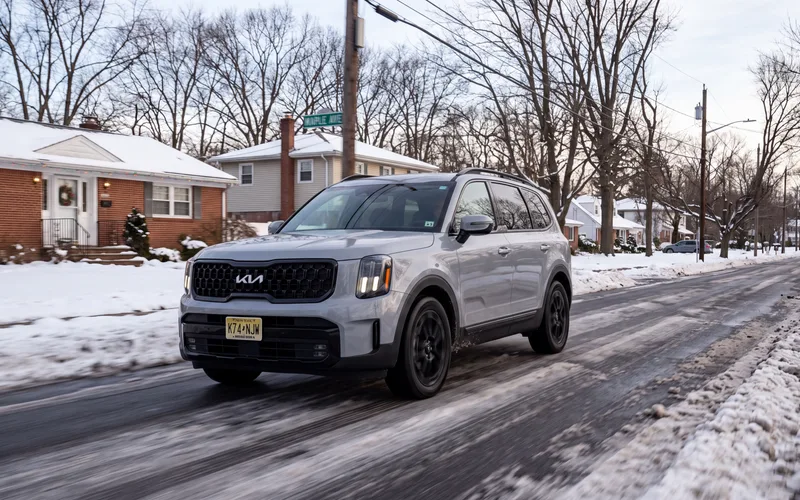 Kia TellurideMid-Size SUVBetter at: Warranty
It costs less to start, feels more upscale inside, and backs the powertrain for 10 years/100,000 miles versus Honda's 5/60.
Compare 3.03B
3.03B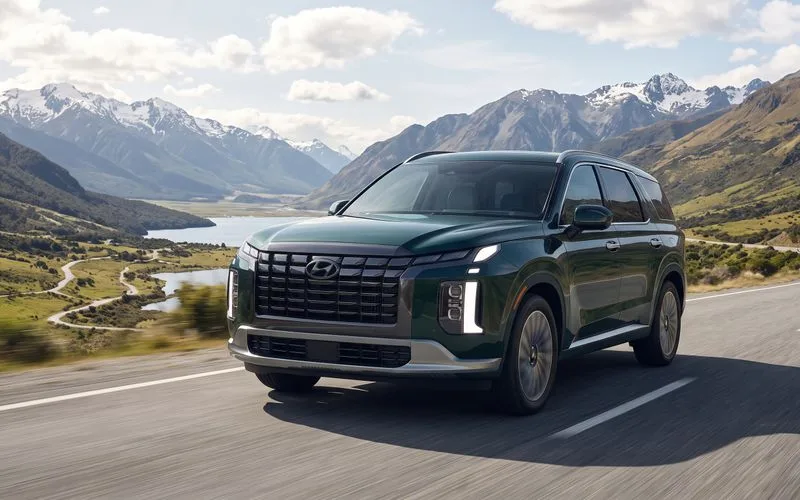 Hyundai PalisadeMid-Size SUVBetter at: Cabin comfort
For the same money it delivers a quieter, plusher cabin with a bigger screen and a head-up display the Pilot doesn't offer on any trim.
CompareHow it's evolved
10 scored model years · 2017–2026
Subject scores by year
Hover or tap a score to see what moved it versus the year before. A corner mark flags a big swing.
| Year | Performance | Efficiency | Safety | Space | Cost | Reliability | Tech | Use-case | Driving | Value |
|---|---|---|---|---|---|---|---|---|---|---|
| 2026 | 48 | 40 | 77 | 71 | 47 | 72 | 56 | 74 | 59 | 65 |
| 2025 | 48 | 34 | 79 | 72 | 41 | 70 | 57 | 71 | 61 | 66 |
| 2024 | 48 | 34 | 75 | 71 | 48 | 68 | 56 | 69 | 61 | 68 |
| 2023 | 48 | 34 | 79 | 71 | 40 | 66 | 56 | 69 | 61 | 69 |
| 2022 | 50 | 41 | 63 | 64 | 52 | 59 | 40 | 57 | 55 | 55 |
| 2021 | 44 | 55 | 63 | 65 | 53 | 62 | 40 | 57 | 53 | 58 |
| 2020 | 46 | 43 | 70 | 68 | 47 | 57 | 47 | 63 | 64 | 55 |
| 2019 | 52 | 38 | 71 | 71 | 58 | 66 | 49 | 71 | 67 | 80 |
| 2018 | 53 | 45 | 65 | 70 | 59 | 65 | 33 | 69 | 68 | 80 |
| 2017 | 51 | 38 | 63 | 73 | 59 | 62 | 34 | 69 | 66 | 81 |
Compare two years
Best fit & conditions
Higher scores mean a better fit for that use case. Learn more about use-case fit →
Subject profile
Trims & configurations
5 trimsScores above reflect the volume trim. Per-trim specs and scores are rolling out — the full lineup:
Academic Probation · NHTSA safety recalls
Jun 4, 2026Structure: frame and members · Suspension: rearThe rear subframe may corrode at the suspension mounting points, which can result in rear suspension component failure.
Defect
American Honda Motor Company (Honda) is recalling certain 2016-2022 Honda Pilot, 2017-2023 Ridgeline, 2019-2023 Passport, and 2014-2020 Acura MDX vehicles that were sold in Connecticut, Delaware, District of Columbia, Illinois, Indiana, Iowa, Kentucky, Maine, Maryland, Massachusetts, Michigan, Minnesota, Missouri, New Hampshire, New Jersey, New York, Ohio, Pennsylvania, Rhode Island, Vermont, Virginia, West Virginia, or Wisconsin. The rear subframe may corrode at the suspension mounting points, which can result in rear suspension component failure.
Risk
Failure of rear suspension components, such as the rear control arm, can cause a loss of vehicle handling and control, increasing the risk of a crash or injury.
Remedy
Dealers will inspect the rear subframe and install a rear subframe reinforcement kit and, as necessary, repair or replace the rear subframe components, free of charge. Interim letters notifying owners of the safety risk were mailed July 27, 2026. Additional letters will be sent once the final remedy is available, anticipated in the fall of 2026. Owners may contact Honda's customer service at 1-888-234-2138. Honda's numbers for this recall are AOU and AOT. Vehicle Identification Numbers (VINs) involved in this recall will become searchable on NHTSA.gov beginning June 10, 2026.
NHTSA campaign 26V365000 ↗Manufacturer no. AOU, AOT965,561 vehicles potentially affected (all models in the campaign)Filed by Honda (American Honda Motor Co.)Filed as PILOTMay 21, 2026Air bags: sensor: occupant classification: front passengerThe front passenger seat weight sensor may crack and short circuit, which can cause the air bags to deploy unintentionally during a crash.
Defect
Honda (American Honda Motor Co.) is recalling certain 2018-2021, 2023 Acura TLX, 2019-2024 RDX, 2017-2020, 2022-2026 MDX, 2017-2021, 2023, 2025 Honda Ridgeline, 2017-2022 Pilot, 2019-2021 Passport, 2018-2026 Odyssey, 2019-2022 Insight, 2019-2021 HR-V, 2018-2020 Fit, 2020-2022 CR-V Hybrid, 2017-2022 CR-V, 2017-2018, 2021 Civic Type R, 2017-2021 Civic hatchback, 2016-2020 Civic coupe, 2016-2022 Civic, 2017-2022 Accord Hybrid, and 2016-2022 Accord vehicles. The front passenger seat weight sensor may crack and short circuit, which can cause the air bags to deploy unintentionally during a crash.
Risk
Air bags that deploy unintentionally during a crash increase the risk of injury.
Remedy
Dealers will replace the seat weight sensors, free of charge. Owner notification letters were mailed July 7, 2026. Owners may contact Honda's customer service at 1-888-234-2138. Honda's numbers for this recall are BOL, WO9, OOA, WOM, XOH, NOC, POD, BOE, UOF, POB, EOG, AOI, QO8, TOJ, DO7, and SOK. This recall expands previous NHTSA recall number 24V064. Vehicle Identification Numbers (VINs) involved in this recall will be searchable on NHTSA.gov beginning May 29, 2026.
NHTSA campaign 26V332000 ↗Manufacturer no. Refer to Comments98,892 vehicles potentially affected (all models in the campaign)Owners notified Jul 6, 2026Filed by Honda (American Honda Motor Co.)Filed as PILOTDec 18, 2023Fuel system, gasoline: delivery: fuel pumpThe fuel pump inside the fuel tank may fail.
Defect
Honda (American Honda Motor Co.) is recalling certain 2013-2023 Honda Accord, Civic Coupe, Civic Sedan, Civic Hatchback, Civic Type R, CR-V, HR-V, Ridgeline, Odyssey, Acura ILX, MDX, MDX Hybrid, RDX, RLX, TLX, 2019-2022 Honda Insight, Passport, 2020 Honda CR-V Hybrid, 2018-2019 Honda Clarity PHEV, Fit, and 2015-2020 Honda Accord Hybrid, Pilot, Acura NSX vehicles. The fuel pump inside the fuel tank may fail.
Risk
Fuel pump failure can cause an engine stall while driving, increasing the risk of a crash.
Remedy
Dealers will replace the fuel pump module, free of charge. Owner letters were mailed September 6, 2024. Owners may contact Honda customer service at 1-888-234-2138. Honda's numbers for this recall are KGC and KGD. This recall is an expansion of NHTSA recall numbers 21V-215 and 20V-314.
NHTSA campaign 23V858000 ↗Manufacturer no. KGC, KGD2,490,460 vehicles potentially affected (all models in the campaign)Owners notified Mar 29, 2024Filed by Honda (American Honda Motor Co.)Filed as PILOTNov 13, 2023Engine and engine cooling: engine: hard parts internal/mechanicalDue to a manufacturing error, the connecting rod bearing in the engine may wear and seize, damaging the engine.
Defect
Honda (American Honda Motor Co.) is recalling certain 2015-2020 Acura TLX, 2016-2020 Acura MDX, 2016 and 2018-2019 Pilot, 2017 and 2019 Ridgeline, and 2018-2019 Odyssey vehicles. Due to a manufacturing error, the connecting rod bearing in the engine may wear and seize, damaging the engine.
Risk
A damaged engine may run improperly or stall while driving, increasing the risk of a fire, crash, or injury.
Remedy
Dealers will inspect and repair, or replace the engine as necessary, free of charge. Owner letters were mailed March 28, 2024. 2016-2017 Acura MDX owner letters were mailed November 1, 2024. 2016-2020 Acura MDX owner letters are expected to be mailed in mid-December 2024. Honda began mailing owner notification letters as of March 18, 2024. 2015-2016 Acura owner letters are expected to be mailed mid-December 2024, 2018 Acura TLX owner letters are expected to be mailed the end of March/early April 2024, 2019 Acura TLX owner letters are expected to be mailed mid-May 2024, 2020 Acura TLX owner letters are expected to be mailed mid-June 2024, and 2016-2020 Acura MDX owner letters are expected to be mailed January 27, 2025. Owners may contact Honda customer service at 1-888-234-2138. Honda's numbers for these recalls are XG1 and GG0.
NHTSA campaign 23V751000 ↗Manufacturer no. XG1, GG0248,999 vehicles potentially affected (all models in the campaign)Owners notified Mar 28, 2024Filed by Honda (American Honda Motor Co.)Filed as PILOTJun 15, 2023Back over prevention: display functionDue to a faulty Media Oriented Systems Transport (MOST) communication coaxial cable connector, the rearview camera image may not appear on the display. As such, these vehicles fail to comply with the requirements of Federal Motor Vehicle Safety Standard number 111, "Rear Visibility."
Defect
Honda (American Honda Motor Co.) is recalling certain 2018-2023 Odyssey, 2019-2022 Pilot, and 2019-2023 Passport vehicles. Due to a faulty Media Oriented Systems Transport (MOST) communication coaxial cable connector, the rearview camera image may not appear on the display. As such, these vehicles fail to comply with the requirements of Federal Motor Vehicle Safety Standard number 111, "Rear Visibility."
Risk
A rearview camera that does not display an image can reduce the driver's rear view, increasing the risk of a crash or injury.
Remedy
Dealers will replace the MOST cable harness and install a straightening cover over the vehicle cable connector, free of charge. Owner notification letters were mailed July 24, 2023. Owners may contact Honda customer service at 1-888-234-2138. Honda's numbers for this recall are EEL, ZEM, and SFC.
NHTSA campaign 23V431000 ↗Manufacturer no. EEL, ZEM, SFC1,209,673 vehicles potentially affected (all models in the campaign)Owners notified Jul 24, 2023Filed by Honda (American Honda Motor Co.)Filed as PILOTNov 29, 2021Latches/locks/linkages: hood: latch · Structure: body: hoodThe hood latch striker may become damaged and separate from the hood, which can result in the hood opening while driving.
Defect
Honda (American Honda Motor Co.) is recalling certain 2019 Passport, 2016-2019 Pilot, and 2017-2020 Ridgeline vehicles. The hood latch striker may become damaged and separate from the hood, which can result in the hood opening while driving.
Risk
A hood that opens while driving can obstruct the driver's view and increase the risk of a crash.
Remedy
Dealers will either repair the hood latch striker, or replace the hood if necessary, free of charge. Owner notification letters were mailed January 18, 2022. Owners may contact Honda customer service at 1-888-234-2138. Honda's number for this recall is PBV.
NHTSA campaign 21V932000 ↗Manufacturer no. PBV724,826 vehicles potentially affected (all models in the campaign)Owners notified Jan 18, 2022Filed by Honda (American Honda Motor Co.)Filed as PILOTMar 25, 2021Fuel system, gasoline: delivery: fuel pumpThe low-pressure fuel pump inside the fuel tank may fail.
Defect
Honda (American Honda Motor Co.) is recalling certain 2019-2020 Acura MDX, MDX Sport Hybrid, RDX, TLX, Honda Accord, Civic Hatchback, Insight, 2019 Acura ILX, Honda Accord Hybrid, Civic Coupe, Civic Coupe Si, Civic Sedan, Civic Sedan Si, Civic Type R, Fit, HR-V, Odyssey, Passport, Pilot and Ridgeline, and 2018-2019 CR-V vehicles. The low-pressure fuel pump inside the fuel tank may fail.
Risk
Fuel pump failure can cause an engine stall while driving, increasing the risk of a crash.
Remedy
Honda will notify owners, and dealers will replace the fuel pump assembly, free of charge. Owner letters were mailed May 18, 2021. Owners may contact Honda customer service at 1-888-234-2138. Note: This recall is an expansion of recall 20V-314.
NHTSA campaign 21V215000 ↗Manufacturer no. Multiple Codes624,552 vehicles potentially affected (all models in the campaign)Owners notified May 18, 2021Filed by Honda (American Honda Motor Co.)Filed as PILOTMar 11, 2021TiresOn the affected vehicles, it is possible that one or more tires were cured for too long during tire production.
Defect
Honda (American Honda Motor Co.) is recalling certain 2019-2020 Passport and Pilot vehicles equipped with Continental tires. On the affected vehicles, it is possible that one or more tires were cured for too long during tire production.
Risk
Overcured tires may develop a break in the sidewall, resulting in sudden air loss or belt edge separation, which could lead to tread/belt loss. Either condition can cause a loss of vehicle control, increasing the risk of a crash or injury.
Remedy
Honda will notify owners, and dealers will inspect all four tires and replace them as necessary, free of charge. The recall began April 22, 2021. Owners may contact American Honda Motor Co. customer service at 1-888-234-2138. Honda's number for this recall is UA2.
NHTSA campaign 21V165000 ↗Manufacturer no. UA21,093 vehicles potentially affected (all models in the campaign)Owners notified Apr 22, 2021Filed by Honda (American Honda Motor Co.)Filed as PILOTJul 28, 2020Back over prevention: sensing system: camera · Electrical system: softwareIncorrect central network software programming may cause several errors to occur that can delay or prevent the rearview camera image from displaying. As such, these vehicles fail to comply with the requirements of Federal Motor Vehicle Safety Standard (FMVSS) number 111, "Rearview Mirrors."
Defect
Honda (American Honda Motor Co.) is recalling certain 2019-2021 Pilot, 2019-2020 Odyssey and 2019-2020 Passport vehicles. Incorrect central network software programming may cause several errors to occur that can delay or prevent the rearview camera image from displaying. As such, these vehicles fail to comply with the requirements of Federal Motor Vehicle Safety Standard (FMVSS) number 111, "Rearview Mirrors."
Risk
A delayed or inoperative rearview camera display can reduce the driver's view of what is behind the vehicle, increasing the risk of a crash.
Remedy
Honda will notify owners that updated software is available. Owners have the option to either follow the mailed instructions to download and update the software for free, or visit a dealer to have the software update performed, free of charge. The recall began September 23, 2020. Owners may contact Honda customer service at 1-888-234-2138. Honda's number for this recall is Y7Y.
NHTSA campaign 20V440000 ↗Manufacturer no. Y7Y499,344 vehicles potentially affected (all models in the campaign)Owners notified Sep 23, 2020Filed by Honda (American Honda Motor Co.)Filed as PILOTJul 28, 2020Back over prevention: sensing system: camera · Electrical system: softwareIncorrect instrument panel control module software can cause the instrument panel to not display critical information, such as engine oil pressure, speedometer, and gear selector position until the next ignition cycle. Additionally, it can prevent the rearview camera image from displaying. As such, these vehicles fail to comply with the requirements of Federal Motor Vehicle Safety Standard (FMVSS) numbers 101, "Control and Displays" and 111, "Rearview Mirrors."
Defect
Honda (American Honda Motor Co.) is recalling certain 2018-2020 Odyssey, 2019-2020 Passport, and 2019-2021 Pilot vehicles. Incorrect instrument panel control module software can cause the instrument panel to not display critical information, such as engine oil pressure, speedometer, and gear selector position until the next ignition cycle. Additionally, it can prevent the rearview camera image from displaying. As such, these vehicles fail to comply with the requirements of Federal Motor Vehicle Safety Standard (FMVSS) numbers 101, "Control and Displays" and 111, "Rearview Mirrors."
Risk
Operating a vehicle without a functioning instrument panel or rearview camera display increases the risk of a crash.
Remedy
Honda will notify owners, and dealers will reprogram the instrument panel control module software, free of charge. The recall began September 23, 2020. Owners may contact Honda customer service at 1-888-234-2138. Honda's number for this recall is T89.
NHTSA campaign 20V439000 ↗Manufacturer no. T89607,786 vehicles potentially affected (all models in the campaign)Owners notified Sep 23, 2020Filed by Honda (American Honda Motor Co.)Filed as PILOTOct 31, 2019Structure: bodyThe front frame left and right side upper members may not have been welded completely to the unibody. As such, these vehicles may fail to comply with the requirements of Federal Motor Vehicle Safety Standard (FMVSS) numbers 208, "Occupant Crash Protection" and 219, "Windshield Zone Intrusion."
Defect
Honda (American Honda Motor Co.) is recalling certain 2019-2020 Pilot and 2019 Passport vehicles. The front frame left and right side upper members may not have been welded completely to the unibody. As such, these vehicles may fail to comply with the requirements of Federal Motor Vehicle Safety Standard (FMVSS) numbers 208, "Occupant Crash Protection" and 219, "Windshield Zone Intrusion."
Risk
In the event of a crash, incomplete body welding may provide inadequate protection to occupants, increasing the risk of an injury.
Remedy
Honda will notify owners, and dealers will inspect the vehicle for missing welds, free of charge. If the vehicle is identified as missing welds, the dealer will offer to repurchase the vehicle or provide a similar replacement vehicle. Owner notification began November 6 2019. Owners may contact Honda customer service at 1-888-234-2138. Honda's number for this recall is X6J.
NHTSA campaign 19V784000 ↗Manufacturer no. X6J10 vehicles potentially affected (all models in the campaign)Owners notified Nov 6, 2019Filed by Honda (American Honda Motor Co.)Filed as PILOTApr 12, 2019Engine and engine cooling: engine: gasoline: belts and associated pulleysThe timing belt teeth may separate from the belt.
Defect
Honda (American Honda Motor Co.) is recalling certain 2018-2019 Acura MDX and Honda Pilot vehicles and 2019 Acura RLX, RLX Sport Hybrid, TLX and Honda Odyssey and Ridgeline vehicles. The timing belt teeth may separate from the belt.
Risk
Teeth separation from the timing belt may result in an engine stall, increasing the risk of crash.
Remedy
Honda will notify owners, and dealers will inspect the vehicle and replace any affected timing belt free of charge. Vehicles receiving a replacement timing belt will also have the engine inspected and any damaged components will be replaced for free. The recall began June 7, 2019. Honda owners may contact customer service at 1-888-234-2138. Honda's number for this recall is L4M. Acura owners may contact customer service at 1-888-234-2138. Acura's number for this recall is Z4L.
NHTSA campaign 19V298000 ↗Manufacturer no. L4M, Z4L93,946 vehicles potentially affected (all models in the campaign)Owners notified Jun 7, 2019Filed by Honda (American Honda Motor Co.)Filed as PILOTNov 28, 2018Structure: body: roof and pillarsThe mounting holes for the clip that secures the right center pillar trim panel may be larger than intended. In the event of a crash necessitating right side curtain air bag deployment, the clip may not hold the center pillar trim panel in position and it may potentially interfere with the curtain air bag deployment. As such, these vehicles fail to comply with the requirements of Federal Motor Vehicle Safety Standard (FMVSS) number 214, "Side Impact Protection," and 226, "Ejection Mitigation."
Defect
Honda (American Honda Motor Co.) is recalling certain 2019 Honda Ridgeline and Pilot vehicles. The mounting holes for the clip that secures the right center pillar trim panel may be larger than intended. In the event of a crash necessitating right side curtain air bag deployment, the clip may not hold the center pillar trim panel in position and it may potentially interfere with the curtain air bag deployment. As such, these vehicles fail to comply with the requirements of Federal Motor Vehicle Safety Standard (FMVSS) number 214, "Side Impact Protection," and 226, "Ejection Mitigation."
Risk
In the event of a crash, if the curtain air bag does not deploy as intended, it can increase the risk of injury.
Remedy
Honda will notify owners, and dealers will install a bracket on the right center pillar that will securely hold the center pillar trim clip, free of charge. The recall began January 22, 2019. Owners may contact Honda customer service at 1-888-234-2138. Honda's number for this recall is D3D.
NHTSA campaign 18V848000 ↗Manufacturer no. D3D404 vehicles potentially affected (all models in the campaign)Owners notified Jan 22, 2019Filed by Honda (American Honda Motor Co.)Filed as PILOT
14 recalls on other model years of the Pilot (2018, 2020–2026)
Jul 1, 2026Structure: frame and members · Suspension: rearThe rear subframe bolts may have been tightened improperly.
Defect
Honda (American Honda Motor Co.) is recalling certain 2026 Pilot and Passport vehicles. The rear subframe bolts may have been tightened improperly.
Risk
Loose rear subframe bolts can lead to a loss of vehicle stability or rear subframe detachment, increasing the risk of a crash or injury.
Remedy
Dealers will inspect and replace the rear subframe bolts as necessary, free of charge. Owner notification letters were mailed August 24, 2026. Owners may contact Honda's customer service at 1-888-234-2138. Honda's number for this recall is OOY. Vehicle Identification Numbers (VINs) involved in this recall will be searchable on NHTSA.gov beginning July 10, 2026.
NHTSA campaign 26V424000 ↗Manufacturer no. OOY3,933 vehicles potentially affected (all models in the campaign)Owners notified Aug 24, 2026Filed by Honda (American Honda Motor Co.)Filed as PILOTJan 29, 2026Seats: critical fastenersThe driver's seat cushion frame may not have been tightened properly, which can result in a loose seat. As such, these vehicles fail to comply with the requirements of Federal Motor Vehicle Safety Standard number 207, "Seating Systems."
Defect
Honda (American Honda Motor Co.) is recalling certain 2023 Honda Accord, Accord Hybrid, and 2024 HR-V, Pilot, and Acura Integra vehicles. The driver's seat cushion frame may not have been tightened properly, which can result in a loose seat. As such, these vehicles fail to comply with the requirements of Federal Motor Vehicle Safety Standard number 207, "Seating Systems."
Risk
A loose driver's seat may not adequately restrain the driver during a crash, increasing the risk of injury.
Remedy
Dealers will replace the driver's seat cushion frame, free of charge. Owner notification letters were mailed March 10, 2026. Owners may contact Honda's customer service at 1-888-234-2138. Honda's numbers for this recall are ONC, KND, BNE and ZNF. Vehicle Identification Numbers (VINs) involved in this recall will become searchable on NHTSA.gov beginning February 5, 2026. This recall expands previous NHTSA recall number 24V859.
NHTSA campaign 26V054000 ↗Manufacturer no. ONC, KND, BNE, ZNF32 vehicles potentially affected (all models in the campaign)Owners notified Mar 9, 2026Filed by Honda (American Honda Motor Co.)Filed as PILOTJun 12, 2025Service brakes, hydraulic: pedals and linkagesThe brake pedal pivot pin was not secured properly, which can cause the pedal to shift out of position. As such, these vehicles fail to comply with Federal Motor Vehicle Safety Standard numbers 108, "Lamps, Reflective Devices, and Associated Equipment" and 135, "Light Vehicle Brake Systems."
Defect
Honda (American Honda Motor Co.) is recalling certain 2021-2025 Acura TLX, 2023-2025 Acura MDX, and 2023-2025 Honda Pilot vehicles. The brake pedal pivot pin was not secured properly, which can cause the pedal to shift out of position. As such, these vehicles fail to comply with Federal Motor Vehicle Safety Standard numbers 108, "Lamps, Reflective Devices, and Associated Equipment" and 135, "Light Vehicle Brake Systems."
Risk
A brake pedal that shifts out of position can prevent the driver from applying the brakes as intended, increasing the risk of a crash or injury.
Remedy
Dealers will inspect and replace the brake pedal assembly as necessary, free of charge. Owner notification letters were mailed July 29, 2025. Owners may contact Honda's customer service at 1-888-234-2138. Honda's numbers for this recall are FLX and XLY.
NHTSA campaign 25V391000 ↗Manufacturer no. FLX, XLY259,033 vehicles potentially affected (all models in the campaign)Owners notified Jul 28, 2025Filed by Honda (American Honda Motor Co.)Filed as PILOTFeb 5, 2025Seat belts: rear/otherThe third-row passenger seat belt assembly may not function, due to incorrect routing that traps the seat belt behind the passenger side panel. As such, these vehicles fail to comply with the requirements of Federal Motor Vehicle Safety Standard (FMVSS) number 208, "Occupant Crash Protection."
Defect
Honda (American Honda Motor Co.) is recalling certain 2025 Honda Pilot vehicles. The third-row passenger seat belt assembly may not function, due to incorrect routing that traps the seat belt behind the passenger side panel. As such, these vehicles fail to comply with the requirements of Federal Motor Vehicle Safety Standard (FMVSS) number 208, "Occupant Crash Protection."
Risk
A non-functioning seat belt cannot properly restrain the seat occupant, increasing the risk of injury during a crash.
Remedy
Dealers will inspect and repair the seat belt routing as necessary, free of charge. Owner notification letters were mailed March 24, 2025. Owners may contact Honda's customer service at 1-888-234-2138. Honda's number for this recall is ZL4.
NHTSA campaign 25V056000 ↗Manufacturer no. ZL41,494 vehicles potentially affected (all models in the campaign)Owners notified Mar 24, 2025Filed by Honda (American Honda Motor Co.)Filed as PILOTJan 23, 2025Electrical system: software · Fuel system, gasoline: fuel injection systemA software error in the fuel injection electronic control unit (FI-ECU) may cause an engine stall or a loss of power.
Defect
Honda (American Honda Motor Co.) is recalling certain 2022-2025 Acura MDX Type-S, 2023-2025 Honda Pilot, and 2021-2025 Acura TLX Type-S vehicles. A software error in the fuel injection electronic control unit (FI-ECU) may cause an engine stall or a loss of power.
Risk
An engine stall or loss of power can increase the risk of a crash or injury.
Remedy
Dealers will reprogram the FI-ECU software, free of charge. Owner notification letters were mailed March 17, 2025. Owners may contact Honda's customer service at 1-888-234-2138. Honda's numbers for this recall are EL1 and AL0.
NHTSA campaign 25V031000 ↗Manufacturer no. EL1, AL0294,612 vehicles potentially affected (all models in the campaign)Owners notified Mar 17, 2025Filed by Honda (American Honda Motor Co.)Filed as PILOTNov 27, 2024Fuel system, gasoline: storage: tank assembly: filler pipe and capThe fuel filler neck tube and fuel filler pipe may separate, allowing fuel to leak.
Defect
Honda (American Honda Motor Co.) is recalling certain 2023-2024 Passport and 2023-2025 Pilot vehicles. The fuel filler neck tube and fuel filler pipe may separate, allowing fuel to leak.
Risk
A fuel leak in the presence of an ignition source increases the risk of a fire.
Remedy
Dealers will inspect and repair the fuel filler neck tube and pipe as necessary, free of charge. Owner notification letters were mailed January 7, 2025. Owners may contact Honda customer service at 1-888-234-2138. Honda's number for this recall is OKM.
NHTSA campaign 24V900000 ↗Manufacturer no. OKM205,760 vehicles potentially affected (all models in the campaign)Owners notified Jan 7, 2025Filed by Honda (American Honda Motor Co.)Filed as PILOTNov 14, 2024Seats: critical fastenersThe driver's seat cushion frame may not have been tightened properly, which can result in an unsecured seat. As such, these vehicles fail to comply with the requirements of Federal Motor Vehicle Safety Standard number 207, "Seating Systems."
Defect
Honda (American Honda Motor Co.) is recalling certain 2023-2024 Honda Accord, Accord Hybrid, Civic Sedan, Civic Hatchback, Pilot, and 2024 HR-V, Acura Integra and Acura Integra Type S vehicles. The driver's seat cushion frame may not have been tightened properly, which can result in an unsecured seat. As such, these vehicles fail to comply with the requirements of Federal Motor Vehicle Safety Standard number 207, "Seating Systems."
Risk
An unsecured driver's seat may not adequately restrain the driver during a crash, increasing the risk of injury.
Remedy
Dealers will replace the driver's seat cushion frame, free of charge. Owner notification letters were mailed January 6, 2025. Owners may contact Honda customer service at 1-888-234-2138.
NHTSA campaign 24V859000 ↗121 vehicles potentially affected (all models in the campaign)Owners notified Jan 6, 2025Filed by Honda (American Honda Motor Co.)Filed as PILOTFeb 1, 2024Air bags: sensor: occupant classification: front passengerThe front passenger seat weight sensor may crack and short circuit, failing to suppress the air bag as intended.
Defect
Honda (American Honda Motor Co.) is recalling certain 2020-2022 Pilot, Accord, Civic sedan, HR-V, Odyssey, 2020 Civic coupe, Fit, 2021-2022 Civic hatchback, 2021 Civic Type R, Insight, 2020-2021 CR-V, CR-V Hybrid, Passport, Ridgeline, Accord Hybrid, 2020 Acura MDX, 2022 Acura MDX, 2020-2022 Acura RDX, and 2020-2021 Acura TLX vehicles. The front passenger seat weight sensor may crack and short circuit, failing to suppress the air bag as intended.
Risk
An air bag that deploys unintentionally during a crash can increase the risk of injury.
Remedy
Dealers will replace the seat weight sensors, free of charge. Owner notification letters were mailed March 28, 2024. This is a phased recall. Owners may contact Honda customer service at 1-888-234-2138. Honda's numbers for these recalls are XHP and VHQ.
NHTSA campaign 24V064000 ↗Manufacturer no. XHP, VHQ750,114 vehicles potentially affected (all models in the campaign)Owners notified Mar 28, 2024Filed by Honda (American Honda Motor Co.)Filed as PILOTNov 2, 2023Steering: rack and pinion: rackDue to a manufacturing error, the gear box assembly may contain a loose ball bearing, which can result in a loss of steering control or steering lock-up.
Defect
Honda (American Honda Motor Co.) is recalling certain 2023-2024 Pilot vehicles. Due to a manufacturing error, the gear box assembly may contain a loose ball bearing, which can result in a loss of steering control or steering lock-up.
Risk
A loss of steering control or steering lock-up can increase the risk of a crash.
Remedy
Dealers will replace the electric power steering rack, free of charge. Owner notification letters were mailed December 18, 2023. Owners may contact Honda customer service at 1-888-234-2138. Honda's number for this recall is FFX.
NHTSA campaign 23V735000 ↗Manufacturer no. FFX519 vehicles potentially affected (all models in the campaign)Owners notified Dec 18, 2023Filed by Honda (American Honda Motor Co.)Filed as PILOTJun 29, 2023Service brakes, hydraulic: foundation components: master cylinderThe tie rod fastener that connects the brake booster and the brake master cylinder may have been improperly assembled during manufacturing, which can cause the brake master cylinder to separate from the booster assembly.
Defect
Honda (American Honda Motor Co.) is recalling certain 2020-2021 Civic, 2020-2023 Ridgeline, 2021-2023 Passport, 2021-2022 Pilot, and 2020 Acura MDX vehicles. The tie rod fastener that connects the brake booster and the brake master cylinder may have been improperly assembled during manufacturing, which can cause the brake master cylinder to separate from the booster assembly.
Risk
Brake master cylinder separation can cause a loss of brake function and increase the risk of a crash.
Remedy
Dealers will inspect and repair the brake booster assembly as necessary, free of charge. Owner notification letters were mailed August 7, 2023. Owners may contact Honda customer service at 1-888-234-2138. Honda's numbers for this recall are VEU, AEV, and ZET.
NHTSA campaign 23V458000 ↗Manufacturer no. VEU, AEV, ZET124,077 vehicles potentially affected (all models in the campaign)Owners notified Aug 7, 2023Filed by Honda (American Honda Motor Co.)Filed as PILOTMar 16, 2023Visibility: rearview mirrors/devices: exteriorThe heating pads behind both side-view mirrors may not be bonded properly, allowing the mirror glass to detach. As such, these vehicles fail to comply with the requirements of Federal Motor Vehicle Safety Standard number 111, "Rear Visibility."
Defect
Honda (American Honda Motor Co) is recalling certain 2020-2021 Pilot and Ridgeline, and 2020-2022 Passport and Odyssey vehicles. The heating pads behind both side-view mirrors may not be bonded properly, allowing the mirror glass to detach. As such, these vehicles fail to comply with the requirements of Federal Motor Vehicle Safety Standard number 111, "Rear Visibility."
Risk
Detached mirror glass can reduce driver visibility, increasing the risk of a crash.
Remedy
Dealers will replace both left and right side-view mirrors, free of charge. Owner letters were mailed January 17, 2024. Owners may contact Honda customer service at 1-888-234-2138. Honda's number for this recall is FE5.
NHTSA campaign 23V174000 ↗Manufacturer no. FE5339,404 vehicles potentially affected (all models in the campaign)Owners notified Jan 17, 2024Filed by Honda (American Honda Motor Co.)Filed as PILOTNov 20, 2020TiresThe tires may have been cured for a time beyond the specification limits.
Defect
American Honda Motor Co. (Honda) is recalling certain 2021 Pilot vehicles equipped with Continental CrossContact LX Sport 245/50R20 102 H tires with DOT serial number A376 D3K9 2920 and mold numbers S-421920 and S-421921. The tires may have been cured for a time beyond the specification limits.
Risk
Over-cured tires may develop a break in the sidewall resulting in sudden air loss or a belt edge separation which could lead to a tread/belt loss. Either condition can cause a loss of vehicle control, increasing the risk of a crash or injury.
Remedy
Honda will notify owners, and dealers will inspect all four tires and replace the tires that have the affected DOT serial number and mold number, free of charge. The recall began January 11, 2021. Owners may contact Honda customer service at 1-888-234-2138. Honda's number for this recall is U8Y.
NHTSA campaign 20V725000 ↗Manufacturer no. U8Y214 vehicles potentially affected (all models in the campaign)Owners notified Jan 11, 2021Filed by Honda (American Honda Motor Co.)Filed as PILOTFeb 6, 2020Equipment: other: labelsThe certification label may have been printed with ink that can be wiped away with a solvent, removing the Gross Axle Weight Rating (GAWR) and Gross Vehicle Weight Rating (GVWR) information.
Defect
Honda (American Honda Motor Co.) is recalling certain 2020 Passport and Pilot vehicles. The certification label may have been printed with ink that can be wiped away with a solvent, removing the Gross Axle Weight Rating (GAWR) and Gross Vehicle Weight Rating (GVWR) information.
Risk
If the operator is unable to refer to the label information, the vehicle may be overloaded, increasing the risk of a crash.
Remedy
Honda will notify owners, and dealers will replace the certification label, free of charge. The recall began March 24, 2020. Owners may contact Honda customer service at 1-888-234-2138. Honda's number for this recall is B6T.
NHTSA campaign 20V067000 ↗Manufacturer no. B6T10,050 vehicles potentially affected (all models in the campaign)Owners notified Mar 24, 2020Filed by Honda (American Honda Motor Co.)Filed as PILOTApr 5, 2018SeatsThe front driver and passenger powered seats in the Honda vehicles and the driver powered seats in the Acura vehicles may have been assembled with improperly manufactured rivets. In the event of a crash, the rivets can break causing the seats not to be secured to the floor. As such, these vehicles may fail to comply with the requirements of Federal Motor Vehicle Safety Standard (FMVSS) number 207, "Seating Systems," and 210, "Seat Belt Assembly Anchorages."
Defect
Honda (American Honda Motor Co.) is recalling certain 2018 Honda Pilot and Ridgeline vehicles and 2018 Acura MDX vehicles. The front driver and passenger powered seats in the Honda vehicles and the driver powered seats in the Acura vehicles may have been assembled with improperly manufactured rivets. In the event of a crash, the rivets can break causing the seats not to be secured to the floor. As such, these vehicles may fail to comply with the requirements of Federal Motor Vehicle Safety Standard (FMVSS) number 207, "Seating Systems," and 210, "Seat Belt Assembly Anchorages."
Risk
In the event of a crash, if the seat does not remain secured to the floor, the seat occupant has an increased risk of injury.
Remedy
Honda will notify owners, and dealers will replace the driver seat frame assembly in Acura MDX vehicles, and replace the driver and front passenger seat slide rail frames in Honda Pilot and Ridgeline vehicles, free of charge. The recall began May 30, 2018. Owners may contact Honda customer service at 1-888-234-2138. Honda's numbers for this recall is D0S, and T0T.
NHTSA campaign 18V221000 ↗Manufacturer no. D0S, T0T5,810 vehicles potentially affected (all models in the campaign)Owners notified May 30, 2018Filed by Honda (American Honda Motor Co.)Filed as PILOT
Source: NHTSA Office of Defects Investigation recall database, model years 2017–2026. Recalls are listed by model year as the manufacturer filed them; whether a specific car is affected depends on its VIN — check a VIN at nhtsa.gov ↗. NHTSA model names matched to this page: PILOT.
Detailed scoring by subject
1Performance & PowertrainOne of the Pilot's weakest categories.1.51D
The refreshed 2019 Pilot retained the same direct-injected 3.5-liter V6 on every trim, so the volume EX-L and the model-range maximum are both 280 hp.
The sole 3.5-liter V6 produces 262 lb-ft in the representative EX-L and all other 2019 trims.
The best year-specific instrumented result is MotorTrend's 6.3-second run in an AWD Elite. All trims share the same V6, but the volume EX-L uses a six-speed rather than the tested Elite's revised nine-speed, so published estimates and tests span roughly 6.0 to 7.0 seconds.
The naturally aspirated V6 is smooth, strong, and free of turbo lag, with a sporty sound and ample passing power. Response is not quite immediate—Edmunds noted that meaningful acceleration requires a deep press of the throttle—and idle-stop applies only to upper trims.
The volume EX-L's six-speed is generally smooth and intuitive but can hesitate to downshift for passing. Touring and Elite received a materially improved nine-speed for 2019, though that better unit was not available on the volume trims.
An AWD Pilot reaches the category's required maximum rating of 5,000 pounds when properly equipped; front-drive versions are limited to 3,500 pounds.
AWD was available throughout the range and standard on Elite, and it is more sophisticated than a basic on-demand system: i-VTM4 actively vectors rear-axle torque side to side. AWD models also provide dedicated Snow, Mud, and Sand terrain calibrations.
Torque-vectoring AWD and terrain modes give the Pilot credible loose-surface and light-trail ability, but it remains a pavement-oriented crossover with only 7.3 inches of clearance, modest 18/19.7-degree approach/departure angles, no low range or locker, and no dedicated off-road trim in 2019.
Every 2019 Pilot uses the same naturally aspirated 3.5-liter V6. Buyers could choose FWD or AWD and six- or nine-speed automatics by trim, but there was no alternate engine, hybrid, PHEV, diesel, or EV powertrain.
2Efficiency & RangeThe Pilot's lowest-graded category.0.48F
The volume EX-L AWD uses the six-speed automatic and returns 21 MPG combined, near the bottom of the SUV normalization band. Front-wheel-drive EX-L improves only slightly to 22 MPG.
The naturally aspirated V6 and AWD leave the volume configuration only two MPG above the bottom of the SUV city-efficiency band.
Highway efficiency is better than the city result but remains modest for an SUV, even with cylinder deactivation.
A relatively large 19.5-gallon tank offsets the Pilot's low fuel economy enough to provide a mid-pack single-tank range.
Low combined fuel economy makes annual fuel spending expensive despite the use of regular gasoline.
The Pilot runs on widely available regular unleaded across the lineup and imposes no premium-fuel requirement, though it offers no E85 flexibility.
3SafetyOne of the Pilot's strongest categories.2.84B-
The 2019 Pilot earned NHTSA's maximum five-star overall vehicle rating; component results were four stars frontal, five stars side, and four stars rollover.
The refreshed 2019 Pilot was an IIHS Top Safety Pick. It earned Good results in every listed crashworthiness test except the passenger-side small-overlap test, which was Acceptable, keeping it below the top band reserved for all-Good performance or TSP+.
Honda Sensing made AEB, ACC, lane keeping, road-departure mitigation, and automatic high beams standard on every 2019 Pilot. Blind-spot monitoring and rear cross-traffic alert were standard only from EX upward, including the likely volume trims, so the suite was broad but not comprehensive on the base LX.
The standard CMBS earned Advanced vehicle-to-vehicle front-crash-prevention credit, but the applicable IIHS evaluation awarded no pedestrian-detection credit. This is useful older-generation AEB, not the broad day-and-night protection expected of modern top scorers.
EX and higher trims include blind-spot monitoring and rear cross-traffic alerts, covering most retail configurations, but LX lacks both. The systems warn rather than actively steer or brake, and there is no trailer-aware or safe-exit function.
Standard LKAS and road-departure mitigation provide real steering support, but contemporary reviewers found the system overly sensitive, prone to false alerts, and less smooth than leading centering systems. It is functional assistance rather than polished lane centering.
ACC was commendably standard, but this older system lacked the refinement and low-speed capability of stronger stop-and-go systems. Reviews described its interventions as jerky, overly sensitive, and among the least sophisticated in the class.
The 2019 Pilot offered no hands-free highway-driving system. Honda Sensing required the driver to remain engaged and keep hands on the wheel.
All 2019 trims received LED headlights and automatic high beams, a meaningful refresh-year upgrade. IIHS performance nevertheless varied by trim: upper trims were Good while lower/volume trims were Acceptable, so top performance was not standard across the range.
Large windows, a high seating position, and thin pillars give the Pilot unusually clear natural sightlines for a three-row SUV. A standard multi-angle rear camera helps when reversing, though a surround-view camera was not offered.
The roomy second row has easy-access anchors and accommodates multiple seats well, but low-mounted tether anchors, floppy buckles, and more difficult third-row anchors introduce compromises. IIHS rates overall LATCH ease Acceptable rather than Good.
4Space & ComfortOne of the Pilot's strongest categories.2.84B-
The representative EX uses second- and third-row benches for eight-passenger capacity; upper captain's-chair configurations seat seven.
The prompt calls for the published non-sunroof measurement, which applies to LX; the volume EX's standard moonroof reduces headroom to 39.5 inches.
Front legroom is common across the 2019 range and is modest by the dataset's SUV normalization band.
Using the published no-moonroof LX value for consistency; the representative EX still provides nearly 40 inches.
The sliding and reclining second row provides competitive adult space, though newer segment leaders offer more measured legroom.
One-touch second-row access and 31.9 inches of third-row legroom make it genuinely useful for children and acceptable for smaller adults briefly, but the low cushion compromises adult thigh support.
The required behind-second-row measure is generous and usefully shaped, though not class-leading among three-row midsize SUVs.
The flat-folding rear rows yield strong maximum capacity for a 2019 midsize three-row SUV.
A huge center console, abundant bins and cupholders, door storage, a reversible cargo floor and flat-folding rear seats make the Pilot exceptionally practical, just short of the standout-innovation band.
The first two rows are roomy and supportive for long trips, with strong adjustment on EX and above; only the low third-row cushion keeps the whole cabin from scoring higher.
Most testing finds an exceptionally smooth, well-controlled ride over small and medium imperfections, though Car and Driver found harsher impacts and loose body control, preventing a class-leading score.
Wind and tire noise are notably subdued at highway speed, aided by active noise cancellation and additional acoustic glazing on upper trims.
Tri-zone automatic climate is standard, while EX adds remote start and EX-L adds heated leather seats; Elite supplies ventilated fronts, heated second-row captain's chairs and a heated wheel, but the richest equipment is top-trim concentrated.
5Cost of OwnershipMid-pack among this car's ten categories.1.90C-
The refreshed 2019 Pilot opened with the LX 2WD, and the required destination-inclusive price sits favorably within the midsize-SUV band.
Honda identified EX-L as the Pilot's most popular trim; AWD is the representative typically equipped configuration, without adding the separate navigation/rear-entertainment package.
CarEdge's model-level projection places Pilot maintenance and repairs below the SUV average; this is a current class-data estimate rather than a trim-specific historical invoice total.
The Pilot's projected five-year residual is solid but not exceptional among mainstream SUVs; the estimate assumes good condition and 13,500 miles annually.
Honda's standard new-vehicle limited warranty meets the mainstream minimum but does not extend beyond three years.
The gasoline powertrain warranty is the mainstream baseline of five years and 60,000 miles.
The 2019 Pilot included no complimentary scheduled-maintenance plan, but Honda did provide 24-hour roadside assistance throughout the 3-year/36,000-mile basic-warranty term. That earns the bottom of the rubric's basic-roadside-only band.
$40,850 volume-trim price minus its estimated resale value after 5 years (52.4% retained, or about $21,405) leaves about $19,445 in depreciation. Add the projected $2,548 in 5-year maintenance and repairs, and owning this vehicle for 5 years costs about $21,993 in total.
6Reliability & QualityMid-pack among this car's ten categories.2.43C+
Long-term owner data are mixed: J.D. Power places the 2019 Pilot in its average band, but Consumer Reports now rates it below other 2019 vehicles. RepairPal's broader Pilot record is above average, so this is below segment leaders without being a bottom-tier result.
Honda remains a top-tier mainstream reliability brand across both new- and used-vehicle data, although the Pilot itself underperforms that brand baseline. Its sustained top-five standing warrants a high score.
Thirteen NHTSA campaigns are excessive and include several consequential or systemic defects rather than only minor compliance fixes. The refresh also developed a documented MOST-bus/infotainment pattern that produced service bulletins and a recall.
The volume EX/EX-L uses the generally durable Honda-built six-speed with the established 3.5-liter J35 V6, but a subset of 2019 engines faces a serious crankshaft/rod-bearing recall. Touring and Elite add the less-reassuring ZF nine-speed, which Honda revised for 2019 yet reviewers and owners still describe as less smooth and more trouble-prone than the six-speed.
The refreshed cabin is unusually polished for a mainstream three-row SUV, with convincing soft-touch surfaces and well-finished controls. Upper trims add richness, while the volume EX remains practical rather than luxurious.
Contemporary road tests found strong assembly, low noise, and no unusual sounds, but ownership history exposes a meaningful weakness in the refreshed electronics and vehicle-network hardware. That leaves physical fit and finish above average while overall assembly consistency is only moderately strong.
Honda provides dense nationwide mainstream-brand coverage, making routine and recall service accessible in most U.S. markets. Service satisfaction is also strong, though not the mass-market leader.
A high-volume domestic-market Honda with extensive platform and powertrain sharing has abundant OEM and aftermarket parts. Routine ownership costs are below the segment average, although timing-belt service and major V6 or nine-speed repairs prevent a truly exceptional score.
7Technology & InfotainmentOne of the Pilot's weakest categories.1.24D
The representative EX-L and every trim above the base LX use Honda's 8-inch Display Audio touchscreen. The LX's smaller 5-inch display is not a touchscreen.
The 2019 refresh restored a physical volume knob, simplified menus and improved response, making the system serviceable. Reviewers still called the interface fussy or outdated, and it lacks physical Home and Back buttons.
Apple CarPlay and Android Auto are included on EX and higher trims, but both require a USB cable; the base LX has neither. No factory wireless projection was offered for 2019.
Honda's built-in navigation and conventional voice recognition are functional but limited to EX-L Navi/RES and higher configurations. Most EX and standard EX-L owners instead rely on wired phone projection for maps and voice assistance.
The volume EX-L has a respectable 215-watt seven-speaker system with a subwoofer. Touring and Elite offer a substantially stronger but unbranded 590-watt ten-speaker premium system, keeping the Pilot below the segment's best branded systems.
The refresh brought a standard 7-inch digital cluster with customizable content, digital speed and tach displays, audio, phone, trip and navigation information. It is useful and unusually modern for 2019, though small and visually basic by current standards.
The Display Audio software can receive updates over Wi-Fi, and connected Touring/Elite vehicles can also download infotainment fixes over their cellular connection. This is infotainment-level OTA rather than broad whole-vehicle feature delivery.
Touring and Elite support a useful but subscription-gated HondaLink Remote suite with remote start/stop, locks, locator, geofence and speed alerts. Volume trims lack those rich telematics, and there is no digital key.
EX-L supplies four USB-A ports across the first two rows, while an EX-L Navi/RES configuration adds a 115-volt outlet. Wireless charging is reserved for Elite, and there are no USB-C ports or third-row USB outlets.
EX and above have proximity Smart Entry, walk-away locking and remote start; EX-L adds a power tailgate, and Touring/Elite add hands-free tailgate access. The Pilot does not offer phone-as-key, while LX makes do with remote entry and push-button start.
Every trim has a multi-angle rear camera, but front and rear parking sensors are limited to Touring and Elite. Honda offered neither a surround-view camera nor automated parking on the 2019 Pilot.
No head-up display was offered on any 2019 Pilot trim.
8Use-Case FitGrades above the middle of the scale.2.83B-
The eight-passenger layout, large rear doors, sliding/reclining 60/40 second row, easy-access LATCH anchors and flat-folding rows make daily kid and stroller duty unusually easy. EX and higher trims add one-touch second-row access, though the opening into row three is still somewhat narrow.
Every trim received standard Honda Sensing for 2019, and the Pilot earned a five-star NHTSA overall score plus an IIHS Top Safety Pick. It misses the top band because IIHS rated passenger-side small overlap only Acceptable, the standard collision system only Advanced, blind-spot monitoring starts at EX, and there is no rear-occupant alert.
A supple, quiet ride, roomy first two rows, reclining second row, three-row ventilation and 83.9 cu ft maximum cargo capacity make it an excellent family tourer. The low third-row cushion and 16.5 cu ft behind row three constrain adult comfort and luggage when all seats are occupied; tri-zone climate begins at EX and rear entertainment is optional or upper-trim equipment.
Light steering, good outward visibility, a comfortable ride and the smoother revised nine-speed make the Pilot pleasant in routine traffic. Its adaptive cruise only operates above roughly 20 mph, the lane assist can feel intrusive, and the upper-trim push-button shifter takes acclimation, so it is not a truly effortless stop-and-go commuter.
The volume EX/EX-L six-speed returns 22 mpg combined with FWD and 21 with AWD, while nine-speed Touring models reach 23/22 mpg. Regular fuel and mainstream consumables help, but this is still a large V6-only SUV with no hybrid option.
The upright driving position and standard multi-angle reversing camera help, but a 196.5-in length, 78.6-in width and 39.4-ft turning diameter demand care in urban garages. Front/rear sensors are Touring/Elite equipment and no trim offers a 360-degree camera.
A properly equipped AWD Pilot can tow 5,000 lb and its 280-hp V6 and large flat cargo area suit trailers, tools and moderate work. Two-wheel-drive models are limited to 3,500 lb, and the unibody SUV has neither a bed nor heavy-duty powertrain option.
The naturally aspirated Honda V6 and conventional six-speed on the volume trims are proven, and the cabin uses durable mainstream materials. It remains a comfort-oriented unibody crossover rather than a fleet workhorse, while the more complex nine-speed and idle-stop hardware temper confidence for repeated hard use.
A reversible cargo lid, hidden storage well, dealer towing accessories and upper-trim roof rails cover basic utility. The Pilot offers no bed, washable work floor, factory upfit program or broad tie-down/power ecosystem; a 115-volt outlet is confined to EX-L Navi/RES and higher family-entertainment configurations.
Supportive seats, a composed ride, low highway noise and standard lane keeping/adaptive cruise make the Pilot a strong interstate companion. The 19.5-gallon tank yields roughly 410-450 miles from the EPA combined ratings, but the adaptive cruise lacks low-speed follow and can be less smooth than newer systems.
Available torque-vectoring i-VTM4 AWD, 7.3 inches of clearance, Snow/Mud/Sand modes on AWD EX and above, and a 5,000-lb tow ceiling make it capable for campsites, snow and maintained trails. Modest approach/departure angles, no low range, no hill-descent control and road tires keep it well below a dedicated off-roader.
Flat-folding split rows, up to 83.9 cu ft, a reversible cargo floor and useful hidden underfloor well make the Pilot highly adaptable for bulky gear. Available roof rails and hitch accessories extend capacity, though the 16.5-cu-ft hold behind an occupied third row trails the best three-row rivals.
9Driving ExperienceMid-pack among this car's ten categories.2.56C+
The Pilot is secure and relatively light on its feet for a two-ton three-row SUV, with good resistance to body lean, but its size and imperfect body control keep it from feeling agile or connected. Upper trims' 20-inch wheels also make sharp impacts feel overly firm.
The steering is accurate, easy at parking speeds, and retains reasonable on-center definition, but it is light and communicates little through the wheel. That makes it reassuring rather than engaging.
Stopping performance is solid for a large family crossover, and Honda specifically improved the brakes for the refresh. The results inspire confidence but are not exceptional enough for the top band.
The volume EX-L's 280-hp V6 and six-speed automatic deliver smooth, strong, predictable thrust, though the transmission can hesitate to downshift. Touring and Elite receive a substantially smoother revised nine-speed for 2019, but occasional low-speed harshness, full-throttle hesitation, and noticeable stop/start remain.
Honda's naturally aspirated V6 is smooth and has a pleasant sporty note under load, with good isolation in normal cruising. The upper-trim stop/start system still introduces perceptible noise and vibration, preventing a higher refinement score.
The 39.4-ft curb-to-curb diameter applies across the third-generation Pilot configurations and is toward the wide end of the 34-42-ft SUV normalization band.
A commanding seating position, broad adjustment range, large glass area, and straightforward climate controls make the Pilot exceptionally easy to operate. The restored physical volume knob improves the refreshed cabin, with only thick B-pillars and some upper-trim push-button shifter unfamiliarity detracting.
The willing V6, responsive everyday manners, and capable torque-vectoring AWD make it pleasant and occasionally enjoyable, but light steering and family-first tuning keep it well short of an enthusiast choice.
10Value & Market PositionThe Pilot's best-graded category.3.41B+
The refreshed base LX included a 280-hp V6, eight-passenger seating, tri-zone climate control, a multi-angle rear camera, LED headlights, and—most importantly for 2019—the full Honda Sensing driver-assistance suite. The LX infotainment remained basic, but the safety and family equipment were unusually generous at its price.
The Pilot paired genuine eight-seat utility, a strong standard V6, available AWD and up to 5,000-pound towing with comprehensive standard active safety at a competitive price. EX and EX-L were particularly compelling family configurations, although the costly Touring and Elite trims and their still-imperfect nine-speed reduced the range-wide value advantage.
Five clearly stepped trims—LX, EX, EX-L, Touring and Elite—covered budget through near-luxury buyers. FWD or AWD was offered broadly, Touring offered seven- or eight-passenger layouts, and EX-L could be configured with navigation or rear entertainment; only the AWD-only Elite and absence of an alternative powertrain limited choice.
At 135,008 U.S. sales, the Pilot was a high-volume, firmly accepted three-row SUV rather than a niche product. Its 15.4% year-over-year decline—alongside the launch of Honda's related Passport—keeps it just below the segment-leader band.
Honda's mainstream reputation for sensible engineering, durability and resale strongly supported family-buyer confidence, though it lacked an aspirational luxury or enthusiast halo. The Pilot itself had become a trusted, established three-row nameplate.
The popular Pilot was negotiable and periodically received subsidized financing, but evidence points to modest support rather than large recurring factory cash. That provided a useful buyer benefit without suggesting distress pricing.
Although the third generation dated to 2016, 2019 was a substantive mid-cycle refresh rather than a carry-over. Updated styling, standard LED headlights and Honda Sensing, revised infotainment with a physical volume knob, a new cluster, and revisions to the nine-speed and stop-start systems made it notably fresh for the model year.
Reviewers consistently praised its space, comfort, quick V6 and family-friendly packaging, and Edmunds gave it several best-of-year distinctions. It was not a universal comparison winner—Cars.com noted it had fallen behind newer Atlas and Traverse rivals—and criticism of the nine-speed persisted, so it stops short of elite recognition.