

The verdict
A struggling subcompact suv, strong on ownership and held back by performance.
The 2026 Kona is one of the smartest buys among small SUVs. It starts around $26,900 with destination, has a back seat that rivals compact SUVs, earns an IIHS TOP SAFETY PICK+, and comes with Hyundai's 10-year/100,000-mile powertrain warranty. What you give up is speed and quiet: the 147-hp base engine needs 9.8 seconds to reach 60 mph, the cabin is noisy at highway speed, and the Kona can't tow at all. It suits budget-minded commuters and small families well. Buyers who want fun to drive, rough-road ability or towing should look elsewhere.
Jump to scoresStrengths
- Industry-leading warranty and low running costs
- A lot of car for the money
- Strong crash-test results and standard safety tech
What holds it back
- Slow base engine
- No towing and little work utility
- Noisy at highway speed
Top alternatives
Cars shoppers cross-shop with the Hyundai Kona 1.52D
1.52D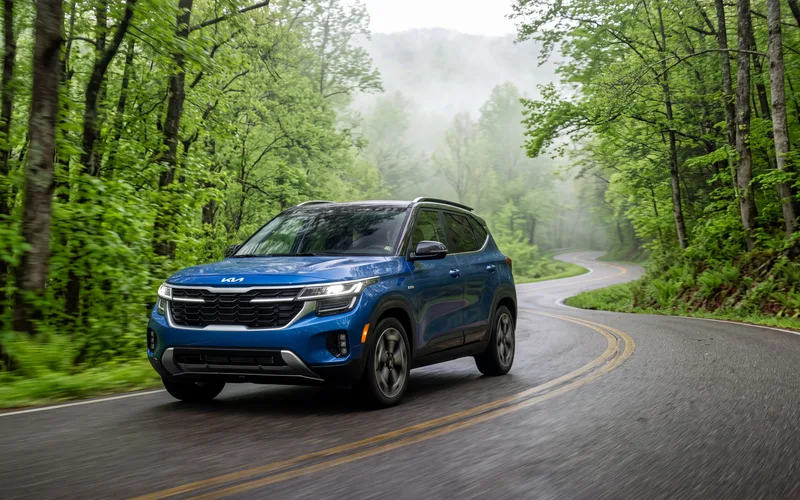 Kia SeltosSubcompact SUVBetter at: AWD availability
It offers the same engine choices and warranty as the Kona in a different body, and easier access to AWD may tip buyers toward the Seltos.
Compare 2.05C
2.05C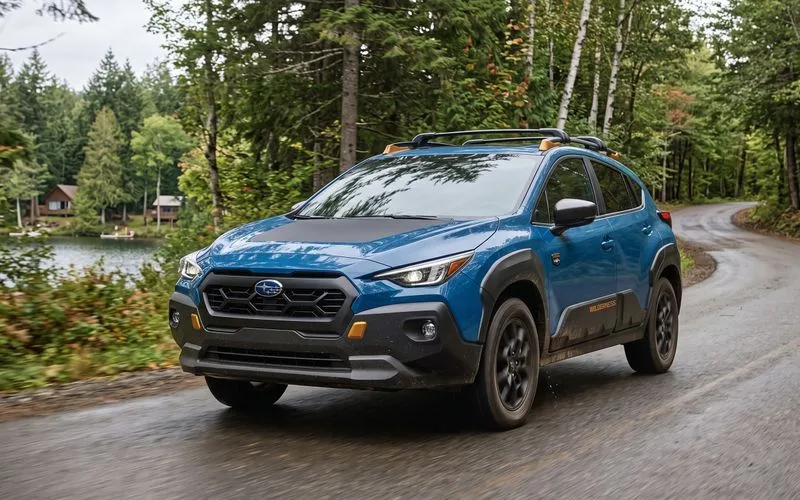 Subaru CrosstrekSubcompact SUVBetter at: All-weather traction
Buyers who face snow or gravel roads will prefer the Crosstrek's standard all-wheel drive, extra ground clearance and strong resale value.
Compare 1.21D
1.21D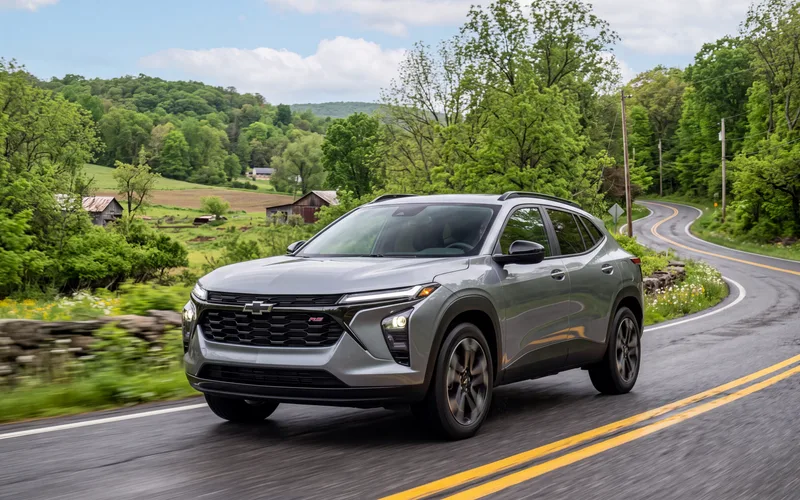 Chevrolet TraxSubcompact SUVBetter at: Lower price
Strict budget shoppers get a big cabin for less money in the Trax, if they can live without AWD and Hyundai's warranty.
CompareHow it's evolved
9 scored model years · 2018–2026
Subject scores by year
Hover or tap a score to see what moved it versus the year before. A corner mark flags a big swing.
| Year | Performance | Efficiency | Safety | Space | Cost | Reliability | Tech | Use-case | Driving | Value |
|---|---|---|---|---|---|---|---|---|---|---|
| 2026 | 22 | 70 | 72 | 44 | 86 | 69 | 69 | 58 | 62 | 76 |
| 2025 | 23 | 70 | 67 | 44 | 92 | 71 | 68 | 57 | 62 | 76 |
| 2024 | 23 | 70 | 67 | 44 | 91 | 67 | 65 | 57 | 61 | 77 |
| 2023 | 24 | 76 | 64 | 36 | 93 | 69 | 50 | 49 | 65 | 69 |
| 2022 | 24 | 76 | 59 | 35 | 91 | 68 | 48 | 47 | 62 | 64 |
| 2021 | 24 | 66 | 57 | 34 | 94 | 68 | 44 | 45 | 62 | 64 |
| 2020 | 24 | 66 | 57 | 34 | 91 | 63 | 43 | 45 | 62 | 68 |
| 2019 | 24 | 66 | 55 | 34 | 90 | 66 | 43 | 45 | 62 | 75 |
| 2018 | 22 | 66 | 35 | 34 | 90 | 68 | 42 | 44 | 62 | 73 |
Compare two years
Best fit & conditions
Higher scores mean a better fit for that use case. Learn more about use-case fit →
Subject profile
Academic Probation · NHTSA safety recalls
Jul 14, 2026Seat belts: rear/other: buckle assemblyThe seat belt buckle in the rear center seat may fail to properly restrain an occupant during a crash.
Defect
Hyundai Motor America (Hyundai) is recalling certain 2024-2025 Kona Electric and 2024-2026 Kona vehicles. The seat belt buckle in the rear center seat may fail to properly restrain an occupant during a crash.
Risk
A seat belt buckle that fails to properly restrain an occupant in a crash increases the risk of injury.
Remedy
Passengers are advised not to use the rear center seat until the recall remedy is performed. Dealers will replace the seat belt buckle assembly, free of charge. Owner notification letters were mailed September 2, 2026. Owners may contact Hyundai customer service at 1-855-371-9460. Hyundai's number for this recall is 306. Vehicle Identification Numbers (VINs) involved in this recall became searchable on NHTSA.gov on July 15, 2026.
NHTSA campaign 26V452000 ↗Manufacturer no. 30647,787 vehicles potentially affected (all models in the campaign)Owners notified Sep 2, 2026Filed by Hyundai Motor AmericaFiled as KONA, KONA ELECTRICFeb 5, 2026Steering: linkages: knuckle: spindle: armDue to a manufacturing error, the front steering knuckles may crack and break, which can result in a loss of vehicle steering control.
Defect
Hyundai Motor America (Hyundai) is recalling certain 2026 Kona vehicles. Due to a manufacturing error, the front steering knuckles may crack and break, which can result in a loss of vehicle steering control.
Risk
A loss of vehicle steering control increases the risk of a crash.
Remedy
Dealers will inspect and replace the front steering knuckles, as necessary, free of charge. Owner notification letters were mailed March 5, 2026. Owners may contact Hyundai customer service at 1-855-371-9460. Hyundai's number for this recall is 295. Vehicle Identification Numbers (VINs) involved in this recall became searchable on NHTSA.gov on February 7, 2026.
NHTSA campaign 26V069000 ↗Manufacturer no. 2954,555 vehicles potentially affected (all models in the campaign)Owners notified Mar 5, 2026Filed by Hyundai Motor AmericaFiled as KONAJan 26, 2026Electrical system: instrument cluster/panelDue to a software error, the instrument panel display may fail. As such, these vehicles fail to comply with the requirements of Federal Motor Vehicle Safety Standard (FMVSS) number 101, "Controls and Displays."
Defect
Hyundai Motor America (Hyundai) is recalling certain 2025-2026 Tucson Hybrid, Tucson Plug-In Hybrid Electric (PHEV), 2026 IONIQ 5, Santa Cruz, Kona, Palisade, Palisade Hybrid, Santa Fe, Santa Fe Hybrid, Sonata, Sonata Hybrid, and Tucson vehicles. Due to a software error, the instrument panel display may fail. As such, these vehicles fail to comply with the requirements of Federal Motor Vehicle Safety Standard (FMVSS) number 101, "Controls and Displays."
Risk
An instrument panel display that fails to show critical safety information, such as the speedometer or warning lights, increases the risk of a crash.
Remedy
The instrument panel display software will be updated over-the-air (OTA) or by a dealer, free of charge. Owner notification letters were mailed March 24, 2026. Owners may contact Hyundai's customer service at 855-371-9460. Hyundai's number for this recall is 293. Vehicle Identification Numbers (VINs) involved in this recall became searchable on NHTSA.gov on January 28, 2026.
NHTSA campaign 26V047000 ↗Manufacturer no. 29341,651 vehicles potentially affected (all models in the campaign)Owners notified Mar 24, 2026Filed by Hyundai Motor AmericaFiled as KONA
12 recalls on other model years of the Kona (2019–2024)
Jul 11, 2024Fuel system, gasoline: delivery: fuel pump: control/drive moduleThe fuel pump may fail, which can result in a loss of drive power.
Defect
Hyundai Motor America (Hyundai) is recalling certain 2019-2022 Veloster N, 2019-2023 Genesis G70, 2022-2023 Elantra N, and Kona N vehicles. The fuel pump may fail, which can result in a loss of drive power.
Risk
A loss of drive power can increase the risk of a crash.
Remedy
Dealers will update engine control module software. In addition, dealers will inspect and replace the fuel pump assembly, as necessary. All repairs will be performed free of charge. Owner notification letters were mailed beginning September 9, 2024. Some interim notification letters, notifying owners of the safety risk, were mailed September 3, 2024. Owners may contact Hyundai customer service at 1-855-371-9460. Hyundai's numbers for this recall are 262 and 023G.
NHTSA campaign 24V528000 ↗Manufacturer no. 262-023G54,647 vehicles potentially affected (all models in the campaign)Owners notified Sep 9, 2024Filed by Hyundai Motor AmericaFiled as KONA NMay 1, 2024Engine and engine cooling: exhaust system: emission control: gas recirculation valve (egr valve)An electrical short circuit may occur in the exhaust gas recirculation (EGR) valve assembly, which can result in a loss of drive power.
Defect
Hyundai Motor America (Hyundai) is recalling certain 2024 Elantra, Venue, and Kona vehicles. An electrical short circuit may occur in the exhaust gas recirculation (EGR) valve assembly, which can result in a loss of drive power.
Risk
A loss of drive power increases the risk of a crash.
Remedy
Dealers will replace the exhaust gas recirculation valve assembly, free of charge. Owner notification letters were mailed June 28, 2024. Owners may contact Hyundai customer service at 1-855-371-9460. Hyundai's number for this recall is 260.
NHTSA campaign 24V308000 ↗Manufacturer no. 26013,511 vehicles potentially affected (all models in the campaign)Owners notified Jun 28, 2024Filed by Hyundai Motor AmericaFiled as KONADec 26, 2023Electrical system: 12v/24v/48v battery: cablesThe 12-Volt battery cables may chafe against the engine control module bracket and short circuit during a crash.
Defect
Hyundai Motor America (Hyundai) is recalling certain 2024 Kona vehicles. The 12-Volt battery cables may chafe against the engine control module bracket and short circuit during a crash.
Risk
A short circuit increases the risk of an engine compartment fire.
Remedy
Dealers will install sheathing over the wiring, free of charge. Owner notification letters were mailed February 22, 2024. Owners may contact Hyundai customer service at 1-855-371-9460. Hyundai's number for this recall is 252.
NHTSA campaign 23V901000 ↗Manufacturer no. 25210,984 vehicles potentially affected (all models in the campaign)Owners notified Feb 22, 2024Filed by Hyundai Motor AmericaFiled as KONASep 22, 2023Seat belts: rear/other: retractorThe seat belt assemblies in the right and left rear seats may not function properly. As such, these vehicles fail to comply with the requirements of Federal Motor Vehicle Safety Standard numbers 208, "Occupation Crash Protection" and 209, "Seat Belt Assemblies."
Defect
Hyundai Motor America (Hyundai) is recalling certain 2024 Kona vehicles. The seat belt assemblies in the right and left rear seats may not function properly. As such, these vehicles fail to comply with the requirements of Federal Motor Vehicle Safety Standard numbers 208, "Occupation Crash Protection" and 209, "Seat Belt Assemblies."
Risk
A seat belt that does not function properly may not adequately restrain an occupant in a crash, increasing the risk of injury.
Remedy
Dealers will inspect and replace the seat belt retractor as necessary, free of charge. Owner notification letters were mailed November 21, 2023. Owners may contact Hyundai customer service at 1-855-371-9460. Hyundai's number for this recall is 250.
NHTSA campaign 23V650000 ↗Manufacturer no. 2502,354 vehicles potentially affected (all models in the campaign)Owners notified Nov 21, 2023Filed by Hyundai Motor AmericaFiled as KONAJul 27, 2023Power train: automatic transmission: fluid/lubricant: pumpThe electronic controller for the Idle Stop & Go oil pump assembly may contain damaged electrical components that can cause the pump controller to overheat.
Defect
Hyundai Motor America (Hyundai) is recalling certain 2023-2024 Palisade Tucson, 2023 Sonata, Elantra, and Kona vehicles. The electronic controller for the Idle Stop & Go oil pump assembly may contain damaged electrical components that can cause the pump controller to overheat.
Risk
An electric oil pump assembly that overheats increases the risk of a vehicle fire.
Remedy
Owners are advised to park outside and away from structures until the recall repair is complete. Dealers will inspect and replace the electric oil pump controller, as necessary, free of charge. Owner notification letters were mailed starting September 7, 2023. Owners may contact Hyundai customer service at 1-855-371-9460. Hyundai's number for this recall is 246.
NHTSA campaign 23V526000 ↗Manufacturer no. 24652,109 vehicles potentially affected (all models in the campaign)Owners notified Sep 7, 2023Filed by Hyundai Motor AmericaFiled as KONADec 16, 2022Electrical system: propulsion system: traction battery: thermal management: fluid/coolantThe Electric Power Control Unit (EPCU) may have been improperly sealed and may leak coolant internally.
Defect
Hyundai Motor America (Hyundai) is recalling certain 2021 Kona EV vehicles. The Electric Power Control Unit (EPCU) may have been improperly sealed and may leak coolant internally.
Risk
Coolant contacting the EPCU circuit board may cause a loss of drive power, increasing the risk of a crash.
Remedy
Dealers will inspect and replace the EPCU, as necessary, free of charge. Owner notification letters were mailed March 22, 2023. A second notice will be sent once the final remedy is available. Owners may contact Hyundai customer service at 1-855-371-9460. Hyundai's number for this recall is 239.
NHTSA campaign 22V941000 ↗Manufacturer no. 239853 vehicles potentially affected (all models in the campaign)Owners notified Mar 22, 2023Filed by Hyundai Motor AmericaFiled as KONA ELECTRICOct 6, 2022Power train: automatic transmissionThe vehicle's "fail-safe" limited-mobility drive mode may be impaired, when prompted by a transmission oil pump malfunction, which can result in a complete loss of drive power.
Defect
Hyundai Motor Company (Hyundai) is recalling certain 2021-2022 Santa Fe, Sonata, Veloster N, 2022 Santa Cruz, Elantra N, and Kona N vehicles. The vehicle's "fail-safe" limited-mobility drive mode may be impaired, when prompted by a transmission oil pump malfunction, which can result in a complete loss of drive power.
Risk
Loss of drive power increases the risk of a crash.
Remedy
Dealers will inspect and replace the transmission, as necessary. Dealers will also update the transmission control unit software. All repairs will be performed free of charge. Owner notification letters were mailed January 10, 2023. Owners may contact Hyundai customer service at 1-855-371-9460. Hyundai's number for this recall is 236.
NHTSA campaign 22V746000 ↗Manufacturer no. 23656,148 vehicles potentially affected (all models in the campaign)Owners notified Jan 10, 2023Filed by Hyundai Motor AmericaFiled as KONA NApr 28, 2021EngineThe piston oil rings may not have been properly heat-treated, which could result in engine damage.
Defect
Hyundai Motor America (Hyundai) is recalling certain 2019-2020 Elantra, 2019-2021 Kona and Veloster vehicles equipped with 2.0L Nu MPI engines. The piston oil rings may not have been properly heat-treated, which could result in engine damage.
Risk
A damaged engine may stall, increasing the risk of a crash. In addition, oil may leak onto hot exhaust components, increasing the risk of a fire.
Remedy
Dealers will inspect and, if necessary, replace the engine, free of charge. In addition, Hyundai will deploy Piston Ring Noise Sensing System (PNSS) software. Owner notification letters were mailed August 24, 2021. Owners may contact Hyundai customer service at 1-855-371-9460.
NHTSA campaign 21V301000 ↗Manufacturer no. 203158,493 vehicles potentially affected (all models in the campaign)Owners notified Aug 24, 2021Filed by Hyundai Motor AmericaFiled as KONAMar 1, 2021Electrical system: propulsion system: traction batteryThe lithium-ion (Li-ion) battery may short-circuit.
Defect
Hyundai Motor America (Hyundai) is recalling certain 2019-2020 Kona Electric and 2020 Ioniq Electric vehicles. The lithium-ion (Li-ion) battery may short-circuit.
Risk
An electrical short in the Li-ion battery increases the risk of a fire.
Remedy
Owners are advised to park their vehicles outside and away from structures until the interim action is complete. Hyundai will notify owners, and as an interim action, owners have the option to follow provided instructions to perform a battery update through the vehicle's infotainment system or request a Hyundai dealer to provide the update. Once parts are available, dealers will inspect the Battery System Assembly (BSA), and replace it if necessary. Repairs will be performed free of charge. Owners were notified of the safety risk, and the interim action, with a letter mailed April 9, 2021. Final owner notification letters were mailed June 17, 2021. Owners may contact Hyundai customer service at 1-855-371-9460. Hyundai's number for this recall is 200.
NHTSA campaign 21V127000 ↗Manufacturer no. 2004,696 vehicles potentially affected (all models in the campaign)Owners notified Jun 17, 2021Filed by Hyundai Motor AmericaFiled as KONA ELECTRICDec 1, 2020Service brakes, hydraulic: power assist: electric: control module: softwareThe Integrated Electronic Brake (IEB) system may detect an abnormal sensor signal and as a result, may significantly reduce braking performance.
Defect
Hyundai Motor America (Hyundai) is recalling certain 2019-2020 Nexo Fuel Cell and 2019-2021 Kona Electric vehicles. The Integrated Electronic Brake (IEB) system may detect an abnormal sensor signal and as a result, may significantly reduce braking performance.
Risk
Reduced braking power could lengthen the distance required to stop the vehicle, increasing the risk of a crash.
Remedy
Hyundai will notify owners, and dealers will update the IEB software, free of charge. The recall began January 25, 2021. Owners may contact Hyundai customer service at 1-855-371-9460. Hyundai's number for this recall is 199.
NHTSA campaign 20V748000 ↗Manufacturer no. 1998,176 vehicles potentially affected (all models in the campaign)Owners notified Jan 25, 2021Filed by Hyundai Motor AmericaFiled as KONA ELECTRICOct 13, 2020Electrical system: propulsion system: traction battery · Electrical system: propulsion system: traction battery: management system/energy control module (bms/becm): softwareThe lithium-ion (Li-ion) battery may short-circuit.
Defect
Hyundai Motor America (Hyundai) is recalling certain 2019-2020 Kona Electric vehicles. The lithium-ion (Li-ion) battery may short-circuit.
Risk
An electrical short in the Li-ion battery increases the risk of a fire.
Remedy
Hyundai will notify owners, and dealers will update the Battery Management System (BMS) software and inspect the Li-ion battery, replacing it if necessary, free of charge. Owners are advised to park their vehicles outside and away from structures until the repair is complete. The recall began November 13, 2020. Owners may contact Hyundai customer service at 1-855-371-9460. Hyundai's number for this recall is 196.
NHTSA campaign 20V630000 ↗Manufacturer no. 1966,707 vehicles potentially affected (all models in the campaign)Owners notified Nov 13, 2020Filed by Hyundai Motor AmericaFiled as KONA ELECTRICJan 17, 2020Equipment: other: labelsThe certification label may indicate incorrect Gross Axle Weight Rating (GAWR). As such, these vehicles fail to comply with the requirements of Federal Motor Vehicle Safety Standard (FMVSS) numbers 567, "Certification" and 110, "Tire Selection and Rims."
Defect
Hyundai Motor America (Hyundai) is recalling certain 2020 Kona vehicles. The certification label may indicate incorrect Gross Axle Weight Rating (GAWR). As such, these vehicles fail to comply with the requirements of Federal Motor Vehicle Safety Standard (FMVSS) numbers 567, "Certification" and 110, "Tire Selection and Rims."
Risk
An incorrect GAWR could result in the vehicle being overloaded, increasing the risk of a crash.
Remedy
Hyundai will notify owners, and dealers will install new label stickers displaying the correct GAWR over the affected areas of the certification label, free of charge. The recall began March 2, 2020. Owners may contact Hyundai customer service at 1-855-371-9460. Hyundai's number for this recall is 187.
NHTSA campaign 20V022000 ↗Manufacturer no. 187477 vehicles potentially affected (all models in the campaign)Owners notified Mar 2, 2020Filed by Hyundai Motor AmericaFiled as KONA
Source: NHTSA Office of Defects Investigation recall database, model years 2018–2026. Recalls are listed by model year as the manufacturer filed them; whether a specific car is affected depends on its VIN — check a VIN at nhtsa.gov ↗. NHTSA model names matched to this page: KONA, KONA ELECTRIC, KONA N.
Detailed scoring by subject
1Performance & PowertrainThe Kona's lowest-graded category.0.00F
The 2026 volume trims (SE, SEL Sport) carry the 2.0L MPI Atkinson four at 147 hp; the 1.6L turbo's 190 hp is reserved for SEL Premium and Limited after the N Line trims were dropped for 2026.
The volume 2.0L makes 132 lb-ft at a high 4,500 rpm — at the very bottom of the SUV range. The optional 1.6T's 195 lb-ft arrives far lower in the rev range.
Consumer Reports instrumented the second-generation Kona's base 2.0L at 9.8 seconds to 60 — slower than the SUV band floor. The turbo trims cut two full seconds off that.
The 2.0L pulls away cleanly with no off-the-line hesitation and is adequate around town, but it gets loud and strained when asked for more; reviewers explicitly steer buyers to the turbo for a satisfying engine.
Hyundai's IVT is one of the better CVTs — programmed step-shifts disguise it well in normal driving — but revs still flare and drone under load. The 8-speed torque-converter automatic on the turbo trims is conventional and well-behaved.
Hyundai publishes no US tow rating for the Kona and the owner's manual states towing is not recommended, so the vehicle scores zero on capability rather than being omitted. Overseas Konas carry braked ratings that do not apply to the US-market car.
HTRAC all-wheel drive is optional on every 2026 gas trim, which is broad availability, but it is a basic on-demand front-biased system with no low range, locking differential or meaningful torque vectoring.
Pavement-oriented subcompact crossover: roughly 6.7–8.3 inches of clearance depending on drivetrain and wheel size, no skid plates, no locker or crawl control, and no off-road trim — the 2026 lineup is SE, SEL Sport, SEL Premium and Limited only.
Three distinct US powertrains — 2.0L NA, 1.6L turbo, and a battery-electric Kona — is good breadth for a subcompact, but 2026 narrows it: the Electric is cut to a single 133-hp, 200-mile Standard Range SE, the Long Range battery is gone, and there is still no US hybrid.
2Efficiency & RangeGrades above the middle of the scale.2.71B-
Both 2.0L FWD variants that cover the volume SE and SEL Sport trims are EPA-rated 31 MPG combined for 2026. That is mid-pack for a gas subcompact SUV: level with the Venue, ahead of the Trax.
City economy is the Kona's weaker EPA number — the naturally aspirated 2.0L runs a CVT with no hybrid assist, so stop-and-go returns trail hybridized rivals.
Highway is where the Kona's small displacement pays off — 35 MPG is strong for the class. Adding AWD costs about 6 MPG on the highway cycle, so the FWD car is meaningfully the efficient choice.
EPA lists 384 miles for the 12.4-gallon 2.0L FWD configuration that the SE and SEL Sport carry; a 13.2-gallon FWD variant reaches 409 miles. Which EPA entry maps to SEL Sport is not explicit, so the conservative figure is used and confidence held at MEDIUM.
Now taken directly from EPA's published annual fuel cost ($2,050) rather than computed by hand (~$2,000), which lowers the score slightly.
Every gas Kona — 2.0L and 1.6T alike — is certified on regular gasoline with no premium recommendation, so there is no costly fuel requirement on any trim.
3SafetyOne of the Kona's strongest categories.2.86B-
NHTSA rates the 2026 Kona 4 stars overall — 4 stars frontal crash, 5 stars side crash, 4 stars rollover. A full star behind the 5-star subcompact leaders (Crosstrek, Taos), and the single biggest drag on this category.
The 2026 Kona is an IIHS TOP SAFETY PICK+ — Good in small overlap front, the updated moderate overlap front, and the updated side test, plus Good vehicle-to-pedestrian front crash prevention. Held just short of the 90s only by Acceptable (not Good) headlights.
For 2026 Hyundai cut the lineup to four trims (SE, SEL Sport, SEL Premium, Limited) and made the full SmartSense core standard on all of them: Forward Collision-Avoidance Assist with pedestrian/cyclist and intersection-turn detection, Lane Keeping/Lane Following Assist, Blind-Spot Collision Warning, Rear Cross-Traffic Collision-Avoidance Assist and — newly standard this year — Smart Cruise Control with Stop & Go. Only the convenience layer (HDA, Blind-Spot View Monitor, 360 camera) is trim-gated.
Re-score: the IIHS ratings page confirms a Good/Good sweep — Good in the tougher vehicle-to-vehicle 2.0 front crash prevention test and Good in pedestrian (day and night) with the standard Forward Collision-Avoidance Assist. The previous score assumed V2V 2.0 was only Acceptable-or-better; it is the top grade, putting the Kona among the best AEB performers in the subcompact class.
Blind-Spot Collision Warning and Rear Cross-Traffic Collision-Avoidance Assist (with braking intervention, not alert-only) are standard on every 2026 trim. The camera-based Blind-Spot View Monitor that projects a live side feed into the cluster, plus Surround View Monitor, remain Limited-only.
Lane Departure Warning, Lane Keeping Assist and camera-based Lane Following Assist centering are standard fleet-wide, and the system tracks well on clearly marked highways. Typical of Hyundai's tuning, it leans on the wheel more abruptly than the smoothest rivals and degrades where markings fade or in construction zones.
Smart Cruise Control with Stop & Go — full speed range, brings the car to a halt and resumes — is standard on all four 2026 trims, a genuine advantage over subcompact rivals that still gate ACC behind mid trims. The integrated Highway Driving Assist that fuses ACC with lane centering is reserved for the Limited, so the volume SE/SEL Sport buyer gets the cruise half without the polished highway-assist half.
No hands-free highway system is offered on the Kona at any trim or price. Hyundai's US lineup has no BlueCruise/Super Cruise equivalent here — HDA is a hands-on lane-centering assist that requires steering-wheel torque.
IIHS rates the 2026 Kona's headlights Acceptable — the second-highest grade, and the one weak link in an otherwise Good-across-the-board IIHS card. It is at least consistent: TSP+ requires Acceptable-or-better lights on every trim, so there is no bad-headlight base version. High Beam Assist is standard.
Upright seating and a fairly tall glasshouse give a good forward and quarter view for the class, but the second-generation Kona's rising beltline, chunky rear pillars and shallow rear window pinch over-the-shoulder and reverse sightlines. Camera compensation is trim-dependent: the Surround View Monitor and Blind-Spot View Monitor that would offset it are Limited-only.
Two outboard positions have complete LATCH hardware and three top tethers are clearly marked and easy to reach, but the lower anchors sit down in the seat bight and take real effort to clip. Subcompact packaging is the bigger limit: rear-facing seats are a tight fit against the front seats and three across is not happening.
4Space & ComfortOne of the Kona's weakest categories.0.94F
The 2026 Kona is a two-row, five-passenger subcompact SUV across every trim (SE, SEL Sport, SEL Premium, Limited) and in both gas and Electric form; there is no six- or seven-seat configuration.
Second-generation (SX2) Kona front headroom is 39.9 in without the sunroof, a genuinely tall-feeling front cabin for the subcompact class; the Limited's power tilt-and-slide sunroof costs roughly two inches.
41.7 in of front legroom is mid-pack for an SUV overall and adequate for the subcompact segment, though it trails larger compact crossovers that push past 43 in.
38.3 in of second-row headroom is strong for a subcompact SUV, although the theater-style raised rear cushion means taller passengers sit closer to the headliner than the number suggests.
Rear legroom is the Kona's standout packaging figure — 38.2 in is close to compact-SUV territory and well ahead of subcompact rivals like the Kicks and Venue, a direct benefit of the second generation's 2.3-in wheelbase stretch.
The Kona is a strictly two-row, five-seat subcompact SUV — no third row is offered on any trim or powertrain, so this item scores in the bottom band by definition.
25.5 cu ft behind the rear seats is competitive within the subcompact SUV class and up sharply from the first-generation Kona, but it sits at the very bottom of the SUV-wide normalization band that runs to 80 cu ft.
Folding the reclining 60/40 split rear bench opens 63.7 cu ft — useful for a vehicle this small, but modest measured against mid- and full-size SUVs at the top of the band.
Moving the shifter to a column stalk on upper trims frees a genuinely large open console tray with a pass-through beneath it, and the rear bench both reclines and drops a center armrest with cupholders; reviewers knock the unlined plastic bins that let contents slide noisily, and there is no underfloor cargo trickery on gas models.
Front seats are well-padded, broadly adjustable and comfortable over long stints, and the rear bench's stadium-style cushion with recline is better than most subcompacts; the deductions are shallow side bolstering up front and modest thigh support in back.
The second-generation chassis rides noticeably better than the old Kona — firm but rarely harsh over broken pavement — while still going busy and slightly bouncy over larger swells, which is par rather than class-leading for a short-wheelbase subcompact.
Highway refinement is the weakest part of the Kona's comfort case: road noise is intrusive at cruising speed and the 2.0L four gets buzzy under load, leaving the cabin only average for the class and below the broader SUV field. (The Electric is markedly quieter, but the gas volume trim sets this score.)
Heated front seats arrive on SEL Sport and up, with ventilated front seats, heated steering wheel, leatherette seating, power sunroof and hands-free smart liftgate reserved for the Limited; the base SE goes without heated seats entirely and there is no rear climate zone or rear vents worth the name in a vehicle this size.
5Cost of OwnershipThe Kona's best-graded category.3.87A+
The 2026 Kona SE now lists at $25,500 before destination, a $50 rise in the current price list. With destination it comes to about $26,900, still close to the bottom of the subcompact-SUV band.
The SEL Sport is the volume trim at $26,825 before destination. Once AWD or the SEL Premium upgrade that buyers commonly add is factored in, it lands near $29,000.
Kona service costs are among the lowest in the segment. 2026 buyers now pay for the oil changes and tire rotations that Hyundai's discontinued complimentary-maintenance program used to cover, so the realistic figure sits slightly above CarEdge's projection.
The gas Kona holds its value about in line with the subcompact-SUV class average, keeping roughly 60% of MSRP after five years. The redesign reported for 2027 could soften residuals on outgoing-generation cars.
Hyundai's 5-year/60,000-mile bumper-to-bumper coverage carries over unchanged for 2026. It is the longest basic warranty in the mainstream market, matched only by Kia and Genesis.
The 10-year/100,000-mile powertrain warranty tops the normalization band. It covers the original owner only; a second owner inherits 5 years/60,000 miles from the original in-service date.
Hyundai ended its 3-year/36,000-mile complimentary maintenance program for MY2026 vehicles. The Kona now comes with roadside assistance and connected services only: generous in length (5 years, unlimited miles) but no free oil changes, so it scores at the bottom of the 'basic roadside only' band.
$29,000 volume-trim price minus its estimated resale value after 5 years (60% retained, or about $17,400) leaves about $11,600 in depreciation. Add the projected $2,950 in 5-year maintenance and repairs, and owning this vehicle for 5 years costs about $14,550 in total.
6Reliability & QualityMid-pack among this car's ten categories.2.67C+
The sources genuinely disagree: J.D. Power rates the 2026 Kona 84/100 for quality & reliability ("Great"), but Consumer Reports now predicts the 2026 Kona will be less reliable than the average new car, based on 2024–2025 owner data for this second generation, with trouble spots flagged across powertrain, suspension/steering, body hardware and in-car electronics. Lowered from 76 because the CR verdict is a below-average call on this exact generation, not the 'about average' the previous score leaned on.
Hyundai is a solid mid-to-upper-pack dependability brand: 8th in Consumer Reports' 2026 brand rankings and 11th in J.D. Power's 2026 Vehicle Dependability Study at 198 PP100, slightly better than the 204 industry average and a 24-point improvement on 2025. Good, but clearly outside the top-5 tier; trimmed slightly now that the VDS rank is confirmed as 11th rather than merely 'above average'.
Three NHTSA recalls already cover the 2026 Kona, two of them safety-critical: front steering knuckles that can crack and cause loss of steering control, and a rear center seat belt buckle that may not restrain an occupant — the latter spanning 2024–2026 production, with owners told not to use that seat until repaired. The second generation also drew four recalls in its 2024 launch year (EGR short, 12V cable chafe fire risk, rear seat belt retractors), so the pattern is repeated rather than a one-off.
The volume SE/SEL Kona runs the 147-hp 2.0L Smartstream MPI four with the IVT — a port-injected, low-stress pairing — and the 1.6T upper trims now use a conventional 8-speed automatic rather than the gen-1 dry dual-clutch. No systemic failure pattern, but Consumer Reports' 2024–2025 data flags engine, transmission and cooling as trouble areas, and the 2.0 Nu MPI family's 2019–2021 piston-ring recall is recent history, so it stays mid-band.
Cabin design and the twin-panoramic-display layout read upscale, but reviewers consistently flag hard, scratchy plastics across the dashboard and door interiors on the volume trims, with soft-touch surfaces and leatherette reserved for Limited. Competitive for a mainstream subcompact SUV rather than class-leading.
Initial quality is a genuine strength: the 2026 Kona finished second among small SUVs in J.D. Power's 2026 U.S. Initial Quality Study. Trimmed slightly because Consumer Reports' owner data for the generation flags body hardware, paint/trim and noises/leaks as trouble areas, so longer-term build consistency is less clean than the 90-day picture.
Hyundai runs a dense nationwide franchised dealer network — coverage is a non-issue anywhere in the US — but service satisfaction is ordinary rather than standout, with the brand absent from the top of J.D. Power's 2026 Customer Service Index mass-market table led by MINI, Subaru and Buick.
Running costs are a clear strength: RepairPal puts the Kona's average annual repair bill well below the all-vehicle average with a low severe-repair probability, and Hyundai's 10-year/100,000-mile powertrain warranty plus 3-year/36,000-mile complimentary maintenance absorb much of the early-ownership expense. High US sales volume keeps parts common and cheap.
7Technology & InfotainmentGrades above the middle of the scale.2.70B-
The second-generation (SX2) Kona carries a 12.3-inch center touchscreen as standard equipment on all four 2026 US trims, including the base SE — one of the largest standard screens in the subcompact SUV class, where rivals still ship 8-inch base units.
Hyundai's current-generation software is quick and logically laid out, and the Kona keeps physical volume and tuning knobs plus a separate climate control panel rather than burying those functions in the screen — the combination is consistently called out as one of the better mainstream interfaces.
Wireless Apple CarPlay and wireless Android Auto are standard on all four trims including the base SE, and unlike Hyundai's older head units the large 12.3-inch screen does not force a downgrade to wired projection.
Built-in connected navigation is reserved for the upper trims, so the volume SEL Sport relies on phone projection for maps; the Bluelink voice assistant handles climate, audio and basic commands competently but is not the natural-language equal of the Google built-in systems in the Equinox or Kicks-class rivals.
A six-speaker system is standard and merely adequate, and the Bose eight-speaker premium upgrade is locked to the range-topping Limited rather than being available mid-range — a narrower path to good audio than the Tucson offers a class above.
The volume SE and SEL Sport trims pair analog gauges with only a 4.2-inch driver information display; the 12.3-inch full-digital cluster that completes the panoramic dual-screen look starts at SEL Premium, so most Konas sold do not get it.
The Kona receives over-the-air updates for infotainment software and maps, and Hyundai has extended OTA to some vehicle controllers on this software generation, but these are maintenance and map refreshes rather than the regular feature-adding whole-vehicle updates EV-native rivals ship.
Bluelink+ is included at no extra subscription cost and covers remote lock/unlock, remote start with climate, vehicle finder, stolen-vehicle location and collision notification — a strong, genuinely free package; phone-as-key (Digital Key 2 Touch) is limited to the Limited trim, and the Wi-Fi hotspot rides with the Limited's advanced package.
Four USB-C ports — two front, two rear — are standard from the base SE, which is generous for a subcompact, and wireless charging arrives at SEL Sport rather than being a top-trim item; there is no household AC outlet.
Proximity key with push-button start is standard all the way down to the SE, and remote start comes with SEL Sport; the hands-free smart liftgate and phone-as-key are held back for the Limited, which is the main gap against the class leaders.
A rear camera is standard, but front/rear parking distance warning, the Surround View Monitor, the Blind-Spot View Monitor and Remote Smart Parking Assist are all bundled exclusively into the Limited — so the volume trim gets a rear camera and little else.
No head-up display is offered on any 2026 US Kona trim. The SX2 Kona has the hardware in some export markets on the Ultimate grade, but the US range tops out at Limited, which does not list a HUD.
8Use-Case FitOne of the Kona's weakest categories.1.92C-
The SX2-generation Kona's back seat is one of the roomiest in the subcompact class (38.2 in rear legroom, more than the Mazda CX-30, Corolla Cross and Bronco Sport), and the squared-off 25.5 cu ft cargo bay swallows a stroller without the sloping-roofline penalty rivals carry. LATCH provision is only average, though: two complete lower-anchor positions plus a tether-only center, with anchors buried in the seat bight, and the cabin is too narrow for three-across seats.
Hyundai puts the whole SmartSense suite on the $26,845 SE — the trim families actually buy — and for 2026 added Smart Cruise Control with Stop & Go and FCA with junction turning to that standard list, alongside Rear Occupant Alert and Safe Exit Warning. IIHS names the 2026 Kona a TOP SAFETY PICK+; the ceiling here is NHTSA's 4-star overall (4 frontal, 4 rollover) and merely Acceptable-rated headlights.
Edmunds calls the seats comfortable in both rows and 25.5 cu ft is enough luggage room for four with the seats up, but rear amenities are thin and partly trim-gated: second-row air vents arrive only at SEL Sport, so a base SE sends rear passengers on a long trip without them, though rear USB-C charging is standard on every trim. Road noise is the recurring complaint on multi-hour highway stints. (Re-score: corrected the earlier claim that rear USB-C ports were SEL Sport-only, +1.)
Commuting is where the Kona is strongest: the 2.0L/IVT pair pulls away cleanly with no off-the-line hesitation, the column shifter and retained physical volume and climate controls keep daily interactions simple, and stop-and-go adaptive cruise is now standard on every trim rather than a Limited perk. The 9.8-second 0–60 means merging and passing take planning.
31 MPG combined on regular 87-octane and unusually cheap consumables (RepairPal puts annual repair at $449 against a $652 all-vehicle average) make for low per-mile cost, and a Kona Electric SE exists at 116 MPGe for those who can charge. It falls short of the top of the class because there is no hybrid Kona at all — rivals like the Niro and Crosstrek Hybrid undercut it on fuel — and AWD or the 1.6T drops the figure to 26–28 MPG.
At 171.3 in long on a 104.7 in wheelbase the Kona is easy to slot into city spaces, and the upright glasshouse gives decent sightlines. Two things keep it out of the top band: a 34.8 ft turning circle that is merely average for a subcompact, and camera help that stops at a plain rearview unit until the Limited adds Surround View and parking sensors.
The Kona has no US tow rating whatsoever — Hyundai's owner documentation states it is not recommended for towing — so trailering a small utility trailer is off the table entirely. What work utility exists is limited to hauling: 25.5 cu ft behind the rear seats, 63.7 cu ft folded, moved by 147 hp through a CVT.
The naturally aspirated 2.0L Smartstream MPI and IVT are a simple, low-stress combination backed by a 10-year/100,000-mile powertrain warranty, and cloth seats on the volume trims tolerate abuse. But this is a car-based unibody crossover with no fleet or trade following, and 2026 build quality took a hit from a front steering-knuckle recall.
Work provisions are close to nonexistent on the gas Kona: no bed, no hitch option, no 110V outlet, roof rails only from SEL Sport up, and nothing more than basic tie-downs plus an underfloor tray in the cargo bay. The one genuine work feature belongs to the Kona Electric, whose standard V2L can run tools off the charge port — but that needs a separate adapter and the EV is down to a single SE trim for 2026.
Roughly 384–409 miles between fill-ups and seats Edmunds rates comfortable in both rows make the Kona a competent tourer, and standard stop-and-go cruise with lane following takes the edge off interstate hours. It stops short of a good mile-eater on noise — CR measures it louder than most vehicles — on a chassis that gets floaty over undulating pavement, and on 147 hp that makes uphill passing a project. The EV alternative is worse here at 200 miles.
HTRAC all-wheel drive is available on every gas trim and lifts ground clearance to 8.1–8.3 in, which is genuinely enough for forest-road and ski-trip duty. Beyond that the Kona is unequipped for adventure: no off-road variant or terrain modes worth the name, no tow rating at all for a small trailer or toy hauler, roof rails absent from the base trim, and no cabin power outlet on the gas cars — well behind a Crosstrek or Bronco Sport.
Cargo is a real strength for the class — 25.5 cu ft behind the rear seats expanding to 63.7 cu ft, in a squared-off bay rather than the tapered hold most subcompact rivals offer — with a 60/40 split reclining second row that lets long items ride alongside a passenger, plus an underfloor tray. The ceiling is the missing hitch option, which rules out a cargo carrier or bike rack, and roof rails that skip the base SE.
9Driving ExperienceMid-pack among this car's ten categories.2.17C
The second-generation Kona is deliberately tuned for comfort over sharpness, and reviewers of the 2026 car call out soft, springy damping and pronounced body roll; it is secure and did well in emergency-handling testing, but there is no agility payoff. Scored below segment sharpshooters like the Taos and CX-30 and roughly level with the HR-V.
Accurate and light enough to make the Kona easy in town, but isolated — Consumer Reports describes a rubbery on-center feel that dulls the connection to the road. Precise enough, numb: mid-band.
Stops are dependable — the Kona performed well in Edmunds' instrumented emergency-braking testing — but no source singles out pedal feel as a strength, and there is no published 60-0 figure to corroborate a higher score. Adequate stopping power with unremarkable feel.
The volume SE/SEL Sport configuration is the 147-hp 2.0-liter with a CVT: adequate around town and paired to a well-calibrated transmission that fakes upshifts, but sluggish under hard acceleration. The optional 190-hp 1.6T (SEL Premium/Limited, 8-speed automatic) is quicker but suffers low-speed drivability hiccups, so neither powertrain earns an upper-band score.
The base 2.0-liter is the weak point: it turns loud and buzzy under load, and Consumer Reports flags engine noise as one of the reasons the cabin is loud overall. Coarse and intrusive enough at throttle to land in the bottom band for the volume powertrain.
Hyundai publishes a 34.8-ft curb-to-curb turning diameter for the 2026 Kona — near the tight end of the SUV normalization band and a genuine strength for a car aimed at urban duty. Prior placeholder value of 38.9 ft was wrong.
A clear strength: an unusually high, commanding seating position for a subcompact, clean sightlines with no awkward blind spots, generous seat travel, and physical climate buttons rather than haptic panels. Held out of the top band by a short seat cushion for taller drivers and a wheel rim that can clip the gauge cluster.
With the N Line trims dropped for 2026, nothing in the US lineup is aimed at an enthusiast, and reviewers are direct that the soft chassis and buzzy base engine sap any enjoyment. Competent commuter appliance rather than a car anyone takes the long way home in.
10Value & Market PositionOne of the Kona's strongest categories.3.13B
Every 2026 Kona, including the $25,500 SE, comes with a 12.3-inch touchscreen and wireless Apple CarPlay/Android Auto. For 2026, Smart Cruise Control with Stop & Go and Forward Collision-Avoidance Assist with junction turning are standard across the range. Most rivals at this price charge extra for adaptive cruise or fit an 8-inch screen, though the Kona's 12.3-inch digital cluster only starts at SEL Premium.
The Kona costs more than a Trax or Venue but offers more content, a bigger cabin, an optional 190-hp 1.6T and the segment's best warranty. Kelley Blue Book has named it Best Subcompact SUV in its Best Buy awards three years running. It loses points because a loaded Limited AWD costs about $35,500 plus destination, the price of a well-equipped compact SUV.
The gas lineup has four trims (SE, SEL Sport, SEL Premium, Limited) and two engines (147-hp 2.0L with a CVT, 190-hp 1.6T with an 8-speed), and AWD is a $1,500 option on every trim. The earlier score counted an N Line trim, but N Line is not in the 2026 lineup, so the choice is narrower and the score drops 4 points. The Kona Electric is reduced to a single SE trim for 2026.
Volume is still healthy, but the trend is down. US sales were 64,666 in 2025 (down 21% from 2024), and 52,948 through September 2026 (down 8% year over year), even though September itself rose 12%. That makes the Kona a steady mid-pack seller during a record year for Hyundai as a brand.
Hyundai's image keeps improving: record Q3 2026 sales, and the Kona ranked highest in its segment in J.D. Power's 2026 Initial Quality Study. Its resale still trails Toyota, Honda and Subaru, and the brand has no premium halo to lift residuals.
Incentives have grown since August: October 2026 brings $1,750 customer cash, up to $3,250 lease cash, and financing from 3.49% APR with a bonus of up to $750. Combined with a $219/month SE lease, that is real buyer support without fire-sale pricing, worth 5 points more than the earlier score.
The second-generation Kona launched for 2024, and the 2026 gas model carries over apart from a trim reshuffle and newly standard driver aids. Hyundai is reported to be skipping the usual mid-cycle facelift for a full third-generation redesign, already spotted testing, with new styling, Pleos infotainment and a likely hybrid. A 2026 buyer is therefore close to the end of this generation, so the score drops 10 points; the US timing is not yet confirmed.
Very few mainstream subcompact SUVs have more awards: a third straight KBB Best Buy for Best Subcompact SUV, a 9.0/10 and #3 subcompact-SUV ranking at U.S. News, an IIHS Top Safety Pick+, and highest-in-segment initial quality in J.D. Power's 2026 IQS. It misses the top band because it rarely wins head-to-head comparison tests against the Crosstrek and Seltos.