

The verdict
A struggling mid-size truck, strong on value and held back by safety.
The 2022 Jeep Gladiator is the only mid-size pickup that lets you drop the doors and roof while still packing genuine Wrangler-grade 4x4 hardware and towing up to 7,650 lbs — a combination no rival matches. That capability comes at a cost: a busy, jittery ride on pavement, some of the thinnest standard driver-assistance tech in the class, and a short 3-year/36,000-mile warranty. It's a strong pick for off-road and open-air enthusiasts who tow occasionally, but a poor fit for anyone shopping primarily for a smooth commute or class-leading safety tech.
Jump to scoresStrengths
- Best-in-class off-road hardware
- Real towing and payload for a mid-size truck
- Jeep's off-road brand halo drives desirability
What holds it back
- Driver-assistance tech lags the segment
- Warranty coverage trails the class
- Small bed for a pickup truck
Top alternatives
Cars shoppers cross-shop with the Jeep Gladiator 2.12C
2.12C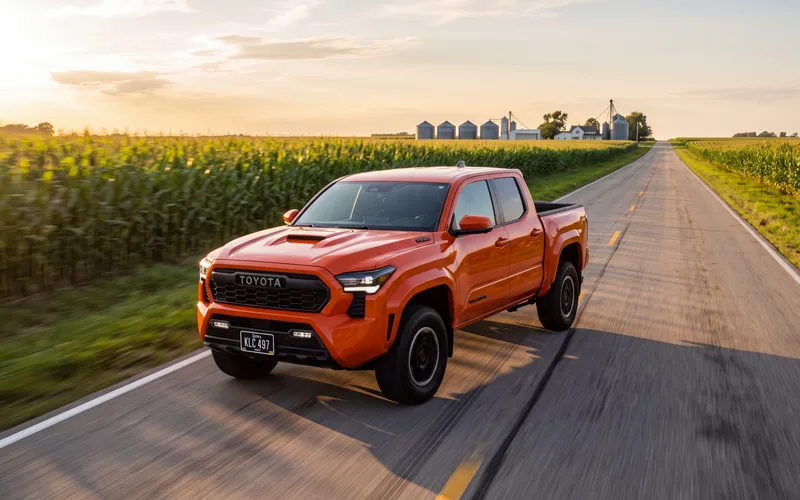 Toyota TacomaMid-Size TruckBetter at: All-around truck
Delivers most of the Gladiator's off-road credibility with a hybrid option good for 23 MPG, standard safety tech, and far stronger reliability and resale.
Compare 1.99C-
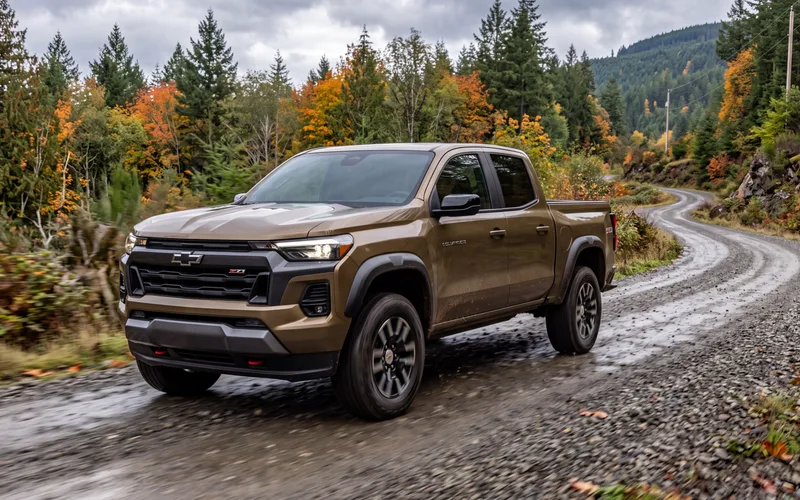 Chevrolet ColoradoMid-Size TruckBetter at: Power and ride
Its 2.7L turbo and independent front suspension give more torque, 27 MPG highway, and a much better ride, with ZR2 covering serious off-road duty.
Compare 1.87C-
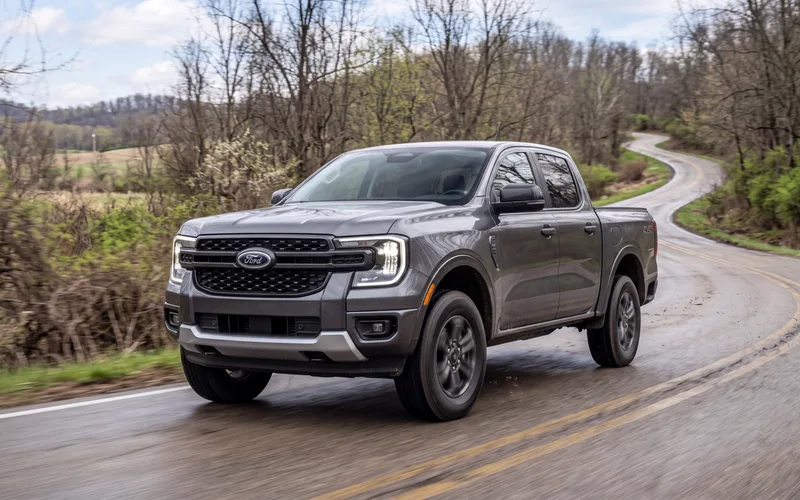 Ford RangerMid-Size TruckBetter at: Daily usability
Turbo power, 26 MPG highway, standard driver aids, and a more usable bed make it the better daily and work truck at similar money.
CompareHow it's evolved
7 scored model years · 2020–2026
Subject scores by year
Hover or tap a score to see what moved it versus the year before. A corner mark flags a big swing.
| Year | Performance | Efficiency | Safety | Space | Cost | Reliability | Tech | Use-case | Driving | Value |
|---|---|---|---|---|---|---|---|---|---|---|
| 2026 | 43 | 43 | 54 | 49 | 54 | 61 | 67 | 60 | 59 | 58 |
| 2025 | 43 | 40 | 45 | 52 | 54 | 56 | 62 | 58 | 58 | 60 |
| 2024 | 40 | 41 | 45 | 49 | 58 | 54 | 64 | 59 | 59 | 56 |
| 2023 | 42 | 41 | 41 | 48 | 57 | 54 | 45 | 57 | 59 | 54 |
| 2022 | 42 | 41 | 41 | 45 | 53 | 49 | 42 | 52 | 53 | 59 |
| 2021 | 42 | 41 | 48 | 49 | 65 | 49 | 43 | 47 | 55 | 59 |
| 2020 | 40 | 42 | 38 | 53 | 58 | 60 | 40 | 51 | 51 | 66 |
Compare two years
Best fit & conditions
Higher scores mean a better fit for that use case. Learn more about use-case fit →
Subject profile
Academic Probation · NHTSA safety recalls
Jun 4, 2026Steering: hydraulic power assist: pumpThe electric hydraulic power steering pump wiring may overheat and cause a vehicle fire, even when the vehicle is parked with the ignition in the "Off" position.
Defect
Chrysler (FCA US, LLC) is recalling certain 2021-2025 Jeep Wrangler, Wrangler 4XE, and Jeep Gladiator vehicles. The electric hydraulic power steering pump wiring may overheat and cause a vehicle fire, even when the vehicle is parked with the ignition in the "Off" position.
Risk
A vehicle fire increases the risk of injury.
Remedy
Owners are advised to park outside and away from structures, until their vehicle is repaired. Dealers will inspect and replace the wiring and electric hydraulic power steering pump, as necessary, free of charge. Owner notification letters are expected to be mailed July 9, 2026. Owners may contact FCA US LLC customer service at 1-800-853-1403. FCA US LLC's number for this recall is 21D. The Vehicle Identification Numbers (VINs) involved in this recall will become searchable on NHTSA.gov on June 11, 2026.
NHTSA campaign 26V363000 ↗Manufacturer no. 21D1,076,999 vehicles potentially affected (all models in the campaign)Owners notified Jul 9, 2026Filed by Chrysler (FCA US, LLC)Filed as GLADIATORSep 5, 2024Electrical system: instrument cluster/panelThe instrument panel cluster may experience an internal short circuit and fail. As such, these vehicles fail to comply with the requirements of Federal Motor Vehicle Safety Standard number 101, "Controls and Displays."
Defect
Chrysler (FCA US, LLC) is recalling certain 2020-2024 Jeep Gladiator and 2018-2024 Jeep Wrangler vehicles. The instrument panel cluster may experience an internal short circuit and fail. As such, these vehicles fail to comply with the requirements of Federal Motor Vehicle Safety Standard number 101, "Controls and Displays."
Risk
An instrument panel that fails to display critical safety information, such as the speedometer or warning lights, can increase the risk of a crash.
Remedy
Dealers will replace the instrument panel cluster, free of charge. Owner notification letters were mailed between October 3, 2024, and January 23, 2025. Owners may contact FCA customer service at 1-800-853-1403. FCA's number for this recall is 30B.
NHTSA campaign 24V652000 ↗Manufacturer no. 30B32,863 vehicles potentially affected (all models in the campaign)Owners notified Oct 3, 2024Filed by Chrysler (FCA US, LLC)Filed as GLADIATORSep 18, 2023Power train: manual transmissionThe rearview camera may fail to display the rearview image and the reverse lights may not illuminate when the vehicle is placed in reverse. As such, these vehicles fail to comply with the requirements of Federal Motor Vehicle Safety Standard numbers 111, "Rear Visibility" and 108, "Lamps, Reflective Devices, and Associated Equipment."
Defect
Chrysler (FCA US), LLC is recalling certain 2022-2023 Jeep Wrangler and Gladiator vehicles equipped with a manual transmission. The rearview camera may fail to display the rearview image and the reverse lights may not illuminate when the vehicle is placed in reverse. As such, these vehicles fail to comply with the requirements of Federal Motor Vehicle Safety Standard numbers 111, "Rear Visibility" and 108, "Lamps, Reflective Devices, and Associated Equipment."
Risk
A disabled rearview image can decrease the driver's visibility of the rear view, and disabled reverse lights may not alert others that the vehicle is reversing, increasing the risk of injury or crash.
Remedy
Dealers will replace the gear position sensor, free of charge. Owner notification letters were mailed November 16, 2023. Owners may contact FCA US, LLC customer service at 1-800-853-1403. FCA US, LLC's number for this recall is 92A.
NHTSA campaign 23V641000 ↗Manufacturer no. 92A6,298 vehicles potentially affected (all models in the campaign)Owners notified Nov 16, 2023Filed by Chrysler (FCA US, LLC)Filed as GLADIATORApr 13, 2023Fuel system, diesel: delivery: fuel pumpThe high pressure fuel pump (HPFP) may fail.
Defect
Chrysler (FCA US, LLC) is recalling certain 2021-2023 Jeep Wrangler, Gladiator, and 2022-2023 Ram 1500 vehicles equipped with a 3.0L diesel engine. The high pressure fuel pump (HPFP) may fail.
Risk
Fuel pump failure can result in an engine stall, increasing the risk of a crash.
Remedy
Dealers will replace the HPFP and replace additional fuel system components, as necessary, free of charge. Owner notification letters were mailed October 17, 2023. Owners may contact FCA US, LLC customer service at 1-800-853-1403. FCA US, LLC's number for this recall is 01A.
NHTSA campaign 23V263000 ↗Manufacturer no. 01A45,832 vehicles potentially affected (all models in the campaign)Owners notified Oct 17, 2023Filed by Chrysler (FCA US, LLC)Filed as GLADIATORFeb 23, 2023Power train: clutch assemblyThe clutch pressure plate may overheat and fracture.
Defect
Chrysler (FCA US, LLC) is recalling certain 2018-2023 Jeep Wrangler, and 2020-2023 Jeep Gladiator vehicles equipped with manual transmissions. The clutch pressure plate may overheat and fracture.
Risk
Overheated clutch components may increase the risk of a fire. Additionally, damage to other nearby components can result in debris falling onto the road or a loss of drive, increasing the risk of a crash.
Remedy
Dealers will replace the clutch assembly and update the software, free of charge. Owner notification letters were mailed from November 16, 2023 through July 25, 2024. Owners may contact (FCA US, LLC) customer service at 1-800-853-1403. FCA US LLC's number for this recall is 19A. This recall expands and replaces previous recall 21V-028. Vehicles previously repaired under recall 21V-028 will need to have the new remedy completed.
NHTSA campaign 23V116000 ↗Manufacturer no. 19A69,201 vehicles potentially affected (all models in the campaign)Owners notified Nov 16, 2023Filed by Chrysler (FCA US, LLC)Filed as GLADIATOROct 13, 2022Engine · Fuel system, gasoline: delivery: fuel pumpThe high pressure fuel pump (HPFP) may fail, causing an engine stall.
Defect
Chrysler (FCA US, LLC) is recalling certain 2020-2022 Jeep Wrangler, Ram 1500, and 2021-2022 Jeep Gladiator vehicles equipped with 3.0L diesel engines. The high pressure fuel pump (HPFP) may fail, causing an engine stall.
Risk
An engine stall can increase the risk of a crash.
Remedy
Dealers will replace the HPFP and inspect and replace additional fuel system components, as necessary, free of charge. Owner notification letters were mailed October 17, 2023. Owners may contact Chrysler customer service at 1-800-853-1403. Chrysler's number for this recall is Z96.
NHTSA campaign 22V767000 ↗Manufacturer no. Z9660,413 vehicles potentially affected (all models in the campaign)Owners notified Oct 17, 2023Filed by Chrysler (FCA US, LLC)Filed as GLADIATOROct 13, 2022Seat belts: pretensionerThe front seat belt retractors may have an improperly welded micro gas generator, which can result in seat belt pretensioner failure.
Defect
Chrysler (FCA US, LLC) is recalling certain 2022 Ram 1500, Jeep Gladiator, and 2021 Jeep Wrangler vehicles. The front seat belt retractors may have an improperly welded micro gas generator, which can result in seat belt pretensioner failure.
Risk
A seat belt with pretensioner failure may not properly restrain an occupant during a crash, increasing the risk of injury.
Remedy
Dealers will replace the front seat belt retractors. free of charge. Owner notification letters were mailed December 8, 2022. Owners may contact Chrysler customer service at 1-800-853-1403. Chrysler's number for this recall is Z95.
NHTSA campaign 22V766000 ↗Manufacturer no. Z952,802 vehicles potentially affected (all models in the campaign)Owners notified Dec 8, 2022Filed by Chrysler (FCA US, LLC)Filed as GLADIATORAug 25, 2022Power train: automatic transmission: internal: park pawlThe transmission parking wheel may not properly engage with the parking mechanism.
Defect
Chrysler (FCA US, LLC) is recalling certain 2022 Jeep Gladiator vehicles. The transmission parking wheel may not properly engage with the parking mechanism.
Risk
A malfunctioning parking mechanism may result in the loss of the 'park' position, including vehicle rollaway, increasing the risk of a crash.
Remedy
Dealers will replace the transmission, free of charge. Entire US population are unsold units and will be repaired before they can be sold. Owners may contact FCA US, LLC customer service at 1-800-853-1403. FCA, LLC's number for this recall is Z84.
NHTSA campaign 22V639000 ↗Manufacturer no. Z8411 vehicles potentially affected (all models in the campaign)Owners notified Sep 8, 2022Filed by Chrysler (FCA US, LLC)Filed as GLADIATOR
10 recalls on other model years of the Gladiator (2020–2021, 2023, 2026)
Aug 13, 2026Back over prevention: sensing system: cameraThe rearview camera image may fail to display when the vehicle is placed in reverse. As such, these vehicles fail to comply with the requirements of Federal Motor Vehicle Safety Standard (FMVSS) number 111, "Rear Visibility."
Defect
Chrysler (FCA US, LLC) is recalling certain 2026 Jeep Wrangler, Jeep Gladiator, Jeep Compass, Jeep Cherokee, Jeep Grand Cherokee, Jeep Grand Cherokee L, Jeep Grand Wagoneer, Jeep Grand Wagoneer L, Ram Promaster, Ram Promaster EV, Ram 1500, Ram 2500, Chrysler Pacifica Plug-In Hybrid, Chrysler Voyager, and 2026-2027 Chrysler Pacifica and Dodge Charger vehicles. The rearview camera image may fail to display when the vehicle is placed in reverse. As such, these vehicles fail to comply with the requirements of Federal Motor Vehicle Safety Standard (FMVSS) number 111, "Rear Visibility."
Risk
A rearview camera image that fails to display reduces the driver's view behind the vehicle, increasing the risk of a crash.
Remedy
Radio software will be updated by a dealer or through an over-the-air (OTA) update, free of charge. Owner notification letters were mailed beginning September 2, 2026. Owners may contact Chrysler customer service at 800-853-1403. Chrysler's number for this recall is 78D. Vehicle Identification Numbers (VINs) involved in this recall will be searchable on NHTSA.gov on August 20, 2026.
NHTSA campaign 26V531000 ↗Manufacturer no. 78D844,027 vehicles potentially affected (all models in the campaign)Owners notified Sep 2, 2026Filed by Chrysler (FCA US, LLC)Filed as GLADIATORJul 16, 2026WheelsThe walls for the steel wheels may be too thin, allowing them to crack or detach, which can result in a loss of vehicle control.
Defect
Chrysler (FCA US, LLC) is recalling certain 2026 Jeep Gladiator and Jeep Wrangler vehicles. The walls for the steel wheels may be too thin, allowing them to crack or detach, which can result in a loss of vehicle control.
Risk
Loss of vehicle control increases the risk of a crash.
Remedy
Dealers will inspect and replace the steel wheels and valve stems, as necessary, free of charge. Owner notification letters are expected to be mailed September 4, 2026. Owners may contact FCA customer service at 1-800-853-1403. FCA's number for this recall is 05D. Vehicle Identification Numbers (VINs) involved in this recall will become searchable on NHTSA.gov beginning July 23, 2026.
NHTSA campaign 26V456000 ↗Manufacturer no. 05D641 vehicles potentially affected (all models in the campaign)Owners notified Jul 30, 2026Filed by Chrysler (FCA US, LLC)Filed as GLADIATORAug 1, 2024Power train: manual transmission: control module: softwareThe software for the powertrain control module may cause an engine stall, which can result in a loss of drive power.
Defect
Chrysler (FCA US, LLC) is recalling certain 2021 Jeep Wrangler and Jeep Gladiator vehicles that were previously remedied under NHTSA recall number 23V-116. The software for the powertrain control module may cause an engine stall, which can result in a loss of drive power.
Risk
A loss of drive power increases the risk of a crash.
Remedy
Dealers will update the powertrain control module software, free of charge. Owner notification letters were mailed August 15, 2024. Owners may contact FCA US, LLC customer service at 1-800-853-1403. FCA US LLC's number for this recall is 92B. Vehicles previously repaired under recall 23V-116 will need to have the new remedy completed.
NHTSA campaign 24V572000 ↗Manufacturer no. 92B94 vehicles potentially affected (all models in the campaign)Owners notified Aug 15, 2024Filed by Chrysler (FCA US, LLC)Filed as GLADIATORMar 14, 2024Air bags: frontal: driver clockspring/spiral cassette · Steering: columnThe steering column control module may not be welded properly, which can prevent the driver's air bag from deploying in a crash. As such, these vehicles fail to comply with the requirements of Federal Motor Vehicle Safety Standard number 208, "Occupant Crash Protection."
Defect
Chrysler (FCA US, LLC) (Stellantis) is recalling certain 2023-2024 Ram 1500, Jeep Wrangler, Jeep Wagoneer, Jeep Grand Wagoneer, Chrysler Pacifica, Ram 3500, Ram 3500 cab chassis, Ram 2500, Ram 4500 cab chassis, Ram 5500 cab chassis, 2023 Jeep Gladiator, Jeep Grand Cherokee, Jeep Grand Cherokee L, Ram 3500 Cab Chassis with a GVWR less than 10,000 lbs., and Chrysler Voyager vehicles. The steering column control module may not be welded properly, which can prevent the driver's air bag from deploying in a crash. As such, these vehicles fail to comply with the requirements of Federal Motor Vehicle Safety Standard number 208, "Occupant Crash Protection."
Risk
An air bag that does not deploy in a crash can increase the risk of injury.
Remedy
Dealers will inspect and replace the steering column control module, as necessary free of charge. Some owner notification letters were mailed April 11, 2024 through June 20, 2024. Owners may contact FCA US, LLC customer service at 1-800-853-1403. FCA US, LLC's numbers for this recall are 14B, 33B, 34B, 35B, 36B.
NHTSA campaign 24V199000 ↗Manufacturer no. 14B,33B,34B,35B,36B38,164 vehicles potentially affected (all models in the campaign)Owners notified Apr 11, 2024Filed by Chrysler (FCA US, LLC) (Stellantis)Filed as GLADIATORAug 25, 2022Back over prevention: display functionA radio software error may prevent the rearview image from displaying. As such, these vehicles fail to comply with the requirements of Federal Motor Vehicle Safety Standard number 111, "Rear Visibility."
Defect
Chrysler (FCA US, LLC) is recalling certain 2020-2021 Jeep Wrangler, RAM 1500 and 2021 Jeep Gladiator vehicles. A radio software error may prevent the rearview image from displaying. As such, these vehicles fail to comply with the requirements of Federal Motor Vehicle Safety Standard number 111, "Rear Visibility."
Risk
A rearview camera that does not display an image reduces the driver's rear view, increasing the risk of a crash.
Remedy
Dealers will update the radio software, free of charge. Owner notification letters were mailed October 6, 2022. Owners may contact FCA US, LLC customer service at 1-800-853-1403. FCA, LLC's number for this recall is Z86.
NHTSA campaign 22V638000 ↗Manufacturer no. Z867,895 vehicles potentially affected (all models in the campaign)Owners notified Oct 6, 2022Filed by Chrysler (FCA US, LLC)Filed as GLADIATORJan 28, 2021Power train: clutch assemblyThe clutch pressure plate may overheat and fracture.
Defect
Chrysler (FCA US, LLC) is recalling certain 2018-2021 Jeep Wrangler and 2020-2021 Jeep Gladiator vehicles equipped with manual transmissions. The clutch pressure plate may overheat and fracture.
Risk
Overheated clutch components may increase the risk of a fire. Additionally, damage to other nearby components can result in debris falling onto the road or a loss of drive, increasing the risk of a crash.
Remedy
FCA US LLC will notify owners, and dealers will add software to reduce engine torque capability when clutch assembly temperatures rise to a level that may damage the inner pressure plate, free of charge." FCA has ordered a stop sale for the affected vehicles as of February 25, 2021. Owner notification letters were mailed on March 4, 2021.
NHTSA campaign 21V028000 ↗Manufacturer no. Y0142,887 vehicles potentially affected (all models in the campaign)Owners notified Mar 4, 2021Filed by Chrysler (FCA US, LLC)Filed as GLADIATORSep 24, 2020Seat belts · Seat belts: front: retractorIn the event of a crash, a front seat belt retractor may not properly slow the occupant's forward movement after locking.
Defect
Chrysler (FCA US LLC) is recalling certain 2019 Jeep Wrangler and Ram 2500, 2019-2020 Ram 1500 and 2020 Jeep Gladiator vehicles. In the event of a crash, a front seat belt retractor may not properly slow the occupant's forward movement after locking.
Risk
In the event of a crash, if the front seat belts fail to lock, there is an increased risk of injury.
Remedy
Chrysler will notify owners, and dealers will replace the front seat belt retractors, free of charge. The recall began November 12, 2020. Owners may contact Chrysler customer service at 1-800-853-1403. Chrysler's number for this recall is W67.
NHTSA campaign 20V580000 ↗Manufacturer no. W672,114 vehicles potentially affected (all models in the campaign)Owners notified Nov 12, 2020Filed by Chrysler (FCA US LLC)Filed as GLADIATORSep 10, 2020Back over prevention: sensing system: cameraA software error can cause the rearview camera image to remain displayed after the vehicle has been shifted out of reverse. As such, these vehicles fail to comply with the requirements of Federal Motor Vehicle Safety Standard (FMVSS) number 111, "Rearview Mirrors."
Defect
Chrysler (FCA US LLC) is recalling certain 2020 Jeep Gladiator and Jeep Cherokee, 2019-2020 Ram 1500 Pickup, Ram 2500 Pickup, Ram 3500 Pickup, Chrysler Pacifica, Dodge Durango, Jeep Grand Cherokee, Jeep Wrangler, and Jeep Renegade and 2019 Dodge Challenger vehicles equipped with 8.4" or 12" radio displays. A software error can cause the rearview camera image to remain displayed after the vehicle has been shifted out of reverse. As such, these vehicles fail to comply with the requirements of Federal Motor Vehicle Safety Standard (FMVSS) number 111, "Rearview Mirrors."
Risk
The lingering rearview image can distract the driver, increasing the risk of a crash.
Remedy
Chrysler has notified owners, and dealers will update the radio display software, free of charge. Optionally, owners can choose to remotely update their software via an Over-The-Air (OTA) update available as of May 1, 2020. The recall began April 27, 2020. Owners may contact Chrysler customer service at 1-800-853-1403. Chrysler's number for this recall is W30-W37.
NHTSA campaign 20V191000 ↗Manufacturer no. W30-W37319,610 vehicles potentially affected (all models in the campaign)Owners notified Apr 27, 2020Filed by Chrysler (FCA US LLC)Filed as GLADIATORMar 3, 2020Power train: clutch assemblyThe clutch pressure plate may overheat and fracture.
Defect
Chrysler (FCA US LLC) is recalling certain 2018-2020 Jeep Wrangler and 2020 Gladiator vehicles equipped with manual transmissions. The clutch pressure plate may overheat and fracture.
Risk
The overheated clutch components may increase the risk of a fire. Additionally, damage to other nearby components can result in debris falling onto the road or a loss of drive, increasing the risk of a crash.
Remedy
Chrysler will notify owners, and dealers will reroute a wire harness and inspect the clutch system, and replace components as needed. The recall began April 30, 2020. Owners may contact Chrysler customer service at 1-800-853-1403. Chrysler's number for this recall is W12.
NHTSA campaign 20V124000 ↗Manufacturer no. W1233,237 vehicles potentially affected (all models in the campaign)Owners notified Apr 30, 2020Filed by Chrysler (FCA US LLC)Filed as GLADIATORAug 29, 2019Power train: driveline: driveshaftThe rear driveshafts may have been incorrectly assembled without grease in the monoblock joint.
Defect
Chrysler (FCA US LLC) is recalling certain 2020 Jeep Gladiator vehicles. The rear driveshafts may have been incorrectly assembled without grease in the monoblock joint.
Risk
A joint without grease may overheat and seize, possibly causing the driveshaft to fracture, resulting in a sudden loss of drive power. If the driveshaft completely separates from the vehicle it may become a road hazard. Either of these scenarios can increase the risk of a crash.
Remedy
FCA US will notify owners, and dealers will replace the driveshaft, free of charge. The recall began October 10, 2019. Owners may contact FCA US customer service at 1-800-853-1403. FCA US number for this recall is V95.
NHTSA campaign 19V636000 ↗Manufacturer no. V953,733 vehicles potentially affected (all models in the campaign)Owners notified Oct 10, 2019Filed by Chrysler (FCA US LLC)Filed as GLADIATOR
Source: NHTSA Office of Defects Investigation recall database, model years 2020–2026. Recalls are listed by model year as the manufacturer filed them; whether a specific car is affected depends on its VIN — check a VIN at nhtsa.gov ↗. NHTSA model names matched to this page: GLADIATOR.
Detailed scoring by subject
1Performance & PowertrainOne of the Gladiator's weakest categories.0.76F
Standard and only gas engine offered on the 2022 Gladiator; the 3.0L EcoDiesel V6 (260 hp) is the sole alternative but this vehicle is scored as the gas powertrain class.
Torque is on the low end for the mid-size truck segment, notably behind rivals like the Toyota Tacoma and GMC Canyon.
Instrumented tests of the JT-generation Gladiator (2020–2022, carryover powertrain) average around 8.0s to 60 mph, with lighter/lower trims quicker and heavier Rubicon slower.
The naturally aspirated Pentastar V6 is smooth and free of turbo lag or hybrid-transition harshness, but reviewers consistently note it has to work hard to move the Gladiator's tall, heavy, aerodynamically blunt body, especially at highway speed and under load.
The ZF-sourced 8-speed automatic (standard on most volume trims) shifts smoothly and rarely hunts; the 6-speed manual is competent but numb, and neither is the segment's best but both are well-sorted.
Best-in-class-adjacent for the segment at launch, achieved with the Max Tow Package on the V6 gas engine.
Payload is modest for the segment and varies significantly by trim and package; the volume trim's typical payload sits well below the class max.
The Gladiator offers a Tow/Haul mode and available rear backup camera with hitch guidance lines, but lacks an integrated trailer brake controller as standard and has no trailer backup steering assist or blind-spot-with-trailer coverage seen on full-size rivals.
4WD is standard across the entire trim lineup (not optional), with a range of sophisticated systems: part-time Command-Trac standard, full-time Selec-Trac available, and the heavy-duty Rock-Trac with locking differentials and low-range on Rubicon.
The Rubicon trim is a genuine off-road specialist: up to 11.1 in of ground clearance, front/rear Tru-Lok locking differentials, electronic sway-bar disconnect, 33-inch off-road tires, and up to 31.5 in of water fording — among the most capable in the mid-size truck class.
Two engine choices for 2022 — the standard 3.6L Pentastar V6 gas and the optional 3.0L EcoDiesel V6 — but no hybrid, PHEV, or EV variant, a narrower spread than segment leaders now offering turbo and hybrid options.
2Efficiency & RangeOne of the Gladiator's weakest categories.0.69F
EPA-rated combined economy for the 2022 Gladiator's standard gas V6 with 4WD, the volume configuration.
EPA city rating for the volume automatic-transmission 4WD configuration.
EPA highway rating for the volume automatic-transmission 4WD configuration.
Range is limited relative to the truck segment due to the combination of a modest 22-gallon tank and below-average combined economy.
Annual fuel cost is on the higher side for the mid-size truck segment, consistent with the Gladiator's below-average combined MPG.
The standard 3.6L Pentastar V6 runs on regular unleaded gasoline with no premium requirement; the optional EcoDiesel needs diesel but is not the scored powertrain.
3SafetyThe Gladiator's lowest-graded category.0.69F
NHTSA has never published a combined overall star rating for the JT-generation Gladiator because it never ran the side-barrier or side-pole tests. The only published results for the 2022 model year are a 4-star frontal (V6 models) and a 3-star rollover rating; this is unchanged across every year of the 2020-on generation.
The 2022 Gladiator falls short in all three of IIHS's current crash tests: Marginal in the updated moderate overlap front, Marginal in the updated side test (no rear side airbag, and the rear dummy's head struck the soft-top support), and Marginal in the driver-side small overlap after the truck tipped onto its passenger side. Roof strength and the original moderate overlap test are Good, but with nothing above Marginal in the current battery a Top Safety Pick is out of reach, and 2022 predates the rear-belt and side-curtain-airbag revisions Jeep added starting with 2024 models.
Not one of the five features this item measures is standard on the volume 2022 Gladiator Sport S: forward collision warning and adaptive cruise are the optional Advanced Safety Group, blind-spot monitoring with rear cross-path is in the separate optional Active Safety Group, and lane keeping and pedestrian AEB are not offered at any price on any trim. Standard active safety is limited to the passive electronic aids — ESC, electronic roll mitigation, trailer-sway control, hill-start assist and brake traction control. In a segment where the Tacoma and Colorado ship an AEB-plus-lane-departure suite on every trim, this is the weakest standard content available.
When ordered, the radar-based Full Speed Forward Collision Warning Plus earns IIHS's top Superior rating for vehicle-to-vehicle front crash prevention, avoiding the collision outright in both the 12 and 25 mph runs — the hardware itself is good. Two things hold the score down: it is optional equipment the volume Sport S does not carry unless the buyer adds the Advanced Safety Group, and pedestrian detection is not offered at all, so there is no daytime or nighttime pedestrian capability to grade.
Blind-Spot Monitoring with Rear Cross Path detection is offered across the 2022 range but is optional on every trim, bundled with rear park assist and LED taillamps in the Active Safety Group, and it is alert-only — no braking or steering intervention, no safe-exit alert, and no trailer-aware coverage. The omission costs more on a truck rated to tow roughly 7,650-7,700 lbs than it would on a crossover, and the Gladiator's narrow body and small, tall side mirrors mean a trailer or wide load blocks the mirror view entirely.
The 2022 Gladiator offers no lane departure warning, no lane keep assist and no lane centering on any trim or in any option package — a gap that is close to unique in the mid-size truck segment, where the Tacoma, Colorado, Ranger and Frontier all include at least a lane departure warning as standard equipment.
Adaptive Cruise Control is capable full-speed-range hardware on automatic-transmission trucks, but it is optional on every 2022 trim as part of the Advanced Safety Group, drops to a lower speed floor if the buyer takes the six-speed manual, and has no lane-centering hardware on the platform to combine with — so there is no highway assist to grade at all.
No hands-free highway driving system is offered on any 2022 Gladiator trim. Stellantis's hands-on Active Driving Assist is not fitted to the JT platform, and with no lane-centering hardware anywhere in the lineup a hands-free system is not technically possible on this truck.
Every 2022 Gladiator headlight configuration IIHS tested rated Marginal or Poor. The best available — LED, whether combined with the Advanced Safety Group's automatic high beams or not — is only Marginal, and the halogen units on the volume trims are Poor regardless of configuration. No configuration offers curve-adaptive lighting.
Forward and lateral sightlines are among the best in the segment — a near-vertical windshield, tall commanding seating, a short flat hood with visible fender corners, and deep side glass — and unlike the Wrangler the spare lives under the bed rather than on the tailgate, so the mirror-and-glass rear view is clearer. The compromises are the truck's overall length making the tail hard to place, small tall narrow mirrors that a wide trailer blocks outright, a notable over-the-shoulder blind spot at the sport bar and rear header, rear park sensors that are optional rather than standard, and no surround-view camera on any trim.
IIHS rates the Gladiator's LATCH hardware Acceptable — two complete positions plus a center position that can borrow lower anchors — a grade below the 4-door Wrangler's Good+, and the four real doors open wide enough to work with. Against that, the rear bench is upright with limited legroom so a rear-facing seat squeezes the front passenger, the high step-in height makes lifting a child into a seat harder than in a crossover, and three seats across is tight in a body this narrow.
4Space & ComfortGrades near the bottom of the scale.0.99F
Crew cab, four-door Gladiator seats 5 across all 2022 trims.
Manufacturer spec sheet lists front headroom with the more common hardtop configuration; soft-top models measure higher.
Consistent across 2021-2025 manufacturer spec sheets; among the tightest front legroom figures in the mid-size truck class.
Wrangler-derived cabin carries tall, boxy headroom front and rear; hardtop figure used as the more common configuration.
Crew-cab-only Gladiator has genuinely usable rear legroom for a mid-size truck, ahead of most two-cab-style competitors.
Gladiator offers a single 5-foot bed across all trims, short relative to the class's normalization band which includes 6.5-8 ft full-size beds.
Short 5-ft bed volume sits at the low end of the truck normalization band, which spans up to full-size long-bed configurations.
Trail Rail cargo management system in the bed and standard under-seat/console storage are useful, but the Wrangler-derived cabin lacks standout storage innovation seen in newer trucks.
Front seats are supportive enough for daily use but not praised as segment-leading; cloth seats on base trims are basic.
Solid front axle and off-road-tuned suspension produce a busy, jittery ride on broken pavement, a widely-documented Gladiator weakness versus independent-front-suspension mid-size rivals.
Removable doors/roof and boxy aerodynamics produce more wind and road noise than conventional mid-size trucks.
Heated front seats and heated steering wheel are available via the Cold Weather Group option, but not standard, and rear climate/ventilated seats are absent.
5Cost of OwnershipOne of the Gladiator's strongest categories.1.57D
Entry Sport trim base price; sources vary $35.3k–$37.6k depending on whether destination and mid-2022 price bumps are included.
Overland is the mid-pack volume trim most reviewers use as the representative Gladiator — comfort/tech-focused without Rubicon's off-road premium; Sport S and Willys are close seconds.
Edmunds' True Cost to Own model for the 2022 Gladiator runs above the truck-segment norm; CarEdge separately flags the Gladiator as costlier to maintain than midsize-truck rivals.
Estimates cluster around 63–68% retention (32–37% depreciation), roughly in line with or slightly behind the midsize-truck segment average (~70% retention), which is still strong versus cars/SUVs broadly.
Industry-standard basic coverage, at the low end of the truck-segment 3–5 yr band; no extended basic coverage offered.
Standard 5-year/60,000-mile powertrain coverage for the gas V6 (the scored powertrain), at the low end of the 5–10 yr segment band — well short of Hyundai/Kia's 10-year benchmark.
Jeep Wave includes a short 2-year/2-service complimentary maintenance package (two oil changes, two tire rotations) plus 24/7 roadside assistance, trip-interruption coverage up to $1,000, and loaner/rental support — but the free-service window is brief and there are no charging credits or multi-year maintenance plan, placing it in the 'short included-maintenance + basic roadside' band.
$46,570 volume-trim price minus its estimated resale value after 5 years (65% retained, or about $30,271) leaves about $16,300 in depreciation. Add the projected $9,995 in 5-year maintenance and repairs, and owning this vehicle for 5 years costs about $26,295 in total.
6Reliability & QualityGrades below the middle of the scale.1.24D
Consumer Reports rates the 2022 Gladiator below average and singles it out as the only midsize pickup on its unreliable list for the class, citing recurring suspension/steering, driveline and axle complaints; this outweighs J.D. Power's more generic brand-level 'Great' consumer rating.
Jeep sits in the bottom tier of J.D. Power's Vehicle Dependability Study and ACSI brand satisfaction (75 vs. a 79 mass-market average), a multi-year pattern rather than a single bad model year.
The 2022 Gladiator carries roughly seven NHTSA recall campaigns for this generation including a seat-belt pretensioner welding defect, a diesel high-pressure fuel pump that can stall the engine, a transmission park-pawl issue, and a rearview-camera/reverse-light fault — a heavier-than-typical and safety-relevant recall load, though none is a widescale fire or major structural failure.
The standard 3.6L Pentastar V6 is a well-proven, high-volume engine family (10M+ units produced by 2020) with a solid long-mileage track record in the Wrangler/Grand Cherokee; owner complaints on the Gladiator skew toward the 8-speed automatic rather than the engine itself.
Reviewers describe a utilitarian cabin mixing hard, durable plastics with some soft-touch panels and solid switchgear — acceptable for the price and off-road mission but not class-leading for a premium-priced truck.
Consumer Reports and owner forums flag recurring squeaks, rattles, wind noise and weatherstripping/seal complaints alongside the well-documented 'death wobble' front-end shake, offsetting some owner praise for assembly versus older domestic trucks.
Stellantis/Jeep dealers are dense and widespread across the US, but brand-level service satisfaction runs below the mass-market average, giving adequate coverage with a mixed reputation rather than a standout service experience.
The Wrangler-derived platform benefits from a huge off-road aftermarket and widely stocked parts, but Jeep-brand average annual repair cost runs above the industry norm, netting out to roughly normal-to-slightly-elevated ownership cost.
7Technology & InfotainmentGrades near the bottom of the scale.0.78F
Volume/high-take-rate trims (Overland, Rubicon, Mojave) get the 8.4-inch Uconnect 4C standard; base trims use a smaller 7-inch unit. Small relative to the truck normalization band, which stretches to 18.5-inch systems in newer trucks.
Uconnect's menu logic and physical knob/button balance are consistently praised even as the underlying hardware ages; response times are adequate rather than fast.
The 2022 Gladiator's Uconnect 4/4C systems support Apple CarPlay and Android Auto only via wired USB connection; no wireless projection was offered until the Uconnect 5 update arrived on later Wrangler/Gladiator models.
Uconnect voice commands handle basic requests reliably and the 8.4-inch system's native nav is serviceable, though most owners still default to phone projection for mapping.
A 9-speaker Alpine premium audio system is available on upper trims (standard with the 8.4-inch radio group), a genuine step up from the base speaker set.
Gladiator uses a mostly analog gauge cluster with a configurable 7-inch color driver information display in the center, not a full digital cluster; available broadly but limited in scope.
Uconnect of this generation supports map and some software updates via USB or dealer visit; whole-vehicle over-the-air updates were not a Gladiator feature in 2022.
The Uconnect app offers remote start, lock/unlock and vehicle locate, but full functionality requires an ongoing Uconnect Access subscription after the trial period.
Gladiator offers USB-A ports front and rear plus a 115V household outlet on some trims, but wireless charging and USB-C are not broadly standard for the 2022 model year.
Proximity keyless entry and remote start are available on mid-and-up trims but not standard on the base Sport, and there is no phone-as-key option.
A rearview camera is standard and rear park-assist sensors are available, but there is no surround/360-degree camera; Rubicon's TrailCam is a forward off-road camera, not a parking aid.
No head-up display is offered on any 2022 Gladiator trim.
8Use-Case FitGrades below the middle of the scale.1.45D
Four full doors and crew-cab rear seats support LATCH-equipped car seats, but the tall step-in height, removable-door/roof design, and firm rear bench make daily family loading more effortful than a crossover or SUV.
Adaptive cruise control, forward collision warning, and blind-spot monitoring are optional on the affordable Sport/Overland trims and only standard on the pricier Rubicon, so family buyers on a budget trim can miss key ADAS.
Rear legroom is genuinely usable for a mid-size truck, but elevated wind/road noise and a busy ride over long stints reduce family road-trip comfort.
Vague, heavy steering and a tall, live-axle chassis make stop-and-go traffic and crosswind highway driving more tiring than in a typical daily driver.
EPA-rated 17/22/19 mpg city/highway/combined for the standard 3.6L V6 automatic is well below efficient commuter norms even for a mid-size truck.
A long wheelbase (crew cab plus 5-ft bed) yields one of the largest turning circles in the mid-size truck class (44.5-45.0 ft curb-to-curb), making it noticeably harder to park and maneuver in tight urban settings.
Best-in-class-for-its-class towing (up to 7,650 lbs) and payload (up to 1,700 lbs) with the factory tow package give the Gladiator genuine work-truck headroom despite its short bed.
Shares its proven Pentastar V6/8-speed drivetrain and solid axles with the long-running Wrangler, but as a nameplate only in production since 2020 it lacks the multi-decade fleet reputation of full-size work trucks.
The Trail Rail cargo management system, bed tie-downs and available spray-in bedliner support light upfitting, but the short 5-ft bed and lack of a RamBox-style lockable storage system limit heavier jobsite use.
A 22-gallon tank and 19 mpg combined give roughly 400 miles of highway range, but elevated cabin noise and a busy ride limit sustained comfort on long hauls.
Removable doors and roof, available Rubicon (Rock-Trac 4.0:1 low range, locking differentials, sway-bar disconnect) and Mojave (desert-tuned Fox suspension) variants make the Gladiator a genuine off-road and overlanding standout.
The open pickup bed with Trail Rail system swallows bulky gear that would not fit in an SUV, though there's no frunk, underfloor storage or fold-flat cabin surface, and doors-off/top-off storage adds hassle.
9Driving ExperienceOne of the Gladiator's strongest categories.1.57D
The tall, solid front-axle suspension and off-road tires permit significant body lean and a harsh, jittery response on pavement — a genuine dynamics penalty versus independent-front-suspension mid-size rivals.
Steering is widely described as vague and imprecise, worsened on taller-tire trims like Rubicon and Mojave, requiring driver attention in crosswinds and ruts.
Brakes provide adequate, unremarkable stopping power appropriate for a body-on-frame mid-size truck; no notable fade or pedal-feel complaints in reviews.
The 3.6L Pentastar V6 paired with the 8-speed automatic is a smooth, well-calibrated combination with minimal shift harshness or lag.
The V6 is audible under load but not harsh or droning; wind and road noise from the boxy body are more noticeable than powertrain noise itself.
Curb-to-curb turning diameter for the volume Sport/Overland configuration; larger on Rubicon and Mojave due to wider off-road tires.
A commanding, upright seating position and good outward visibility are Gladiator strengths, offset by a tall step-in height and controls carried over from the Wrangler.
Removable doors and roof, open-air driving, and strong off-road character give the Gladiator genuine enthusiast appeal, even though on-pavement dynamics are unremarkable.
10Value & Market PositionThe Gladiator's best-graded category.1.95C-
The 2022 refresh added a standard 7-inch touchscreen (Uconnect 4) to the base Sport, plus removable doors/roof and 4x4 as standard — competitive for the segment, but rivals like the Ford Ranger and Toyota Tacoma match or beat base-trim equipment at a lower price, and items like an 8.4-inch screen or leather require moving well up the Gladiator lineup.
No rival offers the Gladiator's combination of a full pickup bed with a removable roof/doors and Wrangler-grade solid-axle off-road hardware, which is genuine differentiated value — but the Gladiator starts several thousand dollars above Tacoma/Ranger/Colorado for similar payload/towing, so it's a premium-for-uniqueness proposition rather than an outright bargain.
Nine trims for 2022 (Sport, Willys Sport, Sport S, Altitude, Willys, Overland, Rubicon, Mojave, High Altitude) span work-adjacent to loaded and add two distinct off-road specialists (rock-crawling Rubicon, desert-running Mojave), plus an optional EcoDiesel — a genuinely wide spread, but every trim is a single 4-door crew cab/5-foot-bed body, unlike rivals offering multiple cab and bed-length combinations.
77,855 units sold in 2022, down from a 2021 peak of 89,712 — a steady mid-pack midsize-truck seller, well behind segment leader Tacoma but ahead of Frontier and Colorado in most years.
Jeep carries one of the strongest off-road/lifestyle brand halos in the US market, and the Gladiator directly inherits Wrangler's cult following and enthusiast loyalty, which supports both showroom draw and resale.
2022 was a low-inventory, high-demand year industry-wide, and the Gladiator's enthusiast/niche demand kept it selling close to MSRP with minimal discounting compared to mainstream competitors.
The JT-generation Gladiator launched for MY2020, making 2022 its third model year — current-generation with a mid-cycle equipment bump (standard 7-in touchscreen on Sport) rather than a ground-up redesign, and not yet showing its age.
Reviewers consistently praise the Gladiator's unmatched off-road capability and open-air versatility, but it regularly finishes behind Tacoma/Ranger/Colorado in mainstream comparison tests on ride quality, on-road refinement and value — a well-regarded niche pick rather than a broad class winner.