

The verdict
A struggling mid-size truck, strong on technology and held back by efficiency.
The 2025 Gladiator is a Wrangler with a five-foot bed, and that sentence explains almost everything about it — the roof comes off, the doors come off, the windshield folds down, four-wheel drive is standard on all eight trims, and nothing else with a cargo bed will follow it up a trail. The price of admission is steep: 285 hp from the class's weakest engine, 19 MPG combined (about $3,250 a year in gas), a cabin so noisy that Consumer Reports says it's best kept around town, and no lane-keeping assist offered at any price. Prices did drop for 2025 — up to $8,330 off the Mojave and Rubicon, with the 8-speed automatic now free rather than a $2,500 option — and buyers are typically paying $2,690–$6,995 under sticker on top of that. Buy it because you want what only it does; every rival is a better everyday truck.
Jump to scoresStrengths
- Off-road hardware nothing else in the class can match
- Class-leading tow and payload numbers for a mid-size
- Wireless CarPlay and a 12.3-inch screen standard on every trim
What holds it back
- The weakest engine in the class, with no alternative
- 19 MPG combined, and no efficient version at any price
- Serious safety gaps: no lane keeping, no pedestrian detection, Marginal headlights
Top alternatives
Cars shoppers cross-shop with the Jeep Gladiator 2.12C
2.12C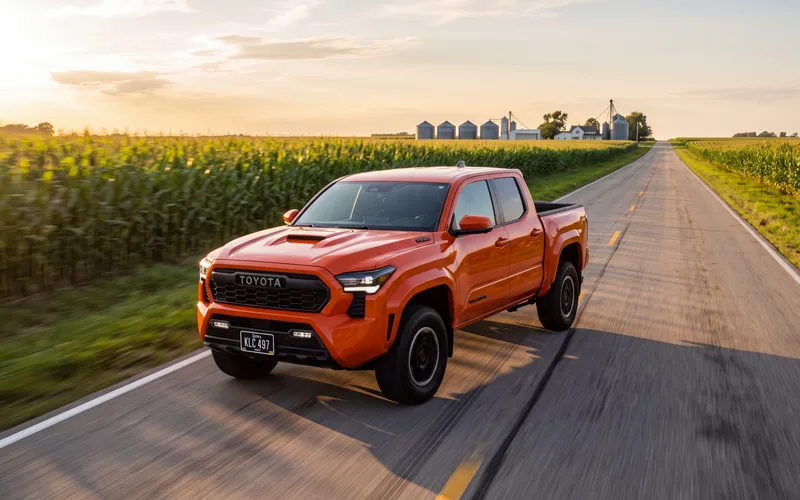 Toyota TacomaMid-Size TruckBetter at: All-around truck
Delivers most of the Gladiator's off-road credibility with a hybrid option good for 23 MPG, standard safety tech, and far stronger reliability and resale.
Compare 1.99C-
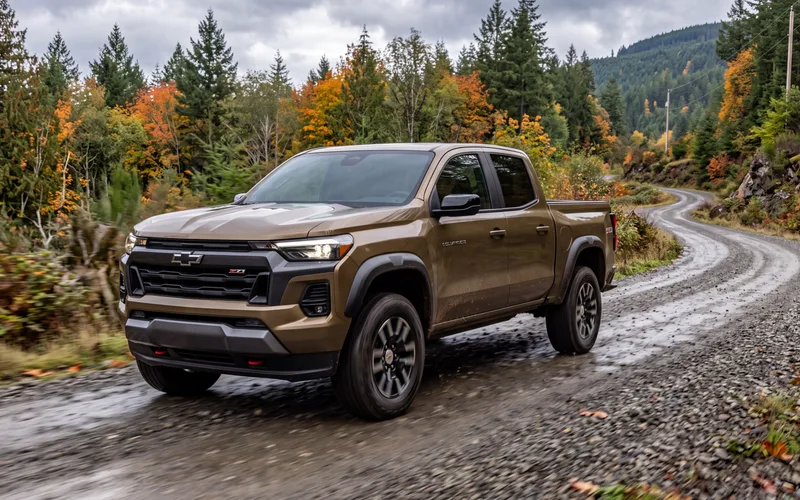 Chevrolet ColoradoMid-Size TruckBetter at: Power and ride
Its 2.7L turbo and independent front suspension give more torque, 27 MPG highway, and a much better ride, with ZR2 covering serious off-road duty.
Compare 1.87C-
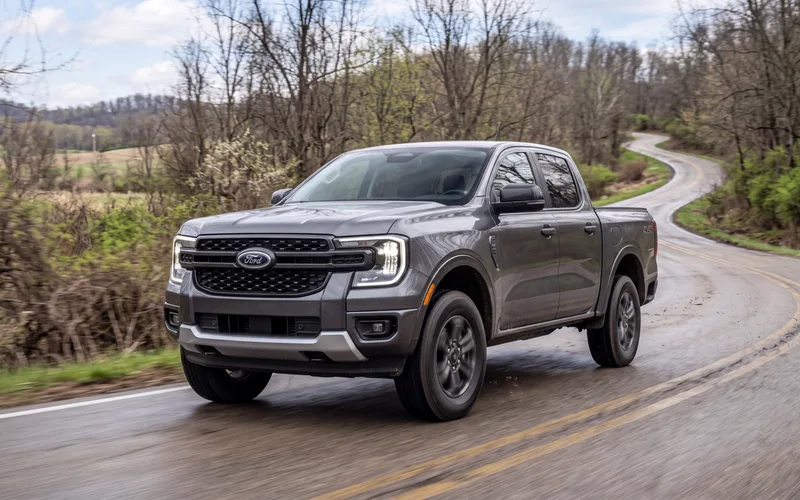 Ford RangerMid-Size TruckBetter at: Daily usability
Turbo power, 26 MPG highway, standard driver aids, and a more usable bed make it the better daily and work truck at similar money.
CompareHow it's evolved
7 scored model years · 2020–2026
Subject scores by year
Hover or tap a score to see what moved it versus the year before. A corner mark flags a big swing.
| Year | Performance | Efficiency | Safety | Space | Cost | Reliability | Tech | Use-case | Driving | Value |
|---|---|---|---|---|---|---|---|---|---|---|
| 2026 | 43 | 43 | 54 | 49 | 54 | 61 | 67 | 60 | 59 | 58 |
| 2025 | 43 | 40 | 45 | 52 | 54 | 56 | 62 | 58 | 58 | 60 |
| 2024 | 40 | 41 | 45 | 49 | 58 | 54 | 64 | 59 | 59 | 56 |
| 2023 | 42 | 41 | 41 | 48 | 57 | 54 | 45 | 57 | 59 | 54 |
| 2022 | 42 | 41 | 41 | 45 | 53 | 49 | 42 | 52 | 53 | 59 |
| 2021 | 42 | 41 | 48 | 49 | 65 | 49 | 43 | 47 | 55 | 59 |
| 2020 | 40 | 42 | 38 | 53 | 58 | 60 | 40 | 51 | 51 | 66 |
Compare two years
Best fit & conditions
Higher scores mean a better fit for that use case. Learn more about use-case fit →
Subject profile
Academic Probation · NHTSA safety recalls
Jun 4, 2026Steering: hydraulic power assist: pumpThe electric hydraulic power steering pump wiring may overheat and cause a vehicle fire, even when the vehicle is parked with the ignition in the "Off" position.
Defect
Chrysler (FCA US, LLC) is recalling certain 2021-2025 Jeep Wrangler, Wrangler 4XE, and Jeep Gladiator vehicles. The electric hydraulic power steering pump wiring may overheat and cause a vehicle fire, even when the vehicle is parked with the ignition in the "Off" position.
Risk
A vehicle fire increases the risk of injury.
Remedy
Owners are advised to park outside and away from structures, until their vehicle is repaired. Dealers will inspect and replace the wiring and electric hydraulic power steering pump, as necessary, free of charge. Owner notification letters are expected to be mailed July 9, 2026. Owners may contact FCA US LLC customer service at 1-800-853-1403. FCA US LLC's number for this recall is 21D. The Vehicle Identification Numbers (VINs) involved in this recall will become searchable on NHTSA.gov on June 11, 2026.
NHTSA campaign 26V363000 ↗Manufacturer no. 21D1,076,999 vehicles potentially affected (all models in the campaign)Owners notified Jul 9, 2026Filed by Chrysler (FCA US, LLC)Filed as GLADIATOR
17 recalls on other model years of the Gladiator (2020–2024, 2026)
Aug 13, 2026Back over prevention: sensing system: cameraThe rearview camera image may fail to display when the vehicle is placed in reverse. As such, these vehicles fail to comply with the requirements of Federal Motor Vehicle Safety Standard (FMVSS) number 111, "Rear Visibility."
Defect
Chrysler (FCA US, LLC) is recalling certain 2026 Jeep Wrangler, Jeep Gladiator, Jeep Compass, Jeep Cherokee, Jeep Grand Cherokee, Jeep Grand Cherokee L, Jeep Grand Wagoneer, Jeep Grand Wagoneer L, Ram Promaster, Ram Promaster EV, Ram 1500, Ram 2500, Chrysler Pacifica Plug-In Hybrid, Chrysler Voyager, and 2026-2027 Chrysler Pacifica and Dodge Charger vehicles. The rearview camera image may fail to display when the vehicle is placed in reverse. As such, these vehicles fail to comply with the requirements of Federal Motor Vehicle Safety Standard (FMVSS) number 111, "Rear Visibility."
Risk
A rearview camera image that fails to display reduces the driver's view behind the vehicle, increasing the risk of a crash.
Remedy
Radio software will be updated by a dealer or through an over-the-air (OTA) update, free of charge. Owner notification letters were mailed beginning September 2, 2026. Owners may contact Chrysler customer service at 800-853-1403. Chrysler's number for this recall is 78D. Vehicle Identification Numbers (VINs) involved in this recall will be searchable on NHTSA.gov on August 20, 2026.
NHTSA campaign 26V531000 ↗Manufacturer no. 78D844,027 vehicles potentially affected (all models in the campaign)Owners notified Sep 2, 2026Filed by Chrysler (FCA US, LLC)Filed as GLADIATORJul 16, 2026WheelsThe walls for the steel wheels may be too thin, allowing them to crack or detach, which can result in a loss of vehicle control.
Defect
Chrysler (FCA US, LLC) is recalling certain 2026 Jeep Gladiator and Jeep Wrangler vehicles. The walls for the steel wheels may be too thin, allowing them to crack or detach, which can result in a loss of vehicle control.
Risk
Loss of vehicle control increases the risk of a crash.
Remedy
Dealers will inspect and replace the steel wheels and valve stems, as necessary, free of charge. Owner notification letters are expected to be mailed September 4, 2026. Owners may contact FCA customer service at 1-800-853-1403. FCA's number for this recall is 05D. Vehicle Identification Numbers (VINs) involved in this recall will become searchable on NHTSA.gov beginning July 23, 2026.
NHTSA campaign 26V456000 ↗Manufacturer no. 05D641 vehicles potentially affected (all models in the campaign)Owners notified Jul 30, 2026Filed by Chrysler (FCA US, LLC)Filed as GLADIATORSep 5, 2024Electrical system: instrument cluster/panelThe instrument panel cluster may experience an internal short circuit and fail. As such, these vehicles fail to comply with the requirements of Federal Motor Vehicle Safety Standard number 101, "Controls and Displays."
Defect
Chrysler (FCA US, LLC) is recalling certain 2020-2024 Jeep Gladiator and 2018-2024 Jeep Wrangler vehicles. The instrument panel cluster may experience an internal short circuit and fail. As such, these vehicles fail to comply with the requirements of Federal Motor Vehicle Safety Standard number 101, "Controls and Displays."
Risk
An instrument panel that fails to display critical safety information, such as the speedometer or warning lights, can increase the risk of a crash.
Remedy
Dealers will replace the instrument panel cluster, free of charge. Owner notification letters were mailed between October 3, 2024, and January 23, 2025. Owners may contact FCA customer service at 1-800-853-1403. FCA's number for this recall is 30B.
NHTSA campaign 24V652000 ↗Manufacturer no. 30B32,863 vehicles potentially affected (all models in the campaign)Owners notified Oct 3, 2024Filed by Chrysler (FCA US, LLC)Filed as GLADIATORAug 1, 2024Power train: manual transmission: control module: softwareThe software for the powertrain control module may cause an engine stall, which can result in a loss of drive power.
Defect
Chrysler (FCA US, LLC) is recalling certain 2021 Jeep Wrangler and Jeep Gladiator vehicles that were previously remedied under NHTSA recall number 23V-116. The software for the powertrain control module may cause an engine stall, which can result in a loss of drive power.
Risk
A loss of drive power increases the risk of a crash.
Remedy
Dealers will update the powertrain control module software, free of charge. Owner notification letters were mailed August 15, 2024. Owners may contact FCA US, LLC customer service at 1-800-853-1403. FCA US LLC's number for this recall is 92B. Vehicles previously repaired under recall 23V-116 will need to have the new remedy completed.
NHTSA campaign 24V572000 ↗Manufacturer no. 92B94 vehicles potentially affected (all models in the campaign)Owners notified Aug 15, 2024Filed by Chrysler (FCA US, LLC)Filed as GLADIATORMar 14, 2024Air bags: frontal: driver clockspring/spiral cassette · Steering: columnThe steering column control module may not be welded properly, which can prevent the driver's air bag from deploying in a crash. As such, these vehicles fail to comply with the requirements of Federal Motor Vehicle Safety Standard number 208, "Occupant Crash Protection."
Defect
Chrysler (FCA US, LLC) (Stellantis) is recalling certain 2023-2024 Ram 1500, Jeep Wrangler, Jeep Wagoneer, Jeep Grand Wagoneer, Chrysler Pacifica, Ram 3500, Ram 3500 cab chassis, Ram 2500, Ram 4500 cab chassis, Ram 5500 cab chassis, 2023 Jeep Gladiator, Jeep Grand Cherokee, Jeep Grand Cherokee L, Ram 3500 Cab Chassis with a GVWR less than 10,000 lbs., and Chrysler Voyager vehicles. The steering column control module may not be welded properly, which can prevent the driver's air bag from deploying in a crash. As such, these vehicles fail to comply with the requirements of Federal Motor Vehicle Safety Standard number 208, "Occupant Crash Protection."
Risk
An air bag that does not deploy in a crash can increase the risk of injury.
Remedy
Dealers will inspect and replace the steering column control module, as necessary free of charge. Some owner notification letters were mailed April 11, 2024 through June 20, 2024. Owners may contact FCA US, LLC customer service at 1-800-853-1403. FCA US, LLC's numbers for this recall are 14B, 33B, 34B, 35B, 36B.
NHTSA campaign 24V199000 ↗Manufacturer no. 14B,33B,34B,35B,36B38,164 vehicles potentially affected (all models in the campaign)Owners notified Apr 11, 2024Filed by Chrysler (FCA US, LLC) (Stellantis)Filed as GLADIATORSep 18, 2023Power train: manual transmissionThe rearview camera may fail to display the rearview image and the reverse lights may not illuminate when the vehicle is placed in reverse. As such, these vehicles fail to comply with the requirements of Federal Motor Vehicle Safety Standard numbers 111, "Rear Visibility" and 108, "Lamps, Reflective Devices, and Associated Equipment."
Defect
Chrysler (FCA US), LLC is recalling certain 2022-2023 Jeep Wrangler and Gladiator vehicles equipped with a manual transmission. The rearview camera may fail to display the rearview image and the reverse lights may not illuminate when the vehicle is placed in reverse. As such, these vehicles fail to comply with the requirements of Federal Motor Vehicle Safety Standard numbers 111, "Rear Visibility" and 108, "Lamps, Reflective Devices, and Associated Equipment."
Risk
A disabled rearview image can decrease the driver's visibility of the rear view, and disabled reverse lights may not alert others that the vehicle is reversing, increasing the risk of injury or crash.
Remedy
Dealers will replace the gear position sensor, free of charge. Owner notification letters were mailed November 16, 2023. Owners may contact FCA US, LLC customer service at 1-800-853-1403. FCA US, LLC's number for this recall is 92A.
NHTSA campaign 23V641000 ↗Manufacturer no. 92A6,298 vehicles potentially affected (all models in the campaign)Owners notified Nov 16, 2023Filed by Chrysler (FCA US, LLC)Filed as GLADIATORApr 13, 2023Fuel system, diesel: delivery: fuel pumpThe high pressure fuel pump (HPFP) may fail.
Defect
Chrysler (FCA US, LLC) is recalling certain 2021-2023 Jeep Wrangler, Gladiator, and 2022-2023 Ram 1500 vehicles equipped with a 3.0L diesel engine. The high pressure fuel pump (HPFP) may fail.
Risk
Fuel pump failure can result in an engine stall, increasing the risk of a crash.
Remedy
Dealers will replace the HPFP and replace additional fuel system components, as necessary, free of charge. Owner notification letters were mailed October 17, 2023. Owners may contact FCA US, LLC customer service at 1-800-853-1403. FCA US, LLC's number for this recall is 01A.
NHTSA campaign 23V263000 ↗Manufacturer no. 01A45,832 vehicles potentially affected (all models in the campaign)Owners notified Oct 17, 2023Filed by Chrysler (FCA US, LLC)Filed as GLADIATORFeb 23, 2023Power train: clutch assemblyThe clutch pressure plate may overheat and fracture.
Defect
Chrysler (FCA US, LLC) is recalling certain 2018-2023 Jeep Wrangler, and 2020-2023 Jeep Gladiator vehicles equipped with manual transmissions. The clutch pressure plate may overheat and fracture.
Risk
Overheated clutch components may increase the risk of a fire. Additionally, damage to other nearby components can result in debris falling onto the road or a loss of drive, increasing the risk of a crash.
Remedy
Dealers will replace the clutch assembly and update the software, free of charge. Owner notification letters were mailed from November 16, 2023 through July 25, 2024. Owners may contact (FCA US, LLC) customer service at 1-800-853-1403. FCA US LLC's number for this recall is 19A. This recall expands and replaces previous recall 21V-028. Vehicles previously repaired under recall 21V-028 will need to have the new remedy completed.
NHTSA campaign 23V116000 ↗Manufacturer no. 19A69,201 vehicles potentially affected (all models in the campaign)Owners notified Nov 16, 2023Filed by Chrysler (FCA US, LLC)Filed as GLADIATOROct 13, 2022Engine · Fuel system, gasoline: delivery: fuel pumpThe high pressure fuel pump (HPFP) may fail, causing an engine stall.
Defect
Chrysler (FCA US, LLC) is recalling certain 2020-2022 Jeep Wrangler, Ram 1500, and 2021-2022 Jeep Gladiator vehicles equipped with 3.0L diesel engines. The high pressure fuel pump (HPFP) may fail, causing an engine stall.
Risk
An engine stall can increase the risk of a crash.
Remedy
Dealers will replace the HPFP and inspect and replace additional fuel system components, as necessary, free of charge. Owner notification letters were mailed October 17, 2023. Owners may contact Chrysler customer service at 1-800-853-1403. Chrysler's number for this recall is Z96.
NHTSA campaign 22V767000 ↗Manufacturer no. Z9660,413 vehicles potentially affected (all models in the campaign)Owners notified Oct 17, 2023Filed by Chrysler (FCA US, LLC)Filed as GLADIATOROct 13, 2022Seat belts: pretensionerThe front seat belt retractors may have an improperly welded micro gas generator, which can result in seat belt pretensioner failure.
Defect
Chrysler (FCA US, LLC) is recalling certain 2022 Ram 1500, Jeep Gladiator, and 2021 Jeep Wrangler vehicles. The front seat belt retractors may have an improperly welded micro gas generator, which can result in seat belt pretensioner failure.
Risk
A seat belt with pretensioner failure may not properly restrain an occupant during a crash, increasing the risk of injury.
Remedy
Dealers will replace the front seat belt retractors. free of charge. Owner notification letters were mailed December 8, 2022. Owners may contact Chrysler customer service at 1-800-853-1403. Chrysler's number for this recall is Z95.
NHTSA campaign 22V766000 ↗Manufacturer no. Z952,802 vehicles potentially affected (all models in the campaign)Owners notified Dec 8, 2022Filed by Chrysler (FCA US, LLC)Filed as GLADIATORAug 25, 2022Power train: automatic transmission: internal: park pawlThe transmission parking wheel may not properly engage with the parking mechanism.
Defect
Chrysler (FCA US, LLC) is recalling certain 2022 Jeep Gladiator vehicles. The transmission parking wheel may not properly engage with the parking mechanism.
Risk
A malfunctioning parking mechanism may result in the loss of the 'park' position, including vehicle rollaway, increasing the risk of a crash.
Remedy
Dealers will replace the transmission, free of charge. Entire US population are unsold units and will be repaired before they can be sold. Owners may contact FCA US, LLC customer service at 1-800-853-1403. FCA, LLC's number for this recall is Z84.
NHTSA campaign 22V639000 ↗Manufacturer no. Z8411 vehicles potentially affected (all models in the campaign)Owners notified Sep 8, 2022Filed by Chrysler (FCA US, LLC)Filed as GLADIATORAug 25, 2022Back over prevention: display functionA radio software error may prevent the rearview image from displaying. As such, these vehicles fail to comply with the requirements of Federal Motor Vehicle Safety Standard number 111, "Rear Visibility."
Defect
Chrysler (FCA US, LLC) is recalling certain 2020-2021 Jeep Wrangler, RAM 1500 and 2021 Jeep Gladiator vehicles. A radio software error may prevent the rearview image from displaying. As such, these vehicles fail to comply with the requirements of Federal Motor Vehicle Safety Standard number 111, "Rear Visibility."
Risk
A rearview camera that does not display an image reduces the driver's rear view, increasing the risk of a crash.
Remedy
Dealers will update the radio software, free of charge. Owner notification letters were mailed October 6, 2022. Owners may contact FCA US, LLC customer service at 1-800-853-1403. FCA, LLC's number for this recall is Z86.
NHTSA campaign 22V638000 ↗Manufacturer no. Z867,895 vehicles potentially affected (all models in the campaign)Owners notified Oct 6, 2022Filed by Chrysler (FCA US, LLC)Filed as GLADIATORJan 28, 2021Power train: clutch assemblyThe clutch pressure plate may overheat and fracture.
Defect
Chrysler (FCA US, LLC) is recalling certain 2018-2021 Jeep Wrangler and 2020-2021 Jeep Gladiator vehicles equipped with manual transmissions. The clutch pressure plate may overheat and fracture.
Risk
Overheated clutch components may increase the risk of a fire. Additionally, damage to other nearby components can result in debris falling onto the road or a loss of drive, increasing the risk of a crash.
Remedy
FCA US LLC will notify owners, and dealers will add software to reduce engine torque capability when clutch assembly temperatures rise to a level that may damage the inner pressure plate, free of charge." FCA has ordered a stop sale for the affected vehicles as of February 25, 2021. Owner notification letters were mailed on March 4, 2021.
NHTSA campaign 21V028000 ↗Manufacturer no. Y0142,887 vehicles potentially affected (all models in the campaign)Owners notified Mar 4, 2021Filed by Chrysler (FCA US, LLC)Filed as GLADIATORSep 24, 2020Seat belts · Seat belts: front: retractorIn the event of a crash, a front seat belt retractor may not properly slow the occupant's forward movement after locking.
Defect
Chrysler (FCA US LLC) is recalling certain 2019 Jeep Wrangler and Ram 2500, 2019-2020 Ram 1500 and 2020 Jeep Gladiator vehicles. In the event of a crash, a front seat belt retractor may not properly slow the occupant's forward movement after locking.
Risk
In the event of a crash, if the front seat belts fail to lock, there is an increased risk of injury.
Remedy
Chrysler will notify owners, and dealers will replace the front seat belt retractors, free of charge. The recall began November 12, 2020. Owners may contact Chrysler customer service at 1-800-853-1403. Chrysler's number for this recall is W67.
NHTSA campaign 20V580000 ↗Manufacturer no. W672,114 vehicles potentially affected (all models in the campaign)Owners notified Nov 12, 2020Filed by Chrysler (FCA US LLC)Filed as GLADIATORSep 10, 2020Back over prevention: sensing system: cameraA software error can cause the rearview camera image to remain displayed after the vehicle has been shifted out of reverse. As such, these vehicles fail to comply with the requirements of Federal Motor Vehicle Safety Standard (FMVSS) number 111, "Rearview Mirrors."
Defect
Chrysler (FCA US LLC) is recalling certain 2020 Jeep Gladiator and Jeep Cherokee, 2019-2020 Ram 1500 Pickup, Ram 2500 Pickup, Ram 3500 Pickup, Chrysler Pacifica, Dodge Durango, Jeep Grand Cherokee, Jeep Wrangler, and Jeep Renegade and 2019 Dodge Challenger vehicles equipped with 8.4" or 12" radio displays. A software error can cause the rearview camera image to remain displayed after the vehicle has been shifted out of reverse. As such, these vehicles fail to comply with the requirements of Federal Motor Vehicle Safety Standard (FMVSS) number 111, "Rearview Mirrors."
Risk
The lingering rearview image can distract the driver, increasing the risk of a crash.
Remedy
Chrysler has notified owners, and dealers will update the radio display software, free of charge. Optionally, owners can choose to remotely update their software via an Over-The-Air (OTA) update available as of May 1, 2020. The recall began April 27, 2020. Owners may contact Chrysler customer service at 1-800-853-1403. Chrysler's number for this recall is W30-W37.
NHTSA campaign 20V191000 ↗Manufacturer no. W30-W37319,610 vehicles potentially affected (all models in the campaign)Owners notified Apr 27, 2020Filed by Chrysler (FCA US LLC)Filed as GLADIATORMar 3, 2020Power train: clutch assemblyThe clutch pressure plate may overheat and fracture.
Defect
Chrysler (FCA US LLC) is recalling certain 2018-2020 Jeep Wrangler and 2020 Gladiator vehicles equipped with manual transmissions. The clutch pressure plate may overheat and fracture.
Risk
The overheated clutch components may increase the risk of a fire. Additionally, damage to other nearby components can result in debris falling onto the road or a loss of drive, increasing the risk of a crash.
Remedy
Chrysler will notify owners, and dealers will reroute a wire harness and inspect the clutch system, and replace components as needed. The recall began April 30, 2020. Owners may contact Chrysler customer service at 1-800-853-1403. Chrysler's number for this recall is W12.
NHTSA campaign 20V124000 ↗Manufacturer no. W1233,237 vehicles potentially affected (all models in the campaign)Owners notified Apr 30, 2020Filed by Chrysler (FCA US LLC)Filed as GLADIATORAug 29, 2019Power train: driveline: driveshaftThe rear driveshafts may have been incorrectly assembled without grease in the monoblock joint.
Defect
Chrysler (FCA US LLC) is recalling certain 2020 Jeep Gladiator vehicles. The rear driveshafts may have been incorrectly assembled without grease in the monoblock joint.
Risk
A joint without grease may overheat and seize, possibly causing the driveshaft to fracture, resulting in a sudden loss of drive power. If the driveshaft completely separates from the vehicle it may become a road hazard. Either of these scenarios can increase the risk of a crash.
Remedy
FCA US will notify owners, and dealers will replace the driveshaft, free of charge. The recall began October 10, 2019. Owners may contact FCA US customer service at 1-800-853-1403. FCA US number for this recall is V95.
NHTSA campaign 19V636000 ↗Manufacturer no. V953,733 vehicles potentially affected (all models in the campaign)Owners notified Oct 10, 2019Filed by Chrysler (FCA US LLC)Filed as GLADIATOR
Source: NHTSA Office of Defects Investigation recall database, model years 2020–2026. Recalls are listed by model year as the manufacturer filed them; whether a specific car is affected depends on its VIN — check a VIN at nhtsa.gov ↗. NHTSA model names matched to this page: GLADIATOR.
Detailed scoring by subject
1Performance & PowertrainOne of the Gladiator's weakest categories.0.83F
For 2025 the 3.6L Pentastar V6 is the sole engine across all eight trims — the 3.0L EcoDiesel was dropped after 2023 and Jeep has never offered the Wrangler's 4xe PHEV in the Gladiator. 285 hp is the lowest output in the mid-size truck class.
Naturally aspirated V6 peak torque arrives high in the rev range and sits far below the turbocharged and hybrid mid-size rivals (Tacoma i-FORCE MAX 465 lb-ft, Ranger 2.7L V6 415 lb-ft, Colorado/Canyon 2.7T 430 lb-ft), landing near the bottom of the truck normalization band.
Edmunds instrumented a 2025 Rubicon at 8.5 s on 33-inch mud terrains; the lighter, street-tired Sport S/Willys volume trims run in the mid-7s. Slow for the segment now that every major rival offers a turbo or hybrid powertrain.
The long-serving Pentastar V6 is smooth and linear with no turbo lag or hybrid handoffs to manage, but reviewers consistently call it strained for a truck this heavy — you have to wind it out to merge or climb, and it gets vocal doing so.
The 8-speed 850RE automatic is now the only gearbox — the six-speed manual was discontinued for 2025 — and it is the better half of the powertrain: prompt, smooth shifts and sensible gear holds that mask some of the V6's torque deficit rather than hunting for it.
The headline rating requires the lighter Sport/Sport S with the Max Tow Package and 4.10 axle; the off-road trims most buyers choose drop to roughly 6,000 lbs. Ties for the top of the mid-size class but well behind full-size pickups.
Jeep markets 1,725 lbs as best-in-class 4x4 payload, but the mid-size class as a whole is modest and the Gladiator's heavy body-on-frame chassis with solid Dana 44 axles front and rear eats into the rating relative to the truck band.
Core towing hardware is covered — Max Tow Package with Class IV receiver, 4- and 7-pin harness, HD alternator, trailer sway control and tow/haul mode, with an integrated trailer brake controller available as a separate option rather than standard. It lacks the trailer backup steering assist, onboard scales and multi-camera trailer views that Ford, GM and Toyota rivals offer.
Four-wheel drive with a two-speed transfer case is standard on every 2025 trim — there is no 2WD Gladiator, which is unique in the mid-size truck class. Sport/Nighthawk run Command-Trac (2.72:1 low), Sport S/Willys/Mojave add Selec-Trac or Rock-Trac hardware, and Rubicon gets Rock-Trac with a 4:1 low range.
The broadest and most credible factory off-road lineup of any mid-size truck. Rubicon brings 11.1 in ground clearance, 43.4° approach / 20.3° departure, Tru-Lok front and rear lockers, an electronic disconnecting front sway bar, 4:1 low range and 33-inch mud terrains; Mojave is a Desert Rated desert runner with FOX internal-bypass shocks and 11.6 in clearance, and 2025 adds the harder-core Rubicon X and Mojave X.
2025 is the narrowest the Gladiator has ever been: one engine, one transmission, no choice at all. The EcoDiesel went after 2023 and the six-speed manual was killed for 2025, leaving the 3.6L V6 with the 8-speed automatic on all eight trims while Tacoma offers a hybrid, Ranger a turbo four plus a twin-turbo V6, and Colorado/Canyon a three-output 2.7T.
2Efficiency & RangeThe Gladiator's lowest-graded category.0.68F
With the manual gone for 2025, EPA lists a single 2025 Gladiator configuration — 3.6L V6, 8-speed automatic, 4WD — rated 17/22/19. Every trim from Sport to Rubicon X carries the same rating, and 19 combined is near the bottom of the mid-size truck class.
Body-on-frame construction, standard part-time 4WD, solid axles front and rear and a ~4,700 lb curb weight all punish stop-and-go running, with no hybrid assist available to recover any of it.
The highway number is the Gladiator's best EPA figure but still trails the mid-size field (Ranger 26, Colorado 27, Ridgeline 24) — the near-vertical windshield and removable-roof body are aerodynamically expensive. Note that 2024's 23 MPG manual rating disappears with the manual itself.
A generous 22.0-gallon tank is largely cancelled out by the 19 MPG combined rating, leaving total range mid-pack-to-low for a mid-size truck and well short of the diesel-era Gladiator's reach.
EPA puts annual fuel spend at $3,250 and estimates the Gladiator costs about $5,250 more in fuel over five years than an average 28 MPG new vehicle. Running on regular unleaded blunts the hit only slightly at 19 MPG combined.
The Pentastar V6 is specified for 87-octane regular unleaded — no premium requirement or recommendation, and no DEF tank to keep filled now that the EcoDiesel is gone. The fuel is cheap and available everywhere; the truck simply uses a lot of it.
3SafetyOne of the Gladiator's weakest categories.1.02D
NHTSA has never published a combined overall star rating for the JT Gladiator because it never ran the side-impact test; the value reflects the 4-star frontal result, the only completed crash test. The 3-star rollover (26.7% probability) is the same figure NHTSA records for the Wrangler the Gladiator shares its platform with, and is a real structural characteristic of a tall, body-on-frame 4x4.
No Top Safety Pick. The small overlap front rating is Marginal and explicitly covers 2022-25 models — IIHS carries the Wrangler result across to the Gladiator, and in that test the vehicle tipped onto its passenger side after striking the barrier, which IIHS calls 'not an acceptable outcome for a frontal crash'. That Marginal in a key test caps the score in the low band; genuine Good results in both the updated moderate overlap and updated side tests (from the 2024 refresh) hold it at the top of that band. Marginal seat-belt reminders are a further small demerit.
The 2024 refresh moved Forward Collision Warning with Active Braking and Adaptive Cruise Control with Stop onto the standard list for Sport S and above, so the volume trim does get AEB and full-speed ACC as base content — a real advantage over the Wrangler, where both are option-package items. The gaps are still substantial: blind-spot monitoring and rear cross path are standard only on Rubicon X and Mojave X, and lane keeping is not offered anywhere in the range at any price.
Pedestrian detection is absent from the vehicle entirely, which IIHS scores Poor, and there is no published vehicle-to-vehicle front crash prevention rating. The car-to-car radar system is at least standard on the volume trim rather than optional as it is on the Wrangler, which lifts this slightly above its platform sibling, but a system that cannot see pedestrians at all in 2025 belongs in the low band.
Blind Spot Monitoring with Rear Cross Path Detection is available across the range but standard only on the low-volume Rubicon X and Mojave X, and it is alert-only — no steering or braking intervention and no safe-exit warning. The absence of trailer-aware coverage matters more here than on the Wrangler: this is a truck rated to tow 7,700 lbs, and rivals offer blind-spot systems that extend to trailer length.
No lane departure warning, lane keep assist or lane centering is offered on the JT Gladiator at any trim or package level — Stellantis fits LaneSense to the Grand Cherokee and Compass but not to this platform. Scored near the floor as absent rather than crude. Dealer marketing pages that list 'Lane Departure Warning with Lane Keep Assist' for the Gladiator are boilerplate copied from other Jeep models and are contradicted by both the manufacturer's own feature page and NHTSA.
Adaptive Cruise Control with Stop is a genuine full-speed-range system and, since the 2024 refresh, standard equipment from Sport S upward — so the volume buyer gets it without an option box, which is better than most of the mid-size truck field and better than the Wrangler. It is held mid-band because there is no lane centering for it to pair with: there is no highway assist on this vehicle in any integrated sense, just good cruise control.
No hands-free highway driving is offered. Stellantis has not deployed its Active Driving Assist system to the Wrangler/Gladiator platform, which lacks the lane-centering foundation such a system requires. The mid-size truck segment now has a counterexample in the Ranger's BlueCruise, so this is a real competitive gap rather than a segment-wide absence.
IIHS rates four headlight variations on the Gladiator and the best of them is only Marginal; the halogen units fitted to lower trims are Poor. None are curve-adaptive, and high-beam assist does not lift the LED units out of Marginal. Marginal-or-worse across the entire range, volume trims included, is squarely the bottom band.
The upright greenhouse, low beltline, tall flat glass and near-vertical windshield give forward and three-quarter sightlines among the best of any truck, and the Gladiator improves on the Wrangler rearward: the spare lives under the bed rather than on the tailgate, so the flat rear window is unobstructed in the mirror. Offsetting that are the truck-specific blind zones — a long bed to place when reversing and front fenders that drop out of sight below the hood line when parking. Camera compensation is limited: a rearview camera is standard (with trailer-hitch zoom) but no surround-view system is offered, and both rear parking sensors and the forward TrailCam are optional.
IIHS rates the Gladiator's LATCH hardware only Acceptable — the tether anchors are hard to find — which is a step below the Good-plus result the Wrangler 4-door earns. The practical constraints around the hardware are worse than the rating alone suggests: narrow rear door apertures, a high step-in, a flat narrow bench and only 38.3 inches of rear legroom make rear-facing seats and three-across installs awkward. Workable, with real digging and space compromises.
4Space & ComfortGrades below the middle of the scale.1.47D
The JT Gladiator has only ever been sold as a four-door crew cab; there is no regular or extended cab, so five seats is both the maximum and the only configuration across all eight 2025 trims.
The tall, boxy JT body and near-vertical windshield give class-leading front headroom. The black Sunrider soft top is standard on every 2025 trim, so 42.8 in is the standard-equipment figure; ordering the Freedom Top hardtop costs two inches.
Front legroom sits barely above the floor of the truck normalization band — the Gladiator's cab is a Wrangler cab, packaged around a short dash-to-axle and an upright seating position rather than the stretched-out footwells of a purpose-built pickup.
Rear headroom matches the front at 42.8 in — the flat roofline runs straight back over the second row, putting the Gladiator well above the top of the truck band even in its hardtop form.
Mid-pack for the segment and better than it is usually given credit for — 38.3 in beats the Ford Ranger's 34.5 in and the Colorado/Canyon's 34.7 in crew cabs, though it trails the Tacoma Double Cab and every full-size crew cab. The bench itself is flat, upright and short-cushioned, so the number flatters the actual accommodation.
One bed, five feet long, on every trim. There is no six-foot or long-bed Gladiator at any price, which puts it near the bottom of the truck band and means a sheet of plywood only fits with the tailgate dropped.
The short five-foot box with shallow 17.5-inch sides yields only 35.5 cu ft — near the low end of the truck band and well behind long-bed mid-sizers, let alone full-size pickups.
Better than the raw 1.7 cu ft behind-seat figure suggests: the 60/40 rear bench folds up over a 1.6 cu ft underseat bin that can be optioned with a lockable drawer, the bed carries integrated tie-downs and under-rail lighting as standard, and the Trail Rail cargo system, a 400-watt inverter with a weatherproof exterior 115V outlet and four auxiliary switches are all on the order sheet. What keeps it out of the top tier is the absence of any headline trick — no in-bed trunk, no frunk, no multi-position tailgate, and only average console and door bins.
Reviewers who expect the seats to be a weak point generally come away saying they are not — Edmunds calls them firm but comfortable and pleasant after hours behind the wheel. The demerits are structural rather than about cushioning: the driver gets height adjustment but power eight-way and lumbar adjust arrive only with the leather packages, 12-way power fronts are an upper-trim option, and the rear bench is flat, narrow and short-cushioned.
The Gladiator's reputation is worse than its measured behaviour here. Its five-link coil rear suspension is derived from the Ram 1500's rather than the leaf springs the rest of the mid-size class uses, and both Consumer Reports and Edmunds rate its ride above the Wrangler's and above the Ford Ranger's and Toyota Tacoma's. It is still a solid-axle body-on-frame truck — it heaves over swells, patters on broken pavement and gets busy unladen — so it is composed for what it is rather than genuinely plush.
The clearest weakness in the whole vehicle. A removable roof and removable doors cannot be sealed like a fixed body, and the standard Sunrider soft top is far worse than the optional hardtop — Consumer Reports says that even with the hardtop fitted there is so much wind noise at highway speed that they would confine the truck to around-town use. Aggressive mud-terrain tires on Willys and Rubicon add road roar on top.
Air conditioning is standard, but everything above it is bundled: automatic temperature control, heated front seats, a heated steering wheel and a universal garage-door opener all arrive together in the Convenience Group, which is standard content on Mojave and Rubicon and an extra-cost box on Sport, Sport S and Willys. Ventilated seats are not offered on any trim, there is no second-row climate zone or rear vents, and remote start is likewise gated behind the Convenience Group.
5Cost of OwnershipGrades below the middle of the scale.1.63D
The 2025 entry point is the Sport at $38,100 plus the $1,895 destination charge, and for 2025 that price now includes the 8-speed automatic that was a $2,500 option in 2024 — so the automatic Sport is effectively $2,295 cheaper than last year even though the headline number rose $205.
KBB names the Rubicon the Gladiator's best-selling trim, with the Sport second, and KBB's own transaction data puts the average Gladiator selling for about $56,400 — so the Rubicon's $52,995 sticker is the honest representative figure even though CarBuzz calls the $43,495 Sport S the value sweet spot. The Rubicon is also where 2025's price cuts landed hardest, down roughly $8,330 year over year.
The two credible estimates are far apart: KBB's 2025 Gladiator cost-to-own splits out $5,837 maintenance + $1,817 repairs = $7,654, while CarEdge puts maintenance and repairs at $3,948 and calls that $756 BETTER than the pickup class average. $6,400 sits between them, leaning toward KBB's model-year-specific figure but discounted for the Gladiator's genuinely conventional service intervals and its first-place 2025 J.D. Power initial-quality result.
The Gladiator holds value well in absolute terms but — unlike the Wrangler it is built from — only around the mid-size pickup average or slightly below it, and the three published estimates disagree by 14 points. 63% is the median of them: iSeeCars' used-market analysis is the most optimistic, KBB's forward residual the most conservative.
Stellantis' Basic Limited Warranty is 3 years/36,000 miles across the Jeep line — the industry floor, and two years short of the 5-year bumper-to-bumper coverage Hyundai and Kia bring to the truck segment with the Santa Cruz.
5 years/60,000 miles on engine, transmission and drivetrain — again the segment floor, against 10 years/100,000 miles from the Korean brands. There is no gas-powertrain extension for 2025; the 4xe's separate battery coverage does not apply to this gas-V6 configuration, which is the only powertrain the 2025 Gladiator actually shipped with.
The 2025 Gladiator is inside the last model year of Jeep Wave, which is standard on every MY2021–2025 Jeep and does include real complimentary service: two oil changes and two tire rotations in the first 24 months, a $40 same-day rental credit, trip-interruption cover to $1,000 per incident, and a 6-month onX Offroad Elite subscription that is genuinely useful on this vehicle. Roadside assistance runs a long 5 years/60,000 miles — pegged to the powertrain warranty rather than the 3-year basic. It lands mid-band rather than high because two oil changes is a token allowance next to ToyotaCare's 2 years/25,000 miles of scheduled maintenance on a Tacoma, and because the program ends with this model year (MY2026 buyers get the paid FlexCare plan instead).
$52,995 volume-trim price minus its estimated resale value after 5 years (63% retained, or about $33,387) leaves about $19,608 in depreciation. Add the projected $6,400 in 5-year maintenance and repairs, and owning this vehicle for 5 years costs about $26,008 in total.
6Reliability & QualityMid-pack among this car's ten categories.1.74C-
Genuinely mixed signals rather than a clear verdict. Consumer Reports has no owner-survey data for the 2025 Gladiator (reliability history reads NA across all 20 trouble spots) and predicts only "about average" from 2023 data plus the Jeep brand score, while J.D. Power rates it above average for a mid-size truck and the model won its IQS segment. Set against that are the JT generation's own record and heavy brand drag, so this lands at the bottom of the mixed-signal band.
Jeep sits at or near the bottom of every multi-year dependability study — last or next-to-last in Consumer Reports' brand rankings for three consecutive years and fourth from the bottom in J.D. Power's VDS. The brand's 13-point IQS improvement in 2025 is real but measures the first 90 days, not multi-year dependability, so it earns only marginal credit here.
The 2025 model year carries just one NHTSA recall — unusually clean next to the Wrangler (4), Tacoma (5) and Ranger (13) — but that single campaign is the worst kind: an electric hydraulic power steering pump wiring defect that can start a fire with the vehicle parked and switched off, drawing a park-outside advisory across 1.08 million trucks. The framework puts fire and safety-system campaigns below 50 regardless of count, and the JT generation's earlier years (seven recalls each in 2020-2022) plus the shared JL death-wobble TSB pattern reinforce that. The low 2025 count is what keeps it well above the Wrangler's mark rather than at the floor.
For 2025 the Gladiator is down to a single, thoroughly proven driveline: the 3.6L Pentastar V6 with the ZF 8HP eight-speed automatic. Dropping the six-speed manual for 2025 also retires the clutch pressure-plate failure mode that generated recalls on earlier JT manuals, and the EcoDiesel was already gone after 2023 — so the two powertrain variants with the weaker durability records are both off the sheet. Solid front and rear axles with a mechanically simple part-time 4WD system keep the failure surface small; the fire recall is a steering-pump wiring fault, not a powertrain one.
The 2024 refresh carried into 2025 brought a standard 12.3-inch Uconnect 5 screen, more soft-touch surfaces and available Nappa leather, and J.D. Power owners rated the interior above segment average. Materials are still deliberately rugged and wipe-clean rather than rich, with hard plastics in the lower dash and doors — defensible for a body-on-frame off-roader, but the Gladiator's premium price class is what holds the score to mid-band, since this item judges richness relative to what is being charged.
Initial-quality evidence is unusually strong and specific to this model year: the Gladiator ranked first in the mid-size pickup segment in the J.D. Power 2025 IQS, its second segment win in three years, while the Jeep brand improved 13 points. That is the exact measurement this item names. It is held short of the top band by the structural consequence of removable doors, roof and folding windshield — reviewers consistently flag wind noise even on hardtop trucks, and panel rattles are a standing owner complaint on the platform.
Jeep runs one of the denser US networks at roughly 2,360 rooftops with genuine rural coverage, which matters for a truck used far from a metro area. Service satisfaction is the drag: Jeep sits below the mass-market average in J.D. Power's Customer Service Index, so coverage is a strength and the experience at the counter is not.
The Gladiator shares most of its hardware with the JL Wrangler and inherits that ecosystem — Mopar plus a deep independent 4x4 aftermarket, DIY-friendly body-on-frame service, and abundant parts. Repair cost is the one qualifier: RepairPal puts average annual repair and maintenance slightly above the mid-size pickup norm, and aftermarket depth is a shade narrower than the Wrangler's on lower volume, which is why this sits just below the Wrangler's mark rather than at the top of the band.
7Technology & InfotainmentThe Gladiator's best-graded category.2.16C
The 2024 mid-cycle refresh made the 12.3-inch Uconnect 5 display standard equipment on every trim, and 2025 carries it over. Jeep markets it as the largest standard touchscreen in the mid-size truck class, which is true — but it is also the only size available, so there is no upgrade path and rivals' optional screens are larger.
Uconnect 5 is one of the better mainstream systems: quick to boot, logically arranged, with split-screen support and off-road information pages that are genuinely used rather than decorative. Crucially, Jeep kept the physical climate knobs and volume dial below the screen rather than migrating them into it, so the big display does not become the only way to do anything.
Wireless Apple CarPlay and wireless Android Auto are standard on all eight 2025 trims including the base Sport — the strongest possible configuration for this item, and better than several rivals that still make wireless projection an upper-trim item.
Uconnect Integrated Voice Command is standard and Amazon Alexa Built-in is available, but embedded GPS navigation is not: Uconnect 5 NAV is standard only on Mojave and Rubicon and has to be bought via the Technology Group on Sport S and Willys. What lifts this above the usual 'nav most owners bypass' score is the Jeep Adventure Guides content — Trails Offroad guides for the 62 Badge of Honor trails load directly into the NAV system, which is a genuinely differentiated mapping feature rather than a rebadged TomTom.
Eight speakers are standard on every trim and the Alpine premium upgrade (with its own amplifier and subwoofer, and a 220/240-amp alternator to feed it) is available on Sport S and above. It is competent rather than class-leading, and a cabin with a removable roof and removable doors imposes a hard ceiling on fidelity. The removable, rechargeable, weatherproof Bluetooth speaker that ships with the Alpine system is a real differentiator that no rival offers.
There is no full-digital gauge cluster on the Gladiator at any trim or price — the best available is a 7-inch TFT display flanked by analog dials, and even that is not standard: it comes bundled in the Convenience Group (standard content on Mojave and Rubicon, an extra-cost box elsewhere), leaving base Sport and Sport S buyers with a small monochrome driver display. That is a full generation behind the 12.3-inch centre screen it sits next to and behind rivals like the Ranger and Colorado.
Uconnect 5 receives over-the-air updates for the infotainment stack, maps and connected services, which is the middle band by definition. There is no whole-vehicle OTA on this platform: powertrain, chassis and body-control software still require a dealer visit, and no 2025 Gladiator feature has been added by software after delivery.
The Jeep Connect app covers the core set — remote lock/unlock, remote start, vehicle finder, exterior lights and horn, Send & Go destinations and a monthly vehicle health report. Two things hold it mid-band: the trial is only three months before the connected services become a paid subscription, and remote start is not app-enabled unless the truck was ordered with the Convenience Group. There is no phone-as-key on any 2025 Gladiator.
Port count is a genuine class win — Jeep advertises seven USB ports (four USB-A plus three USB-C) against four on the Colorado and Canyon and three on the Ranger — and household power is available in two useful places, a 115V cabin outlet in the Technology Group and a weatherproof exterior 115V outlet with a 400-watt inverter in the Cargo Group. What holds it back is a conspicuous omission: no wireless phone charging pad is offered on any 2025 Gladiator trim, at any price.
Push-button start is standard on every trim, but the rest of the keyless suite is stacked behind option groups: remote keyless entry comes with the Sport S and Willys packages and is standard only from Mojave up, and proximity (passive) entry plus remote start both live in the Convenience Group. There is no phone-as-key and no power tailgate — the bed's tailgate is manual, power-locking only on Mojave and Rubicon.
A ParkView rear camera with dynamic gridlines and a 4x trailer-hitch zoom is standard, and the forward-facing Integrated Off-Road Camera with a washer is a legitimately useful piece of hardware for cresting obstacles — but it is standard only on Rubicon X and Mojave X and cannot be combined with the rear camera package on lower trims. The real gap is at the top: no surround-view camera is offered on any 2025 Gladiator, rear parking sensors require the Safety Group, and there are no front sensors or automated parking anywhere in the range. On a 218-inch truck with a bed to place, that is a meaningful shortfall.
No head-up display is offered on the Gladiator on any trim, in any package, at any price. The JT platform's fold-down windshield makes a windshield-projected HUD structurally impractical, and Jeep has never fitted a combiner unit as an alternative.
8Use-Case FitMid-pack among this car's ten categories.1.91C-
Better than the Gladiator's image suggests. Its 38.3 in of rear legroom is actually the most in the mid-size crew-cab class — comfortably ahead of the Ranger's 34.5 in and the Colorado's 34.7 in — the rear seatback folds flat and the cushion flips up over a storage bin, and the open bed keeps strollers and muddy kid gear out of the passenger compartment entirely. Against that: IIHS rates the LATCH hardware only Acceptable because the tether anchors are hard to find, the rear door apertures are narrow, the bench is flat and hard, and a 10–11.6 in ride height means lifting a toddler high over a wide sill on every trip.
The 2024 refresh did put Full-Speed Forward Collision Warning Plus and adaptive cruise with stop on the standard list from Sport S up, which is more than most rivals give a family buyer at that price. Everything else is a gap: no IIHS Top Safety Pick, a Marginal small-overlap result in which the vehicle tipped onto its side, headlights rated Marginal at best and Poor on lower trims, a 3-star NHTSA rollover, pedestrian detection not available on the model at all, and blind-spot monitoring relegated to the optional Safety Group unless you buy a Rubicon X or Mojave X.
The 137.3-inch wheelbase and Ram-derived coil rear suspension make it a steadier long-haul vehicle than a Wrangler, the front seats hold up over hours, and the bed plus an optional tonneau means four people's luggage never enters the cabin. But the noise is disqualifying for this use case — Consumer Reports says the wind roar at highway speed confines the truck to around-town duty — and there is no rear climate zone, no rear vents, no rear entertainment, and 19 MPG combined from a 22-gallon tank means a fuel stop roughly every 400 miles.
This is the mission the Gladiator serves worst. Recirculating-ball steering wanders on the highway and needs constant small corrections, the truck is tiring in crosswinds and ruts, the step-in is high, and the cabin is loud. The 850RE eight-speed automatic — now the only transmission — is smooth and well-calibrated, adaptive cruise is standard from Sport S up, and Uconnect 5 is quick; but there is no lane centering or lane keeping offered at any price to take the edge off a commute.
Bottom of the mid-size truck class on running cost. The 3.6L Pentastar returns 17 city / 22 highway / 19 combined and the EPA puts annual fuel at roughly $3,250 — against a Tacoma i-FORCE MAX hybrid at 23 combined and a Maverick hybrid at 37. There is no hybrid, no diesel and, since the 2023 model year, no efficiency option of any kind on this truck. The offsetting positives are real but small: regular unleaded rather than premium, and an enormous parts and DIY ecosystem that keeps consumables cheap.
At 218 inches long on a 137.3-inch wheelbase with a 44.5–45.0 ft turning circle, the Gladiator is about 30 inches longer than a four-door Wrangler and awkward in structured parking and on city streets. It gets genuine credit for sightlines — the upright glasshouse, low beltline and flat rear window (the spare lives under the bed, not on the tailgate) give visibility most trucks cannot match — but the camera support behind that is thin: rear camera standard, rear sensors optional in the Safety Group, no front sensors and no surround view offered at all.
The numbers lead the mid-size class: 7,700 lbs of tow and 1,725 lbs of payload are both figures Jeep can legitimately claim as unsurpassed among gas mid-size pickups, and four-wheel drive with a two-speed transfer case is standard on every trim, which matters on an unimproved site. Two caveats keep it out of the top band — the headline tow rating needs a lightly-equipped Sport or Sport S with the Max Tow Package and the 4.10 axle (a Rubicon drops to about 6,000 lbs), and the 285 hp / 260 lb-ft naturally aspirated V6 has to be worked hard to move a loaded trailer, with no torque-rich turbo or hybrid alternative on the order sheet.
The hardware is honest work equipment — a full box-section frame, Dana solid axles front and rear, heavy-duty four-wheel disc brakes, a 240-amp alternator standard, skid plates for the fuel tank and transfer case, a steel bed with cross-members, and a Pentastar V6 that has been in service since 2011 with a well-understood failure profile. What holds the score down is the brand rather than the truck: Jeep sits near the bottom of the industry in predicted-reliability surveys, the JT has a heavy recall record, and there is no fleet-service reputation behind it the way there is behind an F-150 or a Silverado.
Well provisioned for a truck this size. Integrated bed tie-downs and under-rail bed lighting are standard, the Trail Rail adjustable cargo system, a spray-in bedliner, a weatherproof exterior 115V outlet fed by a 400-watt inverter, four auxiliary switches wired for accessories and a Class IV receiver are all factory options, and the removable top and doors plus washable surfaces suit dirty work. The Mopar and aftermarket upfit ecosystem for this platform is the deepest of any mid-size truck. It falls short of the top band only on scale — five feet of bed, no onboard generator in the Pro Power sense, and no multi-position tailgate.
A mixed case. The long wheelbase and coil-sprung rear axle give it a steadier highway gait than any Wrangler and, per Consumer Reports, than the Ranger and Tacoma too; the front seats stay comfortable over hours; and adaptive cruise with stop is standard from Sport S up. But the cabin noise is the defining problem for multi-hour travel, the steering needs continuous correction in crosswinds, there is no lane centering to share the load, and 19 MPG from a 22-gallon tank gives roughly 418 miles between stops — mid-pack at best.
The single mission the Gladiator wins outright, and it wins it by a wide margin. Four-wheel drive with a two-speed transfer case is standard on every trim — no other mid-size truck is 4x4-only — with Dana 44 solid axles front and rear, 10 to 11.6 inches of ground clearance, approach angles up to 44.7°, Rubicon's 4:1 Rock-Trac case, Tru-Lok front and rear lockers and an electronically disconnecting front sway bar, and Mojave's Desert Rated FOX internal-bypass dampers. Add a removable roof, removable doors, a fold-down windshield, a 7,700-lb tow rating for toys, factory aux switches and the deepest accessory catalog in the class and it is the definitive adventure enabler in this segment.
An open bed is the most flexible gear space in this comparison — it swallows bikes, coolers, firewood and wet or filthy equipment that no SUV would tolerate — and it is backed by a flip-up rear seat cushion over a lockable underseat bin, a fold-flat rear seatback, the Trail Rail system, tie-down loops, tonneau options, a roof that comes off for tall loads and a standard-across-the-range hitch path. The limit is simply size: 60.3 inches of bed, 35.5 cu ft of box volume and only 1.7 cu ft of secure in-cabin cargo behind the rear seat.
9Driving ExperienceOne of the Gladiator's strongest categories.1.93C-
The least composed handler in the mid-size truck class. Solid axles front and rear, a tall body-on-frame structure, off-road-biased spring and damper rates and (on Willys, Rubicon and Mojave) all-terrain or mud-terrain rubber add up to pronounced body roll, lateral head-toss and low cornering grip. It is stable and predictable in a straight line — it simply does not want to change direction quickly, and reviewers describe getting it to turn as arm work.
The Gladiator's clearest dynamic weakness. The recirculating-ball box shared with the Wrangler is vague around centre, slow off it, and transmits essentially no cornering information; on the highway the truck wanders in ruts and crosswinds and needs continuous small corrections. Weighting is at least consistent and it never feels darty — this is numbness and imprecision rather than nervousness.
Heavy-duty four-wheel discs with a hydraulic-assist booster are standard and hold up repeatedly without fade, but the measured distances are long for the class — Car and Driver recorded 197 ft from 70 mph on a Mojave — and the pedal has a soft, long initial travel with noticeable nose-dive under hard application. Off-road tires on Willys, Rubicon and Mojave stretch the numbers further.
The better half of the driving experience. The 3.6L Pentastar is a smooth, linear naturally aspirated V6 with no turbo lag or hybrid handoff to manage, and the 850RE eight-speed — the only transmission for 2025 now that the manual is gone — shifts promptly and holds sensible gears rather than hunting. The demerits are soft off-idle response that has you reaching deep into the throttle to merge, and an engine stop/start system that restarts more audibly than the class best.
The Pentastar is quiet and civil at cruise but turns coarse and vocal above roughly 4,000 rpm — which, given the torque deficit, is where merging and towing put it. Solid axles pass impact harshness through the floor and pedals on broken surfaces. Idle refinement and driveline shunt are both fine; the character is 'audible and unrefined under load' rather than genuinely rough.
The 137.3-inch wheelbase — 22 inches longer than a four-door Wrangler's — gives the Gladiator a wide arc, but at 44.5 ft the volume trims still land in the better half of the truck band, and the spread across the whole lineup is only half a foot.
The upright chair-height driving position with a flat hood, low beltline and near-vertical windshield gives some of the best forward and three-quarter sightlines of any vehicle sold, and Jeep kept real switches for climate, volume, transfer case and the auxiliary circuits rather than burying them in the touchscreen. Working against it: a high step-in over wide sills, a driver's seat with height adjustment but power eight-way and lumbar only on leather-equipped trucks, and limited fore-aft travel for tall drivers.
Judged as a corner-carver this is a poor vehicle; judged as a thing to drive it is one of the most enjoyable trucks on sale. The roof comes off, the doors come off, the windshield folds down, the sway bar disconnects at the push of a button, and the truck will go places nothing else with a bed will follow. That character is why people buy it, and no rival mid-size pickup offers any of it — the enthusiast appeal is real even though the driving dynamics are not.
10Value & Market PositionOne of the Gladiator's strongest categories.2.04C
2025 is a real content year: the 8-speed automatic becomes standard across the line (it was a $2,500 option in 2024), power windows and door locks are standard everywhere, and every trim carries a 12.3-inch Uconnect 5 screen with wireless CarPlay/Android Auto plus the first- and second-row side-curtain airbags added in the 2024 refresh. Driver assistance is where it falls short of a $40,000 truck's expectations — forward-collision warning with braking and adaptive cruise start at Sport S, blind-spot monitoring is standard only on the Rubicon X and Mojave X, and lane-departure warning and lane-keep assist are unavailable at any price, all of which a base Ford Ranger or Toyota Tacoma includes.
Measured in cabin content, safety tech and powertrain per dollar the Gladiator is poor value — a $52,995 Rubicon brings 285 hp and 260 lb-ft from a naturally aspirated V6, worse fuel economy than every rival, and no lane-keeping at all, against a Tacoma TRD Off-Road that undercuts it with more torque and a fuller assist suite. Measured in hardware capability it is unmatched at any price: Dana 44 solid axles, factory front and rear lockers, an electronic sway-bar disconnect, up to 11.1 inches of clearance, and a removable roof, doors and fold-down windshield no other pickup on sale offers. 2025's price cuts of up to $8,330 on the Mojave and Rubicon plus the now-free automatic move the needle materially, which is what keeps this at the middle of the band rather than below it.
The trim ladder is wide and well spaced — eight models from the $39,995 Sport through NightHawk, Sport S, Willys and Mojave to the ~$63,000 Rubicon X and Mojave X, with regional High Tide and Big Bear editions on top — but the configuration choice underneath is the narrowest in the segment. There is exactly one body (four-door crew cab, five-foot bed), one drivetrain (4x4 only, no 2WD), and for 2025 exactly one powertrain, since the manual was dropped and the announced 4xe never reached the 2025 model year. Rivals offer extended cabs, long beds, rear-drive work trims and multiple engines; here the only real decision is how much off-road hardware to buy.
The Gladiator is a mid-pack mid-size truck that rebounded in 2025 after three straight years of decline — up somewhere between 18% and 34% depending on whose tally you take — but it remains roughly a third of its 2021 peak and is outsold about five-to-one by the Tacoma, placing fifth in the segment. Trade coverage through 2025 was still framing it as a sales problem caused by pricing that had drifted past its core buyer, which is precisely what the 2025 price cuts were answering. Reporting sources disagree materially on the full-year figure, so this is scored on the trajectory and segment rank rather than a single number.
The Gladiator trades on one of the strongest identities in the US market — it is a Wrangler with a bed, the only convertible pickup on sale, and it inherits the nameplate's owner culture and enormous aftermarket. It sits a notch below the Wrangler's own standing because the halo does not fully transfer: where the Wrangler posts the best five-year resale in the industry, the Gladiator's is only around the mid-size pickup average, and the wider Jeep brand carried a value-and-quality image problem plus several consecutive years of sales decline into this period. The first-place 2025 J.D. Power initial-quality result is a genuine counterweight to the quality half of that.
Scored on buyer benefit this is one of the Gladiator's genuine strengths: nobody pays sticker, and the discount is layered. Jeep cut MSRP itself by up to $8,330 on the Mojave and Rubicon for 2025 and made the automatic free, KBB's transaction data shows buyers paying $2,690–$6,995 under the remaining sticker, and factory bonus cash of $2,250–$3,250 has run on 2025 stock with stackable $500 military and first-responder allowances. It reads partly as soft demand rather than generosity, but the money is consistently available rather than one-off clearance pricing.
2025 is the sixth model year of the JT generation, which launched for 2020 — squarely mid-cycle — but the substantial 2024 facelift (new grille, Uconnect 5 with the 12.3-inch screen, added side-curtain airbags and rear-belt load limiters) is recent, and 2025 layers on the standard automatic, standard power windows and locks, Fathom Blue and '41 paint, and Active Cabin Ventilation via the Jeep Connect app. Redesign risk for a 2025 buyer is low, since Jeep has kept the JT running and its announced next step was an added 4xe variant rather than a replacement. It is marked down from the top band because the underlying platform and the sole naturally aspirated V6 are now the oldest hardware in a segment that turned over the Tacoma, Ranger, Colorado and Canyon all at once in 2023-24.
Reviewers place the Gladiator at or near the bottom of the mid-size pickup class with striking consistency: Car and Driver ranks it ninth of nine at 7.5/10, Edmunds sixth, U.S. News fifth, Consumer Reports behind essentially every rival, and The Car Connection scores it 5.2/10 — the pattern is respect for the off-road hardware and repeated criticism of on-road refinement, economy and the missing driver-assist content. What lifts it out of the bottom band is a real, current award: first place in the mid-size pickup segment of the J.D. Power 2025 Initial Quality Study, its second segment win in three years, beating the class average in seven of ten categories. There is no IIHS Top Safety Pick.