

The verdict
A struggling mid-size truck, strong on driving and held back by safety.
The 2023 Jeep Gladiator is the only open-air pickup on sale — the roof, doors and even the windshield come off — and off-road it is the class benchmark, with four-wheel drive standard on every trim and Rubicon models carrying factory lockers and a 4.0:1 crawl ratio. Everything you do the other 99% of the time is a compromise: 19 MPG combined and about $3,250 a year in fuel, a five-foot bed that is the shortest in the segment, vague steering, loud wind noise, and a safety sheet with no lane departure warning at any price and Marginal IIHS results in both updated crash tests. This is also the last pre-refresh year, which is why dealers were cutting 10-15% off sticker to clear it — a used 2023 is genuinely cheap for what it does. Buy it if the trail is the point; almost any rival is a better truck for the commute.
Jump to scoresStrengths
- The off-road benchmark, straight from the factory
- An experience no other truck offers
- A gas V6 drivetrain that holds up, backed by cheap parts
What holds it back
- Safety equipment is the worst in the segment
- 19 MPG, and no way around it
- Tiring to drive every day
Top alternatives
Cars shoppers cross-shop with the Jeep Gladiator 2.12C
2.12C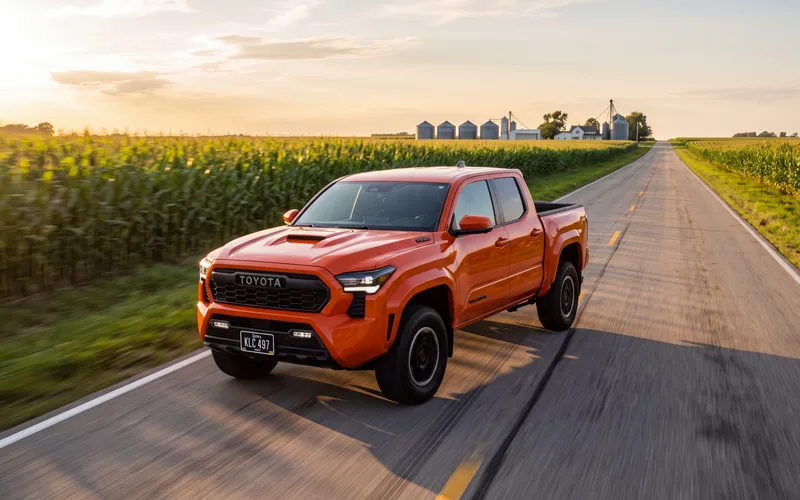 Toyota TacomaMid-Size TruckBetter at: All-around truck
Delivers most of the Gladiator's off-road credibility with a hybrid option good for 23 MPG, standard safety tech, and far stronger reliability and resale.
Compare 1.99C-
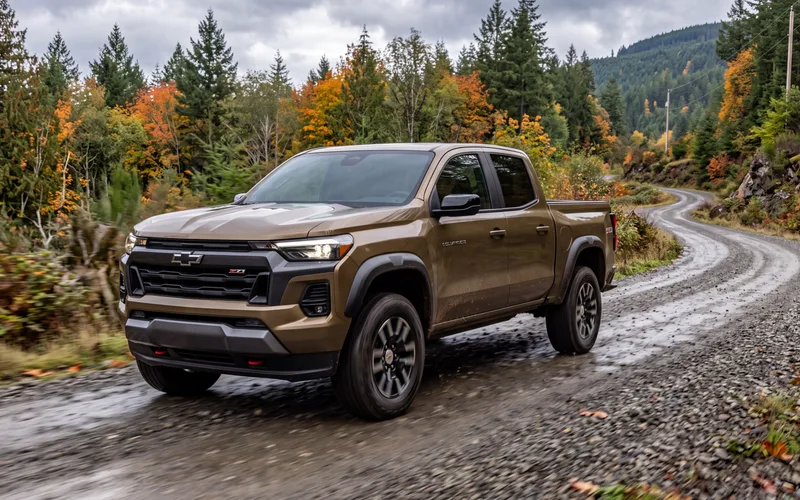 Chevrolet ColoradoMid-Size TruckBetter at: Power and ride
Its 2.7L turbo and independent front suspension give more torque, 27 MPG highway, and a much better ride, with ZR2 covering serious off-road duty.
Compare 1.87C-
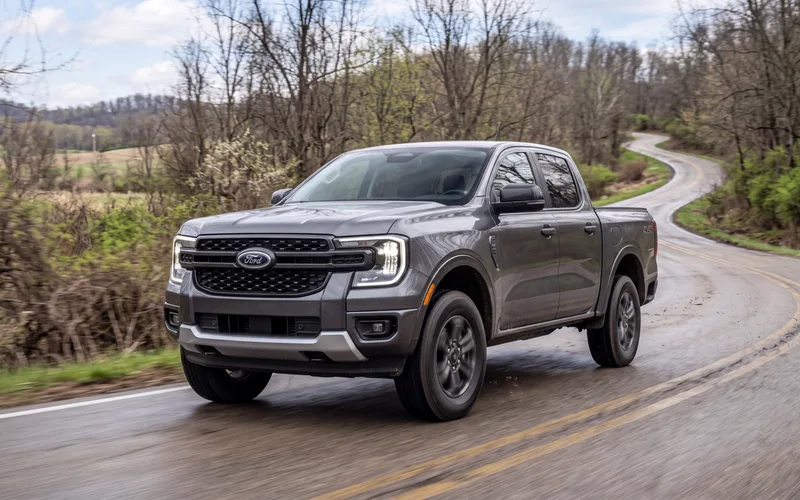 Ford RangerMid-Size TruckBetter at: Daily usability
Turbo power, 26 MPG highway, standard driver aids, and a more usable bed make it the better daily and work truck at similar money.
CompareHow it's evolved
7 scored model years · 2020–2026
Subject scores by year
Hover or tap a score to see what moved it versus the year before. A corner mark flags a big swing.
| Year | Performance | Efficiency | Safety | Space | Cost | Reliability | Tech | Use-case | Driving | Value |
|---|---|---|---|---|---|---|---|---|---|---|
| 2026 | 43 | 43 | 54 | 49 | 54 | 61 | 67 | 60 | 59 | 58 |
| 2025 | 43 | 40 | 45 | 52 | 54 | 56 | 62 | 58 | 58 | 60 |
| 2024 | 40 | 41 | 45 | 49 | 58 | 54 | 64 | 59 | 59 | 56 |
| 2023 | 42 | 41 | 41 | 48 | 57 | 54 | 45 | 57 | 59 | 54 |
| 2022 | 42 | 41 | 41 | 45 | 53 | 49 | 42 | 52 | 53 | 59 |
| 2021 | 42 | 41 | 48 | 49 | 65 | 49 | 43 | 47 | 55 | 59 |
| 2020 | 40 | 42 | 38 | 53 | 58 | 60 | 40 | 51 | 51 | 66 |
Compare two years
Best fit & conditions
Higher scores mean a better fit for that use case. Learn more about use-case fit →
Subject profile
Academic Probation · NHTSA safety recalls
Jun 4, 2026Steering: hydraulic power assist: pumpThe electric hydraulic power steering pump wiring may overheat and cause a vehicle fire, even when the vehicle is parked with the ignition in the "Off" position.
Defect
Chrysler (FCA US, LLC) is recalling certain 2021-2025 Jeep Wrangler, Wrangler 4XE, and Jeep Gladiator vehicles. The electric hydraulic power steering pump wiring may overheat and cause a vehicle fire, even when the vehicle is parked with the ignition in the "Off" position.
Risk
A vehicle fire increases the risk of injury.
Remedy
Owners are advised to park outside and away from structures, until their vehicle is repaired. Dealers will inspect and replace the wiring and electric hydraulic power steering pump, as necessary, free of charge. Owner notification letters are expected to be mailed July 9, 2026. Owners may contact FCA US LLC customer service at 1-800-853-1403. FCA US LLC's number for this recall is 21D. The Vehicle Identification Numbers (VINs) involved in this recall will become searchable on NHTSA.gov on June 11, 2026.
NHTSA campaign 26V363000 ↗Manufacturer no. 21D1,076,999 vehicles potentially affected (all models in the campaign)Owners notified Jul 9, 2026Filed by Chrysler (FCA US, LLC)Filed as GLADIATORSep 5, 2024Electrical system: instrument cluster/panelThe instrument panel cluster may experience an internal short circuit and fail. As such, these vehicles fail to comply with the requirements of Federal Motor Vehicle Safety Standard number 101, "Controls and Displays."
Defect
Chrysler (FCA US, LLC) is recalling certain 2020-2024 Jeep Gladiator and 2018-2024 Jeep Wrangler vehicles. The instrument panel cluster may experience an internal short circuit and fail. As such, these vehicles fail to comply with the requirements of Federal Motor Vehicle Safety Standard number 101, "Controls and Displays."
Risk
An instrument panel that fails to display critical safety information, such as the speedometer or warning lights, can increase the risk of a crash.
Remedy
Dealers will replace the instrument panel cluster, free of charge. Owner notification letters were mailed between October 3, 2024, and January 23, 2025. Owners may contact FCA customer service at 1-800-853-1403. FCA's number for this recall is 30B.
NHTSA campaign 24V652000 ↗Manufacturer no. 30B32,863 vehicles potentially affected (all models in the campaign)Owners notified Oct 3, 2024Filed by Chrysler (FCA US, LLC)Filed as GLADIATORMar 14, 2024Air bags: frontal: driver clockspring/spiral cassette · Steering: columnThe steering column control module may not be welded properly, which can prevent the driver's air bag from deploying in a crash. As such, these vehicles fail to comply with the requirements of Federal Motor Vehicle Safety Standard number 208, "Occupant Crash Protection."
Defect
Chrysler (FCA US, LLC) (Stellantis) is recalling certain 2023-2024 Ram 1500, Jeep Wrangler, Jeep Wagoneer, Jeep Grand Wagoneer, Chrysler Pacifica, Ram 3500, Ram 3500 cab chassis, Ram 2500, Ram 4500 cab chassis, Ram 5500 cab chassis, 2023 Jeep Gladiator, Jeep Grand Cherokee, Jeep Grand Cherokee L, Ram 3500 Cab Chassis with a GVWR less than 10,000 lbs., and Chrysler Voyager vehicles. The steering column control module may not be welded properly, which can prevent the driver's air bag from deploying in a crash. As such, these vehicles fail to comply with the requirements of Federal Motor Vehicle Safety Standard number 208, "Occupant Crash Protection."
Risk
An air bag that does not deploy in a crash can increase the risk of injury.
Remedy
Dealers will inspect and replace the steering column control module, as necessary free of charge. Some owner notification letters were mailed April 11, 2024 through June 20, 2024. Owners may contact FCA US, LLC customer service at 1-800-853-1403. FCA US, LLC's numbers for this recall are 14B, 33B, 34B, 35B, 36B.
NHTSA campaign 24V199000 ↗Manufacturer no. 14B,33B,34B,35B,36B38,164 vehicles potentially affected (all models in the campaign)Owners notified Apr 11, 2024Filed by Chrysler (FCA US, LLC) (Stellantis)Filed as GLADIATORSep 18, 2023Power train: manual transmissionThe rearview camera may fail to display the rearview image and the reverse lights may not illuminate when the vehicle is placed in reverse. As such, these vehicles fail to comply with the requirements of Federal Motor Vehicle Safety Standard numbers 111, "Rear Visibility" and 108, "Lamps, Reflective Devices, and Associated Equipment."
Defect
Chrysler (FCA US), LLC is recalling certain 2022-2023 Jeep Wrangler and Gladiator vehicles equipped with a manual transmission. The rearview camera may fail to display the rearview image and the reverse lights may not illuminate when the vehicle is placed in reverse. As such, these vehicles fail to comply with the requirements of Federal Motor Vehicle Safety Standard numbers 111, "Rear Visibility" and 108, "Lamps, Reflective Devices, and Associated Equipment."
Risk
A disabled rearview image can decrease the driver's visibility of the rear view, and disabled reverse lights may not alert others that the vehicle is reversing, increasing the risk of injury or crash.
Remedy
Dealers will replace the gear position sensor, free of charge. Owner notification letters were mailed November 16, 2023. Owners may contact FCA US, LLC customer service at 1-800-853-1403. FCA US, LLC's number for this recall is 92A.
NHTSA campaign 23V641000 ↗Manufacturer no. 92A6,298 vehicles potentially affected (all models in the campaign)Owners notified Nov 16, 2023Filed by Chrysler (FCA US, LLC)Filed as GLADIATORApr 13, 2023Fuel system, diesel: delivery: fuel pumpThe high pressure fuel pump (HPFP) may fail.
Defect
Chrysler (FCA US, LLC) is recalling certain 2021-2023 Jeep Wrangler, Gladiator, and 2022-2023 Ram 1500 vehicles equipped with a 3.0L diesel engine. The high pressure fuel pump (HPFP) may fail.
Risk
Fuel pump failure can result in an engine stall, increasing the risk of a crash.
Remedy
Dealers will replace the HPFP and replace additional fuel system components, as necessary, free of charge. Owner notification letters were mailed October 17, 2023. Owners may contact FCA US, LLC customer service at 1-800-853-1403. FCA US, LLC's number for this recall is 01A.
NHTSA campaign 23V263000 ↗Manufacturer no. 01A45,832 vehicles potentially affected (all models in the campaign)Owners notified Oct 17, 2023Filed by Chrysler (FCA US, LLC)Filed as GLADIATORFeb 23, 2023Power train: clutch assemblyThe clutch pressure plate may overheat and fracture.
Defect
Chrysler (FCA US, LLC) is recalling certain 2018-2023 Jeep Wrangler, and 2020-2023 Jeep Gladiator vehicles equipped with manual transmissions. The clutch pressure plate may overheat and fracture.
Risk
Overheated clutch components may increase the risk of a fire. Additionally, damage to other nearby components can result in debris falling onto the road or a loss of drive, increasing the risk of a crash.
Remedy
Dealers will replace the clutch assembly and update the software, free of charge. Owner notification letters were mailed from November 16, 2023 through July 25, 2024. Owners may contact (FCA US, LLC) customer service at 1-800-853-1403. FCA US LLC's number for this recall is 19A. This recall expands and replaces previous recall 21V-028. Vehicles previously repaired under recall 21V-028 will need to have the new remedy completed.
NHTSA campaign 23V116000 ↗Manufacturer no. 19A69,201 vehicles potentially affected (all models in the campaign)Owners notified Nov 16, 2023Filed by Chrysler (FCA US, LLC)Filed as GLADIATOR
12 recalls on other model years of the Gladiator (2020–2022, 2026)
Aug 13, 2026Back over prevention: sensing system: cameraThe rearview camera image may fail to display when the vehicle is placed in reverse. As such, these vehicles fail to comply with the requirements of Federal Motor Vehicle Safety Standard (FMVSS) number 111, "Rear Visibility."
Defect
Chrysler (FCA US, LLC) is recalling certain 2026 Jeep Wrangler, Jeep Gladiator, Jeep Compass, Jeep Cherokee, Jeep Grand Cherokee, Jeep Grand Cherokee L, Jeep Grand Wagoneer, Jeep Grand Wagoneer L, Ram Promaster, Ram Promaster EV, Ram 1500, Ram 2500, Chrysler Pacifica Plug-In Hybrid, Chrysler Voyager, and 2026-2027 Chrysler Pacifica and Dodge Charger vehicles. The rearview camera image may fail to display when the vehicle is placed in reverse. As such, these vehicles fail to comply with the requirements of Federal Motor Vehicle Safety Standard (FMVSS) number 111, "Rear Visibility."
Risk
A rearview camera image that fails to display reduces the driver's view behind the vehicle, increasing the risk of a crash.
Remedy
Radio software will be updated by a dealer or through an over-the-air (OTA) update, free of charge. Owner notification letters were mailed beginning September 2, 2026. Owners may contact Chrysler customer service at 800-853-1403. Chrysler's number for this recall is 78D. Vehicle Identification Numbers (VINs) involved in this recall will be searchable on NHTSA.gov on August 20, 2026.
NHTSA campaign 26V531000 ↗Manufacturer no. 78D844,027 vehicles potentially affected (all models in the campaign)Owners notified Sep 2, 2026Filed by Chrysler (FCA US, LLC)Filed as GLADIATORJul 16, 2026WheelsThe walls for the steel wheels may be too thin, allowing them to crack or detach, which can result in a loss of vehicle control.
Defect
Chrysler (FCA US, LLC) is recalling certain 2026 Jeep Gladiator and Jeep Wrangler vehicles. The walls for the steel wheels may be too thin, allowing them to crack or detach, which can result in a loss of vehicle control.
Risk
Loss of vehicle control increases the risk of a crash.
Remedy
Dealers will inspect and replace the steel wheels and valve stems, as necessary, free of charge. Owner notification letters are expected to be mailed September 4, 2026. Owners may contact FCA customer service at 1-800-853-1403. FCA's number for this recall is 05D. Vehicle Identification Numbers (VINs) involved in this recall will become searchable on NHTSA.gov beginning July 23, 2026.
NHTSA campaign 26V456000 ↗Manufacturer no. 05D641 vehicles potentially affected (all models in the campaign)Owners notified Jul 30, 2026Filed by Chrysler (FCA US, LLC)Filed as GLADIATORAug 1, 2024Power train: manual transmission: control module: softwareThe software for the powertrain control module may cause an engine stall, which can result in a loss of drive power.
Defect
Chrysler (FCA US, LLC) is recalling certain 2021 Jeep Wrangler and Jeep Gladiator vehicles that were previously remedied under NHTSA recall number 23V-116. The software for the powertrain control module may cause an engine stall, which can result in a loss of drive power.
Risk
A loss of drive power increases the risk of a crash.
Remedy
Dealers will update the powertrain control module software, free of charge. Owner notification letters were mailed August 15, 2024. Owners may contact FCA US, LLC customer service at 1-800-853-1403. FCA US LLC's number for this recall is 92B. Vehicles previously repaired under recall 23V-116 will need to have the new remedy completed.
NHTSA campaign 24V572000 ↗Manufacturer no. 92B94 vehicles potentially affected (all models in the campaign)Owners notified Aug 15, 2024Filed by Chrysler (FCA US, LLC)Filed as GLADIATOROct 13, 2022Engine · Fuel system, gasoline: delivery: fuel pumpThe high pressure fuel pump (HPFP) may fail, causing an engine stall.
Defect
Chrysler (FCA US, LLC) is recalling certain 2020-2022 Jeep Wrangler, Ram 1500, and 2021-2022 Jeep Gladiator vehicles equipped with 3.0L diesel engines. The high pressure fuel pump (HPFP) may fail, causing an engine stall.
Risk
An engine stall can increase the risk of a crash.
Remedy
Dealers will replace the HPFP and inspect and replace additional fuel system components, as necessary, free of charge. Owner notification letters were mailed October 17, 2023. Owners may contact Chrysler customer service at 1-800-853-1403. Chrysler's number for this recall is Z96.
NHTSA campaign 22V767000 ↗Manufacturer no. Z9660,413 vehicles potentially affected (all models in the campaign)Owners notified Oct 17, 2023Filed by Chrysler (FCA US, LLC)Filed as GLADIATOROct 13, 2022Seat belts: pretensionerThe front seat belt retractors may have an improperly welded micro gas generator, which can result in seat belt pretensioner failure.
Defect
Chrysler (FCA US, LLC) is recalling certain 2022 Ram 1500, Jeep Gladiator, and 2021 Jeep Wrangler vehicles. The front seat belt retractors may have an improperly welded micro gas generator, which can result in seat belt pretensioner failure.
Risk
A seat belt with pretensioner failure may not properly restrain an occupant during a crash, increasing the risk of injury.
Remedy
Dealers will replace the front seat belt retractors. free of charge. Owner notification letters were mailed December 8, 2022. Owners may contact Chrysler customer service at 1-800-853-1403. Chrysler's number for this recall is Z95.
NHTSA campaign 22V766000 ↗Manufacturer no. Z952,802 vehicles potentially affected (all models in the campaign)Owners notified Dec 8, 2022Filed by Chrysler (FCA US, LLC)Filed as GLADIATORAug 25, 2022Power train: automatic transmission: internal: park pawlThe transmission parking wheel may not properly engage with the parking mechanism.
Defect
Chrysler (FCA US, LLC) is recalling certain 2022 Jeep Gladiator vehicles. The transmission parking wheel may not properly engage with the parking mechanism.
Risk
A malfunctioning parking mechanism may result in the loss of the 'park' position, including vehicle rollaway, increasing the risk of a crash.
Remedy
Dealers will replace the transmission, free of charge. Entire US population are unsold units and will be repaired before they can be sold. Owners may contact FCA US, LLC customer service at 1-800-853-1403. FCA, LLC's number for this recall is Z84.
NHTSA campaign 22V639000 ↗Manufacturer no. Z8411 vehicles potentially affected (all models in the campaign)Owners notified Sep 8, 2022Filed by Chrysler (FCA US, LLC)Filed as GLADIATORAug 25, 2022Back over prevention: display functionA radio software error may prevent the rearview image from displaying. As such, these vehicles fail to comply with the requirements of Federal Motor Vehicle Safety Standard number 111, "Rear Visibility."
Defect
Chrysler (FCA US, LLC) is recalling certain 2020-2021 Jeep Wrangler, RAM 1500 and 2021 Jeep Gladiator vehicles. A radio software error may prevent the rearview image from displaying. As such, these vehicles fail to comply with the requirements of Federal Motor Vehicle Safety Standard number 111, "Rear Visibility."
Risk
A rearview camera that does not display an image reduces the driver's rear view, increasing the risk of a crash.
Remedy
Dealers will update the radio software, free of charge. Owner notification letters were mailed October 6, 2022. Owners may contact FCA US, LLC customer service at 1-800-853-1403. FCA, LLC's number for this recall is Z86.
NHTSA campaign 22V638000 ↗Manufacturer no. Z867,895 vehicles potentially affected (all models in the campaign)Owners notified Oct 6, 2022Filed by Chrysler (FCA US, LLC)Filed as GLADIATORJan 28, 2021Power train: clutch assemblyThe clutch pressure plate may overheat and fracture.
Defect
Chrysler (FCA US, LLC) is recalling certain 2018-2021 Jeep Wrangler and 2020-2021 Jeep Gladiator vehicles equipped with manual transmissions. The clutch pressure plate may overheat and fracture.
Risk
Overheated clutch components may increase the risk of a fire. Additionally, damage to other nearby components can result in debris falling onto the road or a loss of drive, increasing the risk of a crash.
Remedy
FCA US LLC will notify owners, and dealers will add software to reduce engine torque capability when clutch assembly temperatures rise to a level that may damage the inner pressure plate, free of charge." FCA has ordered a stop sale for the affected vehicles as of February 25, 2021. Owner notification letters were mailed on March 4, 2021.
NHTSA campaign 21V028000 ↗Manufacturer no. Y0142,887 vehicles potentially affected (all models in the campaign)Owners notified Mar 4, 2021Filed by Chrysler (FCA US, LLC)Filed as GLADIATORSep 24, 2020Seat belts · Seat belts: front: retractorIn the event of a crash, a front seat belt retractor may not properly slow the occupant's forward movement after locking.
Defect
Chrysler (FCA US LLC) is recalling certain 2019 Jeep Wrangler and Ram 2500, 2019-2020 Ram 1500 and 2020 Jeep Gladiator vehicles. In the event of a crash, a front seat belt retractor may not properly slow the occupant's forward movement after locking.
Risk
In the event of a crash, if the front seat belts fail to lock, there is an increased risk of injury.
Remedy
Chrysler will notify owners, and dealers will replace the front seat belt retractors, free of charge. The recall began November 12, 2020. Owners may contact Chrysler customer service at 1-800-853-1403. Chrysler's number for this recall is W67.
NHTSA campaign 20V580000 ↗Manufacturer no. W672,114 vehicles potentially affected (all models in the campaign)Owners notified Nov 12, 2020Filed by Chrysler (FCA US LLC)Filed as GLADIATORSep 10, 2020Back over prevention: sensing system: cameraA software error can cause the rearview camera image to remain displayed after the vehicle has been shifted out of reverse. As such, these vehicles fail to comply with the requirements of Federal Motor Vehicle Safety Standard (FMVSS) number 111, "Rearview Mirrors."
Defect
Chrysler (FCA US LLC) is recalling certain 2020 Jeep Gladiator and Jeep Cherokee, 2019-2020 Ram 1500 Pickup, Ram 2500 Pickup, Ram 3500 Pickup, Chrysler Pacifica, Dodge Durango, Jeep Grand Cherokee, Jeep Wrangler, and Jeep Renegade and 2019 Dodge Challenger vehicles equipped with 8.4" or 12" radio displays. A software error can cause the rearview camera image to remain displayed after the vehicle has been shifted out of reverse. As such, these vehicles fail to comply with the requirements of Federal Motor Vehicle Safety Standard (FMVSS) number 111, "Rearview Mirrors."
Risk
The lingering rearview image can distract the driver, increasing the risk of a crash.
Remedy
Chrysler has notified owners, and dealers will update the radio display software, free of charge. Optionally, owners can choose to remotely update their software via an Over-The-Air (OTA) update available as of May 1, 2020. The recall began April 27, 2020. Owners may contact Chrysler customer service at 1-800-853-1403. Chrysler's number for this recall is W30-W37.
NHTSA campaign 20V191000 ↗Manufacturer no. W30-W37319,610 vehicles potentially affected (all models in the campaign)Owners notified Apr 27, 2020Filed by Chrysler (FCA US LLC)Filed as GLADIATORMar 3, 2020Power train: clutch assemblyThe clutch pressure plate may overheat and fracture.
Defect
Chrysler (FCA US LLC) is recalling certain 2018-2020 Jeep Wrangler and 2020 Gladiator vehicles equipped with manual transmissions. The clutch pressure plate may overheat and fracture.
Risk
The overheated clutch components may increase the risk of a fire. Additionally, damage to other nearby components can result in debris falling onto the road or a loss of drive, increasing the risk of a crash.
Remedy
Chrysler will notify owners, and dealers will reroute a wire harness and inspect the clutch system, and replace components as needed. The recall began April 30, 2020. Owners may contact Chrysler customer service at 1-800-853-1403. Chrysler's number for this recall is W12.
NHTSA campaign 20V124000 ↗Manufacturer no. W1233,237 vehicles potentially affected (all models in the campaign)Owners notified Apr 30, 2020Filed by Chrysler (FCA US LLC)Filed as GLADIATORAug 29, 2019Power train: driveline: driveshaftThe rear driveshafts may have been incorrectly assembled without grease in the monoblock joint.
Defect
Chrysler (FCA US LLC) is recalling certain 2020 Jeep Gladiator vehicles. The rear driveshafts may have been incorrectly assembled without grease in the monoblock joint.
Risk
A joint without grease may overheat and seize, possibly causing the driveshaft to fracture, resulting in a sudden loss of drive power. If the driveshaft completely separates from the vehicle it may become a road hazard. Either of these scenarios can increase the risk of a crash.
Remedy
FCA US will notify owners, and dealers will replace the driveshaft, free of charge. The recall began October 10, 2019. Owners may contact FCA US customer service at 1-800-853-1403. FCA US number for this recall is V95.
NHTSA campaign 19V636000 ↗Manufacturer no. V953,733 vehicles potentially affected (all models in the campaign)Owners notified Oct 10, 2019Filed by Chrysler (FCA US LLC)Filed as GLADIATOR
Source: NHTSA Office of Defects Investigation recall database, model years 2020–2026. Recalls are listed by model year as the manufacturer filed them; whether a specific car is affected depends on its VIN — check a VIN at nhtsa.gov ↗. NHTSA model names matched to this page: GLADIATOR.
Detailed scoring by subject
1Performance & PowertrainOne of the Gladiator's weakest categories.0.78F
The 3.6-liter Pentastar V-6 is standard on every 2023 Gladiator at 285 hp and is the range's horsepower maximum — the optional EcoDiesel is actually down on power at 260 hp, trading it for torque. 285 hp is modest against the full-size trucks the truck band is scaled for.
Scored on the volume gas V-6: 260 lb-ft peaking high at 4,400 rpm is the weakest torque figure in the mid-size truck class, well behind the turbo fours in the Tacoma and Canyon. The 442 lb-ft EcoDiesel was still on the order sheet for 2023 — its final year — but it is a low-volume option, not the representative configuration.
Representative figure for the volume Sport S/Willys with the 850RE eight-speed; the JT gas powertrain is mechanically unchanged for 2023, so the published instrumented spread for the generation applies. Lighter road-tired Overlands run 7.2–7.3 s while Rubicons on 33-inch mud-terrains fall to 8.1–8.7 s.
The naturally aspirated Pentastar delivers smooth, linear, lag-free thrust — no turbo hesitation and no hybrid handoffs — but it needs revs to find it (peak torque at 4,400 rpm) and reviewers consistently report it feeling strained with the bed or a trailer loaded. Mid band: pleasant unloaded, overwhelmed at work.
The ZF-derived 850RE eight-speed is the strong half of the story — adaptive shift control plus Electronic Range Select for holding gears, and reviewers describe smooth, predictable shifts. It gives some ground back hunting among eight closely spaced ratios behind a torque-light NA V6, and the standard six-speed manual is the coarser of the two choices.
7,700 lbs is class-competitive for a mid-size truck and far clear of the Ridgeline's 5,000 lbs, but it requires one specific build — Sport with the automatic, 4.10 axle and Max Tow. Rubicon tops out at 7,000 lbs, Overland at 6,000, any EcoDiesel at 6,500, and every manual is capped at 4,000–4,500 lbs.
The 1,710-lb maximum belongs to the base Sport manual; the configurations buyers actually take sit far lower — Sport automatic 1,105–1,535 lbs, Overland 1,120, Rubicon 1,075–1,200 — because the Wrangler-derived solid-axle chassis spends so much of its GVWR on its own 4,650–5,352 lb curb weight.
Below the core-aids band: no factory-integrated trailer brake controller (Mopar sells a dealer-installed unit separately — it is not even bundled into Max Tow), no trailer backup or steering assist, no trailer-side or multi-camera hitch array, and no onboard scales. What is present is the basics: Class IV hitch with 4- and 7-pin wiring, a 240-amp alternator, standard trailer sway damping inside the stability system, a rear camera with zoom, and ERS gear holding standing in for a dedicated tow/haul mode.
Top of the band and effectively unmatched in the segment: four-wheel drive is standard on every 2023 Gladiator — no 2WD version exists — and buyers choose among three transfer cases, all with a genuine low range. Command-Trac part-time is standard at 2.72:1, MP3022 Selec-Trac adds full-time 4WD, and Rock-Trac brings a 4.0:1 crawl ratio.
The Gladiator is the benchmark the rest of the class is measured against, and the hardware is factory rather than aftermarket: Rubicon gets Tru-Lok lockers front and rear, the 4.0:1 Rock-Trac case and an electronic sway-bar disconnect, while the desert-rated Mojave adds FOX hydraulic jounce bumpers and reinforced control arms. Even a base Sport clears 10.0 inches at a 40.8-degree approach angle.
Two genuinely distinct powertrains for 2023 — the 285 hp gas Pentastar and the 442 lb-ft 3.0L EcoDiesel — which covers mainstream and torque-hungry buyers and puts this in the lower half of the middle band. It does not reach higher because there is no electrified option at all: no hybrid and no 4xe plug-in despite the Wrangler offering one on the same platform. 2023 is the last year even this much choice exists — the EcoDiesel ends with the limited Rubicon FarOut.
2Efficiency & RangeOne of the Gladiator's weakest categories.0.71F
19 MPG combined is poor even against other gas trucks — the body-on-frame Wrangler platform, standard 4WD, a boxy removable-roof body and no electrification leave nothing to offset the deficit. The optional EcoDiesel managed 24 MPG combined but is a separate powertrain class and not the scored configuration.
17 MPG city, with no hybrid assist or engine stop-start-driven recovery to lean on in traffic. The automatic is the better of the two transmissions in town, beating the manual by 1 MPG.
22 MPG highway is the weakest figure of the three relative to its band — aerodynamics are the binding constraint here, since a removable-roof, upright-windshield truck on all-terrain tires cannot cruise efficiently no matter how tall the eighth gear is.
A large 22.0-gallon tank is doing the work here — it rescues the range figure from an otherwise thirsty powertrain, but 418 miles still lands in the bottom third of the gas-truck band. The EcoDiesel actually carried a smaller 18.3-gallon tank yet went farther on it.
$3,250 a year at EPA's standard assumptions is a real running-cost penalty and sits well above the gas-truck median. Regular unleaded keeps it from being worse — at premium prices the same 19 MPG would cost meaningfully more.
Top band: the Pentastar is specified for 87-octane regular unleaded with no premium recommendation, so there is no fuel-grade surcharge on top of the already-high consumption and no charging infrastructure to arrange. Held just short of the ceiling because the alternative engine for 2023 is a diesel requiring DEF, making the range's fuel needs less uniformly simple.
3SafetyThe Gladiator's lowest-graded category.0.69F
NHTSA has never published a combined overall star rating for the JT-generation Gladiator because it never ran the side-barrier or side-pole tests; the only crash result is a 4-star frontal (4 driver / 5 passenger), alongside a 3-star rollover. 2023 is a carry-over year within the 2020-on JT generation, so the ratings are unchanged from prior years.
The Gladiator falls short in all three of IIHS's current crash tests: Marginal in the updated moderate overlap front (rear-passenger head/neck and chest both Marginal), Marginal in the updated side test where the rear dummy's head struck the soft-top support with no rear side airbag to catch it, and Marginal in the driver-side small overlap because the truck tipped onto its passenger side after hitting the barrier. Roof strength and the original moderate overlap test are Good, but with no test result above Marginal in the current battery a Top Safety Pick is impossible, and unlike the Wrangler the Gladiator did not receive the second-row airbag and belt revisions for 2024.
Not one of the five features this item measures is standard on the volume 2023 Gladiator Sport S: forward collision warning with active braking and adaptive cruise are the $945 Advanced Safety Group, blind-spot monitoring with rear cross path sits in the separate ~$1,145 Active Safety Group, and lane keeping and pedestrian AEB cannot be bought at any price on any trim. Standard active safety is limited to the passive electronic aids — ESC, electronic roll mitigation, trailer-sway control, hill-start assist and brake traction control. In a segment where the Tacoma and Colorado ship an AEB-plus-lane-departure suite on every trim, this is the weakest standard content available.
When ordered, the radar-based Full Speed Forward Collision Warning Plus earns IIHS's top Superior rating for vehicle-to-vehicle front crash prevention, avoiding the collision outright in both the 12 and 25 mph runs — the hardware itself is good. Two things hold the score down: it is optional equipment the volume Sport S does not carry unless the buyer adds the $945 Advanced Safety Group, and pedestrian detection is not offered at all, so there is no daytime or nighttime pedestrian capability to grade.
Blind Spot Monitoring with Rear Cross Path detection is offered across the 2023 range but is optional on every trim, bundled with rear parking sensors and LED taillights in the roughly $1,145 Active Safety Group, and it is alert-only — no braking or steering intervention, no safe-exit alert, and no trailer-aware coverage. The omission costs more on a truck rated to tow 7,700 lbs than it would on a crossover, and the Gladiator's narrow body and small, tall side mirrors mean a trailer or wide load blocks the mirror view entirely.
The 2023 Gladiator offers no lane departure warning, no lane keep assist and no lane centering on any trim or in any option package — a gap that is close to unique in the mid-size truck segment, where the Tacoma, Colorado, Ranger and Frontier all include at least a lane departure warning as standard equipment.
Adaptive Cruise Control with Stop and Go is capable full-speed-range hardware on automatic-transmission trucks, but it is optional on every 2023 trim as part of the $945 Advanced Safety Group, drops to a 15 mph lower limit if the buyer takes the six-speed manual, and has no lane centering on the platform to combine with — so there is no highway assist to grade at all. Reviewers also fault the system for braking abruptly when a car cuts into the gap.
No hands-free highway driving system is offered on any 2023 Gladiator trim. Stellantis's hands-on Active Driving Assist is not fitted to the JT platform, and with no lane-centering hardware anywhere in the lineup a hands-free system is not technically possible on this truck.
Every 2023 Gladiator headlight configuration IIHS tested rated Marginal or Poor. The best available — LED projectors, standard on Rubicon/Mojave/Overland and on the Freedom special edition — is only Marginal, and the volume Sport/Sport S halogen reflectors are Poor with or without high-beam assist, with low-beam visibility rated only fair on a straightaway and inadequate on three of the four curve tests. No configuration offers curve-adaptive lighting, and automatic high beams come only inside the optional Advanced Safety Group.
Forward and lateral sightlines are among the best in the segment — a near-vertical windshield, tall commanding seating, a short flat hood with visible fender corners, and deep side glass — and unlike the Wrangler the spare lives under the bed rather than on the tailgate, so the mirror-and-glass rear view is clearer. The compromises are the 218-inch length that makes the tail hard to place, small tall narrow mirrors that a wide trailer blocks outright, a notable over-the-shoulder blind spot at the sport bar and rear header, rear park sensors that are optional rather than standard, and no surround-view camera on any trim.
IIHS rates the Gladiator's LATCH hardware Acceptable — two complete positions plus a center position that can borrow lower anchors — a grade below the 4-door Wrangler's Good+, and the four real doors open wide enough to work with. Against that, the rear bench is upright with only about 35.6 inches of legroom so a rear-facing seat squeezes the front passenger, the high step-in height makes lifting a child into a seat harder than in a crossover, and three seats across is tight in a body this narrow.
4Space & ComfortGrades below the middle of the scale.1.24D
Every 2023 Gladiator is a five-passenger four-door crew cab; Jeep has never offered a regular or extended cab on the JT, so there is no two-seat work-truck variant to drag the figure down and no six-seat bench option to lift it.
The tall, upright JT body built around a removable roof gives 42.8 in of front headroom with the soft top that is standard on the volume Sport S and Willys — near the top of the truck band. Fitting the three-piece hardtop drops it two inches to 40.8 in.
41.2 in sits barely above the bottom of the truck band — the Wrangler-derived cockpit is upright and short in the footwell, and only 9.4 in of seat travel is available to work with. Reviewers regularly note that tall drivers run out of room to stretch even though headroom is abundant.
Rear headroom matches the front at 42.8 in because the roof runs flat over both rows — comfortably above the top of the truck band and the Gladiator's clearest packaging advantage over a conventional crew cab with a sloping rear roofline.
38.3 in of rear legroom is mid-pack for a crew-cab mid-sizer and is the price of packaging a five-foot bed onto a 137.3-in wheelbase; adults fit, but 2.7 in of published knee clearance and a near-vertical seatback make it a place to sit rather than lounge.
One bed, five feet long, with no long-bed option anywhere in the 2023 range — the shortest cargo box in the mid-size truck class and the structural compromise of grafting a bed onto Wrangler architecture. Dropping the tailgate stretches the load floor to 81.3 in.
35.5 cu ft is near the bottom of the truck band. The box is usefully deep at 33.9 in and the 29.7-in liftover is low enough to load without a step, but a five-foot floor simply cannot generate segment-competitive volume.
Above the middle of the band on ingenuity rather than sheer volume: the rear seat cushion folds up to reveal lockable under-seat bins, the whole interior is washable with drain plugs in the tub floor, and the option sheet adds the Trail Rail bed cargo system, a 115V outlet with a 400W inverter and a removable Bluetooth speaker docked behind the rear seat. It stops short of the top band because the console and door bins themselves are ordinary and the clever items are nearly all extra-cost.
Reviewers consistently call the front seats supportive and reasonably well-cushioned, and the tall hip point makes them easy to live with, but 2023 is the last year before the refresh added 12-way power adjustment — adjustment range on the volume trims is manual and limited, and the flat, upright rear bench is the weak half of the truck.
Solid front and rear axles under a body-on-frame chassis produce the busiest unladen ride in the mid-size class — Consumer Reports' road test says the truck wiggles and jiggles over lumpy asphalt more than any other pickup. The long 137.3-in wheelbase makes it calmer than a Wrangler, which is the only thing keeping it out of the bottom of the band.
A body engineered around a removable roof and removable doors cannot seal like a fixed cab, and the near-vertical windshield gives the wind plenty to catch. Reviewers report wind noise arriving at moderate speeds and building with pace, joined by tire whir on the highway — and the volume trims ship with the softer, noisier soft top.
Mid-band: the Cold Weather Group bundles heated front seats, a heated steering wheel and remote start, the climate system itself is powerful and does feed rear vents, but everything comfort-related is an option box on the volume trims and there are no ventilated seats, no rear climate zone and no pre-conditioning of any kind.
5Cost of OwnershipOne of the Gladiator's strongest categories.1.83C-
2023 is the fourth year of the JT generation and a carry-over year on price structure; the Sport remains the only entry point, and every Gladiator is crew-cab 4x4 with the 5-foot bed. Base MSRP sits well above the mid-size truck norm because 4WD, the 285-hp Pentastar V6 and the removable roof/doors are all standard rather than optional.
Sport S is the volume seller — the trim that adds air conditioning, power windows/locks and remote keyless entry over the near-fleet-spec Sport. Its $42,970 base plus $1,795 destination is $44,765, and the $2,000 eight-speed automatic (still an option in 2023; it became standard only for 2025) is fitted to the overwhelming majority of retail builds, landing a representative transaction sticker near $46,900.
The 3.6L Pentastar V6 is a long-serving, widely-serviced engine and Jeep's dealer network is dense, which keeps routine service ordinary in cost — but the Gladiator's repair frequency runs above the mid-size truck norm, and Consumer Reports has repeatedly placed it at the bottom of the pickup class for predicted reliability. That pushes the combined figure to the upper-middle of the segment band rather than the low end.
Resale is the Gladiator's single best ownership attribute — iSeeCars puts the nameplate at 67.7% retained and CarEdge at ~63%, both well ahead of the mid-size truck average, on the strength of Wrangler-adjacent demand and a limited used supply. The value used here is trimmed below those headline figures because 2023 specifically transacted far under sticker (10–15% factory discounts nationally), so retention measured against MSRP is materially weaker than the nameplate average implies.
Stellantis' standard basic coverage across the Jeep brand for 2023, unchanged from prior years. It is the floor of the segment band — Hyundai/Kia offer 5 years and Toyota matches at 3.
Jeep's standard 5-year/60,000-mile powertrain term, the low end of the segment band. Notably it is also the clock that governs Jeep Wave roadside assistance, so both benefits expire together.
Jeep Wave is standard on every 2023 Gladiator and is better than the bare roadside package most trucks ship with: the first three oil changes and tire rotations are covered, and for the 2023 lineup the membership term was extended from 24 to 36 months with no mileage cap — genuinely useful for a truck that gets driven hard. It falls short of the 80+ band because three services over three years is a thin maintenance package next to Toyota's ToyotaCare or a BMW-style multi-year plan, and the roadside coverage stops with the 5/60 powertrain warranty.
$46,900 volume-trim price minus its estimated resale value after 5 years (61% retained, or about $28,609) leaves about $18,291 in depreciation. Add the projected $6,100 in 5-year maintenance and repairs, and owning this vehicle for 5 years costs about $24,391 in total.
6Reliability & QualityGrades below the middle of the scale.1.65D
Both named sources for this item are negative on this exact model year, and for 2023 they are measurements rather than forecasts: Consumer Reports states outright that the 2023 Gladiator is less reliable than other cars from the same model year, listing 17 trouble spots led by suspension/steering, and J.D. Power's 2026 Vehicle Dependability Study — which surveys original owners of 2023 model-year vehicles at three years — puts Jeep at 267 PP100 against a 204 PP100 industry average, among the five worst brands in the study. What keeps this above the failing 2023 Wrangler rather than beside it is a genuinely improving fault record: NHTSA complaint volume for the JT falls 481 (MY2020) → 289 (MY2021) → 115 (MY2022) → 55 (MY2023), a halving between 2022 and 2023 at comparable vehicle age, and the truck tied for the top of its segment in the J.D. Power 2023 IQS. Mixed signals on a below-average baseline, weighted toward the below-average verdict because that is what the two authoritative sources say.
Jeep sits in the bottom tier of both major multi-year dependability studies and has for several consecutive years, which is a structural drag on any Jeep nameplate rather than a single-model-year artifact. Consumer Reports places the brand last on its most recent report card and says it cannot recommend a single Jeep model. Scored identically to the same-year Wrangler, since this item measures the brand and not the truck.
NHTSA lists six campaigns against the MY2023 Gladiator — the highest count of any Gladiator model year — but three do not reach the scored gas-automatic configuration: 23V116 and 23V641 are manual-transmission-only and 23V263 is 3.0L EcoDiesel-only. That leaves three on the volume truck: 24V199 (driver airbag clockspring, non-deploy risk), 24V652 (instrument-panel cluster internal short, FMVSS 101 non-compliance) and 26V363 (electric hydraulic power-steering pump wiring overheat and vehicle fire with the ignition off, carrying a park-outside advisory). One safety-system campaign and one fire campaign put this in the sub-50 band per the framework's guidance regardless of count, and MY2023's own complaint record corroborates the fire mode — three of the 55 filings are fire-flagged and two describe exactly the parked-and-switched-off engine-compartment fire 26V363 addresses. Held well above the floor because the total count is only modestly above segment peers and the generation's signature 'death wobble' TSB pattern is far weaker in this model year than in the earlier JT years or the concurrent Wrangler.
The scored configuration is the 3.6L Pentastar V6 with the TorqueFlite 8HP eight-speed automatic, and it is the strongest element of this truck's reliability case: the Pentastar has been in production since 2011 across the Stellantis range with a documented high-mileage record, the ZF-licensed 8HP is one of the most durable modern automatics, and solid Dana axles with a mechanically simple part-time 4WD system present far less failure surface than a complex crossover driveline. Every powertrain recall touching this model year lands on a different configuration — the six-speed manual's clutch pressure plate or the EcoDiesel's high-pressure fuel pump — which is itself evidence for the gas automatic. Known Pentastar weak points (oil filter housing and oil cooler leaks, rocker-arm/roller-follower valvetrain wear) plus CR's engine-minor and transmission trouble spots keep it out of the top band.
2023 is the last year of the pre-refresh JT cabin and grades below the 2024 truck for exactly that reason: the top infotainment option is the 8.4-inch Uconnect 4C rather than the 12.3-inch Uconnect 5 that became standard for 2024, seats are manual-only where 12-way power arrived with the refresh, and the added sound insulation came then too. What is here is honestly executed for the mission — reviewers find it solidly constructed with a mix of hard- and soft-touch plastics that should wear well, over a deliberately washout-friendly structure with drain plugs. But plastic, rubber and weatherproof surfaces are the rule, reviewers note the materials 'can come across as inexpensive,' and against the Premium price class this truck is graded in that is mid-pack at best.
This model year carries the exact measurement the item names, and it is good: in the J.D. Power 2023 U.S. Initial Quality Study — a survey of 2023 model-year owners at 90 days — the Gladiator tied the Ford Ranger for first in the mid-size pickup segment, and Jeep's brand climb from 23rd to 19th that year is attributed to that result. Set against it is the structural consequence of removable doors, a removable roof and a folding windshield: reviewers consistently flag heavy road and wind noise even at low speeds, and minor water leaks around the freedom panels and interior rattles are standing complaints on the platform, with CR's owner-reported trouble spots for this year including paint/trim and noises/leaks. Strong initial quality over an architecture that cannot seal or settle like a unibody rival, so upper-middle rather than top band.
Coverage is a genuine strength — roughly 2,360 to 2,500 US Jeep rooftops give metro and rural reach few rivals match, which matters for a truck bought to be used far from a major market. Service satisfaction is the offset: J.D. Power puts Jeep below the mass-market average in its Customer Service Index work, so the network is easy to reach but not well regarded once you are in it. Adequate coverage with a mixed reputation is the mid-band definition.
Few vehicles are better supported. The Gladiator shares its front end, roof, front suspension and most mechanical hardware with the JL Wrangler and inherits one of the largest aftermarket and parts ecosystems in the industry, while body-on-frame construction, solid axles and bolt-on panels keep labor hours and specialist dependency low. Measured repair cost is the one qualifier: RepairPal puts average annual repair and maintenance slightly above the mid-size pickup norm because of the off-road-specific hardware, and aftermarket depth is a shade narrower than the pure Wrangler's on lower sales volume — which is why this sits just below the concurrent Wrangler's mark rather than at the top of the band.
7Technology & InfotainmentGrades below the middle of the scale.1.01D
2023 is the last pre-refresh year, so the Gladiator still runs the small fourth-generation Uconnect displays: a 7.0-inch unit on the volume Sport S and a 8.4-inch maximum on the trail and luxury trims. Both sit at or below the floor of the truck band, and the 12.3-inch Uconnect 5 screen that fixes this does not arrive until 2024.
Uconnect 4/4C is the better half of the 2023 tech story — logically laid out, quick enough, and backed by real volume and tune knobs plus a full row of hard climate controls, which is exactly what a truck driven in gloves and on trails needs. It lands mid-band rather than higher because the graphics and menu density were a generation behind by 2023 and the volume trim's 7.0-inch canvas leaves CarPlay cramped.
Apple CarPlay and Android Auto are standard across the 2023 range including the base Sport, which is the good news; the bad news is that Uconnect 4 has no wireless projection at all on any trim or option package, so every drive starts with a cable. That is the middle band by definition — wired standard, wireless nowhere.
Uconnect Voice Command is a command-word system rather than a natural-language assistant, and it is fighting an open-air cabin with a single microphone — the seven-microphone array engineered for that problem is a 2024 addition. Native navigation exists only if the buyer orders Uconnect 4C NAV with the 8.4-inch screen, so the volume Sport S has none and falls back on phone projection.
Competent rather than notable: the standard system is adequate and a nine-speaker Alpine premium setup with a subwoofer and all-weather speakers is available on the upper trims, plus the party trick of a removable, vehicle-charged Bluetooth speaker. A cabin whose roof and doors come off is a hostile acoustic environment, and the premium upgrade is a modest step rather than a transformation.
Partial-digital only, and optional at that: analog speedometer and tachometer flank a driver information display that is a small monochrome unit on the base Sport and a reconfigurable 7.0-inch color screen further up the range — new as standard equipment on the Willys for 2023. No trim offers a full-digital cluster.
Bottom band. Uconnect 4 has no meaningful over-the-air pipeline — software and map updates for the 2023 Gladiator are downloaded to a USB stick by the owner or flashed by the dealer, and nothing else in the vehicle can be updated remotely. OTA infotainment and map updates reach the Gladiator only with Uconnect 5 in 2024.
Squarely the middle band: the Uconnect/Jeep app covers the core remote set — start, lock/unlock, locate, vehicle health and send-to-vehicle destinations — over the built-in cellular connection, but it is a trial-then-subscription arrangement, remote start itself needs the Cold Weather Group or an upper trim, and there is no digital key.
Adequate and unusually well-equipped for household power, thin on modern phone charging: front USB-A and USB-C plus an available rear Media Hub with additional ports, an available 115V outlet in the cabin and a second in the bed backed by a 400W inverter and auxiliary switch bank — but no wireless charging pad is offered on any 2023 trim.
Mid-band and improving for 2023: Keyless Enter-N-Go proximity entry with push-button start runs from the volume trims up — newly standard on the Willys this year — and remote start comes with the Cold Weather Group. The base Sport still ships with a conventional key, there is no phone-as-key, and a truck with a fold-down tailgate has nothing to hands-free.
Below the middle band: a ParkView rear camera with dynamic gridlines is standard, but rear park sensors are an option bundled into the Active Safety Group, no 360-degree surround view is offered on any trim, and there is no automated parking. The one genuinely useful camera here is the forward-facing off-road TrailCam, and it is optional and aimed at rocks rather than parking spaces.
No head-up display on any 2023 Gladiator trim or option package. The Wrangler-derived architecture makes one impractical — a near-vertical windshield that folds flat and a dashboard built to be hosed out leave nowhere to mount or project one.
8Use-Case FitOne of the Gladiator's strongest categories.1.81C-
Crew-cab-only means real rear doors and outboard LATCH on every 2023 Gladiator, the rear cushion folds up to open lockable bins for kid gear, and an open five-foot bed swallows a stroller without eating cabin space. Against that: IIHS rates the LATCH hardware only Acceptable, the step-in height is a genuine lift for a small child, and anything left in the bed is out in the weather.
The weakest family-safety case in the segment for this model year, and 2023 is the last year it is this bad. The JT still has no side-curtain airbags at all — they become standard only with the 2024 refresh — there is no lane departure warning or lane keep assist on any trim or package, and forward collision warning, adaptive cruise and blind-spot monitoring are all extra-cost boxes on the volume Sport S. IIHS grades the truck Marginal in both the updated moderate-overlap front and side tests, with Marginal-or-Poor headlights.
The 137.3-in wheelbase and the bed do the two things that matter most on a family trip — the truck tracks far better than a Wrangler and the luggage lives outside the cabin — but the rear bench is upright with 2.7 in of knee clearance, the only rear amenities are air vents and USB ports, and the wind and road noise that reviewers single out is exactly the thing that wears children down over four hours.
Among the least restful mid-size trucks to commute in: recirculating-ball steering that wanders on-center and needs constant correction, a busy solid-axle ride over patched city pavement, and a 285-hp naturally aspirated V6 that has to be revved to move a 4,700-lb truck. Adaptive cruise with stop-and-go exists but is an optional package, so the volume truck does not even get the one feature that would ease stop-and-go duty.
Bottom of the mid-size class on running cost: 17/22/19 MPG from the sole volume powertrain works out to roughly $3,250 a year at EPA's 15,000-mile assumption. Regular 87-octane fuel and an ordinary, widely serviced Pentastar V6 keep it from being worse, but there is no electrification anywhere in the 2023 range to offset the consumption.
218 inches long on a 137.3-inch wheelbase with a 44.5-ft turning circle makes the Gladiator awkward in a parking structure and hopeless at a parallel spot — it is longer than most full-size crew cabs' short-bed configurations. Excellent forward sightlines and a standard rear camera claw some of it back, but rear sensors are optional and there is no surround view.
The headline numbers lead the mid-size class — 7,700 lb of towing and 1,710 lb of payload — and standard four-wheel drive with the 850RE eight-speed makes it usable where a 2WD rival stops. The catch is that those two maxima belong to different trucks: 7,700 lb needs the Sport automatic with the 4.10 axle and Max Tow, 1,710 lb needs the Sport manual, and the five-foot bed limits what can physically be carried regardless.
The hardware is about as abuse-tolerant as anything in the class — a real ladder frame, third-generation Dana 44 solid axles front and rear, a Pentastar V6 that has been in mass production since 2011 and the ZF-derived 850RE, plus washable interiors with floor drain plugs. What holds it below the fleet-proven band is the brand's dependability record: Jeep sits in the bottom tier of both major long-term studies and NHTSA lists six recall campaigns against MY2023 Gladiators.
Better provisioned than the bed size suggests: standard tie-downs and a damped tailgate, an available Trail Rail cargo management system, a spray-in bedliner, a 115V bed outlet backed by a 400W inverter, an Auxiliary Switch Group pre-wired for accessories, a 240-amp alternator with the tow packages, and a Mopar/aftermarket ecosystem no rival matches. The five-foot box and modest payload on the trims people actually buy are what cap it.
A 22-gallon tank stretches 19 MPG to roughly 418 miles between stops and the long wheelbase makes this a far better highway vehicle than a Wrangler, but every other long-haul virtue is missing: the wind and tire noise builds with speed, the ride never settles, and there is no lane centering of any kind and no standard adaptive cruise to take the edge off a six-hour day.
This is what the truck exists for and it is the class benchmark. Four-wheel drive is standard on every 2023 trim with a genuine low range in all three transfer cases, the Rubicon adds Tru-Lok lockers front and rear, a 4.0:1 Rock-Trac case and an electronic sway-bar disconnect, and the Desert Rated Mojave brings FOX hydraulic jounce bumpers. The roof and doors come off, the windshield folds, and even a base Sport clears 10.0 in at a 40.8-degree approach angle.
The bed is short but genuinely versatile: 56.8 in wide and 33.9 in deep with an 81.3-in floor once the tailgate drops, a low 29.7-in liftover, standard tie-downs, the available Trail Rail system, a bed outlet for a fridge or compressor, and — uniquely in the class — the option to remove the roof over the cabin for tall gear. Only the 60.3-in floor length keeps it out of the top band.
9Driving ExperienceThe Gladiator's best-graded category.1.98C-
Solid axles front and rear under a tall, 4,700-lb body-on-frame chassis, sprung for articulation and riding on on/off-road tires, make the Gladiator the least composed handler in the mid-size class — body roll arrives early, the truck moves around over mid-corner bumps, and crosswinds push it off line. It is secure and predictable rather than dangerous, which is what keeps it mid-band.
The Gladiator's biggest on-road demerit. The Wrangler-derived recirculating-ball box is vague on-center, slow, and short on cornering feedback, and the long wheelbase does nothing to stop the truck wandering in crosswinds — highway driving is a continuous stream of small corrections. It is unusually good at one thing the item does not measure: absorbing rock impacts without kicking back.
Adequate and fade-resistant, but not confidence-inspiring: four-wheel discs with standard ABS and stability control haul the truck down repeatably, while the pedal has long initial travel and a soft mid-stroke, the nose dives on the soft off-road-biased springs, and all-terrain rubber on the Rubicon and Mojave lengthens stops noticeably.
The naturally aspirated 3.6L Pentastar with the 850RE eight-speed is smooth and lag-free once rolling — no turbo hesitation, no hybrid handoffs, no stop-start shudder to manage — but with peak torque at 4,400 rpm it has to be worked, and the transmission hunts among eight closely spaced ratios on grades and with a trailer behind.
Idle and light-load refinement are fine, but the Pentastar turns coarse and vocal above 4,000 rpm — exactly where its torque peak forces you to work it — and a cabin built around a removable roof does little to keep that out. The optional 3.0L EcoDiesel, in its final year for 2023, is the quieter and torquier choice but is not the volume configuration.
The 137.3-in wheelbase — 19 in longer than a four-door Wrangler's — is what sets this figure, and 44.5 ft lands mid-band for a truck: not nimble, but no worse than a full-size crew cab despite the shorter body. The wider-tracked Mojave on 285-section tires is the worst of the range at 45.0 ft.
The commanding upright seat, near-vertical windshield, thin pillars and low beltline give some of the best forward and lateral sightlines of any truck, and the 2023 dashboard keeps hard buttons and knobs for climate and audio. It gives ground back on adjustment range — 9.4 in of seat travel, manual seats on the volume trims, and a footwell that runs short for tall drivers — and on the climb needed to get in.
Judged as a road vehicle it is not fun — slow steering, a busy ride, an engine that needs revs. Judged as the thing it actually is, nothing else in the class comes close: the roof, doors and windshield all come off, a six-speed manual was still on the order sheet for 2023, and the experience it delivers is one no rival offers at any price. That character is exactly what this item is asking about.
10Value & Market PositionGrades below the middle of the scale.1.65D
At $40,570 the 2023 Sport is spartan by 2023 standards — a 7-inch Uconnect 4 screen, cloth seats, and no driver-assist content at all: blind-spot monitoring, rear cross-traffic alert, adaptive cruise, forward-collision warning and rear parking sensors are every one of them optional packages, when rivals at this money increasingly bundled them. Air conditioning and power windows require the step up to Sport S. What you do get standard is hardware rather than features — 4x4, the 285-hp V6, skid plates, tow hooks and the removable roof and doors — which is why this lands below rather than at the bottom of the band.
Measured as content per dollar at sticker the 2023 Gladiator is poor value: a ~$47K Sport S buys older infotainment, optional-cost safety tech, the worst fuel economy in the mid-size class, and a 7,700-lb maximum tow rating a cheaper Ranger or Colorado matches or beats. What the money genuinely buys is capability nothing else in the segment offers — factory Dana 44 axles, lockers and sway-bar disconnect on Rubicon, and the only open-air pickup sold in the US. That uniqueness is real but narrow, so the rating sits just below the midpoint.
The trim ladder is unusually wide and well spaced — nine catalog models from the $38,775 Sport to the $54,575 High Altitude, split cleanly between road-biased (Sport S, Overland, High Altitude) and trail-biased (Willys, Mojave, Rubicon) lines, plus a genuine choice of two engines and a six-speed manual or eight-speed automatic. What holds it back is body configuration: every Gladiator ever built is a crew cab with a five-foot bed, so there is no regular cab, no extended cab, no long bed and no 2WD, and buyers who want a cheap work truck or a long-bed hauler have nothing to select.
2023 was the third consecutive year of decline and the steepest — 55,187 units, down 29% year over year from a 2021 peak near 90,000. The absolute volume still put the Gladiator mid-pack among mid-size pickups rather than dead last, which is why this isn't scored lower, but the trajectory was unambiguous and Stellantis followed it with production cuts and layoffs at the Toledo plant.
Jeep is one of the few genuinely aspirational mass-market badges in the US, with an owner culture, an aftermarket and a heritage no mid-size truck rival replicates, and the Gladiator inherits all of it as 'a Wrangler with a bed.' That equity shows up directly in the segment-leading resale figures. It is marked down from the top band because 2023 was the year Jeep's pricing drew real customer backlash and the brand's reliability reputation — Consumer Reports rated the Gladiator below every other pickup — began working against the halo.
Scored on buyer benefit, 2023 was the single best year to buy a Gladiator. Jeep put a blanket 10%-off-MSRP factory discount on every 2023 Gladiator (15% in California and a handful of other states), stackable with other incentives, to clear roughly 18,000 pre-refresh units ahead of the 2024. Real transactions ran far below sticker — one documented Sport sold $17,534 off, a 33% cut. This is desperation pricing rather than healthy incentive support, but nobody paid anything near MSRP.
2023 is the fourth and final model year of the pre-refresh JT — the generation launched for 2020 and had received no significant update — and the refreshed 2024 was already announced and arriving as 2023 stock was being discounted, bringing a new grille, a reworked interior, a 12.3-inch Uconnect 5 screen and standard side-curtain airbags. For a buyer this is the worst point in a cycle: current-generation but visibly superseded, and the dealer discounting reflected exactly that. The one thing 2023 uniquely offered was the last EcoDiesel, sent off by the 1,000-unit Rubicon FarOut.
Reviewers respect what the Gladiator uniquely does and then decline to recommend it. It takes the off-road leg of any comparison and loses the rest on ride, noise, steering and fuel economy, and Consumer Reports placed it below every other pickup it tested. Aggregate scores are middling rather than bad — US News put it fifth in class at 8.0/10 and KBB gave it 4.0/5 — and the nameplate's NACTOY and MotorTrend Truck of the Year wins belong to the 2020 launch, not to this model year.