

The verdict
A struggling mid-size suv, strong on value and held back by technology.
2021 is the last model year of a decade-old platform, and the cabin shows it: a 7-inch touchscreen with no wireless CarPlay, tight 40.3-inch front legroom, and no third-row option (that's the separate Grand Cherokee L). What still holds up is real off-road hardware — Quadra-Drive II 4x4, a Trail Rated Trailhawk trim, up to 10.9 in of ground clearance — plus a segment-strong 6,200-lb tow rating that runs on regular gas, a genuinely comfortable ride, and a 5-star NHTSA crash rating on 4x4 models. It's the right pick for a buyer who wants trail credibility and highway comfort in a two-row SUV, not the latest tech or family-hauling space.
Jump to scoresStrengths
- Genuine 4x4 hardware and real towing capacity
- 5-star NHTSA crash rating on 4x4 models
- Comfortable, well-isolated ride
What holds it back
- No third row, tight front legroom, and only 5 seats
- No hands-free driving, and driver-assist tech is bundled behind extra cost
- Small standard screen, no wireless phone projection, dated update path
Top alternatives
Cars shoppers cross-shop with the Jeep Grand Cherokee 2.79B-
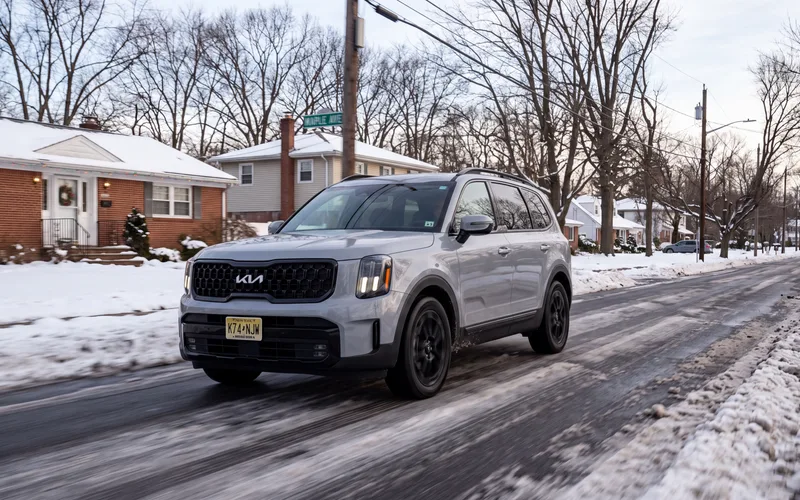 Kia TellurideMid-Size SUVBetter at: Value and warranty
Three rows, more standard gear at the price, a 10-year powertrain warranty and far stronger resale — the sensible answer for anyone not actually going off-road.
Compare 3.02B
3.02B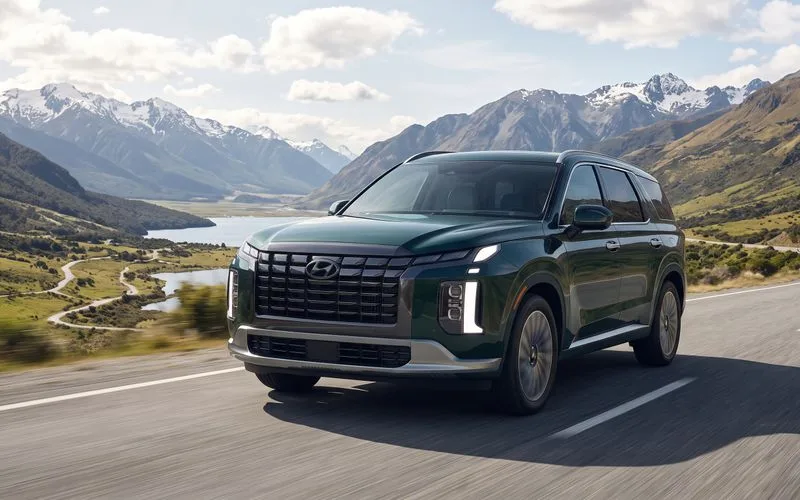 Hyundai PalisadeMid-Size SUVBetter at: Family space
The 2026 NACTOY Utility winner delivers better reliability, better feature value, and eight seats for Grand Cherokee Limited money.
Compare 2.38C+
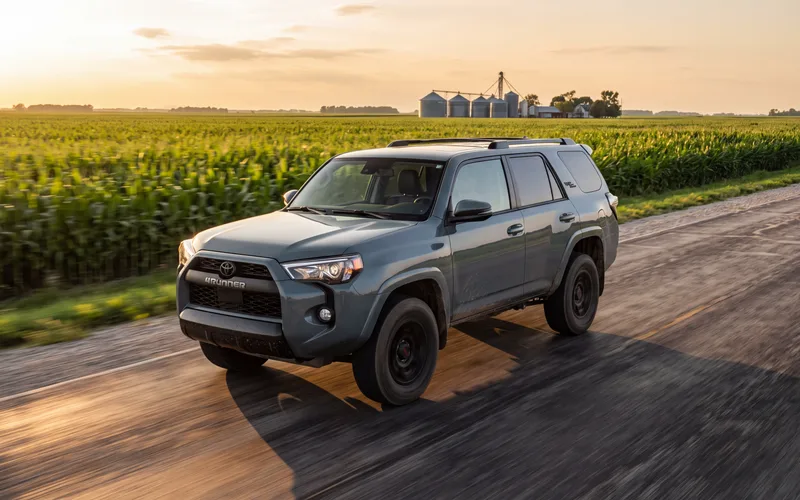 Toyota 4RunnerOff-Road SUVBetter at: Durability
For buyers whose priority really is trail capability and long-term durability, it out-lasts and out-retains the Jeep by a wide margin.
CompareHow it's evolved
10 scored model years · 2017–2026
Subject scores by year
Hover or tap a score to see what moved it versus the year before. A corner mark flags a big swing.
| Year | Performance | Efficiency | Safety | Space | Cost | Reliability | Tech | Use-case | Driving | Value |
|---|---|---|---|---|---|---|---|---|---|---|
| 2026 | 59 | 55 | 76 | 56 | 47 | 60 | 74 | 69 | 70 | 67 |
| 2025 | 58 | 49 | 74 | 54 | 42 | 53 | 74 | 64 | 65 | 69 |
| 2024 | 58 | 49 | 79 | 54 | 39 | 51 | 71 | 68 | 68 | 68 |
| 2023 | 58 | 49 | 78 | 54 | 36 | 49 | 70 | 68 | 68 | 67 |
| 2022 | 59 | 46 | 70 | 51 | 46 | 53 | 70 | 60 | 60 | 67 |
| 2021 | 57 | 46 | 54 | 48 | 45 | 51 | 42 | 52 | 59 | 61 |
| 2020 | 57 | 47 | 56 | 47 | 46 | 59 | 44 | 57 | 59 | 64 |
| 2019 | 58 | 47 | 43 | 50 | 45 | 57 | 47 | 60 | 63 | 63 |
| 2018 | 60 | 46 | 43 | 50 | 54 | 43 | 49 | 58 | 61 | 63 |
| 2017 | 59 | 47 | 50 | 49 | 50 | 49 | 44 | 57 | 64 | 65 |
Compare two years
Best fit & conditions
Higher scores mean a better fit for that use case. Learn more about use-case fit →
Subject profile
Trims & configurations
7 trimsScores above reflect the volume trim. Per-trim specs and scores are rolling out — the full lineup:
Detailed scoring by subject
1Performance & PowertrainOne of the Grand Cherokee's strongest categories.1.82C-
2021 is the final model year of the WK2-generation two-row Grand Cherokee (the redesigned three-row WL 'Grand Cherokee L' launched alongside it for 2021, with the two-row WL arriving for 2022), and its Pentastar V6 output carries over unchanged. 293 hp is mid-pack for a Premium-priced mid-size SUV.
Peak torque arrives high in the rev range on the naturally aspirated V6, so low-end response is modest for a vehicle this size — a WK2-generation trait unchanged since the Pentastar's introduction in this chassis.
The V6/8HP70/4x4 powertrain in the 2021 Grand Cherokee is mechanically identical to the version Car and Driver instrumented earlier in the WK2's long run, so that test result carries over directly with no powertrain changes for 2021.
The Pentastar delivers linear, lag-free throttle response typical of a naturally aspirated engine, but reviewers of the WK2-generation Grand Cherokee consistently describe it as merely adequate and audibly coarse when revved toward its power peak — a trait unchanged since this powertrain first appeared in the chassis.
The ZF-derived TorqueFlite 8HP70 eight-speed automatic — standard across the 2021 range — is a well-regarded unit, shifting smoothly and rarely hunting despite the V6's peaky power delivery.
6,200 lbs with the Trailer Tow Group is a strong figure for a unibody mid-size SUV, on par with the segment's best; a base V6 without the tow package is rated lower (around 3,500-6,200 lbs depending on options), so the properly-equipped max is used per the item's own definition.
Three 4x4 systems span the 2021 range — single-speed Quadra-Trac I, two-speed Quadra-Trac II with 2.72:1 low range, and Quadra-Drive II with a rear electronic limited-slip differential — plus five-mode Selec-Terrain on Trailhawk/Overland/Summit. Only a rear-drive base configuration keeps this off a perfect score.
The Trailhawk trim brings genuine light-to-moderate trail credibility: Quadra-Lift air suspension raising ground clearance to 10.9 in in its Off-Road 2 setting, a 25.7° approach angle, 22.8° breakover, skid plates, red front tow hooks, and Quadra-Drive II with a rear eLSD — a clear step above a pavement-only crossover but below a body-on-frame off-roader.
Four distinct gas engines span the 2021 range — the 3.6L V6, 5.7L HEMI V8, 6.4L SRT V8, and 707 hp supercharged 6.2L Trackhawk — covering everyday, towing and performance needs. All four are gasoline, though: the 4xe plug-in hybrid did not arrive on the Grand Cherokee until the WL redesign for 2022, so 2021 offers no electrified option at all.
2Efficiency & RangeOne of the Grand Cherokee's weakest categories.1.06D
21 MPG combined is below the WL-generation V6's later 22 MPG rating, reflecting the older WK2 chassis's heavier curb weight and less aerodynamic body carried through its final model year.
City economy is the weak point of the V6, and 4WD costs an additional 1 MPG in the city versus 2WD — the older WK2 driveline lacks the WL's later efficiency refinements.
Highway economy is the V6's best figure, aided by the 8-speed's tall top gear, though again the 4WD driveline gives up 1 MPG versus 2WD.
A large 24.6-gallon fuel tank gives the Grand Cherokee genuinely long legs between fill-ups despite mid-pack MPG — the clearest efficiency-adjacent strength of the gas powertrain.
EPA's $2,950/yr estimate is a real running-cost penalty relative to hybrid and smaller-displacement rivals, though it is regular-grade fuel rather than the premium or midgrade some V8 rivals require.
The Pentastar V6 runs on regular 87-octane unleaded, avoiding a premium-fuel surcharge on a Premium-priced SUV — a real cost advantage over turbocharged rivals in the segment that recommend or require premium.
3SafetyGrades below the middle of the scale.1.66D
NHTSA tested the WK2-generation Grand Cherokee (carried over for MY2021) and rated 4x4 configurations 5 stars overall, with RWD models rated 4 stars overall due to the shared 3-star rollover result.
IIHS rated the 2021 Grand Cherokee Good in moderate overlap front, side, roof strength and head restraints, but Marginal on the driver-side small overlap front test and Poor on the passenger-side small overlap front test — disqualifying it from any Top Safety Pick award and flagging a real structural weak point in one of IIHS's key tests.
The volume Laredo trim's standard ProTech I package covers only blind-spot monitoring, rear cross-path detection, ParkSense rear park assist and a backup camera — forward collision warning, automatic emergency braking, lane keep assist and adaptive cruise control all live in the optional ProTech II package (or are standard only on High Altitude/Overland/Summit trims well above volume).
When equipped with the optional Full-Speed Forward Collision Warning Plus, IIHS rated the front crash prevention system Superior in vehicle-to-vehicle testing, avoiding collisions in both the 12 mph and 25 mph runs — but the system is not standard on the volume trim and IIHS did not have a pedestrian rating available for this model year.
Blind-spot monitoring with rear cross-path detection is standard across the Grand Cherokee lineup via ProTech I, but it is alert-only radar coverage with no active braking intervention.
LaneSense lane departure warning with lane keep assist is offered only as part of the optional ProTech II package (standard on High Altitude/Summit); period reviews describe it as a basic warn-and-nudge system rather than true lane centering, with noticeable ping-pong at highway speed.
Adaptive Cruise Control with Stop is available on Laredo X/Limited and standard on High Altitude/Summit, and works down to a stop, but there is no combined highway-assist/lane-centering mode — it is cruise control and lane keep operating independently, which is dated relative to segment-leading systems by 2021.
No hands-free highway driving system was offered on any 2021 Grand Cherokee trim; Jeep did not introduce Active Driving Assist until the next-generation WL Grand Cherokee.
IIHS rated the standard halogen headlights Poor and only the optional Premium Lighting Group's HID projector setup Acceptable — on the volume Laredo trim with base halogen lighting, the rating is Poor, a genuine weak point.
The aging WK2's relatively upright greenhouse and thin-ish rear pillars give average-to-good outward sightlines for the segment, aided by a standard backup camera, though it lacks the surround-view camera offered by some rivals on lower trims.
IIHS rated LATCH ease of use Marginal, citing anchors that are difficult to locate or access in the rear seat, which makes installing multiple child seats more of a chore than in class leaders.
4Space & ComfortGrades below the middle of the scale.1.24D
The 2021 Grand Cherokee is the final year of the WK2 generation and is strictly a 2-row, 5-passenger SUV across every trim (Laredo through Trackhawk).
Standard front headroom for the volume Laredo/Limited trims.
Front legroom sits at the low end for the mid-size SUV class, consistent across the WK2 generation's cabin architecture.
Above-average rear headroom for the class.
Generous second-row legroom, one of the roomier aspects of the cabin.
No third row is offered on any 2021 Grand Cherokee (WK2) trim; buyers wanting three rows had to step up to the newly-launched, separately-badged Grand Cherokee L.
Modest behind-second-row cargo volume relative to other mid-size SUVs.
Below-average maximum cargo capacity for the segment.
Conventional console, door and underfloor storage with no standout innovation; competitive but unremarkable for the class.
12-way power front seats with lumbar support are comfortable on most trims; Nappa leather/ventilated seats on Summit add long-haul comfort, though front legroom is tighter than rivals.
Widely praised as an exceptionally stable, well-isolated ride that absorbs both small and large impacts with poise; a segment strength.
Generally quiet at highway speed but the boxier body shape lets in more wind noise than rounder rivals like the Nissan Murano or Ford Edge.
Heated front/rear seats, heated steering wheel and remote start are available from mid trims up, with ventilated front seats and a heated wood/leather wheel on Summit — solid but not segment-leading breadth.
5Cost of OwnershipOne of the Grand Cherokee's weakest categories.1.03D
Entry Laredo trim MSRP with destination; shown for reference only, not scored on its own.
Limited is the historical volume trim for Grand Cherokee; priced above segment midpoint. Shown for reference only.
RepairPal reports above-segment-average annual repair/maintenance cost ($666/yr vs. $573 midsize-SUV average) and elevated risk of a major repair; CarEdge's 10-year maintenance total (~$11,143) supports a 5-year estimate in the mid-$6,000s, above segment norms.
Independent depreciation trackers disagree slightly but bracket roughly 46–50% retention (50–54% depreciation) after 5 years, mid-pack for a mainstream midsize SUV nearing the end of its generation.
Industry-standard floor coverage; no extension beyond the FCA/Stellantis baseline in 2021.
Standard mainstream powertrain coverage, at the low end of the segment band and well short of Hyundai/Kia's 10-year offering.
Jeep Wave (introduced across the lineup by 2021) bundles 5-year/24-7 roadside assistance, trip-interruption reimbursement and dealer concierge perks with the warranty, but there is no multi-year complimentary scheduled maintenance program comparable to Toyota's or Lexus's — service visits are out-of-pocket after the first stop.
$43,855 volume-trim price minus its estimated resale value after 5 years (48% retained, or about $21,050) leaves about $22,805 in depreciation. Add the projected $6,800 in 5-year maintenance and repairs, and owning this vehicle for 5 years costs about $29,605 in total.
6Reliability & QualityGrades below the middle of the scale.1.41D
Signals genuinely conflict between the two major predictors for this exact model year, so this lands in the mixed-signals band rather than either extreme.
Multiple independent studies place Jeep in the bottom tier of brand dependability rankings for this period, consistent across sources.
A double-digit recall count for a single model year, including at least one loss-of-control-class safety recall (steering knuckle/upper control arm) and a rear coil spring detachment recall, is more than typical background activity for the segment.
The volume-trim Pentastar 3.6L V6 is itself a proven, high-mileage engine family, but its pairing with the FCA-built 845RE 8-speed (as distinct from the genuine ZF 8HP70 used behind the V8) carries a well-documented pattern of shudder, harsh shifts and intermittent limp mode — a mixed rather than clean track record.
Reviewers consistently praised the cabin's soft-touch surfaces and switchgear feel as upscale for the price, a longstanding WK2 strength even late in its model run.
No pattern of assembly complaints turned up for this model year, and Jeep as a brand scored above the industry average on J.D. Power's Initial Quality Study around this period, consistent with solid (if not class-leading) assembly.
Jeep/Chrysler/Dodge/Ram's combined dealer network gives it broad, dense US coverage, but franchise service satisfaction for the brand runs mid-pack rather than best-in-class.
Annual repair/maintenance cost runs above the midsize-SUV segment average, offsetting the benefit of Jeep's very large aftermarket parts ecosystem.
7Technology & InfotainmentThe Grand Cherokee's lowest-graded category.0.76F
Volume Laredo/Limited trims carry the smaller 7-inch Uconnect 4 screen; the 8.4-inch Uconnect 4C NAV is an available upgrade, not standard.
Uconnect 4/4C is consistently rated among the more usable systems of its era — logical menus and physical volume/tune knobs — though graphics and screen size trail newer rivals.
Apple CarPlay and Android Auto are supported across the lineup, but only via wired connection — the WK2's Uconnect 4/4C predates FCA's move to wireless projection, which arrived with Uconnect 5 on the redesigned 2022 model.
Integrated Voice Command and available Uconnect 4C NAV are functional, but many owners default to phone-projection navigation instead.
Base audio is adequate; an available Alpine premium system on upper trims is a solid but not class-leading step up (Summit's Harman-tier options were later-generation).
A 7-inch configurable digital display handles the speedometer and trip/ADAS info, but it's flanked by analog fuel/temp gauges rather than a fully digital cluster; full navigation-in-cluster is limited to Overland and above.
The WK2-generation Uconnect 4/4C platform of this era supported only limited map/software updates via USB or dealer visit, not the whole-vehicle wireless OTA capability FCA/Stellantis introduced with later Uconnect platforms.
The Uconnect app supports remote start, lock/unlock, vehicle locate and vehicle health reports — solid core functionality for the period, without a digital-key feature.
USB-A ports front and rear plus 12V outlets are standard; wireless charging is available only on upper trims and there is no USB-C.
Proximity keyless entry and push-button start are standard on most trims from Laredo E up, with remote start widely available; no phone-as-key feature this generation.
A rearview camera is standard and front/rear park-assist sensors are available from mid trims, but a true 360-degree surround view is not offered on the volume trims.
No head-up display is offered on any 2021 Grand Cherokee trim.
8Use-Case FitGrades below the middle of the scale.1.50D
Wide door openings and standard LATCH anchors make loading car seats manageable, but the lack of a third row and only average cargo space cap family versatility versus larger rivals.
NHTSA gave the 2021 Grand Cherokee an overall 5-star rating, but IIHS rated the small overlap front test Marginal (driver) and Poor (passenger) — a real weak point — and several ADAS features are bundled into the extra-cost ProTech package rather than standard on affordable trims.
Composed ride and decent rear legroom support multi-hour trips, but no third row, modest cargo room with all seats up, and thinner rear amenities on lower trims temper the case for larger families.
The Pentastar V6/8-speed combination and composed low-speed ride make the Grand Cherokee a relaxed daily driver, with only mildly soft/numb steering as a downside.
The volume 3.6L V6 4x4 posts roughly 19/26/22 mpg city/highway/combined — average for a mid-size SUV and well behind hybrid or unibody-crossover competitors on per-mile running cost.
A 37-ft turning diameter and standard backup camera keep it manageable in tight spaces, though its mid-size footprint and lack of standard surround-view camera make it less effortless than smaller crossovers.
The volume V6 tows up to 6,200 lbs with the Trailer Tow Group (3,500 lbs without it); a V8 option reaches 7,200 lbs, but there's no bed and payload tops out around 1,180 lbs even on the V8 — usable for light trailer work, not a dedicated work vehicle.
The WK2 platform was in its tenth and final model year by 2021, with a mature, well-proven V6/8-speed drivetrain, though it's positioned as a comfort-first SUV rather than a fleet workhorse.
No cargo bed, no household power outlet, and a limited factory upfit ecosystem; roof rails and a removable cargo cover are about the extent of the work-oriented provisions.
A quiet, well-isolated ride and a ~24.6-gallon tank give solid highway range (roughly 500+ miles combined) for road trips, tempered by some wind noise and a driving-assist suite that's extra-cost on lower trims.
Available Quadra-Trac/Quadra-Drive 4x4 systems, a Trail Rated Trailhawk trim, and up to 9.7 in of ground clearance with the optional air suspension give genuine light off-road and towing-for-toys capability.
60/40 split-folding rear seats and standard roof rails handle typical gear, but max cargo volume (68.3 cu ft) trails many mid-size rivals, making bulky loads more of a squeeze.
9Driving ExperienceOne of the Grand Cherokee's strongest categories.1.94C-
Composed body control and minimal lean in fast turns give the Grand Cherokee secure, confident handling for a mid-size SUV, though it's tuned for comfort rather than outright agility.
Reviewers consistently note the steering is accurate enough but soft and short on feedback.
No major complaints surfaced about stopping power or pedal feel; braking is described as adequate and predictable for the segment.
The 3.6L Pentastar V6 paired with the ZF-derived 8-speed automatic shifts smoothly with adequate throttle response for daily driving; not class-leading refinement but no notable roughness.
The V6 is fairly hushed under normal loads; most of the cabin noise reviewers flag comes from wind around the boxy body rather than the drivetrain itself.
A middling-to-good turning diameter for a mid-size SUV.
Good sightlines, a commanding seating position and a logically-arranged cabin with mostly physical controls make for comfortable, easy-to-adapt-to ergonomics.
The volume V6 Laredo/Limited is pleasant and capable but not engaging; genuine driving enthusiasm in this generation is reserved for the SRT/Trackhawk performance variants, not the mainstream trim being scored.
10Value & Market PositionThe Grand Cherokee's best-graded category.2.10C
Base Laredo includes 7-inch Uconnect touchscreen, remote start availability and a decent driver-assist option list, but items like blind-spot monitoring, power liftgate and larger infotainment are trim-gated rather than standard, putting it mid-pack against segment rivals.
Genuine off-road hardware (Trailhawk, Quadra-Trac/Quadra-Drive, air suspension) and the halo Trackhawk give it capability rivals lack, but pricing has crept up over the generation's life and infotainment/tech feel dated next to newer 2021 rivals — fair but unremarkable content-per-dollar overall.
Seven distinct trims (Laredo, Limited, Trailhawk, Overland, Summit, SRT, Trackhawk) span budget commuter to serious off-roader to 707-hp performance SUV, a wide and well-spaced lineup for the segment.
2021 was a peak sales year for this generation of Grand Cherokee even as it neared replacement, placing it among the strongest sellers in the midsize SUV class that year.
Jeep carries strong brand equity and off-road authenticity, and the Grand Cherokee nameplate specifically has a loyal following, though the brand's reliability reputation is a mild drag on desirability.
Modest but real incentives (low-thousand-dollar dealer discounts plus small manufacturer rebates) were available in 2021 without indicating desperation pricing, typical of a strong-selling but not sold-out model.
2021 is the final model year of the WK2 generation that launched for 2011 — a 10-year-old platform with a fully redesigned WL-generation Grand Cherokee arriving for 2022. This is an aging generation on the eve of replacement, not a mid-cycle vehicle.
The WK2 Grand Cherokee earned strong reviews and awards earlier in its long run for ride quality and off-road breadth, but by 2021 comparison tests increasingly favor newer, more modern-feeling rivals (Highlander, Telluride, Explorer) on tech and refinement, so it is well-regarded rather than a fresh class winner.