

The verdict
A mixed-report mid-size suv, strong on safety and held back by ownership.
The 2024 Grand Cherokee is the mid-size SUV to buy when you actually intend to tow a 6,000-lb trailer or leave the pavement — 6,200 lbs of tow rating, three real four-wheel-drive systems and up to 10.9 inches of ground clearance are things a Telluride or Palisade simply cannot do. It backs that up with a 5-star NHTSA rating, a genuinely generous standard driver-assist suite on even the base Laredo, and roughly 500 miles of range from its 23-gallon tank. The problem is everything that happens after the test drive: 22 MPG combined and $2,800 a year in fuel, a 3-year/36,000-mile warranty that's the shortest in the class, resale that trails the segment by about four points, and a Consumer Reports reliability verdict of "less reliable than other cars from the same model year" backed by 15 recall campaigns and 240 NHTSA complaints. Buy a 2024 used, where the depreciation has already happened and 2024's heavy factory discounts are baked into the price — and budget for a good extended warranty.
Jump to scoresStrengths
- Real capability no crossover rival can match
- Five-star crash rating and driver aids standard on the cheapest trim
- Built for the long haul
What holds it back
- Reliability is the reason to hesitate
- Thirsty, with no hybrid in the two-row lineup
- Depreciation and the shortest warranty in the class
Top alternatives
Cars shoppers cross-shop with the Jeep Grand Cherokee 2.79B-
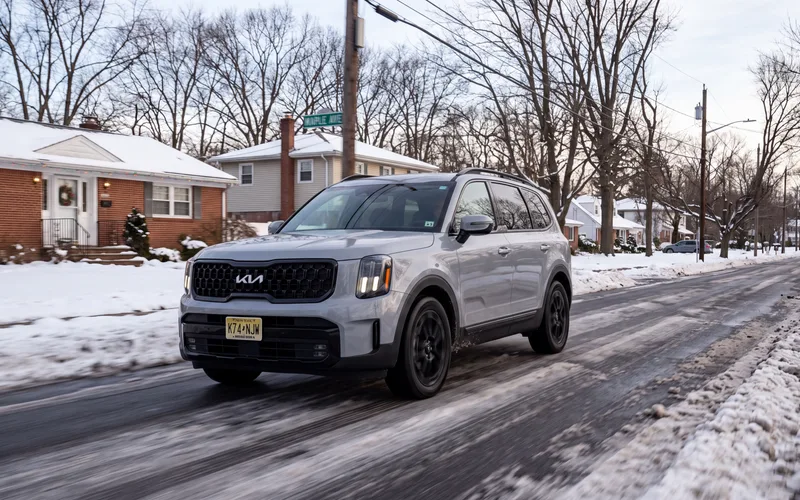 Kia TellurideMid-Size SUVBetter at: Value and warranty
Three rows, more standard gear at the price, a 10-year powertrain warranty and far stronger resale — the sensible answer for anyone not actually going off-road.
Compare 3.02B
3.02B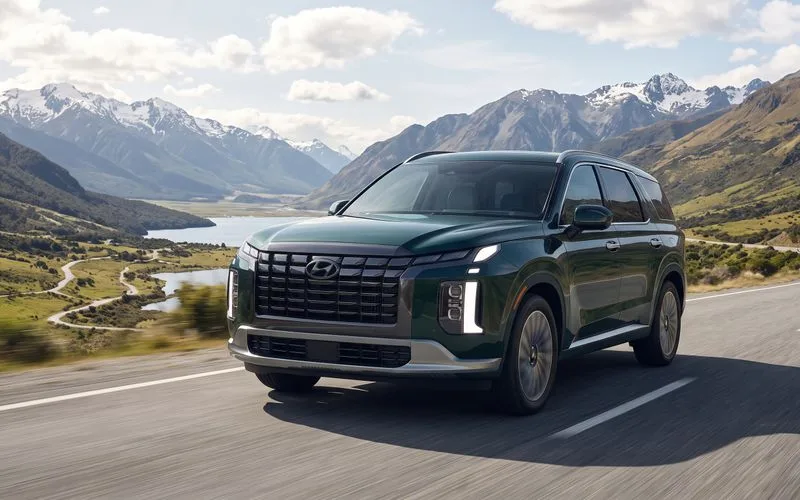 Hyundai PalisadeMid-Size SUVBetter at: Family space
The 2026 NACTOY Utility winner delivers better reliability, better feature value, and eight seats for Grand Cherokee Limited money.
Compare 2.38C+
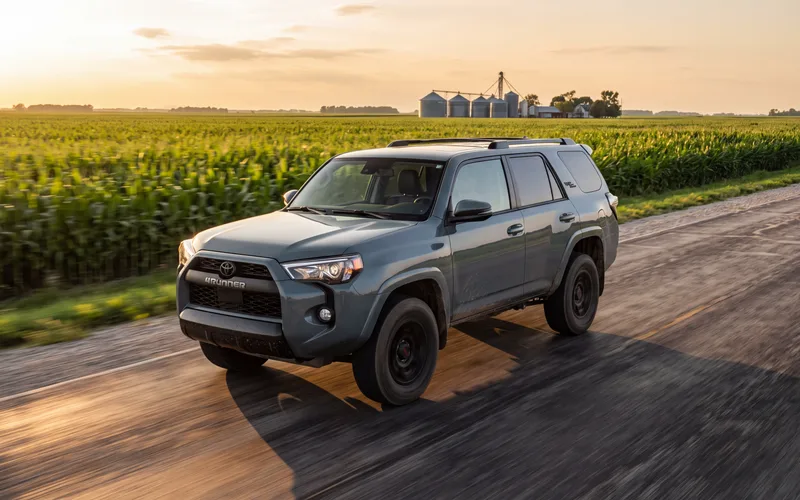 Toyota 4RunnerOff-Road SUVBetter at: Durability
For buyers whose priority really is trail capability and long-term durability, it out-lasts and out-retains the Jeep by a wide margin.
CompareHow it's evolved
10 scored model years · 2017–2026
Subject scores by year
Hover or tap a score to see what moved it versus the year before. A corner mark flags a big swing.
| Year | Performance | Efficiency | Safety | Space | Cost | Reliability | Tech | Use-case | Driving | Value |
|---|---|---|---|---|---|---|---|---|---|---|
| 2026 | 59 | 55 | 76 | 56 | 47 | 60 | 74 | 69 | 70 | 67 |
| 2025 | 58 | 49 | 74 | 54 | 42 | 53 | 74 | 64 | 65 | 69 |
| 2024 | 58 | 49 | 79 | 54 | 39 | 51 | 71 | 68 | 68 | 68 |
| 2023 | 58 | 49 | 78 | 54 | 36 | 49 | 70 | 68 | 68 | 67 |
| 2022 | 59 | 46 | 70 | 51 | 46 | 53 | 70 | 60 | 60 | 67 |
| 2021 | 57 | 46 | 54 | 48 | 45 | 51 | 42 | 52 | 59 | 61 |
| 2020 | 57 | 47 | 56 | 47 | 46 | 59 | 44 | 57 | 59 | 64 |
| 2019 | 58 | 47 | 43 | 50 | 45 | 57 | 47 | 60 | 63 | 63 |
| 2018 | 60 | 46 | 43 | 50 | 54 | 43 | 49 | 58 | 61 | 63 |
| 2017 | 59 | 47 | 50 | 49 | 50 | 49 | 44 | 57 | 64 | 65 |
Compare two years
Best fit & conditions
Higher scores mean a better fit for that use case. Learn more about use-case fit →
Subject profile
Trims & configurations
7 trimsScores above reflect the volume trim. Per-trim specs and scores are rolling out — the full lineup:
Detailed scoring by subject
1Performance & PowertrainMid-pack among this car's ten categories.1.88C-
For 2024 every gas two-row Grand Cherokee — Laredo, Limited, Overland and Summit alike — uses the 3.6L Pentastar V6 at 293 hp, a mid-pack figure for a Premium-priced mid-size SUV. The 5.7L HEMI V8 was reserved for the three-row Grand Cherokee L and was never offered in the two-row body.
The naturally aspirated V6's 260 lb-ft peaks high at 4,000 rpm, so low-end pull is modest against turbocharged rivals in the same price bracket. Buyers wanting real low-rpm shove in a 2024 Grand Cherokee have to step to the 4xe.
With 293 hp hauling a 4,413 lb Limited 4x4, instrumented runs of the mechanically identical WL V6 cluster at 7.3–7.7 seconds — adequate but unremarkable, and slower than turbo-four and turbo-six rivals at this price. 2024 is a mechanical carry-over year, so no MY2024-specific instrumented test was needed to place it.
The Pentastar V6 is well isolated at cruise in the Grand Cherokee's heavily sound-deadened body, but reviewers consistently describe it as workmanlike — it has to be revved to deliver, and gets audibly coarse and droney near its 6,700 rpm limit. Throttle response is linear with no turbo lag, which keeps it out of the bottom band.
The ZF-derived TorqueFlite 8HP70 eight-speed is a class benchmark — smooth, quick to downshift, and rarely caught in the wrong gear despite the V6's peaky delivery. It is standard on every 2024 trim, so the volume Laredo/Limited buyer gets the same unit as the Summit.
6,200 lbs with the Trailer-tow Group is strong for a unibody mid-size SUV — comfortably ahead of car-based crossovers and level with the Explorer, though short of the body-on-frame Wagoneer. The rating is identical for 2WD and 4WD, so drivetrain choice costs nothing in capability.
Three escalating 4x4 systems are offered across the 2024 range — Quadra-Trac I (single-speed) on Laredo/Limited, Quadra-Trac II with a two-speed transfer case and 2.72:1 low range on Overland, and Quadra-Drive II with a rear electronic limited-slip differential standard on Summit — with five-mode Selec-Terrain on all 4x4 models above Laredo. Only the availability of rear-drive entry models keeps this off a perfect score.
Genuine light-to-moderate trail hardware is available: Quadra-Lift air suspension lifts ground clearance from 8.4 to 10.9 in and approach angle from 20.5° to 30.1°, and Overland's Off-road Group adds skid plates, a rear electronic limited-slip differential and a Trail Rated badge. It sits a clear step below purpose-built off-roaders — no front locker or disconnecting sway bar — and for 2024 the dedicated Trailhawk trim exists only on the 4xe, not on the gas configuration scored here.
The two-row 2024 Grand Cherokee offers two distinct powertrains — the 3.6L V6 and the 375 hp 4xe plug-in hybrid — which covers mainstream and electrified needs but leaves no turbocharged gas option and no full EV. The 5.7L HEMI V8 belongs to the three-row Grand Cherokee L, not to this body style.
2Efficiency & RangeOne of the Grand Cherokee's weakest categories.1.27D
22 MPG combined from the naturally aspirated V6 is mid-pack for a gas mid-size SUV in 2024 — respectable for a 4,400 lb Jeep with real 4WD hardware, but well behind the turbo-four and hybrid crossovers it shares showroom space with. Notably the 4WD rating is identical to 2WD, so choosing four-wheel drive costs nothing at the pump.
19 MPG city is the weakest part of the Grand Cherokee's efficiency picture — the port-injected V6 has no hybrid assist or cylinder deactivation to lean on in stop-and-go traffic, and the vehicle's mass tells there.
26 MPG highway is the V6's strongest figure, helped by a tall eighth gear and a 0.357 drag coefficient — the Grand Cherokee is at its most efficient on a long cruise, which is where its range advantage comes from.
A large 23-gallon tank turns middling economy into genuinely long legs — 506 miles between fills is well above the mid-size SUV norm and the clearest efficiency-related strength the gas Grand Cherokee has.
EPA puts the gas Grand Cherokee's annual energy bill at $2,800 — high in absolute terms and a real running-cost penalty against hybrid rivals, though it is at least regular-grade fuel rather than premium.
The Pentastar V6 is certified on regular 87-octane unleaded, so there is no premium-fuel surcharge on a Premium-priced SUV — a meaningful cost advantage over turbocharged European rivals in the segment. Nothing exotic is required, and the 4xe elsewhere in the range adds cheap home charging as an option.
3SafetyThe Grand Cherokee's best-graded category.3.37B+
NHTSA rated the 2024 Grand Cherokee five stars overall in both drive configurations, with five stars in every frontal and side measure and four stars for rollover resistance (17.9% rollover risk, no tip in the dynamic test).
The 2024 Grand Cherokee is an IIHS Top Safety Pick, not TSP+, and it carries a genuine structural blemish rather than a crash-avoidance technicality: Good in driver and passenger small overlap front, updated side and the original moderate overlap front, but **Poor** in the updated moderate overlap front test, driven by head, neck and chest readings on the second-row dummy. Seat belt reminders are Marginal. That combination sits below the prompt's top band, which requires TSP+ or TSP with all-Good crash results — a Poor in a core crashworthiness test is worse than the 'some Acceptable results' the middle band describes, but the vehicle does hold an award, so it lands at the top of that middle band rather than in it. The award's build-date caveat (two-row cars built after March 2023, after Jeep revised the undercarriage sheet metal that had punctured the fuel tank in the updated side test) is satisfied by every 2024 model year car.
Every element the item asks about is standard on the base Laredo, not optional or trim-locked: full-speed forward collision warning with active braking and pedestrian/cyclist detection, adaptive cruise control with stop-and-go, Active Lane Management (lane centering) plus LaneSense lane departure warning with lane keep assist, blind-spot monitoring with rear cross path detection, advanced brake assist, rear park sensors with stop and reverse automatic emergency braking. Standard stop-and-go ACC and standard BSM on an entry trim are both above mid-size SUV norms, which is what puts this at the top of the band rather than merely inside it.
IIHS rates the 2024 Grand Cherokee's pedestrian front crash prevention only Acceptable under the revised protocol that combines daylight and dark test runs — a step down from the Advanced-daytime/Superior-nighttime results the same hardware earned for 2023 under the easier separate tests, and short of the Advanced/Superior that 2024 award criteria demand. IIHS publishes no vehicle-to-vehicle rating for this year, having retired that test once nearly the whole fleet was scoring Superior, so there is no offsetting top-band result to weigh against the Acceptable. This is the middle band almost exactly: competent detection that gives ground in the dark and against pedestrian targets.
Blind-spot monitoring with rear cross path detection is standard on every 2024 trim including Laredo, which is the better half of the middle band, and standard reverse automatic emergency braking adds real intervention rather than warning alone when backing out. It stops short of the top band because the side coverage itself is alert-only — no steering or braking intervention against a vehicle alongside — and there is no safe-exit alert for occupants opening a door into traffic.
The Grand Cherokee pairs LaneSense lane departure warning and lane keep assist with Active Lane Management's true lane centering, all standard, and reviewers describe the centering as trustworthy rather than merely functional — Edmunds notes the system works well without the sharp corrections or ping-ponging that pull lesser implementations into the middle band. Held at the bottom of the top band rather than higher because the praise comes from review prose rather than an instrumented or independently rated comparison.
Adaptive cruise control with full stop-and-go is standard across the range, and reviewers report it brakes and accelerates smoothly rather than with the late braking or sluggish resume that defines the middle band. It is integrated with Active Lane Management into a coherent hands-on Level 2 highway assist, so the longitudinal and lateral halves work as one system rather than as two features sharing a stalk.
The 2024 Grand Cherokee is the launch vehicle for Stellantis' Hands-Free Active Driving Assist, so hands-free is genuinely on the order sheet — but the gates are narrow enough to keep this in the middle band rather than the top. It is a $2,995 option restricted to Overland 4x4 and Summit 4x4 with the 3.6L Pentastar V6, so the volume Laredo and every V8 and 4xe car cannot have it at all; it arrived mid-year in February 2024 with no track record; and its roughly 125,000 miles of premapped road is a fraction of GM Super Cruise's coverage, which is what 'broad road coverage' in the top band means.
This is the prompt's middle band stated almost verbatim: IIHS rates the Limited, Overland and Summit headlights Good, while the Laredo — the volume trim this scorecard describes — rates only Acceptable. A buyer shopping the entry trim therefore does not get the best-rated lighting, and the Good result requires stepping up a trim.
The WL's upright greenhouse, tall glass and squared-off hood give the driver good forward and quarter sightlines for a mid-size SUV, and reviewers treat visibility as a strength in traffic and when parking. It sits in the upper middle band rather than the top because the camera compensation that would lift it there is not standard on the volume trim — the 360-degree surround-view camera and night vision are options, leaving Laredo buyers with the standard back-up camera and rear park sensors against thick rear pillars and a high beltline.
Cars.com's car seat check graded the LATCH hardware itself an A — two sets of lower anchors under a single large upholstery flap, easy to find and easy to connect — with A grades for both infant and rear-facing convertible seats and no loss of front passenger legroom, and the rear doors open wide enough to work in. What keeps it just below the top band is the older-child end: the fixed rear head restraints push a booster off the seatback (graded C) and interfere with a forward-facing convertible raised for a taller child (B), the tether routing opening through the head restraint is small, and the short buckle stalks sit flush with the cushion where small hands struggle with them.
4Space & ComfortGrades below the middle of the scale.1.61D
The 2024 two-row Grand Cherokee (WL) is a strict five-seater — no third row is offered at any trim, which caps it near the bottom of the SUV seating band. Buyers needing a third row must step to the distinct Grand Cherokee L model.
39.9 inches sits comfortably above the mid-size SUV midpoint — the WL's tall, upright greenhouse gives generous front head clearance in the no-sunroof configuration the spec sheet publishes.
41.3 inches is only modestly above the segment floor — adequate for tall drivers thanks to nearly 10 inches of seat travel, but the WL prioritizes second-row and cargo space over front stretch-out room.
39.4 inches of second-row headroom is near the top of the mid-size SUV band and one of this cabin's clearest strengths — adults sit upright in the back without ducking.
38.2 inches is genuinely adult-friendly for a two-row mid-size SUV and reviewers single the second row out as road-trip usable, though it trails the roomiest three-row rivals' middle benches.
The 2024 two-row Grand Cherokee has no third row at all — the seating chart is 2/3 across every trim from Laredo to Summit Reserve. Scored in the bottom band because the item measures a capability this configuration simply does not have.
37.7 cubic feet is squarely average for a mid-size SUV — fine for a family's weekly load but well short of the boxier three-row crossovers this Jeep is priced against.
70.8 cubic feet with the 60/40 second row down is competitive among two-row mid-size SUVs but sits in the lower third of a band that stretches to the 100-cu-ft three-row utilities.
Sensible rather than inventive: a full-length floor console with two-tier armrest storage and a front bin sized for two phones, an overhead console with sunglasses bin, and a carpeted cargo area with a storage tray, four tie-down loops, a driver's-side bin and a 12-volt outlet. There is no giga-console, frunk or underfloor trick, and the wireless charging pad is a package extra on every trim including Summit.
The volume Limited gets Capri leather over an eight-way power driver's seat with memory, a power four-way lumbar adjuster, power front passenger seat, and heated front AND heated second-row seats as standard; ventilated fronts, 12-way power, length-adjustable cushions and five-profile massage arrive higher up. Reviewers repeatedly call both rows good for hours-long stints, with the only complaint being firmish front cushions.
On the coil-spring multi-link setup that the volume Laredo/Limited trims use, the WL is compliant enough to keep harsh hits out but carries an underlying firmness that lets smaller road imperfections through — a step behind the Quadra-Lift air suspension standard on Overland and Summit, which is not the volume configuration.
Quiet at a highway cruise for the class — the Limited's standard six-speaker premium audio ships with active noise cancellation and reviewers describe the cabin as quiet and well isolated — but the naturally aspirated Pentastar V6 turns coarse and thrashy under hard throttle, which is the one recurring noise complaint.
Unusually rich on the trims people buy: the Limited includes dual-zone automatic front climate with a single-zone rear, heated front seats, heated second-row seats, a heated steering wheel, remote start, a memory system and a 115-volt outlet as standard. Four-zone automatic climate, ventilated front seats and manual rear window shades come on Overland/Summit or via the Lux Tech Group.
5Cost of OwnershipThe Grand Cherokee's lowest-graded category.0.57F
Jeep cut Grand Cherokee prices for 2024, dropping the entry Laredo A roughly $1,840 below the 2023 Laredo's $40,130 start. The two figures circulating for 2024 differ by exactly the $1,795 destination charge, which is how the with- and without-destination readings reconcile.
Limited 4x4 is the volume configuration of the two-row Grand Cherokee and is the trim carried across this nameplate's other model-year scorecards. Two independent paths land on the same number, and CarEdge's "typically-equipped" basis of $48,951 corroborates it.
Published estimates split sharply by basis: CarEdge's owner-cost model says $3,512 while KBB's dealer-retail cost-to-own says $9,229, so the midpoint is the honest figure. RepairPal puts the Grand Cherokee above its class on running costs, which argues against the low end.
The Grand Cherokee depreciates faster than its segment, and the 2024 model year specifically was sold into a Stellantis inventory glut with heavy incentives, which depresses residuals further. Multiple independent estimates cluster in the mid-to-high 40s.
Stellantis' standard Basic Limited Warranty applies to every 2024 Jeep model and trim, and sits at the bottom of the segment band alongside most mainstream rivals.
The 5-year/60,000-mile powertrain term covers engine, transmission and axle components on all 2024 Grand Cherokee trims and is the floor of the segment band — Hyundai/Kia offer double the term.
Jeep Wave is standard on the 2024 Grand Cherokee and bundles more than bare roadside — 24/7 assistance, trip-interruption reimbursement and a no-charge same-day loaner during routine service — but the included maintenance is only the first two oil changes and tire rotations inside 24 months, short of the two full years of scheduled service Toyota and Hyundai include.
$49,700 volume-trim price minus its estimated resale value after 5 years (47% retained, or about $23,359) leaves about $26,341 in depreciation. Add the projected $7,000 in 5-year maintenance and repairs, and owning this vehicle for 5 years costs about $33,341 in total.
6Reliability & QualityOne of the Grand Cherokee's weakest categories.1.40D
Consumer Reports rates the 2024 Grand Cherokee less reliable than other vehicles of its model year, with owner-reported trouble concentrated in battery drain, infotainment freezing/blanking, keyless entry faults, sunroof leaks and dash rattles. NHTSA complaint volume corroborates it at scale: 240 complaints against MY2024, led by electrical system (108) and engine (102), with 15 reports describing stalling and 6 outright loss of propulsion. It is not the bottom-of-the-model-year outlier CR named the 2025 car, but it sits clearly below the segment's average expectation.
Jeep is a bottom-tier dependability brand in both major surveys and has been for several consecutive years, which is a structural drag on any Jeep nameplate rather than a one-model-year artifact. The most recent VDS cohort is 2023-model-year cars — the same WL generation and assembly plant as this 2024 vehicle — so the brand result is directly relevant rather than merely indicative.
MY2024 carries the heaviest gas-side recall load of the WL years now on sale: NHTSA lists 15 campaigns against the Grand Cherokee nameplate for 2024 (17 counting the two filed under the 4xe listing), of which about ten reach the scored gas non-L car. Two are serious hardware defects rather than software resets — 24V131 (improperly machined steering knuckle that may separate at the ball joint, 2024-only) and 24V346 (front bumper missing energy-absorbing foam, front airbags may not deploy, 2024-only) — and 24V926 (unsecured radiator crossmember bolts) is a third assembly failure. The remainder are the Stellantis software cadence: headlight AUTO logic, speedometer cluster, rearview camera, side-airbag connector, second-row head restraints, occupant-restraint controller, and a 2022-2024 PRNDL gear-indication error. That is materially worse than MY2025 (three campaigns, only one gas-applicable) and roughly on par with MY2023 (21).
The scored configuration is the 3.6L Pentastar V6 (293 hp / 260 lb-ft) with the 850RE eight-speed, a Kokomo-built licensed ZF 8HP75 — both long-serving designs with a documented high-mileage record, and the strongest single element of this car's reliability case. Known weak points keep it out of the top band rather than in it: Pentastar oil filter housing leaks, rocker-arm/roller-follower and camshaft lobe wear, and cooling-system attrition, plus 850RE torque-converter shudder and harsh cold upshifts (19 MY2024 complaints mention shifting, 14 the transmission). Nothing in the MY2024 record points at a new powertrain-family defect — the 26V413 campaign is a gear-indication software error, not a mechanical fault.
The WL cabin remains one of the Grand Cherokee's strongest cards and is unchanged for 2024 — the volume Limited gets Capri leatherette, a 10.1-inch Uconnect 5 screen and soft-touch coverage across the main touchpoints, with real open-pore wood and quilted leather appearing on Overland and Summit. Reviewers put it at or above the segment mean for the money, but the recurring criticism is that it reads better than it feels, which caps it short of Genesis GV80 / Volvo XC90 material richness at a Premium price class.
Assembly consistency is the weakest part of the build-quality picture for this specific model year, and unusually there is recall evidence rather than just review anecdote: missing bumper energy-absorbing foam (24V346), unsecured radiator crossmember bolts (24V926) and an improperly secured side-airbag connector (24V897) are all line-assembly escapes on 2024 cars. Edmunds called the interior build quality of its test vehicle disappointing for the price, and owner reports flag imperfect body lines and rocker-molding alignment alongside dash rattles and sunroof water leaks. The unibody structure still assembles more tightly than body-on-frame rivals, which keeps this above the bottom band.
Coverage is a genuine strength — roughly 2,500 US Jeep rooftops give metro and rural reach few rivals match, which matters for a nameplate sold heavily outside major markets and for a car that will visit the service drive more than the segment average. Service satisfaction is the offset: J.D. Power puts Jeep below the mass-market SUV/minivan average, so the network is easy to reach but not well regarded once you are in it.
The Grand Cherokee's very large installed base underwrites abundant OEM and aftermarket parts at ordinary prices, and measured repair cost and frequency land at or slightly better than segment norms. Deductions are configuration-specific rather than model-wide: optional Quadra-Lift air suspension and adaptive dampers are expensive out-of-warranty items versus a coil-sprung rival, and the electrical/infotainment fault pattern that dominates the complaint record tends to mean module replacement at dealer prices.
7Technology & InfotainmentOne of the Grand Cherokee's strongest categories.2.78B-
For 2024 the volume trims still shipped the smaller 8.4-inch Uconnect 5 head unit — the 10.1-inch screen was a package item on Limited rather than standard equipment, which is a genuine year-specific difference from the later refreshed cars. 8.4 inches lands near the bottom of the SUV band.
Uconnect 5 is one of the best mainstream systems in the segment — quick to boot and respond, logically organised, with dual-phone Bluetooth pairing, and Jeep deliberately retained physical knobs and buttons for climate and volume rather than burying them in the screen. The 8.4-inch panel on volume trims is the constraint, not the software.
Both wireless Apple CarPlay and wireless Android Auto are standard on every 2024 Grand Cherokee trim, base Laredo included — one of the strongest phone-projection baselines in the mid-size SUV class, where wireless projection was still an upper-trim item at several rivals in 2024.
Integrated voice command with voice text reply and Amazon Alexa compatibility is standard, and TomTom connected navigation with SiriusXM Traffic/Travel Link is good when fitted — but the volume Laredo/Limited configuration ships the non-NAV head unit, so native maps is a package upgrade and most owners default to phone projection.
The ceiling is genuinely class-leading — a 19-speaker McIntosh system with a 10-inch subwoofer and a 17-channel, 950-watt amplifier. The middle is solid too: six premium speakers with active noise cancellation standard on Limited, a nine-speaker 506-watt Alpine with subwoofer via the Entertainment Group. Only the base Laredo's plain six-speaker setup is ordinary.
A full-color, frameless 10.25-inch fully digital gauge cluster with customizable menus and per-driver memory is standard on every 2024 trim including the base Laredo — a stronger baseline than most mid-size SUVs of the year, where a full-digital cluster was typically reserved for upper trims.
Uconnect 5 delivers genuine over-the-air updates — Jeep's own availability sheet lists Firmware OTA on every head unit and Maps OTA on the NAV variants, pushed through the built-in cellular modem or home Wi-Fi. Scope is infotainment and maps only, though: Stellantis had not extended OTA to powertrain, chassis or ADAS modules for 2024, so updates do not add vehicle features the way Tesla or Rivian's do.
The Jeep app covers the core set — remote start, remote lock/unlock, vehicle locate and status, and Drive Alerts — plus SOS/emergency calling via the overhead console. It is a competent rather than standout app: no phone-as-key is offered on the 2024 Grand Cherokee, and remote features run on a trial before moving to a paid Connected Services subscription.
Six USB ports in a mix of Type-A and Type-C are standard across both rows on every trim, alongside two 12-volt outlets and a 115-volt household outlet that is standard from Limited up. The gap is wireless charging: it is a package item (Lux Tech Group) on all four trims rather than standard anywhere, which is behind rivals that made a charging pad standard mid-range by 2024.
Passive entry with push-button start is standard, but only for the two front doors on Laredo and Limited — four-door passive entry is a Lux Tech Group item on Limited and standard only from Overland up. Remote start is standard from Limited and a package on Laredo, and the power liftgate with programmable height is standard on Limited. No phone-as-key is offered.
A strong standard floor and a well-equipped top end: ParkView rear backup camera plus ParkSense rear park-assist sensors with braking on every trim, front sensors from Overland (a package on Limited), and a 360-degree SurroundView camera with front and rear lens washers packaged on Limited/Overland and standard on Summit. Automated ParkSense Parallel/Perpendicular Park Assist is Summit-only, so parking automation does not reach the volume trims.
A large 10-inch full-color windshield head-up display exists and is well regarded, but for 2024 it is reachable only by ordering the Advanced ProTech Group on Overland or Summit — it is not available at all on Laredo or on the volume Limited, which keeps it out of the hands of most buyers.
8Use-Case FitOne of the Grand Cherokee's strongest categories.2.63C+
Good bones for daily kid logistics — wide-opening rear doors, a 20.2-inch sill step height that toddlers can climb, 38.2 inches of second-row legroom so rear-facing seats fit without pushing the driver forward, and two full outboard LATCH sets. It is held back by the five-seat layout (no third-row escape hatch for a third child) and by the middle position, which is tether-only and awkward for boosters.
The safety proposition is strong at the price points families actually shop: NHTSA 5-star overall, an IIHS Top Safety Pick, and forward collision warning with active braking and pedestrian/cyclist detection, blind-spot monitoring, rear cross-path detection and Active Lane Management all standard on the base Laredo. The reservation is the IIHS updated moderate-overlap front test, where the rear-passenger protection rating was Poor.
A properly equipped long-haul family car: heated second-row seats standard from Limited, 39.4 inches of rear headroom and 38.2 inches of rear legroom, a quiet cabin, 37.7 cu ft of cargo with everyone aboard, roughly 500 miles between fills, and an optional rear-seat entertainment system with dual 10.1-inch screens and Fire TV. Four-zone climate and rear window shades sit on upper trims rather than the volume car.
Easy-going in traffic: the 293-hp Pentastar V6 and eight-speed automatic shift smoothly and pull adequately from low speeds, the electrically boosted brakes and light steering keep effort down, and adaptive cruise with stop-and-go is standard. Commanding sightlines and a quiet cabin lower fatigue; the coil-spring ride's underlying firmness is the main daily irritant.
This is the Grand Cherokee's weakest mission. EPA rates the volume V6 at 19/26/22 MPG and $2,800 a year in fuel — roughly 60% more per mile than a hybrid mid-size crossover, and 19 MPG in the stop-and-go city cycle is where a 4,400-lb body-and-4WD SUV with no electrified assist really hurts. The partial offset is real, though: the Pentastar is certified on regular 87 octane, so there is no premium-fuel surcharge on a Premium-priced SUV.
Mid-pack and no better: 193.5 inches long, 77.5 inches across the body (84.6 with mirrors out) and a 38.0-ft curb-to-curb turning circle make it manageable but never nimble in tight urban work. A rear camera and rear park sensors with automatic braking are standard on every trim, but the 360-degree SurroundView camera that would really help is a package or Summit item.
Best-in-class towing for a two-row premium mid-size SUV — 6,200 lbs properly equipped with the Class IV hitch receiver, comfortably past the 3,500–5,000 lbs most unibody crossover rivals manage, and the rear suspension includes load levelling for towing. Payload is ordinary at about 1,240–1,260 lbs and there is no bed, so it is a trailer-puller and gear-hauler rather than a genuine work tool.
The hardware that matters under load is proven — the Pentastar V6 and the ZF-derived 850RE eight-speed both have long high-mileage records — but the vehicle around them does not inspire confidence for abuse. Consumer Reports rates the 2024 less reliable than other vehicles of its model year, NHTSA lists 15 recall campaigns against the 2024 nameplate, and there is no wear-friendly vinyl/rubber interior option; leather on the volume trim is the opposite of jobsite-ready.
The basics are covered — factory roof rails on every trim, four cargo tie-down loops with a removable storage tray and a driver's-side bin, two 12-volt outlets including one in the cargo area, a 115-volt household outlet standard from Limited, and a Class IV hitch via the tow group. What is missing is everything past the basics: no bed, no washable surfaces, no bespoke work packages, and a thin factory/aftermarket upfit ecosystem next to a Wrangler or a pickup.
A very good mile-eater: a 23-gallon tank against 26 MPG highway gives roughly 500–600 miles of interstate legs, the cabin is quiet at a cruise, both rows are praised for hours-long comfort, and 2024 was the year Jeep added hands-free Active Driving Assist to the range on top of standard adaptive cruise with stop-and-go and lane centering. The V6's coarseness under load and the coil-spring firmness are the limits.
The core of the nameplate and its best score in this category: three genuine 4WD systems (Quadra-Trac I, Quadra-Trac II with a two-speed transfer case, Quadra-Drive II with a rear electronic limited-slip differential), Selec-Terrain traction management standard from Limited with Quadra-Trac II, hill-descent control on Overland/Summit, 8.4 inches of ground clearance rising to 10.9 on Quadra-Lift air suspension with a 30.1-degree approach angle, plus 6,200 lbs of tow rating and standard roof rails for the toys.
Flexible enough for most adventure loads without being exceptional: 37.7 cu ft behind the second row expanding to 70.8 with the folding second row down, factory roof rails on every trim, four floor tie-downs, a cargo storage tray and a driver's-side bin, and a Class IV hitch for a bike or cargo rack. Two-row-only volume and a 32.4-inch load-floor height keep it short of the boxier utilities and vans.
9Driving ExperienceMid-pack among this car's ten categories.2.58C+
Secure and stable rather than agile. The WL's all-aluminium multi-link suspension front and rear is a clear step up on the outgoing WK2 for body control, and testers find it composed through corners, but it never feels athletic in a 4,400-lb SUV and reviewers stop short of calling it sporty. The Quadra-Lift air suspension on Overland/Summit is noticeably more settled than the coil springs the volume trims use.
The electric rack is accurately geared with only 2.9–3.0 turns lock-to-lock, which makes the Jeep feel handier around town than its footprint suggests, but the weighting is light and it telegraphs very little of what the front tyres are doing — a recurring criticism of this Stellantis calibration.
Well-sized hardware for the mass — 13.94-inch vented front rotors with two-piston pin-slider calipers and 13.78-inch vented rears, 377 sq in of front swept area — delivering competent, fade-resistant stops for a 4,400-lb SUV. The electrically boosted pedal is progressive but takes some acclimatisation; stopping distances are around the class average rather than notable.
The 850RE eight-speed automatic — a Kokomo-built licensed ZF 8HP design — remains one of the best in the business: smooth, decisive on kickdown and rarely caught in the wrong gear, with paddle shifters standard on every trim. The 293-hp Pentastar V6 behind it is refined at cruise and merely adequate under load, running to 60 mph in about 7.4 seconds.
Well isolated at a steady highway cruise — the Limited's standard premium speaker set includes active noise cancellation and reviewers describe the cabin as very quiet — but the naturally aspirated V6 becomes coarse and thrashy when asked for full throttle, which is the one consistent refinement complaint against this powertrain.
38.0 feet is the exact midpoint of the mid-size SUV band — manageable for a 193.5-inch vehicle and helped by quick 2.9–3.0-turn steering, but no better than average in a tight parking structure or three-point turn.
A genuinely good cockpit. The volume Limited gets an eight-way power driver's seat with memory plus a power four-way lumbar adjuster over 9.8 inches of seat travel, a commanding sightline, a 10.25-inch digital cluster standard on every trim, and — importantly — physical knobs retained for climate and volume alongside the touchscreen. The nitpicks are a manual tilt/telescoping column on Laredo and Limited (power is a Lux Tech Group item) and a fairly high 20.2-inch sill step.
Competent but not entertaining. For 2024 the only gas engine in the two-row lineup is the 3.6-liter Pentastar — there is no V8 and no performance variant — and 293 hp in a 4,400-lb SUV with light, numb steering produces a comfortable cruiser rather than a car anyone takes the long way home in. What character it has is off-pavement, not on it.
10Value & Market PositionMid-pack among this car's ten categories.2.62C+
The 2024 Laredo covers the essentials — LED lighting, wireless Apple CarPlay/Android Auto on Uconnect 5, and a full driver-assist set including forward collision warning with automatic emergency braking, blind-spot monitoring and adaptive cruise — but it is cloth-trimmed, runs the smaller 8.4-inch screen rather than the twin 10-inch setup Jeep made standard for 2025, and 4x4 is a $2,000 option rather than included.
At $49,700 for a V6 Limited 4x4 returning 22 mpg combined, the Grand Cherokee asks premium money against Telluride and Palisade, and reviewers flag the price directly; the genuine hardware advantages — three selectable 4x4 systems, available Quadra-Lift air suspension, a 6,200-lb tow rating no unibody crossover rival matches — are what keep it mid-band rather than lower.
Few mid-size SUVs spread this wide: ten two-row trims from Laredo A to Summit Reserve in 4x2 and 4x4, a three-row Grand Cherokee L alongside it, a 4xe plug-in hybrid, three distinct four-wheel-drive systems, optional air suspension, and — early in the model year — a 5.7L V8 still orderable on Overland and Summit.
Absolute volume is excellent — the Grand Cherokee was Jeep's best-selling US model and among the top mid-size SUVs in 2024 — but the trajectory was poor, with a 12% year-over-year decline and inventory piling up faster than any rival's, so it lands below where its raw unit count alone would place it.
Jeep carries unusual emotional pull and the Grand Cherokee badge has three decades of recognition behind it, but 2024 was the trough of Stellantis's US brand damage — a public dealer revolt, a 16% first-half sales slide and mounting reliability criticism all landed inside this model year.
Scored as buyer benefit, 2024 was close to the best year in the segment to buy one: Stellantis was discounting aggressively to clear a record inventory glut, stacking factory price cuts on top of cash allowances and subsidized financing, and transaction prices ran thousands below sticker.
2024 is the third model year of the WL generation introduced in September 2021, so the platform, Uconnect 5 electronics and interior were still current with no replacement imminent — fresher than the 2025 carry-over year, though the year's substantive change was a subtraction rather than an addition.
Genuinely decorated on safety and with a repeat segment award to its name, but the pattern with reviewers is admiration without endorsement — strong expert scores paired with explicit advice that better-driving, more reliable rivals exist, and it rarely wins a comparison test outright.