

The verdict
A mixed-report mid-size suv, strong on safety and held back by ownership.
The 2025 Grand Cherokee is the mid-size SUV you buy when the trail, the boat ramp or the snow actually matter — three selectable 4x4 systems, up to 10.9 inches of ground clearance with the air suspension, and a 6,200-lb tow rating that roughly doubles what a typical crossover manages. Jeep cut prices for 2025 (Laredo now $38,830, the volume Limited 4x4 $46,700) and threw in wireless CarPlay, a 10.25-inch digital cluster and full-speed adaptive cruise on every trim, so the equipment case is stronger than it was. The bill comes due in running costs and peace of mind: 22 MPG combined and about $2,800 a year in fuel, roughly 47% resale retention after five years, a Poor IIHS updated moderate-overlap crash result, and a Consumer Reports reliability prediction that puts it last among SUVs. If you need the hardware, it is worth the risk; if you just need a family five-seater, better-behaved rivals cost less to own.
Jump to scoresStrengths
- Real off-road hardware, not a badge
- Tows 6,200 lbs — double a typical crossover
- A genuinely quiet, well-equipped cabin
What holds it back
- It drinks — 22 MPG and $2,800 a year
- Reliability is the industry's weak spot, not just a soft year
- Expensive to own once you count depreciation and repairs
Top alternatives
Cars shoppers cross-shop with the Jeep Grand Cherokee 2.79B-
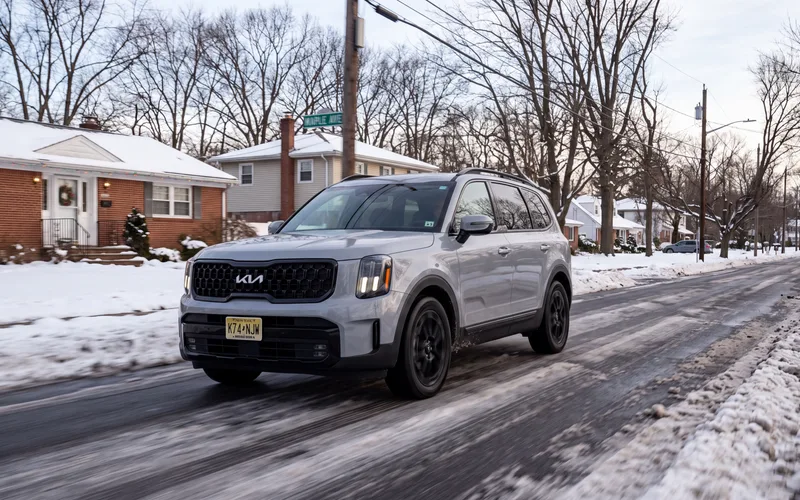 Kia TellurideMid-Size SUVBetter at: Value and warranty
Three rows, more standard gear at the price, a 10-year powertrain warranty and far stronger resale — the sensible answer for anyone not actually going off-road.
Compare 3.02B
3.02B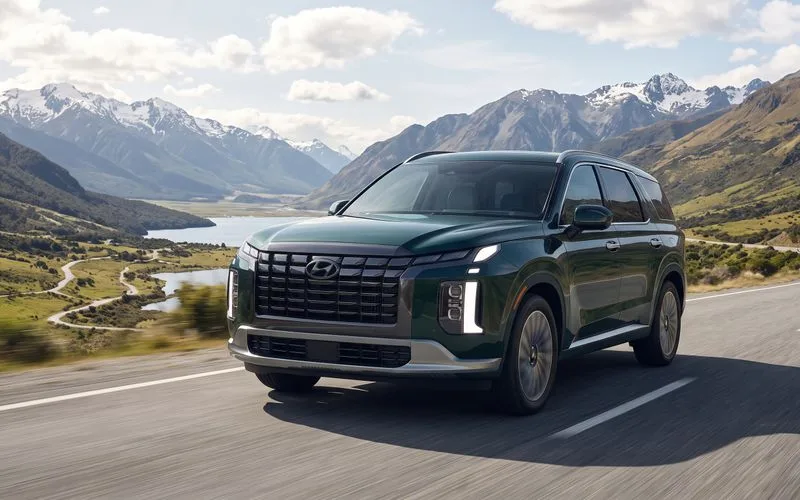 Hyundai PalisadeMid-Size SUVBetter at: Family space
The 2026 NACTOY Utility winner delivers better reliability, better feature value, and eight seats for Grand Cherokee Limited money.
Compare 2.38C+
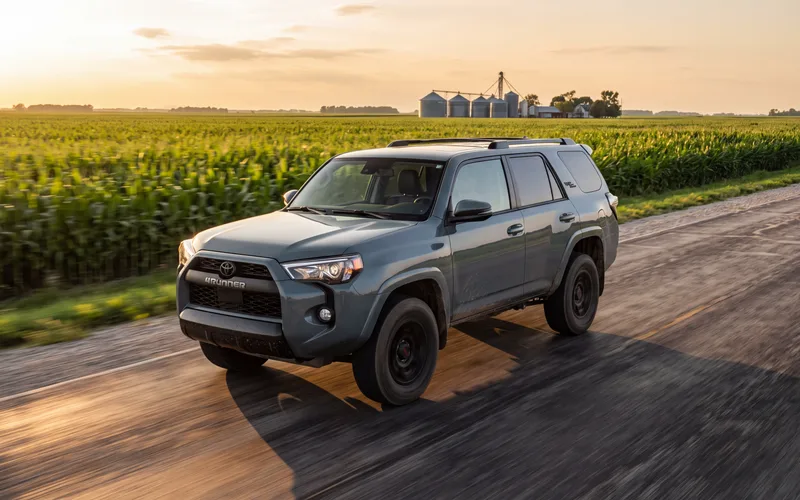 Toyota 4RunnerOff-Road SUVBetter at: Durability
For buyers whose priority really is trail capability and long-term durability, it out-lasts and out-retains the Jeep by a wide margin.
CompareHow it's evolved
10 scored model years · 2017–2026
Subject scores by year
Hover or tap a score to see what moved it versus the year before. A corner mark flags a big swing.
| Year | Performance | Efficiency | Safety | Space | Cost | Reliability | Tech | Use-case | Driving | Value |
|---|---|---|---|---|---|---|---|---|---|---|
| 2026 | 59 | 55 | 76 | 56 | 47 | 60 | 74 | 69 | 70 | 67 |
| 2025 | 58 | 49 | 74 | 54 | 42 | 53 | 74 | 64 | 65 | 69 |
| 2024 | 58 | 49 | 79 | 54 | 39 | 51 | 71 | 68 | 68 | 68 |
| 2023 | 58 | 49 | 78 | 54 | 36 | 49 | 70 | 68 | 68 | 67 |
| 2022 | 59 | 46 | 70 | 51 | 46 | 53 | 70 | 60 | 60 | 67 |
| 2021 | 57 | 46 | 54 | 48 | 45 | 51 | 42 | 52 | 59 | 61 |
| 2020 | 57 | 47 | 56 | 47 | 46 | 59 | 44 | 57 | 59 | 64 |
| 2019 | 58 | 47 | 43 | 50 | 45 | 57 | 47 | 60 | 63 | 63 |
| 2018 | 60 | 46 | 43 | 50 | 54 | 43 | 49 | 58 | 61 | 63 |
| 2017 | 59 | 47 | 50 | 49 | 50 | 49 | 44 | 57 | 64 | 65 |
Compare two years
Best fit & conditions
Higher scores mean a better fit for that use case. Learn more about use-case fit →
Subject profile
Trims & configurations
7 trimsScores above reflect the volume trim. Per-trim specs and scores are rolling out — the full lineup:
Detailed scoring by subject
1Performance & PowertrainMid-pack among this car's ten categories.1.88C-
For 2025 the gas Grand Cherokee is a single-engine lineup: the 3.6L Pentastar V6 is standard on Laredo through Summit Reserve with no optional gas upgrade, since the 5.7L V8 was phased out of the Grand Cherokee L in Q3 2024 and the two-row WL never offered it.
260 lb-ft from the naturally aspirated Pentastar is mid-pack for a mid-size SUV and arrives high in the rev range, which is why the V6 feels strained hauling a ~4,600 lb curb weight.
The 2025 gas powertrain is unchanged from the WL launch spec, so instrumented times from the same 293-hp V6 / 8-speed combination apply; testers cluster between 7.4 s and 7.7 s.
The Pentastar is smooth and quiet at cruise with no turbo lag to manage, but it has to work hard in a heavy premium SUV — reviewers consistently describe it as adequate rather than eager, with audible strain under full throttle and a noticeable stop/start restart.
The ZF-derived 8HP-family eight-speed automatic is one of the better units in the class: quick, well-timed shifts, sensible ratio selection, and no hunting even when the V6 needs to be worked.
Jeep claims a best-in-class 6,200 lb rating for the V6 with the tow package, well above the 3,500 lb typical of unibody mid-size crossovers and the strongest part of this category.
Three distinct 4x4 systems are offered across the range — Quadra-Trac I full-time, Quadra-Trac II with a two-speed low-range transfer case, and Quadra-Drive II adding a rear electronic limited-slip differential — plus Selec-Terrain modes and optional Quadra-Lift air suspension. That is far more hardware depth than the AWD-or-nothing setups of most mid-size rivals.
Genuine capability for a unibody SUV: low-range gearing, rear ELSD, up to 10.9 in of ground clearance and 24 in of water fording from the Quadra-Lift air suspension. It falls short of the top band because for 2025 the dedicated off-road Trailhawk trim is offered only on the 4xe plug-in hybrid, so a gas buyer cannot order the most trail-focused version.
Two powertrains for 2025 — the 3.6L V6 and the 4xe plug-in hybrid — which covers mainstream and electrified needs but is narrower than it was, because the 5.7L V8 left the lineup during the 2025 model year and the Hurricane inline-six had not yet arrived.
2Efficiency & RangeOne of the Grand Cherokee's weakest categories.1.29D
The naturally aspirated 3.6L V6 in a ~4,600 lb SUV posts 22 MPG combined, below par for a mid-size SUV in a class where turbo-four and hybrid rivals clear 25–35 MPG.
19 MPG in town is the weakest figure in this category — stop/start helps but there is no electric assist in the gas configuration to cover low-speed running.
26 MPG highway is the powertrain's best showing — the tall eighth gear lets the V6 loaf at cruise — but it still trails the class norm for a mid-size SUV.
A large 23-gallon tank turns mediocre economy into genuinely long legs — over 500 miles between fills is the standout figure in this category and the reason the Grand Cherokee remains a comfortable road-trip vehicle.
EPA puts running costs at $2,800 a year and flags $3,000 more in fuel over five years than the average new vehicle — the direct consequence of 22 MPG combined, softened only slightly by the regular-grade requirement.
The Pentastar V6 runs on 87-octane regular unleaded with no premium recommendation, so there is no fuel-grade penalty on top of the consumption — notable in the Premium price class, where many rivals ask for premium.
3SafetyThe Grand Cherokee's best-graded category.3.04B
NHTSA rates the 2025 Grand Cherokee 5 stars overall, with 5 stars in both frontal and side barrier/pole tests; only rollover drops to 4 stars at a 17.9% rollover probability, typical for a tall mid-size SUV.
A genuinely split record: Good in small-overlap front (driver and passenger) and the updated side test, but POOR in the updated moderate overlap front test — the rear-passenger protection evaluation that IIHS singled out mid-size SUVs for failing. It carries a 2024 Top Safety Pick badge covering 2024-25 (awarded the year the updated moderate overlap counted only toward TSP+), and is not a 2025 award winner. Marginal seat-belt reminders and Acceptable headlights on the Laredo compound it.
Every box in the item's top band is ticked on the base Laredo: Full-Speed Forward Collision Warning with Active Braking and pedestrian/cyclist detection, Adaptive Cruise Control with Stop and Go, Active Lane Management (LDW + lane keep), Blind-Spot Monitoring with Rear Cross Path Detection, plus Drowsy Driver Detection and rear park sensors. Standard full-speed ACC on a $37.6k base trim is above segment practice. Held short of the top of the band because lane centering (Active Driving Assist) and the 360 camera remain options.
Full-speed AEB with pedestrian and cyclist detection is standard, but IIHS rates the system only Acceptable in pedestrian front crash prevention — mid-pack rather than the Superior/Advanced result the top band requires. No separate vehicle-to-vehicle rating is published under the current IIHS regime.
Blind-Spot Monitoring with Rear Cross Path Detection is standard on every 2025 trim, and trailer-tow-equipped configurations extend the blind-spot zone to cover a trailer — relevant on a 6,200-lb-rated tow vehicle. Alert-only, though: no automatic cross-traffic braking or safe-exit intervention, which caps it below the top band.
Active Lane Management (lane departure warning plus steering assist) is standard, but true lane centering requires the optional Active Driving Assist. Owner and forum reports of the WL system describe centering as skittish, making frequent small corrections particularly through curves — functional, with the wander the middle band describes.
Full-speed-range Adaptive Cruise Control with Stop and Go is standard on every 2025 trim — it will brake to a full halt and resume — and pairs with Active Driving Assist for combined highway assist on optioned cars. The integrated highway-assist behavior is where it gives up ground: centering quality is the weak half of the pairing, so it lands at the top of the middle band rather than in the top one.
Hands-Free Active Driving Assist is genuinely offered on the 2025 Grand Cherokee — hands-free lane centering with distance keeping, curve speed control and assisted lane change over 200,000+ miles of mapped road, with a steering-wheel sensor and driver-monitoring camera. It sits in the middle band because access is narrow and the execution is reported as patchy: Summit Reserve only, a $2,995 package bundled with Advanced ProTech Group IV and the trailer tow package on 4x4s, V6-only (not offered with the 4xe), dependent on an active Jeep Connect subscription after a 3-year trial, and owners report it engaging far less often than the road coverage implies.
Exactly the split the middle band describes — IIHS rates the headlights Good on Limited, Overland and Summit but only Acceptable on the volume Laredo. LED lighting and automatic high beams are standard across the line, and the top trim offers a night-vision camera with pedestrian and animal detection to 328 feet.
The WL's lowered beltline and tall glass give better forward and side sightlines than most mid-size SUVs, and camera compensation is deep — 360-degree surround view, parallel/perpendicular park assist, a digital rearview mirror and night vision. But all of that is optional; the volume Laredo ships with rear park sensors and a backup camera only, and the thick rear pillars and high tail leave real over-the-shoulder blind zones.
Among the easier installs in the segment: the two sets of lower anchors sit under a single large upholstery flap and are easy to find and use, and three clearly marked top tethers sit midway down the seatback rather than hidden under carpet — a direct fix for the buried anchors of the previous generation. Wide rear doors and generous rear legroom leave room to work; as a two-row five-seater, three-across is still tight, which keeps it off the top of the band.
4Space & ComfortGrades below the middle of the scale.1.64D
The two-row Grand Cherokee is a strict five-seater for 2025 — three-row buyers are steered to the longer Grand Cherokee L, which is a distinct model, so this nameplate sits at the bottom of the SUV seating band.
39.9 in is comfortably above the mid-size SUV midpoint; the WL's tall, upright greenhouse gives good front-seat airiness even before the optional sunroof is deducted.
41.3 in is at the low end of the SUV band on paper, though the generous 16-way seat travel and length-adjustable cushion mean reviewers describe the driver's space as abundant rather than tight.
39.4 in of second-row headroom is near the top of the mid-size SUV band — a direct benefit of the WL's boxy roofline and one of the strongest numbers in this category.
38.2 in is solidly above the mid-size SUV midpoint and enough for adults on long trips; only the three-row crossovers that trade cargo space for it do meaningfully better in row two.
The two-row Grand Cherokee has no third row at all — there is no seven-seat option on this body, and a buyer who needs one must move to the longer Grand Cherokee L or the Wagoneer. Scored in the low band per the item's rule for two-row SUVs rather than omitted.
37.7 cu ft behind row two is modest for a 193.5-inch SUV and the weakest structural part of this category — several two-row rivals and most three-row crossovers with the rear seats folded beat it comfortably.
70.8 cu ft maximum is low-mid in the SUV band; the WL's cargo hold is tall and squarely shaped but short, so it loses to rivals with longer load floors.
Competent everyday storage without a signature idea: a deep center console under the rotary shifter, wide door pockets, a driver's-side bin, a carpeted cargo tray and four floor tie-downs, plus a 115-volt outlet standard on Limited. Nothing here matches a giga-console or an underfloor trunk.
Front seats are a genuine strength — 16-way power adjustment with lumbar, memory and a length-adjustable cushion, with heated and ventilated function and optional massage — but Consumer Reports found the rear bench flat and short on thigh support for taller passengers, which keeps it out of the top band.
Four-wheel independent suspension gives a composed, well-controlled ride that absorbs big hits and stays flat over undulations, but there is a persistent underlying firmness that lets smaller road imperfections through — the optional Quadra-Lift air springs improve it and are not fitted to the volume Limited.
Isolation is one of the WL's clearest wins: acoustic glass, thick insulation and active noise management make it notably quiet at highway speed, and multiple reviewers call it out as a reason the car is relaxing on long drives.
The volume Limited arrives with heated front AND rear seats, a heated steering wheel, dual-zone automatic climate control and remote start as standard equipment — rear-seat heat at this price point is unusual — with ventilated front seats, massage and five-color ambient lighting available above it.
5Cost of OwnershipThe Grand Cherokee's lowest-graded category.0.76F
Jeep cut two-row Grand Cherokee pricing for 2025 — every Laredo now lands under $40,000, with Limited down $3,000 and Overland/Summit down $4,000 versus 2024.
Limited 4x4 is the volume configuration of the two-row gas Grand Cherokee — the trim where leather, power liftgate and the second 4x4 system arrive without stepping into the near-$59k Overland.
Published estimates diverge sharply — CarEdge models $3,512 in maintenance and repairs while KBB's 5-year cost-to-own totals $9,229 (a $4,432 year-four service spike plus $1,877 in repairs); $7,000 blends them, weighted toward the high end because Consumer Reports places the Grand Cherokee near the bottom of the industry for reliability.
Retention is below the mid-size SUV norm and falls further as trim price rises, so the volume Limited sits near 47%; iSeeCars measures the Grand Cherokee losing 50% against 46.3% for its segment.
Jeep's Basic Limited Warranty is the segment-floor 3/36 across every 2025 model and trim — no better than the domestic norm and well short of the 5/60 Hyundai/Kia/Genesis rivals offer.
5/60 powertrain coverage on the 3.6L V6 and eight-speed automatic sits at the bottom of the framework band and is identical brand-wide.
Jeep Wave is standard on the 2025 Grand Cherokee and bundles more than bare roadside — 24/7 assistance, trip-interruption reimbursement and a no-charge same-day loaner for routine service — but the included maintenance is only the first two oil changes and tire rotations inside 24 months, short of the two full years of scheduled service Toyota and Hyundai include.
$46,700 volume-trim price minus its estimated resale value after 5 years (47% retained, or about $21,949) leaves about $24,751 in depreciation. Add the projected $7,000 in 5-year maintenance and repairs, and owning this vehicle for 5 years costs about $31,751 in total.
6Reliability & QualityOne of the Grand Cherokee's weakest categories.1.59D
Consumer Reports predicts the 2025 Grand Cherokee will be less reliable than the average new car and placed it among the ten least reliable vehicles of the model year — last among SUVs — citing drive-system, climate, brake, steering, suspension and electronics trouble on the 2022-2024 WL cars the prediction is built from. NHTSA complaint volume corroborates it: 70 complaints already lodged against MY2025, concentrated in electrical system (29) and engine/powertrain (26), including several gas-side reports of transmission failure and sudden loss of propulsion.
Jeep sits at the bottom of both major dependability surveys and has for several years running, which is a structural drag on any Jeep nameplate rather than a one-year blip. Nothing in the brand's recent trajectory suggests improvement over the window a 2025 buyer would be exposed to.
MY2025 is by far the cleanest year of the WL generation on paper: NHTSA lists just three campaigns against it, and two of those (25V576 hybrid-control-processor loss of drive power, 25V741 high-voltage battery fire with a park-outside advisory) are 4xe-only and do not touch the scored gas V6, which carries only the 26V328 occupant-restraint-controller software fix for delayed side-airbag deployment. That is a genuine improvement over MY2023 (21 campaigns) and MY2024 (15), but the score is held near segment-typical rather than above it because the year is young and campaigns accrue for years, and because the generation's underlying TSB pattern — UConnect/electrical faults and 850RE shift complaints — is unresolved.
The scored configuration is the 3.6L Pentastar V6 and the 850RE eight-speed (a Kokomo-built licensed ZF 8HP75), both long-serving designs with a documented high-mileage record — owners routinely report 200,000-plus miles and 250-300k service life with maintenance. It is not fault-free: the Pentastar family has well-known oil filter housing leaks, rocker-arm/roller-follower and camshaft lobe wear, and cooling-system attrition, and the 8HP75/850RE draws torque-converter shudder, harsh cold 2-3 upshifts and mechatronic-unit complaints in WL service records. Proven family with real weak points, so upper-middle rather than top band.
The WL cabin was a large step up from the WK2 and remains one of the Grand Cherokee's strongest cards: soft-touch coverage across the main touchpoints on Limited and up, with real open-pore wood and quilted leather on Overland and Summit. Reviewers rate it competitive with Explorer and Pilot and better than the segment mean for the money, though it does not reach Genesis GV80 or XC90 material richness and the pre-refresh screen and switchgear were beginning to date by 2025.
Assembly consistency is the weaker half of the build-quality picture. Edmunds explicitly called the interior build quality of its 2025 test vehicle disappointing for the price, and Jeep's initial-quality standing runs below the industry average, with software glitches and minor trim complaints recurring in owner reports. The unibody structure still assembles more tightly than body-on-frame rivals, which keeps this mid-band rather than low.
Coverage is a strength — Jeep runs roughly 2,500 US rooftops, giving it metro and rural reach few rivals match, which matters for a vehicle sold heavily outside major markets. Service satisfaction is the offset: J.D. Power puts Jeep second from last among mass-market SUV/minivan brands, below the category average, so the network is easy to reach but not well regarded once you are in it.
The Grand Cherokee's very large installed base underwrites abundant OEM and aftermarket parts at ordinary prices, and measured repair cost and frequency land at or slightly better than segment norms. The deductions are configuration-specific: optional Quadra-Lift air suspension and adaptive dampers are expensive out-of-warranty items versus a conventionally sprung rival, and 26V051/26V562-style rear coil-spring campaigns on sibling years point at suspension as the cost center.
7Technology & InfotainmentOne of the Grand Cherokee's strongest categories.3.02B
The volume Limited trim carries the 10.1-inch Uconnect 5 NAV screen as standard, which is mid-pack for the segment — respectable but well short of the 12-plus-inch panels rivals now fit, and the 8.4-inch Laredo screen is a visible downgrade at the entry point.
Uconnect 5's Android-based architecture is genuinely fast and its menu logic is among the easiest to learn in any mainstream SUV — a repeated critical strength. It falls just short of the very top because Consumer Reports flagged real ergonomic problems around it: the row of buttons perched on top of the display is confusing and the climate controls sit low and oddly angled.
Wireless Apple CarPlay and wireless Android Auto are standard on every 2025 Grand Cherokee trim including the base Laredo — no package, no upcharge, which is still not universal in this class.
Native navigation is a strength on the volume trim — TomTom maps with predictive search and live traffic are standard on Limited and up — but the Integrated Voice Command assistant is a conventional command-word system that reviewers describe as inconsistent at understanding natural speech, so most owners default to phone projection for anything conversational.
The ceiling here is exceptional — a McIntosh system with a 17-channel amplifier, 950 watts and 19 speakers including a 10-inch subwoofer is among the most serious audio hardware offered in any mid-size SUV. The six-speaker base system on Laredo and Limited is only adequate, which is what keeps this out of the 90s.
A 10.25-inch reconfigurable full-digital gauge cluster is standard on every trim — including the base Laredo — with crisp graphics and multiple layouts. Making it standard rather than a top-trim upgrade is exactly what the top band asks for.
Over-the-air software updates are supported and are included free for ten years in the Connect One tier, which is a genuinely good ownership proposition. But the scope in practice is infotainment and connected-services software rather than the whole-vehicle, feature-adding updates that earn a top-band score, and some owners still take updates at the dealer.
The Jeep app covers the core set — remote start, remote lock/unlock, vehicle locate, vehicle health reports, service scheduling and SOS — and Jeep includes it free for ten years under Connect One, which is more generous than most rivals' 1–3 year trials. It stops short of the top band because there is no phone-as-key and the richer remote-operations and Wi-Fi tiers are paid subscriptions.
Both USB-A and USB-C ports are fitted front and rear, and the volume Limited upgrades the auxiliary outlet to a 115-volt household socket, which covers laptops and camp gear. Wireless charging is the gap — it is a package option on Limited rather than standard equipment.
The volume Limited covers the essentials as standard — proximity entry, push-button start, remote start from the key or app, and a power liftgate. It misses the top band on two counts: hands-free liftgate operation is reserved for higher trims, and there is no phone-as-key on any 2025 Grand Cherokee.
A rear camera plus front and rear park sensors are standard, the 360-degree Surround View camera is available on Limited (standard on Summit) with off-road-oriented views, and Parallel and Perpendicular Park Assist steers the car into a space. Surround view not being standard on the volume trim is what holds it below 80.
A large 10-inch full-color windshield head-up display is offered and is well regarded, but it is bundled into the Advanced ProTech Group IV package and is not standard on any trim — a Limited buyer has to option up to get it, which is squarely mid-band.
8Use-Case FitMid-pack among this car's ten categories.2.35C+
Row two is genuinely easy to work in — 39.4 in of headroom, 38.2 in of legroom, wide square door openings and a normal seat height for lifting a toddler in, with LATCH hardware that rates well. The compromises are real though: five seats only, so no third row for carpool duty, and 37.7 cu ft behind the bench is a tight fit for a full-size stroller plus a week's gear.
The safety case is solid where it matters most to families: a five-star NHTSA overall rating and a broad driver-assist suite — AEB with pedestrian detection, blind-spot monitoring, lane keeping, adaptive cruise — standard low in the range rather than optioned. It is held back by IIHS results that are mixed rather than award-winning for 2025 and by Jeep's below-average reliability record, which matters when the car is the family's only vehicle.
For four people it is a very good long-haul car — notably quiet, heated rear seats and rear vents standard on Limited, a 115-volt outlet for devices, and 506 miles of range between fills. What keeps it mid-band is that the rear bench is flat and short on thigh support on multi-hour stints, and with four aboard the 37.7 cu ft hold limits how much luggage comes along.
A relaxing commuter in most respects: the eight-speed automatic shifts imperceptibly in traffic, the cabin is quiet, the driving position is excellent and outward visibility from the upright body is good. Two annoyances stop it going higher — steering that goes unnaturally heavy at parking speeds, and climate controls Consumer Reports found awkwardly placed and hard to read on the move.
This is the Grand Cherokee's weakest use case. 22 MPG combined from the naturally aspirated V6 in a ~4,600 lb SUV works out to roughly $2,800 a year in fuel, and Consumer Reports only observed 20 mpg overall — both figures lag the hybrid and turbo-four crossovers most commuters shop against.
At 193.5 in long and 77.5 in wide with a 38-foot turning circle, this is a full-width mid-size SUV that needs a proper space and a three-point turn on a narrow street. Camera coverage and available park assist make it manageable, but the physical footprint is what it is.
For a unibody SUV the tow rating is genuinely useful — 6,200 lbs properly equipped is roughly double what a typical mid-size crossover manages and enough for a small boat, a two-horse trailer or a mid-size equipment trailer. But there is no bed, payload is passenger-car modest, and the 293-hp V6 with 260 lb-ft has to be worked hard near the limit.
The mechanical hardware is proven — the Pentastar V6 and ZF-derived eight-speed have a long service record, and Jeep's transfer cases are built for abuse. The reservations are the brand's below-average reliability record on the WL specifically and an interior finished in leatherette and wood trim rather than anything wipe-clean, so it is not a vehicle fleets are choosing for hard duty.
The provisions are basic rather than work-focused: four floor tie-down loops, a carpeted cargo tray, standard roof rails and a 115-volt outlet on Limited, plus a broad Mopar accessory catalog for hitches, racks and liners. There is no onboard power system, no washable flooring from the factory and no upfit ecosystem in the commercial sense.
A strong tourer: exceptionally quiet at highway speed, supportive 16-way front seats, a composed ride over broken interstate, roughly 506 miles between stops and adaptive cruise with lane centering to cut fatigue. It misses the top band on the flat rear bench and mediocre highway economy, which means more fuel stops than a hybrid rival.
The clearest reason to buy this over a crossover. Three selectable 4x4 systems including two-speed low range and a rear electronic limited-slip differential, Selec-Terrain modes, 8.4 in of standard ground clearance rising to 10.9 in with the optional Quadra-Lift air suspension, 24 in of water fording and a 6,200 lb tow rating for boats and toys — hardware depth almost nothing else in the mid-size class offers.
The shapes work well — a tall, square hold with a 60/40 folding second row, a flat load floor, standard roof rails for a box or bikes, tie-downs, an underfloor tray and factory hitch availability. Raw volume is the limit: 37.7 cu ft up and 70.8 cu ft folded is below what the class benchmarks swallow, so genuinely bulky gear becomes a puzzle.
9Driving ExperienceMid-pack among this car's ten categories.2.42C+
Secure and predictable rather than agile. The WL's four-wheel independent suspension and wider track give responsive turn-in and Consumer Reports found it "very secure when pushed to its limits," but the same test judged it less agile than a Ford Explorer, and 4,600-plus pounds on all-season tires means body motions are managed rather than absent.
Accurate and adequately weighted once moving, but the assist calibration is the complaint: reviewers describe it as unnaturally heavy at parking speeds and lightening up as pace rises — the inverse of what you want — and there is little genuine feedback about grip through the rim.
Stopping power is adequate for the weight and no published instrumented test flags a long stop, but pedal feel is the recurring WL criticism — a soft, long initial travel that owners report as inconsistent, with several active forum threads and service bulletins on braking feel across the generation. Scored mid-band on sentiment rather than a measured figure, since no reputable 70-0 mph number for the V6 WL could be retrieved.
The eight-speed automatic is the star — quick, well-timed shifts with no hunting even when the V6 is being worked — and the naturally aspirated Pentastar has clean, lag-free tip-in. It loses points because the engine is asked to move a heavy SUV on 260 lb-ft, so downshifts are frequent under load, and the stop/start restart is noticeable.
At a steady cruise the V6 is essentially inaudible behind the WL's heavy insulation and acoustic glass, which is a real strength. Under full throttle the Pentastar gets coarse and thrashy near its power peak — inoffensive but clearly audible, and heard more often than in a torquier turbo rival.
38 feet curb-to-curb is squarely mid-pack for the mid-size SUV band — a consequence of the 116.7-inch wheelbase — so U-turns need a wide road but parking-lot manoeuvring is unremarkable rather than awkward.
The seat itself is excellent — 16-way power adjustment with lumbar, memory and a length-adjustable cushion, a commanding sightline over the upright hood, and space Consumer Reports called abundant. The control layout drags it down: the button row perched above the touchscreen confuses functions, the climate controls sit low and oddly angled, and the wheel's cruise buttons blur adaptive and standard modes.
Competent and quietly satisfying rather than entertaining. With the V6 as the only gas engine for 2025 there is no performance variant to aspire to, the steering gives little back, and the reward on offer is capability and refinement — enthusiasts recommend it for what it can climb, not for the drive home.
10Value & Market PositionOne of the Grand Cherokee's strongest categories.2.65C+
The $38,830 Laredo now includes twin 10-inch screens with Uconnect 5, full LED lighting and a real driver-assist set (forward collision warning with active braking, pedestrian detection, adaptive cruise, lane keep, blind-spot monitoring), which the 2025 price cut makes look better than it did in 2024 — but leather, power liftgate, ventilated seats and the surround-view camera all wait for higher trims, and Highlander/Telluride/Palisade rivals bundle more at comparable money.
The 2025 price cuts (up to $4,000) buy genuine hardware no crossover rival offers — three selectable 4x4 systems and class-exclusive Quadra-Lift air suspension reaching 10.9 in of ground clearance — but the money also buys 293 hp, 22 MPG combined, bottom-tier reliability and the segment's steeper depreciation, and buyers themselves rate value the weakest attribute.
Few mid-size SUVs spread this wide: Laredo through Summit Reserve in 4x2 and 4x4, two-row or three-row L, three different 4x4 systems, optional air suspension, and a 4xe PHEV line that includes a Trailhawk — from under $39k to past $76k. Losing the 5.7L V8 for 2025 is the one real narrowing.
At 210,082 US deliveries in calendar 2025 the Grand Cherokee was the best-selling Jeep and the best-selling Stellantis nameplate in America, and finished the year with its strongest December retail result in three years — a 3% annual dip that reads as segment-wide softness rather than rejection.
Jeep still carries unusual emotional pull and the Grand Cherokee badge has three decades of recognition behind it, but Stellantis's quality and pricing reputation has eroded the halo — reliability rankings near the industry floor and worse-than-segment resale are both image problems as much as ownership ones.
Scored as buyer benefit, this is near the top of the segment: 0% APR has been available on the 2025 Grand Cherokee alongside four-figure cash allowances, $2,000 owner-loyalty money and stackable military/first-responder bonuses, on top of the across-the-board MSRP cuts Jeep already took for the model year.
2025 is the fourth year of the WL generation launched for 2026-anchored buyers back in MY2022, and it is a carry-over year in substance — the changes are pricing and the V8's deletion, not new hardware. Uconnect 5 and the available air suspension keep it current rather than dated, but a mid-cycle refresh is due.
Reviewers consistently like the Grand Cherokee without picking it: mid-pack rankings from Edmunds and U.S. News, a strong KBB expert score, but Consumer Reports docks it for controls and braking distance and ranks it last among SUVs for reliability, and no major 2025 award turned up. Well reviewed, rarely the class choice.