
The verdict
A struggling off-road suv, strong on value and held back by ownership.
The 2023 Wrangler 4xe is the most capable plug-in hybrid off-roader anyone has built — 375 hp, 470 lb-ft, standard four-wheel drive with low range, and up to 22 miles of silent electric crawling — and it was America's best-selling PHEV in 2023 for good reason. But almost everything outside the trail is a problem: 20 MPG once the battery is flat, a $62,000 as-delivered window sticker with no standard driver-assist equipment, IIHS Poor and Marginal results in the current crash tests, and a reliability record that includes five high-voltage battery recalls and three separate fire-risk campaigns. Resale is the killer — a 2023 4xe has already lost 53% of its value in three years, against a projected 61% retention for the gas Wrangler. Buy it only if you genuinely off-road, can plug in nightly, and are buying used at a price that reflects that depreciation.
Jump to scoresStrengths
- Genuine trail hardware, unmatched by any other plug-in hybrid
- Quick, torquey and genuinely fun in a way no rival matches
- Cheap commuting — if your round trip fits in 22 miles and you plug in
What holds it back
- Depreciation that erases the whole financial case
- A serious reliability record, with fires among the failure modes
- 20 MPG once the battery is gone, and only 370 miles of range
Top alternatives
Cars shoppers cross-shop with the Jeep Wrangler 4xe 1.84C-
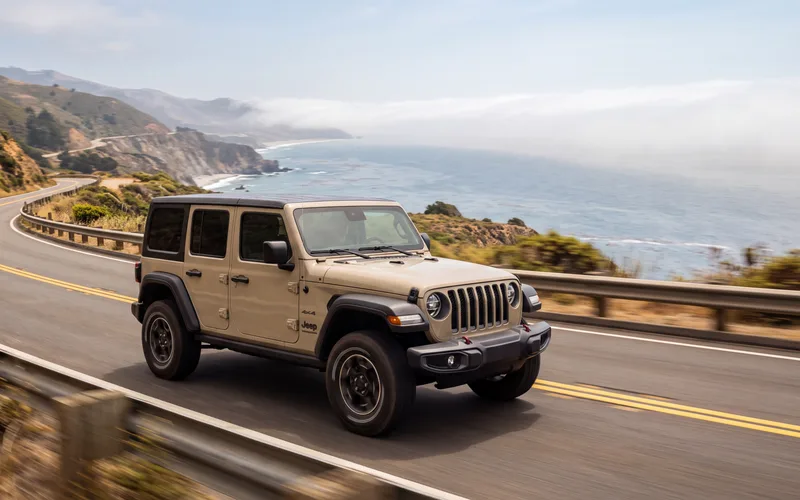 Jeep WranglerOff-Road SUVBetter at: Value
The same truck with a bigger tank, longer range, better reliability and resale, for about $8,000–$10,000 less — the right call for anyone who cannot charge at home.
Compare 1.95C-
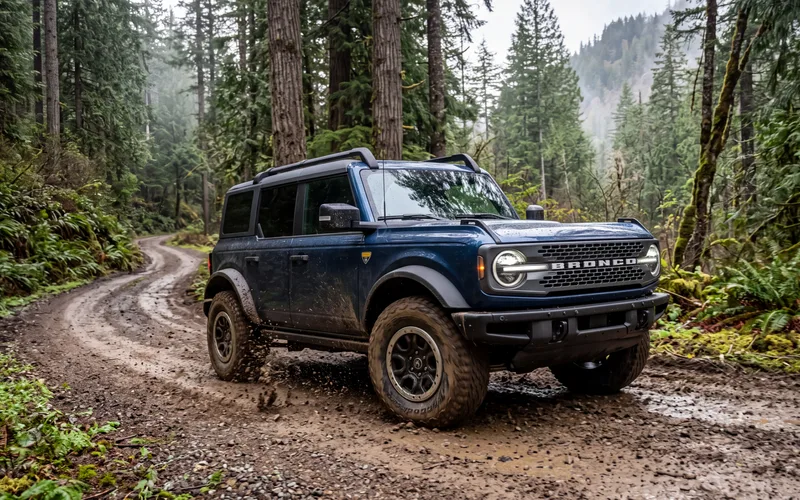 Ford BroncoOff-Road SUVBetter at: On-road manners
Delivers the same doors-off, roof-off experience with noticeably better steering and ride quality, and Sasquatch trims close most of the off-road gap.
Compare 2.38C+
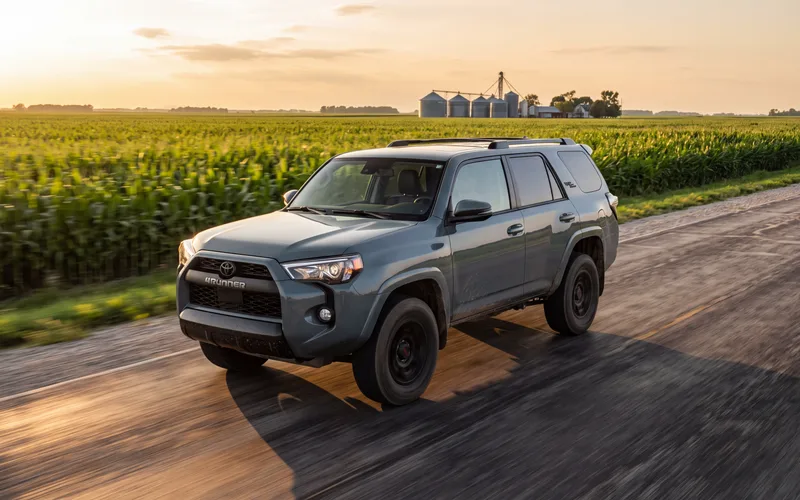 Toyota 4RunnerOff-Road SUVBetter at: Reliability
Trades some trail articulation for the reliability record and resale value the 4xe's bottom-of-class scores and fire-risk recalls cannot match.
CompareHow it's evolved
6 scored model years · 2021–2026
Subject scores by year
Hover or tap a score to see what moved it versus the year before. A corner mark flags a big swing.
| Year | Performance | Efficiency | Safety | Space | Cost | Reliability | Tech | Use-case | Driving | Value |
|---|---|---|---|---|---|---|---|---|---|---|
| 2026 | 63 | 31 | 57 | 47 | 39 | 53 | 69 | 57 | 54 | 66 |
| 2025 | 63 | 31 | 50 | 43 | 33 | 33 | 66 | 56 | 51 | 64 |
| 2024 | 60 | 31 | 47 | 43 | 35 | 30 | 65 | 55 | 49 | 67 |
| 2023 | 60 | 31 | 42 | 43 | 24 | 25 | 49 | 52 | 51 | 62 |
| 2022 | 67 | 26 | 41 | 48 | 19 | 38 | 46 | 51 | 43 | 57 |
| 2021 | 67 | 30 | 41 | 44 | 24 | 38 | 44 | 54 | 48 | 62 |
Compare two years
Best fit & conditions
Higher scores mean a better fit for that use case. Learn more about use-case fit →
Subject profile
Academic Probation · NHTSA safety recalls
Jun 4, 2026Steering: hydraulic power assist: pumpThe electric hydraulic power steering pump wiring may overheat and cause a vehicle fire, even when the vehicle is parked with the ignition in the "Off" position.
Defect
Chrysler (FCA US, LLC) is recalling certain 2021-2025 Jeep Wrangler, Wrangler 4XE, and Jeep Gladiator vehicles. The electric hydraulic power steering pump wiring may overheat and cause a vehicle fire, even when the vehicle is parked with the ignition in the "Off" position.
Risk
A vehicle fire increases the risk of injury.
Remedy
Owners are advised to park outside and away from structures, until their vehicle is repaired. Dealers will inspect and replace the wiring and electric hydraulic power steering pump, as necessary, free of charge. Owner notification letters are expected to be mailed July 9, 2026. Owners may contact FCA US LLC customer service at 1-800-853-1403. FCA US LLC's number for this recall is 21D. The Vehicle Identification Numbers (VINs) involved in this recall will become searchable on NHTSA.gov on June 11, 2026.
NHTSA campaign 26V363000 ↗Manufacturer no. 21D1,076,999 vehicles potentially affected (all models in the campaign)Owners notified Jul 9, 2026Filed by Chrysler (FCA US, LLC)Filed as WRANGLER 4XEOct 17, 2025Electrical system: propulsion system: hybrid management: power control unit/module (hpcu): softwareA software error in an over-the-air (OTA) update may result in a loss of drive power.
Defect
Chrysler (FCA US, LLC) is recalling certain 2023-2025 Jeep Wrangler 4XE Plug-In Hybrid Electric (PHEV) vehicles. A software error in an over-the-air (OTA) update may result in a loss of drive power.
Risk
A loss of drive power increases the risk of a crash.
Remedy
Dealers will update the telematics box module software, free or charge. Interim notification letters, notifying owners of the safety risk, were mailed November 20, 2025. Additional letters will be sent once the final remedy is available. Owners may contact Chrysler customer service at 800-853-1403. Chrysler's number for this recall is A7C. Vehicle Identification Numbers (VINs) involved in this recall will be searchable on NHTSA.gov beginning October 23, 2025.
NHTSA campaign 25V710000 ↗Manufacturer no. A7C24,238 vehicles potentially affected (all models in the campaign)Filed by Chrysler (FCA US, LLC)Filed as WRANGLER 4XESep 27, 2024Electrical system: propulsion system: traction batteryThe high voltage battery may fail internally and lead to a vehicle fire while parked or driving.
Defect
Chrysler (FCA US, LLC) is recalling certain 2020-2024 Jeep Wrangler 4XE and 2022-2024 Jeep Grand Cherokee 4XE vehicles. The high voltage battery may fail internally and lead to a vehicle fire while parked or driving.
Risk
A vehicle fire while parked or driving can increase the risk of injury.
Remedy
This recall is replaced by NHTSA recall number 25V741. Vehicles already repaired under this recall will need to have the new remedy completed. Owners are advised to park outside and away from structures, and not to recharge their vehicles until they are repaired. Dealers will update the high voltage battery pack software and replace the battery pack assembly, if necessary, free of charge. Interim notification letters, notifying owners of the safety risk, were mailed October 11, 2024. Owner notification letters were mailed beginning December 2024. Owners may contact Chrysler customer service at 1-800-853-1403. Chrysler's number for this recall is 95B. Vehicles in this recall that were previously recalled for the same issue under NHTSA Recall 23V-787 will need to have the new remedy performed.
NHTSA campaign 24V720000 ↗Manufacturer no. 95B154,032 vehicles potentially affected (all models in the campaign)Owners notified Dec 16, 2024Filed by Chrysler (FCA US, LLC)Filed as WRANGLER 4XE
2 recalls on other model years of the Wrangler 4xe (2021, 2024–2025)
Nov 6, 2025EngineDebris inside the engine may cause engine failure, which can result in a loss of drive power and/or an engine compartment fire.
Defect
Chrysler (FCA US, LLC) is recalling certain 2023-2025 Jeep Grand Cherokee 4XE and 2024-2025 Jeep Wrangler 4XE Plug-In Hybrid Electric (PHEV) vehicles. Debris inside the engine may cause engine failure, which can result in a loss of drive power and/or an engine compartment fire.
Risk
A loss of drive power increases the risk of a crash, and a vehicle fire can increase the risk of injury.
Remedy
Dealers will install a software update and replace the block or engine as necessary, free of charge. Owner notification letters were mailed beginning May 7, 2026. Additional letters will be sent once the final remedy is available. Owners may contact Chrysler customer service at 800-853-1403. Chrysler's number for this recall is 78C. Vehicle Identification Numbers (VINs) involved in this recall became searchable on NHTSA.gov beginning November 13, 2025.
NHTSA campaign 25V766000 ↗Manufacturer no. 78C117,904 vehicles potentially affected (all models in the campaign)Owners notified May 8, 2026Filed by Chrysler (FCA US, LLC)Filed as WRANGLER 4XEDec 9, 2021Electrical system: instrument cluster/panelAfter reaching 13,342 miles, the odometer will no longer display vehicle mileage. As such, these vehicles fail to comply with the requirements of Federal Motor Vehicle Safety Standard number 101, "Control and Displays."
Defect
Chrysler (FCA US, LLC) is recalling certain 2021 Jeep Wrangler Plug-In Hybrid Electric (PHEV) vehicles. After reaching 13,342 miles, the odometer will no longer display vehicle mileage. As such, these vehicles fail to comply with the requirements of Federal Motor Vehicle Safety Standard number 101, "Control and Displays."
Risk
A missing odometer reading could lead to an unintended delay in critical safety-related maintenance, potentially impairing the safe operation of the vehicle and increasing the risk of a crash.
Remedy
Dealers will update the instrument panel cluster (IPC) software on vehicles with less than 13,342 miles, and replace the IPC on vehicles in which the mileage is not displayed, free of charge. Owner notification letters were mailed December 28, 2021. Owners may contact FCA US, LLC customer service at 1-800-853-1403. FCA US, LLC's number for this recall is Y94.
NHTSA campaign 21V949000 ↗Manufacturer no. Y942,903 vehicles potentially affected (all models in the campaign)Owners notified Dec 28, 2021Filed by Chrysler (FCA US, LLC)Filed as WRANGLER 4XE
Source: NHTSA Office of Defects Investigation recall database, model years 2021–2026. Recalls are listed by model year as the manufacturer filed them; whether a specific car is affected depends on its VIN — check a VIN at nhtsa.gov ↗. NHTSA model names matched to this page: WRANGLER 4XE.
Detailed scoring by subject
1Performance & PowertrainOne of the Wrangler 4xe's strongest categories.2.07C
Peak combined system output is 375 hp at 5,250 rpm, the same on all four 2023 4xe trims (Willys, Sahara, High Altitude, Rubicon) — the 2.0L engine alone makes 270 hp. That is 90 hp above the volume gas Wrangler's 285 hp Pentastar V6 and lands mid-pack in the wider SUV field.
470 lb-ft is the 4xe's headline figure and matches the 6.4L V8 Rubicon 392 — an outlier for the SUV band. The traction motor's 181 lb-ft is available from zero rpm, which is a genuine advantage in low-speed rock crawling rather than a spec-sheet flourish.
The 2023 spec sheet quotes no acceleration figure, but Jeep's 6.0-second claim is corroborated by a MotorWeek instrumented run at exactly 6.0 s with battery boost, while U.S. News recorded 7.0 s in a fully charged Rubicon 4xe on its heavier LT285/70R17 KO2s. State of charge dominates: with the pack depleted the 4xe is materially slower, since the 270 hp engine is then hauling 5,100–5,222 lb on its own.
Strong but not smooth. In EV mode delivery is silent and instant, but the handover between electric and engine is perceptible and reviewers of the 2023 car describe transitions between pure-electric and hybrid operation as slow and occasionally jarring, with lurches in stop-start traffic. The 2.0L four is coarse when it fires under load, and the fully blended hydro-electric regenerative braking gives an inconsistent pedal.
The 8P75PH is the familiar TorqueFlite eight-speed with the AC traction motor integrated ahead of the torque converter, and its wide ratio spread (4.71 first, 0.67 eighth) suits the Wrangler — shifts are smooth and it rarely hunts, helped by the motor filling torque holes. What costs it points is the motor-interrupting clutch: engaging the engine mid-shift produces the hesitation and occasional shunt reviewers describe, a hybrid-specific flaw the gas Wrangler's same-family eight-speed does not have.
3,500 lbs across the board — the 4xe's ~700 lb battery eats into the GCWR, so the plug-in never got the higher ratings the gas Wrangler later earned. Modest for a 5,100-lb body-on-frame SUV, and towing collapses the electric range, so the plug-in's efficiency case and its towing case cannot be used at the same time.
Four-wheel drive with a two-speed transfer case and low range is standard on every 4xe — there is no 2WD variant — and the plug-in is actually better equipped here than the base gas Wrangler, which makes do with part-time Command-Trac: full-time MP3022 Selec-Trac with a 4WD Auto mode is standard on Sahara 4xe, and Rubicon 4xe steps up to MP3022OR Rock-Trac with a 4.0:1 low range.
The segment benchmark, and electrification gives up nothing: Rubicon 4xe carries the 4.0:1 Rock-Trac case, front and rear Tru-Lok electronic lockers, 4.10 gears, an electronic front sway-bar disconnect, hydraulic rebound-stop monotube shocks, BFG KO2s, 10.8 in of clearance, a 43.8° approach angle and a 770 RTI — and the traction motor's instant 181 lb-ft is a real crawling asset. Even the Sahara 4xe clears 10.1 in with a 42.2° approach. A shade below the 2024 car, which added a Dana 44 HD full-float rear axle to the Rubicon.
As its own model line the 4xe is one powertrain, take it or leave it — the same 2.0L turbo, 134 hp traction motor, 17.3 kWh pack and 8P75PH eight-speed on every 2023 trim, with no output tunes and no alternative. It scores above a plain single-engine gas SUV only because that one powertrain is an electrified plug-in and buyers can cross-shop three other engines under the wider Wrangler nameplate (3.6L V6, 2.0L turbo gas, 6.4L HEMI). 2023 did broaden trim access, adding the Willys 4xe as a new entry point beneath Sahara 4xe.
2Efficiency & RangeOne of the Wrangler 4xe's weakest categories.0.02F
Charge-sustaining economy is the figure that matters once the 22-mile battery is gone, and at 20 MPG the 4xe is no better than the gas Wrangler V6 — a boxy, solid-axle, 5,100+ lb body-on-frame SUV carrying an extra ~700 lb of battery. Against other plug-in hybrids, which typically post 35–40 MPG on the engine, this is the bottom of the class.
Unusually for a hybrid, city economy is no better than highway — 20 MPG both ways — because in charge-sustaining mode the 17.3 kWh pack cannot do meaningful electric-only city work and the engine carries the load. The hybrid city benefit exists only while the pack holds charge, which is what the 52 MPGe city figure reflects.
20 MPG highway is the weakest of the three figures relative to its class — a brick with a 73.5 in roof and 73.9 in width gives back at speed everything hybridization saves, and on a long trip the depleted 4xe is simply hauling battery mass with no way to recover it. The unrounded 19.84 means it barely holds the 20.
370 miles is short for a plug-in hybrid, most of which clear 450–600 by pairing a normal tank with 35–40 MPG charge-sustaining economy. Here a 17.2-gallon tank at 20 MPG gives only about 345 gas miles and the battery adds barely 22 more — and towing, cold weather or the Rubicon's KO2s cut it further.
The EPA record shows the 4xe used no gasoline for its first 22 miles — enough for a short commute, but at the low end of the plug-in field where 30–40 miles was already typical in 2023. The 17.3 kWh pack is modest and the Wrangler's aerodynamics and 5,100+ lb curb weight burn through it at 68 kWh/100 mi, far thirstier than a car-based plug-in SUV like the RAV4 Prime.
Plugging in genuinely saves money — EPA's blend assumes roughly half the miles run electric, and the per-25-mile figures show electricity costing a little over half what gasoline does. But $2,300 is still expensive for a plug-in hybrid, and the saving is conditional: a buyer who never plugs in pays the $3,100 gas-only cost and carries the battery's weight for nothing.
Undemanding on both sides of the plug: 87-octane regular unleaded is the minimum (91 only 'recommended for optimum'), and the 17.3 kWh pack refills from empty in about 2.4 hours on a 240V Level 2 charger — or overnight on a household 120V outlet, so many owners need no installed hardware at all. The deductions are that there is no DC fast-charge capability whatsoever (7.2 kW AC is the ceiling, so nothing useful can be added on a road trip) and that the whole efficiency case collapses for an owner who cannot plug in nightly.
3SafetyGrades near the bottom of the scale.0.77F
Unlike later years, NHTSA crash-tested the 2023 Wrangler PHEV in its own right rather than leaving it to the gas car's result, returning a 4-star frontal (driver 4, passenger 5). No combined overall star rating exists because the side-impact tests were never run, and the rollover rating is 3 stars — though the 4xe's underfloor 400-volt pack drops rollover propensity to 0.212 against the gas Unlimited's 0.267.
2023 is the last model year before Jeep's structural safety revisions, and the Wrangler fails two of IIHS's three current crash tests: Poor in the updated moderate overlap front on rear-passenger restraints and kinematics, and Marginal in the updated side test because the rear dummy's head struck the soft-top vertical support. The driver-side small overlap front is Marginal because the vehicle tipped onto its passenger side. Roof strength, head restraints and the original moderate overlap test are Good, but no Top Safety Pick of any grade is possible.
None of the five features this item measures is standard on the 2023 4xe: forward collision warning and adaptive cruise are optional, blind-spot and rear cross path sit in a separate paid group, and lane keeping and pedestrian AEB cannot be bought at any price. Standard active safety is limited to ESC, electronic roll mitigation, trailer-sway control, hill-start assist and brake traction control. The 4xe scores marginally above the gas Wrangler only because its range starts at Sahara rather than base Sport, so the option boxes are at least orderable across the whole lineup — making FCW and adaptive cruise standard was a 2024 change, not a 2023 one.
When ordered, the radar-based Full Speed Forward Collision Warning Plus earns IIHS's top Superior rating for vehicle-to-vehicle front crash prevention, avoiding the collision outright in both the 12 and 25 mph runs — genuinely good hardware, and better documented for 2023 than for 2024, when IIHS published no vehicle-to-vehicle result at all. Two things cap the score: it is optional equipment on every 2023 4xe trim rather than standard, and pedestrian detection is not offered at any price, so there is no daytime or nighttime pedestrian capability to grade.
Blind Spot Monitoring with Rear Cross Path detection is offered across the 2023 4xe range but is optional on every trim, bundled with auto high-beam control and ParkSense rear park assist in the Safety Group. It is alert-only, with no braking or steering intervention, no trailer-aware coverage and no safe-exit alert. The Wrangler's small door-mounted mirrors and spare-tire-blocked rear view make the omission cost more here than in a typical crossover, though the 4xe at least carries LED lighting as standard, which drops the Safety Group to its cheaper price.
The 2023 Wrangler 4xe offers no lane departure warning, no lane keep assist and no lane centering on any trim or in any package — a gap that is close to unique in the segment, where the Bronco and 4Runner both include at least a departure warning as standard, and it is why the vehicle has no highway-assist or hands-free capability either.
Adaptive Cruise Control with Stop and Go is capable full-speed-range hardware, but for 2023 it is optional on every 4xe trim rather than standard as it became for 2024, and there is no lane centering or highway assist on the platform for it to integrate with. Reviewers driving the 4xe also fault it for braking too abruptly when a car cuts into the gap ahead.
No hands-free highway driving system is offered on any 2023 Wrangler 4xe trim. Stellantis's hands-on Active Driving Assist is not fitted to the Wrangler, and with no lane-centering hardware anywhere on the platform, hands-free operation is not technically possible here.
The 4xe avoids the gas Wrangler's worst case — its range is four-door only and starts at Sahara, so LED headlamps and fog lamps are standard on every 2023 4xe and the Poor-rated halogen reflectors fitted to Sport and Sport S never appear in this lineup. That is still a low bar: IIHS rates LED projectors without high-beam assist Poor, and the best configuration available anywhere on the model — LED projectors with high-beam assist, which requires the optional Safety Group — is only Marginal. No curve-adaptive lighting is offered in any configuration.
Forward and lateral sightlines are among the best of any SUV — a near-vertical windshield, tall commanding seating, a short narrow hood and deep side glass — and the new-for-2023 half-door option, explicitly engineered for the 4xe, improves the over-the-shoulder view further. Rearward vision is the weakness: the sport bars and tailgate-mounted full-size spare block much of it, the door-mounted mirrors are small, ParkSense rear park assist is optional, and no surround-view camera is offered on any trim.
IIHS rates the 4-door Wrangler's LATCH hardware Good, its top grade, for easy-access anchors plus an extra usable position — and because the 4xe is built only as a four-door, every 4xe buyer gets that hardware and three rear seating positions rather than the two-door's two. The boxy body also gives tall rear-door openings. Against that, the narrow track makes three seats across a squeeze, and a step-in height raised further by the underfloor battery pack makes lifting a child into a seat harder than in a crossover.
4Space & ComfortGrades near the bottom of the scale.0.83F
Five seats across the whole 2023 4xe range with no six- or seven-seat option at any price. Unlike the gas Wrangler there is no 2-door 4xe, so every plug-in buyer gets the three-across rear bench.
Jeep publishes front headroom by roof type and the 4xe matches the gas car exactly — 40.8 in under a hardtop, 42.6 in under the soft top. The hardtop figure is the conservative, representative reading for the volume Sahara 4xe.
40.8 in sits near the bottom of the SUV band and is measurably tighter than the gas Wrangler's published 41.2 in — the JL's front footwell is already constrained by the transmission tunnel and front wheel housings, and the PHEV's packaging gives back a further fraction.
The upright boxy body is at its best here: 40.3 in of second-row headroom under a hardtop tops the SUV normalization band outright, and the battery under the rear cushion costs nothing on this measurement because the roof is so high.
38.2 in is genuinely competitive for the class and better than the direct rival Bronco four-door — and because the 4xe exists only as a four-door, no plug-in buyer is exposed to the 2-door's 35.7 in. It gives up 0.1 in to the gas four-door.
No 2023 Wrangler 4xe offers a third row in any trim — the seating chart is 2/3 and nothing else, so a buyer needing more than five seats cannot be served at any price. There is not even a token bench option.
27.7 cu ft sits near the floor of the SUV band. The 17.3 kWh pack under the rear cushion raises the seat and the load floor, so the plug-in gives up four cubic feet against an already-small gas Wrangler hold, and the hold is tall but narrow at 41.1 in minimum width.
Folding the bench opens 67.4 cu ft — five cubic feet down on the gas four-door and below mid-pack for the segment. The removable roof panels let tall loads exceed what the number implies, but the folded floor is not flat: the battery leaves a step behind the seat that owners routinely fill with aftermarket platforms.
The Wrangler's signature provisions survive — a washout interior with factory floor drain plugs, six rugged cargo tie-downs, 12-volt outlets throughout and an available 115-volt console outlet — but conventional stowage is thin (small glovebox, two cupholders, a dual-level armrest bin) and the 4xe specifically loses the under-second-row storage the gas car has, because that is where the battery lives. It also predates the dash cubbies and AMPS accessory-mount brackets Jeep added with the 2024 interior revision.
The volume Sahara 4xe starts higher up the ladder than the gas car's Sport S — McKinley leather-trimmed seats rather than cloth — and the front chairs are well shaped for long stints. What holds it mid-band is that adjustment is still manual with only 8.1 in of seat travel (the 12-way power seats arrived for 2024), and the rear bench is flat, firm and sits slightly higher on the 4xe because the battery is under it.
Solid Dana axles front and rear on five-link coils are the price of the off-road hardware and the result is the familiar JL jitter — reviewers describe a suspension that exaggerates every crack, with hefty body roll in turns. Scored a few points above the gas Wrangler because the Sahara 4xe's ~600 lb of extra battery mass and its 275/55R20 street-biased Bridgestone Alenzas take some edge off the secondary ride, which reviewers of this trim specifically noticed.
One of the loudest cabins on sale: a removable roof and doors, a near-vertical windshield and a 73.9-in-wide brick make wind roar unavoidable at highway speed, and 2023 has no equivalent of the acoustic-glass premium cabin package Jeep introduced for 2024. It scores above the gas Wrangler only because up to 22 miles of silent electric running genuinely removes powertrain noise from low-speed driving — an advantage that disappears the moment the engine fires or the speed rises.
Better than the gas Wrangler on two counts: dual-zone automatic temperature control is standard on the volume Sahara 4xe rather than optional, and the plug-in hardware adds genuine remote cabin preconditioning from the app while tethered — the feature this item explicitly names, and one no gas Wrangler can offer. Against that, heated front seats and a heated steering wheel are still Cold Weather Group option content ($1,195) on every 2023 4xe rather than standard, ventilated seats are not offered at any price, and rear comfort stops at vents with no second-row controls.
5Cost of OwnershipThe Wrangler 4xe's lowest-graded category.0.00F
The Willys 4xe was new for 2023 and became the cheapest way into a plug-in Wrangler, but it still opens roughly $22,600 above the cheapest gas Wrangler because the 4xe has no 2-door body and no stripped Sport trim to shelter behind. The destination charge is not a single number for this model year — real window stickers show $1,595 on early builds and $1,795 on later ones.
The Sahara 4xe is the volume 4xe trim and the configuration this vehicle-year's other scorecards describe, and both real window stickers I could pull land within $650 of each other at about $62,500 — so a typically-delivered 2023 Sahara 4xe is a $62,000 car, not a $56,000 one. Unlike the gas Wrangler there is no expensive automatic to option in (the 8P75PH is standard), but the base price itself rose $2,080 mid-model-year, from $54,765 to $56,845.
Edmunds' dealer-retail model and CarEdge's owner-reported model disagree by nearly 3x on the same car, so the honest figure is between them rather than either endpoint. I have landed above the gas 2023 Wrangler's $5,000 and above the 2024 4xe's $5,700 — the 400-volt system, battery cooling circuit and transmission-integrated motor are real added exposure and the 2023 cars are early builds of that hardware — but well below Edmunds' $10,280, which is an artifact of its aging model rather than a mechanical difference from the 2024 car (same 2.0L turbo, same 8P75PH, same 17.3 kWh pack).
This is the single worst number on the 2023 4xe's scorecard and it inverts the Wrangler's best ownership argument: the nameplate KBB put in its Best Resale Value Top 10 becomes a bottom-quartile depreciator once it is a plug-in. Three years of real market data now exist for this model year and they run below CarEdge's forward model — CarEdge had the nameplate at 48.4% at year three against an observed ~44%, about four points optimistic, so its 41.4% five-year figure lands nearer 37–38% once corrected. The $7,500 federal credit that made these cars cheap to buy comes straight out of the residual, because retention is measured against MSRP.
Stellantis' standard Basic Limited Warranty applies unchanged to the 4xe and sits at the floor of the segment band — Hyundai and Kia offer 5 years, and Ford matches Jeep at 3 on the Bronco.
The 8-year/100,000-mile term on the 17.3 kWh pack and hybrid system is the coverage that matters to a 4xe buyer — it is the expensive part, and the one the gas Wrangler has no equivalent for — so it is the figure scored here. The conventional powertrain underneath keeps Jeep's ordinary 5-year/60,000-mile term, which is the bottom of the segment band.
2023 is the best year of this generation for included coverage — Jeep Wave was standard with automatic enrollment and, for cars bought before 17 July 2023, ran 36 months with the first three oil changes and tire rotations included, one more year and one more service than 2024 buyers got — and the 4xe's standard Uconnect 4C NAV head unit brings unusually long connected-service terms with it. It is marked a couple of points below the gas 2023 Wrangler because for a plug-in the complete absence of charging support is a real gap: no home-charger allowance, no installation credit, no public-charging credit, all of which were common on PHEV rivals, and Jeep sold its own Level 2 unit through the Mopar eStore as a paid accessory instead.
$62,225 volume-trim price minus its estimated resale value after 5 years (38% retained, or about $23,646) leaves about $38,580 in depreciation. Add the projected $6,500 in 5-year maintenance and repairs, and owning this vehicle for 5 years costs about $45,080 in total.
6Reliability & QualityOne of the Wrangler 4xe's weakest categories.0.00F
Both major US reliability authorities place this exact vehicle in the bottom tier, and the 2026 J.D. Power dependability study is drawn from three-year-old 2023 model-year cars — this car's own cohort — rather than being an extrapolation. What pushes it below a merely bad score is the nature of the failures: Consumer Reports' trouble spots for the Wrangler 4xe are fire risk, engine destruction and a software update that immobilized the vehicle, not squeaks and infotainment lag.
The scoring guidance reserves 0–49 for brands 'consistently bottom-third'; Jeep is not bottom-third but last outright, in the most-cited US brand ranking, three years running, and it is near the bottom of the other major study in consecutive years too. Two independent methodologies — CR's member survey and J.D. Power's three-year owner panel — agree, which removes the usual escape hatch of blaming one house's sampling.
Thirteen recall campaigns reach a 2023 Wrangler 4xe, and the pattern rather than the count is what earns a floor score: the high-voltage battery has been recalled five times, and three of those campaigns (23V787, 24V720, 25V741) describe the identical consequence — internal battery failure leading to a fire while parked or driving — in November 2023, September 2024 and October 2025. Successive re-recalls for one unchanged failure mode over three years mean the remedy did not hold, and NHTSA has an open recall query saying as much about the powertrain shutdown defect. In the car's favor, and worth stating precisely: the sand-in-the-engine-block recall (25V766, 112,859 vehicles, 36 fires and 3 injuries) covers 2024–2025 Wrangler 4xe and 2023–2025 Grand Cherokee 4xe on engines cast from 7 June 2023 onward, so the 2023 Wrangler 4xe is outside its scope.
This is not an unproven-but-clean new design that deserves the benefit of the doubt — it is a powertrain with demonstrated, field-documented failure modes at both ends. The 2.0L GME-T4 turbo four carries a mixed-at-best longevity reputation (oil consumption, turbocharger and overheating complaints), and the 4xe stacks a 17.3 kWh pack, two motors and the motor-integrated 8P75PH transmission on top of it, adding the internal battery failure that three recalls have not resolved and a loss-of-propulsion defect under active federal query. Confidence is MEDIUM rather than HIGH because the recall and investigation record is documentary and solid, while the GME-T4's high-mileage reputation rests largely on owner forums and secondary aggregators rather than published durability data.
The item measures material richness relative to price, and that framing is where the 4xe loses: reviewers note it has the same hard-plastic cabin as a far cheaper Wrangler, while a typically-equipped 2023 Sahara 4xe delivers at about $62,000. The plastics are a deliberate hose-it-out design choice rather than cost-cutting failure, and switchgear and tactile feel draw genuine praise, so this sits above the cheap-and-criticized floor — but a Premium-price-class SUV whose interior is indistinguishable from a Sport trim's cannot reach the band for materials competitive at its price.
A body-on-frame vehicle designed around removable doors, a removable roof and a folding windshield has structurally more seams to leak, buzz and whistle than a unibody rival, and wind noise is the single most consistent complaint across 2023 4xe reviews. Stellantis initial-quality standing is weak in aggregate, and four of the thirteen applicable recalls are electrical shorts and wiring faults — an assembly-quality signal, not just a design one. Scored above the frequent-misalignment floor because the underlying structure is genuinely stout and the roughness is concentrated in sealing and NVH rather than panel fit.
Density and satisfaction pull in opposite directions here, which lands this squarely in the mixed-reputation band. Roughly 2,370 Jeep dealerships make this one of the densest service networks in the country and that is not a trivial advantage for a vehicle that has accumulated thirteen recall campaigns — an owner is rarely far from a shop that can do the work. But Jeep ranks 13th of 14 mass-market SUV brands for dealer service satisfaction, and high-voltage work on a 4xe needs certified technicians and equipment that not every one of those 2,370 stores has, so the effective network for the failures this car actually suffers is narrower than the raw count suggests.
The Wrangler has arguably the largest aftermarket of any vehicle sold in America, and for everything the 4xe shares with a gas JL — suspension, axles, body, tops, trim, brakes — parts are abundant, competitively priced and available from dozens of suppliers. None of that reaches the hardware that actually fails on this car: the high-voltage pack, the power electronics and the motor-integrated transmission are dealer-only with no aftermarket at all, a pack replacement runs well into five figures once outside the 8-year/100,000-mile hybrid warranty, and the model's discontinuation weakens the long-run commercial incentive to support those specific parts. Repair costs also run high for the nameplate generally. A genuinely split verdict, so it lands mid-band rather than at either extreme.
7Technology & InfotainmentGrades below the middle of the scale.1.28D
The 4xe line skips the 7.0-inch head unit the gas Wrangler's volume trims ship with — all four 2023 4xe trims get the 8.4-inch Uconnect 4C NAV as standard. It is still small by 2023 standards and the largest available: the 12.3-inch Uconnect 5 screen arrived only with the 2024 refresh.
Uconnect 4C is dated by 2023 but well executed: logical menus, quick response for the hardware, pinch-and-zoom, and — the part reviewers keep praising — physical climate, volume and 4WD controls retained below the screen. The 4xe scores marginally above the gas Wrangler because the bigger 8.4-inch panel is standard rather than optional here, and the Hybrid Electric Pages are integrated cleanly. It stays out of the top band because the graphics and processing lag the Uconnect 5 systems rivals were already shipping.
Apple CarPlay and Android Auto are standard on every 2023 4xe trim, which is the right outcome, but both are wired-only — Uconnect 4C has no wireless projection at any price. Wireless projection came to the Wrangler with Uconnect 5 for 2024.
Embedded navigation is standard on every 4xe trim — the 8.4-inch head unit is the NAV version throughout, so unlike the gas Wrangler's volume trim there is no package to buy. Voice recognition is the limiting factor: Uconnect 4C uses a command-list grammar rather than natural language, and most owners default to phone projection for search.
The nine-speaker Alpine premium system with subwoofer and overhead soundbar is standard across the 4xe line rather than a Sahara-and-up upgrade as on the gas car, which is a real advantage. It is competent rather than a class benchmark, and an open-air body with a removable roof and doors caps what any system can achieve here.
Partial-digital, but the good version of it: analog gauges flank a 7.0-inch configurable colour TFT window that is standard on the 4xe (it carries the Hybrid Electric Pages — power flow, regen impact, electric-versus-gas history — so the small monochrome display the gas Sport S gets is not fitted here). No full-digital cluster exists on any 2023 Wrangler at any price, which caps it below the top band.
Effectively none. Uconnect 4C predates the Android-based Uconnect 5 platform Jeep built for over-the-air delivery, USB self-updates were withdrawn for 2020-and-later model years, and Stellantis's own guidance routes 2023 owners to a dealership. Nothing vehicle-level — including the hybrid control software that has been the subject of repeated 4xe recalls — is delivered this way.
The best tech story on the 2023 4xe and clearly ahead of the gas Wrangler: on top of the standard Uconnect/SiriusXM Guardian set (remote lock/unlock, locate, send-to-nav, Wi-Fi hotspot) the plug-in adds charge scheduling to off-peak rates, charge status and remote cabin preconditioning while tethered. What keeps it out of the top band is that there is no digital key or phone-as-key, remote start is Cold Weather or Convenience Group content rather than standard, and the connected services are subscription-gated past the trial.
Adequate rather than abundant: USB-A and USB-C ports in both rows via the media hub, 12-volt outlets throughout and an available 115-volt household outlet in the console. The gaps are real — no factory wireless charging pad on any 2023 Wrangler (only a dealer-fitted Mopar accessory), and despite carrying a 17.3 kWh traction battery the 4xe offers no vehicle-to-load export power, so the pack cannot run tools or a campsite.
Better than the gas Wrangler's volume trim because the 4xe line starts higher: remote proximity keyless entry and push-button start are standard on the Sahara 4xe rather than optional. Still mid-band, though — remote start requires the Convenience or Cold Weather Group, there is no phone-as-key, and the side-hinged swing gate with flip-up glass is entirely manual with no power or hands-free operation offered on the model at all.
A ParkView rear camera with dynamic grid lines is standard, and because every 4xe carries the 8.4-inch screen the TrailCam forward-facing off-road camera is at least orderable on any trim. But no 360-degree surround-view system is offered at any price — a costly gap given that the sport bars and tailgate-mounted full-size spare are exactly what block the rearward view — ParkSense rear sensors sit in the paid Safety Group, and there is no automated parking.
No head-up display is offered on any 2023 Wrangler 4xe trim or in any option package — unsurprising for a vehicle whose windshield folds down, but a total absence of the feature this item measures.
8Use-Case FitOne of the Wrangler 4xe's strongest categories.1.49D
The car-seat hardware is genuinely good and every 4xe buyer gets it — the plug-in is four-door only, so nobody is stuck with the 2-door's two rear positions — and 38.2 in of rear legroom beats the rival Bronco four-door. Daily logistics are the problem: a high step-in over the frame rails, a heavy side-hinged swing gate that needs kerb-side clearance rather than a power liftgate, and only 27.7 cu ft behind the bench, four cubic feet less than the gas car, for the stroller.
The weakest family-safety case in the segment for this model year, and it is not fixable with money. The Wrangler rates Poor in the updated IIHS moderate overlap front test on rear-passenger protection and Marginal in the updated side test, no driver-assist feature is standard on any 2023 4xe trim, and lane departure warning, lane keeping and pedestrian AEB cannot be ordered at any price — on a vehicle that stickers north of $60,000 as delivered.
The second row has class-leading headroom (40.3 in) and workable legroom with USB ports, but a full day back there means the segment's loudest cabin — no acoustic-glass package existed for 2023 — a jittery solid-axle ride, no second-row climate controls or rear entertainment, and 27.7 cu ft for four people's luggage. The 370-mile combined range also forces more fuel stops than rivals.
Meaningfully better than any gas Wrangler in traffic and worse than most of the segment on the highway. Around town the 4xe runs silently on 22 miles of battery with 181 lb-ft available from zero rpm, and Max Regen gets close to one-pedal driving; light steering makes it easy at parking speeds. Above 55 mph it wants constant small corrections, crosswinds move it, the ride is busy, and adaptive cruise is a paid option with no lane centering behind it.
Conditional, but real: a plugged-in owner whose round trip fits inside 22 miles runs almost entirely on electricity at $2.86 per 25 miles against $5.12 on gasoline, and charging needs no installed hardware — a household 120V outlet refills it overnight. The ceiling is that the moment the pack is flat this is a 20 MPG vehicle with no hybrid benefit, EPA's blended annual cost is still $2,300, and the consumables are heavy (20-inch or 33-inch tires).
Better in town than its image suggests: 73.9 in wide is narrow for a mid-size SUV, the hood is short with tiny overhangs, the near-vertical windshield and tall seating give outstanding forward and lateral sightlines, and 38.9 ft curb-to-curb is competitive. What costs it is the back half — the sport bars and tailgate-mounted full-size spare block the rear view, no 360-degree camera is offered at any price, rear parking sensors are optional, and the swing gate needs room to open sideways.
Light duty only, and the plug-in is capped below the gas Wrangler's later ratings because the battery eats the GCWR: 3,500 lbs of trailer and about 1,140 lbs of payload on the volume Sahara 4xe, with no bed and 27.7 cu ft of enclosed hold. The powertrain pulls well — 470 lb-ft — but towing collapses the electric range, so the efficiency case and the work case cannot be used at the same time.
The chassis under it is built to be abused — ladder frame, third-generation solid Dana axles front and rear, skid plates, tow hooks, a washout interior — and that part is fleet-proven. The 4xe-specific hardware is not: a 400-volt system, a 17.3 kWh pack and hybrid control software carried Stellantis's poorest reliability record of the period, with repeated Wrangler 4xe recalls including stall and fire-risk campaigns, which is exactly the wrong profile for hard-use duty far from a dealer.
Unusually strong for an SUV in the ways that do not need a bed: a hose-out interior with factory floor drain plugs, six rugged tie-downs, an available 115-volt console outlet, trailer-tow and heavy-duty electrical groups, and one of the largest factory and aftermarket accessory ecosystems in the industry. Scored below the gas Wrangler because the 4xe cannot be had with the Rubicon's auxiliary switch bank arrangement as freely, offers no vehicle-to-load export power despite the traction battery, and gives up the under-seat stowage to the pack.
A poor mile-eater, and worse than the gas Wrangler on the one metric that matters most here: the 17.2-gallon tank at 20 MPG plus 22 electric miles gives about 370 miles between stops against roughly 430 for the gas four-door. Add the loudest cabin in the class, a brittle solid-axle ride, steering that needs constant correction at speed, no lane centering at any price and optional adaptive cruise, and multi-hour stints are work.
The segment benchmark, and electrification adds to it rather than diluting it: four-wheel drive with low range is standard on every 4xe, the volume Sahara 4xe clears 10.1 in with a 42.2-degree approach angle and 30 in of water fording (Rubicon 4xe: 10.8 in, 43.8 degrees, 4:1 crawl, front and rear lockers, disconnecting sway bar), the roof and doors come off for camping, and 181 lb-ft from zero rpm makes silent low-speed crawling a genuine trail advantage. It sits a few points under the gas Rubicon only because the volume plug-in trim rides on 20-inch street tires and the battery limits water/undercarriage abuse tolerance.
Flexible in ways the volume number understates — 67.4 cu ft with the bench folded, a hose-out floor, six tie-downs, a hitch, roof-rack and accessory ecosystem, and removable roof panels or a full soft top that let loads stand taller than any fixed-roof SUV allows. Marked down against the gas Wrangler because the battery costs five cubic feet, leaves a step behind the folded seat rather than a flat floor (owners fit raised platforms to fix it), and takes the under-seat stowage away entirely.
9Driving ExperienceGrades below the middle of the scale.1.42D
Solid Dana axles front and rear on five-link coils are the price of the off-road hardware, and on pavement they cost dearly — reviewers of this exact trim report hefty body roll and describe it as 'not a good corner carver' at 5,063 lbs with a high centre of gravity. It edges the gas Wrangler by a point only because the Sahara 4xe's 275/55R20 street-biased Alenzas grip better than all-terrains and the low-mounted battery drops the centre of gravity slightly.
The most criticised aspect of driving this car on-road. The electro-hydraulic rack ahead of a solid front axle is light and short on feedback, geared at 15.1:1 over 3.1 turns lock-to-lock, and reviewers report needing constant small corrections to hold a highway lane — the lightness that helps off-road and at parking speeds is the same trait that makes it wander at speed.
Sources genuinely split. The 4xe uses a hydro-electric system with fully blended regeneration and larger rear rotors than the gas car, and several reviewers single it out as avoiding the grabby, two-stage feel that afflicts hybrid brakes, calling the pedal progressive and natural. Others — and this vehicle's own powertrain assessment — report an inconsistent pedal from the blending. Either way the physics do not help: this is a 5,063 lb body-on-frame SUV, so it stops adequately rather than well.
Response is a strength and smoothness is not. With 181 lb-ft available from zero rpm and 470 lb-ft combined there is no lag anywhere in the rev range, and the 8P75PH's wide ratio spread keeps it unflustered. But reviews of the 2023 car divide sharply on the electric-to-engine handover — some call it flawless, more report a perceptible, occasionally lurching transition in stop-start traffic as the motor-interrupting clutch brings the engine in — and the 2.0-litre four is coarse when it fires under load.
The one refinement measure where the plug-in clearly beats every gas Wrangler: for up to 22 miles there is no engine noise at all, and even in hybrid mode the motor covers the low-load work where the four would otherwise be droning. Against that, the 2.0-litre turbo is thrashy rather than characterful when it does fire, its arrival is audible because it is abrupt, and the solid-axle driveline still contributes a constant hum.
38.9 ft is mid-pack for a mid-size SUV and slightly wider than the gas four-door's 38.8 ft. Short overhangs and a 15.1:1 rack make the most of a 118.4-in wheelbase, but unlike the gas lineup there is no 2-door 4xe to deliver the genuinely tight number.
The commanding upright position over a short narrow hood, the near-vertical windshield and the retained physical controls for climate, volume and 4WD are real strengths reviewers keep crediting. Against that, front seat adjustment is manual with only 8.1 in of travel (power seats arrived for 2024), front legroom is a tight 40.8 in, the step-in over the frame is high, and the sport bars and tailgate-mounted spare create a genuine rearward blind zone.
This is the Wrangler's whole argument and the 4xe keeps almost all of it: the doors, roof panels and windshield still come off, giving an open-air experience nothing else in the segment offers, and 470 lb-ft with instant electric torque makes it the quickest non-V8 Wrangler and adds a genuinely novel trick — crawling a trail in silence. It lands a couple of points under the gas car because 5,063 lbs blunts the fun on pavement and a muted turbo four is less of an occasion than the V6 or the 392's HEMI.
10Value & Market PositionThe Wrangler 4xe's best-graded category.2.18C
The 4xe line starts at Willys rather than the spartan Sport, so even the entry plug-in gets power windows and locks, and the volume Sahara 4xe ships with an 8.4-inch Uconnect 4C NAV head unit, premium audio, McKinley-trimmed seats, automatic climate control, LED premium reflector headlamps, passive entry and the Selec-Trac full-time transfer case — meaningfully better fitted than a $44,000 gas Sport S. What holds this well below mid-pack is that a $62,000 window sticker still lists no driver-assistance equipment at all and no side-curtain airbags: 2023 is the last pre-refresh JL year, and automatic emergency braking, blind-spot monitoring and adaptive cruise were all extra-cost or unavailable while the 2023 Ford Bronco included Co-Pilot360 as standard.
On sticker alone this is a poor deal: two real Sahara 4xe Monroneys total about $62,500 for 21–22 miles of electric range, 20 MPG once the battery is flat, an 8.4-inch screen and no active-safety content — roughly $13,000 over an equivalently trimmed gas Wrangler. What partly redeems it is that 2023 was the single best year to actually transact one: buyers who took delivery before 18 April 2023 claimed the full $7,500 federal credit, and everyone after that still got $3,750, on top of Jeep's own bonus cash. The hardware itself is unmatched — 375 hp, 470 lb-ft and silent low-range crawling that no rival plug-in offers at any price — but it is capability per dollar, not equipment per dollar.
Much narrower than the full Wrangler line — 4-door only, one powertrain, no manual gearbox — but 2023 widened the 4xe ladder downward for the first time with the new Willys 4xe, giving a five-rung range from $53,995 to $60,935 plus a Rubicon 20th Anniversary edition, each configurable with a soft top, three-piece hardtop or power Sky One-Touch roof. Against other plug-in SUVs on sale in 2023 that is still unusually configurable; against the gas Wrangler's twenty-plus trim and five powertrain combinations it is a thin slice.
2023 is the Wrangler 4xe's peak year and one of the more remarkable results in the US plug-in market: 67,429 units, up 56% year over year, 43% of all Wrangler volume, and America's best-selling plug-in hybrid outright — a body-on-frame off-roader outselling every purpose-built PHEV in the country for a second consecutive year. Held just out of the top band only because the trajectory did not hold: volume fell to 55,554 in 2024 and Stellantis killed the whole 4xe line after 2025.
The Wrangler nameplate carries direct WWII-Jeep lineage, an owner culture with its own etiquette and one of the most loyal buyer bases in the industry, and in 2023 the 4xe was layering a genuine green halo on top of it — the best-selling plug-in in the country and the only serious off-road PHEV anyone made. It is held below the top band by the parent brand's standing, which was already deteriorating through this model year: a fifth consecutive year of US decline heading into a sixth, quality rankings near the bottom of the class, and an unusually heavy recall load on the 2023 Wrangler.
Scored as buyer benefit, 2023 was an exceptional year to buy a plug-in Wrangler and briefly the best of any 4xe model year: the full $7,500 federal credit survived until 18 April 2023 before dropping to $3,750, leases captured $7,500 through the commercial pass-through all year, CARB-state bonus cash stacked on top of that, and Jeep's own Sold Order Select Inventory bonus cash reached $4,000 on tagged 2023 stock. Kept out of the very top band because the credit still had to be claimed at tax time rather than at the register — point-of-sale transfer only arrived for 2024 — and because getting to the headline number required stacking federal, state and dealer money rather than simply asking.
2023 is the sixth model year of a JL generation launched for 2018 and the last one before its mid-cycle refresh — a refresh Jeep unveiled at the New York Auto Show in April 2023, part-way through this car's own selling season. The 4xe powertrain itself was already two years old and unchanged since its 2021 debut, so the only genuinely new thing for 2023 was a trim: the Willys 4xe. A buyer in the second half of the model year was knowingly choosing an 8.4-inch Uconnect 4C and no curtain airbags over a car months away with a standard 12.3-inch Uconnect 5 and standard side-curtain airbags.
Reviewers respect what the 4xe does and doubt what it costs, and 2023 is the version they were hardest on — pre-refresh cabin, an aging 8.4-inch system, and the same wind-noise and ride complaints that dog every JL, wrapped around a $62,000 sticker. Expert scores cluster in the mid-to-high 7s and the consistent verdict is that it is a superb off-roader and an ordinary plug-in hybrid. It won no class comparison of note for this model year; its Green Car Journal Green SUV of the Year award belongs to 2022 and the Cars.com Best SUV title to the refreshed 2024 car, so 2023 sits in the well-reviewed-but-not-the-pick band.