
The verdict
A struggling off-road suv, strong on value and held back by reliability.
The 2024 Wrangler 4xe is the only plug-in hybrid that will crawl a rock ledge in near silence, and for a buyer with a 10-to-15-mile commute and a driveway outlet it genuinely works: 22 miles of electric range, 470 lb-ft of instant torque and a four-outlet 120-volt Power Box standard on the volume Sahara. Everything outside that narrow window is expensive. Once the battery is flat it returns 20 MPG — the same as the V6 — with only 370 miles of total range, it starts at $50,695 and stickers near $59,500 in Sahara trim, and its ownership record is alarming: a high-voltage battery recalled twice for fires, casting debris found inside the engine block, and a federal query into why an earlier stalling fix didn't work. Buy it for the capability and the electric trail running, with eyes open about the recalls and a resale curve that gives back roughly $32,725 in five years.
Jump to scoresStrengths
- Still the off-road benchmark, and the battery doesn't blunt it
- 470 lb-ft makes it the quickest Wrangler short of the V8
- The 2024 tech overhaul is a real upgrade
What holds it back
- With a flat battery it is a 20 MPG Jeep with 370 miles of range
- The recall record on this exact model year is the worst in the lineup
- Depreciation runs the opposite direction from the gas Wrangler
Top alternatives
Cars shoppers cross-shop with the Jeep Wrangler 4xe 1.84C-
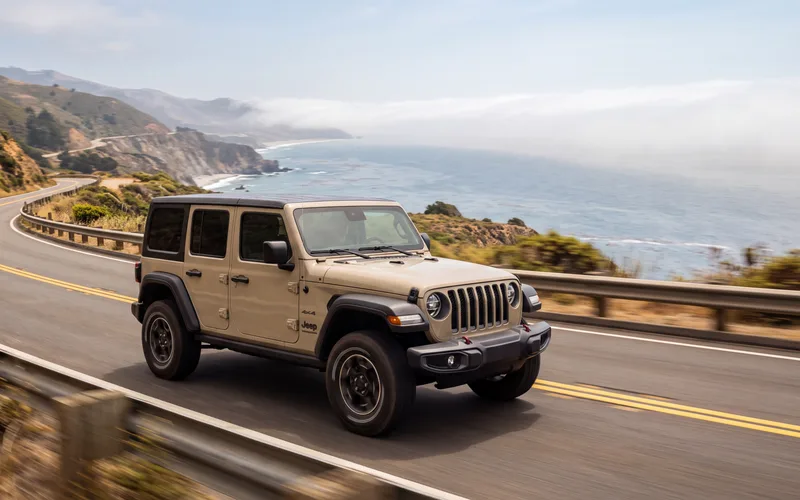 Jeep WranglerOff-Road SUVBetter at: Value
The same truck with a bigger tank, longer range, better reliability and resale, for about $8,000–$10,000 less — the right call for anyone who cannot charge at home.
Compare 1.95C-
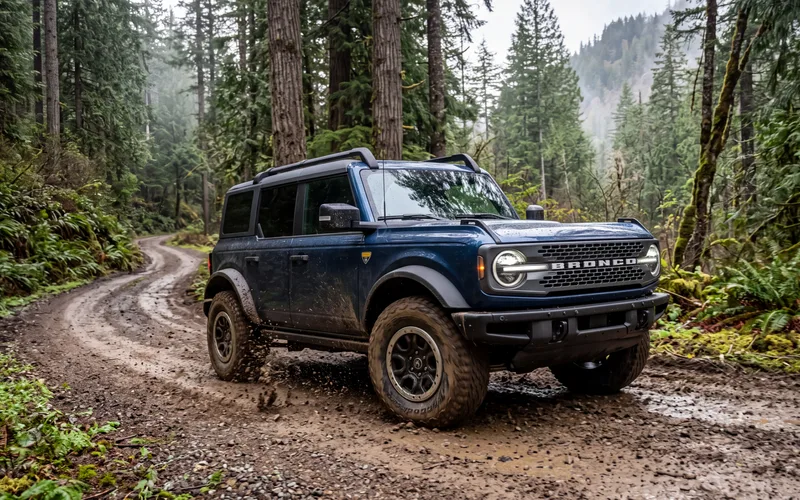 Ford BroncoOff-Road SUVBetter at: On-road manners
Delivers the same doors-off, roof-off experience with noticeably better steering and ride quality, and Sasquatch trims close most of the off-road gap.
Compare 2.38C+
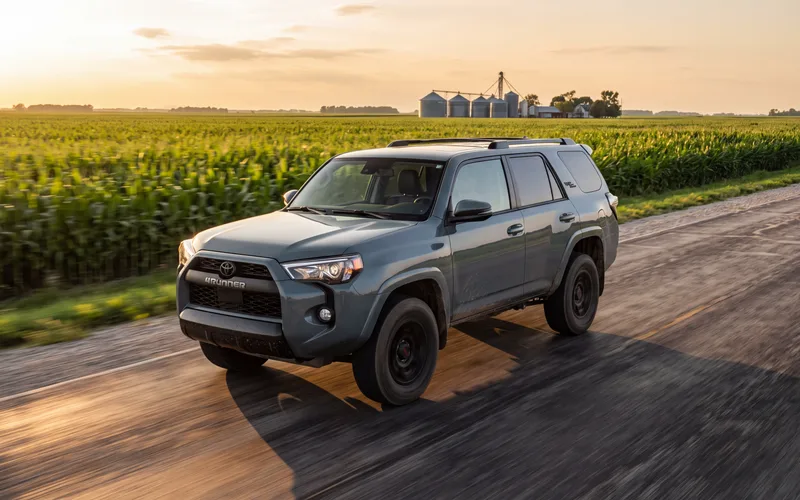 Toyota 4RunnerOff-Road SUVBetter at: Reliability
Trades some trail articulation for the reliability record and resale value the 4xe's bottom-of-class scores and fire-risk recalls cannot match.
CompareHow it's evolved
6 scored model years · 2021–2026
Subject scores by year
Hover or tap a score to see what moved it versus the year before. A corner mark flags a big swing.
| Year | Performance | Efficiency | Safety | Space | Cost | Reliability | Tech | Use-case | Driving | Value |
|---|---|---|---|---|---|---|---|---|---|---|
| 2026 | 63 | 31 | 57 | 47 | 39 | 53 | 69 | 57 | 54 | 66 |
| 2025 | 63 | 31 | 50 | 43 | 33 | 33 | 66 | 56 | 51 | 64 |
| 2024 | 60 | 31 | 47 | 43 | 35 | 30 | 65 | 55 | 49 | 67 |
| 2023 | 60 | 31 | 42 | 43 | 24 | 25 | 49 | 52 | 51 | 62 |
| 2022 | 67 | 26 | 41 | 48 | 19 | 38 | 46 | 51 | 43 | 57 |
| 2021 | 67 | 30 | 41 | 44 | 24 | 38 | 44 | 54 | 48 | 62 |
Compare two years
Best fit & conditions
Higher scores mean a better fit for that use case. Learn more about use-case fit →
Subject profile
Academic Probation · NHTSA safety recalls
Jun 4, 2026Steering: hydraulic power assist: pumpThe electric hydraulic power steering pump wiring may overheat and cause a vehicle fire, even when the vehicle is parked with the ignition in the "Off" position.
Defect
Chrysler (FCA US, LLC) is recalling certain 2021-2025 Jeep Wrangler, Wrangler 4XE, and Jeep Gladiator vehicles. The electric hydraulic power steering pump wiring may overheat and cause a vehicle fire, even when the vehicle is parked with the ignition in the "Off" position.
Risk
A vehicle fire increases the risk of injury.
Remedy
Owners are advised to park outside and away from structures, until their vehicle is repaired. Dealers will inspect and replace the wiring and electric hydraulic power steering pump, as necessary, free of charge. Owner notification letters are expected to be mailed July 9, 2026. Owners may contact FCA US LLC customer service at 1-800-853-1403. FCA US LLC's number for this recall is 21D. The Vehicle Identification Numbers (VINs) involved in this recall will become searchable on NHTSA.gov on June 11, 2026.
NHTSA campaign 26V363000 ↗Manufacturer no. 21D1,076,999 vehicles potentially affected (all models in the campaign)Owners notified Jul 9, 2026Filed by Chrysler (FCA US, LLC)Filed as WRANGLER 4XENov 6, 2025EngineDebris inside the engine may cause engine failure, which can result in a loss of drive power and/or an engine compartment fire.
Defect
Chrysler (FCA US, LLC) is recalling certain 2023-2025 Jeep Grand Cherokee 4XE and 2024-2025 Jeep Wrangler 4XE Plug-In Hybrid Electric (PHEV) vehicles. Debris inside the engine may cause engine failure, which can result in a loss of drive power and/or an engine compartment fire.
Risk
A loss of drive power increases the risk of a crash, and a vehicle fire can increase the risk of injury.
Remedy
Dealers will install a software update and replace the block or engine as necessary, free of charge. Owner notification letters were mailed beginning May 7, 2026. Additional letters will be sent once the final remedy is available. Owners may contact Chrysler customer service at 800-853-1403. Chrysler's number for this recall is 78C. Vehicle Identification Numbers (VINs) involved in this recall became searchable on NHTSA.gov beginning November 13, 2025.
NHTSA campaign 25V766000 ↗Manufacturer no. 78C117,904 vehicles potentially affected (all models in the campaign)Owners notified May 8, 2026Filed by Chrysler (FCA US, LLC)Filed as WRANGLER 4XEOct 17, 2025Electrical system: propulsion system: hybrid management: power control unit/module (hpcu): softwareA software error in an over-the-air (OTA) update may result in a loss of drive power.
Defect
Chrysler (FCA US, LLC) is recalling certain 2023-2025 Jeep Wrangler 4XE Plug-In Hybrid Electric (PHEV) vehicles. A software error in an over-the-air (OTA) update may result in a loss of drive power.
Risk
A loss of drive power increases the risk of a crash.
Remedy
Dealers will update the telematics box module software, free or charge. Interim notification letters, notifying owners of the safety risk, were mailed November 20, 2025. Additional letters will be sent once the final remedy is available. Owners may contact Chrysler customer service at 800-853-1403. Chrysler's number for this recall is A7C. Vehicle Identification Numbers (VINs) involved in this recall will be searchable on NHTSA.gov beginning October 23, 2025.
NHTSA campaign 25V710000 ↗Manufacturer no. A7C24,238 vehicles potentially affected (all models in the campaign)Filed by Chrysler (FCA US, LLC)Filed as WRANGLER 4XESep 27, 2024Electrical system: propulsion system: traction batteryThe high voltage battery may fail internally and lead to a vehicle fire while parked or driving.
Defect
Chrysler (FCA US, LLC) is recalling certain 2020-2024 Jeep Wrangler 4XE and 2022-2024 Jeep Grand Cherokee 4XE vehicles. The high voltage battery may fail internally and lead to a vehicle fire while parked or driving.
Risk
A vehicle fire while parked or driving can increase the risk of injury.
Remedy
This recall is replaced by NHTSA recall number 25V741. Vehicles already repaired under this recall will need to have the new remedy completed. Owners are advised to park outside and away from structures, and not to recharge their vehicles until they are repaired. Dealers will update the high voltage battery pack software and replace the battery pack assembly, if necessary, free of charge. Interim notification letters, notifying owners of the safety risk, were mailed October 11, 2024. Owner notification letters were mailed beginning December 2024. Owners may contact Chrysler customer service at 1-800-853-1403. Chrysler's number for this recall is 95B. Vehicles in this recall that were previously recalled for the same issue under NHTSA Recall 23V-787 will need to have the new remedy performed.
NHTSA campaign 24V720000 ↗Manufacturer no. 95B154,032 vehicles potentially affected (all models in the campaign)Owners notified Dec 16, 2024Filed by Chrysler (FCA US, LLC)Filed as WRANGLER 4XE
1 recall on other model years of the Wrangler 4xe (2021)
Dec 9, 2021Electrical system: instrument cluster/panelAfter reaching 13,342 miles, the odometer will no longer display vehicle mileage. As such, these vehicles fail to comply with the requirements of Federal Motor Vehicle Safety Standard number 101, "Control and Displays."
Defect
Chrysler (FCA US, LLC) is recalling certain 2021 Jeep Wrangler Plug-In Hybrid Electric (PHEV) vehicles. After reaching 13,342 miles, the odometer will no longer display vehicle mileage. As such, these vehicles fail to comply with the requirements of Federal Motor Vehicle Safety Standard number 101, "Control and Displays."
Risk
A missing odometer reading could lead to an unintended delay in critical safety-related maintenance, potentially impairing the safe operation of the vehicle and increasing the risk of a crash.
Remedy
Dealers will update the instrument panel cluster (IPC) software on vehicles with less than 13,342 miles, and replace the IPC on vehicles in which the mileage is not displayed, free of charge. Owner notification letters were mailed December 28, 2021. Owners may contact FCA US, LLC customer service at 1-800-853-1403. FCA US, LLC's number for this recall is Y94.
NHTSA campaign 21V949000 ↗Manufacturer no. Y942,903 vehicles potentially affected (all models in the campaign)Owners notified Dec 28, 2021Filed by Chrysler (FCA US, LLC)Filed as WRANGLER 4XE
Source: NHTSA Office of Defects Investigation recall database, model years 2021–2026. Recalls are listed by model year as the manufacturer filed them; whether a specific car is affected depends on its VIN — check a VIN at nhtsa.gov ↗. NHTSA model names matched to this page: WRANGLER 4XE.
Detailed scoring by subject
1Performance & PowertrainOne of the Wrangler 4xe's strongest categories.2.07C
Total combined system output is 375 hp at 5,250 rpm, unchanged for 2024 and the same on every 4xe trim from Sport S to Rubicon X — the 2.0L engine alone makes 270 hp. That is 90 hp more than the volume gas Wrangler's Pentastar V6 and sits mid-pack against the wider SUV field.
470 lb-ft is the 4xe's headline number and matches the 6.4L V8 Rubicon 392 — an outlier for the SUV band and a genuine advantage in low-speed rock crawling, where the traction motor's 181 lb-ft is available from zero rpm.
Jeep's own 6.0-second claim sits in the middle of a wide instrumented spread for 2024 cars — Car and Driver recorded 5.2 s and MotorTrend 5.6 s in a Rubicon X 4xe, while MotorWeek's heavier-tired Willys 4xe soft top took 6.7 s. Any figure here depends on state of charge: with the battery depleted the 4xe is materially slower.
The 4xe is strong but not smooth: in EV mode delivery is silent and instant, but reviewers consistently flag the handover between electric and engine as perceptible, and transitions between pure-electric and hybrid operation as slow and occasionally jarring, with lurches in stop-start city traffic. The 2.0L four is also coarse when it fires under load, and blended regenerative braking gives an inconsistent pedal.
The 8P75PH is the familiar TorqueFlite eight-speed with the traction motor integrated ahead of the torque converter, and its ratio spread (4.71 first, 0.67 eighth) suits the Wrangler well — shifts themselves are smooth and it rarely hunts, helped by the motor filling torque holes. What costs it points is the engine-disconnect clutch: engaging the engine mid-shift produces the hesitation and occasional shunt reviewers describe, a hybrid-specific flaw the gas Wrangler's same-family eight-speed does not have.
Every 4xe trim is rated at 3,500 lbs — the plug-in does not get the 5,000-lb rating the 2024 gas Rubicon earned with its new Dana 44 HD full-float rear axle, because the ~700 lb battery eats into the GCWR. Modest for a 5,000-lb SUV, and the towing penalty on electric range is severe.
Four-wheel drive with a two-speed transfer case and low range is standard on every 4xe — there is no 2WD variant — and the 4xe line is actually better equipped than the base gas Wrangler here: full-time MP3022 Selec-Trac with a 4WD Auto mode is standard even on the entry Sport S 4xe, where the gas Sport makes do with part-time Command-Trac. Rubicon 4xe steps up to Rock-Trac with a 4.0:1 low range.
The benchmark, and the electrified version gives up nothing: Rubicon 4xe carries the 4.0:1 Rock-Trac case, front and rear Tru-Lok electronic lockers, a Dana 44 HD full-float rear axle, an electronic front sway-bar disconnect, 4.10 gears, 10.8 in of clearance, a 43.8° approach angle and 31.5 in of water fording — matching the gas Rubicon spec for spec. The traction motor's instant 181 lb-ft adds genuine capability in crawling, and even the Sport S 4xe clears 10.1 in with a 42.2° approach.
As its own model line the 4xe is a single powertrain, take it or leave it — the same 2.0L turbo, 134 hp traction motor, 17.3 kWh pack and 8P75PH eight-speed on every trim from Sport S to Rubicon X, with no output tunes and no alternative. It scores above a pure single-engine gas SUV only because that one powertrain is an electrified plug-in and buyers can cross-shop three other engines under the wider Wrangler nameplate; 2024 did broaden trim access, adding Sport S 4xe and Willys 4xe below the previously entry-level Sahara 4xe.
2Efficiency & RangeOne of the Wrangler 4xe's weakest categories.0.02F
Charge-sustaining economy is the figure that matters once the 22-mile battery is gone, and at 20 MPG the 4xe is no better than the gas Wrangler V6 — a boxy, solid-axle, 5,000+ lb body-on-frame SUV carrying an extra ~700 lb of battery. Against other plug-in hybrids this is the bottom of the class.
Unusually for a hybrid, city economy is no better than highway — 20 MPG both ways — because in charge-sustaining mode the small battery cannot do meaningful electric-only city work and the engine carries the load. The hybrid city benefit only appears while the pack has charge, which the 52 MPGe city figure reflects.
20 MPG highway is the weakest of the three figures relative to its class — a brick-shaped body with a 73.5 in roof and off-road tires gives back everything hybridization saves at speed, and the depleted 4xe is hauling battery mass on a long trip with no way to recover it.
370 miles is short for a plug-in hybrid, most of which post 450–600 by pairing a normal tank with 35–45 MPG charge-sustaining economy. Here a 17.2-gallon tank and 20 MPG give only ~345 gas miles, and the battery adds barely 22 — and towing or a cold soak cuts it further.
The EPA record shows the 4xe used no gasoline for the first 22 miles, enough for a short commute but at the low end of the plug-in field, where 30–40 miles is now typical. The 17.3 kWh pack is modest and the Wrangler's aerodynamics and 5,000+ lb curb weight burn through it at 68 kWh/100 mi — far thirstier than a car-based plug-in SUV like the RAV4 Prime.
Plugging in genuinely saves money against the gas Wrangler — EPA's blend assumes about half the miles run electric, and the per-25-mile figures show electricity costs roughly half what gasoline does. But $2,300 is still expensive for a plug-in hybrid, and a buyer who never plugs in gets the $3,100 gas-only cost with the battery's weight for nothing.
Undemanding on both sides of the plug: minimum 87-octane regular unleaded (91 only 'recommended for optimum' economy and performance), and the 17.3 kWh pack is small enough to refill from empty in about 2.4 hours on a 240V Level 2 charger — or overnight on a household 120V outlet, which many owners can do with no installed hardware. The deductions are that there is no DC fast-charge capability at all (7.2 kW AC is the ceiling, so nothing useful can be added on a road trip), and the whole efficiency case collapses if the owner cannot plug in nightly.
3SafetyGrades below the middle of the scale.1.15D
NHTSA registers the 2024 Wrangler 4-Door 4xe as its own vehicle line and has crash-tested none of it: overall, frontal and side are all 'Not Rated', leaving a 3-star rollover as its only published star rating. The 4-star frontal result carried here is the one NHTSA produced for the structurally identical JL 4-door body, per the item's 'latest tested year of this generation' rule — it is a reach across powertrain, and the 4xe's extra ~800 lb of battery and driveline was not part of that test.
2024 brought genuine structural progress — standard first- and second-row side curtain airbags, second-row belt pretensioners and load limiters, and side-impact reinforcement earn Good in both the updated moderate overlap front and updated side tests — but the driver-side small overlap front result stands at Marginal because the Wrangler tipped onto its passenger side, and IIHS has not retested that mode since 2022. No Top Safety Pick of any grade.
The 4xe range starts at Sport S rather than base Sport, so forward collision warning with active braking and full-speed adaptive cruise with stop are standard on every 4xe sold — a real advantage over the gas Wrangler, where the volume base trim goes without. Against that, blind-spot and cross-path detection remain a paid option on Sport S, Willys, Sahara and Rubicon 4xe, and two of the five features this item measures — lane keeping and pedestrian AEB — cannot be bought on any 2024 Wrangler at any price.
Radar-based full-speed forward collision warning with active braking is standard on every 4xe trim, which is better fitment than the gas car manages, but the system's measured performance is unrated and its capability is capped: IIHS has published no vehicle-to-vehicle front crash prevention result for the 2024 Wrangler and rates it Poor for pedestrian front crash prevention because pedestrian detection is not offered — there is no daytime, nighttime or pedestrian capability here to grade upward.
Blind Spot Monitoring with Rear Cross Path detection is offered across the 4xe range but is optional on the volume Sport S, Willys, Sahara and Rubicon 4xe, standard only from High Altitude and Rubicon X up. It is alert-only — no braking or steering intervention, no safe-exit warning — and the Wrangler's small door-mounted mirrors make it more necessary here than in most SUVs.
The 2024 Wrangler 4xe offers no lane departure warning, no lane keep assist and no lane centering on any trim or in any package. That is a near-unique gap in the segment — the Bronco, 4Runner and Land Rover Defender all include at least a departure warning as standard — and it is why the vehicle has no highway-assist or hands-free capability either.
Full-speed-range adaptive cruise with stop is standard on every 2024 4xe trim, capable hardware fitted to the whole range rather than sold up-trim. It loses ground on refinement and integration: reviewers driving the 4xe fault it for braking too hard when a car cuts into the gap, and with no lane centering anywhere in the model there is no highway assist for it to combine with.
No hands-free highway driving system is offered on any 2024 Wrangler 4xe trim. Stellantis's hands-on Active Driving Assist is not fitted to the Wrangler, and with no lane-centering hardware on the platform at all, hands-free operation is not technically possible here.
The 4xe fares marginally better than the gas Wrangler only because its range starts at Sport S and its higher-volume trims — Sahara, Rubicon, High Altitude, Rubicon X — carry LED lamps as standard, so the worst halogen-reflector configuration is confined to Sport S and Willys. That is a low bar: every Wrangler headlight configuration IIHS tested rates Marginal or Poor, LED projectors without high-beam assist included, and the best result available anywhere in the lineup is Marginal.
Forward and lateral sightlines are among the best of any SUV — a near-vertical windshield, tall commanding seating, a short narrow hood and deep side glass — and the 4xe body is identical to the gas car's in this respect. Rearward vision is genuinely compromised by the sport bars and the tailgate-mounted full-size spare, the door-mounted mirrors are small, and no surround-view camera is offered on any trim to compensate.
IIHS rates the 4-door Wrangler's LATCH hardware Good+, its top grade, for easy-access anchors plus extra LATCH positions — and because the 4xe is built only as a four-door Unlimited, every 4xe buyer gets that hardware and three rear seating positions rather than the two-door's two. The boxy cabin also gives tall rear-door openings. What holds it back is the narrow body, which makes three seats across a squeeze, and a step-in height raised further by the underfloor battery pack, which makes lifting a child into a seat harder than in a crossover.
4Space & ComfortGrades near the bottom of the scale.0.86F
The 4xe is built exclusively as a four-door and seats five in every trim; no third row or six-seat configuration is offered at any price.
Jeep publishes front headroom by roof: 40.8 in under a hardtop, 42.6 in under the soft top. The hardtop figure is used as the representative configuration — it is the conservative reading and keeps this vehicle comparable to the gas Wrangler scorecard, even though the Premium Sunrider soft top is the standard roof on the volume Sahara 4xe.
The 4xe publishes 40.8 in of front legroom against the gas Wrangler's 41.2 in, and 40.8 in sits at the very bottom of the SUV band — the JL's front footwell is constrained by the transmission tunnel and the PHEV transmission's bell-housing motor rather than by overall length.
The upright boxy body tops the SUV normalization band outright on paper, but the published figure flatters the experience — the battery sits under the rear seat and raises the cushion, so testers report tall passengers hitting their heads on the roll bar and soundbar despite the number.
38.2 in is competitive for the class on paper — essentially the gas four-door's 38.3 in — but the raised, battery-forced cushion and hard plastic front seatbacks with integrated hooks make the real second row less generous than the figure suggests.
No 2024 Wrangler 4xe offers a third row in any trim — the seating chart is 2/3 across the entire lineup, so a buyer needing more than five seats cannot be served at any price.
27.7 cu ft is near the floor of the SUV band: the swing-gate hold is tall but narrow (41.1 in minimum width at the opening) and the PHEV battery packaging costs four cubic feet against the gas four-door.
Folding the bench opens 67.4 cu ft, five short of the gas four-door, and the fold is compromised as well as smaller — the battery keeps the rear seatback at an angle rather than letting it drop flat.
Conventional storage is thin and got thinner for 2024 — the new dash AMPS brackets replaced the useful dashtop tray, and the transfer-case and transmission levers plus the mechanical parking brake eat the console, leaving cupholders, small door nets and a narrow armrest box. The Wrangler answers with provisions no crossover has: a wash-out interior with removable carpet and drain plugs standard on every 4xe trim, a 115-volt console outlet, and the four-outlet Power Box standard on the volume Sahara.
2024 finally brings 12-way power front seats with lumbar to the Wrangler (optional on the volume Sahara 4xe, standard on High Altitude), and the sealed switchgear survives water fording — but the 4xe's second row is worse than the gas car's, not equal to it: the under-seat battery raises the cushion toward the roll bar and leaves the seatback permanently angled, and the hard plastic front seatbacks draw specific complaints about knee pain.
Solid axles front and rear on coil springs are the price of the off-road hardware and the 4xe changes none of it — reviewers describe bumpy, bouncy, tippy and wobbly behavior at nearly all times. The extra 600-plus pounds of battery mass settles the ride marginally, but the volume Sahara 4xe gives that back on 20-inch wheels and low-profile 255/55R20 tires with less sidewall than the gas car's 32-to-33-inch rubber.
Still one of the loudest cabins on sale — a removable roof and doors, near-vertical windshield and boxy body make wind and road noise unavoidable, and the acoustic package (acoustic front glass, active noise control, thicker carpet, windshield-header foam) is standard only on High Altitude, Rubicon X and 392, not on the volume Sahara 4xe. The 4xe earns a few points over the gas car for a genuinely silent cabin in Electric mode at city speeds, which no V6 Wrangler can offer.
The best comfort provision of any Wrangler, and meaningfully better than the gas car: dual-zone automatic temperature control and rear floor heat ducts are standard on every 4xe trim (a package item on the gas Wrangler), heated front seats and a heated steering wheel are standard on the volume Sahara 4xe, and the PHEV adds true remote cabin preconditioning off the battery or wall power via the Jeep app. Ventilated seats are still not offered at any price and there are no second-row climate controls.
5Cost of OwnershipOne of the Wrangler 4xe's weakest categories.0.30F
The Sport S 4xe was new for 2024 and became the cheapest way into a plug-in Wrangler, dropping the 4xe entry point by roughly $3,000 — but at $50,695 it still costs about $17,000 more than the cheapest gas Wrangler, and the 4xe line has no 2-door and no base Sport trim to shelter behind.
The Sahara 4xe is the mid-lineup volume seller and the configuration this scorecard describes; unlike the gas car the eight-speed automatic is standard, so the option sheet is thinner, but a typically-delivered example still lands near $59,500 once a hardtop, Cold Weather and Safety groups are added. CarEdge's independently modelled typically-equipped price of $61,887 sits just above that.
Edmunds' True Cost to Own is the only estimate built specifically for the 2024 Wrangler 4xe rather than for the nameplate as a whole, and it totals $5,974 over five years at 15,000 miles/yr; CarEdge's owner-reported basis is far lower at about $553/yr. I've landed just under the Edmunds figure because the PHEV genuinely saves on brakes and engine hours but adds a 400-volt system, a battery cooling circuit and a transmission-integrated motor that the gas car does not have.
This is the sharpest single break between the 4xe and the gas Wrangler, and it runs the wrong way: the nameplate that iSeeCars ranks among the best in the industry for retention becomes a below-average holder once it is a plug-in. The 2024 cars were transacted well under sticker — a $3,750 point-of-sale federal credit stacked on CARB-state bonus cash and large dealer discounts — and retention here is measured against MSRP, so the discount comes straight out of the residual.
Stellantis' standard Basic Limited Warranty applies unchanged to the 4xe and sits at the floor of the segment band — Hyundai and Kia offer 5 years, and Ford matches Jeep at 3 on the Bronco.
The 8-year/100,000-mile coverage on the 17.3 kWh pack and high-voltage hardware is the term that matters to a 4xe buyer — it is the expensive part and the one the gas Wrangler has no equivalent for — so it is the figure scored here. The conventional powertrain underneath keeps Jeep's ordinary 5-year/60,000-mile term, which is the bottom of the segment band.
Jeep Wave is standard with automatic enrollment and bundles more than bare roadside — 24/7 assistance, up to $1,000 trip-interruption reimbursement and a no-charge same-day loaner during routine service — but the included maintenance is thin and got thinner inside the 2024 model year, and notably the 4xe adds nothing of its own: no home-charger allowance, no public-charging credit, no complimentary Level 2 install, all of which are common on plug-in rivals.
$59,500 volume-trim price minus its estimated resale value after 5 years (45% retained, or about $26,775) leaves about $32,725 in depreciation. Add the projected $5,700 in 5-year maintenance and repairs, and owning this vehicle for 5 years costs about $38,425 in total.
6Reliability & QualityThe Wrangler 4xe's lowest-graded category.0.00F
Consumer Reports states flatly that the 2024 Wrangler is less reliable than other cars from the same model year, and the 4xe's own NHTSA record is worse than the nameplate average rather than better: 214 complaints against MY2024, versus 9 against MY2025 under the identical model designation. The fault mix is the PHEV's, not the JL's — 63 complaints describe a stall or loss of motive power, 70 an illuminated warning light or limp mode, 48 the hybrid or high-voltage battery system, and 35 a vehicle towed or stuck awaiting a dealer, with 5 alleging fire. For scale, the far higher-volume gas 2024 Wrangler 4-Door drew 680 complaints, so on a per-vehicle basis the 4xe is filing at a comparable or higher rate off a fraction of the production. First model year of the JL refresh, on the bottom-ranked brand, with a federal remedy-effectiveness query open against this exact powertrain and model-year span, is the wrong combination.
Jeep sits in the bottom tier of both major dependability studies and has for several consecutive years, which is a structural drag on any Jeep nameplate rather than a single-model-year artifact. Consumer Reports places the brand dead last on its most recent report card for the third year running and says it cannot recommend a single Jeep model. Both studies put the brand in the bottom third year after year, which is squarely the 0-49 band.
The MY2024 4xe is the single worst-exposed year of this powertrain, and the damning detail is not the count but that two separate remedies against it have already failed. Its high-voltage battery was recalled once under 24V-720 (154,032 units, internal battery failure causing fire while parked or driving) and then recalled AGAIN under 25V-741, which NHTSA's own record says "replaces" the earlier campaign and requires vehicles already repaired to come back — owners told to park outside, away from structures, and stop charging, with the remedy still under development. Separately, NHTSA opened recall query RQ24-012 in July 2024 into 94,275 2021-2024 Wrangler 4xes precisely to assess whether recall 22V-865's remedy worked, after 68 loss-of-motive-power reports kept arriving from vehicles both inside and outside its scope. On top of those two failed fixes sit 25V-766 (casting debris left inside the 2.0L engine block, risk of catastrophic failure or engine-bay fire), 25V-710 (an OTA software error that itself causes loss of drive power) and 26V-363 (electric hydraulic power-steering pump wiring overheating, 1,076,999 units, another park-outside advisory). The 2024-only JL line-escape campaigns — wrong taillights (24V-585), wrong dash harness (24V-871), trailer-lighting power distribution center (24V-414) — are real but trivial at 27, 34 and 4 units. Fire risk from two independent systems, propulsion loss from two more, and two ineffective prior remedies in one model year is systemic, not routine.
The 4xe pairs the 2.0L GME-T4 turbo four with two electric motors, a clutch-based P2 hybrid layout and a 400V, 17.3 kWh pack behind the TorqueFlite eight-speed — a combination four model years old at this point with no high-mileage track record and, uniquely for MY2024, two confirmed manufacturing defects inside the two most expensive components. Casting debris was left inside the engine block on 2024-2025 cars, and the high-voltage pack has been recalled twice over internal cell failure that starts fires with the vehicle switched off. This model year is also inside the scope of RQ24-012, the federal query into why the earlier engine-shutdown remedy did not stop the stalling. That forfeits entirely the proven-Pentastar credit the gas Wrangler earns from a powertrain in production since 2011: this is an unproven design with confirmed red flags, not merely a young one. It stays a few points off the floor only because the eight-speed automatic and the surrounding solid-axle driveline are shared, conventional Wrangler hardware.
2024 is the year the JL cabin was substantially reworked and it is a genuine step up rather than a trim shuffle: a 12.3-inch Uconnect 5 touchscreen standard across the range, power-adjustable front seats available for the first time, more soft-touch dash surfaces, and acoustic front glass with added windshield-surround foam and thicker carpet on upper trims. Reviewers were explicit that this is the most premium Wrangler cabin yet while remaining deliberately washout-friendly, so the hard plastics that stay are a defensible answer to removable doors and a removable roof rather than cost-cutting. The deduction is price-relative and it is what keeps this mid-band: it is the identical cabin fitted to far cheaper gas Wranglers, while the 4xe carries a Premium-class price.
The bolt-together body — removable Freedom Top panels, removable doors, folding windshield, body-on-frame with a demountable body — makes wind noise, rattles and water intrusion chronic architectural traits rather than isolated defects, and reviewers confirm that even after the 2024 insulation work the cabin is still louder than nearly anything else on the road. Being the first year of a refresh is where build errors concentrate, and MY2024 has the recall record to prove it: three separate wrong-part campaigns reached customers (incorrect taillights, incorrect dash wiring harness, wrong power distribution center). Unit counts on those are small, so they are evidence of line-control lapses rather than a fleet-wide defect. The 4xe then adds its own assembly complaints on top of the shared JL ones — owners in the NHTSA record describe oil leaks and displaced underhood insulation at low mileage — and Jeep does not appear among J.D. Power's Initial Quality Study leaders.
Raw coverage is a genuine strength — roughly 2,360 Jeep rooftops give metro and rural reach few rivals match, which matters for a vehicle sold heavily outside major markets. Three things discount it hard for this specific car. High-voltage service requires certified technicians, so the effective 4xe network is narrower than the storefront count. The open recalls stacked against MY2024 were notified with remedies that did not yet exist, leaving owners holding interim letters and park-outside instructions. And the MY2024 complaint record documents the consequence directly: 35 of 214 complaints describe a vehicle towed or immobilized awaiting a dealer, including owners told the recall parts were unavailable. Jeep also sits below the mass-market average on service satisfaction, so the network is easy to reach but not well regarded once you are in it.
The 4xe shares body, chassis, solid axles and most consumables with the gas Wrangler, so it inherits the deepest parts ecosystem and aftermarket of any vehicle sold in America, plus a conventional maintenance schedule at roughly 7,500-mile oil intervals. The hybrid hardware is the exception and it is dealer-only and expensive — a high-voltage pack runs roughly $1,900 in parts and labor — and RepairPal already puts Wrangler annual repair and maintenance well above the compact-SUV average. The 8-year/100,000-mile federal hybrid-component warranty covers the worst of it through the first ownership period, and the fire and engine-debris campaigns are manufacturer-funded, which is what keeps this item mid-band rather than low despite the fault frequency.
7Technology & InfotainmentOne of the Wrangler 4xe's strongest categories.2.40C+
2024 is the change year for this item: the 12.3-inch Uconnect 5 display replaced the previous 7.0/8.4-inch screens and is standard on every 4xe trim from Sport S up, with no optional larger unit above it.
Uconnect 5 on the Android platform is among the best systems in the segment — reviewers call it the best in the business, the anti-glare backlighting genuinely works in an open-top vehicle, and large physical stereo, climate and 4WD controls are retained below the screen. The 4xe adds dedicated Hybrid Electric Pages showing power flow, charge scheduling and driving history.
Wireless Apple CarPlay and wireless Android Auto are both standard on every 2024 4xe trim with no package required, wired connection also works, and the system pairs two phones simultaneously — top-band content and a clear upgrade over the wired-only earlier 4xe.
Hands-free voice command with a new microphone array is standard on every 4xe trim and measurably improves phone calls, but the recognition itself is judged hit-and-miss and slower than Siri via CarPlay, and embedded TomTom navigation is package content (Technology Group) on the volume Sahara 4xe rather than standard — only High Altitude gets it fitted.
The nine-speaker Alpine system with all-weather subwoofer and 552-watt amplifier is competent but not a class benchmark, and on the volume Sahara 4xe it is package content rather than standard; the base setup of small dash speakers plus an overhead soundbar is weak. An open-air body with a removable roof is acoustically hostile no matter what is fitted.
No full-digital cluster exists on any 2024 Wrangler at any price — analog gauges flank a TFT window. The 4xe does better than the gas car here: the 7.0-inch color driver-information display is standard across the 4xe range (the gas Sport makes do with a 3.5-inch monochrome unit) and carries hybrid-specific electric-power and regeneration gauges plus Eco feedback. Mid-band partial-digital content.
Uconnect 5 is built on Android specifically to support over-the-air delivery of new content and features, map updates install at the push of a button, and the Trails Offroad guide library is extended over the air — real capability earlier Wranglers lacked. The documented scope is still infotainment, maps and trail data rather than whole-vehicle software that changes how the vehicle drives or charges.
The PHEV gives the app real substance the gas Wrangler's lacks: charge scheduling for off-peak rates, charge-state and charging-interrupted notifications, and remote cabin preconditioning while plugged in, on top of remote start, lock/unlock, locate and a Wi-Fi hotspot. It is held back by subscription gating — SiriusXM Guardian connected services are package content on the volume Sahara 4xe and not available at all on Sport S or Willys — and there is no digital key or phone-as-key.
The strongest item in this category and the clearest 4xe advantage: the Jeep 4xe Power Box — four 120-volt outlets, 30 amps, up to 3.6 kW drawn from the traction battery — is standard on the volume Sahara 4xe, alongside a 115-volt console outlet, two charge-only rear USBs, 12-volt outlets at the instrument panel and in the cargo area, and dual front USB-C. The only real gap is a factory wireless charging pad, which is not offered.
Better provisioned than the gas Wrangler: push-button start and remote keyless entry are standard on every 4xe trim, and proximity passive entry is standard on the volume Sahara 4xe rather than package content. Remote start is still optional or package content below High Altitude, there is no phone-as-key, and the side-swing gate with flip-up glass is entirely manual — no power or hands-free liftgate exists on the model.
A rear camera with dynamic gridlines is standard on every trim and the forward-facing off-road TrailCam proves useful in town as well as on trail, but no 360-degree surround-view system is offered at any price — a notable gap against the Bronco, and a costly one when sport bars and the tailgate-mounted full-size spare are what block the view. ParkSense rear sensors and the TrailCam are both package content on the volume Sahara 4xe, and there is no automated parking.
No head-up display is offered on any 2024 Wrangler 4xe trim or in any option package — unsurprising for a vehicle whose windshield folds down and is offered with Gorilla Glass, but a total absence of the feature this item measures.
8Use-Case FitGrades below the middle of the scale.1.69D
The LATCH hardware is genuinely good and rear legroom is competitive on paper, but the 4xe's battery makes the family logistics worse than the gas Wrangler's: the rear cushion sits higher and the seatback is permanently angled, only 27.7 cu ft is left behind it for a stroller, and the usual Wrangler frictions remain — a high step-in with no standard running boards, narrow rear door openings, a narrow body that makes three across a squeeze, and a bench that neither slides nor reclines.
2024 made first- and second-row side curtain airbags, forward collision warning, automated emergency braking and adaptive cruise standard on every 4xe trim — the whole 4xe line starts at Sport S, so no 4xe buyer gets the stripped base content. The family-relevant gaps are still severe: the JL four-door tipped onto its side in the IIHS small overlap test, headlights rate Poor on the volume trims, there is no lane departure warning or lane keeping at any price, pedestrian AEB is not offered, blind-spot monitoring is package content on the Sahara 4xe, and there is no rear-occupant alert.
Dual-zone automatic climate, rear floor heat ducts and rear charge-only USBs are all standard on the volume trim, and class-leading headroom is real — but a long day in the second row means the segment's loudest cabin, a jittery solid-axle ride, an angled battery-forced seatback and knee-catching front seatbacks, with only 27.7 cu ft of luggage space behind five occupants. There are no second-row climate controls and no rear entertainment at any price.
The best-commuting Wrangler, which is a low bar cleared meaningfully: 22 miles of electric range covers most city driving in near silence, 470 lb-ft of instant torque makes low-speed progress effortless, Max Regen gives near-one-pedal driving, and adaptive cruise with stop is standard on every 4xe trim. Against that, the powertrain lurches in city driving, the ride is jittery, the cabin is loud, the step-in is high, and there is no lane centering to take any load off in traffic.
This is the 4xe's core argument and it holds for the commuter it was designed for: a 10-to-15-mile each-way commute runs almost entirely on electricity at roughly $2.86 per 25 miles against $5.12 on gas, cutting annual energy cost to about $2,300 from the gas Wrangler's $3,100. The caveats are real — with a flat battery it returns the same 20 MPG as the V6, one tester managed 18.7 MPG in hybrid mode, a 120-volt outlet takes 12 hours to refill, and the chunky tires and heavy brakes on a 5,000-plus-pound body are expensive consumables.
Better in town than its image suggests — the body is narrow at 73.9 in, the hood is short and the near-vertical windshield with tall seating gives outstanding forward sightlines, and the 38.9-ft turning circle makes U-turns easy. What costs it is the rear and the helm: sport bars and the tailgate-mounted full-size spare block the view, ParkSense sensors and the TrailCam are both optional on the volume trim, no surround-view camera is offered, and the electro-hydraulic steering is described as slow and numb.
Light-to-moderate work duty only, and less capable than the gas Wrangler on the numbers that matter: every 4xe trim is capped at 3,500 lbs of trailer, so the 5,000-lb rating the 2024 full-float Dana 44 unlocked for the gas Rubicon automatic does not extend to the hybrid. Payload runs 1,188–1,398 lbs, there is no bed, and cargo behind the second row is only 27.7 cu ft. The 470 lb-ft of combined torque available from idle is the one genuinely work-grade attribute.
The chassis hardware is built to be abused — body-on-frame, third-generation Dana 44 solid axles front and rear, fuel-tank and transfer-case skid plates standard on every trim, and a wash-out interior with drain plugs. What holds the score well below the gas Wrangler is the ownership record plus PHEV complexity: a 17.3 kWh high-voltage pack, a motor-in-bellhousing transmission and their control electronics are extra failure surface on a vehicle line that already carries a poor reliability and recall history.
Unusually strong for an SUV, and the one work dimension where the 4xe clearly beats the gas Wrangler: the Power Box turns the traction battery into a 3.6 kW, four-outlet jobsite generator and is standard on the volume Sahara 4xe, alongside a 115-volt console outlet. Add a hose-out interior with drain plugs, the auxiliary switch bank and Class II hitch in the trailer-tow group, dash AMPS accessory brackets and the deepest upfit aftermarket of any vehicle sold. The limits are structural — no bed and modest enclosed cargo.
A poor mile-eater, and worse than the gas Wrangler — the highway is exactly where a PHEV surrenders its advantage. The 17.2-gallon tank at 20 MPG gives roughly 370 miles of total range against the V6's ~430, the battery is spent in the first 22 miles, and one tester found the Jeep struggled to hold 75 mph in Electric mode below 25% charge. The noisiest cabin in the class, a jittery ride and the complete absence of lane centering make hours behind the wheel tiring.
Still the segment benchmark, and the electric drive adds something no rival has: instant, finely modulated torque for rock crawling and near-silent trail running, plus the Power Box to run a fridge and lights at camp. It sits just below the gas Rubicon because the battery costs it geometry — 10.1–10.8 in of ground clearance against 12.9, 22–22.5° breakover against 27.8, and 30–31.5 in of fording against 34 — but Selec-Trac or Rock-Trac low range, Tru-Lok lockers, a sway-bar disconnect, removable doors and roof, and 62 Badge of Honor trail guides in the dash are all intact.
Flexible in ways a number cannot capture — removable roof panels or a full soft top let loads stand taller than any fixed-roof SUV allows, the floor hoses out, and the accessory catalogue of racks, hitches and cargo trays is enormous. But the 4xe gives up real capacity to the battery against the gas four-door: 27.7 cu ft with the seats up and 67.4 folded, and the rear seatback will not drop flat, so the folded floor is angled rather than usable full length.
9Driving ExperienceGrades below the middle of the scale.1.25D
Solid axles front and rear on a five-link coil setup are the price of the off-road hardware, and the 4xe pays more for them than the gas Wrangler does — 5,049 to 5,265 lbs of curb weight, some 600–800 lbs more than a V6 four-door, on the same architecture. Testers describe bumpy, bouncy, tippy and wobbly behaviour at nearly all times, with a high centre of gravity and all-terrain or on/off-road tires capping cornering grip well short of the class.
The 4xe uses an electro-hydraulic rack rather than the gas Wrangler's electro-mechanical system, and reviewers judge it harshly: slow and numb, and specifically a liability on narrow lanes. The 14.9:1 ratio and 3.1 turns lock-to-lock at least make it quick off-centre, and the solid front axle no longer wanders the way earlier JLs did, but there is little genuine feedback.
The regen blending is the 4xe's quiet success — a hydro-electric ABS with fully blended regeneration hands off from motor to friction braking naturally, avoiding both the grabbiness that afflicts many hybrids and the two-stage pedal testers complain about in the gas Wrangler, and Max Regen gives near-one-pedal driving. Outright stopping power is still poor for an SUV: a Rubicon 4xe needed 150 ft from 60 mph, well past the 120–130 ft most SUVs manage, and there is pronounced nosedive under heavy braking.
The response is excellent — 470 lb-ft available from 3,000 rpm with electric torque filling in below it makes this the most effortless non-Hemi Wrangler — but the calibration is not. Reviewers call the 4xe powertrain outright unrefined, with lurches in city driving as the engine cuts in and out, and it runs out of electric authority trying to hold 75 mph once the pack drops below a quarter charge.
Two opposite characters that roughly cancel. In Electric mode the drivetrain is genuinely silent — reviewers describe creeping through the desert in total silence alongside roaring V8 Wranglers, something no gas Wrangler can do. Under load the turbo four is coarser than the V6 it replaces and drones audibly up grades, and the volume Sahara 4xe does not get the acoustic glass and added sound deadening that would mask it.
38.9 ft is mid-pack for a mid-size SUV and better than the direct rival Bronco four-door; the quick 14.9:1 steering ratio makes the most of it. The 4xe is four-door only, so the gas Wrangler's tight 32.7-ft two-door figure is not available here.
The commanding upright position over a short, narrow hood and the retained physical knobs for stereo, climate and 4WD are real ergonomic strengths, and 2024 finally offers 12-way power front seats with lumbar (optional on the volume Sahara 4xe). Against that, the 4xe publishes 40.8 in of front legroom — 0.4 in less than the gas car and bottom-of-band for an SUV — with only 8.1 in of seat travel and a manually tilt/telescoping column, and the high step-in through narrow doors is awkward without the optional side steps.
The Wrangler's open-air character is fully intact — doors, roof panels and windshield all come off — and the 4xe adds two things the V6 cannot: 470 lb-ft that makes it the quickest Wrangler short of the 392, and silent electric running that reviewers single out as a genuinely novel pleasure on the trail. Hagerty concluded outright that the 4xe is 'the modern Wrangler to have.' It stays below the top band because the fun is atmospheric rather than dynamic: the thing is heavy, loud under load, and clumsy in corners.
10Value & Market PositionThe Wrangler 4xe's best-graded category.2.56C+
The 4xe range starts at Sport S rather than the spartan Sport, so the entry car already carries the 12.3-inch Uconnect 5 touchscreen with wireless CarPlay/Android Auto, full-speed adaptive cruise with stop, forward collision warning with active braking, air conditioning and power windows and locks — better fitted than the gas Wrangler's floor. It is graded only modestly above mid-pack because at $50,695 the Sport S 4xe still delivers cloth seats and steel-styled wheels, with heated seats, heated steering wheel and remote start bundled into a paid Convenience Group and blind-spot monitoring optional rather than standard.
On sticker alone the 4xe is a poor deal — roughly $8,000–$10,000 over an equivalent gas trim for 22 miles of EV range and charge-sustaining economy of 20 MPG, no better than the V6 it replaces — and the volume Sahara 4xe stickers near $59,500. What rescues it for 2024 specifically is that almost nobody paid that: a $3,750 federal credit was available at the point of sale, CARB-state bonus cash and dealer discounts stacked on top, and the buyer also gets 375 hp, 470 lb-ft and silent low-range crawling that no rival plug-in offers at any price.
Narrower than the full Wrangler line — 4-door only, one powertrain, no manual — but 2024 was the widest the 4xe ladder ever got, adding the Sport S 4xe at the bottom and the Rubicon X 4xe at the top so the range spans $50,695 to $67,795 across six trims, each with a soft top, three-piece hardtop or power Sky One-Touch roof. That is far more configurability than any other plug-in SUV on sale.
The Wrangler 4xe was outright America's best-selling plug-in hybrid in 2024 and took 37% of all Wrangler volume — 55,554 units, a share that peaked at half of Wrangler sales in Q1. Held just short of the top band because the trajectory turned during the year: Q1 set a record, then Q2 fell back to 42% share and volume needed incentives to clear, and Stellantis subsequently killed the whole 4xe line after 2025.
The Wrangler nameplate carries direct WWII-Jeep lineage, an owner culture with its own etiquette and one of the most loyal buyer bases in the industry, and the 4xe layers a genuine green halo on top — the best-selling plug-in in the country and the only serious off-road PHEV. It is marked below the gas car's ceiling by the parent brand's 2024 standing: a sixth consecutive year of US decline, an open dealer revolt over pricing, and reliability rankings near the bottom of Consumer Reports.
Scored as buyer benefit, 2024 was close to the best year anyone has had buying a plug-in Wrangler. A $3,750 federal credit was taken at the register rather than at tax time, leases captured the full $7,500 through the commercial pass-through, CARB-state bonus cash added up to $3,500, and Stellantis' inventory glut put another $7,000-plus of dealer discount on the hood. Kept out of the very top only because it took the credit, the state bonus and hard negotiation stacked together to get there.
2024 is the JL's mid-cycle refresh year and a substantial one — new grille, an all-new dashboard built around the 12.3-inch Uconnect 5, standard side-curtain airbags, new front seat frames, a stealth windshield antenna, and for the 4xe specifically a new entry Sport S trim and a new Rubicon X. But the generation dates to 2018 and the 4xe powertrain is unchanged since its 2021 debut, so this is a well-freshened mid-cycle car rather than a new one.
Reviewers agree the 2024 refresh fixed the interior and tech complaints, and the Wrangler took a real award for it, while the 4xe holds a niche nobody else contests — the only plug-in that crawls rock in near silence. Reception stays split rather than laudatory: expert scores sit in the high 7s, on-road manners and real-world EV range draw consistent criticism, and owner sentiment for this powertrain is markedly worse than the reviews.