
The verdict
A struggling off-road suv, strong on technology and held back by efficiency.
The 2025 Wrangler 4xe is the quickest, quietest, most capable Wrangler short of the V8 — 375 hp, 470 lb-ft of instant torque, 21 miles of silent electric crawling, and a proper eight-speed automatic standard when the 2025 gas Wrangler shipped its volume trims manual-only. The catch is that almost none of the plug-in math works: 20 MPG once the small 17-kWh battery is spent, 370 miles of total range (about 60 less than the gas V6), a $52,690 starting price that runs to $72,340, and no federal purchase credit for 2025 buyers. Add two open fire-risk recalls, a brand that finished dead last at Consumer Reports for the third straight year, and roughly 43% resale at five years against the gas Wrangler's ~68%, and this becomes a very expensive way to own a Wrangler. Buy it if you want the best-driving Wrangler and can charge at home nightly; buy the gas one — or almost any rival — if you were shopping it for efficiency.
Jump to scoresStrengths
- Off-road hardware nothing in the class touches
- The quickest, smoothest-driving Wrangler short of the V8
- Genuinely good infotainment, standard on every trim
What holds it back
- The efficiency case falls apart past 21 miles
- Resale collapses — this is the expensive way to own a Wrangler
- Two open fire-risk recalls and a shaky reliability record
Top alternatives
Cars shoppers cross-shop with the Jeep Wrangler 4xe 1.84C-
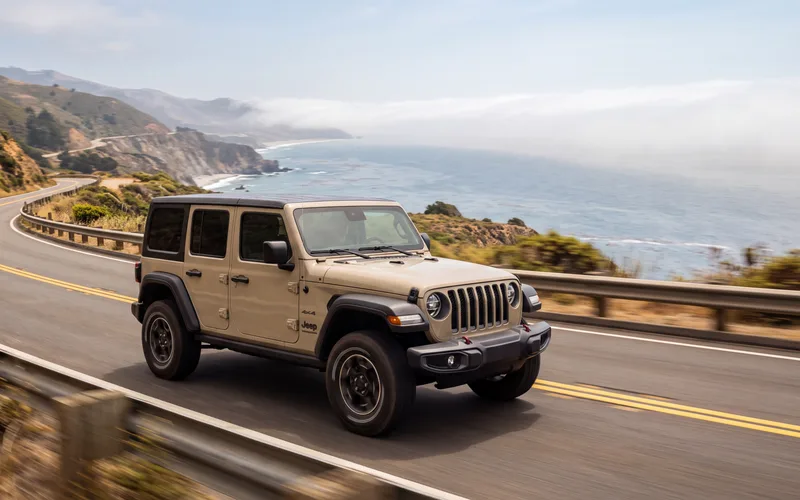 Jeep WranglerOff-Road SUVBetter at: Value
The same truck with a bigger tank, longer range, better reliability and resale, for about $8,000–$10,000 less — the right call for anyone who cannot charge at home.
Compare 1.95C-
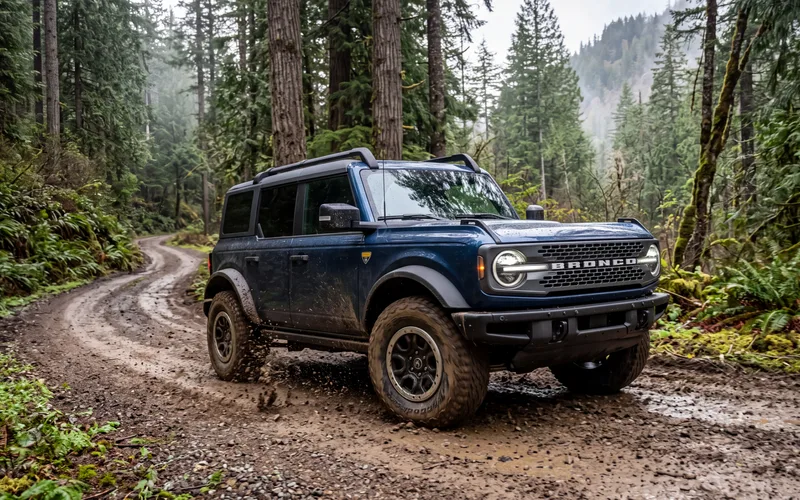 Ford BroncoOff-Road SUVBetter at: On-road manners
Delivers the same doors-off, roof-off experience with noticeably better steering and ride quality, and Sasquatch trims close most of the off-road gap.
Compare 2.38C+
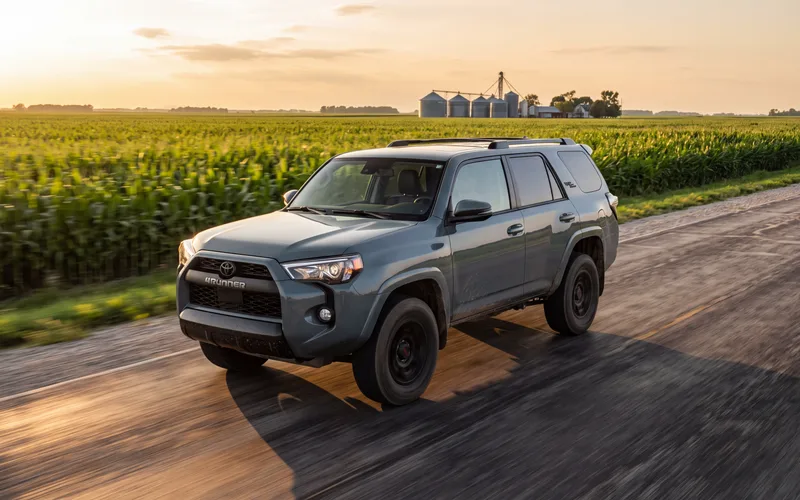 Toyota 4RunnerOff-Road SUVBetter at: Reliability
Trades some trail articulation for the reliability record and resale value the 4xe's bottom-of-class scores and fire-risk recalls cannot match.
CompareHow it's evolved
6 scored model years · 2021–2026
Subject scores by year
Hover or tap a score to see what moved it versus the year before. A corner mark flags a big swing.
| Year | Performance | Efficiency | Safety | Space | Cost | Reliability | Tech | Use-case | Driving | Value |
|---|---|---|---|---|---|---|---|---|---|---|
| 2026 | 63 | 31 | 57 | 47 | 39 | 53 | 69 | 57 | 54 | 66 |
| 2025 | 63 | 31 | 50 | 43 | 33 | 33 | 66 | 56 | 51 | 64 |
| 2024 | 60 | 31 | 47 | 43 | 35 | 30 | 65 | 55 | 49 | 67 |
| 2023 | 60 | 31 | 42 | 43 | 24 | 25 | 49 | 52 | 51 | 62 |
| 2022 | 67 | 26 | 41 | 48 | 19 | 38 | 46 | 51 | 43 | 57 |
| 2021 | 67 | 30 | 41 | 44 | 24 | 38 | 44 | 54 | 48 | 62 |
Compare two years
Best fit & conditions
Higher scores mean a better fit for that use case. Learn more about use-case fit →
Subject profile
Academic Probation · NHTSA safety recalls
Jun 4, 2026Steering: hydraulic power assist: pumpThe electric hydraulic power steering pump wiring may overheat and cause a vehicle fire, even when the vehicle is parked with the ignition in the "Off" position.
Defect
Chrysler (FCA US, LLC) is recalling certain 2021-2025 Jeep Wrangler, Wrangler 4XE, and Jeep Gladiator vehicles. The electric hydraulic power steering pump wiring may overheat and cause a vehicle fire, even when the vehicle is parked with the ignition in the "Off" position.
Risk
A vehicle fire increases the risk of injury.
Remedy
Owners are advised to park outside and away from structures, until their vehicle is repaired. Dealers will inspect and replace the wiring and electric hydraulic power steering pump, as necessary, free of charge. Owner notification letters are expected to be mailed July 9, 2026. Owners may contact FCA US LLC customer service at 1-800-853-1403. FCA US LLC's number for this recall is 21D. The Vehicle Identification Numbers (VINs) involved in this recall will become searchable on NHTSA.gov on June 11, 2026.
NHTSA campaign 26V363000 ↗Manufacturer no. 21D1,076,999 vehicles potentially affected (all models in the campaign)Owners notified Jul 9, 2026Filed by Chrysler (FCA US, LLC)Filed as WRANGLER 4XENov 6, 2025EngineDebris inside the engine may cause engine failure, which can result in a loss of drive power and/or an engine compartment fire.
Defect
Chrysler (FCA US, LLC) is recalling certain 2023-2025 Jeep Grand Cherokee 4XE and 2024-2025 Jeep Wrangler 4XE Plug-In Hybrid Electric (PHEV) vehicles. Debris inside the engine may cause engine failure, which can result in a loss of drive power and/or an engine compartment fire.
Risk
A loss of drive power increases the risk of a crash, and a vehicle fire can increase the risk of injury.
Remedy
Dealers will install a software update and replace the block or engine as necessary, free of charge. Owner notification letters were mailed beginning May 7, 2026. Additional letters will be sent once the final remedy is available. Owners may contact Chrysler customer service at 800-853-1403. Chrysler's number for this recall is 78C. Vehicle Identification Numbers (VINs) involved in this recall became searchable on NHTSA.gov beginning November 13, 2025.
NHTSA campaign 25V766000 ↗Manufacturer no. 78C117,904 vehicles potentially affected (all models in the campaign)Owners notified May 8, 2026Filed by Chrysler (FCA US, LLC)Filed as WRANGLER 4XEOct 17, 2025Electrical system: propulsion system: hybrid management: power control unit/module (hpcu): softwareA software error in an over-the-air (OTA) update may result in a loss of drive power.
Defect
Chrysler (FCA US, LLC) is recalling certain 2023-2025 Jeep Wrangler 4XE Plug-In Hybrid Electric (PHEV) vehicles. A software error in an over-the-air (OTA) update may result in a loss of drive power.
Risk
A loss of drive power increases the risk of a crash.
Remedy
Dealers will update the telematics box module software, free or charge. Interim notification letters, notifying owners of the safety risk, were mailed November 20, 2025. Additional letters will be sent once the final remedy is available. Owners may contact Chrysler customer service at 800-853-1403. Chrysler's number for this recall is A7C. Vehicle Identification Numbers (VINs) involved in this recall will be searchable on NHTSA.gov beginning October 23, 2025.
NHTSA campaign 25V710000 ↗Manufacturer no. A7C24,238 vehicles potentially affected (all models in the campaign)Filed by Chrysler (FCA US, LLC)Filed as WRANGLER 4XE
2 recalls on other model years of the Wrangler 4xe (2021–2024)
Sep 27, 2024Electrical system: propulsion system: traction batteryThe high voltage battery may fail internally and lead to a vehicle fire while parked or driving.
Defect
Chrysler (FCA US, LLC) is recalling certain 2020-2024 Jeep Wrangler 4XE and 2022-2024 Jeep Grand Cherokee 4XE vehicles. The high voltage battery may fail internally and lead to a vehicle fire while parked or driving.
Risk
A vehicle fire while parked or driving can increase the risk of injury.
Remedy
This recall is replaced by NHTSA recall number 25V741. Vehicles already repaired under this recall will need to have the new remedy completed. Owners are advised to park outside and away from structures, and not to recharge their vehicles until they are repaired. Dealers will update the high voltage battery pack software and replace the battery pack assembly, if necessary, free of charge. Interim notification letters, notifying owners of the safety risk, were mailed October 11, 2024. Owner notification letters were mailed beginning December 2024. Owners may contact Chrysler customer service at 1-800-853-1403. Chrysler's number for this recall is 95B. Vehicles in this recall that were previously recalled for the same issue under NHTSA Recall 23V-787 will need to have the new remedy performed.
NHTSA campaign 24V720000 ↗Manufacturer no. 95B154,032 vehicles potentially affected (all models in the campaign)Owners notified Dec 16, 2024Filed by Chrysler (FCA US, LLC)Filed as WRANGLER 4XEDec 9, 2021Electrical system: instrument cluster/panelAfter reaching 13,342 miles, the odometer will no longer display vehicle mileage. As such, these vehicles fail to comply with the requirements of Federal Motor Vehicle Safety Standard number 101, "Control and Displays."
Defect
Chrysler (FCA US, LLC) is recalling certain 2021 Jeep Wrangler Plug-In Hybrid Electric (PHEV) vehicles. After reaching 13,342 miles, the odometer will no longer display vehicle mileage. As such, these vehicles fail to comply with the requirements of Federal Motor Vehicle Safety Standard number 101, "Control and Displays."
Risk
A missing odometer reading could lead to an unintended delay in critical safety-related maintenance, potentially impairing the safe operation of the vehicle and increasing the risk of a crash.
Remedy
Dealers will update the instrument panel cluster (IPC) software on vehicles with less than 13,342 miles, and replace the IPC on vehicles in which the mileage is not displayed, free of charge. Owner notification letters were mailed December 28, 2021. Owners may contact FCA US, LLC customer service at 1-800-853-1403. FCA US, LLC's number for this recall is Y94.
NHTSA campaign 21V949000 ↗Manufacturer no. Y942,903 vehicles potentially affected (all models in the campaign)Owners notified Dec 28, 2021Filed by Chrysler (FCA US, LLC)Filed as WRANGLER 4XE
Source: NHTSA Office of Defects Investigation recall database, model years 2021–2026. Recalls are listed by model year as the manufacturer filed them; whether a specific car is affected depends on its VIN — check a VIN at nhtsa.gov ↗. NHTSA model names matched to this page: WRANGLER 4XE.
Detailed scoring by subject
1Performance & PowertrainOne of the Wrangler 4xe's strongest categories.2.22C
The 2025 Wrangler 4xe integrates a 2.0-liter turbo four with an engine-mounted MGU and a transmission-mounted MGU fed by a 400-volt, 17-kWh pack for a combined 375 hp — one output across the entire 4xe range, from Sport S 4xe to Rubicon X 4xe, with no engine choice.
470 lb-ft available from near zero rpm is the 4xe's defining number — it matches the outgoing 6.4L V8 Rubicon 392's peak torque and beats the gas 4-door V6's 260 lb-ft by more than 80%, which is exactly what a 5,200 lb solid-axle 4x4 wants at crawling speed.
Jeep's own 6.0-second claim sits between Car and Driver's 5.5 s (fully charged, both motors contributing) and Edmunds' 7.0 s on a Rubicon 4xe — the spread is real, because charge-sustaining acceleration on the 2.0L alone is materially slower than the launch a full pack allows. 6.0 s is the honest representative figure and still makes this among the quickest showroom-stock Wranglers ever sold below the 392.
Silent, instant electric pull in E Selec 'Electric' mode is a genuine step up on the thrashy Pentastar V6, and the driver can lock the mode rather than leaving handoffs to the software. Against that, reviewers consistently report an audible clunk and a beat of hesitation when the 2.0L fires, plus grabby regen blending — enough to hold this mid-band rather than top-band.
The 4xe is automatic-only: a TorqueFlite eight-speed with the second motor-generator built into the case, and it is the well-regarded ZF-derived unit reviewers describe as decisive and unobtrusive. Notably the 4xe sidesteps the 2025 gas Wrangler's problem entirely — the V6 launched that year as manual-only with the automatic reinstated as a $4,500 option, while every 4xe shipped with the good gearbox as standard.
Despite out-torquing every gas Wrangler bar the V8, the 4xe is capped at 3,500 lbs — the roughly 500 lb battery pack consumes the GCWR headroom, so even a Rubicon 4xe carrying the same full-float Dana 44 rear axle cannot claim the gas Rubicon's 5,000 lbs. That is well below ladder-frame rivals such as the 4Runner (6,000 lbs).
There is no two-wheel-drive 4xe: every one of the six 2025 trims ships with Dana solid axles and a two-speed transfer case with low range. Sport S and Sahara 4xe use full-time Selec-Trac; Willys 4xe adds a standard rear locker; Rubicon and Rubicon X 4xe get Rock-Trac for a 77.2:1 maximum crawl ratio. Only the gas Rubicon's deeper 100:1 crawl keeps this off the very top.
The 4xe carries the Wrangler's full hardware suite — Dana solid axles, standard skid plates and tow hooks, front and rear Tru-Lok lockers plus electronic sway-bar disconnect on Rubicon, 33-inch tires on Willys 4xe and up — with 10.9 in of ground clearance and a 43.9° approach angle, and adds a trick no gas Wrangler has: 21 silent all-electric miles for low-speed trail work. It scores a shade below the gas Rubicon because the battery costs it two inches of clearance and several degrees at every angle (10.9 vs 12.9 in; 43.9°/22.6°/37.0° vs 47.4°/26.7°/40.4°), and there is no Xtreme 35 tire package for the 4xe.
Scored as its own nameplate, the 4xe is a one-powertrain proposition: all six 2025 trims (Sport S, Willys, Sahara, Rubicon, Rubicon X, High Altitude) use the same 375 hp 2.0L PHEV with the eight-speed automatic, four-door only, and there is no engine, transmission or two-door alternative. A buyer wanting the V6, the manual or the 6.4L V8 has to leave the 4xe range entirely.
2Efficiency & RangeThe Wrangler 4xe's lowest-graded category.0.00F
This is the charge-sustaining figure the framework asks for — what the 2.0L actually returns once the 17-kWh pack is depleted, which on any trip longer than about 21 miles is most of the driving. At 20 MPG the 4xe sits at the very floor of the PHEV SUV band, and it is no better than the gas V6 Wrangler: body-on-frame, solid axles and brick aerodynamics are not undone by a small battery. The advertised 49 MPGe is the charge-depleting number and belongs to the electric side (2.2.3).
20 MPG in town on the engine alone — regenerative braking recovers just enough to lift the city number level with the highway one rather than above it, which is the one place the hybrid hardware earns its keep against the gas V6's 18 MPG city. EPA does not split MPGe city/highway on the window label, but the underlying record does: 52 MPGe city, noted in displayValue.
20 MPG on the highway is where the 4xe's efficiency case collapses: the battery is spent inside the first half hour, the extra ~500 lb of hybrid hardware rides along for the rest of the trip, and the result is a full 3 MPG below the gas 4-door V6's 23 MPG highway. This is the number that governs long-distance running cost and it lands at the bottom of the PHEV SUV band.
EPA publishes 370 miles combined. The battery pack costs the 4xe more than four gallons of tank against a gas 4-door (17.2 vs 21.5 gal), so the plug-in travels roughly 60 miles less between stops than the V6 Wrangler's ~430 — a poor showing in a PHEV SUV class where 470–600 miles is normal (the Grand Cherokee 4xe, on the same EPA page, manages 470).
21 miles on a charge covers a short commute and enables silent low-speed trail running, but it is well short of the 30–40 miles most PHEV SUVs now offer and short enough that the pump still supplies the majority of a typical owner's miles — EPA itself assumes only about 49% electric operation for this vehicle. Unchanged for 2025.
EPA's blended estimate of $2,300 undercuts the gas Wrangler ($2,950–$3,100) because cheap electric miles cover roughly half the distance — but it is still expensive in absolute terms and EPA still scores the 4xe as spending $500 more on fuel over five years than the average new vehicle. The saving is entirely contingent on home charging: an owner who cannot plug in reverts to the gas-only $3,100.
Undemanding on both sides of the powertrain: EPA lists the fuel type as regular gas plus electricity, so there is no premium-octane penalty, and the 17-kWh pack refills in about 2.4 hours on a 240-volt Level 2 outlet — cheap, overnight, no public network needed. Held just below the top band because the practical payoff is thin: 21 miles per charge, no DC fast-charge capability at all, and roughly 12 hours on a household 120-volt outlet for anyone without a Level 2 install.
3SafetyGrades below the middle of the scale.1.33D
NHTSA tested the 4xe as its own vehicle line for 2025 but never ran the side-impact test, so no combined overall star rating exists; the value reflects the 4-star frontal result, the only completed crash test. Worth noting the driver-side frontal is 3 stars where the gas 4-door scores 4/4, while the 4xe's under-floor battery drops rollover probability to 21.2% from the gas car's 26.7% — still a 3-star rollover, but a measurably more stable vehicle.
No Top Safety Pick, and IIHS publishes one set of JL 4-door ratings that covers the 4xe. The small overlap front result is Marginal and explicitly applies to 2022-25 models: the Wrangler tipped onto its passenger side after striking the barrier, an outcome IIHS treats as an injury risk beyond the standard criteria. That Marginal result in a key test caps the score in the low band; genuine Good ratings in the updated moderate overlap and updated side tests hold it at the top of that band.
The 4xe is a materially safer-equipped Wrangler than the gas car because its range starts at Sport S — there is no base Sport 4xe — and blind-spot monitoring is made standard on the powertrain specifically. Forward collision warning with active braking, adaptive cruise with stop, and BSM with rear cross path are all standard on every 4xe trim, where the gas Wrangler leaves each of them to option packages. Held out of the top band by one absolute gap: no lane departure warning, lane keep assist or centering is offered on this platform at any price, and pedestrian detection is unavailable.
Full-Speed Forward Collision Warning with Active Braking is standard rather than optional on the 4xe, and it is a competent radar-based system in car-to-car use — that fitment is the whole of the gap over the gas Wrangler. It stays in the low band because pedestrian detection is absent from the vehicle entirely, which IIHS scores outright Poor, and no vehicle-to-vehicle front crash prevention rating has been published to corroborate the car-to-car performance.
Blind Spot Monitoring with Rear Cross Path Detection is standard on every 4xe trim — the press kit calls it out as a 4xe-specific standard, where the gas range leaves it to the Safety Group. Standard fitment puts it at the top of the middle band, but not into the top one: the system is alert-only, with no active steering or braking intervention, no safe-exit warning, and no trailer-aware coverage.
No lane departure warning, lane keep assist or centering is offered on the JL Wrangler in any form, and the 4xe's richer standard content does not change that — Stellantis fits LaneSense to the Grand Cherokee, Compass and Cherokee but not to this platform. Scored near the floor as absent rather than crude. MEDIUM rather than HIGH because owner-forum threads referencing lane departure warning on Wranglers conflict with the official sources, though those most likely concern other Jeep models.
Adaptive cruise with stop is standard on every 4xe because the range opens at Sport S, and it is a genuine full-speed-range stop-and-go system — the strongest driver-assistance feature on the vehicle and a clear step up from the gas car, where it is package content. It cannot reach the top band because there is no lane centering for it to combine with, so nothing here amounts to highway assist in any integrated sense.
No hands-free highway driving is offered on the Wrangler 4xe. Stellantis has not deployed its hands-free Active Driving Assist to this platform, which lacks the lane-centering foundation such a system requires.
IIHS rates four JL headlight variations and the best of them is only Marginal — none are curve-adaptive, and the halogen variants are Poor. The 4xe's volume trims (Sahara 4xe, Rubicon 4xe) are the ones most likely to carry the LED projector setup with high-beam assist, so the fleet mix sits at the top of the range rather than the bottom, but a Marginal ceiling across every variation is squarely the bottom band. MEDIUM because IIHS does not break the variations out by 4xe trim.
The 4xe shares the JL body exactly, so the upright greenhouse, low beltline, tall flat glass and near-vertical windshield give forward and three-quarter sightlines among the best of any SUV. The rear view is the offsetting weakness: a small backlight, thick rear quarters with the hardtop, and the tailgate-mounted spare sitting directly in the mirror's line of sight. Camera compensation is minimal — a rearview camera is standard but no surround-view system is offered, only a forward off-road camera.
IIHS awards the JL 4-door its top LATCH result — Good with extra anchor positions across three rear seating positions — and the rating explicitly spans 2018-26, so it covers the 4xe. Held below the top band by the practical constraints around the hardware: narrow rear door apertures and a high step-in versus a conventional crossover, and a rear bench that is tight for three seats across. The 4xe's under-floor battery sits beneath the second-row cushion and does not affect anchor access.
4Space & ComfortGrades near the bottom of the scale.0.88F
The 4xe is built exclusively as a four-door Unlimited and seats five on a 2/3 layout. Unlike the gas Wrangler there is no 2-door variant to dilute the figure, but five seats is still the floor of the SUV band and no third row has ever been offered.
The tall, upright greenhouse gives class-leading front headroom, and the soft top standard on Sahara 4xe measures 42.6 in — above the top of the SUV band. The body-color hardtop and Sky One-Touch power top are both extra-cost options, so the soft-top figure is the volume-configuration number.
Jeep publishes 40.8 in of front legroom for the 4xe — a touch under the gas Wrangler's 41.2 in and near the bottom of the SUV band. The Wrangler's short dash-to-axle packaging trades fore-aft stretch-out room for its off-road proportions, and tall drivers run out of the 8.1 in of seat travel.
Second-row headroom of 41.7 in clears the top of the SUV band by nearly two inches — the roofline runs level to the tailgate rather than tapering, so back-seat passengers sit as tall as those up front. The battery sits under the rear seat cushion but does not raise it enough to cost headroom.
The 118.4-in wheelbase buys a genuinely usable 38.2 in of rear legroom, enough for adults and better than most compact SUVs. The upright, low-mounted bench still gives thighs little support, and the 400-volt pack beneath the cushion is why the seat sits flat rather than reclined.
There is no third row in any Wrangler 4xe — the JL is a strict two-row vehicle and the 4xe is four-door only, with the traction battery occupying the space under the second-row cushion. Buyers needing seven seats are pushed to the Grand Cherokee L.
At 27.7 cu ft the 4xe's hold sits near the floor of the SUV band, and it is measurably smaller than the gas Wrangler because hybrid hardware raises the load floor to 30 in. The spare hangs off the tailgate rather than stowing under the floor, so the boxy shape helps with bulky items but the raw volume does not.
Folding the 60/40 bench opens 67.4 cu ft, below mid-pack for a mid-size SUV and down five cubic feet on the gas car because of the battery installation. The square walls, 47.9-in liftgate opening and 45 in between the wheelhouses still make the space unusually easy to fill with awkward objects.
The Wrangler's storage is purpose-built rather than voluminous — lockable center console, removable carpet over a washdown floor with drain plugs, available Trail Rail cargo management, and a 115-volt household outlet standard on Sahara 4xe. It scores below the gas Wrangler because the traction battery occupies the lockable under-rear-seat bin that is one of the gas car's genuinely clever features.
Front buckets are supportive enough for a day on the trail and the Sahara 4xe makes heated front seats standard, with McKinley leather and 12-way power available. The volume-trim cloth seats are still flat with limited adjustment, and the upright rear bench offers little thigh support on long stints.
Solid axles front and rear, tall sidewalls and off-road spring rates make ride the Wrangler's weakest on-road trait, and reviewers of the 4xe specifically describe it as unrefined over broken pavement. The extra ~530 lb of hybrid hardware adds a little compliance and the four-door wheelbase helps, which is why it edges the gas car, but the character is unchanged.
The 4xe is the quietest Wrangler at low speed — in Electric mode reviewers report hearing only tire noise — which is a real gain over the thrashy Pentastar V6. It does not fix the underlying problem: the removable roof and doors, upright windshield and near-absent headliner still make this one of the loudest cabins on sale above 60 mph.
The volume Sahara 4xe makes heated front seats, automatic climate control and all-LED lighting standard, because the 4xe range opens at Sport S rather than a stripped base Sport; a heated steering wheel is at minimum available and standard by High Altitude. The 4xe-specific advantage is grid-powered cabin preconditioning — scheduled or app-triggered climate while plugged in, drawing from the wall rather than the battery, which no gas Wrangler can do.
5Cost of OwnershipOne of the Wrangler 4xe's weakest categories.0.19F
The Sport S 4xe is the entry point to the 2025 4xe range at $50,695 plus a $1,995 destination charge. There is no 2-door and no cheaper Sport 4xe, so the plug-in hybrid starts roughly $18,600 above the gas Wrangler's $34,090 base — premium money by SUV-segment standards before a single option.
The Sahara 4xe is the mainstream four-door 4xe and was the line's original entry trim before Sport S 4xe was added, making it the representative configuration; KBB names Sahara among the Wrangler's most popular trims generally. Real transactions land well below this — KBB's Fair Purchase guidance is $6,990–$9,540 under sticker — but MSRP is what this item measures.
Estimates diverge sharply: CarEdge projects $3,641 while Edmunds' True Cost to Own splits out $4,491 maintenance plus $1,483 repairs for $5,974. $5,600 sits near the Edmunds end because the 4xe's record supports it — regenerative braking and EV-mode running save some wear, but the high-voltage pack, its cooling circuit and the hybrid control software have generated real service traffic, and CarEdge itself puts the odds of a major repair inside five years at 32%.
This is the 4xe's defining ownership problem and the sharpest split between it and the gas Wrangler, which posts the best five-year retention in the industry. Three forces compound: the Samsung SDI battery fire recall that swept over 154,000 4xes, the deep factory discounting used to move new inventory (which drags used values down with it), and the loss of the federal purchase credit for 2025 — a used 4xe competes against a new one that was never sold at sticker.
Stellantis' Basic Limited Warranty is 3 years/36,000 miles across the Jeep line with no 4xe uplift — the industry floor, and short of the 5-year bumper-to-bumper Hyundai and Kia offer on far cheaper vehicles.
The 8-year/100,000-mile coverage on the 17-kWh pack and the high-voltage system is the term that matters to a 4xe buyer, and it is the one place the plug-in hybrid clearly out-covers the gas Wrangler. The 2.0L turbo, transmission and drivetrain still fall under Jeep's ordinary 5-year/60,000-mile powertrain warranty.
2025 is inside the Jeep Wave window, and Wave is automatically included on every new Wrangler 4xe — that buys the first two oil changes and tire rotations within 24 months, 24/7 roadside assistance running the full 5-year/60,000-mile powertrain term rather than the 3-year basic term, no-charge same-day rental during routine service, and trip-interruption cover to $1,000. That is a short included-maintenance period rather than a multi-year one, and there is no charging credit or home-charger allowance to go with the plug, so it sits mid-band. Worth noting for anyone comparing across years: Jeep ended Wave with the 2025 model year, so a 2026 4xe does not get this.
$59,690 volume-trim price minus its estimated resale value after 5 years (43% retained, or about $25,667) leaves about $34,023 in depreciation. Add the projected $5,600 in 5-year maintenance and repairs, and owning this vehicle for 5 years costs about $39,623 in total.
6Reliability & QualityOne of the Wrangler 4xe's weakest categories.0.14F
Consumer Reports rates the 2025 Wrangler as less reliable than the average 2025 vehicle, and the 4xe carries a distinctly worse record than the gas JL it is built from: PHEV-specific stalling, hybrid-control-processor resets and high-voltage battery faults are the recurring owner complaints, on top of the nameplate's existing below-average standing. Nothing in the 2025 data set argues for an average prediction.
Jeep is the bottom-ranked brand in Consumer Reports' latest Automotive Brand Report Card for the third consecutive year and sits fourth from last in J.D. Power's most recent Vehicle Dependability Study. Both major studies put the brand in the bottom third year after year, which is squarely the 0-49 band.
The 2025 4xe is exposed to two open fire-risk recalls whose remedies were still under development at issue — NHTSA 25V-741 (320,065 Wrangler/Grand Cherokee 4xe PHEVs, high-voltage cell separator damage, owners told to park outside and stop charging) and 25V-766 (112,859 units, casting sand left in the engine block, risk of catastrophic engine failure or an engine-bay fire) — plus the 1,076,999-unit electric hydraulic power-steering-pump wiring recall that covers 2021-2025 Wrangler and Gladiator with 51 known fires. Worse than the raw count, NHTSA opened a recall query into 94,275 2021-2024 4xes because the earlier stall recall's remedy did not stop the loss-of-power complaints. Fire, powertrain, steering and an ineffective prior remedy in one model year is systemic, not routine.
The 4xe pairs the 2.0L GME-T4 turbo four with two electric motors, a clutch-based P2 hybrid layout and a 400V, 17.3 kWh pack behind the TorqueFlite eight-speed — a five-model-year-old combination with no high-mileage track record and two active durability defects: casting-sand contamination inside the engine block and lithium-ion cells with separator damage. Owners also report hybrid-control-processor resets causing total loss of propulsion at speed and shifter/park faults. This is an unproven design with confirmed red flags, not merely a young one, and it forfeits the proven-Pentastar credit the gas Wrangler earns.
The 2024-on refresh brought a 12.3-inch Uconnect 5 screen, more soft-touch dash surfaces, contrast stitching and McKinley or Nappa leather on upper trims, and the wipe-down plastics are a deliberate answer to removable doors and roof. But it is the same cabin fitted to much cheaper gas Wranglers while the 4xe carries a Premium-class price, so material richness relative to price lands mid-band rather than above it.
The bolt-together body — removable Freedom Top panels, removable doors, folding windshield — makes wind noise, rattles and water intrusion chronic owner complaints rather than isolated defects, and the solid-axle chassis adds squeaks and clunks with age. Jeep does not appear among J.D. Power's Initial Quality Study leaders, and 4xe owners add hybrid-specific niggles (oil weeping from the rear undercarriage, low-mileage pinion seal failures) on top of the shared JL issues.
Coverage is genuinely dense — roughly 2,360 Jeep dealerships nationwide — so warranty work is reachable almost anywhere. The 4xe discounts that: high-voltage service needs certified technicians, so the effective network is narrower than the storefront count, and the two open recalls have owners waiting on remedies that did not exist at notification. Jeep does not place near the top of J.D. Power's Customer Service Index among mass-market brands.
The 4xe shares body, chassis, axles and most consumables with the gas Wrangler, so it inherits the deepest aftermarket of any vehicle sold in America and a conventional maintenance schedule. The hybrid hardware is the exception and it is dealer-only and expensive — a high-voltage pack runs roughly $1,900 in parts and labor per KBB — and RepairPal already puts Wrangler annual repair and maintenance at $694 against a $521 compact-SUV average. The 8-year/100,000-mile hybrid-component warranty covers the worst of it during the first ownership period.
7Technology & InfotainmentThe Wrangler 4xe's best-graded category.2.48C+
Since the 2024 refresh the 12.3-inch Uconnect 5 touchscreen is standard across the entire 4xe lineup, entry Sport S 4xe included. It is a large screen for the segment, though well short of the 15-inch-plus panels that top the SUV band.
Uconnect 5 is among the better mainstream systems — quick to respond, logically laid out, with user profiles and a customizable home screen — and Jeep kept physical climate knobs and volume controls beneath it rather than burying them in menus. The 4xe adds well-executed hybrid pages for power flow, charge scheduling and e-Save without cluttering the core UI.
Wireless Apple CarPlay and wireless Android Auto are both standard on every 2025 Wrangler 4xe trim rather than bundled into a tech package. That is the best case the framework recognizes short of also offering a wireless charging pad as standard equipment.
TomTom-based native navigation with live traffic and over-the-air map updates comes with the standard Uconnect 5 head unit, Amazon Alexa is built in, and Jeep layers on Trails Offroad guides for Badge of Honor trails. The 4xe adds charging-station points of interest, which is the one navigation feature the gas Wrangler has no use for.
The available Alpine premium system with subwoofer and removable all-weather sound-bar speakers is well judged for a vehicle driven with its roof off, but it is a step below the branded flagship systems rivals offer and it is a paid option rather than standard on the volume trim.
The 4xe makes the 7-inch configurable colour cluster standard across the range, where the gas Wrangler leaves base trims on a 3.5-inch monochrome display — and the 4xe's screen carries hybrid-specific power-flow, charge and electric-range pages that justify the real estate. It is still a partial-digital layout flanked by analog dials rather than a full-width digital panel.
Uconnect 5 vehicles receive over-the-air software and map updates over home Wi-Fi or the embedded connection, so infotainment fixes and navigation data arrive without a dealer visit. It is not whole-vehicle OTA — powertrain, battery-management and ADAS modules still require service, which mattered concretely when the 4xe battery recall remedy had to be applied at a dealer.
The Jeep app covers the core set — remote start, lock/unlock, vehicle locate, health reports, send-to-nav — and the 4xe genuinely uses more of it than any gas Wrangler: charge status and charge scheduling, charge-interrupted push notifications, and cabin preconditioning that runs on wall power while plugged in. Held below the top band by the absence of a phone-as-key digital key.
A mix of USB-A and USB-C ports serves both rows, wireless phone charging is available, and the volume Sahara 4xe makes a 115-volt household outlet standard equipment. There is no high-output vehicle-to-load export of the kind that would let the 17-kWh pack run a jobsite or campsite.
Because the 4xe range opens at Sport S rather than a stripped base Sport, Keyless Enter-n-Go proximity entry with push-button start and remote start are standard on the volume Sahara 4xe rather than optional. There is no hands-free liftgate and no phone-as-key, and the swing-gate tailgate does not support one.
A ParkView rear camera is standard and Jeep's forward-facing TrailCam with washer is one of the most useful off-road cameras sold, but there is no 360-degree surround-view system on any Wrangler 4xe trim and park sensors arrive via the optional Safety Group. For a 189-inch vehicle with a tailgate-mounted spare blocking the mirror, that is a real gap.
No head-up display is offered on any 2025 Wrangler 4xe trim, including the $72,340 Rubicon X 4xe. The fold-down windshield architecture makes a projection HUD impractical, so this is a design consequence rather than a decontenting decision — but the framework measures availability, and it is zero.
8Use-Case FitMid-pack among this car's ten categories.1.80C-
The four-door has square door openings, 38.2 in of rear legroom and IIHS-endorsed LATCH hardware across three rear positions, so seats fit and older kids can climb in. It rates below the gas Wrangler because the step-in height is high for small children, the 27.7 cu ft hold is four cubic feet smaller, and the battery takes the lockable under-seat bin that would otherwise swallow family gear.
The 4xe is a materially safer-equipped Wrangler than the gas car: because the range starts at Sport S, blind-spot monitoring, full-speed forward collision warning with active braking and adaptive cruise with stop-and-go are all standard on the trims families actually buy, where the gas Wrangler charges for them. It stays below the midpoint because the underlying credentials are weak — Marginal IIHS small-overlap, no Top Safety Pick, Marginal-at-best headlights, no NHTSA overall rating, and no lane departure warning or lane keeping offered in any form.
Four adults fit and headroom is generous everywhere, and the 4xe is meaningfully quieter than the gas car at low speed. A long day still punishes: highway wind noise is severe, the ride is bouncy, there is no rear climate zone or rear entertainment, the hold is smaller than the gas Wrangler's, and 370 miles of total range means more stops than the V6's roughly 430.
This is the strongest case for the 4xe over the gas Wrangler as a commuter: the eight-speed automatic is standard where the 2025 gas volume trims launched manual-only, instant electric torque removes the need to rev a heavy 4x4 away from lights, EV creep is silent in traffic, and adaptive cruise with stop-and-go is standard. It is still a Wrangler — wandering steering demands constant correction and the ride is jittery — which caps it near the middle.
For a buyer who plugs in nightly the 21-mile electric range covers a short commute on cheap grid power, and EPA's blended $2,300/yr undercuts the gas Wrangler's $3,100 on regular unleaded with a 2.4-hour Level 2 refill. The case collapses on any longer commute: charge-sustaining economy is just 20 MPG combined, and EPA still rates the 4xe as spending more on fuel than the average new vehicle.
Better than its reputation: the 38.9-ft turning diameter is tighter than most mid-size SUVs, the flat hood and squared-off corners make the extremities easy to place, outward visibility is excellent, and silent EV creep makes low-speed maneuvering less fraught. Working against it are the 189-in four-door-only body, the tailgate-mounted spare blocking the mirror, and the absence of any surround-view camera.
Light-duty only, and weaker than the gas Wrangler despite out-torquing it. Every 4xe is capped at 3,500 lbs of trailer against 5,000 for a properly equipped gas Rubicon, because the roughly 500 lb battery consumes GCWR headroom, and payload is 1,398 lbs. Against a 4Runner's 6,000 lbs or any mid-size pickup this is not a work vehicle.
The chassis hardware is built for abuse — high-strength steel ladder frame, solid Dana axles, skid plates, removable carpet over a washdown floor with drain plugs — and the Wrangler's fleet and rental record is long. The 4xe scores well below the gas car because it layers a 400-volt traction battery and power electronics onto that, and the Samsung SDI pack recall that swept more than 154,000 4xes is exactly the kind of failure a work operator cannot absorb.
Four factory-wired auxiliary switches, a 115-volt outlet standard on Sahara 4xe, drain-plugged washable floors, available Trail Rail cargo management and the largest accessory catalogue of any vehicle sold make it unusually easy to upfit. The gap versus the gas Wrangler is that the 17-kWh pack offers no meaningful vehicle-to-load export, so the plug-in hybrid cannot run tools off its battery the way a Pro Power-style system would.
Adaptive cruise with stop-and-go is standard on every 4xe, which genuinely reduces fatigue, and the automatic transmission suits a long day better than the gas car's manual. Everything else works against it: 370 miles of total range is roughly 60 short of the gas 4-door because the pack costs four gallons of tank, the cabin is loud at highway speed, and the seats and ride are not long-haul pieces.
The reference point for the category, and the 4xe gives up almost nothing to the gas car. Every trim has a two-speed transfer case with low range, Rubicon 4xe adds front and rear Tru-Lok lockers and an electronic sway-bar disconnect, ground clearance runs 10.1-10.8 in and water fording 30-31.5 in. The plug-in adds something unique — silent electric crawling on the trail and 470 lb-ft available from zero rpm — and loses only the higher tow rating.
Raw volume is only average and down on the gas car — 67.4 cu ft folded versus 72.4 — but flexibility remains exceptional: square walls, a 47.9-in liftgate opening, 45 in between the wheelhouses, a rear seat that can be removed outright, a washdown floor with drain plugs, and roof and hitch ecosystems with no equal. The removable roof turns it into an open-top hauler nothing else in the segment can match.
9Driving ExperienceGrades below the middle of the scale.1.42D
Solid axles front and rear, tall off-road tires and a high centre of gravity produce pronounced body lean and modest grip. The 4xe's underfloor battery mass sits low and the 5,075 lb curb weight settles it slightly compared with the gas car, but the extra half-tonne cancels most of that on turn-in and reviewers still describe cornering as the Wrangler's weak suit.
The 4xe keeps the JL's recirculating-ball setup — now electro-hydraulically assisted, geared 14.9:1 and 3.1 turns lock-to-lock — and it remains the most criticised part of driving a Wrangler on pavement. It is vague and slack on-center, so the vehicle wanders and needs continuous correction at highway speed.
Jeep fits a hydro-electric ABS with fully blended regeneration and 12.9-inch front rotors, but the blending is the 4xe's own weakness rather than a strength: owners report a sluggish, inconsistent pedal that changes character between regeneration modes. It also has roughly 530 lb more mass to arrest than the gas Wrangler, which already stopped long for the class.
This is the 4xe's clearest dynamic win over the gas Wrangler: an eight-speed TorqueFlite automatic is standard where the 2025 gas volume trims launched manual-only, and 470 lb-ft from near zero rpm makes low-speed response effortless and smooth. It is held out of the top band by the audible, occasionally abrupt handoff when the 2.0-liter fires up under load or at low state of charge.
In Electric mode the driveline is effectively silent, which no gas Wrangler can match, and reviewers liken the low-noise torque delivery to the old diesel. Once the 2.0-liter turbo four takes over it is coarser in character than the Pentastar V6 it replaces, and the solid-axle driveline still contributes gear whine.
38.9 ft is respectable for a 189-in body on a 118.4-in wheelbase and lands mid-pack in the SUV band. Unlike the gas Wrangler there is no short-wheelbase 2-door 4xe to post a tighter figure, so this is the only number that applies.
The upright chair-height seating, flat hood and huge glass area give one of the best sightlines on sale, and Uconnect 5 sits alongside retained physical climate and volume controls plus grab handles everywhere. Against that, the 8.1 in of seat travel is limited for tall drivers, the step-in height is high, and the tailgate-mounted spare blocks the rearview mirror.
Judged as character rather than cornering, nothing in the segment comes close: the doors come off, the roof comes off, the windshield folds down, and low range plus lockers turn a fire road into an event. The 4xe adds to it — 470 lb-ft of instant torque makes it the quickest Wrangler short of the V8 392, and silent electric trail crawling is a genuinely novel experience the gas car cannot offer.
10Value & Market PositionOne of the Wrangler 4xe's strongest categories.2.30C+
Every 2025 4xe carries the post-refresh content — 12.3-inch Uconnect 5 with wireless CarPlay/Android Auto, first- and second-row side-curtain airbags, Dana solid axles, two-speed transfer case, four-wheel discs, skid plates and tow hooks — and 2025 finally makes power windows and door locks standard line-wide. Because the 4xe range starts at Sport S rather than the stripped Sport, adaptive cruise and forward-collision warning are included too. What holds this to mid-band is the price it is measured against: $52,690 buys a cloth-seated soft-top with heated seats still on the options sheet, content a $45,000 Bronco or 4Runner matches.
The plug-in premium runs roughly $8,000–$12,000 over an equivalent gas trim and 2025 is the year the offsetting credit disappeared for buyers — Jeep's PHEVs fell off the federal purchase-credit list for the 2025 model year, leaving the $7,500 available only through a lease pass-through. What that premium buys is 21 miles of electric range and 49 MPGe, weak for a modern PHEV, though it does add 375 hp / 470 lb-ft and near-silent low-range crawling that nothing else in the class offers. Hardware capability per dollar remains strong; cabin refinement and efficiency per dollar are not, and the score splits the difference.
Seven 4xe trims spanning $52,690 to $72,340 — Sport S, Willys, Sahara, Willys '41, Rubicon, Backcountry and Rubicon X — plus soft top, Freedom hard top and Sky One-Touch roof choices, which is far wider than any rival PHEV SUV offers. It stops short of the top band only because the 4xe is four-door-only with a single powertrain, so the body-style and engine choice that makes the gas Wrangler's ladder exceptional is absent here.
The Wrangler 4xe is the outright volume leader of the US plug-in hybrid market and has been for several consecutive years, moving 55,554 units in 2024 — more than the RAV4 Prime — and accounting for 37% of all Wrangler sales. The 4xe share of Wrangler volume slipped to 26% in Q1 2025 as the tax credit lapsed, which is why this sits below the top band rather than in it, but combined Jeep 4xe sales still jumped 150% from February to March 2025.
The 4xe inherits the full Wrangler halo — a direct lineal descendant of the WWII Jeep, one of the most loyal owner bases in the market and an enormous aftermarket — and adds a green-credential dimension the gas car cannot claim, which is precisely what made it the top-selling PHEV. It is marked down from the gas Wrangler's own standing by two model-specific drags: the Samsung SDI battery fire recall that covered over 154,000 4xes, and a resale curve the used market has visibly repriced.
Scored on buyer benefit this is among the best in the market: nobody pays sticker and the stack is deep. KBB's Fair Purchase data puts real transactions $6,990–$9,540 below MSRP, on top of which Jeep layered $2,000 customer cash, a $3,500 state EV/PHEV allowance, $1,000 mobility assistance and stackable $500 military and first-responder bonuses, while the full $7,500 federal credit remained reachable through a lease pass-through — KBB reported lease discounts reaching $11,500 in some states. The one real subtraction is that 2025 buyers who purchase rather than lease lost the credit entirely.
2025 is year eight of the JL generation and year five of an unchanged 4xe powertrain — 17-kWh pack, 21 miles of range and 49 MPGe are the same figures the 2021 launch car posted, while newer plug-in rivals have moved well past them. The substantial 2024 facelift (grille, Uconnect 5, added airbags) is recent enough to keep this mid-band, but 2025's own changes are cosmetic — power windows and locks made standard, a new '41 olive-drab paint, optional Active Cabin Ventilation — and a next-generation Wrangler is reported for the 2027–2028 model years.
The professional verdict on the 2025 car is notably harsher than its sales imply. Edmunds' test team scores it 4.7/10 and US News ranks it 11th among plug-in hybrid SUVs at 7.6/10, with the recurring criticisms being poor fuel economy for a PHEV, lackluster ride and handling against newer rivals, and wind noise. It carries no 2025 headline award and no IIHS Top Safety Pick — the 2025 Wrangler records Poor front crash prevention and Marginal/Poor headlights. The credits are real but older and narrower: Green Car Journal's 2022 Green SUV of the Year, and consistent recognition as the only genuinely capable off-road plug-in hybrid on sale. Owners disagree with the press, averaging 4/5 across 35 Edmunds reviews.