
The verdict
A struggling off-road suv, strong on technology and held back by efficiency.
The 2026 Wrangler 4xe is the most capable plug-in hybrid off-roader you can buy, and it is also one of the least practical vehicles on this list for anything else. The 375 hp / 470 lb-ft PHEV setup lets a Rubicon 4xe crawl a rock trail in near silence on 21 miles of electric range while keeping every Dana 44 axle, locker and sway-bar disconnect that makes a Wrangler a Wrangler. The trade is severe: 20 MPG once the battery is gone, a 370-mile total range that is actually shorter than the gas V6's, roughly $60,000 for a volume Sahara 4xe, and a reliability record that includes a high-voltage fire-risk recall. Buy it because you will use the trail hardware and can plug in every night — not because it is a hybrid.
Jump to scoresStrengths
- Genuine trail hardware, now with silent electric crawling
- Torque that transforms how it drives
- Tech that punches above the segment
What holds it back
- 20 MPG once the battery is gone — and less range than the gas Wrangler
- Reliability and a fire-risk recall history
- Premium price, mainstream depreciation
Top alternatives
Cars shoppers cross-shop with the Jeep Wrangler 4xe 1.84C-
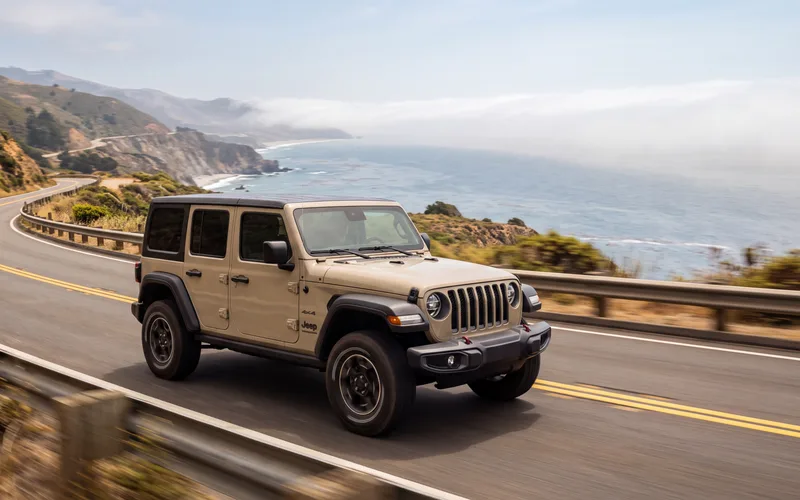 Jeep WranglerOff-Road SUVBetter at: Value
The same truck with a bigger tank, longer range, better reliability and resale, for about $8,000–$10,000 less — the right call for anyone who cannot charge at home.
Compare 1.95C-
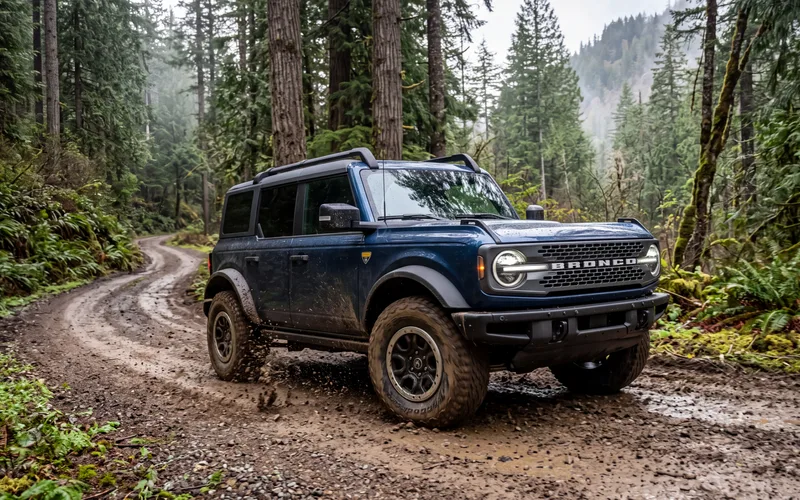 Ford BroncoOff-Road SUVBetter at: On-road manners
Delivers the same doors-off, roof-off experience with noticeably better steering and ride quality, and Sasquatch trims close most of the off-road gap.
Compare 2.38C+
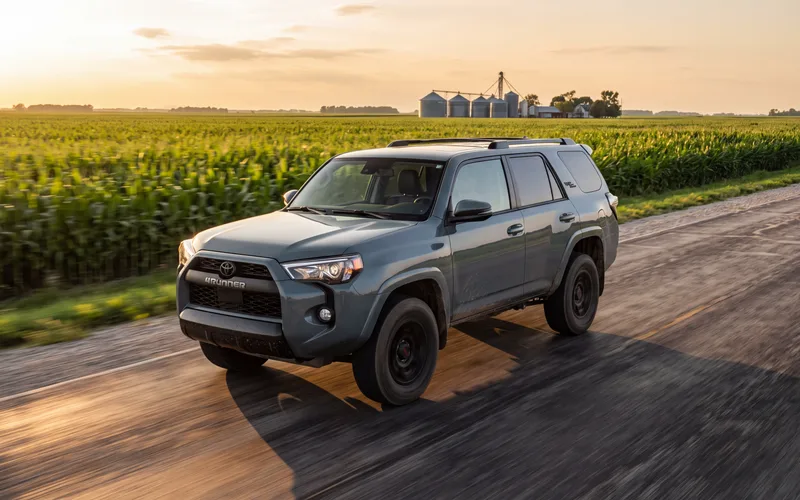 Toyota 4RunnerOff-Road SUVBetter at: Reliability
Trades some trail articulation for the reliability record and resale value the 4xe's bottom-of-class scores and fire-risk recalls cannot match.
CompareHow it's evolved
6 scored model years · 2021–2026
Subject scores by year
Hover or tap a score to see what moved it versus the year before. A corner mark flags a big swing.
| Year | Performance | Efficiency | Safety | Space | Cost | Reliability | Tech | Use-case | Driving | Value |
|---|---|---|---|---|---|---|---|---|---|---|
| 2026 | 63 | 31 | 57 | 47 | 39 | 53 | 69 | 57 | 54 | 66 |
| 2025 | 63 | 31 | 50 | 43 | 33 | 33 | 66 | 56 | 51 | 64 |
| 2024 | 60 | 31 | 47 | 43 | 35 | 30 | 65 | 55 | 49 | 67 |
| 2023 | 60 | 31 | 42 | 43 | 24 | 25 | 49 | 52 | 51 | 62 |
| 2022 | 67 | 26 | 41 | 48 | 19 | 38 | 46 | 51 | 43 | 57 |
| 2021 | 67 | 30 | 41 | 44 | 24 | 38 | 44 | 54 | 48 | 62 |
Compare two years
Best fit & conditions
Higher scores mean a better fit for that use case. Learn more about use-case fit →
Subject profile
Academic Probation · NHTSA safety recalls
No NHTSA safety recall is on record for the 2026 Jeep Wrangler 4xe. Other model years of the Wrangler 4xe have 5 — listed below.
5 recalls on other model years of the Wrangler 4xe (2021–2025)
Jun 4, 2026Steering: hydraulic power assist: pumpThe electric hydraulic power steering pump wiring may overheat and cause a vehicle fire, even when the vehicle is parked with the ignition in the "Off" position.
Defect
Chrysler (FCA US, LLC) is recalling certain 2021-2025 Jeep Wrangler, Wrangler 4XE, and Jeep Gladiator vehicles. The electric hydraulic power steering pump wiring may overheat and cause a vehicle fire, even when the vehicle is parked with the ignition in the "Off" position.
Risk
A vehicle fire increases the risk of injury.
Remedy
Owners are advised to park outside and away from structures, until their vehicle is repaired. Dealers will inspect and replace the wiring and electric hydraulic power steering pump, as necessary, free of charge. Owner notification letters are expected to be mailed July 9, 2026. Owners may contact FCA US LLC customer service at 1-800-853-1403. FCA US LLC's number for this recall is 21D. The Vehicle Identification Numbers (VINs) involved in this recall will become searchable on NHTSA.gov on June 11, 2026.
NHTSA campaign 26V363000 ↗Manufacturer no. 21D1,076,999 vehicles potentially affected (all models in the campaign)Owners notified Jul 9, 2026Filed by Chrysler (FCA US, LLC)Filed as WRANGLER 4XENov 6, 2025EngineDebris inside the engine may cause engine failure, which can result in a loss of drive power and/or an engine compartment fire.
Defect
Chrysler (FCA US, LLC) is recalling certain 2023-2025 Jeep Grand Cherokee 4XE and 2024-2025 Jeep Wrangler 4XE Plug-In Hybrid Electric (PHEV) vehicles. Debris inside the engine may cause engine failure, which can result in a loss of drive power and/or an engine compartment fire.
Risk
A loss of drive power increases the risk of a crash, and a vehicle fire can increase the risk of injury.
Remedy
Dealers will install a software update and replace the block or engine as necessary, free of charge. Owner notification letters were mailed beginning May 7, 2026. Additional letters will be sent once the final remedy is available. Owners may contact Chrysler customer service at 800-853-1403. Chrysler's number for this recall is 78C. Vehicle Identification Numbers (VINs) involved in this recall became searchable on NHTSA.gov beginning November 13, 2025.
NHTSA campaign 25V766000 ↗Manufacturer no. 78C117,904 vehicles potentially affected (all models in the campaign)Owners notified May 8, 2026Filed by Chrysler (FCA US, LLC)Filed as WRANGLER 4XEOct 17, 2025Electrical system: propulsion system: hybrid management: power control unit/module (hpcu): softwareA software error in an over-the-air (OTA) update may result in a loss of drive power.
Defect
Chrysler (FCA US, LLC) is recalling certain 2023-2025 Jeep Wrangler 4XE Plug-In Hybrid Electric (PHEV) vehicles. A software error in an over-the-air (OTA) update may result in a loss of drive power.
Risk
A loss of drive power increases the risk of a crash.
Remedy
Dealers will update the telematics box module software, free or charge. Interim notification letters, notifying owners of the safety risk, were mailed November 20, 2025. Additional letters will be sent once the final remedy is available. Owners may contact Chrysler customer service at 800-853-1403. Chrysler's number for this recall is A7C. Vehicle Identification Numbers (VINs) involved in this recall will be searchable on NHTSA.gov beginning October 23, 2025.
NHTSA campaign 25V710000 ↗Manufacturer no. A7C24,238 vehicles potentially affected (all models in the campaign)Filed by Chrysler (FCA US, LLC)Filed as WRANGLER 4XESep 27, 2024Electrical system: propulsion system: traction batteryThe high voltage battery may fail internally and lead to a vehicle fire while parked or driving.
Defect
Chrysler (FCA US, LLC) is recalling certain 2020-2024 Jeep Wrangler 4XE and 2022-2024 Jeep Grand Cherokee 4XE vehicles. The high voltage battery may fail internally and lead to a vehicle fire while parked or driving.
Risk
A vehicle fire while parked or driving can increase the risk of injury.
Remedy
This recall is replaced by NHTSA recall number 25V741. Vehicles already repaired under this recall will need to have the new remedy completed. Owners are advised to park outside and away from structures, and not to recharge their vehicles until they are repaired. Dealers will update the high voltage battery pack software and replace the battery pack assembly, if necessary, free of charge. Interim notification letters, notifying owners of the safety risk, were mailed October 11, 2024. Owner notification letters were mailed beginning December 2024. Owners may contact Chrysler customer service at 1-800-853-1403. Chrysler's number for this recall is 95B. Vehicles in this recall that were previously recalled for the same issue under NHTSA Recall 23V-787 will need to have the new remedy performed.
NHTSA campaign 24V720000 ↗Manufacturer no. 95B154,032 vehicles potentially affected (all models in the campaign)Owners notified Dec 16, 2024Filed by Chrysler (FCA US, LLC)Filed as WRANGLER 4XEDec 9, 2021Electrical system: instrument cluster/panelAfter reaching 13,342 miles, the odometer will no longer display vehicle mileage. As such, these vehicles fail to comply with the requirements of Federal Motor Vehicle Safety Standard number 101, "Control and Displays."
Defect
Chrysler (FCA US, LLC) is recalling certain 2021 Jeep Wrangler Plug-In Hybrid Electric (PHEV) vehicles. After reaching 13,342 miles, the odometer will no longer display vehicle mileage. As such, these vehicles fail to comply with the requirements of Federal Motor Vehicle Safety Standard number 101, "Control and Displays."
Risk
A missing odometer reading could lead to an unintended delay in critical safety-related maintenance, potentially impairing the safe operation of the vehicle and increasing the risk of a crash.
Remedy
Dealers will update the instrument panel cluster (IPC) software on vehicles with less than 13,342 miles, and replace the IPC on vehicles in which the mileage is not displayed, free of charge. Owner notification letters were mailed December 28, 2021. Owners may contact FCA US, LLC customer service at 1-800-853-1403. FCA US, LLC's number for this recall is Y94.
NHTSA campaign 21V949000 ↗Manufacturer no. Y942,903 vehicles potentially affected (all models in the campaign)Owners notified Dec 28, 2021Filed by Chrysler (FCA US, LLC)Filed as WRANGLER 4XE
Source: NHTSA Office of Defects Investigation recall database, model years 2021–2026. Recalls are listed by model year as the manufacturer filed them; whether a specific car is affected depends on its VIN — check a VIN at nhtsa.gov ↗. NHTSA model names matched to this page: WRANGLER 4XE.
Detailed scoring by subject
1Performance & PowertrainOne of the Wrangler 4xe's strongest categories.2.22C
The Wrangler 4xe pairs the 2.0L turbo I4 (270 hp on its own) with two electric motors and a 17.3 kWh battery for a combined 375 hp — a single, powertrain-wide output across every 4xe trim from Sport S through Rubicon X.
Instant electric torque combined with the 2.0L turbo yields 470 lb-ft — one of the highest torque figures in any factory-standard off-road SUV, and enough to out-pull the discontinued 6.4L V8 Rubicon 392 at low rpm.
Instant electric torque launches the 5,200 lb 4xe to 60 mph in about 6 seconds flat — over a second quicker than the V6 4-door and among the fastest showroom-stock Wranglers ever offered.
EV mode provides smooth, silent takeoff — a highlight over the gas V6 — but reviewers consistently note noticeable clunks and hesitation when the 2.0L turbo cuts in, plus occasional shudders on regen handoff. Turbo lag from the four-cylinder is present but modest.
The 4xe pairs the ZF-derived 8-speed TorqueFlite auto with the electrified drivetrain — reviewers praise the shift logic as polished and unobtrusive. No manual option (unlike the V6 Wrangler), which simplifies the story to a single well-sorted automatic.
Max tow rating remains 3,500 lbs — same as the V6 4-door — despite the 4xe's torque advantage. The short wheelbase and body-on-frame architecture are optimized for rock crawling, not trailering; battery weight further eats into GCWR headroom.
Genuine part-time 4WD with a two-speed transfer case is standard on EVERY 4xe trim — the 4xe is only sold as a 4WD PHEV. Rubicon 4xe upgrades to Rock-Trac (4:1 low range) with Tru-Lok lockers; Sahara/Sport S 4xe use Selec-Trac.
Rubicon 4xe carries the full Wrangler off-road hardware suite — Dana 44 axles with front/rear lockers, electronic sway-bar disconnect, 33-inch tires, 10.8 in ground clearance, 44°/22°/37° angles — plus a 21-mile all-electric range for trail crawling in silence. Sealed battery pack is rated to the same 30-inch water fording depth. A slight demerit vs. the gas Rubicon for the ~500 lb battery weight penalty on steep pitches.
The 4xe is a single-powertrain nameplate — the 2.0L turbo PHEV is the only option across every 4xe trim (Sport S, Sahara, High Altitude, Rubicon, Rubicon X). Buyers wanting a V6 or a manual must step to the standard Wrangler; no full-EV 4xe variant exists.
2Efficiency & RangeThe Wrangler 4xe's lowest-graded category.0.00F
Corrected to the charge-sustaining figure the framework asks for: EPA rates the 2026 4xe at 20 MPG combined once the battery is depleted, which is what the engine actually delivers on a road trip. The prior score used the 49 MPGe charge-depleting number here, which belongs to the electric side of the powertrain and is now carried at 2.2.3. At 20 MPG the Wrangler 4xe sits at the very bottom of the PHEV SUV band — it is a body-on-frame, solid-axle off-roader with the aerodynamics of a brick.
EPA city figure on the engine alone is 20 MPG — the hybrid system's regenerative braking claws back just enough in town to match the highway number rather than beat it. Replaces the prior entry, which repeated the 49 MPGe combined figure because EPA does not split MPGe city/highway on the label; the underlying EPA data does carry the split (52 city MPGe) and it is noted in displayValue.
20 MPG highway on the engine, and highway is where 4xe owners spend the miles the battery cannot cover — the 17.3 kWh pack is exhausted inside the first half hour of a trip. This is the figure that governs long-distance running cost, and it lands at the floor of the PHEV SUV band.
EPA publishes 370 miles of combined gas + electric range, replacing the prior ~375 mi estimate that had been built on an unsupported 31-mile electric figure. The battery costs the 4xe roughly four gallons of tank versus a gas Wrangler (17.2 vs 21.5 gal), so the plug-in actually travels less far between stops than the V6 4-door's 430 miles — poor for a PHEV SUV, where the class norm runs past 500 miles.
New item this run — the electric side of the powertrain now has its own home instead of being folded into the MPG items. EPA rates the 4xe at 21 miles on a charge from its 17.3 kWh pack, enough for a short commute but well short of the 30–40 miles most PHEV SUVs now offer. Widely circulated dealer copy claiming a 31-mile 2026 figure is not supported by EPA data and was the source of the prior scorecard's error.
EPA's blended estimate is $2,300/yr, not the ~$2,700 previously extrapolated from an older model year. Cheap electric miles pull it below the gas Wrangler's $2,950–$3,100, but it remains expensive in absolute terms: EPA assumes only about 49% of miles run on electricity, and the other half burns fuel at 20 MPG. Owners who cannot charge at home should expect the gas-only $3,100 figure instead.
Undemanding energy needs: Jeep specifies 87-octane regular unleaded for the 2.0L turbo (91+ is recommended only for optimal output under heavy load or towing, never required), and the 17.3 kWh pack refills in about 2.4 hours on a 240V Level 2 outlet — cheap, overnight, no public network needed. Trimmed slightly from the prior 82 because the practical payoff is thin: 21 miles per charge means the pump still supplies most miles, there is no DC fast-charge capability, and Level 1 charging takes roughly 12 hours. Regular-fuel flexibility keeps it in the top band regardless.
3SafetyMid-pack among this car's ten categories.1.82C-
Wrangler 4xe is offered only as a 4-door Unlimited, which NHTSA rates 4 stars overall (5-star side, 4-star frontal, 3-star rollover). Carried forward for 2026 since no structural changes since the 2024 refresh.
Shares the JL Wrangler body-on-frame structure; no IIHS Top Safety Pick. The Wrangler tipped in the small-overlap test on introduction and current-generation ratings remain a mix of Acceptable and Marginal, with no Good result across the updated moderate-overlap and side tests. 4xe adds ~700 lb of battery mass but does not alter crashworthiness rating.
4xe starts at Sahara 4xe (with Willys 4xe added recently) — trims that carry more standard content than the gas Sport S base. FCW with Active Braking and rear park assist are standard, and blind-spot monitoring with rear cross-path detection becomes standard from Sahara 4xe upward. Adaptive cruise and lane departure warning still bundle into the optional Advanced Safety Group.
Same radar-based FCW with Active Braking as the gas Wrangler — meets NHTSA's voluntary AEB commitment with adequate daytime vehicle-to-vehicle performance, but no published IIHS Superior/Advanced pedestrian result for the current generation. Added 4xe curb weight slightly extends stopping distances relative to the gas Wrangler.
Blind-spot monitoring with rear cross-path detection is standard on Sahara 4xe and Rubicon 4xe (the volume trims). Alert-only — no active steering intervention. Removing doors negates BSM operation, and the boxy shape leaves large blind zones the system must cover.
LaneSense lane departure warning with mild steering nudge is available via the Advanced Safety Group; there is no true lane-centering system. Solid-axle suspension and quick steering ratio make highway tracking demanding even with assistance active, and reviewers consistently rate the intervention as basic.
Full-speed adaptive cruise with stop-and-go is available in the Advanced Safety Group and works acceptably in highway use; there is no integrated highway assist combining ACC with lane centering. The 4xe's Max Regen mode does not integrate with ACC.
Jeep offers no hands-free highway system (no BlueCruise, Super Cruise, or equivalent) on any 2026 Wrangler 4xe trim; Stellantis has not rolled out Level 2+ hands-free to the Wrangler line.
LED headlights are standard on Sahara 4xe and higher (the volume 4xe trims), improving IIHS visibility ratings versus the halogens on the gas Sport S. Still no matrix or adaptive-beam system, and reviewers note the round LEDs illuminate a narrower cone than modern reflector/projector units on rivals.
Upright seating, tall glass, thin A-pillars, and the boxy greenhouse deliver excellent forward and side sightlines — a defining Wrangler strength. The spare tire limits rear visibility somewhat, but the standard backup camera compensates and doors/roof can be removed entirely for open-air visibility.
The 4-door Wrangler has two outboard LATCH positions and a tether-only center position, with anchors buried between seat cushions requiring some digging. Rear door openings are narrow versus mainstream SUVs, but the tall roofline and upright seatbacks make loading rear-facing seats manageable. The 4xe's battery is under the rear seat but does not alter LATCH access.
4Space & ComfortOne of the Wrangler 4xe's weakest categories.1.15D
The 4xe is offered exclusively as a 4-door Unlimited and seats five across two rows; no 2-door PHEV configuration exists.
Boxy roofline and upright seating deliver best-in-class front headroom; removable top adds more overhead room in open configurations.
Front legroom is modest for the SUV band because the Wrangler's short hood and cab-forward footwell limit stretch-out space despite the boxy body.
The tall, boxy roofline yields class-leading second-row headroom well above the SUV band ceiling.
Unlimited's stretched wheelbase provides competitive second-row legroom; the battery under the rear seat does not alter fore-aft dimensions.
No third row is offered on any Wrangler 4xe configuration; this is a two-row vehicle.
Cargo behind the rear seat matches the gas Unlimited because the 4xe's battery lives under the rear cushion rather than in the cargo floor; still modest against the SUV band due to boxy walls and swing-gate geometry.
Max cargo drops by about 5 cubic feet vs. the gas Wrangler because the rear seat does not fold as flat over the under-seat battery, leaving a raised load floor.
Same washable-interior playbook as gas Wrangler — locking waterproof console, floor drain plugs, removable cargo carpet — plus 12V/USB outlets and eSave/EV-mode integration that lean into the PHEV. No standout innovation like an in-bed trunk, and door bins/glove box remain small.
Same seats as gas Wrangler; upright, flat cushions with limited thigh support wear on long drives. Sahara 4xe and Rubicon 4xe come with heated leather-trimmed seats standard, which helps short-trip comfort without fixing the underlying cushion geometry.
Solid live axles front and rear still deliver a head-toss, unsettled on-pavement ride, but the 4xe's extra ~800 lb of battery and hybrid hardware plants the chassis and dampens some of the lightness that plagues the gas model — a small step up, but still bottom-of-segment.
In EV mode at low speeds the cabin is genuinely quiet — no gas engine — but at highway speed the removable-top seams, boxy shape, and (on Rubicon) knobby tires generate the same wind and road roar as the gas Wrangler. The averaged experience nudges above the base Wrangler but stays well below segment average.
4xe adds meaningful comfort features the gas Wrangler cannot offer: remote cabin pre-conditioning via the Jeep app (heat or cool the cabin from wall power while plugged in), plus standard heated leather seats and heated wheel from Sahara 4xe upward. Ventilated seats and rear climate controls are still absent.
5Cost of OwnershipOne of the Wrangler 4xe's weakest categories.0.60F
The Willys 4xe is now the entry point of the 4xe lineup (Sport S 4xe was discontinued). Base MSRP ~$50,895 plus $1,995 destination lands around $52,890 — roughly $16k above the gas Wrangler 2-door Sport and premium for the segment.
The Sahara 4xe is the volume mid-trim, typically delivered around $59–60k. Rubicon 4xe pushes near $64k and Rubicon X 4xe approaches $70k — all firmly in premium SUV price territory.
Regenerative braking and less engine wear from EV-mode driving offset some maintenance, but PHEV-specific components (battery cooling, high-voltage systems, more complex drivetrain) add repair exposure vs the gas Wrangler. Slightly worse than gas Wrangler's ~$5,300.
The 4xe depreciates faster than the gas Wrangler due to steep manufacturer incentives, loss/reduction of the federal EV tax credit for 2025+, and softer PHEV demand in the used market. Retention lands mid-pack for SUVs — roughly 13 points behind the ALG-award-winning gas Wrangler.
Standard Jeep bumper-to-bumper coverage: 3 years or 36,000 miles. Trails Hyundai/Kia (5 yr) but matches most mainstream competitors.
The federally mandated 8-year/100,000-mile PHEV battery and high-voltage component warranty is the meaningful powertrain coverage for a 4xe buyer. The internal-combustion powertrain retains Jeep's standard 5-year/60,000-mile coverage.
No complimentary scheduled maintenance from the factory. Perks are limited to 5-year/60,000-mile roadside assistance and a short Uconnect connected-services trial; the 4xe adds nothing beyond the gas Wrangler (no included charging credits or home-charger allowance). Thinner than Toyota's ToyotaCare or luxury-brand programs.
$59,890 volume-trim price minus its estimated resale value after 5 years (52% retained, or about $31,143) leaves about $28,747 in depreciation. Add the projected $5,800 in 5-year maintenance and repairs, and owning this vehicle for 5 years costs about $34,547 in total.
6Reliability & QualityGrades below the middle of the scale.1.58D
Consumer Reports has flagged the Wrangler 4xe among the least-reliable vehicles in the SUV class, with hybrid-system issues (loss of hybrid function, dashboard fault warnings, charging faults) adding to the JL platform's baseline problems. The 2024 refresh carries into 2026 without a major hybrid-system redesign, so predicted reliability sits meaningfully below the gas Wrangler.
Jeep consistently finishes in the bottom third of Consumer Reports brand reliability rankings and below the industry average in J.D. Power's Vehicle Dependability Study, reflecting persistent electrical and build issues across the Stellantis lineup — a burden the 4xe inherits fully.
The 4xe has been the subject of multiple serious recall campaigns for engine/hybrid-system fire risk (NHTSA 23V-660 covering ~63,000 vehicles, with related expansions), including guidance not to charge or park indoors. This is materially worse than the gas Wrangler's already elevated recall cadence and is the single most damaging item in this category.
The 4xe's 2.0L GME-T4 turbo four, electric motor pack, and 17 kWh Samsung SDI high-voltage battery are relatively new (2021+) and lack the multi-decade high-mileage track record of the gas Wrangler's Pentastar V6 and ZF 8HP. Reported hybrid-system fault codes and the fire-risk recalls raise real durability questions, though the underlying transfer case and axles remain proven.
The 2024 refresh (carried into 2026) upgraded the cabin with more soft-touch surfaces, a 12.3-inch Uconnect 5 display, and improved switchgear — identical to the gas Wrangler. Materials remain purposeful and wash-out-friendly rather than luxurious, with hard plastics still visible in lower zones.
The removable-door and removable-top architecture inherently produces wind noise and occasional rattles that reviewers routinely flag on both gas and 4xe variants. Overall panel alignment is acceptable but body-on-frame assembly does not match unibody rivals for tightness.
Jeep operates one of the largest US dealer networks with roughly 2,500 rooftops, giving strong coverage in both metro and rural markets. Service satisfaction, however, ranks below the industry average in J.D. Power's customer service surveys, and 4xe hybrid diagnostics require certified technicians which can slow service in some markets.
The Wrangler's core aftermarket is arguably the deepest of any current vehicle, and the 4xe shares body, chassis, and suspension parts. Hybrid-specific components (HV battery, inverter, electric motor, charging hardware) are dealer-heavy, pricier, and lack meaningful aftermarket, which pulls the score below the gas variant's near-best-in-class result.
7Technology & InfotainmentThe Wrangler 4xe's best-graded category.2.65C+
The 4xe uses the same 12.3-inch Uconnect 5 touchscreen that became standard on all Wrangler trims with the 2024 refresh, unchanged for 2026.
Uconnect 5 is consistently praised for snappy response, clean menu logic, and retention of physical HVAC/volume knobs; the 4xe adds a dedicated hybrid-drive-mode screen (Hybrid/Electric/eSave) that reviewers find intuitive.
Wireless Apple CarPlay and wireless Android Auto are standard on every 2026 Wrangler 4xe trim — a rare 'standard on base' configuration in the off-road segment.
Uconnect 5 offers natural-language voice recognition with Amazon Alexa Built-in and TomTom-based native navigation on Sahara/Rubicon trims; Willys 4xe base lacks embedded nav and leans on phone projection.
Base 8-speaker Alpine setup is competent; the optional 9-speaker Alpine premium with subwoofer and 552-watt amp is acceptable but not class-leading — the removable-top open-air cabin inherently limits fidelity, and the 4xe adds no audio hardware over the ICE Wrangler.
A 10.25-inch full-color digital gauge cluster is available on Sahara 4xe, Rubicon 4xe, and Rubicon X 4xe; volume Willys 4xe retains a partial-digital 7-inch driver information display flanked by analog gauges.
Uconnect 5 supports over-the-air updates for the infotainment system and connected services (maps, apps), but not full-vehicle or powertrain OTA in the Tesla/Rivian sense — the PHEV controller is dealer-flash only.
The Jeep app on the 4xe adds PHEV-specific functions on top of the ICE Wrangler feature set — remote start, lock/unlock, locate, plus charge-schedule control, charge-state monitoring, and battery-based cabin preconditioning; a 12-month trial ships with the vehicle before subscription gating, and there is no phone-as-key.
Multiple USB-C and USB-A ports front and rear are standard on Willys 4xe and above, wireless charging is optional on Sahara/Rubicon 4xe, and the 4xe's 400-watt AC inverter is more genuinely usable than in the ICE Wrangler because it can draw from the traction battery in eSave/Electric modes.
Passive/proximity entry and push-button start are standard across all 4xe trims (there is no fleet-spec base Sport 4xe like on the ICE Wrangler), and remote start is available via the Jeep app; still no phone-as-key or hands-free tailgate (removable-panel design precludes a power liftgate).
The 4xe includes a rear backup camera standard, a lens-washing off-road TrailCam facing forward — genuinely useful over obstacles — and a surround-view camera bundled in the Convenience Group on Sahara 4xe/Rubicon 4xe. Parking sensors are optional, not standard.
The Wrangler 4xe does not offer a head-up display at any trim level — the foldable-windshield/removable-top architecture makes HUD infeasible, so buyers must rely on the digital cluster.
8Use-Case FitMid-pack among this car's ten categories.1.84C-
Only offered as the 4-door Unlimited, so families get the same 38.3 in rear legroom and wide-opening rear doors as the gas Wrangler — LATCH anchors are accessible in the outboard positions. The 17.3 kWh battery pack lives under the rear seat, raising the rear cushion slightly and further exaggerating the tall step-in already present on the JL platform, and cargo behind the rear seat drops to ~27.7 cu ft (vs 31.7 on the gas Wrangler) — a real stroller-and-groceries squeeze.
Shares the JL Wrangler's architectural safety compromises: not an IIHS Top Safety Pick, Marginal on the updated moderate-overlap front test, and 3-star NHTSA rollover — all driven by the removable-roof/removable-door body. The 4xe skips the base Sport trim (starts at Sport S 4xe) which raises the floor of standard ADAS somewhat, and the Advanced Safety Group with ACC/FCW/AEB is more commonly bundled on the mid/upper 4xe trims families actually shop.
Solid-axle ride and flat firm seats make multi-hour trips tiring (cat4 ride 42, quietness 42, seat comfort 54), though EV-mode silence helps the first 21 miles and instant torque smooths in-town portions. Battery packaging cuts behind-rear-seat cargo to ~27.7 cu ft — the JL 4xe was never engineered as a family tourer.
EV mode is a genuine daily-driving upgrade over the gas Wrangler — silent takeoffs, one-pedal-ish regen, and instant torque erase the V6's jerky low-speed manners in stop-and-go traffic. The rest of the JL story is unchanged: solid front axle wander at highway speed, vague steering, harsh impacts, and a loud cabin above ~50 mph that no powertrain change can fix. No lane centering is offered; ACC is optional.
Home-charged, the 21-mile EPA electric range covers a typical US round-trip commute for essentially $0 in fuel, and the 49 MPGe combined rating and ~20 MPG gas-only figure yield fuel costs well below the gas Wrangler's ~$2,650/yr. Offsets are real: the 4xe starts near $52k (vs ~$34k for a Sport S gas), the federal PHEV tax credit is not currently available on the domestically-assembled 4xe under 2026 sourcing rules, and insurance runs higher than the gas Wrangler.
Shares the 4-door Unlimited's 188.4 in length and ~41.2 ft turning circle with the gas Wrangler, but the boxy body, upright greenhouse, low beltline, and short front overhang give class-leading sightlines for tight parking. Rear camera is standard; 360-degree surround view is in the Convenience Group on Sahara/Rubicon 4xe.
Max 3,500 lb tow with the factory Trailer Tow package — same as the gas 4-door despite the 4xe's 470 lb-ft torque advantage; the short wheelbase and body-on-frame architecture cap trailer stability, not the engine. No pickup bed, cargo is 67.4 cu ft max, and the ~500 lb battery pack eats about 100 lb of payload versus the V6.
Retains the body-on-frame chassis, Dana 44 axles, and ZF-derived 8HP75 automatic that anchor the gas Wrangler's tough reputation, but the PHEV powertrain adds real complexity — the 4xe has been subject to multiple high-profile recalls covering fire risk from the high-voltage battery, hybrid module software, and 12V charging behavior. Jeep's brand reliability rankings remain below the industry average, and the hybrid drivetrain is not yet fleet-proven.
The 4xe carries the standard Wrangler work kit — optional 400W AC inverter with 115V outlets front and rear, drain plugs, wash-out floors, roof-rack systems, factory tow package, and access to the deepest aftermarket upfit ecosystem in the SUV class (Mopar, Quadratec, Rough Country). The 4xe has no formal V2L (vehicle-to-load) capability, so the high-voltage battery cannot be used to power jobsite tools directly.
Range between fill-ups is worse than the gas Wrangler: the 4xe's tank shrinks to 17.2 gal (from 21.5 gal on gas) and gas-only economy is ~20 MPG combined, giving roughly 344 mi of highway range versus 408 mi on the V6. EV mode's silence helps the first 21 miles but the JL's rough live-axle ride, noisy cabin, and lack of lane centering make it a poor mile-eater once the battery depletes. ACC is optional, not standard.
Rubicon 4xe carries the full JL off-road hardware — Rock-Trac 4:1 low range, front + rear electronic-locking Dana 44 axles, front sway-bar disconnect, 33-in KO2s, skid plates, 10.8 in ground clearance, 44°/22.6°/37.5° angles, and 30-in water fording — PLUS the ability to trail-crawl in near silence on the 21-mile EV range with instant motor torque that outperforms the gas V6 on technical rock work. Removable top, doors, and fold-down windshield remain unique in the segment.
The removable top, removable doors, fold-down windshield, and swing tailgate still let the 4xe swallow oddly-shaped cargo that no unibody SUV can, and the fold-flat rear bench opens 67.4 cu ft of enclosed cargo. Battery packaging costs ~5 cu ft versus the gas Wrangler (27.7 / 67.4 vs 31.7 / 72.4 cu ft) and eats a small amount of underfloor storage, but standard tie-downs, optional roof racks, drain plugs, and the tow package round out a flexible gear-hauler package.
9Driving ExperienceGrades below the middle of the scale.1.59D
Same solid-axle, body-on-frame chassis as the base Wrangler — considerable body roll, high center of gravity, and float over undulations. The 4xe carries roughly 700 lb of battery low in the frame which very slightly plants it versus the ICE Wrangler, but the added mass (~5,200 lb) offsets that gain in transient handling.
Identical recirculating-ball steering to the ICE Wrangler — vague on-center, requires constant small corrections at highway speed. Consistently the most-criticized on-road attribute of the platform.
Four-wheel discs plus regen but the 4xe's ~5,200 lb curb weight lengthens stopping distances versus the already-long ICE Wrangler. Regen blending has been criticized as inconsistent, and Rubicon 4xe adds mud-terrain rubber that further extends stops. Pedal is firm but transitions between friction and regen can feel non-linear.
375 hp / 470 lb-ft combined output delivers instant, EV-motor-quick response from a stop — a genuine improvement over turbo lag of the ICE 2.0T. But engine start-ups from EV mode are audible and occasionally abrupt, and the 8-speed auto plus e-motor blending can shudder on tip-in when the gas engine wakes. Silky in pure EV drive; less refined in transitions.
In EV mode the 4xe is dramatically quieter than any ICE Wrangler — near-silent around town, a genuine daily-driving upgrade. Once the 2.0T fires, however, cabin sound levels return to typical Wrangler territory (wind noise from removable top, off-road tire hum, engine drone under load). Net-positive versus the ICE model on average commutes.
The 4xe is offered only as the 4-door Unlimited body — no short-wheelbase option exists — so its turning circle sits at the upper end of the Wrangler range. Curb-to-curb diameter is roughly 41.4 ft, essentially identical to a 4-door Sport S ICE and a full 6+ ft wider than the (unavailable) 2-door.
Same commanding upright seating and outstanding forward view as the ICE Wrangler, with the same compromises — narrow driver footwell with offset pedals, poor rear-quarter visibility with hardtop, and a real step-up ingress. Dashboard adds 4xe-specific hybrid drive-mode buttons but layout is otherwise unchanged.
The 4xe layers instant electric torque and near-silent low-speed running onto the Wrangler's already-strong character formula — open-air motoring with the doors and top off, class-leading off-road capability, and now the novelty of crawling a trail in EV silence. Enthusiasts and reviewers routinely call it the most enjoyable Wrangler yet despite its on-road compromises.
10Value & Market PositionOne of the Wrangler 4xe's strongest categories.2.47C+
4xe lineup skips the spartan Sport/Sport S trims and starts at Willys 4xe / Sahara 4xe, so base 4xe includes 12.3-in Uconnect 5, heated front seats, dual-zone climate, LED lighting, and Selec-Terrain standard — more generous than the base ICE Wrangler. Still trails Bronco Wildtrak / 4Runner TRD Sport at similar PHEV-adjusted prices for creature comforts.
PHEV premium is ~$8K–$10K over comparable gas trims for only ~22 miles of EV range and a heavier curb weight that dulls off-road agility. The $7,500 federal PHEV credit (still available via lease pass-through since 4xe fails domestic-battery sourcing rules) restores much of that value for lessees, and Rubicon 4xe still delivers class-benchmark rock-crawl hardware. For buyers who can use the EV commute and monetize the credit, the math works; for those who can't, it's poor value.
4xe is 4-door-only and single-powertrain, but still spans four core trims (Willys 4xe, Sahara 4xe, Rubicon 4xe, Rubicon X 4xe) plus periodic special editions (Willys Xtreme Recon, High Altitude), with soft top / hard top / Sky One-Touch power top choices. Narrower than the full Wrangler lineup, but broader than most PHEV SUVs on the market.
Wrangler 4xe has been the best-selling PHEV in the United States for multiple consecutive years (2022, 2023, and through much of 2024), routinely exceeding 60,000 units annually and accounting for roughly a third of all Wrangler sales. That's an outright leader position in the PHEV category, well above segment mid-pack.
Inherits the full Wrangler brand equity — 80+ years of CJ/YJ/TJ/JK/JL heritage, one of the most loyal owner bases in the industry, and a massive aftermarket/lifestyle ecosystem. The 4xe adds a green-halo dimension that appeals to buyers who want the Wrangler image without the fuel-economy guilt.
One of the strongest incentive stacks in the market: $7,500 federal PHEV credit still flows through via lease pass-through (4xe fails 2024+ domestic-battery sourcing rules for the purchase credit, but leasing captures it), plus Stellantis dealer discounts of $3K–$7K on softening inventory and cash/APR offers routinely stacked with the credit. Effective lease payments have been highly competitive versus gas Wrangler trims.
Same JL generation platform as gas Wrangler (launched MY2018, refreshed for MY2024 with revised grille, 12.3-in Uconnect 5, rear side-curtain airbags, revised steering, standard 8-speed auto). By 2026 the platform is 8+ years old, and a next-generation replacement is widely reported for the 2027–2028 model years. The 4xe powertrain itself is unchanged since its 2021 debut.
Reception is polarized like the base Wrangler — praise for off-road capability, EV-only silent crawling in low range, and instant torque; criticism for on-road ride/handling, wind noise, real-world EV range (often ~19 mi vs 22 rated), and a Marginal IIHS small-overlap result. 4xe has however collected green-car recognitions (Green Car Journal Green SUV of the Year 2022) and consistent praise as the best off-road PHEV available, which regular Wrangler cannot claim.