

The verdict
A struggling subcompact suv, strong on efficiency and held back by performance.
The 2025 Kia Niro Hybrid is the cheapest way into a genuinely 50-plus-MPG crossover: 53 MPG combined, about $1,150 a year in gas, and a $28,365 entry price backed by a 10-year/100,000-mile powertrain and hybrid-battery warranty. It pays for that with 139 horsepower, front-wheel drive only, no tow rating and a small 22.8 cu ft cargo hold, so it is a tall, efficient hatchback rather than a do-everything SUV. Rear-seat space is the surprise — 39.8 inches of legroom beats some compact crossovers — but the cabin is noisy, the halogen headlights on most trims are dated, and resale (roughly 51% after five years) trails the Toyota it competes with. Buy it for the commute and the fuel bill; look elsewhere if you need traction, towing or acceleration.
Jump to scoresStrengths
- Best-in-class fuel economy without a plug
- Cheap to buy, and the warranty is the class benchmark
- Cheap to keep, with no exotic service exposure
What holds it back
- 139 horsepower, and you feel it
- Front-wheel drive only — no AWD at any price
- No towing, and a small hold by SUV standards
Top alternatives
Cars shoppers cross-shop with the Kia Niro 1.93C-
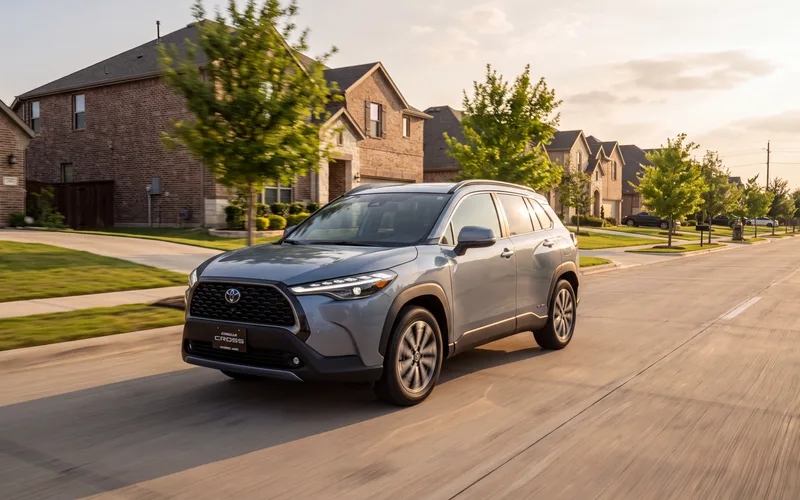 Toyota Corolla CrossSubcompact SUVBetter at: Resale value
The obvious hybrid rival: available all-wheel drive and Toyota's resale strength, at the cost of 11 MPG and about $2,200 more up front.
Compare 2.00C
2.00C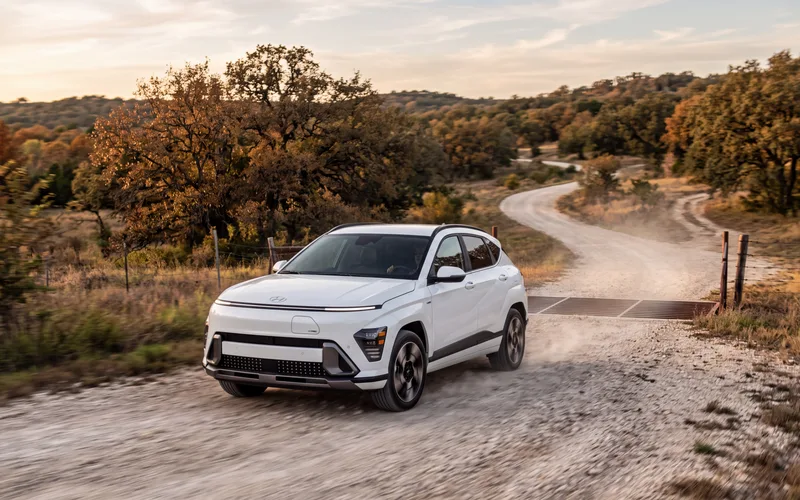 Hyundai KonaSubcompact SUVBetter at: AWD and power
Same corporate engineering and warranty, but adds all-wheel drive and a genuinely quick turbo option the Niro has no answer for.
Compare 1.54D
1.54D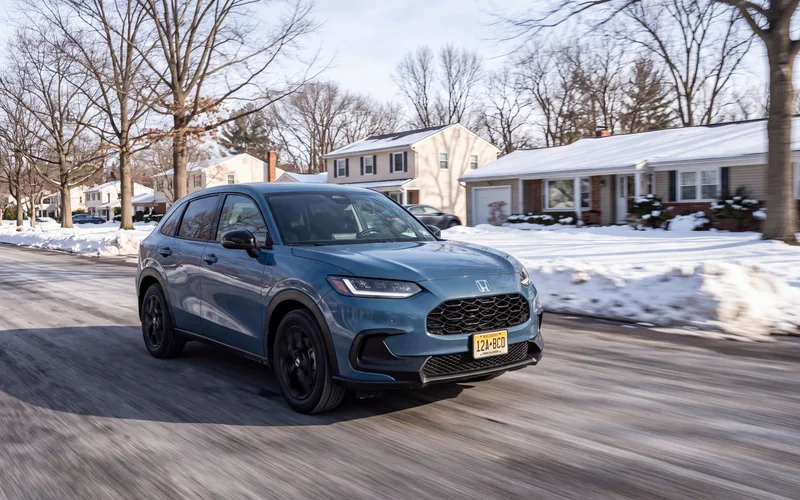 Honda HR-VSubcompact SUVBetter at: Cargo and refinement
More cargo room, a quieter and better-trimmed cabin, and optional all-wheel drive for buyers who don't need 50-plus MPG.
CompareHow it's evolved
3 scored model years · 2024–2026
Subject scores by year
Hover or tap a score to see what moved it versus the year before. A corner mark flags a big swing.
| Year | Performance | Efficiency | Safety | Space | Cost | Reliability | Tech | Use-case | Driving | Value |
|---|---|---|---|---|---|---|---|---|---|---|
| 2026 | 16 | 98 | 60 | 47 | 79 | 66 | 61 | 61 | 66 | 74 |
| 2025 | 22 | 98 | 59 | 47 | 79 | 68 | 57 | 60 | 66 | 75 |
| 2024 | 22 | 98 | 67 | 47 | 79 | 69 | 58 | 61 | 66 | 73 |
Compare two years
Best fit & conditions
Higher scores mean a better fit for that use case. Learn more about use-case fit →
Subject profile
Detailed scoring by subject
1Performance & PowertrainThe Niro's lowest-graded category.0.00F
The 2025 Niro Hybrid uses a single powertrain across LX/EX/EX Touring/SX/SX Touring: a 1.6L Atkinson GDI four (105 ps / 77.2 kW at 5,700 rpm) plus a 32 kW motor for 141 ps (139 hp) net. That falls below the 150 hp floor of the SUV band, which is correct — it is the least powerful vehicle in the segment by design.
Kia quotes 195 lb-ft net for the hybrid system — the electric motor's torque contribution lifts this well above what the 139 hp figure would suggest, giving the Niro respectable low-speed pull despite modest peak power.
Independent instrumented testing puts the 2025 Niro Hybrid at roughly 8.9–9.0 seconds to 60 mph, near the slow end of the SUV band. Adequate for commuting, unhurried when merging or passing loaded.
Gas-to-electric handoffs are consistently described as seamless and the motor's 195 lb-ft masks the engine's weakness off the line, but the 1.6L gets audibly strained and coarse when held at high revs on grades or hard merges — an ordinary trait for a 139 hp hybrid, not a flaw unique to the Niro.
The 6-speed dual-clutch automatic is a genuine differentiator among hybrids — it delivers conventional, defined shifts instead of the CVT drone of most rivals, and reviewers single that out as making the Niro feel more like a normal car. It costs some low-speed smoothness: DCTs of this type are prone to hesitation and slight clutch shudder from a standstill and in stop-and-go crawling.
Kia publishes no US towing rating for the Niro Hybrid and does not offer a factory hitch; towing is not recommended. Scored as a genuine 0 rather than missing data — the vehicle simply has no towing capability to grade.
The Niro has never offered all-wheel drive in any form — the second-generation car is front-wheel drive on every trim and every powertrain (HEV, PHEV, EV), and even the first-generation prototypes' 4WD was never produced. Bottom of the 0–49 'FWD only' band, since there is not even a top-trim AWD option to reach for.
6.3 inches of ground clearance, front-wheel drive only, no terrain modes, no skid plates, no off-road trim, and low-rolling-resistance eco tires. The Niro is a tall hatchback optimized for fuel economy — it is pavement-only in every meaningful sense.
For 2025 the Niro nameplate spans three genuinely distinct electrified powertrains — hybrid, plug-in hybrid and full battery-electric — under one body, which is unusually broad for a subcompact SUV and the whole premise of the model. It loses the top of the band only because there is no conventional gas or performance option, and because the PHEV and EV were discontinued at the 2026 facelift, making 2025 near the end of that breadth.
2Efficiency & RangeThe Niro's best-graded category.4.00A+
The volume EX trim carries the higher of the two EPA ratings at 53 MPG combined — the best figure of any non-plug-in hybrid SUV sold in the US, and above the top of the hybrid-SUV normalization band.
53 MPG city is identical across every Niro Hybrid trim — the wheel/tire package that costs the Touring trims highway economy does not affect the city cycle, where regenerative braking and electric-only crawl dominate.
Unusually, the Niro rates higher on the highway than in the city on the 16-inch-wheel trims — 54 MPG, which tops the hybrid-SUV highway band. The 9 MPG penalty on the 18-inch Touring trims is the single largest configuration choice a Niro buyer makes for economy.
A small 11.1-gallon tank paired with 53 MPG still yields 588 miles between fills on the volume trim — strong in absolute terms, though the modest tank keeps it short of the longest-legged hybrid SUVs that pair similar economy with a bigger tank.
EPA's standard-assumption estimate for the 53 MPG configuration is $1,150 a year — among the lowest running costs of any gasoline-burning SUV, and about half what a comparable non-hybrid subcompact crossover costs to fuel.
Runs on regular 87-octane unleaded with no premium recommendation, and the hybrid system self-charges — there is no plug, no charging equipment to buy, and no home-electrical dependency. The only mild caveat is the 11.1-gallon tank, which means more visits to the pump than the range figure implies even though each fill is cheap.
3SafetyMid-pack among this car's ten categories.2.00C
NHTSA rates the 2025 Niro four stars overall, held down by four stars in both frontal impact (driver and passenger) and rollover; side impact earns a clean five stars front and rear. Four-star overall is below par for the subcompact SUV class, where five is now common.
The IIHS has not evaluated any Niro since the 2022 first-generation car, so the second-generation (SG2) Niro sold for 2025 carries no crashworthiness ratings and no Top Safety Pick award of any level. There are no known structural concerns and the platform underpins the reasonably rated Hyundai Kona, but with zero current-generation test data the car cannot be credited for award-level performance.
Kia's own 2025 feature matrix makes an unusually deep suite standard on the $26,990 LX: Forward Collision-Avoidance Assist with pedestrian detection, Lane Keep Assist, Lane Departure Warning, Lane Following Assist (centering), Blind-Spot Collision Warning with Parallel Exit, Rear Cross-Traffic Collision-Avoidance Assist and Safe Exit Warning — blind-spot and cross-traffic coverage on a base subcompact SUV is better than most rivals. New for 2025, rear seatbelt pre-tensioners are standard across the line. The one real gap keeping this out of the top band is adaptive cruise, which starts at EX.
Forward Collision-Avoidance Assist with pedestrian detection is standard on every trim and EX and above upgrade to FCA with Junction Turning, which addresses one of the harder urban cases; reverse AEB is also standard. But no IIHS front crash prevention rating exists for this generation, so day and especially night pedestrian performance is unverified — this is scored on hardware breadth and Kia's generally competent (occasionally over-eager) FCA calibration rather than on test results.
Blind-Spot Collision Warning with Parallel Exit, Rear Cross-Traffic Collision-Avoidance Assist (with braking intervention, not merely an alert) and Safe Exit Warning are standard on all five trims including the base LX — genuinely better than the subcompact SUV norm, where blind-spot monitoring is still a trim upgrade. Camera-based Blind-Spot View Monitor and active blind-spot steering intervention are not offered on the Niro HEV, which caps this short of the top of the band.
Lane Following Assist — true lane centering rather than bounce-off keeping — is standard on every 2025 trim alongside LKA and LDW, which is more than most subcompact SUVs give a base buyer. Reviewers find it smooth through gentle bends and restful on long highway stretches, but it depends on clear markings on both sides and gets vague in worn lane paint, keeping it below the confident-centering top band.
From EX up — the volume trim at $29,790 — the Niro gets Smart Cruise Control with Stop and Go, a full-speed-range system reviewers rate as smooth and well-judged in traffic. Two things hold the score down: the base LX gets conventional cruise only, and the navigation-based curve-adaptive cruise plus Highway Driving Assist that would make this a genuinely integrated highway system are optional rather than standard even on EX and above.
Kia sells no hands-free highway system on any 2025 Niro, and none anywhere in its US lineup. Highway Driving Assist, the most capable system offered here and optional at that, is explicitly hands-on — it requires hands on the wheel and only manages lane centering and following distance.
LED projector headlights are reserved for the range-topping SX Touring; LX, EX, EX Touring and SX — everything most buyers actually take — run halogen projector-beam units. Automatic high beams are standard across the line, but there is no IIHS headlight rating for this generation to offset weak volume-trim hardware, and halogen beams on a 2025 model are a genuine night-driving deficit.
Forward sightlines are airy and the seating position is high enough for a good view down the road, but the signature 'Aero Blade' C-pillar replaces the third side window and creates a large rear-quarter blind zone (for 2025 the contrasting blade finish was dropped on the HEV, but the pillar structure is unchanged). A rearview camera and standard blind-spot monitoring compensate electronically; there is no surround-view or blind-spot view camera on the Niro HEV at any trim to cover it optically.
Two complete LATCH sets at the rear outboard seats plus a top-tether anchor for the center position is the class-standard arrangement, and the tall roofline with near-square door openings makes lifting a seat in easier than in a low hatchback. Subcompact rear legroom still squeezes a rear-facing seat behind a tall front occupant, and three-across is not realistic.
4Space & ComfortOne of the Niro's weakest categories.1.15D
The 2025 Niro is a two-row, five-passenger subcompact crossover across the whole hybrid range (LX/EX/EX Touring/SX/SX Touring), with a 60/40 split-folding second-row bench seating three. No configuration adds seats.
Kia publishes 40.5 in of front headroom for the 2025 Niro Hybrid, identical across all five trims — well above the subcompact norm thanks to the tall, upright greenhouse this dedicated electrified platform allows.
41.5 in of front legroom is mid-pack against SUVs generally and only adequate rather than generous, though 56.2 in of front shoulder room and the high hip point make the front cabin feel airier than the figure implies.
39.5 in of second-row headroom sits near the top of the SUV band and is exceptional for a 174-inch subcompact — a direct dividend of the flat rear roof section. Reviewers single out rear headroom as a Niro strength.
39.8 in of rear legroom is class-leading for a subcompact SUV and beats several compact crossovers, though Consumer Reports notes taller passengers still find knee room limited and 55.4 in of rear shoulder room makes three abreast a squeeze.
There is no third row on any 2025 Niro trim or powertrain — it is a strictly two-row, five-seat subcompact. Buyers needing a third row must move up to the Sorento or Telluride.
22.8 cu ft behind the rear seats falls below the floor of the SUV normalization band — competitive against subcompact rivals but small measured against SUVs as a whole, and the price paid for that class-leading rear legroom.
63.7 cu ft with the second row down is good for the subcompact class and the near-flat load floor is genuinely usable, but it lands in the bottom fifth of an SUV band whose ceiling is set by three-row and full-size utilities.
Competitive everyday storage rather than innovation: a front console armrest bin with cup holders, bottle holders moulded into the door trim, front and rear seatback pockets from EX, a luggage net hook, and a dual-level cargo floor with under-floor tray from EX up. The base LX goes without the dual-level floor and the second seatback pocket, and there is no standout feature — no onboard AC power, no frunk, no giga-console.
Front seats draw consistent praise for lateral support and the 10-way power driver's seat with 2-way power lumbar arrives at the volume EX trim, but Consumer Reports found many drivers had to set the steering wheel uncomfortably high to see the gauges, and the rear bench is flatter and less well-shaped than the fronts.
Composed and compliant over small-amplitude bumps on the volume trim's 16-inch wheels, but the damping runs out of travel on larger hits, which arrive in the cabin abruptly; the 18-inch EX Touring and SX Touring ride firmer still. Competent for the class, not a strength.
The Niro's clearest comfort weakness on the volume trim: road and tire noise are pronounced and the 1.6-liter engine turns loud and grainy under acceleration. An acoustic windshield is standard, but the laminated front side glass that would help most is reserved for SX and SX Touring — which is why favourable noise impressions come from top-trim tests and Consumer Reports' does not.
Dual-zone automatic climate control with a Driver Only mode is standard even on the $26,990 LX, which is generous for the class, and the volume EX adds second-row vents, heated front seats, rain-sensing wipers and remote start. Ventilated front seats and a heated steering wheel are held back to SX and SX Touring, there are no rear climate controls, and the LX has neither heated seats nor an embedded modem for remote preconditioning.
5Cost of OwnershipOne of the Niro's strongest categories.3.34B+
The 2025 Niro nameplate's entry point is the Hybrid LX at $26,990 plus $1,375 destination — a $50 increase over 2024 and one of the cheapest ways into a hybrid crossover, well under the subcompact-SUV band midpoint.
The Hybrid EX is the volume configuration — the step from LX that adds the 10.25-inch touchscreen, wireless charging, smart key with push-button start, heated front seats and Smart Cruise Control, at $29,790 plus $1,375 destination. Buyers moving to the PHEV EX ($35,865) or EV Wind ($40,975) pay several thousand more for the same body.
Published estimates bracket the high $2,000s to mid $4,000s: Edmunds True Cost to Own for the 2025 Niro EV models $3,775 maintenance plus $554 repairs over five years, while CarEdge projects roughly $528/yr scheduled maintenance (about $2,640) for the nameplate. A ~$4,200 all-in figure is a fair blended read for the hybrid volume trim and is cheap for the segment — the Atkinson-cycle 1.6L with a dual-clutch transmission has no CVT or turbo service exposure.
The three major residual models disagree by a wide margin — iSeeCars measures 43.9% depreciation (56.1% retained), CarEdge models 50% retained, and KBB's cost-to-own projects only about 39% retained — so ~51% is the defensible middle. Either way this is the Niro's clear weak spot in ownership cost, tracking below the 41.9% class-average depreciation for hybrid subcompact SUVs, and the Niro EV's 57.1% depreciation drags the nameplate's used-market reputation with it.
Kia's 5-year/60,000-mile basic limited warranty applies unchanged to all new 2025 vehicles and sits at the top of the segment band — two years longer than the 3/36 most mainstream rivals offer.
The 10-year/100,000-mile powertrain limited warranty maxes the band, and Kia's hybrid/EV system coverage extends the same term to the high-voltage battery, electric motor, power control unit and on-board charger — meaningful on a vehicle whose most expensive single component is the battery.
Kia includes no factory complimentary scheduled maintenance in the US — any free first services are dealer-level programs that vary by store — so the Niro trails Toyota's ToyotaCare and the rivals that bundle real service into the transaction. What it does include is genuinely long: 5 yr/60,000 mi roadside assistance covering towing, flat tire, jump start, lockout and out-of-fuel, plus Kia Connect essential connected services at no charge. Solid coverage, no included service — mid-band.
$31,165 volume-trim price minus its estimated resale value after 5 years (51% retained, or about $15,894) leaves about $15,271 in depreciation. Add the projected $4,200 in 5-year maintenance and repairs, and owning this vehicle for 5 years costs about $19,471 in total.
6Reliability & QualityMid-pack among this car's ten categories.2.58C+
Both major predictors land the 2025 Niro squarely at average, not above it: Consumer Reports expects about average reliability versus other 2025-model-year cars, and J.D. Power scores Quality & Reliability 74/100 — inside its 70–80 'Average' band and a slide from the 83 the original 2017 Niro earned. The 2025 hybrid helps itself by being a pure carry-over in the middle of the SG2 generation (2023–) with no new hardware, and NHTSA has logged only 16 complaints against the whole 2025 model year with no dominant pattern. Average predictions from two independent sources is the definition of the 50–79 band, and the absence of any owner-reported systemic fault puts it in the upper half of it rather than the middle.
Kia sits in the upper half of the mainstream field without reaching the consistent top-5 the high band requires: 10th in Consumer Reports' 2025 brand reliability rankings and 8th overall in the 2025 J.D. Power Initial Quality Study at 181 PP100, ahead of the 187 PP100 mass-market average. Its best evidence is dated — Kia was the top-ranked mass-market brand in the Vehicle Dependability Study three years running (2021–2023) — and it is offset by a decade of Hyundai/Kia engine campaigns (Theta II fires, the 2025 Nu piston-oil-ring recall on the Soul/Seltos) that keep the brand short of Toyota/Lexus standing. None of those engine campaigns touch the Niro's hybrid powertrain, but this item grades the brand, not the model.
One recall reaches 2025 Niro production and it is a safety-system one: NHTSA 25V-024 (Kia SC332) covers 2023–2025 Niro EV, PHEV and Hybrid — 80,255 vehicles — for floor wiring beneath the front passenger seat that can chafe and either prevent the front airbags and seat belts from deploying properly or trigger an unintended side curtain airbag. That is a serious consequence, which is what keeps this out of the 80+ band despite the low count. Against it: the remedy is a straightforward inspect/reroute/cover with no engine or transmission involvement, the generation's only other campaign is a 2023-model-year digital-cluster software fix, and complaint volume is genuinely low. Typical activity with one meaningful item, nothing systemic — mid-band, and below the segment median because the one item is an airbag defect on this exact model year.
The 2025 Niro Hybrid uses Hyundai/Kia's TMED architecture — 1.6L Smartstream GDI (105 ps) plus a 32 kW permanent-magnet motor sandwiched into a 6-speed dual-clutch transmission, 141 ps combined, 1.32 kWh Li-ion polymer pack. It is high-volume and well-established, shared with the Sportage/Tucson Hybrid, Sonata/K5 Hybrid and the original Ioniq since 2016, and it is untouched by the Theta II and Nu engine campaigns that shape Kia's reputation. The DCT is the reservation: first-generation Niros drew consistent complaints of low-speed judder, hesitation and clutch wear, and the 1.6 GDI's port-free direct injection carries the usual intake-valve carbon-deposit pattern on short-trip duty. In hybrid form the electric motor handles takeoff, which spares the clutches the worst of the stop-and-go slip, and 150,000-mile service reports are common with fluid maintenance. Established family, one known soft spot — upper-middle band.
The Niro's cabin is a sustainability story more than a richness one, and reviewers price it accordingly. Kia specifies recycled and bio-sourced surfaces throughout — SynTex synthetic leather derived in part from eucalyptus on EX and above, recycled-PET headliner, BTX-free paint — with woven cloth on the base LX. Edmunds' verdict is the consensus one: the eco materials look and feel cheaper than what a Prius or Civic offers at the same money. Nothing here is objectionable and the design is clean and uncluttered, but a hybrid crossover asking upper-$20k money is being outpointed on material feel by its two obvious cross-shops, which is competitive-for-price rather than class-leading.
Assembly quality is solid and better than the material grade suggests: Kia's 181 PP100 in the 2025 Initial Quality Study beats the mainstream average, owner reviews on Cars.com and Edmunds specifically name fit and finish as a strength, and there is no recurring squeak-and-rattle theme in the complaint record. The deductions are scattered rather than structural — road noise is the most consistent review criticism, isolated owner reports cover a sunroof coming off its rails and repeat rear load-leveling shock replacements, and the most-cited gripe is a design decision rather than a build one (the touch-sensitive bar below the screen that toggles between climate and audio invites reaching for volume and changing cabin temperature instead). Generally solid with scattered complaints — the middle band, upper half.
Coverage is a non-issue — roughly 800 franchised Kia dealers across all 50 states put a service bay within reach of essentially any US buyer, and every one of them is equipped for the TMED hybrid system since Kia sells it across the Sportage, Sorento, Carnival and K5 lines too. Service satisfaction is the weaker half: Kia placed 12th at 835 points in the 2025 J.D. Power Customer Service Index, mid-pack among mass-market brands rather than a selling point. Dense network, ordinary experience.
Cheap to keep and well supplied, with one asterisk. RepairPal puts Niro maintenance at about $377 a year — under the $474 Kia brand average — and rates it 4.5/5.0, third among alternative-fuel vehicles; the 1.6 GDI, the 6-speed DCT and most of the hybrid hardware are shared with the far higher-volume Sportage/Tucson and Sonata/K5 hybrids, so wear parts are ordinary parts-bin items rather than model-specific ones. Kia's 10-year/100,000-mile powertrain warranty covers the expensive failure modes, including the hybrid battery, for original owners. What holds it out of the top band: the high-voltage system and the dual-clutch box are both dealer-territory repairs out of warranty, the independent-shop and aftermarket depth is thinner than for a conventional compact SUV, and RepairPal declines to publish a full reliability score for the Niro at all for want of statistically significant repair data.
7Technology & InfotainmentOne of the Niro's weakest categories.1.85C-
The volume EX at $29,790 carries the 10.25-inch navigation touchscreen (Kia's AVN5.0 head unit) with the 8-inch DA2.0 unit confined to the LX. Mid-pack for the SUV band — the 12.3-inch panoramic screen does not arrive until the 2027 facelift.
Kia's menu structure and graphics are quick and easy to learn, and most primary controls are straightforward, but the split-purpose touch panel below the screen — one strip toggling between climate and audio via a small icon — is the repeated complaint across professional tests and costs it a top-band score.
Availability runs backwards: wireless Apple CarPlay and Android Auto are standard only on the base LX's 8-inch head unit, while the 10.25-inch navigation system fitted to the volume EX and every trim above it is wired-only. Phone projection is standard line-wide, but the mainstream buyer loses the wireless connection.
Native Kia navigation with an embedded modem, SiriusXM and Kia Connect live traffic is standard from EX up and works well, but the 2025 Niro runs the older pre-ccNC software with command-based voice recognition rather than a natural-language assistant, so most owners default to phone projection for search. The LX has no native navigation and no modem at all.
The base system is four speakers plus two tweeters on LX/EX/EX Touring — adequate and unremarkable — with a credible branded upgrade available in the eight-speaker Harman Kardon system with Clari-Fi and a cargo-area subwoofer amp. That upgrade sits two trims above the volume EX and cannot be optioned onto it.
The volume EX keeps a 4.3-inch Supervision colour TFT information display between conventional gauges; the full 10.25-inch reconfigurable digital cluster that forms the 'panoramic' dashboard is an upper-trim item on the hybrid and standard only on the Niro EV. Partial digital on the trim most buyers take.
Kia supports over-the-air updates on Kia Connect-equipped vehicles from MY22 onward and publishes release notes covering the 2025 Niro Hybrid, but the scope is infotainment, navigation and map software rather than the whole-vehicle, feature-adding updates that earn a top-band score. The LX, which has no embedded modem, is excluded entirely.
From EX up the Kia Access / Kia Connect app covers the core set well — remote start with climate preconditioning, lock/unlock, vehicle locator and alerts — but the 2025 Niro Hybrid gets no phone-as-key at any price (Digital Key 2.0 Touch is a Niro EV Wave item), the LX has no connected services at all, and the remote functions become a paid subscription after the complimentary term.
Five USB ports and a 12V outlet cover both rows and a wireless charging pad is standard from EX, which is solid for a subcompact — but the second row gets USB-A rather than USB-C, and the hybrid has no household AC outlet or vehicle-to-load capability (the V2L inverter is Niro EV only).
The volume EX gets a Smart Key with proximity entry, push-button start, remote start and remote liftgate unlock — a complete everyday package. It falls short of the top band because the base LX still uses a conventional remote-fob key without push-button start, the power tailgate is an SX/SX Touring item and is not hands-free, and no 2025 Niro Hybrid offers phone-as-key.
A rear-view camera with dynamic guidelines is standard line-wide and reverse parking sensors arrive at EX, but no 2025 Niro trim offers a 360-degree surround-view camera or blind-spot view monitor at any price, and front parking sensors are a paid option limited to SX and SX Touring. Below par for a segment where rivals put surround view on upper trims.
Kia's 2025 Niro Hybrid feature matrix lists no head-up display on any trim, including the $35,390 SX Touring — the HUD exists in the Niro family only on the battery-electric Wave, a different powertrain from the one scored here. Effectively 'not offered' for a hybrid buyer, with a small allowance for the hardware existing within the nameplate.
8Use-Case FitMid-pack among this car's ten categories.2.05C
The second row is the Niro's party trick — 39.8 in of legroom and 39.5 in of headroom are class-leading for a subcompact and make rear-facing seats easy to clear — and LATCH plus a standard door-logic rear occupant alert are line-wide. The limits are a modest 55.4-in rear width for three-across, a rear door aperture reviewers describe as small for bulky convertible seats, and 22.8 cu ft of hold for the stroller.
The safety kit on the trims families actually buy is unusually deep — the $26,990 LX already carries forward collision avoidance with pedestrian detection, blind-spot warning, rear cross-traffic avoidance, lane following (true centering), safe exit warning and rear occupant alert — but the crash credentials do not match: NHTSA gives only four stars overall and the IIHS has not rated a Niro since 2022, so there is no Top Safety Pick to point to. Halogen projector headlights below SX Touring are the other gap.
Genuine second-row space and a 22.8 cu ft hold cover a family of four for a long weekend, and second-row vents plus two rear USB-A ports arrive at the volume EX. What wears is the noise — pronounced road and tire roar plus a grainy engine under load — and the thin rear amenity list: no sunshades, no rear entertainment, no rear climate controls, and USB-A rather than USB-C in back.
This is the Niro's home ground: a prompt electric surge off the line, brakes that blend regen transparently enough to feel conventional, light steering, an elevated hatchback seating position, standard lane following assist and Smart Cruise Control with stop-and-go from EX. The persistent knock is the six-speed dual-clutch's low-speed manners pulling away from rest.
53 MPG combined on regular 87-octane is the best figure of any non-plug-in hybrid SUV sold in the US, and EPA puts the fuel bill at roughly $1,150 a year at 15,000 miles. Consumables are cheap too — RepairPal pegs annual maintenance below the Kia brand average, the standard 16-inch tires are inexpensive, and there is no plug or home charger to buy.
A 174.0-inch footprint and a 34.8-ft curb-to-curb turning circle — helped by a quick 13.7:1 rack at 2.57 turns lock to lock — make it genuinely easy to thread and park. It stops short of the top band because the 'Aero Blade' C-pillar leaves large over-the-shoulder blind spots, no trim offers a surround-view camera, and the LX has no parking sensors at all.
Kia publishes no US towing rating for the 2025 Niro Hybrid and offers no factory hitch; there is no bed, no all-wheel drive, and 139 hp with a 0–60 mph time near nine seconds. The one genuine work case is light courier or delivery duty, where 63.7 cu ft of flat-folding hold and 53 MPG do real work — which is what keeps this above the floor.
Consumer Reports predicts about-average reliability and the 10-year/100,000-mile powertrain and hybrid-battery warranty gives a fleet operator real cover, but recurring dual-clutch complaints and a car-derived body with no wash-out surfaces, no fleet trim and no commercial upfit program keep it well short of a work-proven reputation.
Provisions are thin: a luggage net hook, a dual-level cargo floor with under-floor tray from EX, flush roof side rails from EX with crossbars a $410 port option, and a cargo net and two-level tray in the accessory catalog. Against that there is no onboard AC power or V2L on the hybrid (that is a Niro EV Wave feature), no factory hitch, and no upfit ecosystem of any kind.
Roughly 588 miles between fills from an 11.1-gallon tank at 53 MPG is a real mile-eater asset, and lane following is standard with Highway Driving Assist and navigation-based smart cruise optional from EX. Holding it mid-pack: a loud cabin over hours, a suspension overwhelmed by larger bumps, and a driving position several Consumer Reports testers could not get comfortable in without the wheel blocking the gauges.
No 2025 Niro offers all-wheel drive in any form, ground clearance is 6.3 in with a 15.2-degree approach angle, and there is no US tow rating for a trailer or toy hauler. Flush roof rails from EX, flat-folding rear seats and low-rolling-resistance eco tires make it a pavement-and-graded-gravel vehicle — capable of reaching a trailhead, not of leaving one.
22.8 cu ft behind the second row and 63.7 cu ft folded are class-leading for a subcompact, and the near-flat 60/40 fold, dual-level cargo floor with under-floor tray, luggage net hook and roof rails swallow strollers, bikes-with-wheels-off and camping gear easily. The ceiling is set by absolutes — no factory hitch for a bike or cargo rack, no frunk, and the dual-level floor and roof rails both start at EX.
9Driving ExperienceMid-pack among this car's ten categories.2.46C+
Better than its economy-car brief suggests: Consumer Reports found impressive agility and secure handling through avoidance maneuvers, helped by a modest 3,071–3,247 lb curb weight and a multi-link rear end. It stays mid-band because body roll shows up in hard cornering and the suspension is overwhelmed by larger impacts, and because the eco-focused tires give up grip early.
Turn-in is responsive and the 13.7:1 rack is quick at 2.57 turns lock-to-lock, but the motor-driven assist filters out feedback and testers describe the connection as rubbery. Light and easy in a parking lot, numb once you ask it a question.
A genuine strength and unusual for an electrified car: the Integrated Electric Booster blends regeneration so transparently the pedal behaves like a conventional brake, and Kia's own figures — 137 ft from 100 km/h on the volume trim's 16-inch tires, 132 ft on 18s — are backed by Consumer Reports finding the stops competitively short for a hybrid.
The 6-speed dual-clutch automatic is the differentiator — conventional, defined shifts instead of the CVT drone every rival hybrid delivers — and the motor supplies a prompt, smooth surge off the line that masks the 1.6L's modest output. It costs some low-speed polish: DCTs of this type hesitate and can shudder slightly pulling away in stop-and-go crawling, and 8.9 seconds to 60 mph leaves nothing spare for a loaded merge.
Near-silent on electric assist around town and free of the CVT drone that plagues the class, but the 1.6-liter four turns loud and grainy whenever it is asked for real acceleration — an inevitable consequence of 139 hp doing all the work above 40 mph. Audible but inoffensive, not hushed.
Kia publishes a 5.3-metre minimum turning radius — a 34.8-ft curb-to-curb circle — identical across all five hybrid trims and near the tight end of the SUV band. It is one of the Niro's most useful real-world traits in a city.
The upright, between-hatchback-and-SUV hip point makes ingress easy and forward sightlines airy, the column tilts and telescopes on every trim, and most controls are straightforward. Three things pull it down: many Consumer Reports drivers had to set the wheel uncomfortably high to keep the gauges visible, the 'Aero Blade' C-pillar creates large over-the-shoulder blind spots, and the shared climate/media touch strip is awkward on the move.
Efficiency-first by design and it shows: 8.9 seconds to 60 mph, rubbery steering, front-wheel drive only and low-rolling-resistance tires. Sport mode and the DCT's paddle shifters give it more character than a CVT rival, but nobody takes the long way home in one.
10Value & Market PositionOne of the Niro's strongest categories.3.09B
The $26,990 LX includes the Kia Drive Wise ADAS suite (forward collision avoidance with pedestrian detection, lane keeping and lane following assist, driver attention warning, high beam assist, rear occupant alert), 16-inch alloys, dual-zone automatic climate, and an 8-inch touchscreen with wireless Apple CarPlay/Android Auto — strong for a sub-$27k crossover, and 2025 added rear seatbelt pretensioners as standard across the range. It falls short of the top band because the LX still has manual front seats, cloth trim, no heated seats, no keyless entry and — the real omission — no adaptive cruise control, all of which wait for the $29,790 EX.
At $26,990 before destination the Niro Hybrid is among the least expensive hybrid SUVs sold in the US and returns roughly 53 MPG combined on the LX/EX — it undercuts the Corolla Cross Hybrid while returning about 10 MPG more and carrying meaningfully more cargo, and Kia's 10-year/100,000-mile powertrain warranty is the best in the class. The offsets are FWD-only availability and a 9.7-second 0–60 mph time, so the bargain is in efficiency and content rather than capability.
2025 is the Niro's widest year: five well-spaced hybrid trims from $28,365 (LX) to $36,765 (SX Touring), plus the PHEV in EX and SX Touring form ($35,865 / $42,165) and the EV in Wind and Wave ($40,975 / $45,975) — all three electrified powertrains under one body, spanning roughly $28k to $46k. It stops short of the top band for one structural reason: there is no AWD option at any price or powertrain, a real gap against the AWD-available Corolla Cross Hybrid, Crosstrek and Kona. (Both the PHEV and the EV were dropped for 2026, so this breadth does not survive the model year.)
Niro volume climbed sharply during this model year's selling period — 46,907 US sales in calendar 2025 against 30,094 in 2024, up 55.9%, with October alone up 75% year over year as hybrid demand ran hot and Kia posted record US volume. That is a healthy, fast-rising mid-pack result rather than segment leadership: the Trax, HR-V and Crosstrek all sell at multiples of this figure.
Kia's image has climbed substantially on the back of design-led products (EV6, EV9, Telluride) and the industry's longest mainstream warranty, and the brand set US sales records during 2025. Resale still trails the Toyota/Honda benchmark that this segment's cross-shoppers use, which caps the halo the Niro inherits — and the Niro itself is a rational, low-profile nameplate rather than an aspirational one.
The 2025 Niro is a genuinely well-supported buy: 0% APR for 60 months or up to $2,000 cash back on the hybrid, and advertised leases around $259/month for 36 months on the LX. The Niro EV went further still — a widely covered $159/month lease and 0% for 72 months — which is excellent buyer benefit, though it plainly reflects EV inventory being cleared rather than demand-driven pricing. Real money on the table without the model being distress-priced.
2025 is the third model year of the second-generation Niro launched for 2023, and it is a carry-over year — the only changes are standard rear seatbelt pretensioners across the range and a standard Cold Weather Package on the PHEV SX Touring. Solidly mid-cycle: the platform, screens and Drive Wise suite are current rather than dated, and the facelift that would date it was not revealed until January 2026, so 2025 buyers faced no imminent-redesign risk.
The 2025 Niro reviews well across the board — 8.7/10 at U.S. News, 8.5/10 at Car and Driver, 7.6/10 at Edmunds — and it is the settled class favorite in its narrow niche, repeatedly named Best Subcompact Hybrid SUV by U.S. News and a finalist for Best Hybrid SUV for the Money. It stops short of the top band because those wins come in a thinly populated sub-segment; broadened to hybrid SUVs generally it slips down the rankings, with reviewers consistently flagging leisurely acceleration and the absence of AWD.