
The verdict
A mixed-report mid-size suv, strong on efficiency and held back by performance.
The 2026 Kia Sorento is the value pick among three-row SUVs: $33,885 gets you seven seats, a 12.3-inch touchscreen with wireless CarPlay, a nearly complete driver-assist suite, and Kia's 10-year/100,000-mile powertrain warranty — all for thousands less than a Honda Pilot or Toyota Highlander. Its real trump card is the hybrid, which returns 37 mpg combined and 655 miles of range, the best numbers in the mainstream three-row class. The catch is size: at 189.6 inches long it is a tweener, with a 29.6-inch third row that only kids will tolerate and just 12.6 cubic feet of cargo space behind it. Buy it if you want three-row flexibility occasionally and low running costs always; skip it if all seven seats get used on every trip.
Jump to scoresStrengths
- Hybrid fuel economy and range that no rival three-row matches
- Top-tier safety with the good stuff standard on the cheapest trim
- More car for the money than anything else with three rows
What holds it back
- The base engine is badly overmatched
- Third row and cargo hold are the smallest concessions in the class
- The turbo's dual-clutch transmission is a known drivability problem
Top alternatives
Cars shoppers cross-shop with the Kia Sorento 2.79B-
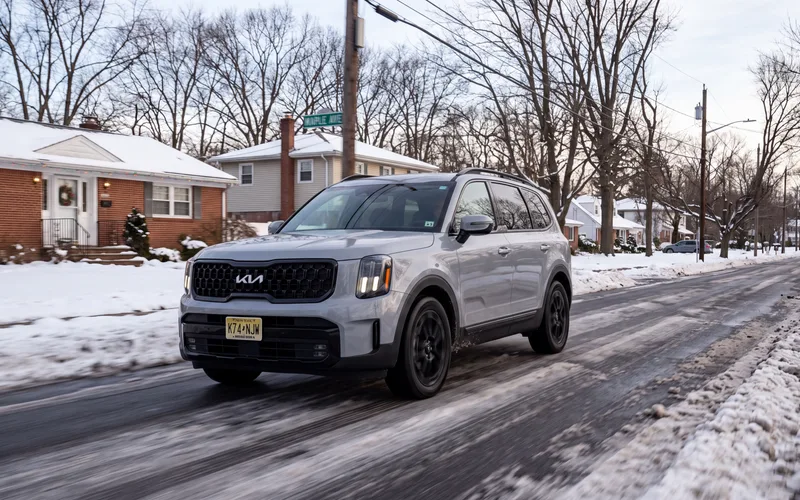 Kia TellurideMid-Size SUVBetter at: Interior space
Same brand, same warranty and roughly $4,000 more buys a genuinely adult-usable third row, 87 cubic feet of cargo space and 5,000 pounds of towing.
Compare 2.79B-
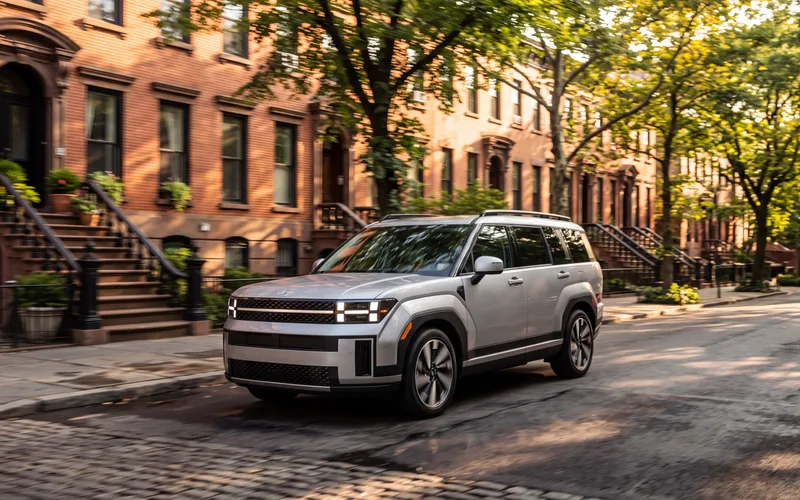 Hyundai Santa FeMid-Size SUVBetter at: Drivability
The corporate twin drops the Sorento's balky dual-clutch for a conventional 8-speed in 2026 and adds three years of free scheduled maintenance.
Compare 2.56C+
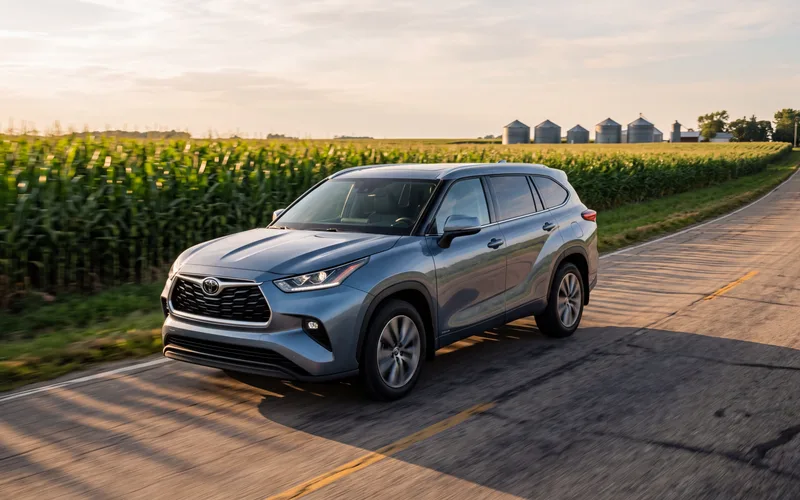 Toyota HighlanderMid-Size SUVBetter at: Resale value
Costs several thousand more up front but holds its value far better over five years and carries Toyota's reliability track record.
CompareHow it's evolved
10 scored model years · 2017–2026
Subject scores by year
Hover or tap a score to see what moved it versus the year before. A corner mark flags a big swing.
| Year | Performance | Efficiency | Safety | Space | Cost | Reliability | Tech | Use-case | Driving | Value |
|---|---|---|---|---|---|---|---|---|---|---|
| 2026 | 41 | 96 | 83 | 65 | 67 | 66 | 75 | 68 | 64 | 78 |
| 2025 | 41 | 95 | 79 | 61 | 63 | 70 | 70 | 64 | 66 | 76 |
| 2024 | 42 | 95 | 80 | 61 | 66 | 66 | 64 | 64 | 65 | 76 |
| 2023 | 40 | 95 | 68 | 59 | 68 | 68 | 54 | 57 | 58 | 69 |
| 2022 | 41 | 95 | 63 | 60 | 74 | 63 | 57 | 56 | 56 | 71 |
| 2021 | 30 | 94 | 64 | 53 | 56 | 67 | 49 | 52 | 61 | 68 |
| 2020 | 50 | 30 | 69 | 63 | 66 | 69 | 42 | 58 | 61 | 63 |
| 2019 | 43 | 35 | 68 | 62 | 76 | 73 | 43 | 53 | 59 | 68 |
| 2018 | 43 | 25 | 60 | 62 | 62 | 54 | 30 | 54 | 61 | 64 |
| 2017 | 46 | 25 | 61 | 63 | 77 | 63 | 34 | 54 | 60 | 67 |
Compare two years
Best fit & conditions
Higher scores mean a better fit for that use case. Learn more about use-case fit →
Subject profile
Trims & configurations
7 trimsScores above reflect the volume trim. Per-trim specs and scores are rolling out — the full lineup:
Academic Probation · NHTSA safety recalls
Jan 26, 2026Electrical system: instrument cluster/panelDue to a software error, the instrument panel display may fail. As such, these vehicles fail to comply with the requirements of Federal Motor Vehicle Safety Standard (FMVSS) numbers 101, "Controls and Displays" and 138, "Tire Pressure Monitoring System."
Defect
Kia America, Inc. (Kia) is recalling certain 2025 Kia K4, 2025-2026 Sorento, Sorento Hybrid, Sorento Plug-In Hybrid Electric (PHEV), 2026 Sportage, Sportage Hybrid, Sportage PHEV, K5, EV9, Carnival, and Carnival Hybrid vehicles. Due to a software error, the instrument panel display may fail. As such, these vehicles fail to comply with the requirements of Federal Motor Vehicle Safety Standard (FMVSS) numbers 101, "Controls and Displays" and 138, "Tire Pressure Monitoring System."
Risk
An instrument panel display that fails to show critical safety information, such as the speedometer, tire pressure, or warning lights, increases the risk of a crash.
Remedy
The instrument panel display software will be updated over-the-air (OTA) or by a dealer, free of charge. Owner notification letters are expected to be mailed March 26, 2026. Owners may contact Kia Customer Service at 1-800-333-4542. Kia's number for this recall is SC361. Vehicle Identification Numbers (VINs) involved in this recall will become searchable on NHTSA.gov on February 9, 2026.
NHTSA campaign 26V046000 ↗Manufacturer no. SC36142,677 vehicles potentially affected (all models in the campaign)Owners notified Mar 13, 2026Filed by Kia America, Inc.Filed as SORENTO, SORENTO HYBRID, SORENTO PHEVOct 30, 2025Tires: temporary/emergency spare tireThe vehicles are equipped with an incorrect spare tire which, when installed, can impair the anti-lock braking system (ABS) and the traction control system (TCS). As such, these vehicles fail to comply with the requirements of Federal Motor Vehicle Safety Standard number 110, "Tire Selection and Rims."
Defect
Kia Motors America (Kia) is recalling certain 2025 Telluride and 2026 Sorento vehicles. The vehicles are equipped with an incorrect spare tire which, when installed, can impair the anti-lock braking system (ABS) and the traction control system (TCS). As such, these vehicles fail to comply with the requirements of Federal Motor Vehicle Safety Standard number 110, "Tire Selection and Rims."
Risk
Anti-lock braking or traction control systems that do not function properly can increase the risk of a crash.
Remedy
Dealers will replace the spare wheel and tire assembly, free of charge. Owner notification letters were mailed December 3, 2025. Owners may contact Kia customer service at 1-800-333-4542. Kia's number for this recall is SC355. Vehicle Identification Numbers (VINs) involved in this recall will be searchable on NHTSA.gov beginning November 13, 2025.
NHTSA campaign 25V745000 ↗Manufacturer no. SC35545 vehicles potentially affected (all models in the campaign)Owners notified Dec 3, 2025Filed by Kia America, Inc.Filed as SORENTO
21 recalls on other model years of the Sorento (2017–2025)
Sep 25, 2025Electrical system: wiring: fuses and circuit breakers · Visibility: defroster/defogger/hvac system: fan/motorThe heating, ventilation, and air conditioning (HVAC) blower motor wiring harness may be inadequate, which can result in a fire.
Defect
Kia America, Inc. (Kia) is recalling certain 2021-2023 Sorento vehicles. The heating, ventilation, and air conditioning (HVAC) blower motor wiring harness may be inadequate, which can result in a fire.
Risk
A fire increases the risk of injury.
Remedy
Dealers will replace the wiring harness and blower motor resistor, free of charge. Owner notification letters were mailed January 23, 2026. Owners may contact Kia customer service at 800-333-4542. Kia's number for this recall is SC351. Vehicle Identification Numbers (VINs) involved in this recall will be searchable on NHTSA.gov beginning October 9, 2025.
NHTSA campaign 25V649000 ↗Manufacturer no. SC35139,536 vehicles potentially affected (all models in the campaign)Owners notified Jan 23, 2026Filed by Kia America, Inc.Filed as SORENTOAug 25, 2025Engine and engine cooling: critical fastenersThe connecting rod bolts in the engine may have been improperly tightened, which can cause a loss of drive power.
Defect
Kia America, Inc. (Kia) is recalling certain 2025 K4 and Sorento vehicles. The connecting rod bolts in the engine may have been improperly tightened, which can cause a loss of drive power.
Risk
A loss of drive power increases the risk of a crash.
Remedy
Dealers will replace the sub engine assembly, free of charge. Owner notification letters are expected to be mailed September 12, 2025. Owners may contact Kia customer service at 800-333-4542. Kia's number for this recall is SC349.
NHTSA campaign 25V548000 ↗Manufacturer no. SC34930 vehicles potentially affected (all models in the campaign)Owners notified Sep 12, 2025Filed by Kia America, Inc.Filed as SORENTOJan 13, 2025Electrical system: body control module: software · Exterior lighting: headlights · Exterior lighting: tail lightsA software error in the Body Domain Control Unit (BDC) may cause a loss of low beam headlights and taillights. As such, these vehicles fail to comply with the requirements of Federal Motor Vehicle Safety Standard (FMVSS) 108, "Lamps, Reflective Devices, and Associated Equipment."
Defect
Kia America, Inc. (Kia) is recalling certain 2024-2025 Sorento, 2025 Sorento Hybrid, and 2025 Sorento Plug-In Hybrid vehicles. A software error in the Body Domain Control Unit (BDC) may cause a loss of low beam headlights and taillights. As such, these vehicles fail to comply with the requirements of Federal Motor Vehicle Safety Standard (FMVSS) 108, "Lamps, Reflective Devices, and Associated Equipment."
Risk
A loss of headlights and taillights can reduce visibility, increasing the risk of a crash.
Remedy
Dealers will update the BDC software, free of charge. Owner notification letters were mailed February 21, 2025. Owners may contact Kia customer service at 1-800-333-4542. Kia's number for this recall is SC331.
NHTSA campaign 25V006000 ↗Manufacturer no. SC33174,469 vehicles potentially affected (all models in the campaign)Owners notified Feb 21, 2025Filed by Kia America, Inc.Filed as SORENTO, SORENTO HYBRID, SORENTO PHEVDec 10, 2024Fuel system, gasoline: delivery: hoses, lines/piping, and fittingsDuring a crash, the steering rack may damage the fuel line, which can result in a fuel leak.
Defect
Kia America, Inc. (Kia) is recalling certain 2025 Sorento Plug-In Hybrid vehicles. During a crash, the steering rack may damage the fuel line, which can result in a fuel leak.
Risk
A fuel leak in the presence of an ignition source can increase the risk of a fire.
Remedy
Dealers will install a cover around the fuel line, free of charge. Owner notification letters were mailed January 10, 2025. Owners may contact Kia customer service at 1-800-333-4542. Kia's number for this recall is SC328.
NHTSA campaign 24V920000 ↗Manufacturer no. SC3281,385 vehicles potentially affected (all models in the campaign)Owners notified Jan 10, 2025Filed by Kia America, Inc.Filed as SORENTO PHEVApr 23, 2024Electrical system: wiringThe motor driven power steering (MDPS) wiring harness may be incorrectly assembled, which can result in a loss of power steering assist.
Defect
Kia America, Inc. (Kia) is recalling certain 2024 Sorento vehicles. The motor driven power steering (MDPS) wiring harness may be incorrectly assembled, which can result in a loss of power steering assist.
Risk
A loss of power steering assist increases the risk of a crash.
Remedy
Dealers will inspect and repair, or replace the MDPS wiring harness as necessary, free of charge. Owner notification letters were mailed May 7, 2024. Owners may contact Kia customer service at 1-800-333-4542. Kia's number for this recall is SC309.
NHTSA campaign 24V287000 ↗Manufacturer no. SC30995 vehicles potentially affected (all models in the campaign)Owners notified May 7, 2024Filed by Kia America, Inc.Filed as SORENTOSep 15, 2023Back over prevention: sensing system: cameraDue to a manufacturing error, water may leak into the rearview camera, which can cause the rearview camera image not to appear on the display. As such, these vehicles fail to comply with the requirements of Federal Motor Vehicle Safety Standard number 111, "Rear Visibility."
Defect
Kia America, Inc. (Kia) is recalling certain 2019 Sorento vehicles. Due to a manufacturing error, water may leak into the rearview camera, which can cause the rearview camera image not to appear on the display. As such, these vehicles fail to comply with the requirements of Federal Motor Vehicle Safety Standard number 111, "Rear Visibility."
Risk
A rearview camera that does not display an image can reduce the driver's rear view, increasing the risk of a crash.
Remedy
Dealers will inspect the rearview camera and add additional water proofing to the camera harness, or replace the camera as necessary, free of charge. Owner notification letters were mailed March 8, 2024. Owners may contact Kia customer service at 1-800-333-4542. Kia's number for this recall is SC282.
NHTSA campaign 23V639000 ↗Manufacturer no. SC28283,667 vehicles potentially affected (all models in the campaign)Owners notified Mar 8, 2024Filed by Kia America, Inc.Filed as SORENTOAug 31, 2023Back over prevention: sensing system: cameraThe mounting clips for the rearview camera may break, which can cause the rearview camera image not to appear properly on the display. As such, these vehicles fail to comply with the requirements of Federal Motor Vehicle Safety Standard number 111, "Rear Visibility."
Defect
Kia America, Inc. (Kia) is recalling certain 2022-2023 Sorento, Sorento Hybrid, and Sorento Plug-in Hybrid (PHEV) vehicles. The mounting clips for the rearview camera may break, which can cause the rearview camera image not to appear properly on the display. As such, these vehicles fail to comply with the requirements of Federal Motor Vehicle Safety Standard number 111, "Rear Visibility."
Risk
A rearview camera that does not properly display an image can reduce the driver's rear view, increasing the risk of a crash.
Remedy
Dealers will inspect and replace the rearview camera housing, as necessary, free of charge. Owner notification letters were mailed October 27, 2023. Owners may contact Kia customer service at 1-800-333-4542. Kia's number for this recall is SC280.
NHTSA campaign 23V610000 ↗Manufacturer no. SC280144,979 vehicles potentially affected (all models in the campaign)Owners notified Oct 27, 2023Filed by Kia America, Inc.Filed as SORENTO, SORENTO HYBRID, SORENTO PHEVAug 15, 2023Equipment: other: labelsThe air bag warning labels on the driver and front passenger sun visors may detach. As such, these vehicles fail to comply with the requirements of Federal Motor Vehicle Safety Standard number 208, "Occupant Crash Protection."
Defect
Kia America, Inc. (Kia) is recalling certain 2023 Sorento vehicles. The air bag warning labels on the driver and front passenger sun visors may detach. As such, these vehicles fail to comply with the requirements of Federal Motor Vehicle Safety Standard number 208, "Occupant Crash Protection."
Risk
A detached air bag warning label will not warn occupants about the risks of air bag deployment, increasing the risk of injury in a crash.
Remedy
Dealers will inspect and replace the driver and front passenger sun visors, as necessary, free of charge. Owner notification letters were mailed October 10, 2023. Owners may contact Kia customer service at 1-800-333-4542. Kia's number for this recall is SC277.
NHTSA campaign 23V579000 ↗Manufacturer no. SC27750,517 vehicles potentially affected (all models in the campaign)Owners notified Oct 10, 2023Filed by Kia America, Inc.Filed as SORENTOJan 25, 2023Fuel system, gasoline: storage: tank assemblyThe fuel tank may have been improperly molded, which can result in a fuel leak.
Defect
Kia America, Inc. (Kia) is recalling certain 2022 Sorento Plug-In Hybrid (PHEV) vehicles. The fuel tank may have been improperly molded, which can result in a fuel leak.
Risk
A fuel leak in the presence of an ignition source can increase the risk of a fire.
Remedy
Deales will inspect and replace the fuel tank, as necessary, free of charge. Owner notification letters were mailed March 22, 2023. Owners may contact Kia customer service at 1-800-333-4542. Kia's number for this recall is SC261.
NHTSA campaign 23V027000 ↗Manufacturer no. SC26134 vehicles potentially affected (all models in the campaign)Owners notified Mar 22, 2023Filed by Kia America, Inc.Filed as SORENTO PHEVOct 11, 2022Power train: automatic transmissionThe vehicle's "fail-safe" limited-mobility drive mode may be impaired, when prompted by a transmission oil pump malfunction, which can result in a complete loss of drive power.
Defect
Kia Motors, Inc. (Kia) is recalling certain 2021-2022 Sorento and 2021-2023 K5 vehicles. The vehicle's "fail-safe" limited-mobility drive mode may be impaired, when prompted by a transmission oil pump malfunction, which can result in a complete loss of drive power.
Risk
Loss of drive power increases the risk of a crash.
Remedy
Dealers will inspect and replace the transmission, as necessary. Dealers will also update the transmission control unit software. All repairs will be performed free of charge. Owner notification letters were mailed December 9, 2022. Owners may contact Kia customer service at 1-800-333-4542. Kia's number for this recall is SC250.
NHTSA campaign 22V760000 ↗Manufacturer no. SC25069,038 vehicles potentially affected (all models in the campaign)Owners notified Dec 9, 2022Filed by Kia America, Inc.Filed as SORENTOSep 19, 2022Trailer hitchesDebris and moisture accumulation on the tow hitch harness module printed circuit board (PCB) may cause an electrical short, which can result in a fire.
Defect
Kia America, Inc. (Kia) is recalling certain 2016-2022 Sorento, 2021-2022 Sorento Hybrid (HEV), 2022-2023 Sorento Plug-In Hybrid (PHEV), and 2017-2022 Sportage vehicles equipped with a tow hitch harness installed as original equipment, or purchased as an accessory through a Kia dealership. Debris and moisture accumulation on the tow hitch harness module printed circuit board (PCB) may cause an electrical short, which can result in a fire.
Risk
A fire while parked or driving can increase the risk of injury.
Remedy
Owners are advised to park outside and away from structures until the recall repair is complete. Dealers will inspect the vehicle, and, as necessary, replace the fuse and/or tow hitch harness module, free of charge. Owner notification letters were mailed August 11, 2023. Owners may contact Kia customer service at 1-800-333-4542. Kia's number for this recall is SC249.
NHTSA campaign 22V703000 ↗Manufacturer no. SC24970,887 vehicles potentially affected (all models in the campaign)Owners notified Jul 27, 2023Filed by Kia America, Inc.Filed as SORENTO, SORENTO HYBRID, SORENTO PHEVJul 19, 2022Tires: temporary/emergency spare tireThe vehicles may be equipped with an incorrect spare tire which, when installed, can impair the anti-lock braking system (ABS) and the traction control system (TCS). As such, these vehicles fail to comply with the requirements of Federal Motor Vehicle Safety Standard number 110, "Tire Selection and Rims."
Defect
Kia Motors America (Kia) is recalling certain 2022 Sorento and Telluride vehicles. The vehicles may be equipped with an incorrect spare tire which, when installed, can impair the anti-lock braking system (ABS) and the traction control system (TCS). As such, these vehicles fail to comply with the requirements of Federal Motor Vehicle Safety Standard number 110, "Tire Selection and Rims."
Risk
Impaired anti-lock braking or traction control systems can increase the risk of a crash.
Remedy
Dealers will inspect and replace the spare tire, as necessary, free of charge. Owner notification letters were mailed July 27, 2022. Owners may contact Kia customer service at 1-800-333-4542. Kia's number for this recall is SC244.
NHTSA campaign 22V509000 ↗Manufacturer no. SC2448 vehicles potentially affected (all models in the campaign)Owners notified Jul 27, 2022Filed by Kia Motors AmericaFiled as SORENTOJun 23, 2022Seat belts: front · Seat belts: pretensionerIn the event of a crash, the front driver-side and/or passenger-side seat belt pretensioner(s) may explode upon deployment.
Defect
Kia Motors America (Kia) is recalling certain 2021-2022 Sorento Hybrid and 2022 Sorento Plug-in Hybrid vehicles. In the event of a crash, the front driver-side and/or passenger-side seat belt pretensioner(s) may explode upon deployment.
Risk
An exploding seat belt pretensioner can project metal fragments into the vehicle, striking vehicle occupants and resulting in injury.
Remedy
Dealers will secure the seat belt pretensioners with a cap, free of charge. Owner notification letters were mailed August 17, 2022. Owners may contact Kia customer service at 1-800-333-4542. Kia's number for this recall is SC241. This recall expands and replaces NHTSA recall number 22V-127. Vehicles already repaired under the previous recall will need to have the new remedy completed.
NHTSA campaign 22V447000 ↗Manufacturer no. SC24117,199 vehicles potentially affected (all models in the campaign)Owners notified Aug 17, 2022Filed by Kia Motors AmericaFiled as SORENTO HYBRID, SORENTO PHEVMar 29, 2022Engine and engine cooling: engine: gasoline: turbo/supercharger · Engine and engine cooling: engine: oil/lubrication: pipes, hoses, and fittingsThe oil supply pipe to the turbocharger may crack, which could result in an oil leak in the engine compartment.
Defect
Kia Motor America (Kia) is recalling certain 2022 Sorento vehicles. The oil supply pipe to the turbocharger may crack, which could result in an oil leak in the engine compartment.
Risk
An oil leak in the presence of an ignition source such as hot engine or exhaust components, can increase the risk of a fire.
Remedy
Dealers will replace the turbocharger oil supply pipe, free of charge. Owner notification letters were mailed April 22, 2022. Owners may contact Kia customer service at 1-800-333-4542. Kia's number for this recall is SC233.
NHTSA campaign 22V202000 ↗Manufacturer no. SC23326 vehicles potentially affected (all models in the campaign)Owners notified Apr 22, 2022Filed by Kia Motors AmericaFiled as SORENTOMar 4, 2022Seat belts: front · Seat belts: pretensionerIn the event of a crash, the front driver-side and/or passenger-side seat belt pretensioner(s) may explode upon deployment.
Defect
Kia Motors America (Kia) is recalling certain 2022 Sorento Hybrid and Sorento Plug-in Hybrid vehicles. In the event of a crash, the front driver-side and/or passenger-side seat belt pretensioner(s) may explode upon deployment.
Risk
An exploding seat belt pretensioner can project metal fragments into the vehicle, striking vehicle occupants and resulting in injury.
Remedy
Dealers will replace the seatbelt pretensioner(s), free of charge. Owner notification letters were mailed May 3, 2022. Owners may contact Kia customer service at 1-800-333-4542. Kia's number for this recall is SC231. This recall is replaced by NHTSA recall number 22V-447. Vehicles already repaired under this recall will need to have the new remedy completed.
NHTSA campaign 22V127000 ↗Manufacturer no. SC231213 vehicles potentially affected (all models in the campaign)Owners notified May 3, 2022Filed by Kia Motors AmericaFiled as SORENTO HYBRID, SORENTO PHEVJul 8, 2021Fuel system, gasoline: delivery: hoses, lines/piping, and fittingsFuel may leak at the pipe connection between the high-pressure fuel pump and fuel rail.
Defect
Kia Motor America (Kia) is recalling certain 2021 Sorento and 2021-2022 K5 vehicles equipped with 2.5L turbocharged engines. Fuel may leak at the pipe connection between the high-pressure fuel pump and fuel rail.
Risk
A fuel leak increases the risk of a fire.
Remedy
Dealers will inspect and tighten, or replace the fuel pipe as necessary, free of charge. Owner notification letters were mailed July 21, 2021. Owners may contact Kia customer service at 1-800-333-4542. Kia's number for this recall is SC214.
NHTSA campaign 21V519000 ↗Manufacturer no. SC21421,575 vehicles potentially affected (all models in the campaign)Owners notified Jul 21, 2021Filed by Kia Motors AmericaFiled as SORENTODec 19, 2018Engine · Fuel system, gasoline: delivery: hoses, lines/piping, and fittingsThe high pressure fuel pipe that connects to the fuel pump outlet may have been damaged, misaligned or improperly torqued during the engine replacement procedure, possibly causing a fuel leak.
Defect
Kia Motors America (Kia) is recalling certain 2011-2017 Optima, 2012-2017 Sorento and 2011-2018 Sportage vehicles that previously received an engine replacement under recall number 17V-224, warranty, or the Knock Sensor Detection System (KSDS) Product Improvement Campaign. The high pressure fuel pipe that connects to the fuel pump outlet may have been damaged, misaligned or improperly torqued during the engine replacement procedure, possibly causing a fuel leak.
Risk
A fuel leak in the presence of an ignition source can increase the risk of a fire.
Remedy
Kia has notified owners, and dealers will inspect and replace the fuel pipe, as necessary, free of charge. The recall began January 17, 2019. Owners may contact Kia customer service at 1-800-333-4542. Kia's number for this recall is SC172.
NHTSA campaign 18V907000 ↗Manufacturer no. SC17271,653 vehicles potentially affected (all models in the campaign)Owners notified Jan 17, 2019Filed by Kia Motors AmericaFiled as SORENTOSep 21, 2018Steering: column · Steering: electric power assist systemThe cowl crossbar that connects to the Motor Driven Power Steering (MDPS) steering column may be improperly welded, allowing the steering column to separate.
Defect
Kia Motors America (Kia) is recalling certain 2018 Kia Sorento vehicles. The cowl crossbar that connects to the Motor Driven Power Steering (MDPS) steering column may be improperly welded, allowing the steering column to separate.
Risk
If the steering column separates, it can cause a loss of steering ability, increasing the risk of a crash.
Remedy
Kia will notify owners, and dealers will replace the cowl crossbar, free of charge. The recall began October 26, 2018. Owners may contact Kia customer service at 1-800-333-4542. Kia's number for this recall is SC167.
NHTSA campaign 18V656000 ↗Manufacturer no. SC16797 vehicles potentially affected (all models in the campaign)Owners notified Oct 26, 2018Filed by Kia Motors AmericaFiled as SORENTODec 8, 2017Air bags: side/windowThe side curtain air bags on these vehicles have a component that may detach during deployment of the inflatable curtain air bag.
Defect
Kia Motors America (Kia) is recalling certain 2018 Kia Sorento vehicles. The side curtain air bags on these vehicles have a component that may detach during deployment of the inflatable curtain air bag.
Risk
If the component detaches during deployment, it may enter the passenger compartment and be a projectile within the vehicle cabin, increasing the risk of injury.
Remedy
Kia will notify owners, and dealers will replace the driver and passenger side curtain air bags, free of charge. The recall began on December 18, 2017. Owners may contact Kia customer service at 1-800-333-4542. Kia's number for this recall is SC159.
NHTSA campaign 17V784000 ↗Manufacturer no. SC1592,014 vehicles potentially affected (all models in the campaign)Owners notified Dec 18, 2017Filed by Kia Motors AmericaFiled as SORENTOSep 21, 2017Engine and engine cooling: engineThe engine crankshaft may have been improperly heat treated and may fail.
Defect
Kia Motors America (Kia) is recalling certain 2017 Sorento vehicles equipped with 3.3L engines. The engine crankshaft may have been improperly heat treated and may fail.
Risk
If the crankshaft fails, the engine will stall, increasing the risk of a crash. A failed crankshaft also increases the risk of a fire.
Remedy
Kia will notify owners, and dealers will inspect the crankshaft, and, as necessary, replace the engine sub assembly, free of charge. The recall began November 6, 2017. Owners may contact Kia customer service at 1-800-333-4542. Kia's number for this recall is SC153.
NHTSA campaign 17V586000 ↗Manufacturer no. SC15362 vehicles potentially affected (all models in the campaign)Owners notified Nov 6, 2017Filed by Kia Motors AmericaFiled as SORENTONov 30, 2016Electrical system · Trailer hitchesThe affected vehicles are equipped with an accessory trailer hitch wiring harness that, due to a malfunction of the tow hitch module, may result in the trailer brake lights being constantly illuminated. As such, these vehicles fail to comply with the requirements of Federal Motor Vehicle Safety Standard (FMVSS) number 108, " Lamps, Reflective Devices, and Associated Equipment."
Defect
Kia Motors America (Kia) is recalling certain model year 2016-2017 Sorento vehicles manufactured October 27, 2014, to August 25, 2016, and 2017 Sportage vehicles manufactured December 10, 2015, to August 26, 2016. The affected vehicles are equipped with an accessory trailer hitch wiring harness that, due to a malfunction of the tow hitch module, may result in the trailer brake lights being constantly illuminated. As such, these vehicles fail to comply with the requirements of Federal Motor Vehicle Safety Standard (FMVSS) number 108, " Lamps, Reflective Devices, and Associated Equipment."
Risk
If the trailer brake lights stay illuminated while being used, other drivers may be confused, increasing the risk of a crash.
Remedy
Kia will notify owners, and dealers will replace the trailer tow hitch harness, free of charge. The recall began January 18, 2017. Owners may contact Kia customer service at 1-800-333-4542. Kia's number for this recall is SC142.
NHTSA campaign 16V862000 ↗Manufacturer no. SC14210,212 vehicles potentially affected (all models in the campaign)Owners notified Jan 19, 2017Filed by Kia Motors AmericaFiled as SORENTO
Source: NHTSA Office of Defects Investigation recall database, model years 2017–2026. Recalls are listed by model year as the manufacturer filed them; whether a specific car is affected depends on its VIN — check a VIN at nhtsa.gov ↗. NHTSA model names matched to this page: SORENTO, SORENTO HYBRID, SORENTO PHEV.
Detailed scoring by subject
1Performance & PowertrainThe Sorento's lowest-graded category.0.71F
The volume gas trims (LX and S, the two lowest-priced of eight gas trims) carry the naturally aspirated 2.5-liter Smartstream I-4 at 191 hp — the weakest standard engine of any mid-size three-row. EX and up upgrade to the 281-hp 2.5T, and the hybrid/PHEV lines make 227/261 hp.
The base 2.5L makes 181 lb-ft, low for a 4,000-lb three-row and the reason the base car feels overmatched when loaded. The optional turbo's 311 lb-ft is competitive with the class norm.
Published figures for the naturally aspirated Sorento cluster between roughly 8.8 and 9.8 seconds depending on drive layout and source, so ~9.0 s is used for the FWD volume trim. The turbo is a full 2.5 seconds quicker and lands mid-6s in instrumented testing.
The base 2.5L is smooth at light throttle but audibly strained and noisy when worked hard, which is the common criticism in reviews of the volume trim; the optional turbo is strong and largely lag-free, and the 1.6T hybrid transitions cleanly. Scored on the volume trim's naturally aspirated engine, refinement is mid-pack for a mainstream three-row rather than a strength.
The volume trim's conventional 8-speed torque-converter automatic is unobtrusive and decisive, avoiding the low-speed hesitation and creep behavior reviewers flag on the 8-speed wet dual-clutch that comes with the turbo. The hybrid's 6-speed automatic likewise shifts conventionally rather than droning like a CVT.
Best-in-lineup rating is the X-Pro SX Prestige AWD at 4,500 lbs on all-terrain tires with the tow package; the mainstream turbo trims rate 3,500 lbs and the naturally aspirated and electrified versions only 2,000 lbs. Respectable for a tweener three-row but short of the 5,000–6,000 lbs a Telluride, Pathfinder or Grand Cherokee will pull.
AWD is optional from the S trim up and standard on every X-Line/X-Pro and on the PHEV, using a torque-vectoring system with a center-locking differential; new for 2026, Terrain Mode (snow/mud/sand) is standard on all AWD models. Only the entry LX is locked to front-wheel drive, which keeps this out of the top band.
AWD models get 8.2 inches of ground clearance (vs 6.9 FWD) plus terrain modes, and the X-Pro adds Continental all-terrain tires and rugged trim — genuinely useful on trailheads and snow. There is no low range, no locker and no underbody protection to speak of, so it stays firmly in the light-duty band well below a 4Runner or Wrangler.
Four distinct powertrains — 2.5L naturally aspirated, 2.5L turbo, 1.6T hybrid and 1.6T plug-in hybrid — with both electrified options offered in FWD and AWD. That is among the widest choice in the mid-size three-row class, and buyers can pick the powertrain independently of most feature content.
2Efficiency & RangeThe Sorento's best-graded category.4.00A+
The hybrid is the volume powertrain here, not an option taken by a minority — it accounted for roughly two-thirds of US Sorento sales through late 2025 — so the representative figure is the 1.6T hybrid's 37 mpg combined, best in the mainstream three-row field. The gas models are far thirstier at 23–25 mpg combined, which is why the displayValue spans the whole lineup.
City is where the hybrid earns its keep — 37 mpg in stop-and-go is nearly double the 20 mpg the 281-hp 2.5T manages, and the electric motor covers exactly the low-speed crawling a three-row family SUV spends its life doing. The AWD hybrid gives back five city mpg to the rear drive motor and extra mass.
At 36 mpg highway the hybrid holds most of its advantage at cruising speed, where hybrids usually surrender it — and the AWD version drops only one mpg, since the rear motor mostly idles on the interstate. The gas 2.5T is actually competitive here at 29 mpg; its penalty is concentrated in town.
Kia kept the full 17.7-gallon tank on the hybrid rather than shrinking it around the battery, so 37 mpg combined turns into an EPA-derived 655 miles between fills — enough to make a day-long family drive a one-stop trip and among the longest ranges of any non-diesel three-row. The gas versions share the tank and land near 440 miles.
At the EPA's standard 15,000 miles a year the hybrid burns about $1,680 of regular unleaded — roughly $1,000 a year less than the 2.5T, which pays back the hybrid's price premium in about three years and keeps paying after. That is a good number for a three-row, though hybrid mid-size crossovers as a class have pushed the bar high enough that it is no longer exceptional.
Every US Sorento powertrain — the 2.5L, the 281-hp 2.5T, the 1.6T hybrid and the PHEV — asks only for 87-octane regular, so none of the running cost is a premium surcharge and there is nothing to think about at the pump. The PHEV adds ordinary Level 1/Level 2 home charging as an option rather than a requirement, which is upside without a dependency.
3SafetyOne of the Sorento's strongest categories.3.62A-
The 2026 Sorento carries a 5-star NHTSA overall rating, the maximum in the program; frontal impact and rollover are the weaker legs at 4 stars each while side impact earns 5.
The 2026 Sorento is a 2025 IIHS TOP SAFETY PICK+ — the top award — with Good ratings in the small overlap front, updated moderate overlap front and updated side tests. It falls short of a perfect score only because headlights are Acceptable rather than Good across the range.
Kia Drive Wise is essentially complete on the base LX: forward collision-avoidance with pedestrian and cyclist detection plus junction-turning, lane departure warning, lane keeping and lane following (centering), blind-spot monitoring, rear cross-traffic alert, driver attention warning, auto high beams, and full stop-and-go Smart Cruise Control are all standard rather than trim-gated. Only camera-based aids (Blind-Spot View Monitor, surround view) and HDA2 step up.
The Sorento earns Good ratings from IIHS for standard front crash prevention in both vehicle-to-vehicle and pedestrian evaluations under the tougher current protocol, which includes higher closing speeds and nighttime pedestrian scenarios — a clear step above the Acceptable grades most Hyundai/Kia FCA installations post.
Blind-spot and rear cross-traffic coverage is standard from the base LX with collision-avoidance intervention rather than warning only, and upper trims add the camera-based Blind-Spot View Monitor in the gauge cluster plus a full-display digital rearview mirror. Standard-across-the-range coverage is the strong part; the camera aids remain trim-gated.
Lane keeping assist and lane-centering steering are standard on every trim — unusual at the LX price — and hold the center competently on well-marked highways. Reviewers describe the system as usable and unobtrusive rather than class-leading, with mild wander on curves and faded markings, so it lands short of the top band.
Full-speed-range Smart Cruise Control with stop-and-go is standard on every 2026 Sorento, and Highway Driving Assist 2 on upper trims layers lane centering plus turn-signal-activated lane-change assist onto it. Reviewers describe smooth deceleration and resume behavior; the limitation is that the best version is trim-gated.
No hands-free highway system is offered on the Sorento at any trim. HDA2 is explicitly a hands-on system — it escalates warnings and deactivates if the driver's hands leave the wheel — so it is not a BlueCruise or Super Cruise equivalent.
Headlights are the Sorento's weakest safety leg: Acceptable-or-better across every trim — enough to clear the TSP+ bar — but with noted low- and high-beam shortcomings that standard high-beam assist only partly offsets. Good-rated units are not standard across the range.
The Sorento's upright, boxy greenhouse and large glass area give better natural sightlines than the sloped-roof norm in the mid-size three-row class, and reviewers single out the sight lines as a strength. Camera compensation — surround view, blind-spot view, digital rearview mirror — is available rather than standard, and the third-row pillar is the main blind zone.
Four complete LATCH sets — two in the second row and, unusually, two in the third — with exposed, clearly marked lower anchors and easy-to-find top tethers. IIHS still grades the system only Acceptable because the lower anchors sit too deep in the seat bight, and the second-row doors and third-row opening are on the small side.
4Space & ComfortOne of the Sorento's weakest categories.2.37C+
The volume LX/S/EX trims of the 2026 Sorento carry a 60/40 second-row bench plus a 50/50 third row for seven seats; captain's chairs drop it to six on the upper trims.
Published 2026 first-row headroom is 40.3 in, above the mid-point of the SUV band and generous for the Sorento's compact-leaning three-row footprint.
41.4 in of front legroom sits in the lower third of the SUV band — adequate but unremarkable, and noticeably short of the larger three-rows the Sorento is cross-shopped against.
39.1 in of second-row headroom is near the top of the SUV band, a benefit of the Sorento's boxy roofline and upright glasshouse.
Second-row legroom of 41.7 in is at the top of the SUV band and is the Sorento's standout interior dimension — the sliding second row is genuinely adult-friendly even though the third row behind it is not.
With 29.6 in of legroom and 36.8 in of headroom, the third row is a kids-and-short-trips space — usable and better than a token bench, but well behind the Telluride/Palisade/Grand Highlander class of three-rows where adults ride in back without complaint.
45.0 cu ft with the third row folded is modest for a nominal mid-size three-row — the Sorento is dimensionally closer to a stretched compact SUV than to a Telluride or Traverse, and only 12.6 cu ft survives with all three rows up.
75.5 cu ft maximum is mid-pack for the SUV band — enough for typical family hauling but short of the 85–98 cu ft the larger three-row mid-sizers offer.
Competent, well-organized everyday storage — a large covered console bin with wireless charging pad, an under-floor cargo bin behind the third row, and grocery hooks — but nothing class-leading, and several owners flag a shortage of small-item cubbies.
Front seats draw consistent praise for long-haul comfort and the second row is comfortable in either bench or captain's-chair form, though the captain's chairs are noted as firm and the third row is thinly padded.
Comfort-oriented tuning that absorbs large bumps with only slight float, but sharper-edged inputs — expansion joints, potholes — come through more firmly than in the segment's ride leaders, especially on the larger wheels.
Measured highway noise of 52.9 dB puts the Sorento among the quieter mid-size SUVs, with little wind or road intrusion at cruise; the 2.5T's dual-clutch driveline is the main audible reminder under load.
Heated front seats are standard across the 2026 range with dual-zone climate and second-row vents, but ventilated front seats and a heated steering wheel wait until the SX and above — good breadth, not best-in-class standard content.
5Cost of OwnershipMid-pack among this car's ten categories.2.53C+
2026 is a carry-over year for the facelifted fourth-generation (MQ4) Sorento, and the LX FWD remains the entry point at $32,390 before Kia's $1,495 destination charge — one of the least expensive ways into a standard-three-row mid-size SUV.
The EX is where the Sorento's volume sits — it is the first trim with the 281-hp 2.5T, 20-inch wheels, power liftgate and power passenger seat — and AWD take-rate is high in this segment, so EX AWD is the representative configuration. It undercuts a Highlander XLE AWD by roughly $5,500 and a Telluride EX AWD by about $4,000.
The two mainstream estimators disagree by nearly 2x, so this is the midpoint of a retrieved range rather than a single figure. Kia's 5-year/60,000-mile bumper-to-bumper coverage absorbs most repair exposure inside the window; the 2.5T's 8-speed wet dual-clutch transmission is the main item that pushes the Sorento above the naturally-aspirated competition.
The Sorento is a middling residual performer — better than the segment's weakest but clearly behind the Telluride, RAV4 and Highlander. It also depreciates slightly faster than the mid-size SUV average in transaction-based data, and the plug-in hybrid is exposed further now that the federal clean-vehicle credit has lapsed.
Kia's 5-year/60,000-mile basic coverage carries over unchanged for 2026 and sits at the top of the mainstream field, where 3 yr/36,000 mi is the norm (Toyota, Honda, Ford, GM).
Kia's 10-year/100,000-mile powertrain coverage is the segment benchmark and is unchanged for 2026, though it is original-owner-only — it does not transfer at full length, which blunts its effect on resale.
Kia includes no complimentary scheduled maintenance in the US — the standing gap against Hyundai (3 yr/36,000 mi free service on the Santa Fe and Palisade) and Toyota (ToyotaCare 2 yr/25,000 mi on the Highlander). What the Sorento does get is an unusually long 5-year/60,000-mile roadside assistance term with trip-interruption coverage, plus a Kia Connect connected-services trial, which places it in the 'basic roadside only' band rather than the top one. Paid Kia Maintenance Plans (1–6 years, two services per year) are sold separately.
$41,300 volume-trim price minus its estimated resale value after 5 years (50% retained, or about $20,650) leaves about $20,650 in depreciation. Add the projected $4,900 in 5-year maintenance and repairs, and owning this vehicle for 5 years costs about $25,550 in total.
6Reliability & QualityMid-pack among this car's ten categories.2.49C+
Third-party predictions cluster around average-to-slightly-above for the 2026 Sorento: J.D. Power gives it a 74/100 quality & reliability score (70-80 = "Average" on its scale) and Consumer Reports predicts about average reliability, based on 2022-2023 model data plus the Kia brand score. No source flags it as a problem model, but none rate it top-tier either.
Kia is a solid mid-pack-plus brand rather than a top-5 one: 9th in the J.D. Power 2026 Vehicle Dependability Study at 193 PP100 (modestly better than industry average, and ahead of corporate siblings Hyundai and Genesis), and #12 overall / #6 among mainstream brands in Consumer Reports' latest brand rankings. It has clearly closed the gap on the Japanese leaders without joining them.
The MQ4 generation has carried steady recall activity through the facelift years, and two of the campaigns are drive-power severity rather than nuisance software. Recent-year Sorentos have been named in at least five separate NHTSA campaigns, and the 2026 car itself is already under one. Not systemic failure, but heavier and more powertrain-adjacent than a clean record.
The volume 2.5L turbo Smartstream paired with the 8-speed wet dual-clutch is the weak link — the DCT's electric oil pump caused fail-safe/loss-of-motive-power failures on 2021-22 cars, a cracking turbo oil feed pipe drew a fire-risk recall, and a 2025 con-rod bolt campaign hit the engine itself. Kia has addressed each defect and 2023-onward cars look cleaner, but the family has no high-mileage proven record. The 1.6T hybrid's conventional 6-speed automatic is the more durable-looking choice in the lineup.
The 2024 facelift's cabin carries into 2026 and reads a class above its mainstream price: streamlined dash with the 12.3-inch curved dual-display panel, ambient light stripe, SynTex faux leather on most trims, and real leather with SynTex suede headliner and open-pore wood on SX Prestige. 2026 also pushes a leather-wrapped steering wheel down to the base LX. Reviewers consistently describe it as upscale and solidly materialed for the segment.
Kia's initial-quality showing is genuinely strong — it has repeatedly led the industry in J.D. Power IQS segment awards, with the Carnival and K4 taking segment wins in the 2026 study — and West Point, Georgia assembly on the Sorento draws no pattern complaints about panel gaps or rattles. Points come off for the recurring criticism of the dual-mode touch bar that toggles between audio and climate, and for the run of body-control and instrument-cluster software faults that owners experience as quality problems even though assembly is sound.
Coverage is not the issue — Kia runs a dense nationwide franchise network with roughly 750-800 US dealers, so parts and warranty work are reachable almost anywhere. Service satisfaction is the drag: Kia has fallen from a top-five mass-market CSI finish to dead last among mass-market brands in a more recent J.D. Power Customer Service Index, well below industry average. Adequate coverage, mixed-to-poor experience.
Running costs are genuinely low and parts are easy: RepairPal puts average annual repair and maintenance at $533 against $652 across all vehicles, with repairs less severe and less frequent than average. US assembly at West Point plus heavy parts commonality with the Hyundai Santa Fe and Kia Telluride/Sportage keeps supply deep, and Kia's 10-year/100,000-mile powertrain warranty absorbs the expensive early failures on the volume powertrain.
7Technology & InfotainmentGrades above the middle of the scale.3.12B
The fourth-generation (MQ4) Sorento carries the post-2024-facelift 12.3-inch center touchscreen on all US trims for 2026 — even the base LX, which pairs it with a 4-inch gauge display rather than a smaller center screen.
Kia's ccNC software is clear and quick with a logical menu structure, and unlike many rivals the Sorento keeps real buttons for drive modes and heated seats so the screen isn't overloaded; the demerit is the shared capacitive climate/media strip below the display, which reviewers find fiddly on the move.
Wireless Apple CarPlay and Android Auto are standard on every 2026 Sorento including the base LX — there is no wired-only entry trim and no package required.
Kia Connect's natural-language voice recognition handles climate, audio and destination commands competently and the native maps are legible with OTA map updates, but built-in navigation starts at EX — LX and S buyers get no native nav at all — and most owners default to phone projection anyway.
A 12-speaker Bose system with subwoofer is standard from SX up and optional on EX via the Premium Package — broader availability than most mid-size rivals — but reviewers judge its actual sound merely decent, and LX/S buyers get an ordinary six-speaker setup.
The 12.3-inch curved digital cluster that forms the panoramic dual-screen cockpit is reserved for SX and above; the LX, S and the volume EX all make do with a small 4-inch monochrome-style info display flanked by analog gauges — a notable gap when the center screen next to it is 12.3 inches.
The facelifted Sorento runs Kia's ccNC/ccOS connected architecture with genuine over-the-air software updates beyond maps, published with release notes on the owners' portal; the cadence of feature-adding updates is still modest against EV-native rivals, and Kia notes some OTA features may carry a cost.
The Kia Access app with Kia Connect covers remote start with climate, lock/unlock, vehicle locate and status plus Alexa voice control, and Digital Key 2 adds NFC phone-as-key on upper trims — but connected services run on a trial-then-subscription model rather than being included outright the way sibling Hyundai's Bluelink+ is.
USB-C outlets are spread across all three rows — including seatback ports for row two and a dedicated pair for row three — and wireless charging arrives as early as the S trim; a 115V household outlet is offered, but only on the top X-Line SX Prestige tier.
Smart Key proximity entry with push-button start is standard from the base LX and Digital Key 2.0 makes the phone a key on upper trims, but the hands-free Smart Power Liftgate does not appear until EX, so the two cheapest trims miss the most-used piece of keyless convenience.
A rear camera is standard and front/rear Parking Distance Warning starts at S, with the 360-degree Surround View Monitor, Blind-Spot View Monitor and camera rearview mirror arriving at SX — good coverage in the middle of the range, but the base LX goes without parking sensors and the volume EX still misses the surround view.
A windshield-projected head-up display is offered and works across the gas, Hybrid and PHEV lines, but it is standard only on the range-topping SX Prestige tier — no LX, S, EX or SX buyer can order it at any price.
8Use-Case FitMid-pack among this car's ten categories.2.61C+
Three rows in a compact footprint with a one-touch power-sliding second row, optional 6-seat captain's chairs, and LATCH anchors that still allow the outboard seats to slide forward for third-row access — but only 12.6 cu ft behind row three limits stroller-plus-third-row days.
2025 IIHS TOP SAFETY PICK+ for 2026 builds after September 2025, with forward collision avoidance (vehicle and pedestrian), lane keeping/centering, blind-spot monitoring, rear cross-traffic alert and rear-occupant alert standard down to the $32,390 LX — exactly the trim families buy.
First two rows are genuinely comfortable with rear climate control, USB-C ports and quiet-enough highway manners, but the 29.6-inch third row is a kids-only space and 12.6 cu ft of luggage room with all seven aboard forces a roof box on a real family trip.
Light steering, a commanding but not oversized driving position and standard smart cruise with lane centering make it an easy commuter; the hybrid's 1.6T pulls smoothly from rest, though the 2.5T's 8-speed dual-clutch can hesitate in stop-and-go traffic.
A 37-mpg-combined hybrid and a 30-mile-EV-range PHEV make the per-mile cost among the lowest of any three-row SUV, and Kia's 10-year/100,000-mile powertrain warranty plus mainstream consumables keep incidental commuting costs down.
At 189.6 inches long the Sorento is roughly seven inches shorter than a Telluride and ten shorter than a Pilot, so it slots into normal garages and city spaces most three-row SUVs won't; a surround-view monitor and Blind-Spot View Monitor are reserved for upper trims.
A unibody crossover with 3,500 lb of towing on the volume turbo trims and 4,500 lb only when properly equipped as an X-Pro — enough for a small trailer or utility hauling, but there is no bed, no payload headroom for real jobsite duty and the hybrid tows just 2,000 lb.
A long-running nameplate built in West Point, Georgia and backed by a 10-year/100,000-mile powertrain warranty should hold up under normal abuse, but the 2.5T's 8-speed dual-clutch and the car-like cabin materials are not a fleet-proven hard-use combination.
Provisions are family-SUV basics: cargo tie-downs, an underfloor bin, roof rails (high-utility rails on X-Line/X-Pro) and a small 115V/150W accessory inverter on upper trims — nowhere near enough onboard power, washable surfaces or upfit ecosystem for jobsite work.
Supportive front seats, well-controlled highway ride and Highway Driving Assist with lane centering make it a competent mile-eater, and the hybrid's ~37 mpg on a 17.7-gallon tank yields well over 600 miles between stops; road and tire noise are the main endurance limits.
For 2026 Terrain Mode (Snow/Mud/Sand) is extended to every AWD trim, and the X-Pro adds 8.2 inches of clearance, 17-inch wheels on BFGoodrich all-terrains and the 4,500-lb tow rating — genuinely useful on gravel, trailheads and boat ramps even though it is no rock crawler.
Flat-folding second and third rows, a sliding second row that trades legroom for cargo, underfloor storage and available roof rails and hitch cover normal gear duty — but 75.5 cu ft maximum is well short of the 87 cu ft that Telluride and Pilot offer, so bulky loads get tight.
9Driving ExperienceOne of the Sorento's weakest categories.2.30C+
The fourth-gen (MQ4, 2023 facelift) Sorento carries into 2026 unchanged mechanically and is one of the more tied-down three-row mid-sizers — shorter and lighter than a Telluride or Palisade, with suspension that keeps body roll in check in everyday driving — but its height still shows as conspicuous lean on faster sweepers, and the firm tune buys composure at the cost of impact harshness.
Accurate enough to place and quick off-center, with the chassis tracking faithfully through mid-corner corrections, but the rack is light and largely feedback-free — mainstream-competent rather than communicative.
Stopping distances for this generation measure better than the mid-size three-row average and pedal feel is firm and progressive on the gas models; the Hybrid and PHEV blend regeneration cleanly enough that the handoff to friction braking is not obtrusive, which is the main reason this lands above the segment midpoint.
The 2.5T volume powertrain is strong once moving but pairs with the 8-speed wet dual-clutch that has a documented pattern of low-speed shudder, hesitation from a standstill and abrupt engagement in stop-and-go traffic — and Kia confirmed it is keeping the DCT for 2026 even as Hyundai swapped the sister Santa Fe to a torque-converter 8-speed for the same model year. That is a real, year-specific drivability deduction rather than a legacy complaint.
With the 2.5T the cabin is reasonably quiet and the engine note avoids the coarseness of a RAV4 or the CVT drone of a CR-V; the base 191-hp naturally aspirated 2.5 on LX/S grows loud and coarse under load, and road/tire noise is the more prominent intrusion at highway speed.
Mid-pack for a three-row mid-size SUV — tighter than a Telluride or Palisade but no better than the Santa Fe it shares a platform with; larger wheel-and-tire packages on X-Line/X-Pro and SX trims sit at the wide end of the range.
A genuine strength: a tall command seating position with unusually good sightlines for the class, wide supportive front seats that suit a range of body types, and primary controls placed close to hand — the 2026 model also adds a new leather-trimmed wheel matching the rest of the Kia range. Held short of the 80s by a driver's seat with little upper-back bolstering.
The 281-hp 2.5T makes it quick for a family three-row and the chassis is honest, but numb steering, a DCT that stumbles at low speed and a firm-without-reward ride keep it in pleasant-appliance territory — enthusiasts point to a CX-90 or a Grand Cherokee in this space, not a Sorento.
10Value & Market PositionOne of the Sorento's strongest categories.3.29B+
Every 2026 Sorento — including the $32,390 LX — gets a 12.3-inch touchscreen with wireless Apple CarPlay/Android Auto, three rows of seating for seven, and the full Kia ADAS suite (AEB with pedestrian/cyclist/junction-turning detection, lane keeping and following assist, blind-spot detection, rear cross-traffic avoidance, safe exit assist, rear occupant alert), where Honda and Toyota still ask for higher trims to match the screen and captain's-chair flexibility. For 2026 the EX gains a standard second-row bench (seven-seat capacity) and AWD models add standard Terrain Mode; misses are minor (no wireless charging or rain-sensing wipers on LX).
A three-row mid-size SUV starting at $32,390 MSRP (about $33,635 with destination) badly undercuts a Honda Pilot or Toyota Highlander while matching or beating them on standard screen size, driver assists and warranty coverage, and the 281-hp 2.5T is available well below where rivals price their strong engines. Outside sources converge on this: U.S. News named it Best 3-Row Midsize SUV for the Money for 2026 and KBB calls it one of the best values among midsize three-row SUVs.
Unusually wide ladder for the class: LX, S, EX, SX and SX Prestige on the gas car plus rugged X-Line and X-Pro variants, spanning roughly $33.6K to $49K, with FWD standard and AWD optional on everything above LX. Three powertrains (191-hp 2.5L, 281-hp 2.5T, 1.6T hybrid, and a plug-in hybrid) and both six-seat captain's chair and seven-seat bench layouts mean nearly any budget or use case has a matching configuration.
94,772 US sales in 2025, essentially flat against 95,154 in 2024 (-0.4%) — a durable, high-volume seller in its sixth year on the MQ4 platform and Kia's third-best-selling model globally, but it sits below the segment's true volume leaders and its own stablemate Telluride in mindshare rather than leading them.
Kia has moved decisively out of the budget-brand bracket — record US volume, segment wins in the 2026 J.D. Power Initial Quality Study, and a design/tech reputation that now reads as a reason to buy rather than a compromise. It still is not an aspirational badge and trails Toyota and Honda on residual value, which keeps this out of the top band.
Real money is on the table without the model looking distressed: an advertised $329/month 24-month lease on the 2026 Sorento LX FWD ($3,999 due at signing), $409/month on the Hybrid EX FWD, and a Kia-wide average rebate near $3,500 with 0% financing promotions circulating. Buyers can negotiate; this is competitive-segment discounting, not desperation pricing.
The fourth-generation MQ4 launched for 2021 and was facelifted for 2024 (vertical LED headlamps, 12.3-inch curved display, revised climate controls), so 2026 is a late mid-cycle year carrying only incremental updates — a new X-Line SX Prestige replacing the old SX Prestige, a revised steering wheel, infotainment software refinements, standard Terrain Mode on AWD. Reports point to either a fifth generation or a second major facelift arriving around 2027, so a 2026 buyer is purchasing near the end of this cycle.
Consistently well-reviewed and decorated on the value axis — U.S. News scores it 8.8/10 and gave it the 2026 Best 3-Row Midsize SUV for the Money award, KBB rates it 4.7 expert, and the 2026 model is a 2026 IIHS TOP SAFETY PICK+ (builds after September 2025). It stops short of the top band because reviewers routinely flag the tight third row and small cargo hold behind it, and it ranks #10 in U.S. News's midsize SUV class rather than winning outright comparison tests against the Grand Highlander, Palisade or Telluride.